World

UK PM Truss 'sorry' for economic 'mistakes' but vows to stay on

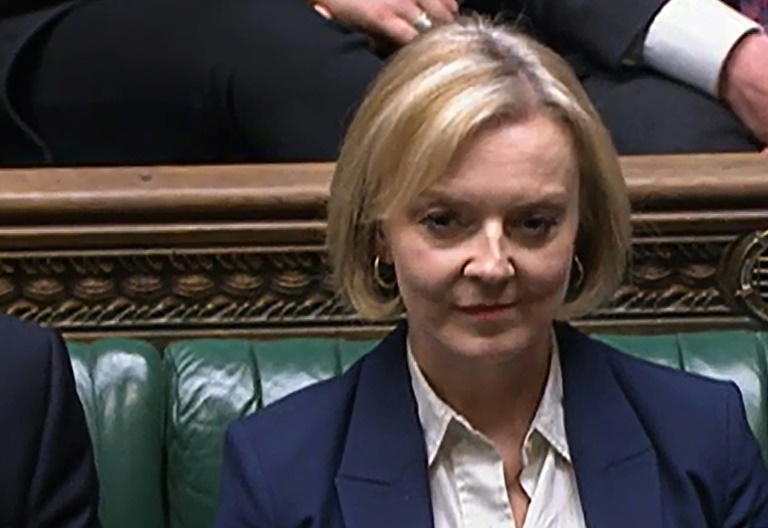
Embattled UK Prime Minister Liz Truss on Monday apologised for going “too far too fast” with reforms that triggered economic turmoil, but vowed to remain leader despite a series of humiliating climbdowns.

“I do want to accept responsibility and say sorry for the mistakes that have been made… we went too far and too fast,” she told the BBC. 

However, she said that she was “completely committed to delivering for this country” despite questions over who was now in control of government policy.

Her government on Monday axed almost all of its debt-fuelled tax cuts unveiled last month to avert fresh market chaos.

The shock move by new finance chief Jeremy Hunt — parachuted into the job on Friday to replace sacked Kwasi Kwarteng — leaves Truss’s position in a precarious state, with Conservative MP Roger Gale saying that Hunt was “de facto prime minister”.

Hunt estimated the tax changes would raise about £32 billion ($36 billion) per year, after economists estimated the government faced a £60-billion black hole. He also warned of tough spending cuts.

The chancellor of the exchequer said no government could control markets — but stressed his action would give certainty over public finances and help secure growth.

“The prime minister and I agreed yesterday to reverse almost all the tax measures announced in the growth plan three weeks ago,” Hunt told parliament, flanked by a grim-faced Truss.

The chancellor also announced the formation of an economic advisory council, featuring four experts outside of government. 

Hours earlier, he had used a brief televised statement to announce the dramatic reversals to nervous markets, conceding last month’s budget from his predecessor had harmed the public purse.

Truss told the BBC that she still believed in a “high-growth, low-tax economy”, but that economic stability was “my priority as prime minister”. 

– U-turns –

Hunt scrapped plans to axe the lowest rate of income tax, and curbed the government’s flagship energy price freeze — pulling the plug in April instead of late 2024.

After April, his department will “review” its energy support package, he said.

A proposed reduction in shareholder dividend tax was also binned, along with planned tax-free shopping for tourists and a freeze on alcohol duty.

The announcement comes as Truss’s governing Conservative party tanks in the opinion polls amid the reversals and Britain’s worsening cost-of-living crisis.

Truss fired her close friend Kwarteng on Friday after their recent tax-slashing budget sent bond yields spiking and the pound collapsing to a record dollar-low on fears of rocketing UK debt — fuelling intense speculation over her political future one month after taking office.

Hunt’s action on Monday sent the British pound soaring against the dollar and euro, while bond yields dipped.

– ‘Difficult decisions’ –

Tax reductions financed via borrowing were the centrepiece of last month’s ill-fated budget.

Truss had already staged two embarrassing budget U-turns, scrapping tax cuts for the richest earners and on company profits, and is now facing calls to resign even from her own MPs.

“There will be more difficult decisions I am afraid, on both tax and spending, as we deliver our commitment to get debt falling as a share of the economy over the medium term,” Hunt cautioned.

“All departments will need to redouble their efforts to find savings, and some areas of spending will need to be cut.”

Hunt already stated that he was not taking anything off the table amid speculation of cutbacks on areas like defence, hospitals and schools.

He met over the weekend with the governor of the Bank of England, Andrew Bailey, and the head of the Debt Management Office for talks.

In the wake of the earlier turmoil, the BoE launched emergency buying of UK government bonds — a policy that ended Friday.

The budget furore has reportedly sparked a plot to oust the prime minister.

UK media reported that senior Conservative MPs were plotting to unseat Truss.

– ‘Death knell’ –

Monday’s latest massive U-turn comes after Truss was elected Tory leader on a tax-slashing platform that analysts dubbed “Trussonomics”.

“That sound you can hear is the death knell for Trussonomics, with the vast majority of her tax cutting plans now consigned to the bin,” said Laura Suter, head of personal finance at stockbroker AJ Bell.

In two weeks’ time, Hunt will unveil his medium-term fiscal plan alongside independent economic forecasts from the Office for Budget Responsibility.

But the main opposition Labour party, riding high in the polls, said the ruling Tories were responsible for “chaos and fiasco”.

“This is a Tory crisis, made in Downing Street, but ordinary working people are paying the price,” its finance spokeswoman Rachel Reeves told parliament.
Scholz extends life of Germany's remaining nuclear plants

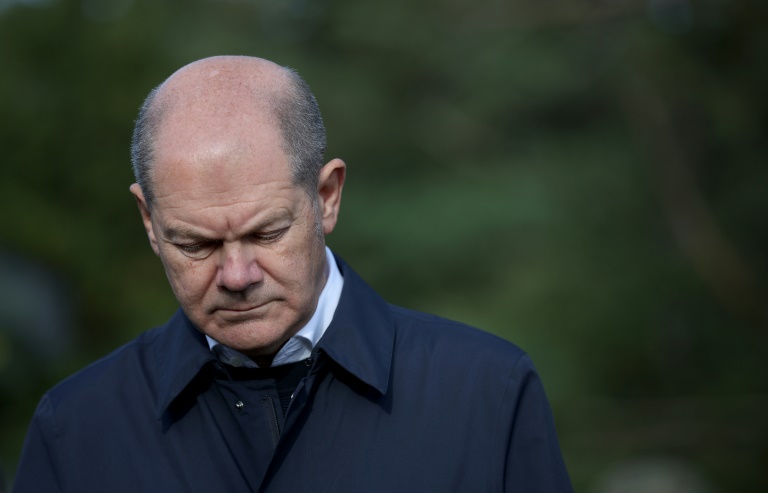
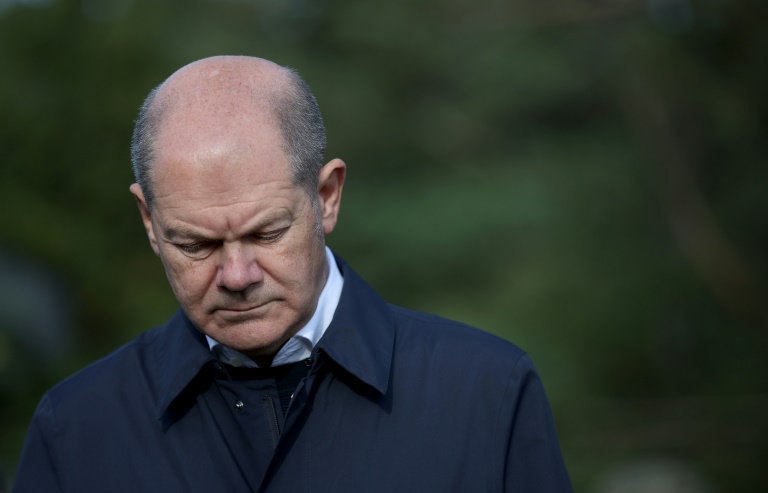
Chancellor Olaf Scholz on Monday ordered all three of Germany’s remaining nuclear power plants to stay operational until mid-April, breaking an impasse that had caused a rift among his coalition partners as an energy crisis looms.

Germany had initially planned to exit nuclear power by the end of the year, but Russia’s war in Ukraine and skyrocketing power prices since then have forced a rethink.

“The legal basis will be created to allow the operation of the nuclear power plants Isar 2, Neckarwestheim 2 and Emsland beyond December 31, 2022 until April 15, 2023,” Scholz said in a letter to cabinet ministers seen by AFP. 

Economy Minister Robert Habeck from the traditionally anti-nuclear Greens had recently said two of the three plants would be kept “on standby” until next spring, to help secure energy supplies if needed, in a major U-turn for the Greens.

But that did not go far enough for fellow coalition partner, the liberal FDP, who insisted the third plant, in Emsland in northern Germany, should also stay online. 

Repeated rounds of talks in recent days failed to resolve the row, and Scholz’s statement on Monday evening indicates he pulled rank.

– ‘Clarity’ –

In the letter, Scholz, from the centre-left Social Democrats, said he was invoking his authority as chancellor to issue a directive.

The order “is a smack in the face for Habeck”, wrote the topselling Bild daily.

Even more embarrassing, it comes after the Greens at a congress this weekend backed Habeck’s position on decommissioning the Emsland plant.

The FDP meanwhile celebrated Scholz’s decision to keep all three atomic plants online, although it fell short of their demand to extend their lifetimes until 2024.

Finance Minister Christian Lindner from the FDP, who has argued that Germany needs to use every energy source it has to help bring down prices and keep the lights on in Europe’s top economy, said Scholz had “provided clarity”.

“It is in the vital interest of our country and its economy that we maintain all power generation capacity this winter,” Lindner tweeted.

“We can create the legal basis together immediately. We will also work out viable solutions together for the winter of 2023/2024. People can count on that,” he wrote.

– Thunberg weighs in –

Green party co-leader Ricarda Lang criticised Scholz’s decision, saying “the Emsland nuclear power plant is not needed for grid stability”. 

The final word on the matter had yet to be spoken, Lang said. “We will have conversations about this,” she wrote on Twitter.

Lang did however welcome that Scholz had made clear that Germany would “definitively” quit atomic power by mid-April and that “no new fuel rods will be procured”.

Environmental group Greenpeace meanwhile slammed Scholz’s move as “irresponsible”.

“Extending the operating lives of nuclear power plants exposes us all to an unjustifiable risk,” said Greenpeace Germany’s executive director Martin Kaiser.

Former chancellor Angela Merkel had pushed through Germany’s nuclear exit in the wake of Japan’s Fukushima disaster in 2011.

But Germany, which was heavily reliant on Russian gas and oil before Russia’s invasion of Ukraine, has been hit hard by the fallout from the war and the nation is now bracing for a painful recession.

The conflict has sent energy prices soaring and Russia in late August halted the flow of gas through the crucial Nord Stream 1 pipeline, leaving Germany racing to diversify energy supplies and build up reserves ahead of the colder winter months.

The country has even restarted mothballed coal-fired power plants.

Climate activist Greta Thunberg last week said it was “a mistake” for Germany to press ahead with its nuclear exit while ramping up its coal usage.

Scholz extends life of Germany's remaining nuclear plants

Chancellor Olaf Scholz on Monday ordered all three of Germany’s remaining nuclear power plants to stay operational until mid-April, breaking an impasse that had caused a rift among his coalition partners as an energy crisis looms.

Germany had initially planned to exit nuclear power by the end of the year, but Russia’s war in Ukraine and skyrocketing power prices since then have forced a rethink.

“The legal basis will be created to allow the operation of the nuclear power plants Isar 2, Neckarwestheim 2 and Emsland beyond December 31, 2022 until April 15, 2023,” Scholz said in a letter to cabinet ministers seen by AFP. 

Economy Minister Robert Habeck from the traditionally anti-nuclear Greens had recently said two of the three plants would be kept “on standby” until next spring, to help secure energy supplies if needed, in a major U-turn for the Greens.

But that did not go far enough for fellow coalition partner, the liberal FDP, who insisted the third plant, in Emsland in northern Germany, should also stay online. 

Repeated rounds of talks in recent days failed to resolve the row, and Scholz’s statement on Monday evening indicates he pulled rank.

– ‘Clarity’ –

In the letter, Scholz, from the centre-left Social Democrats, said he was invoking his authority as chancellor to issue a directive.

The order “is a smack in the face for Habeck”, wrote the topselling Bild daily.

Even more embarrassing, it comes after the Greens at a congress this weekend backed Habeck’s position on decommissioning the Emsland plant.

The FDP meanwhile celebrated Scholz’s decision to keep all three atomic plants online, although it fell short of their demand to extend their lifetimes until 2024.

Finance Minister Christian Lindner from the FDP, who has argued that Germany needs to use every energy source it has to help bring down prices and keep the lights on in Europe’s top economy, said Scholz had “provided clarity”.

“It is in the vital interest of our country and its economy that we maintain all power generation capacity this winter,” Lindner tweeted.

“We can create the legal basis together immediately. We will also work out viable solutions together for the winter of 2023/2024. People can count on that,” he wrote.

– Thunberg weighs in –

Green party co-leader Ricarda Lang criticised Scholz’s decision, saying “the Emsland nuclear power plant is not needed for grid stability”. 

The final word on the matter had yet to be spoken, Lang said. “We will have conversations about this,” she wrote on Twitter.

Lang did however welcome that Scholz had made clear that Germany would “definitively” quit atomic power by mid-April and that “no new fuel rods will be procured”.

Environmental group Greenpeace meanwhile slammed Scholz’s move as “irresponsible”.

“Extending the operating lives of nuclear power plants exposes us all to an unjustifiable risk,” said Greenpeace Germany’s executive director Martin Kaiser.

Former chancellor Angela Merkel had pushed through Germany’s nuclear exit in the wake of Japan’s Fukushima disaster in 2011.

But Germany, which was heavily reliant on Russian gas and oil before Russia’s invasion of Ukraine, has been hit hard by the fallout from the war and the nation is now bracing for a painful recession.

The conflict has sent energy prices soaring and Russia in late August halted the flow of gas through the crucial Nord Stream 1 pipeline, leaving Germany racing to diversify energy supplies and build up reserves ahead of the colder winter months.

The country has even restarted mothballed coal-fired power plants.

Climate activist Greta Thunberg last week said it was “a mistake” for Germany to press ahead with its nuclear exit while ramping up its coal usage.

Sierra Leone buries riot dead amid outcry

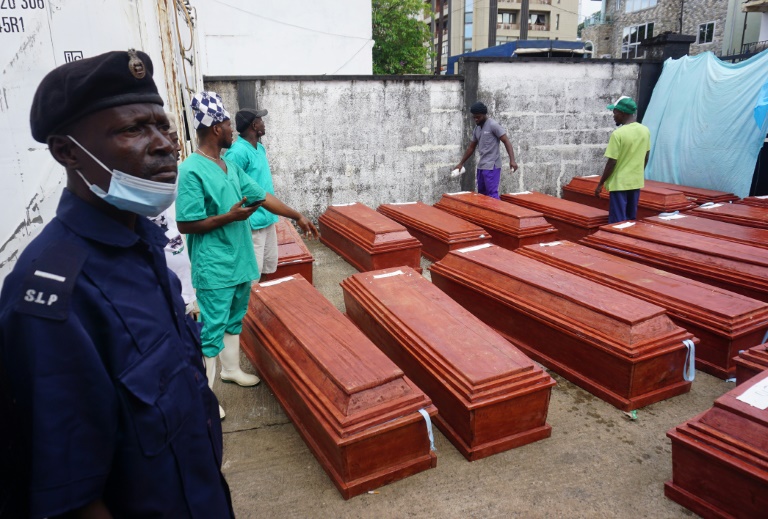
Twenty-seven civilians killed in August riots in Sierra Leone were buried Monday in the capital Freetown following a state-led ceremony, as families disputed police accounts of their deaths.

Coffins were lowered into individual graves at the Bolima Cemetery in the Waterloo district of Freetown, following a ceremony at the Connaught Hospital Mortuary.

“We are sad and devasted for what happened to my brother,” said Alusine Koroma, who contests the official account of the death of Hassan Dumbuya, a social media influencer and prominent member of the opposition All People’s Congress (APC) party.

On August 10, a protest about the cost of living spiralled into deadly clashes between security forces and young men calling for President Julius Bio to resign.

Violence erupted in several parts of the West African nation, with the authorities imposing an internet blackout in response.

In the days following, police said they conducted raids on “hideouts for perpetrators”.

During one of those raids in the city of Makeni, Dumbuya — alias Evangelist Samson — was killed in crossfire, a police statement said. His family disputes that, and the APC has called for an independent probe.

“He was shot from the back in Makeni, according to the autopsy report we received from the coroner”, Koroma said through tears on Monday.

The family has refused the 20,000 Leones ($1,200) the government offered to each family to help with funeral rites.

Koroma said they had requested and were denied a family burial.

– ‘Dignified ceremony’ –

Mohamed Rahman Swaray, the Minister of Information and Communications, said the state had “struck a deal” with families in which it would lead the ceremony for national security reasons.

Security is “the only reason” the state was involved, he told AFP, attributing the long delay to the need to reach a consensus with the families.

He also cited the need for relatives to identify bodies and be present for “examinations”.

“Some of (the violence) happened in various parts of the country; we had to put out public announcements and family members — some of them were initially scared”, he said. “We had to extend one deadline after another.”

Civilians were killed in the cities of Makeni, in the Northern Province, and Kamakwie, in the North West Province, as well as in eastern Freetown.

Swaray said nine bodies had still not been identified.

He said families had initially feared the dead would be buried in mass graves.

But the government said in a statement Sunday that each body would be buried in its own grave “following a dignified ceremony”, at the instruction of the president.

“This is a sad day and a loss to our nation,” Internal Affairs Minister David Maurice Panda-Noah told mourners following Muslim and Christian prayers at the mortuary.

On August 24, six police officers killed in the riots were buried in a state funeral attended by Bio. 

Sierra Leone, a country of about eight million people, has had a reputation for relative stability since the end of its 1991-2002 civil war, which left around 120,000 people dead.

But the economy, heavily dependent on minerals, has struggled to rebound.

Swiss author shaves head on stage after winning award

Swiss author Kim de l’Horizon shaved their head on stage after winning the prestigious German Book Prize on Monday, in a show of solidarity with the women protesting in Iran.

“This award is not just for me,” the author, who identifies as non-binary, told the audience at the award ceremony in Frankfurt.

“I think the jury chose this text also to send a signal against hatred, for love and for the fight of all those people who are being suppressed because of their bodies,” they said.

After being announced as the winner for their debut novel “Blutbuch” (Blood book), the moustachioed author took to the stage and sang a song, before using an electric razor to shave off their hair on the podium.

The jury said it had been “inspired” by the novel.

“With tremendous creative energy, the non-binary narrator of Kim de l’Horizon’s novel… searches for a language of their own,” the jury said.

The German Book Prize honours the best German-language novel of the year and comes with a 25,000 euro prize ($24,600).

The award ceremony traditionally precedes the start of the Frankfurt book fair, the world’s largest, which will run from Wednesday until Sunday.

Iran has been rocked by a wave of protests since 22-year-old Mahsa Amini’s death last month, days after she was arrested by the morality police in Tehran for allegedly violating Iran’s strict dress code for women.

Russian military jet crashes in south west, at least three dead

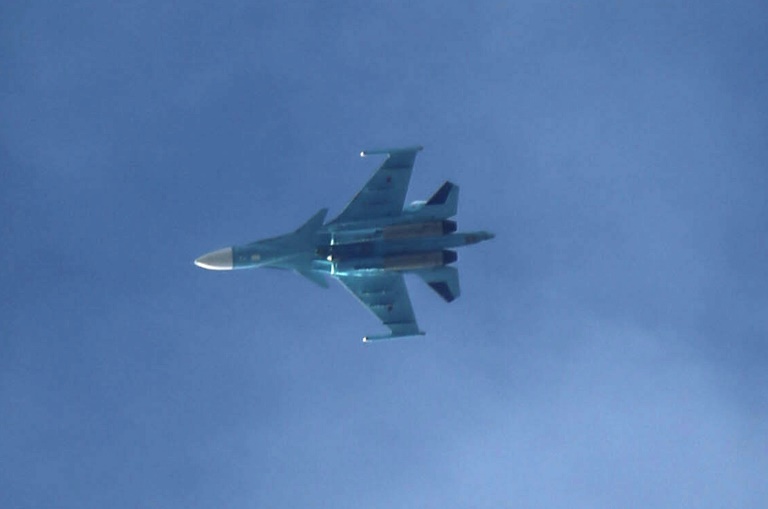
A Russian military plane crashed on Monday into a residential area of Yeysk, a town in southwestern Russia near the border with Ukraine, news agencies reported, citing the defence ministry, with at least three deaths reported.

Russian President Vladimir Putin was informed of the fire and ordered “all necessary assistance be given to casualties from the military plane incident,” the Kremlin told the state-run news agency TASS.

The fire that engulfed a nine-storey residential building has been contained and is almost extinguished, regional governor Veniamin Kondratyev said on Telegram. 

Oksana, a local resident who declined to give her last name, said the area had been cordoned off. 

“There could be an explosion. Everything is burning inside. There is smoke,” she told AFP.

She said she was stuck in traffic when she heard the news.

“I’m in shock obviously. My child was alone at home. We already used to go to sleep with fear everyday — Mariupol is just across from us,” she said.

At least three people had been killed in the incident and 19 have been taken to hospital, news agencies reported citing local authorities.

Children are among the injured. 

– Residence block engulfed by flames –

“On October 17, 2022, while taking off to carry out a training flight from the military airfield of the Southern Military District, an Su-34 aircraft crashed,” the ministry said.

Its statement said the military jet had malfunctioned after “one of its the engines caught fire during take-off”.

“At the site of the Sukhoi Su-34 crash, in the courtyard of a residential area, the aircraft’s fuel caught fire,” the ministry said.

Images on social media showed a Soviet-era residence block engulfed by flames.

The blaze reached five out of nine floors of a residential building, according to emergency services, quoted by Russian state-run agencies.

The blaze spread over 2,000 square metres (21,500 square feet), the services added.

Around 600 people usually live in the building, the local Krasnodar administration said on Telegram.

“The governor ordered the whereabouts of each resident to be established,” the administration said. 

The regional governor, Veniamin Kondratyev, earlier said on Telegram that “all fire and rescue units in the region are working on extinguishing the fire”.

“The fire spread to a few floors. According to preliminary information, 17 flats have been affected,” Kondratyev said. 

– Investigation opened –

The investigative committee, which looks into serious crimes, said it had opened a criminal investigation into the crash. 

Mariupol, a port city on the Sea of Azov in southeastern Ukraine, withstood weeks of relentless Russian bombardment, with resistance concentrated in a dense network of underground tunnels at its Azovstal steel plant.

Since the beginning of the Ukraine offensive airspace around the south of Russia has been closed.

Yeysk town is on the Taganrog Gulf on the Sea of Azov, across from the Ukrainian city of Mariupol, which is under Russian control. The town is home to about 85,000 people. 

Accidents involving Russian civilian aircraft and warplanes are fairly common, usually caused by technical malfunction or human error. 

In June a military plane crashed in the city of Ryazan, southeast of Moscow, killing four people and injuring five others. 

Scholz extends life of Germany's remaining nuclear plants

Chancellor Olaf Scholz on Monday ordered all three of Germany’s remaining nuclear power plants to stay operational until mid-April, breaking an impasse that had caused a rift among his coalition partners as an energy crisis looms.

Germany had initially planned to exit nuclear power by the end of the year, but Russia’s war in Ukraine and skyrocketing power prices since then have forced a rethink.

“The legal basis will be created to allow the operation of the nuclear power plants Isar 2, Neckarwestheim 2 and Emsland beyond December 31, 2022 until April 15, 2023,” Scholz said in a letter to cabinet ministers seen by AFP. 

Economy Minister Robert Habeck from the traditionally anti-nuclear Greens had recently said two of the three plants would be kept “on standby” until next spring, to help secure energy supplies if needed, in a major U-turn for the Greens.

But that did not go far enough for fellow coalition partner, the liberal FDP, who insisted the third plant, in Emsland in northern Germany, should also stay online. 

Repeated rounds of talks in recent days failed to resolve the row, and Scholz’s statement on Monday evening indicates he pulled rank.

– ‘Clarity’ –

In the letter, Scholz, from the centre-left Social Democrats, said he was invoking his authority as chancellor to issue a directive.

The order “is a smack in the face for Habeck”, wrote the topselling Bild daily.

Even more embarrassing, the order comes after the Greens at a congress this weekend backed Habeck’s position on decommissioning the Emsland plant.

The FDP meanwhile celebrated Scholz’s decision to keep all three atomic plants online, although it fell short of their demand to extend their lifetimes until 2024.

Finance Minister Christian Lindner from the FDP, who has argued that Germany needs to use every energy source it has to help bring down prices and keep the lights on in Europe’s top economy, said Scholz had “provided clarity”.

“It is in the vital interest of our country and its economy that we maintain all power generation capacity this winter,” Lindner tweeted.

“We can create the legal basis together immediately. We will also work out viable solutions together for the winter of 2023/2024. People can count on that,” he wrote.

– Thunberg weighs in –

Environment Minister Steffi Lemke, from the Greens, likewise said Scholz had brought “clarity”, and highlighted that his decision confirmed Germany remained committed to quitting atomic power.

“Germany will finally phase out nuclear energy on April 15, 2023. There will be no lifetime extension and no new fuel rods,” Lemke wrote on Twitter.

But Environmental group Greenpeace slammed Scholz’s move as “irresponsible”.

“Extending the operating lives of nuclear power plants exposes us all to an unjustifiable risk,” said Greenpeace Germany’s executive director Martin Kaiser.

Former chancellor Angela Merkel had pushed through Germany’s nuclear exit in the wake of Japan’s Fukushima disaster in 2011.

But Germany, which was heavily reliant on Russian gas and oil before Russia’s invasion of Ukraine, has been hit hard by the fallout from the war and the nation is now bracing for a painful recession.

The conflict has sent energy prices soaring and Russia in late August halted the flow of gas through the crucial Nord Stream 1 pipeline, leaving Germany racing to diversify its energy supplies and build up reserves.

The country has even restarted mothballed coal-fired power plants.

Climate activist Greta Thunberg last week said it was “a mistake” for Germany to press ahead with its nuclear exit while ramping up its coal usage.

Scholz extends life of Germany's remaining nuclear plants

Chancellor Olaf Scholz on Monday ordered all three of Germany’s remaining nuclear power plants to stay operational until mid-April, breaking an impasse that had caused a rift among his coalition partners as an energy crisis looms.

Germany had initially planned to exit nuclear power by the end of the year, but Russia’s war in Ukraine and skyrocketing power prices since then have forced a rethink.

“The legal basis will be created to allow the operation of the nuclear power plants Isar 2, Neckarwestheim 2 and Emsland beyond December 31, 2022 until April 15, 2023,” Scholz said in a letter to cabinet ministers seen by AFP. 

Economy Minister Robert Habeck from the traditionally anti-nuclear Greens had recently said two of the three plants would be kept “on standby” until next spring, to help secure energy supplies if needed, in a major U-turn for the Greens.

But that did not go far enough for fellow coalition partner, the liberal FDP, who insisted the third plant, in Emsland in northern Germany, should also stay online. 

Repeated rounds of talks in recent days failed to resolve the row, and Scholz’s statement on Monday evening indicates he pulled rank.

– ‘Clarity’ –

In the letter, Scholz, from the centre-left Social Democrats, said he was invoking his authority as chancellor to issue a directive.

The order “is a smack in the face for Habeck”, wrote the topselling Bild daily.

Even more embarrassing, the order comes after the Greens at a congress this weekend backed Habeck’s position on decommissioning the Emsland plant.

The FDP meanwhile celebrated Scholz’s decision to keep all three atomic plants online, although it fell short of their demand to extend their lifetimes until 2024.

Finance Minister Christian Lindner from the FDP, who has argued that Germany needs to use every energy source it has to help bring down prices and keep the lights on in Europe’s top economy, said Scholz had “provided clarity”.

“It is in the vital interest of our country and its economy that we maintain all power generation capacity this winter,” Lindner tweeted.

“We can create the legal basis together immediately. We will also work out viable solutions together for the winter of 2023/2024. People can count on that,” he wrote.

– Thunberg weighs in –

Environment Minister Steffi Lemke, from the Greens, likewise said Scholz had brought “clarity”, and highlighted that his decision confirmed Germany remained committed to quitting atomic power.

“Germany will finally phase out nuclear energy on April 15, 2023. There will be no lifetime extension and no new fuel rods,” Lemke wrote on Twitter.

But Environmental group Greenpeace slammed Scholz’s move as “irresponsible”.

“Extending the operating lives of nuclear power plants exposes us all to an unjustifiable risk,” said Greenpeace Germany’s executive director Martin Kaiser.

Former chancellor Angela Merkel had pushed through Germany’s nuclear exit in the wake of Japan’s Fukushima disaster in 2011.

But Germany, which was heavily reliant on Russian gas and oil before Russia’s invasion of Ukraine, has been hit hard by the fallout from the war and the nation is now bracing for a painful recession.

The conflict has sent energy prices soaring and Russia in late August halted the flow of gas through the crucial Nord Stream 1 pipeline, leaving Germany racing to diversify its energy supplies and build up reserves.

The country has even restarted mothballed coal-fired power plants.

Climate activist Greta Thunberg last week said it was “a mistake” for Germany to press ahead with its nuclear exit while ramping up its coal usage.

Scholz extends life of Germany's remaining nuclear plants

Chancellor Olaf Scholz on Monday ordered all three of Germany’s remaining nuclear power plants to stay operational until mid-April, breaking an impasse that had caused a rift among his coalition partners as an energy crisis looms.

Germany had initially planned to exit nuclear power by the end of the year, but Russia’s war in Ukraine and skyrocketing power prices since then have forced a rethink.

“The legal basis will be created to allow the operation of the nuclear power plants Isar 2, Neckarwestheim 2 and Emsland beyond December 31, 2022 until April 15, 2023,” Scholz said in a letter to cabinet ministers seen by AFP. 

Economy Minister Robert Habeck from the traditionally anti-nuclear Greens had recently said two of the three plants would be kept “on standby” until next spring, to help secure energy supplies if needed, in a major U-turn for the Greens.

But that did not go far enough for fellow coalition partner, the liberal FDP, who insisted the third plant, in Emsland in northern Germany, should also stay online. 

Repeated rounds of talks in recent days failed to resolve the row, and Scholz’s statement on Monday evening indicates he pulled rank.

– ‘Clarity’ –

In the letter, Scholz, from the centre-left Social Democrats, said he was invoking his authority as chancellor to issue a directive.

The order “is a smack in the face for Habeck”, wrote the topselling Bild daily.

Even more embarrassing, the order comes after the Greens at a congress this weekend backed Habeck’s position on decommissioning the Emsland plant.

The FDP meanwhile celebrated Scholz’s decision to keep all three atomic plants online, although it fell short of their demand to extend their lifetimes until 2024.

Finance Minister Christian Lindner from the FDP, who has argued that Germany needs to use every energy source it has to help bring down prices and keep the lights on in Europe’s top economy, said Scholz had “provided clarity”.

“It is in the vital interest of our country and its economy that we maintain all power generation capacity this winter,” Lindner tweeted.

“We can create the legal basis together immediately. We will also work out viable solutions together for the winter of 2023/2024. People can count on that,” he wrote.

– Thunberg weighs in –

Environment Minister Steffi Lemke, from the Greens, likewise said Scholz had brought “clarity”, and highlighted that his decision confirmed Germany remained committed to quitting atomic power.

“Germany will finally phase out nuclear energy on April 15, 2023. There will be no lifetime extension and no new fuel rods,” Lemke wrote on Twitter.

But Environmental group Greenpeace slammed Scholz’s move as “irresponsible”.

“Extending the operating lives of nuclear power plants exposes us all to an unjustifiable risk,” said Greenpeace Germany’s executive director Martin Kaiser.

Former chancellor Angela Merkel had pushed through Germany’s nuclear exit in the wake of Japan’s Fukushima disaster in 2011.

But Germany, which was heavily reliant on Russian gas and oil before Russia’s invasion of Ukraine, has been hit hard by the fallout from the war and the nation is now bracing for a painful recession.

The conflict has sent energy prices soaring and Russia in late August halted the flow of gas through the crucial Nord Stream 1 pipeline, leaving Germany racing to diversify its energy supplies and build up reserves.

The country has even restarted mothballed coal-fired power plants.

Climate activist Greta Thunberg last week said it was “a mistake” for Germany to press ahead with its nuclear exit while ramping up its coal usage.

Woman charged in Paris over 12-year-old's brutal murder

Paris investigators on Monday charged a woman suspected of raping and murdering a 12-year-old girl whose body was found in a trunk on Friday, a source close to the case told AFP.

The main suspect, identified as a 24-year-old woman suffering from psychiatric disorders, was questioned earlier Monday alongside an older man suspected of sheltering her.

The 24-year-old has been charged with the rape and murder of a minor aged under 15 along with torture and abuse, the source said.

A judge ordered that she be held in provisional custody.

Prosecutors said in a press release Monday that under questioning, the woman made “varying statements, switching between admitting and denying the facts of the case.”

But she eventually said she had brought the girl — identified only by her first name, Lola — to her sister’s apartment in the same building, where she forced her to take a shower.

The woman said she had then “committed harm of a sexual nature and other violent acts against (Lola) that caused her death, and hid her body in the trunk,” prosecutors said.

According to the autopsy, the young girl died due to “cardio-respiratory failure with signs of asphyxia and cervical compression”.

Other non-fatal wounds were found on her face and back as well as large gashes on her neck, and the numbers 0 and 1 were written in red on the soles of each of her feet.

“Investigations are continuing to determine exactly what happened (and) to establish the criminal responsibility of the people involved,” prosecutors added.

The suspect’s lawyer Alexandre Silva expressed sympathy for Lola’s family, before calling on the press not to report “rumours” and insisting on the presumption of innocence for his client.

The 43-year-old man also questioned in custody on Monday admitted that he brought the 24-year-old woman to his home with the trunk and two suitcases, where he said she stayed for two hours before leaving again in a chauffeur-driven car he had called for her.

– Spotted on CCTV –

The main suspect was arrested on Saturday in Bois-Colombes in Paris’ northwestern suburbs, after investigators tracked her movements on CCTV cameras from the building and the surrounding area as well as using phone records and physical searches.

Lola’s parents had called police after their daughter did not return from middle school on Friday afternoon.

Her father, the custodian in the building, was unsettled by seeing the unknown woman enter the building in Paris’ 19th district alongside his daughter when he checked the CCTV recordings.

An eyewitness who also saw the suspect at the scene said that she had offered him money to help her move a large trunk, several media outlets reported.

But a homeless man was the first to discover the body, which sources familiar with the investigation said was hidden under cloths in a plastic box in the building’s courtyard.

Six people, including the suspect’s sister and others who had contact with her in the time immediately following the killing, have so far been placed in custody in relation to the case, with four since released.

– ‘Time for mourning’ –

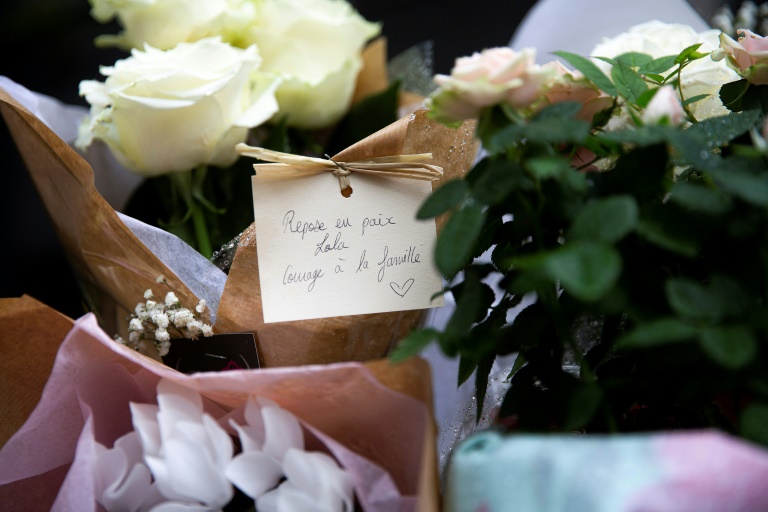
Local residents placed flowers at the gate of the family’s building over the weekend.

Meanwhile, school authorities have announced they will set up psychological aid for staff and pupils at Lola’s school and others in the area.

One mother told AFP that her daughter, another pupil who knew Lola by sight, was “not doing well today, she doesn’t want to go to school.”

“Today it’s time for mourning and for the investigation, which seems to be progressing quickly,” 19th district mayor Francois Dagnaud said during a visit to the Georges-Brassens school.

“What’s important is that the main suspect for now has been arrested, there’s no psychopath roaming the streets of this neighbourhood,” he added after local parents reported fears for their children’s safety.

“Of course, the fact that a 12-year-old child can die in such circumstances is overwhelming for everybody,” he added, saying that counselling would also be offered to local residents.

Close Bitnami banner
Bitnami