World

US banks report solid results but warn of rising recession risk

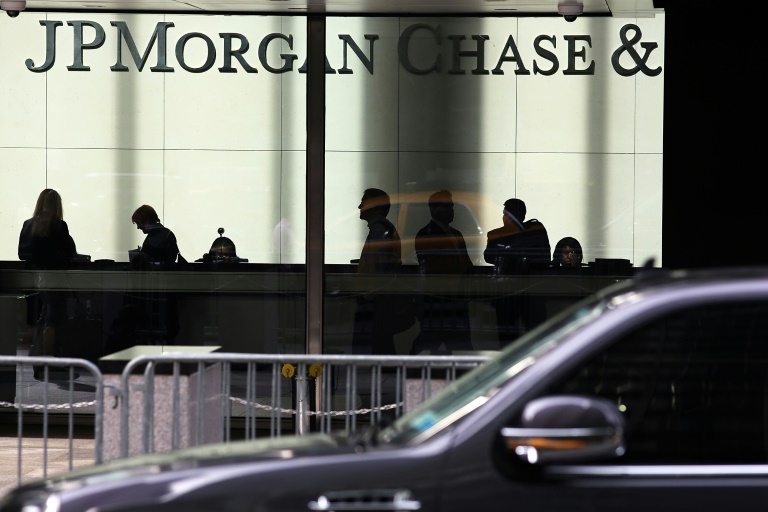
Large US banks reported a round of solid quarterly profits Friday, but cautioned of rising recession risks as the economy absorbs higher inflation and a dramatic shift is central bank policy.

JPMorgan Chase set aside $808 million in case of bad loans, while Citigroup reserved for $370 million in potential losses and Wells Fargo, $385 million.

These sums are much smaller than the reserves established at the start of the coronavirus pandemic. But they nonetheless point to a much changed environment from a year ago, when bank results were boosted by large releases of funds that had been set aside for loan defaults that did not materialize

Today’s litany of worries include stubborn inflation that has prompted significant central bank interest rate hikes; and geopolitical fallout from the Russian invasion of Ukraine, including uncertainty in the oil market and worries about European energy security this winter.

While the US consumer remains “very strong,” these obstacles elevate the risk of a downturn, said JPMorgan Chief Executive Jamie Dimon.

The end result could be “anywhere from a soft landing to a hard recession,” Dimon told reporters on a conference call. “If it is a hard recession, obviously it has implications for unemployment and business and reserves.”

Wells Fargo Chief Executive Charlie Scharf said the bank continues to see “historically low delinquencies,” but that it is “monitoring risks” tied to macroeconomic and geopolitical headwinds.

“While we do expect to see continued increases in delinquencies and ultimately credit losses,the timing is unclear,” Scarf said.

– Lower profits –

At JPMorgan, profits fell 17 percent to $9.7 billion on a 10 percent increase in revenues to $32.7 billion.

Higher interest rates helped boost the bank’s net interest income, but JPMorgan suffered a big drop in investment banking revenues in a period that has seen far fewer initial public offerings compared with a year ago..

Dimon said businesses “remain healthy,” but alluded to “significant headwinds immediately in front of us.” 

In an interview with CNBC earlier this week, Dimon said a US recession was likely in early-to-mid 2023 and that the stock market could fall another 20 percent.

At Citigroup, profits fell 25 percent to $3.5 billion, while revenues rose six percent of $18.5 billion.

Results were boosted by higher net interest income as well a gain from the sale of the bank’s Philippines business. These benefits were offset by lower revenues in investment banking and higher operating expenses. 

Citi opted to set aside reserves in light of rising recession risk. 

Under a “baseline” economic scenario, Citi sees unemployment rising to about four percent from the current 3.5 percent. Under a “downside” scenario, unemployment would be well above five percent, said Citi Chief Financial Officer Mark Mason on a conference call with journalists.

Even under a darker outcome, Mason said “I don’t think there’s a financial crisis coming anything close to the magnitude of what we’ve seen.”

At Wells Fargo, profits fell 31 percent to $3.5 billion, while revenues rose four percent to $19.5 billion.

Results were dented by $2 billion in fresh costs linked to “litigation, customer remediation and regulatory matters.” 

During a conference call with analysts, Scharf, who was named CEO in 2019 following a fake accounts scandal under earlier executive regimes, said the bank “still has open regulatory matters” related to earlier times and was looking to get past them “as quickly as we can.”

Near 1645 GMT, JPMorgan shares jumped 3.5 percent to $113.14, while Citi rose 1.4 percent to $43.56 and Wells Fargo gained 3.6 percent to $43.90
Defiant Putin says Russia 'doing everything right' in Ukraine

Russian President Vladimir Putin said on Friday that Moscow was “doing everything right” in its nearly eight-month invasion of Ukraine despite a string of embarrassing defeats, as Kyiv said it was “stronger than ever” and would emerge victorious.

Putin’s comments came hours after Kremlin-installed officials in the southern region of Kherson urged residents to leave after Kyiv said its forces were advancing on the region’s eponymous main city.

Moscow also hinted at the potentially wide extent of the damage dealt to the Crimea bridge — the sole connecting its mainland to the annexed Ukrainian peninsula — following a blast, saying it could take many months to complete repairs.

“What is happening today is not pleasant. But all the same, (if Russia hadn’t attacked on February) we would have been in the same situation, only the conditions would have been worse for us,” Putin told reporters after a summit in the capital of Kazakhstan.

“So we’re doing everything right,” he insisted.

He did, however, acknowledge that Russia’s ex-Soviet allies were “worried.” 

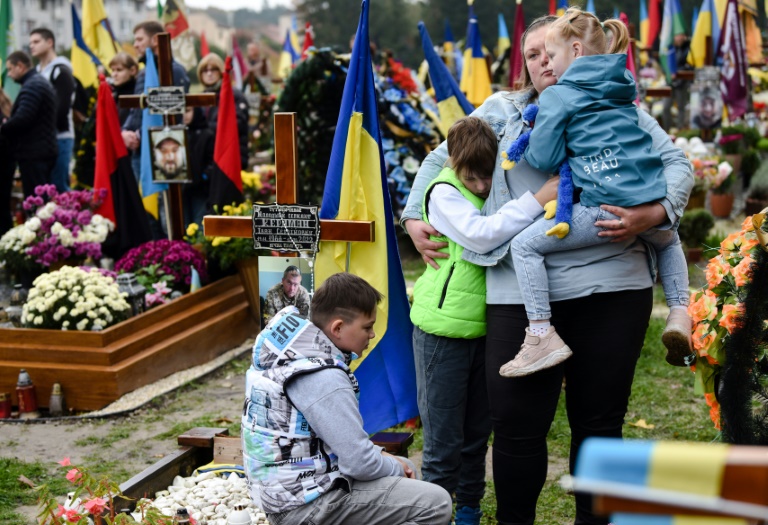
Ukraine, which is clawing back territory in the east as well as in the south, feted its first Defenders Day public holiday since the start of Moscow’s invasion, pledging victory.

“On October 14, we express our gratitude… gratitude to everyone who fought for Ukraine in the past. And to everyone who is fighting for it now. To all who won then. And to everyone who will definitely win now,” President Volodymyr Zelensky said in a video address to mark the occasion.

“The world is with us, more than ever. This makes us stronger than ever in history,” Zelensky said, referring to unprecedented Western aid.

Putin has described the explosion on the Crimea bridge on Saturday as a “terrorist” act and in retaliation battered Ukraine for two days with missiles that hit energy facilities and caused blackouts and disruption to water supplies.

He said on Thursday that “for now” there was no need to continue the massive salvo of missiles that hit cities — several far from the front line — and left at least 20 civilians dead. He explained the Russian military had other objectives.

– ‘Our aim is not to destroy Ukraine’ –

“Our aim is not to destroy Ukraine,” Putin added.

The Crimea bridge is logistically crucial for Moscow. It is a vital transport link for moving military equipment to Russian soldiers fighting in Ukraine.

But the bridge is also symbolically important to Putin, who inaugurated it in 2018, four years after he annexed the peninsula, drawing a chorus of Western condemnation. 

The missile barrage on Monday and Tuesday, he said, was direct retaliation for the blast on the bridge.

Russia’s cabinet, in a decree signed by Prime Minister Mikhail Mishustin, ordered the company tasked with the “design and restoration of destroyed elements of … the Crimean Bridge” to complete the work by July 1, 2023.

The date gives an indication of the extent of the damage.  Russian officials have otherwise been circumspect about the lasting impact of the incident.

Hours after the blast — which Russian authorities blamed on Ukraine special forces — Moscow announced that both road and rail traffic had been restored.

Ukrainian forces mounted a counter-offensive in the south towards the end of the summer and have been pushing closer and closer to the main city in the Kherson region, also called Kherson.

On Friday, the Moscow-installed authorities in the region renewed a call for residents to temporarily leave, with reports that Ukrainian forces had been gaining ground near Kherson.

– Advance on Kherson –

“The bombardments of the Kherson region are dangerous for civilians,” Kirill Stremousov, the deputy head of the pro-Russian regional administration said and urged residents to take a trip for “rest and recreation” elsewhere.

But in the east, pro-Russian forces said they were closing in on the industrial city of Bakhmut after reporting the capture of two villages on the city’s outskirts this week.

An official of the so-called Lugansk People’s Republic, a pro-Kremlin breakaway region in east Ukraine, said “active hostilities were underway” within Bakhmut.

“Our forces are confidently marching and liberating this settlement,” the official, Andriy Marochko, was quoted as saying by Russia’s state-run TASS news agency. 

UN envoy Pramila Patten told AFP in an interview that rapes and sexual assaults attributed to Moscow’s forces in Ukraine were part of a Russian “military strategy” and a “deliberate tactic to dehumanise the victims”. 

“When you hear women testify about Russian soldiers equipped with Viagra, it’s clearly a military strategy,” the UN special representative on sexual violence said on Thursday. “It is clearly a deliberate tactic to dehumanise the victims.”

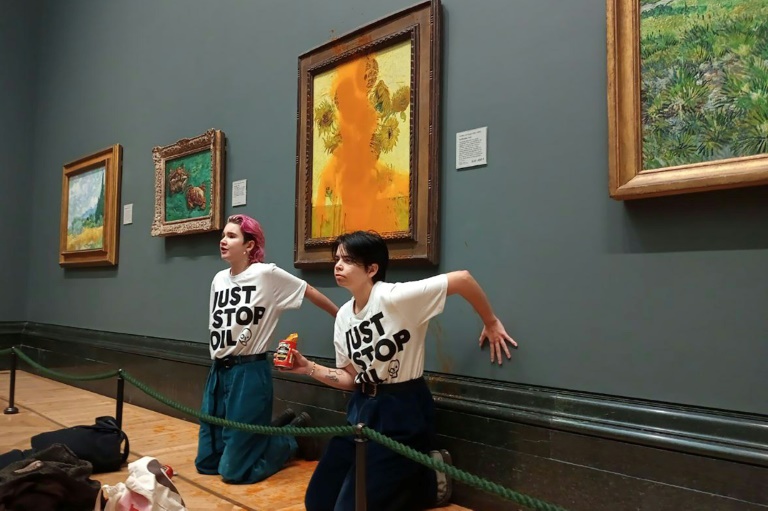
Climate activists throw soup over Van Gogh's 'Sunflowers' in London

Environmental protesters threw tomato soup over one of Vincent van Gogh’s “Sunflowers” paintings at London’s National Gallery on Friday, in the latest “direct-action” stunt targeting works of art.

The gallery in Trafalgar Square said the protesters caused “minor damage to the frame but the painting is unharmed”. The painting went back on display a few hours after the attack.

Protest group Just Stop Oil, which was behind the action, wants to end UK government approval for exploring, developing and producing fossil fuels, and has mounted a series of high-profile protests.

London’s Metropolitan Police said officers arrested two protesters from the organisation for criminal damage and aggravated trespass after they “threw a substance” at the painting in the gallery and glued themselves to a wall, just after 11 am (1000 GMT).

Police added they had unglued the protesters and taken them to a central London police station.

A video posted on Twitter by the Guardian newspaper’s environment correspondent Damien Gayle and retweeted by the eco-activism group shows two young women wearing T-shirts bearing the slogan “Just Stop Oil” lobbing cans of soup at the iconic painting.

– ‘Keep getting soup’ –

After glueing themselves to the wall, one of the activists shouts: “What is worth more, art or life?”

“Are you more concerned about the protection of a painting or the protection of our planet and people?” she asks.

In the video, someone can be heard yelling “oh my God” as the soup hits the canvas and another person shouts “security!” while soup drips from the frame onto the floor.

Just Stop Oil said in a statement its activists threw two cans of Heinz Tomato soup over the painting to demand the UK government halt all new oil and gas projects.

It later tweeted: “Keep giving us new oil and gas, and you will keep getting soup.”

The activist group said the painting has an estimated value of $84.2 million.

The National Gallery says on its website the signed painting from 1888 was acquired by the gallery in 1924. 

Van Gogh created seven versions of “Sunflowers” in total and five are on public display in museums and galleries across the world. 

One of those — the Van Gogh Museum in Amsterdam — said it was keeping “a close eye on developments” that might affect its own security measures.

Well-known Dutch ‘art detective’ Arthur Brand, dubbed the “Indiana Jones of the Art World” for recovering famous artworks, condemned the attack.

“There are hundreds of ways to achieve attention for the climate problems. This should not be one of them,” he said.

– ‘Cross a line’ –

The attack came a week after Britain’s new interior minister Suella Braverman issued a threat to direct-action climate protesters, accusing them of using “guerrilla tactics” to bring “chaos and misery” to the public.

“Whether you’re Just Stop Oil, Insulate Britain or Extinction Rebellion, you cross a line when you break the law — and that’s why we’ll keep putting you behind bars,” she said.

Just Stop Oil has previously targeted several other famous paintings with glue attacks.

In June, two activists glued their hands to the frame of van Gogh’s painting “Peach Trees in Blossom” at the Courtauld Gallery in London.

In July, supporters glued their hands to the frame of British painter John Constable’s “The Hay Wain” at the National Gallery.

They first taped over the canvas with a “reimagined version” of the bucolic scene, showing the landscape covered in pollution, dotted with wildfires and overflown by aircraft. 

In the same month, they glued themselves to a full-scale copy of Leonardo Da Vinci’s “The Last Supper” at the Royal Academy in London.

In recent days, Just Stop Oil has held multiple protests blocking major roads.

Met Police Commissioner Mark Rowley said of the protests that he was “frustrated so many officers are being taken away from tackling issues that matter most to communities”.

Later Friday, police arrested 24 on suspicion of conspiracy to commit criminal damage and wilful obstruction of the highway after a Just Stop Oil demonstration outside New Scotland Yard, the Met’s headquarters. 

An activist sprayed orange paint at the force’s sign there as others blocked the road outside.

burs-am/jj/cdw

Pound slides amid UK political drama

The pound fell on Friday after under-fire British Prime Minister Liz Truss sacked her finance minister and made a dramatic policy U-turn, while an equity rally ran out of steam.

The yen struck a new three-decade dollar low as a rise in US inflation expectations cemented expectations of more hefty Federal Reserve rate hikes.

Truss sacked finance minister Kwasi Kwarteng as pressure mounted on her government following last month’s big-spending, tax-slashing mini-budget, which spooked markets.

The September 23 budget sent the pound tumbling to a record dollar low, near parity with the greenback, and bond yields surged before stabilising thanks to interventions by the Bank of England. 

Sterling sank more than one percent to under $1.12 after Truss dismissed Kwarteng. 

It fell even lower after Truss appointed Jeremy Hunt as her new finance minister and announced a dramatic policy U-turn, before clawing back some of its losses.

In her first Downing Street press conference, Truss stated the “need to act now to reassure the markets”, abandoned her plans to eliminate an increase in corporation tax and said spending would not increase as rapidly as planned.

“The soap opera that is UK politics continues to dominate FX (forex) markets Friday,” said Stephen Innes, managing partner at SPI Asset Management.

UK 10-year government bond yields rose after the Bank of England publicly stated it would end its costly market interventions on Friday.

“Unfortunately for Truss, her swift ability to spook markets with a swathe of unfunded spending plans is now being followed by yet another rise in yields, as markets wonder whether we could soon see another push to replace her,” said Joshua Mahony, senior market analyst at online trading platform IG.

London’s FTSE 100 ended the day with a gain of 0.1 percent, having given up most of its earlier gains because Truss’s U-turn left her position fragile.

Berenberg bank Senior Economist Kallum Pickering said “the policy U-turn is a major humiliation for Truss” and weakens her politically.

“It is not easy to see how Truss –- whose personal mandate is now in tatters — can continue as PM for long,” he added.

While European markets ended higher, Wall Street failed to hold onto gains made on Thursday in a surprising rally despite data showing strong inflationary pressures in the United States.

A survey out on Friday showed inflation expectations were on the rise, a signal likely to worry policymakers at the US Federal Reserve, who are trying to not only tamp down inflation but ensure that expectations about price rises do not become entrenched.

“It is one report, but it coincides with a hot inflation report and a market that is fearful that it keeps mistiming when the Fed will pivot,” said Edward Moya at OANDA.

Expectations that the Fed will be able to quickly pivot — or begin reducing interest rates — helped spur a brief rally in stocks last week. 

Third quarter earnings season got into full swing, with a number of large banks, including JPMorgan Chase and Citigroup, reporting lower earnings and setting aside more funds in preparation for a possible recession, although their performances topped analyst estimates.

“None of those banks missed consensus earnings estimates, like investment bank Morgan Stanley did, yet their reports were laced with increased provisions for credit losses,” noted market analyst Patrick O’Hare at Briefing.com.

– Key figures around 1530 GMT –

New York – Dow: DOWN 0.4 percent at 29,915.75 points

EURO STOXX 50: UP 0.6 percent at 3,381.73

London – FTSE 100: UP 0.1 percent at 6,858.79 (close) 

Frankfurt – DAX: UP 0.7 percent at 12,437.81 (close)

Paris – CAC 40: UP 0.9 percent at 5,931.92 (close)

Tokyo – Nikkei 225: UP 3.3 percent at 27,090.76 (close)

Hong Kong – Hang Seng Index: UP 1.2 percent at 16,587.69 (close)

Shanghai – Composite: UP 1.8 percent at 3,071.99 (close)

Pound/dollar: DOWN at $1.1214 from $1.1326 Thursday

Dollar/yen: UP at 148.46 yen from 147.12 yen

Euro/dollar: DOWN at $0.9748 from $0.9776

Euro/pound: DOWN at 86.89 pence from 88.29 pence

Brent North Sea crude: DOWN 2.3 percent at $92.43 per barrel

West Texas Intermediate: DOWN 2.8 percent at $86.62 per barrel

burs-rl/gil

Kroger unveils $24.6 bn deal to create supermarket giant

Grocery chain Kroger will acquire smaller rival Albertsons in a $24.6 billion transaction announced Friday that would create a supermarket giant but could face tough regulatory scrutiny.

The transaction, which unites two companies with some 710,000 employees and 5,000 stores in the United States, aims to take advantage of economies of scale to compete more effectively with giants like Walmart and Amazon.

But shares of both companies fell Friday as analysts cautioned that the transaction could face a tough once-over from Biden administration regulators, who have adopted a skeptical approach to large mergers.

In this case, both Kroger and Albertsons are consumer-facing companies. The deal also comes as the US economy contends with grinding inflation. 

In uniting, the two companies would have a combined customer base of about 85 million households, boosting its consumer data holdings and enabling some $1 billion in annual cost savings, executives said on a conference call with analysts.

These include “synergies” through improved sourcing, supply chain efficiencies and administrative savings, said Kroger Chief Financial Officer Gary Millerchip.

The companies pledged that the savings would enable them to “invest in lowering prices for customers,” they said in a press release.

But Morningstar analyst Zain Akbari predicted that the overlap between the companies in many markets would lead “regulators to scrutinize a transaction closely,” he said in a note earlier this week following reports of merger talks.

To address that issue, Albertsons plans to spin off between 100 and 375 stories as a standalone public company prior to the deal’s closing. 

This would create a “new, agile competitor” to the new Kroger, with a strong balance sheet and “experienced” management, Kroger and Albertsons said in a news release.

That transaction is expected to lower the deal cost by up to $4 billion to Kroger, the companies said. 

Near 1500 GMT, shares of Albertsons were down 7.1 percent at $26.59, while Kroger was down 3.2 percent at $45.06.

Musk says cannot fund Starlink in Ukraine indefinitely

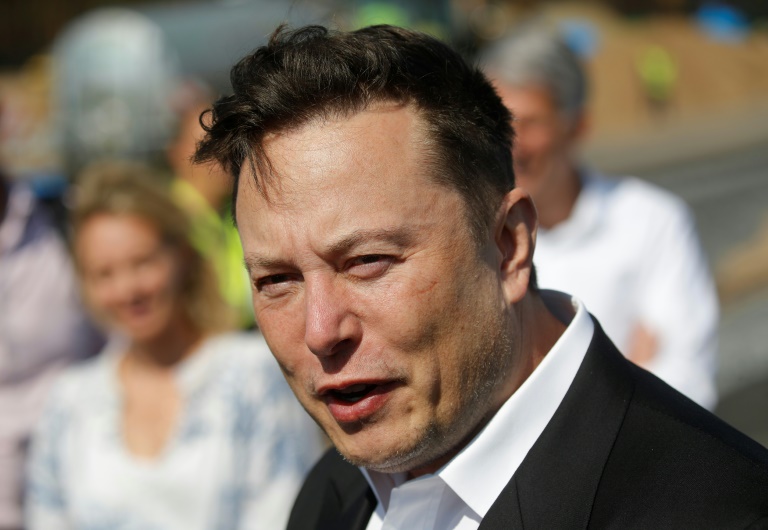
Elon Musk said Friday his company SpaceX wouldn’t be able to fund the Starlink satellite internet network over Ukraine indefinitely, amid reports he had asked the US military to cover the costs.

The move comes as Musk has been embroiled in public spats with Ukranian leaders who were angered by his controversial proposals for de-escalating the conflict, which included acknowledging Russian sovereignty over Crimea.

Starlink, a constellation of over 3,000 small satellites in low Earth orbit, has been vital to Ukraine’s war effort against Russia, with SpaceX donating some 25,000 ground terminals, according to an updated figure given by Musk last week.

In a series of tweets, the world’s richest man appeared to confirm a report by CNN saying he had written to the Pentagon warning that his financial contributions would come to an end, and that they would need to foot the bill.

“SpaceX is not asking to recoup past expenses, but also cannot fund the existing system indefinitely *and* send several thousand more terminals that have data usage up to 100X greater than typical households,” he tweeted. 

“This is unreasonable.”

Musk said the operation has already cost SpaceX $80 million and is projected to exceed $100 million by the end of the year.

But CNN said SpaceX figures shared with the Pentagon show about 85 percent of the first 20,000 terminals in Ukraine were paid at least in part by countries like the US, Poland, or other entities. 

They also paid for about 30 percent of internet connectivity.

– ‘Following his recommendation’ –

In overnight replies on Twitter on Friday, Musk expanded on the logistics of the operation. 

“In addition to terminals, we have to create, launch, maintain & replenish satellites & ground stations & pay telcos for access to Internet via gateways,” he said. 

“We’ve also had to defend against cyberattacks & jamming, which are getting harder. Burn is approaching ~$20M/month.”

Musk has recently been in a spat with Ukrainian officials including President Volodymyr Zelensky after suggesting a peace deal that involved re-running controversial referenda in Russian-occupied territories in Ukraine. 

Musk’s proposals were welcomed by Russia.

In response, Kyiv’s ambassador to Germany Andriy Melnyk weighed in, telling Musk to “fuck off.”

“We’re just following his recommendation,” Musk tweeted Friday, along with the shrug emoji.

According to CNN, SpaceX documents sent to the Pentagon said Ukraine had asked for 8,000 more Starlink terminals in July.

The Financial Times meanwhile has reported Starlink outages hit Ukrainian forces on the frontline, hindering their ability to liberate Russian-controlled areas in the east of the country, but the situation later improved.

Musk says cannot fund Starlink in Ukraine indefinitely

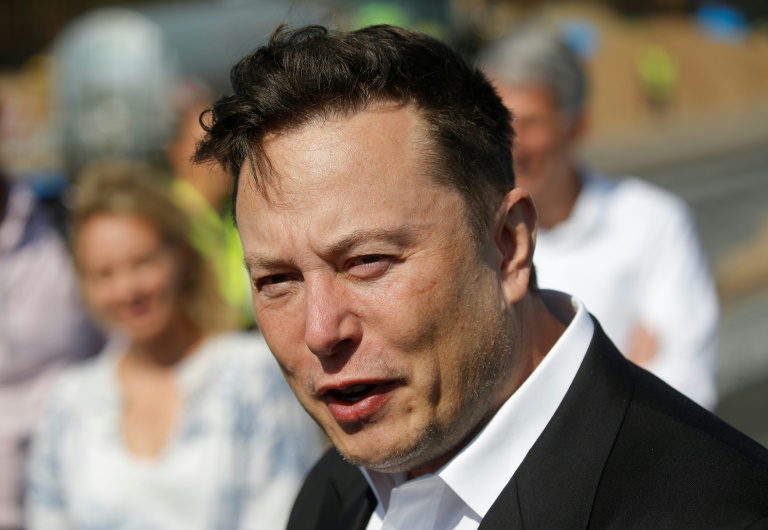
Elon Musk said Friday his company SpaceX wouldn’t be able to fund the Starlink satellite internet network over Ukraine indefinitely, amid reports he had asked the US military to cover the costs.

The move comes as Musk has been embroiled in public spats with Ukranian leaders who were angered by his controversial proposals for de-escalating the conflict, which included acknowledging Russian sovereignty over Crimea.

Starlink, a constellation of over 3,000 small satellites in low Earth orbit, has been vital to Ukraine’s war effort against Russia, with SpaceX donating some 25,000 ground terminals, according to an updated figure given by Musk last week.

In a series of tweets, the world’s richest man appeared to confirm a report by CNN saying he had written to the Pentagon warning that his financial contributions would come to an end, and that they would need to foot the bill.

“SpaceX is not asking to recoup past expenses, but also cannot fund the existing system indefinitely *and* send several thousand more terminals that have data usage up to 100X greater than typical households,” he tweeted. 

“This is unreasonable.”

Musk said the operation has already cost SpaceX $80 million and is projected to exceed $100 million by the end of the year.

But CNN said SpaceX figures shared with the Pentagon show about 85 percent of the first 20,000 terminals in Ukraine were paid at least in part by countries like the US, Poland, or other entities. 

They also paid for about 30 percent of internet connectivity.

– ‘Following his recommendation’ –

In overnight replies on Twitter on Friday, Musk expanded on the logistics of the operation. 

“In addition to terminals, we have to create, launch, maintain & replenish satellites & ground stations & pay telcos for access to Internet via gateways,” he said. 

“We’ve also had to defend against cyberattacks & jamming, which are getting harder. Burn is approaching ~$20M/month.”

Musk has recently been in a spat with Ukrainian officials including President Volodymyr Zelensky after suggesting a peace deal that involved re-running controversial referenda in Russian-occupied territories in Ukraine. 

Musk’s proposals were welcomed by Russia.

In response, Kyiv’s ambassador to Germany Andriy Melnyk weighed in, telling Musk to “fuck off.”

“We’re just following his recommendation,” Musk tweeted Friday, along with the shrug emoji.

According to CNN, SpaceX documents sent to the Pentagon said Ukraine had asked for 8,000 more Starlink terminals in July.

The Financial Times meanwhile has reported Starlink outages hit Ukrainian forces on the frontline, hindering their ability to liberate Russian-controlled areas in the east of the country, but the situation later improved.

Europe's police keep wary eye on threat from 3D-printed guns

A growing number of seizures of guns made at home from 3D-printed parts are raising alarm bells for European police over an emerging threat.

For now, interest among far-right activists may be limited, say analysts — and fears of a society awash with print-it-yourself weapons remain far-fetched.

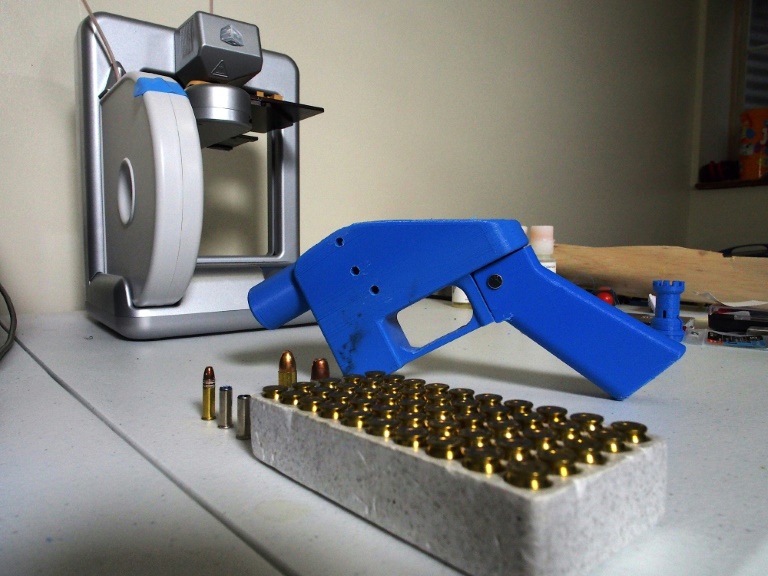
But homemade guns have become more widespread since 2013, when a US weapons enthusiast first showed off a mostly 3D-printed pistol and shared its design online.

Only in September, Icelandic police said they had arrested four people suspected of planning a “terrorist attack”, confiscating several 3D-printed semi-automatic weapons.

The same month, Spanish authorities discovered an illegal gun-making workshop of a man in his forties in the Basque Country.

That find followed two other such cases in the country in 2021.

Police in Spain’s Canary Islands found white supremacist literature and manuals on urban guerrilla warfare alongside two 3D printers.

And in the northwestern city of A Coruna, police discovered a man close to completing a scratch-built assault rifle.

“Rapidly evolving advanced technology may cause this to emerge as a more significant threat in the near future,” said Ina Mihaylova, a spokeswoman for European police agency Europol.

While traditional weapons are easily traceable thanks to their serial numbers and proof marks, these “home-printed” models are less easy for the authorities to track.

– Focus on far-right –

For the moment, “there is still a big difference between the quality of the professionally manufactured weapons available on the criminal market and 3D-printed/self-made weapons,” Mihaylova said.

“3D-printed firearms entirely made out of plastics usually cannot resist the pressure from live-firing ammunition,” she added. They require barrels, chambers or firing pins made of metal.

But Christian Goblas, a ballistics expert at France’s University of Rouen, said “3D metallic printing” could become affordable in the next decade — which could make self-made weapons more durable and reliable.

With its 3D parts and metal firing pin, the 2013 “Liberator” pistol showed off in 2013 by self-described “crypto-anarchist” Cody Wilson aped a crude single-shot weapon of the same name air-dropped to French resistance fighters during World War II.

Wilson posted instructions for the weapon online, sparking alarm in the United States with its already lax gun control and history of deadly mass shootings.

Since then, 3D printers have become cheaper, and more blueprints have been posted on the so-called Dark Web.

Rajan Basra, a senior research fellow at the London-based International Centre for the Study of Radicalisation (ICSR), nevertheless said 3D-weapon printing remained mostly a curiosity for firearms fans or libertarians.

Even in countries with tough gun restrictions, there are better options for people seeking a firearm: In France, you can get a Kalashnikov assault rifle on the black market for between 500 and 1,500 euros ($485-$1460).

To a lesser degree, DIY guns are also attractive to “terrorists”, far-right militants and gangsters, Basra added.

Eleven out of 12 recent seizures in Europe implicated far-right activists, he pointed out.

– Not ‘the future of terrorism’ –

One of the highest-profile uses of weapons with 3D-printed parts came in Germany in 2019.

A gunman killed two people in the eastern city of Halle after failing to break into a synagogue. Before the attack, he had posted a racist, misogynistic and anti-Semitic manifesto online.

A video the attacker made of his rampage showed him repeatedly struggling with weapon jams.

“At least I’ve demonstrated how useless improvised weapons are,” he could be heard saying at one point.

Blyth Crawford, another researcher at the ICSR, said the attack was an exceptional case.

In online discussions among some far-right extremists, “3D printed firearms are not yet regarded as a serious alternative to regular guns for carrying out a mass shooting, as they are regarded as comparatively untested,” he said.

Jacob Ware, a counter-terrorism researcher at the Council on Foreign Relations, agreed that not all such extremists were enthusiastic about the labour-intensive way of making a gun.

For some, it was “fundamentally game-changing in opening new doors for terrorists without access to firearms”.

But others mocked the technology “as only relevant for those who have failed to stockpile weaponry in preparation for… government tyranny”.

Extremists might see other new technologies such as drones as more promising for their ends.

“3D printing is unlikely to be the future of terrorism for now,” Ware said.

However, “legal systems should be getting ahead… to ensure gun control regulations are not circumvented before it is too late”, he added.

burs-al/ah/tgb/jj

Defiant Putin says Russia 'doing everything right' in Ukraine

Russian President Vladimir Putin said on Friday that Moscow was conducting its nearly eight-month invasion of Ukraine correctly, despite his forces’ early failure to topple Kyiv and a string of recent embarrassing battlefield defeats.

But his comments came hours after Kremlin-installed officials in Ukraine’s southern region of Kherson urged residents to leave, pointing to nearing Ukrainian artillery and as Kyiv announced its forces were pushing closer towards the region’s main city.

And on Thursday Moscow also hinted at the potentially wide extent of the damage dealt to the Crimea bridge, saying it could take many months to complete repairs after a recent blast rocked the key supply link between Russia and the annexed Crimean peninsula.

“What is happening today is not pleasant. But all the same, (if Russia hadn’t attacked on February) we would have been in the same situation, only the conditions would have been worse for us,” Putin told reporters after a summit in the capital of Kazakhstan.

“So we’re doing everything right,” he insisted.

Nearly eight months into Moscow’s war, Ukraine’s emboldened military, which is clawing back territory in the east as well as in the south, was celebrating Defender’s Day. Meanwhile a United Nations envoy alleged Russian forces were using rape as a weapon. 

Putin described the explosion on the Crimea bridge on Saturday as a “terrorist” act and in retaliation battered Ukraine for two days with missiles that hit energy facilities and caused blackouts and disruption to water supplies.

Speaking to reporters on Thursday, he said that “for now” he saw no need to continue the massive salvo of missiles that hit cities across Ukraine — several far from the front line — and left at least 20 civilians dead. He explained the Russian military had other objectives.

– ‘The world is with us’ –

“Our aim is not to destory Ukraine,” Putin added.

The Crimea bridge is logistically crucial for Moscow. It is a vital transport link for moving military equipment to Russian soldiers fighting in Ukraine.

But it is also symbolically important to Putin, who inaugurated the bridge in 2018 several years after he annexed the peninsula from Ukraine to a chorus of Western condemnation. 

The missile barrage on Monday and Tuesday, he said, was direct retaliation for the blast.

Russia’s cabinet, in a decree signed by Prime Minister Mikhail Mishustin, ordered the company tasked with the “design and restoration of destroyed elements of … the Crimean Bridge” to complete the work by July 1, 2023.

That date gives an indication of the extent of the damage caused by the explosion at the bridge because Russian officials have otherwise been circumspect about the lasting impact of the incident.

They did however say hours after the blast — which they blamed on Ukraine special forces — that both road and rail traffic had been restored.

In Kyiv on Friday, President Volodymyr Zelensky vowed, during events marking the country’s first Defender’s Day celebrations, that Ukrainian troops would be victorious over Russian forces

He also laid a wreath at a memorial for soldiers killed since 2014, when Kremlin-backed separatists wrested control of parts of two eastern regions. In February this year, the separatists appealed for Russia to intervene.

“The world is with us, more than ever. This makes us stronger than ever in history,” Zelensky added in reference to unprecedented Western aid.

Ukrainian forces mounted a counter-offensive in the south towards the end of the summer and have been pushing closer and closer to the main city in the Kherson region, also called Kherson.

On Friday, the Moscow-installed authorities in the region renewed a call for residents to temporarily leave, with reports that Ukrainian forces had been gaining ground near Kherson.

– Advance on Kherson –

“The bombardments of the Kherson region are dangerous for civilians,” Kirill Stremousov, the deputy head of the pro-Russian regional administration said. He urged residents to take a trip for “rest and recreation” elsewhere.

But in the east, pro-Russian forces said they were closing in on the industrial city of Bakhmut after they reported the capture of two villages on the city’s outskirts this week.

An official of the so-called Lugansk People’s Republic, a pro-Kremlin breakaway region in east Ukraine, said “active hostilities were underway” within Bakhmut.

“Our forces are confidently marching and liberating this settlement,” the official, Andriy Marochko, was quoted as saying by Russia’s state-run TASS news agency. 

Also this week, UN envoy Pramila Patten told AFP in an interview that rapes and sexual assaults attributed to Moscow’s forces in Ukraine were part of a Russian “military strategy” and a “deliberate tactic to dehumanise the victims”. 

“When you hear women testify about Russian soldiers equipped with Viagra, it’s clearly a military strategy,” the UN special representative on sexual violence said on Thursday. “It is clearly a deliberate tactic to dehumanise the victims.”

UK's Truss fires finance minister as budget plan in ruins

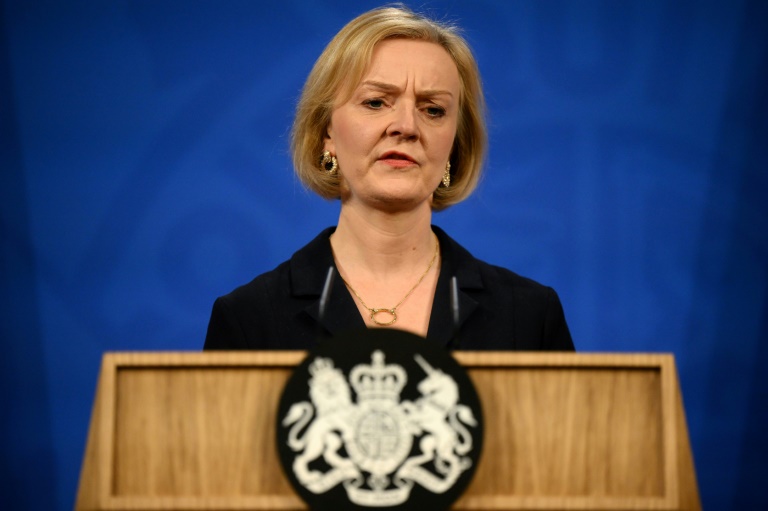
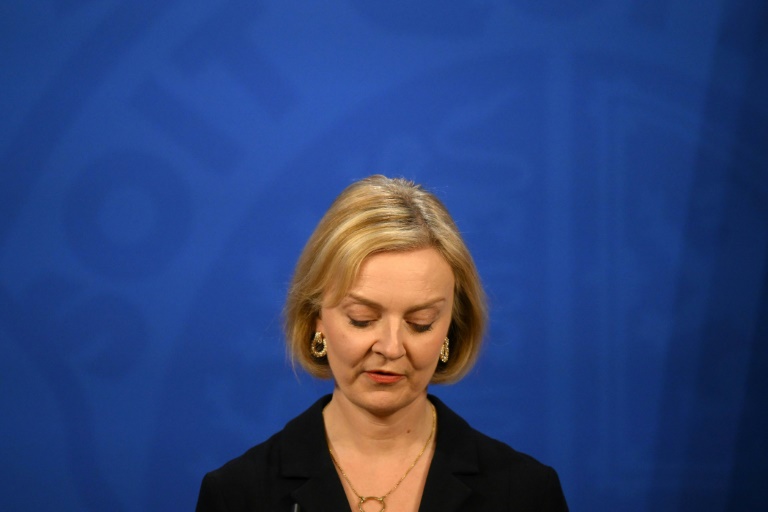
British Prime Minister Liz Truss on Friday fired her finance minister and abandoned the key plank of her right-wing economic platform, battling to salvage her new government as restive Conservatives plotted her own demise.

At her first news conference since succeeding Boris Johnson on September 6, Truss insisted she had acted “decisively” to bring about “economic stability” — but the pound resumed its slide on currency markets, falling under $1.12.

“We will get through this storm,” she said, taking only four questions, delivering terse replies, and prompting one journalist to shout as she left: “Aren’t you going to say sorry?”

Truss refused to comment on whether she retains any credibility after dismissing Kwasi Kwarteng as chancellor of the exchequer for implementing her own agenda.

“I want to deliver a low-tax, high-wage, high-growth economy,” she said. “That mission remains.”

Kwarteng, who had rushed back early from international meetings in Washington, was replaced by the centrist former foreign secretary and Tory leadership candidate Jeremy Hunt as Britain’s fourth chancellor this year.

Financial upheaval sparked by the new government’s September 23 plan to slash taxes — financed via billions in more borrowing — had subsided somewhat since the Bank of England intervened in bond markets.

But the central bank was adamant it would end its bond-buying spree on Friday, and market analysts said only a bigger climbdown by Truss following Kwarteng’s disastrous budget announcement last month would avert fresh panic.

She duly delivered the U-turn by announcing she would retain the Johnson government’s plan to raise profits tax on companies — having already changed her mind about cutting income tax for the highest earners.

The promised tax reforms were the centrepiece of Truss’s successful pitch to Tory party members that she, rather than rival Rishi Sunak, was the best candidate to replace Johnson. 

That programme now lies in tatters, and Truss’s judgement is in question more than ever, after Sunak’s warnings were entirely vindicated: higher borrowing to pay for tax cuts served only to terrify the markets and drive up costs for millions of Britons.

Britain’s 10-year government bond yield wobbled in afternoon trading.

– Collapsing polls –

A new YouGov poll for The Times newspaper said 43 percent of Conservative voters want a new prime minister in Downing Street.

Other polls show a mammoth lead up opening up for the main opposition Labour party, threatening electoral meltdown for the Tories. 

Labour leader Keir Starmer said that ditching Kwarteng would not “undo the damage made in Downing Street”.

“Liz Truss’ reckless approach has crashed the economy, causing mortgages to skyrocket, and has undermined Britain’s standing on the world stage,” he said.

Tony Travers, from the London School of Economics, told AFP that Kwarteng had been made “the fall guy for the government’s mistakes” — but that the sacking had not taken the pressure off Truss or calmed the Tories.

“It’s very hard to see them coming back from this” by the next election, he added.

– ‘Sticking plaster’ –

Kwarteng was due to have stayed in Washington this weekend to conclude annual meetings of the International Monetary Fund and World Bank, after having earned a rebuke from IMF chief Kristalina Georgieva on the need for “coherent and consistent” policies.

Speaking in Washington on Thursday, Kwarteng had insisted that his job was safe. “I’m not going anywhere,” he said.

But UK broadcasters showed live footage of Kwarteng’s British Airways plane landing at Heathrow airport a day early, after Truss held hurried meetings with her own financial advisors on Thursday in his absence.

Multiple reports said that senior Tory MPs were plotting to unseat Truss by installing a new leadership team under Sunak and Penny Mordaunt, who also ran to succeed Johnson.

Party grandees could move next week, senior BBC journalist Nick Watt tweeted.

“They said not tenable for PM to remain after sacking @KwasiKwarteng who was implementing the programme that won her the Tory leadership,” he wrote.

Analysts noted that even with the new U-turn, Truss’s reform package still relied on unfunded tax cuts of £25 billion.

“The writing was on the wall when markets surged in anticipatory delight on the news that another post budget U-turn was imminent and moves on corporation tax have gone a long way to bolstering sentiment today,” AJ Bell financial analyst Danni Hewson said.

“But it’s a sticking plaster that’s already curling at the edges,” she added.

Close Bitnami banner
Bitnami