World

Royal Mail plans up to 10,000 job cuts

British postal operator Royal Mail on Friday unveiled plans to axe up to 10,000 jobs, blaming the move partly on ongoing staff strikes that contributed to a first-half loss.

The announcement came one day after staff staged the first of 19 walkouts targeting the critical run-up to Christmas, joining several other UK sectors carrying out industrial action as sky-high inflation erodes the value of wages.

Royal Mail’s job cuts follow “the impact of industrial action, delays in delivering agreed productivity improvements and lower parcel volumes”, its parent group said in a results statement, sending shares tanking.

“Our operational full-time employee workforce will need to reduce by an estimated 10,000 by the end of August 2023,” International Distributions Services added alongside news it had plunged into the red.

– ‘Gross mismanagement’ –

The planned job losses comprise almost seven percent of Royal Mail’s total workforce of 150,000 people.

The restructuring includes up to 6,000 compulsory redundancies.

Dave Ward, general secretary of the CWU union that has organised Royal Mail walkouts, said the job cuts were “the result of gross mismanagement “.

He added there had been “a failed business agenda of ending daily deliveries, a wholesale levelling-down of the terms, pay and conditions of postal workers, and turning Royal Mail into a gig economy-style parcel courier”.

The group suffered an operating loss of £219 million ($245 million) in the six months to the end of September, it added Friday.

That contrasted sharply with profit of £235 million a year earlier, when it was buoyed by strong parcel demand during the pandemic.

“It now expects full-year losses to hit £350 million, which is the figure it had hoped to make in cost savings before the strikes erupted,” noted Susannah Streeter, senior investment and markets analyst at Hargreaves Lansdown.

The threat of further strike action beyond Christmas “means that no certainty can be given over the full year outlook for the group as a whole”, she added.

Royal Mail said full-year operating losses could increase to £450 million should “customers move volume away for longer periods” as a result of strike action.

The share price of International Distributions Services was down more than eight percent at 192.65 pence in afternoon London trading, having recovered from even sharper losses following Friday’s news.

– Royal makeover –

Set up more than 500 years ago, Royal Mail has experienced some of its most turbulent times during the past decade, particularly following its controversial privatisation in 2013.

The firm’s core letters business has been ravaged as consumers increasingly go online to communicate.

However, it enjoyed booming demand for parcel deliveries during Britain’s Covid lockdowns — and played a vital role delivering test kits and protective clothing in the pandemic.

Yet the Covid-era boom in parcels has tailed off.

Following the death of Queen Elizabeth II last month, all new Royal Mail postboxes will no longer feature the EIIR royal cipher.

The cipher stood for Elizabeth II Regina (“queen” in Latin).

Instead they will be imprinted with CIIIR, representing Charles III Rex (“king” in Latin). A crown will feature above both letters.

New British stamps will also feature an image of his head.
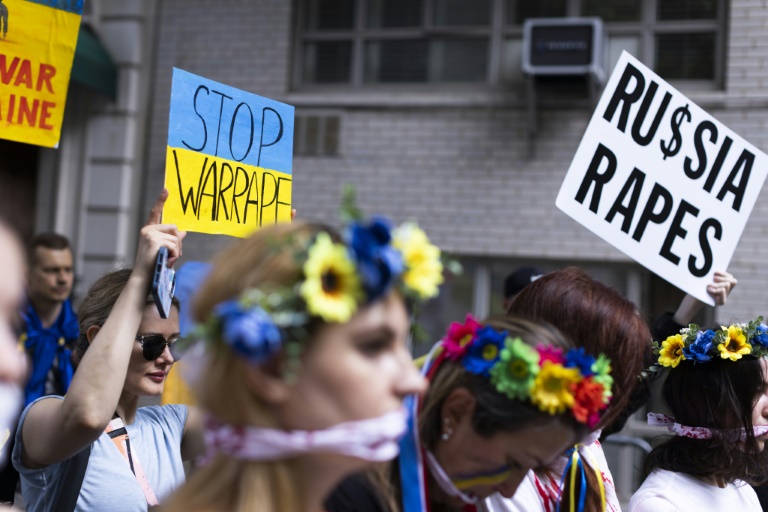
Rape used in Ukraine as a Russian 'military strategy:' UN

Rape and sexual assault attributed to Moscow’s forces in Ukraine are part of a Russian “military strategy” and a “deliberate tactic to dehumanise the victims”, UN envoy Pramila Patten told AFP in an interview.

“All the indications are there,” the UN special representative on sexual violence told AFP on Thursday, when asked if rape was being used as a weapon of war in Ukraine.

“When women are held for days and raped, when you start to rape little boys and men, when you see a series of genital mutilations, when you hear women testify about Russian soldiers equipped with Viagra, it’s clearly a military strategy,” she said.

“And when the victims report what was said during the rapes, it is clearly a deliberate tactic to dehumanise the victims.”

The United Nations has verified “more than a hundred cases” of rape or sexual assault since the beginning of the war, Patten said.

The first cases were reported just “three days after the invasion of Ukraine” on February 24, she added, referring to a UN report released in late September.

The report “confirmed crimes against humanity committed by the Russian forces, and according to gathered testimonies, the age of the victims of sexual violence ranges from four to 82 years old,” Patten said.

The victims are mostly women and girls, but also men and boys, she added.

“There are many cases of sexual violence against children who are raped, tortured and kept hostage,” she said.

But “reported cases are only the tip of the iceberg,” she added.

“It’s very difficult to have reliable statistics during an active conflict, and the numbers will never reflect reality, because sexual violence is a silent crime” that is largely underreported.

– ‘World is watching’ –

Patten said her fight against sexual violence was “a battle against impunity”.

“That’s why I went to Ukraine (in May): to send a strong signal to the victims, to tell them that we stand with them and to ask them to break their silence,” she said.

But it was “also to send a strong signal to the rapists. The world is watching them, and raping a woman or girl, man or boy, will not be without consequences”.

Rape as a weapon of war has been reported in conflicts worldwide, from Bosnia to the Democratic Republic of Congo.

But the war in Ukraine has marked a turning point in international attitudes, the UN envoy said.

“There is now political will to fight impunity, and there is consensus today on the fact that rapes are used as a military tactic, a terror tactic,” Patten said.

“Is it because it is now happening in the heart of Europe? That might be it.” 

She said she hoped, however, that the focus on Ukraine would not detract from other conflicts.

“I find this attention to… sexual violence linked to conflicts to be very positive,” she said, unlike in the past when the issue was viewed as “unavoidable”, mere “collateral damage” or even a “cultural issue”.

Patten said she was also concerned about the risk of human trafficking.

“The women, girls and children who have fled Ukraine are very, very vulnerable, and for predators, what is happening in that country is not a tragedy but an opportunity,” she said.

“People trafficking is an invisible crime, but it’s a major crisis.”

More than seven million Ukrainians have fled the fighting into other European countries since the war started, the UN refugee agency says.

Liz Truss's political journey takes perilous new twist

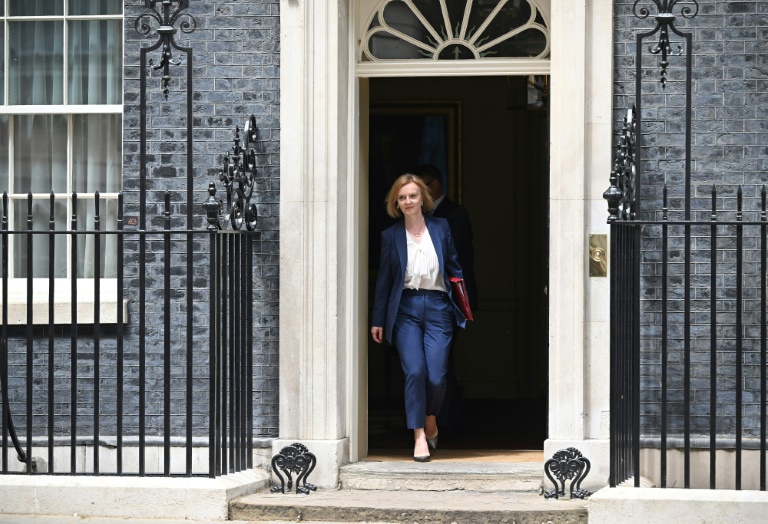
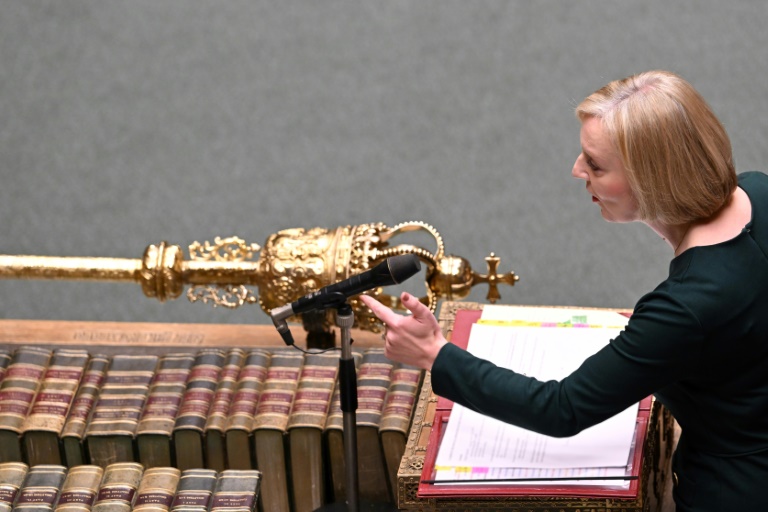
British Prime Minister Liz Truss won power by appealing to Conservative members as the heir to Margaret Thatcher. Barely six weeks into her tenure, her hard-right economic platform lies in ruins.

Truss succeeded Boris Johnson by telling the Tory rank-and-file that she would turbo-charge economic growth through tax cuts, via increased borrowing. 

She accused her rival Rishi Sunak of “scaremongering” when he warned that such an approach at a time of rampant inflation would drive up interest rates for millions of Britons. 

But that is exactly what has happened, leading Truss on Friday to part ways with her finance minister, Kwasi Kwarteng, a fellow traveller on her political journey to the free-market, libertarian right.

Yet the chancellor of the exchequer was merely the public face for Truss’s own agenda when he delivered his disastrous budget announcement on September 23.

Kwarteng’s sacrifice may not prove enough. Senior Tory MPs bidding to unseat Truss are said to be plotting ways to deny the party membership another say in their choice of leader.

Truss is no stranger to screeching U-turns. She began her political journey as the Liberal Democrat-supporting daughter of progressive parents, and opposed the monarchy and Brexit.

Her youthful calls to abolish the royal family ran headlong into her new role when Queen Elizabeth II died on September 8, only two days after appointing Truss. 

The new prime minister paid tribute to the late monarch, curtsied to King Charles III, and joined the queen’s successor on a tour of his new UK realms. 

But her tribute from the steps of 10 Downing Street was widely seen as stilted, betraying the leaden oratory of Truss in comparison to the verbal theatrics of Johnson.

Yet after the scandal-ridden Johnson, Truss’s unvarnished style and promises of a right-wing agenda found favour with the Tory membership.

– ‘Human hand grenade’ –

“She’s always been outspoken. She’s always been a disrupter,” said Mark Littlewood, head of the Institute of Economic Affairs think-tank and a former member of Oxford University’s Liberal Democrat club with Truss.

“You really need to understand Elizabeth Truss as a kind of free-market liberal,” he told AFP when she took power.

Truss’s rise to become the UK’s third female prime minister has inevitably led to comparisons with the first: Thatcher.

As foreign secretary for the past year, Truss had been pictured riding atop a tank and sporting a Russian fur hat in Moscow, just like the Tory icon.

Johnson’s former top aide Dominic Cummings likened her to a “human hand grenade”, and some MPs have accused her of excessive self-promotion.

Truss admits to not being the “slickest presenter”. She is still mocked online for a bizarre speech she gave as environment minister in 2014, offering impassioned support for British cheese and pork.

– Liberal to Tory –

Truss grew up first in Scotland and then an affluent suburb of Leeds, northern England. 

Her mother was a nurse, teacher and campaigner for nuclear disarmament who took her on protests, and her father was a left-wing maths professor.

During the Tory leadership campaign, Truss criticised her Leeds school for fostering “low expectations”.

That prompted a backlash from teachers, contemporaries and locals who accused her of inventing an “insulting” backstory to curry favour with the Tory right.

Despite the school’s supposed failings, she went on to Oxford, where — like Sunak — she graduated in philosophy, politics and economics.

At Oxford, she was president of the university’s Liberal Democrat branch. At the party’s national conference in 1994, she gave a speech calling for the abolition of the monarchy.

“I was a bit of a teenage controversialist,” Truss admitted during campaigning. 

By her own admission, her switch to the Conservatives shocked her parents, but she says her beliefs had evolved.

After university, Truss worked in the energy sector, including for Shell, and telecommunications before entering politics a decade later.  

She was a local councillor in southeast London for four years and became an MP in 2010, part of a new generation of women and minority candidates encouraged by then party leader David Cameron.

He faced down protests from the local party in the agricultural South West Norfolk constituency, after it emerged that Truss had been having an extra-marital affair with a fellow Tory. 

Her critics were dubbed the “Turnip Taliban”.

Truss’s marriage to an accountant survived the episode. They have two daughters.

Eco-activists throw soup over Van Gogh's 'Sunflowers' in London

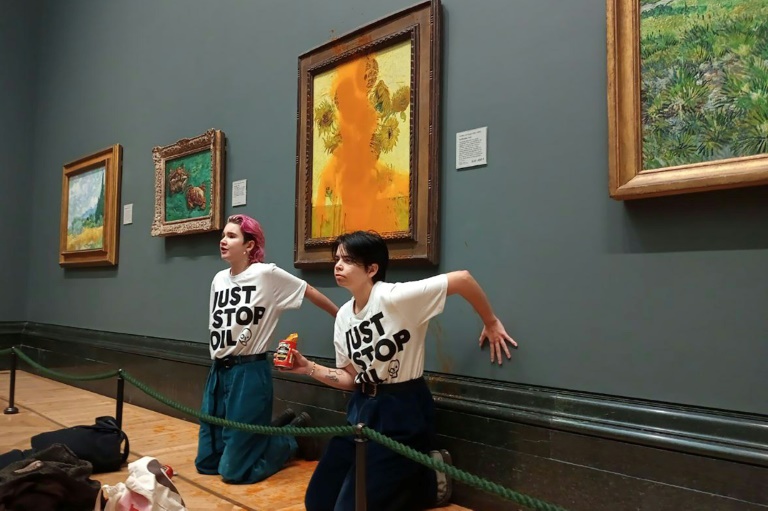
Environmental protesters on Friday threw tomato soup over Vincent van Gogh’s “Sunflowers” painting at the London’s National Gallery, in the latest “direct-action” stunt targeting works of art.

The gallery said the protesters caused “minor damage to the frame but the painting is unharmed”.

Just Stop Oil aims to end UK government involvement in oil and gas and has mounted a series of high-profile protests.

London’s Metropolitan Police said its officers arrested two protesters from the group for criminal damage and aggravated trespass after they “threw a substance over a painting” at the gallery on Trafalgar Square and glued themselves to a wall just after 11 am (1000 GMT).

Police said they had unglued the protesters and taken them to a central London police station.

The National Gallery said the two protesters “appeared to glue themselves to the wall adjacent to Van Gogh’s ‘Sunflowers'” and threw a “red substance” at the painting. The room was cleared of visitors and police called, it added.

A video posted on Twitter by the Guardian newspaper’s environment correspondent Damien Gayle and retweeted by the eco-activism group shows two women wearing T-shirts with the slogan “Just Stop Oil” lobbing cans of soup at the iconic painting.

After glueing themselves to the wall, one of the activists shouts: “What is worth more, art or life?”

“Are you more concerned about the protection of a painting or the protection of our planet and people?” she asks.

In the video, someone can be heard yelling “oh my God” as the soup hits the canvas, and another person shouts “Security?” while soup drips from the frame onto the floor.

Just Stop Oil said in a statement its activists threw two cans of Heinz Tomato soup over the painting to demand the UK government halt all new oil and gas projects.

It later tweeted that the protest’s message was “Choose life over art”.

“Human creativity and brilliance is on show in this gallery, yet our heritage is being destroyed by our Government’s failure to act on the climate and cost of living crisis,” the group said.

The activist group said the painting has an estimated value of $84.2 million.

The National Gallery on its website says the signed painting from 1888 was acquired by the gallery in 1924. 

It is one of five versions of “Sunflowers” on public display in museums and galleries across the world. Van Gogh created seven in total.

– ‘Cross a line’ –

The gallery called the works “among Van Gogh’s most iconic and best-loved works”.

The attack came a week after Britain’s Home Secretary Suella Braverman issued a threat to direct-action protesters who she said were using “guerrilla tactics” to bring “chaos and misery” to the public.

“Whether you’re Just Stop Oil, Insulate Britain or Extinction Rebellion, you cross a line when you break the law — and that’s why we’ll keep putting you behind bars,” she said.

Just Stop Oil has previously targeted several other famous paintings with glue attacks.

In June, two activists glued their hands to the frame of van Gogh’s painting “Peach Trees in Blossom” at the Courtauld Gallery in London.

In July, supporters glued their hands to the frame of British painter John Constable’s “The Hay Wain” at the National Gallery.

They first taped over the canvas with a “reimagined version” of the bucolic scene, showing the landscape covered in pollution, dotted with wildfires and overflown by aircraft. 

In the same month, they glued themselves to a full-scale copy of Leonardo Da Vinci’s “The Last Supper” at the Royal Academy in London.

In recent days, Just Stop Oil has held multiple protests blocking highways.

Met Police Commissioner Mark Rowley said of the protests that he was “frustrated so many officers are being taken away from tackling issues that matter most to communities.”

Sweden parties agree to form govt with far-right backing

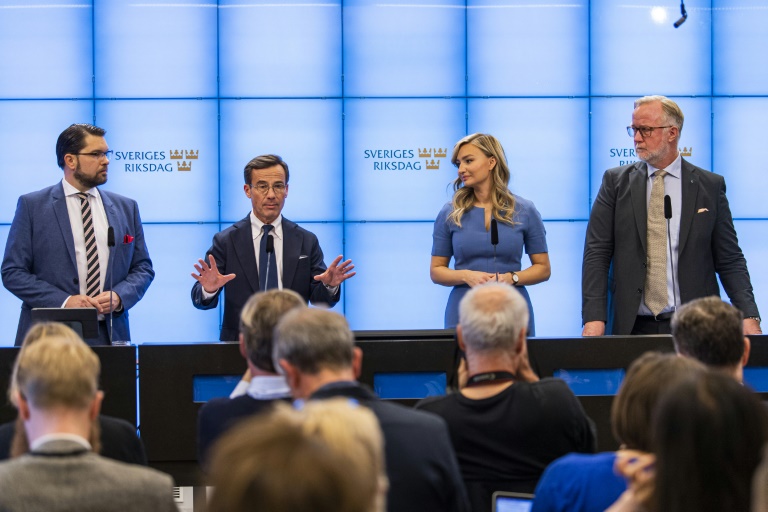
Three Swedish right-wing parties will build a minority government with the unprecedented backing of the far-right Sweden Democrats, the parties said Friday, unveiling plans for new nuclear reactors and a crime and immigration crackdown.

The incoming government will be made up of the conservative Moderates, Christian Democrats and Liberals, with the far-right Sweden Democrats remaining outside the coalition but providing key support in parliament.

The four presented a 62-page roadmap Friday for their cooperation, outlining measures to address what they defined as the biggest challenges facing Sweden: rising crime, immigration, energy, healthcare, education, the economy and the climate.

“All this in what is possibly the most dangerous time for Sweden since World War II,” Moderates leader Ulf Kristesson told reporters in a reference to the war raging in Ukraine which prompted Sweden’s historic NATO membership application.

Parliament will vote on Kristersson as the new prime minister on Monday and the future government is expected to take office on Tuesday, just over a month after the right-wing won a narrow victory in a general election that ousted the Social Democrats after eight years in power.

The anti-immigration and nationalist Sweden Democrats, once shunned as pariahs on Sweden’s political scene, were the big winners of the September 11 vote.

They emerged as the country’s second-largest party with a record 20.5 percent of votes, behind outgoing prime minister Magdalena Andersson’s Social Democrats, which have dominated Swedish politics since the 1930s.

– Concessions to far-right –

While far-right leader Jimmie Akesson said he “would have preferred to sit in government”, he stressed that the most important thing was that his party has influence over policy and that “the change of government represent a paradigm shift”.

“We are going to deliver policy, especially in those areas our voters think are extra important, and crime policy is one such area,” he told reporters.

While the quartet presented a united front on Friday, they have traditionally been divided on a number of key policy areas and major concessions were made in the agreement, primarily to meet the far-right’s demands.

As Sweden struggles to contain soaring gang shootings, the roadmap calls for body searches in some disadvantaged areas, harsher sentences for repeat offenders, double sentences for certain crimes and anonymous witnesses. These were all major concessions by the small Liberal party.

It also calls for major cuts to generous refugee policies in Sweden, a country of 10.5 million that has welcomed around half a million asylum seekers in the past decade.

The incoming government said it aims to reduce the number of quota refugees from 6,400 last year to 900 per year during its four-year mandate, and introduce incentives to encourage immigrants to return home.

It will also probe the possibility of keeping asylum seekers in transit centres during their application process, as well as ditch Sweden’s development aid target of one percent of GDP and introduce a national ban on begging.

In another measure bearing the stamp of the far-right, the parties also agreed to examine the possibility of “expelling foreigners for misconduct”.

“Anyone in Sweden enjoying Swedish hospitality has an obligation to respect fundamental Swedish values and not disrespect the local population by their actions”, the document said.

It gave failure to follow regulations or having ties to criminal organisations as an example of grounds for removal.

The four parties also agreed to not reduce unemployment benefits, a major concession to the far-right by the Moderates.

– More nuclear –

Meanwhile, the future government also announced plans to build new nuclear reactors to meet the country’s rising electricity needs.

“The goal going forward is electrification and the way there is nuclear power,” the leader of the Christian Democrats Ebba Busch told reporters.

Sweden has in recent years shut down six of its 12 reactors and the remaining ones, at three nuclear power plants, generate about 30 percent of the electricity used in the country today.

But it has struggled to find viable alternative energy sources to replace nuclear power, with renewable energy not yet sufficient to fully meet its needs.

The outgoing Social Democratic government, in power for the past eight years, has traditionally been opposed to the construction of new reactors but acknowledged earlier this year that nuclear energy would be crucial for the foreseeable future.

In June, Swedish energy group Vattenfall said it was examining the possibility of building at least two small modular nuclear reactors.

JPMorgan Chase reports lower profits, warns of economic 'headwinds'

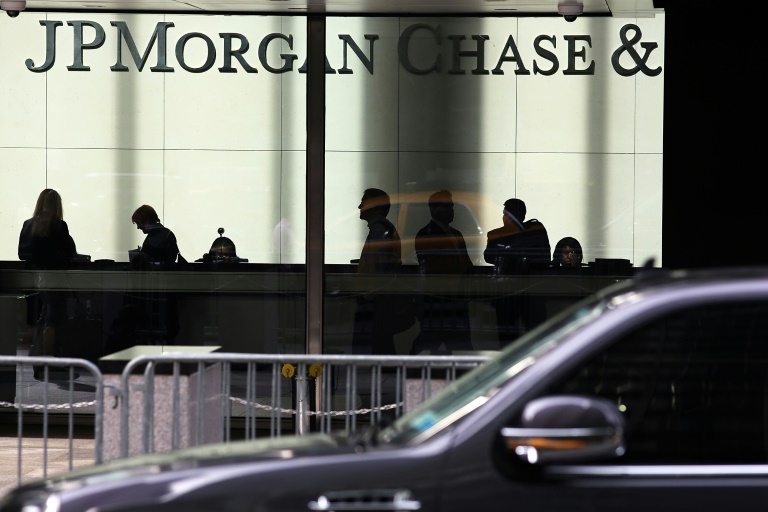
JPMorgan Chase reported a drop in third-quarter profits Friday as it set aside funds for potential loan defaults and highlighted the rising risk of recession.

Profits fell 17 percent to $9.7 billion on a 10 percent increase in revenues to $32.7 billion.

The results were dented by JPMorgan’s move to add $808 million in reserves for potential bad loans. In the year-ago period, profits were boosted by $2.1 billion in reserve releases.

The contrast reflects today’s much more subdued economic outlook compared with a year ago.

Higher interest rates helped boost the bank’s net interest income, but JPMorgan suffered a big drop in investment banking revenues.

Chief Executive Jamie Dimon said consumer spending remained robust during the period, but pointed to myriad risks facing the economy. 

“There are significant headwinds immediately in front of us –- stubbornly high inflation leading to higher global interest rates, the uncertain impacts of quantitative tightening, the war in Ukraine, which is increasing all geopolitical risks, and the fragile state of oil supply and prices,” Dimon said. 

“While we are hoping for the best, we always remain vigilant and are prepared for bad outcomes so we can continue to serve customers even in the most challenging of times.”

In an interview with CNBC earlier this week, Dimon said a US recession was likely in early-to-mid 2023 and that the stock market could fall another 20 percent.

Both earnings-per-share and revenues topped analyst expectations.

Shares rose 1.8 percent to $111.30 in pre-market trading.

Putin, Baku criticise Macron for 'unacceptable' Karabakh remarks

Russian President Vladimir Putin and Azerbaijan on Friday slammed “unacceptable” comments from French leader Emmanuel Macron’s on the decades-long conflict between arch foes Baku and Yerevan.

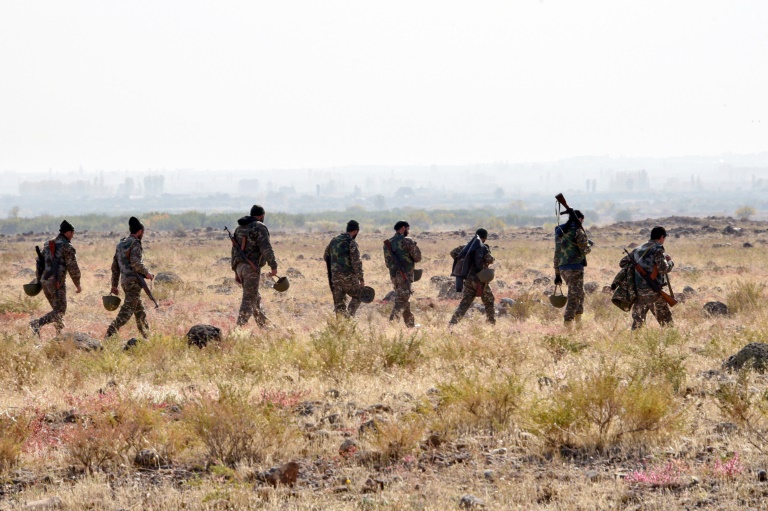
The Caucasus neighbours have fought two wars — in 2020 and in the 1990s — over Azerbaijan’s Armenian populated region of Nagorno-Karabakh.

Deadly clashes in September along the Armenian-Azerbaijani border have raised the fears of a fresh all-out conflict.

In comments to French television Wednesday, Macron accused Russia of “destabilising” and “seeking to create disorder” in the Caucasus.

The French leader’s remarks “show a lack of understanding of the course of the conflict,” Putin said during a meeting of leaders of Commonwealth of Independent States members in Kazakhstan. 

He added that Macron’s accusations “sounded incorrect” and were “unacceptable”.

“There will be an opportunity” to “discuss” this with Macron, Putin said as he also invited the leaders of Armenia and Azerbaijan to Russia for talks “at any time, in any place”.

“Russia has always sincerely sought to resolve any conflicts, including issues related to Karabakh,” he said. 

Macron also accused Azerbaijan of launching “a terrible war, with many deaths, atrocious scenes”.

More recently, “Azerbaijan has launched several offensives along the border (with Armenia). We have condemned them. We will not abandon Armenians,” he said.

The foreign ministry in Baku reacted angrily Friday, saying the remarks were “unacceptable and biased”.

“Azerbaijan is forced to reconsider France’s efforts in mediating” Armenian-Azerbaijani talks, it said.

– Future peace treaty –

On Friday Russia’s Foreign Minister Sergei Lavrov, Armenian counterpart Ararat Mirzoyan and Azerbaijan’s Jeyhun Bayramov met for talks in the Kazakh capital Astana.

Russian, Armenian, and Azerbaijani foreign ministries said the trio discussed joint efforts on normalising Azerbaijani-Armenian relations.

The meeting was held amid the growing Western engagement in the volatile Caucasus region, where Russia — distracted by its war in Ukraine — is visibly losing influence after decades of domination.

On Wednesday, Kremlin foreign policy advisor Yuri Ushakov criticised the “attempts of non-regional players — the EU and US — to wedge themselves in our work” on the region.

With Moscow increasingly isolated on the world stage following its February invasion of Ukraine, the US and the EU have taken a leading role in mediating the Armenia-Azerbaijan peace talks.

Last week, the European Union announced a “civilian EU mission” to Armenia to help delineate the borders with Azerbaijan.

Following a slew of diplomatic efforts from Brussels and Washington, Armenian and Azerbaijani foreign ministers met on October 3 in Geneva to begin drafting the text of a future peace treaty.

In September, more than 285 people were killed in border clashes at the Caucasus neighbours’ border, before a US-brokered truce ended the worst fighting since their 2020 war. 

That six-week war in autumn 2020 claimed the lives of more than 6,500 troops from both sides and ended with a Russian-brokered ceasefire.

Under the deal, Armenia ceded swathes of territory it had controlled for decades, and Moscow deployed about 2,000 Russian peacekeepers to oversee the fragile truce.

When the Soviet Union collapsed in 1991, ethnic Armenian separatists in Nagorno-Karabakh broke away from Azerbaijan. The ensuing conflict claimed around 30,000 lives.

Equities soar despite hot US inflation, pound dips on uncertainty

Asian and European equities rallied Friday despite news of surging US inflation, while the pound dipped on uncertainty over Britain’s controversial budget.

The yen held around three-decade dollar lows as rampant US consumer prices cemented expectations of more hefty Federal Reserve rate hikes.

London stocks rose as British finance minister Kwasi Kwarteng flew back one day early from a key IMF gathering in Washington, stoking speculation of another U-turn over his debt-fuelled measures that sparked recent markets turmoil.

He was also reported to have lost his job.

The pound dipped before the Bank of England ends later Friday its emergency bond-buying policy that sought to stem the turbulence.

– ‘Astonishing rebound’ –

“Markets staged an astonishing rebound despite a hotter-than-expected inflation report in the United States,” said Interactive Investor analyst Richard Hunter on the broad-based gains.

“The reasons… were not immediately clear, although traders pointed to a technical rebound as investors unwound defensive positions which had been in place ahead of the inflation report.”

US CPI inflation data showed prices rose last month at a faster clip than expected, despite this year’s series of Fed interest rate hikes which have fanned fears of a global recession.

The month-on-month reading came in double estimates, while core inflation — which strips out volatile energy and food prices — was also elevated.

The figures sparked a sharp plunge on Wall Street but the selling quickly reversed, and all three main indexes finished the day with gains of more than two percent.

“It could be argued that yesterday’s hotter-than-expected CPI reading may well have been partially priced in as far as stock markets were concerned,” noted CMC Markets analyst Michael Hewson.

Investors are awaiting quarterly results Friday from US banks Citigroup, JPMorgan Chase and Wells Fargo.

The updates “could offer some important insights into how US consumers are spending their money”, added Hewson.

Markets meanwhile remain on tenterhooks that the UK government was set to perform another U-turn on last month’s tax-slashing budget.

Speculation had been swirling that British Prime Minister Liz Truss could sack Kwarteng over the badly-received budget, with the BBC reporting that he had in fact lost his job.

The pound had rallied sharply Thursday on reports the new government could row back on more tax-cut pledges.

Truss has insisted that there would be no more U-turns, after she was previously forced to scrap a plan to cut tax on the richest earners. 

Meanwhile, the yen’s weakness comes from the Bank of Japan’s refusal to lift interest rates — citing a need to support the economy — just as the Fed presses ahead with hefty hikes in borrowing costs.

– Key figures around 1115 GMT –

London – FTSE 100: UP 1.3 percent at 6,938.57 points

Frankfurt – DAX: UP 1.3 percent at 12,520.35

Paris – CAC 40: UP 1.7 percent at 5,977.18

EURO STOXX 50: UP 1.6 percent at 3,466.70

Tokyo – Nikkei 225: UP 3.3 percent at 27,090.76 (close)

Hong Kong – Hang Seng Index: UP 1.2 percent at 16,587.69 (close)

Shanghai – Composite: UP 1.8 percent at 3,071.99 (close)

New York – Dow: UP 2.8 percent at 30,038.72 (close)

Pound/dollar: DOWN at $1.1249 from $1.1326 Thursday

Dollar/yen: UP at 147.67 yen from 147.12 yen

Euro/dollar: DOWN at $0.9739 from $0.9776

Euro/pound: DOWN at 86.57 pence from 88.29 pence

Brent North Sea crude: DOWN 1.1 percent at $93.49 per barrel

West Texas Intermediate: DOWN 1.2 percent at $88.06 per barrel

Moscow orders Crimea bridge to be repaired by July 2023

Russia indicated Friday repairs to the Crimea bridge could take months after an explosion on the key supply link that sparked a barrage of retaliatory missile strikes on Ukraine.

Nearly eight months into Moscow’s offensive in Ukraine, Kyiv’s emboldened military was celebrating Defender’s Day while a UN envoy claimed Russia’s forces were using rape as a weapon.

Those celebrations come after pro-Kremlin authorities in the southern Kherson region pleaded with Moscow for help evacuating civilians in the face of an advancing Ukrainian counter-offensive.

At the same time, Russian-backed forces in the east have announced they are inching closer to the Ukraine-held down of Bakhmut in the eastern Donetsk region.

Russian President Vladimir Putin described the explosion on the Crimea bridge last week as a terrorist act and in retaliation battered Ukraine for two days with missiles that hit energy facilities and caused blackouts and disruption to water supplies.

Russia’s cabinet, in a decree signed by Prime Minister Mikhail Mishustin, ordered the company tasked with the “design and restoration of destroyed elements of the transport and engineering infrastructure of the Crimean Bridge” to complete the work by July 1, 2023.

The date for work to be completed gives an indication of the extent of the damage caused by an explosion at the bridge last Saturday, and officials in Moscow have been circumspect about the lasting impact of the incident.

– Ukraine ‘will definitely win’ –

They did however say hours after the blast — blamed on Ukraine special forces — that both road and rail traffic had been restored.

The bridge is logistically crucial for Moscow — a vital transport link for moving military equipment to Russian soldiers fighting in Ukraine.

It is also symbolically important to Putin, who inaugurated the bridge in 2018 several years after he annexed the peninsula from Ukraine to a chorus of Western condemnation.

In Kyiv Friday, President Volodymyr Zelensky vowed that Ukrainian forces would be victorious over Russian forces during events marking the country’s first Defender’s Day celebrations.

He also laid a wreath at a memorial for soldiers killed since 2014, when Kremlin-backed separatists wrested control of two eastern regions and appealed in February for Russia to intervene.

“The world is with us, more than ever. This makes us stronger than ever in history,” he added in reference to unprecedented Western aid.

Ukrainian forces mounted a counter-offensive in the south towards the end of the summer and have been pushing closer and closer to the main city in the Kherson region, also called Kherson.

On Friday, Moscow-installed authorities of the region renewed a call for residents to temporarily leave, with reports that Ukrainian forces have been gaining ground near Kherson.

– Advance on Kherson –

“The bombardments of the Kherson region are dangerous for civilians,” Kirill Stremousov, the deputy head of the pro-Russian regional administration said, calling on residents to take a trip for “rest and recreation” elsewhere.

But in the east, pro-Russian forces said they were closing in on the industrial city of Bakhmut after they reported the capture of two villages on the city’s outskirts this week.

An official of the so-called Lugansk People’s Republic, a breakaway region in east Ukraine, said “active hostilities were underway” within Bakhmut.

“Our forces are confidently marching and liberating this settlement,” the official, Andriy Marochko, was quoted as saying by Russia’s state-run TASS news agency. 

Also this week, UN envoy Pramila Patten told AFP in an interview that rapes and sexual assaults attributed to Moscow’s forces in Ukraine are part of a Russian “military strategy” and a “deliberate tactic to dehumanise the victims”. 

“When you hear women testify about Russian soldiers equipped with Viagra, it’s clearly a military strategy,” the UN special representative on sexual violence said Thursday. “It is clearly a deliberate tactic to dehumanise the victims.”

Irish minister senses 'warmer' UK tone in post-Brexit talks

Ireland has detected a “warmer” tone from the new UK government as Britain and the EU seek compromise on a controversial post-Brexit deal for Northern Ireland, the Irish European Affairs minister told AFP.

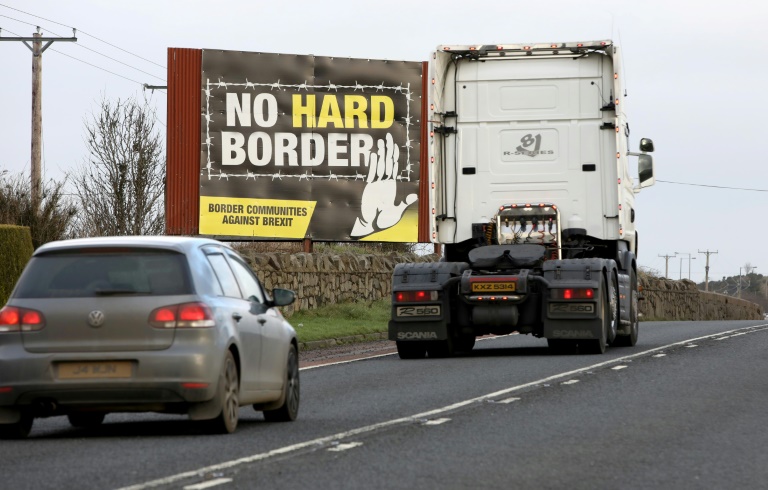
A fresh approach by Britain under Prime Minister Liz Truss was “welcome”, given the complex task of implementing the so-called Northern Ireland protocol that aims to avoid a hard border between the British province and the Irish Republic as a result of Brexit, Thomas Byrne said in an interview during a visit to France.

“What we’ve seen in recent weeks is a real effort by the British to engage with us, in every possible way, with more frequent contact,” Byrne said. “We’re definitely on a new plane, it’s warmer, it’s more frequent, I hope it will be deeper.”

– ‘We had to be measured’ –

Truss’s predecessor, Boris Johnson, angered the Irish government and the rest of the European Union by backtracking on the protocol, drawing accusations of violating the Brexit divorce treaty.

Describing Irish relations with the Johnson government, Byrne said: “Maybe ‘provocation’ is too strong a word, but there were times when we certainly had to be particularly measured in our responses.”

The Johnson government in June introduced legislation to rip up the Northern Ireland protocol — which is part of Britain’s exit deal with the EU — sparking fears of a trade war and worsening relations with Europe.

Dublin called the move “a particular low point in the UK’s approach to Brexit”.

Earlier this month Steve Baker, a British government minister, told Irish broadcaster RTE that he was “sorry that relations between the United Kingdom and Ireland have been soured by the Brexit process”.

– ‘Engage, engage, engage’ –

Byrne said his government was not looking for apologies. “We just want to engage, engage, engage,” he said.

But he added: “We really welcome this change of tone, we acknowledge it, we’re happy with it.”

Recent events, including the death of Queen Elizabeth, have been occasions to confirm the improved relations.

“There was a very warm response from the Irish side when the Queen died,” Byrne said.

He added that Irish President Michael D. Higgins had observed, based on conversations with the Queen, and then with King Charles III, “that the royal family in Britain is deeply committed to the peace process, and we find that very helpful”.

The president “hoped that would permeate through to the system”, he said.

Byrne said British help and sympathies had been forthcoming this month when a blast at a petrol station in northwest Ireland killed 10.

– ‘Must be complied with’ –

The Northern Ireland protocol has been contentious because it calls for checks of goods between the province and the rest of the UK, sparking opposition from unionist parties in Northern Ireland which say it undermines the integrity of the United Kingdom.

“Where we are at the moment is that the Northern Ireland protocol is in operation, it’s not being operated maybe to its fullest degree,” Byrne said.

He acknowledged that “some people in opposition to it are interested in eliminating it, essentially”, but said that would not happen.

“Our basic principle is that it’s an international agreement, and no matter the context, it must be complied with,” he said.

However, “there’s a special context here, it’s Northern Ireland”, he said.

“We need everybody working together, particularly at the higher level, the Dublin government, the London government and Brussels, working together, speaking with one voice,” he said.

The aim, he added, was to give Northern Ireland “the best of both worlds, access to the EU and access to the British market”.

Britain and Ireland both joined the EU’s predecessor, the European Communities (EC), in 1973.

“What we saw during the time of our joint membership was, first of all, increased prosperity, and less dependence on Britain, actually, for trade, but warmer relations over time, culminating in the Good Friday agreement, and really close personal connections,” Byrne said.

The Good Friday deal ended most of the sectarian violence seen in Northern Ireland since the 1960s.

Border infrastructure had been a flashpoint during the three decades of conflict, making an open border central to the peace deal.

In the interview, Byrne said there had been “absolutely extraordinary solidarity here in France and in all the member states of the EU” with Ireland.

“They want and need to engage with Britain on lots of issues, particularly Ukraine, but to do that, agreements that Britain has signed must be complied with,” he said.

Close Bitnami banner
Bitnami