World

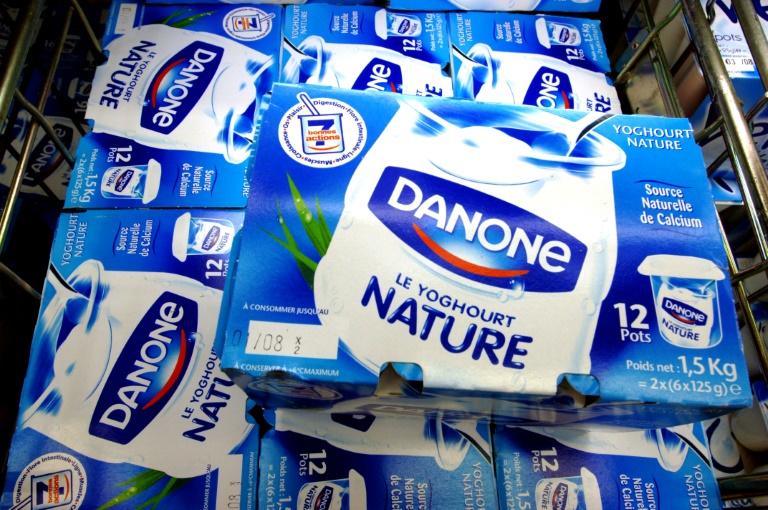
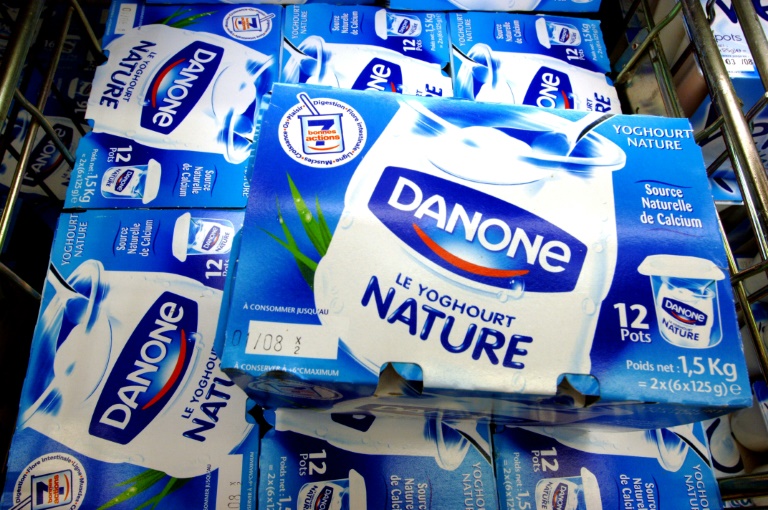
Danone plans to withdraw from most of its business in Russia

French agribusiness Danone said Friday it planned to transfer control of its essential dairy and plant-based business in Russia, retaining only its infant nutrition branch.

One of the few multinationals to have remained in Russia since the Ukraine war, Danone said the move to “transfer the effective control” of the dairy business could result in a write off of up to one billion euros ($980 million).

The arm represented five percent of Danone’s net sales in 2022 so far.

“Danone considers that this is the best option to ensure long-term local business continuity, for its employees, consumers and partners,” the group said in a statement.

The transaction will be subject to the approval of authorities, the group added.

Danone will however retain the activities of its “specialised nutrition” arm, which includes infant milk.

“Danone’s priority remains to act responsibly and respectfully to its local employees, consumers, and partners throughout the process,” the statement said Friday.

In March, the French group said it would continue its business in Russia, where it employs 8,000 people, as many international companies suspended operations in the wake of Moscow’s invasion of Ukraine.

But Danone spoke in July of the “extremely tense” operational conditions in Russia and Ukraine.

– Multinational exodus –

A large number of major western companies have pulled out of Russia in an exodus since Moscow invaded its pro-Western neighbour on February 24.

Starbucks and McDonald’s were among American corporations to announce their exit.

McDonald’s — which had employed 62,000 workers in Russia — was bought by Russian businessman Alexander Govor and renamed “Vkusno i tochka” (“Delicious. Full Stop”).

The Russian operations of Starbucks were also bought and reopened with a new name and logo.

Denmark’s Lego, the world’s largest toymaker, said in July that it would “indefinitely cease commercial operations” in Russia, ending its partnership with the retail group that operated 81 stores on the brand’s behalf.

French automaker Renault left the country in May, handing over its assets in the country to the Russian government.

Other firms to wind down their Russian business include clothing brands Nike, Adidas and H&M, Swedish furniture giant Ikea, and US tech giant Cisco.

Danone plans to withdraw from most of its business in Russia

French agribusiness Danone said Friday it planned to transfer control of its essential dairy and plant-based business in Russia, retaining only its infant nutrition branch.

One of the few multinationals to have remained in Russia since the Ukraine war, Danone said the move to “transfer the effective control” of the dairy business could result in a write off of up to one billion euros ($980 million).

The arm represented five percent of Danone’s net sales in 2022 so far.

“Danone considers that this is the best option to ensure long-term local business continuity, for its employees, consumers and partners,” the group said in a statement.

The transaction will be subject to the approval of authorities, the group added.

Danone will however retain the activities of its “specialised nutrition” arm, which includes infant milk.

“Danone’s priority remains to act responsibly and respectfully to its local employees, consumers, and partners throughout the process,” the statement said Friday.

In March, the French group said it would continue its business in Russia, where it employs 8,000 people, as many international companies suspended operations in the wake of Moscow’s invasion of Ukraine.

But Danone spoke in July of the “extremely tense” operational conditions in Russia and Ukraine.

– Multinational exodus –

A large number of major western companies have pulled out of Russia in an exodus since Moscow invaded its pro-Western neighbour on February 24.

Starbucks and McDonald’s were among American corporations to announce their exit.

McDonald’s — which had employed 62,000 workers in Russia — was bought by Russian businessman Alexander Govor and renamed “Vkusno i tochka” (“Delicious. Full Stop”).

The Russian operations of Starbucks were also bought and reopened with a new name and logo.

Denmark’s Lego, the world’s largest toymaker, said in July that it would “indefinitely cease commercial operations” in Russia, ending its partnership with the retail group that operated 81 stores on the brand’s behalf.

French automaker Renault left the country in May, handing over its assets in the country to the Russian government.

Other firms to wind down their Russian business include clothing brands Nike, Adidas and H&M, Swedish furniture giant Ikea, and US tech giant Cisco.

Murder rate plummets amid 'gangster peace' in Medellin

Seven days without a single murder: The month of August marked a security record for Colombia’s second city Medellin, the onetime fiefdom of infamous drug lord Pablo Escobar.

“In Medellin, security is measured in lives” saved, said Mayor Daniel Quintero as he welcomed the breakthrough.

Medellin has seen a vertiginous drop in homicides by 97 percent in the 30 years since Escobar’s death, transforming what used to be one of the most violent cities in the world into a popular tourist destination.

The success is attributed in large part to an unofficial but mutually beneficial understanding between narco gangs, paramilitaries and the security services.

“Peace is good for business,” explained Medellin drug dealer “Joaquin” (not his real name) of the traffickers’ motivation for avoiding violence.

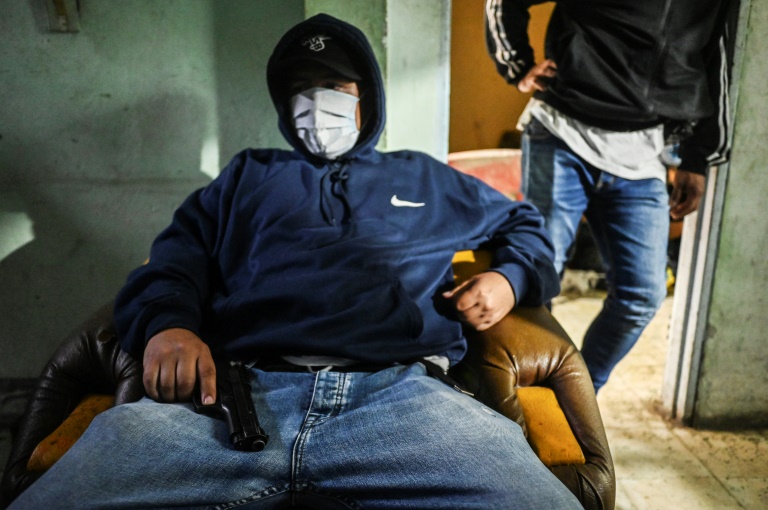
Joaquin is 37 years old — two of those spent behind bars. He wears an oversized baseball cap and sagging jeans.

A Beretta pistol peaks out from under his hoodie.

Joaquin is a “capo,” a junior boss supervising drug trafficking in the streets of “Comuna 6,” a poor neighborhood perched on a mountain slope in Medellin’s northwest.

He belongs to a gang, which he declined to name, that follows the rules imposed by an organized crime “federation” known as the “Oficina de Envigado” or the “Office of Envigado” after the name of a nearby town.

Joaquin claimed the Oficina and its member gangs acted “in solidarity with the community.”

This included meting out “parallel justice” when the system fails them.

“Escobar? He was much too violent. Too many deaths for nothing,” Joaquin told AFP.

– ‘The population with us’ –

“Everyone lives in peace on our territory,” said the capo, keen to portray himself as a good Samaritan.

“We do not want to frighten the traders and the people. We need the population with us.”

Thirty years after Escobar was shot dead on a Medellin rooftop while trying to evade capture, the drug trade still dominates many poor neighborhoods of the city of nearly three million people.

A stone’s throw from a football pitch where mothers watch their children play, heavy foot traffic at a small, nondescript house indicates the presence of a drug den.

A black garbage bag covers the window where money trades hands. The purchased merchandise drops down from another floor in a tin can on the end of a string.

A variety of product can be found here: marijuana, cocaine and “tucibi” or “basuco” — two cheap and particularly toxic new drugs akin to unrefined “crack.”

“Everything is organized, it’s like a business. There are those who take care of the sale, the logistics, the soldiers. The bosses pay our salaries, we do the job,” said Joaquin.

He and his colleagues move with incredible ease and assurance through the maze of sloping alleys and small, rickety brick houses. Neighborhood teenagers skulk around, acting as security.

Joaquin and his accomplices pop into one shop after another, shaking hands with acquaintances everywhere while they casually slip a gun into a bag here, deliver a package there.

For the most part, Medellin’s dealers are able to operate in peace due to an understanding among rival gangs as well as with members of the security forces — many of them on the take.

As long as they keep the streets peaceful, the gangs say police turn a blind eye to their lucrative illegal dealings.

Joaquin calls it a “gangster peace.”

“There is nothing better than peace,” added “Javier,” an associate who met up with Joaquin and another colleague in a squatted house.

They pack out their guns on a table between religious trinkets in a filthy, lightless living room where horse posters vie with a crude rendition of the Last Supper on the wall.

“Every group manages its territory as it wishes… The bosses talk among themselves. Everything is arranged calmly,” said Javier.

– ‘City of bandits’ –

After Escobar’s demise, the face of organized crime in Medellin changed. Long controlled by a single cartel, the drug trade is now shared between several gangs under the umbrella of the Office.

The gangs had previously collaborated with paramilitary groups and the security forces to help bring an end to Escobar’s Medellin Cartel and oust leftist guerrilla groups that had tried to fill the power void it left.

As things settled down and every group found its place in the new reality, Medellin’s homicide rate dropped from 350 per 100,000 inhabitants in 1992 to 10.2 per 100,000 so far this year — nearly half the national average.

“The armed groups set the peace and war agenda in the city,” said Luis Fernando Quijano, director of the Corporation for Peace and Social Development, an NGO.

Colombia’s new leftist president, Gustavo Petro, has vowed to bring “total peace” to conflict- and crime-ridden Colombia, including by offering an amnesty to gangsters willing to give themselves up and abandon the trade.

“We are willing to listen. We will do what the bosses decide,” Pedro said of the plan.

But for Joaquin, “to think that everyone will give themselves up is a dream.”

“Never forget one thing: Medellin is and will always be the city of bandits,” he insisted.

Street art animates Johannesburg's gritty streets

Next to a wall surrounding an empty lot in central Johannesburg, a cherry picker carries a man above the street.

He is not repairing power lines, but instead spray painting a canvas larger than a billboard with portraits of four contemporary South African musicians.

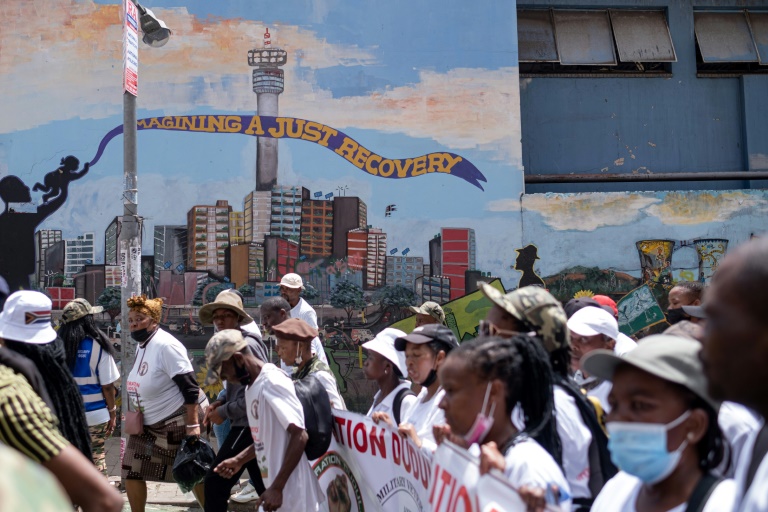
Known as Dbongz, the artist is at the vanguard of a growing movement that has embraced Johannesburg’s grit to create paintings that have helped the once neglected city centre spring back to life.

“(The city) used to be dull, mundane and at the same time dodgy,” said the 32-year-old. 

“But because of colour, because of these lively murals that we paint, people start seeing it as a place they can go into.”  

What was an artists’ pastime has increasingly become a business, with real estate firms to commissioning artworks to give their buildings a facelift. 

In some neighbourhoods, walls around every corner have been given a splash of colour. 

In the 1990s, Johannesburg’s city centre notoriously descended into a period of blight and abandonment. 

Already hollowed by sanctions in the 1980s, the advent of democracy in 1994 was met with the flight of white-owned businesses to high-walled suburbs.

Entire blocks were left empty. Hotels simply bricked over their doors, without even bothering to auction off the contents.

In the early 2000s, property entrepreneurs returned and started experimenting. 

City Property, a real estate firm, bought up several abandoned office towers to convert them into affordable housing. 

Stuck with an old, tiled wall facing the street, the company commissioned South African artist Hannelie Coetzee to revitalise it.

“Cities are cold, concrete, very gridded-up places. Art brings a bit of a soft edge, or a thought-provoking moment that you might not expect,” she said. 

“That for me is the magic thing about public art. It creates meaning through the artists’ voice, for a specific city.”

She created a 166-square-metre portrait of a woman, crafted from more than 2,000 plates, saucers and bowls. 

The woman’s sweep of hair was inspired by how South African women today are adapting traditional hairstyles into trendy new looks.

Developer Adam Levy handed a 10-storey building to American artist Shepard Fairey, best known for his iconic “Hope” portrait of Barack Obama.

An exposed wall became a portrait of Nelson Mandela towering over the city.

– ‘Bigger light’ –

Artistic improvements serve as subliminal cues to visitors that someone is caring for the neighbourhood, said Levy.

“Now it’s so patently evident that there is a system behind the scenes that cares about what’s going on here. And I think people can open up in that space,” Levy said.

“They feel comfortable and safe. They feel well looked after and appreciated.”

Over the past decade, brands have waded into the sector, commissioning murals for advertising purposes, said Marcel Swain, a head of marketing at Heineken South Africa, which recently held a street art competition.

Graffiti artists can be paid thousands of rand for a piece, he said. 

Dbongz has become one of Johannesburg’s most recognisable street artists. 

His works have become a visual trademark for the city and have inspired a wave of others. 

Dbongz’s latest mural was commissioned by Apple Music to showcase vocalist Simphiwe Dana, folk guitarist Bongeziwe Mabandla, jazz musician Mandisi Dyantyis and amapiano sensation Nobuhle.

The musicians’ faces are painted in black and white but their clothing and jewellery jumps out in vivid colours, against a bright green backdrop in patterns inspired by traditional textiles.

The artwork speaks to another set of portraits of deceased musicians he painted on massive concrete pillars supporting a double-decker highway cutting through the Newtown cultural district.

Born in a township on the western outskirts of the city, the artist is also known for his work in impoverished areas, where he sometimes paints neighbourhood children on large walls. 

“It gets people to believe in themselves and see themselves in a bigger light, bigger than what it is that’s happening in their lives,” he said.

Secrets of Hoxha's henchmen still poison Albania

Three decades after the fall of communism, the files held by Albania’s infamous secret police on “enemies of the state” are slowly revealing their secrets.

Yet some of the victims of the paranoid dictator Enver Hoxha — whose dreaded Sigurimi had more than 10,000 informers and even more collaborators — cannot bear to look.

Since 2017, the small Balkan country has allowed people to consult their files.

But some are afraid of finding that friends or neighbours betrayed them. 

“I do not want to see my file,” journalist Cerziz Loloci, 62, told AFP.

“I am afraid of learning I was betrayed by a close friend and it would break my heart.” 

But thousands of Albanians and dozens of foreigners have dared to confront the dark past when Albania was one of the most repressive countries in the world. 

The file on Luc Bouniol-Laffont, who was cultural attache at the French Embassy in Tirana from 1988 to 1990, runs to 774 pages.

“It is fascinating and also terrifying to see how they made the young man of 25 that I was then — simply curious and open to others — a dangerous spy threatening the security of the regime,” he said.

The Sigurimi mobilised dozens of people to “create a completely imaginary scenario, worthy of a spy movie or a tragicomic novel,” said Bouniol-Laffont, now a senior executive at the Louvre museum in Paris.

– 20 million documents –

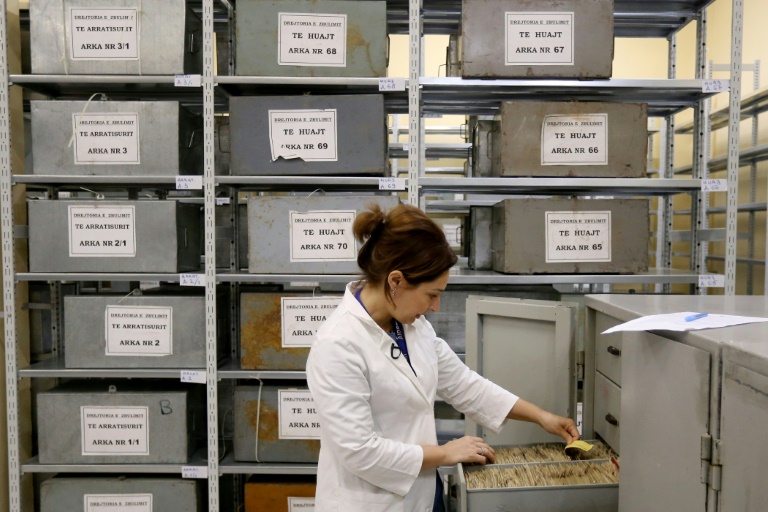
The Sigurimi archive of more than 20 million documents is held in a basement inside a secure compound of the Albanian Ministry of Defence.

Files are stocked in four rooms filled to the brim with documents, photographs and microfilms, carefully stored in iron boxes that resemble coffins waiting to be opened.

Their contents are testimony to the regime’s brutality, said the archive’s director, Gentiana Sula.

“Comparing the files with those of some other former communist countries, the political violence in Albania was extreme,” she said.

In a country of less than three million people, more than 100,000 were interned in camps, 20,000 imprisoned and 6,000 killed or disappeared between 1944 and 1991.

The Sigurimi spied on “internal enemies”, foreigners working in Albania and even on visiting tourists. Some of their informers were volunteers, but others were forced to work for them.

During Hoxha’s four-decade reign, Albania fell out with the whole world, including fellow communist nations such as the Soviet Union, China and neighbouring Yugoslavia.

– ‘Sharks and vipers’ –

All foreigners, including Albanians from Kosovo, then part of Yugoslavia, were seen as a potential threat. Even Ibrahim Rugova — the leader of the struggle for Kosovo’s independence — had a file.

Countries were classified using nicknames — the “Shark” referring to the United States, the “Viper” to the former Yugoslavia and the “Branch” to Kosovo.

Canadian journalist Nadi Mobarak found that his late father Melhem — a Lebanese-born researcher with a passion for Albanian history — had also been monitored.

“I believe that his coming to Albania has nothing to do with tourism,” a police official reported. “Rather, he is seeking to learn more about our country for foreign interests. He could have been mandated by the Americans or the Yugoslavs.”

“My father would have had a lot of fun going through the pages of this file,” Mobarak said.

But the subject remains highly sensitive in Albania where even  unsubstantiated accusations of collaborating with the Sigurimi carries a heavy stigma.

Sula said many informers were forced to collaborate under torture, psychological pressure or threats against their relatives.

The Sigurimi may be long gone, but it still poisons public life, with rumours of links to the hated secret police often used to blacken political rivals.

The authority that looks after the archive is calling for a change in the law to allow it to vet candidates for public office — even if they have previously passed background checks, as records were incomplete in the past.

Albania’s most famous writer, Ismail Kadare, was the first to publicly request access to his Sigurimi surveillance file. He said it is important to face up to history.

“To continue to remain silent about the past is to continue to obey the morality of the dictatorship, to continue to lose one’s moral bearings,” Kadare told AFP.

Protecting wildlife along the US-Mexico border

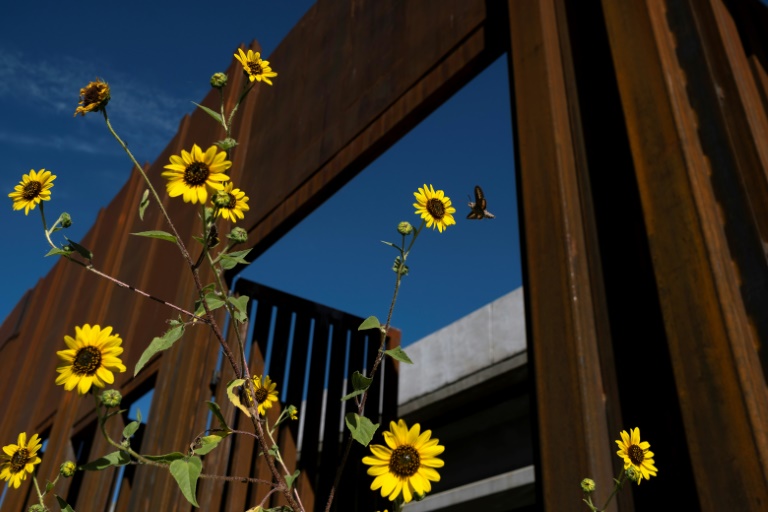
The border wall snaking along the US-Mexican border was built to keep migrants out — but conservationists say the towering metal barrier also stops wildlife from moving between natural habitats.

Alarmed by the impact on animals including jaguars, bears and mountain lions, activists from the United States and Mexico have joined forces to try to protect the biodiversity corridor.

“This part of the border is one of the most interesting places in North America,” said Valer Clark, founder of the transfrontier wildlife organization Cuenca Los Ojos (CLO).

Bears, mountain lions, deer, bighorn sheep and coatimundis are among the animals roaming the arid lands of southern Arizona and the northern Mexican state of Sonora, she told AFP.

But camera trap photos and the conservationists’ own observations have revealed deer, mountain lions and black bears pacing along the border wall, confused and unable to access their former ranges, according to the group.

One family of boars spent five hours trying to get past the wall in search of water, said Jose Manuel Perez, CLO’s conservation director.

Border lighting meanwhile deters nocturnal animals and can cause migratory birds that navigate by moonlight or starlight to lose their way, environmentalists warned.

The wall was first erected by the United States in 1994 and underwent major reinforcements during Donald Trump’s 2017-2021 presidency.

The barrier, which stretches across almost all of Arizona’s southern edge, “greatly affects” the migration of animals, Perez said.

CLO is calling for the removal or modification of the parts of the border wall that cause the most harm to wildlife, and for the restoration of all cross-border rivers.

It is more than 40 years since Clark moved to a cattle ranch in southwestern Arizona, where the New Yorker said she fell in love with the wide open spaces.

Back then it was a totally different place, where people would cross the border easily to visit relatives, she recalled.

The region may look barren, but in fact “it’s full of important wildlife and diversity,” said Eamon Harrity, wildlife project manager at the Sky Island Alliance, another conservation group active in the area.

“The development of a large human barrier has repercussions,” he said.

str-sem-st-dr/mca

Joy and worry for Venezuelans as US shuts land border

Jose was reunited with his wife and four-year-old child in the United States minutes after Washington shut its southern border to Venezuelans.

But his happiness was short-lived.

His adult son, currently battling through the treacherous Darien Gap jungle that straddles Colombia and Panama, will likely be turned away from the United States — if he even makes it that far.

“Last night I was happier than a child at Christmas,” he told AFP by telephone on Thursday.

“But when I saw the news I immediately called my son and asked him not to continue his journey.” 

AFP has changed the names of migrants interviewed for this story because of their vulnerable status, or the risk of retribution from human traffickers.

– Humanitarian program –

The Department of Homeland Security on Wednesday announced that Venezuelans entering the United States by land will be returned to Mexico, in line with almost all other migrants without visas coming over the border.

Until now they have been granted exceptions because of Washington’s distrust of the hard-left regime in Caracas, which it says punishes political opponents.

Instead, the United States will allow 24,000 Venezuelans to apply for entry under a humanitarian program, similar to a scheme that has welcomed tens of thousands of Ukrainians fleeing the Russian invasion of their country.

The program — launched a month ahead of elections — is a bid by President Joe Biden’s administration to chart a path between Democratic demands for helping desperate migrants and Republican calls to stem what they paint as a “tide” of illegal migration.

In the year to September, border authorities encountered more than 155,000 Venezuelans, more than triple the previous year.

Most, like Jose, arrive in Texas.

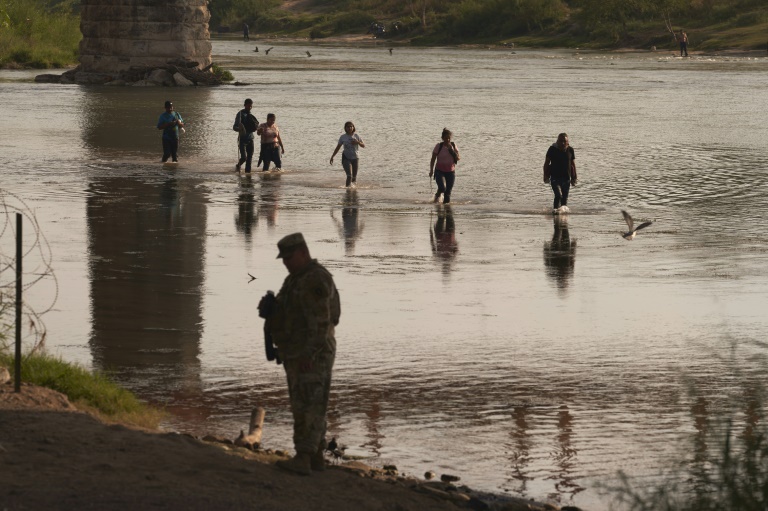
He set foot on US soil on Sunday after wading across the chest-deep waters of the Rio Grande river near Eagle Pass.

“It was nothing compared to what I had to do to get here,” he said as he stood in the baking Texas sun, his clothes wet and his shoes muddy. 

In his backpack were the few clothes he still owned.

“The others I left on the road.”

– Crisis –

Millions of Venezuelans have left the country in recent years, fleeing a political and economic crisis under authoritarian President Nicolas Maduro.

Many have traveled to nearby Latin American countries but an increasing number are heading for the United States — despite the distance and the danger.

Videos on TikTok — a main source of news for Venezuelans — show columns of people with backpacks making their way through dense vegetation.

Stories of rapes, robberies, murders and bribery are common among those who make it.

Jose’s seven-country journey took him a month.

After reuniting with his wife and young child, he thought things were finally coming together, with his 22-year-old son setting off from Caracas to join him.

Then the US government changed the rules.

“I am very sad, and so is he, because we were all going to be together finally,” he says.

“It would give me a lot of pain if he makes such a big effort and they send him back to Mexico, where the people are very good but the immigration agents and the police mistreat us a lot.”

Jose says his time in Mexico was the hardest part of the trip.

“In the jungle they put a bracelet on you to distinguish those who pay from those who don’t. Those who don’t pay are mistreated.

“In Mexico, the coyote tells you it’s $500, but if you tell him ‘I have $200,’ he accepts it.

“But a Mexican cop will tell you it’s $500 and if you don’t give it to him, he’ll beat you or rob you.”

Maria, who also arrived in Eagle Pass on Sunday, was reunited with her boyfriend in Georgia on Wednesday.

“I was lucky, but the Mexican agents took my friends and beat them. They detained them for two weeks, and released them somewhere else. Now they won’t be able to get into the US,” she says.

Maria’s boyfriend is overjoyed that she made it to the United States, where he hopes she will be able to get treatment for a chronic illness.

But he frets over what will happen now to his three sisters, who are somewhere deep in the Darien Gap.

“I do nothing but think, I’m happy because Maria is finally here, but I don’t know what I’m going to do,” he said.

Floods swallow cars, swamp houses in 'major' Australian emergency

Flash floods swamped hundreds of homes in southeastern Australia Friday with waterlogged residents now facing a “nerve-wracking” wait to assess the damage.

A major flooding emergency was declared in Victoria — Australia’s second-most populous state — where rapidly rising waters forced evacuations in the Melbourne suburb of Maribyrnong.

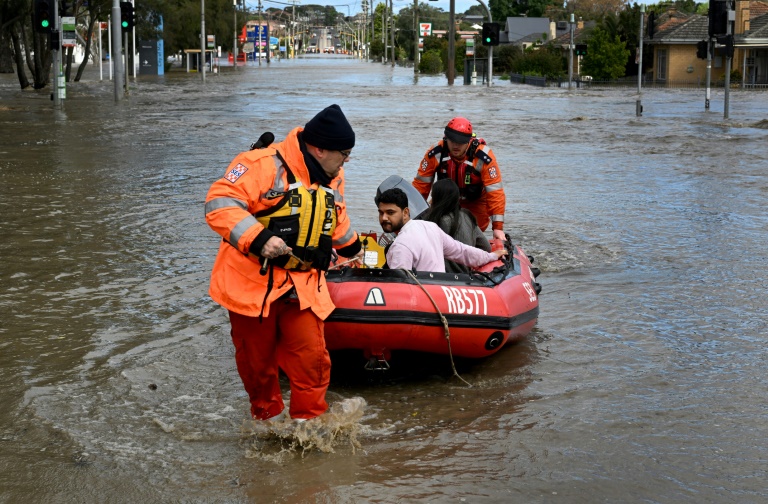
Cars left on the streets of the suburb were almost completely swallowed by the floods, while some stranded residents had to be saved by inflatable rescue boats.

Maribyrnong resident Leah Caluzzi spent Friday morning salvaging sports gear from the local cricket club.

“Our home oval is underwater at the moment, the water is well over waist high,” she told AFP.

“I live in the same suburb and it’s a bit scary.

“Luckily our house is a bit higher up, but lots of houses around the river are impacted.”

State Premier Daniel Andrews told reporters 500 homes in Victoria had been “inundated”, while a further 500 properties were surrounded by floods and cut off from emergency services.

“That number will definitely grow,” he said Friday.

Maribyrnong resident Betty Ristevesky said the situation was unsettling. 

“It’s getting a little bit nerve-wracking now,” she told AFP. 

“The water is getting close and we can see it in front of us.”

While the worst of the rain had passed by late Friday morning, the state emergency service warned the floods would get worse as water flowed downstream into swollen river catchments.

“There are not many parts of Victoria that aren’t experiencing major flooding over the coming days,” emergency services spokesman Tim Wiebusch told reporters.

Although flood waters in parts of Melbourne had started receding Friday afternoon, the worst was to come for other parts of the state.

About 4,000 homes in Shepparton, about two hours north of Melbourne, could be flooded by early next week, Wiebusch said. 

Emergency management commissioner Andrew Crisp said the Australian army was being deployed to help residents sandbag their houses. 

“This is a major emergency for the state of Victoria,” he said.

A disused Covid-19 quarantine centre with a capacity for 1,000 people would be used as shelter.

– ‘Lives at risk’ –

Northern parts of Tasmania — an island state south of Victoria — were on Friday also preparing for major floods.

Mass evacuation orders were issued, while heavy rains forced the closure of some 120 roads. 

“Lives are at risk from floodwaters,” Tasmania’s state emergency service said in a statement. 

In New South Wales — Australia’s most populous state — an evacuation centre was set up after intense downpours Thursday evening in Forbes, an inland town about five hours’ drive east of Sydney.

Australia’s east coast has been repeatedly lashed by heavy rainfall in the past two years, driven by back-to-back La Nina cycles. 

The east coast flooding disaster in March — caused by heavy storms in Queensland and New South Wales — claimed more than 20 lives. 

Tens of thousands of Sydney residents were ordered to evacuate in July when floods again swamped the city’s fringe.

Climate change does not cause La Nina events, but scientists believe it could make periods of flooding more extreme because warmer air holds more moisture.

Floods swallow cars, swamp houses in 'major' Australian emergency

Flash floods swamped hundreds of homes in southeastern Australia Friday with waterlogged residents now facing a “nerve-wracking” wait to assess the damage.

A major flooding emergency was declared in Victoria — Australia’s second-most populous state — where rapidly rising waters forced evacuations in the Melbourne suburb of Maribyrnong.

Cars left on the streets of the suburb were almost completely swallowed by the floods, while some stranded residents had to be saved by inflatable rescue boats.

Maribyrnong resident Leah Caluzzi spent Friday morning salvaging sports gear from the local cricket club.

“Our home oval is underwater at the moment, the water is well over waist high,” she told AFP.

“I live in the same suburb and it’s a bit scary.

“Luckily our house is a bit higher up, but lots of houses around the river are impacted.”

State Premier Daniel Andrews told reporters 500 homes in Victoria had been “inundated”, while a further 500 properties were surrounded by floods and cut off from emergency services.

“That number will definitely grow,” he said Friday.

Maribyrnong resident Betty Ristevesky said the situation was unsettling. 

“It’s getting a little bit nerve-wracking now,” she told AFP. 

“The water is getting close and we can see it in front of us.”

While the worst of the rain had passed by late Friday morning, the state emergency service warned the floods would get worse as water flowed downstream into swollen river catchments.

“There are not many parts of Victoria that aren’t experiencing major flooding over the coming days,” emergency services spokesman Tim Wiebusch told reporters.

Although flood waters in parts of Melbourne had started receding Friday afternoon, the worst was to come for other parts of the state.

About 4,000 homes in Shepparton, about two hours north of Melbourne, could be flooded by early next week, Wiebusch said. 

Emergency management commissioner Andrew Crisp said the Australian army was being deployed to help residents sandbag their houses. 

“This is a major emergency for the state of Victoria,” he said.

A disused Covid-19 quarantine centre with a capacity for 1,000 people would be used as shelter.

– ‘Lives at risk’ –

Northern parts of Tasmania — an island state south of Victoria — were on Friday also preparing for major floods.

Mass evacuation orders were issued, while heavy rains forced the closure of some 120 roads. 

“Lives are at risk from floodwaters,” Tasmania’s state emergency service said in a statement. 

In New South Wales — Australia’s most populous state — an evacuation centre was set up after intense downpours Thursday evening in Forbes, an inland town about five hours’ drive east of Sydney.

Australia’s east coast has been repeatedly lashed by heavy rainfall in the past two years, driven by back-to-back La Nina cycles. 

The east coast flooding disaster in March — caused by heavy storms in Queensland and New South Wales — claimed more than 20 lives. 

Tens of thousands of Sydney residents were ordered to evacuate in July when floods again swamped the city’s fringe.

Climate change does not cause La Nina events, but scientists believe it could make periods of flooding more extreme because warmer air holds more moisture.

Long, bumpy 4WD ride to Qatar's acclaimed desert art

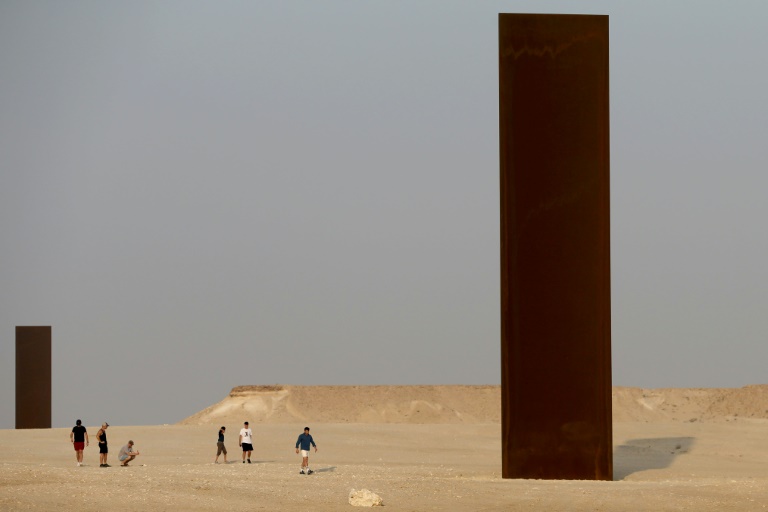
Deep in the Qatari desert, security guards have a lonely time keeping 24-hour watch over one of the world’s most isolated artworks, created by renowned US sculptor Richard Serra.

“On a busy day we can get 100 people,” said one guard monitoring the four vertical steel plates — each more than 14 metres (46 feet) high — that makeup Serra’s “East-West/West-East”.

But when temperatures soar above 50 degrees Celsius (122 Fahrenheit) in the Brouq nature reserve, visitors are rare.

Even Qatar’s art chiefs say that getting to the work — which is spread over more than a kilometre (0.62 miles) — is part of the challenge of appreciating Serra’s installation, one of the Gulf state’s big-ticket art purchases in 2014.

Qatar is gearing up to welcome more than one million people to the football World Cup which starts on November 20.

But few advertisements mention “East-West/West-East”, located about 70 kilometres (43 miles) from Doha.

A four-wheel drive is needed to reach the artfully rusted steel plates, and barely a road sign points the way. 

– ‘Pilgrimage’ –

Firas al-Obisi, a Syrian working as a guide in Qatar since 2006, said his car became stuck when a sudden rainstorm turned the roads to mud as he took a Chinese tourist to the site.

“Every time I tried to get out, it just became worse. The sand was like glue,” he said.

It took four hours to pull his truck out, after one of the three vehicles assisting him also became stuck.

“The artwork starts through the journey,” said Abdulrahman al-Ishaq, director of public art at Qatar Museums, likening it to “a pilgrimage”.

“You have to really determine that on that day you are going to go to Richard Serra,” he said. “And then when you get off the road and into the desert, you have to find it.”

Serra, 83, is one of America’s best-known living sculptors.

His works often come by the tonne — one weighing more than a passenger jet — and are found around the world, from New York museums to landscapes in Iceland and New Zealand.

Sheikha Al Mayassa bint Hamad bin Khalifa Al-Thani, Qatar Museums’ chairperson and sister of the emir, asked Serra to take on the desert mission after he completed “7”, a more than 24-metre-tall work overlooking Doha harbour.

Round-the-clock watch over “East-West/West-East”, with guards and cameras, started after vandals struck several times in 2020 and 2021.

Qatar vaunts itself as one of the most crime-free places on Earth, and authorities made at least six arrests.

– ‘Spotlight’ on Doha –

“Vandalism is not really an issue in Doha, but we see it mostly in Richard Serra because when someone writes on it, a second person thinks it’s okay to write on it,” Qatar Museums’ Ishaq said.

“Ideally the art should not be touched — not even conserved — because the idea is that it would rust with time. But when it gets vandalised, we have to clean” it, he said.

Doing so is “costly” and “interferes with the natural process of the artwork, how it decays”, he added.

Serra’s artworks are an extreme example of Qatar’s huge public art investments, which have accelerated as Doha gears up for the World Cup.

More than 40 works have gone on display in parks, along roadsides and near landmarks.

They range from a 21-metre-high polished metal dugong by American pop artist Jeff Koons, to a larger-than-life blue rooster by German sculptor Katharina Fritsch that is on show in an official FIFA hotel.

It’s not just the artworks, but Doha, that is on display, Ishaq noted. “This is an opportunity for us to have the spotlight.”

Close Bitnami banner
Bitnami