World

100 years of the BBC: key moments

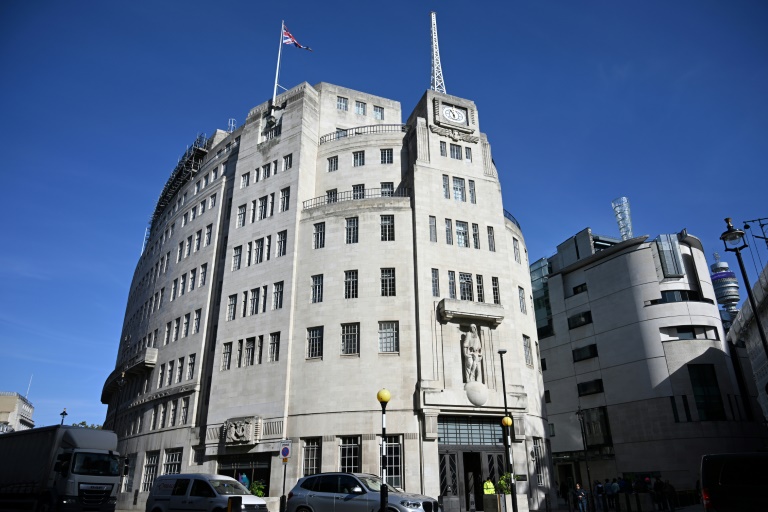
The BBC celebrates its centenary on October 18, after 100 years of technological innovation, ambitious programming — and controversy.

– 1922: the first steps –

The BBC was officially formed on October 18, 1922 by a group of entrepreneurs but it was only on November 14 that the first radio programme was broadcast.

At 6:00 pm, a news bulletin started and the first words — “This is 2LO, Marconi House, London calling” — crackled through radio sets.

“It was read once and it was repeated immediately after at half the speed because the technology was not great,” said James Stirling, who is in charge of the centenary celebrations.

Ten years later in 1932, technology had advanced sufficiently to allow king George V to address the British empire for the first time on the radio.

That kickstarted the BBC Empire Service — the forerunner of the BBC World Service.

The king’s voice was heard for the first time by millions of people at the same time.

Television programmes began in 1936.

– World War II –

Britain’s prime minister, Neville Chamberlain, announced the start of the war on the BBC on September 3, 1939.

During the conflict, the BBC became an essential source of news, and not just for Britons.

On June 18, 1940, exiled French General Charles De Gaulle launched his call for resistance to the Nazi German invasion on the airwaves of the BBC.

“Radio Londres” also broadcast the programme “Les Français parlent aux Français” (“The French speaking to the French”) and in early June 1944, a coded message calling for railway installations to be sabotaged before the D-Day landings.

– Coronation –

Queen Elizabeth II’s coronation on June 3, 1953 was the first to be seen live on television.

“It’s such a key moment in BBC history, in broadcasting as well,” said Stirling.

Some 20 million people across Europe watched while in Britain viewers gathered with friends and neighbours to witness the spectacle on television.

My grandparents bought a TV for the occasion,” said Stirling. “It’s very important in terms of history and from a technology perspective.”

Fast-forward to 1981 and the wedding of the then Prince Charles — now King Charles III — to Lady Diana Spencer was seen by 750 million people around the world.

– 1995: Diana –

More records were broken in 1995 when the BBC broadcast an explosive interview with princess Diana.

“There were three of us in this marriage so it was a bit crowded,” she told the Panorama programme, referring to Charles’ affair with Camilla Parker Bowles.

Diana also spoke of her own infidelities as the couple’s marriage collapsed, how she thought Charles was not fit to be king and that she wanted to be “a queen of people’s hearts”.

A report published last year lifted the lid on the deceptive methods that journalist Martin Bashir used to secure the interview and criticised the BBC for its handling of the affair.

– 2007: digital –

In 2007 the BBC launched its streaming and on-demand site BBC iPlayer to complement its traditional broadcasting.

The platform has developed in line with competition from other services such as Netflix and Disney+, which have transformed viewing habits.

– 2012: Jimmy Savile –

The eccentric presenter Jimmy Savile was a fixture on children’s television from the 1960s but in 2012, a year after his death, a scandal erupted.

Savile, who regularly presented the hit music show “Top of the Pops” and had his own programme “Jim’ll Fix It”, was unveiled as a predatory paedophile who had raped and molested minors for decades.

The BBC was accused of a cover-up, apologised and launched an independent investigation which concluded in 2016 that a culture of fear and celebrity deference had enabled Savile’s activities.
BBC marks 100 years facing questions about its future

On November 14, 1922, the clipped tones of the BBC’s director of programmes, Arthur Burrows, crackled across the airwaves.

“This is 2LO, Marconi House, London calling,” he announced, and with that, public service broadcasting in Britain was born.

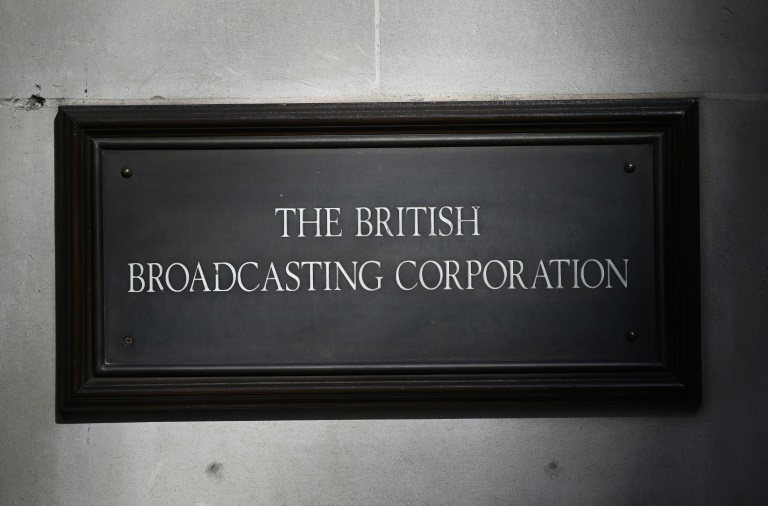
One hundred years on, the British Broadcasting Corporation is a global media giant. But its centenary comes at a time of drastic budget cuts that have raised questions about its future.

The corporation, officially founded on October 18, 1922, has a special place in Britain’s broadcasting landscape.

“The BBC is us,” said Jean Seaton, professor of media history at the University of Westminster in London, and the corporation’s official historian.

“It remains despite the attacks of this government an expression of us, unlike Netflix, which is an expression of the world,” she told AFP.

“The BBC is an expression of our sense of humour, interests or values. It belongs to us.”

For nearly seven million people, each day starts with BBC Radio 4’s flagship “Today” programme, which often sets the political agenda. 

At weekends, “Strictly Come Dancing”, which pairs celebrities with professional ballroom dancers, has had viewers glued to their sets for 20 years and is the most talked-about television programme on air.

BBC series such as “Peaky Blinders”, “Fleabag” or “Killing Eve” have been exported around the world.

The BBC’s influence extends far beyond Britain’s borders, making it one of the small island nation’s most visible and respected global brands.

It reaches an audience of 492 million around the world every week, according to the corporation’s 2021-2022 annual report.

BBC World Service broadcasts in 41 languages to about 364 million people a week globally.

For the last 100 years, the broadcaster has stuck firm with its original mission statement: to “inform, educate and entertain”.

“It underpins everything that we want to do,” said James Stirling, who is head of the BBC’s centenary celebrations.

– Impartiality –

Another word — impartiality — crops up repeatedly and has become a priority for BBC management given the frequent criticism it has received from the Conservative government.

During Brexit — Britain’s divisive divorce from the European Union — it accused the BBC of bias in favour of those who wanted to stay in the bloc.

Ministers have also alleged that it focuses too much on the concerns of urban elites rather than the working classes.

Britain’s right-wing tabloids — never shy of criticising their publicly funded competitor — have lapped it up.

But more worrying is a decision in January by Boris Johnson’s government to freeze its licence-fee funding model for two years, raising fears it could be scrapped in future.

The annual charge for households with a television set is currently set at £159 ($176).

In response to Johnson’s plans, the BBC in May announced a huge cost-cutting programme of £500 million a year, axing about 1,000 of its 22,000 staff and moving about services online.

The financial situation has been accompanied by an exodus of younger audiences towards streaming and on-demand platforms, prompting questions about why they should still pay for the BBC.

“Today” presenter Nick Robinson, a former BBC political editor, said it was vital for the broadcaster to keep proving its value.

“If my kids’ generation… just come to the view that I don’t really need that, I can get all that stuff from YouTube and get it from all these competitors… then we’re done,” he told the Daily Telegraph.

– ‘Pride’ –

Successful new formats have emerged, however, despite the BBC often being labelled as “legacy media”.

Journalist Ros Atkins has made his name with video “explainers” of major news stories and issues, combining them with analysis, fact-checking and vital context.

They are broadcast on television, the BBC website and via social media, where they often register millions of views around the world.

“While we still have millions of people who consume our journalism via our platforms — the BBC website, TV and radio — millions of others are consuming journalism elsewhere on Twitter, Instagram, TikTok,” he said.

“We’ve seen very big numbers on these videos. They prove this kind of journalism has an audience.”

Atkins, who started at the BBC in 2001, is well aware of the difficulties ahead. “It’s going to impact all of us who work here,” he added.

“But if you ask me how I feel about the experience of being a journalist at the BBC… I still feel I’m walking through the door at the best news organisation in the world.” 

BBC marks 100 years facing questions about its future

On November 14, 1922, the clipped tones of the BBC’s director of programmes, Arthur Burrows, crackled across the airwaves.

“This is 2LO, Marconi House, London calling,” he announced, and with that, public service broadcasting in Britain was born.

One hundred years on, the British Broadcasting Corporation is a global media giant. But its centenary comes at a time of drastic budget cuts that have raised questions about its future.

The corporation, officially founded on October 18, 1922, has a special place in Britain’s broadcasting landscape.

“The BBC is us,” said Jean Seaton, professor of media history at the University of Westminster in London, and the corporation’s official historian.

“It remains despite the attacks of this government an expression of us, unlike Netflix, which is an expression of the world,” she told AFP.

“The BBC is an expression of our sense of humour, interests or values. It belongs to us.”

For nearly seven million people, each day starts with BBC Radio 4’s flagship “Today” programme, which often sets the political agenda. 

At weekends, “Strictly Come Dancing”, which pairs celebrities with professional ballroom dancers, has had viewers glued to their sets for 20 years and is the most talked-about television programme on air.

BBC series such as “Peaky Blinders”, “Fleabag” or “Killing Eve” have been exported around the world.

The BBC’s influence extends far beyond Britain’s borders, making it one of the small island nation’s most visible and respected global brands.

It reaches an audience of 492 million around the world every week, according to the corporation’s 2021-2022 annual report.

BBC World Service broadcasts in 41 languages to about 364 million people a week globally.

For the last 100 years, the broadcaster has stuck firm with its original mission statement: to “inform, educate and entertain”.

“It underpins everything that we want to do,” said James Stirling, who is head of the BBC’s centenary celebrations.

– Impartiality –

Another word — impartiality — crops up repeatedly and has become a priority for BBC management given the frequent criticism it has received from the Conservative government.

During Brexit — Britain’s divisive divorce from the European Union — it accused the BBC of bias in favour of those who wanted to stay in the bloc.

Ministers have also alleged that it focuses too much on the concerns of urban elites rather than the working classes.

Britain’s right-wing tabloids — never shy of criticising their publicly funded competitor — have lapped it up.

But more worrying is a decision in January by Boris Johnson’s government to freeze its licence-fee funding model for two years, raising fears it could be scrapped in future.

The annual charge for households with a television set is currently set at £159 ($176).

In response to Johnson’s plans, the BBC in May announced a huge cost-cutting programme of £500 million a year, axing about 1,000 of its 22,000 staff and moving about services online.

The financial situation has been accompanied by an exodus of younger audiences towards streaming and on-demand platforms, prompting questions about why they should still pay for the BBC.

“Today” presenter Nick Robinson, a former BBC political editor, said it was vital for the broadcaster to keep proving its value.

“If my kids’ generation… just come to the view that I don’t really need that, I can get all that stuff from YouTube and get it from all these competitors… then we’re done,” he told the Daily Telegraph.

– ‘Pride’ –

Successful new formats have emerged, however, despite the BBC often being labelled as “legacy media”.

Journalist Ros Atkins has made his name with video “explainers” of major news stories and issues, combining them with analysis, fact-checking and vital context.

They are broadcast on television, the BBC website and via social media, where they often register millions of views around the world.

“While we still have millions of people who consume our journalism via our platforms — the BBC website, TV and radio — millions of others are consuming journalism elsewhere on Twitter, Instagram, TikTok,” he said.

“We’ve seen very big numbers on these videos. They prove this kind of journalism has an audience.”

Atkins, who started at the BBC in 2001, is well aware of the difficulties ahead. “It’s going to impact all of us who work here,” he added.

“But if you ask me how I feel about the experience of being a journalist at the BBC… I still feel I’m walking through the door at the best news organisation in the world.” 

Death toll rises to 50 in Venezuela landslide

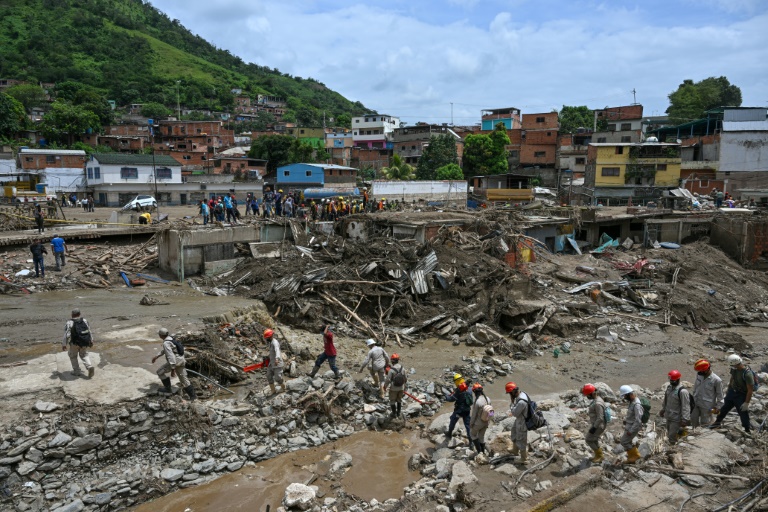
The death toll has risen to 50 from a devastating landslide that swept through a Venezuelan town near the capital Caracas, officials said on Thursday.

“So far we officially have 50 people who unfortunately lost their lives and (their bodies) have been handed over to their relatives,” Interior Minister Remigio Ceballos told a local television channel, updating the earlier toll of 43.

Unusually heavy rains on Saturday had caused a major river and several streams to overflow in Las Tejerias, a town of about 50,000 people nestled in the mountains near Caracas.

The rains caused a torrent of mud that washed away cars, parts of homes, businesses and telephone wires, and felled massive trees.

About 3,200 people had been deployed to help the rescue and clean-up efforts in the town, Ceballos said.

President Nicolas Maduro said earlier in the week that the toll from Venezuela’s worst natural disaster in decades was likely to reach 100.

Experts say the storm was aggravated by the seasonal La Nina weather phenomenon gripping the region, as well as the effects of Hurricane Julia, which claimed at least 26 lives in Central America and caused extensive damage.

Crisis-hit Venezuela is no stranger to seasonal storms, but this was the worst so far this year following historic rain levels that caused dozens of other deaths in recent months. 

Maduro has vowed to rebuild “each and every” home and business destroyed in the landslide.

“Las Tejerias will rise like the phoenix, Las Tejerias will be reborn,” he said.

War-torn Yemen battered by mental health crisis

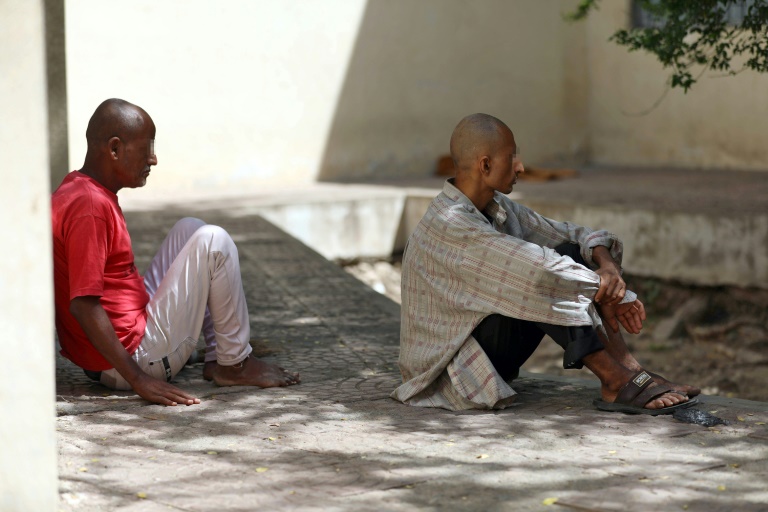
Depression, post-traumatic stress disorder, psychosis: Yemen’s seven years of brutal civil war have caused an explosion of mental illness overwhelming the basic health care services.

“We try to provide treatment, but we cannot treat everyone”, said Adel Melhi, director of a psychiatric hospital in the rebel-blockaded city of Taez, one of the places hardest hit by the conflict.

Iran-backed Huthi rebels have fought a Saudi-led pro-government coalition since 2015 in a grinding war that has killed hundreds of thousands and pushed the impoverished nation to the brink of famine.

Aid groups have raised alarm with more than 23 million people — more than two-thirds of Yemen’s population — dependent on aid.

While the government-run Taez psychiatric hospital has space for 200 patients, the numbers needing care because of the “tragedies caused by the war” have surged far higher, Melhi said.

The hospital lacks the necessary staff and drugs to cope. As government funds cover just a quarter of its budget, it relies on donations for the rest. 

– ‘Toll of conflict’ –

Yemen, with around 30 million people, had just 59 psychiatrists in 2020 — or one for every half a million people — according to health ministry figures.

Add in therapists, caregivers and nurses, and the number of professionals dedicated to mental health rises to 300, divided across seven hospitals.

The authorities have not published any recent data on mental illness in Yemen, long the Arab peninsula’s poorest country.

One 2017 study, by Yemen’s Family Development and Guidance Foundation based in the rebel-held capital Sanaa, estimated that nearly a fifth of all residents had mental health issues.

The report said the population “faces constant pressure, loss and serious shocks — whether as a result of food insecurity, unemployment, cholera, arbitrary detention, torture, indiscriminate attacks, air strikes or poor basic public services.”

The United Nations, in a report this year, said the number could now be even higher because of the additional strain of the Covid pandemic and the “continuing toll of the conflict”.

A UN-brokered ceasefire since April brought a sharp reduction in hostilities and facilitated moves to alleviate the dire humanitarian situation, according to aid agencies.

But that truce expired on October 2, and failed attempts to extend it have stoked fears of fresh conflict.

– ‘It’s heartbreaking’ –

In Hajja, northwest of Sanaa, the aid agency Doctors Without Borders (MSF) runs a specialised mental health clinic.

“We help people who went through a traumatic situation, mostly related to violence because of the context of war,” said Aura Ramirez Barrios, who leads the clinic’s operations.

“We have a lot of people who lost family members, their homes, and suffer from displacement.”

About three-quarters of the patients present “severe mental health disorders”, she added, including “psychosis, depression, bipolar disorder or post-traumatic stress disorder”.  

Barrios said she sees the clinic as a place of hope, where Yemenis feel safe “after all the violence they have and continue to suffer”.

One challenge is that many Yemenis only seek medical advice once symptoms have become “unmanageable”, after a suicide attempt or experiencing hallucinations, for example.

Part of that is due to the stigma of mental illness in Yemen, she explained. 

Coming to the clinic is particularly difficult for women, who must ask permission from their family or their husbands.

“It is heartbreaking because when you hear their stories, you realise they needed help a long time ago,” Barrios said.

“Women suffer through a lot of losses, traumatic events and violence — and what was grief, with the years, becomes depression.”

Two unions reach compromise with oil giant in French strikes

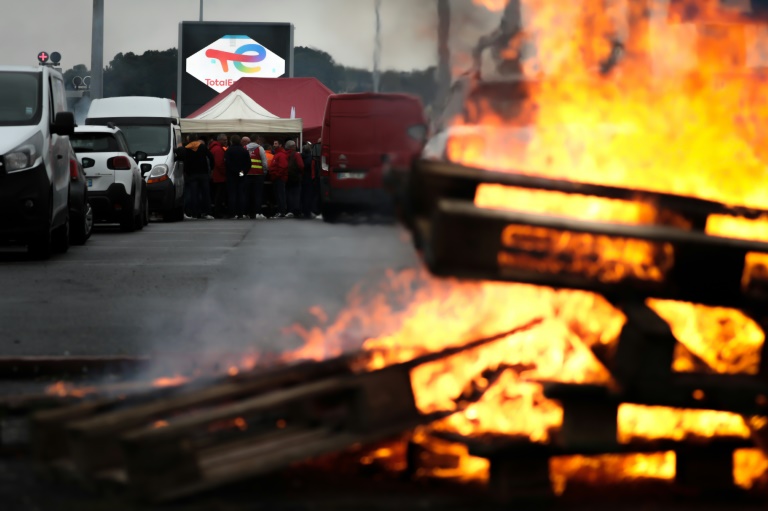
Two French unions announced a tentative pay rise agreement with oil giant TotalEnergies early Friday following emergency negotiations to end a three-week strike that has emptied the country’s petrol stations and sparked a wider backlash to the rising cost of living.

The hard-left CGT union, which initiated the industrial action, walked out of the meeting, however, and vowed to continue striking. 

Under pressure from the government to resolve the 18-day crisis, the oil group met with four unions at its headquarters in the suburbs of Paris.

At around 3:30 am (0130 GMT), after nearly six hours of talks, representatives from CFDT and CFE-CGC said they supported the proposed seven percent pay increase and 3-6,000 euro bonus. 

“The CFDT negotiating team is in favour of the measures that are on the table,” said Geoffrey Caillon, CFDT’s coordinator. CFE-CGC coordinator Dominique Conver also called the terms “rather favourable”.

The unions have until noon on Friday to consult with their members and decide whether to sign the offer. 

Launched on September 27, the industrial action has blocked TotalEnergies’ refineries and fuel depots, causing nationwide fuel shortages and a crisis for President Emmanuel Macron’s government as calls grow for a general walkout.

Denouncing the negotiations as a “charade”, CGT representative Alexis Antonioli said TotalEnergies’ proposals were “largely insufficient”.

“It will not do anything to change the determination or outlook of the strikers,” Antonioli said. 

French railway workers and civil servants represented by CGT voted to join the striking oil refinery staff in a national day of stoppages next Tuesday, raising fears that anger over surging inflation could spiral into a series of blockages.

The famously militant CGT said it was not only pushing for higher wages for railway workers but also wanted to signal anger at the government’s intervention.

Facing frustrated businesses and an increasingly alarmed public, Macron’s administration has invoked emergency powers to compel some striking refinery workers back to their jobs.

He pledged a return to normal “in the course of the coming week”. 

– ‘A disaster’ –

Six out of seven refineries have been affected by the strikes, causing huge queues outside petrol stations and growing frustration among motorists.

“It’s been a disaster,” said Francoise Ernst, a driving instructor. “We can’t work anymore.”

Only one refinery has been able to resolve the strike so far. At the Fos-sur-Mer facility, which belongs to Esso-ExxonMobil, an agreement was signed on Monday with CFDT and CFE-CGC, but the terms were also rejected by CGT. 

“The time for a confrontation (with the government) has arrived,” left-wing opposition parliamentarian Clementine Autain from the France Unbowed party told France 2 television on Thursday.

Left-wing political parties are seizing on the strikes to ignite a protest movement against Macron and the rising cost of living, with a rally planned for Sunday.

Leading Greens lawmaker Sandrine Rousseau has said she hoped the refinery standoff would be “the spark that begins a general strike”.

But not all unions have joined the call for a general strike next Tuesday, with the country’s biggest, the CFDT, opting out.  

– Sympathy and anger –

Until Tuesday, the government had been reluctant to inflame the pay dispute at French energy group TotalEnergies and US giant Esso-ExxonMobil.

TotalEnergies made a net profit of $5.7 billion in the April-June period and is distributing billions to shareholders as its employees push for higher wages. 

Finance Minister Bruno Le Maire told RTL radio that given its huge profits this year, it had “the capacity… and therefore an obligation” to raise workers’ pay.

With 30 percent of French service stations with little or no fuel, particularly those in the Paris region and the north, the government has begun requisitioning fuel depot workers, which forces them to return to work or risk prosecution.

After an ExxonMobil depot Wednesday, a TotalEnergies site in northern France was requisitioned Thursday, with the first laden fuel tankers protected by police seen leaving during the afternoon.

Prime Minister Elisabeth Borne’s office said the emergency measures were justified because of a “real economic threat” for northern France, which relies heavily on agriculture, fishing and industry.

But the unions have reacted furiously to the government intervention.

“What we are seeing here is the Macronian dictatorship,” CGT official Benjamin Tange told AFP. The current industrial action, he said, arose out of “the anger of several months, several years and a rupture of social dialogue”.

burs-tq-bp-ico/ob/lb/qan

Children caught up in Iran demos face 'psychological centres'

Dozens of Iranian children have been killed and hundreds detained after being caught up in protests over Mahsa Amini’s death, some of them even ending up in “psychological centres”, it has emerged.

Iran has been rocked by nearly a month of demonstrations driven by public outrage over Amini’s death after the morality police arrested her for an alleged breach of the Islamic republic’s strict dress code for women.

Fed up over the lack of change, the country’s Gen-Z teens — those born before 2010 — have come of age and been credited for their bravery while facing off with the security forces.

“Iranian Zoomers are frustrated/angry with the status quo and aren’t afraid to say it online and push outside the red lines” of the Islamic republic, tweeted Holly Dagres, an Iran specialist at the Atlantic Council think-tank.

Night after night, young women and schoolgirls have appeared on the streets with their hair exposed and fists raised, chanting “Woman, life, freedom” and “Death to the dictator”.

Youths involved in the protest movement have paid with their lives, however, with the US-based rights group HRANA identifying at least 18 minors dead — the youngest just 12 years old.

But the overall number of children killed is widely believed to be much higher.

Iran’s Children’s Rights Protection Society said this week that at least 28 had lost their lives, including many from the underprivileged province of Sistan-Baluchestan.

The Tehran-based group said families were being “kept in the dark” about the whereabouts of their children, and that their cases were going ahead without proper legal representation.

Human rights lawyer Hassan Raisi said some of the children arrested were being held in detention centres for adult drug offenders.

“This is very concerning,” he was quoted as saying by the London-based Iran Wire news website on Wednesday.

Anyone “under the age of 18 must never be held with any criminal over 18… This is a legal requirement, not a recommendation”.

“Around 300 people between the ages of 12-13 and 18-19 are in police custody,” he said, without elaborating.

Among those slain in the protests are Nika Shakarami and Sarina Esmailzadeh — two 16-year-old girls whose deaths triggered an outpouring of grief in Iran and around the world.

– ‘Anti-social characters’ –

Protesting children have also been arrested away from streets and inside classrooms, Iran’s Education Minister Yousef Nouri told the reformist Shargh newspaper in remarks published on Wednesday.

“They are not that many,” he said in response to a question on the number of schoolchildren arrested. “I can’t give an exact number.”

Nouri said those detained were being held in “psychological centres”.

The aim, he said, was “correction and rehabilitation” to stop them from becoming “anti-social characters”.

The United Nations children’s agency UNICEF said Monday it was “extremely concerned” over reports of “children and adolescents being killed, injured and detained” in Iran.

Despite the bloody crackdown and blocks on smartphone apps popular among Iranian teens, such as Instagram and TikTok, internet-savvy youths have still managed to get out videos of their protests.

They have adopted new tactics for the street too.

Those heading out to protests wear masks and hats, leave phones behind to avoid being tracked, and take extra clothes to change into if they are marked by paintballs that the security forces deploy to identify them later. 

Revolutionary Guards deputy commander Ali Fadavi told Iranian media on October 5 that the “average age of the detainees from many of the recent protests was 15”. 

“Some of the teenagers and young adults arrested used similar key phrases in their confessions, such as likening street riots to video games,” the Mehr news agency quoted Fadavi as saying.

The concern with video games has been echoed by other officials as well.

Cleric Aboulfazl Ahmadi, head of a provincial organisation linked to the morality police, said this month that Iran’s enemies “have banked on” the country’s teenagers and that “some video games were designed to bring the youth to the streets at times like these”.

China consumer inflation rises to two-year high

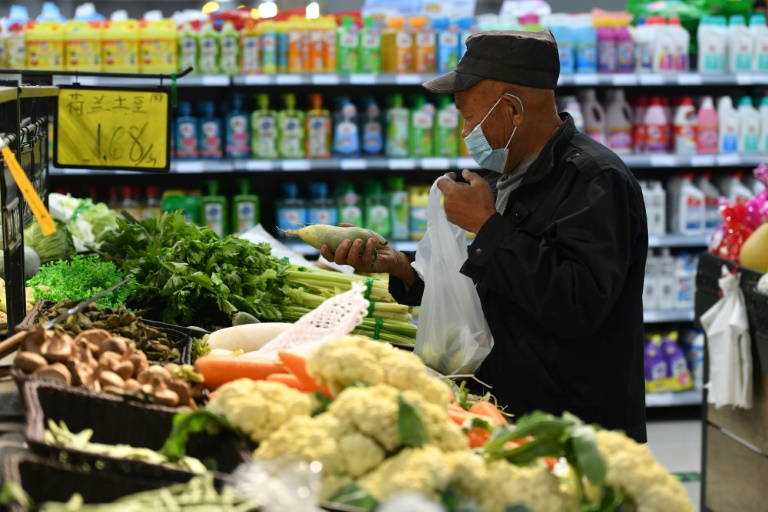
China’s consumer inflation hit two-year high in September, official data showed Friday, fuelled by soaring pork prices and as extreme weather hit farmers.

Consumers in China have been largely spared the impact of a global surge in food and energy costs following Russia’s invasion of Ukraine.

But data showed Friday that the country’s consumer price index (CPI), the main gauge for retail inflation, hit 2.8 percent last month, up from 2.5 percent in August.

The reading is the highest since April 2020, when the country was emerging from its first wave of Covid-19 lockdowns.

It also follows weeks of record temperatures above 40 Celsius (104 Fahrenheit), China’s hottest summer on record that caused a crippling drought in August.

“Impacted by high temperatures and low rainfall, fresh vegetable prices rose 6.5 percent” on-year, NBS senior statistician Dong Lijuan said in a statement.

The price of pork — the country’s favourite meat — shot up 36 percent, according to the NBS.

“With bullish expectations, some pork farmers are reluctant to sell, and prices continued to rise,” Dong said.

Chinese authorities have repeatedly dipped into pork reserves in recent weeks as soaring prices triggered inflation concerns.

Meanwhile, the country’s factory-gate inflation dropped to 0.9 percent, its lowest in more than a year, data showed, on the back of falling raw material prices.

The figure was down from a 2.3 percent rise in August and the lowest since January 2021, according to official data.

“In September, the international prices of crude oil and other bulk commodities continued to decline,” Dong said.

Analysts polled by Bloomberg had expected consumer prices to rise by 2.9 percent and producer prices by one percent

Floods swallow cars, swamp houses in 'major' Australian emergency

Flash floods swamped hundreds of homes in southeastern Australia and thousands of people were warned to flee surging waters threatening towns across three separate states Friday. 

A major flooding emergency was unfolding in Victoria — Australia’s second most populous state — where rapidly-rising waters forced evacuations in the Melbourne suburb of Maribyrnong. 

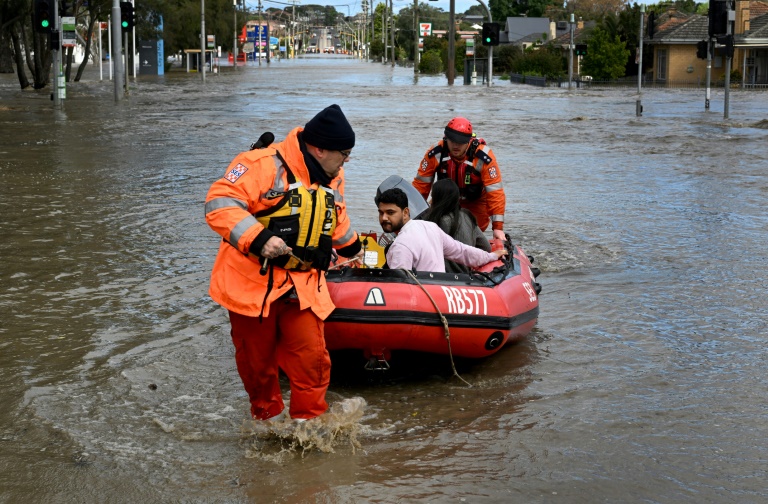
Cars left on the streets of the suburb were almost completely swallowed by the floods, while some stranded residents had to be saved by inflatable rescue boats.

The ground floor of the Anglers Tavern, a pub on the banks of the Maribyrnong River, was underwater.

State leader Daniel Andrews told reporters 500 homes in Victoria had been “inundated”, while a further 500 properties were surrounded by floods and cut off from emergency services.

“That number will definitely grow. We have choppers in the air at the moment making damage assessments,” Andrews said early Friday afternoon.

While the worst of the rain had passed by late Friday morning, the state emergency service warned the floods would get worse as water flowed downstream into swollen river catchments. 

“Our flood emergency here in Victoria continues to escalate,” emergency services spokesman Tim Wiebusch told reporters. 

“There are not many parts of Victoria that aren’t experiencing major flooding over the coming days.” 

About 4,000 homes in Shepparton, about two hours north of Melbourne, could be flooded by early next week, Wiebusch said. 

Emergency management commissioner Andrew Crisp said the Australian army was being deployed to parts of Victoria to help residents sandbag their houses before flood waters arrive. 

“This is a major emergency for the state of Victoria,” he said. 

A disused Covid-19 quarantine centre with a capacity for 1,000 people would be used to shelter people.

– ‘Lives at risk’ –

Northern parts of Tasmania — an island state south of Victoria — were on Friday also preparing for major floods. 

Mass evacuation orders were issued, while heavy rains forced the closure of some 120 roads. 

“Lives are at risk from floodwaters,” Tasmania’s state emergency service said in a statement. 

In New South Wales — Australia’s most populous state — an evacuation centre was set up after intense downpours Thursday evening in Forbes, an inland town about five hours’ drive east of Sydney. 

The New South Wales emergency service said flood levels in Forbes could peak on Friday as water moved downstream.

Australia’s east coast has been repeatedly lashed by heavy rainfall in the past two years, driven by back-to-back La Nina cycles. 

The east coast flooding disaster in March — caused by heavy storms that devastated parts of Queensland and New South Wales — claimed more than 20 lives. 

Tens of thousands of Sydney residents were ordered to evacuate in July when floods again swamped suburbs on the city’s fridge.

Climate change does not cause La Nina events, but scientists believe it could make periods of flooding more extreme, because warmer air holds more moisture.

Floods swallow cars, swamp houses in 'major' Australian emergency

Flash floods swamped hundreds of homes in southeastern Australia and thousands of people were warned to flee surging waters threatening towns across three separate states Friday. 

A major flooding emergency was unfolding in Victoria — Australia’s second most populous state — where rapidly-rising waters forced evacuations in the Melbourne suburb of Maribyrnong. 

Cars left on the streets of the suburb were almost completely swallowed by the floods, while some stranded residents had to be saved by inflatable rescue boats.

The ground floor of the Anglers Tavern, a pub on the banks of the Maribyrnong River, was underwater.

State leader Daniel Andrews told reporters 500 homes in Victoria had been “inundated”, while a further 500 properties were surrounded by floods and cut off from emergency services.

“That number will definitely grow. We have choppers in the air at the moment making damage assessments,” Andrews said early Friday afternoon.

While the worst of the rain had passed by late Friday morning, the state emergency service warned the floods would get worse as water flowed downstream into swollen river catchments. 

“Our flood emergency here in Victoria continues to escalate,” emergency services spokesman Tim Wiebusch told reporters. 

“There are not many parts of Victoria that aren’t experiencing major flooding over the coming days.” 

About 4,000 homes in Shepparton, about two hours north of Melbourne, could be flooded by early next week, Wiebusch said. 

Emergency management commissioner Andrew Crisp said the Australian army was being deployed to parts of Victoria to help residents sandbag their houses before flood waters arrive. 

“This is a major emergency for the state of Victoria,” he said. 

A disused Covid-19 quarantine centre with a capacity for 1,000 people would be used to shelter people.

– ‘Lives at risk’ –

Northern parts of Tasmania — an island state south of Victoria — were on Friday also preparing for major floods. 

Mass evacuation orders were issued, while heavy rains forced the closure of some 120 roads. 

“Lives are at risk from floodwaters,” Tasmania’s state emergency service said in a statement. 

In New South Wales — Australia’s most populous state — an evacuation centre was set up after intense downpours Thursday evening in Forbes, an inland town about five hours’ drive east of Sydney. 

The New South Wales emergency service said flood levels in Forbes could peak on Friday as water moved downstream.

Australia’s east coast has been repeatedly lashed by heavy rainfall in the past two years, driven by back-to-back La Nina cycles. 

The east coast flooding disaster in March — caused by heavy storms that devastated parts of Queensland and New South Wales — claimed more than 20 lives. 

Tens of thousands of Sydney residents were ordered to evacuate in July when floods again swamped suburbs on the city’s fridge.

Climate change does not cause La Nina events, but scientists believe it could make periods of flooding more extreme, because warmer air holds more moisture.

Close Bitnami banner
Bitnami