World

Asian markets surge after sharp Wall St swing, pound holds gains

Asian equities soared Friday to extend a surge on Wall Street, where all three indexes saw extreme swings in response to a forecast-beating inflation report that cemented expectations for more big Federal Reserve rate hikes.

Sterling also held on to its big gains sparked by speculation the UK government was set to perform another u-turn on its controversial debt-fuelled mini-budget, though the yen remained stuck around three-decade lows against the dollar.

The hotly awaited US inflation report showed prices rose last month at a faster clip than expected despite a series of interest rate increases this year, which have fanned fears of a global recession.

The month-on-month reading came in double estimates, while core inflation — which strips out volatile energy and food prices — was also elevated.

The figures sparked a sharp plunge on Wall Street but the selling quickly reversed, and all three main indexes finished the day with gains of more than two percent with analysts suggesting several reasons for the extreme move.

Some said the initial selling may have been a knee-jerk reaction before traders accepted the data was not as bad as other recent reports, while technical factors were also flagged.

Others speculated that equities had finally reached their bottom after a year of selling that has seen many indexes plunge into correction territory having lost more than 20 percent from their recent peaks.

“The market reversal was a head-scratcher”, said OANDA’s Edward Moya. “Some investors are convinced core inflation will soon start trending lower. Fed tightening will remain aggressive at 75 basis points in November and possibly December,” he added.

“Monetary policy is quickly getting restrictive and that will undoubtedly send inflation lower. It looks like rates will peak slightly above five percent and for some that is good enough of a reason to get back into stocks.”

However, he warned that “given the path for rates is higher, this market reversal won’t last long”.

– Yen weakness –

Still, Asian investors took the opportunity to buy up some bargains after another torrid week.

Tokyo, Hong Kong and Taipei put on more than three percent apiece, while Seoul was up more than two percent. Shanghai, Sydney, Singapore, Wellington, Manila and Jakarta were also sharply higher.

The pound was also still enjoying some much-needed support after breaking higher Thursday on reports that the new government was looking at rowing back on more tax-cut pledges in its mini-budget, which sparked turmoil on debt markets when released two weeks ago.

Sterling was sitting well above $1.13, having been wallowing below $1.10 early Thursday, with help also coming from Bank of England cash injections to prop up financial markets and prevent a collapse of pension funds.

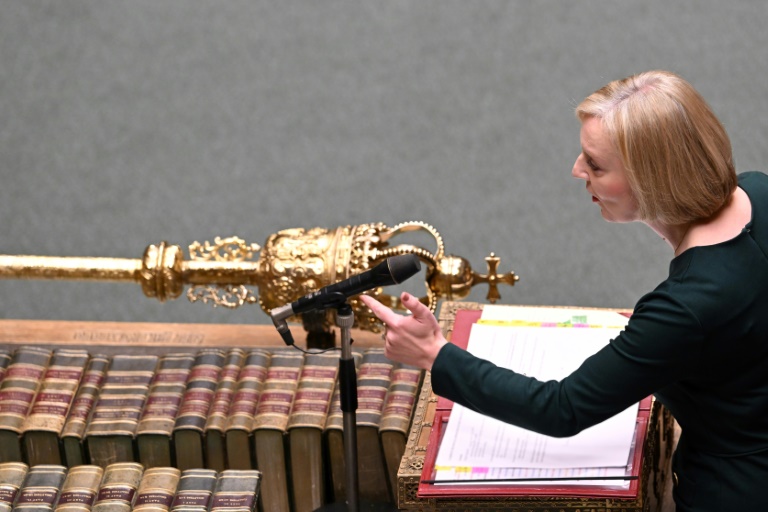
The pound’s stronger position came despite Prime Minister Liz Truss’s insistence that there would be no more u-turns, after she was previously forced to scrap a plan to cut the higher rate of income tax.

However, the strong inflation data pushed the already strong dollar further up against other currencies and it hit a 32-year high of 147.67 yen, with traders now looking to see if Japanese officials intervene again to protect the struggling unit.

Japanese finance minister Shunichi Suzuki told the Group of 20 gathering in Washington DC that authorities were “watching the foreign exchange markets with a high sense of urgency, and we’ll take appropriate responses against excessive moves”.

Officials refused to say if they intervened Thursday following a big drop in response to the greenback’s spike.

The yen’s weakness comes from the Bank of Japan’s refusal to lift interest rates — citing a need to support the economy — at the same time as the Fed presses ahead with a series of big rate hikes.

– Key figures around 0230 GMT –

Tokyo – Nikkei 225: UP 3.4 percent at 27,141.18 (break)

Hong Kong – Hang Seng Index: UP 3.2 percent at 16,912.09

Shanghai – Composite: UP 1.4 percent at 3,059.30

Pound/dollar: DOWN at $1.1330 from $1.1333 Thursday

Dollar/yen: UP at 147.28 yen from 147.22 yen

Euro/dollar: UP at $0.9792 from $0.9780

Euro/pound: UP at 86.38 pence from 86.28 pence

West Texas Intermediate: UP 0.1 percent at $89.22 per barrel

Brent North Sea crude: UP 0.1 percent at $94.67 per barrel

New York – Dow: UP 2.8 percent at 30,038.72 (close)

London – FTSE 100: UP 0.4 percent at 6,850.27 (close) 
Xi's 'final purge' ahead of Chinese Communist Party congress

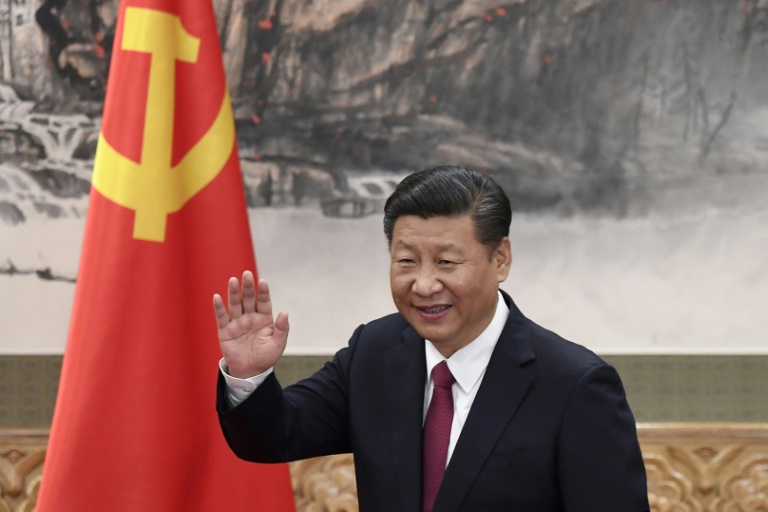
President Xi Jinping has embarked on a “final round of purges” ahead of a major Chinese Communist Party congress, wielding his long-running anti-corruption campaign to cement his grasp on power, analysts say.

When he became leader a decade ago, Xi vowed to root out dishonest officials, both senior “tigers” and low-ranking “flies”.

More than 1.5 million officials have been punished since then, according to data from the party disciplinary body, and China’s ranking on Transparency International’s Corruption Perception Index has improved.

But critics say the campaign is also a thinly veiled political tool that has helped Xi eliminate his rivals — and the build-up to this year’s congress has seen more heads roll. 

About 1,100 officials have been caught in the party dragnet since the beginning of this year, according to party data.

Among them are former deputy public security minister Sun Lijun and former justice minister Fu Zhenghua, who will now spend the rest of their lives behind bars.

“This final round of purges, masquerading as an anti-corruption campaign, will ensure that Xi will have tighter if not absolute control over personnel and policy issues (at the Congress),” said Willy Lam, a political analyst at the Chinese University of Hong Kong.

Xi is widely expected to secure a third term as party leader at the meeting, upending the succession norms in place since the 1990s.

“Despite all signs that his major goal of a third term is pretty much guaranteed, Xi is still paranoid about his control over appointments to key decision-making bodies within the party,” Lam added.

– ‘Damaging party unity’ –

Once a trusted lieutenant of Xi, Sun oversaw security in Hong Kong during months of unrest in 2019 and was even sent to Wuhan at the start of the Covid pandemic.

But he reportedly fell from grace because of his political ambitions, and was officially accused of “seriously damaging the unity of the party”.

Sun confessed on national television in January to taking bribes worth $14 million, hidden inside boxes of what appeared to be seafood.

Others allegedly in his “political clique”, including Fu and three former police chiefs, were also rounded up and given harsh sentences.

“Sun Lijun’s case is linked to Xi’s absolute control of the security apparatus, which is indispensable for his political agenda,” said Yun Sun, director of the China programme at the Stimson Center think tank in Washington.

“It also sends a stern message to anyone with dissenting views about Xi’s leadership.”

Chinese Communist Party politics — despite the facade of unity — has always been deeply factional with different groups vying for influence. 

“There are some who are anti-Xi but very pro-party. They don’t like where the party is heading under him,” Alex Payette, chief executive of consultancy Cercius Group, told AFP. 

The congress presents an opportunity for Xi to reduce that threat by promoting close allies to positions on the Politburo’s seven-person standing committee, the apex of power.

– ‘Absolute loyalty’ –

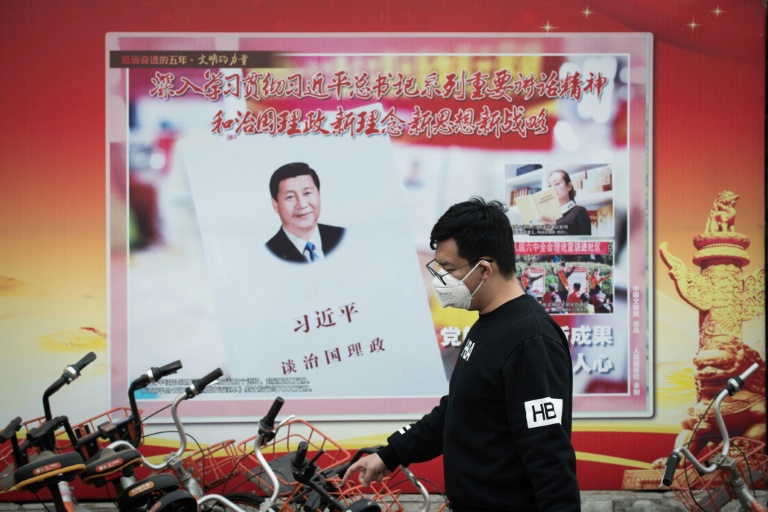
More than any other Chinese leader since Mao Zedong, Xi has built a strong personality cult, with children as young as 10 required to take lessons in “Xi Jinping Thought”.

And according to Wu Muluan, a Chinese politics expert at the National University of Singapore, he has used the anti-corruption campaign to turn the Communist Party “from a collective dictatorship to a personalist dictatorship”.

He has already brought under his wing the three critical power centres of the party — the military, the propaganda machine and the internal security apparatus — by rooting out dissenting voices and replacing them with his proteges. 

For example, the recently appointed minister of public security Wang Xiaohong has known Xi at least since the mid-1990s, when they were both working in southeastern Fujian province. 

“Xi is cherry-picking people who have shown absolute loyalty to him for decades,” Wu said.

Surrounding himself with allies going into his next term has become even more important given the significant political headwinds Xi faces, including an ailing economy, deteriorating relations with the United States and a strict zero-Covid policy that has accelerated China’s inward turn from the world.

“The anti-corruption card is a potent tool for Xi to send a message to the still-considerable number of opponents in the upper echelon of the party,” analyst Lam said.

“Any opposition could mean a jail term… or at least ugly harassment by the anti-graft agencies such as 24-hour surveillance.” 

Who is China's President Xi Jinping?

When Xi Jinping took power in 2012, some observers predicted he would be the most liberal Communist Party leader in China’s history, based on his low-key profile, family backstory and perhaps a degree of misguided hope.

Ten years later, those forecasts lie in tatters, proving only how little was understood of the man who looks set to become China’s most powerful ruler since Mao Zedong at a major party congress this month.

Xi has shown himself to be ruthless in his ambition, intolerant of dissent, with a desire for control that has infiltrated almost every aspect of life in modern China.

He has gone from being primarily known as the husband of a celebrity singer to someone whose apparent charisma and aptitude for political storytelling have created a personality cult not seen since Mao’s day.

The colourful details of his early life have been rinsed and repackaged in official party lore, but the man himself — and what drives him — remain somewhat more of an enigma.  

“I dispute the conventional view that Xi Jinping struggles for power for power’s sake,” Alfred L. Chan, author of a book on Xi’s life, told AFP.

“I would suggest that he strives for power as an instrument… to fulfil his vision.”

Another biographer, Adrian Geiges, told AFP that he did not think Xi was motivated by a desire for personal enrichment, despite international media investigations having revealed his family’s amassed wealth.

“That’s not his interest,” Geiges said.

“He really has a vision about China, he wants to see China as the most powerful country in the world.”

Central to that vision — what Xi calls the “Chinese Dream” or “great rejuvenation of the Chinese nation” — is the role of the Communist Party (CCP). 

“Xi is a man of faith… for him, God is the Communist Party,” wrote Kerry Brown, author of “Xi: A Study in Power”. 

“The greatest mistake the rest of the world makes about Xi is to not take this faith seriously.”  

– ‘Traumatised’ – 

Xi might not seem an obvious candidate to become a CCP diehard, though he grew up as a “princeling”, or member of the party elite. 

His father Xi Zhongxun was a revolutionary hero turned vice premier, whose “strictness toward his family members was so serious that even those close to him believed it bordered on the inhuman”, according to the elder Xi’s biographer Joseph Torigian.

But when Zhongxun was purged by Mao and targeted during the Cultural Revolution, “(Jinping) and his family were traumatised”, said Chan. 

His status vanished overnight, and the family was split up. One of his half-sisters is reported to have killed herself because of the persecution.

Xi has said he was ostracised by his classmates, an experience the political scientist David Shambaugh suggests contributed to a “sense of emotional and psychological detachment and his autonomy from a very young age”.

At just 15, Xi was ordered to the countryside in central China where he spent years hauling grain and sleeping in cave homes. 

“The intensity of the labour shocked me,” he later said.

He also had to take part in “struggle sessions” in which he had to denounce his father. 

“Even if you don’t understand, you are forced to understand,” he said, describing the sessions to a Washington Post reporter “with a trace of bitterness” in a 1992 interview.

“It makes you mature earlier.”

Biographer Chan said the experiences of his youth had given him “toughness”.  

“He tends to go for broke. He tends to use a two-fisted approach when he approaches problems. But he also has a certain appreciation of the arbitrariness of power and that’s why he also emphasises law-based governance.”

– Systematic, low profile –

Nowadays, the cave Xi slept in is a domestic tourist draw, used to emphasise traits such as his concern for China’s poorest.

When AFP visited in 2016, one local painted a picture of an almost legendary figure, reading books between breaks in hard labour “so one could see he was no common man”.

That does not seem to have been obvious at the time though. Xi himself said he was not even rated “as high as the women” when he first arrived.

His application for CCP membership was rejected multiple times because of the family stigma, before it was finally accepted.

Beginning as a village party boss in 1974, Xi climbed to the governorship of coastal Fujian province in 1999, then party chief of Zhejiang province in 2002 and eventually Shanghai in 2007.

“He was working very systematically… to get experience by starting at a very low level, in a village, then in a prefecture… and so on,” said biographer Geiges.

“And he was very clever by keeping a low profile.”

Xi’s father was rehabilitated in the late 1970s following the death of Mao, massively boosting his son’s standing.

Following a divorce from his first wife, Xi married superstar soprano Peng Liyuan in 1987, at a time when she was much better known than him.

Even so, his potential was not apparent to all, exemplified by comments made by his host on a trip to the United States in 1985.

“No one in their right mind would ever think that that guy who stayed in my house would become the president,” Eleanor Dvorchak was quoted as saying years later in the New Yorker magazine.

Cai Xia, a former high-ranking CCP cadre who now lives in exile in the United States, believes Xi “suffers from an inferiority complex, knowing that he is poorly educated in comparison with other top CCP leaders”.

As a result, he is “thin-skinned, stubborn, and dictatorial”, she wrote in a recent article in Foreign Affairs.

– ‘Heir of the revolution’ –

But Xi has always regarded himself “as an heir of the revolution”, said Chan.

In 2007, he was appointed to the Politburo Standing Committee, the party’s highest decision-making body.

When he replaced Hu Jintao five years later, there was little in Xi’s past administrative record that foreshadowed his actions once installed as leader.

He has cracked down on civil society movements, independent media and academic freedoms, overseen alleged human rights abuses in the northwest Xinjiang region, and promoted a far more aggressive foreign policy than his predecessor.

In the absence of access to either Xi or any of his inner circle, scholars are left to survey his earlier writings and speeches for clues to his motivations.

“The absolute centrality of the party’s mission to make China a great country again is evident from Xi’s earliest recorded statements,” wrote Brown.

Xi has harnessed that narrative of an ascendant China to great effect, using nationalism as a tool for his own and the party’s legitimacy among the population. 

But there is also evidence he fears that grasp on power might decline.

“The fall of the Soviet Union and of socialism in eastern Europe was a big shock,” said Geiges, adding Xi blames the collapse on its political opening up. 

“So he decided that something like this shall not happen to China… that’s why he wants strong leadership of the Communist Party, with one strong leader.”

Singapore's economy grows 4.4% in Q3

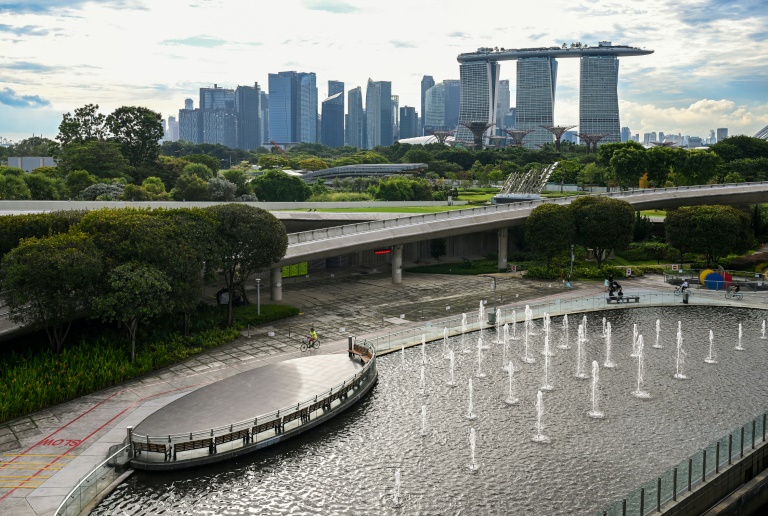
Singapore’s economy expanded by 4.4 percent on-year in the third quarter of 2022, the government said Friday while warning of ongoing global challenges such as inflation.

Economists often see the performance of the city-state’s open, trade-driven economy as a barometer for global trading activity.

The Q3 reading was slightly lower than the previous quarter’s 4.5 percent, according to advance estimates released by the trade ministry.

“The expansion was underpinned in part by a stronger-than-expected recovery in the domestic-oriented and travel-related sectors as more Covid-19 restrictions abroad and locally were relaxed,” the Monetary Authority of Singapore said Friday.

Singapore has removed all Covid restrictions, except for mask-wearing inside buses and metro trains, after vaccinating most of its population of nearly six million and deciding to live with the coronavirus.

On a quarter-to-quarter basis, Singapore’s economy expanded by 1.5 percent, avoiding a technical recession by reversing the 0.2 percent contraction in Q2.

However, manufacturing output and financial services weakened because of softening external demand, according to the central bank.

The MAS said it would further tighten monetary policy to fight inflation — its fifth such move since October 2021.

“In the quarters ahead, the drag on economic activity from the globally synchronised tightening in monetary policy will intensify,” it said.

“While inflation should moderate, it will remain high for some time.”

The MAS slightly raised its inflation forecasts, predicting around 4.0 percent core inflation and around 6.0 percent headline inflation for 2022.

“However, further shocks, including from geopolitical tensions, could drive inflation higher and cause full-year recessions in some key economies,” the bank added.

Singapore’s economy is projected to expand by 3.0-4.0 percent in 2022, after officials trimmed the earlier forecast of 3.0-5.0 percent.

Bolsonaro finds strong support in Rio's 'Brazilian Miami'

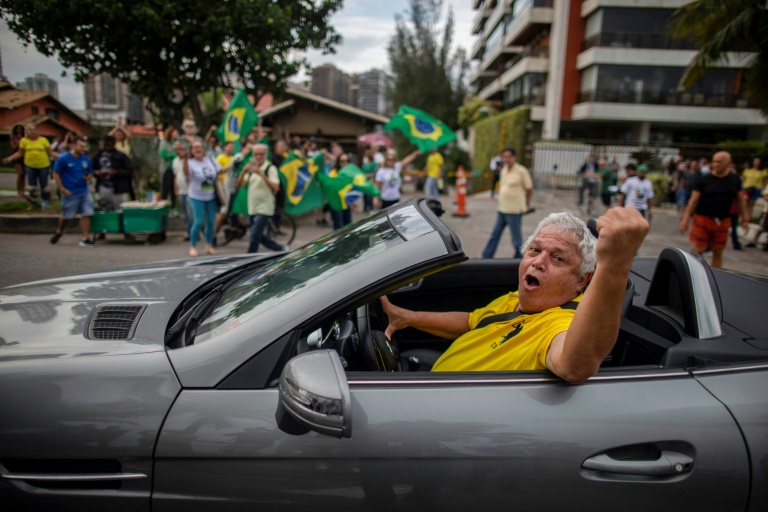
Posh-looking drivers in expensive cars are honking their horns on a beachfront avenue in Rio de Janeiro, blaring their approval at a vendor selling green-and-yellow Brazilian flags outside President Jair Bolsonaro’s former home.

Welcome to Barra da Tijuca, the neighborhood known as the “Brazilian Miami,” a bastion of support for the far-right incumbent as he fights to win reelection in his October 30 runoff battle against leftist ex-president Luiz Inacio Lula da Silva (2003-2010).

Known for its upscale shopping malls, gated communities and luxury condos with sweeping views of the emerald coastline, Barra voted heavily for Bolsonaro in the first-round election on October 2, when Lula took 48 percent of the vote nationwide, to 43 percent for the incumbent.

In Barra, Bolsonaro won 50 percent of the vote, to 37 percent for Lula — a preference visible in the abundance of Brazilian flags fluttering from the west-side neighborhood’s balconies, a symbol adopted by the president’s supporters.

“People here in Barra are very in sync with Bolsonaro ideologically. The majority of people support him, because there are a lot of businesspeople,” says resident Felipe Fontenelle, a 58-year-old entrepreneur who owns a communications security firm and stakes in two restaurants.

Lula, he warns, represents “communism.”

Developed in 1969 by renowned modernist urban planner Lucio Costa, Barra underwent a demographic boom in the 1980s, becoming a magnet for celebrities, politicians and the upwardly mobile as they sought a haven from the city’s violence.

Now home to some 135,000 people, its elite status was cemented when it was chosen as the site for the Olympic village for the 2016 Rio Games.

“It’s a neighborhood for the nouveau riche, especially people who believe in the idea of the self-made man: that they worked hard and succeeded,” says sociologist Paulo Gracino Junior of Candido Mendes University, calling it an enclave of executives, professionals and military top brass.

He points out it is also home to ex-cop Ronnie Lessa, a convicted arms trafficker who is the chief suspect in the 2018 killing of black LGBT activist and Rio city councillor Marielle Franco.

Lessa and Bolsonaro lived on the same street.

– Bolsonaro’s hood –

Bolsonaro, then a congressman representing Rio, moved to Barra with his family in the 2000s.

They still own the house they bought in Vivendas da Barra, a gated community that sits behind a cement wall topped with barbed wire.

The private condo has become a rallying point for Bolsonaro backers.

Visiting Rio from the southern state of Santa Catarina, retired lawyer Mirian Rebelo and her son Rodrigo, a dentist, stopped there to take selfies, both sporting Tommy Hilfiger T-shirts and sunglasses.

“I love the president’s focus on the family. And he doesn’t mince words. He speaks his mind,” says Mirian, 65.

“Every country deserves a Bolsonaro,” says Rodrigo, 41, praising the president’s “crackdown on corruption and the ideology of evil.”

Cacalo Matarazzo, a lawyer and jiu-jitsu teacher who lives next door to Bolsonaro’s condo complex, says he counts the president as a friend.

“Everyone here knows him well. He even invited me over for coffee before his inauguration” in 2019, says the stern, square-jawed 73-year-old, after proudly showing a series of photographs of himself with Bolsonaro on his cell phone.

“But it’s not just about Bolsonaro, it’s about a guy who’s fighting to build a better Brazil.”

Matarazzo is no fan of Lula, who makes a cameo among the Bolsonaro merch on sale out front.

There, the veteran leftist, who was jailed in 2018 on controversial, since-overturned corruption charges, appears in effigy as an inflatable doll in a prison uniform.

“Thief! Scum! Son of a bitch!” Matarazzo spits at the image of the former president.

North Korea fires missile, flies fighter jets near border

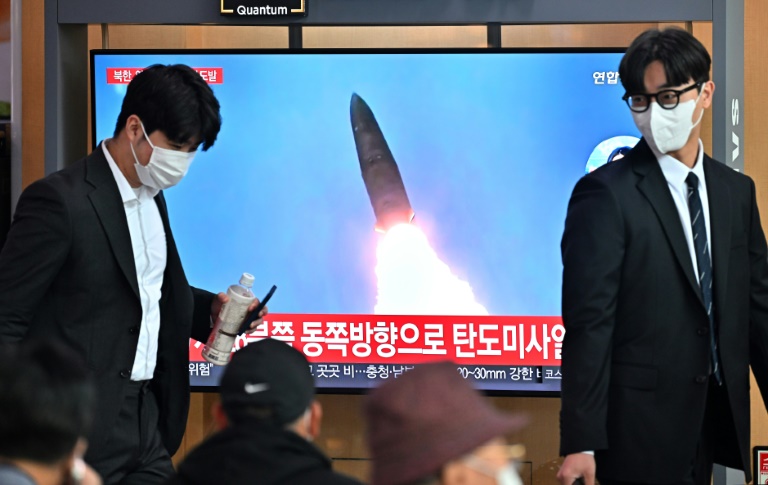
North Korea on Friday fired a short-range ballistic missile, conducted an artillery barrage, and flew fighter jets close to the South’s border in another show of force that the US has warned could culminate in a nuclear test.

Pyongyang has dramatically ramped up missile launches and military exercises in recent weeks, which it now describes as “tactical nuke” drills, as Seoul and Washington say Kim Jong Un is close to conducting what would be his country’s seventh nuclear test.

North Korea’s military said in a rare statement its latest actions came in response to a “provocative” South Korean artillery exercise near the border.

The Korean People’s Army “took strong military countermeasures,” according to a statement carried by the official Korean Central News Agency early Friday.

Pyongyang issued “a stern warning to the South Korean military inciting military tension in the frontline area with reckless action,” said the statement.

South Korea’s military said it had detected the ballistic missile launch from the Sunan area in Pyongyang early Friday, just hours after Pyongyang flew 10 fighter jets close to the inter-Korean border.

The North Korean jets crossed a Seoul-set “reconnaissance line” which triggers an automatic operational response. Seoul then scrambled military aircraft, including F-35A fighter jets, the Joint Chiefs of Staff said.

North Korea also fired some 170 artillery shots into waters off its east and west coasts, violating a maritime “buffer zone” agreed in a 2018 deal, JCS said.

Seoul’s National Security Council condemned what it described as a barrage of “hostile actions” overnight, warning in a statement that “such provocations will bring consequences”.

The South also imposed its first unilateral sanctions in five years Friday, targeting North Korean individuals and institutions.

The United States also condemned the launch of another ballistic missile, saying that it — like the many other recent launches — was in violation of multiple UN sanctions.

“We continue to seek serious and sustained dialogue with the DPRK, but the DPRK refuses to engage,” a State Department spokesperson said, referring to the North by its official name.

– New warning? –

Earlier this week, Kim Jong Un dismissed the idea of restarting talks over its banned weapons programmes, saying North Korea “felt no necessity to do so”.

The country revised its nuclear laws last month to allow preemptive strikes, with Kim declaring North Korea an “irreversible” nuclear power — effectively ending the possibility of negotiations over its arsenal.

Since then, Seoul, Tokyo and Washington have ramped up combined military exercises, including deploying a nuclear-powered US aircraft carrier to the area twice, infuriating Pyongyang, which sees such drills as rehearsals for invasion.

“The North appeared to have taken the South’s recent artillery drill very seriously,” Hong Min of the Korea Institute for National Unification told AFP.

Their latest move — firing an artillery barrage into the maritime buffer zone but not into South Korean waters themselves — looks like an “attempt to test how Seoul will respond”, he said.

There have been growing calls from ruling party parliamentarians for South Korea’s new hawkish administration to scrap the 2018 agreement that created the maritime buffer zone.

“Last night’s drill could’ve been the North’s reaction in protest in North Korean style,” he added.

– Fears of nuclear test –

The overnight barrage follows the test firing of two long-range strategic cruise missiles on Wednesday, which itself came two days after the North said it had wrapped up two weeks of “tactical nuclear” drills.

Kim expressed “great satisfaction” with the recent tests, which he said showed the country’s nuclear combat forces were at “full preparedness for actual war”, state media reported.

With talks long stalled — and Ukraine-linked gridlock at the United Nations stymying fresh sanctions — Kim has doubled down on developing and testing his banned nuclear arsenal.

Officials in Seoul and Washington have been warning for months that Pyongyang is ready to conduct another nuclear test — which would be the country’s seventh.

Kim has said North Korea will “focus all efforts on the endless and accelerating development of the national nuclear combat armed forces”.

He made acquiring tactical nukes — smaller, lighter weapons designed for battlefield use — a top priority at a key party congress in January 2021.

Floods force evacuations in Australia

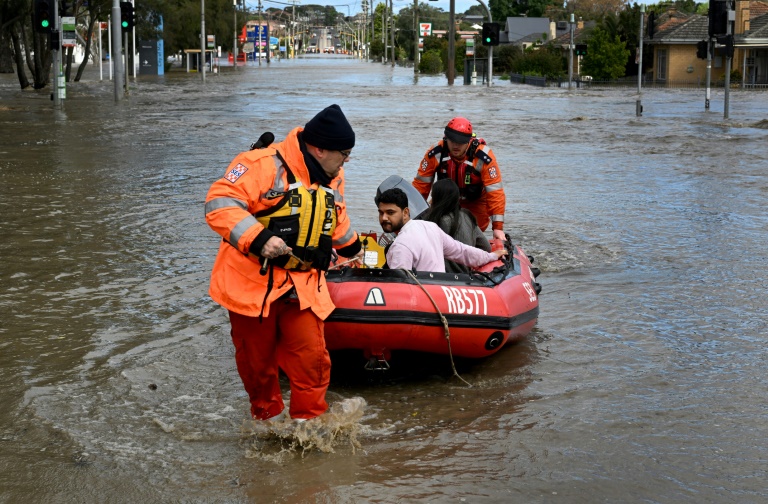
Thousands were warned to flee their homes in southeastern Australia on Friday to escape surging floodwaters threatening towns across three separate states. 

The flooding emergency was the worst in Victoria — Australia’s second most populous state — where on Friday morning rapidly rising waters swamped the Maribyrnong suburb of Melbourne, forcing evacuations.

The Victorian government was preparing to reopen a Covid-19 quarantine centre to shelter those whose homes were uninhabitable, state leader Daniel Andrews told ABC Radio. 

“This has been a very, very significant flood event and it’s far from over,” he said Friday morning. 

“The real challenge is waters continuing to rise and more and more houses being inundated, more and more communities being closed off.” 

The ground floor of the Anglers Tavern, a pub on the banks of the Maribyrnong River, was on Friday morning almost completely under water. 

Near-record flood levels were expected later on Friday evening in the towns of Shepparton and Murchison, north of Melbourne.

Northern parts of Tasmania — an island state south of Victoria — were on Friday also preparing for major floods. 

Mass evacuation orders were issued, while heavy rains forced the closure of some 120 roads. 

“Lives are at risk from floodwaters,” Tasmania’s state emergency service said in a statement.

In New South Wales — Australia’s most populous state — an evacuation centre was set up after intense downpours Thursday evening in Forbes, an inland town about five hours’ drive east of Sydney. 

The New South Wales emergency service said flood levels in Forbes could peak on Friday as water moved downstream. 

Australia’s east coast has been repeatedly lashed by heavy rainfall in the past two years, driven by back-to-back La Nina cycles. 

The east coast flooding disaster in March — caused by heavy storms that devastated parts of Queensland and New South Wales — claimed more than 20 lives. 

Tens of thousands of Sydney residents were ordered to evacuate in July when floods again swamped suburbs on the city’s fridge.

Turkey introduces jail terms for 'fake news'

Turkey’s parliament on Thursday approved a tough pre-election law that could see reporters and social media users jailed for up to three years for spreading “fake news”.

The new rules cement the government’s already-firm grip on the media eight months before a general election that President Recep Tayyip Erdogan enters trailing in the polls.

The Council of Europe said the measure’s vague definition of “disinformation” and accompanying threat of jail could have a “chilling effect and increased self-censorship, not least in view of the upcoming elections in June 2023”.

The legislation — comprised of 40 amendments that each required a separate vote — was proposed by Erdogan’s Islamic-rooted AKP party and furiously opposed by Turkey’s main opposition groups.

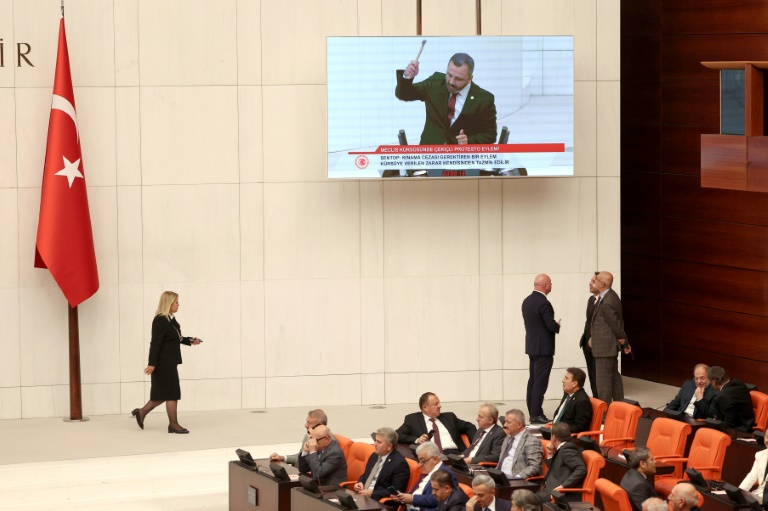
One lawmaker from the secular CHP party smashed his mobile phone with a hammer in parliament to demonstrate how freedom of expression was being destroyed — particularly for the young.

“I would like to address my brothers who are 15, 16, 17 years old and who will be deciding the fate of Turkey in 2023,” CHP lawmaker Burak Erbay said before taking out his hammer.

“You have only one freedom left — the phone in your pocket. There’s Instagram, YouTube, Facebook. You communicate there,” he said ahead of the vote.

“If the law here passes in parliament, you can break your phone like this,” he said.

– ‘War on the truth’ –

Most Turkish newspapers and television channels fell under the control of government officials and their business allies during a sweeping crackdown that followed a failed coup in 2016.

But social networks and internet-based media remained largely free of oversight — much to the growing annoyance of Erdogan.

This began to change when Turkey used the threat of heavy penalties to force giants such as Facebook and Twitter to appoint local representatives who can quickly comply with local court orders to take down contentious posts.

Erdogan began to argue at around the same time that Turkey’s highly-polarised society was particularly vulnerable to fake and misleading news.

Social media have “turned into one of the main threats to today’s democracy”, Erdogan said last December.

The new legislation imposes a criminal penalty for those found guilty of spreading false or misleading information.

It requires social networks and internet sites to hand over personal details of users suspected of “propagating misleading information”.

It also allows the courts to sentence accredited reporters and regular social media users who “openly spread misleading information” to between one and three years in jail.

The government has also started publishing a weekly “disinformation bulletin” aimed at debunking what it deems as false news with “accurate and truthful information”.

Lawmakers rejected repeated opposition attempts to dilute the legislation before the vote.

“This law declares war on the truth,” pro-Kurdish opposition HDP party lawmaker Meral Danis Bektas said.

– ‘Legal harassment’ –

Turkey was ranked 149th out of 180 countries in the annual media freedom index published by Reporters Without Borders (RSF) earlier this year.

“Authoritarianism is gaining ground in Turkey, challenging media pluralism,” RSF said. “All possible means are used to undermine critics.”

Award-winning media rights campaigner Veysel Ok said everyone in Turkey was now exposed to potential prosecution for their views.

“The members of the opposition, NGOs, bar associations, professional associations, journalists and ordinary citizens… Now, all will be subjected to legal harassment,” Ok tweeted.

1.4 million children malnourished in South Sudan: charity

About 1.4 million children under the age of five are suffering from malnutrition in South Sudan, caught in the grip of widespread flooding and intercommunal conflict, the British charity Save the Children said Friday.  

It said the world’s youngest country, which has a largely rural population, is reeling from “its worst hunger crisis” since independence from Sudan in 2011.

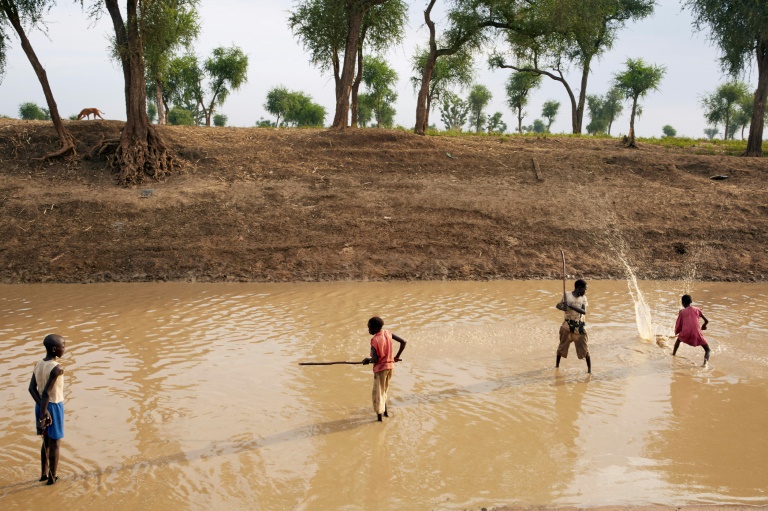
“The situation has deteriorated in recent months with more than 615,000 people impacted by an unprecedented fourth consecutive year of large-scale flooding, destroying homes, crops,” Save the Children said in a statement. 

Cases of malaria and snakebites are also soaring, it said, with children and women particularly hard hit.

The flooding coupled with a vicious cycle of often deadly interethnic conflict has uprooted thousands of people from their homes, the charity said, urging the international community to not “overlook South Sudan or to divert funding to other crises”.

Around 909,000 people have been affected by flooding across nine out of 10 states, the UN’s Office for the Coordination of Humanitarian Affairs (OCHA) said Tuesday. 

South Sudan, like many countries in sub-Saharan Africa, has suffered from the fallout of the war in Ukraine which has sent global prices of food and fuel soaring.

The value of the local currency has also slumped by nearly 40 percent this year, Save the Children said.

The UN’s World Food Programme warned in March that more than 70 percent of South Sudan’s 11 million people would face extreme hunger this year because of natural disasters and violence.

Save the Children called on leaders planning to attend November’s COP27 climate summit in Egypt to increase funding to help vulnerable communities and children build resilience against climate disasters and shocks.

“The first generation of South Sudan children are growing up now and we must not fail them by allowing South Sudan to become a forgotten crisis,” said country director Jib Rabiltossaporn.

One of the poorest nations on the planet despite large oil reserves, South Sudan has lurched from crisis to crisis since independence, spending almost half of its life as a nation at war. 

Braving rockets, Iraq MPs elect president who names PM after year of deadlock

Despite a rocket attack on Baghdad’s Green Zone, Iraqi lawmakers Thursday elected a new president who swiftly named a prime minister in hopes of ending a year of political gridlock and violence in the war-scarred nation.

Abdul Latif Rashid, a 78-year-old Iraqi Kurd, was elected as head of state, replacing Barham Saleh, by the assembly in the capital’s heavily fortified Green Zone government and diplomatic district.

Rashid won more than 160 votes against 99 for the incumbent Saleh, an assembly official said.

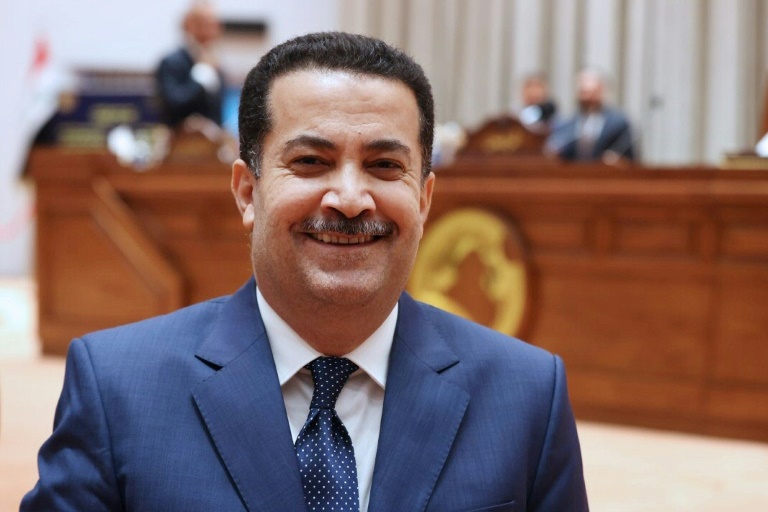
The new president swiftly named Shiite politician Mohammed Shia al-Sudani as prime minister-designate, tasking him with reconciling feuding Shiite factions and forming a government a whole year after Iraq last went to the polls.

The 52-year-old Sudani, who has the backing of influential pro-Iran factions, vowed to form a government “as quickly as possible”, but faces the daunting task of winning over their rivals, the millions of diehard supporters of fiery cleric Moqtada Sadr.

When Sudani was first proposed in July, the move sparked mass protests by Sadr’s followers, who breached the Green Zone and stormed parliament.

He now has 30 days to form a new government capable of commanding a majority in parliament.

“I shall spare no effort to form a strong government,” Sudani said in a televised speech, vowing to work with “all political forces and elements of society”.

He also promised the youth he would confront problems such as “the lack of (public) services, poverty, inflation and unemployment”.

Western governments swiftly welcomed the move to end Iraq’s political standoff.

The US State Department called on the new leaders to “bear in mind the will of the Iraqi people” and urged all sides “to refrain from violence and to resolve differences amicably and peacefully through the political process.”

The French embassy congratulated Sudani on his nomination and called for the “formation of a government that will do all in its power to answer the legitimate demands of all Iraqi people and especially its youth.”

A reminder of Iraq’s troubles came earlier in the day as lawmakers headed into parliament, when a barrage of nine Katyusha-style rockets rained down on the area, the security forces said.

At least 10 people were wounded, including six members of the security forces or bodyguards of lawmakers, as well as four civilians in a nearby district, a security official told AFP.

US ambassador Alina Romanowski condemned the attack “in the strongest terms” on Twitter and warned that “the people of Iraq must resolve their political differences & grievances solely thru peaceful means. 

“Attacks like these undermine democracy & trap Iraq in a perpetual cycle of violence.”

– ‘Crisis breeds instability’ –

The democratic institutions built in oil-rich Iraq since the 2003 US-led invasion that toppled dictator Saddam Hussein remain fragile, and neighbouring Iran wields major influence.

For just over a year now, Iraq has had only a caretaker government to tackle an array of pressing problems, including unemployment, decaying infrastructure, corruption and the impacts of climate change.

The United Nations mission in Iraq warned this week that “the protracted crisis is breeding further instability” and that the divisive politics are “generating bitter public disillusion”.

Lawmakers had made three previous attempts to elect a new head of state, in February and March, but failed to even reach the required two-thirds threshold for a quorum.

Under Iraq’s post-Saddam power-sharing system, meant to avoid more sectarian conflict, the president by convention is Kurdish, the prime minister a Shiite Arab and the parliament speaker a Sunni Arab.

The presidency has usually been held by the Patriotic Union of Kurdistan (PUK) of Rashid and Saleh. This year the rival Kurdistan Democratic Party (KDP) had demanded the presidency but ultimately abandoned the bid.

Rashid, a hydraulic engineer versed in environmental issues, is seen as a compromise candidate for the polarised country.

Iraq’s rival Shiite political factions, the most powerful players, have been bitterly vying for influence.

Sadr has pushed for parliament to be dissolved to clear the way for fresh elections, while the rival Coordination Framework, to which the prime minister-designate belongs, insisted that a new government be formed first.

The standoff has seen both sides set up protest camps in the Green Zone this year. 

Tensions boiled over on August 29 when more than 30 Sadr supporters were killed in battles with Iran-backed factions and the army.

Political analyst Ali al-Baidar said he could not rule out an escalation between the opposing sides but said he thought it more likely that a backroom deal had been done under which the Sadrists will receive additional cabinet posts in return for their tacit approval of Sudani’s nomination.

Close Bitnami banner
Bitnami