World

Protest-hit Iran accuses US of 'destablisation' plot

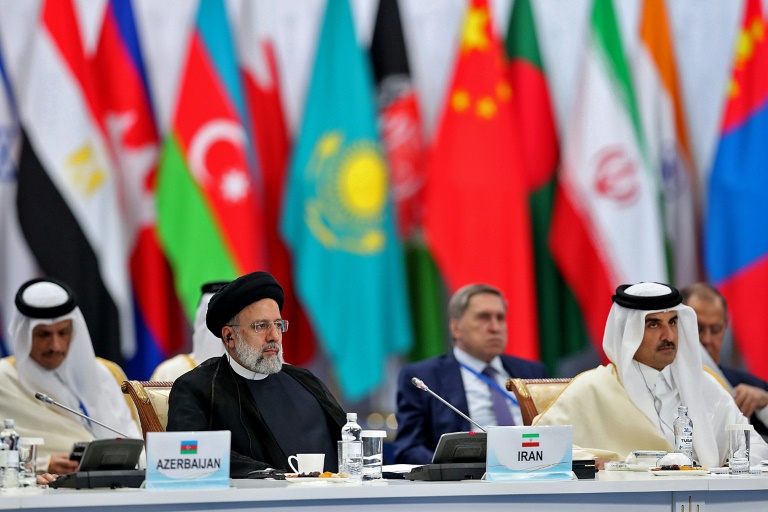
Iran’s president accused arch-enemy the United States on Thursday of seeking to destabilise the Islamic republic, which has been rocked by nearly a month of women-led protests sparked by the death of Mahsa Amini.

Outrage over the 22-year-old Kurdish woman’s death, three days after she was arrested by Iran’s notorious morality police, has fuelled the biggest wave of street protests and violence seen in the country in almost three years.

Young women and schoolgirls have been at the forefront of the protests, shouting anti-government slogans, setting their headscarves ablaze and facing off with security forces in the streets.

Chants of “Woman, Life, Freedom”, the protest movement’s catchcry, were again heard overnight in the northwestern city of Bukan, where demonstrators burned the Iranian flag, in a video verified by AFP.

Iran’s ultra-conservative President Ebrahim Raisi again blamed the United States, its bitter foe since the 1979 Islamic Revolution.

“Following the failure of America in militarisation and sanctions, Washington and its allies have resorted to the failed policy of destabilisation,” he said.

The US, which is also Iran’s chief adversary in a standoff over its nuclear programme, said Thursday that any return to a 2015 deal between major powers and Iran was unlikely in the near future.

“It’s not that we don’t want to see the (nuclear deal) reimplemented, we of course do. We’re just not in a position where… that’s a likely outcome anytime in the near future,” White House spokesman John Kirby said.

“What we’re focused on is holding the regime accountable for what they are doing to these innocent political protesters.”

– Thousands detained –

Fresh protests over Amini’s death were held in Iran on Thursday, with students gathered at Tehran University shouting insults at a security officer who pointed his gun at them, in online video footage verified by AFP.

Human rights groups say that Iran’s bloody crackdown on the protests has already claimed at least 108 lives.

New online videos showed members of the public confronting security forces as they sought to arrest demonstrators, at times forcing officers to run away.

In other footage verified by AFP, women are seen being beaten and chased by security forces in Rasht in Gilan province.

Some oil workers have gone on strike in support of the protests, and 12 from the Bushehr petrochemical plant were arrested as a result, the Human Rights Activists News Agency (HRANA) said Thursday.

Major flashpoints of the unrest have been Amini’s western home province of Kurdistan and the city of Zahedan in Iran’s southeastern province of Sistan-Baluchestan, where demonstrations erupted on September 30 over the reported rape of a teenage girl by a police commander.

HRANA said it had the names of at least 106 people slain by the security forces, and knew of another 11 dead who remained unidentified.

At least 94 more had been killed in Zahedan, one of the few Sunni-majority cities in predominantly Shiite Iran, HRANA said, adding that 20 security personnel had been killed in total, including six in Zahedan.

– ‘Deepening the divide’ –

Iranian judges have been issued orders against handing down soft sentences for people found to be the “main elements of riots”, the judiciary said.

Reformist newspaper Etemad called on Iran’s top security official Ali Shamkhani to stop “arrests” being made under “pretences that are sometimes false”.

“Put pressure on (state broadcaster) IRIB to listen to other voices, give them a platform,” the director of Etemad media group, Elias Hazrati, said in a front-page open letter. 

He said it was “the fault” of those managing the media in Iran that Iranians were turning to Persian-speaking channels based outside the country, which are considered hostile by the authorities.

In its widening crackdown, Iran has restricted internet access and blocked social media platforms including Instagram and WhatsApp.

Washington, which has imposed new sanctions on Tehran over the crackdown, said it was taking steps to ensure Iranians would have online access.

“I spoke with major US tech firms and urged them to… provide the Iranian people with additional services and communications tools,” said US Deputy Secretary of State Wendy Sherman.

Canada announced fresh sanctions on Thursday. Among their targets were Saeed Mortavazi, a prosecutor in Iran’s Revolutionary Court, as well as former foreign minister Mohammad Javad Zarif.

An Iranian investigation found Amini had died on September 16 of a longstanding illness rather than reported beatings.

Her parents have denied this and filed a complaint against the officers involved. A cousin living in Iraq has told AFP she died of “a violent blow to the head”.
French strikes spread as Macron's opponents push for 'confrontation'

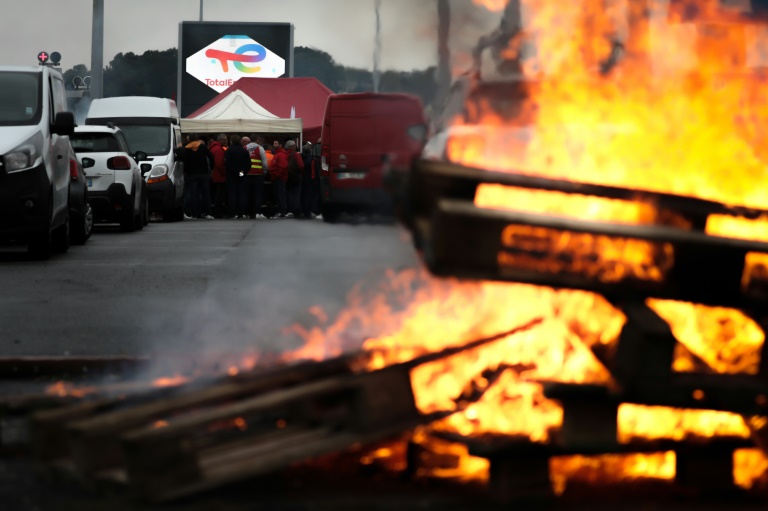
French railway workers and civil servants voted Thursday to join striking oil refinery staff with a walkout next week, raising fears that anger over the rising cost of living could spiral into a series of blockages.

Railway staff and civil servants represented by the hard-left CGT union, the biggest in the public sector, will stop work next Tuesday, with several labour groups calling for a national day of stoppages.

The famously militant CGT said it was pushing for higher wages for railway workers but also wanted to protest government efforts to break a strike by refinery workers that has caused nationwide fuel shortages.

“Railway workers want to press again for salary improvements and denounce the repression and attack against the right to strike,” said a union statement.

The government has resorted to emergency powers to compel some striking refinery workers to return to their jobs to release fuel stocks stuck inside blockaded facilities.

Six out of seven refineries have been affected by strikes that are now in their third week, causing huge tailbacks outside petrol stations and growing frustration among motorists.

“The time for a confrontation (with the government) has arrived,” left-wing opposition parliamentarian Clementine Autain from the France Unbowed party told France 2 television on Thursday.

A leading Greens lawmaker, Sandrine Rousseau, said Wednesday she hoped that the refinery standoff would be “the spark that begins a general strike”.

Not all unions have joined the call for strikes next Tuesday, however, with the country’s biggest, the CFDT, opting out.  

Left-wing political parties are to hold a protest rally against the policies of President Emmanuel Macron and the rising cost of living on Sunday.

– Sympathy and anger –

Until Tuesday, the government had been reluctant to inflame the pay dispute at French energy group TotalEnergies and US giant Esso-ExxonMobil whose refineries are affected.

TotalEnergies made a net profit of 5.7 billion dollars in the April-June period and is distributing billions to shareholders, sparking some sympathy for employees pushing for higher wages. 

But with 30 percent of French service stations with little or no fuel, particularly those in the Paris region and the north, the government began requisitioning some fuel depot workers on Tuesday, forcing them to return to work or risk prosecution.

After an ExxonMobil depot on Wednesday, a TotalEnergies site in northern France was requisitioned on Thursday, with the first laden fuel tankers protected by police seen leaving during the afternoon.

Prime Minister Elisabeth Borne’s office said the emergency measures were justified because of a “real economic threat” for northern France, which relies heavily on agriculture, fishing and industry.

Striking workers at an Esso-ExxonMobil refinery in Fos-sur-Mer, outside Marseille in the south, voted Thursday to lift their blockade after reaching a pay deal with management.

TotalEnergies also announced that it would hold talks with trade union representatives for the first time since the start of the strikes, raising hopes of a breakthrough.

The group has proposed a six-percent raise for next year, below the CGT’s demand for an immediate 10 percent hike, retroactive to January 1.

The company has come under increasing pressure from the government to reach an agreement.

Finance Minister Bruno Le Maire told RTL radio that given its huge profits this year, it had “the capacity… and therefore an obligation” to raise workers’ pay.

French strikes spread as Macron's opponents push for 'confrontation'

French railway workers and civil servants voted Thursday to join striking oil refinery staff with a walkout next week, raising fears that anger over the rising cost of living could spiral into a series of blockages.

Railway staff and civil servants represented by the hard-left CGT union, the biggest in the public sector, will stop work next Tuesday, with several labour groups calling for a national day of stoppages.

The famously militant CGT said it was pushing for higher wages for railway workers but also wanted to protest government efforts to break a strike by refinery workers that has caused nationwide fuel shortages.

“Railway workers want to press again for salary improvements and denounce the repression and attack against the right to strike,” said a union statement.

The government has resorted to emergency powers to compel some striking refinery workers to return to their jobs to release fuel stocks stuck inside blockaded facilities.

Six out of seven refineries have been affected by strikes that are now in their third week, causing huge tailbacks outside petrol stations and growing frustration among motorists.

“The time for a confrontation (with the government) has arrived,” left-wing opposition parliamentarian Clementine Autain from the France Unbowed party told France 2 television on Thursday.

A leading Greens lawmaker, Sandrine Rousseau, said Wednesday she hoped that the refinery standoff would be “the spark that begins a general strike”.

Not all unions have joined the call for strikes next Tuesday, however, with the country’s biggest, the CFDT, opting out.  

Left-wing political parties are to hold a protest rally against the policies of President Emmanuel Macron and the rising cost of living on Sunday.

– Sympathy and anger –

Until Tuesday, the government had been reluctant to inflame the pay dispute at French energy group TotalEnergies and US giant Esso-ExxonMobil whose refineries are affected.

TotalEnergies made a net profit of 5.7 billion dollars in the April-June period and is distributing billions to shareholders, sparking some sympathy for employees pushing for higher wages. 

But with 30 percent of French service stations with little or no fuel, particularly those in the Paris region and the north, the government began requisitioning some fuel depot workers on Tuesday, forcing them to return to work or risk prosecution.

After an ExxonMobil depot on Wednesday, a TotalEnergies site in northern France was requisitioned on Thursday, with the first laden fuel tankers protected by police seen leaving during the afternoon.

Prime Minister Elisabeth Borne’s office said the emergency measures were justified because of a “real economic threat” for northern France, which relies heavily on agriculture, fishing and industry.

Striking workers at an Esso-ExxonMobil refinery in Fos-sur-Mer, outside Marseille in the south, voted Thursday to lift their blockade after reaching a pay deal with management.

TotalEnergies also announced that it would hold talks with trade union representatives for the first time since the start of the strikes, raising hopes of a breakthrough.

The group has proposed a six-percent raise for next year, below the CGT’s demand for an immediate 10 percent hike, retroactive to January 1.

The company has come under increasing pressure from the government to reach an agreement.

Finance Minister Bruno Le Maire told RTL radio that given its huge profits this year, it had “the capacity… and therefore an obligation” to raise workers’ pay.

Netflix to debut subscription with ads

Netflix on Thursday said a subscription option subsidized by ads will debut in November in a dozen countries as the streaming service strives to jumpstart growth.

Basic with Ads subscriptions will be priced at $6.99 in the United States, three dollars less than a basic option without ads, Netflix chief operating officer Greg Peters said in a briefing.

“The timing is great because we really are at this pivotal moment in the entertainment industry and evolution of that industry,” Peters said.

“Now streaming has surpassed both broadcast and cable for total TV time in the United States.”

The ad-discounted tier, a first for Netflix, will roll out in Australia, Brazil, Britain, Canada, France, Germany, Italy, Japan, South Korea, Mexico, Spain and the United States.

Nearly all of the Netflix library will be available, with some offerings held back until licensing deals are renegotiated.

Video ads will be from 15 seconds to 30 seconds long.

“We are looking at a very light ad load with no more than four to five minutes of ads per hour, and including some very tight frequency caps so that members don’t see the same ad repeatedly,” Peters said.

After long shunning advertising, Netflix pushed ahead as competition in the streaming television market intensifies and as consumers recoil from soaring inflation.

With the launch of cheaper, ad-supported subscriptions, Netflix and Disney+ are expected to bite into the revenue of traditional television channels.

Netflix rival Disney+ is expected to launch its own ad-subsidized subscription soon.

“These launches are going to create the biggest premium advertising space in more than a generation,” said analytics company Samba TV senior vice president Dallas Lawrence.

“It’s going to be a major moment for advertisers.”

Russia to help people leave annexed Ukraine region as Kyiv advances

Russia agreed Thursday to help residents leave a region it has “annexed” in a new sign Kyiv’s counter-offensive is advancing, as a top EU official warned Moscow’s army would be “annihilated” by the West if the Kremlin uses nuclear weapons in the war.

Russia’s decision came a day after Kyiv said it had retaken five settlements in the southern Kherson region.

“The government took the decision to organise assistance for the departure of residents of the (Kherson) region,” Russian Deputy Prime Minister Marat Khusnullin said.

The Moscow-appointed head of the area in southern Ukraine — which Russia says it has annexed — had appealed for Russian intervention.

Vladimir Saldo suggested residents “leave to other regions to protect themselves from missile strikes”.

Kherson was being hit by an increasing amount of rockets causing “serious damage”, added Saldo, with civilian infrastructure being targeted.

Those departing would go to Crimea, a Ukrainian peninsula Moscow annexed in 2014, and southern Russian regions.

Kyiv, which announced its counter-offensive in the south in August, said it has already recaptured over 400 square kilometres (155 miles) in the Kherson region in under a week.

The city of Kherson, which lies near Crimea, was the first major Ukrainian city to fall to Russian forces after the February 24 invasion.

In Brussels, EU foreign policy chief Josep Borrell sent a strong message to the Kremlin after President Vladimir Putin’s veiled threats of resorting to nuclear weapons to stem growing battlefield losses.

“Putin is saying he is not bluffing. Well, he cannot afford bluffing, and it has to be clear that the people supporting Ukraine and the European Union and the Member States, and the United States and NATO are not bluffing neither,” Borrell said.

“Any nuclear attack against Ukraine will create an answer, not a nuclear answer but such a powerful answer from the military side that the Russian Army will be annihilated,” Borrell added.

The NATO alliance has stopped short of threatening to use its nuclear arsenal to respond as non-member Ukraine is not covered by its mutual self-defence clause.

The United States and NATO have steered clear of intervening militarily in the Ukraine conflict for fear of sparking a catastrophic nuclear conflict with Moscow.

– Booming trade –

In Ankara, President Recep Tayyip Erdogan defended Turkey’s booming trade ties with Moscow during an in-person meeting with Putin on the sidelines of a summit of regional leaders in Kazakhstan.

But Erdogan did not deliver an offer to mediate negotiations between Moscow and Kyiv — expected by the Kremlin.

Comments between the leaders made no mention of Ukraine and focussed instead on economic ties.

Putin proposed to create a “gas hub” in Turkey as Russia’s supplies to Europe have been disrupted by Ukraine-related sanctions.

NATO member Turkey has sought to retain dialogue with its Western allies as well as Moscow, and has not joined sanctions on Russia over its invasion of Ukraine.

Erdogan also refrained from commenting on mass Russian strikes on Ukraine earlier this week that mostly targeted energy infrastructure and left at least 20 dead. 

The attacks caused power and hot water cuts across the country, but the head of Ukraine’s energy operator Ukrenergo said Thursday the power grid had “stabilised”, reassuring users emergency power cuts would be unneccessary.

– Rebels push to Bakhmut –

On the battlefield, Russian-backed separatist forces in the eastern Donetsk region of Ukraine said they had captured two villages near the industrial city of Bakhmut, posting small gains against Kyiv’s counter-offensive.

The villages lie just south of Bakhmut, a wine-making and salt-mining city that used to be populated by some 70,000 people and which Russian forces have been pummelling for weeks to capture.

The reported gains came after Ukrainian troops had for weeks been clawing back large swathes of territory in the south and east of Ukraine — including Donetsk — controlled by Russian forces for months.

The Ukrainian military countered in an update that it had repelled attacks near several frontline villages.

– Boy pulled from rubble –

Ukraine troops told AFP this week near the frontline south of Bakhmut that they were still outgunned by Russian artillery on their section of the frontline. 

Russian supply lines from the part of Donetsk occupied since 2014 are still intact. 

AFP reporters in Yampil just outside the recently liberated town of Lyman on Thursday heard heavy exchanges of artillery fire to the southeast. 

A Ukrainian soldier returning from the frontline said positions in Torske village were under fire from Russian guns guided by spotter drones.

Also in the south, the town of Mykolaiv was again rocked by Russian bombardments.

The head of the city Oleksandr Sienkevych said on social media a five-storey residential building was hit, with two upper floors destroyed completely.

“An 11-year-old boy was recovered from under the rubble and another seven people may still be there,” he said, adding a security guard was killed at a sea rescue station.

Neanderthals, humans co-existed in Europe for over 2,000 years: study

Neanderthals and humans lived alongside each other in France and northern Spain for up to 2,900 years, modelling research suggested Thursday, giving them plenty of time to potentially learn from or even breed with each other.

While the study, published in the journal Scientific Reports, did not provide evidence that humans directly interacted with Neanderthals around 42,000 years ago, previous genetic research has shown that they must have at some point.

Research by Swedish paleogeneticist Svante Paabo, who won the medicine Nobel prize last week, helped reveal that people of European descent — and almost everyone worldwide — have a small percentage of Neanderthal DNA.

Igor Djakovic, a PhD student at Leiden University in the Netherlands and lead author of the new study, said we know that humans and Neanderthals “met and integrated in Europe, but we have no idea in which specific regions this actually happened”.

Exactly when this happened has also proved elusive, though previous fossil evidence has suggested that modern humans and Neanderthals walked the Earth at the same time for thousands of years.

To find out more, the Leiden-led team looked at radiocarbon dating for 56 artefacts — 28 each for Neanderthals and humans — from 17 sites across France and northern Spain. 

The artefacts included bones as well as distinctive stone knives thought to have been made by some of the last Neanderthals in the region.

The researchers then used Bayesian modelling to narrow down the potential date ranges.

– ‘Never really went extinct’ –

Then they used optimal linear estimation, a new modelling technique they adapted from biological conservation sciences, to get the best estimate for when the region’s last Neanderthals lived.

Djakovic said the “underlying assumption” of this technique is that we are unlikely to ever discover the first or last members of an extinct species.

“For example, we’ll never find the last woolly Rhino,” he told AFP, adding that “our understanding is always broken up into fragments”.

The modelling found that Neanderthals in the region went extinct between 40,870 and 40,457 years ago, while modern humans first appeared around 42,500 years ago.

This means the two species lived alongside each other in the region for between 1,400 and 2,900 years, the study said.

During this time there are indications of a great “diffusion of ideas” by both humans and Neanderthals, Djakovic said.

The period is “associated with substantial transformations in the way that people are producing material culture,” such as tools and ornaments, he said. 

There was also a “quite severe” change in the artefacts produced by Neanderthals, which started to look much more like those made by humans, he added.

Given the changes in culture and the evidence in our own genes, the new timeline could further bolster a leading theory for the end of the Neanderthals: mating with humans. 

Breeding with the larger human population could have meant that, over time, Neanderthals were “effectively swallowed into our gene pool,” Djakovic said.

“When you combine that with what we know now — that most people living on Earth have Neanderthal DNA — you could make the argument that they never really went extinct, in a certain sense.”

Neanderthals, humans co-existed in Europe for over 2,000 years: study

Neanderthals and humans lived alongside each other in France and northern Spain for up to 2,900 years, modelling research suggested Thursday, giving them plenty of time to potentially learn from or even breed with each other.

While the study, published in the journal Scientific Reports, did not provide evidence that humans directly interacted with Neanderthals around 42,000 years ago, previous genetic research has shown that they must have at some point.

Research by Swedish paleogeneticist Svante Paabo, who won the medicine Nobel prize last week, helped reveal that people of European descent — and almost everyone worldwide — have a small percentage of Neanderthal DNA.

Igor Djakovic, a PhD student at Leiden University in the Netherlands and lead author of the new study, said we know that humans and Neanderthals “met and integrated in Europe, but we have no idea in which specific regions this actually happened”.

Exactly when this happened has also proved elusive, though previous fossil evidence has suggested that modern humans and Neanderthals walked the Earth at the same time for thousands of years.

To find out more, the Leiden-led team looked at radiocarbon dating for 56 artefacts — 28 each for Neanderthals and humans — from 17 sites across France and northern Spain. 

The artefacts included bones as well as distinctive stone knives thought to have been made by some of the last Neanderthals in the region.

The researchers then used Bayesian modelling to narrow down the potential date ranges.

– ‘Never really went extinct’ –

Then they used optimal linear estimation, a new modelling technique they adapted from biological conservation sciences, to get the best estimate for when the region’s last Neanderthals lived.

Djakovic said the “underlying assumption” of this technique is that we are unlikely to ever discover the first or last members of an extinct species.

“For example, we’ll never find the last woolly Rhino,” he told AFP, adding that “our understanding is always broken up into fragments”.

The modelling found that Neanderthals in the region went extinct between 40,870 and 40,457 years ago, while modern humans first appeared around 42,500 years ago.

This means the two species lived alongside each other in the region for between 1,400 and 2,900 years, the study said.

During this time there are indications of a great “diffusion of ideas” by both humans and Neanderthals, Djakovic said.

The period is “associated with substantial transformations in the way that people are producing material culture,” such as tools and ornaments, he said. 

There was also a “quite severe” change in the artefacts produced by Neanderthals, which started to look much more like those made by humans, he added.

Given the changes in culture and the evidence in our own genes, the new timeline could further bolster a leading theory for the end of the Neanderthals: mating with humans. 

Breeding with the larger human population could have meant that, over time, Neanderthals were “effectively swallowed into our gene pool,” Djakovic said.

“When you combine that with what we know now — that most people living on Earth have Neanderthal DNA — you could make the argument that they never really went extinct, in a certain sense.”

G20 meets amid Ukraine war, US-Saudi tensions

The G20 held talks in Washington on Thursday, but Russia’s presence in the club made any consensus unlikely despite the multiple crises facing the world.

Finance ministers and central bankers from the Group of 20 major economies are gathered in the US capital during annual meetings of the IMF and World Bank that have focused on Russia’s war in Ukraine, soaring inflation and a climate crisis.

But the G20 is unlikely to agree on many issues, with the group now facing tensions between Saudi Arabia and the United States over OPEC+ oil production cuts that Washington fears will further fuel inflation.

Despite the divisions, Western officials said the G20 remains a useful forum.

“Even if there are different opinions — including those that you don’t share, some even that you don’t understand — it’s still a good forum for a conversation,” said German Finance Minister Christian Lindner.

“It is better to have a forum to speak in than none,” he told reporters.

But the G20 is expected to close its meeting without a joint communique, as in its previous gatherings presided by Indonesia this year. A press conference is scheduled for later Thursday.

“We could do a communique that doesn’t mention the war in Ukraine, but we don’t want a communique that sweeps things under the rug,” a source close to the discussions told AFP.

– Saudi-US spat –

While Western nations have imposed unprecedented sanctions on Russia, other countries have maintained economic ties with Moscow, with India and China stepping up their purchases of Russian oil.

The Group of Seven wealthy democracies is now looking to cap the prices of Russian crude exports, a move aimed at stripping the country of a major source of funding for its war effort.

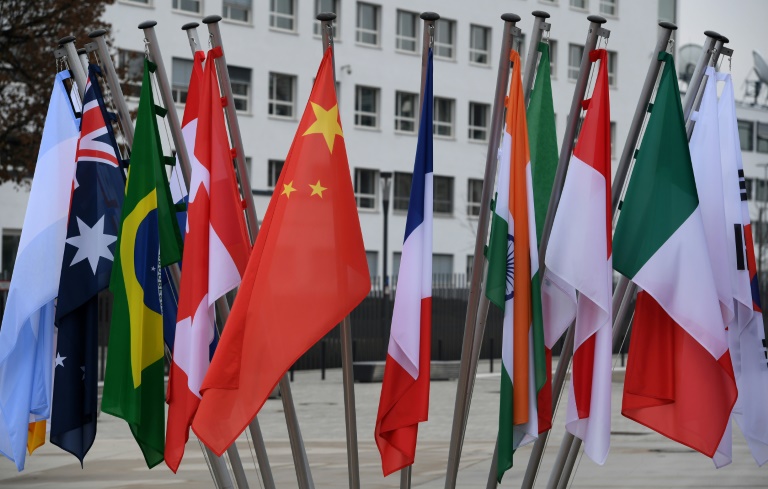
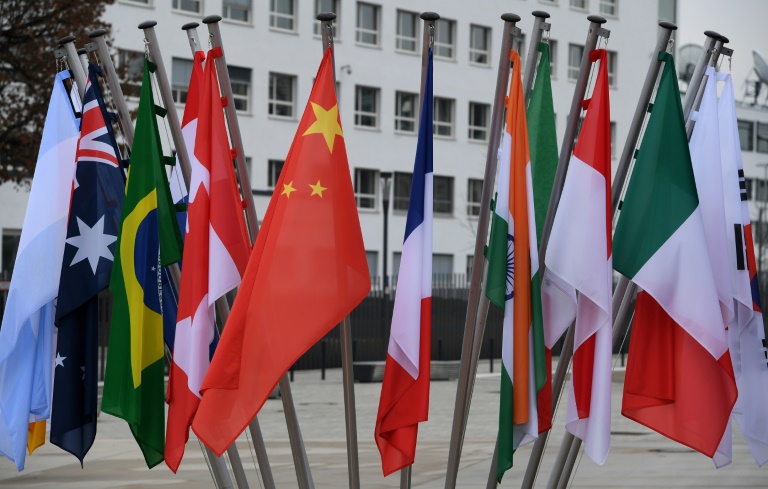
The G7 — which includes Britain, Canada, France, Germany, Italy, Japan and the United States — said Wednesday it had made “significant progress” in key parts of its proposal, noting that it had added Australia to its coalition.

Gaining broad global approval for a price cap is a key challenge for the proposal.

The Saudi-led OPEC group of oil exporters has angered the United States by agreeing on a drastic production cut with Russia and other allies, which could send energy prices soaring even higher.

Washington has accused OPEC+ of aligning itself with Moscow, and on Wednesday President Joe Biden threatened “consequences” for Saudi Arabia.

In a statement, the Saudi foreign ministry denied that the decision was “politically motivated against the United States” and expressed its “total rejection of these statements that are not based on facts.”

But US National Security Council spokesman John Kirby responded that Ryiadh knew the cut “would increase Russian revenues and blunt the effectiveness of sanctions. That is the wrong direction.”

The source close to the G20 discussions said Western nations explained at the meeting that they were “disappointed” and that it went against Saudi interests “because the risk for them is that they cause a recession.”

“It’s hard to understand,” the source said.

– ‘We’re cooked’ –

The G20 also discussed the state of the global economy and debt at a dinner on Wednesday. On Thursday they talked about the financial sector, regulating cryptocurrencies, a global minimum tax on corporations and how to follow through on pledges in climate financing, the source said.

Tensions within the G20 come as leaders are due to meet at a summit in Bali, Indonesia, next month that could see Biden share the same venue as Russian President Vladimir Putin and another rival, Chinese leader Xi Jinping.

The lack of consensus within the group also comes ahead of the United Nations’ COP27 climate summit in Egypt in November.

IMF Managing Director Kristalina Georgieva said Wednesday that the world has to invest up to $6 trillion per year if it is to meet the Paris agreement goal of reaching net-zero carbon emissions by 2050.

“If we do not shift our trajectory this decade, we’re cooked. If we don’t want to be cooked, then we should speed up,” Georgieva said Wednesday in talks on climate change.

G20 meets amid Ukraine war, US-Saudi tensions

The G20 held talks in Washington on Thursday, but Russia’s presence in the club made any consensus unlikely despite the multiple crises facing the world.

Finance ministers and central bankers from the Group of 20 major economies are gathered in the US capital during annual meetings of the IMF and World Bank that have focused on Russia’s war in Ukraine, soaring inflation and a climate crisis.

But the G20 is unlikely to agree on many issues, with the group now facing tensions between Saudi Arabia and the United States over OPEC+ oil production cuts that Washington fears will further fuel inflation.

Despite the divisions, Western officials said the G20 remains a useful forum.

“Even if there are different opinions — including those that you don’t share, some even that you don’t understand — it’s still a good forum for a conversation,” said German Finance Minister Christian Lindner.

“It is better to have a forum to speak in than none,” he told reporters.

But the G20 is expected to close its meeting without a joint communique, as in its previous gatherings presided by Indonesia this year. A press conference is scheduled for later Thursday.

“We could do a communique that doesn’t mention the war in Ukraine, but we don’t want a communique that sweeps things under the rug,” a source close to the discussions told AFP.

– Saudi-US spat –

While Western nations have imposed unprecedented sanctions on Russia, other countries have maintained economic ties with Moscow, with India and China stepping up their purchases of Russian oil.

The Group of Seven wealthy democracies is now looking to cap the prices of Russian crude exports, a move aimed at stripping the country of a major source of funding for its war effort.

The G7 — which includes Britain, Canada, France, Germany, Italy, Japan and the United States — said Wednesday it had made “significant progress” in key parts of its proposal, noting that it had added Australia to its coalition.

Gaining broad global approval for a price cap is a key challenge for the proposal.

The Saudi-led OPEC group of oil exporters has angered the United States by agreeing on a drastic production cut with Russia and other allies, which could send energy prices soaring even higher.

Washington has accused OPEC+ of aligning itself with Moscow, and on Wednesday President Joe Biden threatened “consequences” for Saudi Arabia.

In a statement, the Saudi foreign ministry denied that the decision was “politically motivated against the United States” and expressed its “total rejection of these statements that are not based on facts.”

But US National Security Council spokesman John Kirby responded that Ryiadh knew the cut “would increase Russian revenues and blunt the effectiveness of sanctions. That is the wrong direction.”

The source close to the G20 discussions said Western nations explained at the meeting that they were “disappointed” and that it went against Saudi interests “because the risk for them is that they cause a recession.”

“It’s hard to understand,” the source said.

– ‘We’re cooked’ –

The G20 also discussed the state of the global economy and debt at a dinner on Wednesday. On Thursday they talked about the financial sector, regulating cryptocurrencies, a global minimum tax on corporations and how to follow through on pledges in climate financing, the source said.

Tensions within the G20 come as leaders are due to meet at a summit in Bali, Indonesia, next month that could see Biden share the same venue as Russian President Vladimir Putin and another rival, Chinese leader Xi Jinping.

The lack of consensus within the group also comes ahead of the United Nations’ COP27 climate summit in Egypt in November.

IMF Managing Director Kristalina Georgieva said Wednesday that the world has to invest up to $6 trillion per year if it is to meet the Paris agreement goal of reaching net-zero carbon emissions by 2050.

“If we do not shift our trajectory this decade, we’re cooked. If we don’t want to be cooked, then we should speed up,” Georgieva said Wednesday in talks on climate change.

US and S. Arabia clash in public over oil cut, Russia

The United States and Saudi Arabia traded barbs Thursday over last week’s OPEC+ oil output cut, with Washington accusing Riyadh of knowingly boosting Russian interests.

The Saudi-led OPEC+ cartel — which includes Russia — angered the White House by cutting production by two million barrels a day from November, raising fears that oil prices would soar.

Saudi Arabia issued a rare press release on Thursday, shrugging off accusations it was “taking sides in international conflicts” as Russia’s war in Ukraine rages on.

But US National Security Council spokesman John Kirby quickly fired back, saying that Saudi Arabia knew the cut “would increase Russian revenues and blunt the effectiveness of sanctions. That is the wrong direction.”

The United States has vowed to re-evaluate ties with the oil-rich kingdom since the cut, which was widely seen as a diplomatic slap in the face for Washington.

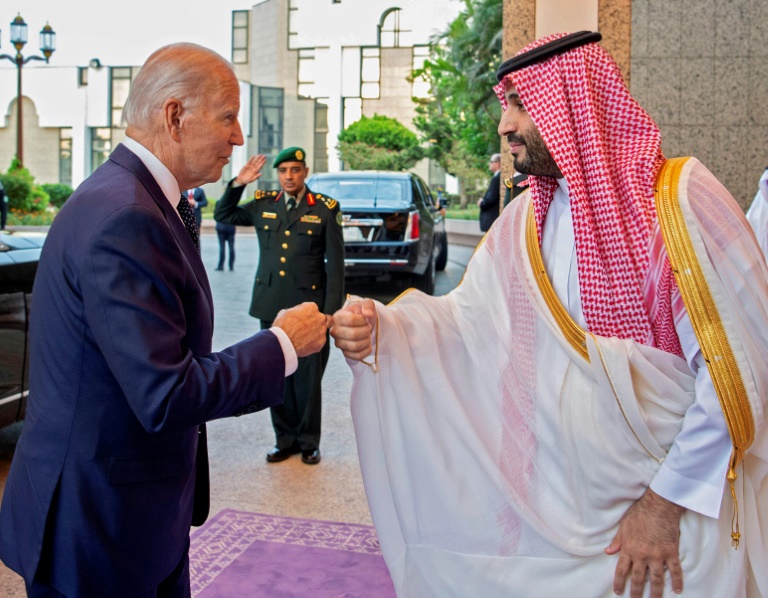
President Joe Biden traveled to Saudi Arabia in July and met with Crown Prince Mohammed bin Salman — with the two greeting each other with a high-profile fist bump.

Biden had previously vowed to make the country an international “pariah” following the murder of journalist Jamal Khashoggi.

“The Saudi Foreign Ministry can try to spin or deflect, but the facts are simple. The world is rallying behind Ukraine in combatting Russian aggression,” Kirby said in a unusually strong statement.

Other OPEC+ nations “felt coerced to support Saudi’s direction,” he added.

The oil cut comes at a sensitive moment for Biden as the Democratic Party faces tricky midterm elections in November with rising consumer prices a key concern for voters.

– Oil funds key to Russian war –

In its press release, Saudi Arabia defended itself against “statements that are not based on facts and which are based on portraying the OPEC+ decision out of its economic context.”

The kingdom insisted that decisions by OPEC+ were taken “purely on economic considerations.” 

And it suggested that Biden’s administration had asked the cartel to delay any cuts until after the US midterm voting.

Biden has promised “consequences” for Saudi Arabia, but given no further details.

President Vladimir Putin relies on high oil prices to fund Russia’s floundering invasion of Ukraine, and some US lawmakers have called for Washington to halt all cooperation with Riyadh.

“We wanted to know that when the chips were down, when there was a global crisis, that the Saudis would choose us,” said Senator Bob Menendez this week. “Well, they didn’t. They chose Russia.”

The partnership between the United States and Saudi Arabia was sealed after World War II, providing the kingdom with military protection in exchange for American access to oil. 

Fraught with crises, the relationship was revived by Biden’s predecessor Donald Trump, whose single term saw Riyadh accounting for a quarter of US arms exports, according to the Stockholm International Peace Research Institute.

Continuing the rapprochement, the United States announced in August that Saudi Arabia would buy 300 Patriot MIM-104E missile systems, which can be used to bring down at long-range incoming ballistic and cruise missiles, as well as attacking aircraft.

Saudi Arabia, which backs the Yemeni government, has faced rocket threats from Yemen’s Huthi rebels, who have been supplied with Iranian equipment and technology.

Close Bitnami banner
Bitnami