World

Meet Simone Tebet, kingmaker in Brazil's presidential runoff

A little-known woman senator has emerged as kingmaker in Brazil’s knife-edge presidential runoff.

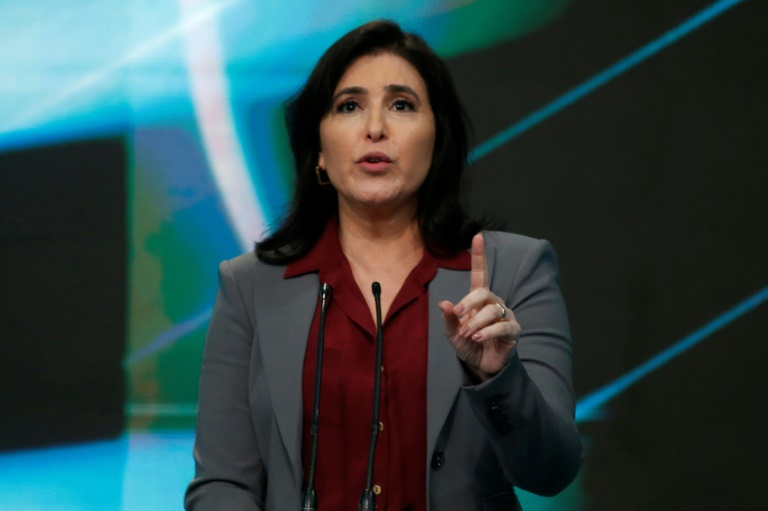
Many Brazilians saw Simone Tebet, a lawyer and university professor, for the first time when she took stage the night of August 29 for the campaign’s first televised debate, standing alongside rightwing President Jair Bolsonaro and leftist icon and ex-president Luiz Inacio Lula da Silva. 

She made a strong impression.

When Bolsonaro at one point insulted a woman journalist asking questions at the debate, the senator leapt to her defense, pointing at the president with her index finger and saying firmly: “I am not afraid of him.”

Tebet, 52, finished third in the first round voting with four percent of the votes, far behind Lula, who took 48 percent, and Bolsonaro with 43 percent.

But her share of the pie amounts to 4.9 million votes — and the difference between the two frontrunners was 6.1 million.

Instantly, Tebet became the candidate to woo. And she endorsed Lula.

– ‘Third option’ –

Tebet’s candidacy was organized by centrist parties and supported by part of the Brazilian establishment as a way to temper the polarization generated by the far-right president Bolsonaro and the leftist hero of the working class and poor, Lula, of the Workers Party.

Tebet is from the city of Tres Lagoas, which has a population of 125,000, and she was its mayor from 2005 to 2010. It is in the west-central state of Mato Grosso do Sul, where the economy is based on agribusiness.

Tebet played a prominent role on a congressional committee that in 2021 investigated the government’s handling of the coronavirus pandemic. And while on this panel, she clashed loudly with Bolsonaro allies. 

Tebet, a Catholic who describes herself as feminist, was also the first woman to preside over the Brazilian senate’s Constitution and Justice Committee, considered the chamber’s most important panel.

But her biggest jump to notoriety came with her presidential candidacy, which was promoted as a third way between the right and left.

Tebet managed “to fill a lagoon that was empty,” said Marco Antonio Teixeira, a professor of political science at the Getulio Vargas Foundation in Sao Paulo.

She succeeded because “she billed herself as an actual third option, strong in her criticisms of Bolsonaro and of the Workers Party in a balanced way, not simply seeking confrontation,” said Teixeira.

In the presidential debates, she challenged Bolsonaro and urged him to show respect for women; the president has a penchant for making remarks seen as sexist.

This helped Tebet grab third place from center-left candidate Ciro Gomes, who polls had predicted would take that spot.

– Conservative and close to agribusiness –

Up through the midway point of Bolsonaro’s term, Tebet supported his government in 86 percent of the votes taken in the Senate, including one that extended gun-carrying rights to land outside rural properties, according to investigative news outlet Agencia Publica. 

Tebet owns three rural estates, one of which sits on land claimed by Indigenous people in Mato Grosso do Sul.

She broke with Bolsonaro after she joined the congressional commission that probed the pandemic, which killed more than 680,000 people in Brazil.

During the campaign for the first round of presidential voting, Tebet promised to bring transparency to huge amounts of money administered by Congress, boost spending on science and technology, and provide scholarships for students at the intermediate level of education to head off school dropouts.

Now, as analysts say Lula has to veer toward the center to win new supporters, Tebet — who has said Brazil is conservative and not ready, say, to legalize abortion — is an important person to have on your side.

Last week, she formally endorsed Lula in the runoff on October 30, while denying that this gesture meant she has given up on creating a third path in Brazilian politics.

Tebet’s party, however, called the Brazilian Democratic Movement, chose to remain neutral in the race between Bolsonaro and Lula.

“What is at stake is bigger than each of us,” she said.

Tebet said she would vote for Lula because of his “commitment to democracy and the constitution,” which she said she does not see in Bolsonaro.

But she criticized Lula, credited with bringing millions of people out of poverty during his rule from 2003 to 2010, for not really “looking in the rear view mirror” and making new proposals for how he would govern if he regains power.

“Tebet has a way of speaking with agribusiness and women that is much more direct than Lula,” said Teixeira.

She can lure for Lula centrist voters tired of the tensions born of Bolsonaro-Lula polarization, he added.

Brazilian press reports have suggested Tebet, who is married to a politician from her state with whom she has two daughters, could become a minister in Lula’s government if he wins. Tebet has denied being interested in such a job.
At IMF, UK gets lecture on having 'coherent' fiscal policy

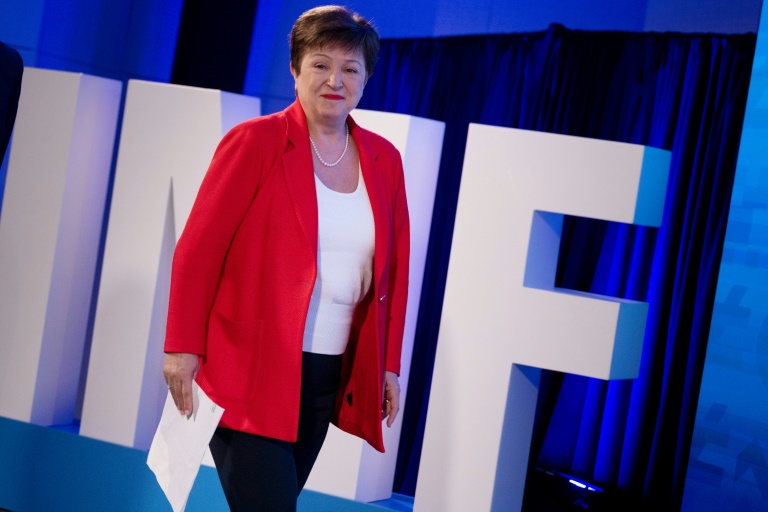
Britain has had its knuckles rapped over its controversial debt-fueled budget at the IMF’s annual meetings, with the crisis lender’s chief urging London on Thursday to maintain “coherent and consistent” policies.

British finance minister Kwasi Kwarteng was already under fire back home when he arrived in Washington for the annual gathering, which Bank of England Governor Andrew Bailey is also attending.

IMF officials — from the institution’s top economist to its managing director — have had their say about Britain’s fiscal choices this week after already warning last month that the measures would increase inequality.

IMF chief Kristalina Georgieva said she had a “very constructive” meeting with Kwarteng and Bailey.

“We discussed the importance of policy coherence and communicating clearly so there can be no — in this jittery environment — there could be no reasons for more jitters,” she said at a news conference.

The UK’s sovereign bonds and the pound have taken a beating on financial markets since Kwarteng and Prime Minister Liz Truss unveiled a “mini-budget” last month that included tax cuts in a bid to ease a cost-of-living crisis.

The move forced the Bank of England, which has been raising borrowing costs to tame inflation, to jump into bond markets to help protect financial stability.

Since then, Kwarteng axed his proposed tax cut for the richest earners and brought forward his debt-reduction plans and economic forecasts to October 31.

The British pound rallied against the dollar on Thursday on reports that the embattled leaders were mulling more U-turns, including on planned changes to corporation tax.

Kwarteng, however, insisted that his “position hasn’t changed.”

“I will come up with the medium-term fiscal plan on the 31st of October, as I said earlier in the week, and there’ll be more detail there,” he told reporters.

He added that Georgieva had told him on Wednesday that he was “quite right to focus on growth.”

– ‘Runaway train’ –

The International Monetary Fund has stressed throughout this week’s meetings of finance chiefs that the priority was for central banks to continue to tighten monetary policies to control inflation and for governments to keep their budgets tight.

“Our message to everybody, not just to the UK, to everybody at this time: fiscal policy should not undermine monetary policy,” Georgieva said.

This would make the task of monetary policy “only harder and it translates into the necessity for even further increase of rates and tightening financial conditions,” she said.

“So don’t prolong the pain and make sure that actions are coherent and consistent.”

While she called for consistency, Georgieva said it was “correct to be led by evidence, so if the evidence is that there has to be a recalibration, it is right for governments to do so.”

The IMF’s chief economist, Pierre-Olivier Gourinchas, said earlier this week that the divergence between BoE monetary policy and government’s fiscal plans was “not going to work very well.”

“It’s like having a car with two people in the front, and each of them is steering the wheel, and trying to steer the car in a different direction,” he said.

Georgieva used more analogies on Thursday as she warned that “we cannot allow inflation to become a runaway train.”

“I’m going to say it again because it is so important for this message to penetrate. When monetary policy puts a foot on the brakes, fiscal policy should not step on the accelerator,” she said.

– ‘A dressing-down’ –

European Central Bank chief Christine Lagarde made a veiled reference to Britain at an event on the sidelines of the IMF meetings where she called for cooperation between monetary and fiscal policies.

“We have seen good and bad examples of what cooperation or lack of cooperation can do,” she said at the annual meeting of the Institute of International Finance.

Susannah Streeter, senior investment and markets analyst at UK asset management firm Hargreaves Lansdown, said that “being given a dressing down by the IMF is never a good look.”

“Such international criticism doesn’t help stem evaporating confidence among investors about the government’s handling of the economy,” Streeter told AFP.

But, she added, it is likely to be “finger-pointing” domestically that would make the UK treasury reassess its tax cut policies.

Kenya denies defaulting on China railway debt

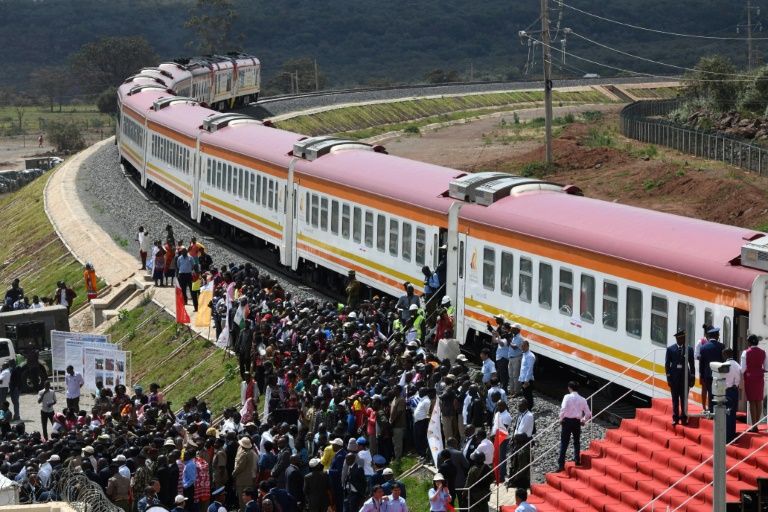
Kenya on Thursday denied it had defaulted on interest repayments on a loan advanced by China for the construction of a railway line from the port city of Mombasa that opened in 2017.

The $5 billion project, financed 90 percent by China, replaced the so-called “Lunatic Express” — a line built more than a century ago by colonial power Britain which was notorious for lengthy delays and breakdowns.

Kenya’s Business Daily reported that the government failed to repay interest on the loan in the financial year ended June, attracting a fine of 1.312 billion Kenyan shillings ($10.8 million). 

But Treasury Cabinet Secretary Ukur Yatani rejected the report as “misinformation”, saying the financial position of the East African economic powerhouse was “sound and robust”.

“We wish to state categorically that Kenya has never defaulted on its settlement of its debt service obligations to any of its creditors,” Yatani said in a statement. 

The Standard Gauge Railway (SGR) is Kenya’s biggest infrastructure project since independence from Britain in 1963 and was launched as a master plan by East African leaders to connect their nations by rail. 

Currently snaking from Mombasa via the capital Nairobi to the Rift Valley town of Naivasha, it is planned to eventually link Uganda, Rwanda, South Sudan, Burundi and Ethiopia.

The railway was to be managed by the Chinese contractor for five years before being handed over to the Kenyan government.

But it has posted losses, with analysts worrying the trend could continue after newly elected President William Ruto last month reversed a policy that made it mandatory for cargo to use the railway. 

China is Kenya’s second-largest lender after the World Bank and has funded a number of costly infrastructure projects that have raised concerns about Nairobi taking on more debt than it can afford.

The country’s public debt load in June stood at 8.6 trillion shillings ($71.1 billion), an 11.5 percent rise from a year earlier, according to government figures.

Loan interest repayments have however shot up in recent months as the value of the shilling rapidly loses ground against international currencies, trading at 121 to the dollar on Thursday.

Yatani said there was no cause for alarm as the country frequently undergoes independent sovereign rating reviews which are published widely. 

“At no time has Kenya been flagged as a country defaulting on its external debt obligations,” he added.

Stocks bounce after key US inflation data

Equities fell sharply on Thursday after data showed US inflation jumped more than expected in September, before quickly bouncing higher.

The data was seen as solidifying expectations of further interest rate hikes, and helped push the dollar higher. The greenback hit its highest level against the Japanese yen since 1990.

US consumer prices rose 0.4 percent in September compared to August, twice the 0.2 percent projected by analysts even as the annual increase in the consumer price index slowed slightly to 8.2 percent from 8.3 percent.

But core inflation, excluding volatile energy and food prices, climbed to 6.6 percent from 6.3 percent in August.

The US Federal Reserve has raised interest rates at an aggressive clip of 0.75 percentage points at its last three meetings. It has signalled plans to continue doing so until rampant inflation is brought under control.

That has led to a slump in stock prices in recent months, as higher interest rates will reduce consumer spending power.

Last month saw a brief rally in stocks after data suggested the US economy was slowing. Investors hoped that it would allow a “pivot” by the Fed to a slower rate of interest rate hikes.

“The strong CPI only reinforces the view that there is no way the Federal Reserve can contemplate a ‘pivot’ this year,” said Stephen Innes at SPI Asset Management. 

Wall Street stocks plunged after the opening bell, the Nasdaq Composite quickly dropping more than three percent.

But by late morning, Wall Street’s main indices were all solidly higher.  

“In the aftermath of the hotter US CPI report, we saw risk assets tumble as the dollar and bonds jumped,” said market analyst Fawad Razaqzada at City Index and FOREX.com.

“Much — or in some cases, all — of those moves have since been undone due to profit-taking, while banks and energy stocks rose thanks to even higher yields and rebounding crude oil prices,” he added.

– Europe stocks recover –

European stocks also bounced back from sharp losses.

Frankfurt closed 1.5 percent higher and Paris rose 1.0 percent.

The FTSE 100 in London added 0.4 percent amid media speculation the government may cut back on its fiscal stimulus plans and increase corporate taxes in its latest policy U-turn.

The speculation sent the pound soaring 1.9 percent against the dollar. 

Meanwhile the UK government’s 30-year bond yield eased to 4.56 percent and the 10-year fell to 4.23 percent.

The ten-year yield on Wednesday struck 4.64 percent, the highest since the 2008 global financial crisis and higher than the level that prompted the BoE’s recent bond market intervention.

The drop in UK bond yields helped fuel a rebound in stocks of home builders and mortgage lenders.

The dollar rose as high as 147.67 yen, its highest level since 1990, as US and Japanese monetary policy increasingly diverge.

The Bank of Japan has so far refused to raise interest rates, making yen investments less attractive than dollar investments.

“The Bank of Japan continues to keep monetary policy easy because inflation and wages remain relatively low” in Japan, said Carol Kong, and economist and currency strategist at Commonwealth Bank of Australia.

– Key figures around 1530 GMT –

New York – Dow: UP 1.3 percent at 29,576.35 points

EURO STOXX 50: UP 0.9 percent at 3,362.40

London – FTSE 100: UP 0.4 percent at 6,850.27 (close) 

Frankfurt – DAX: UP 1.5 percent at 12,355.58 (close)

Paris – CAC 40: UP 1.0 percent at 5,879.19 (close)

Tokyo – Nikkei 225: DOWN 0.6 percent at 26,237.42 (close)

Hong Kong – Hang Seng Index: DOWN 1.9 percent at 16,389.11 (close)

Shanghai – Composite: DOWN 0.3 percent at 3,016.36 (close)

Pound/dollar: UP at $1.1310 from $1.1100 Wednesday

Dollar/yen: UP at 147.25 yen from 146.91 yen

Euro/dollar: UP at $0.9764 from $0.9703

Euro/pound: DOWN at 86.33 pence from 87.41 pence

Brent North Sea crude: UP 1.4 percent at $93.72 per barrel

West Texas Intermediate: UP 1.4 percent at $88.53 per barrel

burs-rl/jj

Inflation maintains grip on US with new jump in September

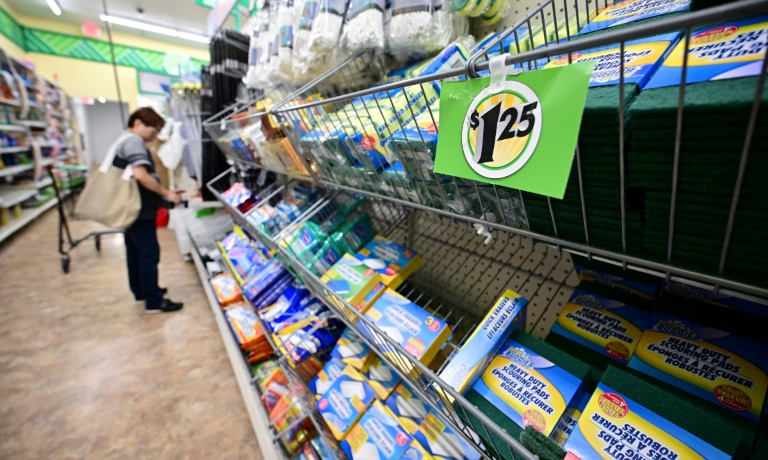
Inflation kept its hold on the US economy in September, jumping more than expected according to government data Thursday that adds to the headwinds facing President Joe Biden’s Democrats shortly before midterm elections.

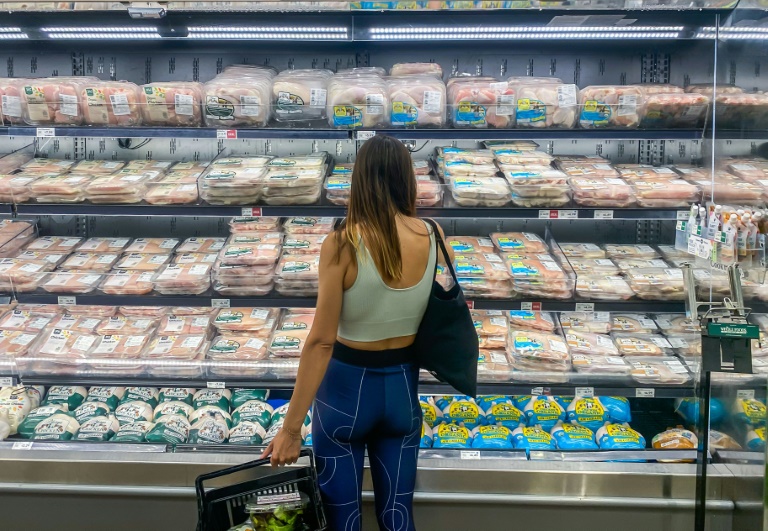
The last consumer price report before the November 8 vote to decide control of Congress showed US prices rose 0.4 percent in September compared to August, twice the 0.2 percent projected by analysts, with increases for food, housing and medical care weighing on consumers.

While the annual rate of inflation slowed slightly to 8.2 percent from 8.3 percent, according to the Bureau of Labor Statistics data, analysts expressed increasing concerns that pricing pressures have become more engrained in the economy.

Biden touted “some progress in the fight” but admitted that “prices are still too high” and that “we have more work to do” — as the disappointing data set the stage for more aggressive rate hikes by the US Federal Reserve.

The Fed has been walking a tightrope for months in trying to wrestle inflation down from the current 40-year highs — without triggering a damaging recession in the world’s largest economy.

In an interview with CNN on Tuesday, Biden acknowledged the possibility of a mild recession, but said he didn’t think it was likely. 

Thursday’s data showed core inflation, which strips out volatile energy and food prices, rose 0.6 percent in September, more than the 0.4 percent projected by analysts.

Other items that saw price increases in September included motor vehicle insurance, householder furnishings and education. Items with decreases included used cars and apparel.

Republican candidates have blamed Biden for broad-based price increases as they seek to win back control of Congress from Biden’s camp — tying high gasoline prices to Democratic resistance to new oil and gas drilling and to the White House’s efforts to address climate change. 

Treasury Secretary Janet Yellen and other Biden administration officials have defended their policies, attributing price increases to supply chain problems and other unforeseen events, such as the Russian invasion of Ukraine that has boosted prices for energy, wheat and other commodities.

– More Fed pain ahead –

Thursday’s data is certain to disappoint the Fed, which in September had enacted its third straight increase of 0.75 percentage point as Fed Chair Jerome Powell acknowledged that there isn’t a “painless” way to bring inflation down.

But the data Thursday showed the Fed’s actions thus far have come nowhere near realizing the goal of two percent inflation over the long run. The central bank has aimed to stop inflation before it becomes engrained in the economy

Analysts said the disappointing report not only boosts the odds of another 0.75 percentage point hike in November, but also raises the chances for a supersized December rate hike, or for bigger increases down the road.

Higher interest rates increase the cost for mortgages and car loans, weighing on the economy.

“With still very strong inflation readings, the Fed is now clearly forced to err on the side of overdoing at the cost of hurting the economy to preserve its credibility,” said a note from UniCredit Bank Economist Edoardo Campanella.

Stocks, which have been in retreat over the last month, gyrated following the report, initially tumbling as the market priced in higher interest rates, but later staging a rebound.

Near 1545 GMT, the Dow Jones Industrial Average was up 1.7 percent at 29,719.16, more than 1,000 points above its level earlier in the session.

– Cost-of-living adjustment –

In one bright spot for US consumers, the Social Security Administration announced it was boosting its payments by 8.7 percent in 2023 in the largest cost-of-living adjustment to retiree since 1981.

Retail industry analyst Neil Saunders of GlobalData pointed to one other silver lining: With many retailers facing excess inventories due to supply chain snafus in recent months and unpredictable consumer demand during the pandemic, “discounting will remain elevated” through the holiday shopping season.

While inflation is moderating in some categories, pricing pressure for energy and other essential goods will pose challenges in the upcoming period, Saunders said.

“While many households are now used to inflation, higher energy bills during the winter months could be the next big blow to consumer confidence,” he said.

'Great sadness' for artists after French venue ransacked in Burkina coup

The day after Burkina Faso’s latest coup, protesters attacked the French Institute, wrecking not just a symbol of the country’s former colonial power but also a valued showcase for artists and free expression.

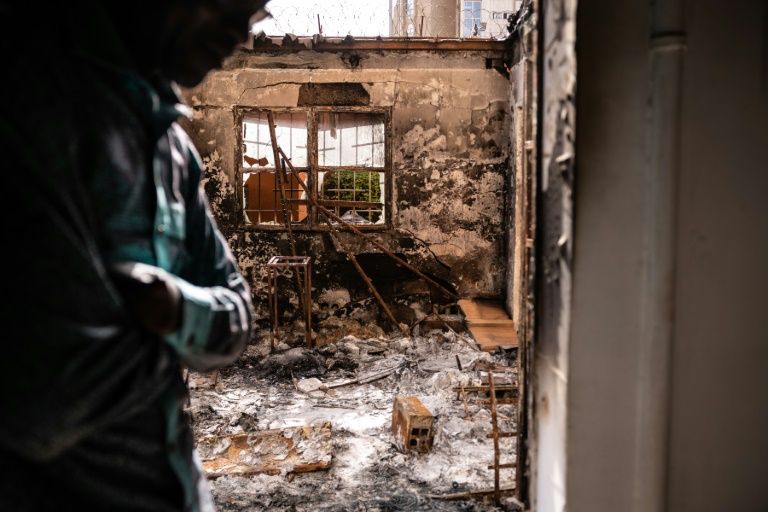
Demonstrators left charred walls, smashed windows and books strewn across the floor of the cultural centre in Ouagadougou, Burkina’s capital.

Standing in front of a pile of paintings, artist Ali Ouedraogo said it was “a great sadness” to see the Institute in such a state.

“We’ve been coming to this place for years — it’s become a second home for us,” he said. It is “a loss for Burkinabe, especially artists.”

“This is the work of real monsters,” said William Somda, who organises cultural events. 

“Nothing today justify the destruction of a venue that is so important to the cultural, academic, professional and artistic world.”

The Institute was just one of the French buildings targeted during the turmoil, which began on the evening of September 30.

Demonstrators also attacked the French embassy in the capital the Institute in Burkina’s second largest city, Bobo-Dioulasso.

They accused Paris — which has a military presence in the West African country — of protecting former junta leader Lieutenant-Colonel Paul-Henri Sandaogo Damiba, who seized power in January before being ousted by junior officers led a 34-year-old captain, Ibrahim Traore.

In a statement read out on national television, the officers said Damiba was suspected to have taken refuge at a French military base “to plan a counteroffensive to stir up trouble in our defence and security forces.”

Damiba denied he was at the base but provided no further details about his whereabouts at the time. It later emerged he had fled to neighbouring Togo after a prolonged standoff.

France bluntly denied that it had been harbouring him.

Anti-French sentiment was palpable on the streets at the height of the turbulence.

Demonstratorschanted: “France out.” Some waved Russian flags.

The road leading to the Institute is still littered with broken glass, smashed computers and burnt air conditioning units.

In the entrance hall, there are burnt gates and baggage scanners.

Police have cordoned off the building, AFP saw on Wednesday.

“The damage is enormous,” said the centre’s manager, Thierry Bambara. “We’ll have to wait for a complete assessment before we can put a figure on it.”

“All the buildings were ransacked,” from the centre’s language unit to its performance areas, he said. 

In the Institute’s library, the floor is a clutter of keyboards, CDs, toppled shelves and books covered in soot.

Burkina Faso is one of the world’s poorest countries, ranked 182nd out of 189 nations under the UN’s Human Development Index. High-quality concert venues and libraries are rare.

“The ransacking… is a tough blow for us,” said Burkinabe musician Kantala. “Our plans are taking a hit — we’re not sure we can find a replacement for what this place offered us.” 

The Institutes in Ouagadougou and Bobo-Dioulasso are closed until further notice, according to the French embassy, which has also suspended its services.

Afghan girls take university exams two weeks after classroom attack

Thousands of Afghan girls and women sat university entrance exams on Thursday under the guard of Taliban snipers, two weeks after a bomber killed dozens of students preparing for the tests.

Since the Taliban returned to power last August, many girls have been banned from secondary education.

Meanwhile a collapsed economy has made university unaffordable to many, and parents have pulled children from class over safety fears.

Last month an attacker burst into an education centre in Kabul, detonating himself in a segregated study hall killing 53 students, including 46 women and girls.

“There is so much anxiety,” said 18-year-old student Zahra, who hopes to study computer science.

“Our minds are disturbed, always feeling that at any time there could be a blast,” she told AFP before entering.

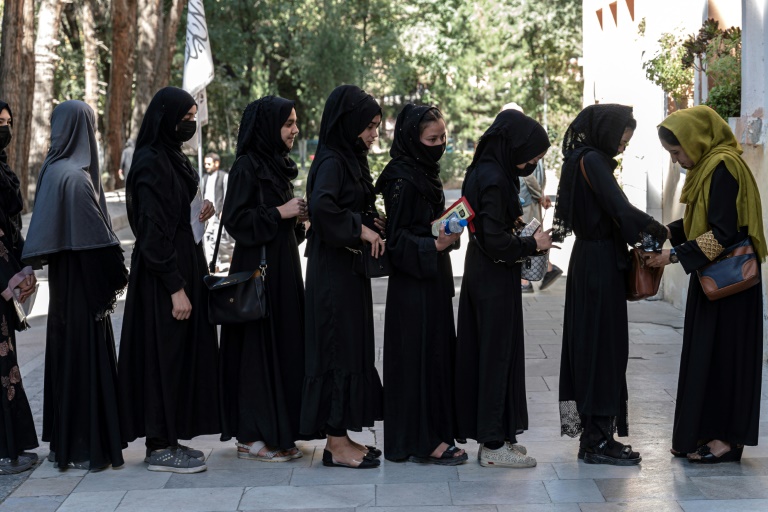
Dressed in black hijabs and headscarves, the students were under the heavy guard of Taliban personnel as they queued for their entrance exams outside the prestigious Kabul University.

Students were thoroughly searched before being allowed to sit the exam, while Taliban forces patrolled the surrounding area and shut nearby streets with roadblocks.

“This time all my worries are due to the security situation. Everyone is so scared,” said student Madina. “Please pray that there are no blasts.”

Boys and men had taken their exams earlier in the day.

Students also told AFP that many of their classmates were staying away from the university, cancelling the test for fear of an attack.

The entrance tests, which all prospective university students must take, were being held for the first time since the Taliban’s return to power.

However, with restrictions on girls’ secondary education, fewer female students will qualify for the exam.

“If there are no educated girls then how could we have a developed society?” said one female student, declining to give her name.

Kabul University was attacked in November 2020 by gunmen who killed more than 20 students.

But “nobody can stop us”, said professor Yahya Homai.

“Nobody can take away the pen and book from our hands,” he added.

The Taliban’s return to power brought an end to a two-decade war against a US-backed government, leading to a significant reduction in violence, but security has begun to deteriorate in recent months.

The recent attack on the Kaj education centre has not yet been claimed by any group.

However most victims were members of the minority Shiite Hazara community, frequently targeted by the Islamic State jihadist organisation.

Severe storms swell Iguazu falls to 10 times normal flow

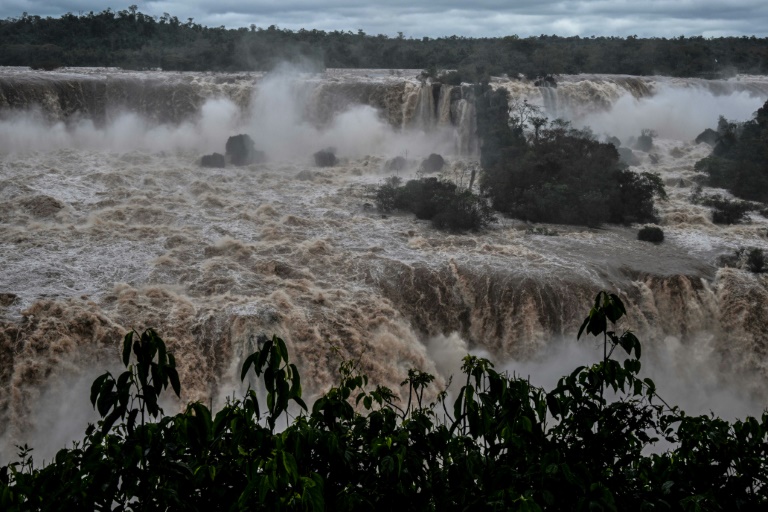
The famed Iguazu waterfalls on the border between Argentina and Brazil have registered 10 times their usual water volume after heavy rains, authorities said, closing one of the site’s main tourist walkways for safety reasons.

The flow through the massive waterfall system reached 14.5 million liters (3.8 million gallons) per second Wednesday night, far above the usual 1.5 million per second, said Wemerson Augusto, spokesman for Iguazu National Park.

The high water level led officials to close the “Devil’s Throat” walkway, famed for its breathtaking views of the falls, after it was partly submerged, Augusto told AFP.

He said such a large rush of water was “atypical” for October.

Walkways on the Argentine side were also closed Tuesday.

The falls have been swollen by heavy rains in Parana state in southern Brazil, where emergency officials said Wednesday 24 counties had been hit by “severe weather events” that damaged some 400 houses and forced more than 1,200 people from their homes.

The water volume was the highest registered at the falls since June 2014, when the flow hit 47 million liters per second.

Severe storms swell Iguazu falls to 10 times normal flow

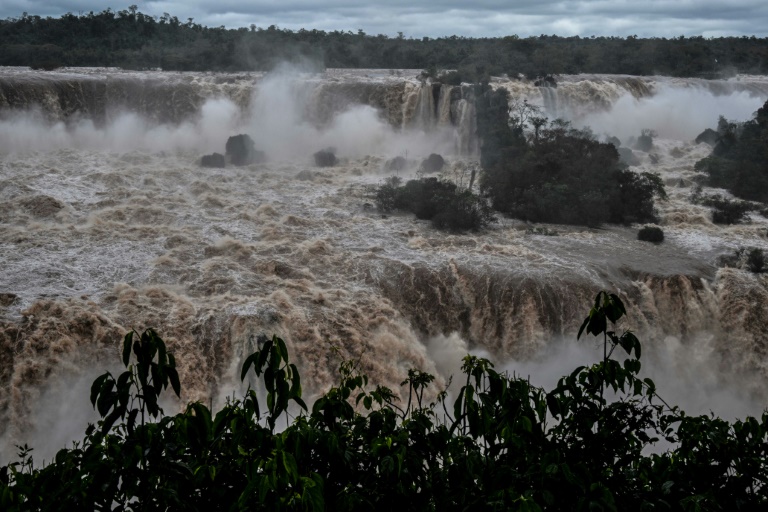
The famed Iguazu waterfalls on the border between Argentina and Brazil have registered 10 times their usual water volume after heavy rains, authorities said, closing one of the site’s main tourist walkways for safety reasons.

The flow through the massive waterfall system reached 14.5 million liters (3.8 million gallons) per second Wednesday night, far above the usual 1.5 million per second, said Wemerson Augusto, spokesman for Iguazu National Park.

The high water level led officials to close the “Devil’s Throat” walkway, famed for its breathtaking views of the falls, after it was partly submerged, Augusto told AFP.

He said such a large rush of water was “atypical” for October.

Walkways on the Argentine side were also closed Tuesday.

The falls have been swollen by heavy rains in Parana state in southern Brazil, where emergency officials said Wednesday 24 counties had been hit by “severe weather events” that damaged some 400 houses and forced more than 1,200 people from their homes.

The water volume was the highest registered at the falls since June 2014, when the flow hit 47 million liters per second.

Braving rocket attack, Iraqi MPs elect new state president

Despite a rocket attack on Baghdad’s Green Zone, Iraqi lawmakers Thursday elected a new president in hopes of ending a year of political gridlock and violence in the war-scarred nation.

Iraqi Kurd Abdel Latif Rashid, 78, was elected as the new Iraqi head of state, replacing Barham Saleh, by the assembly in the capital’s heavily fortified government and diplomatic district.

Rashid won more than 160 votes against 99 for the incumbent Saleh, an assembly official said.

Rashid’s first task was expected to be nominating a candidate for prime minister to replace the current caretaker premier, Mustafa al-Kadhemi, and attempt to form a new government for the crisis-hit nation.

A favoured candidate for the prime minister’s post was Mohammed Shia al-Sudani, 52, of the Shiite Muslim bloc the Coordination Framework, which includes pro-Iranian former paramilitary groups.

When Sudani was first proposed in July, this sparked mass protests by backers of his Shiite rival, the fiery populist and cleric Moqtada Sadr, whose followers breached the Green Zone and stormed parliament.

A new reminder of Iraq’s troubles came Thursday as the lawmakers headed into parliament, when a barrage of nine Katyusha-style rockets rained down on the area, the security forces said.

At least 10 people were wounded, including six members of the security forces or bodyguards of lawmakers, as well as four civilians in a nearby district, a security official told AFP.

US Ambassador Alina Romanowski condemned the attack “in the strongest terms” on Twitter and warned that “the people of Iraq must resolve their political differences & grievances solely thru peaceful means. 

“Attacks like these undermine democracy & trap Iraq in a perpetual cycle of violence.”

– ‘Crisis breeds instability’ –

The democratic institutions built in oil-rich Iraq since the 2003 US-led invasion that toppled dictator Saddam Hussein remain fragile, and neighbouring Iran wields major influence.

Over a year since its last general elections, Iraq has so far failed to form a new government to tackle the problems facing the country plagued by unemployment, decaying infrastructure, corruption and the impacts of climate change.

The United Nations mission in Iraq warned this week that “the protracted crisis is breeding further instability” and that the divisive politics are “generating bitter public disillusion”.

Lawmakers had made three previous attempts to elect a new head of state, in February and March, but failed to even reach the required two-thirds threshold for a quorum.

Under Iraq’s post-Saddam power-sharing system, meant to avoid more sectarian conflict, the state president by convention is Kurdish, the prime minister is a Shiite and the parliament speaker a Sunni.

The presidency has usually been held by the PUK of Rashid and Saleh. This year the rival Democratic Party of Kurdistan had demanded the presidency but finally abandoned the bid.

Rashid, a hydraulic engineer versed in environmental issues, is seen as a compromise candidate for a the polarised country.

Iraq’s rival Shiite political factions, the most powerful players, have been bitterly vying for influence and the right to select the new premier.

Sadr has pushed for parliament to be dissolved and new elections, while the Coordination Framework has urged a new government before fresh polls are held.

The standoff has seen both sides set up protest camps in the Green Zone this year. 

Tensions boiled over on August 29 when more than 30 Sadr supporters were killed in battles with Iran-backed factions and the army.

Close Bitnami banner
Bitnami