World

Germany forecasts 2023 recession as energy crisis bites

Germany will sink into recession next year and inflation will soar, the government forecast Wednesday, as Europe’s top economy battles skyrocketing energy prices following Russia’s gas shutdown.

The official predictions were the latest warning that Germany’s economy, which was just getting back on its feet after the pandemic, is set to shrink in 2023 due to the fallout of Moscow’s invasion of Ukraine. 

Unveiling the government’s latest forecasts of 0.4 percent economic contraction and seven percent inflation for 2023, Economy Minister Robert Habeck painted a dark picture of a “serious energy crisis”. 

It “threatens to become an economic and social crisis”, he warned — but insisted that Russian President Vladimir Putin will “fail in this attempt to destabilise the basic economic and political order”. 

Putin “will also fail on the battlefield in Ukraine”, he added. 

Moscow’s move to cut off gas supplies to Europe amid tensions over Ukraine has triggered an energy crisis across the continent, with consumers and businesses facing high prices as winter approaches.

Germany has been particularly hard hit, as 55 percent of its gas supplies came from Moscow prior to the Ukraine conflict.

The soaring energy costs are expected to send inflation to eight percent in 2022 and seven percent in 2023, the government forecast.

Nevertheless, Germany’s economy is still set to register growth of 1.4 percent in 2022, according to the government forecasts, after having enjoyed a post-pandemic rebound earlier in the year.

But it will then shrink in 2023, with the economy ministry saying the “central reason” for the downgrade from forecasts earlier this year was “the halt to Russian gas supplies”.

High energy prices are acting as “a brake on industrial production — above all in energy-intensive sectors”. The economy will return to growth with expansion of 2.3 percent in 2024, according to the forecasts. 

– Energy price cap –

The government recently unveiled a 200-billion-euro ($194-billion) fund to shield consumers and businesses from surging prices, which includes a cap on energy costs.

Without the cap, consumer prices would be much higher in 2023, the forecasts said.

Forecasts by leading economic institutes late last month showed inflation coming in at 8.4 percent for the year as a whole in 2022 — and climbing further to 8.8 percent in 2023.

Warnings are mounting that global growth will slow further next year due to myriad crises, with the IMF this week downgrading its 2023 global GDP growth forecast.

It forecast that Germany, along with Italy, will become the first advanced economies to contract in the wake of Russia’s invasion of Ukraine.

Signs are rapidly multiplying of Germany’s escalating economic crisis. 

Last week, official figures showed that industrial production — the pillar of the German economy — produced 0.8 percent less in August compared with the previous month, with energy-intensive industries badly impacted. 

Inflation meanwhile hit a 70-year high of 10 percent in September. 

The European Central Bank has started aggressively tightening monetary policy to bring inflation under control, lifting rates a historic 75 basis points last month, but some are worried the move adds to recession risks.

Berlin has been scrambling to find alternative energy sources, accelerating the construction of infrastructure to import gas from further afield, and is preparing to keep two nuclear plants running longer than initially anticipated.

Despite the crisis, Habeck sought to strike a positive note about efforts to find new partners to supply energy.

“We are making very good progress in loosening the grip of Russian energy imports,” he said. 

Ukraine claims new gains after days of mass Russian strikes

Ukraine said Wednesday it reclaimed more territory from Russia in the south and welcomed the delivery of Western air defence systems that Kyiv said would usher in a “new era” after mass strikes from Moscow.

Russia for two days pummelled Ukraine with missiles, damaging energy facilities nationwide, in attacks that President Vladimir Putin said were retaliation for a deadly explosion at the Crimea bridge.

Russia’s FSB security service said Wednesday it detained eight suspects over the blast that ripped through the road and rail bridge connecting Crimea to the rest of the country.

But it also claimed to have foiled two more attacks that Ukrainian special services allegedly planned to carry out on Russian territory.

NATO chief Jens Stoltenberg said Wednesday after Russia’s missile barrage that Ukraine’s Western backers were looking to provide Kyiv with more air defences to protect against Russia’s “indiscriminate” attacks across the country. 

“We will address how to ramp up support for Ukraine and the top priority will be more air defence for Ukraine,” Stoltenberg said at the start of a meeting by Ukraine’s allies on arms supplies to Kyiv.

Putin has vowed a “severe” response to any further attack on Russia and what Moscow considers to be its territory, including the Crimea peninsula that it annexed from Ukraine in 2014.

Despite warnings from the Kremlin, Kyiv has vowed to retake the peninsula as well as four regions in Ukraine’s east and south that Moscow says are now part of Russia.

Kyiv said Wednesday that it had retaken five more settlements in the southern region of Kherson — one of the four territories Moscow said it annexed in late September — in the latest setback for Russia’s campaign.

– Putin ‘miscalculated’ –

The presidency added, however, that Russian forces were striking back and had continued shelling Ukraine’s positions “along the entire contact line”.

The Russian military meanwhile said it had fended off Ukrainian attacks in the eastern Donetsk, Lugansk and Kharkiv regions.

And Russian strikes on the frontline town of Avdiivka killed at least eight people at a market, the Ukraine-appointed chief of the region said.

“There is no military logic to this kind of shelling, only the unbridled desire to kill as many of our people as possible and intimidate others,” the Donetsk governor Pavlo Kyrylenko said on social media.

The Ukrainian army announced its counter-offensive in the south in late August. 

After regaining almost full control of the northeastern region of Kharkiv, Ukrainian forces recently claimed more gains on the eastern and southern fronts.

Faced with mounting setbacks since September, the Russian president announced the mobilisation of hundreds of thousands of reservists to join the fighting in Ukraine. 

With the Crimea bridge blast, Russia also lost a vital transport link for moving military equipment for Russian soldiers fighting in Ukraine.

US President Joe Biden said Tuesday that he believes his Russian counterpart had “miscalculated” the situation in Ukraine and underestimated the ferocity of Ukrainian defiance.

“He thought he was going to be welcomed with open arms, that this was the home of Mother Russia in Kyiv,” Biden told CNN in a rare televised interview.

“I think he just totally miscalculated.”

– Mass graves discovered –

After two days of nationwide Russian strikes that especially targeted Ukraine’s energy infrastructure, leaving villages and towns without power and hot water, Ukraine said it had started receiving anti-aircraft defence systems from its Western allies. 

“A new era of air defence has begun in Ukraine,” Ukraine’s Defence Minister Oleksiy Reznikov said on Twitter, announcing the arrival of Germany’s Iris-Ts and the upcoming delivery of NASAMS from Washington. 

He said he had met with Defense Secretary Lloyd Austin and General Mark Milley and discussed the “strengthening of the combat potential of the Ukrainian army”, according to a tweet.

On Tuesday, Ukraine’s President Volodymyr Zelensky called on the G7 club of wealthy nations to help Kyiv create an “air shield”, warning that Russia “still has room for further escalation”.

Ukrainian officials announced Tuesday the recovery of the remains of dozens of civilians found at mass burial sites in two towns in the eastern Donetsk region recently recaptured from Moscow’s forces.

In Lyman, a railway hub retaken by Ukraine in early October, a forensic team dressed in protective gear was exhuming dozens of bodies, an AFP journalist saw. 

“We have already found more than 50 bodies of both soldiers and civilians. We have one long trench — a mass grave — where we discovered bodies and body parts,” regional governor Kyrylenko said.

Russian forces have been accused of numerous abuses — torture, rape, extrajudicial executions — in Ukraine, claims Moscow has repeatedly denied.

Idled plants fuel German angst about de-industrialisation

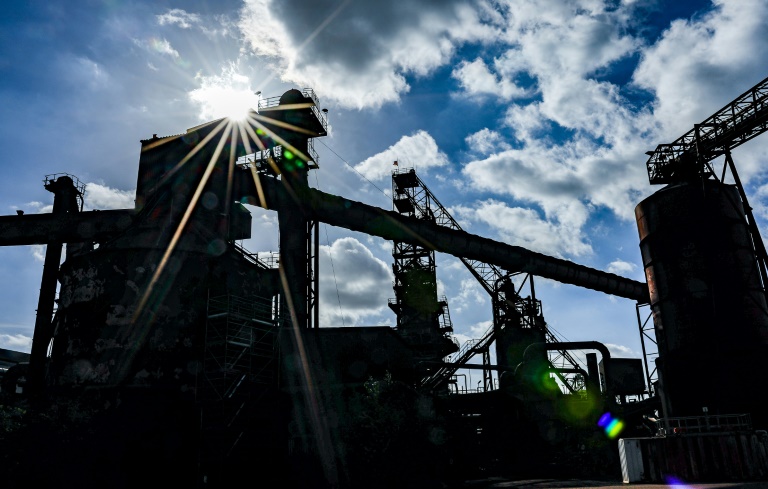
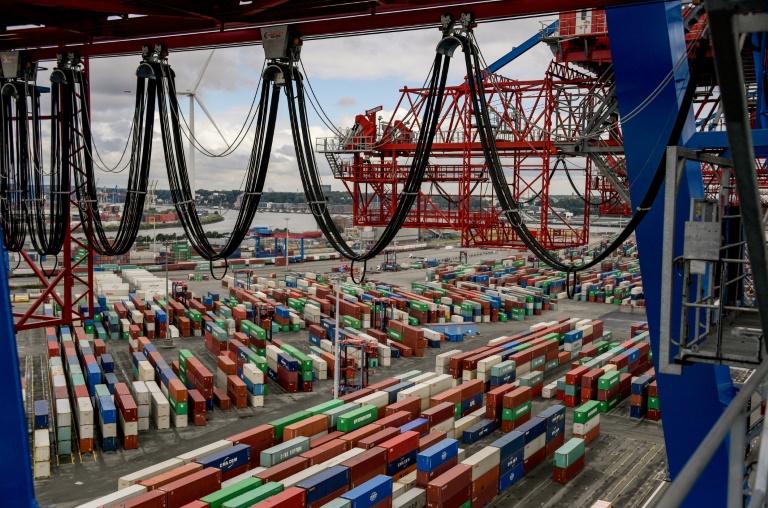
The familiar plume of smoke no longer billows from one of the two chimneys at ArcelorMittal’s massive steelworks in Hamburg’s harbour.

Soaring energy prices have forced operators to partially idle the plant, adding to fears that Germany’s industrial companies, the backbone of Europe’s biggest economy, are facing an existential threat.

Germany is already bracing for a recession as the energy crisis triggered by Russia’s war in Ukraine takes its toll, with the government on Wednesday forecasting a contraction of 0.4 percent in 2023.

But some economists say the long-term impact could run far deeper and see entire manufacturing sectors trim production or relocate to countries where running costs are lower, fundamentally reshaping Germany’s industrial landscape.

In Hamburg, the 530 workers at the ArcelorMittal steelworks have been placed on reduced hours since early October.

“Gas plays a crucial role in the (iron ore) reduction process” carried out at the plant, said Uwe Braun, CEO of ArcelorMittal Hamburg.

But the energy bill has risen “seven-fold” since Russia’s February invasion of Ukraine, he told AFP at the site, where activity was subdued and helmet-clad workers were spread out around the imposing 1970s steelworks.

The steep price increase made it unaffordable to continue business as usual at the site, which on average consumes two terawatt-hours of gas and one terawatt-hour of electricity per year — enough to power a medium-sized city.

Similar steps to curb production have been taken at other European sites operated by ArcelorMittal, the continent’s biggest steelmaker.

In a September statement announcing the cost-saving measures, the company blamed the “exorbitant” rise in energy prices and weaker demand as the global economic outlook darkens.

– ‘Broken’ –

Germany in recent decades managed to avoid the waves of de-industrialisation that hit other European countries.

Industrial production remains a pillar of the country’s economy and accounts for around 22 percent of gross domestic product (GDP), compared with around 13 percent in neighbouring France.

“Germany’s business model in a nutshell is buying cheap energy from Russia, raw materials and intermediate products… make some outstanding cars and machines… and export them” to the United States and China, said LBBW bank economist Jens-Oliver Niklasch. 

“Now, some of the tiles on the roof are broken,” he told AFP.

Alarm bells are ringing across Germany’s energy-hungry sectors, from steel to chemicals, glass, paper and ceramics production.

Chancellor Olaf Scholz’s government has unveiled a 200-billion-euro ($198 billion) energy fund to cushion the impact of price shocks on households and businesses, including a temporary cap on gas prices from next year.

Despite those efforts many experts agree that because of the severed ties to Russian imports, European energy prices are unlikely to return to their cheap pre-war levels anytime soon, if ever.

“We’ll see in the months ahead who can still afford to manufacture in Germany,” Arndt Kirchhoff of the family-owned Kirchhoff car parts supplier recently told Der Spiegel weekly.

– America beckons –

Outside ArcelorMittal’s Hamburg plant, a mound of iron ore pellets is piled high, awaiting the steelworks’ full resumption.

Before the crisis, the site produced one million tonnes of steel annually, mainly for Germany’s flagship automobile sector.

If nothing is done to drastically bring down energy costs, “it’s clear that some parts of the production process will be relocated”, said Braun.

Analyst Niklasch said it was not unthinkable that German industry would have to say goodbye to “its most energy-intensive branches”.

The United States, where gas prices remain low thanks to abundant domestic production, could be an attractive alternative, according to Niklasch.

But Stefan Kooths, of the IfW Kiel economic institute, said he didn’t expect a widespread exodus of industrial companies from Germany.

“The price of gas should stabilise in the medium term, even if the cost will remain higher than before the crisis,” he reasoned.

Western powers urge Ethiopia, rebels to enter peace talks

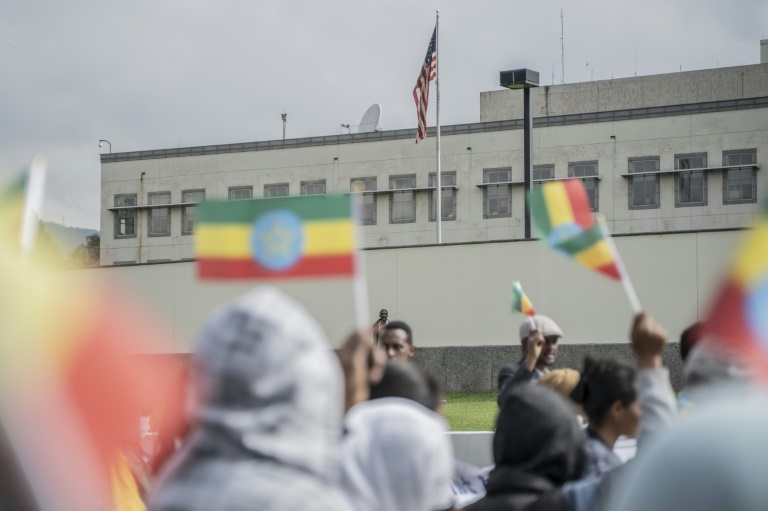
The United States and other Western powers on Wednesday urged Ethiopia’s government and Tigrayan rebels to start African Union-led peace talks, warning of humanitarian risks if the renewed conflict persists.

In a joint statement, the United States, Britain, Australia, Denmark, Germany and The Netherlands said they were “profoundly concerned” by the shattering of the five-month truce in late August.

“We call on the parties to recognize there is no military solution to the conflict, and we call on the government of Ethiopia and the Tigray regional authorities to participate in African Union-led talks aimed at helping Ethiopia achieve a lasting peace,” the statement said.

The Western nations warned of abuses by all sides including Ethiopia, the Tigray People’s Liberation Front and Eritrea, which has returned to the conflict to back Ethiopian Prime Minister Abiy Ahmed.

 ”The resumption of fighting in northern Ethiopia raises a high risk of further human rights violations and abuses,” it said, adding that “any durable solution must include accountability for human rights abuses and violations.”

The rebels agreed, after prolonged hesitation, to accept mediation by the African Union, which is based in Addis Ababa.

But after the bloc called talks for last weekend in South Africa, former Kenyan president Uhuru Kenyatta, who was to be playing a key role in negotiations, said he could not attend.

The Western nations called for a withdrawal of troops from Eritrea, one of the world’s most closed and authoritarian nations.

“All foreign actors should cease actions that fuel this conflict.” 

UK's Truss vows no spending cuts to pay for tax-slashing plans

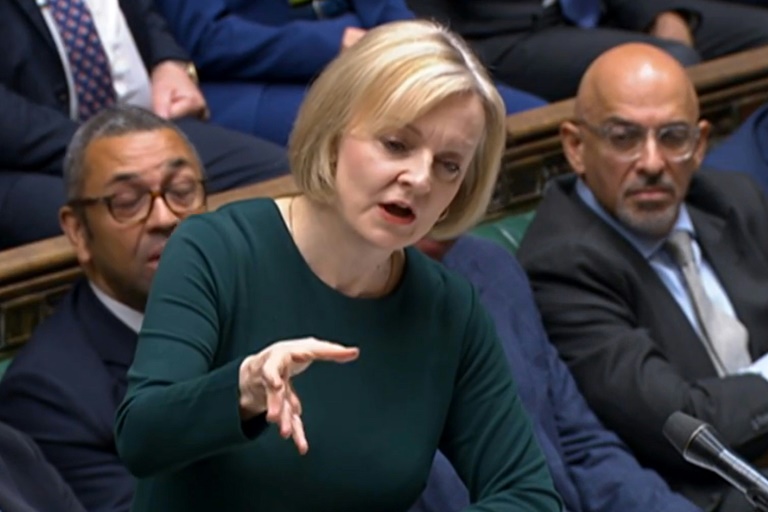
Britain’s beleaguered Prime Minister Liz Truss vowed Wednesday not to cut public spending, once again defending last month’s uncosted tax-slashing mini-budget that has sparked weeks of UK market turmoil.

Appearing in parliament for the first time since the contentious September 23 plans prompted economic upheaval, Truss said she was “absolutely” committed to pledges made during the summer’s Tory leadership campaign to maintain current spending.

With currency, bond and other markets spooked by the extra borrowing earmarked to pay for tax cuts, fears have grown that Truss will slash government department budgets, returning to the unpopular austerity policy of a decade ago.

But the 47-year-old leader insisted that would not happen, while doubling down on her tax plans and reducing debt. 

“What we will make sure is that over the medium-term the debt is falling,” Truss told MPs, in only her second “Prime Minister’s Questions” session in the House of Commons since succeeding Boris Johnson early last month.

“We will do that not by cutting public spending but by spending public money well,” she added. Her policies would “protect our economy”, she argued.

Truss also insisted her controversial economic package announced by Chancellor of the Exchequer Kwasi Kwarteng to reduce several different taxes would result in “higher growth and lower inflation”.

– ‘Lost in denial’ –

But the initial impact from it has been uniformly negative. The pound has plunged to unprecedented lows against the dollar, while government borrowing and mortgage rates have spiralled.

The Bank of England has been forced to make several emergency interventions in bond markets, while the economy unexpectedly shrank in August after slender growth the previous month amid a cost-of-living crisis and rocketing energy bills.

Labour leader Keir Starmer accused Truss of being “lost in denial” and “ducking responsibility” as she refused to acknowledge the economic fallout from her policies, instead blaming global factors such as the war in Ukraine for unsettling markets.

Media reports have suggested that the mini-budget — already watered down with the scrapping of plans to axe the top rate of tax — could be further revised during a line-by-line review.

But Truss’s spokesman rubbished the claims immediately after her weekly House of Commons questions.

“We are committed to the measures that the Chancellor set out in the growth plan,” he told reporters.

Truss was “firmly of the view that is the right approach to take to ensure we move away from low or no growth”, he added.

Myanmar junta extends jail terms for Suu Kyi, Japanese journalist

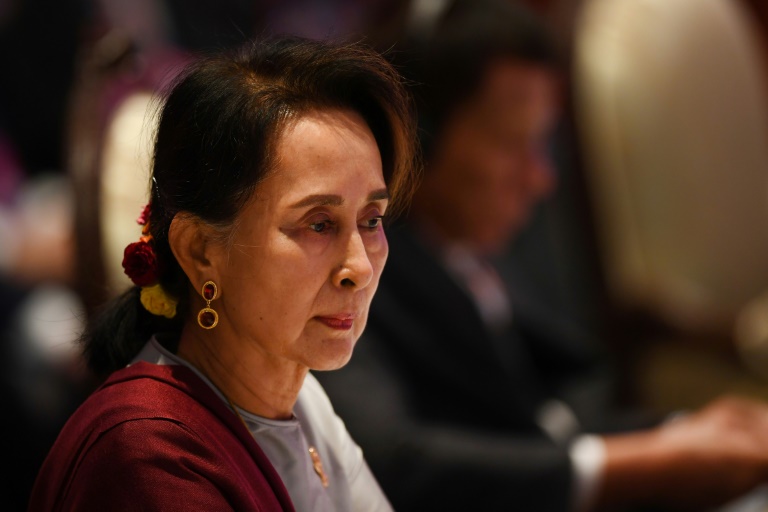
Myanmar’s junta on Wednesday jailed a Japanese journalist arrested while filming an anti-coup protest for three more years for violating immigration law, a diplomatic source told AFP.

The sentence came on the same day a closed junta court handed ousted leader Aung San Suu Kyi another six years in prison for corruption, according to a source with knowledge of the case, taking the Nobel laureate’s total jail time to 26 years.

Toru Kubota, 26, who was detained in July and jailed for seven years last week, was sentenced to an additional “three years imprisonment”, a diplomatic source at Japan’s embassy said, citing the journalist’s lawyer.

Myanmar’s junta has clamped down on press freedoms, arresting reporters and photographers, as well as revoking broadcasting licences during its crackdown on dissent since seizing power last year.

Kubota, who was arrested near an anti-government rally in commercial hub Yangon along with two Myanmar citizens, appeared in good health at the hearing on Wednesday, the source said, citing his lawyer.

According to a profile on FilmFreeway, Kubota has made documentaries on Myanmar’s Muslim Rohingya minority and “refugees and ethnic issues in Myanmar”.

Kubota is the fifth foreign journalist to be detained in Myanmar, after US citizens Nathan Maung and Danny Fenster, Robert Bociaga of Poland and Yuki Kitazumi of Japan — all of whom were later freed and deported.

Before the sentence was announced, junta spokesman Zaw Min Tun told AFP that Kubota “would not be deported at this moment”, without giving details.

Phil Robertson, Asia deputy director at Human Rights Watch, said Kubota was being used as a “political pawn” by the junta.

“By imprisoning Kubota, the junta is sending a chilling message to the foreign media to enter at your own risk,” he said.

– ‘Sham trial’ –

Suu Kyi, 77, has been detained since the military toppled her government in a coup in February last year, ending the Southeast Asian country’s brief period of democracy.

She has since been convicted on a clutch of charges, including violating the official secrets act, electoral fraud and illegally possessing walkie-talkies.

In the latest case, Suu Kyi was “sentenced to three years imprisonment each for two corruption cases” in which she had been accused of taking bribes from a businessman, the source said.

These jail terms will be served concurrently, the source added.

The businessman, Maung Weik, appeared in a video televised by a military broadcaster last year claiming he had given Suu Kyi $550,000 over several years. 

Maung Weik — who was convicted of drug trafficking in 2008 — also said he had donated money to senior figures in Suu Kyi’s government for the good of his business.

Suu Kyi — who denies all charges against her — appeared in good health and will appeal, the source added.

She is currently on trial for five other corruption charges. Each carries a maximum of 15 years in prison.

A spokesperson for Amnesty International slammed the latest trial as a sham that “cannot be taken seriously”.

A junta spokesman did not respond to a request for comment.

Journalists have been barred from attending the court hearings and Suu Kyi’s lawyers banned from speaking to the media.

In June, she was transferred from house arrest to a prison in the capital Naypyidaw, where her trials are being held in a courthouse inside the prison compound.

Myanmar has been in turmoil since the military seized power, sparking widespread armed resistance.

The junta has responded with a crackdown that rights groups say includes razing villages, mass extrajudicial killings and airstrikes on civilians.

More than one million people have been displaced since the coup, according to the United Nations children’s agency.

According to a local monitoring group, more than 2,300 people have been killed and over 15,000 arrested since the military seized power.

Striking French refinery workers defy government threats

Striking French oil refinery employees voted Wednesday to maintain blockades now in their third week, despite a government order for some of them to return to work in a bid to get fuel supplies flowing.

The industrial action to demand pay hikes has paralysed six out of the seven fuel refineries in France, leading to shortages of petrol and diesel exacerbated by panic-buying from drivers.

Having previously threatened to use emergency powers enabling them to order essential workers back to the job, the government announced Wednesday that it would put them into use as the strikes entered their third week.

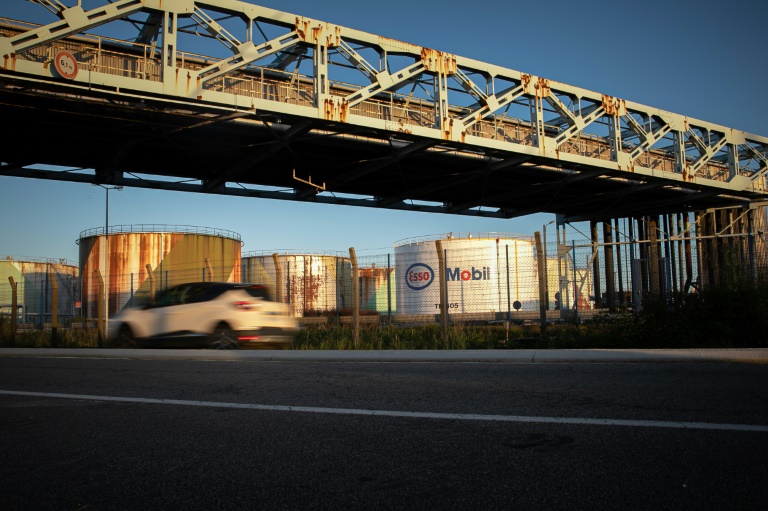
Personnel at a fuel depot at the Gravenchon-Port-Jerome refinery in northwest France, owned by US giant Esso-ExxonMobil, will be the first to be requisitioned, an official at the energy ministry told AFP. 

“Faced with the continuation of the strike by some of the personnel at Port-Jerome in Normandy, the government is launching the requisitioning of essential workers at the depot,” the official said.

Workers who refuse the summons will risk fines or jail time.

The government also said it would hold an emergency meeting on the crisis toward midday, as long queues of motorists desperately seeking fuel again blocked streets in Paris and other major cities.

As of Tuesday evening, 31 percent of stations across the country lacked at least one grade of fuel, a figure that stood at 44 percent in the greater Paris region.

Esther Berrebi, a home health aide in the capital, was hoping to find petrol at the third station she had tried since 7:00 am.

“I’m very angry, and very worried,” she told AFP. “I understand they want higher salaries but I don’t understand how they can halt an entire country.”

– Growing frustration –

The hard-left CGT union that is leading the stoppages had said Tuesday that any requisitioning would be “not necessary and illegal”, raising the spectre of legal challenges.

It is seeking a 10-percent pay rise for staff at TotalEnergies, retroactive for all of 2022, and says management had refused to engage in talks.

“It would have been easier to requisition our CEO and bring him to the negotiating table,” said Germinal Lancelin, the CGT leader for ExxonMobil at the Gravenchon-Port-Jerome refinery.

On Wednesday, TotalEnergies said it would meet with all union representatives, having previously insisted it would meet only those who accepted to end the blockades.

Until now, the government had been reluctant to inflame the conflict, but in recent days officials have had to acknowledge the growing frustration and economic damage caused by drivers spending hours to fill up.

“Petrol is too important for us. It’s been a nightmare for a week,” Santiago, a delivery driver, told AFP in Paris.

And even if key personnel are ordered back to get oil refineries working again, “it will take at least two weeks” to restore fuel supplies already under strain, said Gil Villard, a CGT representative for Esso at the refinery in Fos-sur-Mer, outside Marseille.

The crisis comes at a time of high energy prices and inflation, while TotalEnergies’ bumper profits have also caused anger, leading to calls for the group to face a windfall tax.

The stand-off could add impetus to a march planned by left-wing political parties on Sunday against the policies of President Emmanuel Macron and the high cost of living. 

“I hope this is the spark that begins a general strike,” leading Greens party parliamentarian, Sandrine Rousseau, told Franceinfo radio Wednesday.

The standoff also comes as Macron is preparing to push through a contentious pension overhaul by the end of the winter, despite warnings from some allies about the risk of widespread resistance.

Labour unions and left-wing political parties have vowed to try to block the reform, which would see the pension age raised to 64 or 65 for most people, from 62 currently.

Striking French refinery workers defy government threats

Striking French oil refinery employees voted Wednesday to maintain blockades now in their third week, despite a government order for some of them to return to work in a bid to get fuel supplies flowing.

The industrial action to demand pay hikes has paralysed six out of the seven fuel refineries in France, leading to shortages of petrol and diesel exacerbated by panic-buying from drivers.

Having previously threatened to use emergency powers enabling them to order essential workers back to the job, the government announced Wednesday that it would put them into use as the strikes entered their third week.

Personnel at a fuel depot at the Gravenchon-Port-Jerome refinery in northwest France, owned by US giant Esso-ExxonMobil, will be the first to be requisitioned, an official at the energy ministry told AFP. 

“Faced with the continuation of the strike by some of the personnel at Port-Jerome in Normandy, the government is launching the requisitioning of essential workers at the depot,” the official said.

Workers who refuse the summons will risk fines or jail time.

The government also said it would hold an emergency meeting on the crisis toward midday, as long queues of motorists desperately seeking fuel again blocked streets in Paris and other major cities.

As of Tuesday evening, 31 percent of stations across the country lacked at least one grade of fuel, a figure that stood at 44 percent in the greater Paris region.

Esther Berrebi, a home health aide in the capital, was hoping to find petrol at the third station she had tried since 7:00 am.

“I’m very angry, and very worried,” she told AFP. “I understand they want higher salaries but I don’t understand how they can halt an entire country.”

– Growing frustration –

The hard-left CGT union that is leading the stoppages had said Tuesday that any requisitioning would be “not necessary and illegal”, raising the spectre of legal challenges.

It is seeking a 10-percent pay rise for staff at TotalEnergies, retroactive for all of 2022, and says management had refused to engage in talks.

“It would have been easier to requisition our CEO and bring him to the negotiating table,” said Germinal Lancelin, the CGT leader for ExxonMobil at the Gravenchon-Port-Jerome refinery.

On Wednesday, TotalEnergies said it would meet with all union representatives, having previously insisted it would meet only those who accepted to end the blockades.

Until now, the government had been reluctant to inflame the conflict, but in recent days officials have had to acknowledge the growing frustration and economic damage caused by drivers spending hours to fill up.

“Petrol is too important for us. It’s been a nightmare for a week,” Santiago, a delivery driver, told AFP in Paris.

And even if key personnel are ordered back to get oil refineries working again, “it will take at least two weeks” to restore fuel supplies already under strain, said Gil Villard, a CGT representative for Esso at the refinery in Fos-sur-Mer, outside Marseille.

The crisis comes at a time of high energy prices and inflation, while TotalEnergies’ bumper profits have also caused anger, leading to calls for the group to face a windfall tax.

The stand-off could add impetus to a march planned by left-wing political parties on Sunday against the policies of President Emmanuel Macron and the high cost of living. 

“I hope this is the spark that begins a general strike,” leading Greens party parliamentarian, Sandrine Rousseau, told Franceinfo radio Wednesday.

The standoff also comes as Macron is preparing to push through a contentious pension overhaul by the end of the winter, despite warnings from some allies about the risk of widespread resistance.

Labour unions and left-wing political parties have vowed to try to block the reform, which would see the pension age raised to 64 or 65 for most people, from 62 currently.

Trapped on the frontline in battle for Ukraine town

This week’s Russian missile attacks on power plants threaten cities across Ukraine with blackouts, but many frontline communities have been under shellfire and without power or water for months.

The wine-making and salt-mining town of Bakhmut, in the eastern region of Donetsk, is still grimly defended by Ukrainian forces, but its desperate residents have been within range of Russian guns since May. 

Once home to 70,000 people, Bakhmut’s tree-lined main streets are quiet and its concrete housing blocks are shell-scarred ruins. The residents on the east bank of the Bakhmutka river are increasingly isolated.

Ukrainian sappers demolished the bridge linking the exposed east bank to the town centre on the west side to stall any Russian advance.

But this has left civilians in the east side reliant on a muddy gangplank thrown down between murky waters and shattered concrete.

They cross to claim pensions or fetch water and basic foodstuffs, even as artillery fire erupts nearby.

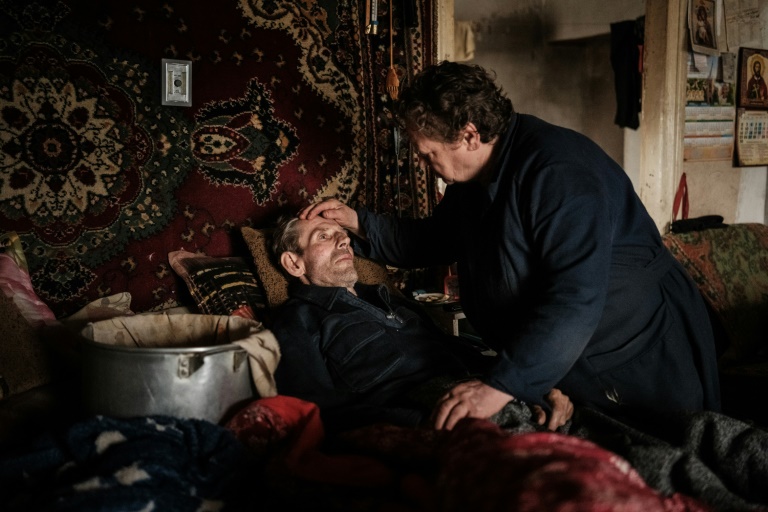
The crossing is too daunting for Oleksandra Pylypenko, 67, who knows her husband Mykola — sick with cancer — can barely make it to their cellar to shelter from shelling, never mind cross the rickety bridge.

– Treacherous passage –

There are more sweet purple grapes than they will be able to eat hanging from the vines around their small bungalow, in the shadow of the blue-walled wooden Church of St Mykola. 

And they have buckets of walnuts.

But they lack basics like potatoes and onions — and services, like power and running water — even as winter and Ukraine’s rolling battle with Russian forces both creep inexorably towards the town.

“Firewood. How can I get it? There is no way to get it here. I don’t have money to pay for a delivery,” she told AFP, as she recounted her plight, haltingly at first and then in a flood of tears and emotion.

“No gas, no electricity for three months, no water. Rainwater. I collect rainwater and use it cook. How else can I get water?” 

There was no shortage of rain on Monday. 

The dirt roads plied by military convoys were turned to mud and the steep banks of the Bakhmutka that lead down to the makeshift pontoon more slick and treacherous than ever. 

The couple is trapped, their children and grandchildren have fled, and 66-year-old Mykola might not make it through the winter, even if the war spares him.

“They said to prepare myself, that’s it. What else could they say? I go outside and cry so that he doesn’t see me,” Oleksandra said.

“You see? Now it’s getting dark. What can we do? Nothing. We can’t do anything. And these explosions, we can’t stand them. When will it be over?”

Mykola, a former furniture factory worker stricken with lung cancer, said: “When the shelling starts, we run to the basement.” 

But Oleksandra looked on with pity: “And now he can’t even make it to the basement.”

The couple’s modest home, still warm but damp and leaking from the shrapnel damaged roof, is decorated with religious icons and stands by an impressive church.

But even the sacred has not been spared in the grinding battle for Bakhmut.

The water fountain before St Mykola’s door is padded and wrapped in polythene to protect it from blasts and the windows are boarded up, but the bell tower has been punctured by a shell and the walls scarred by cluster bombs.

Church housekeeper Valeriy, 69, takes off his felt hat to show the shrapnel hole that was pierced through it as it hung on a hook in his work area. 

Residents are cautious of complaining about the conduct of the war. Some would not give their full names to reporters, speaking of the fear of interrogation or arrest by agents of unnamed officialdom.  

– Heavy guns –

But, with a Russian force reputedly led by Wagner company mercenaries seizing villages near the southern approach to Bakhmut, the fighting is intensifying and exchanges of artillery fire erupt every day. 

“I have no idea who is shelling,” said 66-year-old Gennady, as he rode back from the broken bridge with a metal jerry can of drinking water strapped to the back of his bike.

“From here, from there, from over there. Automatic weapons, heavy machine guns. You never know what they’ll shoot next,” he told AFP, heading home to his adult son, his wife having fled town.

“She was hysterical, she was trembling,” he explained. 

“Whatever happens, happens. I go to bed and I sleep. I don’t hide in the basement. My neighbour’s place was hit by shelling. The guest house, the closet, the terrace…” 

Louvre Abu Dhabi marks five years with major Impressionism show

A major exhibition of impressionist art opened Wednesday at the Louvre Abu Dhabi, featuring works from masters such as Cezanne, Degas, Manet, Monet, Pissarro and Renoir.

Billed as one of the most significant exhibitions on the 19th century art movement ever held outside France, it features more than 150 works on loan from the Musee d’Orsay in Paris.

Claude Monet’s “Women in the Garden” is among the masterpieces on show from the movement characterised by rapid dabs and brushstrokes that explore the transient effects of light and colour.

“Impressionism: Pathways to Modernity”, to run until February 5, marks five years since the opening of the art museum in the capital of the United Arab Emirates.

It also features etchings, costumes, photos and film on the rebellious and convention-busting art movement born as industrialisation and urbanisation brought social upheaval in Europe.

That theme resonates in today’s Gulf region, “where we also face the challenge of this modernity and this transition to a new world”, said Sylvie Patry, general curator of the Musee d’Orsay.

French President Emmanuel Macron inaugurated the Louvre Abu Dhabi in 2007 in the Emirates, one of the world’s leading oil exporters and largest arms buyers.

Louvre Abu Dhabi director Manuel Rabate said one of the “fundamental missions” of the museum was to “present the great movements of the history of art such as Impressionism”.

“To tell the story of Impressionism, you have to have the incredible loans that come from the Musee d’Orsay”.

To mark its first five years, the Louvre Abu Dhabi acquired a special birthday gift, for an undisclosed price — Pierre-Auguste Renoir’s masterpiece “The Cup of Chocolate”.

Close Bitnami banner
Bitnami