World

BoE fails to reassure over emergency intervention

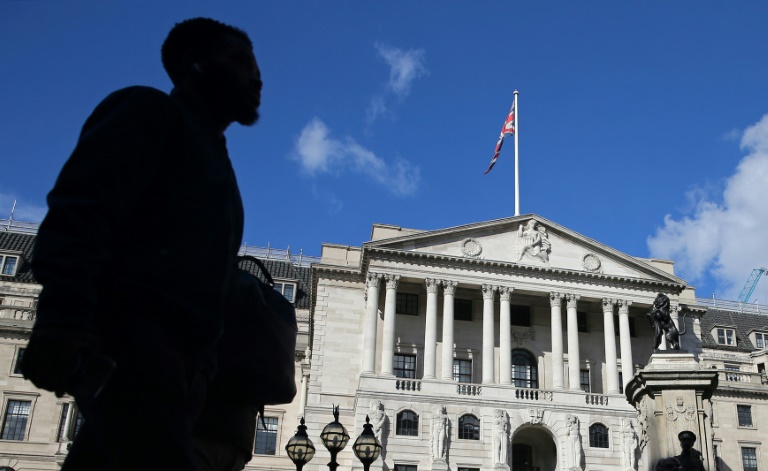
The Bank of England on Wednesday insisted it would end emergency buying of UK bonds by the weekend but sent markets into further frenzy as economic uncertainty grips Britain.

The BoE launched a bond-buying drive in late September aimed at quelling market turmoil triggered by an uncosted budget unveiled by the government of new Prime Minister Liz Truss.

Following a Financial Times report on Wednesday that the BoE could extend its buying of UK government debt, the central bank insisted it would end purchases of long-dated bonds on Friday.

Amid all the uncertainty, the yield on Britain’s 30-year bond, or gilt, rose back above five percent and close to a 24-year peak.

“As the bank has made clear from the outset, its temporary and targeted purchases of gilts will end on 14 October,” the BoE said.

“Governor (Andrew Bailey) confirmed this position… and it has been made absolutely clear in contact with the banks at senior levels.”

The BoE noted, however, that measures to boost liquidity would remain in place beyond Friday.

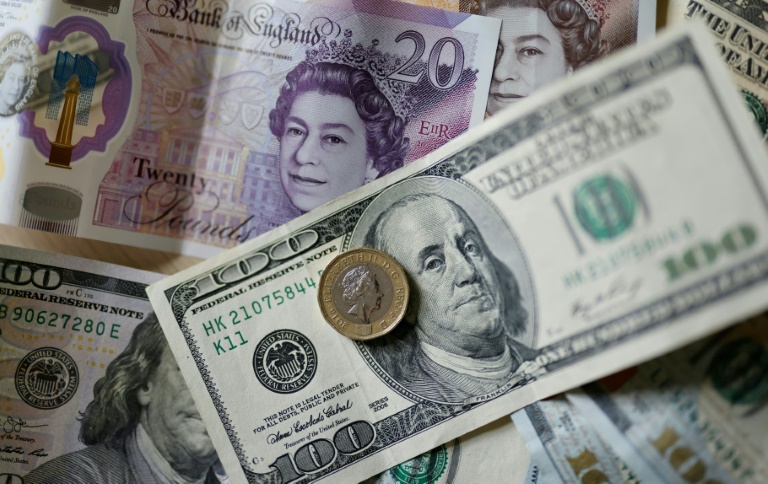
The bank has jumped into bond markets to protect financial stability after yields rocketed and the pound tumbled to a record dollar-low following Britain’s tax-slashing budget.

In particular, the BoE feared for British pension funds that invest in traditionally low-volatility state bonds.

Speaking on the sidelines of an International Monetary Fund gathering in Washington, Bailey on Tuesday confirmed that pension fund managers had “three days left” until the bank’s bond purchases ended.

“We think the BoE has put itself in a no-win situation,” said Matthew Ryan, head of market strategy at financial services firm Ebury.

“Either Bailey is forced to backtrack on his pledge and extend intervention beyond Friday, potentially damaging the bank’s credibility, or end the measures as planned and risk another blowout in gilt yields.”

– ‘Bank sector resilience’ –

Separately, the BoE on Wednesday judged that Britain’s banks were “substantially more resilient” than before the 2008 global financial crisis thanks to strong capital and liquidity.

Nevertheless, the BoE this week launched a temporary facility aimed at easing liquidity pressures that arose after the UK budget shocked markets.

The BoE’s Temporary Expanded Collateral Repo Facility allows “banks to help to ease liquidity pressures facing” client funds beyond the end of this week, it said on Monday.

In volatile trading on Wednesday, the pound rallied above $1.10 as markets price in more aggressive interest-rate hikes from the BoE to try and cool decades-high inflation.

Official data on Wednesday showed an unexpected 0.3-percent contraction in the UK economy in August on surging prices.

The BoE’s emergency programme had offered to buy up to £65 billion ($72 billion) in long-dated bonds, although the current total is far below the limit.

On Tuesday, it widened the scope of its daily purchases of government bonds, or gilts, to include debt linked to the UK inflation rate, currently at around 10 percent.

In a bid to address markets chaos, finance minister Kwasi Kwarteng has brought forward UK growth and inflation forecasts to October 31, when he will also unveil plans to reduce debt.

His budget included a costly freeze on energy prices as millions of Britons struggle with a cost-of-living crisis.

But the International Monetary Fund and ratings agencies have warned that the budget would cause UK government debt to balloon.

Fitch last week lowered the outlook on its credit rating for British government debt to negative from stable.

The BoE has piled on further pressure by ramping up its main interest rate to a 14-year high of 2.25 percent in a bid to cool inflation — and is expected to hike even further next month.
UK told to change behaviour to meet climate targets

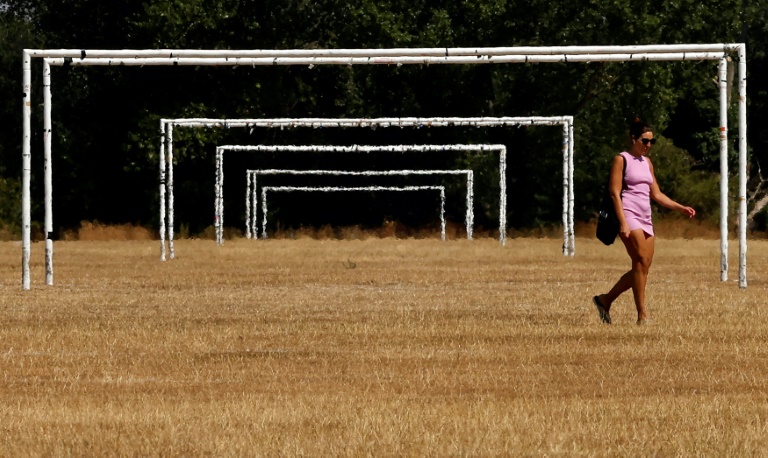
Britain’s approach to changing public travel, heating and food habits is “inadequate” to meet its net zero and environment targets, a parliamentary committee warned Wednesday.

The chair of the House of Lords Environment and Climate Change Committee Kate Parminter said after a summer of record temperatures, fires and drought, “an immediate and sustained response” was needed.

“People power is critical to  reach our environmental goals, but unless we are encouraged and enabled to change behaviours in how we travel, what we eat and buy and how we heat our homes, we won’t meet those targets,” she added.

“ Polling shows the public is ready for leadership from the government. People want to know how to play their part in tackling climate change and environmental damage.” 

The committee from the unelected upper chamber of parliament urged the government to use the lessons learned from the coronavirus pandemic to help communicate the need for behaviour changes.

They included areas such as “how we travel, what we eat, what we buy and how we use energy at home”, the committee said.

Parminter urged new Prime Minister Liz Truss to urgently “set out her vision of a country where low carbon choices and behaviours can flourish”.

The panel’s findings follow a warning from another key committee that the government is failing to make adequate progress to meet its targets.

The Committee on Climate Change (CCC), an independent body established under 2008 climate change legislation to advise the government, said in June that its latest annual progress report found “scant evidence of delivery against… headline goals so far”.

Only a year earlier it had praised the government of then premier Boris Johnson for its new net-zero strategy to be carbon neutral by 2050, and a series of targets to be met along the way.

– Confusion –

The average land temperature in Britain had risen by around 1.2 degrees Celsius from pre-industrial levels and sea levels had risen by 16 centimetres since 1900, the body said in 2021.

In 2015, the Paris climate pact saw countries pledge to limit global temperature rises to less than 2.0 degrees Celsius above pre-industrial levels and to pursue efforts to go down to 1.5 degrees.

Experts believe this can be achieved only by the world hitting the 2050 net zero target.

After she became prime minister in early September, Truss said she was “completely committed to achieving carbon neutrality by 2050”.

But she also told parliament she had decided to “re-examine” this objective to ensure it was achieved in a way favourable to the economy and growth.

Her early decisions as leader, including a pledge to lift the ban on fracking and to offer new North Sea oil and gas licences, have confused even her own camp.

A cross-party group of pro-environment parliamentarians also wrote to her in early September asking her to give a firm re-commitment to the goal of reaching carbon neutrality.

In response, the government said it remained “fully committed to the legally binding target of achieving net zero greenhouse gas emissions by 2050”.

A spokesman claimed Britain had led the world on climate change by “driving down emissions by 44 percent since 1990… which is more than any other G7 country”.

The government’s “Net Zero Review” would “ensure the UK’s fight against climate change maximises economic growth, energy security and affordability for consumers and businesses,” he added. 

har /phz/rox

Mourners mark 20th anniversary of Indonesia's Bali bombings

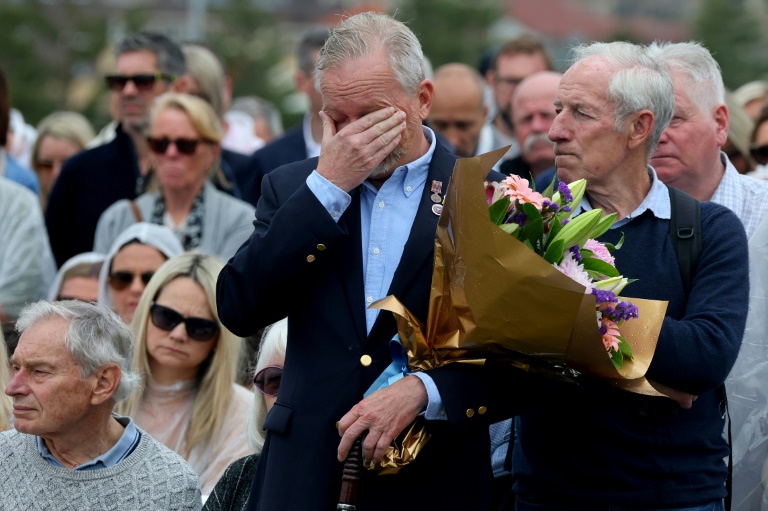
Hundreds of mourners and survivors commemorated on Wednesday the 20th anniversary of the bombings that killed more than 200 people on the Indonesian resort island of Bali.

Grieving families, attack survivors and representatives from several embassies attended memorial services in Bali — where Al-Qaeda-linked militants detonated bombs at a bar and nightclub in 2002 — and Australia.

“It’s okay that some people have forgotten what happened 20 years ago but there are still real victims, there are children who lost their parents in the bombing,” said Thiolina Marpaung, one of the organisers of the memorial, who was left with permanent eye injuries in the attack. 

“I don’t want them to be forgotten,” the 47-year-old told AFP.

Hundreds gathered for a mass prayer at a monument for victims built metres from the site of the blasts to mark Southeast Asia’s deadliest terrorist attack and remember the 202 victims. 

Most were foreign holidaymakers from more than 20 countries but Australia suffered the biggest loss, with 88 dead.

“It’s just sad for everybody. Everybody that is up there. We just come to pay our respects,” Australian tourist Nole Porter told AFP.

A candlelight vigil organised by victims’ relatives will be held at the monument later in the evening.

Australian Prime Minister Anthony Albanese told a memorial service in Sydney Wednesday that the horror of the bombings was swiftly countered by incredible acts of self-sacrifice and bravery.

“They sought to create terror, but people ran towards the terror to do what they could for friends and strangers alike,” he told a crowd gathered under light rain at the city’s Coogee Beach.

During the memorial, 88 doves were released — one for each Australian killed.

Albanese said the Bali bombings had left a permanent mark on Australia’s national identity, in a similar fashion to the devastating Gallipoli campaign of World War I.

– ‘Haunt me forever’ –

In Bali, the Australian consulate also held a memorial service attended by ambassador to Indonesia Penny Williams and assistant minister for foreign affairs Tim Watts.

Relatives and survivors held a moment of silence before laying flowers and wreaths in the consulate’s memorial garden.

In Canberra, Australian Foreign Minister Penny Wong attended a memorial ceremony with Indonesia’s ambassador Siswo Pramono.

“We recommit to the ongoing work shared by Australia and Indonesia to counter the scourge of violent extremism,” Albanese and Wong said in a joint statement.

Vigils continued throughout the day and the Australian T20 cricket team held a minute’s silence before playing England in Canberra on Wednesday evening.

Indonesia, the world’s biggest Muslim-majority nation, has long struggled with Islamist militancy.

Local militant group Jemaah Islamiyah (JI), linked to Al-Qaeda, was blamed for the 2002 bombings.

All the leading perpetrators were either executed, killed by police or jailed.

But the Indonesian government is considering an early release for Bali bombmaker Umar Patek, who has only served half of his 20-year sentence.

Jakarta held off freeing him after angering Australia and the victims’ relatives, who say his pending release has caused fresh trauma before the anniversary.

“I would be very angry and disappointed,” 55-year-old survivor I Dewa Ketut Rudita Widia Putra told AFP.

Survivors and relatives of the dead are still trying to come to terms with the bomb blasts that killed scores at Sari nightclub and Paddy’s Bar.

“I’m still feeling the trauma. Until today, I still don’t have the bravery to go to the bombing sites,” said Putra.

Paul Yeo’s brother Gerard was killed, alongside five other members of the Coogee Dolphins rugby league team.

“I was asked to identify him. My mind was torn between not knowing if what I was about to see would haunt me forever, or was I just privileged to see you one last time,” Yeo said at the memorial.

“Never have I been so scared.”

Ben Tullipan, who lost both his legs in the blasts, said he still struggled with survivor’s guilt 20 years later.

“I think about all the people that didn’t make it, and what they’d be doing,” he told ABC radio on Wednesday.

“And how lucky I am to be here.”

Striking French refinery workers defy government threats

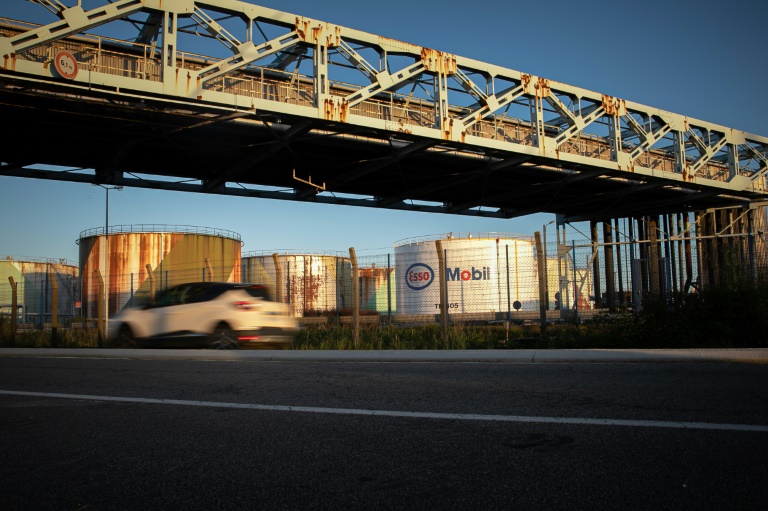
Striking French oil refinery employees voted Wednesday to maintain blockades now in their third week, despite a government order for some of them to return to work in a bid to get fuel supplies flowing.

The industrial action to demand pay hikes has paralysed six out of the seven fuel refineries in France, leading to shortages of petrol and diesel exacerbated by panic-buying from drivers.

Having previously threatened to use emergency powers enabling them to order essential workers back to the job, the government announced Wednesday that it would put them into use as the strikes entered their third week.

Personnel at a fuel depot at the Gravenchon-Port-Jerome refinery in northwest France, owned by US giant Esso-ExxonMobil, will be the first to be requisitioned, an official at the energy ministry told AFP. 

“Faced with the continuation of the strike by some of the personnel at Port-Jerome in Normandy, the government is launching the requisitioning of essential workers at the depot,” the official said.

Workers who refuse the summons will risk fines or jail time.

The government also said it would hold an emergency meeting on the crisis toward midday, as long queues of motorists desperately seeking fuel again blocked streets in Paris and other major cities.

As of Tuesday evening, 31 percent of stations across the country lacked at least one grade of fuel, a figure that stood at 44 percent in the greater Paris region.

Esther Berrebi, a home health aide in the capital, was hoping to find petrol at the third station she had tried since 7:00 am.

“I’m very angry, and very worried,” she told AFP. “I understand they want higher salaries but I don’t understand how they can halt an entire country.”

– Growing frustration –

The hard-left CGT union that is leading the stoppages had said Tuesday that any requisitioning would be “not necessary and illegal”, raising the spectre of legal challenges.

It is seeking a 10-percent pay rise for staff at TotalEnergies, retroactive for all of 2022, and says management had refused to engage in talks.

“It would have been easier to requisition our CEO and bring him to the negotiating table,” said Germinal Lancelin, the CGT leader for ExxonMobil at the Gravenchon-Port-Jerome refinery.

On Wednesday, TotalEnergies said it would meet with all union representatives, having previously insisted it would meet only those who accepted to end the blockades.

Until now, the government had been reluctant to inflame the conflict, but in recent days officials have had to acknowledge the growing frustration and economic damage caused by drivers spending hours to fill up.

“Petrol is too important for us. It’s been a nightmare for a week,” Santiago, a delivery driver, told AFP in Paris.

And even if key personnel are ordered back to get oil refineries working again, “it will take at least two weeks” to restore fuel supplies already under strain, said Gil Villard, a CGT representative for Esso at the refinery in Fos-sur-Mer, outside Marseille.

The crisis comes at a time of high energy prices and inflation, while TotalEnergies’ bumper profits have also caused anger, leading to calls for the group to face a windfall tax.

The stand-off could add impetus to a march planned by left-wing political parties on Sunday against the policies of President Emmanuel Macron and the high cost of living. 

“I hope this is the spark that begins a general strike,” leading Greens party parliamentarian, Sandrine Rousseau, told Franceinfo radio Wednesday.

The standoff also comes as Macron is preparing to push through a contentious pension overhaul by the end of the winter, despite warnings from some allies about the risk of widespread resistance.

Labour unions and left-wing political parties have vowed to try to block the reform, which would see the pension age raised to 64 or 65 for most people, from 62 currently.

Striking French refinery workers defy government threats

Striking French oil refinery employees voted Wednesday to maintain blockades now in their third week, despite a government order for some of them to return to work in a bid to get fuel supplies flowing.

The industrial action to demand pay hikes has paralysed six out of the seven fuel refineries in France, leading to shortages of petrol and diesel exacerbated by panic-buying from drivers.

Having previously threatened to use emergency powers enabling them to order essential workers back to the job, the government announced Wednesday that it would put them into use as the strikes entered their third week.

Personnel at a fuel depot at the Gravenchon-Port-Jerome refinery in northwest France, owned by US giant Esso-ExxonMobil, will be the first to be requisitioned, an official at the energy ministry told AFP. 

“Faced with the continuation of the strike by some of the personnel at Port-Jerome in Normandy, the government is launching the requisitioning of essential workers at the depot,” the official said.

Workers who refuse the summons will risk fines or jail time.

The government also said it would hold an emergency meeting on the crisis toward midday, as long queues of motorists desperately seeking fuel again blocked streets in Paris and other major cities.

As of Tuesday evening, 31 percent of stations across the country lacked at least one grade of fuel, a figure that stood at 44 percent in the greater Paris region.

Esther Berrebi, a home health aide in the capital, was hoping to find petrol at the third station she had tried since 7:00 am.

“I’m very angry, and very worried,” she told AFP. “I understand they want higher salaries but I don’t understand how they can halt an entire country.”

– Growing frustration –

The hard-left CGT union that is leading the stoppages had said Tuesday that any requisitioning would be “not necessary and illegal”, raising the spectre of legal challenges.

It is seeking a 10-percent pay rise for staff at TotalEnergies, retroactive for all of 2022, and says management had refused to engage in talks.

“It would have been easier to requisition our CEO and bring him to the negotiating table,” said Germinal Lancelin, the CGT leader for ExxonMobil at the Gravenchon-Port-Jerome refinery.

On Wednesday, TotalEnergies said it would meet with all union representatives, having previously insisted it would meet only those who accepted to end the blockades.

Until now, the government had been reluctant to inflame the conflict, but in recent days officials have had to acknowledge the growing frustration and economic damage caused by drivers spending hours to fill up.

“Petrol is too important for us. It’s been a nightmare for a week,” Santiago, a delivery driver, told AFP in Paris.

And even if key personnel are ordered back to get oil refineries working again, “it will take at least two weeks” to restore fuel supplies already under strain, said Gil Villard, a CGT representative for Esso at the refinery in Fos-sur-Mer, outside Marseille.

The crisis comes at a time of high energy prices and inflation, while TotalEnergies’ bumper profits have also caused anger, leading to calls for the group to face a windfall tax.

The stand-off could add impetus to a march planned by left-wing political parties on Sunday against the policies of President Emmanuel Macron and the high cost of living. 

“I hope this is the spark that begins a general strike,” leading Greens party parliamentarian, Sandrine Rousseau, told Franceinfo radio Wednesday.

The standoff also comes as Macron is preparing to push through a contentious pension overhaul by the end of the winter, despite warnings from some allies about the risk of widespread resistance.

Labour unions and left-wing political parties have vowed to try to block the reform, which would see the pension age raised to 64 or 65 for most people, from 62 currently.

Pound, UK bond yields climb on Bank of England uncertainty

The pound rallied and UK government bond yields rose Wednesday, with the Bank of England accused of fuelling markets uncertainty.

The BoE said it would Friday end a short-term programme of bond-buying support aimed at quelling volatility triggered by a debt-fuelled UK budget.

The Financial Times earlier said the BoE stood ready to intervene further.

On Wednesday, the yield on the government’s 30-year bond returned above a relatively high level of five percent.

The UK government’s higher borrowing costs are a reflection of market unease regarding the affordability of upcoming tax cuts aimed at supporting Britain’s recession-threatened economy.

The pound rose against the dollar as traders bet on more aggressive interest rate hikes from the BoE on concerns the budget of uncosted tax cuts would further fuel sky-high UK inflation.

“Markets have gyrated overnight and this morning, following seemingly conflicting messages purportedly from the Bank of England in relation to the time-line of the current temporary UK government bond purchases,” noted BNP Paribas analyst Chris Lupoli.

London’s benchmark FTSE 100 index dropped slightly, with sentiment dampened by news that the UK economy unexpectedly shrank in August.

Investors are struggling to find some solace as they navigate a range of crises that threaten the global economy, from soaring prices and bumper interest rate hikes to the Ukraine war and China’s Covid-induced growth slowdown.

The gloom was summed up by the International Monetary Fund, which on Tuesday highlighted the risks of inflation and the conflict in Europe as it slashed its global growth forecast and warned: “For many people 2023 will feel like a recession”.

Later, US President Joe Biden admitted there was a chance the country could suffer a “slight” recession.

Investors are now nervously looking ahead to Thursday’s US inflation report, with observers warning that a strong reading could spark another rout on markets.

Even if it showed inflation cooling from a four-decade high, analysts said the Fed would not likely take the single reading as reason to slow down its pace of rate hikes.

Aggressive US rate hikes pushed the dollar to a 24-year high against the yen Wednesday, also as Japan’s central bank holds off from hiking its own borrowing costs.

– Key figures around 1100 GMT –

London – FTSE 100: DOWN 0.1 percent at 6,878.50 points

Frankfurt – DAX: UP 0.2 percent at 12,243.18

Paris – CAC 40: UP 0.2 percent at 5,842.54

EURO STOXX 50: UP 0.3 percent at 3,348.95

Tokyo – Nikkei 225: FLAT at 26,396.83 (close)

Hong Kong – Hang Seng Index: DOWN 0.8 percent at 16,701.03 (close)

Shanghai – Composite: UP 1.5 percent at 3,025.51 (close)

New York – Dow: UP 0.1 percent at 29,239.19 (close)

Pound/dollar: UP at $1.1083 from $1.0972 Tuesday

Dollar/yen: UP at 146.49 yen from 145.83 yen

Euro/dollar: UP at $0.9717 from $0.9709

Euro/pound: DOWN at 87.70 pence from 88.46 pence

Brent North Sea crude: UP 0.6 percent at $94.81 per barrel

West Texas Intermediate: UP 0.2 percent at $89.51 per barrel

Ukraine claims new gains after days of mass Russian strikes

Ukraine said Wednesday it reclaimed more territory from Russia in the south, while welcoming the delivery of Western air defence systems that Kyiv said would usher in a “new era” after mass strikes from Moscow.

Russia for two days pummelled Ukraine with missiles, damaging energy facilities nationwide, in attacks that President Vladimir Putin said were retaliation for a deadly explosion at the Crimea bridge.

Russia’s FSB security service said Wednesday it detained eight suspects over the blast that ripped through the road and rail bridge connecting Crimea to Russia.

But it also claimed to have foiled two more attacks that Ukrainian special services allegedly planned to carry out on Russian territory.

Putin has vowed a “severe” response to any further attack on Russia and what Moscow considers to be its territory, including the Crimea peninsula that it annexed from Ukraine in 2014.

Kyiv has neither confirmed nor denied it attacked the bridge, a vital transport link but also a matter of pride for Putin, who personally inaugurated the structure in 2018.

Despite warnings from the Kremlin, Kyiv has vowed to retake the peninsula as well as four regions in Ukraine’s east and south that Moscow says are now part of Russia.

Kyiv said Wednesday that it had retaken five more settlements in the southern region of Kherson — one of the four territories Moscow said it annexed in late September — in the latest setback for Russia’s campaign.

– Putin ‘miscalculated’ –

“Ukrainian armed forces have liberated five more settlements in Beryslav district (of Kherson region): Novovasylivka, Novogrygorivka, Nova Kamyanka, Tryfonivka, Chervone,” the presidency said in its daily report.

It added, however, that Russian forces were striking back and had continued shelling Ukraine’s positions “along the entire contact line”. 

The Ukrainian army announced its counteroffensive in the south in late August. 

After regaining almost full control of the northeastern region of Kharkiv, the Ukrainian forces recently claimed more gains on the eastern and southern fronts.

Faced with mounting setbacks since September, the Russian president announced the mobilisation of hundreds of thousands of reservists to join the fighting in Ukraine. 

With the Crimea bridge blast, Russia also lost a vital transport link for moving military equipment for Russian soldiers fighting in Ukraine.

US President Joe Biden said Tuesday that he believes his Russian counterpart had “miscalculated” the situation in Ukraine and underestimated the ferocity of Ukrainian defiance.

“I think… he thought he was going to be welcomed with open arms, that this was the home of Mother Russia in Kyiv, and that where he was going to be welcomed, and I think he just totally miscalculated,” Biden told CNN in a rare televised interview.

– Mass graves discovered –

After two days of Russian nationwide strikes that especially targeted Ukraine’s energy infrastructure, leaving villages and towns without power and hot water, Ukraine said it has started receiving anti-aircraft defence systems from its Western allies. 

“A new era of air defence has begun in Ukraine,” Ukraine’s Defence Minister Oleksiy Reznikov said on Twitter, announcing the arrival of Germany’s Iris-Ts and the upcoming delivery of NASAMS from Washington. 

“This is only the beginning,” Reznikov added, “And we need more… There is a moral imperative to protect the sky over Ukraine in order to save our people”.

On Tuesday, Ukraine’s President Volodymyr Zelensky called on the G7 club of wealthy nations to help Kyiv create an “air shield”, warning that Russia “still has room for further escalation.

Ukrainian officials announced Tuesday the recovery of the remains of dozens of civilians found at mass burial sites in two towns in the eastern Donetsk region recently recaptured from Moscow’s forces.

In Lyman, a railway hub retaken by Ukraine in early October, a forensic team dressed in protective gear was exhuming dozens of bodies, an AFP journalist saw. 

“We have already found more than 50 bodies of both soldiers and civilians. We have one long trench — a mass grave — where we discovered bodies and body parts,” regional governor Pavlo Kyrylenko said. 

Russian forces have been accused of numerous abuses — torture, rape, extrajudicial executions — in Ukraine, claims Moscow has repeatedly denied. 

The coups, the Judge and 'The Trial': Burkinabe bar pokes fun at chaos

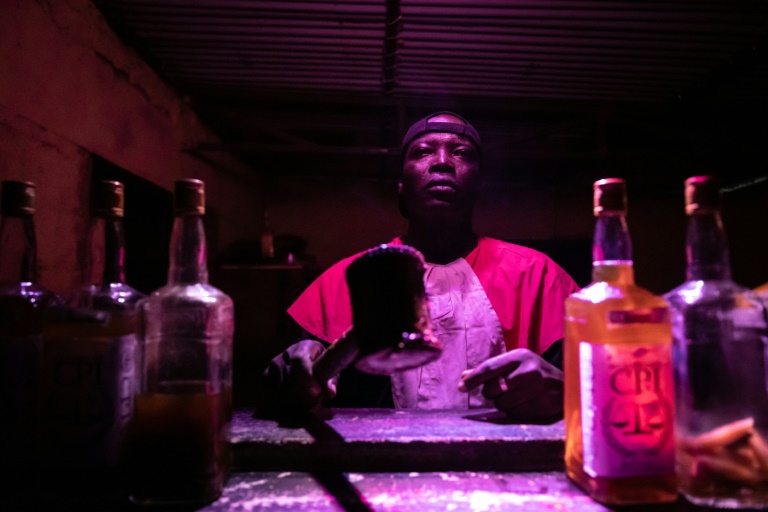
In Le Proces, or “The Trial”, a bar in Ouagadougou, artist and co-founder Patrick Kabre works the crowd, raising belly laughs with his observations about Burkina Faso today.

“We’re debating the state of the nation. We need a judge to issue the ruling — and we have one right here!”, he says.

Microphone in hand, Kabre has no shortage of absurd or dark material in a country where the frontier of chaos seems to come ever closer.

In less than nine months, the impoverished landlocked Sahel state has been through two military coups, each prompted by the failure of the ousted regime to tackle deadly jihadist attacks.

In front of the master of ceremonies, a colossal character wearing black-and-red judge’s robes sways gently to music, surrounded by a score of smiling onlookers.

This is bartender Dao Moumine, who has abandoned his counter for a few moments.

“You are at ‘The Trial’, I am The Judge,” the gown-wearing giant tells AFP. 

“I serve up justice,” he said, referring to beer, “and the International Criminal Court,” the house’s rum special.

This unusual venue for free debate, music and slam poetry first opened in 2019.

After a rainy-season break, it reopened on Saturday just a week after the country’s latest coup.

The clinking of bottles and shots of rum give the setting an air of normality during one of the first music nights since the military takeover. Everyone shares the latest gossip and military rumours.

– Unity through culture –

For some Europeans present, it is their first night out. There has been an upsurge of slogans against former colonial power France, and a number of companies have urged their expatriate staff to stay at home.

The idea for the bar, open every weekend in the Goughin district, began among friends who wanted to “discuss the issues that have caused chaos in this country: justice, impunity,” Kabre said.

The scene of a popular insurrection to end the long reign of Blaise Compaore in 2014, Burkina Faso was hit hard the following year by attacks from jihadist groups which spread from neighbouring Mali.

Violence and political instability gave rise to the two coups of 2022. The latest placed a 34-year-old captain, Ibrahim Traore, in power.

“The solution to all this is neither military nor political,” said Ali Kiswinsida Ouedraogo, alias Doueslik, a 36-year-old slam poet, told AFP. “The solution is social… and it comes via culture.”

Service is bar-counter only, enabling Judge Moumine, a specialist in po-faced comedy, to deliver edicts before serving the order.

There is a serious side to the clowning, he says: The Trial is both a safety valve and a forum, hopefully making people aware of the wider picture in Burkina Faso and its problems.

“Artists have to perform. Venues like this are important,” said Ouedraogo.

Kabre wants The Trial to be a “rainbow” venue where all nationalities can gather and “talk to each other, listen to each other.”

Everyone is welcome, says Kabre, who plays that evening with a German DJ. 

He lists prestigious clients who have come to his establishment: army officers, ambassadors, even government ministers — and, of course, judges.

On Ukraine's southern front, soldiers eye Kherson by winter

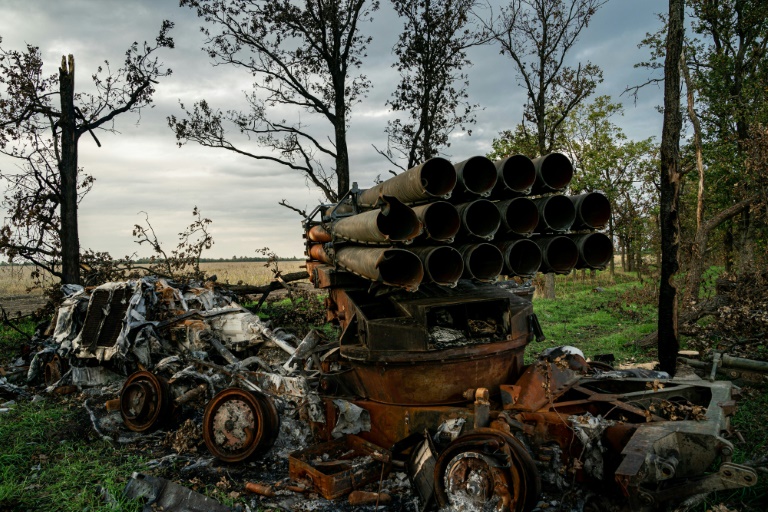
Charred, rusting hulks are all that remain of three Russian rocket launchers that were left destroyed near the frontline in southern Ukraine, where Kyiv’s forces have been pushing back Moscow’s invading troops.

Buoyed by their recent successes in recapturing territory in the Kherson region, Ukrainian soldiers hope that by winter they will reach the eponymous regional capital, which fell to the Russians shortly after their February 24 invasion.

Nearly a week after the Soviet-designed BM-27 Uragan multiple rocket launchers were struck by Ukraine, the smell of smoke still lingers at the site.

Inside the barrels of one of the giant eight-wheeled machines, several rockets remain intact. 

“They were reloading when we hit them,” a Ukrainian soldier explained to AFP. 

One of the missile launcher’s trunks still holds a few tins of “Baltic fish”.

On the floor next to the machine lies a frying pan that miraculously escaped the flames.

A short distance away, a truck is also left abandoned, its Russian registration plate lying on the grass nearby.

– ‘Low’ Russian morale –

But its precious cargo is still in good shape: a dozen heavy Uragan rockets that Ukraine’s army needs. 

“They will soon be loaded and transported to us,” the soldier added. 

Another trophy snatched from the Russians, gunpowder barrels, have already been delivered to nearby Ukrainian troops. Other empty barrels are scattered on the ground.

“The Russians say they organised their withdrawal. But when someone organises their departure, they don’t leave weapons, underpants or pillows,” said a rescue services worker, who introduced himself as “Doc”. 

Another soldier says morale among Russian troops is “low”.

“The second army in the world is afraid of the 22nd,” he said, using his nom de guerre “Kappa”, meaning mouthguard. 

“We should increase our speed even more rather than reduce it, push them across the river,” said Kappa, referring to the Dnipro river.

The move will not be easy. On Wednesday, Kyiv said it recaptured five settlements in the south, but they represent only small territorial gains.

– Potential ‘disaster’ –

In recent weeks, Ukraine’s army has made advances to the west of the Dnipro river, while Russians remain firmly in control of the opposite bank. 

But Moscow’s troops regrouped behind a new defensive line, strongly reinforced and even cemented in parts.

Many Russian soldiers were also brought in as reinforcements. 

Russians lost territory in northern Kherson in early September, when their troop numbers were low in this area with only a few villages, said George Barros of the Institute for the Study of War.

But now Russian lines are becoming “tighter”, facilitating their defences and complicating Ukraine’s advance, Barros added. 

Placing a sixth or more of Russia’s total forces, who are “among the best”, in southwestern Kherson will be “extremely dangerous” for Kyiv, according to French military expert Michel Goya. 

“The position is paradoxically solid but fragile, because it can explode under pressure,” which he said would constitute a “disaster perhaps decisive for the fate of the Russian expeditionary force in Ukraine”. 

A spokeswoman for Ukraine’s southern army command, Natalia Gumeniuk, said Ukraine’s chances are bolstered by Moscow’s soldiers “looking for ways to announce their desire to surrender” and that Russian logistics routes have been “significantly damaged”. 

For months, Kyiv’s forces have been striking Russian warehouses with ammunition and infrastructure that allows them to supply their troops, such as bridges.

– Possible ‘barter’ –

The Crimea bridge, which according to Gumeniuk provided 75 percent of military supplies to the Kherson region, was hit by a large explosion over the weekend, which Moscow blamed on Kyiv. 

Ukraine has not claimed responsibility for the attack.

But “the Russians don’t have any supply problems yet,” said French expert Pierre Grasser.

For Ukraine, Kherson — a city with strategic and symbolic importance — is the long-term goal, he added, but it may not be achievable before winter or even during winter, he said.

It remains to be seen what will become of Kherson next. Taking the city by force would mean casualties on both sides, and severe destruction.

Grasser suggests a possible “barter” between Kyiv and Moscow, with Ukraine abandoning its claims to the eastern Donbas region in exchange for Kherson returned in “good condition”.

But for Barros, the only possible outcome is a full Ukrainian victory. 

“The Russians lost the war back in March and we’ve been seeing the prolonged version of that now,” he said. 

Striking French refinery workers defy government threats

Striking French fuel refinery workers voted Wednesday to continue their stoppages and blockades, defying the government which began ordering some of them back to work in a bid to get supplies flowing.

Industrial action to demand pay rises has paralysed six out of seven fuel refineries in France, leading to shortages of petrol and diesel exacerbated by panic-buying from drivers.

Having previously threatened to use emergency powers enabling them to order essential workers back to the job, the government announced Wednesday that it would put them into use as the strikes entered their third week.

Personnel at a fuel depot at the Gravenchon-Port-Jerome refinery in northwest France, owned by US giant ExxonMobil, would be the first to be requisitioned, an official at the energy ministry told AFP. 

“Faced with the continuation of the strike by some of the personnel at Port-Jerome in Normandy, the government is launching the requisitioning of essential workers at the depot,” the official said.

Workers who refuse the summons will risk fines or jail time.

The right-wing government of former president Nicolas Sarkozy invoked the same powers in 2010 to break a refinery strike.

– Growing frustration –

The hard-left CGT union that is leading the stoppages had said Tuesday that any requisitioning would be “not necessary and illegal”, raising the spectre of legal challenges.

It called requisitioning the “choice of violence”, adding that it would lead the union to suspend “its participation in meetings with the government and business leaders during this period”.

Until now, the government had been reluctant to inflame the conflict but was also aware of growing frustration and economic damage caused by drivers spending hours to fill up.

“Petrol is too important for us. It’s been a nightmare for a week,” Santiago, a delivery driver, told AFP in Paris. 

The crisis comes at a time of high energy prices and inflation, while TotalEnergies’ bumper profits have also caused anger, leading to calls for the group to face a windfall tax.

The CGT wants a 10-percent pay hike for staff at TotalEnergies. 

The stand-off could add impetus to a march planned by left-wing political parties on Sunday against the policies of President Emmanuel Macron and the high cost of living. 

“I hope this is the spark that begins a general strike,” leading Greens party MP, Sandrine Rousseau, told Franceinfo radio Wednesday. 

Macron is looking to push through a highly contentious pension reform by the end of the winter despite warnings from some allies about the risk of strikes and demonstrations.

Labour unions and left-wing political parties have vowed to try to block the reform, which would see the pension age raised to 64 or 65 for most people, from 62 currently.

Close Bitnami banner
Bitnami