World

Idled plants fuel German angst about de-industrialisation

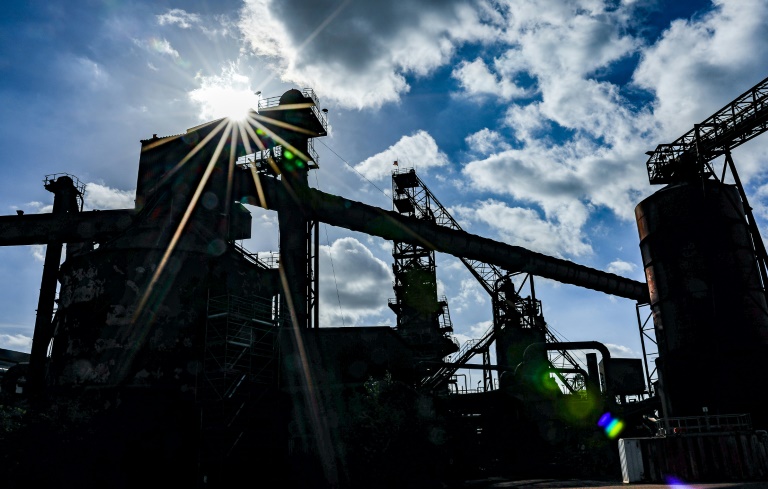
The familiar plume of smoke no longer billows from one of the two chimneys at ArcelorMittal’s massive steelworks in Hamburg’s harbour.

Soaring energy prices have forced operators to partially idle the plant, adding to fears that Germany’s industrial companies, the backbone of Europe’s biggest economy, are facing an existential threat.

Germany is already bracing for a recession as the energy crisis triggered by Russia’s war in Ukraine takes its toll, and the latest government forecasts on Wednesday will likely make grim reading. 

But some economists say the long-term impact could run far deeper and see entire manufacturing sectors trim production or relocate to countries where running costs are lower, fundamentally reshaping Germany’s industrial landscape.

In Hamburg, the 530 workers at the ArcelorMittal steelworks have been placed on reduced hours since early October.

“Gas plays a crucial role in the (iron ore) reduction process” carried out at the plant, said Uwe Braun, CEO of ArcelorMittal Hamburg.

But the energy bill has risen “seven-fold” since Russia’s February invasion of Ukraine, he told AFP at the site, where activity was subdued and helmet-clad workers were spread out around the imposing 1970s steelworks.

The steep price increase made it unaffordable to continue business as usual at the site, which on average consumes two terawatt-hours of gas and one terawatt-hour of electricity per year — enough to power a medium-sized city.

Similar steps to curb production have been taken at other European sites operated by ArcelorMittal, the continent’s biggest steelmaker.

In a September statement announcing the cost-saving measures, the company blamed the “exorbitant” rise in energy prices and weaker demand as the global economic outlook darkens.

– ‘Broken’ –

Germany in recent decades managed to avoid the waves of de-industrialisation that hit other European countries.

Industrial production remains a pillar of the country’s economy and accounts for around 22 percent of gross domestic product (GDP), compared with around 13 percent in neighbouring France.

“Germany’s business model in a nutshell is buying cheap energy from Russia, raw materials and intermediate products… make some outstanding cars and machines… and export them” to the United States and China, said LBBW bank economist Jens-Oliver Niklasch. 

“Now, some of the tiles on the roof are broken,” he told AFP.

Alarm bells are ringing across Germany’s energy-hungry sectors, from steel to chemicals, glass, paper and ceramics production.

Chancellor Olaf Scholz’s government has unveiled a 200-billion-euro ($198 billion) energy fund to cushion the impact of price shocks on households and businesses, including a temporary cap on gas prices from next year.

Despite those efforts many experts agree that because of the severed ties to Russian imports, European energy prices are unlikely to return to their cheap pre-war levels anytime soon, if ever.

“We’ll see in the months ahead who can still afford to manufacture in Germany,” Arndt Kirchhoff of the family-owned Kirchhoff car parts supplier recently told Der Spiegel weekly.

– America beckons –

Outside ArcelorMittal’s Hamburg plant, a mound of iron ore pellets is piled high, awaiting the steelworks’ full resumption.

Before the crisis, the site produced one million tonnes of steel annually, mainly for Germany’s flagship automobile sector.

If nothing is done to drastically bring down energy costs, “it’s clear that some parts of the production process will be relocated”, said Braun.

Analyst Niklasch said it was not unthinkable that German industry would have to say goodbye to “its most energy-intensive branches”.

The United States, where gas prices remain low thanks to abundant domestic production, could be an attractive alternative, according to Niklasch.

But Stefan Kooths, of the IfW Kiel economic institute, said he didn’t expect a widespread exodus of industrial companies from Germany.

“The price of gas should stabilise in the medium term, even if the cost will remain higher than before the crisis,” he reasoned.
Idled plants fuel German angst about de-industrialisation

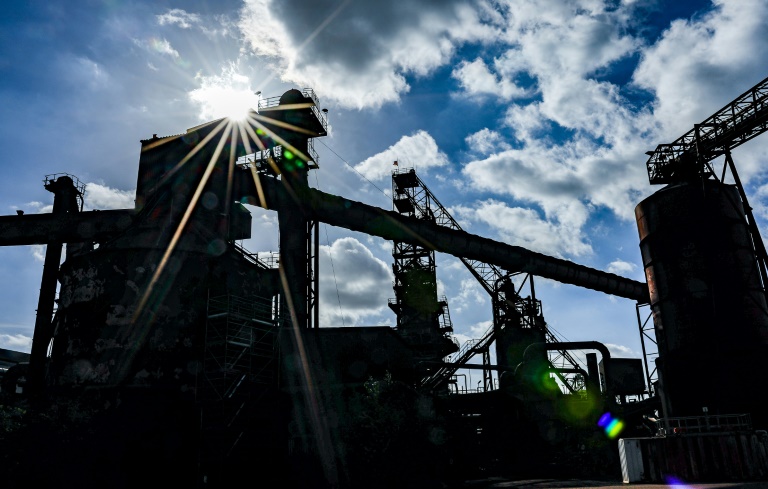
The familiar plume of smoke no longer billows from one of the two chimneys at ArcelorMittal’s massive steelworks in Hamburg’s harbour.

Soaring energy prices have forced operators to partially idle the plant, adding to fears that Germany’s industrial companies, the backbone of Europe’s biggest economy, are facing an existential threat.

Germany is already bracing for a recession as the energy crisis triggered by Russia’s war in Ukraine takes its toll, and the latest government forecasts on Wednesday will likely make grim reading. 

But some economists say the long-term impact could run far deeper and see entire manufacturing sectors trim production or relocate to countries where running costs are lower, fundamentally reshaping Germany’s industrial landscape.

In Hamburg, the 530 workers at the ArcelorMittal steelworks have been placed on reduced hours since early October.

“Gas plays a crucial role in the (iron ore) reduction process” carried out at the plant, said Uwe Braun, CEO of ArcelorMittal Hamburg.

But the energy bill has risen “seven-fold” since Russia’s February invasion of Ukraine, he told AFP at the site, where activity was subdued and helmet-clad workers were spread out around the imposing 1970s steelworks.

The steep price increase made it unaffordable to continue business as usual at the site, which on average consumes two terawatt-hours of gas and one terawatt-hour of electricity per year — enough to power a medium-sized city.

Similar steps to curb production have been taken at other European sites operated by ArcelorMittal, the continent’s biggest steelmaker.

In a September statement announcing the cost-saving measures, the company blamed the “exorbitant” rise in energy prices and weaker demand as the global economic outlook darkens.

– ‘Broken’ –

Germany in recent decades managed to avoid the waves of de-industrialisation that hit other European countries.

Industrial production remains a pillar of the country’s economy and accounts for around 22 percent of gross domestic product (GDP), compared with around 13 percent in neighbouring France.

“Germany’s business model in a nutshell is buying cheap energy from Russia, raw materials and intermediate products… make some outstanding cars and machines… and export them” to the United States and China, said LBBW bank economist Jens-Oliver Niklasch. 

“Now, some of the tiles on the roof are broken,” he told AFP.

Alarm bells are ringing across Germany’s energy-hungry sectors, from steel to chemicals, glass, paper and ceramics production.

Chancellor Olaf Scholz’s government has unveiled a 200-billion-euro ($198 billion) energy fund to cushion the impact of price shocks on households and businesses, including a temporary cap on gas prices from next year.

Despite those efforts many experts agree that because of the severed ties to Russian imports, European energy prices are unlikely to return to their cheap pre-war levels anytime soon, if ever.

“We’ll see in the months ahead who can still afford to manufacture in Germany,” Arndt Kirchhoff of the family-owned Kirchhoff car parts supplier recently told Der Spiegel weekly.

– America beckons –

Outside ArcelorMittal’s Hamburg plant, a mound of iron ore pellets is piled high, awaiting the steelworks’ full resumption.

Before the crisis, the site produced one million tonnes of steel annually, mainly for Germany’s flagship automobile sector.

If nothing is done to drastically bring down energy costs, “it’s clear that some parts of the production process will be relocated”, said Braun.

Analyst Niklasch said it was not unthinkable that German industry would have to say goodbye to “its most energy-intensive branches”.

The United States, where gas prices remain low thanks to abundant domestic production, could be an attractive alternative, according to Niklasch.

But Stefan Kooths, of the IfW Kiel economic institute, said he didn’t expect a widespread exodus of industrial companies from Germany.

“The price of gas should stabilise in the medium term, even if the cost will remain higher than before the crisis,” he reasoned.
Stocks dive, dollar rallies as dazed traders gird for inflation data

Asian stocks sank again Wednesday while the dollar held gains against the yen and sterling as the volatility that has characterised markets for most of the year showed no sign of letting up.

Angst-ridden investors are struggling to find some solace as they navigate a range of crises that threaten the global economy, from soaring prices and bumper interest rate hikes to the Ukraine war and China’s Covid-induced growth slowdown.

The gloom was summed up by the International Monetary Fund, which on Tuesday highlighted the risks of inflation and the conflict in Europe as it slashed its global growth forecast and warned: “For many people 2023 will feel like a recession”.

Later, US President Joe Biden admitted there was a chance the country could suffer a “slight” recession.

The latest blow came Tuesday when the Bank of England announced it would stop its emergency bond-buying efforts on Friday, ignoring calls to extend the programme to allow markets to stabilise.

Officials were forced last month to step into financial markets to prevent a collapse in pension funds caused by a spike in bond prices after a debt-fuelled, tax-cutting mini budget by new finance minister Kwasi Kwarteng sparked fears of a surge in borrowing.

The move quelled the crisis — after the pound hit a record-low $1.0350 — but traders were spooked by the prospect of more selling when the BoE removes its support.

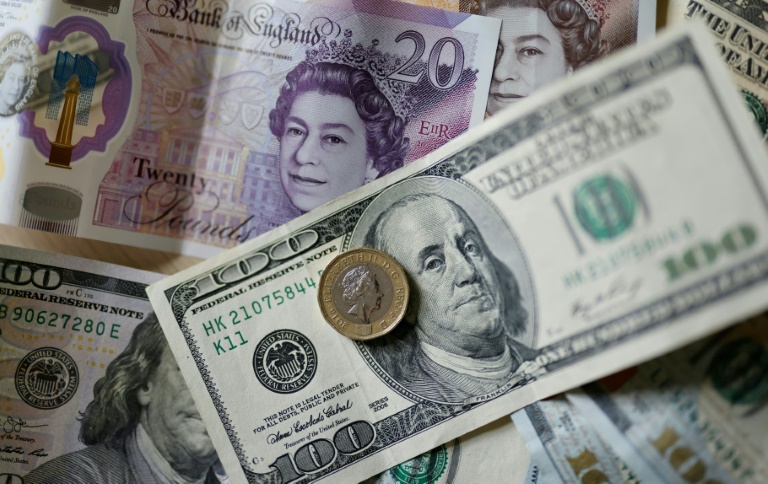
Sterling, which had recovered to as high as $1.15 last week, came back under pressure to drop back below $1.10 Tuesday where it remained the next day in Asian business.

Risk assets buckled after the announcement, with all three main indexes on Wall Street turning lower Tuesday, having been in positive territory earlier.

– Fresh volatility warning –

Most of Asia followed suit.

Hong Kong led losses, shedding more than two percent, while Tokyo, Sydney, Shanghai, Singapore, Seoul, Wellington, Jakarta and Taipei were also down. 

“And at least they did not allow the rug to get ripped from under pension funds,” said SPI Asset Management’s Stephen Innes. “But stepping away as the buyer of last resort is not great for risk or sterling.

“At the end of the day, UK economic issues, fiscal irresponsibility, and a hawkish Fed will linger. So do not be surprised by a pickup in pound volatility and for a continued move lower as well.”

Investors are now nervously looking ahead to Thursday’s US inflation report, with observers warning that a strong reading could spark another rout.

The desire to find a safe place to invest also pushed the greenback to a new 24-year high against the yen, breaking the level touched last week when Tokyo stepped into the market to support the Japanese unit.

Investors will be keeping a close eye on developments in Japan, to see if there is another cash injection, though analysts said the yen could strengthen naturally.

“There is so much tension that duration time (above 146 yen) will be short,” said Yoshio Iguchi, of Traders Securities. “The chicken race will continue with people wanting to test the upside but at the same time scared of being countered by intervention.”

And City Index’s Matt Simpson added: “Traders are confident that the yen will weaken, despite comments from government officials that they are watching forex markets very closely.

“But the reality is that the (Bank of Japan) wants a weaker currency, and (is) happy to let it slide so long as its demise is not too volatile.

“As of yet we’re yet to hear any comments from BoJ or (finance ministry) officials, but we suspect comments will surely follow — not that they seem to care.”

Recession fears and China’s Covid-linked economic woes also dragged oil prices back down, having surged last week on an outsized OPEC output cut, with many warning that demand will plunge as people refrain from spending.

– Key figures around 0230 GMT –

Tokyo – Nikkei 225: DOWN 0.1 percent at 26,364.25 (break)

Hong Kong – Hang Seng Index: DOWN 2.3 percent at 16,451.44

Shanghai – Composite: DOWN 0.9 percent at 2,952.74

Pound/dollar: DOWN at $1.0938 from $1.0972 Tuesday

Dollar/yen: UP at 146.34 yen from 145.83 yen

Euro/dollar: DOWN at $0.9688 from $0.9709

Euro/pound: UP at 88.57 pence from 88.46 pence

West Texas Intermediate: DOWN 1.1 percent at $88.40 per barrel

Brent North Sea crude: DOWN 0.9 percent at $93.43 per barrel

New York – Dow: UP 0.1 percent at 29,239.19 (close)

London – FTSE 100: DOWN 1.1 percent at 6,885.23 (close)

English winemakers toast summer heatwaves

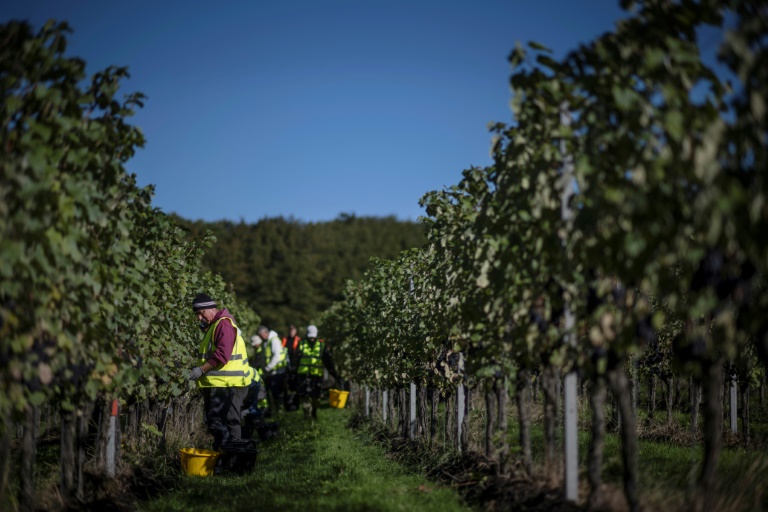
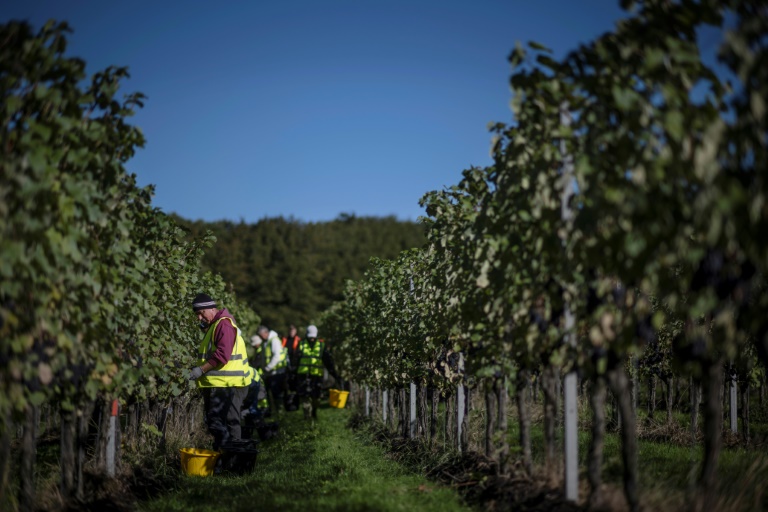
Under a blue sky, seasonal workers ran their secateurs along long rows of grapevines, harvesting a variety of pinot noir grown during the summer heatwave.

This was not a village in France, however, but Appledore in Kent in southern England, where high temperatures needed to grow the grape variety are no longer rare.

“At the moment, I think we have similar growing conditions to Champagne in the (19)70s and 80s,” said Charlie Holland, head winemaker and chief executive at Gusbourne Estate. 

“We’re seeing the same sort of growth conditions, the same ripening period” in England as back then in France, he added.

That is good news for Britain’s embryonic viticulture which is now able to produce a wide variety of still and sparkling wines from grape varieties including pinot noir, chardonnay and riesling that are traditionally more accustomed to France and Germany.

“It’s not so often that you see a new wine region appearing on the map,” said Holland.

“In England, now we can make an exceptional sparkling wine, we have a perfect climate, we have a very long growing season.”

– ‘Quite frightening’ –

At Gusbourne Estate, tractors were transporting baskets full of grapes to the winery. The fruit was immediately destemmed and pressed to begin the fermentation process.

During the harvest period, the estate is a beehive of 200 workers, more than half of them seasonal.

Holland was everywhere, darting between presses, vats and oak barrels as he inspected and tasted the produce.

Climate change may be helping England’s vineyards for now but the fast pace of transition risks major planning difficulties, warned Alistair Nesbitt, co-author of an outlook study on the country’s winemaking industry.

“That’s a really quite frighteningly short period of time to have such a transition of varietals suitability, and that really shows the pace of change that certain areas of the UK are starting to see as a result of climate change,” he noted.

“Hopefully the world will get (its) act together and we won’t see that continuing increase for too much longer, because that’s threatening to everyone, including producers in the UK,” added Nesbitt, who is chief executive of consultancy Vinescapes.

Nesbitt forecasts that beyond 2040, England’s vineyards could be working with grape varieties found further south in France, such as merlot and cabernet sauvignon. 

This assumes that climate change continues on its expected path amid global reductions in carbon emissions.

– ‘Niche producer’ –

Britain’s wine growers are planting grapes in droves to meet booming demand at home and abroad.

The surface area of vineyards in the country has doubled in eight years, according to industry organisation WineGB.

UK vineyards are however dwarfed on the international stage, covering a total of 3,800 hectares — or about one tenth of France’s champagne-producing region.

Britain “will likely remain a niche wine producer”, said Daniel Mettyear, research director at consultancy IWSR Drinks Market Analysis.

Despite the relatively high price — £45 ($50) for one of Gusbourne’s sparkling wines — demand is growing both in Britain and abroad for the drink.

“Quality has improved significantly in recent years,” added Mettyear, noting strong interest from North American and Nordic countries, as well as from Australia.

Gusbourne exports about one third of its wine to 28 nations worldwide, mostly to Norway but also to France.

English winemakers toast summer heatwaves

Under a blue sky, seasonal workers ran their secateurs along long rows of grapevines, harvesting a variety of pinot noir grown during the summer heatwave.

This was not a village in France, however, but Appledore in Kent in southern England, where high temperatures needed to grow the grape variety are no longer rare.

“At the moment, I think we have similar growing conditions to Champagne in the (19)70s and 80s,” said Charlie Holland, head winemaker and chief executive at Gusbourne Estate. 

“We’re seeing the same sort of growth conditions, the same ripening period” in England as back then in France, he added.

That is good news for Britain’s embryonic viticulture which is now able to produce a wide variety of still and sparkling wines from grape varieties including pinot noir, chardonnay and riesling that are traditionally more accustomed to France and Germany.

“It’s not so often that you see a new wine region appearing on the map,” said Holland.

“In England, now we can make an exceptional sparkling wine, we have a perfect climate, we have a very long growing season.”

– ‘Quite frightening’ –

At Gusbourne Estate, tractors were transporting baskets full of grapes to the winery. The fruit was immediately destemmed and pressed to begin the fermentation process.

During the harvest period, the estate is a beehive of 200 workers, more than half of them seasonal.

Holland was everywhere, darting between presses, vats and oak barrels as he inspected and tasted the produce.

Climate change may be helping England’s vineyards for now but the fast pace of transition risks major planning difficulties, warned Alistair Nesbitt, co-author of an outlook study on the country’s winemaking industry.

“That’s a really quite frighteningly short period of time to have such a transition of varietals suitability, and that really shows the pace of change that certain areas of the UK are starting to see as a result of climate change,” he noted.

“Hopefully the world will get (its) act together and we won’t see that continuing increase for too much longer, because that’s threatening to everyone, including producers in the UK,” added Nesbitt, who is chief executive of consultancy Vinescapes.

Nesbitt forecasts that beyond 2040, England’s vineyards could be working with grape varieties found further south in France, such as merlot and cabernet sauvignon. 

This assumes that climate change continues on its expected path amid global reductions in carbon emissions.

– ‘Niche producer’ –

Britain’s wine growers are planting grapes in droves to meet booming demand at home and abroad.

The surface area of vineyards in the country has doubled in eight years, according to industry organisation WineGB.

UK vineyards are however dwarfed on the international stage, covering a total of 3,800 hectares — or about one tenth of France’s champagne-producing region.

Britain “will likely remain a niche wine producer”, said Daniel Mettyear, research director at consultancy IWSR Drinks Market Analysis.

Despite the relatively high price — £45 ($50) for one of Gusbourne’s sparkling wines — demand is growing both in Britain and abroad for the drink.

“Quality has improved significantly in recent years,” added Mettyear, noting strong interest from North American and Nordic countries, as well as from Australia.

Gusbourne exports about one third of its wine to 28 nations worldwide, mostly to Norway but also to France.

English winemakers toast summer heatwaves

Under a blue sky, seasonal workers ran their secateurs along long rows of grapevines, harvesting a variety of pinot noir grown during the summer heatwave.

This was not a village in France, however, but Appledore in Kent in southern England, where high temperatures needed to grow the grape variety are no longer rare.

“At the moment, I think we have similar growing conditions to Champagne in the (19)70s and 80s,” said Charlie Holland, head winemaker and chief executive at Gusbourne Estate. 

“We’re seeing the same sort of growth conditions, the same ripening period” in England as back then in France, he added.

That is good news for Britain’s embryonic viticulture which is now able to produce a wide variety of still and sparkling wines from grape varieties including pinot noir, chardonnay and riesling that are traditionally more accustomed to France and Germany.

“It’s not so often that you see a new wine region appearing on the map,” said Holland.

“In England, now we can make an exceptional sparkling wine, we have a perfect climate, we have a very long growing season.”

– ‘Quite frightening’ –

At Gusbourne Estate, tractors were transporting baskets full of grapes to the winery. The fruit was immediately destemmed and pressed to begin the fermentation process.

During the harvest period, the estate is a beehive of 200 workers, more than half of them seasonal.

Holland was everywhere, darting between presses, vats and oak barrels as he inspected and tasted the produce.

Climate change may be helping England’s vineyards for now but the fast pace of transition risks major planning difficulties, warned Alistair Nesbitt, co-author of an outlook study on the country’s winemaking industry.

“That’s a really quite frighteningly short period of time to have such a transition of varietals suitability, and that really shows the pace of change that certain areas of the UK are starting to see as a result of climate change,” he noted.

“Hopefully the world will get (its) act together and we won’t see that continuing increase for too much longer, because that’s threatening to everyone, including producers in the UK,” added Nesbitt, who is chief executive of consultancy Vinescapes.

Nesbitt forecasts that beyond 2040, England’s vineyards could be working with grape varieties found further south in France, such as merlot and cabernet sauvignon. 

This assumes that climate change continues on its expected path amid global reductions in carbon emissions.

– ‘Niche producer’ –

Britain’s wine growers are planting grapes in droves to meet booming demand at home and abroad.

The surface area of vineyards in the country has doubled in eight years, according to industry organisation WineGB.

UK vineyards are however dwarfed on the international stage, covering a total of 3,800 hectares — or about one tenth of France’s champagne-producing region.

Britain “will likely remain a niche wine producer”, said Daniel Mettyear, research director at consultancy IWSR Drinks Market Analysis.

Despite the relatively high price — £45 ($50) for one of Gusbourne’s sparkling wines — demand is growing both in Britain and abroad for the drink.

“Quality has improved significantly in recent years,” added Mettyear, noting strong interest from North American and Nordic countries, as well as from Australia.

Gusbourne exports about one third of its wine to 28 nations worldwide, mostly to Norway but also to France.

Putin 'miscalculated' Russia's ability to occupy Ukraine: Biden

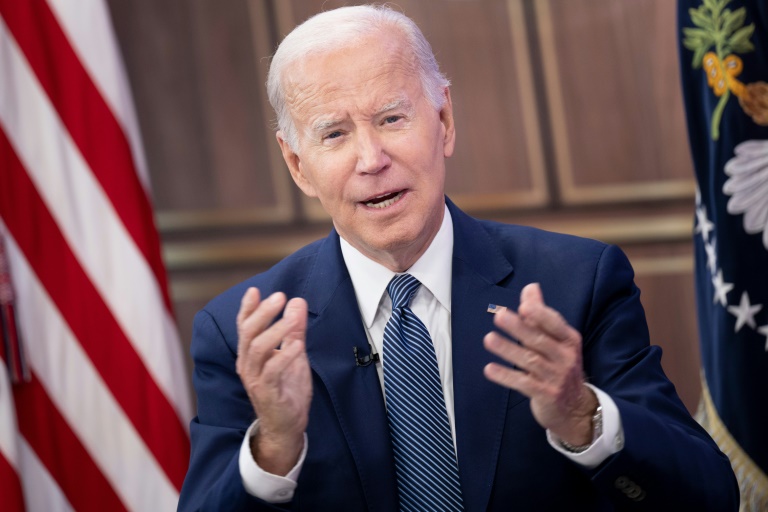
US President Joe Biden said Tuesday he believes his Russian counterpart Vladimir Putin is a normally rational actor who badly misjudged his prospects of occupying Ukraine.

The president spoke out in a rare televised interview as his administration looks for what he has described as an “off-ramp” for Putin to deescalate his invasion of Ukraine before he resorts to weapons of mass destruction.

“I think he is a rational actor who has miscalculated significantly,” Biden told CNN after Moscow’s shelling of civilian targets across its neighbor marked an escalation in the seven-month conflict.

Biden warned last week that the world risks “Armageddon” in unusually direct remarks about the dangers from Putin’s thinly veiled threats to use nuclear weapons to assist Russia’s faltering attempt to take over swaths of Ukraine.

Putin’s state of mind has been the subject of much debate after the Russian president suffered a series of recent military set-backs in the invasion, which he launched in February.

Biden told CNN that while he believed Putin was rational, he had underestimated the ferocity of Ukrainian defiance.

“I think… he thought he was going to be welcomed with open arms, that this was the home of Mother Russia in Kyiv, and that where he was going to be welcomed, and I think he just totally miscalculated,” Biden said.

The president even left open the possibility of talks with his Russian counterpart on the sidelines of the meeting of G20 nations in Bali scheduled for November — although he was clear there are no plans for talks on Ukraine. 

“Look, I have no intention of meeting with him,” Biden told CNN, adding that he would however see Putin if the Russian leader wanted negotiations over releasing detained US basketball star Brittney Griner. 

“If he came to me at the G20 and said ‘I want to talk about the release of Griner,’ I’d meet with him. I mean, it would depend,” he said.

– ‘Further escalation’ –

Kyiv’s forces have in recent weeks been pushing back against Russian soldiers across the front lines in the south and in the east.

Ukrainian President Volodymyr Zelensky said Friday his troops had recaptured nearly 965 square miles (2,500 square kilometers) in the counter-offensive that began late last month.

But the Ukrainian defense ministry said Monday that Russia had retaliated with a massive bombardment of its neighbor, hitting the Ukrainian capital Kyiv for the first time in months, as well as other cities across the country. 

Biden spoke to CNN hours after meeting virtually with members of the Group of 7 industrialized nations, who heard from Zelensky on the need for intensified efforts to “create an air shield for Ukraine” amid the barrage of Russian cruise missile and drone attacks.

Zelensky told the G7 “millions of people would be grateful” for help fending off attacks from the sky, and he warned Russia “still has room for further escalation.”

Washington pledged after Monday’s bloody salvos that it would up shipments of air defenses to Ukraine, while Germany promised delivery “in the coming days” of the first Iris-T missile shield reportedly capable of protecting a city.

– No neutrality –

Meanwhile, the United States was leading an all-out offensive to rally as many countries as possible to adopt a resolution at the UN condemning Moscow’s annexation of Ukrainian regions. 

“We believe the time has long passed for neutrality. There is no such thing as neutrality in a situation like this,” said State Department spokesman Ned Price. 

UN countries are debating a resolution introduced to the General Assembly by Ukraine, which the West hopes will demonstrate the isolation of Putin’s Russia on the international stage, with a vote likely on Wednesday or Thursday.

Biden frequently takes questions from the media, but he has held few press conferences or one-to-one televised interviews.

'What have they done?' Flip side of Turkey's dental boom

Briton Rida Azeem knew her dental trip to Turkey had gone badly wrong the second she took off her mask.

“My husband said, ‘What have they done to you? Your face is all sunk.'”

“I had big gaps underneath my gums and you could see all the metal bits (of the implants). It was done so badly it was unbelievable,” the engineer from Manchester told AFP.

“Originally they were going to do five implants,” said Azeem. But when the treatment was about to start, the dentists told her they would “have to remove all your teeth”.

“They looked professional,” said the 42-year-old, who now has to wear false teeth.

Attracted by the promise of the perfect smile at an unbeatable price, 150,000 to 250,000 foreign patients flock to Turkey every year, according to the Turkish Dentists’ Association (TDB), making it one of the world’s main dental tourism destinations alongside Hungary, Thailand and Dubai.

But the “Hollywood smile” sold by clinics in Istanbul, Izmir or Antalya often involves trimming — or even extracting — healthy teeth, sometimes taking all of them out.

“Many dental clinics in Turkey treat teeth that don’t need treatment,” the head of an Istanbul clinic, who did not want to be named, told AFP.

“They put veneers on teeth that only need bleaching or lightening, sometimes they even put full crowns.”

– ‘Pain every day’ –

Azeem is far from the only foreign patient to have been left disfigured or in chronic pain.

Alana Boone, a 23-year-old Belgian woman who travelled to Antalya in July 2021, was one of the five foreigners AFP talked to who suffered serious complications.

The 28 crowns she had done seemed fine, but only on the surface. They were “placed too deep. Now I have inflammation and pain every day… at times it is very intense,” she said.

“The only solution would be to remove everything but dentists do not know what they are going to find.”

Marie, a French nurse, felt she needed work on her lower teeth to boost her confidence after going through a separation. “I wanted to look more attractive,” she said.

But a Turkish dentist persuaded her to put crowns on her top ones too — 28 in total.

“I had very healthy teeth. I began to regret it all when they began to file my teeth,” she said.

“After about a month, the problems started: teeth began to move, and food began to get stuck between them… My breath is so awful that even mouthwash” doesn’t help, said the fortysomething.

– ‘It’s mutilation’ –

The British Dental Association has sounded the alarm about the phenomenon, warning of the “considerable risks… of cut-price treatment” abroad, warning of many cases of infections and “ill-fitting crowns and implants that fell out”.

Patrick Solera, of the French dentists’ union, said he was horrified to see influencers going to Turkey “to have their teeth trimmed”.

“You do not put a crown on a tooth that’s a little yellow, and trimming a healthy tooth to put a crown amounts to mutilation. In France they lock you up for that.”

But Tarik Ismen, of the TBD, insisted that Turkish dentists were only responding to a need. “Some people want to look like Hollywood stars and have a bright, fluorescent smile. If Turkish dentists are not going to do it for them, there are Albanian or Polish ones who will do it,” he told AFP. 

He said that botched surgery rates of “three to five percent is acceptable… and could happen anywhere”, adding that not one of his association’s 40,000 dentists had been struck off.

“Turkish dentists are the best and the cheapest in the world,” declared Turker Sandalli, who pioneered dental tourism in Turkey 20 years ago.

He boasted that “not one tooth has been extracted in 12 years” in his Istanbul clinic, where 99 percent of the clientele are foreigners. 

“But — and I am sad to tell you this — 90 percent of Turkish clinics go for cheap dentistry,” he said, accusing “2,000 to 3,000” illegal operators of blackening the industry. 

Berna Aytac, head of the Istanbul Chamber of Dentists, accused medical tourism agencies of “dragging down the quality of care”.

Almost all foreign clients that AFP talked to travelled to Turkey with all-inclusive deals booked through agencies that took in their transport, treatment and accommodation.

– Influencer victim –

More than 450 medical tourism agencies are licensed by the Turkish health ministry, but AFP discovered that some use misleading material to attract customers.

Among them is Sule Dental which presents itself as having its own “dental clinic” even though it is officially only an intermediary.

Sule Dental uses photos and glowing endorsements from former clients with beaming smiles on its internet homepage. One woman calls the staff “AWESOME!!!!”, while another praises its “very caring” doctors.

But the pictures are stock photos taken from an image bank. AFP found the same photos being used to publicise a clinic in Antalya called Perla Dental as well as a Tunisian medical agency.

On Instagram, where Sule Dental has 390,000 followers, glowing videos from former patients include two from Britons who told AFP that they had suffered complications. 

One was left with “root canal damage. I started to bleed a lot when I was brushing my teeth,” he said.

The influencer — who did not want to be named, and who travelled to Turkey as part of a partnership to publicise the clinic — has not told his tens of thousands of followers of his problems for fear of being sued.

Neither Sule Dental nor the Turkish health ministry responded to AFP requests for comment.

– ‘Too afraid’ to go back –

For the victims, legal redress is scant and costly once they return home.

“When a patient returns from Turkey or elsewhere with work already done, dentists refuse to touch them because you become responsible,” said the French dentists’ leader Solera.

Just to repair the damage, Rida Azeem and Alana Boone have been quoted treatment costing $30,000, three to four times what they paid to have their work done in Turkey.

Through dogged efforts, the British engineer managed to claw back $3,000 from the Istanbul clinic that disfigured her — not enough even for the dentures she had made in Pakistan to recover “90 percent” of her smile. 

The Turkish dentist did offer to treat her if she returned, “but I was too afraid”, she said.

The clinic did not reply to AFP requests for comment. 

“If you want treatment, find your practitioner yourself, talk to them directly and don’t go without an online consultation,” said Turkish lawyer Burcu Holmgren from London Legal International.

She said she has helped more than a dozen patients who have had problems with Turkish dental care get redress.

“The process is very slow — it takes about two years,” she said, adding that she has won “96 percent” of her cases.

Most cases end up with a financial settlement, without a dentist being struck off, she admitted.

The head of the Istanbul Chamber of Dentists said she still believes in medical tourism, but is worried by the number of students wanting to get into the profession.

In 2010 Turkey had 35 dental faculties — now there are 104. 

“We are creating future unemployed dentists,” said Aytac. “And if they find work, some unfortunately won’t be that concerned with ethics.”

IMF cuts 2023 global growth, warns major economies to stall

Global growth is expected to slow further next year, the IMF said Tuesday, downgrading its forecasts as countries grapple with the fallout from Russia’s invasion of Ukraine, spiraling cost-of-living and economic downturns.

The world economy has been dealt multiple blows, with the war in Ukraine driving up food and energy prices following the coronavirus outbreak, while soaring costs and rising interest rates threaten to reverberate around the globe.

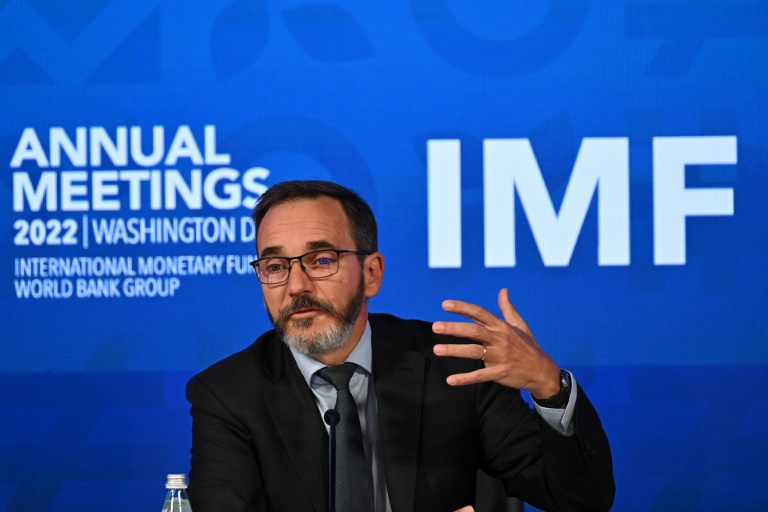
“This year’s shocks will re-open economic wounds that were only partially healed post-pandemic,” said International Monetary Fund economic counsellor Pierre-Olivier Gourinchas in a blog post accompanying the fund’s latest World Economic Outlook.

More than a third of the global economy is headed for contraction this year or next, and the three biggest economies –- the United States, European Union and China –- will continue to stall, he warned.

“The worst is yet to come and, for many people, 2023 will feel like a recession,” said Gourinchas.

In its report, the IMF trimmed its 2023 global GDP growth forecast to 2.7 percent, 0.2 point down from July expectations.

Its world growth forecast for this year remains unchanged at 3.2 percent.

The global growth profile is its weakest since 2001, apart from during the global financial crisis and the worst of the pandemic, the IMF said.

This reflects slowdowns for the biggest economies, including a US GDP contraction in the first half of 2022 and continued lockdowns in China as it faces a property crisis.

The world economy is expected to avert recession, but there is about a one-in-four chance that growth could slow to 2 percent or below, Gourinchas warned Tuesday.

“We’ve only had that five times since 1970…this is the oil price shock of 1973, the disinflation of 1981, the 2008 financial crisis…these are all big things that have impacted the global economy,” he told AFP.

– Laser focus –

A key factor behind the slowdown is a policy shift as central banks try to bring down soaring inflation, with higher interest rates starting to take the heat out of domestic demand.

Growing price pressures are the most immediate threat to prosperity, said the IMF’s report, adding that central banks are now “laser-focused on restoring price stability”.

Global inflation is expected to peak at 9.5 percent this year before dropping to 4.1 percent by 2024.

Misjudging the persistence of inflation could prove detrimental to future macroeconomic stability, Gourinchas warned, “by gravely undermining the hard-won credibility of central banks.”

Asked about the Federal Reserve’s rate hikes, he told a press briefing on Tuesday that the IMF is not calling for an acceleration, but this “doesn’t mean that they should pause on (their) path” either. 

This is because banks were starting from a point of historically-low rates as countries emerged from the pandemic.

Current challenges do not mean a large downturn is inevitable, but the fund warned many low-income countries are either in or close to debt distress.

While the G20 has agreed on a “common framework” for debt restructuring for the poorest countries, only three have qualified and “more progress is needed,” Gourinchas told reporters.

“Time may soon be running out,” he said.

– Slowdown in major economies –

The IMF has also cut forecasts for the world’s two biggest economies, the United States and China.

US economic growth for this year is now pegged at 1.6 percent, 0.7 point below the fund’s July forecast, due to an “unexpected real GDP contraction in the second quarter,” the IMF said.

“Declining real disposable income continues to eat into consumer demand, and higher interest rates are taking an important toll on spending,” the report added.

The Fed has been raising interest rates aggressively to tamp down surging inflation, which is slowing economic activity. And the central bank has said more increases are likely to come.

President Joe Biden conceded that a “slight” recession was a possibility.

“I don’t think there will be a recession,” he told CNN. “If it is, it’ll be a very slight recession. That is, we’ll move down slightly.” 

China’s economy is expected to grow at 3.2 percent this year — its lowest rate in decades, apart from the initial coronavirus outbreak.

The fund cautioned that a worsening of China’s property sector slump could spill over to the domestic banking sector and weigh on growth.

A slowdown in the Euro area is also expected to deepen next year, the IMF projected, with the German and Italian economies tumbling into recession due to their exposure to Russian gas cuts.

The energy crisis provoked by Russia’s invasion “is not a transitory shock,” the IMF said, describing the global shift in energy trade as “broad and permanent.”

With the large shock, “there is no recovery in sight in the Russian economy” either, Gourinchas told AFP.

Biden to 're-evaluate' Saudi ties after OPEC snub

US President Joe Biden promised “consequences” for Saudi Arabia after a Riyadh-led coalition of oil-producing nations sided with Russia to slash output.

The 13-nation OPEC cartel and its 10 allies headed by Moscow angered the White House last week with its decision to cut production by two million barrels a day from November, raising fears that oil prices could soar.

“I’m not going to get into what I’d consider and what I have in mind. But there will be — there will be consequences,” Biden told CNN when pressed on possible responses in a rare televised interview.

The Democratic leader didn’t reveal what options were being considered, but the White House had made clear earlier that Biden was reassessing ties between the allies.

“I think the president’s been very clear that this is a relationship that we need to continue to re-evaluate, that we need to be willing to revisit,” National Security Council spokesman John Kirby told CNN.

“Certainly in light of the OPEC decision, I think that’s where he is.”

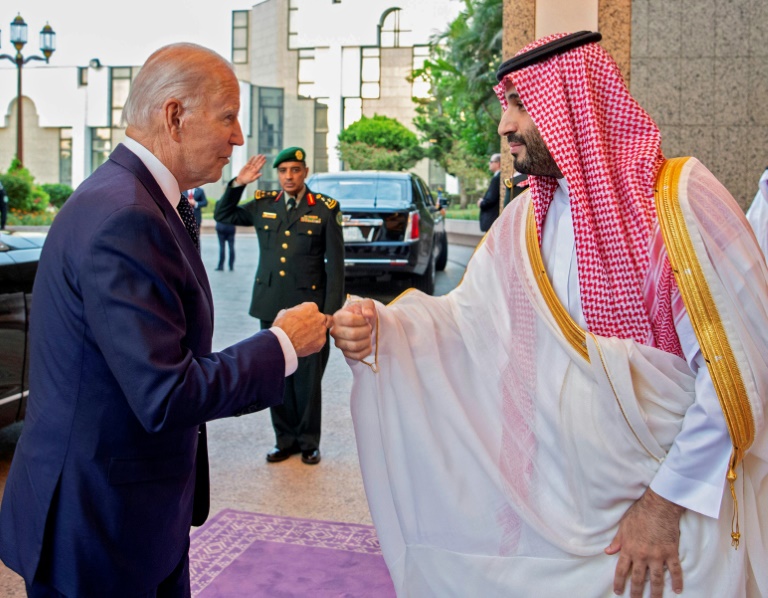
The OPEC move was widely seen as a diplomatic slap in the face, since Biden traveled to Saudi Arabia in July and met with Crown Prince Mohammed bin Salman, despite vowing to make the kingdom an international “pariah” following the murder of journalist Jamal Khashoggi.

It also comes at a sensitive moment for Biden’s Democratic party, as it faces November midterm elections with rising consumer prices a key Republican talking point.

Saudi Arabia has defended the planned production cuts, saying the priority of OPEC+ was “to maintain a sustainable oil market”.

On Tuesday, Saudi foreign minister Prince Faisal bin Farhan told the Al-Arabiya channel that the move “was purely economic and was taken unanimously by the (organization’s) member states.”

“OPEC+ members acted responsibly and took the appropriate decision,” he said.

Kirby added that Biden was “willing to work with Congress to think through what that relationship (with Saudi Arabia) ought to look like going forward,” although he clarified that no formal discussions had yet begun. 

His remarks came a day after Bob Menendez, the Democratic chairman of the influential Senate Foreign Relations Committee, called for Washington to halt all cooperation with Riyadh.

Menendez said the kingdom had decided to “underwrite” Russia’s war in Ukraine with a move he denounced as a concession to Moscow that would hurt the global economy.

– ‘They chose Russia’ –

“The United States must immediately freeze all aspects of our cooperation with Saudi Arabia, including any arms sales and security cooperation beyond what is absolutely necessary to defend US personnel and interests,” Menendez said.

“As chairman of the Senate Foreign Relations Committee, I will not greenlight any cooperation with Riyadh until the kingdom reassesses its position with respect to the war in Ukraine.”

The partnership between the United States and Saudi Arabia was sealed after World War II, providing the kingdom with military protection in exchange for American access to oil. 

Fraught with crises, the relationship was revived by Biden’s predecessor Donald Trump, whose single term saw Riyadh accounting for a quarter of US arms exports, according to the Stockholm International Peace Research Institute. 

Continuing the rapprochement, Biden’s State Department announced in August that Saudi Arabia would buy 300 Patriot MIM-104E missile systems, which can be used to bring down at long-range incoming ballistic and cruise missiles, as well as attacking aircraft.

The relationship is “strategic” and has “advanced the security and stability of the Middle East,” the Saudi embassy in Washington said in a statement on Tuesday.

Bilateral military cooperation “serves the interests of both countries,” it said, paraphrasing Prince Faisal’s comments to Al-Arabiya.

Saudi Arabia has faced recent rocket threats from Yemen’s Huthi rebels, who have been supplied with Iranian equipment and technology.

Biden said last week that he would look at alternatives to prevent gas price hikes.

These could include further releases from the US Strategic Petroleum Reserve, potentially increased domestic drilling, as well as more drastic measures, including limits on exports.

Menendez’s call for a freeze in arms sales has the support of several fellow Democratic lawmakers, including Connecticut’s Senator Chris Murphy, who told CNN that Washington had for too long given Riyadh a pass on transgressive conduct.  

“For years we have looked the other way as Saudi Arabia has chopped up journalists, has engaged in massive political repression, for one reason: we wanted to know that when the chips were down, when there was a global crisis, that the Saudis would choose us instead of Russia,” he said.

“Well, they didn’t. They chose Russia.”

Close Bitnami banner
Bitnami