World

Despite disasters, climate is a taboo election issue in US coal country

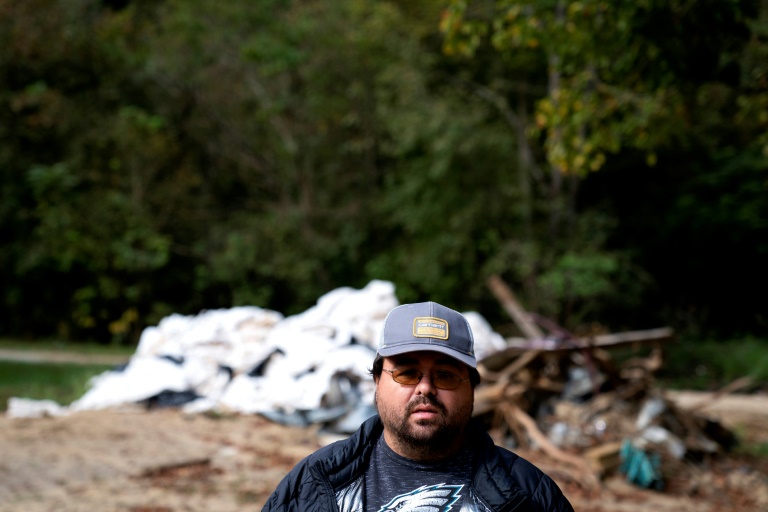
Chase Hays says he is “torn.” After seeing floods ravage his hamlet in the mountains of eastern Kentucky, he filed a lawsuit against the mine that overlooks it, but the 34-year-old doesn’t want to be seen as an “enemy” of coal.

Like him, many in his Appalachian region are reluctant to question an industry that has long provided the only high-paying jobs.

And with the US midterm elections approaching, few candidates dare talk about climate change.

Yet the state has been devastated recently by extreme weather.

In December, tornadoes killed 80 people in western Kentucky, and in late July, unprecedented heavy rains left 40 residents dead in the east of the state.

Standing at the bottom of a remote valley on the banks of a small creek, Hays had never seen water come down so fast.

He barely had time to cut through a fence to escape with his family before the torrent washed away his porch, an above-ground pool, even a pig, and flooded the foundation of his house.

Even if he still cannot live there, he considers himself “one of the lucky ones in my neighborhood,” called River Caney, where about 20 houses were destroyed and two women swept away.

Moreover, he was insured, unlike his neighbors, some of whom are still sleeping in tents with no prospect of finding a roof before winter.

On behalf of those neighbors, he filed a complaint against the mining company that extracts coal above the hamlet.

Hays is convinced that one of the company’s retaining ponds broke when the rain intensified.

“A big part of the reason why the ponds (were) able to break was they were just blasting way too hard and probably cracked the ponds,” he said.

– Climate change and fossil fuels –

But Hays comes from a long line of miners, and is cautious about making generalizations.

“What happened here was the fault of (things) not being maintained and checked on,” he said.

About 50 neighbors have joined his lawsuit, including Christy White, a 57-year-old woman whose once well-kept home is now a damp shell.

A grandmother, White finds her voice quivering at mention of the floods.

“Eventually you start bombing and drilling and cutting into the corners, you know, something’s gonna happen eventually. It’s just common knowledge,” she said.

In recent years, mining companies in Appalachia have taken to mountaintop removal, known as strip mining, to gain easier access to coal seams.

Whether strip mining worsens flooding is uncertain, said William Haneberg, the state geologist of Kentucky and director of the Kentucky Geological Survey.

Mountaintop removals “expose a lot of bare rock and remove the trees and the natural vegetation,” he said, but the rubble is dumped into the valleys, and flattens terrain “and that might decrease the severity of floods.”

He acknowledged a “very strong consensus” among scientists that global warming is driven by the burning of fossil fuels.

“In that way, coal mines do tie into the recent events,” he said.

– ‘Long-simmering hostility’ –

Yet this conclusion is not one shared by many in Kentucky, which has 20 percent of the active coal mines in the United States.

Hays has heard the studies on global warming: “Around here, it’s not a nice subject to talk about, just because without coal, this place is dwindling.”

Luke Glaser, an independent city councilman in nearby Hazard who has been heavily involved in relief efforts, said that there is “long-simmering hostility towards climate-change initiatives” locally. 

“Appalachians… are very proud of the fact that the work they’ve done has powered the nation over centuries. So it feels like you’re not just attacking someone’s job but attacking someone’s values,” Glaser said.

The state, once contested by the two major political parties, has since the 1990s turned overwhelmingly Republican, partly due to energy and environmental issues, said Steve Voss, a political science professor at the University of Kentucky.

More recently, candidates from both parties are careful to “stress that they are friends of coal,” although some Democrats are starting to talk about climate, he said.

For locals like Hays, the climate change debate has little effect on elections, even with disastrous flooding. 

“We feel forgotten about here,” Hays said. “We’re just looked down on as uneducated and incapable people.”

As for White, an avid fan of former president Donald Trump, her damaged home occupies all her thoughts, and she hasn’t pondered the midterm elections at all.

As she sorted through her belongings, she cast doubt on whether global warming had anything to do with the disasters: “I just think it’s God’s will… God’s just trying to get us prepared for what’s to come.”

Despite disasters, climate is a taboo election issue in US coal country

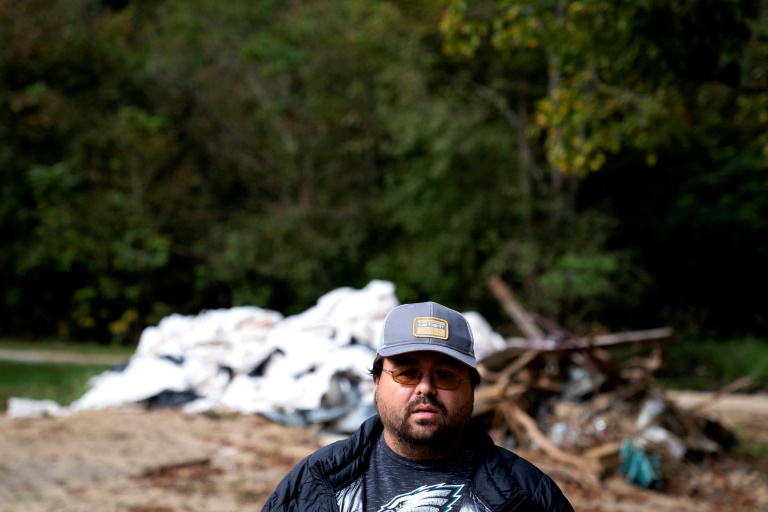
Chase Hays says he is “torn.” After seeing floods ravage his hamlet in the mountains of eastern Kentucky, he filed a lawsuit against the mine that overlooks it, but the 34-year-old doesn’t want to be seen as an “enemy” of coal.

Like him, many in his Appalachian region are reluctant to question an industry that has long provided the only high-paying jobs.

And with the US midterm elections approaching, few candidates dare talk about climate change.

Yet the state has been devastated recently by extreme weather.

In December, tornadoes killed 80 people in western Kentucky, and in late July, unprecedented heavy rains left 40 residents dead in the east of the state.

Standing at the bottom of a remote valley on the banks of a small creek, Hays had never seen water come down so fast.

He barely had time to cut through a fence to escape with his family before the torrent washed away his porch, an above-ground pool, even a pig, and flooded the foundation of his house.

Even if he still cannot live there, he considers himself “one of the lucky ones in my neighborhood,” called River Caney, where about 20 houses were destroyed and two women swept away.

Moreover, he was insured, unlike his neighbors, some of whom are still sleeping in tents with no prospect of finding a roof before winter.

On behalf of those neighbors, he filed a complaint against the mining company that extracts coal above the hamlet.

Hays is convinced that one of the company’s retaining ponds broke when the rain intensified.

“A big part of the reason why the ponds (were) able to break was they were just blasting way too hard and probably cracked the ponds,” he said.

– Climate change and fossil fuels –

But Hays comes from a long line of miners, and is cautious about making generalizations.

“What happened here was the fault of (things) not being maintained and checked on,” he said.

About 50 neighbors have joined his lawsuit, including Christy White, a 57-year-old woman whose once well-kept home is now a damp shell.

A grandmother, White finds her voice quivering at mention of the floods.

“Eventually you start bombing and drilling and cutting into the corners, you know, something’s gonna happen eventually. It’s just common knowledge,” she said.

In recent years, mining companies in Appalachia have taken to mountaintop removal, known as strip mining, to gain easier access to coal seams.

Whether strip mining worsens flooding is uncertain, said William Haneberg, the state geologist of Kentucky and director of the Kentucky Geological Survey.

Mountaintop removals “expose a lot of bare rock and remove the trees and the natural vegetation,” he said, but the rubble is dumped into the valleys, and flattens terrain “and that might decrease the severity of floods.”

He acknowledged a “very strong consensus” among scientists that global warming is driven by the burning of fossil fuels.

“In that way, coal mines do tie into the recent events,” he said.

– ‘Long-simmering hostility’ –

Yet this conclusion is not one shared by many in Kentucky, which has 20 percent of the active coal mines in the United States.

Hays has heard the studies on global warming: “Around here, it’s not a nice subject to talk about, just because without coal, this place is dwindling.”

Luke Glaser, an independent city councilman in nearby Hazard who has been heavily involved in relief efforts, said that there is “long-simmering hostility towards climate-change initiatives” locally. 

“Appalachians… are very proud of the fact that the work they’ve done has powered the nation over centuries. So it feels like you’re not just attacking someone’s job but attacking someone’s values,” Glaser said.

The state, once contested by the two major political parties, has since the 1990s turned overwhelmingly Republican, partly due to energy and environmental issues, said Steve Voss, a political science professor at the University of Kentucky.

More recently, candidates from both parties are careful to “stress that they are friends of coal,” although some Democrats are starting to talk about climate, he said.

For locals like Hays, the climate change debate has little effect on elections, even with disastrous flooding. 

“We feel forgotten about here,” Hays said. “We’re just looked down on as uneducated and incapable people.”

As for White, an avid fan of former president Donald Trump, her damaged home occupies all her thoughts, and she hasn’t pondered the midterm elections at all.

As she sorted through her belongings, she cast doubt on whether global warming had anything to do with the disasters: “I just think it’s God’s will… God’s just trying to get us prepared for what’s to come.”
Myanmar junta sentences Suu Kyi to 6 more years for corruption

Myanmar’s junta sentenced ousted leader Aung San Suu Kyi on Wednesday to another six years in prison for corruption, a source with knowledge of the case said, taking the Nobel laureate’s total jail time to 26 years.

Suu Kyi, 77, has been detained since the generals toppled her government in a coup on February 1 of last year, ending the Southeast Asian country’s brief period of democracy.

She has since been convicted on a clutch of charges, including violating the official secrets act, electoral fraud and illegally possessing walkie-talkies.

In the latest case, the Nobel laureate was “sentenced to three years imprisonment each for two corruption cases” in which she had been accused of taking bribes from a businessman, the source said.

The terms will be served concurrently, the source added.

The businessman, Maung Weik, appeared in a video televised by a military broadcaster last year claiming he had given Suu Kyi $550,000 over several years. 

Maung Weik — who was convicted of drug trafficking in 2008 — also said he had donated money to senior figures in Suu Kyi’s National League for Democracy government for the good of his business.

Suu Kyi — who denies all charges against her — appeared in good health and will appeal, the source added.

She is currently on trial for five other corruption charges. Each carries a maximum 15 years in prison. 

A spokesperson for Amnesty International on Wednesday slammed the trial as a sham that “cannot be taken seriously”.

“Myanmar’s military is heaping trumped-up charge after trumped-up charge on Aung San Suu Kyi as part of a broader campaign to lock up and silence any and all opponents,” they said.

A junta spokesman did not respond to a request for comment.

Journalists have been barred from attending the court hearings and Suu Kyi’s lawyers have been banned from speaking to the media.

In June, she was transferred from house arrest to a prison in the capital Naypyidaw, where her trials are being held in a courthouse inside the prison compound.

– Confined –

Suu Kyi has been the face of Myanmar’s democratic hopes for more than 30 years and was previously a political prisoner. 

Since February 2021, she has once again been confined by the military, with her only link to the outside world now brief pre-trial meetings with lawyers.

Many of her political allies have also been arrested since the coup, with one chief minister sentenced to 75 years in jail.

The Southeast Asian nation has been in turmoil since the military seized power, sparking widespread armed resistance.

The junta has responded with a crackdown that rights groups say includes razing villages, mass extrajudicial killings and airstrikes on civilians.

More than one million people have been displaced since the coup, according to the United Nations children’s agency.

More than 2,300 people have been killed and over 15,000 arrested since the military seized power, according to a local monitoring group.

Mourners mark 20th anniversary of Indonesia's Bali bombings

Hundreds of mourners and survivors commemorated on Wednesday the 20th anniversary of the bombings that killed more than 200 people on the Indonesian resort island of Bali.

Grieving families, attack survivors and representatives from several embassies will attend a memorial in Bali’s popular tourist hub of Kuta, where Al-Qaeda-linked militants detonated bombs at a bar and nightclub on October 12, 2002.

“It’s okay that some people have forgotten what happened 20 years ago but there are still real victims, there are children who lost their parents in the bombing,” said Thiolina Marpaung, one of the organisers of the memorial who was left with permanent eye injuries in the attack. 

“I don’t want them to be forgotten,” the 47-year-old told AFP.

The candlelight vigil will be held at a monument built metres from the site of the blasts by victims’ family members to mark Southeast Asia’s deadliest terrorist attack and remember the 202 victims.

Most were foreign holidaymakers from more than 20 countries but Australia suffered the biggest loss, with 88 dead.

Australian Prime Minister Anthony Albanese told a memorial service in Sydney Wednesday that the horror of the bombings was swiftly countered by incredible acts of self-sacrifice and bravery.

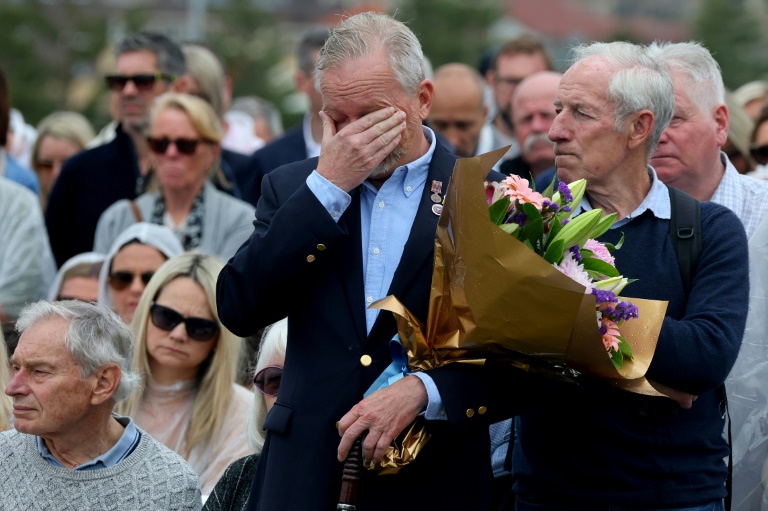
“They sought to create terror, but people ran towards the terror to do what they could for friends and strangers alike,” he told a crowd gathered under light rain at the city’s famous Coogee Beach.

During the memorial, 88 doves were released — one for each Australian killed.

Albanese said the Bali bombings had left a permanent mark on Australia’s national identity, in a similar fashion to the devastating Gallipoli campaign of World War I.

– ‘Haunt me forever’ –

In Bali, the Australian consulate also held a memorial service attended by ambassador to Indonesia Penny Williams and assistant minister for foreign affairs Tim Watts.

Relatives and survivors held a moment of silence before laying flowers and wreaths in the consulate’s memorial garden.

Indonesian President Joko Widodo will address families later in the day by video and former Australian prime minister John Howard will deliver a speech.

In Canberra, Australian Foreign Minister Penny Wong attended a memorial ceremony with Indonesia’s ambassador Siswo Pramono.

“We recommit to the ongoing work shared by Australia and Indonesia to counter the scourge of violent extremism,” Albanese and Wong said in a joint statement.

Local militant group Jemaah Islamiyah (JI), linked to Al-Qaeda, was blamed for the bombings. 

Indonesia, the world’s biggest Muslim-majority nation, has long struggled with Islamist militancy.

All the leading perpetrators of the Bali attacks were either executed, killed by police or jailed. 

But the Indonesian government is considering an early release for Bali bombmaker Umar Patek. He has only served half of his 20-year sentence.

Jakarta held off freeing him after angering Australia and the victims’ relatives, who say his pending release has caused fresh trauma before the anniversary.

“I would be very angry and disappointed,” 55-year-old survivor I Dewa Ketut Rudita Widia Putra told AFP.

Survivors and relatives of the dead are still trying to reconcile with the bomb blasts that killed scores at Sari nightclub and Paddy’s Bar.

“I’m still feeling the trauma. Until today, I still don’t have the bravery to go to the bombing sites,” said Putra.

Paul Yeo’s brother Gerard was killed, alongside five other members of the Coogee Dolphins rugby league team.

“I was asked to identify him. My mind was torn between not knowing if what I was about to see would haunt me forever, or was I just privileged to see you one last time,” Yeo said at the memorial.

“Never have I been so scared.”

Ben Tullipan, who lost both his legs in the blasts, said he still struggled with survivor’s guilt 20 years later.

“I think about all the people that didn’t make it, and what they’d be doing,” he told ABC radio on Wednesday.

“And how lucky I am to be here.”

Japan space rocket ordered to self-destruct after failed launch

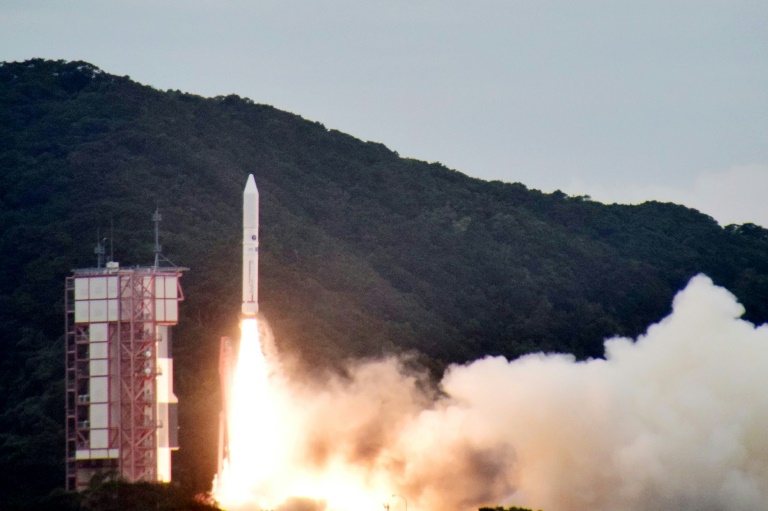
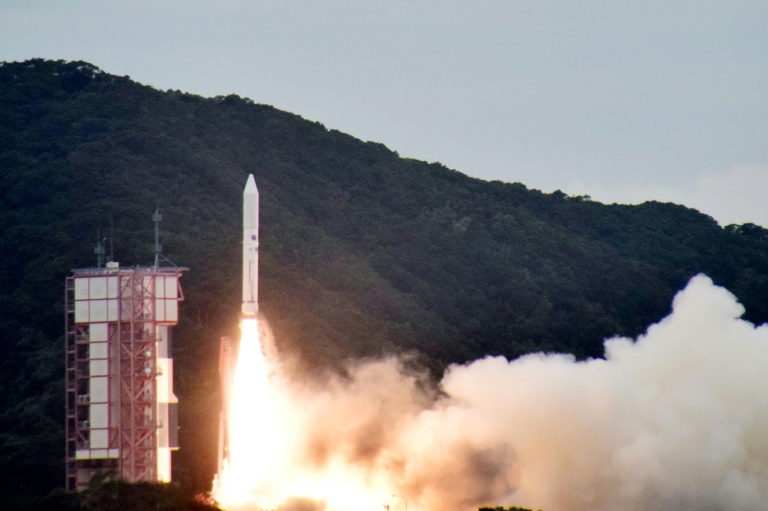
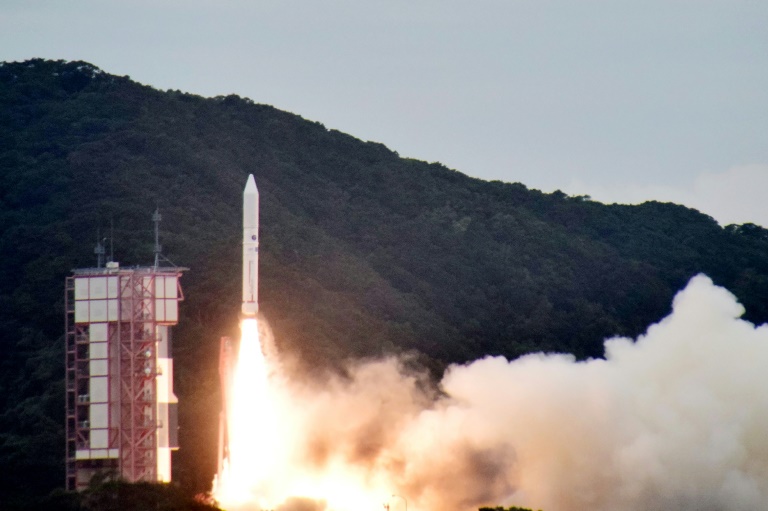
Japan’s space agency said it sent a self-destruct order to its Epsilon rocket after a failed launch on Wednesday because of a problem that meant the craft could not safely fly.

The unmanned rocket, on its sixth mission, was taking satellites into orbit to demonstrate “innovative” technologies.

“The rocket can’t continue a safe flight, because of the danger it would create if it falls on the ground,” a JAXA official said in televised comments.

“So we took measures to avoid such an incident, and we sent the signal (to destroy the rocket),” he said, adding that information on the cause of the issue was not immediately available.

It was Japan’s first failed rocket launch since 2003, and public broadcaster NHK said the self-destruct order was issued around 10 minutes after liftoff.

A JAXA livestream of the launch from Uchinoura Space Center in southern Japan’s Kagoshima was interrupted and presenters said there had been a problem, without giving details.

The solid-fuel Epsilon rocket has been in use since 2013.

It is smaller than the country’s previous liquid-fuelled model, and a successor to the solid-fuel “M-5” rocket that was retired in 2006 due to its high cost.

JAXA describes Epsilon as “a solid-fuel rocket designed to lower the threshold to space… and usher in an age in which everyone can make active use of space”.

A box-shaped satellite carried by the rocket, called RAISE-3, had been due to orbit the Earth for at least a year, according to a JAXA fact sheet about the mission that was named “Innovative Satellite Technology Demonstration-3”.

Universities, research institutions and companies had been invited to engineer new technologies to try out on RAISE-3.

They ranged from Tokyo Metropolitan University’s “pulsed-plasma thruster” to an experiment in “harvesting energy with (a) lightweight integrated origami structure”.

As well as RAISE-3, eight microsatellites were also being launched by the Epsilon rocket, the fact sheet said.

Japan’s last failed space rocket take-off was in 2003, when the country aborted the launch of a pair of spy satellites to monitor North Korea.

Japan space rocket ordered to self-destruct after failed launch

Japan’s space agency said it sent a self-destruct order to its Epsilon rocket after a failed launch on Wednesday because of a problem that meant the craft could not safely fly.

The unmanned rocket, on its sixth mission, was taking satellites into orbit to demonstrate “innovative” technologies.

“The rocket can’t continue a safe flight, because of the danger it would create if it falls on the ground,” a JAXA official said in televised comments.

“So we took measures to avoid such an incident, and we sent the signal (to destroy the rocket),” he said, adding that information on the cause of the issue was not immediately available.

It was Japan’s first failed rocket launch since 2003, and public broadcaster NHK said the self-destruct order was issued around 10 minutes after liftoff.

A JAXA livestream of the launch from Uchinoura Space Center in southern Japan’s Kagoshima was interrupted and presenters said there had been a problem, without giving details.

The solid-fuel Epsilon rocket has been in use since 2013.

It is smaller than the country’s previous liquid-fuelled model, and a successor to the solid-fuel “M-5” rocket that was retired in 2006 due to its high cost.

JAXA describes Epsilon as “a solid-fuel rocket designed to lower the threshold to space… and usher in an age in which everyone can make active use of space”.

A box-shaped satellite carried by the rocket, called RAISE-3, had been due to orbit the Earth for at least a year, according to a JAXA fact sheet about the mission that was named “Innovative Satellite Technology Demonstration-3”.

Universities, research institutions and companies had been invited to engineer new technologies to try out on RAISE-3.

They ranged from Tokyo Metropolitan University’s “pulsed-plasma thruster” to an experiment in “harvesting energy with (a) lightweight integrated origami structure”.

As well as RAISE-3, eight microsatellites were also being launched by the Epsilon rocket, the fact sheet said.

Japan’s last failed space rocket take-off was in 2003, when the country aborted the launch of a pair of spy satellites to monitor North Korea.

Japan space rocket ordered to self-destruct after failed launch

Japan’s space agency said it sent a self-destruct order to its Epsilon rocket after a failed launch on Wednesday because of a problem that meant the craft could not safely fly.

The unmanned rocket, on its sixth mission, was taking satellites into orbit to demonstrate “innovative” technologies.

“The rocket can’t continue a safe flight, because of the danger it would create if it falls on the ground,” a JAXA official said in televised comments.

“So we took measures to avoid such an incident, and we sent the signal (to destroy the rocket),” he said, adding that information on the cause of the issue was not immediately available.

It was Japan’s first failed rocket launch since 2003, and public broadcaster NHK said the self-destruct order was issued around 10 minutes after liftoff.

A JAXA livestream of the launch from Uchinoura Space Center in southern Japan’s Kagoshima was interrupted and presenters said there had been a problem, without giving details.

The solid-fuel Epsilon rocket has been in use since 2013.

It is smaller than the country’s previous liquid-fuelled model, and a successor to the solid-fuel “M-5” rocket that was retired in 2006 due to its high cost.

JAXA describes Epsilon as “a solid-fuel rocket designed to lower the threshold to space… and usher in an age in which everyone can make active use of space”.

A box-shaped satellite carried by the rocket, called RAISE-3, had been due to orbit the Earth for at least a year, according to a JAXA fact sheet about the mission that was named “Innovative Satellite Technology Demonstration-3”.

Universities, research institutions and companies had been invited to engineer new technologies to try out on RAISE-3.

They ranged from Tokyo Metropolitan University’s “pulsed-plasma thruster” to an experiment in “harvesting energy with (a) lightweight integrated origami structure”.

As well as RAISE-3, eight microsatellites were also being launched by the Epsilon rocket, the fact sheet said.

Japan’s last failed space rocket take-off was in 2003, when the country aborted the launch of a pair of spy satellites to monitor North Korea.

Mourners mark 20th anniversary of Indonesia's Bali bombings

Hundreds of mourners and survivors commemorated on Wednesday the 20th anniversary of the bombings that killed more than 200 people on the Indonesian resort island of Bali.

Grieving families, attack survivors and representatives from several embassies will attend a memorial in Bali’s popular tourist hub of Kuta, where Al-Qaeda-linked militants detonated bombs at a bar and nightclub on October 12, 2002.

“It’s okay that some people have forgotten what happened 20 years ago but there are still real victims, there are children who lost their parents in the bombing,” said Thiolina Marpaung, one of the organisers of the memorial who was left with permanent eye injuries in the attack. 

“I don’t want them to be forgotten,” the 47-year-old told AFP.

The candlelight vigil will be held at a monument built metres from the site of the blasts by victims’ family members to mark Southeast Asia’s deadliest terrorist attack and remember the 202 victims.

Most were foreign holidaymakers from more than 20 countries but Australia suffered the biggest loss, with 88 dead.

Australian Prime Minister Anthony Albanese told a memorial service in Sydney Wednesday that the horror of the bombings was swiftly countered by incredible acts of self-sacrifice and bravery.

“They sought to create terror, but people ran towards the terror to do what they could for friends and strangers alike,” he told a crowd gathered under light rain at the city’s famous Coogee Beach.

During the memorial, 88 doves were released — one for each Australian killed.

Albanese said the Bali bombings had left a permanent mark on Australia’s national identity, in a similar fashion to the devastating Gallipoli campaign of World War I.

– ‘Haunt me forever’ –

In Bali, the Australian consulate also held a memorial service attended by ambassador to Indonesia Penny Williams and assistant minister for foreign affairs Tim Watts.

Relatives and survivors held a moment of silence before laying flowers and wreaths in the consulate’s memorial garden.

Indonesian President Joko Widodo will address families later in the day by video and former Australian prime minister John Howard will deliver a speech.

In Canberra, Australian Foreign Minister Penny Wong attended a memorial ceremony at parliament house with Indonesia’s ambassador Siswo Pramono.

Local militant group Jemaah Islamiyah (JI), linked to Al-Qaeda, was blamed for the bombings, which took place at two popular night spots that accounted for all the victims. Another device exploded harmlessly outside the US consulate.

Indonesia, the world’s biggest Muslim-majority nation, has long struggled with Islamist militancy and security was stepped up on the island ahead of Wednesday’s commemoration.

All the leading perpetrators of the Bali attacks were either executed, killed by police or jailed. 

But the Indonesian government is considering an early release for Bali bombmaker Umar Patek. He has only served half of his 20-year sentence.

Jakarta held off freeing him after angering Australia and the victims’ relatives, who say his pending release has caused fresh trauma before the anniversary.

Survivors and relatives of the dead are still trying to reconcile with the bomb blasts that killed scores at Sari nightclub and Paddy’s Bar.

Paul Yeo’s brother Gerard was killed, alongside five other members of the Coogee Dolphins rugby league team celebrating on their end-of-year trip.

“I was asked to identify him. My mind was torn between not knowing if what I was about to see would haunt me forever, or was I just privileged to see you one last time,” Yeo said at the memorial.

“Never have I been so scared.”

Ben Tullipan, who lost both his legs in the blasts, said he still struggled with survivor’s guilt 20 years later.

“I think about all the people that didn’t make it, and what they’d be doing,” he told ABC radio on Wednesday.

“And how lucky I am to be here.”

Resilient Russian economy surfs sanctions on oil boom

Russia’s economy may face multiple long-term challenges, but for now energy exports appear to be helping it ride out Western sanctions imposed over the offensive against Ukraine.

Moscow says inflation is easing and employment is virtually full, contradicting the predictions of a catastrophe from many financial experts.

The International Monetary Fund on Tuesday offered some support to Russia’s view, saying recession will be less severe than expected due to oil exports and relatively stable domestic demand.

The IMF forecast the Russian economy to contract just 3.4 percent over the whole year, after contracting 21.8 percent during the second quarter at a quarterly annualised rate.

It was only in June that the IMF forecast an annual drop of six percent.

“The contraction in Russia’s economy is less severe than earlier projected, reflecting resilience in crude oil exports and in domestic demand with greater fiscal and monetary policy support and a restoration of confidence in the financial system,” the IMF’s latest World Economic Outlook report said.

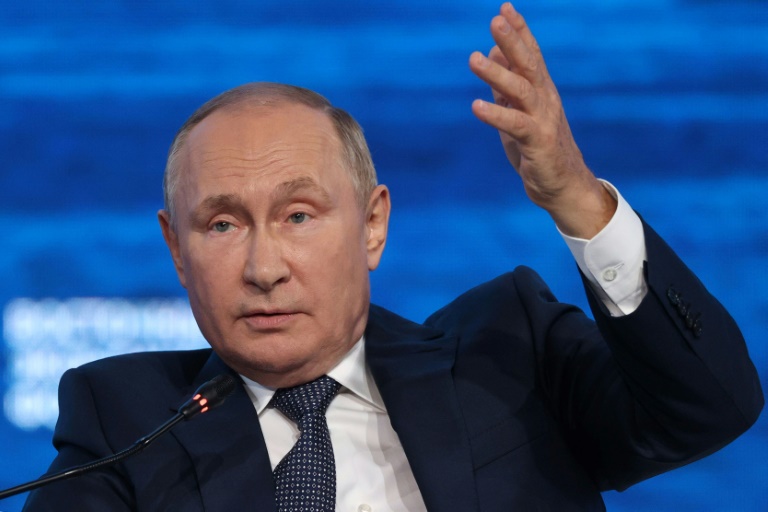
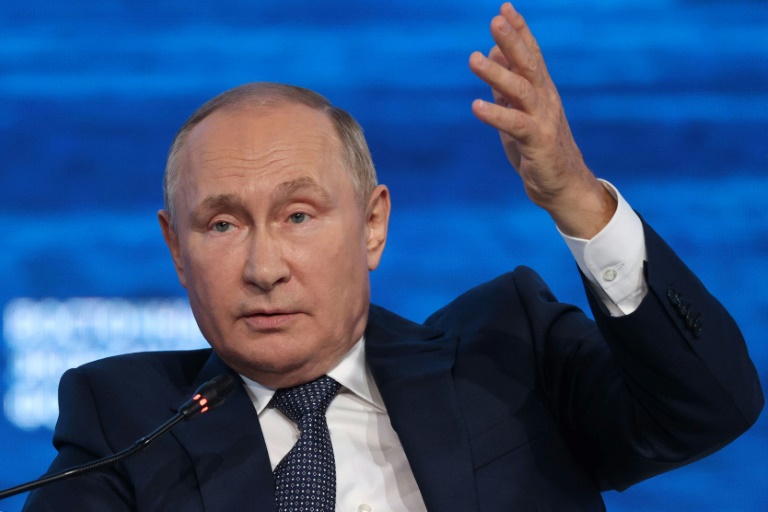
President Vladimir Putin had stated in September that the economic situation in the country was “normalising” and that the worst was over after the series of economic penalties that followed the military operation launched against Ukraine on February.

Unemployment had fallen to its lowest level of 3.8 percent, Putin said, with annual inflation down to 13.7 percent a year, after record highs during the spring when the early sanctions began to bite.

– Impact of first sanctions ‘over’ –

“We can consider that the impact of the first sanctions has passed, notably in the financial sector,” Elina Ribakova, deputy head of the Institute of International Finance, a trade group for the global financial services industry, told AFP.

The diplomatic and economic break with the West accelerated Moscow’s rapprochement with energy-hungry China, with which it shares a 4,000 kilometre (2,500-mile) border.

Almost excluded from the European market, Russian “companies have been forced to find alternatives in other markets, particularly in Asia and Turkey”, Moscow State University economist Natalya Zubarevich told AFP.

Russia and China have already announced their intention to settle gas and electricity contracts in rubles and yuan, a triumph for the Kremlin’s efforts to take the US dollar out of the economy.

Last week’s OPEC+ oil cartel’s decision to slash output again, despite Washington’s call to open the taps, was also warmly greeted by Moscow, which benefits from rising crude prices.

With the G7 rich nations club struggling to agree a ceiling price for Russian oil, a cap China and India appear reluctant to follow, Russia’s prospects do indeed appear to be improving.

And for 2023, the IMF now expects Russia’s economy will contract 2.3 percent, an improvement from the 3.5 percent it forecast in July.

However the Russian economy finds itself ever more dependent on energy exports and slipping further behind on many high value sectors.

– International isolation –

The promise of Russia developing its own hi-tech products once imported from abroad remains to be fulfilled, and it lacks domestic rivals to tech giants like Apple and Microsoft.

Firms dependent on cutting-edge foreign goods are having to face up to their isolation from international markets.

A glaring lack of spare parts has also hit car production.

Japanese manufacturer Toyota shut its Saint Petersburg factory in mid-September because of a lack of electronic components.

Nissan is selling its Russian assets, including a factory in the city, to the Russian government, after halting production in March.

“About half of the companies hit by sanctions are still having difficulties in finding alternative suppliers,” said Ribakova.

As a result, the government has eased safety and environmental standards for domestically built vehicles.

In a leaked document published recently in local media, trade and industry ministry officials sounded alarm bells over a 10-15 year gap for Russia’s technology industry, dependence on foreign goods and a lack of manpower.

A looming concern for Moscow is the European embargo on Russian oil due to start on December 5 ahead of a ban on refined oil products from February next year.

Over the first eight months of this year, more than 40 percent of federal income came from oil and gas, according to the finance ministry.

Resilient Russian economy surfs sanctions on oil boom

Russia’s economy may face multiple long-term challenges, but for now energy exports appear to be helping it ride out Western sanctions imposed over the offensive against Ukraine.

Moscow says inflation is easing and employment is virtually full, contradicting the predictions of a catastrophe from many financial experts.

The International Monetary Fund on Tuesday offered some support to Russia’s view, saying recession will be less severe than expected due to oil exports and relatively stable domestic demand.

The IMF forecast the Russian economy to contract just 3.4 percent over the whole year, after contracting 21.8 percent during the second quarter at a quarterly annualised rate.

It was only in June that the IMF forecast an annual drop of six percent.

“The contraction in Russia’s economy is less severe than earlier projected, reflecting resilience in crude oil exports and in domestic demand with greater fiscal and monetary policy support and a restoration of confidence in the financial system,” the IMF’s latest World Economic Outlook report said.

President Vladimir Putin had stated in September that the economic situation in the country was “normalising” and that the worst was over after the series of economic penalties that followed the military operation launched against Ukraine on February.

Unemployment had fallen to its lowest level of 3.8 percent, Putin said, with annual inflation down to 13.7 percent a year, after record highs during the spring when the early sanctions began to bite.

– Impact of first sanctions ‘over’ –

“We can consider that the impact of the first sanctions has passed, notably in the financial sector,” Elina Ribakova, deputy head of the Institute of International Finance, a trade group for the global financial services industry, told AFP.

The diplomatic and economic break with the West accelerated Moscow’s rapprochement with energy-hungry China, with which it shares a 4,000 kilometre (2,500-mile) border.

Almost excluded from the European market, Russian “companies have been forced to find alternatives in other markets, particularly in Asia and Turkey”, Moscow State University economist Natalya Zubarevich told AFP.

Russia and China have already announced their intention to settle gas and electricity contracts in rubles and yuan, a triumph for the Kremlin’s efforts to take the US dollar out of the economy.

Last week’s OPEC+ oil cartel’s decision to slash output again, despite Washington’s call to open the taps, was also warmly greeted by Moscow, which benefits from rising crude prices.

With the G7 rich nations club struggling to agree a ceiling price for Russian oil, a cap China and India appear reluctant to follow, Russia’s prospects do indeed appear to be improving.

And for 2023, the IMF now expects Russia’s economy will contract 2.3 percent, an improvement from the 3.5 percent it forecast in July.

However the Russian economy finds itself ever more dependent on energy exports and slipping further behind on many high value sectors.

– International isolation –

The promise of Russia developing its own hi-tech products once imported from abroad remains to be fulfilled, and it lacks domestic rivals to tech giants like Apple and Microsoft.

Firms dependent on cutting-edge foreign goods are having to face up to their isolation from international markets.

A glaring lack of spare parts has also hit car production.

Japanese manufacturer Toyota shut its Saint Petersburg factory in mid-September because of a lack of electronic components.

Nissan is selling its Russian assets, including a factory in the city, to the Russian government, after halting production in March.

“About half of the companies hit by sanctions are still having difficulties in finding alternative suppliers,” said Ribakova.

As a result, the government has eased safety and environmental standards for domestically built vehicles.

In a leaked document published recently in local media, trade and industry ministry officials sounded alarm bells over a 10-15 year gap for Russia’s technology industry, dependence on foreign goods and a lack of manpower.

A looming concern for Moscow is the European embargo on Russian oil due to start on December 5 ahead of a ban on refined oil products from February next year.

Over the first eight months of this year, more than 40 percent of federal income came from oil and gas, according to the finance ministry.

Close Bitnami banner
Bitnami