World

Murder charges dropped in 'Serial' podcast case

Prosecutors in the US city of Baltimore dropped charges on Tuesday against a man who served over two decades in prison for his ex-girlfriend’s murder — a case that drew worldwide attention thanks to the hit podcast “Serial.”

The public defender’s office said the state’s attorney’s office had dropped murder charges facing Adnan Syed, 41, who had been serving a life sentence since 2000 for the 1999 murder of Hae Min Lee.

“We can confirm that the charges were dropped,” Tammy Jarnagin of the public defender’s office said in an email to AFP.

Baltimore City Circuit Court Judge Melissa Phinn tossed out Syed’s conviction last month at the request of the Baltimore City state’s attorney, Marilyn Mosby.

Mosby, in a surprise move, asked the court to vacate Syed’s conviction while a further investigation is carried out.

“The state has lost confidence in the integrity of his conviction,” assistant state’s attorney Becky Feldman told the judge.

Baltimore City prosecutors had 30 days to either bring new charges against Syed or dismiss the case.

Lee’s body was found buried in February 1999 in a shallow grave in the woods of Baltimore, Maryland. The 18-year-old had been strangled.

Syed has steadfastly maintained his innocence but his multiple appeals had been denied, including by the US Supreme Court which declined in 2019 to hear his case.

Syed’s case earned global attention when it was taken up in 2014 by “Serial,” a weekly podcast that saw a journalist revisit his conviction and cast doubt on his guilt.

His case has also been the subject of a four-part documentary on the HBO channel called “The Case Against Adnan Syed.”

EU energy chief praises Algeria 'partnership'

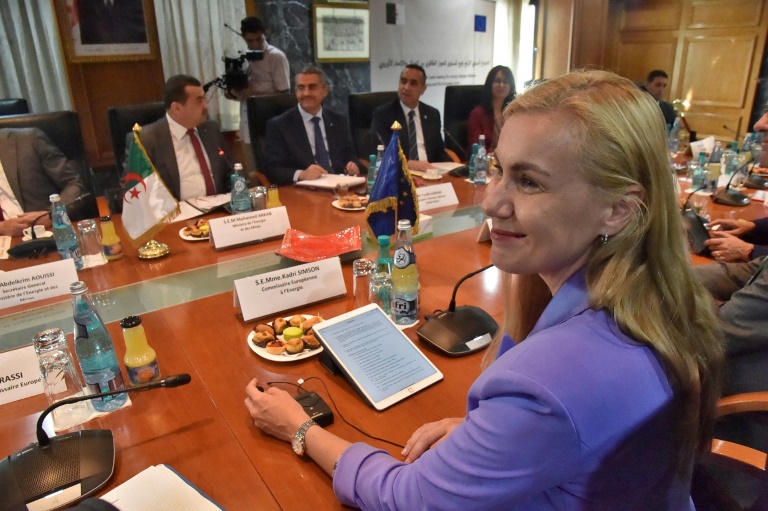
The European Union’s energy commissioner hailed a “long-term strategic partnership” with Algeria Tuesday as the bloc turns to Africa’s biggest gas exporter to fill a gap left by Russian supplies.

“As the relationship with Russia, so far EU’s biggest gas supplier, is irreversibly broken, we are turning to the EU’s reliable suppliers to fill in the gap,” said Kadri Simson.

“In this respect we are offering Algeria a long-term strategic partnership.”

Simson is the latest in a string of top European officials to visit Algeria in search of more natural gas, since Russia cut gas supplies to Europe in suspected retaliation against Western sanctions after Moscow’s invasion of Ukraine.

Algeria has helped Europe diversify its energy supplies by pumping more gas to Italy, which in July signed a deal to import billions more cubic metres via an undersea pipeline from the North African coast.

Europe’s hunt for gas has become ever more urgent as winter approaches, but experts have cast doubt over Algeria’s ability to boost output in the short term.

Algerian Prime Minister Aimene Benabderrahmane however said state hydrocarbons firm Sonatrach had put in place an “accelerated programme” to bump up output.

Energy Minister Mohamed Arkab, speaking at an energy summit in the capital Algiers attended by Simson, said his country was “a trusted supplier” that always honours its contractual obligations.

He added that Algeria was examining the possibility of laying high-voltage cables under the Mediterranean to export electricity to Europe, and that the country hopes to produce as much as 50 percent of its electricity from renewable sources by 2035.

Simson said she wanted the EU to help Algeria reduce its methane emissions and boost its electricity output from renewables.

“Algeria has one of the highest solar based energy potential in the world,” she said in a tweet. “The EU is ready to help Algeria unlock this potential.”

Thunberg says 'mistake' for Germany to use coal over nuclear

Climate activist Greta Thunberg on Tuesday said it was a “mistake” for Germany to shut down existing nuclear power plants while ramping up coal usage to tackle an energy crisis.

Germany has been forced to restart mothballed coal plants after Russia curtailed its energy supplies to the country in the wake of its invasion of Ukraine.

Its decision to extend the lifetime of two but not a third nuclear plant beyond their planned shutdown at year’s end has however led to a split within Chancellor Olaf Scholz’s coalition.

Economy Minister Robert Habeck of the Greens has come under pressure over his nuclear policy, with some ecologists criticising him for failing to keep to the planned atomic phase-out.

At the same time, Finance Minister Christian Lindner of the liberal Free Democrats is leading the charge in pressing for the third nuclear plant to stay on the grid beyond the end of the year.

Asked about Habeck’s decision in an interview with ARD broadcaster, Thunberg said that “if we have (the nuclear plants) already running, I feel it’s a mistake to close them down” if coal was the alternative.

Lindner immediately took to Twitter to welcome Thunberg’s position.

“In this energy war, everything that creates electricity capacity must be kept on the grid,” he said.

Nuclear power is a hot button topic in Germany’s political landscape. 

Former chancellor Angela Merkel had pushed through Germany’s nuclear exit in the wake of Japan’s Fukushima disaster.

The ecologist Greens had lent strong support then to the move, as they have their roots in Germany’s anti-nuclear movement.

Grief and outrage in Gambia over cough syrup deaths

When Wuri Bailo Keita’s two-year-old daughter Fatoumatta developed a fever, he took her to hospital where she was diagnosed with malaria and sent home with a prescription for a paracetamol syrup.

Less than a week later she was dead.

The infant is just one of 69 Gambian children to die of acute kidney failure since July in a series of cases linked to four Indian-made cough syrups. 

The widening scandal has highlighted flaws in the tiny West African nation’s healthcare system, in turn raising questions about potential loopholes in world pharmaceutical trade.

“She could not eat anything and she was oozing blood from her mouth and nose”, Keita, a 33-year-old carwash attendant, told AFP, recounting his daughter’s suffering. 

“At some point, I was praying for God to take her life.”

President Adama Barrow made a nationwide address on Saturday after the police launched an inquiry and health authorities were told to suspend the import licence of a suspected company.

Barrow also promised to update drugs-related laws and praised the work of the health ministry in preventing further deaths.

But fear and anger are mounting, and the death toll is still rising. 

“President Barrow should sack the health minister, but instead of sacking him, he was praising the minister,” said Keita, the grieving father.

“We want justice for these children.”

Social media has been swamped by criticism of the healthcare system and by photos of the children who have died, most of whom were aged under five.

“It’s time for the government to step up and stop these products,” Mariama Kuyateh, a 30-year-old mother who lost her son Musa in September, told AFP. 

“If they don’t, and other syrups enter the country, it will be terrible.”  

– No test lab –

The deaths were catapulted to global prominence last Wednesday when the UN’s World Health Organization (WHO) issued an alert over four syrups made by Maiden Pharmaceuticals of India.

Lab tests found “unacceptable amounts” of diethylene glycol and ethylene glycol, the WHO said.

The toxic impact from these substances includes “acute kidney injury which may lead to death,” the agency said.

The Gambian health authorities, after launching their own investigation in July, on September 23 ordered a recall of all medicines containing paracetamol or promethazine syrup.

They have cited E.coli bacteria as a possible cause of the deaths.

India’s health ministry said late Thursday it had been informed of the WHO’s findings last month and was awaiting the results of its own lab tests on the four drugs.

Maiden Pharmaceuticals was not licensed to distribute the four products in India and had only manufactured and exported them to The Gambia, it said.

“It is a usual practice that the importing country tests these imported products on quality parameters, and satisfies itself as to the quality of the products,” the ministry said.

But The Gambia has no national laboratory to test for drug quality and food safety — a lack that Barrow on Saturday vowed to redress.

Maiden Pharmaceuticals did not respond to AFP requests for comment after the WHO alert.

– ‘Failed miserably’ –

Domestic critics accuse Barrow of having failed to protect the public and standing by watchdogs who should have been sacked.

The opposition United Democratic Party (UDP) criticised Barrow’s “five-minute address” to a “traumatised nation left to wonder what other pharmaceuticals are on the market that may be fake or unsafe for use.”

Nancy Jallow, of an NGO called Global Bridges, said she was appalled that top officials such as Health Minister Ahmadou Lamin Samateh and the head of the Medicines Control Agency, Markieu Janneh Kaira, were still in their jobs.

“We signed a social contract with Adama Barrow and his number one role is to protect the most vulnerable, and he has failed miserably,” she told AFP.

She also called for a total halt to pharmaceutical imports “until Gambia’s government can build a facility that can test medications.”

Others voices, including the Gambia Bar Association, have insisted that the inquiry be conducted by independent experts.

– Weak healthcare –

Behind the political row is the reality of a country deep in poverty lacking many of the safeguards that elsewhere are taken for granted.

The Gambia is the smallest country in continental Africa, and nearly half of its population lives below the poverty line, according to the World Bank.

The country ranks a mere 174th out of 191 countries on the UN Human Development Index. 

Its already weak health institutions were hit hard by Covid, with a 2020 UN assessment saying the pandemic had “exposed the shortcomings in the nation’s healthcare system”. 

The UN flagged limited expertise, a shortage of basic equipment and a chronic lack of health professionals.

According to World Bank data, The Gambia in 2019 had just 0.1 physicians per 1,000 people — less than a twentieth of the numbers in Canada.

The Gambia’s under-five mortality rate is 49.4 deaths per 1,000 live births, according to UNICEF, compared to 3.7 deaths in Germany and 4.4 in France.


UN urges 'complete transformation' of global energy system

Climate change risks undermining global energy security unless the use of renewables is dramatically scaled up, the UN warned Tuesday, suggesting the Ukraine conflict’s ripple effects could speed up the green transition.

Not only is the energy sector a major source of the carbon emissions that drive climate change, it is also increasingly vulnerable to the shifts that come with a heating planet, the UN’s World Meteorological Organization stressed.

In its State of Climate Services annual report, the WMO warned that increasingly intense extreme weather events, droughts, floods and sea-level rise — all linked to climate change — were already making energy supply less reliable.

It pointed, for instance, to a historic heatwave that sparked massive power outages in Buenos Aires in January, while experts mentioned recently disrupted electricity production amid heatwaves and shrinking reservoirs in Europe and China.

WMO Secretary-General Petteri Taalas warned that “in the future these kinds of events will become more and more frequent”, pointing out that much of the world’s energy infrastructure is today in areas vulnerable to climate change.

In 2020, a massive 87 percent of global electricity generated by thermal, nuclear and hydroelectric power plants directly depended on having freshwater for cooling, the WMO said.

– ‘Changing before our eyes’ –

But a third of power plants running on fossil fuels are in areas of high water stress, as are 15 percent of existing nuclear power plants — a share expected to swell to 25 percent in the next 20 years.

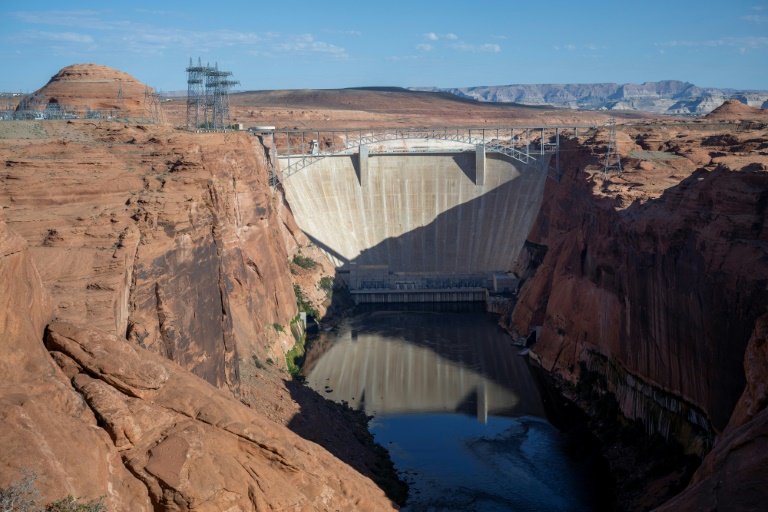
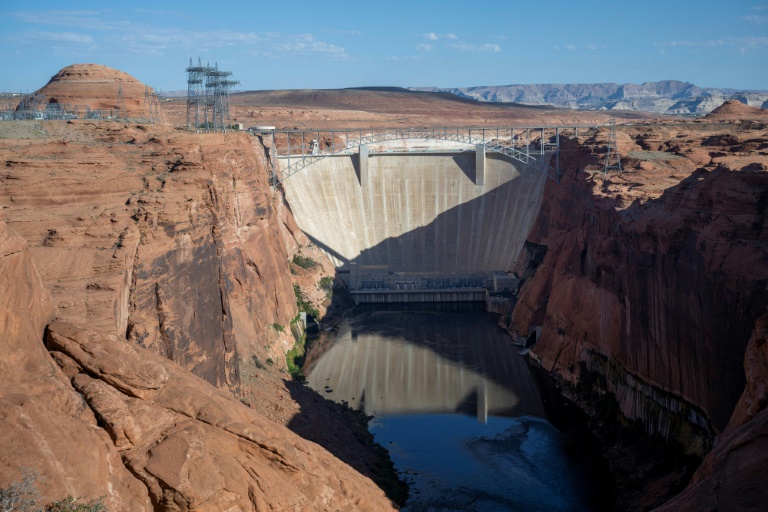
Eleven percent of hydroelectric dams are also located in highly water-stressed areas, while more than a quarter of hydropower plants are in river basins struggling with water scarcity, the WMO said. 

“Time is not on our side and our climate is changing before our eyes,” Taalas said.

“We need a complete transformation of the global energy system.” 

Taalas pointed out that the energy sector is itself a part of the problem since it is the source of around three quarters of global greenhouse gas emissions that are changing the climate.

“Switching to clean forms of energy generation… and improving energy efficiency is vital,” he said.

But he cautioned that reaching net-zero emissions by 2050 would only be possible “if we double the supply of low-emissions electricity within the next eight years”.

– ‘A blessing’ –

The report, which WMO drafts with input from more than two dozen organisations, said shifting to renewable energy would help alleviate growing global water stress, pointing out that the amount of water used by solar and wind is much lower than for traditional power plants.

The energy security crisis caused by the war in Ukraine and disrupted access to Russian gas has sparked fears that countries will fall back on dirty fuel sources like coal.

Taalas acknowledged this could be the case in the short term, but said the war was demonstrating the dangers of dependence on unreliable energy sources, and would surely speed up the green transition.

“From a climate perspective, the war in Ukraine may be seen as a blessing,” he said. 

– Invest in Africa –

WMO warned that the current pledges by countries to cut carbon emissions “fall well short” of what is needed to meet the objectives set by the 2015 Paris Agreement on climate change.

The report said global investments in renewable energy “need to triple by 2050 to put the world on a net-zero trajectory”.

It called in particular for more clean energy investments in Africa.

The continent, which is already facing massive droughts and other severe effects from climate change, has seen only two percent of clean energy investment in the past two decades.

And yet with 60 percent of the best solar resources on the planet, it has the potential to become a major player in solar energy production, the report said.

However, significant investments are required.

“Bringing access to modern energy for all Africans calls for an investment of $25 billion annually,” the report said.

That is the equivalent of around one percent of global energy investment today.

UN urges 'complete transformation' of global energy system

Climate change risks undermining global energy security unless the use of renewables is dramatically scaled up, the UN warned Tuesday, suggesting the Ukraine conflict’s ripple effects could speed up the green transition.

Not only is the energy sector a major source of the carbon emissions that drive climate change, it is also increasingly vulnerable to the shifts that come with a heating planet, the UN’s World Meteorological Organization stressed.

In its State of Climate Services annual report, the WMO warned that increasingly intense extreme weather events, droughts, floods and sea-level rise — all linked to climate change — were already making energy supply less reliable.

It pointed, for instance, to a historic heatwave that sparked massive power outages in Buenos Aires in January, while experts mentioned recently disrupted electricity production amid heatwaves and shrinking reservoirs in Europe and China.

WMO Secretary-General Petteri Taalas warned that “in the future these kinds of events will become more and more frequent”, pointing out that much of the world’s energy infrastructure is today in areas vulnerable to climate change.

In 2020, a massive 87 percent of global electricity generated by thermal, nuclear and hydroelectric power plants directly depended on having freshwater for cooling, the WMO said.

– ‘Changing before our eyes’ –

But a third of power plants running on fossil fuels are in areas of high water stress, as are 15 percent of existing nuclear power plants — a share expected to swell to 25 percent in the next 20 years.

Eleven percent of hydroelectric dams are also located in highly water-stressed areas, while more than a quarter of hydropower plants are in river basins struggling with water scarcity, the WMO said. 

“Time is not on our side and our climate is changing before our eyes,” Taalas said.

“We need a complete transformation of the global energy system.” 

Taalas pointed out that the energy sector is itself a part of the problem since it is the source of around three quarters of global greenhouse gas emissions that are changing the climate.

“Switching to clean forms of energy generation… and improving energy efficiency is vital,” he said.

But he cautioned that reaching net-zero emissions by 2050 would only be possible “if we double the supply of low-emissions electricity within the next eight years”.

– ‘A blessing’ –

The report, which WMO drafts with input from more than two dozen organisations, said shifting to renewable energy would help alleviate growing global water stress, pointing out that the amount of water used by solar and wind is much lower than for traditional power plants.

The energy security crisis caused by the war in Ukraine and disrupted access to Russian gas has sparked fears that countries will fall back on dirty fuel sources like coal.

Taalas acknowledged this could be the case in the short term, but said the war was demonstrating the dangers of dependence on unreliable energy sources, and would surely speed up the green transition.

“From a climate perspective, the war in Ukraine may be seen as a blessing,” he said. 

– Invest in Africa –

WMO warned that the current pledges by countries to cut carbon emissions “fall well short” of what is needed to meet the objectives set by the 2015 Paris Agreement on climate change.

The report said global investments in renewable energy “need to triple by 2050 to put the world on a net-zero trajectory”.

It called in particular for more clean energy investments in Africa.

The continent, which is already facing massive droughts and other severe effects from climate change, has seen only two percent of clean energy investment in the past two decades.

And yet with 60 percent of the best solar resources on the planet, it has the potential to become a major player in solar energy production, the report said.

However, significant investments are required.

“Bringing access to modern energy for all Africans calls for an investment of $25 billion annually,” the report said.

That is the equivalent of around one percent of global energy investment today.

Russia bombards Ukraine before G7 meeting, Kyiv calls for air defences

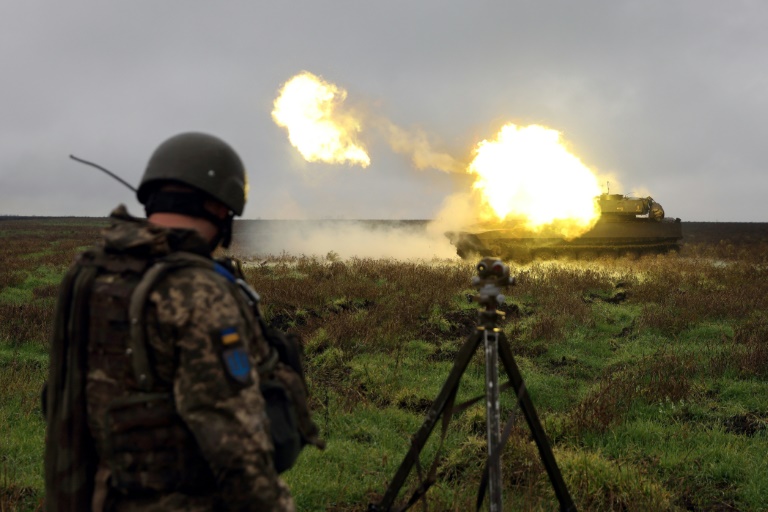
Russia said on Tuesday it launched mass strikes on Ukraine hours ahead of a meeting of G7 leaders who Kyiv is lobbying to supply enhanced air defences against what it called “desperate” attacks by Moscow.

Officials in Ukraine’s western region of Lviv said at least three Russian missiles targeted energy infrastructure forcing Kyiv to ask people to cut their electricity usage and switch off appliances at night.

Russia’s defence ministry confirmed the attacks saying it had carried out massive strikes using long-range and high-precision weapons and that “all assigned targets were hit”.

In Lviv, the largest city in the region of the same name, the mayor said that one-third of homes were without power.

Ukraine has ratcheted up its calls for advanced air defence systems to help stave off future Russian barrages, with Prime Minister Denys Shmygal asking for “more modern weapons to protect the sky and civilians”. 

The G7 meeting comes a day after Russian missiles rocked the Ukrainian capital for the first time in months. President Volodymyr Zelensky was defiant, warning his country “cannot be intimidated”.

The Ukrainian defence ministry said Monday that Russia had fired 83 missiles at Ukraine, of which its air defences shot down 52, among which were 43 cruise missiles.

Ukraine’s emergency services said on Tuesday that the overall toll had risen to 19 dead and more than 100 people wounded.

The Kremlin said it expected “confrontation” with the West to continue as the G7 leaders prepared to meet.

The United Nations said on Tuesday the wave of attacks may have violated the laws of war and would amount to war crimes if civilians were deliberately targeted.

Monday’s mass barrage came in apparent retaliation for an explosion on Saturday that damaged a key bridge linking Russia to Crimea, a peninsula Moscow annexed from Ukraine in 2014.

Russian President Vladimir Putin blamed Ukraine for the bridge blast and warned of “severe” responses to any further attacks.

– ‘Just peace’ –

Ukrainian Foreign Minister Dmytro Kuleba said the strikes showed Moscow was “desperate” after a spate of embarrassing military setbacks, a sentiment echoed by NATO chief Jens Stoltenberg who said they were “a sign of weakness”.

Turkey on Tuesday called for a viable ceasefire between Russia and Ukraine “as soon as possible”, with Turkish President Recep Tayyip Erdogan expected to meet Putin in Kazakhstan this week.

Speaking in a televised interview, Turkish Foreign Minister Mevlut Cavusoglu also called for a “just peace” based on Ukraine’s territorial integrity. 

Residents across Ukraine expressed shock and rage after Monday’s onslaught.

In Dnipro, Ukrainian serviceman Maxim was on leave from the front lines for the first time in six months to celebrate his wife’s birthday when Russian missiles slammed into the central Ukrainian city, damaging their home.

“We are fighting on the front exactly to protect these places” far from enemy lines, he said. “But they still manage to hit them.”

Zelensky and G7 leaders were due to convene via video link at 1200 GMT on Tuesday to discuss the latest Russian attacks.

– ‘A profound change’ –

The office of UK Prime Minister Liz Truss said she would use the gathering “to urge fellow leaders to stay the course”.

“Nobody wants peace more than Ukraine. And for our part, we must not waver one iota in our resolve to help them win it.”

German government spokesman Steffen Hebestreit told reporters on Monday that Chancellor Olaf Scholz had spoken with Zelensky and assured him “of the solidarity of Germany and the other G7 states”.

French President Emmanuel Macron convened his defence and foreign affairs ministers over the strikes, which he said signalled “a profound change in the nature of this war”.

US President Joe Biden condemned Monday’s attacks in stark terms, saying they demonstrated “the utter brutality” of Putin’s “illegal war”.

In a statement, the White House said Biden had spoken to Zelensky and had pledged to furnish Ukraine with “advanced air defence systems”. 

Putin meanwhile was due to meet the head of the UN’s nuclear energy watchdog, Rafael Grossi, in Saint Petersburg on Tuesday to discuss the Russian-controlled nuclear plant in the Ukrainian region of Zaporizhzhia.

Fighting around the facility for months has raised fears of a nuclear accident.

bur/gw/imm

Equities, oil prices slide on recession fears

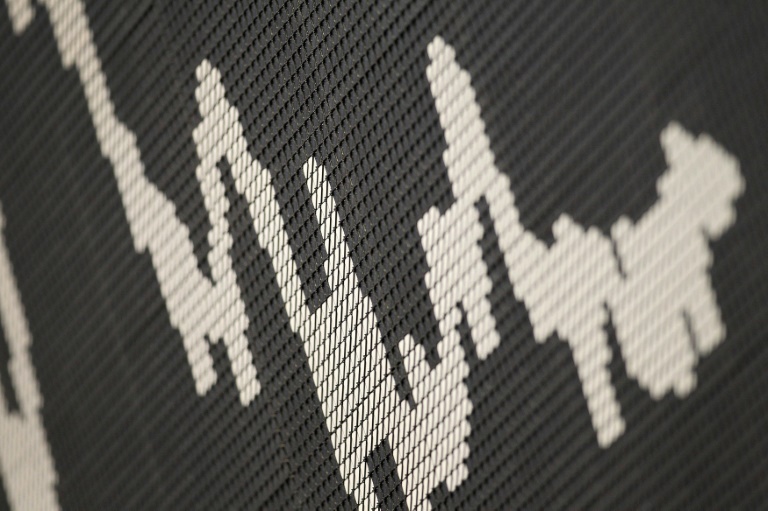
Stock markets and oil prices slumped Tuesday as investors grow increasingly fearful that more big interest rate hikes will tip economies into deep recessions.

The mood darkened also on the worsening Ukraine war and weaker demand expectations in China.

With the focus on inflation, analysts said US consumer price index data released later this week will be crucial to the direction of risk assets. 

Another big reading could spark a fresh equity selloff and a surge in the dollar.

“There is growing pessimism in the markets now and with some big data points to come from the US this week, not to mention the start of earnings season,” noted Craig Erlam, analyst at OANDA trading group.

“Investors should probably brace for more volatility.”

Traders had hoped that bumper rate increases by the US Federal Reserve this year would begin to drag on the economy and slow runaway prices, allowing policymakers to reduce the pace of monetary tightening.

But a forecast-beating US jobs report on Friday highlighted the tough work the country’s central bank has slowing inflation from four-decade highs, and many observers warn recession is virtually inevitable.

– ‘Real danger’ –

World Bank chief David Malpass said there was a “real danger” of a global contraction next year, adding that the surge in the dollar was weakening the developing nations’ currencies and pushing their debt to “burdensome” levels.

And JP Morgan boss Jamie Dimon told CNBC that while the US economy was holding up, it faced several headwinds including rising rates, surging inflation, Fed tightening and the Ukraine war.

He added that he saw a US recession in six to nine months, and that the S&P 500 could fall another 20 percent.

Barings strategist Christopher Smart said: “It’s little wonder investors enter the week in a dreary mood, especially with headlines from Ukraine signalling a further escalation in geopolitical tensions.”

Chip manufacturers globally took a pounding from new US export controls aimed at restricting China’s ability to buy and make high-end chips with military applications.

The Philadelphia Stock Exchange Semiconductor Index saw its lowest close since late 2020, while Bloomberg News reported that $240 billion had been slashed from companies’ market values worldwide.

– Dollar dips –

Taipei led the losses in Asia — diving more than four percent — as chip giant TSMC plunged 8.3 percent, while a hefty selloff in Samsung Electronics dragged Seoul down 1.6 percent. Tokyo was also sharply lower owing to a hit to tech firms.

All three markets had been closed Monday and were reacting to Friday’s US announcement for the first time.

On currency markets, the dollar dipped after recent strong gains as the United States heads the monetary tightening drive.

The pound nevertheless remained under pressure despite the Bank of England unveiling further measures to calm markets rocked by a UK budget, saying it would increase purchases of government bonds.

“Investors fear that the UK government is borrowing too much and that it won’t be able to balance its books,” said City Index and FOREX.com analyst Fawad Razaqzada.

Oil prices fell sharply, with concerns about Chinese demand front and centre.

“Covid cases are picking up in the country, and the Chinese Communist Party’s newspaper, the People’s Daily, ran a commentary saying the Covid Zero policy is ‘sustainable’, indicating that the country is likely to keep following it if not double down,” said Stephen Innes at SPI Asset Management. 

– Key figures around 1330 GMT –

London – FTSE 100: DOWN 0.8 percent at 6,903.83 points

Frankfurt – DAX: DOWN 0.6 percent at 12,198.54

Paris – CAC 40: DOWN 0.4 percent at 5,815.38

EURO STOXX 50: DOWN 0.6 percent at 3,336.12

New York – Dow: DOWN 0.3 percent at 29,114.89

Tokyo – Nikkei 225: DOWN 2.6 percent at 26,401.25 (close)

Hong Kong – Hang Seng Index: DOWN 2.2 percent at 16,832.36 (close)

Shanghai – Composite: UP 0.2 percent at 2,979.79 (close)

Euro/dollar: UP at $0.9716 from $0.9708 on Monday

Pound/dollar: UP at $1.1085 from $1.1059

Euro/pound: DOWN at 87.74 pence from 87.76 pence

Dollar/yen: DOWN at 145.68 yen from 145.72 yen

West Texas Intermediate: DOWN 2.0 percent at $89.03 per barrel

Brent North Sea crude: DOWN 1.8 percent at $94.45 per barrel

burs-rl/imm

Israel hails 'historic' sea border deal with Lebanon

Israel said Tuesday it has reached a US-brokered agreement with Lebanon to settle their long-disputed maritime border, hailing a “historic achievement” that potentially unlocks significant offshore gas production for both countries.

Negotiations between the neighbouring countries, which are still technically at war, had suffered repeated setbacks since their launch in 2020 but gained momentum in recent weeks with both sides eyeing revenue from potentially rich Mediterranean gas fields.

US envoy Amos Hochstein floated a proposed final agreement earlier this month that Israel welcomed, but Lebanon sought some adjustments. 

Israel said last week it intended to reject Lebanon’s requested changes, even if that made a deal impossible, but negotiations continued, culminating in what both sides described as acceptable final terms. 

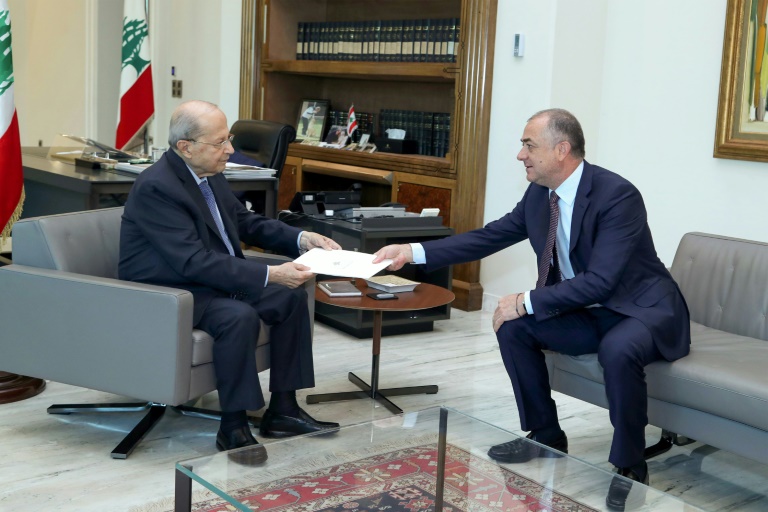
“Israel and Lebanon have reached an historic agreement settling the maritime dispute,” said a statement from Israeli Prime Minister Yair Lapid’s office, in which he hailed “an historic achievement that will strengthen Israel’s security”.

Lebanon’s presidency said the proposed final text submitted by Hochstein was “satisfactory to Lebanon” and voiced hope that “the agreement on the demarcation will be announced as soon as possible”.

Beirut is due to announce an official position on the deal shortly, after key Lebanese leaders have seen the official text.

– ‘Positive for both sides’ –

Lebanon’s chief negotiator, Elias Bou Saab, said that “today we have come to a solution that satisfies both parties.”

A major source of friction was the Karish gas field, which Israel insisted fell entirely within its waters and was not a subject of negotiation. 

Lebanon reportedly claimed part of the field and Hezbollah, the powerful Iran-backed militant group that holds huge sway in Lebanon, threatened attacks if Israel began production at Karish.

Israel has said production would begin at Karish as soon as possible, regardless of Lebanon’s demands.

Israel’s Defence Minister Benny Gantz commended the Lebanese presidency for backing the accord, which he described as “positive for both sides”.

Gantz criticised Hezbollah, which he said “attempted to destroy the process” with its threats.

Hezbollah chief Hassan Nasrallah is due to deliver a pre-scheduled speech later Tuesday, during which he is expected to give his response to the border deal.

On Sunday, London-listed firm Energean began testing the pipeline linking Karish to the Israeli coast, a key step before production can begin.

The US text has not been made public but under terms leaked to the press all of the Karish field would fall under Israeli control, while another potential gas field, Qana, would be divided but its exploitation would be under Lebanon’s control.

French company Total would be licensed to search for gas in the Qana field, and Israel would receive a share of future revenues.

– Israeli election –

Bou Saab said Lebanon will “get its full rights from the Qana field”, and Israel might receive compensation through Total.

There will be no direct partnership in gas exploration or exploitation between the two enemy states, he said.

The Israeli premier has said his government is committed to exporting more gas to Europe to help replace Russian deliveries hit by the war in Ukraine. 

But Israel’s November 1 general election has overshadowed the recent phases of the negotiations. 

The country’s parliament will review the border deal but will not necessarily need to vote on it, as final approval lies with the cabinet, an Israeli official said.

Right-wing opposition leader Benjamin Netanyahu charged that Lapid had “capitulated” to Hezbollah by moving forward with an agreement. 

It was not clear if Netanyahu, who remains determined to reclaim the premiership he held from 2009-2021, had seen the deal’s proposed terms.

But he has vowed that the hawkish government he hopes to form next month with his far-right and religious allies will not be bound by any agreement with Lebanon.

France threatens to break refinery blockades in strike standoff

The French government on Tuesday threatened to forcibly break blockades of refineries and oil depots, which have been paralysed by strike action, and said it would force some workers to return to their jobs.

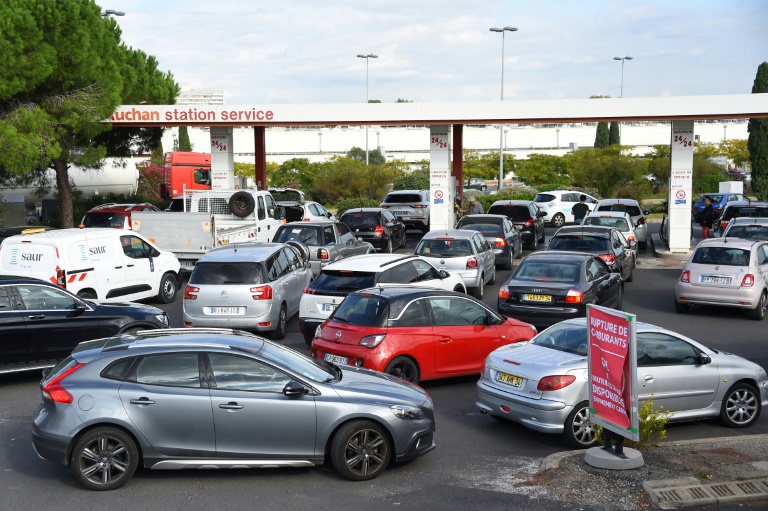
Motorists continued to besiege petrol stations many of which were low on, or out of, petrol, as strike action at energy giant TotalEnergies and other oil majors entered its third week and wage talks stalled.

Government ministers and President Emmanuel Macron have urged a negotiated resolution to the crisis, but on Tuesday government spokesman Olivier Veran threatened force to end the blockades which have paralysed several of France’s refineries and oil depots.

If blockades were not ended “immediately”, Veran told the RTL broadcaster, “we could intervene to lift them”.

He said ongoing action by the hard-left CGT union at TotalEnergies installations was “excessive and out of line”.

Also on Tuesday, Finance Minister Bruno Le Maire called breaking up the blockades “the only solution”.

– ‘They don’t respect us’ –

But stoppages continued at several refineries, including at France’s biggest near Le Havre in the north of the country, after strikers at TotalEnergies Tuesday voted to extend their action.

“We are still waiting for details from management on what they want to negotiate on,” Eric Sellini, coordinator for the CGT union at the oil major, told AFP.

The CGT at the French branch of Esso-ExxonMobil on Tuesday also renewed its strike call, even though it was outvoted on Monday by a majority of other union representatives who signed a pay deal.

The government said it would not tolerate continued stoppages at the company, and Prime Minister Elisabeth Borne said she would order the striking Esso-ExxonMobil workers to return to their posts or face prison or fines.

“Some unions, despite an agreement, want to continue the blockages,” she told parliament. “This, we cannot accept.”

She said “essential personnel” would be “requisitioned” to ensure the functioning of the oil depots. 

At Fos-sur-Mer, in southern France, home to refineries run by TotalEnergies and Esso, strikers said their working conditions had been getting worse for years.

“For the past 10 years we have not been getting the slightest recognition for our work,” said one worker who joined Esso 24 years ago.

“Not only don’t they pay us enough, they also don’t respect us,” agreed CGT spokesman Fabien Cros at the neighbouring TotalEnergies installation.

– ‘What a mess’ –

Motorists formed long queues outside petrol stations from dawn on Tuesday. In central Paris, traffic slowed as waiting cars blocked roads, cycle paths and pedestrian crossings, hoping to be served before the pumps went dry.

Many used social media to exchange tips. One post in a Facebook group Monday said that a local BP service station would be resupplied “at 2:30 pm”. Another replied: “It’s now 2:37 pm and they’re out of diesel.” 

Another user reacted: “What a mess.”

Jefferson Saint-Louis, a taxi driver, said that “without fuel we can’t work. I’m just going to go home”.

The petrol crisis comes at a time of high energy prices and inflation that are sapping French households’ purchasing power.

The left-wing opposition coalition Nupes has called for a “March against the high cost of living” in Paris and elsewhere on Sunday.

At the weekend, several prominent French people came out in support of the initiative, including this year’s winner of the Nobel Prize for Literature, Annie Ernaux.

– ‘An entire country hostage’-

Opposition politicians on the left were quick to criticise the government’s hardening stance Tuesday.

“With this government, when dialogue stalls, it’s threats for the wage earners and caresses for the bosses,” tweeted Manuel Bompard, a deputy for the leftwing LFI party.

Jordan Bardella, president of the far-right RN party, said that “super profits at Total and the salary of the chairman” made worker demands “not unreasonable”.

But Gilles Platret, vice president of the conservative LR party, backed the government’s tougher stance, saying strikers were “taking an entire country hostage”.

TotalEnergies posted a profit of $5.7 billion in the second quarter of the year, more than double the year-earlier figure.

CEO Patrick Pouyanne’s total compensation package was worth 5.9 million euros ($5.7 million) in 2021, up 52 percent from the previous year’s, according to the group’s annual report.

burs-jh/tgb/rl

Close Bitnami banner
Bitnami