World

At the gateway to the Arctic, a world in turmoil

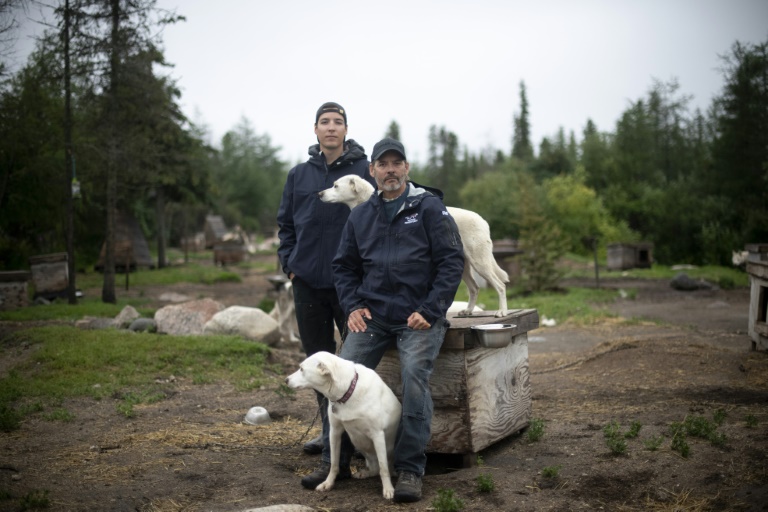
Sled dog breeder David Daley lives at the gateway to the Canadian Arctic, occupying a front-row seat to the march of global warming, and he senses calamity ahead.

“For all the devastation that we’re doing to her, she’s not going to sit still, our planet Mother Earth will punish us,” Daley says.

Daley’s hometown of Churchill is an isolated settlement at the edge of the Hudson Bay where global warming unfolds at triple the pace of much of the rest of the world, causing the Arctic ice to gradually disappear.

A member of the Metis people, one of three Indigenous groups in Canada, the 59-year-old grandfather lives close to nature, surrounded by his 46 dogs, at the point where the tundra ends and the boreal forest begins.

But every year, he fears that the snow will arrive late, and the impact that has on his sled dogs.

“They’re just waiting for winter like the rest of us right now,” Daley said. “This is like a culture that’s dying.”

In summer and winter, Daley travels through this region where rocky terrain, moss, tall grasses and black spruce forests prevail. At night, the displays of light known as the aurora borealis often flicker in the high-latitude skies.

Daley has been hunting here all his life and has seen the wildlife change up close, some species vanishing and others arriving.

“There was hardly any moose here when I was a kid. Now there’s moose everywhere,” said Daley, who uses his Indigenous knowledge to earn money as a tourist guide.

“When I was a kid hunting, fishing and trapping here, there were no pine martens.

“There’s sharptail grouse moving in now where I’ve never… harvested one till last year.”

His observations echo scientific studies: Global warming is endangering Arctic species, especially by opening the doors to other animals from further south.

Both animals and vegetation are migrating north. For Daley, humans have “no choice,” they must “adapt” as animals are forced to do.

– Prowling polar bears –

Adaptation includes a newfound need for closer coexistence with the emblematic predator of the Arctic region: the polar bear.

During the Cold War, a joint Canadian-US military installation in Churchill stood guard against a possible Soviet attack coming over the North Pole. The installation is now deserted, and local concerns today concentrate more on polar bears.

Due to global warming, ice no longer covers the Hudson Bay for as long each winter, forcing the polar bears to spend more time on land and nearer to humans. Often hungry and weak, the bears wander closer to settlements.

Venturing around the town requires precautions: a gun, bear repellent and the need to walk in groups after dark or in poor visibility.

Everyone in Churchill has a story about a run-in with a polar bear.

“I don’t remember feeling unsafe during summertime. No, no. I used to play on the rocks,” said Danielle Daley, the 33-year-old daughter of David Daley. “Today, it’s different. I won’t let my kids play on the rocks.”

The slender young woman recounts her fright at seeing a bear run past her house in July, followed closely by the Manitoba Natural Resources bureau patrol vehicle with its sirens wailing.

It’s even more complicated in the fall, when the bears are starving after months of failing to find food on land, without a seal in sight.

“We’re at the beginning of the busiest time of year for us when the bears will be coming through Churchill on their way north to the first ice on the Hudson Bay,” said Ian Van Nest, a wildlife officer.

For Halloween night, October 31, a special set-up is put in place, Van Nest said. 

Clad in a bullet-proof vest, with a rifle slung over his shoulder and a walkie-talkie on his belt, the stern-faced Van Nest and his fellow officers go on patrol.

They even deploy helicopters to spot roaming bears and ensure they do not come near children collecting candy.

“Otherwise we could use cracker shells. It’s a loud bang and a flash that’ll haze the bear away as well,” Van Nest said.

The town is also equipped with new radars that can detect polar bears within two kilometers (1.2 miles) of its most outlying homes, even at night or thick fog.

Around Churchill, the polar bear population has been in decline since the 1980s but still hovers around 800, about the same number as human inhabitants of the town.

– ‘Opportunities are there’ –

Not everyone sees these climate-related changes in a bad light.

“You’ve got to look for the wins in all of this,” said Churchill Mayor Michael Spence, a member of the Cree, the most populous Indigenous group of the First Nations in Canada.

An increase in tourism, along with development of the port, have gone hand in hand with rising temperatures.

“The opportunities are there for local people to have… economic growth,” said Spence, who grew up locally.

This remote corner of Manitoba province is inaccessible by car from the rest of Canada, yet a few thousand tourists find their way each year, by air or rail, drawn by the increased presence of the polar bears.

And the melting sea ice allows ships to access the city’s port, the only deep-water port in the Canadian Arctic, for more months each year than before.

The mayor dreams of transitioning Churchill into a bustling port for grain grown in increasingly more northern areas, and eventually for minerals, more easily extracted in the far north due to thawing.

A large part of Canada’s mining potential is found in the far north, including deposits of diamonds, gold, tungsten, uranium, and rare earth elements.

But the thawing of the soil can also hamper mining prospects. Railways that once delivered raw materials to port have become less stable, and even at times useless.

In 2017, a major melt led to flooding that damaged rail lines, and rail transport was cut off for more than 18 months. Since then, the port has been largely idle, handling only a few ships per year. At the back of the gigantic silos, old rail cars rust amid wild grass.

– Poverty – 

For some residents of Churchill, grinding poverty relegates concerns about global warming to the background.

Dilapidated homes, some hastily patched up, line the streets alongside prefabricated buildings on cinder blocks, seemingly unsuited for winter temperatures that can plunge below -40 degrees Celsius (-40 degrees Fahrenheit).

Abandoned cars, vans, snowmobiles and quads are a frequent sight, often stripped for spare parts.

In the early period of European colonization, Churchill was an important outpost of the fur trade. Today, both poverty and the region’s Indigenous roots are apparent.

Fully 60 percent of the population is Indigenous (Inuit, Metis and First Nation groups like Cree and Dene), while in Canada as a whole the number is only five percent and in Manitoba 18 percent. Unemployment, substandard housing and discrimination prevail.

About 64 percent of children here live below the poverty line.

UN climate experts already said in their March report that these people’s intimate knowledge must be taken into account in the fight against climate change.

At November’s COP27 climate summit in Egypt, some activists will press for policies that take into account Indigenous ancestral practices, since their lands host 80 percent of the world’s biodiversity.

David Daley dreams of an awakening.

“We must, as Indigenous people, lead the reconciliation with our mother, the Earth,” he says.
tib/dp/tjj/bgs/bfm/ec/mca

At the gateway to the Arctic, a world in turmoil

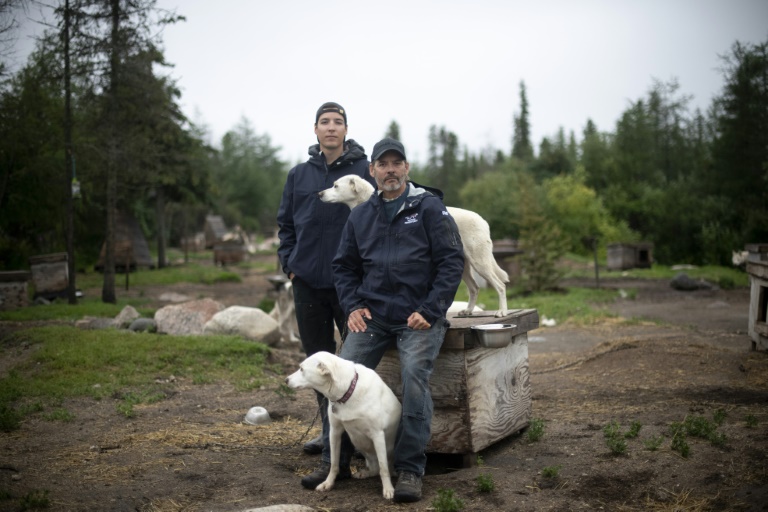
Sled dog breeder David Daley lives at the gateway to the Canadian Arctic, occupying a front-row seat to the march of global warming, and he senses calamity ahead.

“For all the devastation that we’re doing to her, she’s not going to sit still, our planet Mother Earth will punish us,” Daley says.

Daley’s hometown of Churchill is an isolated settlement at the edge of the Hudson Bay where global warming unfolds at triple the pace of much of the rest of the world, causing the Arctic ice to gradually disappear.

A member of the Metis people, one of three Indigenous groups in Canada, the 59-year-old grandfather lives close to nature, surrounded by his 46 dogs, at the point where the tundra ends and the boreal forest begins.

But every year, he fears that the snow will arrive late, and the impact that has on his sled dogs.

“They’re just waiting for winter like the rest of us right now,” Daley said. “This is like a culture that’s dying.”

In summer and winter, Daley travels through this region where rocky terrain, moss, tall grasses and black spruce forests prevail. At night, the displays of light known as the aurora borealis often flicker in the high-latitude skies.

Daley has been hunting here all his life and has seen the wildlife change up close, some species vanishing and others arriving.

“There was hardly any moose here when I was a kid. Now there’s moose everywhere,” said Daley, who uses his Indigenous knowledge to earn money as a tourist guide.

“When I was a kid hunting, fishing and trapping here, there were no pine martens.

“There’s sharptail grouse moving in now where I’ve never… harvested one till last year.”

His observations echo scientific studies: Global warming is endangering Arctic species, especially by opening the doors to other animals from further south.

Both animals and vegetation are migrating north. For Daley, humans have “no choice,” they must “adapt” as animals are forced to do.

– Prowling polar bears –

Adaptation includes a newfound need for closer coexistence with the emblematic predator of the Arctic region: the polar bear.

During the Cold War, a joint Canadian-US military installation in Churchill stood guard against a possible Soviet attack coming over the North Pole. The installation is now deserted, and local concerns today concentrate more on polar bears.

Due to global warming, ice no longer covers the Hudson Bay for as long each winter, forcing the polar bears to spend more time on land and nearer to humans. Often hungry and weak, the bears wander closer to settlements.

Venturing around the town requires precautions: a gun, bear repellent and the need to walk in groups after dark or in poor visibility.

Everyone in Churchill has a story about a run-in with a polar bear.

“I don’t remember feeling unsafe during summertime. No, no. I used to play on the rocks,” said Danielle Daley, the 33-year-old daughter of David Daley. “Today, it’s different. I won’t let my kids play on the rocks.”

The slender young woman recounts her fright at seeing a bear run past her house in July, followed closely by the Manitoba Natural Resources bureau patrol vehicle with its sirens wailing.

It’s even more complicated in the fall, when the bears are starving after months of failing to find food on land, without a seal in sight.

“We’re at the beginning of the busiest time of year for us when the bears will be coming through Churchill on their way north to the first ice on the Hudson Bay,” said Ian Van Nest, a wildlife officer.

For Halloween night, October 31, a special set-up is put in place, Van Nest said. 

Clad in a bullet-proof vest, with a rifle slung over his shoulder and a walkie-talkie on his belt, the stern-faced Van Nest and his fellow officers go on patrol.

They even deploy helicopters to spot roaming bears and ensure they do not come near children collecting candy.

“Otherwise we could use cracker shells. It’s a loud bang and a flash that’ll haze the bear away as well,” Van Nest said.

The town is also equipped with new radars that can detect polar bears within two kilometers (1.2 miles) of its most outlying homes, even at night or thick fog.

Around Churchill, the polar bear population has been in decline since the 1980s but still hovers around 800, about the same number as human inhabitants of the town.

– ‘Opportunities are there’ –

Not everyone sees these climate-related changes in a bad light.

“You’ve got to look for the wins in all of this,” said Churchill Mayor Michael Spence, a member of the Cree, the most populous Indigenous group of the First Nations in Canada.

An increase in tourism, along with development of the port, have gone hand in hand with rising temperatures.

“The opportunities are there for local people to have… economic growth,” said Spence, who grew up locally.

This remote corner of Manitoba province is inaccessible by car from the rest of Canada, yet a few thousand tourists find their way each year, by air or rail, drawn by the increased presence of the polar bears.

And the melting sea ice allows ships to access the city’s port, the only deep-water port in the Canadian Arctic, for more months each year than before.

The mayor dreams of transitioning Churchill into a bustling port for grain grown in increasingly more northern areas, and eventually for minerals, more easily extracted in the far north due to thawing.

A large part of Canada’s mining potential is found in the far north, including deposits of diamonds, gold, tungsten, uranium, and rare earth elements.

But the thawing of the soil can also hamper mining prospects. Railways that once delivered raw materials to port have become less stable, and even at times useless.

In 2017, a major melt led to flooding that damaged rail lines, and rail transport was cut off for more than 18 months. Since then, the port has been largely idle, handling only a few ships per year. At the back of the gigantic silos, old rail cars rust amid wild grass.

– Poverty – 

For some residents of Churchill, grinding poverty relegates concerns about global warming to the background.

Dilapidated homes, some hastily patched up, line the streets alongside prefabricated buildings on cinder blocks, seemingly unsuited for winter temperatures that can plunge below -40 degrees Celsius (-40 degrees Fahrenheit).

Abandoned cars, vans, snowmobiles and quads are a frequent sight, often stripped for spare parts.

In the early period of European colonization, Churchill was an important outpost of the fur trade. Today, both poverty and the region’s Indigenous roots are apparent.

Fully 60 percent of the population is Indigenous (Inuit, Metis and First Nation groups like Cree and Dene), while in Canada as a whole the number is only five percent and in Manitoba 18 percent. Unemployment, substandard housing and discrimination prevail.

About 64 percent of children here live below the poverty line.

UN climate experts already said in their March report that these people’s intimate knowledge must be taken into account in the fight against climate change.

At November’s COP27 climate summit in Egypt, some activists will press for policies that take into account Indigenous ancestral practices, since their lands host 80 percent of the world’s biodiversity.

David Daley dreams of an awakening.

“We must, as Indigenous people, lead the reconciliation with our mother, the Earth,” he says.
tib/dp/tjj/bgs/bfm/ec/mca

Heat-resilient Red Sea reefs offer last stand for corals

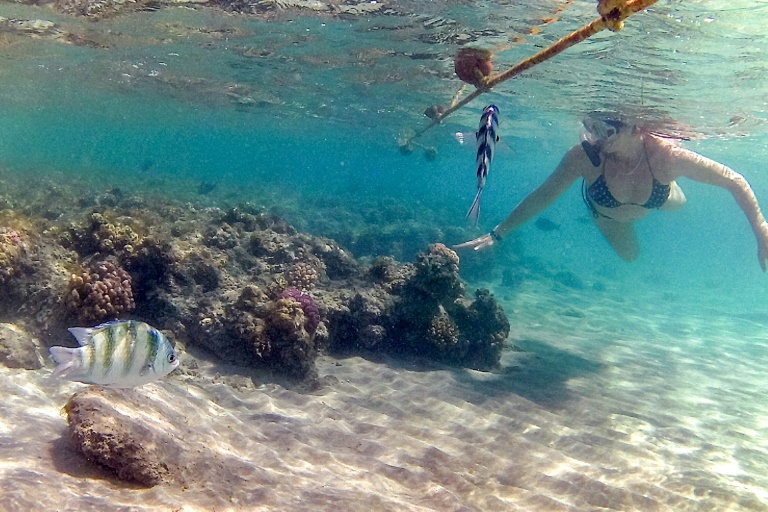
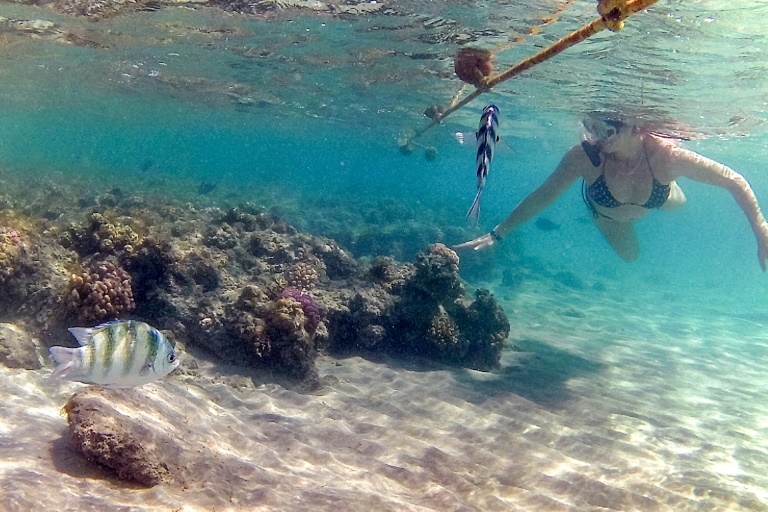
Beneath the waters off Egypt’s Red Sea coast a kaleidoscopic ecosystem teems with life that could become the world’s “last coral refuge” as global heating eradicates reefs elsewhere, researchers say.

Most shallow water corals, battered and bleached white by repeated marine heatwaves, are “unlikely to last the century,” the Intergovernmental Panel on Climate Change said this year.

That threatens a devastating loss for the hundreds of millions of people worldwide who depend on the fish stocks that live and breed in these fragile ecosystems.

Even if global warming is capped within Paris climate goals of 1.5 degrees Celsius above pre-industrial levels, 99 percent of the world’s corals would be unable to recover, experts say.

But Red Sea coral reefs, unlike those elsewhere, have proven “highly tolerant to rising sea temperatures,” said Mahmoud Hanafy, professor of marine biology at Egypt’s Suez Canal University.

Scientists hope that at least some of the Red Sea corals — five percent of the total corals left worldwide — could cling on amid what is otherwise a looming global collapse.

“There’s very strong evidence to suggest that this reef is humanity’s hope for having a coral reef ecosystem in the future,” Hanafy said.

Eslam Osman from the King Abdullah University of Science and Technology in Saudi Arabia said: “It is crucial that we preserve the northern Red Sea as one of the last standing coral refuges, because it could be a seed bank for any future restoration effort.”

– Livelihoods for millions –

The impacts of coral loss are dire: they cover only 0.2 percent of the ocean floor, but are home to at least a quarter of all marine animals and plants, helping sustain livelihoods for half a billion people worldwide.

Global warming, as well as dynamite fishing and pollution, wiped out a startling 14 percent of the world’s coral reefs between 2009 and 2018, according to the Global Coral Reef Monitoring Network.

Graveyards of bleached coral skeletons are now left where once vibrant and species-rich ecosystems thrived. 

Recent studies have shown the northern Red Sea corals are better able to resist the dire impact of heating waters.

“We have a buffer temperature before the coral sees bleaching,” Osman said. “One, two, even three degrees (Celsius) of warming, we’re still on the safe side.”

Osman said one theory explaining the corals’ apparent resilience to heat is due to “evolutionary memory” developed many thousands of years ago, when coral larvae migrated north from the Indian Ocean.

“In the southern Red Sea, coral larvae had to pass through very warm waters, which acted as a filter, only letting through species that could survive up to 32 degrees Celsius (89 degrees Fahrenheit),” Osman said.

However, scientists warn that even if Red Sea corals survive surging water temperatures, they risk being damaged from non-climate threats — pollution, overfishing and habitat destruction including from costal development and mass tourism.

“When non-climate threats increase, the vulnerability to climate change increases as well,” Osman said.

– ‘Global responsibility’ –

Reefs off Egypt are hugely popular among divers, and some Red Sea dive sites are operating at up to 40 times their recommended capacity, Hanafy said.

Fishing, another huge pressure, must drop to a sixth of current rates to become sustainable, he said. 

For Hanafy, protecting the reef is a “global responsibility” and one which Red Sea tourism businesses — which account for 65 percent of Egypt’s vital tourism industry — must share.

Local professionals say they have already witnessed damage to parts of the delicate ecosystem.

One solution, Hanafy said, is for the environment ministry to boost protection over a 400-square-kilometre (154-square-mile) area of corals known as Egypt’s Great Fringing Reef.

More than half already lies within nature reserves or environmentally-administered areas, but creating one continuous protected area would support the coral by “regulating activities and fishing, implementing carrying capacity plans and banning pollution”, Hanafy said.

Further south, off Sudan, a near absence of tourism has shielded pristine corals from polluting boats and the wandering fins of divers.

But, despite their greater resilience, the corals are far from immune to climate change, and the reefs there have experienced several bleaching events over the past three decades.

For Sudan, a country mired in a dire economic and political crisis including a military coup last year, monitoring the coral is “difficult” without funding, Sudan’s Higher Council for the Environment and Natural Resources said.

Off both the Egyptian and Saudi coasts, corals face the threats of coastal development, including sewage and sedimentation from construction runoff, Osman warned.

The great irony, he said, is that, while the natural wonders of the Red Sea corals that have drawn tourists and developers, the increased man-made pressures are in turn accelerating their destruction.

Heat-resilient Red Sea reefs offer last stand for corals

Beneath the waters off Egypt’s Red Sea coast a kaleidoscopic ecosystem teems with life that could become the world’s “last coral refuge” as global heating eradicates reefs elsewhere, researchers say.

Most shallow water corals, battered and bleached white by repeated marine heatwaves, are “unlikely to last the century,” the Intergovernmental Panel on Climate Change said this year.

That threatens a devastating loss for the hundreds of millions of people worldwide who depend on the fish stocks that live and breed in these fragile ecosystems.

Even if global warming is capped within Paris climate goals of 1.5 degrees Celsius above pre-industrial levels, 99 percent of the world’s corals would be unable to recover, experts say.

But Red Sea coral reefs, unlike those elsewhere, have proven “highly tolerant to rising sea temperatures,” said Mahmoud Hanafy, professor of marine biology at Egypt’s Suez Canal University.

Scientists hope that at least some of the Red Sea corals — five percent of the total corals left worldwide — could cling on amid what is otherwise a looming global collapse.

“There’s very strong evidence to suggest that this reef is humanity’s hope for having a coral reef ecosystem in the future,” Hanafy said.

Eslam Osman from the King Abdullah University of Science and Technology in Saudi Arabia said: “It is crucial that we preserve the northern Red Sea as one of the last standing coral refuges, because it could be a seed bank for any future restoration effort.”

– Livelihoods for millions –

The impacts of coral loss are dire: they cover only 0.2 percent of the ocean floor, but are home to at least a quarter of all marine animals and plants, helping sustain livelihoods for half a billion people worldwide.

Global warming, as well as dynamite fishing and pollution, wiped out a startling 14 percent of the world’s coral reefs between 2009 and 2018, according to the Global Coral Reef Monitoring Network.

Graveyards of bleached coral skeletons are now left where once vibrant and species-rich ecosystems thrived. 

Recent studies have shown the northern Red Sea corals are better able to resist the dire impact of heating waters.

“We have a buffer temperature before the coral sees bleaching,” Osman said. “One, two, even three degrees (Celsius) of warming, we’re still on the safe side.”

Osman said one theory explaining the corals’ apparent resilience to heat is due to “evolutionary memory” developed many thousands of years ago, when coral larvae migrated north from the Indian Ocean.

“In the southern Red Sea, coral larvae had to pass through very warm waters, which acted as a filter, only letting through species that could survive up to 32 degrees Celsius (89 degrees Fahrenheit),” Osman said.

However, scientists warn that even if Red Sea corals survive surging water temperatures, they risk being damaged from non-climate threats — pollution, overfishing and habitat destruction including from costal development and mass tourism.

“When non-climate threats increase, the vulnerability to climate change increases as well,” Osman said.

– ‘Global responsibility’ –

Reefs off Egypt are hugely popular among divers, and some Red Sea dive sites are operating at up to 40 times their recommended capacity, Hanafy said.

Fishing, another huge pressure, must drop to a sixth of current rates to become sustainable, he said. 

For Hanafy, protecting the reef is a “global responsibility” and one which Red Sea tourism businesses — which account for 65 percent of Egypt’s vital tourism industry — must share.

Local professionals say they have already witnessed damage to parts of the delicate ecosystem.

One solution, Hanafy said, is for the environment ministry to boost protection over a 400-square-kilometre (154-square-mile) area of corals known as Egypt’s Great Fringing Reef.

More than half already lies within nature reserves or environmentally-administered areas, but creating one continuous protected area would support the coral by “regulating activities and fishing, implementing carrying capacity plans and banning pollution”, Hanafy said.

Further south, off Sudan, a near absence of tourism has shielded pristine corals from polluting boats and the wandering fins of divers.

But, despite their greater resilience, the corals are far from immune to climate change, and the reefs there have experienced several bleaching events over the past three decades.

For Sudan, a country mired in a dire economic and political crisis including a military coup last year, monitoring the coral is “difficult” without funding, Sudan’s Higher Council for the Environment and Natural Resources said.

Off both the Egyptian and Saudi coasts, corals face the threats of coastal development, including sewage and sedimentation from construction runoff, Osman warned.

The great irony, he said, is that, while the natural wonders of the Red Sea corals that have drawn tourists and developers, the increased man-made pressures are in turn accelerating their destruction.

N. Korea says recent tests were 'tactical nuclear' drills, overseen by Kim

North Korea’s recent missile tests involved “tactical nuclear” drills to simulate hitting the South, and were overseen by leader Kim Jong Un in response to US-led joint military exercises in the region, state media said Monday.

Kim made acquiring tactical nukes — smaller, lighter weapons designed for battlefield use — a top priority at a key party congress in January 2021, and this year vowed to develop North Korea’s nuclear forces at the fastest possible speed.

The country revised its nuclear laws last month, outlining a wide array of scenarios in which it could its nukes, with Kim declaring North Korea an “irreversible” nuclear power — effectively ending the possibility of negotiations over its arsenal.

Since then, Seoul, Tokyo and Washington have ramped up combined military exercises, including deploying a nuclear-powered US aircraft carrier to the area twice, infuriating Pyongyang, which sees such drills as rehearsals for invasion.

In response, North Korea “decided to organise military drills under the simulation of an actual war” that gamed out hitting South Korea’s ports, airports and military command facilities, KCNA said.

North Korean army units involved in “the operation of tactical nukes staged military drills from September 25 to October 9 in order to check and assess the war deterrent and nuclear counterattack capability,” the report said.

Kim “guided the military drills on the spot,” it said, adding he had dismissed the idea of restarting talks, saying North Korea “felt no necessity to do so”.

The report also said that North Korea’s October 4 missile launch, which flew over Japan and prompted rare evacuation warnings, involved a “new-type ground-to-ground intermediate-range ballistic missile”.

That test aimed to “send more powerful and clear warning to the enemies”.

– Dangerous dynamic –

North Korea’s claim its missile launches are a “response” to US-South Korea drills is part of a “familiar spiral dynamic” on the Korean peninsula, said US-based security analyst Ankit Panda.

“I worry that this is the start of a dangerous dynamic on the Korean Peninsula, where we have two states in a bitter rivalry and each faces strong incentives to fire first in a serious crisis,” he said.

“The North Koreans haven’t yet defined what exactly they consider to be a tactical nuclear weapon or mission… but we’re starting to see a picture that suggests any nuclear weapon they’d look to use early in a conflict can be defined as a ‘tactical’ capability,” he told AFP. 

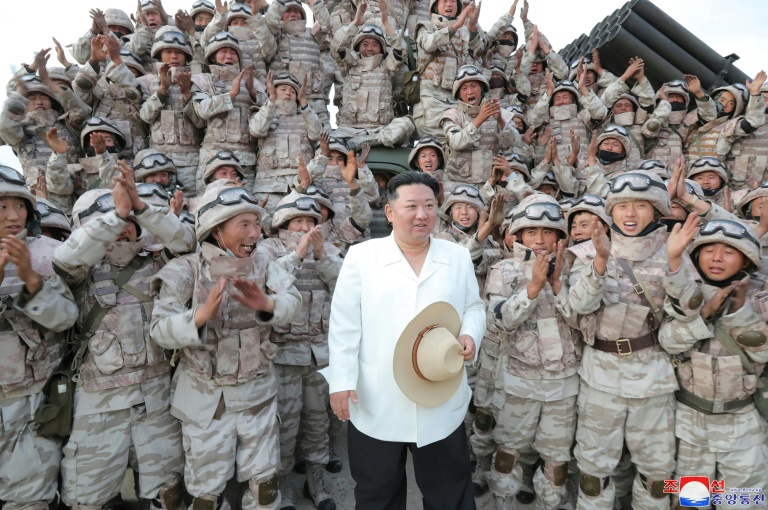
North Korea also released multiple photographs of the recent missile launches, tests and exercises showing Kim Jong Un overseeing them all, giving orders and posing with smiling soldiers.

It is also significant that North Korea was not framing the recent launches as tests of the missiles themselves, but of the units that launch them, analysts said.

“That suggests these systems are deployed,” Jeffrey Lewis of the Middlebury Institute of International Studies wrote on Twitter. 

– ‘Nuclear harbinger’ – 

In addition to the array of “tactical nuclear” drills, North Korea said it had carried out “a large-scale combined air-attack drill”, which was also overseen by Kim.

KCNA said this involved “more than 150 fighter planes” but analysts dismissed this as domestic propaganda, and Seoul said last week it had only detected 12 North Korean warplanes flying in formation.

The volley of KCNA statements about its recent tests — which are unusual, as state media no longer routinely comments on launches — indicates Pyongyang is concerned about the recent US-led joint drills, analysts said.

“To strengthen its self-proclaimed deterrent, it is making explicit the nuclear threat behind its recent missile launches,” said Leif-Eric Easley, a professor at Ewha University in Seoul.

“The KCNA report may also be a harbinger of a forthcoming nuclear test for the kind of tactical warhead that would arm the units Kim visited in the field,” he added.

Officials in Washington and Seoul have been warning for months that North Korea has completed preparations for another nuclear test — which would be the country’s seventh, and first since 2017.

At the gateway to the Arctic, a world in turmoil

Sled dog breeder David Daley lives at the gateway to the Canadian Arctic, occupying a front-row seat to the march of global warming, and he senses calamity ahead.

“For all the devastation that we’re doing to her, she’s not going to sit still, our planet Mother Earth will punish us,” Daley says.

Daley’s hometown of Churchill is an isolated settlement at the edge of the Hudson Bay where global warming unfolds at triple the pace of much of the rest of the world, causing the Arctic ice to gradually disappear.

A member of the Metis people, one of three Indigenous groups in Canada, the 59-year-old grandfather lives close to nature, surrounded by his 46 dogs, at the point where the tundra ends and the boreal forest begins.

But every year, he fears that the snow will arrive late, and the impact that has on his sled dogs.

“They’re just waiting for winter like the rest of us right now,” Daley said. “This is like a culture that’s dying.”

In summer and winter, Daley travels through this region where rocky terrain, moss, tall grasses and black spruce forests prevail. At night, the displays of light known as the aurora borealis often flicker in the high-latitude skies.

Daley has been hunting here all his life and has seen the wildlife change up close, some species vanishing and others arriving.

“There was hardly any moose here when I was a kid. Now there’s moose everywhere,” said Daley, who uses his Indigenous knowledge to earn money as a tourist guide.

“When I was a kid hunting, fishing and trapping here, there were no pine martens.

“There’s sharptail grouse moving in now where I’ve never… harvested one till last year.”

His observations echo scientific studies: Global warming is endangering Arctic species, especially by opening the doors to other animals from further south.

Both animals and vegetation are migrating north. For Daley, humans have “no choice,” they must “adapt” as animals are forced to do.

– Prowling polar bears –

Adaptation includes a newfound need for closer coexistence with the emblematic predator of the Arctic region: the polar bear.

During the Cold War, a joint Canadian-US military installation in Churchill stood guard against a possible Soviet attack coming over the North Pole. The installation is now deserted, and local concerns today concentrate more on polar bears.

Due to global warming, ice no longer covers the Hudson Bay for as long each winter, forcing the polar bears to spend more time on land and nearer to humans. Often hungry and weak, the bears wander closer to settlements.

Venturing around the town requires precautions: a gun, bear repellent and the need to walk in groups after dark or in poor visibility.

Everyone in Churchill has a story about a run-in with a polar bear.

“I don’t remember feeling unsafe during summertime. No, no. I used to play on the rocks,” said Danielle Daley, the 33-year-old daughter of David Daley. “Today, it’s different. I won’t let my kids play on the rocks.”

The slender young woman recounts her fright at seeing a bear run past her house in July, followed closely by the Manitoba Natural Resources bureau patrol vehicle with its sirens wailing.

It’s even more complicated in the fall, when the bears are starving after months of failing to find food on land, without a seal in sight.

“We’re at the beginning of the busiest time of year for us when the bears will be coming through Churchill on their way north to the first ice on the Hudson Bay,” said Ian Van Nest, a wildlife officer.

For Halloween night, October 31, a special set-up is put in place, Van Nest said. 

Clad in a bullet-proof vest, with a rifle slung over his shoulder and a walkie-talkie on his belt, the stern-faced Van Nest and his fellow officers go on patrol.

They even deploy helicopters to spot roaming bears and ensure they do not come near children collecting candy.

“Otherwise we could use cracker shells. It’s a loud bang and a flash that’ll haze the bear away as well,” Van Nest said.

The town is also equipped with new radars that can detect polar bears within two kilometers (1.2 miles) of its most outlying homes, even at night or thick fog.

Around Churchill, the polar bear population has been in decline since the 1980s but still hovers around 800, about the same number as human inhabitants of the town.

– ‘Opportunities are there’ –

Not everyone sees these climate-related changes in a bad light.

“You’ve got to look for the wins in all of this,” said Churchill Mayor Michael Spence, a member of the Cree, the most populous Indigenous group of the First Nations in Canada.

An increase in tourism, along with development of the port, have gone hand in hand with rising temperatures.

“The opportunities are there for local people to have… economic growth,” said Spence, who grew up locally.

This remote corner of Manitoba province is inaccessible by car from the rest of Canada, yet a few thousand tourists find their way each year, by air or rail, drawn by the increased presence of the polar bears.

And the melting sea ice allows ships to access the city’s port, the only deep-water port in the Canadian Arctic, for more months each year than before.

The mayor dreams of transitioning Churchill into a bustling port for grain grown in increasingly more northern areas, and eventually for minerals, more easily extracted in the far north due to thawing.

A large part of Canada’s mining potential is found in the far north, including deposits of diamonds, gold, tungsten, uranium, and rare earth elements.

But the thawing of the soil can also hamper mining prospects. Railways that once delivered raw materials to port have become less stable, and even at times useless.

In 2017, a major melt led to flooding that damaged rail lines, and rail transport was cut off for more than 18 months. Since then, the port has been largely idle, handling only a few ships per year. At the back of the gigantic silos, old rail cars rust amid wild grass.

– Poverty – 

For some residents of Churchill, grinding poverty relegates concerns about global warming to the background.

Dilapidated homes, some hastily patched up, line the streets alongside prefabricated buildings on cinder blocks, seemingly unsuited for winter temperatures that can plunge below -40 degrees Celsius (-40 degrees Fahrenheit).

Abandoned cars, vans, snowmobiles and quads are a frequent sight, often stripped for spare parts.

In the early period of European colonization, Churchill was an important outpost of the fur trade. Today, both poverty and the region’s Indigenous roots are apparent.

Fully 60 percent of the population is Indigenous (Inuit, Metis and First Nation groups like Cree and Dene), while in Canada as a whole the number is only five percent and in Manitoba 18 percent. Unemployment, substandard housing and discrimination prevail.

About 64 percent of children here live below the poverty line.

UN climate experts already said in their March report that these people’s intimate knowledge must be taken into account in the fight against climate change.

At November’s COP27 climate summit in Egypt, some activists will press for policies that take into account Indigenous ancestral practices, since their lands host 80 percent of the world’s biodiversity.

David Daley dreams of an awakening.

“We must, as Indigenous people, lead the reconciliation with our mother, the Earth,” he says.
tib/dp/tjj/bgs/bfm/ec/mca

As oceans rise, are some nations doomed to vanish?

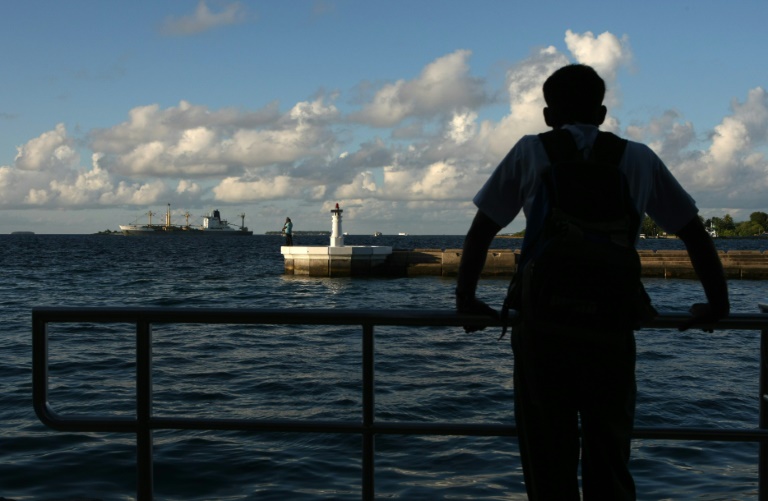
If rising seas engulf the Maldives and Tuvalu, will those countries be wiped off the map? And what happens to their citizens?

The prospect is no longer science fiction as global warming gathers pace, posing an unprecedented challenge to the international community, and threatening entire peoples with the loss of their land and identity.

“This is the biggest tragedy that a people, a country, a nation can face,” Mohamed Nasheed, former president of the Maldives, told AFP.

According to UN climate experts, sea levels have already risen 15 to 25 cm (six to 10 inches) since 1900, and the pace of rise is accelerating, especially in some tropical areas.

If warming trends continue, the oceans could rise by nearly one additional meter (39 inches) around the Pacific and Indian Ocean islands by the end of the century.

This is still below the highest point of the smallest, flattest island states, but rising seas will be accompanied by an increase in storms and tidal surges: Salt contamination to water and land will make many atolls uninhabitable long before they are covered over by the sea.

According to a study cited by the UN’s Intergovernmental Panel on Climate Change, five nations (the Maldives, Tuvalu, the Marshall Islands, Nauru and Kiribati) may become uninhabitable by 2100, creating 600,000 stateless climate refugees.

– ‘Legal fiction’ –

It is an unprecedented situation. States have, of course, been wiped off the map by wars. But “we haven’t had a situation where existing states have completely lost territory due to a physical event, or events, like sea-level rise, or severe weather events,” noted Sumudu Atapattu, of the University of Wisconsin in Madison.

But the 1933 Montevideo Convention on the Rights and Duties of States, a reference on the subject, is clear: A state consists of a defined territory, a permanent population, a government and the capacity to interact with other states. So if the territory is swallowed up, or no one can live on what is left of it, at least one of the criteria falls.

“The other thing that I argue is that statehood is a fiction, legal fiction we created for purposes of international law. So we should be able to come up with another fiction to encompass these deterritorialized states,” Atapattu added.

That is the idea behind the “Rising Nations” initiative launched in September by several Pacific governments: “convince members of the UN to recognize our nation, even if we are submerged under water, because that is our identity,” the prime minister of Tuvalu, Kausea Natano, explained to AFP.

Some people are already thinking about how these Nation-States 2.0 might work.

“You could have land somewhere, people somewhere else, and government in the third place,” Kamal Amakrane, managing director of the Global Centre for Climate Mobility at Columbia University, told AFP.

This would first require a “political declaration” by the UN, then a “treaty” between the threatened state and a “host state,” ready to receive the government in exile in a kind of permanent embassy. The population, which might be in that state or even a different one, would then have dual nationality.

Amakrane, a former UN official, also draws attention to an ambiguity in the Montevideo Convention: “When you speak about territory, is it dry or wet territory?”

– Humans ‘are so ingenious’ –

With 33 islands scattered over 3.5 million square kilometers (1.3 million square miles) in the Pacific, Kiribati, tiny in terms of land area, has one of the largest exclusive economic zones (EEZs) in the world.

If this maritime sovereignty were preserved, then a state would not disappear, some experts say.

While some islets are already being engulfed as shorelines recede, freezing the EEZs would preserve access to vital resources.

In an August 2021 declaration, the members of the Pacific Islands Forum, including Australia and New Zealand, proclaimed that their maritime zones “shall continue to apply, without reduction, notwithstanding any physical changes connected to climate change-related sea level rise.” 

But even with rising ocean levels, some would simply not consider leaving their threatened country.

“Human beings are so ingenious, they will find floating ways… to live exactly in this location,” says Nasheed, the Maldives’ former leader, suggesting people could resort to floating cities.

How these states would find resources for such projects is unclear. The question of financing the “loss and damage” caused by the impacts of global warming will be a burning issue at COP27 in Egypt in November.

Even as experts like Amakrane defend “the right to remain” for people who don’t want to leave their heritage, he adds: “You always need to have a plan B.”

In this vein, he has called for launching “as soon as possible” a “political” process to preserve the future of uninhabitable states, “because it gives hope to people.”

Otherwise, he warns, the current state of uncertainty “creates bitterness and disarray, and with that, you kill a nation, a people.”

76 people killed in Nigeria boat accident

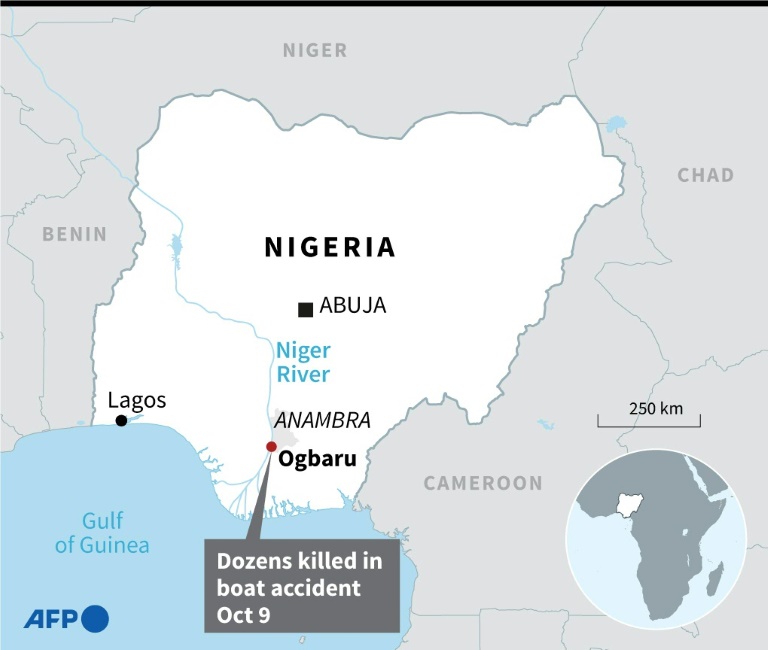
Almost everyone on board a boat died when it capsized in a flood-swollen river in Nigeria’s Anambra state, President Muhammadu Buhari said on Sunday.

An estimated 85 people were taking the overloaded boat on Friday when flooding of the Niger River caused it to tip over. 

“The boat reportedly carrying 85 persons capsized following rising floods in Ogbaru area of the state, with emergency services confirming a death toll of 76,” Buhari’s office quoted him as saying.

He directed the emergency services to provide relief to the victims.

“I pray for the repose of the souls of the deceased and for everyone’s safety, as well as the well-being of the family members of the victims of this tragic accident,” he added.

Earlier on Sunday, the emergency services said rising water level was hampering rescue efforts.

“The water level is very high and too risky for a smooth search and rescue operation,” Thickman Tanimu, the southeast coordinator of the National Emergency Management Agency (NEMA) told AFP.

He said the flooding was the worst the country has seen in years, with the water level around one-tenth higher than a decade ago.

NEMA requested the Nigerian Air Force provide helicopters for the rescue operation.

Anambra state governor Charles Soludo urged residents of flood-ravaged areas to relocate, while adding that the government would provide relief to those affected by the disaster.

“This development is still a shock to the government and good people of Anambra State. I sympathise with the families of people involved,” Soludo said in a statement. 

Boat accidents occur regularly in Nigeria because of overloading, speeding, poor maintenance and disregarding navigation rules.

Since the start of the rainy season, many regions of the West African nation of more than 200 million people have been devastated by floods.

More than 300 people have been killed and at least 100,000 made homeless, according to the emergency services.

The continuous rain has washed away farmland and crops, sparking fears of food shortages, famine and hunger in a country already struggling with the impact of the Covid-19 pandemic and the war in Ukraine.

To save California coasts, scientists turn to the humble oyster

There are no pearls growing on the oyster reefs in San Diego Bay, but scientists hope they will yield an even more valuable treasure: protection against coastal erosion wrought by rising sea levels.

Thousands of the tiny mollusks have begun growing on the artificial reefs dropped in the bay as part of a plan to mitigate damage in California’s far south.

“We look at numerous different ways to help combat sea-level rise, and these reef balls are one of the tools in our toolbox to do that,” Eileen Maher, director of environmental conservation at the Port of San Diego, told AFP. 

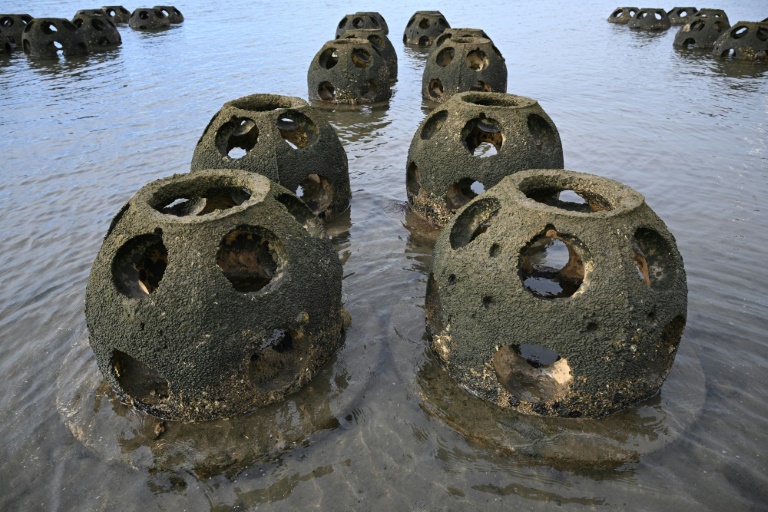
The port implanted 360 structures last December, along a peninsula wedged between the salt marshes of Southern California and the Coronado peninsula — home to the naval air base that inspired “Top Gun.”

These hemispheres weigh 300 pounds (135 kilograms) and look like huge thimbles.

They are made from a mixture of cement, sand and crushed oyster shells — a crucial ingredient that attracts living oysters to make their home there.

After 10 months in the water, the reefs are covered with a greenish silt, which hides thousands of still-microscopic oysters, says Maher.  

Eventually, the dozen scientists working on this pilot project hope to see the formation of real oyster reefs, which they believe will have a genuine impact on their local environment.

– Miniature filters –

The reefs are much more than a natural bulwark against tidal erosion; their bivalve occupants are all miniature filtration plants that are essential to the marine ecosystem.  

That’s because to capture the nutrients an oyster needs to survive, each one filters around 50 gallons (190 liters) of water every day, said Maher. 

“They help remove that turbidity out of the water and help clean the water, which will provide additional benefits to eelgrass, the submerged aquatic vegetation,” she said.

“The more eelgrass sits in the bay, the less chance there is of the shoreline eroding, because it helps — any plant will help prevent shorelines from eroding.”

And like the oysters, these long-filament seagrass beds will also provide a crucial food source for the 80 species of fish and 300 varieties of birds that make their home in the area.

– Flooding and erosion –

By 2050, sea levels around California are expected to have risen 20 centimeters (eight inches), according to a National Oceanic and Atmospheric Administration (NOAA) study released early this year.  

This would drastically increase the frequency of flooding on the West Coast, which will also occur more often due to storms and heavy rainfall events exacerbated by human-caused climate change. 

And rising seas will worsen the erosion that threatens California’s coastline. 

Around San Diego, this future is already apparent.

To the south, the streets of Imperial Beach are regularly flooded during high tides. An hour’s drive to the north, the rail line that carries the “Pacific Surfliner” has just been closed at San Clemente, where the rocks that support it are sinking because of erosion. 

In this context, “We have to make sure that we’re resilient,” said Jason Giffen, vice president of planning and environment for the Port of San Diego. 

The $1.3 million oyster reef project is being evaluated over five years. Similar schemes have been established in San Francisco and New York.

The oyster barriers work only in areas of shallow water, Giffen said.

Elsewhere, the port is exploring other solutions. 

In the northern part of the bay, small hollow reinforcements have been attached to the piers.

They not only offer stability but provide refuge to algae, fish and shellfish, helping to bolster biodiversity.

Currently, about 70 percent of the shoreline around San Diego Bay has some type of artificially contructed rock protection.

“We can look at replacing in the long run that infrastructure with something that’s more biologically and environmentally sensitive and actually would be a value-add in terms of environmental quality,” said Giffen.

Hurricane Julia slams Nicaragua, menaces Central America

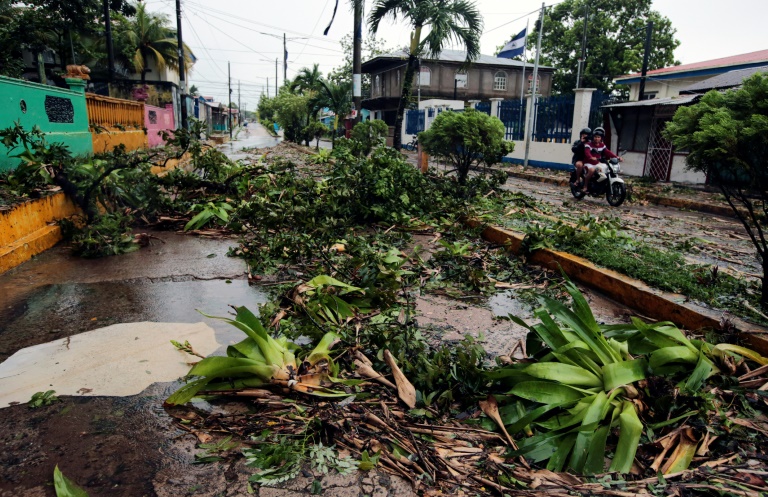
Hurricane Julia raked across Nicaragua Sunday, lashing the country with winds and heavy rain and bringing potentially life-threatening flash flooding and mudslides to much of Central America and southern Mexico.

Maximum sustained winds were estimated at 85 miles (140 kilometers) per hour when the storm made landfall near the Laguna de Perlas area at 0715 GMT, the country’s weather agency said.

By midday, the fifth Atlantic hurricane of the season had weakened to a tropical storm with top sustained winds of nearly 60 miles per hour as it churned westward across Nicaragua, unleashing a dangerous storm surge along the coast, damaging homes in the country’s interior and leaving some towns incommunicado.

“It’s still raining, water has surrounded us, we have been without power and water since early morning, several houses are without roofs and many trees are down on the road,” Julio Hernandez, a resident of Rio Blanco, in central Nicaragua, told AFP.

The country was on high alert, with civil defense brigades helping to clear fallen trees from roads and watch for flooding in coastal towns and mountain villages. No fatalities have been reported.

But the US National Hurricane Center warned that Julia, whose center passed over the Central American isthmus into the eastern Pacific ocean Sunday night, was still packing a punch, not just for Nicaragua but for neighboring countries.

“Heavy rainfall with a risk of life-threatening flash floods and mudslides to continue across Central America and southern Mexico through Tuesday,” the NHC said.

– ‘We have to prepare’ –

Maintaining its tropical storm strength, Julia is forecast to produce five to 10 inches (12.7 to 25.4 centimeters) of rain in Nicaragua and El Salvador, with isolated pockets receiving as much as 15 inches.

Hours earlier in Bluefields, Nicaragua, one of the main coastal towns buffeted by the storm, fishermen had been busy safeguarding their boats as people rushed to buy groceries and withdraw money from ATMs.

Hurricane-force winds and heavy rains began to be felt around midnight, according to AFP photographers in the city, while reports detailed detached roofs, fallen trees and power outages.

Before reaching Nicaragua, Julia passed over a trio of Colombian islands, an environment ministry official told AFP, causing rain and lightning in the country’s north.

Julia was a Category 1 hurricane, on the low side of the five-tier Saffir-Simpson wind scale, when it roared ashore in Nicaragua.

Authorities have evacuated some 6,000 people in Laguna de Perlas, in the Miskito keys located off the coast, and in other zones, and dozens of storm shelters were set up in schools.

“We have to prepare with food, plastic, a little bit of everything, because we don’t know what’s going to happen,” Javier Duarte, a cabinetmaker in Bluefields, told AFP.

The municipality of some 60,000 inhabitants has many flimsy structures. By mid-morning, telephone communications were knocked out.

Julia’s arrival in Central America comes less than two weeks after deadly Hurricane Ian crashed into the southeastern US state of Florida as one of the most powerful US hurricanes on record.

The Category 4 storm flattened entire neighborhoods on the Sunshine State’s southwest coast. More than 100 people were killed, according to US media.

Climate change is increasing the temperature of ocean surface layers, which generates more powerful and wetter storms, according to experts.

Close Bitnami banner
Bitnami