World

Hurricane Julia slams Nicaragua, menaces Central America

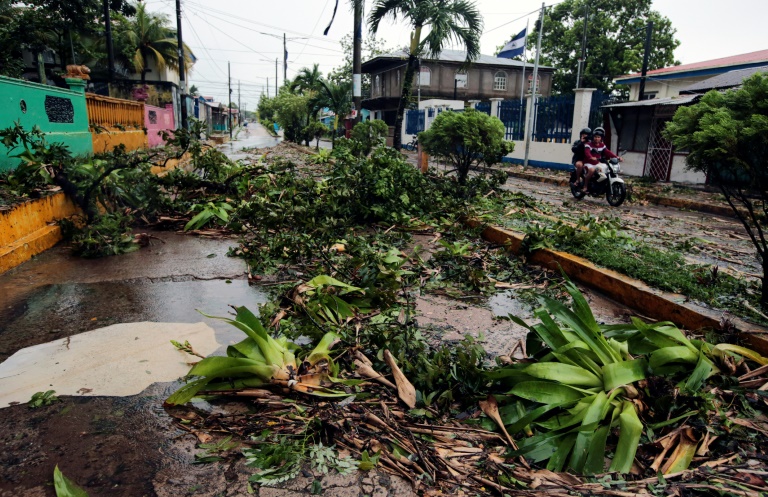
Hurricane Julia raked across Nicaragua Sunday, lashing the country with winds and heavy rain and bringing potentially life-threatening flash flooding and mudslides to much of Central America and southern Mexico.

Maximum sustained winds were estimated at 85 miles (140 kilometers) per hour when the storm made landfall near the Laguna de Perlas area at 0715 GMT, the country’s weather agency said.

By midday, the fifth Atlantic hurricane of the season had weakened to a tropical storm with top sustained winds of nearly 60 miles per hour as it churned westward across Nicaragua, unleashing a dangerous storm surge along the coast, damaging homes in the country’s interior and leaving some towns incommunicado.

“It’s still raining, water has surrounded us, we have been without power and water since early morning, several houses are without roofs and many trees are down on the road,” Julio Hernandez, a resident of Rio Blanco, in central Nicaragua, told AFP.

The country was on high alert, with civil defense brigades helping to clear fallen trees from roads and watch for flooding in coastal towns and mountain villages. No fatalities have been reported.

But the US National Hurricane Center warned that Julia, whose center passed over the Central American isthmus into the eastern Pacific ocean Sunday night, was still packing a punch, not just for Nicaragua but for neighboring countries.

“Heavy rainfall with a risk of life-threatening flash floods and mudslides to continue across Central America and southern Mexico through Tuesday,” the NHC said.

– ‘We have to prepare’ –

Maintaining its tropical storm strength, Julia is forecast to produce five to 10 inches (12.7 to 25.4 centimeters) of rain in Nicaragua and El Salvador, with isolated pockets receiving as much as 15 inches.

Hours earlier in Bluefields, Nicaragua, one of the main coastal towns buffeted by the storm, fishermen had been busy safeguarding their boats as people rushed to buy groceries and withdraw money from ATMs.

Hurricane-force winds and heavy rains began to be felt around midnight, according to AFP photographers in the city, while reports detailed detached roofs, fallen trees and power outages.

Before reaching Nicaragua, Julia passed over a trio of Colombian islands, an environment ministry official told AFP, causing rain and lightning in the country’s north.

Julia was a Category 1 hurricane, on the low side of the five-tier Saffir-Simpson wind scale, when it roared ashore in Nicaragua.

Authorities have evacuated some 6,000 people in Laguna de Perlas, in the Miskito keys located off the coast, and in other zones, and dozens of storm shelters were set up in schools.

“We have to prepare with food, plastic, a little bit of everything, because we don’t know what’s going to happen,” Javier Duarte, a cabinetmaker in Bluefields, told AFP.

The municipality of some 60,000 inhabitants has many flimsy structures. By mid-morning, telephone communications were knocked out.

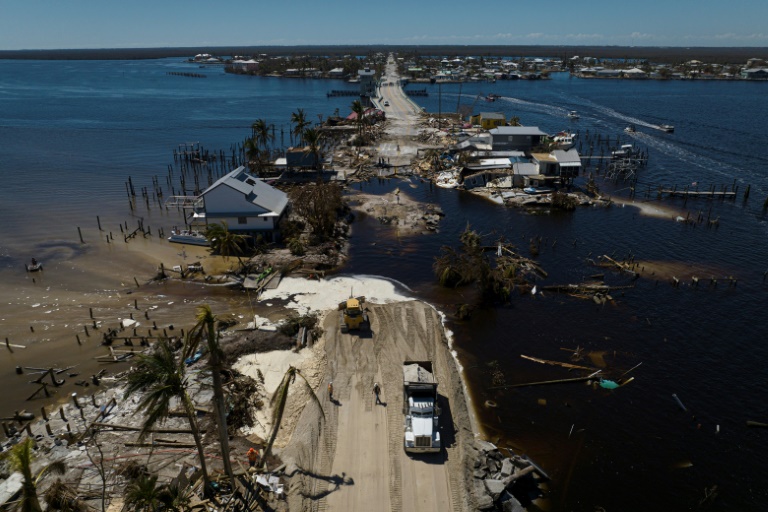
Julia’s arrival in Central America comes less than two weeks after deadly Hurricane Ian crashed into the southeastern US state of Florida as one of the most powerful US hurricanes on record.

The Category 4 storm flattened entire neighborhoods on the Sunshine State’s southwest coast. More than 100 people were killed, according to US media.

Climate change is increasing the temperature of ocean surface layers, which generates more powerful and wetter storms, according to experts.
UN to take up Russian annexations in Ukraine

The UN General Assembly on Monday will open debate on a draft resolution condemning Russia’s annexation of four Ukrainian regions, as Western powers seek to underscore Moscow’s international isolation.

The decision to bring the matter before the General Assembly, where the 193 UN members have one vote each — and no one wields veto power — was taken after Russia used its veto in a Security Council meeting September 30 to block a similar proposal.

“It’s extremely important,” said Olof Skoog, who, as EU ambassador to the world body, drafted the text in cooperation with Ukraine and other countries.

“Unless the UN system and the international community through the General Assembly react to this kind of illegal attempt, then we would be in a very, very bad place,” the Swedish diplomat told reporters.

A failure by the General Assembly to act — a vote is expected no sooner than Wednesday — would give “carte blanche to other countries to do likewise or to give recognition to what Russia has done,” he added.

A draft of the resolution seen by AFP condemns Russia’s “attempted illegal annexations” of the Ukrainian regions of Donetsk, Luhansk, Zaporizhzhia and Kherson following “so-called referendums,” and it stresses that these actions have “no validity under international law.”

It calls on all states, international organizations and agencies not to recognize the annexations, and demands the immediate withdrawal of Russian troops from Ukraine. 

In response, Russia has addressed a letter to all member states in which it attacks “Western delegations” whose actions “have nothing to do with protection of international law and the principles of the UN Charter.”

“They only pursue their own geopolitical objectives,” said the letter, signed by Russian ambassador Vassily Nebenzia.

He denounced the “huge pressure” he said the United States and its allies were placing on other member states.

Nebenzia said that given the circumstances, the General Assembly should vote by secret ballot — a highly unusual procedure normally reserved for matters like electing the rotating members of the Security Council.

– ‘A bit of desperation’ –

“It doesn’t suggest a high degree of confidence in the outcome if Russia is seeking to obscure the vote count,” a senior official in the administration of US President Joe Biden told reporters, speaking on grounds of anonymity.

“It does suggest a bit of desperation.”

Such a procedure would first require a vote of the member states — and not by secret ballot, according to General Assembly spokeswoman Paulina Kubiak.

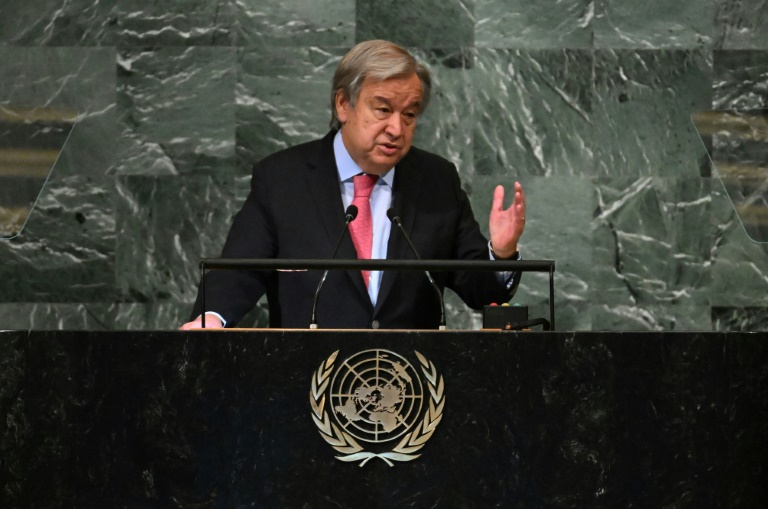
The UN secretary-general, as the leading defender of the world body’s values, bluntly denounced the annexations.  

“It stands against everything the international community is meant to stand for,” said Antonio Guterres. 

“It flouts the purposes and principles of the United Nations. It is a dangerous escalation. It has no place in the modern world. It must not be accepted.”

Those remarks, the US official said, “show that this is not really about the West versus Russia.”

During the Security Council vote, no other country sided with Russia, though four delegations — China, India, Brazil and Gabon — abstained.

Some developing countries have complained that the West is devoting all its attention to Ukraine, and others might be tempted to join them this week.

The vote will provide a clear picture of exactly how isolated Russia has become. Given the high stakes, backers of the draft are going all out to win over potential abstentionists. 

“It’s going to be tough,” a senior European diplomat said, speaking on condition of anonymity.

“For the 2014 annexation resolution of Crimea, there were approximately 100 supportive votes. I think we’ll get more this time,” he said, estimating total support at 100 to 140 votes. 

In March, two earlier General Assembly resolutions condemning the Russian invasion drew, respectively, 141 and 140 votes for, to five against (Russia, Belarus, Syria, North Korea and Eritrea), with 35 and 38 abstentions.

A third vote, in April, to suspend Russia from the UN Human Rights Council, passed but with less unanimity.

There were 93 votes for, 24 against and 58 abstentions.

For the US official, the overarching question this week will be “who’s going to vote with Russia,” when its objective is “to erase Ukraine from the map.”

Guterres pushes for international troop deployment to crisis-hit Haiti

United Nations chief Antonio Guterres has called for the immediate deployment of a special armed force to Haiti to staunch spiraling insecurity, as the already crisis-hit country faces the threat of a cholera epidemic.

In a letter submitted to the UN Security Council on Sunday and seen by AFP, Guterres urged member states to deploy a “rapid action force” to the Caribbean nation to tackle “a dramatic deterioration in security.”

The letter, which outlined “options for enhanced security support to Haiti” as requested by a July UN Security Council resolution, came a day after Haiti said it had formally sought international assistance with a worsening security situation that the national police were unable to overcome.

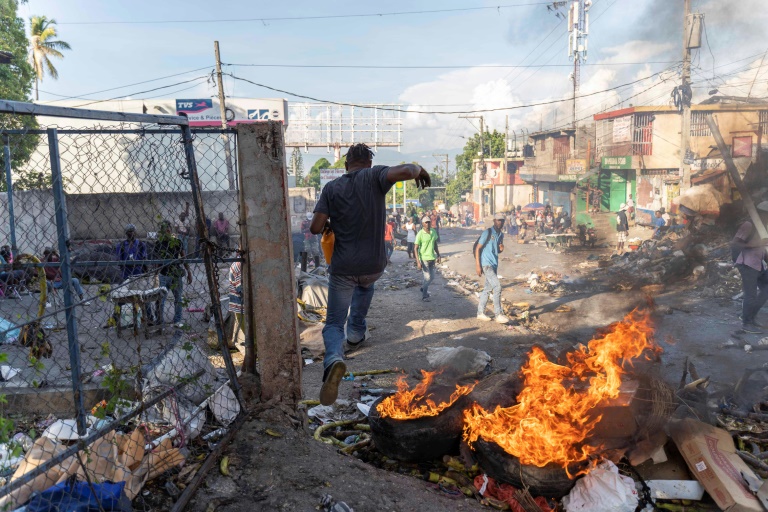
Haiti, the poorest country in the Americas, is facing an acute political, economic, security and health crisis, which has paralyzed the country and sparked a breakdown of law and order. 

Protests and looting have rocked the already unstable country since September 11, when the government announced a fuel price hike.

Since mid-September, the country’s largest fuel import terminal, in Varreux, has been controlled by powerful armed gangs.

In his letter, Guterres underlined a need to restore security to ensure access to supplies and services, to safeguard transport infrastructure and oil terminals and to tackle rampant gang violence. 

“Addressing these objectives is imperative for the country to halt its spiraling instability,” he said.

He called for the establishment of a unit made up of special armed forces personnel from member states, with the efforts led by one member state.

Guterres reiterated the call in a public statement issued Sunday by spokesman Stephane Dujarric, in which he said he “remains gravely concerned about the situation in Haiti,” where already dire humanitarian conditions risk being exacerbated by a cholera outbreak. 

– Cholera fears –

The UN on Thursday warned of a possible explosion of cholera cases in the country after Haiti announced its first cases of cholera in three years last week, with at least seven deaths.

As of Friday, the UN said at least twelve cholera cases had been confirmed and another 152 suspected cases reported, though Ulrika Richardson, UN resident and humanitarian coordinator for Haiti, said the real numbers could be much higher.

Tests were underway abroad to determine whether it was the same strain of cholera as the one that killed more than 10,000 people from 2010 to 2019.

Guterres’s Sunday statement underscored that the blockage of the Varreux terminal hindered efforts to tackle the outbreak, including by hampering the delivery of “critical services required to prevent the rapid spread of the disease to a stand-still, including the distribution of potable water.”

“The most vulnerable sectors of the Haitian population are those hit the hardest.” 

The deteriorating security situation led the Dominican Republic, which shares the mountainous island of Hispaniola with Haiti, to warn on Sunday that it would shut down the border in the event of a “massive migration.”

“It is very dangerous to receive refugees en masse,” said President Luis Abinader, who has previously called for more action from the international community to mitigate the crises in Haiti. 

The crushing poverty and widespread violence in Haiti, home to 11 million people, has caused large numbers of Haitians to attempt to flee to the Dominican Republic or to the United States.

In its July resolution, the UN Security Council agreed to ask member states to ban the transfer of small arms to Haiti but stopped short of a full embargo requested by China.

It also extended the mandate of the UN’s special political mission in Haiti, BINUH, until 2023.

Haiti had already been mired in a political and economic crisis for years before the assassination of president Jovenel Moise in 2021 exacerbated its instability, with gangs taking an increasingly strong hold.

22 dead, more than 50 missing in Venezuela landslide

A landslide in central Venezuela left at least 22 people dead and more than 50 missing after a river overflowed, officials said Sunday, in the latest deadly disaster caused by heavy rains to hit the country. 

Dozens of people have died in recent months in the crisis-hit South American nation as a result of historically high precipitation.

“We are seeing very significant damage here, human losses: so far, we have already found 22 dead, there are more than 52 people missing,” Vice President Delcy Rodriguez told local media at the scene in the town of Las Tejerias. “We are working to find these people.”

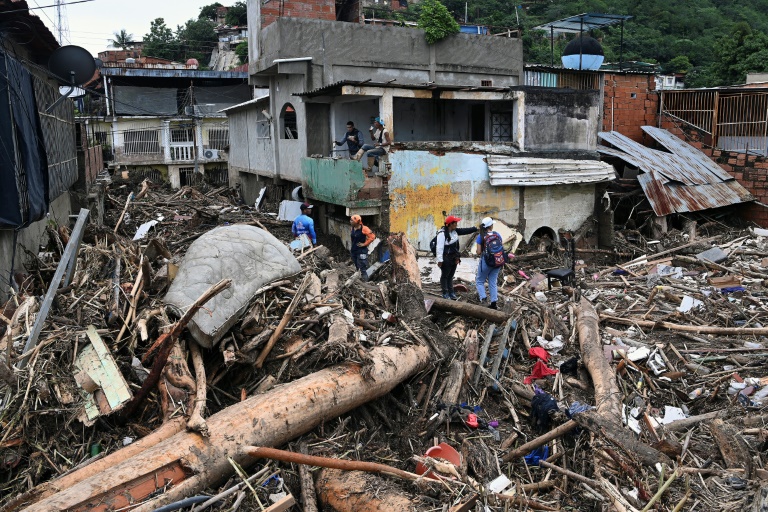
Houses and businesses were destroyed and felled trees littered the town’s streets, which were covered with mud and debris, including splintered wood, household items and mangled cars.

“The village is lost. Las Tejerias is lost,” 55-year-old resident Carmen Melendez, who has lived her whole life in the town 50 kilometers (30 miles) from the capital, Caracas, in Aragua state, told AFP.

Around a thousand people had joined the rescue efforts, Interior and Justice Minister Remigio Ceballos told AFP, as he also worked at the site.

Local residents dug through the remains of battered homes looking for loved ones, while search teams arrived with dogs hoping to find survivors trapped in the rubble. 

A butcher shop that had closed due to the pandemic and which was due to reopen Monday was buried in muddy sediment that caked the refrigerators and everything else inside. 

“We were waiting for the meat to be shipped in — to start after two years closed,” said Ramon Arvelo, one of the workers who was helping remove mud. 

“I never thought that something of this magnitude could happen; it’s a really big deal,” said Loryis Verenzuela, 50, as she looked out at the devastation through tears.

– Record rain –

“We have a huge landslide as a result of the changing climate,” Ceballos said, referring to the effects of Hurricane Julia, which passed just north of Venezuela the night before. 

“There was a record rainfall,” he added as he surveyed the disaster site — as much rain in one day as is usually seen in one month. 

“These strong rains saturated the ground,” he said. 

Images taken by rescue teams’ drones showed huge amounts of earth piled up in the streets as residents had tried to shovel out the meters of mud that flowed into their houses. 

President Nicolas Maduro declared three days of national mourning for the victims, while Venezuelans took to social media to offer assistance to the town.

Caracas baseball team Los Leones said they would organize a collection for the victims, asking for “non-perishable foods, water and clothes.”

The landslide, caused by the biggest river flood in the area in 30 years, is the worst so far this year in Venezuela, which has seen historic rain levels in recent months. 

In August, at least 15 people died in the Venezuelan Andes after heavy rains triggered mud and rock slides.

And in September, at least eight people died when floods from intense rains flowed through a religious retreat in the western part of the country.

In 1999, huge landslides killed some 10,000 people in the state of Vargas, north of Caracas.

22 dead, more than 50 missing in Venezuela landslide

A landslide in central Venezuela left at least 22 people dead and more than 50 missing after a river overflowed, officials said Sunday, in the latest deadly disaster caused by heavy rains to hit the country. 

Dozens of people have died in recent months in the crisis-hit South American nation as a result of historically high precipitation.

“We are seeing very significant damage here, human losses: so far, we have already found 22 dead, there are more than 52 people missing,” Vice President Delcy Rodriguez told local media at the scene in the town of Las Tejerias. “We are working to find these people.”

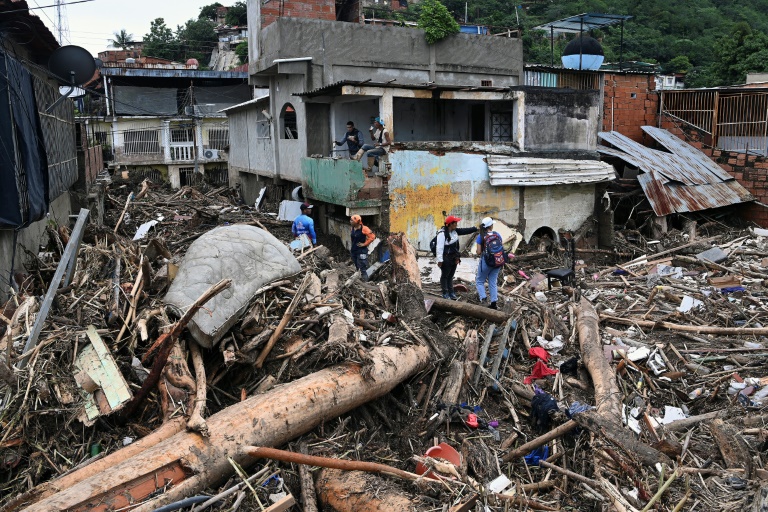
Houses and businesses were destroyed and felled trees littered the town’s streets, which were covered with mud and debris, including splintered wood, household items and mangled cars.

“The village is lost. Las Tejerias is lost,” 55-year-old resident Carmen Melendez, who has lived her whole life in the town 50 kilometers (30 miles) from the capital, Caracas, in Aragua state, told AFP.

Around a thousand people had joined the rescue efforts, Interior and Justice Minister Remigio Ceballos told AFP, as he also worked at the site.

Local residents dug through the remains of battered homes looking for loved ones, while search teams arrived with dogs hoping to find survivors trapped in the rubble. 

A butcher shop that had closed due to the pandemic and which was due to reopen Monday was buried in muddy sediment that caked the refrigerators and everything else inside. 

“We were waiting for the meat to be shipped in — to start after two years closed,” said Ramon Arvelo, one of the workers who was helping remove mud. 

“I never thought that something of this magnitude could happen; it’s a really big deal,” said Loryis Verenzuela, 50, as she looked out at the devastation through tears.

– Record rain –

“We have a huge landslide as a result of the changing climate,” Ceballos said, referring to the effects of Hurricane Julia, which passed just north of Venezuela the night before. 

“There was a record rainfall,” he added as he surveyed the disaster site — as much rain in one day as is usually seen in one month. 

“These strong rains saturated the ground,” he said. 

Images taken by rescue teams’ drones showed huge amounts of earth piled up in the streets as residents had tried to shovel out the meters of mud that flowed into their houses. 

President Nicolas Maduro declared three days of national mourning for the victims, while Venezuelans took to social media to offer assistance to the town.

Caracas baseball team Los Leones said they would organize a collection for the victims, asking for “non-perishable foods, water and clothes.”

The landslide, caused by the biggest river flood in the area in 30 years, is the worst so far this year in Venezuela, which has seen historic rain levels in recent months. 

In August, at least 15 people died in the Venezuelan Andes after heavy rains triggered mud and rock slides.

And in September, at least eight people died when floods from intense rains flowed through a religious retreat in the western part of the country.

In 1999, huge landslides killed some 10,000 people in the state of Vargas, north of Caracas.

French energy giant offers pay talks to end fuel strike

France’s TotalEnergies said Sunday it would advance annual pay talks with unions if they dropped a blockade of fuel depots and refineries that has slashed petrol supplies across the country.

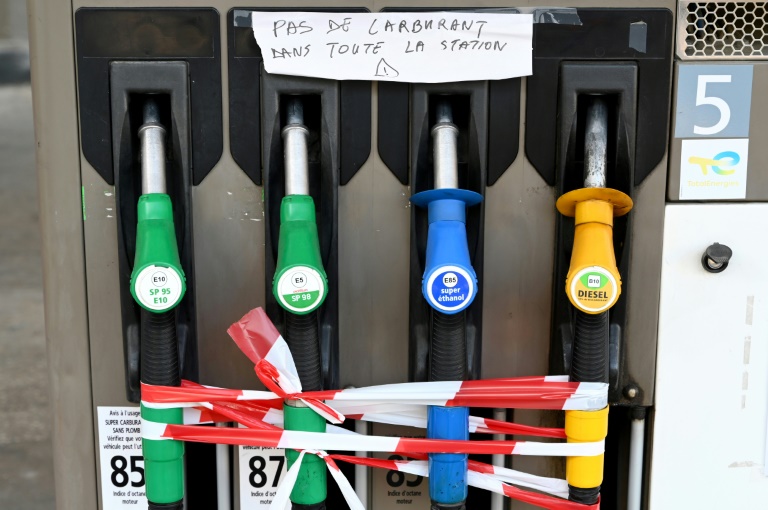
Vehicle owners have faced increasingly long waits to fill up after two weeks of strikes by workers demanding higher wages in response to soaring prices.

“I haven’t been able to work for two days now,” complained 60-year-old taxi driver Thierry.

He had “gone round the whole of Paris” to find fuel and had already been waiting for three hours at a filling station in the capital for fuel tankers to turn up, he said.

Like other major oil companies, TotalEnergies has seen its profits soar as energy prices skyrocket during the war in Ukraine. Government officials have been pressing the company to settle the standoff.

TotalEnergies runs a network of around 3,500 filling stations in France, nearly a third of the total. Most of them are low on fuel or even empty for some kinds of petrol.

“If the depot blockades end and with the agreement of all labour representatives, the company proposes to move forward the annual salary negotiations from November to October,” TotalEnergies said.

The discussions would define “how employees will benefit from TotalEnergies’ exceptional results before the end of this year, taking into account this year’s inflation”.

– Relief on the way: ministers –

On Sunday, the CGT union branch at the company — which is leading the strikes at TotalEnergies and at rival Esso-ExxonMobil — said the industrial action would continue, but that it was open to talks as soon as Monday.

“If we do start talks, it will be based on our demands — a 10-percent salary hike… retroactive for the year 2022,” branch coordinator Eric Sellini told AFP.

Currently three of Total’s refineries are blocked, including its largest, in Normandy, and a fuel depot near Flandres in the north.

Management at Esso-ExxonMobil said it would hold talks with the unions representing its staff Monday, expressing confidence it could reach a rapid settlement.

The government has already dipped into strategic stockpiles in a bid to bring relief, and exceptionally fuel tankers are being allowed to make deliveries Sunday.

“I’m all in favour of dialogue so French people don’t have to put up with this industrial action for too long,” Energy Transition Minister Agnes Pannier-Runacher told BFM television.

The government has increased supplies by 20 percent, she said, but fears of running out of fuel were aggravating the shortage. Some areas have seen a 30-percent spike in sales to motorists.

“The situation should improve tomorrow,” she added.

That sentiment was echoed by Prime Minister Elisabeth Borne.

“The situation is going to improve throughout the week,” she told journalists on Sunday on the sidelines of her visit to Algeria.

The government had freed up stocks of fuel to supply filling stations and the deliveries would arrive “progressively”, she added.

Russia blames Ukraine for Crimean bridge blast

Moscow on Sunday blamed Ukraine for the deadly blast on the bridge linking Crimea to Russia, as Ukraine denounced the latest lethal missile attack in its territory that killed at least 13 people.

“The authors, perpetrators and sponsors are the Ukrainian secret services,” Russian President Vladimir Putin said of Saturday’s Crimea bridge bombing, which he described as a “terrorist act”.

Putin was speaking during a meeting with the head of the investigation committee he has set up to look into the bombing, Russian news agencies reported.

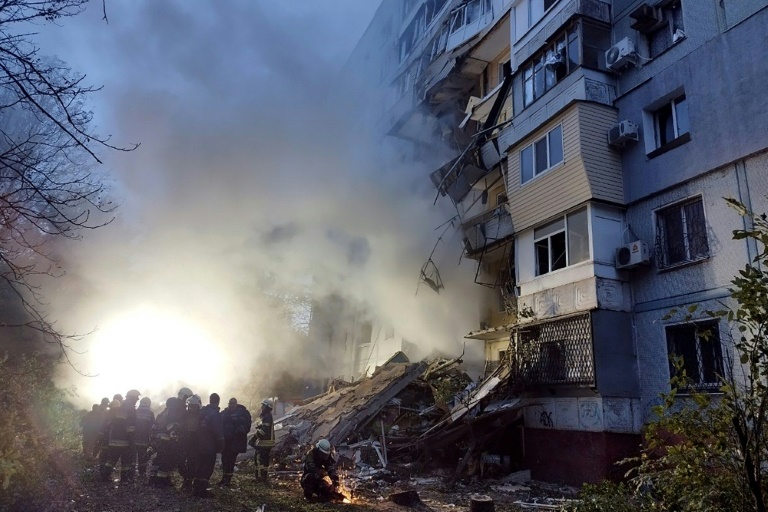
Ukrainian President Volodymyr Zelensky meanwhile denounced a Russian missile strike on Sunday that killed at least 13 people — one of them a child — in Zaporizhzhia — the latest deadly bombardment of the southern Ukrainian city.

The attack also wounded 89 people, including 11 children, according to a statement from the president’s office.

Zelensky described the “merciless strikes on peaceful people” and residential buildings as “absolute evil” perpetrated by “savages and terrorists”.

Regional official Oleksandr Starukh posted pictures of heavily damaged apartment blocks on Telegram and said a rescue operation had been launched to find victims under the rubble.

Russia officials also denounced on Sunday what they said was a surge in Ukrainian fire into its territory that had hit homes, administrative buildings and a monastery.

– Divers inspect damage –

Russia’s FBS, which is responsible for border security, reported on Sunday: “Since the start of October, the number of attacks from Ukrainian armed formations on Russia’s border territory has considerably increased.”

More than a hundred artillery attacks, concentrated on the western border regions of Belgorod, Bryansk and Kursk, had hit housing and administrative buildings, said the statement.

The attacks had killed one person and wounded five others, including a child.

The governor of Kursk region, Roman Starovoyt, said Ukrainian fire had hit the Garnalski Saint Nicolas monastery, on the border.

Although the building had been hit, starting a fire that was quickly put out, nobody was hurt, he said, posting photos of the damage on Telegram.

Moscow meanwhile said divers were to inspect the waters beneath the giant Crimea bridge on Sunday, a day after a truck bomb ignited a massive fire on the road and rail link, killing three people.

Russian Deputy Prime Minister Marat Khusnullin said the divers would make their initial report later on Sunday.

Already on Saturday, Russia said some road and rail traffic had resumed over the strategic link, a symbol of the Kremlin’s 2014 annexation of Crimea.

The 19-kilometre (12-mile) bridge is a vital supply link between Russia and the annexed Crimean peninsula.

Following the attack at dawn on Saturday, the bodies of an unidentified man and a woman were pulled out of the water, probably passengers in a car driving near the exploded truck, Moscow said.

Russian officials said they had identified the owner of the truck as a resident of Russia’s southern Krasnodar region.

The blast sparked celebrations from Ukrainians and others on social media, but Zelensky, in his nightly address on Saturday, did not directly mention the incident, and officials in Kyiv have made no direct claim of responsibility.

Until Putin’s statement on Sunday, most Russian officials had stopped short of blaming Kyiv.

– Power restored at power plant –

Putin has ordered the creation of a commission to look into the Crimea bridge blast, and the Russian leader will chair a scheduled meeting of his Security Council on Monday. 

Some military analysts argue that the blast could have a major impact if Moscow sees the need to shift already hard-pressed troops to Crimea from other regions — or if it prompts a rush by residents to leave.

Mick Ryan, a retired Australian senior officer now with the Center for Strategic and International Studies in Washington, said that even if Ukrainians were not behind the blast, it constituted “a massive influence operation win for Ukraine.

“It is a demonstration to Russians, and the rest of the world, that Russia’s military cannot protect any of the provinces it recently annexed,” he said on Twitter.

Authorities in Crimea tried to allay fears of food and fuel shortages in the territory, which has been dependent on the Russian mainland since its annexation from Ukraine.

It is just the latest in a series of setbacks for Russia.

Recent lightning territorial gains by Ukraine in the east and south have undermined the Kremlin’s official annexation of Donetsk, neighbouring Lugansk and the southern regions of Zaporizhzhia and Kherson.

After growing domestic criticism of Russia’s army, Moscow on Saturday announced that a new general — Sergei Surovikin — would take over its forces in Ukraine.

Surovikin previously led Russia’s military in southern Ukraine. He has combat experience from the 1990s conflicts in Tajikistan and Chechnya, as well as, more recently, in Syria.

Ukraine’s power operator Energoatom announced on Sunday that engineers had managed to restore power to Zaporizhzhia nuclear plant, Europe’s largest, a day after they said shelling had cut the last source of external power there.

Relief for Germany's Scholz as party wins key electoral test

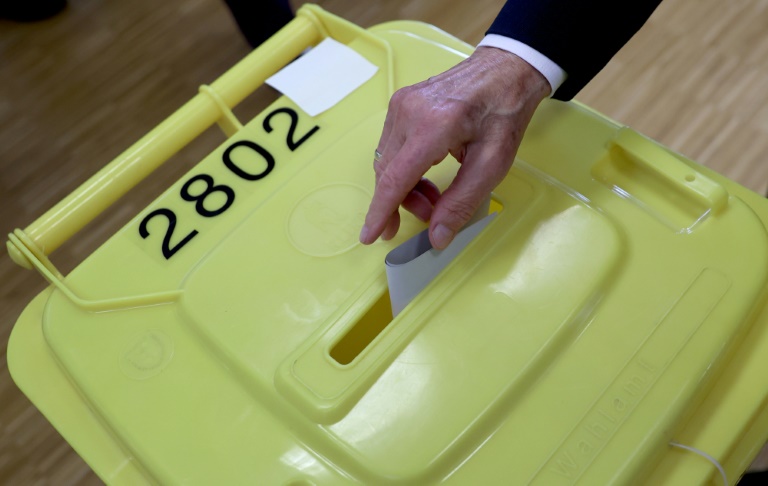
Germany’s Social Democrats on Sunday won a closely-fought regional election that was dominated by worries over soaring energy costs, giving Chancellor Olaf Scholz a welcome boost as a difficult winter looms.

Scholz’s centre-left SPD was set to remain the largest force in the coastal state of Lower Saxony, taking around 32.7-33.3 percent of the vote, according to exit polls by public broadcasters ARD and ZDF.

The conservative CDU party of former chancellor Angela Merkel came a distant second at 27.5 percent, its worst result in the state in six decades.

The election was widely billed as a key test of Scholz’s handling of the energy crisis caused by Russia’s war in Ukraine. The outcome marks a turnaround after his SPD lost the last two regional polls to the CDU, in North Rhine-Westphalia and Schleswig-Holstein.

The Greens, Scholz’s coalition partners on the federal level, surged to around 14 percent, their best-ever showing in the state.

The far-right AfD also had reason to cheer, nearly doubling its result from five years ago and climbing to almost 12 percent as it capitalised on voter anger over the rising cost of living.

The AfD “is a protest party” that benefits from “crisis and fears”, political scientist Karl-Rudolf Korte told ZDF.

The liberal FDP, Scholz’s third coalition partner in Berlin, appears to have only narrowly scraped the five-percent threshold required to enter into the regional parliament, according to the preliminary results. 

– ‘Referendum’ –

The Lower Saxony election was “very important” for Scholz, Korte told ZDF, calling it “a referendum” on the federal government’s handling of myriad crises since coming to power almost a year ago.

Russia’s war in Ukraine has sent energy costs soaring, pushing German inflation to a record-high of 10 percent in September and fuelling fears of a looming recession in Europe’s top economy.

Support for Scholz’s SPD has fallen below 20 percent in national opinion polls, well behind the CDU in first place. Scholz’s own popularity ratings have also taken a hit.

Lower Saxony’s incumbent premier Stephan Weil from the SPD, whose popularity with local residents played a large role in Sunday’s victory, said he was “relieved” his party had a clear mandate to govern in Lower Saxony.

“We fought and tonight we won, my friends,” he told supporters.

Weil, set for a third consecutive term, had previously called the election contest “the most difficult of my life”.

“Never have I seen so many question marks and worries on citizens’ faces,” he said.

The 63-year-old has cast himself as a safe pair of hands in uncertain times and wants Lower Saxony — home to auto giant Volkswagen as well as most of Germany’s wind turbines — to play a leading role in the green energy transition.

He has also welcomed a 200-billion-euro ($198-billion) energy fund newly unveiled by Scholz to shield German consumers from price shocks. 

The fund however has been criticised by European neighbours who don’t have the same fiscal largesse and fear a splintering of EU unity on Ukraine.

Weil’s main challenger in Lower Saxony, state economy minister Bernd Althusmann from the CDU, announced his resignation as regional party leader shortly after the results were announced.

Sunday’s vote was “not a pretty result for us”, said CDU secretary general Mario Czaja.

The path is now clear for Weil to ditch his coalition government with the CDU and team up with the Greens instead.

– Nuclear plant row –

A major bone of contention between the SPD and the CDU during the election race was the fate of Lower Saxony’s Emsland nuclear power plant — one of only three still operational in Germany. 

The CDU has been angered by Berlin’s decision to proceed with Emsland’s planned shutdown this year, despite the need for energy diversification as the country weans itself off Russian gas and oil.

German Economy Minister Robert Habeck, from the traditionally anti-nuclear Greens, recently announced the other two plants will be kept on standby until April 2023, in a landmark U-turn.

Weil has backed Berlin’s stance, saying Emsland was not needed to secure Lower Saxony’s energy supply.

US hurricane rebuilding rules must adapt to 'era of climate change': expert

After an extreme weather event, such as Hurricane Ian which devastated parts of Florida last month, most Americans choose to rebuild rather than move to less hazardous areas.

But as climate change increases the frequency and scale of natural disasters, does US policy need to adapt?

Gavin Smith, a professor of environmental planning at the University of North Carolina, worked for several states following major hurricanes, including Katrina in Mississippi (2005) and Matthew in North Carolina (2016).

According to him, current reconstruction standards are not up to the challenges posed by climate change, but correcting them will require real “political will.”

Smith’s responses to AFP have been lightly edited and condensed for clarity.

– Current reconstruction rules –

Q: What are the rules for re-construction after a hurricane, and are they adapted to climate change?

A: Communities must comply with the local codes and standards in place in their jurisdiction before the storm struck.

In the US, we have the National Flood Insurance Program (NFIP), which has historically been subsidized by the federal government. 

For a community to join the program, it has to adopt certain flood risk reduction standards. They include building codes as well as land use plans. 

Then, if a home is damaged in the storm more than 50 percent of their value, it must be built back to the most recent code and standards in place.

Our standard for flood is rebuilding largely back to the “100 year flood,” more accurately termed the one percent annual chance flood event. But in an era of climate change, that “100 year” flood is happening more and more often.

Most risk reduction codes and standards often reflect a climate of the past.

For example, we spent $14 billion rebuilding the levee system in New Orleans after hurricane Katrina. That levee system was built back to the “100 year flood.” 

So you could make the argument that in the era of climate change, that levee system is already out of date. 

– Political will –

Q: What do you expect from government officials?

A: Disasters can present opportunities to rebuild communities safer.

What I’m suggesting is that if we’re going to spend hundreds of millions of dollars building these communities back, we need to require communities to adopt higher codes and standards. 

But that takes political will of both members of Congress and local elected officials.

These are really difficult trillion dollar questions.

You’ll also have builders and the private sector saying, “We should limit those kinds of regulations, as we need to quickly rebuild.”

It takes a lot of political will for a mayor or for a governor to say “No, we’ve got to do what’s right in the long run.:

Unfortunately, people don’t get elected by saying “I am going to require higher standards.”

That’s not a winning slogan. It takes political will to say, enough is enough, we need to adopt higher standards, it’s going to take time, cost more, and people may have to pay more to do it.

That said, we also need to make sure we include equity in processes adopted to develop those standards. 

The shrimpers and the crabbers that live in a very modest house on the water, if we make them adopt higher standards, can they afford it?

– Rules for resilience – 

Q: Concretely, what would be these better standards?

A: A really simple way to think about it is “where” and “how” you build in relation to natural hazards, including those exacerbated by climate change.

The “how” include elevating structures, more stringent standards for wind performance, like better roof shingles, hardening our infrastructure — communication systems, bridges, roads, levees… We can also do this by protecting natural systems like dunes and wetlands.

The “where” is what we would often refer to as land use planning.

Should we be putting a hospital, or a school, in an area subject to storm surge? Probably not. 

A community may choose to say, we’re not going to build a house within 200 meters of the beach. 

Or adopt a gradual disinvestment strategy in extremely risky areas (managed retreat). It’s very difficult to do politically, but it’s happening on a small scale.

Resilience is really about a series of protective measures or choices. It’s not just one. A levee, if that’s your only protection and it fails, to me that’s not resilience. 

Greece and Egypt call Turkish-Libyan gas deal 'illegal'

Egypt and Greece on Sunday said a deal allowing Turkish hydrocarbon exploration in Libya’s Mediterranean waters was “illegal” as Athens said it would oppose it by all “legal means”.

On Monday, Turkey said it had signed a memorandum of understanding on exploration for hydrocarbons in Libya’s seas with the authorities in Tripoli.

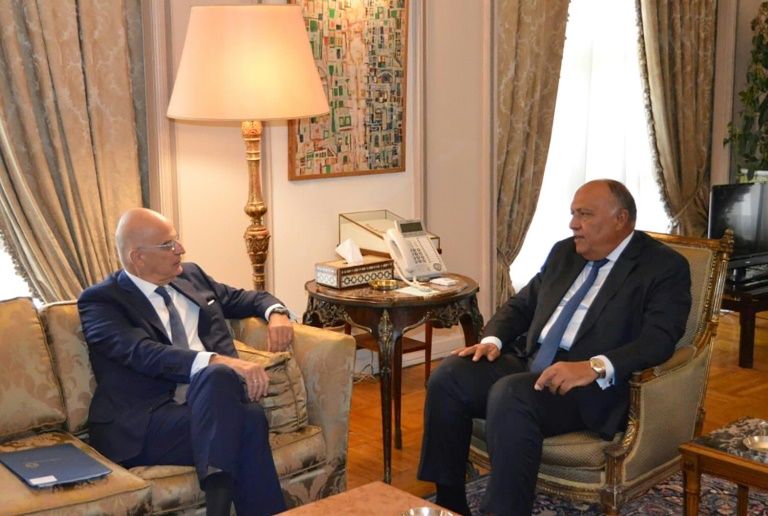
“This agreement threatens stability and security in the Mediterranean,” Greek Foreign Minister Nikos Dendias said in Cairo, where he met his Egyptian counterpart Sameh Shoukry.

The deal follows an agreement Turkey signed three years ago with Tripoli that demarcated the countries’ shared maritime borders.

Greece, Egypt and Cyprus believe the 2019 agreement violates their economic rights in an area suspected to contain vast natural gas reserves.

“We will use all legal means to defend our rights,” Dendias added.

He said Tripoli “does not have the necessary sovereignty over this area”, and that the agreement is therefore “illegal and inadmissible”.

Shoukry charged that the mandate of the authorities in Tripoli has “expired” and that “the government of Tripoli does not have the legitimacy to sign agreements”.

A rival Libyan administration in the war-torn country’s east — which since March has been attempting to take office in Tripoli and also argues the government’s mandate has expired — has rejected the accord.

Monday’s deal builds on an agreement signed between Ankara and a previous Tripoli-based administration in 2019, at the height of a battle for the capital after eastern-based military chief Khalifa Haftar attempted to seize it by force.

The delivery of Turkish drones to Tripoli-based forces shortly afterwards was seen as crucial in the victory over Haftar, who was backed at the time by Egypt, Russia and the United Arab Emirates.

The question of rights to Libya’s vast hydrocarbon resources has become more urgent this year as global energy prices have soared.

The European Union has denounced the 2019 maritime border deal, while France has said the recent agreement was “not in accordance with international law”.

Close Bitnami banner
Bitnami