World

Deal reached for civil aviation to try for net-zero emissions by 2050

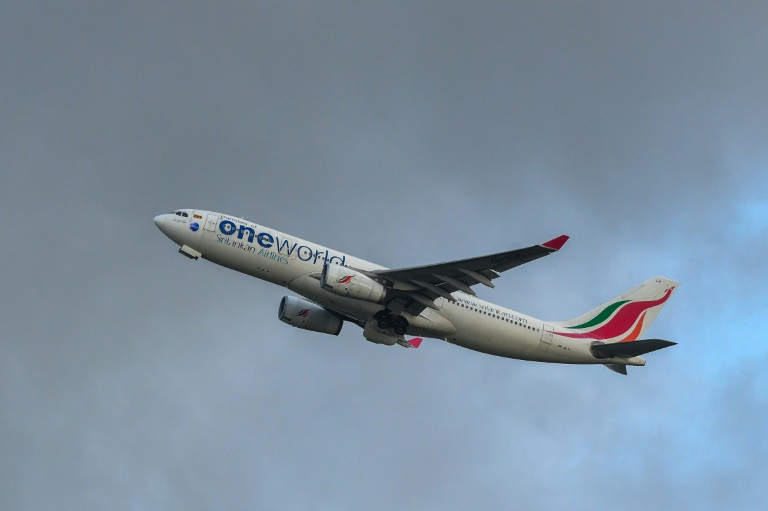
UN aviation agency members on Friday set the year 2050 as their goal for achieving net-zero carbon emissions for air travel — an industry often criticized for its outsized role in climate change.

The assembly, which brought together representatives from 193 nations at the International Civil Aviation Organization (ICAO) headquarters in Montreal, reached a “historic agreement on a collective long-term aspirational goal of net-zero carbon emissions by 2050!” the United Nations agency said on Twitter.

It added that it “continues to advocate for much more ambition and investment by states to ensure aviation is fully decarbonized by 2050 or earlier.”

“It’s an excellent result,” a diplomatic source told AFP, revealing that only four countries — including China, the main thrust of global growth in air travel — “had expressed reservations.”

The agreement, however, was far from satisfying for some non-governmental organizations expressing regret it didn’t go far enough and was not legally binding.

The air transportation industry has faced growing pressure to deal with its outsized role in the climate crisis.

Currently responsible for 2.5 percent to three percent of global CO2 emissions, the sector’s switch to renewable fuels is proving difficult, even if the aeronautics industry and energy companies are seeking progress.

The International Air Transport Association said airlines were “strongly encouraged” by the adoption of the climate goal, coming one year after the IATA endorsed the same position at its own general meeting.

IATA director general Willie Walsh said now “we expect much stronger policy initiatives in key areas of decarbonization such as incentivizing the production capacity of sustainable aviation fuels.”

According to airlines, it will require massive investments — $1.55 trillion between 2021 and 2050 — to decarbonize aviation.

“The global aviation community welcomes this landmark agreement,” said Luis Felipe de Oliveira, head of Airports Council International which represents 1,950 airports in 185 countries.

“This is a watershed moment in the effort to decarbonize the aviation sector with both governments and industry now heading in the same direction, with a common policy framework,” he said in a statement.

– Deal is non-binding –

The French Minister in charge of Transport, Clement Beaune, welcomed “a major step forward,” saying on Twitter that “there will be no future for the plane without decarbonization” and that he was “proud of having fought this fight with my European counterparts.”

Planes in general attract particularly sharp criticism because only about 11 percent of the world’s population fly each year, according to a widely quoted 2018 study by Nordic researchers.

In addition, 50 percent of airline emissions come from the one percent of travelers who fly the most, it found.

“This is not the aviation’s Paris agreement moment. Let’s not pretend that a non-binding goal will get aviation down to zero,” said Jo Dardenne of NGO Transport & Environment.

She also expressed disappointment over lacklustre tweaks considered by delegates to the sector’s carbon offsetting and reduction scheme, known as CORSIA.

During the 10-day meeting, Russia had sought but failed to get enough votes to be re-elected to the ICAO’s governing council, which is responsible for ensuring compliance with aviation rules.

Moscow was accused of breaking international rules by registering hundreds of leased planes in Russia rather than returning them, as required by sanctions imposed after its invasion of Ukraine in February.

The ICAO general meeting was the first since the start of the pandemic, which had brought the airline industry to its knees. In 2021 passenger numbers stood at only half the 4.5 billion in 2019, marking a small rebound from the 60 percent year-over-year drop in 2020.

The sector hopes in 2022 to draw 83 percent of its customer levels from three years ago and to become profitable again worldwide next year.
Deal reached for civil aviation to try for net-zero emissions by 2050

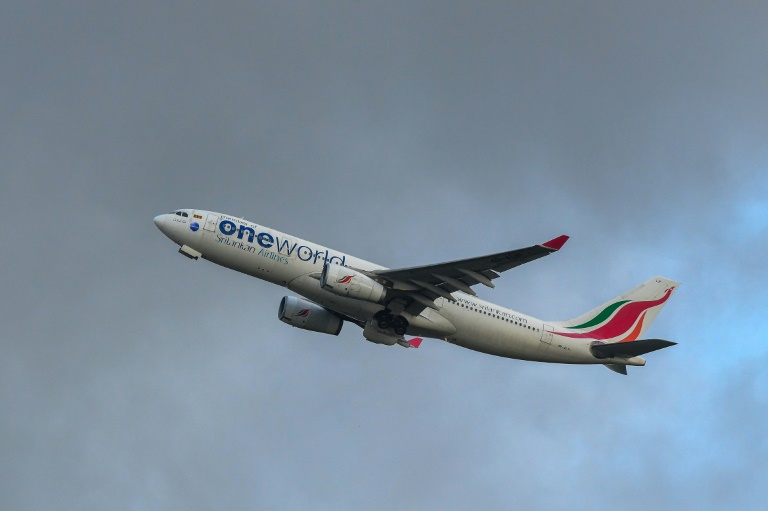
UN aviation agency members on Friday set the year 2050 as their goal for achieving net-zero carbon emissions for air travel — an industry often criticized for its outsized role in climate change.

The assembly, which brought together representatives from 193 nations at the International Civil Aviation Organization (ICAO) headquarters in Montreal, reached a “historic agreement on a collective long-term aspirational goal of net-zero carbon emissions by 2050!” the United Nations agency said on Twitter.

It added that it “continues to advocate for much more ambition and investment by states to ensure aviation is fully decarbonized by 2050 or earlier.”

“It’s an excellent result,” a diplomatic source told AFP, revealing that only four countries — including China, the main thrust of global growth in air travel — “had expressed reservations.”

The agreement, however, was far from satisfying for some non-governmental organizations expressing regret it didn’t go far enough and was not legally binding.

The air transportation industry has faced growing pressure to deal with its outsized role in the climate crisis.

Currently responsible for 2.5 percent to three percent of global CO2 emissions, the sector’s switch to renewable fuels is proving difficult, even if the aeronautics industry and energy companies are seeking progress.

The International Air Transport Association said airlines were “strongly encouraged” by the adoption of the climate goal, coming one year after the IATA endorsed the same position at its own general meeting.

IATA director general Willie Walsh said now “we expect much stronger policy initiatives in key areas of decarbonization such as incentivizing the production capacity of sustainable aviation fuels.”

According to airlines, it will require massive investments — $1.55 trillion between 2021 and 2050 — to decarbonize aviation.

“The global aviation community welcomes this landmark agreement,” said Luis Felipe de Oliveira, head of Airports Council International which represents 1,950 airports in 185 countries.

“This is a watershed moment in the effort to decarbonize the aviation sector with both governments and industry now heading in the same direction, with a common policy framework,” he said in a statement.

– Deal is non-binding –

The French Minister in charge of Transport, Clement Beaune, welcomed “a major step forward,” saying on Twitter that “there will be no future for the plane without decarbonization” and that he was “proud of having fought this fight with my European counterparts.”

Planes in general attract particularly sharp criticism because only about 11 percent of the world’s population fly each year, according to a widely quoted 2018 study by Nordic researchers.

In addition, 50 percent of airline emissions come from the one percent of travelers who fly the most, it found.

“This is not the aviation’s Paris agreement moment. Let’s not pretend that a non-binding goal will get aviation down to zero,” said Jo Dardenne of NGO Transport & Environment.

She also expressed disappointment over lacklustre tweaks considered by delegates to the sector’s carbon offsetting and reduction scheme, known as CORSIA.

During the 10-day meeting, Russia had sought but failed to get enough votes to be re-elected to the ICAO’s governing council, which is responsible for ensuring compliance with aviation rules.

Moscow was accused of breaking international rules by registering hundreds of leased planes in Russia rather than returning them, as required by sanctions imposed after its invasion of Ukraine in February.

The ICAO general meeting was the first since the start of the pandemic, which had brought the airline industry to its knees. In 2021 passenger numbers stood at only half the 4.5 billion in 2019, marking a small rebound from the 60 percent year-over-year drop in 2020.

The sector hopes in 2022 to draw 83 percent of its customer levels from three years ago and to become profitable again worldwide next year.
Russian-backed forces claim gains near Bakhmut in east Ukraine

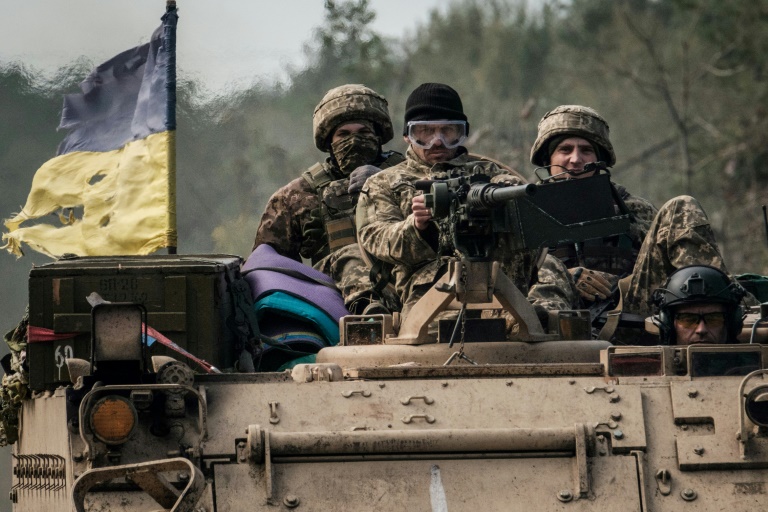
Russian forces said Friday they had captured ground in Donetsk in east Ukraine, their first claim of new gains since Kyiv grabbed momentum with a counter-offensive that rattled Russia’s war effort. 

The announcement came as Russia’s Orthodox leader said President Vladimir Putin’s rule had been divined by God, congratulating him on his 70th birthday, and as the Nobel Committee awarded the Peace Prize to rights defenders in Russia, Ukraine and Belarus.

Separatist forces in the war-battered Donetsk region said they had retaken a series of villages near the Ukraine-controlled industrial town of Bakhmut, which has been under Russian shelling for weeks.

“On the territory of the Donetsk People’s Republic, a grouping of troops of the Donetsk and Lugansk republics, with fire support from Russian forces, liberated Otradovka, Veselaya Dolina and Zaitsevo,” they said on social media.

The Donetsk region, which has been partially controlled by Kremlin-backed separatists for years, is a key prize for Russian troops that invaded Ukraine in February.

But Ukraine’s forces in recent weeks have been pushing back against Russian soldiers across the frontlines in the south and in the east, including in parts of Donetsk.

Ukrainian President Volodymyr Zelensky heralded his forces’ newfound effectiveness against Russia, saying they had recaptured nearly 2,500 square kilometres (965 square miles) in the counteroffensive that began late last month.

“This week alone, our soldiers liberated 776 square kilometres of territory in the east of our country and 29 settlements, including six in Lugansk region,” Zelensky said late Friday.

AFP journalists in the centre of Bakhmut heard the sound of heavy artillery and multiple rocket launch systems near the remains of a smashed bridge over the Bakhmutka river.

Zelensky has also pushed to punish Russia in other areas.

He urged Brussels to ramp up pressure on Russia’s energy sector, a day after the EU imposed a fresh round of sanctions on Moscow that included the expansion of import/export bans.

The International Monetary Fund announced Friday it will provide $1.3 billion in emergency aid to Ukraine.

The package will help meet Ukraine’s “urgent balance of payment needs… while playing a catalytic role for future financial support from Ukraine’s creditors and donors,” the crisis lender said in a statement.

– Plumes of black smoke –

Meanwhile in Bakhmut a civilian volunteer from humanitarian group Vostok SOS, 29-year-old Edvard Skoryk, told AFP there had been “street combat” near his home across the river.

South of the city, toward the apparently seized villages, occasional columns of black smoke rose after shells exploded. 

Civilians flinched and sometimes dove for cover as projectiles whistled overhead. Occasional bursts of machine gun fire were also audible. 

Ukraine’s lightning territorial gains in the east and south have undermined a claim from the Kremlin last week that it annexed Donetsk, neighbouring Lugansk and the southern regions of Zaporizhzhia and Kherson.

The four territories create a crucial land corridor between Russia and the Crimean peninsula, annexed by Moscow in 2014, and together make up around 20 percent of Ukraine.

In Kherson, the Moscow-installed deputy head of the region said Friday that five civilians were killed in shelling by Kyiv’s forces, as Ukraine pushes its counter-offensive to reclaim the area.

“Militants from the Ukrainian military fired at a bus carrying civilians on the Daryevsky bridge. Civilians were on their way to work,” he said on social media, adding another five people had been wounded.

Kyiv announced this week it had recaptured some 500 square kilometres in Kherson alone.

This included around 30 towns and villages, potentially trapping as many as 20,000 Russian troops on the western bank of the Dnieper River that cuts through Kherson.

– ‘Safety and justice’ –

Ukraine’s Defence Minister Oleksiy Reznikov on Friday urged Russian fighters to lay down their arms, promising their lives would be spared and they would be safe.

“You can still save Russia from tragedy and the Russian army from humiliation,” Reznikov said in Russian in a video addressed to the invading troops. 

“We guarantee life, safety and justice for all who refuse to fight immediately. And we will ensure a tribunal for those who gave criminal orders,” he promised.

The Kremlin has not only pushed on in Donetsk, but Russian drones struck the central industrial city of Zaporizhzhia, where Europe’s largest nuclear power plant is located.

Officials said Friday the attacks had hit industrial sites, one day after Russian strikes on the city centre killed 11 people.

US President Joe Biden had warned Thursday the world is facing nuclear “Armageddon”, and that Putin may use his atomic arsenal as Russia struggles against Ukraine’s counteroffensive.

But the White House dialed back the Biden alarm the next day, saying the United States has “not seen any reason to adjust our own strategic nuclear posture,” and that the president’s comments did not reflect new intelligence.

More than seven months after Russia’s invasion, Putin has made thinly veiled threats to use nuclear weapons.

Russia labels star rapper Oxxxymiron a 'foreign agent': ministry

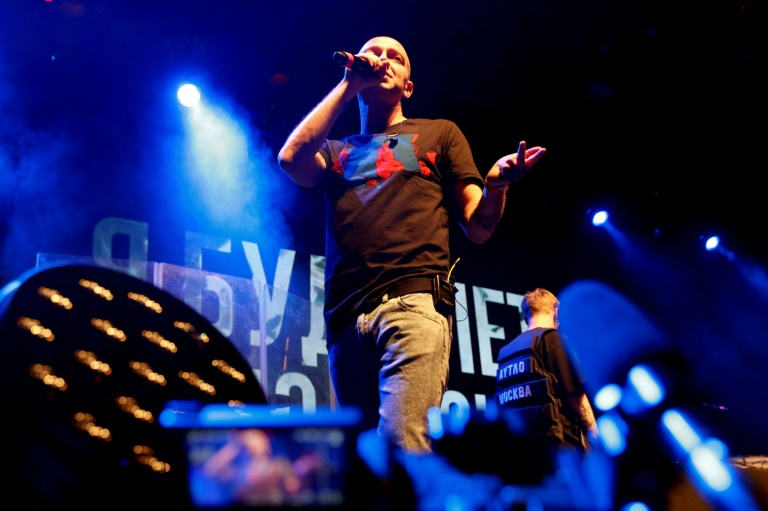
Russia on Friday labelled superstar rapper Oxxxymiron, popular among young Russians, a “foreign agent”, according to the interior ministry’s website.

Oxxxymiron, the stage name of 37-year-old Miron Fyodorov, has called the Kremlin’s Ukraine offensive a “catastrophe and a crime”. 

His name was added to a register of “foreign agents” — a term used to crackdown on Kremlin critics — on the ministry’s website.  

The rapper is one of thousands of Russians who left Russia since the Kremlin sent troops to Ukraine and has organised concerts in support of Ukrainian refugees from abroad.

Popular Russian science fiction writer Dmitry Glukhovsky — who also denounced the offensive and was put on a wanted list for “discrediting” the Russian army — was also labelled a “foreign agent”.

The author of a 2002 post-apocalyptic fiction novel, “Metro 2033”, was put on the list after a Russian court ordered his arrest in absentia for his criticism of the offensive.

Feminist politician Alena Popova — who has long campaigned for domestic violence legislation in Russia — and a journalist for Radio Free Europe/Liberty, Irina Storozheva, were also added to the foreign agent list. 

The label, which is reminiscent of the “enemy of the people” of the Soviet era, has been used extensively against opponents, journalists and human rights activists accused of conducting foreign-funded political activities. 

Stocks slump, dollar boosted by US jobs data

Stocks slid and the dollar surged Friday after US jobs data showed only a timid slowdown in the labor market, setting the stage for further aggressive interest rate hikes. 

Equity markets have taken a battering in the past couple of months, as the US Federal Reserve has made it clear it intends to continue to aggressively raise interest rates until soaring inflation is tamed, even if that means sending the economy into a recession.

There was a brief rebound at the start of the week, when investors hoped data pointing to an economic slowdown would allow the Fed to “pivot,” or slow down rate hikes.

However, the jobs report shows the US labor market is still robust, with hiring in the US economy slowing only slightly in September, to a net gain of 263,000 jobs, from 315,000 in August. 

That was more than the consensus forecast for a net gain of 250,000, sending equities lower and the dollar higher. 

“Those hoping for a Fed pivot have been sorely disappointed with today’s job numbers, which have confirmed that (the) US economy continues to rumble along quite well,” said Chris Beauchamp, chief market analyst at online trading platform IG.

“The latest bear market bounce has now begun to wilt as investors wearily return to expectations” of further Fed rate hikes.

Futures markets show investors saw the report as boosting the odds that the Fed will again undertake a 0.75 percentage point interest rate increase in November.

Major US indices were in the red the entire day, with the broad-based S&P 500 finishing 2.8 percent lower.

In Europe, Frankfurt fell 1.6 percent, and Paris shed 1.2 percent. London ended the day 0.1 percent lower. 

“Investors are simultaneously fretting that the fall in the pace of hirings indicates a slowing economy, but also that the better-than-expected data shows that the jobs markets hasn’t slowed enough to stop the Fed from hiking rates aggressively,” said markets analyst Susannah Streeter at Hargreaves Lansdown brokerage.  

The next data point that the Fed, and investors, will be scrutinizing is the consumer price index report next week.

Elsewhere, oil prices jumped and were set for their biggest weekly gain since March after OPEC and other major producers led by Russia agreed to slash daily output by two million barrels.

– Key figures around 2030 GMT –

New York – Dow: DOWN 2.1 percent at 29,296.79 (close)

New York – S&P 500: DOWN 2.8 percent at 3,639.66 (close)

New York – Nasdaq: DOWN 3.8 percent at 10,652.40 (close)

London – FTSE 100: DOWN 0.1 percent at 6,991.09 (close)

Frankfurt – DAX: DOWN 1.6 percent at 12,273.00 (close)

Paris – CAC 40: DOWN 1.2 percent at 5,866.94 (close)

EURO STOXX 50: DOWN 1.7 percent at 3,375.46 (close)

Tokyo – Nikkei 225: DOWN 0.7 percent at 27,116.11 (close)

Hong Kong – Hang Seng Index: DOWN 1.5 percent at 17,740.05 (close)

Shanghai – Composite: Closed for a holiday

Pound/dollar: DOWN at $1.1082 from $1.1162 on Thursday

Euro/dollar: DOWN at $0.9743 from $0.9791

Euro/pound: UP at 87.987 pence from 87.71 pence

Dollar/yen: UP at 145.38 yen from 145.14 yen

Brent North Sea crude: UP 3.5 percent at $97.92 per barrel

West Texas Intermediate: UP 4.7 percent at $92.64 per barrel

burs-jmb/to

France's Mbappe tops football earnings list at $128 mn: Forbes

French superstar striker Kylian Mbappe will earn a record $128 million in annual earnings to top the list of the world’s highest-paid football players, according to a Friday Forbes magazine report.

The magazine noted Mbappe crossed the $100 million milestone at age 23 while such legends as Lionel Messi and Cristiano Ronaldo were in their 30s and at the peak of their careers when crossing that money mark for the first time.

Mbappe signed a three-year contract extension in May to remain with dominant Ligue 1 side Paris-Saint Germain.

Forbes reported the deal will bring Mbappe about $110 million for his salary and season share of a signing bonus plus an estimated $18 million in annual endorsement income from such companies as Nike, Dior, Hublot and Oakley.

Mbappe was on the cover of the EA Sports FIFA video game, founded the production company Zebra Valley and is an investor in fantasy NFT platform Sorare.

“He’s a global icon already,” Sorare co-founder Nicolas Julia told Forbes. “He wants to aid the world and show, also, that huge things can be built out of France.”

PSG teammate Messi, 35, ranks second at $120 million with Manchester United’s Ronaldo, 37, third on $100 million. They had shared the top two spots since 2014 and still set the endorsements pace, Ronaldo at $60 million and Messi at $55 million.

In all, the top top-10 players will collect $652 million this season, an 11% jump from last year’s $585 million figure. Mbappe, Messi and Portugal’s Ronaldo together account from more than half of that money total.

PSG forward Neymar of Brazil ranked fourth on $87 million followed in order by Mohamed Salah, on $53 million, Erling Haaland on $39 million, Robert Lewandowski at $35 million, Eden Hazard at $31 million, Andres Iniesta at $30 million and Kevin De Bruyne at $29 million.

EU leaders struggle for answer to Putin's 'energy missile'

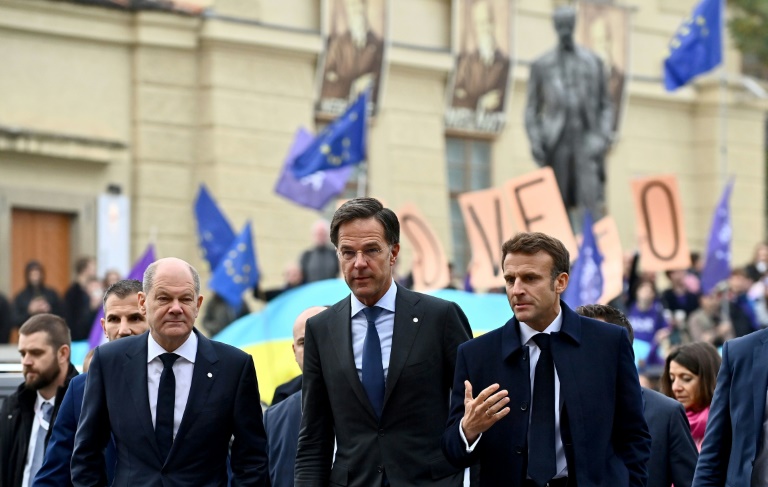
EU leaders wrestled on Friday to come up with a plan to tackle soaring energy costs as they struggled with the fallout from Russia’s war on Ukraine at a summit in Prague. 

President Volodymyr Zelensky urged further sanctions on Moscow’s energy sector and more arms as the bloc looks to maintain its backing for Ukraine and hold a tough line against the Kremlin.

“We must be strong – until our common victory, to preserve all that we value so much,” Zelensky told the leaders by videolink. 

“We must invest now in our defence, in our security, in our cooperation as much as possible.”

The leaders also discussed ways to better protect their critical infrastructure in the wake of leaks from the Russia-Europe Nord Stream gas pipelines that have been blamed on “sabotage”.

But it was the sharp disagreements over how to tackle the energy crisis that were the major focus of attention as the 27 nations wrangled over the best plan to try to bring down prices.

Europe is facing an energy crunch as the cost of electricity generation skyrockets because of a massive surge in gas prices caused by Russia turning off the taps.

“Russia has fired an energy missile at the European continent and the world,” European Council head Charles Michel said. 

Governments across the bloc are scrambling to lower bills for their consumers, but they rely on different sources for their energy and are split over the solutions.

EU executive head Ursula von der Leyen is proposing a “roadmap” of measures to help ease the burden — including potential moves to cap the price of gas. 

However, there is no consensus on how any caps could work and leaders are not set to take a firm decision until a summit in Brussels later this month.  

“We will have a lot of work this autumn and winter and it will not be easy,” German Chancellor Olaf Scholz said.  

– Not ‘intimidated’ –

More than half of the bloc have pushed for the EU to impose a price ceiling on how much it would pay for gas piped or shipped in, as the northern hemisphere winter sets in.

But Germany has so far stood in the way over fears that the move could divert precious supplies away from Europe.

“A price cap on gas if that could be achieved would be grand, with the caveat that we cannot endanger security of supplies,” said Latvian Prime Minister Krisjanis Karins.

“We cannot set the price so that no one would sell gas into Europe.”

Berlin has come under fire from other EU members for dragging its feet on the issue while announcing a 200-billion-euro ($199-billion) fund to subsidise gas purchases at home.

“My message to Germany is be united with all the others because during difficult times everybody has to agree on a common denominator,” Polish Prime Minister Mateusz Morawiecki said.

Despite some discontent from Hungary, the bloc has managed to remain largely united in its opposition to the Kremlin as Putin has escalated the conflict by claiming four occupied regions of Ukraine.

– ‘Ukraine needs support now’ –

A broader summit of 44 nations from across Europe held in Prague on Thursday highlighted Moscow’s isolation.

Michel insisted the EU does not “intend to be intimidated” after US President Joe Biden warned of the risk of nuclear “Armageddon” as Putin ratcheted up his threats. 

The bloc is looking to maintain its backing for Kyiv as Zelensky’s troops push Russian forces back on several fronts over seven months into the war. 

Ukraine is urging the EU to speed up much-needed economic support, after Brussels on Monday signed a memorandum of understanding to provide five billion euros.

On the military front, the bloc is planning to launch a training mission for Ukrainian forces later this month.

It is also eyeing a possible fresh tranche of funding for arms for Ukraine that would take its overall spending on weaponry to three billion euros.

French President Emmanuel Macron for his part announced Paris was setting up a special 100-million-euro fund to allow Kyiv to buy arms directly. 

“Ukraine needs our support not tomorrow, Ukraine needs support today, right now,” said Lithuanian President Gitanas Nauseda. 

EU leaders struggle for answer to Putin's 'energy missile'

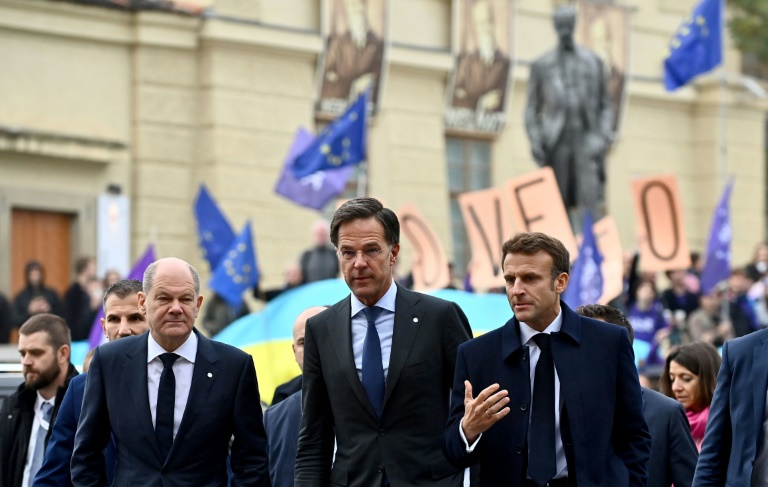
EU leaders wrestled on Friday to come up with a plan to tackle soaring energy costs as they struggled with the fallout from Russia’s war on Ukraine at a summit in Prague. 

President Volodymyr Zelensky urged further sanctions on Moscow’s energy sector and more arms as the bloc looks to maintain its backing for Ukraine and hold a tough line against the Kremlin.

“We must be strong – until our common victory, to preserve all that we value so much,” Zelensky told the leaders by videolink. 

“We must invest now in our defence, in our security, in our cooperation as much as possible.”

The leaders also discussed ways to better protect their critical infrastructure in the wake of leaks from the Russia-Europe Nord Stream gas pipelines that have been blamed on “sabotage”.

But it was the sharp disagreements over how to tackle the energy crisis that were the major focus of attention as the 27 nations wrangled over the best plan to try to bring down prices.

Europe is facing an energy crunch as the cost of electricity generation skyrockets because of a massive surge in gas prices caused by Russia turning off the taps.

“Russia has fired an energy missile at the European continent and the world,” European Council head Charles Michel said. 

Governments across the bloc are scrambling to lower bills for their consumers, but they rely on different sources for their energy and are split over the solutions.

EU executive head Ursula von der Leyen is proposing a “roadmap” of measures to help ease the burden — including potential moves to cap the price of gas. 

However, there is no consensus on how any caps could work and leaders are not set to take a firm decision until a summit in Brussels later this month.  

“We will have a lot of work this autumn and winter and it will not be easy,” German Chancellor Olaf Scholz said.  

– Not ‘intimidated’ –

More than half of the bloc have pushed for the EU to impose a price ceiling on how much it would pay for gas piped or shipped in, as the northern hemisphere winter sets in.

But Germany has so far stood in the way over fears that the move could divert precious supplies away from Europe.

“A price cap on gas if that could be achieved would be grand, with the caveat that we cannot endanger security of supplies,” said Latvian Prime Minister Krisjanis Karins.

“We cannot set the price so that no one would sell gas into Europe.”

Berlin has come under fire from other EU members for dragging its feet on the issue while announcing a 200-billion-euro ($199-billion) fund to subsidise gas purchases at home.

“My message to Germany is be united with all the others because during difficult times everybody has to agree on a common denominator,” Polish Prime Minister Mateusz Morawiecki said.

Despite some discontent from Hungary, the bloc has managed to remain largely united in its opposition to the Kremlin as Putin has escalated the conflict by claiming four occupied regions of Ukraine.

– ‘Ukraine needs support now’ –

A broader summit of 44 nations from across Europe held in Prague on Thursday highlighted Moscow’s isolation.

Michel insisted the EU does not “intend to be intimidated” after US President Joe Biden warned of the risk of nuclear “Armageddon” as Putin ratcheted up his threats. 

The bloc is looking to maintain its backing for Kyiv as Zelensky’s troops push Russian forces back on several fronts over seven months into the war. 

Ukraine is urging the EU to speed up much-needed economic support, after Brussels on Monday signed a memorandum of understanding to provide five billion euros.

On the military front, the bloc is planning to launch a training mission for Ukrainian forces later this month.

It is also eyeing a possible fresh tranche of funding for arms for Ukraine that would take its overall spending on weaponry to three billion euros.

French President Emmanuel Macron for his part announced Paris was setting up a special 100-million-euro fund to allow Kyiv to buy arms directly. 

“Ukraine needs our support not tomorrow, Ukraine needs support today, right now,” said Lithuanian President Gitanas Nauseda. 

Veil protests present Iran with its 'Berlin Wall' moment, activist says

Iran may use the Islamic veil as a tool of oppression, but the hijab is also the weakest pillar of an embattled regime trying to forestall its own “Berlin Wall” moment, an Iranian-American activist based in New York tells AFP.

Masih Alinejad, 45, who fled Iran in 2009, became known in 2014 after she launched a social media campaign called mystealthyfreedom.org that encourages Iranian women to protest against the obligation to wear the hijab in their country.

In her opinion, Iranian women rejecting the mandatory hijab will have a similar effect as the fall of the Berlin Wall in 1989, which marked the beginning of the end of the Soviet Union.

The journalist and activist now has 500,000 followers on Twitter and eight million followers on Instagram, where she posts dozens of photos or videos every day of Iranian women removing their hijab or images of the violent repression in her homeland.

She has become a voice in exile for the protests that have rocked Iran since their initial spark: the death on September 16 of 22-year-old Mahsa Amini at the hands of morality police in Tehran.

Alinejad’s public standing increased markedly in mid-2021, when US prosecutors indicted four “Iranian intelligence agents” for plotting in 2018 to kidnap her and whisk her back to Iran, where one of her brothers was also imprisoned. 

Iran denied any involvement in the scheme.

– ‘The weakest pillar’ –

“To me, the compulsory hijab is like the Berlin Wall. If we tear this wall down, the Islamic Republic won’t exist,” Alinejad told AFP, a flower peeking out from her curly and voluminous hair.

The comparison with the toppling of the Berlin Wall is dear to her and clearly needles Iran’s supreme leader Ayatollah Ali Khamenei, who in a speech this week said “US political elements” making the analogy do not feel sorry “for the death of a young girl,” but instead have broader political aims.

“That actually shows you that compulsory hijab is the weakest pillar of the Islamic Republic. That is why the regime is really scared of this revolution,” Alinejad said.

She argued that if Iranian women succeed in saying no “to those who are telling them what to wear, these women will be more powerful to say no to (a) dictator.”

The crackdown on the demonstrations caused the death of dozens of people, human rights organizations say.

The hijab “is a tool to oppress us… to control women” and “to control the whole society through women,” Alinejad said.

Iran’s TikTok generation is protesting the use of women’s bodies as “a political platform for our government, for the Islamic regime to write its own ideology.”

– ‘I’m not safe here’ –

Far from her country of birth, Alinejad has found employment as host of a program on the Persian service of Voice of America, the US government-funded outlet. She’s also faced criticism on social media for taking a hard line opposing any negotiation with Tehran on nuclear issues. Some see her as serving US interests and feeding Islamophobia. 

She offers a tart response that brings tears to her eyes: “I invite them all to go to Afghanistan, to go to Iran, live under Sharia law.”

She routinely pillories Western leaders who comply with the obligation to wear a hijab during their visits to Iran, targeting in particular the former French minister Segolene Royal, or the former representative of the European Union, the Italian Federica Mogherini.

“The hijab can be a choice only the day that all women around the world can choose what they want to wear,” she said.

Alinejad says fear has been a constant presence both inside Iran and abroad. Speaking figuratively for Iranian women as a whole, she said: “From the age of seven, if I don’t cover this hair, I (wouldn’t) be able to go to school. I get lashes. I go to jail. I get killed.”

Exiled life in the United States holds its own dangers. “I’m not safe here in America,” she said, recalling the 2018 kidnapping attempt against her.

More recently, in late July, a man was arrested after loitering around her home in Brooklyn. The FBI found a Kalashnikov in his car. Since then, the activist has had to move. 

Meta warns of password stealing phone apps

Meta warned a million Facebook users Friday that they have been “exposed” to seemingly innocuous smartphone applications designed to steal passwords to the social network.

So far this year, Meta has identified more than 400 “malicious” apps tailored for smartphones powered by Apple or Android software and available at the Apple and Google app stores, director of threat disruption David Agranovich said during a briefing.

“These apps were listed on the Google Play Store and Apple’s App Store and disguised as photo editors, games, VPN services, business apps and other utilities to trick people into downloading them,” Meta said in a blog post.

The apps often ask people to login with their Facebook account information to use promised features, stealing usernames and passwords if entered, according to Meta’s security team.

“They are just trying to trick people into entering in their login information in a way that enables hackers to access their accounts,” Agranovich said of the apps.

“We will notify one million users that they may have been exposed to these applications; that is not to say they have been compromised.”

More than 40 percent of the apps Meta listed involved ways to edit or manipulate images, and some were as seemingly simple as using smartphones as flashlights.

“Our sense is these types of malicious app developers try to target multiple services,” Agranovich said, noting the app creators are likely after passwords to more than just Facebook accounts.

“The targeting here seemed to be relatively indiscriminate — get people to download the applications around the world in an attempt to get access to as many login credentials as possible.”

Meta said that it shared what it discovered with Apple and Google, who control what is offered at their respective app shops and each vet offerings.

Apple told AFP that only 45 of the 400 applications highlighted by Meta were on its operating system, and that the company has already removed them from its app store.

Google said that most of the apps Meta flagged had already been identified and removed from the Play store by its own vetting systems.

“All of the apps identified in the report are no longer available on Google Play,” a spokesperson told AFP.

“Users are also protected by Google Play Protect, which blocks these apps on Android.”

Close Bitnami banner
Bitnami