World

EU leaders struggle for answer to Putin's 'energy missile'

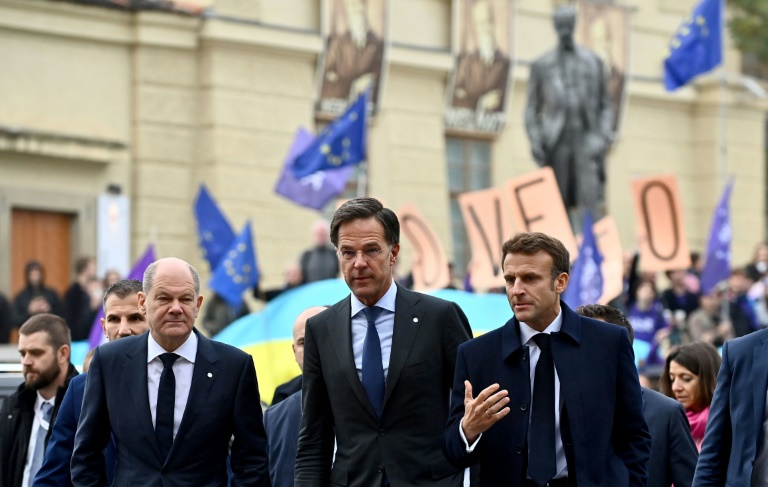
EU leaders wrestled on Friday to come up with a plan to tackle soaring energy costs as they struggled with the fallout from Russia’s war on Ukraine at a summit in Prague. 

President Volodymyr Zelensky urged further sanctions on Moscow’s energy sector and more arms as the bloc looks to maintain its backing for Ukraine and hold a tough line against the Kremlin.

“We must be strong – until our common victory, to preserve all that we value so much,” Zelensky told the leaders by videolink. 

“We must invest now in our defence, in our security, in our cooperation as much as possible.”

The leaders also discussed ways to better protect their critical infrastructure in the wake of leaks from the Russia-Europe Nord Stream gas pipelines that have been blamed on “sabotage”.

But it was the sharp disagreements over how to tackle the energy crisis that were the major focus of attention as the 27 nations wrangled over the best plan to try to bring down prices.

Europe is facing an energy crunch as the cost of electricity generation skyrockets because of a massive surge in gas prices caused by Russia turning off the taps.

“Russia has fired an energy missile at the European continent and the world,” European Council head Charles Michel said. 

Governments across the bloc are scrambling to lower bills for their consumers, but they rely on different sources for their energy and are split over the solutions.

EU executive head Ursula von der Leyen is proposing a “roadmap” of measures to help ease the burden — including potential moves to cap the price of gas. 

However, there is no consensus on how any caps could work and leaders are not set to take a firm decision until a summit in Brussels later this month.  

“We will have a lot of work this autumn and winter and it will not be easy,” German Chancellor Olaf Scholz said.  

– Not ‘intimidated’ –

More than half of the bloc have pushed for the EU to impose a price ceiling on how much it would pay for gas piped or shipped in, as the northern hemisphere winter sets in.

But Germany has so far stood in the way over fears that the move could divert precious supplies away from Europe.

“A price cap on gas if that could be achieved would be grand, with the caveat that we cannot endanger security of supplies,” said Latvian Prime Minister Krisjanis Karins.

“We cannot set the price so that no one would sell gas into Europe.”

Berlin has come under fire from other EU members for dragging its feet on the issue while announcing a 200-billion-euro ($199-billion) fund to subsidise gas purchases at home.

“My message to Germany is be united with all the others because during difficult times everybody has to agree on a common denominator,” Polish Prime Minister Mateusz Morawiecki said.

Despite some discontent from Hungary, the bloc has managed to remain largely united in its opposition to the Kremlin as Putin has escalated the conflict by claiming four occupied regions of Ukraine.

– ‘Ukraine needs support now’ –

A broader summit of 44 nations from across Europe held in Prague on Thursday highlighted Moscow’s isolation.

Michel insisted the EU does not “intend to be intimidated” after US President Joe Biden warned of the risk of nuclear “Armageddon” as Putin ratcheted up his threats. 

The bloc is looking to maintain its backing for Kyiv as Zelensky’s troops push Russian forces back on several fronts over seven months into the war. 

Ukraine is urging the EU to speed up much-needed economic support, after Brussels on Monday signed a memorandum of understanding to provide five billion euros.

On the military front, the bloc is planning to launch a training mission for Ukrainian forces later this month.

It is also eyeing a possible fresh tranche of funding for arms for Ukraine that would take its overall spending on weaponry to three billion euros.

French President Emmanuel Macron for his part announced Paris was setting up a special 100-million-euro fund to allow Kyiv to buy arms directly. 

“Ukraine needs our support not tomorrow, Ukraine needs support today, right now,” said Lithuanian President Gitanas Nauseda. 
Russian political prisoners should have got Nobel: Memorial co-founder

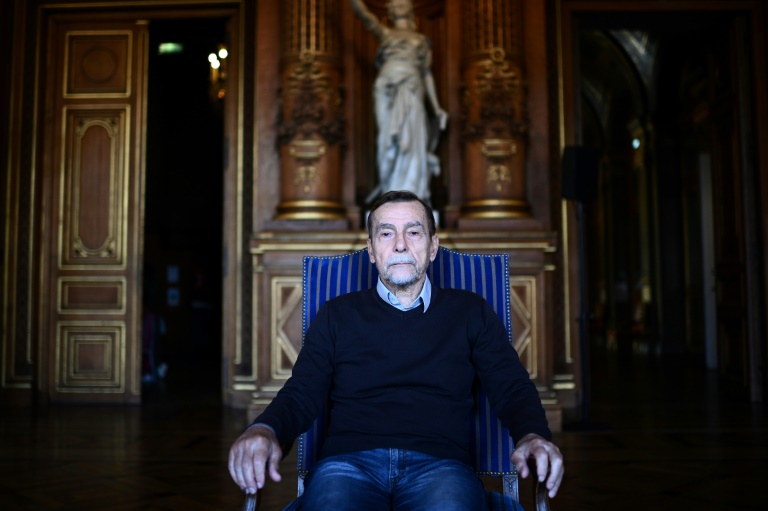
The Russian rights group Memorial is honoured to have been jointly awarded the Nobel Peace Prize but it should have gone to political prisoners such as Alexei Navalny, who risk their lives for contesting President Vladimir Putin, the group’s co-founder said Friday.

Lev Ponomarev, who helped create Memorial in the late 1980s under the perestroika Soviet reform drive, said his group had been “destroyed” as Russia presses its invasion of Ukraine, but was still seeking to continue its work.

“We were just 10 people and we thought everything would start with perestroika. It did not work out that way,” Ponomarev told Agence France-Presse in an interview in Paris, where he now has political asylum.

“It is very well deserved and of course when I think of what I thought 30 years ago I am happy,” he said.

But Ponomarev said an even better move by the Norwegian peace prize committee would have been to give the award to Navalny, Putin’s leading opposition critic and an outspoken anti-corruption figure, or to liberal opposition figures Vladimir Kara-Murza or Ilya Yashin, who are also imprisoned.

“Those who are behind bars are the ones who need to be rewarded every year,” Ponomarev said on the sidelines of a forum organised by the exiles group Russie-Libertes (Russia-Freedom) and the Paris City Hall.

“I am compelled now to say that the correct choice would have been to give the Nobel prize — if they want to support Russia when it is under its harshest regime –- to political figures,” he said.

“I mean Navalny, I mean Vladimir Kara-Murza, I mean Ilya Yashin. People who consciously choose that position, knowing they are risking their lives and don’t step aside, and solidly say the words that need to be said.”

Kara-Murza, who was jailed in April for denouncing the Kremlin’s Ukraine offensive, has been charged with high treason, his lawyer said Thursday.

Yashin was jailed in July, also after denouncing Moscow’s invasion of Ukraine.

– Organisation ‘destroyed’ –

Along with Memorial, the Nobel peace prize went to Ukraine’s Center for Civil Liberties, which is documenting alleged Russian war crimes against the Ukrainian people, and the detained activist Ales Bialiatski of Belarus.

The Russian authorities ordered the closure of Memorial last year in a move Putin has done nothing to halt, and the pressures against rights advocates has further worsened during the invasion of Ukraine.

Ponomarev, a former physicist, has been at the centre of the Russian rights scene since the fall of the Soviet Union.

In Paris, he continues to push for the release of political prisoners in Russia and remains in close touch with his Memorial colleagues who remain in Russia.

He expressed doubt that at this point the prize would prompt Putin to change his attitude to Memorial, though there was a possibility he could bring up the organisation’s status in eventual negotiations with the West.

“Putin is a total and utter global evil and it will not make him relate to Memorial better at all. But if he trades with the West then possibly it could be the issue of some kind of trading,” Ponomarev said.

“The organisation is destroyed but there are people who want to preserve the archives and work. Most of Memorial’s staff have gone abroad,” he said.

Ponomarev, 81, obtained political refugee status in France after fleeing threats of arrest in Russia, but said he hoped his exile would not prove permanent.

“I think I can go back and I am working a lot on that, every day, with this activism. I left because there were threats against me, a criminal case, I could have been jailed,” he said.

Stocks slump, dollar boosted by US jobs data

Stocks slid and the dollar surged Friday after US jobs data showed only a timid slowdown in the labour market, setting the stage for further aggressive interest rate hikes. 

Equity markets have taken a battering in the past couple of months as the US Federal Reserve has made it clear it intends to continue aggressively raising interest rates until soaring inflation is tamed, even if that means sending the economy into a recession.

There was a brief rebound at the start of the week as investors hoped data pointing to an economic slowdown would allow the Fed to “pivot”, or slow down rate hikes.

However, the jobs report shows the US labour market is still robust, with hiring in the US economy slowing slightly in September, to a net gain of 263,000 jobs, from 315,000 in August. 

That was more than the consensus forecast for a net gain of 250,000, sending equities lower and the dollar higher. 

“Those hoping for a Fed pivot have been sorely disappointed with today’s job numbers, which have confirmed that US economy continues to rumble along quite well,” said Chris Beauchamp, chief market analyst at online trading platform IG.

“The latest bear market bounce has now begun to wilt as investors wearily return to expectations” of a couple more considerable rate hikes this year, followed by more in 2023. 

Wall Street was sharply lower in late morning trading, with the Dow sliding 1.5 percent. The broader S&P 500 index fell 2.0 percent and the tech-heavy Nasdaq Composite tumbled 2.8 percent.

In Europe, Frankfurt fell 1.6 percent and Paris shed 1.2 percent. London ended the day less than 0.1 percent lower. 

“Investors are simultaneously fretting that the fall in the pace of hirings indicates a slowing economy, but also that the better-than-expected data shows that the jobs markets hasn’t slowed enough to stop the Fed from hiking rates aggressively,” said markets analyst Susannah Streeter at Hargreaves Lansdown brokerage.  

– ‘Pivot party gang’ –

Rising interest rates boost the dollar as foreign investors seek to buy dollar-denominated debt. But high interest rates raise borrowing costs and dampen consumption, which are bad for companies and thus their share prices.

Stephen Innes at SPI Asset Management said it is “unsurprising to see solid dollar buying with stocks and gold tanking as the labour market strength should quieten any Fed pivot talk for now, if not deal a severe knockout blow to the pivot party gang.”

The next data point that the Fed, and investors, will be scrutinising is the consumer price index report next week.

Adding to unease on markets was a warning from US President Joe Biden that the world faced nuclear “Armageddon” for the first time since the 1962 Cuban missile crisis.

He told a Democratic Party fundraiser in New York that Russian President Vladimir Putin was “not joking” when he threatened to use nuclear weapons over the Ukraine war.

Elsewhere, oil prices jumped and were set for their biggest weekly gain since March after OPEC and other major producers led by Russia agreed to slash daily output by two million barrels.

– Key figures around 1530 GMT –

New York – Dow: DOWN 1.5 percent at 29,480.26 points

EURO STOXX 50: DOWN 1.7 percent at 3,375.46

London – FTSE 100: DOWN less than 0.1 percent at 6,991.09 (close)

Frankfurt – DAX: DOWN 1.6 percent at 12,273.00 (close)

Paris – CAC 40: DOWN 1.2 percent at 5,866.94 (close)

Tokyo – Nikkei 225: DOWN 0.7 percent at 27,116.11 (close)

Hong Kong – Hang Seng Index: DOWN 1.5 percent at 17,740.05 (close)

Shanghai – Composite: Closed for a holiday

Pound/dollar: DOWN at $1.1119 from $1.1161 on Thursday

Euro/dollar: DOWN at $0.9787 from $0.9794

Euro/pound: UP at 87.95 pence from 87.74 pence

Dollar/yen: UP at 145.20 yen from 145.11 yen

Brent North Sea crude: UP 3.0 percent at $97.28 per barrel

West Texas Intermediate: UP 3.4 percent at $91.49 per barrel

burs-rl/kjm

Vulnerable flee as Russians advance on Ukraine town

Russian forces are advancing on Bakhmut, threatening to take some of the shine off weeks of Ukrainian victories, as life becomes more desperate for the eastern town’s hard-pressed residents.

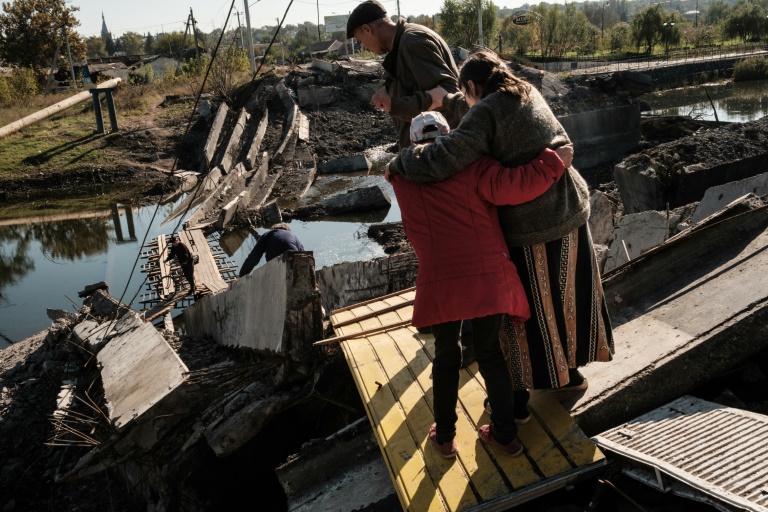
On Friday, Rimma Tsykalenko was determined to cross over to the west bank of the Bakhmutka river to collect her monthly pension, even though she uses a wheelchair and the bridge has been blown up to slow the Russian offensive.

“She won’t make it!” called out Oleksandr Valiy, a 67-year-old retired factory worker who stopped his bike to watch the disabled 65-year-old’s neighbours manhandling her on foot down a steep bank to the riverside.

“We did it before!” one of the party snapped back as they led her painfully homewards back across the makeshift wooden gangplank that has replaced the Donetsk region town’s mangled concrete road bridge.

The pensioner survived the walk and her wheelchair was carried after her, but she was not out of danger. Smoke rose in columns from shell strikes south of the town and machinegun fire could be heard on the east bank.

Even on the relatively safer west side, several apartment blocks have been blown apart, rubble and broken glass line the streets and incoming shells whistle eerily overhead, sending passers-by ducking for cover.

As the civilians struggled to carry water and basic food supplies across the ruined bridge, the Donetsk region’s Russian-led proxy force claimed to have captured four villages south of the town.

– Bigger prize –

Intense shelling was audible from the direction of Otradovka, Veselaya Dolina and Zaitsevo, which are now apparently in the hands of forces loyal to the separatist Donetsk republic now annexed by Russia.

Bakhmut — a wine-producing and salt-mining town on the main road from Donetsk to Kyiv that was once home to 70,000 people — would be a big prize if Moscow has any hope of securing the region.

Moscow’s forces launched a push towards Bakhmut in August, and two weeks later the Ukrainian general staff admitted the invading force had had “some success”, but still without taking the town.

Since then, the narrative of the war in the east has changed, with headlines dominated by successful Ukrainian counteroffensives to the north, in Kharkiv region, and to the south on the approaches to Kherson.

But not in Bakhmut, where Russia seems to have the momentum.

In the town, Ukrainian forces are still in charge and standing their ground, but there are persistent reports that Russian troops, including mercenaries from the Wagner company, have infiltrated the east bank.

“My home district of Zabakhmutka is over there and I haven’t been able to reach my house for about two months,” said 29-year-old humanitarian volunteer Edvard Skoryk, gesturing across the river.

“That part of town has been hit severely, the eastern part. There are street battles every night, one hundred percent, that’s what I know,” he told AFP.

At the bridge, Skoryk handed out a few loaves of bread to civilians heading across the river, some of them pushing bicycles or heaving 20-litre (five-gallon) water cooler refills on flimsy trolleys.

But he had another mission, working for the Ukrainian humanitarian group Vostok SOS and evacuating vulnerable residents from shell-damaged flats to get them out of Bakhmut before the battle gets even more intense.

He jumped in a white van and set off. Many of Bakhmut’s main streets are blocked with steel tank traps and slabs of concrete, reinforced by heaps of brick rubble, forcing him to weave the van at speed through yards and back lanes.

“Genya, I’m already in Bakhmut,” he shouted into his phone. “If they’re okay to go now, I can pick them up.”

– Shrapnel sprays –

In a nine-storey concrete housing block, part of a residential district near the town centre, he climbed the stairs to an upper-storey flat to find an old man and his dog who needed to be evacuated from the city.

Ivan Solovyankov is 90 and has been unable to leave Bakhmut because of the bombardment. Skoryk drove him out of the town towards the city of Dnipro, from where he can get a train to the relative safety of Kharkiv.

The Bakhmut residents who remain behind are attempting to stockpile meagre supplies of food and water before the battle ahead.

Igor Maksymenko’s water barrel springs a leak as it tumbles from his wire trolley on the descent to the rickety bridge, but he manages to right it, determined to bring it to the east bank for an apartment block still housing 25 people.

“Sometimes, they fire really close, next to that store, just above our heads, and shrapnel mixed with dirt sprays everywhere,” he said. “But still we keep on lugging it. How can we leave? To where? To stay with who?”

Biden moves to end legal limbo for US Big Tech in Europe

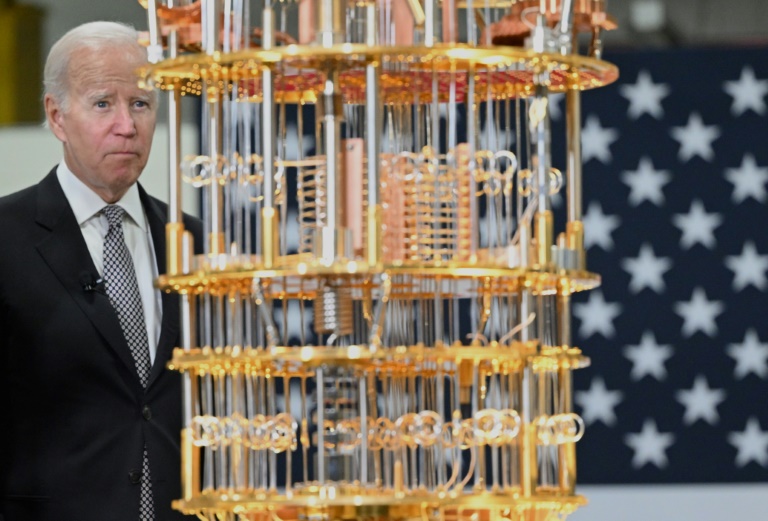
US President Joe Biden signed an executive order on Friday designed to protect the privacy of personal data transfers between the EU and the United States and address European concerns about US spying activity.

The executive order provides a new legal framework for transatlantic data flows that are critical to the digital economy, the White House said.

The move by Biden is the latest attempt to end years of court battles in which activists in Europe have questioned the legality of the data transfers and thrown the EU operations of US Big Tech into jeopardy. 

“This is a culmination of our joint efforts to restore trust and stability to transatlantic data flows,” Commerce Secretary Gina Raimondo told reporters. 

“It will enable a continued flow of data that underpins more than a trillion dollars in cross-border trade and investment every year.”

The EU’s Justice Commissioner Didier Reynders hailed the executive order as a “significant step”, though officials in Brussels warned that it was only the start of a process that could take months to reach a new data deal.

US tech giants have faced a barrage of lawsuits from EU privacy activists concerned about the ability of US intelligence services to access the personal data of Europeans that use Facebook or Google for their internet needs.

Europe’s top court has invalidated previous arrangements, known as equivalency deals, after hearing complaints that US laws violate the fundamental rights of EU citizens.

The White House said the executive order addresses concerns raised by the Court of Justice of the European Union when it ruled that the previous framework known as Privacy Shield did not provide adequate protection.

– Court battle ‘likely’ –

Austrian privacy activist Max Schrems, whose legal campaigns brought down the previous pacts, said he would likely challenge the new arrangement. 

“We will likely attack (the deal) in court,” he told AFP, putting the chances at “90 percent”. 

“We need to first analyse it in detail, which will take several days,” he said, adding that at first glance it seems the central privacy issues “haven’t been resolved”.

Privacy Shield, struck down in July 2020, was the successor to another EU-US deal, Safe Harbor, which was itself torpedoed by a court ruling in 2015.

Businesses have since resorted to legally uncertain workarounds to keep the data flow moving, with hope that the two sides could come up with something stronger in the long term.

Striking a new agreement “is of great importance,” said Christian Borggreen, senior vice predident in Europe for the Big Tech lobby, the Computer & Communications Industry Association.

“It will support continued transatlantic commerce, strengthen data protection, and provide legal clarity for data transfers between the EU and US,” he said.

– ‘Robust commitments’ –

Raimondo expressed confidence that the new arrangement, which builds upon an agreement in principle announced in March, will survive the intense legal scrutiny that began after revelations by former National Security Agency contractor Edward Snowden of mass digital spying by US agencies.

“The EU-US data privacy framework includes robust commitments to strengthen the privacy and civil liberties safeguards for signals intelligence which will ensure the privacy of EU personal data,” she said.

The executive order requires that US signals intelligence activities be conducted “only in pursuit of defined national security objectives”.

US agencies must also “take into consideration the privacy and civil liberties of all persons” regardless of nationality or country of residence.”

It also creates an independent court for EU individuals “to seek redress if they believe they are unlawfully targeted by US intelligence activities.”

Judges on the newly created court will be appointed from outside the US Government and “review cases independently,” the White House said.

Their decisions will be binding.

Biden moves to end legal limbo for US Big Tech in Europe

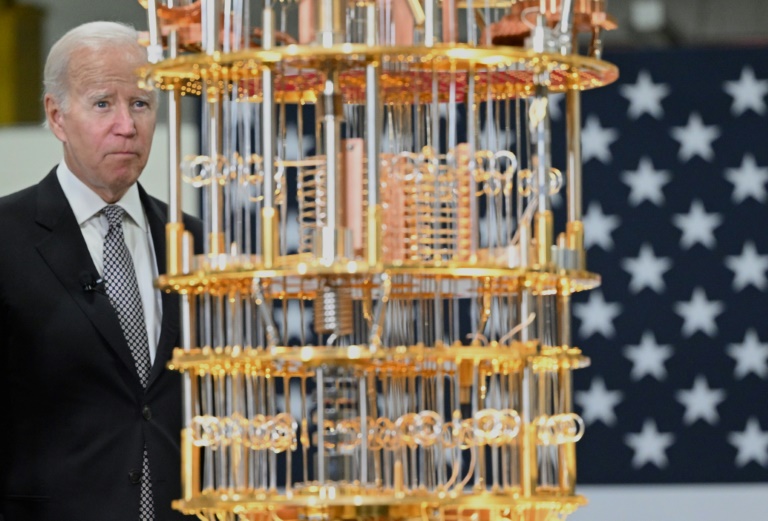
US President Joe Biden signed an executive order on Friday designed to protect the privacy of personal data transfers between the EU and the United States and address European concerns about US spying activity.

The executive order provides a new legal framework for transatlantic data flows that are critical to the digital economy, the White House said.

The move by Biden is the latest attempt to end years of court battles in which activists in Europe have questioned the legality of the data transfers and thrown the EU operations of US Big Tech into jeopardy. 

“This is a culmination of our joint efforts to restore trust and stability to transatlantic data flows,” Commerce Secretary Gina Raimondo told reporters. 

“It will enable a continued flow of data that underpins more than a trillion dollars in cross-border trade and investment every year.”

The EU’s Justice Commissioner Didier Reynders hailed the executive order as a “significant step”, though officials in Brussels warned that it was only the start of a process that could take months to reach a new data deal.

US tech giants have faced a barrage of lawsuits from EU privacy activists concerned about the ability of US intelligence services to access the personal data of Europeans that use Facebook or Google for their internet needs.

Europe’s top court has invalidated previous arrangements, known as equivalency deals, after hearing complaints that US laws violate the fundamental rights of EU citizens.

The White House said the executive order addresses concerns raised by the Court of Justice of the European Union when it ruled that the previous framework known as Privacy Shield did not provide adequate protection.

– Court battle ‘likely’ –

Austrian privacy activist Max Schrems, whose legal campaigns brought down the previous pacts, said he would likely challenge the new arrangement. 

“We will likely attack (the deal) in court,” he told AFP, putting the chances at “90 percent”. 

“We need to first analyse it in detail, which will take several days,” he said, adding that at first glance it seems the central privacy issues “haven’t been resolved”.

Privacy Shield, struck down in July 2020, was the successor to another EU-US deal, Safe Harbor, which was itself torpedoed by a court ruling in 2015.

Businesses have since resorted to legally uncertain workarounds to keep the data flow moving, with hope that the two sides could come up with something stronger in the long term.

Striking a new agreement “is of great importance,” said Christian Borggreen, senior vice predident in Europe for the Big Tech lobby, the Computer & Communications Industry Association.

“It will support continued transatlantic commerce, strengthen data protection, and provide legal clarity for data transfers between the EU and US,” he said.

– ‘Robust commitments’ –

Raimondo expressed confidence that the new arrangement, which builds upon an agreement in principle announced in March, will survive the intense legal scrutiny that began after revelations by former National Security Agency contractor Edward Snowden of mass digital spying by US agencies.

“The EU-US data privacy framework includes robust commitments to strengthen the privacy and civil liberties safeguards for signals intelligence which will ensure the privacy of EU personal data,” she said.

The executive order requires that US signals intelligence activities be conducted “only in pursuit of defined national security objectives”.

US agencies must also “take into consideration the privacy and civil liberties of all persons” regardless of nationality or country of residence.”

It also creates an independent court for EU individuals “to seek redress if they believe they are unlawfully targeted by US intelligence activities.”

Judges on the newly created court will be appointed from outside the US Government and “review cases independently,” the White House said.

Their decisions will be binding.

US job gains slow, but not enough to ease inflation worries

US job gains slowed slightly in September, offering some good news for the Federal Reserve as it works to cool the economy, but official data Friday also showed wages continued to rise which underlined the challenge to tamping down rampant inflation.

President Joe Biden, who has seen his approval erode in the face of surging prices, cheered the data as an “encouraging sign” on the economy’s path, even while he said there is more work to do to help American families.

But the central bank likely will want to see more progress on slowing price gains, which have been the fastest in 40 years, before pulling back on its aggressive interest rate increases, and economists say another big hike remains likely next month.

The economy added 263,000 jobs last month, showing a steady slowdown from the blistering pace in 2020 and 2021, the Labor Department said in the closely-watched report. The unemployment rate slipped two-tenths of a percentage point to 3.5 percent.

“Today’s jobs numbers are an encouraging sign that we are transitioning to stable, steady growth. And more Americans are working than ever before,” Biden said on Twitter. “There’s more to do to grow our economy from the bottom up and middle out, but we’re making progress.”

But of more concern for policymakers, the report showed a 10-cent increase in average hourly earnings in the month to $32.46. 

Over the past 12 months, average hourly earnings have increased by 5.0 percent, still high but a slowing from the pace seen over the past year.

The central bankers are watching closely to see if wages continue to accelerate, which would fuel further inflation pressures.

The Fed has raised the benchmark lending rate five times this year and said more tightening will be needed to get inflation down, but acknowledge that the process could cause a painful economic slowdown.

“A moderation in job and wage growth will be welcome developments for Fed officials. However, these data do not change the near-term course of monetary policy,” Rubeela Farooqi of High Frequency Economics said in an analysis.

Fed officials in recent comments have made it clear that no single data report will change their trajectory since it will take time for inflation to get back down to the two percent goal, which will require more rate hikes.

– Worker shortage? –

Fed board member Christopher Waller warned that given ongoing price pressures, including from the US housing market, inflation is “not likely to fall quickly.”

“We haven’t yet made meaningful progress on inflation, and until that progress is both meaningful and persistent, I support continued rate increases,” Waller said in a speech Thursday.

Still, Robert Frick, corporate economist with Navy Federal Credit Union, called the September data “a Goldilocks jobs report.”

He said it was “cool enough to make the Fed happy that the ‘tight’ labor market is loosening, and warm enough to satisfy most Americans looking for work, or looking to switch jobs for higher pay.”

Jason Furman, a former White House economist, said only two “surprisingly low” inflation reports before the November 1-2 policy meeting could cause the Fed to pivot its stance.

“And while economic forecasting can be difficult, I’m reasonably confident the chances of that happening are precisely 0%,” Furman tweeted.

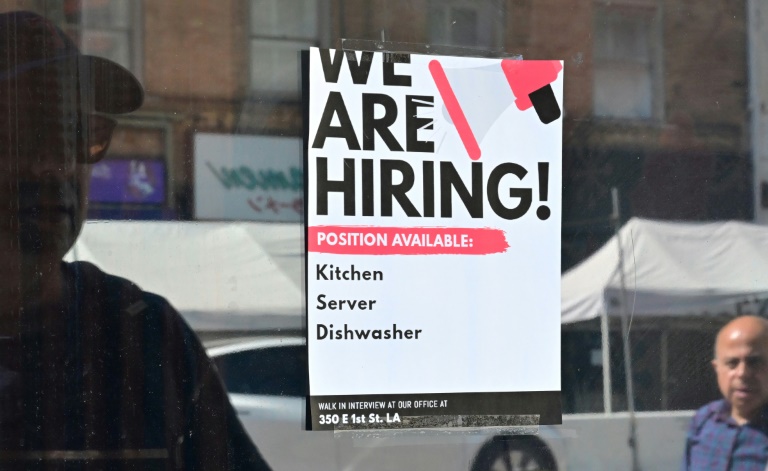
US employers continue to complain that they have difficulty filling open positions, and the Fed wants to see signs of an easing in the tight labor market.

The data showed notable gains in the leisure and hospitality sector and in health care, and a decline in government jobs.

The unemployment rate, which edged up in August as more workers came off the sidelines to join the labor force, slipped back last month, and the participation rate was barely changed at 62.3 percent as the pool of available workers was about steady.

Hurricane Ian, which caused massive devastation, especially in Florida, “had no discernible effect” on the data, which was collected before the storm made landfall.

Crypto scammers make off with $100 mn from Binance

Scammers stole cryptocurrency worth roughly $100 million from Binance, the world’s biggest exchange for cryptoassets, the firm said on Friday.

The total stolen was $580 million, but company chief Changpeng Zhao said roughly 80 percent had been frozen immediately, and the damage had been limited to less than $100 million.

He tweeted that “an exploit” in the system led to extra production of the exchange’s dedicated currency, BNB, but insisted the issue had been “contained” and told his seven million followers: “Your funds are safe.”

It is among the biggest thefts in cryptocurrency history and comes in a year where scammers preying on the sector have got away with billions of dollars.

In the most damaging incident, the Axie Infinity blockchain game was hacked for more than $500 million in late March.

Both scams exploited weaknesses in “cross-chain bridges” — the means used by investors to move assets from one blockchain to another.

Blockchains are digital ledgers that store details of transactions — the biggest is bitcoin but there are thousands of others.

Binance, which boasted of handling transactions worth $32 trillion last year, said in a statement that “a total of 2 million BNB was withdrawn”, which valued the heist at around $580 million.

Zhao later clarified in an interview with MSNBC that most of those coins had been frozen.

A Binance spokesman told AFP that rapid reaction and coordination meant “the majority of the funds remained in the exploiter’s address, while partners helped secure funds on other chains as well”.

– ‘Complete chaos’ –

Prominent crypto figures had taken to social media late on Thursday talking of a $600 million theft hours before the firm sent its first statement.

“Somebody on BNB just got hacked for (roughly) 2 million BNB,” wrote a developer who uses the name foobar on Twitter.

“The attacker is spewing funds across liquidity pools and utilising every bridge they can to get to safer chains. Complete chaos on the chain.”

Experts have been warning of security lapses on cross-chain bridges all year.

Chainalysis, a crypto analysis firm, said in August that bridge exploits had accounted for around $2 billion in thefts so far this year.

Elliptic, another analysis firm, said on Twitter it was helping to track down the Binance funds.

In a report this week, Elliptic said bridges “tend to accumulate large amounts of locked assets on numerous blockchains, many of which may not have advanced security or auditing cultures due to their relative obscurity”. 

“This has made bridges an attractive target for cybercriminals in the past,” it added.

Governments are concerned that cryptocurrencies are being used to fund terrorism, circumvent sanctions and prop up repressive regimes.

Experts believe groups linked to North Korea have been behind some of the most high-profile heists, including the Axie Infinity breach.  

Iran says Mahsa Amini died of illness rather than 'blows'

Iran said Friday an investigation into the death in custody of Mahsa Amini found she lost her life to illness rather than reported beatings that sparked three weeks of bloody protests.

Amini, 22, died on September 16, three days after falling into a coma following her arrest in Tehran by the morality police for allegedly breaching the Islamic republic’s strict dress code for women.

Anger over her death has sparked the biggest wave of protests to rock Iran in almost three years and a crackdown that has killed dozens of protesters and seen scores arrested.

Despite security personnel using lethal force, the women-led protests have continued for 21 consecutive nights, according to online videos verified by AFP.

Iran’s Forensic Organization said Friday that “Mahsa Amini’s death was not caused by blows to the head and vital organs and limbs of the body”.

The death of Amini, whose Kurdish first name is Jhina, was related to “surgery for a brain tumour at the age of eight”, it said in a statement.

Amini’s bereaved parents have filed a complaint against the officers involved, and one of her cousins living in Iraq has told AFP she died of “a violent blow to the head”.

Other young girls have lost their lives at the protests, but rights group Amnesty International says Iran has been forcing televised confessions out of their families to “absolve themselves of responsibility for their deaths”.

– ‘Suicide’ –

The mother of 16-year-old Nika Shahkarami, who died after going missing on September 20, insisted on Thursday she was killed by the state after joining an anti-hijab protest in Tehran.

Nasrin Shahkarami also accused the authorities of threatening her to make a forced confession over the death of her daughter Nika.

“I saw my daughter’s body myself… The back of her head showed she had suffered a very severe blow as her skull had caved in. That’s how she was killed,” she said in a video posted online by Radio Farda, a US-funded Persian station based in Prague.

Iran’s judiciary has since denied reports the security forces killed another teenage girl, Sarina Esmailzadeh, at a rally in Karaj, west of Tehran.

Its website quoted a prosecutor as saying an investigation showed Esmailzadeh, also 16, had “committed suicide” by jumping from a building.

In a widening crackdown, Iran has blocked access to social media, including Instagram and WhatsApp, and launched a campaign of mass arrests.

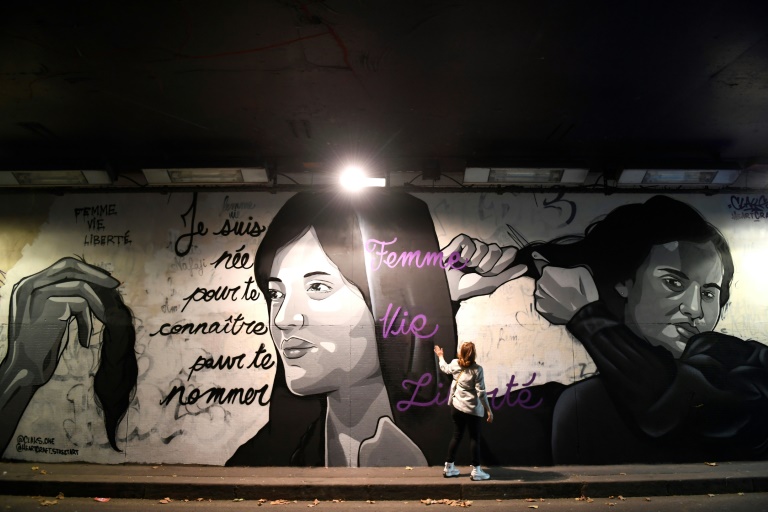
Protesters have sought ways to avoid detection, with schoolgirls hiding or blurring their faces while shouting “Death to the dictator” and defacing images of Iran’s supreme leader Ayatollah Ali Khamenei, in verified videos.

Other footage has shown people chanting the protest catchcry “Woman, Life, Freedom!” from their apartment windows under the cover of night.

Another form of protest emerged on Friday morning, with fountains in Tehran appearing to pour blood after an artist turned their waters red to reflect the deadly crackdown.

The BBC’s Persian service said the water was later drained, although traces of red could still be seen on the fountains in images it published on Instagram.

– ‘Toll far higher’ –

The street violence that ensued across Iran, dubbed “riots” by the authorities, has led to dozens of deaths — mostly of protesters but also of members of the security forces.

Oslo-based group Iran Human Rights says at least 92 protesters have been killed so far.

A joint letter signed by 21 mainly Iranian human rights groups acknowledged “significant” measures taken by Washington but called on President Joe Biden to do more to hold Tehran to account.

“More urgently needs to be done by the world’s leading democratic power to support the people of Iran, discourage further state violence, and address the long history of atrocities and impunity in that country,” the rights groups said.

Despite the government’s crackdown, the demonstrations have continued in towns and cities nationwide.

“Death to the dictator,” a group of young women can be heard chanting in the northern city of Rasht in a video posted online Thursday and verified by AFP.

Other verified footage shows women shouting “Azadi”, Persian for freedom, and clapping loudly as they march through the city of Qods, west of the capital.

Amnesty has verified the deaths of 52 people killed by the security forces, but says it believes the “real death toll is far higher”.

The London-based rights group says it has documented “widespread patterns of torture” and sexual assault.

It has previously said it has obtained leaked documents showing Iran was intentionally using lethal force to crush the women-led protests.

burs-dv-kir/srm

Rights champions in Russia, Ukraine, Belarus win Nobel Peace Prize

Human rights watchdogs from Russia, Ukraine and Belarus won the Nobel Peace Prize on Friday, with the jury criticising Russian President Vladimir Putin’s “authoritarian” regime as he waged war in Ukraine.  

The honour in favour of “peaceful co-existence” went to Russian rights group Memorial, Ukraine’s Center for Civil Liberties which is documenting “Russian war crimes” against the Ukrainian people and detained activist Ales Bialiatski of Belarus.

A highly symbolic choice, the trio represent the three nations at the centre of the war in Ukraine, which has plunged Europe into its worst security crisis since World War II.

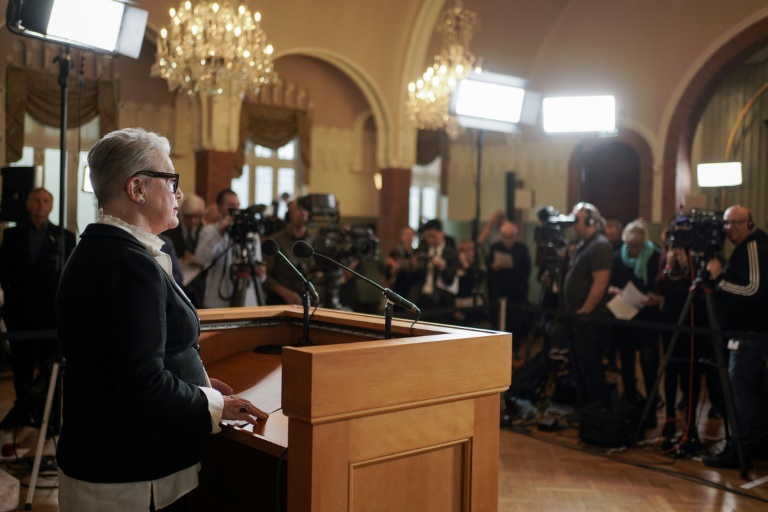
“They have made an outstanding effort to document war crimes, human right abuses and the abuse of power,” the head of the Norwegian Nobel Committee, Berit Reiss-Andersen, told reporters.

“Together they demonstrate the significance of civil society for peace and democracy,” she added.

Calling Putin’s regime an “authoritarian government”, Reiss-Andersen said the five-member committee wanted to highlight the “way civil society and human rights advocates are being suppressed.”

Ukraine’s Center for Civil Liberties (CCL), founded in 2007, has since Moscow’s invasion in February identified and documented “Russian war crimes against the Ukrainian civilian population”, the Nobel committee said.

It hailed the group’s “pioneering role with a view to holding the guilty parties accountable for their crimes”.

On Friday, the head of the CCL said Putin should face an “international tribunal”. 

Oleksandra Matviychuk wrote on Facebook the tribunal should be created to “give the hundreds of thousands of victims of war crimes a chance to see justice…”

– ‘No sign of peace’ –

UN investigators on September 23 accused Russia of committing war crimes on a “massive scale” in Ukraine, citing bombings, executions, torture and sexual violence on victims aged four to 82.

Moscow has also been accused of committing massacres after the bodies of dozens of civilians were found in Bucha, outside Kyiv, and the discovery of hundreds of others in Izium, a region liberated by Ukrainian troops last month.

Beyond the countless deaths and material destruction in Ukraine, the war has revived fears of a nuclear strike by Russia, which has struggled since Ukraine launched a counter-offensive in September.

“This year we were in a situation with a war in Europe, which is most unusual, but also facing a war that has a global effect on people all over the world”, Reiss-Andersen said, referring to “the threat of using nuclear weapons and food shortage”.

“That is a very bleak background and there is no sign of peace in the immediate future.”

Memorial, founded in 1989 by 1975 Peace Prize laureate Andrei Sakharov, is the largest human rights organisation in Russia, compiling and systematising information on political oppression and human rights violations in Russia.

The country’s Supreme Court ordered it dissolved in December 2021, and the group on Friday denounced a new court hearing on the issue.

“Right now, as the whole world is congratulating us for the Nobel Prize, a court hearing is taking place at the (Moscow) Tverskoy district court over the seizure of Memorial’s assets,” the centre for human rights of the organisation said on social media. 

– ‘Not yielded an inch’ –

Last year, the Peace Prize went to another Kremlin critic, Russian journalist Dmitry Muratov, whose newspaper Novaya Gazeta also had its licence revoked. 

He won together with Philippine journalist Maria Ressa for their fight for freedom of the press.

The Nobel committee also called on Belarus to release Bialiatski, 60, the founder of rights group Viasna whose work has charted the increasingly authoritarian tendencies of President Alexander Lukashenko and his security forces.

Bialiatski has been jailed several times since 2011, including after large-scale demonstrations against the regime in 2020 when Lukashenko claimed victory in elections the international community deemed fraudulent.

Minsk cracked down hard on the mass protests, with at least 37,000 people detained in a matter of months according to the UN, and many alleging they were mistreated and tortured in detention.

Lukashenko, who has clung to power since 1994 and has long been backed by Russia, is one of Moscow’s rare allies in the war on Ukraine.

The regime criticised the award, saying prize creator Alfred Nobel was “turning in his grave”.

Bialiatski’s wife meanwhile said she was “overwelmed with emotion”.

Exiled Belarusian opposition leader Svetlana Tikhanovskaya — herself mentioned in Nobel speculation before Friday’s announcement — saw the prize as “recognition for all Belarusians fighting for freedom and democracy”.

Bialiatski was imprisoned from 2011 to 2014, in 2020, and again in July 2021. He is the fourth Peace laureate to win whilst behind bars.

“He is still detained without trial. Despite tremendous personal hardship, Mr. Bialiatski has not yielded an inch in his fight for human rights and democracy in Belarus”, the Nobel committee said.

Close Bitnami banner
Bitnami