World

A gift of 'God': officials hail Vladimir Putin on his 70th birthday

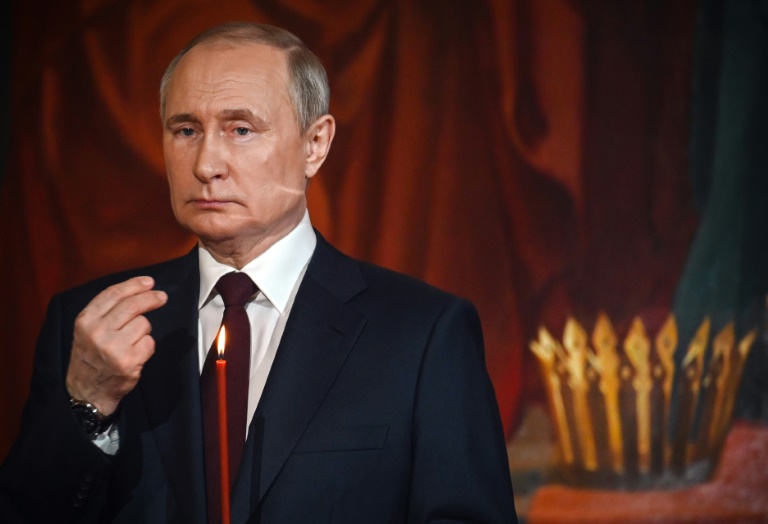
Vladimir Putin for his 70th birthday Friday was gifted a tractor by the Belarusian president and told by the head of Russia’s Orthodox Church that “God” put him in power, while the Kremlin held back on celebrations as Moscow faces setbacks in Ukraine.

The same day, the Nobel Peace Prize was awarded to three human rights organisations and activists: Ales Bialiatski of Belarus, Russia’s Memorial group and Ukraine’s Center for Civil Liberties.

The committee said it wanted the prize to highlight the “way civil society and human rights advocates are being suppressed” in Russia.

In Russia, the head of the Russian Orthodox Church Patriarch Kirill said that Putin’s reign over Russia had been mandated by God.

“God put you in power so that you could perform a service of special importance and of great responsibility for the fate of the country and the people entrusted to your care,” the patriarch said, joining a chorus of Russian officials congratulating Putin on his birthday.

The Patriarch praised Putin for “transforming the image of Russia, strengthening its sovereignty and its defence capability, protecting its national interests.”

Kirill wished “health and a long life” to the Russian leader, who has been in power for more than 20 years.

He also called on worshippers across the country to pray for Putin’s health. 

“You gained the reputation of a national leader selflessly devoted to the Fatherland, sincerely loving the Motherland and giving all its strength to it,” the Patriarch said. 

The leader of the Russian Orthodox Church since 2009, Kirill has been a vocal supporter of the military operation in Ukraine.

Kirill has close ties with Putin’s government, backing conservative values over Western liberalism.

– ‘If there is Putin, there is Russia’ –

Close Putin ally, Belarus strongman leader Alexander Lukashenko, told journalists he gifted a Belarusian tractor “the best one out there” to the Russian president.

Lukashenko was in Putin’s hometown, Saint Petersburg, for a meeting with the Kremlin chief and leaders of ex-Soviet countries of the Commonwealth of Independent States (CIS).

He said the tractor could be used to sow wheat so that Europeans “do not starve or steal bread from Ukraine”.

The conflict between Russia and Ukraine, two of the world’s biggest grain exporters, had disrupted exports, raising fears of a global food crisis. 

Putin received a flurry of birthday messages, including from Chechen leader Ramzan Kadyrov who wished “good health, long life and successes” to the Russian president in a video statement mixed with archive footage and emotional music.

“Putin has changed the position of Russia in the world and made it a nation to be reckoned with!” Kadyrov said. 

The speaker of the Russian parliament Vyacheslav Volodin said on Telegram: “if there is Putin, there is Russia.”

Around 40 people from 20 different ethnic groups making up Russia took part in a flash mob near the Kremlin, according to state-run news agency TASS.

Putin was also praised by officials installed by Moscow in the Ukrainian regions it partially controls and claims to have annexed.

Kremlin-backed leader of Zaporizhzhia region Yevgeny Balitsky said on Telegram that “thanks to Vladimir Vladimirovich and the people of Russia, the Zaporizhzhia region became part of the great country, reunited with its family.”

His counterpart in the Donetsk region Denis Pushilin said “for the residents of Donbas, the name of the leader of our country is forever associated with the most important event in recent history — the return home.”

Seven months into the Ukraine offensive, Putin is isolated from Western countries and has been looking east in the face of unprecedented sanctions.

The Kremlin has not reported any messages of congratulations received from Washington or Brussels. 

Friday is also the anniversary of the murder of Russian journalist Anna Politkovskaya, who was shot dead on October 7, 2006.

Her murder, which sent shockwaves around the world, is still unresolved.
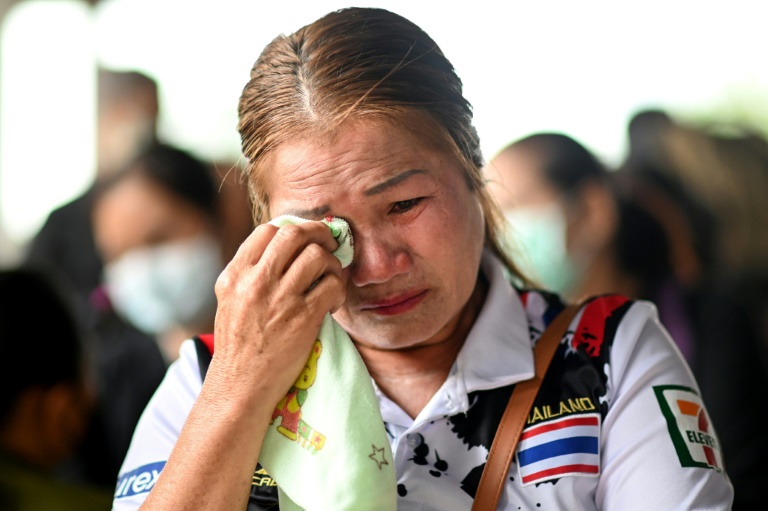
Thai king visits hospital after nursery massacre

Thailand’s King Maha Vajiralongkorn on Friday visited a hospital treating those wounded in a gun and knife rampage by a sacked policeman that left 36 people dead, ending a day of grief and mourning by relatives.

The king is expected to meet survivors of Thursday’s attack, one of the worst mass killings in Thai history, in a rare public interaction for the monarch, who is officially regarded as a semi-divine figurehead.

Coffins bearing the bodies of the victims — 24 of them children — were earlier transported to temples to be handed over to relatives, many of whom had spent the day mourning at the nursery where their children were slain.

Prime Minister Prayut Chan-O-Cha laid flowers at the nursery in rural northeastern Nong Bua Lam Phu province and handed out compensation cheques to grieving families. 

At one temple, 10 white and gold coffins, some so small they looked like toy boxes, were loaded into fridges in the evening ahead of the customary three days of mourning before cremation.

A young father, his face a mask of tears, staggered away from other mourners after watching his son’s coffin loaded away. 

Earlier at the small, low-slung nursery, a line of heartbroken parents placed white roses on the building’s steps as the baking sun bore down.

The dead include pregnant teacher Supaporn Pramongmuk, whose husband posted a poignant tribute on Facebook.

“I would like to say thank you for all the support for me and my family. My wife has fulfilled her every duty as a teacher,” Seksan Srirach wrote.

“Please be a teacher in heaven, and my child please take care of your mother in heaven.”

– Knife the ‘main weapon’ –

Armed with his own legally purchased 9mm pistol and a knife, former police sergeant Panya Khamrab began his murderous spree at the childcare centre at about 12:30 pm (0530 GMT) on Thursday.

Following the attack, 34-year-old Panya fled the scene in a pickup truck to head home and murder his wife and son before taking his own life, police said, ending the rampage at about 3 pm.

In total, he killed 24 children — 21 boys and three girls — and 12 adults.

Pitak Kongtapthai, head of the police investigations unit in the province, said most of the deaths were caused by a combination of knife wounds and gunshots.

Panya joined the police in 2012 and rose to the rank of sergeant but was suspended from the force in January and sacked in June for drug use, National Police Chief Damrongsak Kittiprapat told reporters.

Damrongsak said initial tests found no drugs in Panya’s body after the attack, though several locals said Panya was known in the area as a methamphetamine user.

The interior ministry said it would “review and intensify our preventative measures on drugs” in the wake of the attack, including tightening rules on gun ownership.

The police chief said the attacker used his knife as the “main weapon” in the nursery.

He had an argument with his wife hours before the attack, Damrongsak said, but “nothing irregular” was noted when he appeared in court that morning on a drugs possession charge. 

Flags on government buildings flew at half-mast on Friday in a gesture of mourning for one of the deadliest days in recent Thai history.

Nanthicha Punchum, acting chief of the nursery, described harrowing scenes as the attacker barged into the building in the rural Na Klang district.

“There were some staff eating lunch outside the nursery and the attacker parked his car and shot four of them dead,” she told AFP.

She said the attacker smashed down the door with his leg and then started stabbing the children.

– PM orders probe –

Witness Pranom Innurak described how her sister, now recovering in hospital, was injured.

“He (Panya) was driving a car on his way back home and he rammed into everyone on his way,” she told AFP, adding that her sister’s daughter was among the dead.

“When my sister got hit, she wasn’t that hurt yet. She flew out from her food stall. He then used a knife to attack her.”

Thai leader Prayut has ordered a rapid probe into the attack, and on Friday police interviewed witnesses and families.

The tragedy came less than three years after a soldier in the northeastern city of Nakhon Ratchasima gunned down 29 people and wounded scores more in a 17-hour rampage, before he was shot dead by commandos.

And less than a month ago an army officer shot dead two colleagues at a military training base in the capital Bangkok.

US releases new Arctic strategy as climate threat grows

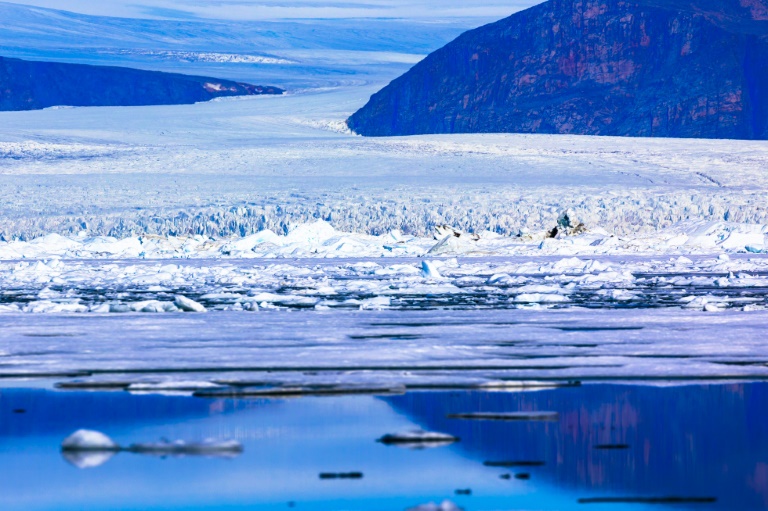
US President Joe Biden’s administration released a new Arctic strategy on Friday as the strategically and environmentally important region suffers worsening effects from climate change and sees increased international competition.

Global warming is melting Arctic ice, opening previously closed areas to navigation and creating new opportunities for countries such as the United States, Russia and China to vie for resources and influence.

The situation is further complicated by the invasion of Ukraine by Russia — a major Arctic power — which has increased tensions between Moscow and Washington to a level not seen since the height of the Cold War.

“The Arctic — home to more than four million people, extensive natural resources, and unique ecosystems — is undergoing a dramatic transformation,” the strategy says.

“Driven by climate change, this transformation will challenge livelihoods in the Arctic, will create new economic opportunities, and could intensify strategic competition among countries.”

The strategy features four main pillars: security, climate change and environmental protection, sustainable economic development, and international cooperation.

“Our highest priority is to protect the American people and our sovereign territory and rights. We are committed to the security of our treaty allies and to supporting our partners in the region,” the strategy says.

To do this, Washington will “enhance and exercise both our military and civilian capabilities in the Arctic as required to deter threats and to anticipate, prevent, and respond to both natural and human-made incidents.”

As the impact of global warming grows, Washington wants to help Alaska — its northernmost state — to build resilience and adapt, and also aims to pursue international initiatives to mitigate emissions in the Arctic.

“Climate change generates greater impacts in the Arctic than in many more temperate regions, yielding unstable terrain, vulnerable coasts, changing ecosystems, and a worsening biodiversity crisis,” the strategy says.

– Russia cooperation ‘virtually impossible’ –

“We will support efforts to build Alaskan communities’ resilience in the face of dramatic changes on the Arctic’s horizon,” it says, noting that more than 60 percent of the state’s Native communities are considered “environmentally threatened.”

On the economic front, the strategy notes that melting Arctic ice — while a “stark indicator of accelerating climate change” — also presents opportunities.

“The US government will help create the conditions to catalyze responsible, inclusive, and transparent economic development in Alaska and across the Arctic,” it says, including via infrastructure development and supporting industries that increase opportunities for local communities.

The strategy says the United States values Arctic cooperation, but that Russia’s invasion of Ukraine has dealt the prospects of working with Moscow a significant blow.

“Russia’s brutal war in Ukraine has made this cooperation in the Arctic virtually impossible… at present. However, maintaining cooperation with our allies and partners in the near-term remains essential to advancing our objectives for the region,” it says.

It has been nearly 10 years since the last US Arctic policy document was released, and the new strategy acknowledges both the changing natural and geopolitical environment.

“This strategy addresses the climate crisis with greater urgency, given the developments that we’ve seen over the last eight to nine years,” a senior US administration official said ahead of its release.

It also “recognizes the increased strategic competition that we’ve seen in the Arctic in terms of Russia and (China) over the last decade, and… seeks to position the US to effectively compete and also manage those tensions.”

US releases new Arctic strategy as climate threat grows

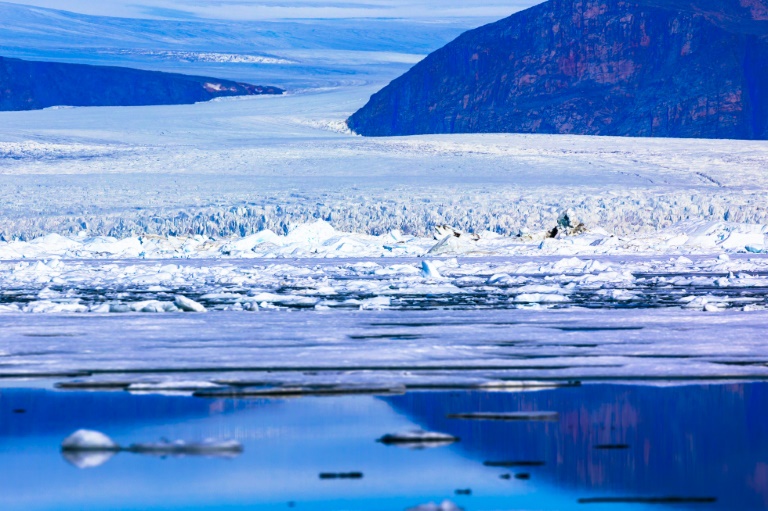
US President Joe Biden’s administration released a new Arctic strategy on Friday as the strategically and environmentally important region suffers worsening effects from climate change and sees increased international competition.

Global warming is melting Arctic ice, opening previously closed areas to navigation and creating new opportunities for countries such as the United States, Russia and China to vie for resources and influence.

The situation is further complicated by the invasion of Ukraine by Russia — a major Arctic power — which has increased tensions between Moscow and Washington to a level not seen since the height of the Cold War.

“The Arctic — home to more than four million people, extensive natural resources, and unique ecosystems — is undergoing a dramatic transformation,” the strategy says.

“Driven by climate change, this transformation will challenge livelihoods in the Arctic, will create new economic opportunities, and could intensify strategic competition among countries.”

The strategy features four main pillars: security, climate change and environmental protection, sustainable economic development, and international cooperation.

“Our highest priority is to protect the American people and our sovereign territory and rights. We are committed to the security of our treaty allies and to supporting our partners in the region,” the strategy says.

To do this, Washington will “enhance and exercise both our military and civilian capabilities in the Arctic as required to deter threats and to anticipate, prevent, and respond to both natural and human-made incidents.”

As the impact of global warming grows, Washington wants to help Alaska — its northernmost state — to build resilience and adapt, and also aims to pursue international initiatives to mitigate emissions in the Arctic.

“Climate change generates greater impacts in the Arctic than in many more temperate regions, yielding unstable terrain, vulnerable coasts, changing ecosystems, and a worsening biodiversity crisis,” the strategy says.

– Russia cooperation ‘virtually impossible’ –

“We will support efforts to build Alaskan communities’ resilience in the face of dramatic changes on the Arctic’s horizon,” it says, noting that more than 60 percent of the state’s Native communities are considered “environmentally threatened.”

On the economic front, the strategy notes that melting Arctic ice — while a “stark indicator of accelerating climate change” — also presents opportunities.

“The US government will help create the conditions to catalyze responsible, inclusive, and transparent economic development in Alaska and across the Arctic,” it says, including via infrastructure development and supporting industries that increase opportunities for local communities.

The strategy says the United States values Arctic cooperation, but that Russia’s invasion of Ukraine has dealt the prospects of working with Moscow a significant blow.

“Russia’s brutal war in Ukraine has made this cooperation in the Arctic virtually impossible… at present. However, maintaining cooperation with our allies and partners in the near-term remains essential to advancing our objectives for the region,” it says.

It has been nearly 10 years since the last US Arctic policy document was released, and the new strategy acknowledges both the changing natural and geopolitical environment.

“This strategy addresses the climate crisis with greater urgency, given the developments that we’ve seen over the last eight to nine years,” a senior US administration official said ahead of its release.

It also “recognizes the increased strategic competition that we’ve seen in the Arctic in terms of Russia and (China) over the last decade, and… seeks to position the US to effectively compete and also manage those tensions.”

US releases new Arctic strategy as climate threat grows

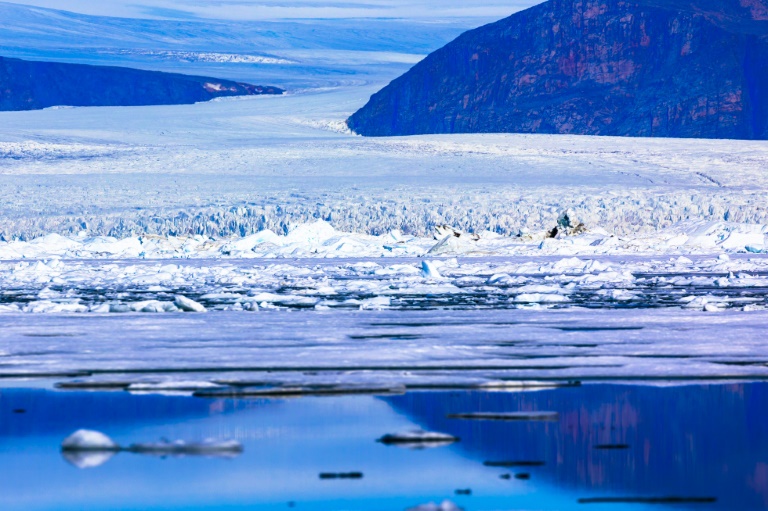
US President Joe Biden’s administration released a new Arctic strategy on Friday as the strategically and environmentally important region suffers worsening effects from climate change and sees increased international competition.

Global warming is melting Arctic ice, opening previously closed areas to navigation and creating new opportunities for countries such as the United States, Russia and China to vie for resources and influence.

The situation is further complicated by the invasion of Ukraine by Russia — a major Arctic power — which has increased tensions between Moscow and Washington to a level not seen since the height of the Cold War.

“The Arctic — home to more than four million people, extensive natural resources, and unique ecosystems — is undergoing a dramatic transformation,” the strategy says.

“Driven by climate change, this transformation will challenge livelihoods in the Arctic, will create new economic opportunities, and could intensify strategic competition among countries.”

The strategy features four main pillars: security, climate change and environmental protection, sustainable economic development, and international cooperation.

“Our highest priority is to protect the American people and our sovereign territory and rights. We are committed to the security of our treaty allies and to supporting our partners in the region,” the strategy says.

To do this, Washington will “enhance and exercise both our military and civilian capabilities in the Arctic as required to deter threats and to anticipate, prevent, and respond to both natural and human-made incidents.”

As the impact of global warming grows, Washington wants to help Alaska — its northernmost state — to build resilience and adapt, and also aims to pursue international initiatives to mitigate emissions in the Arctic.

“Climate change generates greater impacts in the Arctic than in many more temperate regions, yielding unstable terrain, vulnerable coasts, changing ecosystems, and a worsening biodiversity crisis,” the strategy says.

– Russia cooperation ‘virtually impossible’ –

“We will support efforts to build Alaskan communities’ resilience in the face of dramatic changes on the Arctic’s horizon,” it says, noting that more than 60 percent of the state’s Native communities are considered “environmentally threatened.”

On the economic front, the strategy notes that melting Arctic ice — while a “stark indicator of accelerating climate change” — also presents opportunities.

“The US government will help create the conditions to catalyze responsible, inclusive, and transparent economic development in Alaska and across the Arctic,” it says, including via infrastructure development and supporting industries that increase opportunities for local communities.

The strategy says the United States values Arctic cooperation, but that Russia’s invasion of Ukraine has dealt the prospects of working with Moscow a significant blow.

“Russia’s brutal war in Ukraine has made this cooperation in the Arctic virtually impossible… at present. However, maintaining cooperation with our allies and partners in the near-term remains essential to advancing our objectives for the region,” it says.

It has been nearly 10 years since the last US Arctic policy document was released, and the new strategy acknowledges both the changing natural and geopolitical environment.

“This strategy addresses the climate crisis with greater urgency, given the developments that we’ve seen over the last eight to nine years,” a senior US administration official said ahead of its release.

It also “recognizes the increased strategic competition that we’ve seen in the Arctic in terms of Russia and (China) over the last decade, and… seeks to position the US to effectively compete and also manage those tensions.”

Ukraine's first Nobel Peace Prize winners 'astonished'

The Kyiv-based Center for Civil Liberties has run successful campaigns for political prisoners, tracked enforced disappearances and focused on Russian war crimes, but they did not see a Nobel Peace prize coming.

The NGO became the winner of Ukraine’s first ever peace prize on Friday, sharing the award with Belarusian and Russian co-winners.

The Norwegian Nobel committee announcement sparked surprise and joy at the centre.

“When we found out the news, we were astonished,” CCL’s Anna Trushova told AFP.

Set up in 2007, the group is led by rights defender Oleksandra Matviychuk, a lawyer who turns 38 on Saturday.

“It is above all a reward for Oleksandra (who) gathers around her incredible people and does immense work in the field of human rights,” CCL board member Alissa Malytska told AFP.

Matviychuk, who was on her way from Poland to Ukraine when she heard the news, said in a Facebook message she was “delighted”.

“We need to create an international tribunal and bring Putin, Lukashenko and other war criminals to justice,” she added, referring to the autocratic presidents of Russia and Belarus.

CCL gained prominence after 2014 by mounting awareness campaigns around Ukrainian political prisoners and prisoners in Russian-occupied parts of Ukraine — including the Crimean Peninsula, annexed by Russia in 2014, and the eastern Donbas region — as well as in Russia itself.

CCL’s best known prisoner campaign was for the filmmaker Oleg Sentsov. He directed “Rhino”, which was screened at the 2021 Venice film festival.

– Tracking war crimes –

Arrested in Crimea after protesting against its annexation, Senstov spent five years in jail in Russia before being released in 2019 during a prisoner exchange between Ukraine and Russia.

“It was (Matviychuk’s) idea” to launch an international ‘SaveSentsov’ campaign, Olexander Starodubtsev, deputy head of Ukraine’s national anti-corruption agency, told AFP.  

“Lessia is very powerful and confident in what she does,” said Starodubtsev, who studied with Matviychuk at the American University of Stanford five years ago.

“Her life is devoted to her mission. When we were studying in the United States, she was also busy at night” with human rights projects, he said.

A motto posted on her Facebook page appears to support his words: “Pessimism is a luxury you cannot afford. When your strength leaves you, your character emerges.”

CCL also tracks the enforced disappearances of rights activists, journalists and local council officials.

Since Russia invaded Ukraine in February, the center has also worked to identify and document Russian war crimes against the civilian population in Ukraine.

Relying on the help of volunteers, the NGO sent groups to suspected crime scenes. It also worked to facilitate the return to Ukraine of “tens of thousands” of compatriots who were forcibly taken from the war zone to Russia. 

“We have already recorded more than 20,000 crimes,” Trushova told AFP.

The 2022 Peace Prize was also awarded to Belarusian human rights advocate Ales Bialiatski and Russian human rights group Memorial.

The peace prize laureates “represent civil society in their countries” said the Nobel committee.

But the award did not meet with universal acclaim in Ukraine, which was invaded in February from Russian and Belarusian territory.

“Very bad idea (…) but very typical for the West”, Olga Roudenko, editor-in-chief of the English news site Kyiv Independent, commented on Facebook. 

“We still have to work a lot so that we are seen as a separate phenomenon and not just part of the region with Russia and Belarus,” she said.

Stocks fall, dollar boosted by US jobs data

Stocks mostly slid and the dollar surged Friday after US jobs data showed only a timid slowdown in the labour market, setting the stage for further aggressive interest rate hikes. 

Equity markets have taken a battering in the past couple of months as the US Federal Reserve has made it clear it intends to continue aggressively raising interest rates until soaring inflation is tamed, even if that means sending the economy into a recession.

There was a brief rebound at the start of the week as investors hoped data pointing to economic slowdown would allow the Fed to “pivot”, or slow down rate hikes.

However, the jobs report shows the US labour market is still robust, with hiring in the US economy slowing slightly in September, to a net gain of 263,000 jobs, from 315,000 in August. 

That was more than the consensus forecast for a net gain of 250,000, sending equities lower and the dollar higher. 

“The understanding that the report is unlikely to soften the Fed’s rate hike path has sent equity futures to lows while the dollar is showing continued strength against the euro and Sterling,” said Briefing.com analyst Patrick O’Hare before Wall Street opened.

Wall Street opened lower, with the Dow sliding 0.9 percent. The broader S&P 500 index fell 1.2 percent and the tech-heavy Nasdaq Composite tumbled 1.8 percent.

In afternoon trading, Frankfurt slid 0.8 percent and Paris shed 0.5 percent. London was flat.

– ‘Pivot party gang’ –

Rising interest rates boost the dollar as foreign investors seek to buy dollar-denominated debt. 

Stephen Innes at SPI Asset Management said it is “unsurprising to see solid dollar buying with stocks and gold tanking as the labour market strength should quieten any Fed pivot talk for now, if not deal a severe knockout blow to the pivot party gang.”

The next data point that the Fed, and investors, will be scrutinising is the consumer price index report next week.

Adding to unease on markets was a warning from US President Joe Biden that the world faced nuclear “Armageddon” for the first time since the 1962 Cuban missile crisis.

He told a Democratic Party fundraiser in New York that Russian President Vladimir Putin was “not joking” when he threatened to use nuclear weapons over the Ukraine war.

Elsewhere, oil prices jumped and were set for their biggest weekly gain since March after OPEC and other major producers led by Russia agreed to slash daily output by two million barrels.

– Key figures around 1330 GMT –

London – FTSE 100: FLAT at 6,996.98 points

Frankfurt – DAX: DOWN 0.8 percent at 12,376.54

Paris – CAC 40: DOWN 0.5 percent at 5,905.01

EURO STOXX 50: DOWN 0.9 percent at 3,403.52

New York – Dow: DOWN 0.9 percent at 29,651.01

Tokyo – Nikkei 225: DOWN 0.7 percent at 27,116.11 (close)

Hong Kong – Hang Seng Index: DOWN 1.5 percent at 17,740.05 (close)

Shanghai – Composite: Closed for a holiday

Pound/dollar: DOWN at $1.1145 from $1.1161 on Thursday

Euro/dollar: DOWN at $0.9764 from $0.9794

Euro/pound: DOWN at 87.62 pence from 87.74 pence

Dollar/yen: UP at 145.06 yen from 145.11 yen

Brent North Sea crude: UP 1.3 percent at $95.65 per barrel

West Texas Intermediate: UP 1.2 percent at $89.53 per barrel

burs-rl/lth

Russian-backed forces claim gains near Bakhmut in east Ukraine

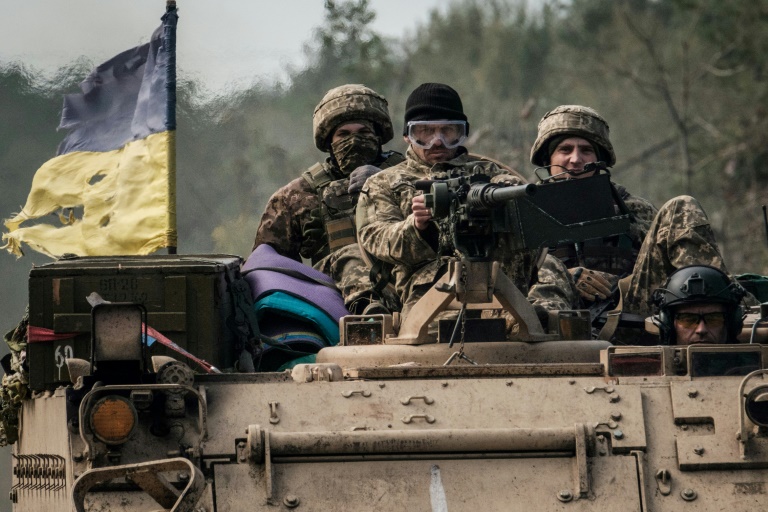
Russian forces said Friday they had captured ground in Donetsk in east Ukraine, their first claim of new gains after Kyiv grabbed momentum with a counter-offensive that rattled Russia’s war effort. 

The announcement came as Russia’s Orthodox leader said President Vladimir Putin’s rule had been divined by God, congratulating him on his 70th birthday and as the Nobel Committee awarded the Peace Prize to rights defenders in Russia, Ukraine and Belarus.

Separatist forces in the war-battered Donetsk region said they had reclaimed a series of villages near the Ukraine-controlled industrial town of Bakhmut, which has been under Russian shelling for weeks.

“On the territory of the Donetsk People’s Republic, a grouping of troops of the Donetsk and Lugansk republics, with fire support from Russian forces, liberated Otradovka, Veselaya Dolina and Zaitsevo,” they said on social media.

The Donetsk region, which has been partially controlled by Kremlin-backed separatists for years, is a key prize for Russian troops that invaded Ukraine in February.

But Ukraine’s forces in recent weeks have been pushing back against Russian forces across the frontlines in the south and in the east, including in parts of Donetsk.

AFP journalists in the centre of Bakhmut heard the sound of heavy artillery and multiple launch rocket systems near the remains of a smashed bridge over the Bakhmutka river.

– Plumes of black smoke –

A civilian volunteer from the humanitarian group Vostok SOS, 29-year-old Edvard Skoryk told AFP that there had been “street combat” near his home on the other side. 

South of the city, in the direction of the apparently seized villages, occasional columns of black smoke erupted after shells exploded. 

Civilians flinched and sometimes dived for cover as projectiles whistled overhead. Occasional bursts of machine gun fire was also audible. 

Ukraine’s lightning territorial gains in the east and south have undermined a claim from the Kremlin last week that it annexed Donetsk, neighbouring Lugansk and the southern regions of Zaporizhzhia and Kherson.

The four territories create a crucial land corridor between Russia and the Crimean peninsula, annexed by Moscow in 2014 and together make up around 20 percent of Ukraine.

In Kherson, the Moscow-installed deputy head of the region said Friday that five civilians were killed in shelling by Kyiv’s forces, as Ukrainian forces push their counter-offensive to reclaim the area.

“Militants from the Ukrainian military fired at a bus carrying civilians on the Daryevsky bridge. Civilians were on their way to work,” he said on social media, saying another five people had been wounded. 

Kyiv announced this week that it had recaptured some 500 square kilometres (193 square kilometere) in Kherson. 

This included around 30 towns and villages, potentially trapping as many as 20,000 Russian troops on the western bank of the Dnieper river that cuts through Kherson.

Ukraine’s Defence Minister Oleksiy Reznikov on Friday urged Russian forces to lay down their arms promising their lives would be spared and they would be safe.

– ‘Safety and justice’ –

“You can still save Russia from tragedy and the Russian army from humiliation,” Reznikov said in Russian in a video addressed to Russian troops. 

“We guarantee life, safety and justice for all who refuse to fight immediately. And we will ensure a tribunal for those who gave criminal orders,” he promised.

The Kremlin has not only pushed on in Donetsk, but Russian drones struck the central industrial city of Zaporizhzhia, where Europe’s largest nuclear power plant is located.

Officials said Friday the attacks had hit industrial sites, one day after devastating Russian strikes on the centre of the city killed 11 people.

US President Joe Biden had warned Thursday the world is facing nuclear “Armageddon”, warning that Putin may use his atomic arsenal as Russian troops struggle against a Ukrainian counteroffensive.

After Russia’s invasion over seven months ago, Putin has made thinly veiled threats to use nuclear weapons.

Cambodian opposition politician loses defamation case

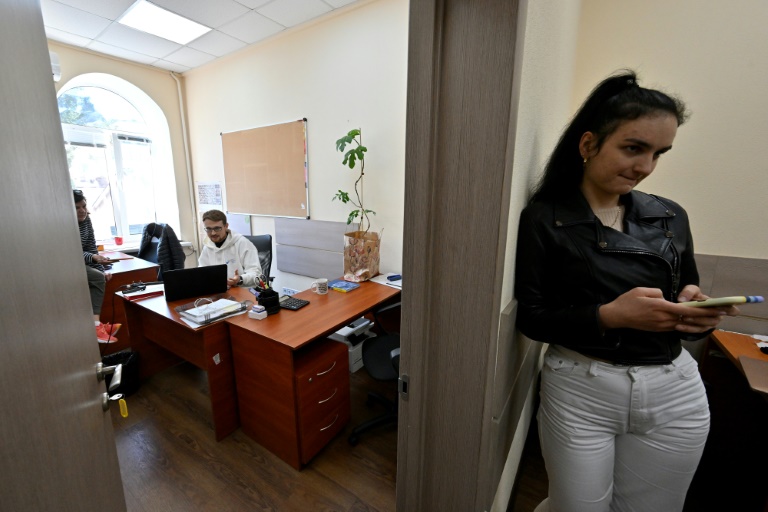
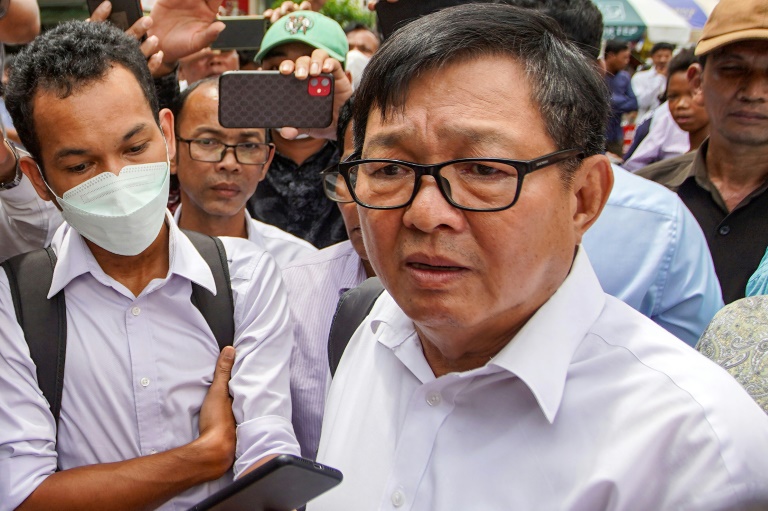
A prominent Cambodian opposition politician with Australian citizenship was convicted of defamation on Friday for criticising local elections in which strongman leader Hun Sen’s party won a landslide victory.

Son Chhay — deputy leader of the Candlelight Party — alleged the National Election Committee was biased in favour of the ruling Cambodian People’s Party. 

He also claimed there were instances of vote-buying and voter intimidation.

Both organisations denied the allegations and filed separate defamation cases against Son Chhay, a long-time ally of exiled opposition figurehead Sam Rainsy.

Phnom Penh Municipal Court on Friday found him guilty of the defamation charges and ordered him to pay $750,000 in compensation to the ruling party and a $4,250 fine to the state.

Government critics say the conviction is an attempt to discredit Son Chhay ahead of national elections next year.

Son Chhay’s lawyer Choung Chou Ngy told reporters he would appeal.

“I see the case as politically motivated, (they want) to stop him,” he said.

Following the hearing on Friday morning, Son Chhay said he wanted to improve the electoral system.

“Stop intimidating, stop threatening, don’t buy votes, and don’t disturb the work of the political parties that are not in the government,” he told reporters, referring to Cambodian authorities.

Prime Minister Hun Sen’s party won a landslide in local elections in June, taking roughly 80 percent of seats.

The Candlelight Party, which alleged the elections were not free and fair, managed to gain some traction, polling at 18 percent.

One of the world’s longest-serving leaders, Hun Sen has ruled Cambodia for more than 37 years and has vowed to run for office again next year.

In 2018 his party won every seat in a national election.

Critics and rights groups say he has ruthlessly crushed dissent by jailing opponents and activists ahead of every election.

Australia’s ambassador to Cambodia Pablo Kang said diplomats attended the hearing Friday.

“Disappointed he was found guilty of defamation re media comments earlier this year. We continue to call for genuine + free political participation in lead-up to 2023 elections,” Kang tweeted.

French motorists scramble for fuel as strike cuts supply

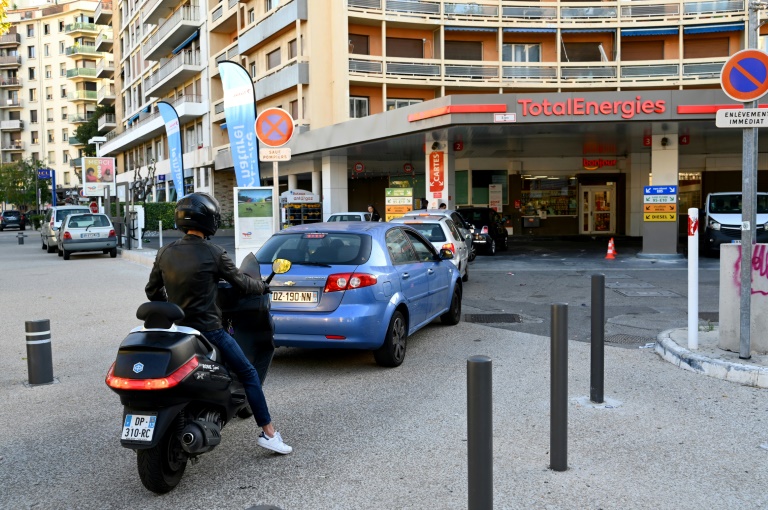
Frustrated motorists faced another day of long waits at petrol pumps across France on Friday as a strike at energy giant TotalEnergies entered its 12th day.

TotalEnergies, among the world’s biggest oil companies, runs a network of around 3,500 filling stations in France, nearly a third of the total, with most of them low on fuel.

“Does anyone know of a petrol station around here that’s been re-supplied?” read a post in a local Facebook group Friday morning. “Where can I get ethanol?” posted another motorist in the hope of filling the tank before the weekend.

Several of TotalEnergies’ oil refineries have been blockaded by striking workers.

“We’ve been dry since Sunday,” a manager at a station in central Paris said on Thursday.

Since the start of September, TotalEnergies has cut petrol prices by 20 euro cents ($0.19) per litre to help vehicle owners cope with sharp rises in energy prices triggered by the war in Ukraine.

The average price for E5-type unleaded petrol is now 1.62 euros per litre, or 6.19 euros per gallon, up around four percent from only a week ago.

“Everybody wants to buy from us because we’re cheaper,” the station manager said.

Bottlenecks due to strong demand have been exacerbated by strike action over pay, which has cut the frequency of fuel deliveries in half, he said.

Anthony, a plumber in Paris, said traffic was blocked up Friday along an entire boulevard as early as 7:00 am when he started his morning rounds, as people tried to reach a TotalEnergies station in the 12th Arrondissement in the east of the capital.

– ‘Shareholders get a lot’ –

“It’s been like this since 5 o’clock this morning, and every morning before,” said the manager at an Agip station in Marseille, Ali Mansoibou, pointing at a long queue of cars waiting to be served.

Mansoibou said he allowed each driver to buy no more than 30 euros’ worth of fuel, but even so, “there’ll be nothing left for the weekend”.

The government has responded to the shortages by releasing fuel from strategic stocks, Energy Transition Minister Agnes Pannier-Runacher told the broadcaster BFM television late Thursday.

In addition, more supplies were being brought in from neighbouring Belgium and elsewhere, she said.

The supply situation would improve “within two or three days”, she predicted, saying that just 15 percent of all petrol stations in France had been affected.

But Thierry Defresne, head of the European works council at TotalEnergies, told AFP that “every site” at the company had announced their intention to extend the strike action.

“Shareholders get a lot, but workers are completely forgotten,” Defresne told RMC radio on Friday.

“Fabulous profits are being made, but they don’t want to offset the impact of inflation,” he said.

TotalEnergies paid out a special dividend to shareholders totalling 2.6 billion euros ($2.55 billion) after the company — like most in the sector — made exceptionally large profits from high energy retail prices.

The government appeared sympathetic to the wage demands on Friday, with Olivia Gregoire, minister for small and midsize companies, calling on energy majors to “listen to demands for salary rises”.

Most of the sector’s companies had posted “strong results”, she said. “We expect an effort in favour of workers.”

Prime Minister Elisabeth Borne called on management and workers at TotalEnergies to exercise “responsibility” in their negotiations and not “penalise the French people”.

Staff at the French branch of oil major ExxonMobil have also demanded higher wages, with angry demonstrators setting fire to wooden crates during a protest in northern France on Wednesday. 

Transport Minister Clement Beaune said fuel trucks would, exceptionally, be allowed to make deliveries on Sunday.

“We’re doing what we can to resolve this situation over the coming days,” he said.

TotalEnergies did not give any details about the impact of the strike on its supply situation, with a spokesperson telling AFP simply that the situation was “stable”.

burs-jh/js/rl

Close Bitnami banner
Bitnami