World

Kenya lobby groups protest lifting of ban on GM crops

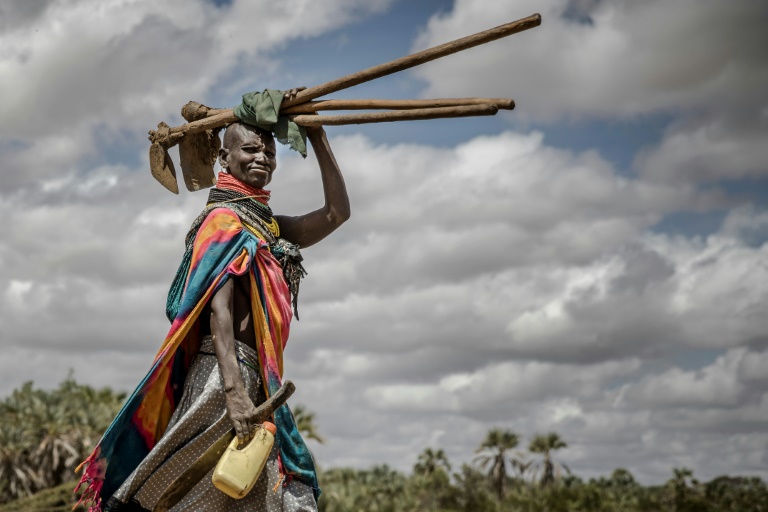
Activists and agriculture lobby groups on Thursday urged Kenya’s government to reverse its decision to lift a long-standing ban on genetically modified crops as the country struggles with a crippling drought.

The government of newly elected President William Ruto on Monday allowed the open cultivation and import of GM crops, saying it was in response to the drought — the worst to hit the country in 40 years. 

But activists protested the move, raising concerns over the safety of GM foods in a joint statement signed by nearly a dozen groups, including Greenpeace Africa.

“Food security is not just (about) the amount of food but the quality and safety of food,” the statement said.

“Our cultural and indigenous food have proved to be safer, with diverse nutrients and with less harmful chemical inputs.”

Kenya, like many other African nations, banned GM crops over health and safety concerns and to protect smallholder farms, who account for the vast majority of rural agricultural producers in the country.

However, the East African powerhouse had faced criticism over the ban including from the United States which is a major producer of GM crops.

On Monday, a statement issued by Ruto’s office said the decision was “a progressive step towards significantly redefining agriculture in Kenya by adopting crops that are resistant to pests and disease.” 

It said the cabinet had considered expert views and technical reports, including by Kenya’s National Biosafety Authority, the World Health Organization and Food and Agriculture Organization, before arriving at a decision.

– ‘Curtails freedom’ –

But the activists said the move was made without public participation and that it “essentially curtails the freedom of Kenyans to choose what they want to eat, or not.”

“We demand that the ban be immediately reinstated and an inclusive participatory process be instituted to look into long-term and sustainable solutions to issues affecting food security,” they said.

They added that the lifting of the ban opened the market to US farmers using sophisticated technologies and highly subsidised farming that risked putting small-scale farmers in Kenya out of business. 

Agriculture is the backbone of Kenya’s economy, contributing over 20 percent to GDP.

Ruto, a former chicken seller turned millionaire businessman, was elected to the top job in August on a promise to turn around Kenya’s stuttering economy and tackle inflation.

Within weeks of taking office in September, he halved the price of fertilisers to improve crop yields in the midst of the drought that has affected 23 of 47 counties. 

Four consecutive rainy seasons have failed in Kenya, Somalia and Ethiopia, an unprecedented climatic event that has pushed millions across the Horn of Africa into extreme hunger.
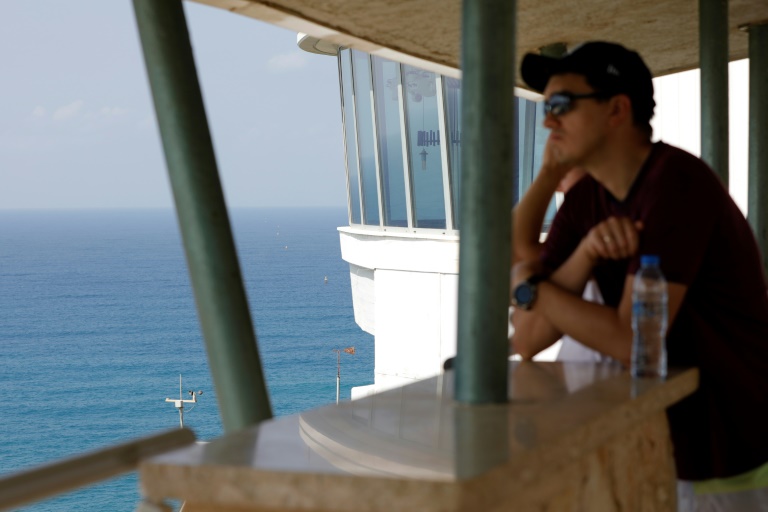
Lebanon far from gas riches even if Israel deal agreed: analysts

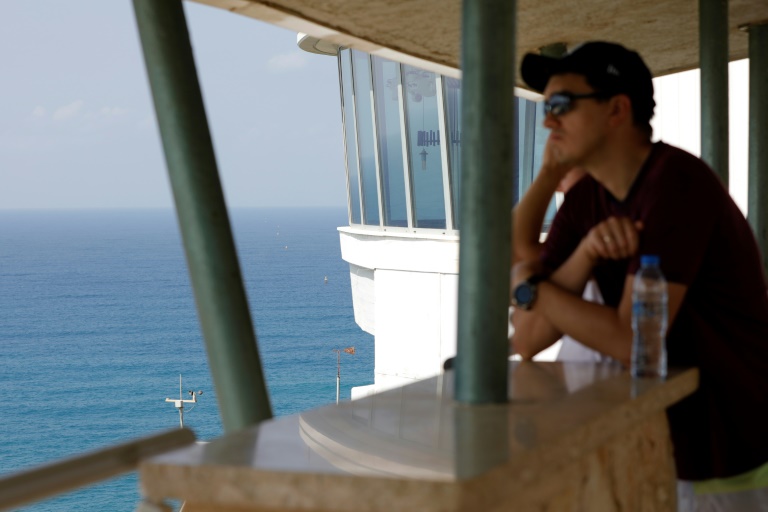
Lebanon is grappling to strike a deal with Israel over contested maritime gas fields, but even with an agreement the cash-strapped country faces multiple hurdles before tapping potential hydrocarbon riches, analysts say.

“A deal would mark one step forward but it does not mean that Lebanon has become a gas- or oil-producing country,” said Marc Ayoub, an associate fellow at the American University of Beirut’s Issam Fares Institute.

“We are talking of a timeline of five to six years… before the first gas” if commercially viable reservoirs are in fact found, the energy expert told AFP, describing the timeframe as “optimistic”.

With the demand for gas rising worldwide because of an energy crisis sparked by Russia’s invasion of Ukraine, Lebanon hopes that an offshore discovery would ease its current unprecedented financial downturn.

But more than a decade since it declared its maritime boundaries and an Exclusive Economic Zone, it still has no proven natural gas reserves.

One well drilled in 2020 by a consortium of energy giants TotalEnergies, Eni and Novatek showed only traces but no commercially viable gas deposits.

Further test drilling, in a block near the border, has been hampered by the maritime border dispute between Lebanon and Israel, which are technically still at war.

Following years of US-mediated negotiations, a draft proposal from Washington at the weekend was welcomed by both sides.

But Israel on Thursday said it would reject amendments to the proposal requested by Lebanon this week, further prolonging a final agreement.

A final deal, however, would allow “offshore exploration activities to continue,” off Lebanon’s coast, Ayoub said.

“But that doesn’t mean that Lebanon has become rich… or that its crisis has been solved.” 

– ‘First gas’ –

A 2012 seismic study of a limited offshore area by the British firm Spectrum estimated recoverable gas reserves in Lebanon at 25.4 trillion cubic feet.

The authorities in Lebanon have announced higher estimates.

Block 9 near the border with Israel contains the so-called Qana field or Sidon reservoir, and will be a major zone for offshore exploration by TotalEnergies and Eni that were awarded a contract in 2018.

“This time next year, we should know if there is a commercial discovery in Qana or not,” Ayoub said.

“If we have a discovery, it will take… no less than three to five years after exploration” before production could start.

This time frame, according to Ayoub, assumes there are no delays by Lebanese authorities who are widely blamed for the corruption and mismanagement behind the country’s financial crash.

It took months for the Lebanese Petroleum Administration (LPA) regulatory body to name its board after it was formed in 2012, because of political disputes over nominations.

Several bidding rounds for offshore gas and oil licences have been hit by delays since they began in 2013.

Already, Lebanon lags far behind Israel which has been investing in the offshore Karish field for years and is expecting its first gas within weeks.

– Risky investment –

Roudi Baroudi, an energy consultant, said that gas or oil production could start within three years if commercially viable reservoirs are found.

But to attract energy firms and benefit from potential discoveries, Lebanon desperately needs to undergo changes, he told AFP.

“Lebanon is not a good investment unless the government implements reforms,” the energy expert said.

Reforms would provide “the basic assurances that international companies need to work with less risk”.

State institutions in Lebanon have collapsed under the weight of the crisis, with strikes by civil servants adding to the paralysis.

An economic recovery plan has yet to take off more than three years since the financial downturn began, despite mounting pressures from foreign donors and the International Monetary Fund.

And political gridlock has caused a months-long delay in forming a new government amid fears of a presidential vacuum after Michel Aoun’s mandate expires at the end of October.

With a bankrupt state unable to deliver more than an hour or two of mains electricity a day, energy firms may choose to work on their Lebanon projects out of Cyprus, according to Baroudi.

“With no rule of law, Lebanon is a jungle,” he said.  “It’s absolute chaos, whether judicially, financially or in terms of regulatory” bodies.

Lebanon far from gas riches even if Israel deal agreed: analysts

Lebanon is grappling to strike a deal with Israel over contested maritime gas fields, but even with an agreement the cash-strapped country faces multiple hurdles before tapping potential hydrocarbon riches, analysts say.

“A deal would mark one step forward but it does not mean that Lebanon has become a gas- or oil-producing country,” said Marc Ayoub, an associate fellow at the American University of Beirut’s Issam Fares Institute.

“We are talking of a timeline of five to six years… before the first gas” if commercially viable reservoirs are in fact found, the energy expert told AFP, describing the timeframe as “optimistic”.

With the demand for gas rising worldwide because of an energy crisis sparked by Russia’s invasion of Ukraine, Lebanon hopes that an offshore discovery would ease its current unprecedented financial downturn.

But more than a decade since it declared its maritime boundaries and an Exclusive Economic Zone, it still has no proven natural gas reserves.

One well drilled in 2020 by a consortium of energy giants TotalEnergies, Eni and Novatek showed only traces but no commercially viable gas deposits.

Further test drilling, in a block near the border, has been hampered by the maritime border dispute between Lebanon and Israel, which are technically still at war.

Following years of US-mediated negotiations, a draft proposal from Washington at the weekend was welcomed by both sides.

But Israel on Thursday said it would reject amendments to the proposal requested by Lebanon this week, further prolonging a final agreement.

A final deal, however, would allow “offshore exploration activities to continue,” off Lebanon’s coast, Ayoub said.

“But that doesn’t mean that Lebanon has become rich… or that its crisis has been solved.” 

– ‘First gas’ –

A 2012 seismic study of a limited offshore area by the British firm Spectrum estimated recoverable gas reserves in Lebanon at 25.4 trillion cubic feet.

The authorities in Lebanon have announced higher estimates.

Block 9 near the border with Israel contains the so-called Qana field or Sidon reservoir, and will be a major zone for offshore exploration by TotalEnergies and Eni that were awarded a contract in 2018.

“This time next year, we should know if there is a commercial discovery in Qana or not,” Ayoub said.

“If we have a discovery, it will take… no less than three to five years after exploration” before production could start.

This time frame, according to Ayoub, assumes there are no delays by Lebanese authorities who are widely blamed for the corruption and mismanagement behind the country’s financial crash.

It took months for the Lebanese Petroleum Administration (LPA) regulatory body to name its board after it was formed in 2012, because of political disputes over nominations.

Several bidding rounds for offshore gas and oil licences have been hit by delays since they began in 2013.

Already, Lebanon lags far behind Israel which has been investing in the offshore Karish field for years and is expecting its first gas within weeks.

– Risky investment –

Roudi Baroudi, an energy consultant, said that gas or oil production could start within three years if commercially viable reservoirs are found.

But to attract energy firms and benefit from potential discoveries, Lebanon desperately needs to undergo changes, he told AFP.

“Lebanon is not a good investment unless the government implements reforms,” the energy expert said.

Reforms would provide “the basic assurances that international companies need to work with less risk”.

State institutions in Lebanon have collapsed under the weight of the crisis, with strikes by civil servants adding to the paralysis.

An economic recovery plan has yet to take off more than three years since the financial downturn began, despite mounting pressures from foreign donors and the International Monetary Fund.

And political gridlock has caused a months-long delay in forming a new government amid fears of a presidential vacuum after Michel Aoun’s mandate expires at the end of October.

With a bankrupt state unable to deliver more than an hour or two of mains electricity a day, energy firms may choose to work on their Lebanon projects out of Cyprus, according to Baroudi.

“With no rule of law, Lebanon is a jungle,” he said.  “It’s absolute chaos, whether judicially, financially or in terms of regulatory” bodies.

US targets 'senior' IS jihadist in Syria's northeast: Centcom

American forces targeted a “senior” member of the jihadist Islamic State group Thursday in a pre-dawn raid on northeastern Syria, the US military’s Central Command said.

The operation is the latest US effort to clamp down on IS jihadists who have been territorially defeated but still orchestrate attacks in Syria and neighbouring Iraq.

“Centcom forces conducted a raid in northeast Syria targeting a senior ISIS official,” spokesman Colonel Joe Buccino said in an emailed statement to AFP, without elaborating. 

Syria’s state broadcaster had said a US airborne operation involving multiple helicopters left one person dead and saw several others captured in a government-controlled area of Syria’s northeast, which is mostly dominated by Kurdish forces.

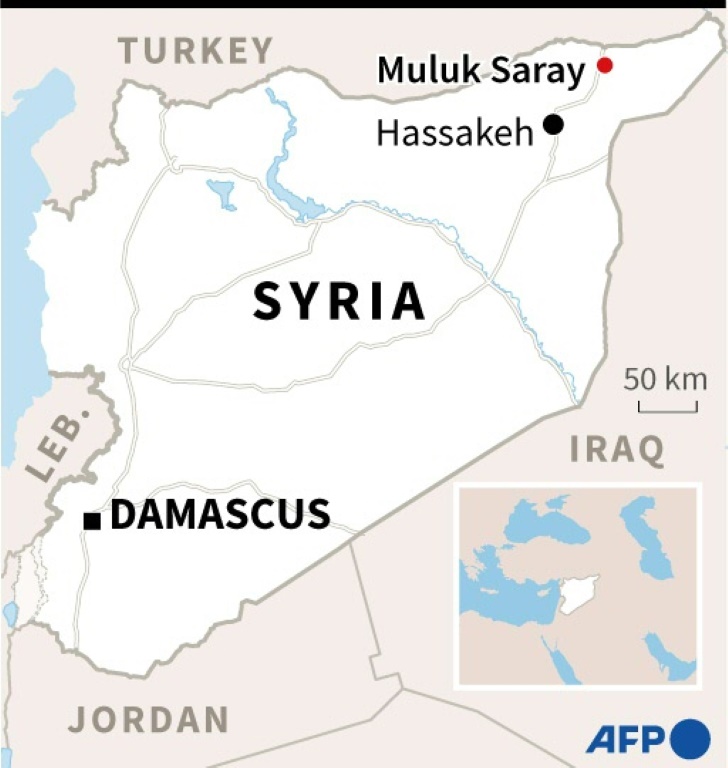
The targeted village, Muluk Saray, lies 17 kilometres (10 miles) south of the Kurdish-held city of Qamishli and is controlled by pro-regime militias, said the Syrian Observatory for Human Rights. 

Thursday’s raid is the first such airborne operation in government-held territory since the start of Syria’s war in 2011, added the Britain-based war monitor. 

The person killed in the operation “had been a resident of the area for years”, said the Observatory which relies on a wide network of sources in Syria.

At least two people were captured alive in the operation, including a Syrian and an Iraqi, the monitor said.

– Little-known target –

A resident of the village said three US helicopters carrying troops had landed in the operation.

US forces raided a house, killing one person and taking several others captive, the resident told AFP on condition of anonymity for fear of reprisals.

“They used loudspeakers to call on residents to stay indoors” during the operation, the resident said.

The resident identified the victim as Abu Hayel, a little-known displaced person from Hassakeh province.

The United States leads a military coalition battling IS in Syria.

In July, the Pentagon said it killed Syria’s top IS jihadist in a drone strike in the northern part of the country.

Centcom said he had been “one of the top five” IS leaders.

The July strike came five months after a nighttime US raid in the town of Atme, which led to the death of the overall Islamic State leader, Abu Ibrahim al-Qurashi.

US officials said Qurashi died when he detonated a bomb to avoid capture.

After losing their last territory following a military onslaught backed by the US-led coalition in March 2019, the remnants of IS in Syria mostly retreated into desert hideouts.

They have since used such hideouts to ambush Kurdish-led forces and Syrian government troops while continuing to mount attacks in Iraq.

Myanmar junta jails Japanese filmmaker for 10 years

Myanmar’s junta has jailed a Japanese filmmaker for 10 years, more than two months after he was arrested while filming an anti-coup protest, a military spokesman said Thursday.

The military has clamped down on press freedoms since its coup last year, arresting reporters and photographers as well as revoking broadcasting licences while the country plunged into chaos.

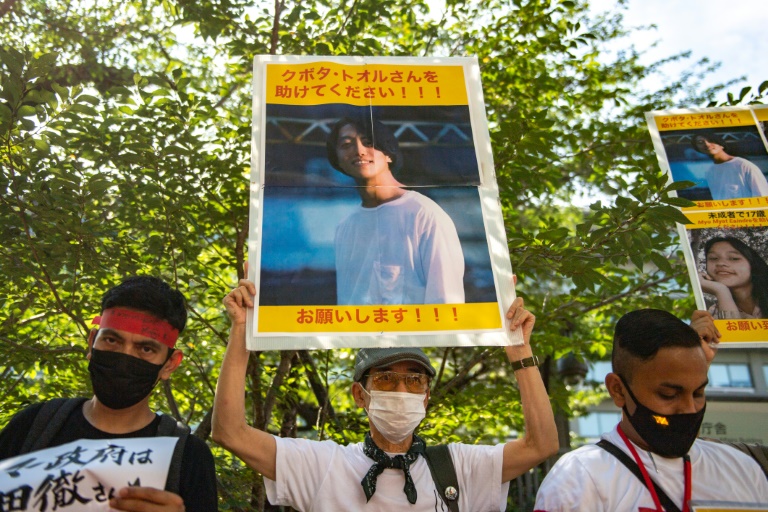
Toru Kubota, 26, was detained near an anti-government rally in commercial hub Yangon in July along with two Myanmar citizens.

He was sentenced on Wednesday to seven years in jail for breaching a law that criminalises spreading information detrimental to state security and peace and tranquility, a junta spokesman said in a statement.

It added he had also received a three-year sentence for encouraging dissent against the military — a charge that has been widely used in the crackdown.

The sentences would be served concurrently, the junta statement added.

A diplomat at Japan’s embassy in Myanmar said Kubota also faces a charge of breaching immigration law, with the next hearing expected on October 12.

Japan’s foreign ministry said it had been providing consular support and would “continue to appeal to the Myanmar authorities for the early release of Mr Kubota.”

The filmmaker had arrived in Myanmar in July and was filming a “documentary featuring a Myanmar person”, his friend Yoshitaka Nitta told a press conference in Tokyo in August.

According to a profile on the FilmFreeway website, Kubota has previously made documentaries on Myanmar’s Muslim Rohingya minority and “refugees and ethnic issues in Myanmar”.

– ‘Slap in the face’ – 

Japan is a top donor to Myanmar and has long-standing relations with the country’s military.

After the coup, Tokyo announced it would halt all new aid, though it stopped short of imposing individual sanctions on military and police commanders.

Kubota’s jailing is a “slap in the face” for Tokyo, said Phil Robertson of Human Rights Watch. 

“It’s time for Japan to stop playing games, and move to support real international sanctions that will squeeze the junta’s revenue sources.”

In September, Japan’s defence ministry said it would halt a training programme for members of Myanmar’s military from next year over the junta’s executions of four political prisoners.

The junta’s execution of the four in July, in the face of international calls for clemency, was Myanmar’s first use of capital punishment in decades and sparked international outrage. 

Media watchdog Reporters Without Borders (RSF) said Kubota’s arrest and  “trial behind closed doors… is symptomatic of the military junta’s abysmal disregard for the rule of law”.  

RSF’s Asia-Pacific director Daniel Bastard urged Japan to stand-firm and obtain his release as “Myanmar’s generals have become accustomed to using foreign journalists as bargaining chips in their relations with foreign governments”. 

Kubota is the fifth foreign journalist to be detained in Myanmar, after US citizens Nathan Maung and Danny Fenster, Robert Bociaga of Poland and Yuki Kitazumi of Japan — all of whom were later freed and deported.

Fenster, who was held in May last year as he attempted to leave the country, faced a closed-door trial inside Insein on charges of unlawful association, incitement against the military and breaching visa rules.

He was sentenced to 11 years in prison before being pardoned and deported.

As of March this year, 48 journalists remain in custody across the country, according to the monitoring group Reporting ASEAN.

The military’s crackdown on dissent since it ousted Aung San Suu Kyi’s government has left more than 2,300 civilians dead, according to a local monitoring group. 

The junta blames anti-coup fighters for the deaths of almost 3,900 civilians.

Nearly 200 dead in Niger floods

Flooding caused by heavy rains in the West African state of Niger has claimed nearly 200 lives and affected more than a quarter of a million people, the Civil Protection Service said on Thursday, describing the toll as one of the highest on record.

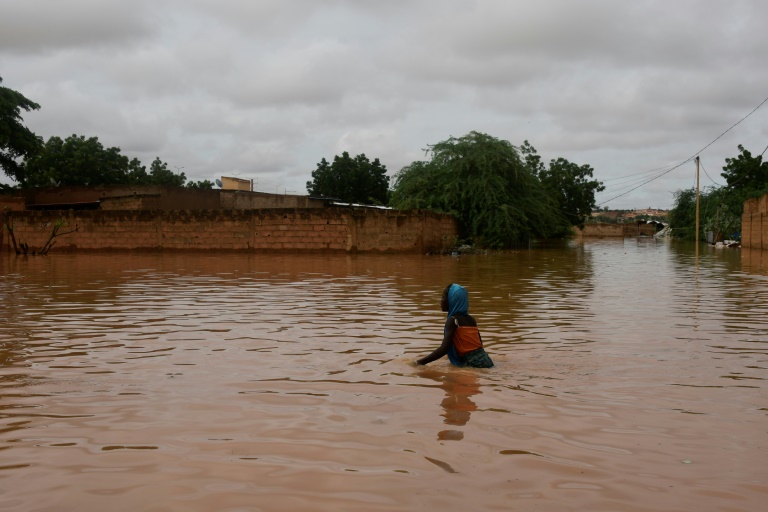
Rainy-season floods claimed 192 lives, affected more than 263,000 people and destroyed more than 30,000 homes, as well as classrooms, medical centres and grain stores, it said.

The worst-affected regions are Maradi and Zinder in the centre of the country, Dosso in the southwest and Tahoua in the west.

The rainy season in Niger, located in the heart of the arid Sahel, typically runs from June to September and routinely claims lives.

In 2021, 70 people were killed and 200,000 people were affected. The death toll in 2020 was 73.

Katiellou Gaptia Lawan, head of the national meteorological agency, said this year’s heavy rains were consistent with models of impacts from climate change.

Niger is the world’s poorest country, according to the benchmark of the 2020 Human Development Index devised by the United Nations Development Programme (UNDP).  

Over 4.4 million people — more than a fifth of the population — fall into the category of “severe” food insecurity, the International Red Cross and Red Crescent said in July.

French author Annie Ernaux wins Nobel Literature Prize

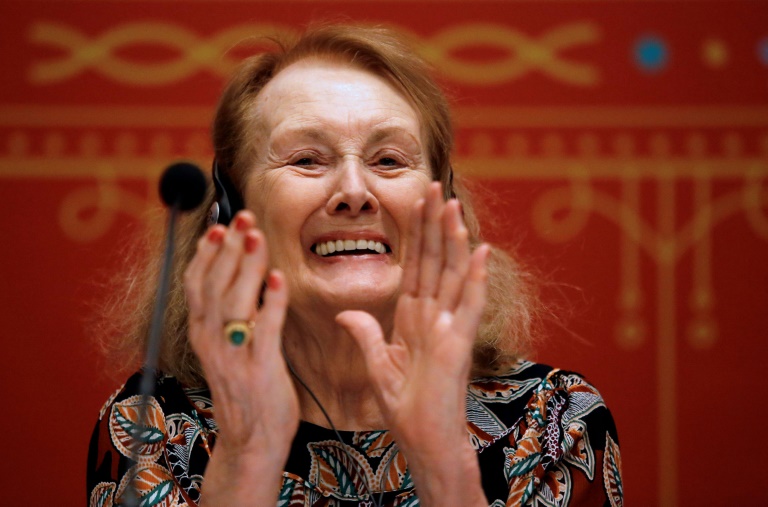
French author Annie Ernaux, known for her deceptively simple novels drawing on personal experience of class and gender, was on Thursday awarded the Nobel Literature Prize.

Ernaux, 82, was honoured “for the courage and clinical acuity with which she uncovers the roots, estrangements and collective restraints of personal memory”, the jury said.

Interviewed on Swedish television immediately after the announcement, Ernaux called it a “very great honour” and “a great responsibility”.

Her more than 20 books, many of which have been school texts in France for decades, offer one of the most subtle, insightful windows into the social life of modern France.

Personal experiences are the source for all of Ernaux’s work and she is the pioneer of France’s “autofiction” genre, which gives narrative form to real-life experience.

Above all, Ernaux’s crystalline prose has excavated her own passage from working-class girl to the literary elite, casting a critical eye on social structures and her own complicated emotions.

“In her writing, Ernaux consistently and from different angles, examines a life marked by strong disparities regarding gender, language and class”, the Swedish Academy noted.

“Her work is uncompromising and written in plain language, scraped clean”, it said.

“And when she with great courage and clinical acuity reveals the agony of the experience of class, describing shame, humiliation, jealousy or inability to see who you are, she has achieved something admirable and enduring”.

– ‘Under consideration for years’ –

The chairman of the Nobel Committee, Anders Olsson, said Ernaux had “been under consideration for her books for many years”.

“We have had very intensive discussions about her”, he told Swedish news agency TT.

She debuted with the novel “Cleaned Out” in 1974, a cool-eyed but harrowing account of an abortion she went through in her youth and that she had kept secret from her family.

But it was her fourth book, “A Man’s Place” from 1983 — a dispassionate portrait of her father and the social milieu that formed him — that started her literary breakthrough.

She then went on to write a portrait of her mother in 1987, “A Woman’s Story”, which with “severe brevity” was a “wonderful tribute to a strong woman”, the Academy noted.

Outside France, recognition has only come in recent years, notably after the English translation of her key 2008 work, “The Years”, which was nominated for the prestigious Man Booker International Prize in 2019. 

In it Ernaux used family photos as well as scraps of popular culture to recall her life and explore the impact of bigger historical events.

– Diversity pledge –

The Nobel Prize comes with a medal and a prize sum of 10 million Swedish kronor (about $911,400).

Ernaux will receive the Nobel from King Carl XVI Gustaf at a formal ceremony in Stockholm on December 10, the anniversary of the 1896 death of scientist Alfred Nobel who created the prizes in his last will and testament.

Last year, the award went to Tanzanian-born novelist Abdulrazak Gurnah, whose work focuses on the plight of refugees and exile, colonialism and racism.

Ernaux, whose name has circulated in Nobel speculation for several years, is the 17th woman to win the prestigious prize, out of 119 literature laureates since the first Nobel was awarded in 1901.

The Swedish Academy has in recent years pledged to make the prize more diverse, after a 2017-2018 #MeToo scandal that left it in tatters and led to a revamping of the venerable body.

Famed — and lambasted — for its Eurocentric Nobel picks dominated by men, the jury has repeatedly maintained, however, that its prize is neither political nor subject to gender or ethnic quotas.

It has insisted that its only criteria is the quality of a writer’s body of work.

But perhaps it is no coincidence that the revamped Academy gave the nod to Ernaux, who has in recent years been a strong voice supporting the #MeToo movement.

The movement took longer to take off in France, with the likes of actress Catherine Deneuve initially defending male “gallantry” and men’s right to hit on women.

“In France we hear so much about our culture of seduction, but it’s not seduction, it’s male domination”, Ernaux has said.

The Nobel season continues on Friday with the highly anticipated Peace Prize, the only Nobel announced in Oslo.

Punters have suggested this year’s prize could sound the alarm over the war in Ukraine or the climate.

The Economics Prize wraps up the 2022 edition of the awards on Monday, October 10.

UK government talks tough on immigration — again

Accusing asylum seekers of “abusing the system” and urging the need to “take back control”, the UK government is once again talking tough on immigration.

But its latest pledge to reduce crossings from northern France in small boats comes with a blatant promise to defy international conventions.

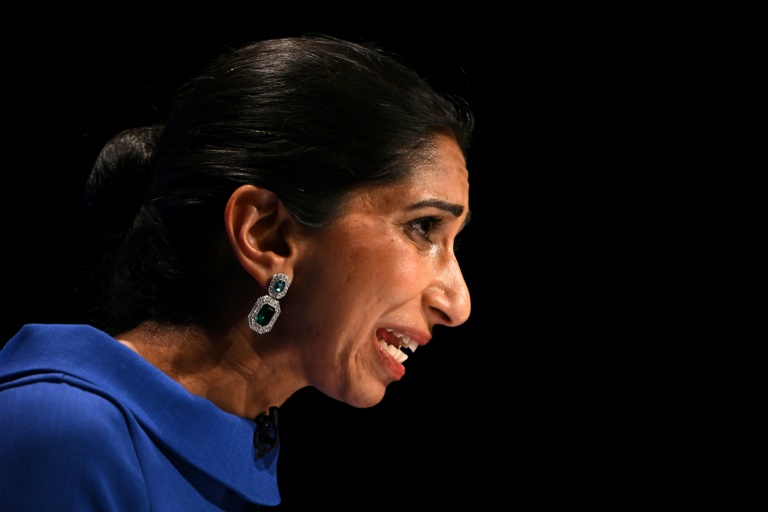
“It’s not racist for anyone… to want to control our borders, it’s not bigoted to say that we have too many asylum seekers who are abusing the system,” said Home Secretary Suella Braverman.

The stance earned Braverman, whose parents emigrated to Britain from Kenya and Mauritius in the 1960s, a standing ovation at this week’s Conservative party’s annual conference. 

The 42-year-old anti-EU right-winger, who has been in the job for the past month, pointedly vowed to get tough on asylum seekers who do not “meet the needs of the country”. 

“If you deliberately enter the United Kingdom illegally from a safe country, you should be swiftly returned to your home country or relocated to Rwanda. That is where your asylum claim will be considered,” she said. 

Successive Conservative governments since 2010 have been promising to drastically reduce the number of migrants but to no avail. 

Since the beginning of the year, a record 33,500 people have crossed the Channel in small boats. 

More than half of them came from Afghanistan (18 percent), Albania (18 percent) or Iran (15 percent), according to the Home Office.

Since 2018, Iranians and Iraqis have accounted for almost half of all migrants intercepted on the route. 

– ‘Diversion’ – 

Zoe Gardner, an expert on British migration and asylum systems, said while the pro-Brexit Tories have never managed to reduce immigration, they have made a tougher for asylum seekers to settle.

“For a long time, it (immigration policy) has been a way to gain support, when every other area of policy seems to be a failure for them,” she told AFP.

“Every time the government of Boris Johnson had a bad week in the newspapers, you can be sure they would announce another plan to target immigrants just to distract people.”

The strategy, though, is in danger of running out of steam, she added. 

Britons are overwhelmingly in favour of taking in refugees, according to polls, but are now more concerned about a cost-of-living crisis. 

Proposing to ban access to asylum would be a violation of the UN Refugee Convention to which Britain is a signatory.

It states that a migrant can travel in any way he or she wishes — or can — to a country to seek refuge, without being harmed by the mode of arrival. 

For some experts, such a ban would result in court action, just as it did when the government attempted to deport the first batch of failed asylum seekers to Rwanda.

In June, a plane bound for Kigali was grounded after last-minute legal challenges in the English courts, and a ruling at the European Court of Human Rights.

Braverman, a former attorney general and successor to another hardliner Priti Patel, blasted the ruling of the “foreign court”, which Britain helped set up after World War II.

She told conference delegates with a smile that her “dream” for Christmas would be to see “a front page of The Telegraph with a plane taking off to Rwanda”. 

– No other way – 

According to Braverman’s own department, 94 percent of the 50,000 or so migrants who arrived in the UK across the Channel between January 2018 and June 2022 applied for asylum. 

Some 82 percent of those applicants were still waiting for a decision, but the majority who have received a response were successful. 

“We are talking about people with good reason to seek asylum in UK, with no other way of doing so because the government has closed the majority of other options”, said Daniel Sohege, a refugee law specialist who heads the association Stand For All.  

As the law currently stands, a migrant must be physically in the UK to start the asylum process.

But there is “no way” that London would allow them to arrive in the country and seek refuge, Zoe Gardner said. 

The UK also relies on its island status and believes that it does not have to take in migrants who have travelled through other so-called safe countries. 

With this impossible equation for refugees, “the UK receives fewer asylum applications than France, Germany or Italy”, said Gardner. 

European 'community' meets in face of Russia's war

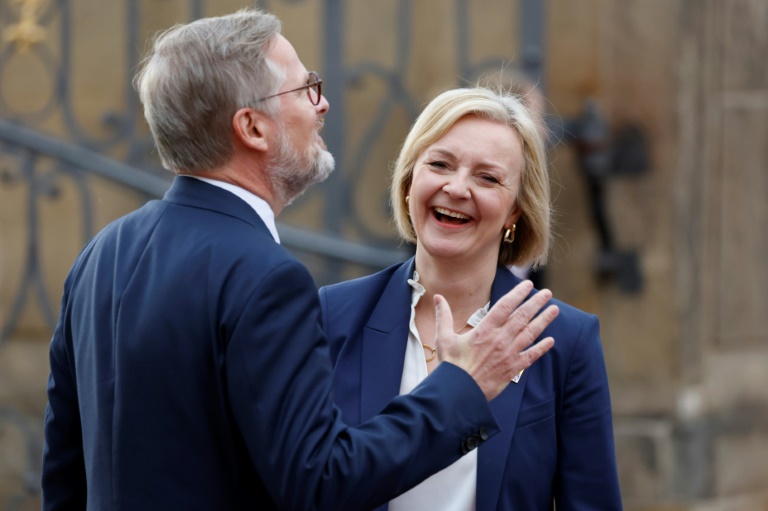
Leaders from Ukraine, Britain and Turkey joined their EU counterparts on Thursday for an inaugural summit of the “European Political Community” aimed at bringing the continent together in the face of Russia’s aggression against Ukraine.

The gathering in Prague — a brainchild of French President Emmanuel Macron — has been billed by Brussels as a “platform for political coordination” for the 44 nations attending. 

But there are deep disagreements — and even open conflict — among some of the participants and scepticism that the one-day event will only be a photo opportunity.

Those meeting in the historic Prague Castle also include the leaders of Albania, Armenia, Azerbaijan, Bosnia, Georgia, Iceland, Kosovo, Liechtenstein, Moldova, Montenegro, North Macedonia, Norway, Serbia and Switzerland. 

“It sends first of all a message of unity,” Macron said as he arrived for the summit. 

“The objective is first of all to share a common reading of the situation affecting our Europe and also to build a common strategy.”

Russia, which is not invited, will loom over the meeting as discussions focus on the economic and security turmoil from its invasion of its pro-Western neighbour.

“If you just look at the attendance here, you see the importance,” said Belgian Prime Minister Alexander De Croo.  

“The whole European continent is here, except two countries, Belarus and Russia. So it shows how isolated those two countries are.”

Ukrainian President Volodymyr Zelensky — currently overseeing a counter-offensive against Moscow’s forces — was connecting via video link from Kyiv. His prime minister Denis Shmyhal was standing in for him in Prague. 

“Europe is facing its biggest crisis since the Second World War with unity and resolve,” British Prime Minister Liz Truss tweeted.

“We must continue to stand firm to ensure that Ukraine wins this war, dealing with the strategic challenges that it has exposed.”

Despite the rhetoric there are expected to be few concrete results from the summit. 

France said it hopes to define potential room for cooperation among the leaders on protecting critical European infrastructure such as pipelines, cybersecurity and energy supplies.  

EU officials expect to agree to hold a follow-up gathering of the community in six months in a country outside the bloc, with Britain and Moldova both offering to host.

While there are major questions over the usefulness of the enterprise, there will be a lot of activity on the sidelines as leaders hold bilateral talks.

– ‘Talking shop’ –

The gathering at least passed its first hurdle of convincing key European powers outside the EU to show up.

Truss, a fierce supporter of Britain’s independent path since Brexit, came on one of her first major trips abroad after taking office. 

London was wary about the event being dominated by the European Union and reportedly wanted to change the name from “community” to “forum”.

Truss may be hoping for a respite from her woes at home after unleashing turmoil on Britain’s economy. But she could face a tricky ride from EU counterparts over UK efforts to renegotiate the post-Brexit trade deal for Northern Ireland.

“I welcome the opportunity to work with leaders from across the continent in this new forum,” Truss wrote in the Times newspaper.  

“But this must not cut across the G7 and NATO, and it must not be a talking shop.”

The presence of Turkish President Recep Tayyip Erdogan had been a sore point for some.  

EU members Greece and Cyprus have long-standing disputes with Ankara and the unpredictable Turkish leader is proving a headache for Sweden and Finland as a threat to their bids to join NATO. 

Even more fraught could be the attendance of the leaders of Armenia and Azerbaijan, whose troops continue bloody clashes along their volatile frontier.

Armenia’s prime minister has said he will meet Azerbaijan’s president together with Macron and EU chief Charles Michel in Prague. 

Those pushing to join the EU — Ukraine, Georgia, Moldova and the Western Balkan nations — have welcomed the initiative, but are on their guard about it being an alternative to membership.

“Please don’t treat European political community as a substitute,” said Lithuanian President Gitanas Nauseda. 

Gunman murders at least 35 in Thai nursery attack

A former police officer shot dead at least 35 people, most of them children, when he stormed a nursery in Thailand on Thursday in one of the kingdom’s deadliest mass killings.

Following the attack, gunman Panya Khamrab went home and killed his wife and child before taking his own life, police said. 

Armed with a shotgun, pistol and knife, Panya opened fire on the childcare centre in northeastern Nong Bua Lam Phu province at about 12:30 pm (0530 GMT).

Police Colonel Jakkapat Vijitraithaya from the province where the attack happened told AFP that the gunman killed 35 people, including 23 children and his own family, and wounded 12 others.

Nanthicha Punchum, acting chief of the nursery, told of harrowing scenes as the attacker barged into the building.

“There were some staff eating lunch outside the nursery and the attacker parked his car and shot four of them dead,” she told AFP.

“The shooter smashed down the door with his leg and then came inside and started slashing the children’s heads with a knife.”

Footage after the incident showed distraught parents weeping in a shelter outside the nursery, a yellow single-storey building set in a garden. 

The 34-year-old gunman was a former police sergeant suspended in January and sacked in June for drug use, National Police Chief Damrongsak Kittiprapat told reporters.

“As far as I know he was due in court tomorrow for a drug-related trial,” he said.

He said the attacker was in a manic state but it was unknown whether it was drug-related.

“We have to test his blood for drugs,” he said.

“What happened today will be a lesson to prevent this happening again in the future.”

Damrongsak said the pistol had been purchased legally and was a privately owned weapon, not police property.

Witness Paweena Purichan, 31, said the attacker was well-known in the area as a drug addict.

She told AFP she encountered Panya driving erratically as he fled the scene.

“The attacker rammed a motorbike into two people who were injured. I sped off to get away from him,” she said. 

“There was blood everywhere.”

Thai Prime Minister Prayut Chan-O-Cha ordered the national police chief to “fast-track an investigation” and said he would travel to the scene of the attack on Friday.

“This should not happen. This absolutely should not happen,” Prayut told reporters

“I am extremely sorry for those who were injured and lost (their loved ones).”

Thailand forms part of Southeast Asia’s so-called Golden Triangle which has long been an infamous hotspot for the trafficking and abuse of drugs.

Surging supplies of methamphetamine have sent street prices crashing in Thailand to all-time lows, according to the UN Office on Drugs and Crime.

– Mass shootings rare –

The mass killing comes less than a month after a serving army officer shot dead two colleagues at a military training base in the capital Bangkok.

While Thailand has high rates of gun ownership, mass shootings are rare.

But in the past year, there have been at least two other cases of shooting murders by serving soldiers, according to local media.

In 2020, in one of the kingdom’s deadliest incidents in recent years, a soldier gunned down 29 people in a 17-hour rampage and wounded scores more before he was shot dead by commandos.

That mass shooting, linked to a debt dispute between gunman Sergeant-Major Jakrapanth Thomma and a senior officer, triggered public anger against the military.

The soldier was able to steal assault rifles from an army depot before embarking on his killing spree, posting live updates on social media as he did so.

Military top brass were at pains to portray the killer as a rogue soldier.

The United States Embassy in Bangkok expressed condolences to the victims and their families while Amnesty International Thailand said “hearts go out” to those affected.

“I am shocked to hear of the horrific events in Thailand this morning. My thoughts are with all those affected and the first responders,” UK prime minister Liz Truss tweeted.

The United Nation’s children’s agency said: “early childhood development centres, schools and all learning spaces must be safe havens for young children to learn, play and grow”.

Close Bitnami banner
Bitnami