World

Crowd-pleaser or obscure pick for literature Nobel?

The Nobel Literature Prize will be announced on Thursday, with speculation in literary circles split over whether it will go to an overdue bestselling author or a relative unknown lifted into the spotlight.

The Swedish Academy will reveal its pick at 1:00 pm (1100 GMT) in Stockholm. Last year, the prestigious award went to British-Tanzanian author Abdulrazak Gurnah. American poet Louise Gluck won it the year before.

Literary critics and Nobel watchers are split into two camps this year.

There are those who see the Academy’s past choices as confirmation that it sees no need to crown renowned authors, especially those who already sell millions of books.

And then there are those who think it could be time to award a writer known and loved the world over.

The 18-member Swedish Academy is still recovering from a 2017-2018 #MeToo scandal that left it in tatters, and its controversial awarding of the 2019 Nobel to Austrian novelist Peter Handke.

Famed — and lambasted — for its male Eurocentric Nobel picks, the revamped Academy has since gone on to award an American woman and a man born in Zanzibar whose work focuses on the plight of refugees and exile, colonialism and racism.

The jury has repeatedly maintained that its prize is neither political nor subject to gender or ethnic quotas, and insists that its only criteria is the quality of a writer’s body of work.

– ‘Well-known name’ –

Nonetheless, “the Academy is now very conscious of its reputation when it comes to diversity and gender representation, in a totally different way than they were before the 2017-2018 scandal”, Bjorn Wiman, culture editor at Sweden’s newspaper of reference Dagens Nyheter, told AFP.

“I think we can expect a more well-known name this year, after last year’s surprise,” he said.

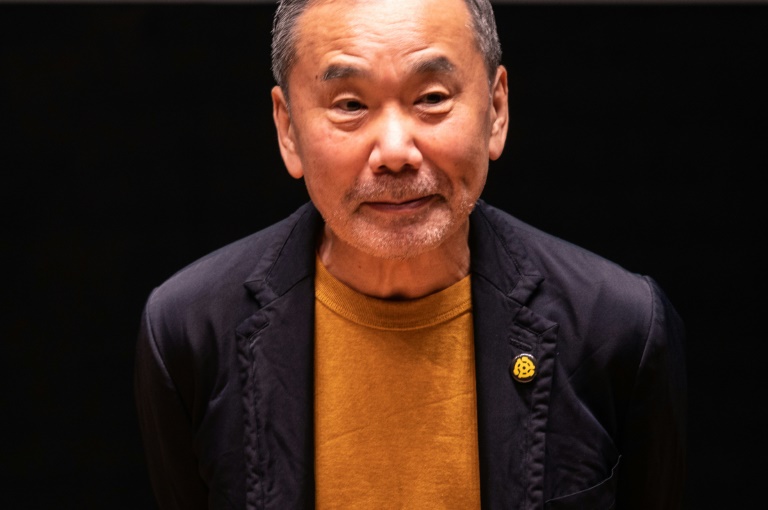
If the Academy were to lean that way, the prize could go to public favourites Haruki Murakami of Japan, Joyce Carol Oates and Cormac McCarthy of the US and Canada’s Margaret Atwood, who have all been mentioned in Nobel speculation for years.

But after two well-received laureates, the Academy could also venture for a more polemic pick this time, with France’s Michel Houellebecq — known for controversial remarks on Islam, among others — topping some betting sites this year.

Canada’s Anne Carson was also a favourite with bookies, along with Salman Rushdie, the controversial British author of “The Satanic Verses” who was the victim of an attempted murder attack in August.

Another political choice, in the context of the war in Ukraine, would be Russian novelist Lyudmila Ulitskaya, exiled in Berlin and a fierce critic of President Vladimir Putin.

Her name has regularly made the rounds in Nobel speculation in recent years, as have Hungarian authors Peter Nadas and Laszlo Krasznahorkai, French novelists Annie Ernaux and Maryse Conde, Norwegians Jon Fosse and Karl Ove Knausgaard, Kenya’s Ngugi wa Thiong’o, Croatia’s Dubravka Ugresic, Americans Thomas Pynchon and Don DeLillo, Antiguan-American Jamaica Kincaid and Israel’s David Grossman.

– Time for Asia? –

Asia has not had a Nobel winner since China’s Mo Yan 10 years ago. 

Giving the prize to Yan Lianke — an acerbic observer of Chinese society who’s had some of his works banned in China — would anger Beijing, and the same goes for Lao Yiwu, known by his pen name Lao Wei and considered the “Chinese Solzhenitsyn”.

Their compatriot Can Xue is also considered worthy of the distinction.

Big Western countries top the list of Nobel Literature laureates — France leads the rankings with 15 — while giant nations like China and India have only one each.

Indian poet and novelist Vikram Seth is seen as a possible laureate.

The Swedish Academy was long plagued by suspected leaks, but is known for cloak-and-dagger methods to try to keep its musings and preparatory Nobel work under wraps.

Its deliberations are also sealed for 50 years.

It is known to have a long list that is whittled down throughout the year to a short list of five names, before the 18 members vote on a winner.

After Thursday’s announcement, the Nobel season continues Friday with the highly-anticipated Peace Prize, the only Nobel announced in Oslo.

Punters have suggested this year’s prize could sound the alarm over the war in Ukraine or the climate.

The Economics Prize wraps things up on Monday, October 10.
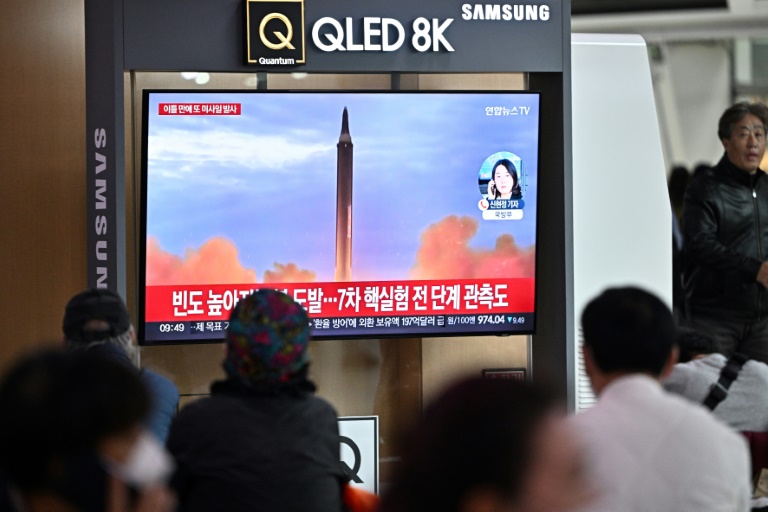
North Korea fires two ballistic missiles, blames US drills 'escalation'

North Korea fired two ballistic missiles Thursday as it claimed its recent blitz of sanctions-busting tests were necessary countermeasures against joint military drills by the United States and South Korea.

As the United Nations Security Council met to discuss Pyongyang’s Tuesday launch of an intermediate-range ballistic missile over Japan, North Korea blamed Washington for “escalating the military tensions on the Korean peninsula”.

The recent launches — six in less than two weeks — were “the just counteraction measures of the Korean People’s Army on South Korea-US joint drills,” Pyongyang’s foreign ministry said in a statement Thursday. 

Seoul, Tokyo and Washington have ramped up joint military drills in recent weeks, including large-scale naval manoeuvers and anti-submarine exercises.

The United States will redeploy the nuclear-powered USS Ronald Reagan to waters east of South Korea for a second visit in less than a month, Seoul said Wednesday.

North Korea’s foreign ministry said in a statement carried by the official KCNA that this posed “a serious threat to the stability of the situation on the Korean peninsula”. 

Early on Thursday, South Korea’s military said it had detected two short-range ballistic missiles launched from the Samsok area in Pyongyang towards the East Sea, also known as the Sea of Japan.

The first missile travelled 350 kilometres (217 miles) at a maximum altitude of around 80 kilometres, according to their analysis, with the second flying 800 kilometres at an altitude of 60 kilometres.

It appears to be the first time North Korea has fired missiles from Samsok, an official from Seoul’s Joint Chiefs of Staff told reporters.

He added that they look like a “different type of short-range ballistic missiles” from previous launches.

Tokyo also confirmed the launches, with defence minister Yasukazu Hamada telling reporters that it was important not to “overlook the significant improvement of (North Korea’s) missile technology”.

– China slams US –

Pyongyang’s Tuesday firing of what officials and analysts said was a Hwasong-12 that travelled likely the longest horizontal distance of any North Korean test, prompted the United States to call for the emergency Security Council meeting.

At the meeting, North Korea’s longtime ally and economic benefactor Beijing also blamed Washington for provoking the spate of launches by Kim Jong Un’s regime.

Deputy Chinese ambassador to the UN Geng Shuang said North Korea’s recent launches were “closely related” to military exercises in the region conducted by the United States and its allies.

Geng accused the US of “poisoning the regional security environment”.

The spate of launches is part of a record year of weapons tests by isolated North Korea, which leader Kim Jong Un has declared an “irreversible” nuclear power, effectively ending the possibility of denuclearisation talks.

US ambassador to the UN Linda Thomas-Greenfield called for “strengthening” existing sanctions on North Korea, something China and Russia vetoed in May.

The council has been divided on responding to Pyongyang’s nuclear ambitions for months, with Russia and China on the sympathetic side and the rest of the council pushing for punishment.

Analysts say that Pyongyang has seized the opportunity of stalemate at the UN to conduct ever more provocative weapons tests.

Officials in Seoul and Washington have been warning for months that Pyongyang will conduct another nuclear test, likely after the Chinese Party Congress on October 16.

“At this point, for Kim to turn back and halt provocations would seem counterproductive to his interests, not to mention the amount of resources squandered to conduct these weapons tests,” Soo Kim, an analyst at the RAND Corporation, told AFP.

“We are indeed in a cycle of weapons provocations. What’s left, essentially, is an ICBM test and potentially the long-awaited seventh nuclear test.”

European 'community' leaders meet in face of Russia's war

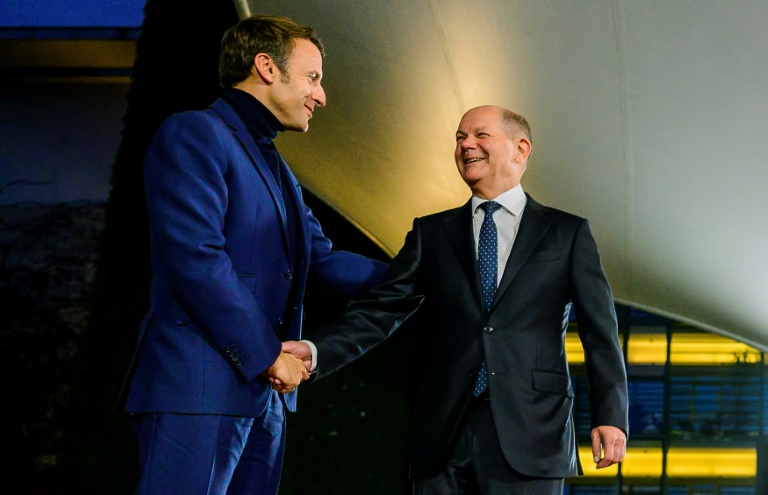
Leaders from Ukraine, Britain and Turkey join EU counterparts on Thursday for an inaugural summit of the “European Political Community” aimed at bringing the continent together in the face of Russia’s aggression.

The gathering in Prague — a brainchild of French President Emmanuel Macron — has been billed by Brussels as a “platform for political coordination” for the disparate 44 nations attending. 

But there are deep disagreements — and even open conflict — among some of the participants and scepticism that the one-day event will turn out to be no more than a photo opportunity.

Those set to meet in the historic Prague Castle also include the leaders of Albania, Armenia, Azerbaijan, Bosnia, Georgia, Iceland, Kosovo, Liechtenstein, Moldova, Montenegro, North Macedonia, Norway, Serbia and Switzerland.

Russia, which is not invited, will loom over the meeting as discussions focus on the economic and security fallout from its war against its pro-Western neighbour.

Ukrainian President Volodymyr Zelensky — currently overseeing a counter-offensive against Moscow’s forces — will connect via video link from Kyiv. His prime minister will stand in for him at the talks. 

“Europe is facing its biggest crisis since the Second World War. And we have faced it together with unity and resolve,” British Prime Minister Liz Truss is set to tell fellow leaders. 

“We must continue to stand firm — to ensure that Ukraine wins this war, but also to deal with the strategic challenges that it has exposed.”

Despite the rhetoric there are expected to be few concrete results from the summit. 

France has said it hopes to define potential room for cooperation among the leaders on protecting critical European infrastructure such as pipelines, cybersecurity and energy supplies.  

EU officials expect to agree to hold a follow-up gathering of the community in six months’ time in a country outside the bloc, with Britain and Moldova both offering to host.

While there are major questions over the usefulness of the enterprise, there will be a lot of activity on the sidelines as leaders hold bilateral talks.

“There will definitely be some hard, head-on exchanges,” said one organiser.

– Armenia, Azerbaijan meeting –

The gathering has at least passed its first hurdle of convincing key European powers outside the EU to show up.

Truss, a fierce supporter of Britain’s independent path since Brexit, will be there on one of her first major trips abroad after taking office. 

London was wary about the event being dominated by the European Union and reportedly wanted to change the name from “community” to “forum”.

Truss may be hoping for a respite from her woes at home after unleashing turmoil on Britain’s economy. But she could face a tricky ride from EU counterparts over UK efforts to renegotiate the post-Brexit trade deal for Northern Ireland.

Her office said she will meet the French and Dutch leaders over the issue of illegal migration. 

The presence of Turkish President Recep Tayyip Erdogan has also been a sore point for some.  

EU members Greece and Cyprus have long-standing disputes with Ankara and the unpredictable Turkish leader is proving a headache for Sweden and Finland as a threat to their bids to join NATO. 

Even more fraught could be the attendance of the leaders of Armenia and Azerbaijan, whose troops continue bloody clashes along their volatile frontier.

Armenia’s prime minister has said he will meet Azerbaijan’s president together with Macron and EU chief Charles Michel in Prague. 

Those pushing to join the EU — Ukraine, Georgia, Moldova and the Western Balkan nations — might be expected to be more open to making the event a success. 

But they too are on their guard about the format, worrying it could end up being a consolation prize where the EU can park their ambitions on membership. 

Ursa Major: Voting starts in Fat Bear Week

Americans are weighing their options this week and deciding where to cast their ballot in the only contest that really matters: Fat Bear Week.

The annual poll will see thousands of people glued to webcams watching bears in Alaska stuff themselves with salmon as they ready for hibernation.

The creatures in Katmai State Park “could easily be eating 100 pounds (45 kilograms) or more of fish in a day,” former park ranger Mike Fitz, who thought up the vote, told AFP.

“It’s common for them to eat 20 or more salmon in a day.”

In a series of head-to-head elimination contests, voters are looking for the creature that appears to have piled on the most pounds to help it get through the lean months of winter.

A solid reserve of chubbiness is vital to survival.

During five months of deep sleep, the bears do not wake to eat, drink or even go to the toilet, emerging famished — and a lot thinner — in the spring.

Defending champion Otis, who has four titles to his name, tips the scales at around 1,000 pounds.

This year, he faces a hefty challenge for the overall crown from a bear dubbed 747 — named after Boeing’s enormous plane, and himself a former champ.

But, says Fitz, another pretender to the crown of Ursa-most-Major could emerge from the park’s population of 2,000 bears.

The contest, which takes place online — and of which the bears are probably unaware — began in 2014 with just a few thousand people voting.

By last year, it had become a titan in its own right, with more than 800,000 ballots cast.

“It’s an event to raise awareness for brown bears in Alaska and in Katmai National Park,” said Fitz, who now works as a naturalist for environmental NGO Explore.

“And hopefully through that awareness, people come to care for the animals.” 

That awareness is crucial to Fitz’s larger aim of helping to prevent environmental damage.

“On much of the west coast of North America, salmon runs are just hanging on by a thread,” he said.

“We’re doing very poorly in parts of California, in Oregon and Washington due to habitat loss and barriers to their migration like dams. 

“And climate change is exacerbating those things with drought and heat waves.” 

Ballots for Fat Bear Week can be cast at www.explore.org, and voting begins on Thursday.

Hazy timeframe for reaching electric plane era

Recent test flights suggest the era of electric airplanes is coming closer, but aviation experts caution that achieving commercial use hinges on regulatory approval which has an unknowable timeframe.

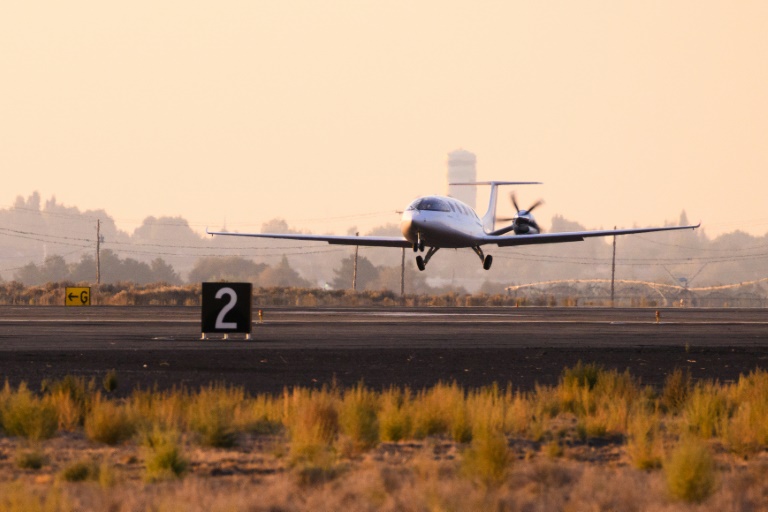
Eviation Aircraft successfully completed a test flight in Washington state last week, showcasing a plane the company plans to begin delivering to airlines in 2027.

That came on the heels of an Icelandair flight in August which carried Iceland’s president and prime minister among its passengers.

Besides the benefit in eliminating carbon dioxide emissions, electric airplane travel potentially means less noise than conventional plane transport, as well as eliminating the need for jet fuel, a major expense for commercial airlines.

Gregory Davis, chief executive of Eviation, called last week’s test flight the start of “the next era of aviation,” and said it offered a glimpse of what “affordable, clean and sustainable aviation looks and sounds like.”

But industry experts speak of a hazy timeframe before that future becomes reality, in part because of murkiness over how quickly US air safety authorities will move to greenlight new technology from a seven-year old company with no operating history.

Eviation is “stepping into some unknown areas as far as how you certify and support electric aircraft,” said Glenn McDonald, a principal at AeroDynamic Advisory, a consultancy.

While the 2027 timeframe for the Eviation plane “could be realistic,” McDonald noted that the Federal Aviation Administration has taken a more painstaking approach to certifications since the Boeing 737 MAX crashes in 2018 and 2019.

The two-seat Velis Electro, certified by the European Union Aviation Safety Agency in 2020, is the only electric plane currently cleared for service.

Michel Merluzeau, director of aerospace and defense analysis at AIR consultancy, said the end of the decade was probably a more realistic timeframe than 2027 for the US market.

“It’s fundamentally early days,” said Merluzeau, adding that the FAA will only approve the vehicle after exhaustive testing.

– Much testing ahead –

The September 27 test flight of Eviation’s “Alice” aircraft was an eight-minute voyage that reached an altitude of 3,500 feet (1,065 meters) on a sunny morning.

The company plans to produce a cargo plane, a six-seat “executive” version and a “commuter” model carrying up to nine passengers on flights of up to 250 nautical miles.

Davis characterized the test plane as “prototype aircraft built by hand.” The commercial version is expected to be the same size and weight, but with more advanced battery technology.

“We fully expect to have our choice” of battery, Davis told AFP in an interview.

Among those closely watching the process is Global Crossing Airlines Group, a Miami flight company that has signed a letter of intent for 50 aircraft it plans to fly in Florida, the Bahamas and the Caribbean.

Alice’s appeal stems from the savings in jet fuel costs, said Ryan Goepel, chief financial officer at Global Crossing, which has said it expects to begin receiving planes in 2027.

“We see this as a product that has a lot of demand and really low operating costs,” Goepel said, adding that the test flight represented a “huge milestone.”

Davis said the next step will be to analyze flight data, and the company expects to begin FAA testing in 2025, with commercial production also beginning that year.

The agency declined to comment directly on Eviation, but a spokesman said, “speaking generally, the FAA can certify these new aircraft through its existing regulatory framework.” 

“Some certifications could require the FAA to issue special conditions or additional airworthiness criteria, depending on the type of project,” the official said in an email.

Setting specific conditions is a typical response from the FAA when addressing new technologies but that process can “take a while,” said Waruna Seneviratne of the National Institute for Aviation Research at Wichita State University.

Testing will be extensive before the FAA allows the jet on the market for the flying public, Seneviratne predicted.

“The goal is to find that one incident, one bad part that’s going to take an airplane down,” he said.

Merluzeau said the fact Alice is a new plane rather than an established model reconfigured with an electric engine amounts to “an incredibly complex assignment” for the FAA.

A lengthy, costly certification process would be a challenge for the young firm.

“How do you survive long enough as a company when you know the certification is going to take a long time?” Merluzeau said. “How will they be able to do that when they are burning through cash?”

Eviation is currently backed by the Clermont Group, a Singapore private investment group chaired by Richard Chandler, whose wealth is estimated by Forbes at $2.6 billion.

An Eviation spokeswoman said the company “will be pursuing additional funding on the path to certification and production.”

Decades on, search continues for Argentina's 'stolen' children

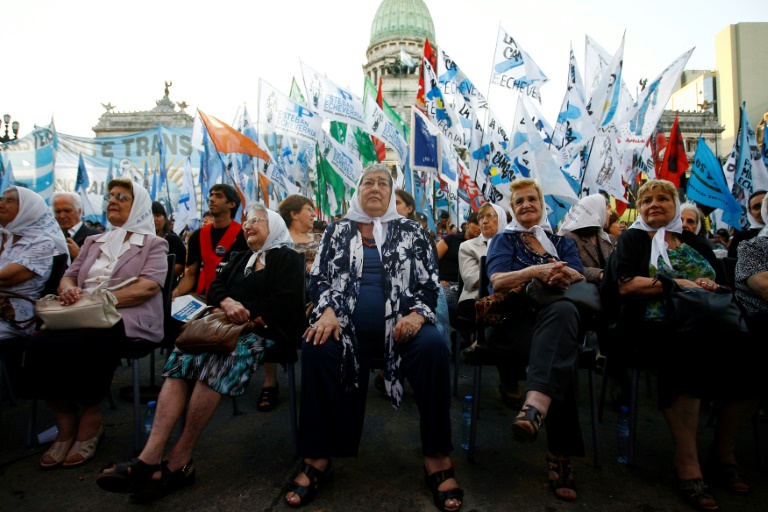
The Grandmothers of Plaza de Mayo are getting old. Every day the hopes of finding their grandchildren, who were stolen and given up for adoption under Argentina’s dictatorship, are fading.

As many as 500 children were taken from their imprisoned mothers, most of whom then disappeared under the country’s brutal 1976-1983 military rule.

Most of the children were gifted to people close to the dictatorship, keen to have them raised as regime loyalists.

Only about 130 have so far been found, and the search for the others — now adults in their 40s and 50s — continues.

The Grandmothers of Plaza de Mayo is an organization founded in 1977 by women trying to find their arrested daughters — and the babies they bore in captivity.

These “abuelas” take their name from the Plaza de Mayo square in Buenos Aires where brave women held protests to demand information on the whereabouts of their loved ones. They did so in vain.

As the original grandmothers get older, the organization has since been populated by a younger generation of researchers and councillors.

The rights body holds regular public meetings in the hopes of reaching people who may have questions about who they are — questions that can be difficult to confront — and convincing them to come forward.

Those who successfully go through a verification process can have their stolen identities “restituted.”

But it is an increasingly difficult endeavor. As time goes on, those who think they may be the children of disappeared women are ever less likely to come forward.

“They come to us in various stages of doubt, some have carried the burden in silence for 20 years, sometimes more, without talking to anyone — not even their spouse,” Laura Rodriguez, coordinator of the Grandmothers’ identity project told AFP.

Doubts can be triggered by a lack of physical resemblance to their parents, the absence of photos of their mothers while pregnant, or holes in the family history.

Some make several appointments for a consultation, but never show up.

Since June 2019, there have been no new restitutions, due in large part to the coronavirus pandemic putting the brakes on the Grandmothers’ activities — research and interviews with potential victims.

Six of the original grandmothers died during the pandemic. 

– ‘Leap into the unknown’ –

At Moron, some 40 kilometers (25 miles) from Buenos Aires, six outreach meetings are planned by the Grandmothers and Argentina’s human rights ombudsman for the coming weeks.

But taking that first step is not easy. 

“It is a leap into the unknown,” said Guillermo Amarilla Molfino, once known as “Grandson No 98” who said it took him years to seek help and then go through the restitution process. 

He was reunited with his brothers, and has acted as an adviser to the Grandmothers outreach team.

“There are many fears, there is guilt, this guilt that makes us stay quiet: ‘Why do I doubt my parents, why do I betray those who gave me food, a roof over my head?'” he remembers of his own experience.

“Silence can become an ally with which one lives,” added Molfino. And finally accepting you are not who you thought you were can “feel like handing over your life” to someone else.

It is a difficult task for the researchers too, said Luciano Lahiteau, one of the Grandmothers team.

One needs to carefully balance an empathetic shoulder, he explained, with the “duty, not necessarily pleasant, of… picking out the reliable information from what a person tells us.”

– Lottery, or loss –

Lahiteau and other researchers take the volunteers’ stories and documentation, when available, and check these against civil and hospital registers, and evidence gathered from military trials.

If evidence for a match turns up, DNA can be cross-checked with a data bank holding genetic information on many, though not all, of the families searching for a missing grandchild.

When a match is found, “it is like winning the lottery!” said Rodgriguez.

But more often than not, hopes are dashed.

“We receive a lot of people who are not children of disappeared” women, said Rodriguez.

Yet, even for those who go through the process in vain, “it does a lot for identity,” said Lahiteau. 

“It makes it possible to recognize: ‘OK, I am someone who has doubts about my identity; I have the right to try and find out where I come from,” he explained.

“Really, every person comes out of the process better than they entered,” added Rodriguez.

US citizen, 85, flies out of Iran for medical care

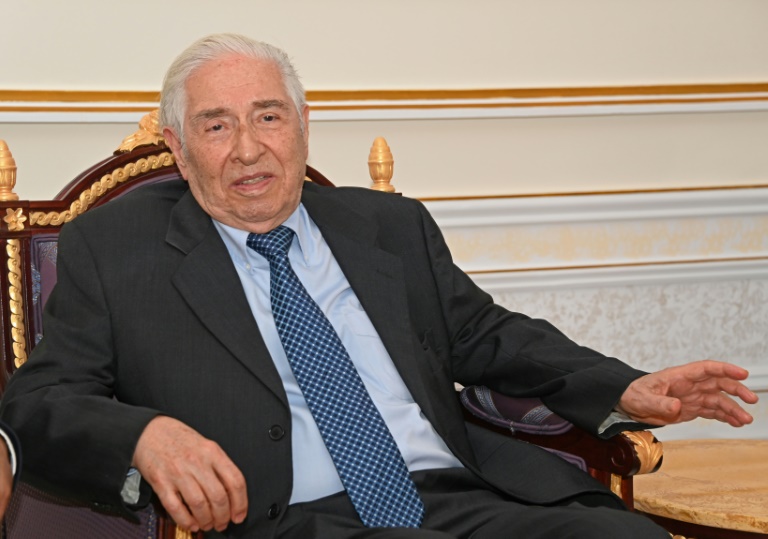
An 85-year-old Iranian-American arrested in Tehran more than six years ago who is seeking urgent medical treatment has landed in Abu Dhabi, the State Department said Wednesday, with the United States pressing for the release of three other citizens.

Baquer Namazi, a former UNICEF official, was detained in February 2016 when he travelled to Iran to press for the release of his son Siamak, who had been arrested in October of the previous year.

Namazi “is now in Abu Dhabi after departing Iran for Muscat; he has been reunited with his family and will soon receive urgently needed medical treatment,” US Secretary of State Antony Blinken said in a statement.

Another son, Babak Namazi, said in a statement ahead of the reunion that it was “impossible to articulate and describe sufficiently how I am feeling. I am just so grateful that after so long, I will shortly be able to embrace my father again.”

He thanked Oman and UN Secretary-General Antonio Guterres for their efforts as well as UNICEF and the governments of Qatar, Switzerland, Britain and the United States.

But he called the release “bittersweet,” noting that his brother and two other Americans remained detained.

“Our nightmare will not be over until our entire family and the other Americans are reunited with their families,” he said.

Baquer Namazi landed briefly in Oman — a neutral country that has often played a mediating role for Westerners jailed in Iran — before heading to Abu Dhabi for treatment at a branch of the Cleveland Clinic.

Namazi needs treatment for a life-threatening blockage in his left carotid artery, which supplies blood to the brain. He underwent a similar operation for the right artery a year ago in Iran after he was not permitted to leave the country.

His son Siamak has been granted furlough to spend time with family but has not been allowed to leave Iran.

Blinken expressed his “gratitude for all of the friends and partners who helped bring about his freedom”.

But he added that the United States’ work “is far from finished”, and that the country remained “committed to securing the freedom of all remaining wrongfully detained US citizens in Iran and around the world.”

The United Nations announced the Namazis’ release last week after an appeal from Guterres, following years of unsuccessful efforts by the United States.

– Gesture on nuclear accord? –

The United States has been pressing for the release of the Namazis and two other Americans amid efforts to revive a 2015 nuclear deal between Iran and major powers.

The signing of the original deal in 2015 was accompanied by the release of detained Americans and Namazi’s departure has been seen in Iran as a move that should be mirrored by the other side.

“With the finalisation of negotiations between Iran and the United States to release the prisoners of both countries, $7 billion of Iran’s blocked resources will be released,” state news agency IRNA reported.

The State Department has described the assertion as “categorically false” and said there were no plans to release money in return for the Namazis.

The release comes as Iran’s clerical state comes under new sanctions as it cracks down on major protests triggered by the death in custody of Mahsa Amini, a young woman accused of violating rules on covering her hair.

Billions of dollars in Iranian funds have been frozen in a number of countries — notably China, South Korea and Japan — since the United States reimposed sanctions in 2018.

A drive to salvage the nuclear deal began in April last year, with the aim of returning the United States under President Joe Biden to the accord through the lifting of sanctions ordered by Donald Trump and Iran’s return to full compliance.

The Namazis were both convicted of espionage in October 2016 and sentenced to 10 years in prison. Both have denied the charges, with the younger Namazi saying he came under suspicion for associations with US think tanks. 

Baquer Namazi was released on medical leave in 2018 and had been serving his sentence under house arrest.

At least two other American citizens are held in Iran.

Businessman Emad Sharqi was sentenced last year to 10 years in prison for espionage, and environmentalist Morad Tahbaz, who is also a British national, was arrested in 2018 and released on bail in July.

US duo and Dane win Nobel for 'click chemistry'

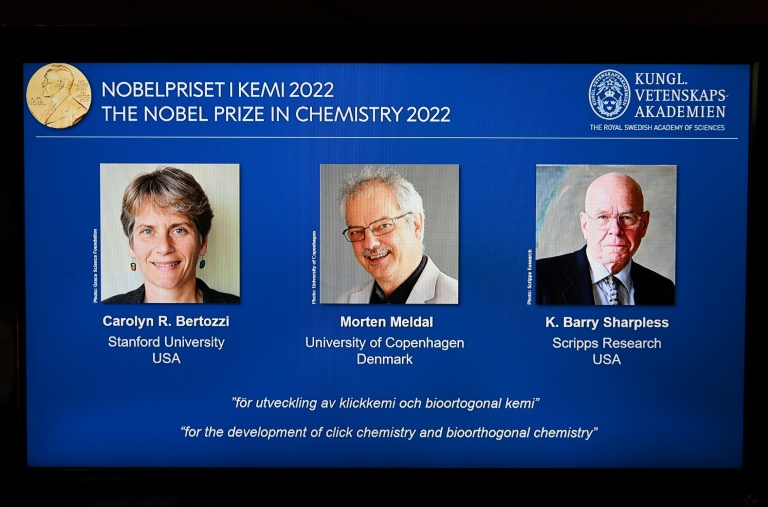
A trio of scientists from the United States and Denmark won the Nobel Chemistry Prize on Wednesday for laying the foundation for a more functional form of chemistry where molecules are linked together.

Americans Carolyn Bertozzi and Barry Sharpless, together with Denmark’s Morten Meldal, were honoured “for the development of click chemistry and bioorthogonal chemistry”, the jury said.

Bertozzi is the only woman among the seven Nobel laureates honoured so far this year, with women vastly under-represented in the history of the prizes, especially in the science disciplines.

The chemist is only the eighth woman to win a Nobel Chemistry Prize, out of 189 recipients.

As an undergraduate at Harvard she played keyboards in a band called Bored of Education, with future Rage Against the Machine guitarist Tom Morello. But, speaking to AFP, Bertozzi conceded she didn’t have the musical talent of her former bandmate.

“So I think I chose the right path. Especially today,” she said.

Benjamin Schumann, a chemist at London’s Imperial College and former student in Bertozzi’s lab, said she was still known as “the rock star of sciences”.

The award marks the second Nobel for 81-year-old Sharpless, who won in chemistry in 2001. 

Only four other individuals have achieved the feat of winning two Nobel Prizes, including Polish-born Frenchwoman Marie Curie, who won the chemistry prize in 1911 after first winning the physics prize in 1903.

“Prizes aren’t what I’m doing science for. For better or for worse, I have to do it. It’s kind of a compulsion,” Sharpless told a news conference.

– Like Lego –

Click chemistry “is an elegant and efficient chemical reaction that is now in widespread use,” the jury said in a statement.

“Among many other uses, it is utilised in the development of pharmaceuticals,for mapping DNA and creating materials that are more fit for purpose,” it added.

Sharpless, a professor at Scripps Research in California, “started the ball rolling” and “coined the concept of click chemistry” around 2000, the jury said.

Afterwards, Sharpless and Meldal, a professor at the University of Copenhagen, independently of each other, presented “what is now the crown jewel of click chemistry: the copper catalysed azide-alkyne cycloaddition”.

The process allows chemists to “snap” molecules together “with the help of some copper ions”, which among other things allow for the production of new materials.

It is possible to click in substances that conduct electricity, capture sunlight, are antibacterial, protect from ultraviolet radiation or have other desirable properties, it said.

“The discovery that we did was more or less by serendipity” Meldal told AFP, calling his win a “big surprise”.

Speaking to reporters, the Danish professor said the application of click chemistry could be likened to Lego — the iconic plastic blocks that also hail from Denmark.

“You can make a house or bike or car or whatever functionality you want. By combining differently these building blocks… in chemistry, we do the same thing,” Meldal explained.

– ‘A new level’ –

Bertozzi, 55, a professor at Stanford University in the United States, was highlighted for then taking “click chemistry to a new level”.

“She developed click reactions that work inside living organisms. Her bioorthogonal reactions take place without disrupting the normal chemistry of the cell,” the jury said.

Her research is now being used to investigate how these reactions can be used to diagnose and treat cancer.

“I’m absolutely stunned, I’m sitting here and I can hardly breathe,” Bertozzi told reporters via telephone, minutes after the announcement.

Silvia Diez-Gonzalez, a chemist who works on click chemistry at Imperial College, London, welcomed the win.

“Thank goodness” that the days of women not being allowed in chemistry labs are over, she told AFP, though “there is a lot of bias still out there”.

“I want to believe that it’s just a matter of time that as women and non-white people get more opportunities to achieve their potential, then eventually the recognition they get will be spread more widely.”

The Royal Swedish Academy of Sciences, which awards the Nobels in the science disciplines, has refused to introduce quotas despite the dearth of women laureates.

Goran Hansson, then-secretary general of the academy, told AFP last year after all of the science nods went to men, that it wanted every laureate to be accepted “because they made the most important discovery, and not because of gender or ethnicity”. 

The lack of women laureates “reflects the unfair conditions in society, particularly in years past but still existing”, he acknowledged.

burs-jll/po/jmm/dw/it

US duo and Dane win Nobel for 'click chemistry'

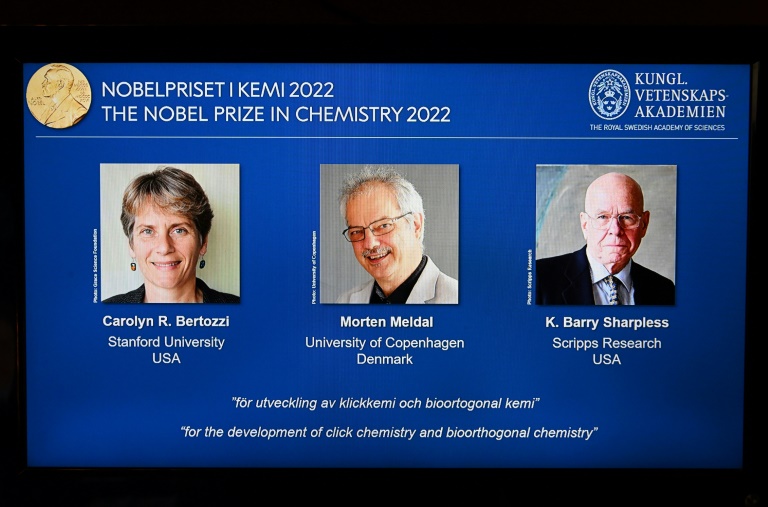
A trio of scientists from the United States and Denmark won the Nobel Chemistry Prize on Wednesday for laying the foundation for a more functional form of chemistry where molecules are linked together.

Americans Carolyn Bertozzi and Barry Sharpless, together with Denmark’s Morten Meldal, were honoured “for the development of click chemistry and bioorthogonal chemistry”, the jury said.

Bertozzi is the only woman among the seven Nobel laureates honoured so far this year, with women vastly under-represented in the history of the prizes, especially in the science disciplines.

The chemist is only the eighth woman to win a Nobel Chemistry Prize, out of 189 recipients.

As an undergraduate at Harvard she played keyboards in a band called Bored of Education, with future Rage Against the Machine guitarist Tom Morello. But, speaking to AFP, Bertozzi conceded she didn’t have the musical talent of her former bandmate.

“So I think I chose the right path. Especially today,” she said.

Benjamin Schumann, a chemist at London’s Imperial College and former student in Bertozzi’s lab, said she was still known as “the rock star of sciences”.

The award marks the second Nobel for 81-year-old Sharpless, who won in chemistry in 2001. 

Only four other individuals have achieved the feat of winning two Nobel Prizes, including Polish-born Frenchwoman Marie Curie, who won the chemistry prize in 1911 after first winning the physics prize in 1903.

“Prizes aren’t what I’m doing science for. For better or for worse, I have to do it. It’s kind of a compulsion,” Sharpless told a news conference.

– Like Lego –

Click chemistry “is an elegant and efficient chemical reaction that is now in widespread use,” the jury said in a statement.

“Among many other uses, it is utilised in the development of pharmaceuticals,for mapping DNA and creating materials that are more fit for purpose,” it added.

Sharpless, a professor at Scripps Research in California, “started the ball rolling” and “coined the concept of click chemistry” around 2000, the jury said.

Afterwards, Sharpless and Meldal, a professor at the University of Copenhagen, independently of each other, presented “what is now the crown jewel of click chemistry: the copper catalysed azide-alkyne cycloaddition”.

The process allows chemists to “snap” molecules together “with the help of some copper ions”, which among other things allow for the production of new materials.

It is possible to click in substances that conduct electricity, capture sunlight, are antibacterial, protect from ultraviolet radiation or have other desirable properties, it said.

“The discovery that we did was more or less by serendipity” Meldal told AFP, calling his win a “big surprise”.

Speaking to reporters, the Danish professor said the application of click chemistry could be likened to Lego — the iconic plastic blocks that also hail from Denmark.

“You can make a house or bike or car or whatever functionality you want. By combining differently these building blocks… in chemistry, we do the same thing,” Meldal explained.

– ‘A new level’ –

Bertozzi, 55, a professor at Stanford University in the United States, was highlighted for then taking “click chemistry to a new level”.

“She developed click reactions that work inside living organisms. Her bioorthogonal reactions take place without disrupting the normal chemistry of the cell,” the jury said.

Her research is now being used to investigate how these reactions can be used to diagnose and treat cancer.

“I’m absolutely stunned, I’m sitting here and I can hardly breathe,” Bertozzi told reporters via telephone, minutes after the announcement.

Silvia Diez-Gonzalez, a chemist who works on click chemistry at Imperial College, London, welcomed the win.

“Thank goodness” that the days of women not being allowed in chemistry labs are over, she told AFP, though “there is a lot of bias still out there”.

“I want to believe that it’s just a matter of time that as women and non-white people get more opportunities to achieve their potential, then eventually the recognition they get will be spread more widely.”

The Royal Swedish Academy of Sciences, which awards the Nobels in the science disciplines, has refused to introduce quotas despite the dearth of women laureates.

Goran Hansson, then-secretary general of the academy, told AFP last year after all of the science nods went to men, that it wanted every laureate to be accepted “because they made the most important discovery, and not because of gender or ethnicity”. 

The lack of women laureates “reflects the unfair conditions in society, particularly in years past but still existing”, he acknowledged.

burs-jll/po/jmm/dw/it

US duo and Dane win Nobel for 'click chemistry'

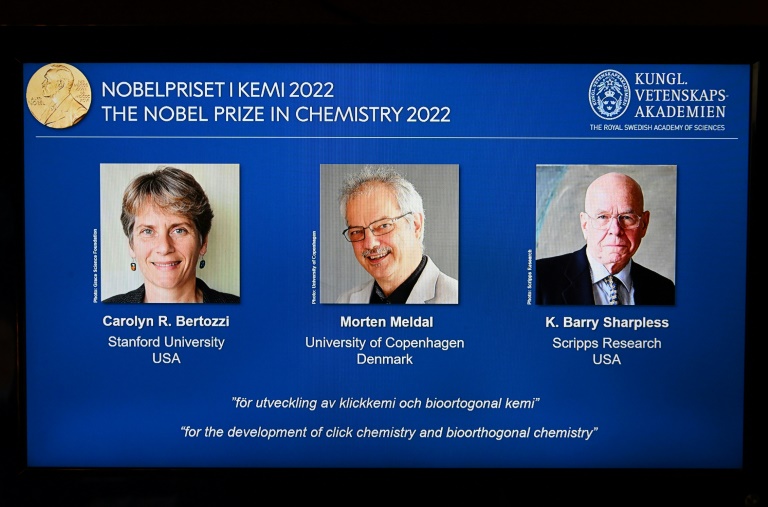
A trio of scientists from the United States and Denmark won the Nobel Chemistry Prize on Wednesday for laying the foundation for a more functional form of chemistry where molecules are linked together.

Americans Carolyn Bertozzi and Barry Sharpless, together with Denmark’s Morten Meldal, were honoured “for the development of click chemistry and bioorthogonal chemistry”, the jury said.

Bertozzi is the only woman among the seven Nobel laureates honoured so far this year, with women vastly under-represented in the history of the prizes, especially in the science disciplines.

The chemist is only the eighth woman to win a Nobel Chemistry Prize, out of 189 recipients.

As an undergraduate at Harvard she played keyboards in a band called Bored of Education, with future Rage Against the Machine guitarist Tom Morello. But, speaking to AFP, Bertozzi conceded she didn’t have the musical talent of her former bandmate.

“So I think I chose the right path. Especially today,” she said.

Benjamin Schumann, a chemist at London’s Imperial College and former student in Bertozzi’s lab, said she was still known as “the rock star of sciences”.

The award marks the second Nobel for 81-year-old Sharpless, who won in chemistry in 2001. 

Only four other individuals have achieved the feat of winning two Nobel Prizes, including Polish-born Frenchwoman Marie Curie, who won the chemistry prize in 1911 after first winning the physics prize in 1903.

“Prizes aren’t what I’m doing science for. For better or for worse, I have to do it. It’s kind of a compulsion,” Sharpless told a news conference.

– Like Lego –

Click chemistry “is an elegant and efficient chemical reaction that is now in widespread use,” the jury said in a statement.

“Among many other uses, it is utilised in the development of pharmaceuticals,for mapping DNA and creating materials that are more fit for purpose,” it added.

Sharpless, a professor at Scripps Research in California, “started the ball rolling” and “coined the concept of click chemistry” around 2000, the jury said.

Afterwards, Sharpless and Meldal, a professor at the University of Copenhagen, independently of each other, presented “what is now the crown jewel of click chemistry: the copper catalysed azide-alkyne cycloaddition”.

The process allows chemists to “snap” molecules together “with the help of some copper ions”, which among other things allow for the production of new materials.

It is possible to click in substances that conduct electricity, capture sunlight, are antibacterial, protect from ultraviolet radiation or have other desirable properties, it said.

“The discovery that we did was more or less by serendipity” Meldal told AFP, calling his win a “big surprise”.

Speaking to reporters, the Danish professor said the application of click chemistry could be likened to Lego — the iconic plastic blocks that also hail from Denmark.

“You can make a house or bike or car or whatever functionality you want. By combining differently these building blocks… in chemistry, we do the same thing,” Meldal explained.

– ‘A new level’ –

Bertozzi, 55, a professor at Stanford University in the United States, was highlighted for then taking “click chemistry to a new level”.

“She developed click reactions that work inside living organisms. Her bioorthogonal reactions take place without disrupting the normal chemistry of the cell,” the jury said.

Her research is now being used to investigate how these reactions can be used to diagnose and treat cancer.

“I’m absolutely stunned, I’m sitting here and I can hardly breathe,” Bertozzi told reporters via telephone, minutes after the announcement.

Silvia Diez-Gonzalez, a chemist who works on click chemistry at Imperial College, London, welcomed the win.

“Thank goodness” that the days of women not being allowed in chemistry labs are over, she told AFP, though “there is a lot of bias still out there”.

“I want to believe that it’s just a matter of time that as women and non-white people get more opportunities to achieve their potential, then eventually the recognition they get will be spread more widely.”

The Royal Swedish Academy of Sciences, which awards the Nobels in the science disciplines, has refused to introduce quotas despite the dearth of women laureates.

Goran Hansson, then-secretary general of the academy, told AFP last year after all of the science nods went to men, that it wanted every laureate to be accepted “because they made the most important discovery, and not because of gender or ethnicity”. 

The lack of women laureates “reflects the unfair conditions in society, particularly in years past but still existing”, he acknowledged.

burs-jll/po/jmm/dw/it

Close Bitnami banner
Bitnami