World

Iranian Kurd exiles in Iraq under fire as protests rage

As protests flare across Iran over the death of young Iranian Kurdish woman Mahsa Amini, the Kurdistan region of neighbouring Iraq has paid a price, coming under bombardment from the Islamic republic’s forces.

Their target is the long-exiled Iranian Kurdish opposition, installed in Iraq under Saddam Hussein during his war with Iran in the 1980s.

Tehran regards these armed factions as “terrorists” and accuses them of attacking its territory.

A general in Iran has charged that the Kurdish opposition groups have been inciting the Mahsa Amini protests in Iranian Kurdistan, in the face of a lethal crackdown by the security forces.

Amini, 22, was pronounced dead on September 16, days after Iran’s notorious morality police detained her for allegedly breaching Iran’s strict dress code for women.

According to Adel Bakawan, director of the French Centre for Research on Iraq (CFRI), Iran needed to “find an enemy” to blame for stoking the nationwide protests.

“The weakest link that could be targeted without provoking consequences was the Iranian Kurds,” he said.

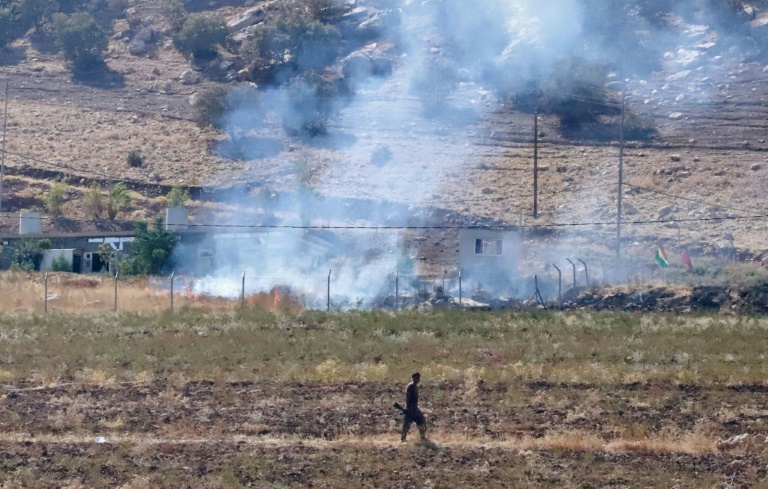
On September 28, Iran unleashed a deluge of fire on positions of Kurdish militants in northern Iraq, killing 14 people and wounding 58, including civilians. It has followed up with less bloody attacks.

On Monday, Iran’s foreign ministry spokesman Nasser Kanani reiterated Tehran’s accusation against these groups, saying they threaten the country’s national security.

However, experts say the far-left groups have practically ceased all military activity, focusing on political action instead.

– Protected presence –

Any fighters they still have could be viewed as reservists, keeping up training.

Iranian Kurdish journalist Raza Manochari said there has been an agreement since the 1990s between such groups and the government of Iraq’s own Kurdistan region.

It protects their deployment, “and in exchange, they do not engage in military activities, to avoid causing problems for relations with Iran”, he said.

Manochari, who has himself lived in Iraq for eight years, highlighted the ties between Kurds in the two countries: they speak the same Sorani dialect, and many have relatives on both sides of the border.

Massud Barzani, leader of Iraq’s Kurdistan Democratic Party and former president of the autonomous Iraqi Kurdistan region, was born in 1946 in Iran.

He is the son of iconic Kurdish nationalist leader Mulla Mustafa Barzani, a head of the only breakaway state in Kurdish history founded in the Iranian town of Mahabad until it was crushed by Iranian troops in 1946 after a year.

Today, Iran’s Kurdish minority — about 10 million people out of a population of 83 million — complain of marginalisation.

“In Iran, the Kurds don’t have many basic cultural and political rights,” said Shivan Fazil, researcher at the Stockholm International Peace Research Institute.

“The right of education in their mother tongue continues to be outlawed,” he said.

– ‘Never use Iraqi soil’ –

Their plight is bleaker than that of Kurds elsewhere in the region, Fazil said, citing Kurds in parliament in Turkey since 2015, a de facto autonomy in northeast Syria and the regional Kurdish government in northern Iraq.

Aso Saleh, an executive committee member of the Iranian Kurdish party KDPI targeted by Tehran last month, said the party has “never used the soil or the territory of Iraq to launch any attack on Iranian forces”.

Sweden-based Saleh said the movement was “predominantly located inside Iranian Kurdistan”, where its activities must remain “covert”.

Only “the leadership and bureaucratic apparatus” were present in Iraq.

“This movement is trying to bring democracy and federalism to Iran,” he told AFP of the party founded in Iran in 1945.

Edris Abdi of the Iraq-based Komala Iranian Kurdish nationalist group told AFP: “We do not engage in military activity.”

Hardi Mahdi Mika, a political scientist at Iraq’s Sulaimaniyah University, points to the Kurdish minority’s marginalisation.

“In terms of economic growth and unemployment, the Kurdish regions are the poorest” in Iran, he said. “The government is neglecting these regions.”

Kurdish workers cross the border every day in search of temporary jobs in Iraq that are better paid than at home in sanctions-hit Iran.

Even in Iranian provinces where they are in the majority, “the Kurds have no say in local governance”, Mika said.

str-burs-tgg/srm/hc/it 

Ursa Major: Voting starts in Fat Bear Week

Americans are weighing their options this week and deciding where to cast their ballot in the only contest that really matters: Fat Bear Week.

The annual poll will see thousands of people glued to webcams watching bears in Alaska stuff themselves with salmon as they ready for hibernation.

The creatures in Katmai State Park “could easily be eating 100 pounds (45 kilograms) or more of fish in a day,” former park ranger Mike Fitz, who thought up the vote, told AFP.

“It’s common for them to eat 20 or more salmon in a day.”

In a series of head-to-head elimination contests, voters are looking for the creature that appears to have piled on the most pounds to help it get through the lean months of winter.

A solid reserve of chubbiness is vital to survival.

During five months of deep sleep, the bears do not wake to eat, drink or even go to the toilet, emerging famished — and a lot thinner — in the spring.

Defending champion Otis, who has four titles to his name, tips the scales at around 1,000 pounds.

This year, he faces a hefty challenge for the overall crown from a bear dubbed 747 — named after Boeing’s enormous plane, and himself a former champ.

But, says Fitz, another pretender to the crown of Ursa-most-Major could emerge from the park’s population of 2,000 bears.

The contest, which takes place online — and of which the bears are probably unaware — began in 2014 with just a few thousand people voting.

By last year, it had become a titan in its own right, with more than 800,000 ballots cast.

“It’s an event to raise awareness for brown bears in Alaska and in Katmai National Park,” said Fitz, who now works as a naturalist for environmental NGO Explore.

“And hopefully through that awareness, people come to care for the animals.” 

That awareness is crucial to Fitz’s larger aim of helping to prevent environmental damage.

“On much of the west coast of North America, salmon runs are just hanging on by a thread,” he said.

“We’re doing very poorly in parts of California, in Oregon and Washington due to habitat loss and barriers to their migration like dams. 

“And climate change is exacerbating those things with drought and heat waves.” 

Ballots for Fat Bear Week can be cast at www.explore.org, and voting begins on Thursday.

Grandmaster Hans Niemann defends reputation after cheating claims

American international grandmaster Hans Niemann said Wednesday he “won’t back down,” after the chess platform chess.com reported he has “probably cheated more than 100 times” in online games.

Norwegian world champion Magnus Carlsen last week accused 19-year-old Niemann of cheating.

“Overall, we have found that Hans (Niemann) has likely cheated in more than 100 online chess games, including several prize money events,” the world’s leading online chess platform wrote in a Tuesday evening report that ran 20 pages, with 50 additional appendices.

Chess.com banned Niemann on September 5, shortly after the first accusations were made, but the platform is defending itself against suggestions that it is under pressure from Carlsen, whose Play Magnus company it is in the process of buying.

After a victory in the US Chess Championship Wednesday, Niemann said the game he had just won “spoke for itself and showed the chess player that I am”. 

He added, “It also showed that I’m not going to back down and I’m going to play my best chess here regardless of the pressure that I’m under,” but declined to comment further.

Chess.com says it is “extremely confident” in its means of detecting cheating, which includes using grandmasters — the highest rank of chess players — as well as an analysis of moves made by computer programmes. 

– ‘Statistically extraordinary’ –

The suspicions of the platform go beyond the framework of the internet. It also devotes part of its report to Niemann’s spectacular and rapid progress on the chessboard.

“While we do not doubt that Hans is a talented player, we note that his results are statistically extraordinary,” said the report which illustrated the American’s rise with a dramatic graph. 

However, chess.com said it had no evidence that Niemann had cheated in “over-the-board” (OTB) games when players are physically present. 

“There is nothing in our statistical investigation to raise any red flags regarding Hans’ OTB play and rise,” said the report. 

Last month, at the Sinquefield Cup in St Louis, Carlsen lost to Niemann OTB and then withdrew from the tournament, posting a video that implied something improper had taken place.

Chess.com described this encounter as “bizarre” but concluded that there was no evidence “that Hans cheated in this game and we do not advocate for any conclusions regarding cheating being made based on this one encounter”.

Two weeks after St Louis, the two players met again in the sixth round of the online Julius Baer Generation Cup. This time Carlsen resigned after making just one move, going on to release a statement that he would not “play against people that have cheated repeatedly in the past”.

The International Chess Federation announced on September 29 that it was opening an investigation into these accusations of cheating. 

Niemann has admitted to cheating in the past on chess.com, when he was between 12 and 16 years old, but denies the most recent accusations, claiming to be “ready to play naked”, if necessary.

The censor cannot hold: the pressure of controlling China's internet

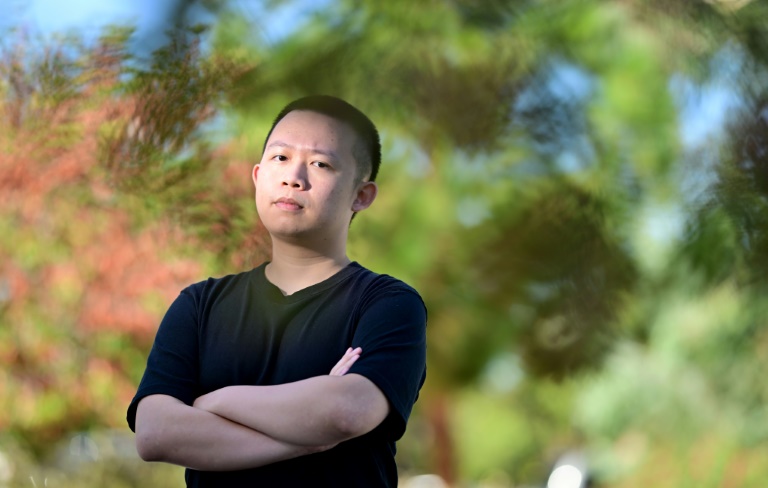
As a teenager in rural China, Zeng Jiajun used his internet know-how to watch a banned documentary on the bloody military crackdown in Tiananmen Square.

A decade later, he was part of the sprawling censorship machine that suffocates China’s cyberspace, tasked with stopping the spread of anything the Communist Party does not want its people to know about.

“At first when I worked on this I didn’t think much bigger because a job is a job,” he said.

“But deep inside I knew it was not aligned with my ethical standards. And once you work in this field for too long… the conflicts become stronger and stronger.”

Now living in the heart of California’s Silicon Valley, Zeng is an affable 29-year-old who wears the weight of his past experience lightly.

Few people who have worked inside China’s propaganda apparatus have told their stories. Even fewer are prepared to do so openly.

– Profoundly shocking –

Zeng came of age with the internet.

Born in 1993 in southern Guangdong province, his first experience of computing was during elementary school, when his father brought home a PC.

What he found when he went online was astounding.

“There was just like a whole new world that was waiting for me to explore,” he told AFP.

The Chinese government’s early attempts at web censorship were imperfect; VPNs provided access to subjects and information not discussed publicly.

In amongst the forbidden fruit was “The Gate of Heavenly Peace”, a three-hour documentary on student protests in Tiananmen Square in June 1989.

What Zeng saw — tanks and semi-automatic weapons wielded against unarmed students in a violent crackdown that left hundreds, perhaps thousands, dead — was profoundly shocking.

“It’s such a huge, significant, historic event, but nobody ever told us about it, and you cannot search for it on the Chinese internet; that content is all erased,” he said.

“I just felt like there was a huge lie. A lot of history is covered up.”

– TikTok –

Like other bright Chinese of his generation, Zeng spent his undergraduate years abroad, and returned to China with a degree in business administration from Estonia.

His tech savvy ultimately made him an attractive prospect for ByteDance, an upstart Chinese social media company whose global-facing TikTok and inward-facing Douyin were taking on the might of Twitter and Facebook.

“At first I was very excited because ByteDance is the only company that had a successful business outside of China,” he said.

“They have TikTok, which ruled the internet in the US and in Europe, so we were very proud of that. Most of the time only US internet companies ruled the world.”

And it was a good job. Intellectually stimulating work with a $4,000 monthly salary that was well above the average in Beijing.

– Off limits –

Zeng said he was part of a team that developed automated systems to filter content the company did not want on its platform.

These systems incorporated artificial intelligence to look at images, and to examine the sound that accompanied them, transcribing commentary and scouring for off-limits language.

If the system flagged a problem, Zeng said it would be passed to one of the thousands of human operatives who could delete the video or halt the livestream.

Mostly they were looking for the kind of thing any social media company might balk at — self-harm, pornography, unauthorized advertising — but also anything politically sensitive.

Some imagery was always off limits: pictures of tanks, candles or yellow umbrellas — a symbol of protest in Hong Kong — along with any criticism of President Xi Jinping and other Communist Party leaders, according to Zeng.

He said guidance was handed down to ByteDance from the Cyberspace Administration of China, but supplemented by the company itself, ever wary of overstepping purposefully vague rules.

“In China the line is blurred. You don’t know specifically what will offend the government, so sometimes you will go beyond and censor more harshly,” Zeng said, describing the company’s position as “like walking a tightrope”.

But the censor’s list was fluid, and specific events would trigger an update.

– Covid-19 –

In early 2020, that update included Dr Li Wenliang, an ophthalmologist in Wuhan who was trying to raise the alarm about a deadly new disease.

Li was silenced by authorities anxious to suppress early reports of what we now know as Covid-19.

“When Dr Li Wenliang posted the news, this information got censored, and propagandists came out (on television) and said this doctor was spreading misinformation,” said Zeng.

But when Li himself contracted Covid, Chinese internet users were incensed.

“Everybody was refreshing Twitter or their Weibo feed to check the latest news,” Zeng said, explaining they were seeking the truth between rumors and official denials.

“Many tweets or Weibo got deleted,” he said.

“I posted something like ‘we want news freedom. No more censorship’, and then my Weibo account also got censored.

“At that moment, I felt like… I was a part of this ecosystem.”

Li’s death — now one of more than 6.5 million worldwide — was the final straw.

“The night that Doctor Li Wenliang died, I felt that I couldn’t do this any more,” Zeng said.

He quit his job and moved back to his hometown, where he brushed up on his coding skills and applied to become a graduate student at the Silicon Valley campus of Northeastern University.

– Brave idealist –

Zeng feels safe in California, and does not believe the Chinese government would try to silence him on US soil.

His parents, who remain in China, are more circumspect about the risks he faces for speaking out.

“They just want me to be careful about what I say. They’re worried that things might go wrong or I will be manipulated by the foreign media. But I’m not listening to them on this issue,” he said.

“I assume I won’t be able to go back to China for at least 10 years.”

But that cost is worth paying for Zeng, who describes the battle against censorship as a “struggle of the people.”

“I think this is a huge issue (and we) should raise awareness of what’s going on in China.”

As Xi Jinping readies to be anointed for a record third term as president of an increasingly nationalist and strident Chinese government, Zeng feels gloomy.

“In the short run, everybody is pessimistic. But I think everybody is optimistic in the long run for the future of China.

“I think if you go back to our history, there are always some very brave idealists who will make the change when the moment comes.”

The censor cannot hold: the pressure of controlling China's internet

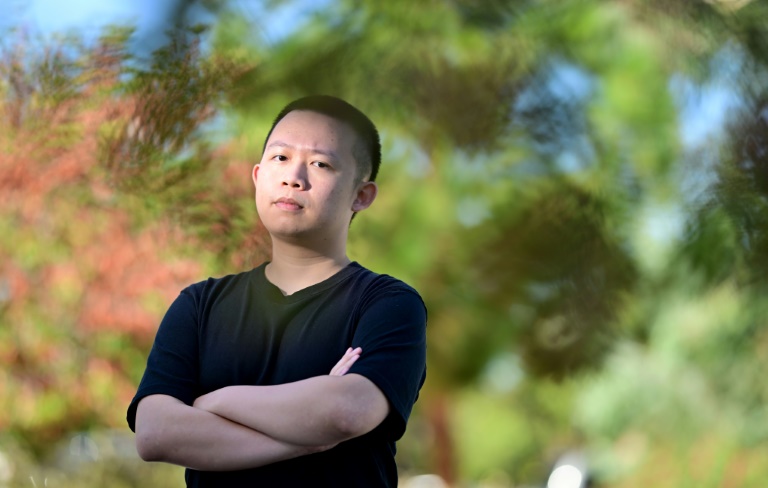
As a teenager in rural China, Zeng Jiajun used his internet know-how to watch a banned documentary on the bloody military crackdown in Tiananmen Square.

A decade later, he was part of the sprawling censorship machine that suffocates China’s cyberspace, tasked with stopping the spread of anything the Communist Party does not want its people to know about.

“At first when I worked on this I didn’t think much bigger because a job is a job,” he said.

“But deep inside I knew it was not aligned with my ethical standards. And once you work in this field for too long… the conflicts become stronger and stronger.”

Now living in the heart of California’s Silicon Valley, Zeng is an affable 29-year-old who wears the weight of his past experience lightly.

Few people who have worked inside China’s propaganda apparatus have told their stories. Even fewer are prepared to do so openly.

– Profoundly shocking –

Zeng came of age with the internet.

Born in 1993 in southern Guangdong province, his first experience of computing was during elementary school, when his father brought home a PC.

What he found when he went online was astounding.

“There was just like a whole new world that was waiting for me to explore,” he told AFP.

The Chinese government’s early attempts at web censorship were imperfect; VPNs provided access to subjects and information not discussed publicly.

In amongst the forbidden fruit was “The Gate of Heavenly Peace”, a three-hour documentary on student protests in Tiananmen Square in June 1989.

What Zeng saw — tanks and semi-automatic weapons wielded against unarmed students in a violent crackdown that left hundreds, perhaps thousands, dead — was profoundly shocking.

“It’s such a huge, significant, historic event, but nobody ever told us about it, and you cannot search for it on the Chinese internet; that content is all erased,” he said.

“I just felt like there was a huge lie. A lot of history is covered up.”

– TikTok –

Like other bright Chinese of his generation, Zeng spent his undergraduate years abroad, and returned to China with a degree in business administration from Estonia.

His tech savvy ultimately made him an attractive prospect for ByteDance, an upstart Chinese social media company whose global-facing TikTok and inward-facing Douyin were taking on the might of Twitter and Facebook.

“At first I was very excited because ByteDance is the only company that had a successful business outside of China,” he said.

“They have TikTok, which ruled the internet in the US and in Europe, so we were very proud of that. Most of the time only US internet companies ruled the world.”

And it was a good job. Intellectually stimulating work with a $4,000 monthly salary that was well above the average in Beijing.

– Off limits –

Zeng said he was part of a team that developed automated systems to filter content the company did not want on its platform.

These systems incorporated artificial intelligence to look at images, and to examine the sound that accompanied them, transcribing commentary and scouring for off-limits language.

If the system flagged a problem, Zeng said it would be passed to one of the thousands of human operatives who could delete the video or halt the livestream.

Mostly they were looking for the kind of thing any social media company might balk at — self-harm, pornography, unauthorized advertising — but also anything politically sensitive.

Some imagery was always off limits: pictures of tanks, candles or yellow umbrellas — a symbol of protest in Hong Kong — along with any criticism of President Xi Jinping and other Communist Party leaders, according to Zeng.

He said guidance was handed down to ByteDance from the Cyberspace Administration of China, but supplemented by the company itself, ever wary of overstepping purposefully vague rules.

“In China the line is blurred. You don’t know specifically what will offend the government, so sometimes you will go beyond and censor more harshly,” Zeng said, describing the company’s position as “like walking a tightrope”.

But the censor’s list was fluid, and specific events would trigger an update.

– Covid-19 –

In early 2020, that update included Dr Li Wenliang, an ophthalmologist in Wuhan who was trying to raise the alarm about a deadly new disease.

Li was silenced by authorities anxious to suppress early reports of what we now know as Covid-19.

“When Dr Li Wenliang posted the news, this information got censored, and propagandists came out (on television) and said this doctor was spreading misinformation,” said Zeng.

But when Li himself contracted Covid, Chinese internet users were incensed.

“Everybody was refreshing Twitter or their Weibo feed to check the latest news,” Zeng said, explaining they were seeking the truth between rumors and official denials.

“Many tweets or Weibo got deleted,” he said.

“I posted something like ‘we want news freedom. No more censorship’, and then my Weibo account also got censored.

“At that moment, I felt like… I was a part of this ecosystem.”

Li’s death — now one of more than 6.5 million worldwide — was the final straw.

“The night that Doctor Li Wenliang died, I felt that I couldn’t do this any more,” Zeng said.

He quit his job and moved back to his hometown, where he brushed up on his coding skills and applied to become a graduate student at the Silicon Valley campus of Northeastern University.

– Brave idealist –

Zeng feels safe in California, and does not believe the Chinese government would try to silence him on US soil.

His parents, who remain in China, are more circumspect about the risks he faces for speaking out.

“They just want me to be careful about what I say. They’re worried that things might go wrong or I will be manipulated by the foreign media. But I’m not listening to them on this issue,” he said.

“I assume I won’t be able to go back to China for at least 10 years.”

But that cost is worth paying for Zeng, who describes the battle against censorship as a “struggle of the people.”

“I think this is a huge issue (and we) should raise awareness of what’s going on in China.”

As Xi Jinping readies to be anointed for a record third term as president of an increasingly nationalist and strident Chinese government, Zeng feels gloomy.

“In the short run, everybody is pessimistic. But I think everybody is optimistic in the long run for the future of China.

“I think if you go back to our history, there are always some very brave idealists who will make the change when the moment comes.”

'A time to help': Indonesians ran to aid of fleeing fans in stadium stampede

As one of the deadliest disasters in the history of football unfolded before his eyes at an Indonesian stadium, photographer Adi Bowo Sucipto put his camera down and rushed to help.

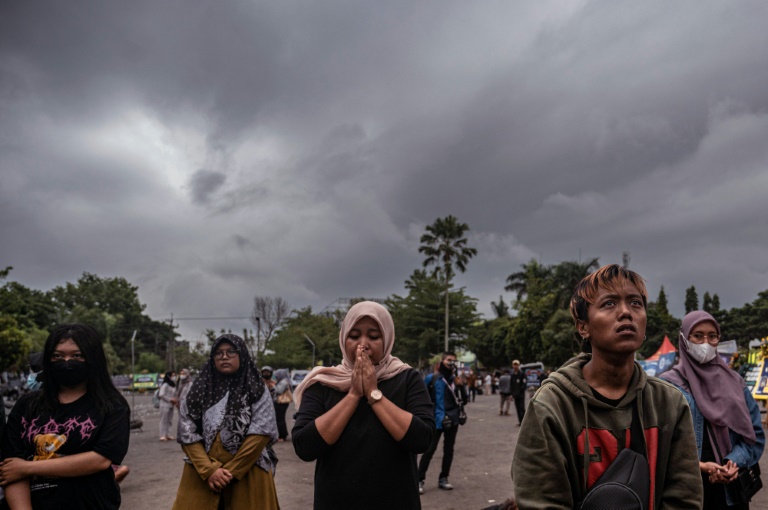
After police fired tear gas into packed terraces triggering the crush that killed 131 people, fleeing spectators sought refuge in the stadium’s media centre.

A man was convulsing and gasping for air as Sucipto helped him into the centre. Like so many others who were trampled or suffocated in the crush Saturday, the man died, he said.

“I was shocked. It was traumatic and I eventually stepped aside,” said the 43-year-old, who has worked as a photographer for more than a decade and was covering the match for a local news agency.

In the aftermath of witnessing the horrors at Kanjuruhan stadium, Sucipto now beats himself up, guilty that he didn’t run to the aid of others suffering that night.

“Why couldn’t I help more?” he asked, saying he now becomes emotional when he sees the Arema FC fans donning the home team’s jersey.

Around the stadium in the city of Malang, there were others who witnessed the tragedy unfold and rushed to the aid of those caught in the stampede.

Edy Tanto’s kiosk on the outer ring of Arema FC’s stadium was packed with fans without tickets watching the derby against fierce rivals Persebaya Surabaya before the final whistle.

As fans rushed to express their displeasure at the first home defeat in more than two decades to their adversaries from the biggest city in East Java, the tide turned.

Tanto said he saw people begin to pour out of the stadium when chaos erupted. 

He rushed to provide water from his shop to victims whose eyes were stung with the tear gas, which witnesses said police had fired into the stands.

“I couldn’t think straight,” Tanto told AFP as he sat cross-legged on the floor of his shop. 

“I just thought of helping them.” 

– ‘A time to help’ –

Some grabbed water from his fridges in a panicked search for anything that could ease their stinging eyes.

“I didn’t think about the money. We also took pity on them as they walked in (to the shop) staggering and with short breath,” Tanto told AFP. 

A similar scene played out on the other side of the stadium.

Another food stall vendor said she rushed to help the tear-gassed supporters who ran to her shop to find cover, while police officers did nothing.

A woman died on the floor of her kiosk, she said, and officers who were standing inside started to fan her with cardboard.

“I was emotional and I scolded the police — I don’t care about their ranks,” said the woman, who requested anonymity for fear of reprisal from the authorities.

She said she told them, “You know the supporter was dead, why did you keep fanning her?”

When the surreal scene of officers fanning a lifeless body was unfolding, the kiosk owner told AFP she was massaging another woman who had fled the hail of tear gas to soothe her.

Accounts show these are just a few of the many stories of selflessness that took place in Malang Saturday evening.

Men carried unconscious strangers to ambulances and supporters dragged their friends from the crush refusing to let go, saving their lives on a night when they were only supposed to be enjoying the match.

Like Sucipto, other photographers and video journalists working that night in the stadium stopped shooting to wrest fleeing football fans who were trapped in the human crush near an exit. 

“It was a time to help as there were so many victims,” Sucipto said. 

'Watched the whole time': China's surveillance state grows under Xi

When Chen picked up his phone to vent his anger at getting a parking ticket, his message on WeChat was a drop in the ocean of daily posts on China’s biggest social network.

But soon after his tirade against “simple-minded” traffic cops in June, he found himself in the tentacles of the communist country’s omniscient surveillance apparatus.

Chen quickly deleted the post, but officers tracked him down and detained him within hours, accusing him of “insulting the police”.

He was locked up for five days for “inappropriate speech”.

His case — one of the thousands logged by a dissident and reported by local media — laid bare the pervasive monitoring that characterises life in China today.

Its leaders have long taken an authoritarian approach to social control. 

But since President Xi Jinping took power in 2012, he has reined in the relatively freewheeling social currents of the turn of the century, using a combination of technology, law and ideology to squeeze dissent and preempt threats to his rule.

Ostensibly targeting criminals and aimed at protecting order, social controls have been turned against dissidents, activists and religious minorities, as well as ordinary people — such as Chen — judged to have crossed the line.

– Eyes in the sky –

The average Chinese citizen today spends nearly every waking moment under the watchful eye of the state.

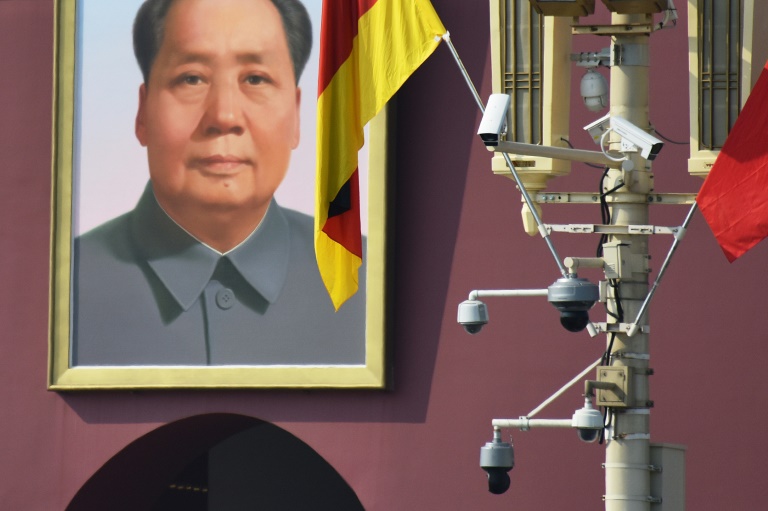
Research firm Comparitech estimates the average Chinese city has more than 370 security cameras per 1,000 people — making them the most surveilled places in the world — compared with London’s 13 or Singapore’s 18 per 1,000.

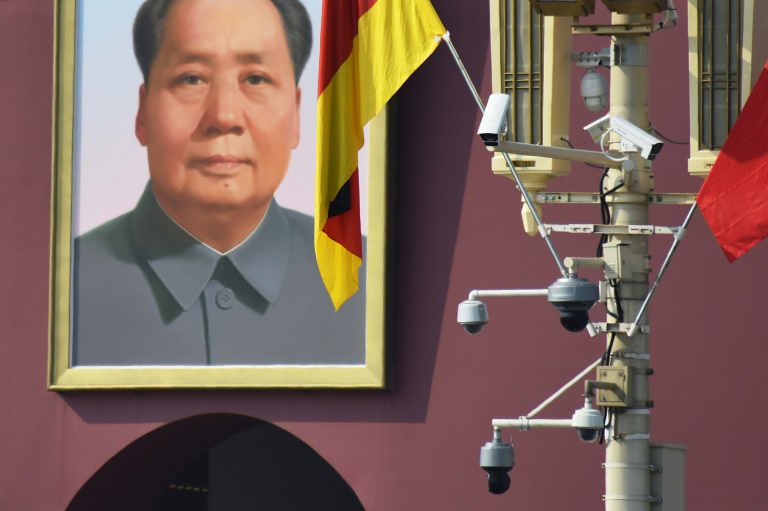
The nationwide “Skynet” urban surveillance project has ballooned, with cameras capable of recognising faces, clothing and age.

“We are being watched the whole time,” an environmental activist who declined to be named told AFP.

The Communist Party’s grip is most stark in the far-western region of Xinjiang, where facial recognition and DNA collection have been deployed on mainly Muslim minorities in the name of counter-terrorism.

The Covid-19 pandemic has turbo-charged China’s monitoring framework, with citizens now tracked on their smartphones via an app that determines where they can go based on green, yellow or red codes.

Regulations rolled out since 2012 closed loopholes that allowed people to purchase SIM cards without giving their names, and mandated government identification for tickets on virtually all forms of transport.

– Online offences –

There is no respite online, where even shopping apps require registration with a phone number tied to an identification document.

Wang, a Chinese dissident speaking to AFP under a pseudonym due to safety concerns, recalled a time before Xi when censors were not all-knowing and “telling jokes about (former Chinese president) Jiang Zemin on the internet was actually very popular”.

But the Chinese internet — behind the “Great Firewall” since the early 2000s — has become an increasingly policed space.

Wang runs a Twitter account tracking thousands of cases of people detained, fined or punished for speech acts since 2013.

Thanks to the real-name verification system as well as cooperation between police and social media platforms, people have been punished for a vast array of online offences.

Platforms such as Weibo employ thousands of content moderators and automatically block politically sensitive keywords, such as tennis star Peng Shuai’s name after she accused a senior politician of sexual assault last year.

Cyberspace authorities are proposing new rules that would force platforms to monitor comments sections on posts — one of the last avenues for people to voice their grievances online.

– Ideological policing –

Many of the surveillance technologies in use have been embraced in other countries.

“The real difference in China is the lack of independent media and civil society able to provide meaningful criticism of innovations or to point out their many flaws,” Jeremy Daum, from the Paul Tsai China Center at Yale Law School, told AFP.

Xi has reshaped Chinese society, with the Communist Party stipulating what citizens “ought to know, to feel, to think, and say, and do”, Vivienne Shue, professor emeritus of contemporary China studies at Oxford University, told AFP.

Youngsters are kept away from foreign influences, with authorities banning international books and forbidding tutoring companies from hiring overseas teachers.

Ideological policing has even extended to fashion, with television stations censoring tattoos and earrings on men.

“What disturbs me more is not the censorship itself, but how it shaped the ideology of people,” said Wang, the Twitter account owner.

“With dissenting information being eliminated, every website becomes a cult, where the government and leaders have to be worshipped.”

'Watched the whole time': China's surveillance state grows under Xi

When Chen picked up his phone to vent his anger at getting a parking ticket, his message on WeChat was a drop in the ocean of daily posts on China’s biggest social network.

But soon after his tirade against “simple-minded” traffic cops in June, he found himself in the tentacles of the communist country’s omniscient surveillance apparatus.

Chen quickly deleted the post, but officers tracked him down and detained him within hours, accusing him of “insulting the police”.

He was locked up for five days for “inappropriate speech”.

His case — one of the thousands logged by a dissident and reported by local media — laid bare the pervasive monitoring that characterises life in China today.

Its leaders have long taken an authoritarian approach to social control. 

But since President Xi Jinping took power in 2012, he has reined in the relatively freewheeling social currents of the turn of the century, using a combination of technology, law and ideology to squeeze dissent and preempt threats to his rule.

Ostensibly targeting criminals and aimed at protecting order, social controls have been turned against dissidents, activists and religious minorities, as well as ordinary people — such as Chen — judged to have crossed the line.

– Eyes in the sky –

The average Chinese citizen today spends nearly every waking moment under the watchful eye of the state.

Research firm Comparitech estimates the average Chinese city has more than 370 security cameras per 1,000 people — making them the most surveilled places in the world — compared with London’s 13 or Singapore’s 18 per 1,000.

The nationwide “Skynet” urban surveillance project has ballooned, with cameras capable of recognising faces, clothing and age.

“We are being watched the whole time,” an environmental activist who declined to be named told AFP.

The Communist Party’s grip is most stark in the far-western region of Xinjiang, where facial recognition and DNA collection have been deployed on mainly Muslim minorities in the name of counter-terrorism.

The Covid-19 pandemic has turbo-charged China’s monitoring framework, with citizens now tracked on their smartphones via an app that determines where they can go based on green, yellow or red codes.

Regulations rolled out since 2012 closed loopholes that allowed people to purchase SIM cards without giving their names, and mandated government identification for tickets on virtually all forms of transport.

– Online offences –

There is no respite online, where even shopping apps require registration with a phone number tied to an identification document.

Wang, a Chinese dissident speaking to AFP under a pseudonym due to safety concerns, recalled a time before Xi when censors were not all-knowing and “telling jokes about (former Chinese president) Jiang Zemin on the internet was actually very popular”.

But the Chinese internet — behind the “Great Firewall” since the early 2000s — has become an increasingly policed space.

Wang runs a Twitter account tracking thousands of cases of people detained, fined or punished for speech acts since 2013.

Thanks to the real-name verification system as well as cooperation between police and social media platforms, people have been punished for a vast array of online offences.

Platforms such as Weibo employ thousands of content moderators and automatically block politically sensitive keywords, such as tennis star Peng Shuai’s name after she accused a senior politician of sexual assault last year.

Cyberspace authorities are proposing new rules that would force platforms to monitor comments sections on posts — one of the last avenues for people to voice their grievances online.

– Ideological policing –

Many of the surveillance technologies in use have been embraced in other countries.

“The real difference in China is the lack of independent media and civil society able to provide meaningful criticism of innovations or to point out their many flaws,” Jeremy Daum, from the Paul Tsai China Center at Yale Law School, told AFP.

Xi has reshaped Chinese society, with the Communist Party stipulating what citizens “ought to know, to feel, to think, and say, and do”, Vivienne Shue, professor emeritus of contemporary China studies at Oxford University, told AFP.

Youngsters are kept away from foreign influences, with authorities banning international books and forbidding tutoring companies from hiring overseas teachers.

Ideological policing has even extended to fashion, with television stations censoring tattoos and earrings on men.

“What disturbs me more is not the censorship itself, but how it shaped the ideology of people,” said Wang, the Twitter account owner.

“With dissenting information being eliminated, every website becomes a cult, where the government and leaders have to be worshipped.”

Asian markets drift as global rally peters, focus now on US jobs

Asian markets were mixed Thursday as this week’s global rally ran out of juice, with concerns about a huge oil output cut’s impact on inflation tempering hopes that central banks could soon ease back on their rate hike campaigns.

The mood on trading floors has been a little lighter this week, sending equities surging and weighing on the dollar, after weak readings on US factory activity and job openings feeding speculation that the Federal Reserve’s strict tightening drive was having an effect.

But the confidence took a knock Wednesday from a better-than-expected read on private jobs hiring and a report showing the key services sector holding up more than expected.

The figures highlighted the resilience of the US economy in the face of multiple rate hikes and point to the long road ahead for the Fed in fighting decades-high inflation.

Fed officials have lined up for weeks to insist that they will not budge from lifting borrowing costs until prices are tempered — even at the cost of a recession — while some have warned traders not to expect any cuts next year.

“After an increase in expectations of an imminent Fed pivot given the softer than expected US (factory data), the strength in the services (sector) not only eases concerns of an imminent US recession, it also refutes any notion that the Fed will look to take its foot off the tighten pedal any time soon,” said National Australia Bank’s Rodrigo Catril.

The latest US data came as OPEC and other major producers led by Russia had decided to slash output by a massive two million barrels a day — the biggest reduction since the pandemic struck. 

Moscow said a possible price cap by the European Union on Russian crude would have a “detrimental effect” on the global oil sector, saying Moscow would not sell to countries that introduced it.

The news gave already elevated oil prices another leg up, with both contracts piling on more than one percent, and fuelling concerns that energy costs — a major driver of the spike in global inflation since Russia’s Ukraine invasion — will drive higher again.

“All the developments we have seen on the supply side at this point very much sets the stage for what we believe will be higher prices into the end of this year,” Damien Courvalin, at Goldman Sachs, told Bloomberg Television.

“With this cut and the winter seasonal demand, inventories will continue to fall.”

All three main indexes on Wall Street ended in the red, though they managed to claw back most of their earlier losses thanks to a late rally, though Asian markets fared a little better.

Tokyo, Singapore, Seoul, Taipei and Jakarta all rose again, but Hong Kong retreated after blasting almost six percent higher Wednesday. Sydney, Wellington and Manila were also slightly lower.

But commentators remained on guard over the outlook, with eyes now on the release of US non-farm payroll jobs on Friday, warning that an above-forecast reading could spark another major selloff.

On currency markets the dollar, which bounced Wednesday after suffering a sell-off for most of the week, was slightly down again in Asian business. 

Even sterling managed to resume its gains despite news that Fitch had lowered the outlook for British debt from stable to negative after the government of new Prime Minister Liz Truss announced a mini-budget packed with debt-fueled tax cuts.

The pound plunged more than two percent earlier as Truss failed to reassure investors with a speech at her Conservative party conference where she insisted she would stick to her fiscal plan.

– Key figures around 0230 GMT –

Tokyo – Nikkei 225: UP 0.9 percent at 27,370.37 (break)

Hong Kong – Hang Seng Index: DOWN 0.6 percent at 17,983.43

Shanghai – Composite: Closed for a holiday

Pound/dollar: UP at $1.1353 from $1.1326 on Wednesday

Euro/dollar: UP at $0.9910 from $0.9889

Euro/pound: DOWN at 87.27 pence from 87.29 pence

Dollar/yen: UP at 144.65 yen from 144.59 yen

West Texas Intermediate: UP 0.2 percent at $87.92 per barrel

Brent North Sea crude: UP 0.2 percent at $93.55 per barrel

New York – Dow: DOWN 0.1 percent at 30,273.87 (close)

London – FTSE 100: DOWN 0.5 percent at 7,051.60 (close) 

Former Uber security chief convicted in hack cover-up: reports

A jury on Wednesday found Uber’s former security chief guilty of federal crimes for covering up a massive hack that compromised personal information of users and drivers, according to US media reports.

Joseph Sullivan was found guilty of obstructing the work of the Federal Trade Commission and of failing to let authorities know about a crime when he hid a 2016 hack instead of reporting it, according to news outlets.

Sullivan could be sentenced to prison time.

Sullivan sought to pay off the hackers by funneling money through a “bug bounty” program that rewards developers for revealing security vulnerabilities without doing any harm, according to the criminal complaint.

Uber paid the hackers $100,000 in bitcoin cryptocurrency in December 2016, and Sullivan wanted them to sign non-disclosure agreements promising to keep mum about the affair, prosecutors said.

Sullivan was Uber chief security officer from April 2015 to November 2017.

The criminal complaint maintains that Sullivan deceived Uber’s new chief executive Dara Khosrowshahi, appointed in mid-2017 to replace Travis Kalanick, about the breach.

“Silicon Valley is not the Wild West,” US Attorney David Anderson for the Northern District of California said in a statement when the charges were filed.

“We will not tolerate corporate cover-ups. We will not tolerate illegal hush money payments.”

Two members of the Uber information security team who “led the response” that included not alerting users about the data breach were let go from the San Francisco-based company, according to Khosrowshahi.

The Uber chief said he had learned that outsiders broke into a cloud-based server used by the company for data and downloaded a significant amount of information.

Stolen files included names, email addresses and mobile phone numbers for millions of riders, and the names and driver license information of some 600,000 drivers, according to Uber.

Co-founder and ousted chief Kalanick was advised of the breach shortly after it was discovered, but it was not made public until Khosrowshahi learned of the incident, according to an AFP source.

Uber did not respond to a request for comment on the verdict.

Casey Ellis, founder and CTO at Bugcrowd, a San Francisco-based leader in crowd-sourced cybersecurity, said, “It’s a significant precedent that has already sent shockwaves through the CISO (chief information security officer) community.”

“It highlights the personal liability involved in being a CISO in a dynamic policy, legal, and attacker environment.”

Close Bitnami banner
Bitnami