World

Canada trade surplus drops in August to lowest 2022 level

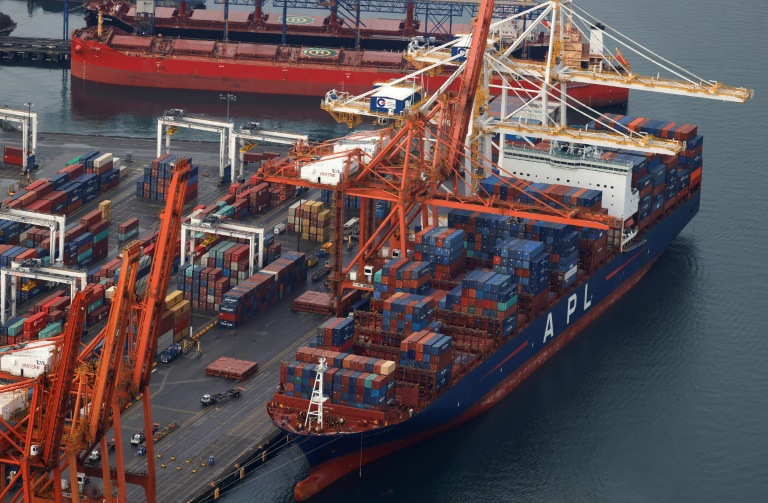
Canada’s trade surplus fell in August to Can$1.5 billion (US$1.1 billion) — its lowest level so far this year — as both exports and imports slumped, the government statistical agency said Wednesday.

The surplus narrowed from a revised Can$2.4 billion in July (previously Can$4 billion) and was “slimmer-than-expected,” according to CIBC analyst Andrew Grantham.

Exports decreased 2.9 percent to Can$65.4 billion, led by lower exports of energy products, while imports fell 1.7 percent to Can$63.9 billion, mainly on lower imports of motor vehicles and parts, said Statistics Canada. 

Energy exports accounted for more than 28 percent of total exports in August. The drop in this segment was led by crude oil.

Wheat exports also fell, but production was forecast to bounce back in 2022/2023 after a poor harvest this year. 

Canola exports were also down, as were shipments of gold bars to the United States following peak exports in May and June.

Imports of passenger cars and light trucks as well as parts, meanwhile, continued to be affected by supply chain woes.

Also down were imports of basic and industrial chemical, plastic and rubber product, metal and non-metallic mineral product, electronic and electrical equipment and parts, and energy products.

Those were partially offset by higher imports of industrial machinery linked to a new liquefied natural gas terminal currently being built in British Columbia. 

Trade with the United States declined, but Canada still managed to maintain a surplus with its largest trading partner, while a deficit with all other countries widened for the first time in four months.

Tight race seen as Denmark calls November election

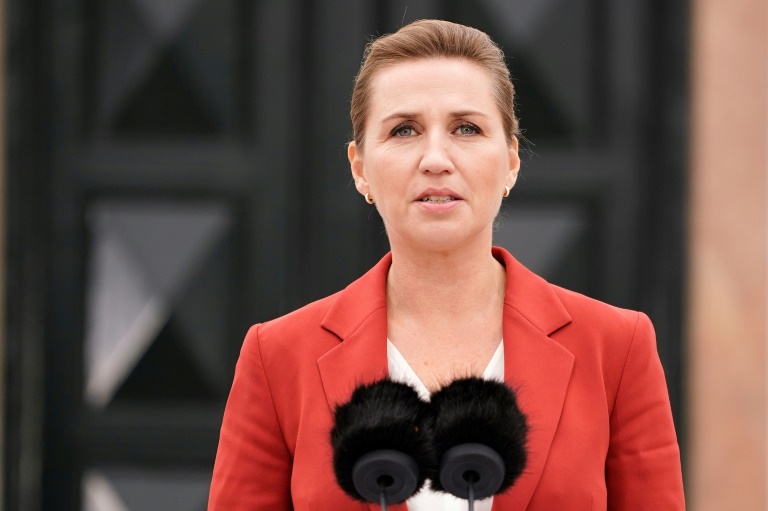
Denmark’s Prime Minister Mette Frederiksen on Wednesday called an early general election for November 1, with her left-wing bloc neck and neck in the polls against the right and far right.

“I have today informed the queen that elections to the Folketing (parliament) will be held,” the Social Democratic leader told a press conference.

In office since June 2019, Frederiksen had to call elections by June 2023, under the Danish system.

But she had faced an ultimatum from a small party propping up her minority government demanding that she call elections before parliament’s first debate on October 6 after reconvening from the summer break on Tuesday.

Recent polls give the “red bloc” of several left-wing parties, led by the Social Democrats, between 47 and 50 percent of the vote, compared to 49 to 50 percent for the “blue bloc”, which includes the Liberal Party, the Conservative Party and three nationalist right-wing parties.

– Mink scandal –

In terms of seats, neither bloc has a majority in parliament.

Frederiksen, 44, has embraced strong curbs on migration in the name of defending the welfare state, but she is still the favourite among voters to remain in her post. 

According to a recent poll, 49.4 percent want her to serve a second term, compared to 27.4 percent for the Conservative Party leader Soren Pape Poulsen and 23.3 percent for the Liberals’ Jakob Ellemann-Jensen, both of whom are challenging her for the post.

Frederiksen, a social media enthusiast, is now grappling with spiralling inflation caused by the European energy crisis.

While her overall management of the country during the pandemic was praised, she has faced a barrage of criticism for her handling of the “mink affair”.

Faced with a worrying outbreak of a variant of the novel coronavirus in minks — whose furs Denmark was previously the world’s largest exporter — the centre-left leader ordered the culling of more than 15 million animals in November 2020.

Shortly after, but with the cull already under way, it was established that the government had no legal basis for imposing the cull on farmers, dealing a heavy blow to the prime minister.

In early July, a commission appointed to determine blame for the affair reprimanded Frederiksen but without any other consequence.

– Fragmented politics –

The matter has nevertheless turned into a political saga, in the land of the hit political TV drama “Borgen” — which is also the nickname for Christiansborg, the seat of the Danish parliament and government.

Following the reprimand, the Radical Left party demanded the prime minister call early elections, or they would topple the government by joining the opposition in a vote of no-confidence.

“This is the first time that a legal scandal has led more or less directly to elections, even if ‘the fall of the government’ is happening in slow motion,” constitutional expert Frederik Waage told AFP.

In early September, the six opposition parties also published an open letter demanding that the prime minister call elections.

The Danish political landscape is more fragmented than ever, with polls suggesting that a total of 13 parties are likely to win seats in parliament and 45 percent of voters claiming to have changed parties since the last election. 

Even the far right, long dominated by the Danish People’s Party (DF) which has supported several right-wing governments in the past, is now splintered, with two other rival nationalist formations emerging in recent years, the New Right and the Denmark Democrats.

The latter — whose name mimics that of the Swedish far-right Sweden Democrats — is a new party founded by former immigration minister Inger Stojberg. It is credited with a nine-percent share of votes in the polls.

Stojberg is back in the political spotlight after serving two months with an electronic ankle bracelet last year for a decision she took to separate asylum seeker spouses when one of them was underage — a move later ruled to be illegal. 

Voter turnout is traditionally high in Denmark. In the 2019 election, 84.6 percent of some 4.2 million voters turned out to vote.

Iran pop singer silenced, but his song remains a protest anthem

Even though he has been silenced, Iranian pop singer Shervin Hajipour’s impassioned song in support of protests over Mahsa Amini’s death in custody remains an unofficial anthem of the movement.

The song “Baraye” notched up 40 million views on Instagram before it was deleted when Hajipour was arrested, but he has since been freed on bail and has distanced himself from politics, likely as a condition for his release.

Baraye, the Persian word “For” or “Because”, is composed of tweets about the protests and highlights longings people have for things lacking in sanctions-hit Iran, where many complain of hardship caused by economic mismanagement.

It also draws on everyday activities that have landed people in trouble with the authorities in the Islamic republic.

“For the sake of dancing in the streets; Because of the fear felt while kissing; For my sister, your sister, your sisters,” the song’s lyrics say.

“Because of the embarrassment of an empty pocket; Because we are longing for a normal life… Because of this polluted air.”

Baraye has been heard played loudly at night from apartment blocks in Iran to show support for protests sparked by Amini’s death on September 16, after the notorious morality police arrested her for allegedly breaching rules requiring women to wear hijab headscarves and modest clothes.

It was also sung with gusto by the Iranian diaspora at rallies in more than 150 cities around the world at the weekend.

In one clip shared by the New York-based Center for Human Rights in Iran, a group of schoolgirls without headscarves is seen singing Baraye in class with their backs to the camera.

The tune was removed from Hajipour’s Instagram account shortly after his arrest but is still widely available on other social media platforms, including Twitter and YouTube.

It has spawned covers, including by Jerusalem Post columnist Emily Schrader, who said she even learned the song in Persian and posted herself singing it on Instagram, garnering more than 650,000 views.

– ‘Because of forced Instagram stories’ –

Hajipour’s lawyer Majid Kaveh said he was released on bail at noon on Tuesday.

The reformist Shargh newspaper said his family had been informed of his arrest in the northern city of Sari on Saturday, in a report that cited his sister Kamand Hajipour.

She had said in an Instagram post that her parents had been informed of his arrest in a call from the city’s intelligence ministry offices.

Shortly after his release, Hajipour was back on Instagram, but this time to apologise and distance himself from politics.

“I’m here to say I’m okay,” he told his 1.9 million followers on the platform.

“But I’m sorry that some particular movements based outside of Iran — which I have had no relations with — made some improper political uses of this song.

“I would not swap this (country) for anywhere else and I will stay for my homeland, my flag, my people, and I will sing.

“I don’t want to be a plaything for those who do not think of me, you or this country,” he added.

In response to his post, many on Twitter suggested the line “Because of forced Instagram stories” should be added to the lyrics of the song.

Human rights groups including Article 19 have repeatedly called on Iran to end its use of forced confessions, which they say are false and extracted under duress or even torture.

In one recent case, a young Iranian woman, Sepideh Rashno, disappeared after becoming involved in a dispute on a Tehran bus with another woman who accused her of removing her headscarf.

She was held by the powerful Islamic Revolutionary Guard Corps and appeared on television in what activists said was a forced confession before being released on bail in late August.

Spore the merrier: Boom in mushrooms grown on Belgian beer

In Belgium, a country reputed for its beer, mushrooms nourished on a byproduct from the brew are doing booming business.

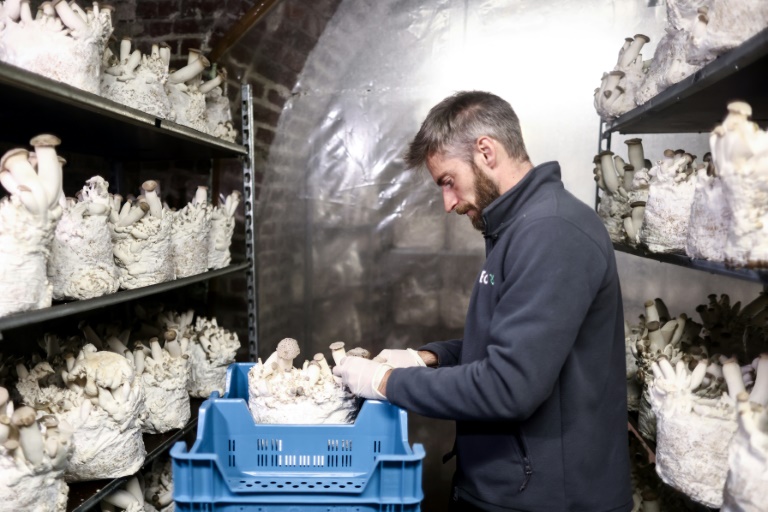
The high-end fungi grown by a Brussels firm, Eclo, in a disused abattoir are finding their way to gourmet customers — while boosting the circular economy.

The seven mushroom varieties produced by Eclo are mostly sought-after exotic types usually found in Asia, including shiitake, maitake (also known as hen-of-the-woods) and pom pom mushrooms.

They all fetch premium prices on the firm’s website, around 22 euros ($22) for a 750-gramme (26-ounce) box. 

And the substrate — the substance the spores grow out of — is easy to come by in Belgium: a mix of spent grain left over from the mashing process to make beer, and discarded baguettes and dried bread.

“The beer and the bread don’t have any effect on the mushrooms’ taste, but we get better yields from them in terms of quantity and quality,” explained Quentin Declerck, one of Eclo’s founders.

His company has for several years been collecting the brewers’ grain from Belgian beer-maker Cantillon and leftover bread from Colruyt supermarkets and the Bon Pain chain of bakery-and-sandwich shops.

The collaboration allows Eclo to recycle five tonnes of brewers’ discarded grain and 18 tonnes of bread annually. 

That castoff material then goes into Eclo’s cold rooms, where the mushrooms grow in the moist air. 

Each week, the company sells between eight and 10 tonnes of its mushrooms.

Beyond the blooming financial advantage the activity brings, Declerck explained that contributing to a domestically made and ecologically friendly production in Brussels was a motivation.

“We realised that many of the mushrooms bought in shops came from the Netherlands, many from eastern (European) countries, and even further afield, from China,” he said.

“Today there is a certain production that has been relocalised (to Belgium). We are part of that movement.”

– ‘Tough’ work –

Eclo was created in 2014 after its founders read a book about the circular economy, in which discarded items are repurposed and reintroduced into the market rather than thrown away. 

The book spoke of growing mushrooms from coffee grounds — a process already being used by another Brussels company.

Eclo tried that route initially, but “it was a resounding failure” for the varieties it wanted to grow, Declerck said.

“Shiitake doesn’t grow at all in coffee grounds.”

So it switched direction for its substrate, and trained some 30 people on how to grow mushrooms from brewers’ grain and bread.

The experience has had its ups and downs.

“Some of them just gave up. This is still a form of farming and it’s tough — you work in very moist rooms, sometimes you don’t see the sun all day,” Declerck said.

Trying to compete against industrial-scaled rivals also dealt a blow to the morale of some.

“You need to cope with market prices otherwise you simply don’t sell. We’ve found our niche, so we’re able to pay our people fairly, but a lot of projects don’t pay.”

Eclo is testing out other options in its production, for instance seeing if substrate using discarded ground cacao beans. 

It is also seeking to grow and set up a factory that can sell substrates on the European market.

In Belgium, the number of companies involved in the circular economy grew by a third between 2019 and 2021, according to a study by the Inoopa start-up in 2022.

But there is still a long path ahead: a study for Belgium’s Wallonia region in June found that 60 percent of the companies on its territory didn’t at all know about the concept of the circular economy.

Ukraine pushes east, Moscow vows to win back lost ground

Kyiv on Wednesday claimed further victories over Russian troops in eastern Ukraine as the Kremlin vowed to recapture territory lost in a lightening Ukrainian counteroffensive.

In recent weeks, Ukraine’s forces, bolstered by Western weapons, have wrested Russian troops out of a string of towns and villages in the east and in the south.

Kyiv this week claimed gains in the southern Kherson region and control of almost the entire eastern Kharkiv region, paving the way for its forces to enter the separatist stronghold of Lugansk.

“The de-occupation of the Lugansk region has already officially started,” regional governor Sergiy Gaiday said in a video posted on social media, dressed in camouflage and adding that several settlements had been liberated.

On Wednesday, Russian President Vladimir Putin signed into legislation his annexation of four Ukrainian territories — including Lugansk — as the EU agreed a new round of sanctions against Moscow in response.

Kremlin spokesman Dmitry Peskov said Moscow would take back land it lost to Kyiv within the annexed regions, vowing they would be “Russian forever and will not be returned.” 

Putin last Friday signed agreements with the Moscow-installed leaders of the four regions to become subjects of the Russian Federation, despite condemnation from Kyiv and the West.

The four territories — Donetsk, Kherson, Lugansk and Zaporizhzhia — create a crucial land corridor between Russia and the Crimean Peninsula, which was annexed by Moscow in 2014.

Together, the five regions make up around 20 percent of Ukraine.

– ‘Strike back’ –

The Kremlin annexed the territories after hastily conducting referendums, denounced as void by Kyiv and its Western allies, but has yet to confirm what areas exactly of those regions are being annexed.

Russian forces do not have full control over Kherson or Zaporizhzhia and recently lost control of several settlements in Donetsk.

“The way we are regrouping (our forces) along the front means that we can gather strength and strike back,” Kirill Stremousov, the Moscow-appointed deputy head of Kherson region, told the RIA Novosti news agency.

Ukraine’s forces “won’t enter Kherson. Its impossible,” he said referring to the region’s eponymous main city.

On Tuesday, Ukrainian President Volodymyr Zelensky said his forces were making “rapid and powerful” gains and had retaken “dozens” of villages in the east and south.

The latest battlefield maps from Moscow showed that Russian troops had left many areas in Kherson, including along the west bank of the Dnipro River.

In Kharkiv, the maps indicated that Russian forces had almost entirely abandoned the east bank of the Oskil River, potentially giving the Ukrainians space to shell key Russian troop transportation and supply corridors.

While Russian authorities remain largely silent about the extent of the setbacks, war correspondents of pro-Kremlin media admitted that troops were in trouble. 

“There won’t be any good news in the near future. Not from the Kherson front nor from Lugansk,” newspaper journalist Alexander Kots wrote on his Telegram channel with over 640,000 followers.

– ‘Chase them’ –

Near Lyman, a strategic transport hub in Donetsk that Kyiv recaptured over the weekend, a Ukrainian paratrooper told AFP that forces were “exhausted”. 

“We’ll rest for a bit and then we will go further,” said the young, bearded soldier. “We will chase them,” he added.

On Tuesday, US President Joe Biden told Zelensky that another $625 million in military assistance was on the way.

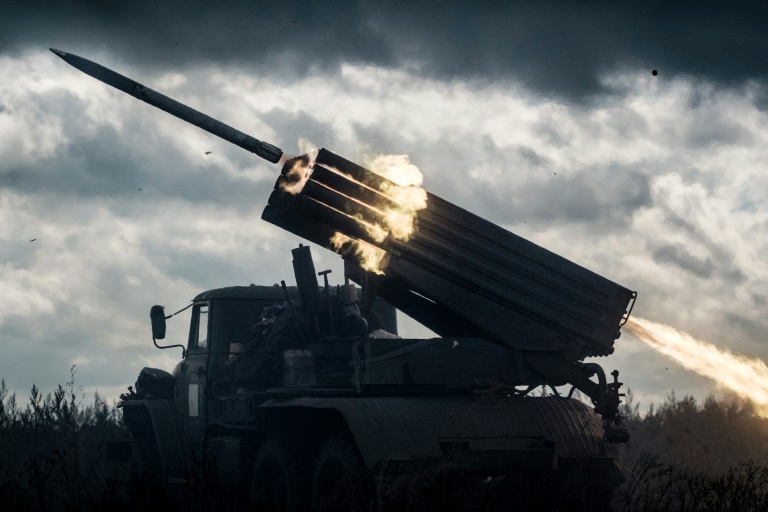
The new batch includes more HIMARS multiple rocket launchers, which have allowed Ukraine to strike Russian command depots and arms stockpiles far behind the front line.

From the EU, there were no details about the nature of fresh sanctions agreed against Russia.

The latest package — the eighth since Russia’s invasion in February — is now going through a final approval procedure which, if no objections emerge, will be published and come into effect on Thursday, the Czech Republic’s EU ambassador said on Twitter.

Otherwise, Russia insisted that it should be part of an international probe into leaks in the Nord Stream pipeline that carries gas from Russia to Europe. Sweden has blocked off the area pending an investigation.

Moscow has accused the West of being behind blasts that lead to four leaks on the Baltic Sea pipelines.

Both Moscow and Washington have denied involvement.

Royal rift after Danish queen strips grandkids' titles

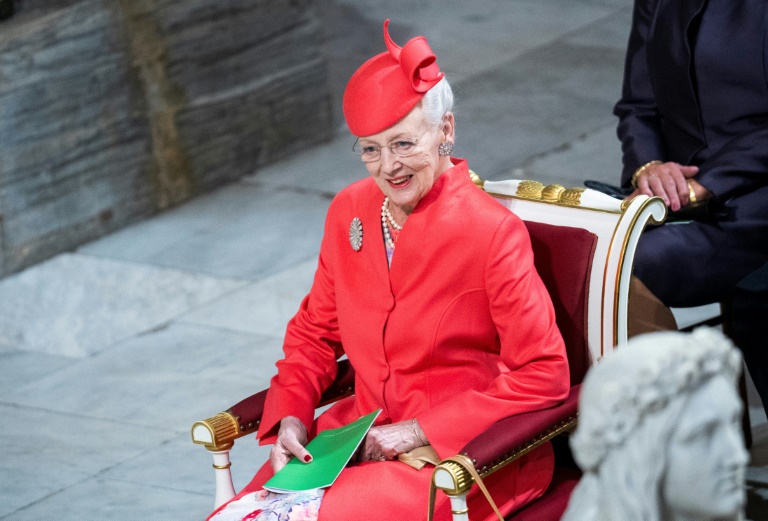
The  queen of Denmark’s decision to strip four of her grandchildren of their titles has sparked unprecedented royal drama in Copenhagen and led her enraged son to air the family’s dirty laundry in public.

Queen Margrethe II announced last week that the four children of her youngest son, 53-year-old Prince Joachim, would no longer be able to use the title of prince and princess after January 1.

She apologised on Monday for the hurt caused.

But Margrethe stood by the decision which was intended to allow Nikolai, 23, Felix, 20 — born from Joachim’s first marriage — Henrik, 13, and Athena, 10, to live normal lives without royal obligations.

The move followed a trend among other European royal families to slim down their monarchies, including in Britain where the Windsors face their own family feud.

“Holding a royal title involves a number of commitments and duties that, in the future, will lie with fewer members of the royal family,” Europe’s only reigning queen said in a statement.

But Prince Joachim saw it as a snub and was quick to speak out in the media.

“On May 5 I was presented with a plan. That this whole issue of my children’s identity would be removed when they each turned 25. Athena will turn 11 in January”, he told Danish tabloid B.T.

“Then, I received five days’ notice” that the decision had been accelerated.

His first wife Alexandra also told B.T. she and her children were “shocked”, while her eldest son expressed his sadness.

“I’m very bewildered as to why this had to happen like this”, Nicolai told tabloid Ekstra Bladet.

– ‘Necessary’ decision –


The outpourings sparked surprise in the Scandinavian country, coming just days after the hugely popular royal family had celebrated the queen’s 50th anniversary on the throne with pomp and smiles.

There is “no tradition in Denmark of members of the royal family discussing with each other in public”, historian Lars Hovbakke Sorensen told AFP.

Prince Joachim said he had “unfortunately” had no contact with his mother or elder brother Crown Prince Frederik since the queen’s announcement.

“It’s also family. Or whatever one could call it”, he told B.T.

In another swipe, his French-born wife Princess Marie said the couple’s relationship with Crown Prince Frederik and his Australian-born wife Mary was “complicated”. 

The media then dug up another old family spat, namely Joachim and Marie’s claims that their 2019 move to Paris — where Joachim is the Danish embassy defence attache — was not of their “own choice”.

Yet the queen’s decision did not surprise royal watchers.

It’s “natural, reasonable and necessary”, said historian Sebastian Olden-Jorgensen.

The queen’s four other grandchildren born to Crown Prince Frederik, 54, will retain their titles.

Back in 2016 the queen decided however that when they come of age only the future king, Prince Christian, will receive an appanage.

Stripping Joachim’s children’s titles is just another move in the same direction, experts said.

“She has wisely chosen to do this herself and not to leave it to her successor, the Crown Prince”, Olden-Jorgensen said.

“It is much easier for her to do to this to her son than for him to do it later to his brother,” he added.

– ‘Total breakdown in communication’ –  

Nonetheless, the heated reactions by Joachim’s family “indicate there is a conflict and a total breakdown in communication,” columnist Jacob Heinel Jensen wrote in B.T.

The queen’s apology on Monday came in a statement.

“I have underestimated the extent to which my younger son and his family feel affected … and for that I am sorry,” she said.

“I now hope that we as a family can find the peace to find our way through this situation.”

An opinion poll conducted by Voxmeter suggested 50.6 percent of Danes support her decision while 23.3 percent disagree.

This is not the royal family’s first scandal, though rarely have they been so sensational.

In 2002, the late Prince Consort Henrik made headlines when he fled to his chateau in southern France to “reflect on life”, complaining he didn’t receive enough respect in Denmark, after Crown Prince Frederik was chosen to represent the queen at a New Year’s ceremony instead of him.

And just months before his 2018 death, Henrik, who suffered from dementia, announced he did not want to be buried next to his wife because he was never made her equal.

US duo and Dane win Nobel for 'click chemistry'

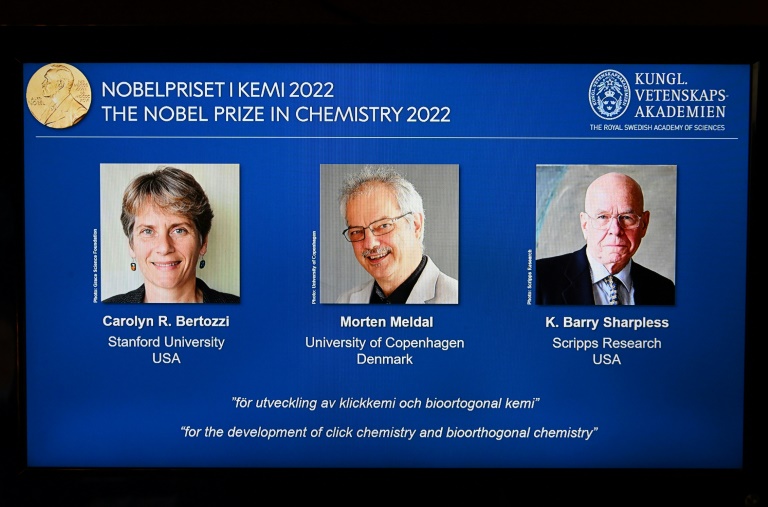
A trio of chemists from the United States and Denmark who laid the foundation for a more functional form of chemistry where molecules are snapped together on Wednesday won the Nobel Chemistry Prize.

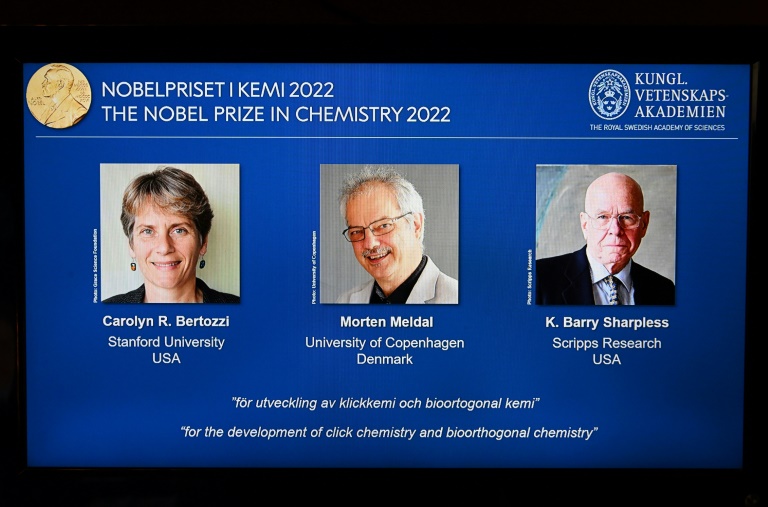
Americans Carolyn Bertozzi and Barry Sharpless, together with Denmark’s Morten Meldal, were honoured “for the development of click chemistry and bioorthogonal chemistry”, the jury said.

Bertozzi is the only woman among the seven Nobel laureates honoured so far this year, with women vastly under-represented in the history of the prizes, especially in the science disciplines.

The chemist — who as an undergraduate at Harvard played keyboards in a band called Bored of Education with future Rage Against the Machine guitarist Tom Morello — is only the eighth woman to win a Nobel Chemistry Prize, out of 189 recipients.

The award marks the second Nobel for 81-year-old Sharpless, who won the chemistry Nobel in 2001. 

Only four other individuals have achieved the feat of winning two Nobel Prizes, including Polish-born Frenchwoman Marie Curie, who won the chemistry prize in 1911 after first winning the physics prize in 1903.

She was followed by American Linus Pauling who won for chemistry in 1954 and peace in 1962. American John Bardeen won the physics prize in 1956 and 1972, and Britain’s Frederick Sanger won the chemistry prize in 1958 and 1980.

– To make drugs, map DNA –

Click chemistry “is an elegant and efficient chemical reaction that is now in widespread use,” the jury said in a statement.

“Among many other uses, it is utilised in the development of pharmaceuticals, for mapping DNA and creating materials that are more fit for purpose,” it added.

Sharpless, a professor at Scripps Research in California, “started the ball rolling” and “coined the concept of click chemistry” around 2000, the jury said.

Afterwards, Sharpless and Meldal, a professor at the University of Copenhagen, “independently of each other, presented what is now the crown jewel of click chemistry: the copper catalysed azide-alkyne cycloaddition”.

The process allows chemists to “snap” molecules together like Lego bricks “with the help of some copper ions”, which among other things allow for the production of new materials.

“If a manufacturer adds a clickable azide to a plastic or fibre, changing the material at a later stage is straightforward,” the Nobel committee explained.

It is possible to click in substances that conduct electricity, capture sunlight, are antibacterial, protect from ultraviolet radiation or have other desirable properties, it said.

While there is widespread application of his research, Meldal said he was “very surprised and very proud” to receive the honour.

“There are so many good discoveries and developments in the world, it’s incredible to be in this situation,” Meldal told Swedish public radio.

– ‘A new level’ –

Bertozzi, 55, a professor at Stanford in the United States, was highlighted for then taking “click chemistry to a new level”.

“She developed click reactions that work inside living organisms. Her bioorthogonal reactions take place without disrupting the normal chemistry of the cell,” the jury said.

Her research is now being used to investigate how these reactions can be used to diagnose and treat cancer.

“I’m absolutely stunned, I’m sitting here and I can hardly breathe,” Bertozzi told reporters via telephone, minutes after the announcement.

Silvia Diez-Gonzaleza, a chemist who works on click chemistry at Imperial College, London, welcomed the win.

“Thank goodness” that the days of women not being allowed in chemistry labs are over, she told AFP, though “there is a lot of bias still out there”.

“I want to believe that it’s just a matter of time that as women and non-white people get more opportunities to achieve their potential, then eventually the recognition they get will be spread more widely.”

The Royal Swedish Academy of Sciences, which awards the Nobels in the science disciplines, has refused to introduce quotas despite the dearth of women laureates.

Goran Hansson, then-secretary general of the academy, told AFP last year after all of the science nods went to men, that it wanted every laureate to be accepted “because they made the most important discovery, and not because of gender or ethnicity”. 

The lack of women laureates “reflects the unfair conditions in society, particularly in years past but still existing”, he acknowledged.

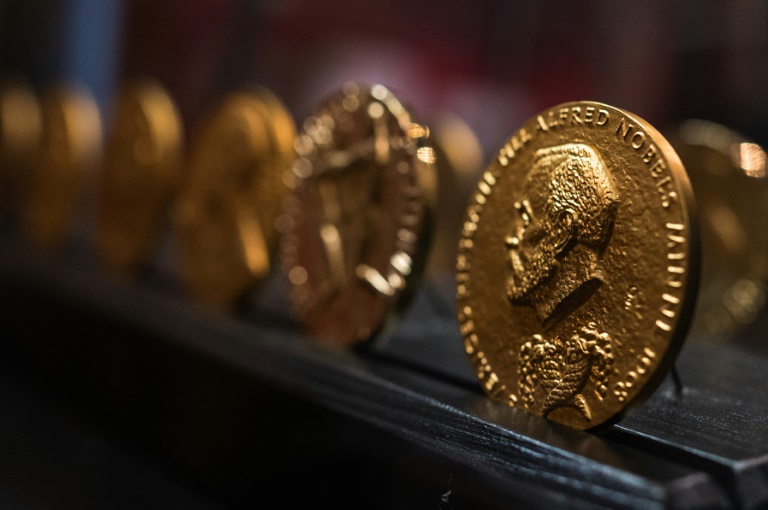
This year’s laureates will share the Nobel award sum of 10 million Swedish kronor (more than $910,000), and will receive the prize from King Carl XVI Gustaf at a ceremony in Stockholm on December 10, the anniversary of the 1896 death of scientist Alfred Nobel who created the prizes in his last will and testament.

US duo and Dane win Nobel for 'click chemistry'

A trio of chemists from the United States and Denmark who laid the foundation for a more functional form of chemistry where molecules are snapped together on Wednesday won the Nobel Chemistry Prize.

Americans Carolyn Bertozzi and Barry Sharpless, together with Denmark’s Morten Meldal, were honoured “for the development of click chemistry and bioorthogonal chemistry”, the jury said.

Bertozzi is the only woman among the seven Nobel laureates honoured so far this year, with women vastly under-represented in the history of the prizes, especially in the science disciplines.

The chemist — who as an undergraduate at Harvard played keyboards in a band called Bored of Education with future Rage Against the Machine guitarist Tom Morello — is only the eighth woman to win a Nobel Chemistry Prize, out of 189 recipients.

The award marks the second Nobel for 81-year-old Sharpless, who won the chemistry Nobel in 2001. 

Only four other individuals have achieved the feat of winning two Nobel Prizes, including Polish-born Frenchwoman Marie Curie, who won the chemistry prize in 1911 after first winning the physics prize in 1903.

She was followed by American Linus Pauling who won for chemistry in 1954 and peace in 1962. American John Bardeen won the physics prize in 1956 and 1972, and Britain’s Frederick Sanger won the chemistry prize in 1958 and 1980.

– To make drugs, map DNA –

Click chemistry “is an elegant and efficient chemical reaction that is now in widespread use,” the jury said in a statement.

“Among many other uses, it is utilised in the development of pharmaceuticals, for mapping DNA and creating materials that are more fit for purpose,” it added.

Sharpless, a professor at Scripps Research in California, “started the ball rolling” and “coined the concept of click chemistry” around 2000, the jury said.

Afterwards, Sharpless and Meldal, a professor at the University of Copenhagen, “independently of each other, presented what is now the crown jewel of click chemistry: the copper catalysed azide-alkyne cycloaddition”.

The process allows chemists to “snap” molecules together like Lego bricks “with the help of some copper ions”, which among other things allow for the production of new materials.

“If a manufacturer adds a clickable azide to a plastic or fibre, changing the material at a later stage is straightforward,” the Nobel committee explained.

It is possible to click in substances that conduct electricity, capture sunlight, are antibacterial, protect from ultraviolet radiation or have other desirable properties, it said.

While there is widespread application of his research, Meldal said he was “very surprised and very proud” to receive the honour.

“There are so many good discoveries and developments in the world, it’s incredible to be in this situation,” Meldal told Swedish public radio.

– ‘A new level’ –

Bertozzi, 55, a professor at Stanford in the United States, was highlighted for then taking “click chemistry to a new level”.

“She developed click reactions that work inside living organisms. Her bioorthogonal reactions take place without disrupting the normal chemistry of the cell,” the jury said.

Her research is now being used to investigate how these reactions can be used to diagnose and treat cancer.

“I’m absolutely stunned, I’m sitting here and I can hardly breathe,” Bertozzi told reporters via telephone, minutes after the announcement.

Silvia Diez-Gonzaleza, a chemist who works on click chemistry at Imperial College, London, welcomed the win.

“Thank goodness” that the days of women not being allowed in chemistry labs are over, she told AFP, though “there is a lot of bias still out there”.

“I want to believe that it’s just a matter of time that as women and non-white people get more opportunities to achieve their potential, then eventually the recognition they get will be spread more widely.”

The Royal Swedish Academy of Sciences, which awards the Nobels in the science disciplines, has refused to introduce quotas despite the dearth of women laureates.

Goran Hansson, then-secretary general of the academy, told AFP last year after all of the science nods went to men, that it wanted every laureate to be accepted “because they made the most important discovery, and not because of gender or ethnicity”. 

The lack of women laureates “reflects the unfair conditions in society, particularly in years past but still existing”, he acknowledged.

This year’s laureates will share the Nobel award sum of 10 million Swedish kronor (more than $910,000), and will receive the prize from King Carl XVI Gustaf at a ceremony in Stockholm on December 10, the anniversary of the 1896 death of scientist Alfred Nobel who created the prizes in his last will and testament.
The five scientists who won two Nobel prizes

American Barry Sharpless on Wednesday became only the fifth person ever to win a second Nobel Prize, two decades after being awarded his first.

AFP looks at the four other people who received the illustrious award twice for their services to mankind:

– Marie Curie (1903, 1911) –

The mother of modern physics was the first woman ever to win not one, but two, Nobel prizes for her seminal discoveries in physics and chemistry.

Born Maria Sklodowska in Poland, Curie moved to Paris as a student and is famed for having isolated the elements of polonium and radium as well as for promoting radium to alleviate suffering.

In 1903, she was awarded the Nobel Prize in Physics, along with her husband Pierre Curie and French physicist Antoine Henri Becquerel for their research into spontaneous radiation.

A second Nobel followed in 1911, this time for chemistry, when Curie was honoured alone for her work on radioactivity.

– Linus Pauling (1954, 1962) –

Linus Pauling, the US chemist who posited that huge doses of vitamin C can ward off the common cold, is the only person to have been awarded two unshared Nobel Prizes – the 1954 Nobel Prize in Chemistry and the 1962 Nobel Peace Prize.

Pauling won his first Nobel in 1954 for his work in molecular chemistry, particularly in the field of proteins and anti-bodies.

His second award came eight years later in 1962 was in recognition for his campaigning against nuclear testing.

– John Bardeen (1956, 1972) –

US engineer John Bardeen shared the Nobel Prize in Physics twice.

In 1956, he and two colleagues at Bell Labs, William Shockley and Walter Brattain, won for inventing the transistor, which revolutionised the field of electronics by leading to smaller and cheaper radios, calculators and computers, amongst other objects.

In 1972, he picked up his second Nobel for developing the BSC-theory of superconductivity, with fellow American physicists Leon Cooper and John Robert Schrieffer.

– Frederick Sanger (1958, 1980) –

British biochemist Frederick Sanger, dubbed the father of genomics, was the only person to win the chemistry Nobel twice.

Sanger was the sole winner of the prize in 1958 for his work on the structure of proteins, notably insulin, and then shared it with two others, Paul Berg and Walter Gilbert of the United States, in 1980 for pioneering developments in DNA sequencing that are still being used today.

His work allowed long stretches of DNA to be rapidly and accurately sequenced and was central to the Human Genome Project’s mammoth achievement in mapping more than three billion units of human DNA.

– ICRC and UNHCR –

Two organisations have won multiple Nobel Peace Prizes.

The International Committee of the Red Cross won in 1917, 1944 and 1963 and the Office of the UN High Commissioner for Refugees won in 1954 and 1981.

Freed US citizen, 85, lands in Oman after detention in Iran

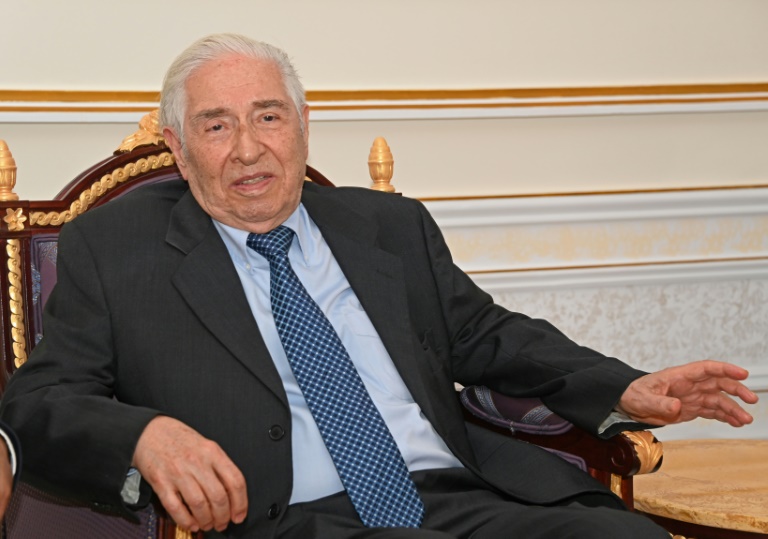
Baquer Namazi, one of four US citizens whose freedom Washington had demanded in the context of any revived nuclear deal with Tehran, landed in neutral Oman Wednesday, his lawyer said.

Namazi, a former UNICEF official, was detained in February 2016 when he travelled to Iran to press for the release of his son Siamak, who had been arrested in October of the previous year.

“Mohammad Baquer Namazi, who had been released from prison a few days ago, left Iran today (Wednesday),” the Iranian state broadcaster said, posting footage of Namazi boarding a plane.

Human rights lawyer Jared Genser later confirmed via Namazi’s cousin who travelled with the 85-year-old on the plane that he had arrived in Muscat, Oman’s capital.

The United States has been pressing for the release of the Namazis and two other Americans amid efforts to revive the 2015 nuclear deal between Iran and major powers.

His son Siamak, “also wrongfully detained”, has been given furlough from prison but remains in Iran, a State Department spokesperson told AFP.

“Baquer Namazi was unjustly detained in Iran and then not permitted to leave the county after serving his sentence, despite his repeated requirement for urgent medical attention,” the spokesperson said.

“We understand that the lifting of the travel ban and his son’s furlough were related to his medical requirement.”

The United Nations said last week that the pair had been allowed to leave Iran, after an appeal from Secretary General Antonio Guterres.

– Iran eyes frozen assets –

The Namazis were both were convicted of espionage in October 2016 and sentenced to 10 years in prison.

Baquer Namazi was released on medical leave in 2018 and had been serving his sentence under house arrest.

At least two other American citizens are currently held in Iran.

Businessman Emad Sharqi was sentenced last year to 10 years in prison for espionage, and environmentalist Morad Tahbaz, who is also a British national, was arrested in 2018 and released on bail in July.

A drive to salvage the 2015 nuclear deal began in April last year, with the aim of returning the United States to the accord through the lifting of sanctions reimposed by president Donald Trump in 2018 and Iran’s return to full compliance.

The signing of the original deal was accompanied by the release of detained Americans and Namazi’s departure has been seen in Iran as a move that should be mirrored by the other side.

“With the finalisation of negotiations between Iran and the United States to release the prisoners of both countries, $7 billion of Iran’s blocked resources will be released,” state news agency IRNA reported.

But the US State Department on Sunday dismissed the reported link as “categorically false”.

Billions of dollars in Iranian funds have been frozen in a number of countries — notably China, South Korea and Japan — since the US reimposed sanctions.

Close Bitnami banner
Bitnami