World

How the Indonesia stadium disaster unfolded: minute by minute

Indonesian investigators are still assessing events that culminated in one of the deadliest disasters in the history of football.

A pitch invasion and a stampede prompted by police firing tear gas in a packed Indonesian stadium on Saturday left at least 131 people dead, including 32 children.

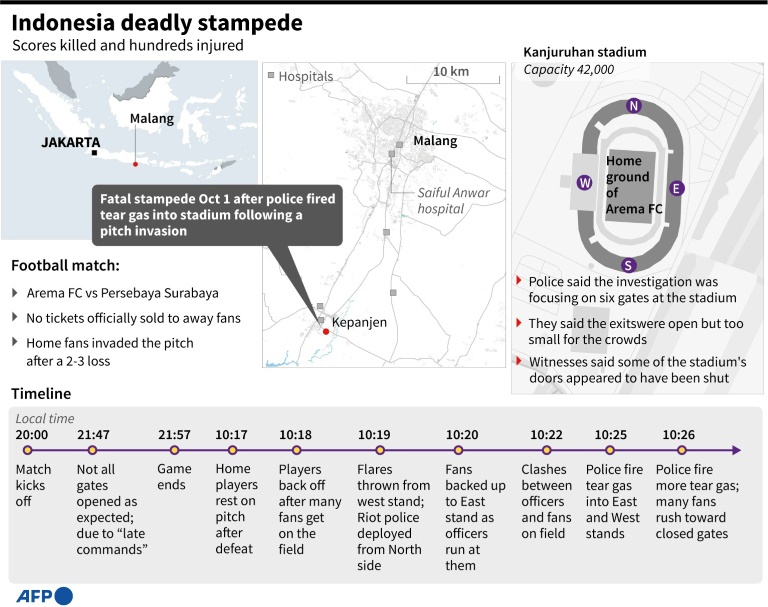
Using interviews with officials, witness accounts and verified images and footage from the night, AFP pieces together how the tragedy unfolded in just 10 minutes of chaos after the game finished at the Kanjuruhan stadium in the city of Malang.

– 9:47 pm: Gates closed –

After the game kicked off at 8:00 pm local time, the match ran peacefully through the first and second halves with the stadium packed to capacity with about 42,000 home Arema FC fans.

The game ended at 9:57 pm, according to image metadata. But 10 minutes before it finished, some exit gates remained closed contrary to established practice. This was due to “late commands” and because officers “had not arrived” yet, according to Indonesian football association spokesperson Ahmad Riyadh.

Several witness accounts and images support this version of events. But police dispute this and say the exits were all open.

After the final whistle, the situation began to unravel.

– 10:17 pm: Pitch invasion –

Players were resting on the pitch after the defeat while the result sank in, according to video metadata. They then walked across the field from the west stand to greet waiting fans in the east stand at 10:17 pm, pictures and video metadata showed.

Two supporters entered the field to meet the players. One appeared to confront them but was then seen hugging a member of the team, according to photos. Several fans can be seen in video footage raising their middle fingers to players from the terraces.

A third fan then ran onto the field, attracting the attention of stewards who tried to stop that person, videos and photos showed.

A fourth spectator also came onto the pitch, according to footage, where security officers can be seen pointing to him but were late to catch him.

Tens of other fans entered the field, pictures and video showed. More stewards tried to stop them, asking them to return to the stands.

– 10:19 pm: Riot police move in –

At 10:18 pm, stewards began to move players back to the changing rooms as fans continued to enter the field, according to footage.

At 10:19 pm, footage showed the first flare was thrown from the west stand, landing near where the players were escorted out. Dozens of fans had by now invaded the pitch.

Another flare was then thrown from the same stand, according to the same footage. 

The first riot police — armed with shields and batons — were then deployed from the north side of the stadium, videos showed.

At 10:20 pm, fans backed themselves up to the east stand as officers ran at them, some hitting supporters with sticks, according to photographs and video footage. Items were thrown at officers from the crowd.

At 10:22 pm, clashes started between police and fans on the pitch, footage showed. Some fans can be heard asking their friends to return to the stands.

Footage showed officers move towards the north stand to beat back supporters as the situation spiralled out of control.

– 10:25 pm: Tear gas fired, crush begins –

According to footage, at about 10:25 pm, police fired tear gas for the first time into the east and west stands. Supporters responded by throwing items at officers and some entered the pitch to do so.

At 10:26 pm, more tear gas was fired by officers, video footage showed. 

Many supporters rushed to nearby locked gates, according to images, in an attempt to save themselves from the smoke, which witnesses say left people choking and struggling to breathe.

As they fled, many became trampled or choked to death as a crush developed at several gates that were closed and some that were open but too small for so many people to pass through, according to survivors.

Survivors said dozens died at Gate 13, where the west and south stands meet, in a crush. Authorities have not confirmed how many were killed there.

After this, photographers and video journalists stopped shooting to help victims as police stood by, according to several witnesses who spoke to AFP. 

Images captured a few minutes later showed many of the officers had disappeared from the pitch as supporters tried to run from the tear gas.

Police have claimed around 3,000 spectators eventually invaded the pitch.

Photographs showed fans carrying victims to an ambulance on the field or outside the stadium.

Within minutes dozens had died, with many more later sent to hospital, as Indonesia faced a moment of reckoning on crowd safety at sports events.

Moving on up… or out? UK prime minister seeks to soothe Tory faithful

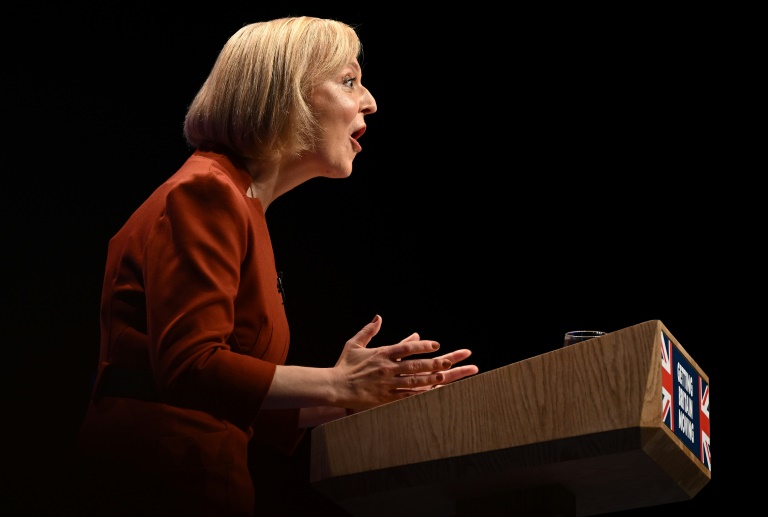
Britain’s embattled prime minister Liz Truss marched to the lectern for the most important speech of her political career on Wednesday — accompanied by a song about a bitter break-up.

After concluding her speech to the Conservatives’ tempestuous annual conference, she at least found her way out of the 1,500-capacity Hall 1 of Birmingham’s International Convention Centre.

The door’s “Exit” sign was taped up, to prevent mischief-making by press photographers, one of whom was dragged away by security before the speech for unspecified reasons.

When she launched her campaign in July to succeed Boris Johnson as Tory leader, Truss briefly got lost when she tried to leave the room.

This time in Birmingham, her arrival song was “Moving On Up” by M People, presumably to chime with the conference slogan of “Getting Britain Moving”.

But its lyrics — in fact a stinging goodbye to a cheating lover — could have rung true with those already calling for Truss to go.

“You’ve done me wrong, your time is up/You took a sip from the devil’s cup.

“You broke my heart, there’s no way back/Move right out of here, baby, go on pack your bags.”

The 40-minute speech was briefly interrupted by Greenpeace protesters holding up a sign saying “Who voted for this?”

The sign was a clear reminder that Truss became prime minister with the votes of just 80,000 Tory activists, not the country at large.

Opinion polls have increasingly signalled the country’s deep unhappiness at her shock-and-awe economic policies.

For many of her Tory critics, Truss is already drinking in the last-chance saloon just a month into her premiership.

Her policy package convulsed financial markets and forced an emergency intervention by the Bank of England.

One of the leaders of the awkward squad is former minister Grant Shapps, whom Truss unceremoniously sacked when she appointed her new cabinet. 

Shapps said the speech, and the next 10 days, were crucial if Truss wants to avoid a no-confidence vote by Tory MPs –- mere months since they dumped Johnson.

– ‘What a great week!’ –

As it was, the speech broke no new policy ground, but recapped Truss’s life story and her low-tax, anti-European Union, patriotic mantra.

It avoided the gaffes that made a 2014 conference speech by Truss go viral. 

Then environment minister, she delivered a stilting and surreal turn in praise of British pork and cheese.

But while no disgrace, her leader’s speech did showcase some of the traits that make Truss such a wooden orator.

She smiled oddly at serious moments, then looked oddly determined in lighter sections. 

Eyes staring, leaning forward, she declared her three priorities were “growth, growth, growth”.

Tentative applause built from the hall when she praised Kwasi Kwarteng as her “dynamic” chancellor of the exchequer.

And she continued to speak before finally realising that it was a moment to pause and let the party give its approval of the embattled minister after a disastrous few days.

On Tuesday, Truss failed three times to declare she trusted Kwarteng — one of a series of car-crash moments that this week made the Tories look more like the perpetually faction-ridden Labour party than the Western world’s most successful political force.

Many delegates admitted as much, and many left Birmingham on Tuesday to beat a national rail strike in Britain.

A few empty seats dotted the back of the convention hall.

Tory chairman Jake Berry was the first warm-up act for Truss, and gamely tried to inject confidence despite polls showing Labour in a commanding lead and Truss seen herself as “incompetent” and “useless”.

“Conference, what a great week it’s been!” Berry said, prompting howls of laughter from the press rows and a few groans from the party faithful.

“That wasn’t meant to be the funny bit!” he said ruefully.

Iran pop singer silenced, but his song remains a protest anthem

Even though he has been silenced, Iranian pop singer Shirvin Hajipour’s impassioned song in support of protests over Mahsa Amini’s death in custody remains an unofficial anthem of the movement.

The song “Baraye” notched up 40 million views on Instagram before it was deleted when Hajipour was arrested, but he has since been freed on bail and has distanced himself from politics, likely as a condition for his release.

Baraye, the Persian word “For” or “Because”, is composed of tweets about the protests and highlights longings people have for things lacking in sanctions-hit Iran, where many complain of hardship caused by economic mismanagement.

It also draws on everyday activities that have landed people in trouble with the authorities in the Islamic republic.

“For the sake of dancing in the streets; Because of the fear felt while kissing; For my sister, your sister, your sisters,” the song’s lyrics say.

“Because of the embarrassment of an empty pocket; Because we are longing for a normal life… Because of this polluted air.”

Baraye has been heard played loudly at night from apartment blocks in Iran to show support for protests sparked by Amini’s death on September 16, after the notorious morality police arrested her for allegedly breaching rules requiring women to wear hijab headscarves and modest clothes.

It was also sung with gusto by the Iranian diaspora at rallies in more than 150 cities around the world at the weekend.

In one clip shared by the New York-based Center for Human Rights in Iran, a group of schoolgirls without headscarves is seen singing Baraye in class with their backs to the camera.

The tune was removed from Hajipour’s Instagram account shortly after his arrest but is still widely available on other social media platforms, including Twitter and YouTube.

– ‘Because of forced Instagram stories’ –

Hajipour’s lawyer Majid Kaveh said he was released on bail at noon on Tuesday.

The reformist Shargh newspaper said his family had been informed of his arrest in the northern city of Sari on Saturday, in a report that cited his sister Kamand Hajipour.

She had said in an Instagram post that her parents had been informed of his arrest in a call from the city’s intelligence ministry offices.

Shortly after his release, Hajipour was back on Instagram, but this time to apologise and distance himself from politics.

“I’m here to say I’m okay,” he told his 1.9 million followers on the platform.

“But I’m sorry that some particular movements based outside of Iran — which I have had no relations with — made some improper political uses of this song.

“I would not swap this (country) for anywhere else and I will stay for my homeland, my flag, my people, and I will sing.

“I don’t want to be a plaything for those who do not think of me, you or this country,” he added.

In response to his post, many on Twitter suggested the line “Because of forced Instagram stories” should be added to the lyrics of the song.

Human rights groups including Article 19 have repeatedly called on Iran to end its use of forced confessions, which they say are false and extracted under duress or even torture.

In one recent case, a young Iranian woman, Sepideh Rashno, disappeared after becoming involved in a dispute on a Tehran bus with another woman who accused her of removing her headscarf.

She was held by the powerful Islamic Revolutionary Guard Corps and appeared on television in what activists said was a forced confession before being released on bail in late August.

Ten dead after Indian Himalayas avalanche hits climbers

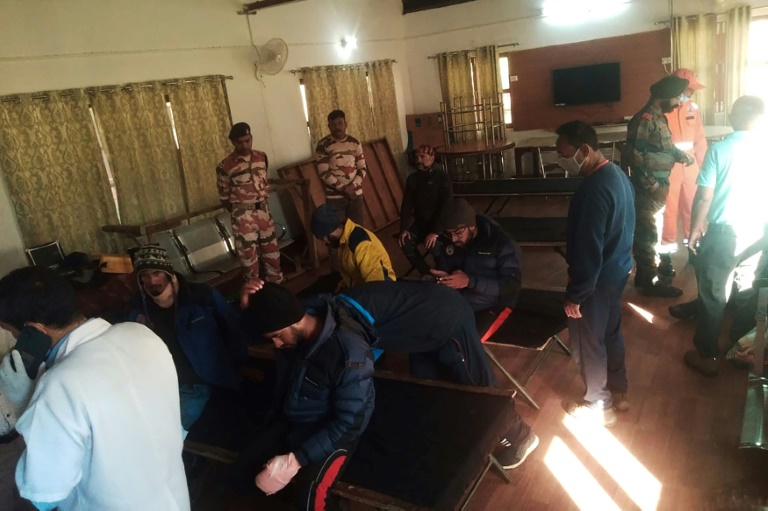
Ten people are confirmed dead after an avalanche struck climbers in the Indian Himalayas, police said Wednesday, with 18 other members of the expedition still missing.

Several dozen climbing trainees were caught in Tuesday morning’s snowslide near the summit of Mount Draupadi ka Danda-II in the northern state of Uttarakhand.

The Indian air force and local disaster agency were assisting with rescue efforts before heavy snow and rainfall forced them to abandon the search overnight. 

“Rescue teams have recovered 10 bodies,” the Uttarakhand state police force said on Twitter after operations resumed in the morning.

Fourteen people have so far been rescued from the site of the avalanche, around 4,900 metres (16,000 feet) above sea level, and police said five were being treated at a district hospital in Uttarkashi.

Police footage showed several rescued climbers arriving in the town and walking unassisted while escorted by officers.

Uttarakhand Chief Minister Pushkar Singh Dhami confirmed on Twitter that accomplished climber Savita Kanswal, who had summited Everest earlier this year, was among the dead.

Kanswal was an instructor with the expedition and had been feted by the climbing community for summiting the world’s highest peak and nearby Makalu in just 16 days — a women’s record.

Dhami said the government would provide immediate financial assistance to those injured in the avalanche along with the families of victims.

State disaster agency spokesperson Ridhim Aggarwal told AFP that the climbers had been stuck in a crevasse after the avalanche hit.

The Nehru Institute of Mountaineering said the expedition included 34 of its trainees, seven instructors and a nursing assistant.

Two air force helicopters had been sent to the region to assist with the search, senior disaster management official Devendra Singh Patwal told AFP.

– Fatal accidents –

Fatal climbing accidents are common on the treacherous terrain of the Himalayas, home to Everest and several of the world’s highest peaks.

In August, the body of a mountaineer was recovered two months after he fell into a crevasse while crossing a glacier in the neighbouring state of Himachal Pradesh.

And last week, renowned US ski mountaineer Hilaree Nelson’s body was found on the slopes of Nepal’s Manaslu peak after she went missing skiing down the world’s eighth-highest mountain.

On the day of Nelson’s accident, an avalanche hit on the 8,163-metre (26,781-foot) mountain, killing Nepali climber Anup Rai and injuring a dozen others who were later rescued.

Although no substantial research has been done on the impacts of climate change on mountaineering risks in the Himalayas, climbers have reported crevasses widening, running water on previously snowy slopes, and the increasing formation of glacial lakes. 

Oil prices rise awaiting OPEC output cut

Oil prices rose Wednesday as OPEC and Russia-led allies prepare to announce a big cut in output.

Stocks markets diverged following Tuesday’s surge on hopes the US Federal Reserve could temper its rate hike campaign.

The pound continued to suffer against the dollar over fears for Britain’s recession-threatened economy, losing around one percent. 

The main focus has been the oil market. “There will be a lot of attention on just how big this (oil output) cut is,” said AJ Bell investment director Russ Mould.

“Speculation they could be double the volume previously flagged… has been behind the recent surge in crude.”

Major oil producers led by Saudi Arabia and Russia were on Wednesday expected to announce a large cut in output to prop up prices despite Western concerns over energy-fuelled inflation.

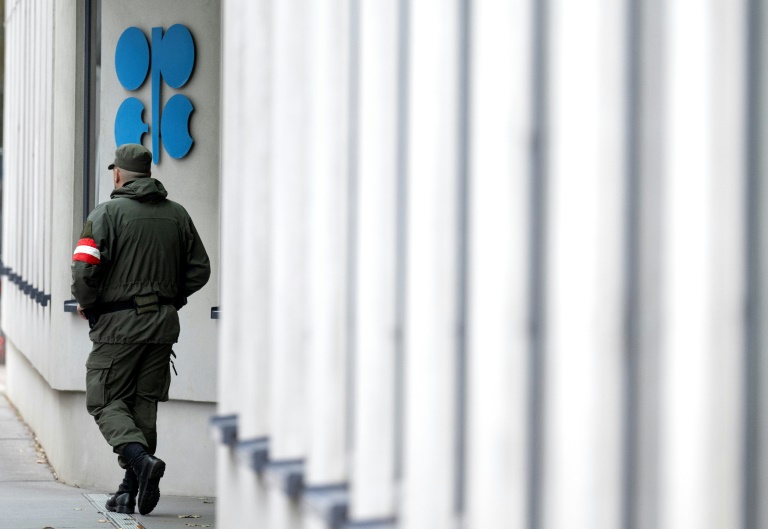
The 13-nation OPEC cartel and its 10 Russian-led allies are reportedly considering a reduction of up to two million barrels per day at a meeting in Vienna — the biggest cut since 2020.

In a reminder of the global economic turmoil, the World Trade Organization (WTO) dramatically lowered its global trade forecast for 2023.

“Today the global economy faces multi-prong crises. Monetary tightening is weighing on growth across much of the world,” WTO Director-General Ngozi Okonjo-Iweala told reporters in Geneva.

Presenting a revision of their annual trade forecast, WTO economists said they still anticipated global economic growth rising 2.8 percent this year.

Hong Kong stocks soared Wednesday following a public holiday, catching up with the previous day’s global rally.

In corporate news, Elon Musk has offered to push through with his buyout of Twitter at the original agreed price.

The world’s richest man said in a filing with the Securities and Exchange Commission that he sent Twitter a letter vowing to honour the contract.

The latest twist in the long-running saga came ahead of the high-stakes court battle launched by Twitter in an attempt to hold the Tesla chief to the $44-billion deal he signed in April.

– Key figures around 1100 GMT –

Brent North Sea crude: UP 0.9 percent at $92.57 per barrel

West Texas Intermediate: UP 0.7 percent at $87.10 per barrel

London – FTSE 100: DOWN 1.0 percent at 7,016.57 points

Frankfurt – DAX: DOWN 0.8 percent at 12,570.82

Paris – CAC 40: DOWN 0.7 percent at 5,996.54

EURO STOXX 50: DOWN 0.8 percent at 3,456.56

Tokyo – Nikkei 225: UP 0.5 percent at 27,120.53 (close)

Hong Kong – Hang Seng Index: UP 5.9 percent at 18,087.97 (close)

Shanghai – Composite: Closed for a holiday

New York – Dow: UP 2.8 percent at 30,316.32 (close)

Pound/dollar: DOWN at $1.1372 from $1.1477 on Tuesday

Euro/dollar: DOWN at $0.9926 from $0.9992

Euro/pound: UP at 87.27 pence from 87.03 pence

Dollar/yen: UP at 144.34 yen from 144.09 yen

burs-bcp/rfj/lcm

WTO slashes 2023 global trade forecast as recession looms

The World Trade Organization on Wednesday dramatically lowered its global trade forecast for 2023, as Russia’s war in Ukraine and other shocks take their toll on the world economy.

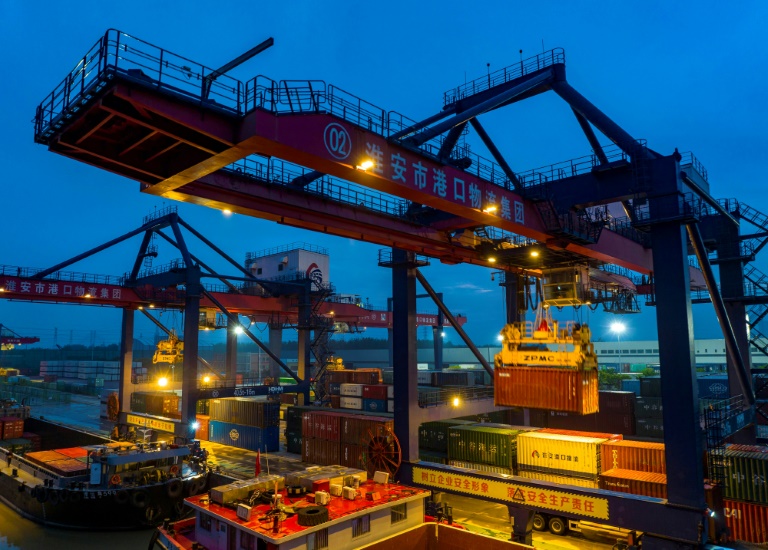
Presenting a revision of their annual trade forecast, WTO economists said they expected the volume of global merchandise trade to grow 3.5 percent this year, which is slightly higher than their expectations in April.

But they forecast it would grow by only one percent in 2023 — dramatically down from their expectations of 3.4-percent growth six months ago.

“The picture for 2023 has darkened considerably,” WTO Director-General Ngozi Okonjo-Iweala told reporters in Geneva.

“Today the global economy faces multi-prong crises. Monetary tightening is weighing on growth across much of the world.” 

As for the global economy as a whole, WTO economists stuck with their April forecast of 2.8-percent GDP growth this year, but said growth in 2023 was now expected to be just 2.3 percent — down a full percentage point from the previous forecast.

By way of comparison, the Organisation for Economic Co-operation and Development has maintained its 2022 forecast at three percent, and expects 2.2 percent growth next year.

The International Monetary Fund meanwhile forecasts growth at 3.2 percent this year and 2.9 percent in 2023.

– ‘Overly optimistic’ –

The WTO pointed out that its April forecasts were presented only weeks into the start of Russia’s full-scale war in Ukraine, making them very uncertain.

The estimates for 2023 “now appear overly optimistic, as energy prices have skyrocketed, inflation has become more broad-based, and the war shows no sign of letting up,” it said.

The WTO said surging energy prices in Europe, stemming from the war in Ukraine, were expected to squeeze household spending and raise manufacturing costs on the continent.

Meanwhile monetary policy tightening in the United States was hitting the housing, motor vehicle and fixed investment sectors, and China was still grappling with Covid-19 outbreaks and production disruptions.

Furthermore, the growing import bills for fuel, food and fertiliser risked leading to more food insecurity and debt distress in developing countries, the WTO said.

If its new forecasts pan out, world trade will slow considerably next year, but will still continue to grow.

But the global trade body stressed that it still remained very unclear how things would pan out.

“There’s a great deal of uncertainty in the estimates going forward, simply because of the nature of the conflict” in Ukraine, WTO senior economist Coleman Nee told reporters. 

– ‘Huge impact’ –

If the war “worsens rather than gets better, then that’s going to have a huge impact,” Okonjo-Iweala agreed, adding though that if the situation in Ukraine improves, that would have a “positive impact” on global trade growth.

Such uncertainty leaves WTO economists with a broad spectrum of possibilities for how global trade will evolve in 2023, ranging from a decline of 2.8 percent to a hike of as much as 4.6 percent. 

Last week, Okonjo-Iweala warned that Russia’s war in Ukraine, the climate crisis, food price and energy shocks plus the aftermath of the Covid-19 pandemic were creating the conditions for a world recession.

“Now we have to weather what looks like an oncoming recession,” she told the opening of the WTO’s annual public forum in Geneva.

On Wednesday, she acknowledged that monetary “policymakers are confronted with unenviable choices as they try to find an optimal balance among tackling inflation, maintaining full employment, and advancing important policy goals such as transitioning to clean energy.”

EU signals shifts towards gas price cap

The EU is “ready to discuss” a price cap on gas within the bloc to bring down soaring energy costs, European Commission chief Ursula von der Leyen said Wednesday.

Her comment, to the European Parliament, signalled a shift in tone after powerhouse EU country Germany had expressed worries that a broad price cap might divert supplies for Europe.

It comes after 15 EU countries — more than half the bloc — made a joint call for the EU to impose a price ceiling on how much it would pay for gas piped or shipped in, as the northern hemisphere winter sets in.

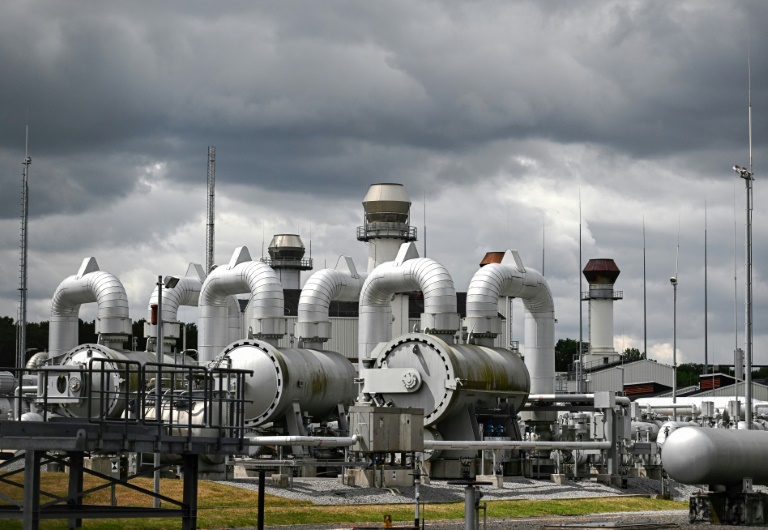
Europe is facing an energy crunch as the price of electricity generation skyrockets because of a massive surge in the price of gas.

Russia, which used to be Europe’s main gas supplier, has turned off the taps after being hit by EU sanctions over the war in Ukraine that, while not touching gas, crimped sales of its more lucrative oil exports.

“We are ready to discuss a cap on the price of gas that is used to generate electricity,” Von der Leyen told MEPs sitting in Strasbourg, France.

“This cap would also be a first step on the way to a structural reform and overall reform of our electricity market.”

She added that “we also have to look at gas prices beyond the electricity market”.

– Still being ‘fleshed out’ –

Her spokesman, Eric Mamer, later explained that the proposal was still being “fleshed out” and would be detailed in a letter to EU leaders ahead of a Friday summit in Prague.

But he did say that the idea was “related to the wholesale market of gas trading in Europe” and not directly on the price paid for imported gas.

He acknowledged however that “there are links between the price of gas traded within Europe and the price of the gas that we buy from outside”.

Brussels has been amenable to a cap on pipeline gas to hurt Russia and deprive it of cash for its Ukraine invasion.

But it has resisted a cap on liquified natural gas (LNG), fearing that sellers might simply divert to higher-paying markets, further starving Europe of gas.

Germany, traditionally the biggest beneficiary of Russian gas, had also rebuffed the idea. But it has come under pressure from other EU countries after it announced a 200-billion-euro ($199-billion) fund to shield its own consumers from soaring prices.

Von der Leyen admitted a price cap “entails drawbacks in terms of security of supply of gas”.

But she argued that “the situation has critically evolved” and now, “more member states are open for it and we are better prepared”.

She noted that Europe’s stockpile of gas for winter had reached 90 percent of capacity, exceeding a target set.

She also said any price cap would be “a temporary solution” and that “exceptional times require exceptional emergency measures”.

Musk-Twitter deal: a roller-coaster saga

Elon Musk’s pursuit of Twitter was a melodrama from the beginning — a mercurial billionaire locked in a bitter fight with his favorite social media platform.

After months of recriminations and attempts to cancel his attempt to buy, Musk on Tuesday called a truce and agreed to honor his initial offer.

Here are the main ups and downs of the saga: 

– ‘Passionate believer’ –

Musk is a long-time Twitter user with more than 100 million followers, using the platform as a megaphone for his corporate and personal ambitions.

In an April 4 regulatory filing, he revealed he had splashed out nearly $2.9 billion on a 9.2 percent stake in the company.

Twitter shares soared, Musk got a seat on the board, and CEO Parag Agrawal called him “a passionate believer and intense critic of the service”, saying it was “exactly what we need”.

Both sides appeared to be getting along famously.

– ‘Poison pill’ –

But it took less than a week for things to fall apart.

Musk decided against joining the board, and Agrawal said it was “for the best”.

Musk then launched a hostile takeover bid, an April 13 filing showed, and Twitter adopted a “poison pill” defense that would allow shareholders to buy additional stock.

– Deal back on –

Then Twitter reversed course and on April 25 revealed that it would sell after all in a deal that valued the firm at $44 billion.

Musk parted with $8.4 billion in shares in Tesla, pledged up to $21 billion from his personal fortune and got some friends to stake him a few billion.

The billionaire mogul, known for his provocative messages, set out plans to allow former US president Donald Trump back on to the platform.

– See you in court –

Then it was Musk’s turn to get cold feet. He said on May 13 the deal was “temporarily on hold” while he sought details of spam and fake accounts on the platform.

After two months of very public fighting over the issue, he called off the deal and accused Twitter of making “misleading” statements.

The company quickly launched legal action to enforce the deal.

– Rapprochement –

Both sides had been gearing up for a lengthy and hugely expensive showdown at the Delaware Chancery Court.

Musk had been buoyed by whistleblower revelations that portrayed the company as cavalier with its bot counting and lax on security.

Twitter, however, believed the agreement it had with Musk was watertight.

Then, on Tuesday, Musk revealed — on Twitter, of course — that he had agreed to close the deal at the price he had initially offered.

“I think that Musk realized he was not going to win that trial,” said law professor Carl Tobias.

– The future is ‘X’ –

In his tweet on Tuesday, Musk said the acquisition would be an “accelerant” towards creating “X”, which he said would be “the everything app”.

He offered no further detail.

He had previously told Twitter staff that he envisaged a platform with one billion users, but he was hazy on issues like potential staff layoffs and free-speech limits.

Text messages revealed during the legal process showed how he briefly considered making a blockchain-based social media app.

But before the future of Twitter can even be discussed, either side could still quibble over the details of the sale.

The potential of a courtroom showdown has receded but remains a possibility.

Africa sounds caution on net zero goal ahead of COP27

Africa needs time and money to wean itself off fossil fuels in order to achieve net zero without jeopardising its future, its representatives are warning ahead of next month’s climate talks.

At energy conferences this week, Ghana, South Africa and the African Union have insisted the continent stands by net zero — the goal of an overall balance in heat-stoking greenhouse gases.

But they warned that the continent was still heavily dependent on coal, oil and gas to power its development.

“Africa is fully convinced and committed to a net zero and supportive of the climate agenda, however. where we may differ is on the timeframe,” African Union (AU) energy commissioner Amani Abou-Zeid told AFP on the sidelines of the Green Energy Africa Summit in Cape Town.

Africa’s population of 1.3 billion is set to double by 2050, and AU nations aim to make affordable and reliable energy available to everyone by 2063, she argued. 

Funding for Africa’s green transition is likely to be a flashpoint at the COP27 climate summit, running in the Egyptian resort of Sharm el-Sheikh from November 6-18.

Under the 2015 Paris Agreement, rich nations pledged $100 billion a year to help developing countries limit climate change. 

But they have so far failed to meet the promise — and prospects have been further clouded this year by the resounding economic impacts from the Covid-19 pandemic and war in Ukraine.

– ‘Not in our interest’ –

Ghana’s deputy energy minister Mohammed Amin Adam said international green energy investment in Africa was “still appalling”, accounting only for about two percent of the global total. 

At the same time, African countries also need to secure financing for oil and gas projects, as fossil fuel revenue is needed to finance climate adaptation measures, he told AFP. 

Adam pointed to data showing that most of Africa’s oil and gas producers depended greatly on export revenue derived by these fuels.

“If we give up this, how do we even finance our ability to adapt to the climate effects? We cannot. Unless we have a substitute for our revenue,” he said. 

African countries are among the most exposed to the impacts of climate change, especially worsening droughts and floods, but responsible for only around three percent of global CO2 emissions, former UN chief Ban Ki-moon said last month.

– S.African coal –

Speaking at an Africa Oil Week event in Cape Town, South African Energy Minister Gwede Mantashe said ditching coal too quickly was not in the country’s best interests, as it would damage the economy and cost thousands of jobs. 

South Africa is the continent’s main coal producer and consumer — as well as one of the world’s top 12 carbon emitters. 

Last year, the government secured pledges of $8.5 billion loans and grants from a group of rich nations to finance the transition to greener alternatives.

But the deal is hanging in the balance, amid fraught negotiations with donor countries around how the money should be spent.

“When developed economies come to us and say ‘part of the $8.5 billion is going to be spent on accelerating the exit of coal’, I feel that is not in our interest,” Mantashe said. 

At pre-COP27 talks in Kinshasa this week, the Democratic Republic of Congo fended off demands to abandon oil and gas blocks that it has put up for auction in environmentally sensitive areas.

The DRC launched bids in July for 30 blocks in the Congo Basin, sparking fears that drilling could release carbon dioxide trapped for millennia in the peaty forest floor. 

But DRC Environment Minister Eve Bazaiba, opening the talks on Monday, asked if the government should let children die rather than harvest from its fossil resources. 

“As much as we need oxygen, we also need bread,” she said.

OPEC+ expected to slash oil output

Major oil producers led by Saudi Arabia and Russia were expected Wednesday to agree on a major cut in output to prop up prices despite Western concerns over energy-fuelled inflation.

The 13-nation OPEC cartel and its 10 Russian-led allies is reportedly considering a reduction of up to two million barrels per day at a meeting in Vienna — the biggest cut since 2020.

Such a move could turbocharge crude prices, further aggravating inflation which has reached decades-high levels in many countries and is contributing to a global economic slowdown.

US President Joe Biden personally appealed to Saudi leaders in July to boost production in order to tame prices which soared following Russia’s invasion of Ukraine earlier this year. 

But crude price have fallen in recent months on concerns over dwindling demand and fears over a possible global recession.

“With consumers only just breathing a sigh of relief after being forced to pay record prices at the pump, today’s cut is not going to go down well,” said Craig Erlam, an analyst at trading platform OANDA. 

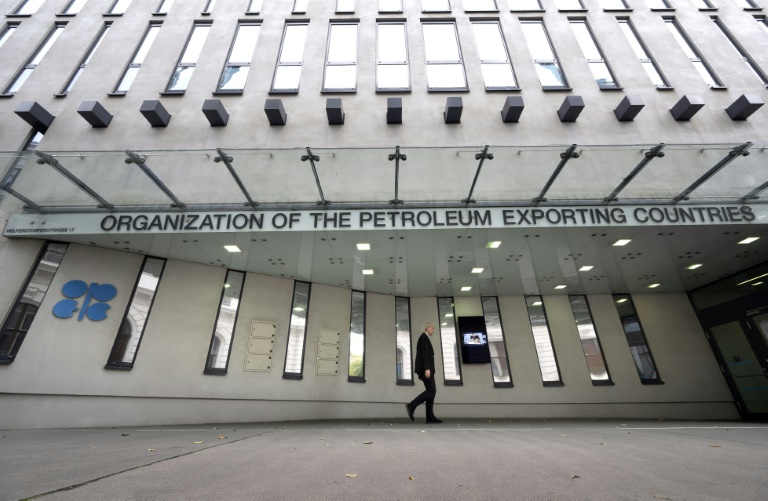
Ministers from the Saudi-led Organization of the Petroleum Exporting Countries and its partners will discuss their next move at their first in-person meeting at the group’s headquarters in Vienna since March 2020.

They were tight-lipped as they arrived for the gathering on Tuesday.

“Let’s wait… We will have to listen to the technical team,” the energy minister of the United Arab Emirates, Suhail al-Mazrouei, told reporters, adding that the group was still reviewing market data.

– Geopolitical tensions –

Collectively known as OPEC+, the alliance drastically slashed output by almost 10 million barrels per day (bpd) in April 2020 to reverse a massive drop in crude prices caused by Covid lockdowns.

OPEC+ began to raise production last year after the market improved. Output returned to pre-pandemic levels this year, but only on paper as some members have struggled to meet their quotas.

The group agreed last month on a small, symbolic cut of 100,000 bpd from October, the first in more than a year.

Bloomberg, the financial news agency, said OPEC+ officials were discussing the removal of about two million bpd out of the market from November, twice as much as earlier predictions.

Consumer countries have pushed for months for OPEC+ to open taps more widely to bring down prices — calls that the group has largely ignored.

“Knowing that Russia is willing to cut output, the move could also be perceived as another escalation of the geopolitical tensions” between Moscow and the West, said Ipek Ozkardeskaya, a Swissquote bank analyst.

The OPEC+ discussion also comes as Western nations mull imposing a price cap on Russian oil while an EU ban on most crude from Russia comes into effect in December. 

– US elections –

Biden made a controversial trip to Saudi Arabia in July in part to convince the kingdom to loosen the production taps. The trip saw Biden meet Crown Prince Mohammed bin Salman despite his promise to make Riyadh a “pariah” following the 2018 killing of journalist Jamal Khashoggi.

A major cut now would be “something that will not be well received by the White House ahead of next month’s midterm elections,” said Tama Varga, analyst at PV Energy, referring to congressional elections.

While such a cut could anger Washington, several OPEC+ nations have struggled to meet their quotas in the first place.

Prices soared close to $140 per barrel in the aftermath of Russia’s invasion of Ukraine in late February but fell as low as below $90 more recently.

After rallying earlier this week on speculation over the OPEC+ cut, the international benchmark, Brent North Sea crude, was slightly down on Wednesday, hovering above $91.

According to UBS bank, a cut of at least 500,000 bpd would be necessary to stop the price plunge.

Close Bitnami banner
Bitnami