World

'Worry and fear': Incessant Israeli drones heighten Gaza anxiety

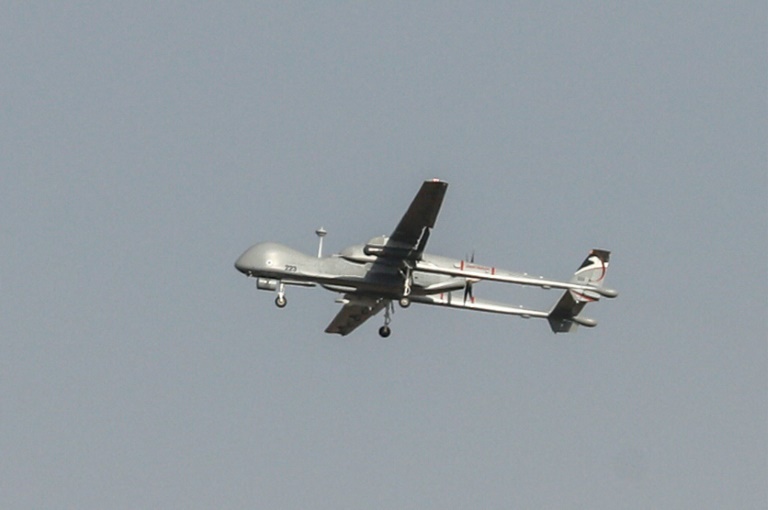
Gaza teenager Bissam says she has trouble sleeping and concentrating as the buzzing sound of Israeli military drones above the crowded Palestinian enclave drives her to distraction. 

When she is at home in the cramped family apartment, the 18-year-old said she feels that “the drone is constantly with me in my bedroom — worry and fear don’t leave our homes.

“Sometimes I have to put the pillow on my head so I don’t hear its buzz,” she said, adding that the drone noise gives her headaches. 

Unmanned surveillance aircraft have become an integral part of Israel’s 15-year-old blockade of the impoverished enclave, and 2.3 million Palestinians endure their incessant hum.

Bissam, whose family requested their surname be withheld for security reasons, said that together with the street noise, the drones create an unbearable cacophony.

“At night I try to review the lessons for my exams, but I can’t read because of this annoying racket,” she said from the cramped Gaza City apartment she shares with her parents and five siblings. 

Each month, Israel uses drones above Gaza for 4,000 flying hours — the equivalent of deploying five of the unmanned aircraft permanently in the sky — the military told AFP.

The drones “collect intelligence data 24 hours a day”, said Omri Dror, a commander from Israel’s Palmachim airbase where the aircraft take off.

– ‘I’m scared like my children’ –

During an 11-day war in May 2021 between Israel and Gaza militants, the Israeli army deployed 25 drones for 6,000 flight hours to constantly monitor the territory, according to army data.

It intensified that presence during a three-day conflict in August this year, using 30 drones for a total of more than 2,000 flight hours.

Bissam’s mother Rim said she struggles to calm her children when the drones fly overhead, fearing an Israeli air strike could follow even if there is no active conflict. 

“I’m basically scared like them. How can I reassure my children?” the 42-year-old said.

The din above the family home is particularly acute due to its proximity to a base of the Al-Qassam Brigades — the armed wing of Gaza rulers Hamas — but drones are also heard above busy shopping streets.

“The kids sleep intermittently. We wake up, we sleep, then we wake up” again, Rim said.

– ‘Always the drone is there’ –

In Gaza’s southern city of Khan Yunis, psychiatrist Iman Hijjo treats Palestinians whose conflict trauma is triggered by the sound of Israeli drones.

Israel and Hamas have fought four wars over the past 15 years.

“When an insect moves around you, you can hit it, but not the drone,” Hijjo said, adding that the situation leads to a “sense of powerlessness”.

“The drones keep Gaza’s skies closed, without a horizon or hope,” she said.

Children suffer “fear and anxiety” as a direct result of the drones, Hijjo said, lamenting a lack of scientific research to determine longer-term impacts.

“Children need to feel safe in order to develop,” fellow psychiatrist Sami Oweida said. “But with the presence of drones in the sky, these feelings cannot flourish.”

The unmanned aircraft are so omnipresent that artists have even referenced them in their works.

The “sound of drones flying above my family and friends stops the games, the chatting and the laughter”, Palestinian poet Mosab Abu Toha wrote in his recent English-language collection “Things You May Find Hidden in My Ear”.

He told AFP that “the buzzing of the drones and the intermittent raids of the F16 (warplanes) have become an integral part of our lives”.

“I write about the sky, the sea, the clouds, the setting sun, my children, my neighbours,” he added. “But always, the drone is there. It fails to leave us.”
Brazil's youngest voters betting on 76-year-old candidate

At a samba bar in Rio de Janeiro, three university students are engaged in a vigorous political debate as they count down the days to Brazil’s presidential elections.

Their preference? “We are seated in an ‘L'” for Lula, Letizia Corvello, a 22-year-old law student, told AFP.

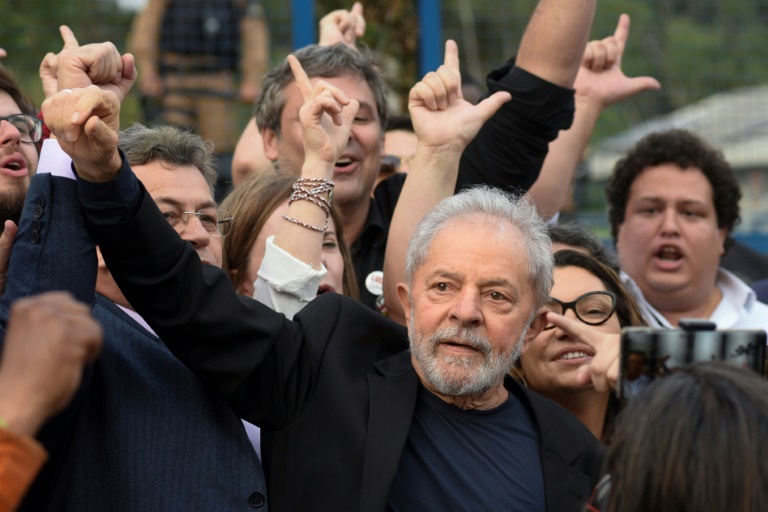
Brazil’s youngest voters are staking their future on the oldest of the two frontrunners: 76-year-old leftist Luiz Inacio Lula da Silva, who is hoping for a comeback 12 years after leaving office at the end of two successive presidential terms.

Lula has a strong lead in the polls over far-right incumbent Jair Bolsonaro, 67. The men face off in a first voting round on Sunday.

“The last thing I want is for Jair Bolsonaro to be re-elected,” said Corvello.

“We need to fight for our future and for that of the university” where she studies.

Young people have led the anti-Bolsonaro movement in Brazil with protests against his cuts to education spending, his management of the coronavirus epidemic, and police violence.

“Some of the environmental issues, the destruction of the Amazon and just the… egregious policies of Bolsonaro are of concern to a lot of especially younger people,” analyst Michael Shifter of the Inter-American Dialogue think tank told AFP.

And they seem to be putting their money where their mouths are.

More than 2.1 million people aged 16 and 17 — about a fifth in this age group — have registered to vote ahead of Sunday’s first election round — a 51-percent jump from 2018.

Voting is optional for Brazilians aged 16 and 17, and compulsory from 18 up.

– ‘Existential zombies’ – 

The 2022 youth registration numbers “are unprecedented in the history of Brazil,” political scientist Marco Antonio Teixeira of the Getulio Vargas Foundation told AFP.

Under Bolsonaro, young people seem to have learned the importance of having a political voice, he said.

Youths “suffered a lot with the pandemic, (they were) the most affected by unemployment,” said Teixeira.

Bolsonaro and his government also managed to repeatedly offend the sensibilities of a younger generation that values respect for cultural and gender diversity.

A case in point: in an address in 2020, Bolsonaro’s then education minister Milton Ribeiro referred to young people as “existential zombies” who “no longer believe in anything, from God to politics.”

“I never imagined there were still people with such a retrograde beliefs,” said Corvello in response.

“Bolsonaro made it possible for people to go out on the street to defend violence and discrimination.”

– Lula’s legacy –

Polls show 52 percent of voters aged 16 to 24 opting for Lula, compared to 32 percent for Bolsonaro.

Some were not yet born during Lula’s last term, others were mere infants, but they all know about Lula’s educational legacy: increasing scholarships and introducing quotas to help people from racial and socio-economic minorities gain access to good schools.

“Everyone knows what Lula did,” said Adrianny Brasil, 22, a resident of the Mare de Rio slum complex where school attendance depends on there being no shootings and university is an unattainable dream for most. 

“I am the only ‘favelada’ (slum-dweller) in my (university) physics course, all the other students are from the elitist areas of Rio, like Ipanema,” said Brasil, who hopes there will be more like her under a new Lula government.

Not everyone is in agreement.

Mateus de Medeiros, an 18-year-old mechanical engineering student, regrets that the choice is limited to “the extreme right or the extreme left”. 

“I wish there was another candidate and we didn’t have to vote for one just to exclude the other,” he told AFP.

Bolsonaro also has ardent supporters among the youth.

Gabriel Lira, a 22-year-old Afro Brazilian who works as a store employee, believes many university students are victims of brainwashing by “leftist professors.”

“If they were better informed, they would see that (Lula) resembles Maduro and the left-wing dictators,” he told AFP at Campinas on the outskirts of Sao Paulo, referring to Venezuelan President Nicolas Maduro.

And he denied Bolsonaro was racist, despite having once said about a community of Black slave descendents: “They don’t do anything. They’re no use even to procreate.”

“It was an unfortunate statement. But if he really was (racist) he’d be capturing Black people and putting them back into slavery,” said Lira.

Journalists, Bolsonaro's 'enemy,' eye post-election Brazil

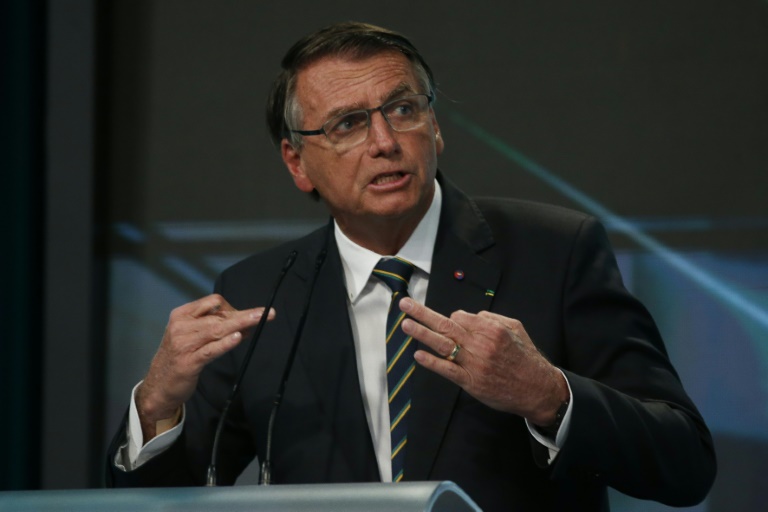
After four years being called “liars,” “scum” and worse by President Jair Bolsonaro, journalists in Brazil are ready for a return to civility — but also wary of what awaits the press under his election rival Luiz Inacio Lula da Silva.

As Brazilians prepare to vote for their next leader Sunday — a polarizing race in which the far-right incumbent trails veteran leftist ex-president Lula in the polls — the press is hopeful but nervous after four years of insults and attacks against the “fake news” media by Bolsonaro.

Lula, the tarnished left-wing icon who led Brazil from 2003 to 2010, has also been known to lash out at reporters — notably over coverage of his various corruption scandals — and recently triggered alarm bells by proposing to regulate the media.

But the 76-year-old veteran is a more classic style of politician than Bolsonaro, 67, whose four years in office “have been very difficult,” says a journalist who covers the administration and asked not to be named.

“When (Bolsonaro) doesn’t like your question or doesn’t know how to answer… his go-to strategy is to attack the messenger.”

The government’s relationship with the press has never been as hostile as under Bolsonaro, who sees the traditional news media as “unpatriotic” and an “enemy that must be defeated,” says Arthur Ituassu, a professor of political communication at Pontifical Catholic University in Rio de Janeiro.

Since 2018, the year Bolsonaro won the presidency, Brazil has fallen five spots in Reporters Without Borders’ annual press freedom ranking, to 110th out of 180 countries.

Bolsonaro “regularly attacks journalists and the media,” the watchdog group says.

Examples abound.

“I so want to pound your mouth with punches,” the president told a journalist from leading newspaper O Globo in August 2020 when asked about allegations his wife received money from a political operative targeted in a corruption investigation.

In June, a court ordered Bolsonaro to pay 35,000 reais ($6,500) in damages to another journalist, Patricia Campos Mello, for insinuating she offered a source sexual favors in exchange for dirt on the president.

– Morning news conference axed –

Journalists have little access to Bolsonaro.

Early in his term, the president, who routinely stops to greet supporters outside his official residence in the morning, would sometimes also take questions from journalists there.

But the impromptu news conferences soon turned hostile, with Bolsonaro attacking and insulting the press, and his supporters piling on.

Media outlets ultimately decided to stop covering the morning meet-and-greet, fearing for journalists’ safety.

“It was exhausting,” says another political journalist, who also spoke on condition of anonymity.

“You would go there expecting them to kick you around,” he adds.

“But there was no other space to ask the president a question.”

Bolsonaro rarely gives news conferences or traditional interviews, instead doing a weekly live video on Facebook and occasional marathon interviews with far-right media outlets and influencers.

Journalists perceived as critical of the president are meanwhile targeted with vitriolic hate campaigns from his supporters on social media, where Bolsonaro’s camp “operates far more effectively than traditional parties,” says Amaro Grassi, a public policy expert at the Getulio Vargas Foundation.

– Lula’s ‘revenge’? –

Lula has also clashed periodically with the news media, but as president gave them more regular access, say reporters in Brasilia, who are hoping for a return to “normality” if he wins the election.

But one journalist interviewed by AFP said he feared Lula could seek “revenge” against the press for its reporting on his corruption scandals — which saw him controversially jailed for 18 months, until his release in 2019.

The ex-president told a campaign rally Saturday he had been “shredded by the media for five years,” until the Supreme Court last year annulled his convictions in a massive graft scandal centered on state-run oil company Petrobras.

Lula added he planned to overhaul Brazil’s media regulations and combat the “rot” on social networks.

Newspaper Estado de Sao Paulo published a scathing editorial in response, accusing him of censorship.

Lula denies any plan to curb press freedom.

“I don’t want to control communication like Cuba or China. I want a system like Britain’s,” he said.

“Is that a democracy? Yes.”

US would know if Russia prepares nuclear strike: experts

The United States would almost certainly discover ahead of time if Russia was preparing a nuclear strike on Ukraine, and Moscow might very well want it known, nuclear weapons experts say.

Russian President Vladimir Putin has raised the possibility of using nuclear weapons if Russia’s “territorial integrity” or existence is threatened.

Moscow’s declaration Friday that it was annexing four partly-occupied regions of Ukraine potentially meant Russia could consider responding to attacks on the claimed territory with a nuclear strike.

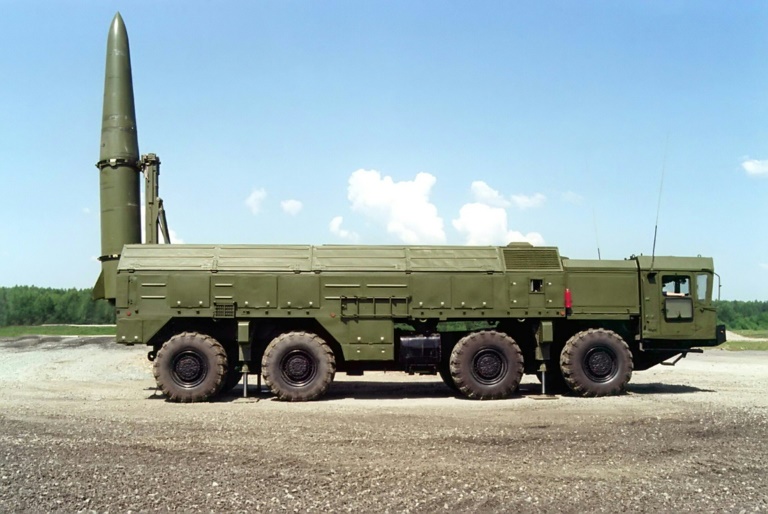
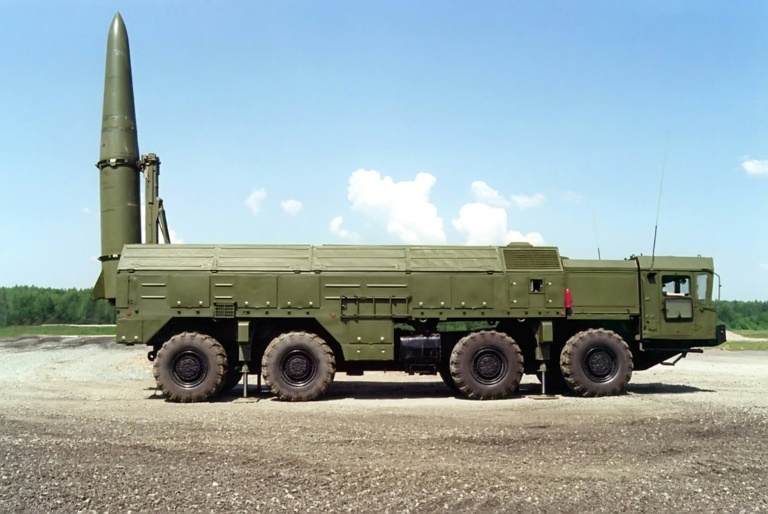
Should such an escalation materialize, it would probably be in the form of a smaller tactical nuclear weapon, likely launched on a short-range Iskander ballistic missile, according to experts.

While military analysts downplay Moscow’s threats for now and US officials say they have seen no activity indicating such plans, Western defense and intelligence are closely watching to see if real atomic threats emerge.

– Where are the bombs? –

Preparations for an attack would be evident, Pavel Podvig, a senior researcher at the UN Institute for Disarmament Research in Geneva, told AFP.

A 2017 report by the institute maps out 47 nuclear storage sites across Russia — 12 national-level facilities and 35 base facilities.

These are monitored constantly by intelligence and military surveillance satellites of the United States and other countries.

They can even be watched closely by commercial satellites, as shown by the widespread, regularly updated imagery of activities at North Korean nuclear facilities.

Podvig says Russia has deployed its strategic or long-range nuclear warheads in the field, on missiles, bombers and submarines.

But its non-strategic or tactical nuclear weapons, which number as many as 2,000, are stored and not installed on delivery vehicles like the Iskander, according to Podvig.

“There are no Iskanders roaming around with nuclear-armed warheads. These weapons are in storage,” he said.

– How would we know? –

“I’m confident the United States would see any Russian preparations for using nuclear weapons,” said Mark Cancian, a former official in the US defense and energy departments who worked on nuclear weapons issues.

“The weapons need to come out of storage, the units involved need to be alerted, and the Russians might also alert their strategic nuclear forces,” Cancian, now at the Center for Strategic and International Studies in Washington, told AFP.

He said evidence would also come from likely visible preparations for Russia’s ground forces, issuing them protective equipment and instructions on how to act in a nuclear environment.

“All of this would be visible,” he noted.

Podvig said Moscow, like Washington, has for decades embraced the need for disciplined management of its nuclear warheads, and that system is fairly strong and visible.

“We can be quite certain that there are no hidden facilities,” he said.

“Nuclear weapons need a certain structure, people who are trained, and the maintenance. You cannot do that in a random place.”

“Technically you could probably smuggle a couple of bombs out of a storage sight undetected,” he said.

But doing so has risks, including provoking a preemptive attack from the West.

“The Russians will never be certain that it is undetected. That would be a gamble,” said Podvig.

Moreover, he added, it is more likely that Russia would want the West to see its preparations as a warning.

“It would be the kind of escalatory step (and) Russia would want that to be visible,” Podvig said.

– Warning the world –

The United States warned for weeks before the February 24 invasion that Russia intended to attack Ukraine, seeking to prepare Kyiv and allies — and possibly deter Moscow from acting.

Would Washington warn the world openly if it detected Russia planning a nuclear assault? Doing so could spark unprecedented panic, not only in Ukraine but other areas that could be affected by radioactive fallout.

Such alarm could go global if people expected an escalation to transcontinental nuclear war.

The United States would almost certainly warn allies and other powers, including crucially China and India, hoping they would pressure Moscow to pull back or face international isolation.

But Washington would likely see issuing public warnings as useful in adding to pressure on Russia, according to Podvig.

“The strategy has to be based on isolation. The unacceptability of this has to be reinforced, that it is criminal,” he said. 

“That message might have deterrence value.”

US would know if Russia prepares nuclear strike: experts

The United States would almost certainly discover ahead of time if Russia was preparing a nuclear strike on Ukraine, and Moscow might very well want it known, nuclear weapons experts say.

Russian President Vladimir Putin has raised the possibility of using nuclear weapons if Russia’s “territorial integrity” or existence is threatened.

Moscow’s declaration Friday that it was annexing four partly-occupied regions of Ukraine potentially meant Russia could consider responding to attacks on the claimed territory with a nuclear strike.

Should such an escalation materialize, it would probably be in the form of a smaller tactical nuclear weapon, likely launched on a short-range Iskander ballistic missile, according to experts.

While military analysts downplay Moscow’s threats for now and US officials say they have seen no activity indicating such plans, Western defense and intelligence are closely watching to see if real atomic threats emerge.

– Where are the bombs? –

Preparations for an attack would be evident, Pavel Podvig, a senior researcher at the UN Institute for Disarmament Research in Geneva, told AFP.

A 2017 report by the institute maps out 47 nuclear storage sites across Russia — 12 national-level facilities and 35 base facilities.

These are monitored constantly by intelligence and military surveillance satellites of the United States and other countries.

They can even be watched closely by commercial satellites, as shown by the widespread, regularly updated imagery of activities at North Korean nuclear facilities.

Podvig says Russia has deployed its strategic or long-range nuclear warheads in the field, on missiles, bombers and submarines.

But its non-strategic or tactical nuclear weapons, which number as many as 2,000, are stored and not installed on delivery vehicles like the Iskander, according to Podvig.

“There are no Iskanders roaming around with nuclear-armed warheads. These weapons are in storage,” he said.

– How would we know? –

“I’m confident the United States would see any Russian preparations for using nuclear weapons,” said Mark Cancian, a former official in the US defense and energy departments who worked on nuclear weapons issues.

“The weapons need to come out of storage, the units involved need to be alerted, and the Russians might also alert their strategic nuclear forces,” Cancian, now at the Center for Strategic and International Studies in Washington, told AFP.

He said evidence would also come from likely visible preparations for Russia’s ground forces, issuing them protective equipment and instructions on how to act in a nuclear environment.

“All of this would be visible,” he noted.

Podvig said Moscow, like Washington, has for decades embraced the need for disciplined management of its nuclear warheads, and that system is fairly strong and visible.

“We can be quite certain that there are no hidden facilities,” he said.

“Nuclear weapons need a certain structure, people who are trained, and the maintenance. You cannot do that in a random place.”

“Technically you could probably smuggle a couple of bombs out of a storage sight undetected,” he said.

But doing so has risks, including provoking a preemptive attack from the West.

“The Russians will never be certain that it is undetected. That would be a gamble,” said Podvig.

Moreover, he added, it is more likely that Russia would want the West to see its preparations as a warning.

“It would be the kind of escalatory step (and) Russia would want that to be visible,” Podvig said.

– Warning the world –

The United States warned for weeks before the February 24 invasion that Russia intended to attack Ukraine, seeking to prepare Kyiv and allies — and possibly deter Moscow from acting.

Would Washington warn the world openly if it detected Russia planning a nuclear assault? Doing so could spark unprecedented panic, not only in Ukraine but other areas that could be affected by radioactive fallout.

Such alarm could go global if people expected an escalation to transcontinental nuclear war.

The United States would almost certainly warn allies and other powers, including crucially China and India, hoping they would pressure Moscow to pull back or face international isolation.

But Washington would likely see issuing public warnings as useful in adding to pressure on Russia, according to Podvig.

“The strategy has to be based on isolation. The unacceptability of this has to be reinforced, that it is criminal,” he said. 

“That message might have deterrence value.”

After devastating Florida, Hurricane Ian rakes South Carolina

Deadly Hurricane Ian, one of the most powerful storms ever to hit the United States, roared into South Carolina on Friday, delivering a powerful second punch after walloping Florida.

The National Hurricane Center (NHC) said Ian made landfall near Georgetown, South Carolina, as a Category 1 hurricane with maximum sustained winds of 85 miles (140 kilometers) per hour.

It was later downgraded to a post-tropical cyclone but the NHC said Friday evening that Ian is bringing heavy rain, flash flooding and high winds to both South Carolina and North Carolina. Some areas can expect up to eight inches of rain.

As for storm-ravaged Florida, President Joe Biden said: “We’re just beginning to see the scale of the destruction.

“It’s likely to rank among the worst in the nation’s history,” he said of Ian, which barreled into Florida’s southwest coast on Wednesday as a Category 4 storm, a tick shy of the most powerful on the Saffir-Simpson wind scale.

The death toll from the storm stands at 23, the Florida Department of Law Enforcement said Friday evening.

News outlets quoting county officials have given even higher tolls, with CNN saying 45 fatalities have been blamed on Ian.

Seventeen migrants also remain missing from a boat that sank during the hurricane on Wednesday, according to the Coast Guard. One person was found dead and nine others rescued, including four Cubans who swam to shore in the Florida Keys.

With damage estimates running into the tens of billions of dollars, Biden said it’s “going to take months, years to rebuild.”

“It’s not just a crisis for Florida,” he said. “This is an American crisis.”

CoreLogic, a firm that specializes in property analysis, said wind-related losses for residential and commercial properties in Florida could cost insurers up to $32 billion while flooding losses could go as high as $15 billion.

“This is the costliest Florida storm since Hurricane Andrew made landfall in 1992,” CoreLogic’s Tom Larsen said.

– ‘We made it through’ – 

Rescue teams were assisting survivors Friday in devastated Florida communities and the US Coast Guard said it had made 117 rescues using boats and helicopters of people trapped in flooded homes.

Governor Ron DeSantis said hundreds of other rescue personnel were going door-to-door “up and down the coastline.”

DeSantis said the coastal town of Fort Myers where the hurricane made landfall, was “ground zero” but “this was such a big storm that there are effects far inland,” including serious flooding in the city of Orlando.

Many Floridians evacuated ahead of the storm, but thousands chose to shelter in place and ride it out.

More than 1.4 million Florida residents were still without electricity on Friday and two hard-hit barrier islands near Fort Myers — Pine Island and Sanibel Island — were cut off after the storm damaged causeways to the mainland.

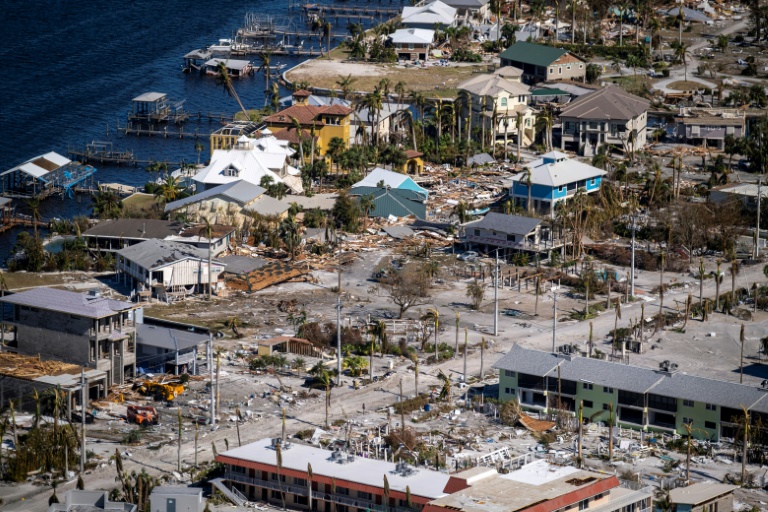
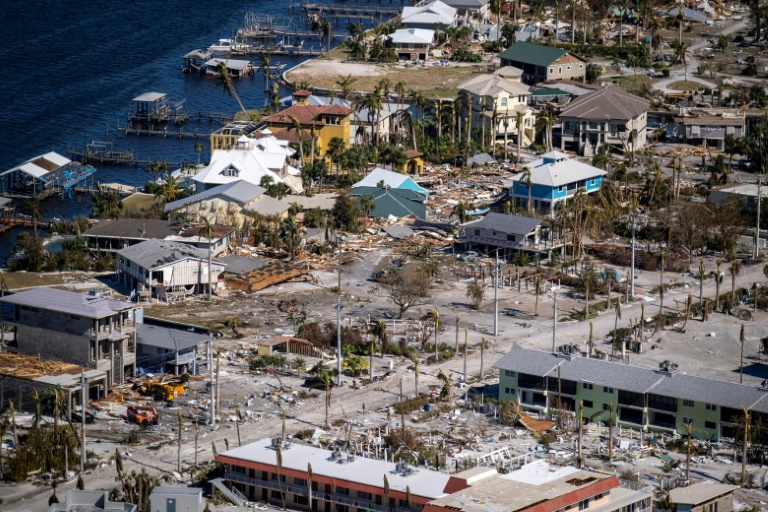
Aerial photo and video show breath-taking destruction in Sanibel and elsewhere.

The causeway is seen broken and washed out, with one section covered by calm waters lit up with reflections of the sun.

In Fort Myers Beach, a recreational boat called Crackerjack sits atop a pile of debris like an abandoned toy. A trailer park was blasted away to almost nothing recognizable.

Meanwhile in North and South Carolina, nearly half a million customers were without power, according to tracking website poweroutage.us, as a weakened Ian nevertheless lashed the states.

In Fort Myers, a handful of restaurants and bars reopened, giving an illusion of normalcy amid downed trees and shattered storefronts.

Dozens of people sat out on terraces under a bright sun, drinking beer and eating.

Dylan Gamber, 23, said he had been waiting for two hours at a pizzeria to get food to bring home.

“It was kind of bad, but we made it through,” Gamber said. “The roof of our house came off, a big tree collapsed across our vehicles, our yard was flooded, but other than that we were pretty good.

“As a community, we seem to be coming together and helping each other out.”

– ‘All submerged’ –

In nearby Bonita Springs, Jason Crosser was inspecting the damage to his store.

“The water went over the whole building,” said Crosser, 37. “It was all submerged. It’s all saltwater and water damage.”

After making landfall in South Carolina, Ian is expected to weaken fast and dissipate by Saturday night.

Before pummelling Florida, Ian plunged all of Cuba into darkness after downing the island’s power network.

Electricity was gradually returning, but many homes remain without power.

Human-induced climate change is resulting in more severe weather events across the globe, scientists say — including with Ian.

According to a rapid and preliminary analysis, human-caused climate change increased the extreme rain that Ian unleashed by over 10 percent, US scientists said.

After devastating Florida, Hurricane Ian rakes South Carolina

Deadly Hurricane Ian, one of the most powerful storms ever to hit the United States, roared into South Carolina on Friday, delivering a powerful second punch after walloping Florida.

The National Hurricane Center (NHC) said Ian made landfall near Georgetown, South Carolina, as a Category 1 hurricane with maximum sustained winds of 85 miles (140 kilometers) per hour.

It was later downgraded to a post-tropical cyclone but the NHC said Friday evening that Ian is bringing heavy rain, flash flooding and high winds to both South Carolina and North Carolina. Some areas can expect up to eight inches of rain.

As for storm-ravaged Florida, President Joe Biden said: “We’re just beginning to see the scale of the destruction.

“It’s likely to rank among the worst in the nation’s history,” he said of Ian, which barreled into Florida’s southwest coast on Wednesday as a Category 4 storm, a tick shy of the most powerful on the Saffir-Simpson wind scale.

The death toll from the storm stands at 23, the Florida Department of Law Enforcement said Friday evening.

News outlets quoting county officials have given even higher tolls, with CNN saying 45 fatalities have been blamed on Ian.

Seventeen migrants also remain missing from a boat that sank during the hurricane on Wednesday, according to the Coast Guard. One person was found dead and nine others rescued, including four Cubans who swam to shore in the Florida Keys.

With damage estimates running into the tens of billions of dollars, Biden said it’s “going to take months, years to rebuild.”

“It’s not just a crisis for Florida,” he said. “This is an American crisis.”

CoreLogic, a firm that specializes in property analysis, said wind-related losses for residential and commercial properties in Florida could cost insurers up to $32 billion while flooding losses could go as high as $15 billion.

“This is the costliest Florida storm since Hurricane Andrew made landfall in 1992,” CoreLogic’s Tom Larsen said.

– ‘We made it through’ – 

Rescue teams were assisting survivors Friday in devastated Florida communities and the US Coast Guard said it had made 117 rescues using boats and helicopters of people trapped in flooded homes.

Governor Ron DeSantis said hundreds of other rescue personnel were going door-to-door “up and down the coastline.”

DeSantis said the coastal town of Fort Myers where the hurricane made landfall, was “ground zero” but “this was such a big storm that there are effects far inland,” including serious flooding in the city of Orlando.

Many Floridians evacuated ahead of the storm, but thousands chose to shelter in place and ride it out.

More than 1.4 million Florida residents were still without electricity on Friday and two hard-hit barrier islands near Fort Myers — Pine Island and Sanibel Island — were cut off after the storm damaged causeways to the mainland.

Aerial photo and video show breath-taking destruction in Sanibel and elsewhere.

The causeway is seen broken and washed out, with one section covered by calm waters lit up with reflections of the sun.

In Fort Myers Beach, a recreational boat called Crackerjack sits atop a pile of debris like an abandoned toy. A trailer park was blasted away to almost nothing recognizable.

Meanwhile in North and South Carolina, nearly half a million customers were without power, according to tracking website poweroutage.us, as a weakened Ian nevertheless lashed the states.

In Fort Myers, a handful of restaurants and bars reopened, giving an illusion of normalcy amid downed trees and shattered storefronts.

Dozens of people sat out on terraces under a bright sun, drinking beer and eating.

Dylan Gamber, 23, said he had been waiting for two hours at a pizzeria to get food to bring home.

“It was kind of bad, but we made it through,” Gamber said. “The roof of our house came off, a big tree collapsed across our vehicles, our yard was flooded, but other than that we were pretty good.

“As a community, we seem to be coming together and helping each other out.”

– ‘All submerged’ –

In nearby Bonita Springs, Jason Crosser was inspecting the damage to his store.

“The water went over the whole building,” said Crosser, 37. “It was all submerged. It’s all saltwater and water damage.”

After making landfall in South Carolina, Ian is expected to weaken fast and dissipate by Saturday night.

Before pummelling Florida, Ian plunged all of Cuba into darkness after downing the island’s power network.

Electricity was gradually returning, but many homes remain without power.

Human-induced climate change is resulting in more severe weather events across the globe, scientists say — including with Ian.

According to a rapid and preliminary analysis, human-caused climate change increased the extreme rain that Ian unleashed by over 10 percent, US scientists said.

Coup in Burkina Faso as military officers dismiss junta leader

Military officers seized control of Burkina Faso on Friday, claiming to be restoring peace to the jihadist-wracked country as they dismissed a junta leader who had himself come to power in a coup at the start of this year.

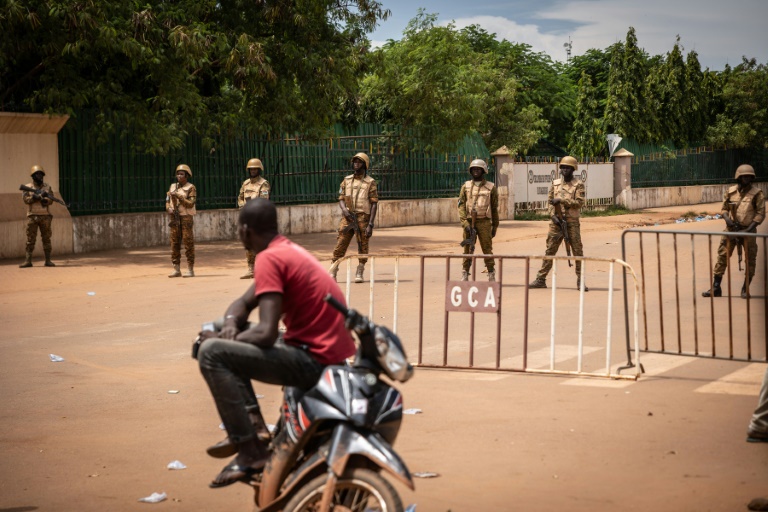
In the capital Ouagadougou, witnesses heard pre-dawn gunfire around the presidential palace and junta headquarters.

Then just before 8 pm (2000 GMT), more than a dozen soldiers in fatigues appeared on the state television and radio broadcaster to announce the removal of Lieutenant-Colonel Paul-Henri Sandaogo Damiba for failing to stem a jihadist insurgency.

In his place, they proclaimed 34-year-old Captain Ibrahim Traore in charge.

“We have decided to take our responsibilities, driven by a single ideal: the restoration of security and integrity of our territory,” they said.

“Our common ideal was betrayed by our leader in whom we had placed all our trust. Far from liberating the occupied territories, the once peaceful areas have come under terrorist control.”

The rebelling military also announced the closure of air and land borders from midnight, as well as the suspension of the constitution and the dissolution of the government and transitional legislative assembly.

A curfew from 9:00 pm to 5:00 am was also put in place.

New strongman Traore was previously head of anti-jihadist special forces unit “Cobra” in the northern region of Kaya.

Ousted leader Damiba’s fate remained unknown. 

The coup plotters promised to convene “the nation’s active forces” to designate a “new president of Faso, whether civilian or military”.

– Calls for ‘restraint’ –

The United States said it was “deeply concerned” by the situation in Ouagadougou and encouraged its citizens to limit movements.

“We call for a return to calm and restraint by all actors,” a State Department spokesperson said.

Earlier on Friday, Damiba’s Patriotic Movement for Preservation and Restoration (MPSR) had said there was an “internal crisis in the army” prompting troop deployments in key areas of the capital.

AFP journalists saw troops block several main roads and intersections in Ouagadougou, with soldiers also stationed outside the state television centre.

Government spokesman Lionel Bilgo had said the “crisis” concerned an army pay dispute, and that Damiba was taking part in negotiations.

During the morning, shots rang out in the Ouaga 2000 neighbourhood, which houses both the presidential and military junta headquarters.

“I heard heavy detonations around 4:30 am and now the roads around my home have been sealed off by military vehicles,” a resident close to the presidential palace said.

State television was cut for several hours prior to the military announcement, broadcasting just a blank screen with the message “no video signal”.

In the afternoon, an AFP journalist saw a group of several hundred people gather in a city square making a range of demands, including the departure of Damiba and the end of the French military presence.

By the evening the soldiers were still in place at key points of the city, and streets were mostly deserted.

In a statement, the Economic Community of West African States (ECOWAS) “condemned in the strongest possible terms the seizure of power by force that has just taken place.”

ECOWAS called the latest coup “inappropriate” at a time when it said progress was being made for a return to constitutional order by July 1, 2024.

The French foreign ministry told its citizens in the city, believed to number between 4,000 and 5,000, to stay home.

In Brussels, the European Union expressed “concern” at the events unfolding in the Burkina capital.

– Rein in jihadists –

When he declared himself in charge on January 24, ousting elected leader Roch Marc Christian Kabore, Damiba had promised to make security his priority and end the bloody jihadist attacks.

But these have increased in recent months, especially in the north and east where whole towns have been blockaded by insurgents who have blown up bridged and attacked supply convoys.

As in bordering countries, insurgents affiliated with Al-Qaeda and the Islamic State group have stoked unrest.

Thousands have died and about two million have been displaced by the fighting since 2015 when the insurgency spread into Burkina Faso, which has since become the epicentre of the violence across the Sahel.

More than 40 percent of Burkina Faso, a former French colony, is outside government control.

Attacks have increased since mid-March, despite the junta’s vow to make security its top priority.

In September, a particularly bloody month, Damiba sacked his defence minister and assumed the role himself.

– Bloody September –

Earlier this week, suspected jihadists attacked a convoy carrying supplies to the town of Djibo in the north of the country. The government said 11 soldiers died and around 50 civilians were missing.

On September 5, an improvised explosive device struck a supply convoy in the north killing 35 civilians and wounding 37.

The following day, at least nine people — seven civilians and two soldiers — were killed in two separate attacks by suspected jihadists.

Much of the impoverished Sahel region is battling the insurgency.

Starting in northern Mali in 2012, the insurgents attacked neighbouring Burkina Faso and Niger in 2015.

The violence has in recent years begun to spill over into coastal states Ivory Coast, Togo and Benin.

Strong US dollar an unstoppable force endangering other currencies

The dazzling rise of the US dollar, which has hit one record after another, is raising fears of a currency crash of a severity not seen since the 1997 Asian financial crisis reverberated around the world. 

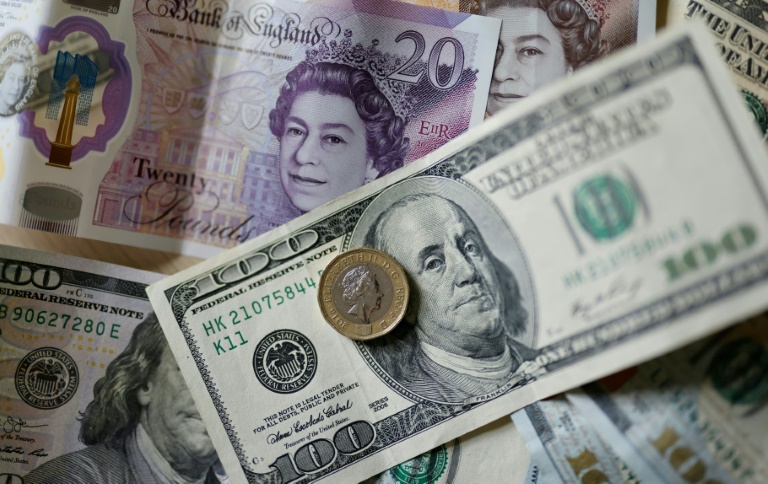
The Federal Reserve’s rapid, steep interest rate increases and the relative health of the US economy has caused investors to flood into the dollar, driving the greenback up and sending the British pound, Indian rupee, Egyptian pound and South Korean won and others to uncharted depths.

“The moves are definitely getting extreme,” said Brad Bechtel of Jefferies, warning that the exchange rates could fall further creating a “dire situation.”

Most other major central banks also are forcefully tightening monetary policy to bring down inflation, but so far the moves have not helped stabilized the currency market, nor has Japan’s direct intervention to support the yen last week. 

Many fear that the same will be the case with the Bank of England’s plan announced Wednesday to conduct emergency purchases of government bonds to support the pound. 

“We have our doubts that the BoE’s plan will be the silver bullet to kill all of the angst that has been pressuring the pound … considering its plan doesn’t have permanency,” said Patrick O’Hare of Briefing.com.

Others, especially emerging market countries, are even worse off. The Pakistani rupee has lost 29 percent of its value against the US dollar in the past year, and the Egyptian pound has weakened by 20 percent.

Those countries, and others like Sri Lanka and Bangladesh which “benefitted from cheap and plentiful liquidity,” when interest rates were low during the pandemic, “are all suffering from tighter global liquidity,” said Win Thin, head of currency strategy at BBH Investor Services. 

“Those countries with the weakest fundamentals are likely to be tested first but others may join them,” he warned.

Those countries rely on imported oil and grain which have seen prices soar, widening their trade deficits and fueling inflation, massive blows to their currencies. 

The appreciation of the US currency has exacerbated the problem, since many commodities are denominated in dollars. 

Already in a fragile position, Pakistan was hit with historic flooding in August, which prompted the government to discuss a restructuring of its debt.

“There are severe pressures on the financial system now. And it’s only a matter of time until there’s a larger crisis somewhere in the world,” warns Adam Button of ForexLive. 

– Bad memories –

US Treasury Secretary Janet Yellen earlier this week said she has not yet seen signs of “disorderly” financial market developments amid the interest rate hikes.

For countries like Taiwan, Thailand or South Korea, which also dependent on energy imports, China’s zero-Covid policy has caused their exports to this key trading partner to plummet. 

Larger economies like China and Japan have contributed in recent weeks to the turbulence on the foreign exchange market. The Japanese yen plunged its lowest level in 24 years, while the Chinese yuan hit its weakest in 14 years.

Fear of destabilization brings back memories of the 1997 Asian financial crisis, which was triggered by the devaluation of the Thai baht. 

Malaysia, the Philippines and Indonesia followed, which panicked foreign investors and led to massive outflows of capital, pushing several countries into a severe recession and South Korea to the brink of default. 

At the time, the collapse of the baht was in part linked to its fixed parity with the dollar, which forced the Thai government to support its currency, depleting its foreign exchange reserves, which was unsustainable in the face of market forces.

Argentina eventually was forced to abandon its peg to the dollar and defaulted in late 2001 — the largest sovereign default in history.

Erik Nelson of Wells Fargo said that is a key difference between 2022 and 1997. 

“Now there’s not a lot of fixed exchange rates,” he said. “I’m frankly more worried about developed markets right now.”

Lebanon, one of the few to still peg its currency to the greenback, on Thursday announced a drastic devaluation, taking the country’s pound to 15,000 to the dollar from the previous fixed value of 1,507. 

In the United States, by contrast, where inflation has soared to a 40-year high “the Fed sees strong dollar as a blessing,” said Christopher Vecchio of DailyFX, noting that it helps “insulate the economy from more significant price pressures.”‘

A strong currency means the country pays less for its imported products. 

Russia vetoes UN bid against Ukraine annexations as China abstains

Russia on Friday vetoed a Western bid at the UN Security Council to condemn its annexations of Ukrainian territory but found no support, with China and India abstaining.

Russia’s veto was a certainty but Western powers hoped to show Moscow’s isolation in its war and will now take the condemnation effort to the General Assembly, where every nation has a vote and none can kill a resolution.

The United States pushed through the draft Security Council resolution hours after Russian President Vladimir Putin announced that Moscow had taken over four areas of Ukraine which held Kremlin-organized referendums on land seized by Russia’s military.

“This is exactly what the Security Council was made to do — defend sovereignty, protect territorial integrity, promote peace and security,” the US ambassador to the United Nations, Linda Thomas-Greenfield, said at the start of the meeting.

“The United Nations was built on an idea that never again would one country be allowed to take another’s territory by force,” she said, later promising a General Assembly vote.

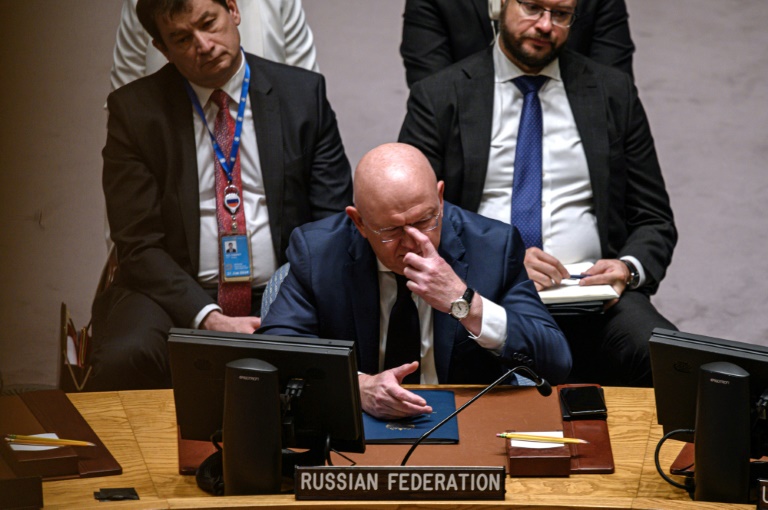
Russia’s ambassador, Vassily Nebenzia, complained that it was unprecedented to seek condemnation of one of the five veto-wielding permanent members of the Security Council.

“Do you seriously expect Russia to consider and support such a draft? And if not, then it turns out that you are intentionally pushing us to use the right of the veto in order to then wax lyrical about Russia abusing this right,” Nebenzia said.

The resolution, co-sponsored by the United States and Albania, would have condemned the “illegal” referendums held in Russian-occupied parts of Ukraine and called on all states not to recognize any changes to Ukraine’s borders. 

It also would have called on Russia to withdraw troops immediately from Ukraine, ending an invasion launched on February 24.

– China urges ‘restraint’ –

Putin shortly before the invasion visited Beijing and agreed to a closer relationship. But China has stopped short of robustly supporting Russia, with US officials saying Beijing has refused requests to supply weapons. 

“The sovereignty and territorial integrity of all countries should be safeguarded,” said China’s ambassador, Zhang Jun. 

“China calls on all parties concerned to exercise restraint, refrain from actions that actually exacerbate tensions and leave space for a solution through diplomatic negotiations.”

India, Brazil and Gabon also abstained. India has historic defense ties with Russia despite a warming relationship with the United States, which had privately leaned on New Delhi to support the resolution. 

“Escalation of rhetoric or tension is in no one’s interest,” said India’s envoy, Ruchira Kamboj. 

Among the notable affirmative votes were Mexico, which has put forward a peace proposal, and the United Arab Emirates, which had hesitated on US-led sanctions on Russia.

Britain’s envoy Barbara Woodward said the Security Council vote showed that Putin’s annexation is a “fantasy” that holds “no legal effect.” 

“Not a single other member of this Council recognizes Russia’s attempted illegal annexation of Ukrainian territory. Russia’s veto doesn’t change that fact,” she said. 

“This is the largest forcible annexation of territory since the Second World War. There is no middle ground on this.”

Immediately after the veto, the Security Council went into a session requested by Russia on gas leaks in the Nord Stream pipelines that connect Russia to Europe under the Baltic Sea.

Nebenzia, the Russian envoy, spoke of NATO exercises and helicopter movements in the area and quoted US President Joe Biden’s statement in February that “there will be no Nord Stream 2” — a reference to US pressure on Germany to scrap the project — if Russia invades Ukraine.

“You can’t deny the words of your own president,” Nebenzia said, denouncing “international terrorism” for the gas leaks.

Richard Mills, the US deputy representative, accused Russia of calling the meeting “to foster conspiracy theories.”

Russia seeks to “distract us from addressing the main issue at hand, which is the continuing aggression against Ukraine and the destruction of civilian infrastructure on Ukrainian sovereign territory,” Mills said.

Close Bitnami banner
Bitnami