World

UK housing market hit by budget fallout

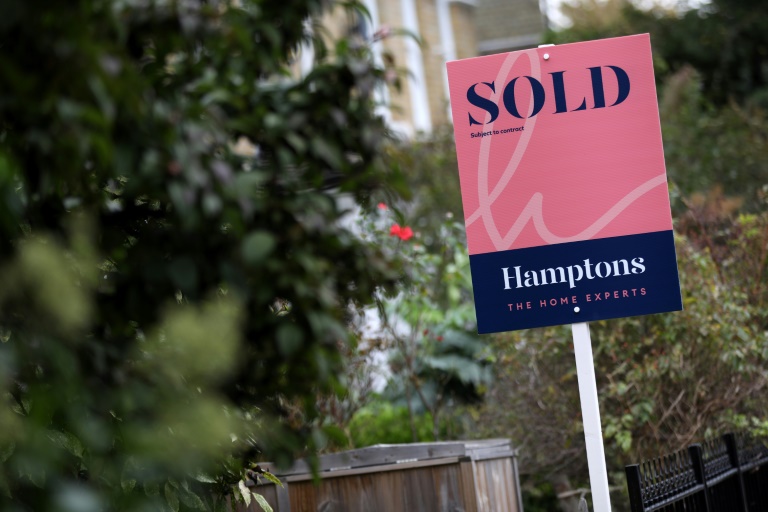
Britain’s housing market has been rocked by the UK government’s costly budget, as retail banks pull mortgage rates in anticipation of more costly products, sparking fears of tumbling home prices.

Homebuyers are gripped by panic after the Bank of England declared it would not hesitate to lift its main interest rate in response to the government’s anticipated borrowing splurge that many see as further fuelling sky-high inflation.

– ‘Torrid week’ –

“It has been a torrid week for the mortgage market,” Sarah Coles, personal finance analyst at broker Hargreaves Lansdown, told AFP.

Home-loan providers, which offer mortgages based on the central bank’s rate, have scrapped about 40 percent of available products since the budget on September 23, according to data provider Moneyfacts.

That equates to more than 1,600 mortgage rates offered for a fixed period of time. 

Coles said “the market struggled to function normally” as the pound struck a record-low against the dollar following the economic plan announced by the government of new Prime Minister Liz Truss.

The central bank reacted by launching emergency purchases of long-dated UK government bonds as soaring yields put pension funds at risk of collapse.

“Lenders withdrew (mortgage) rates for new customers while they waited for the dust to settle,” said Coles. 

“Once things feel more functional, they will be back but at a higher rate.”

Major UK bank Barclays said that “due to high demand” it “withdrew a small number of mortgage products from sale for new customers”. 

For some time, the average mortgage rate has hovered around two percent for a fix lasting between two and five years, according to Moneyfacts.

However, those same mortgage deals are now approaching five percent, more than doubling monthly repayment costs.

– Added costs –

Tom Bill, head of UK residential research at Knight Frank, told AFP that mortgage holders could find themselves paying an additional “hundreds of pounds per month, that they’re going to have to find”, adding to the cost-of-living crisis.

The removal of mortgage deals “is a bitter pill to swallow for those who want to move and those with fixed terms due to end”, said Tim Bannister, a director at online property firm Rightmove.

“And it will impact buyers’ budgets, especially those who were already stretching themselves.”

Richard Donell, executive director of online property group Zoopla, said rising mortgage rates “have been brewing for some time”. 

The Bank of England has in less than a year hiked its interest rate to 2.25 percent from a record-low 0.1 percent in a bid to cool decades-high inflation.

Experts are predicting the BoE’s rate will peak close to six percent in the first half of next year. Before the budget, the market consensus forecast had been for a four-percent pinnacle.

– House prices to slump? –

Analysts are meanwhile predicting that British house prices are heading for a protracted slump after soaring in recent times as demand outpaces supply.

The average British home price surged 9.5 percent in September from a year earlier, home loans provider Nationwide revealed on Friday.

However prices were flat last month compared with August.

“The stall in house prices in September was little surprise given the growing downward pressure on demand from rising mortgage rates,” said Capital Economics analyst Andrew Wishart.

“This marks the beginning of the most significant correction in house prices since 2007”, when the global financial crisis began to emerge.

In his budget, finance minister Kwasi Kwarteng lifted the point at which tax is levied on purchases of residential properties — a benefit that has seemingly been wiped out by the shake up of mortgage rates.
Critics fear Saudi prince seeks legal cover with PM title

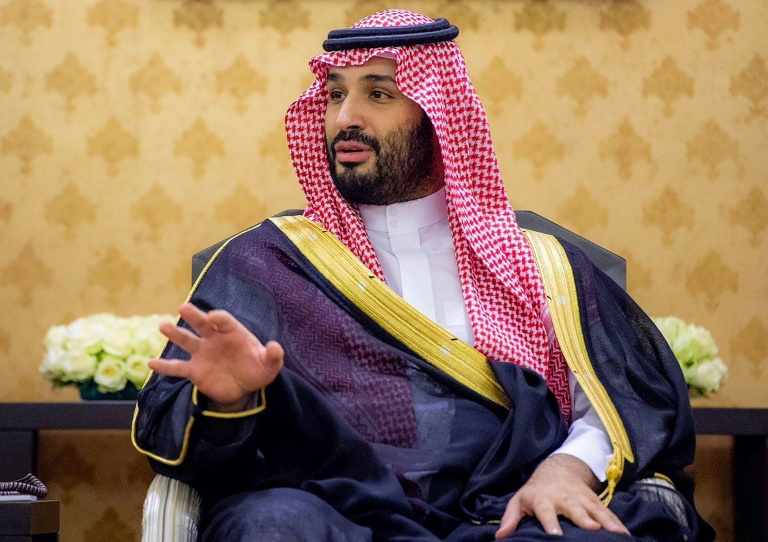
Saudi Crown Prince Mohammed bin Salman’s new title of prime minister, announced this week, could prove more significant abroad than inside the kingdom where he already wields enormous power.

The appointment by royal decree comes ahead of a deadline for US President Joe Biden’s administration to weigh in on whether Prince Mohammed qualifies for immunity from lawsuits filed in American courts. 

The 37-year-old de facto ruler of the world’s biggest crude exporter has been targeted in multiple such lawsuits in recent years, notably over the 2018 killing of Saudi journalist Jamal Khashoggi in the kingdom’s Istanbul consulate, which temporarily turned him into a pariah in the West.

His lawyers have argued in filings that he “sits at the apex of Saudi Arabia’s government” and thus qualifies for legal immunity.

Human rights activists and government critics immediately speculated this week that making Prince Mohammed prime minister was a bald-faced attempt to strengthen the immunity claim and skirt legal exposure.

Sarah Leah Whitson, executive director of the NGO Khashoggi founded Democracy for the Arab World Now (DAWN), told AFP it was a “last-ditch effort to conjure up a new title for him” — in other words, “a title-washing ploy”.

Saudi officials did not respond to requests for comment about the move. 

– Hit squads and hacks –

In October 2020, two years after Khashoggi’s death, DAWN filed a complaint in the United States along with Khashoggi’s fiancée, Hatice Cengiz, accusing Prince Mohammed of involvement in a “conspiracy” that led to Khashoggi being kidnapped, bound, drugged, tortured and assassinated. 

Last year, Biden declassified an intelligence report that found Prince Mohammed had approved the operation against Khashoggi, an assertion Saudi authorities deny. 

The legal threats to Prince Mohammed in US courts go beyond Khashoggi. 

He was also named in a lawsuit filed by Saad al-Jabri, a former top intelligence official who fell out of favour as Prince Mohammed manoeuvred to become first in line to the throne in 2017. 

That complaint accuses Prince Mohammed of trying to lure Jabri back to Saudi Arabia from exile in Canada — then, when that didn’t work, “deploying a hit squad” to kill him on Canadian soil, a plot foiled when most of the would-be assailants were turned back at the border. 

In yet another case, Prince Mohammed was accused by Lebanese journalist Ghada Oueiss of involvement in a scheme to hack her mobile device and disseminate “stolen personal images” to defame her and prevent her from reporting on human rights issues. 

The immunity question appeared to come to a head over the summer, when a US judge gave Biden’s administration until August 1 to say whether it believed Prince Mohammed qualified. 

After Biden visited Saudi Arabia in July, abandoning a previous pledge to turn Saudi Arabia into a “pariah”, his administration requested an additional 60 days to decide whether to weigh in on the matter. 

The new deadline falls no later than Monday.

– ‘In control’ at home –

Before this week’s announcement, Prince Mohammed, often referred to by his initials “MBS”, had been serving as deputy prime minister and defence minister, managing major portfolios from energy to security and beyond. 

Little is expected to change within the kingdom because of his new title, said Umar Karim, an expert on Saudi politics at the University of Birmingham. 

“MBS was already completely in control, and there was no threat as such to him that could be countered by him becoming prime minister,” Karim said. 

At the same time, it is not clear whether becoming prime minister will significantly bolster Prince Mohammed’s claim of immunity, given that King Salman remains head of state. 

Observers pointed out that King Salman chaired a cabinet meeting the same day that Prince Mohammed’s promotion was announced. 

Even if the immunity question is resolved in the United States, it is likely to pop up in other countries.

In July, a group of NGOs filed a complaint in France alleging that Prince Mohammed was an accomplice to Khashoggi’s torture and enforced disappearance.

They said the charges could be prosecuted in France, which recognises universal jurisdiction.

Prince Mohammed “does not have immunity from prosecution because as crown prince he is not head of state”, they said.

Japan wrestling legend Antonio Inoki dies at 79

Flamboyant Japanese professional wrestler turned politician Antonio Inoki died Saturday aged 79, according to a company he founded.

His death, which public broadcaster NHK said was from heart failure, brought to an end a varied life in the public eye, during which Inoki fought Muhammad Ali, fostered close personal ties with North Korea, and helped free hostages in Iraq.

The Yokohama native — born Kanji Inoki — also starred in American wrestling promotions, as well as serving two separate terms in Japan’s legislature.

US wrestling legend Triple H tweeted that Inoki was “one of the most important figures in the history of our business, and a man who embodied the term ‘fighting spirit'”.

“The legacy of WWE Hall of Famer Antonio Inoki will live on forever,” added the chief operating officer of World Wrestling Entertainment (WWE).

“Antonio Inoki, the founder of New Japan Pro-Wrestling and former professional wrestler, died in Tokyo,” the group said in a statement.

Standing 1.9 metres (six feet three inches) tall, Inoki was a pioneer of mixed martial arts in Japan, and shot to fame in 1976 for taking on world heavyweight champion Ali in a zany wrestler-versus-boxer bout in Tokyo.

There followed appearances in the WWF, as WWE was then known. The company said Saturday: “One of the key figures in the history of Japanese wrestling, Antonio Inoki was among the most respected men in sports-entertainment and a bona fide legend in his homeland.”

In 1989 Inoki was elected as an upper-house lawmaker for the now-defunct Sports and Peace Party.

Prior to the 1990 Gulf War, he travelled to Iraq to secure the release of Japanese hostages.

Having built a strong personal connection with North Korea over the years, Inoki travelled there dozens of times to help resolve the issue of Pyongyang’s abductions of Japanese citizens during the Cold War.

The wrestler said he wanted to “contribute to world peace through sports” and had arranged martial arts and wrestling festivals in North Korea, often meeting high-ranking officials during his visits.

Japanese officials dismissed the trips as a sideshow.

Asked about them at the time, the then chief cabinet secretary Yoshihide Suga pointedly reminded journalists that Tokyo had a travel ban in place for North Korea, urging the politician to “act appropriately”.

However, Japanese television news provided blanket coverage of Inoki’s trip and the visits continued to prompt interest, given the lack of details leaking out about life in North Korea.

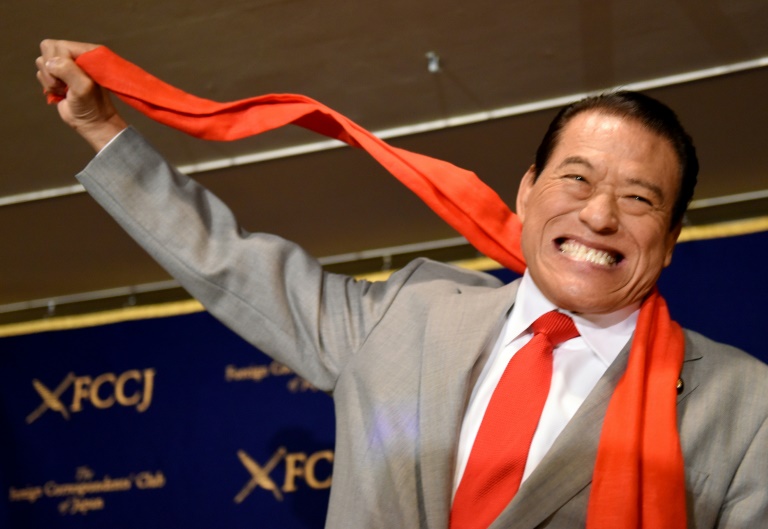
Inoki, unmistakable from his outsized chin and trademark tie and red scarf, also forced the government to take an official position about aliens when he tabled a question in a budgetary committee in 2017, saying he had seen a mysterious flying object disappearing over the horizon.

Inoki lost his seat in 1995 and retired as a wrestler in 1998, but was re-elected to the upper house in 2013 as a member of a different opposition party.

He retired from politics in 2019, and a year later said he had been diagnosed with heart disease.

Coup in Burkina Faso as military officers overthrow junta leader

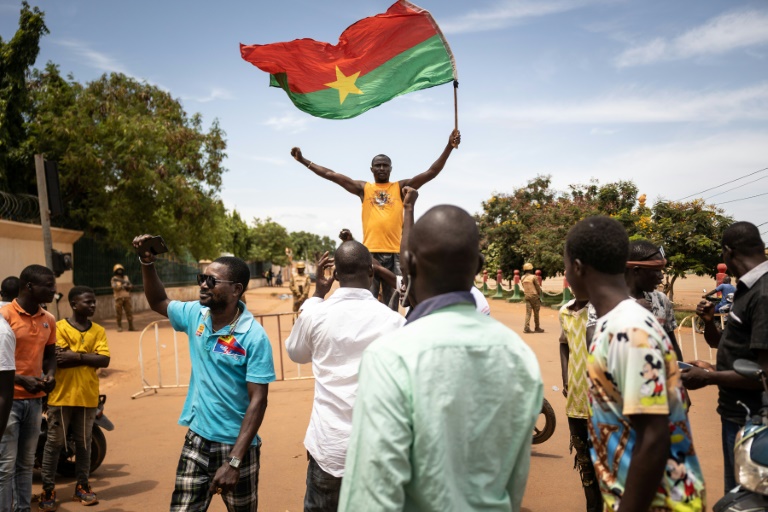
Military officers have seized control of Burkina Faso, claiming to be restoring peace to the jihadist-wracked country as they overthrew a junta leader who had also come to power in a coup at the start of this year.

In the capital Ouagadougou, pre-dawn gunfire around the presidential palace was heard at the start of a day that culminated in the latest ousting. 

Just before 8 pm (2000 GMT) on Friday, more than a dozen soldiers in fatigues appeared on the state television and radio broadcaster to announce the removal of Lieutenant-Colonel Paul-Henri Sandaogo Damiba for failing to stem a jihadist insurgency.

They proclaimed 34-year-old Captain Ibrahim Traore in charge.

“We have decided to take our responsibilities, driven by a single ideal: the restoration of security and integrity of our territory,” they said.

With much of the Sahel region battling a growing Islamist insurgency, the violence has prompted a series of coups in Mali, Guinea and Chad since 2020. 

In January, Damiba installed himself as leader of the country of 16 million after accusing elected president Roch Marc Christian Kabore of failing to beat back the jihadists. 

But with more than 40 percent of the former French colony outside government control, the latest putsch leaders said Damiba, too, had failed.

“Far from liberating the occupied territories, the once-peaceful areas have come under terrorist control,” the new military leaders said. 

They then suspended the constitution, sealed the borders, dissolved the transitional government and legislative assembly and instituted a 9:00 pm to 5:00 am curfew.

New strongman Traore was previously head of anti-jihadist special forces unit “Cobra” in the northern region of Kaya.

Damiba’s fate remained unknown Friday. 

– Calls for ‘restraint’ –

Damiba’s Patriotic Movement for Preservation and Restoration (MPSR) had said earlier on Friday that there was an “internal crisis in the army” prompting troop deployments in key areas of the capital.

AFP journalists saw troops block several main roads and intersections in Ouagadougou, with soldiers also stationed outside the state television centre.

Government spokesman Lionel Bilgo had said the “crisis” concerned an army pay dispute, and that Damiba was taking part in negotiations.

In the morning, shots rang out in the Ouaga 2000 neighbourhood, which houses both the presidential and junta headquarters.

“I heard heavy detonations around 4:30 am and now the roads around my home have been sealed off by military vehicles,” a resident close to the presidential palace said.

State television was cut for several hours prior to the military announcement, broadcasting just a blank screen with the message “no video signal”.

In the afternoon, an AFP journalist saw a group of several hundred people gather in a city square demanding the departure of Damiba and the end of the French military presence.

By evening, soldiers were still in place at key points of the city, and streets were mostly deserted.

In a statement, the Economic Community of West African States (ECOWAS) “condemned in the strongest possible terms” the latest seizure of power, calling it “inappropriate” at a time when progress was being made for a return to constitutional order by July 1, 2024.

The French foreign ministry told its citizens in the Burkina capital, believed to number between 4,000 and 5,000, to stay home, while the European Union expressed “concern” at the unfolding events.

The United States said it was “deeply concerned” by the situation in Ouagadougou.

“We call for a return to calm and restraint by all actors,” a State Department spokesperson said.

– Rein in jihadists –

Though Damiba had promised to make security his priority when he took charge on January 24, violent attacks have increased since March.

In the north and east, towns have been blockaded by insurgents who have blown up bridges and attacked supply convoys.

As in bordering countries, insurgents affiliated with Al-Qaeda and the Islamic State group have stoked unrest.

Thousands have died and about two million have been displaced by the fighting since 2015 when the insurgency spread to Burkina Faso, which has since become the epicentre of the violence across the Sahel.

In September, a particularly bloody month, Damiba sacked his defence minister and assumed the role himself.

Earlier this week, suspected jihadists attacked a convoy carrying supplies to the town of Djibo in the north of the country. The government said 11 soldiers died and around 50 civilians were missing.

On September 5, an improvised explosive device struck a supply convoy in the north killing 35 civilians and wounding 37.

The following day, at least nine people — seven civilians and two soldiers — were killed in two separate attacks by suspected jihadists.

Much of the impoverished Sahel region is battling the insurgency.

Starting in northern Mali in 2012, the insurgents attacked neighbouring Burkina Faso and Niger in 2015.

The violence has in recent years begun to spill over into coastal states Ivory Coast, Togo and Benin.

No Terminator: Musk teases 'useful' humanoid robot

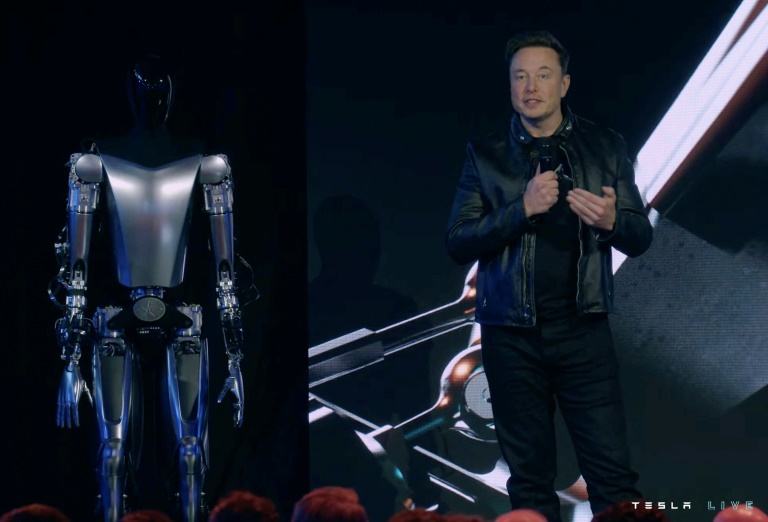
Elon Musk on Friday showed off the latest version of a humanoid robot that the world’s richest man said could one day eliminate poverty.

An Optimus prototype wheeled on stage during an annual Tesla AI Day presentation was mounted to a small platform. The robot, which remains a work-in-progress, waved to the audience and raised its knees.

“Our goal is to make a useful humanoid robot as quick as possible,” the billionaire tech pioneer Musk told the audience at the event in Silicon Valley.

“There is still a lot of work to be done.”

Tesla is adapting its autonomous car technology to give Optimus capabilities such as walking safely or working on a factory floor, company engineers said during the presentation.

Another version of the robot, built with off-the-shelf components rather than Tesla-made parts like Optimus, walked slowly onto the stage, pumped its fists and thrust its hips briefly in time with music as if dancing.

“The robot can actually do a lot more than we just showed you, we just didn’t want it to fall on its face,” Musk quipped.

Tesla is designing Optimus robots to be produced at high rates, pushing the price perhaps lower than $20,000, Musk said.

“This means a future of abundance; a future where there is no poverty, a future where you can have what you want in terms of products and services,” Musk said.

“It really is a fundamental transformation of civilization as we know it,” he said.

Musk, who once warned of artificial intelligence being a threat to humanity, said that Tesla wants to make sure the transition to a society in which robots do the work and people reap the benefits is a safe one.

“We always want to be careful we don’t go down the Terminator path,” he cautioned, referring to a blockbuster film about a killer cyborg and noting that Tesla is building in safeguards including a stop button that can’t be tampered with.

He said Tesla will begin testing Optimus on factory floors, doing simple tasks like carrying parts, and that the general public should be able to purchase the robots in three to five years.

Musk contended that Tesla, as a publicly traded company, would be held accountable by its shareholders if they think it isn’t being socially responsible.

“It’s very important that I can’t just do what I want. Tesla’s structure is ideal for that.”

Musk was reprimanded by the Securities and Exchange Commission after posting a tweet in 2018, in which he said he had acquired funding to take Tesla private, but did not provide proof or file paperwork with the SEC.

Musk is now is locked in a court battle with Twitter over his effort to terminate a $44 billion deal he made to take the messaging platform private.

Putin annexes Ukraine territories, Kyiv vows to fight back

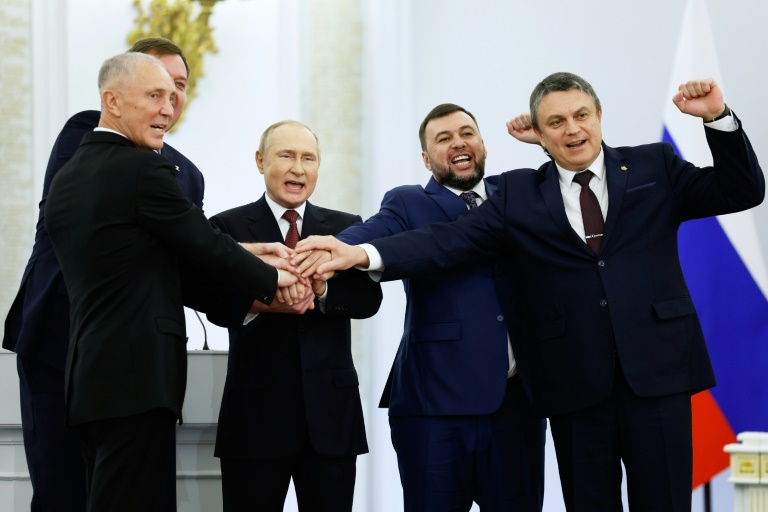
Russian President Vladimir Putin staged a grand ceremony in Moscow on Friday to celebrate the annexation of four parts of Ukraine occupied by his army, while Kyiv pushed for expedited NATO membership.

The event at the Kremlin — a turning point in post-Soviet history — came hours after shelling killed 30 people in Ukraine’s southern region of Zaporizhzhia in one of the worst attacks against civilians in months.

Putin was defiant during his address to Russia’s political elite, telling the West that the internationally condemned manoeuvre was irreversible and urging Ukraine to negotiate a surrender.

“I want to say this to the Kyiv regime and its masters in the West: People living in Lugansk, Donetsk, Kherson and Zaporizhzhia are becoming our citizens forever,” Putin said.

“We call on the Kyiv regime to immediately stop fighting and stop all hostilities… and return to the negotiating table.”

The packed hall erupted into chants of “Russia! Russia” after the deal was inked. 

Putin — rarely seen making physical contact since the pandemic — joined hands with his proxy leaders from the annexed regions and they shouted along in unison on state TV.

Washington announced “severe” new sanctions against Russian officials and the country’s defence industry, and said G7 allies support imposing “costs” on any nation that backs the annexation.

Ukrainian President Volodymyr Zelensky immediately urged the US-led military alliance NATO to grant his country fast-track membership.

– Biden says Putin ‘struggling’ –

The Ukrainian leader doubled down in an address to the nation, vowing never to hold talks with Russia as long as Putin was in power.

“We will negotiate with the new president,” Zelensky said.

US President Joe Biden condemned Friday’s ceremony in Moscow as a “sham routine” that Putin put on to show strength but instead demonstrated that “he’s struggling”, and pledged to continue backing Kyiv.

NATO chief Jens Stoltenberg slammed the annexation as “illegal and illegitimate” but remained non-committal after Ukraine said it was applying to join the Western alliance.

The United States and Canada voiced support for Ukraine’s membership but steered clear of promises to fast-track it.

Despite warnings from Putin prior to the annexation that he could use nuclear weapons to defend the captured territories, Ukraine’s Foreign Minister Dmytro Kuleba said Kyiv would “continue liberating our land and our people”.

US National Security Advisor Jake Sullivan said Friday that Washington would announce an “immediate” new weapons shipment for Kyiv next week.

Sullivan also said that while there is a “risk” of Putin using nuclear weapons, there is no indication that he would imminently do so. 

Hours ahead of the annexation ceremony, an attack in Zaporizhzhia in the south killed at least 30 people and wounded dozens as civilians were preparing to leave to pick up relatives, Ukrainian officials said.

Bodies in civilian clothes were strewn across the ground after the attack and windows of cars blown out.

One man, 56-year-old Viktor, said his life was saved because he went to get a coffee.

“The waitress gave it to me. And there was a bang. She got scared and left the cafe. A few minutes later, there was another explosion. Now she is on the floor,” he said.

“I managed to hide. She did not.”

– Land corridor –

In Moscow, at least 10,000 people convened for state-organised annexation celebrations, with huge banners emblazoned: “Donetsk. Lugansk. Zaporizhzhia. Kherson. Russia!”

“I’m happy if they want to join Russia,” Natalya Bodner, a 37-year-old lawyer told AFP. “They have more hope than we do”.

The four territories create a crucial land corridor between Russia and the Crimean Peninsula, annexed by Moscow in 2014.

Together, the five regions make up around 20 percent of Ukraine, where forces in recent weeks have been clawing back territory.

Zelensky on Friday hailed the “significant results” from Ukraine’s counteroffensive in the east.

Ukrainian forces were on the doorstep of Lyman in Donetsk, which Moscow’s forces pummelled for weeks to capture this summer.

“Lyman is partially surrounded,” said Denis Pushilin, the pro-Moscow leader in Donetsk, adding later on social media that Russian forces were holding out “with the last of their strength”.

Russia on Friday vetoed a UN Security Council resolution condemning the annexation of the regions, while China, India, Brazil and Gabon abstained.

Although Russia’s veto was a certainty, Western powers had hoped to demonstrate Moscow’s growing isolation on the world stage and will now take the condemnation effort to the General Assembly, where every nation has a vote and none can kill a resolution.

At a UNESCO meeting in Mexico City on Friday, representatives of dozens of countries walked out as Russia took the floor, symbolically condemning the invasion of Ukraine.

burs/lb/dva

Japan wrestling legend Antonio Inoki dies at 79: media

Flamboyant Japanese professional wrestler turned politician Antonio Inoki died Saturday aged 79, local media reported.

Public broadcaster NHK said he died of heart failure.

Standing 1.9 metres (six feet three inches) tall, Inoki was a pioneer of mixed martial arts in Japan, and shot to fame in 1976 for taking on world heavyweight champion Muhammad Ali in a zany wrestler-versus-boxer bout in Tokyo.

In 1989 he was elected as an upper-house lawmaker for the now-defunct Sports and Peace Party.

He travelled to Iraq prior to the 1990 Gulf War to gain the release of Japanese hostages.

Inoki lost his seat in 1995 and retired as a wrestler in 1998, but was re-elected to the upper house in 2013 as a member of another opposition party.

Having built a strong personal connection with North Korea over the years, Inoki travelled there dozens of times to help resolve the issue of Pyongyang’s abductions of Japanese citizens during the Cold War, before ending his political career in 2019.

The wrestler — whose birth name was Kanji Inoki — said he wanted to “contribute to world peace through sports” and had arranged martial arts and wrestling festivals in North Korea, often meeting high-ranking officials during his visits.

Japanese officials dismissed the trips as a sideshow.

Asked about them at the time, the then chief cabinet secretary Yoshihide Suga pointedly reminded journalists that Tokyo had a travel ban in place for North Korea, urging the politician to “act appropriately”.

However, Japanese television news provided blanket coverage of Inoki’s trip and the visits continued to prompt interest, given the lack of details leaking out about life in North Korea.

Inoki, unmistakable from his outsized chin and trademark tie and red scarf — even in summer — also forced the government to take an official position about aliens when he tabled a question in a budgetary committee in 2017, saying he had seen a mysterious flying object disappearing over the horizon.

In 2020, Inoki said he had been diagnosed with heart disease.

North Korea fires ballistic missiles, fourth time this week

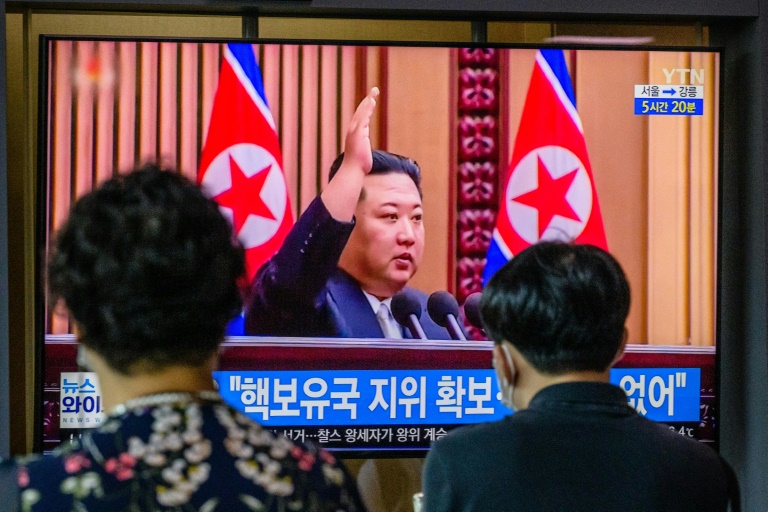
North Korea fired two ballistic missiles early on Saturday, South Korea’s military said, the nuclear-armed country’s fourth launch this week as Seoul, Tokyo and Washington ramp up joint military drills to counter Pyongyang.

South Korea, Japan and the US staged anti-submarine drills Friday — the first in five years — just days after Washington and Seoul’s navies conducted large-scale exercises in waters off the peninsula.

US Vice President Kamala Harris was in Seoul Thursday and toured the heavily fortified Demilitarized Zone that divides the peninsula, on a trip that aimed to underscore her country’s “ironclad” commitment to South Korea’s defence against the North.

With talks long stalled, Pyongyang has doubled down on its banned weapons programmes, conducting a record-breaking blitz of tests this year and revising its laws to declare itself an “irreversible” nuclear power.

South Korea’s military said it had “detected two short-range missiles between 0645 and 0703 fired from the Sunan area in Pyongyang into the East Sea”, referring to the body of water also known as the Sea of Japan.

The missiles “flew approximately 350 km (217 miles) at an altitude of 30 km at speed of Mach 6”, Seoul’s Joint Chiefs of Staff said in a statement, calling the launches “a serious provocation”.

Tokyo also confirmed the launch, saying the missiles had landed outside Japan’s exclusive economic zones.

Toshiro Ino, Japan’s vice defence minister, said the missiles “appear to have flown in irregular trajectories”. 

Experts say the irregular trajectories indicate the missiles are capable of manoeuvring in flight, making them harder to track and intercept.

The US Indo-Pacific Command said in a statement that the latest launch “highlights the destabilising impact of the DPRK’s unlawful WMD and ballistic missile programs”, using the official abbreviation for North Korea.

– Harris trip –

North Korea marked Harris’s trip to Seoul with a flurry of missile launches — firing off short-range ballistic missiles on Sunday, Wednesday and Thursday, including a test just hours after the vice president flew out of South Korea.

Washington has about 28,500 troops stationed in South Korea to help protect it from the North.

Under South Korea’s President Yoon Suk-yeol, who took office in May, the two countries have boosted joint exercises, which they insist are purely defensive.

Just before Harris arrived in Seoul, Washington sent the nuclear-powered USS Ronald Reagan aircraft carrier to South Korea to conduct a large-scale joint naval exercise in a show of force against Pyongyang. 

Such drills infuriate North Korea, which sees them as rehearsals for an invasion.

“North Korea’s short-range ballistic tests are less important than a nuclear test but still violate UN Security Council resolutions,” said Leif-Eric Easley, a professor at Ewha University in Seoul, adding that the timing was “provocative”.

North Korea is “rapidly modernizing weapons and taking advantage of a world divided by US-China rivalry and Russia’s annexation of more Ukrainian territory”, he said.

“Pyongyang’s actions again make clear the need for Washington and Seoul to reinforce military deterrence, tighten economic sanctions, and increase policy coordination with Tokyo,” he added.

– Nuclear test next? –

South Korean and US officials have been warning for months that North Korean leader Kim Jong Un is preparing to conduct another nuclear test.

On Wednesday, the South’s spy agency said North Korea’s next nuclear test could happen in the window between China’s upcoming party congress on October 16 and the US midterm elections on November 7.

North Korea, which is under multiple UN sanctions for its weapons programmes, typically seeks to maximise the geopolitical impact of its tests with careful timing.

The isolated regime has tested nuclear weapons six times since 2006, most recently in 2017.

President Yoon on Saturday warned of dire consequences if Pyongyang uses nuclear weapons against its southern neighbour. 

“If North Korea attempts to use nuclear weapons it will face a resolute and overwhelming response from our military and Korea-US alliance,” he said in a speech marking Armed Forces Day. 

Long Covid remains a mystery, though theories are emerging

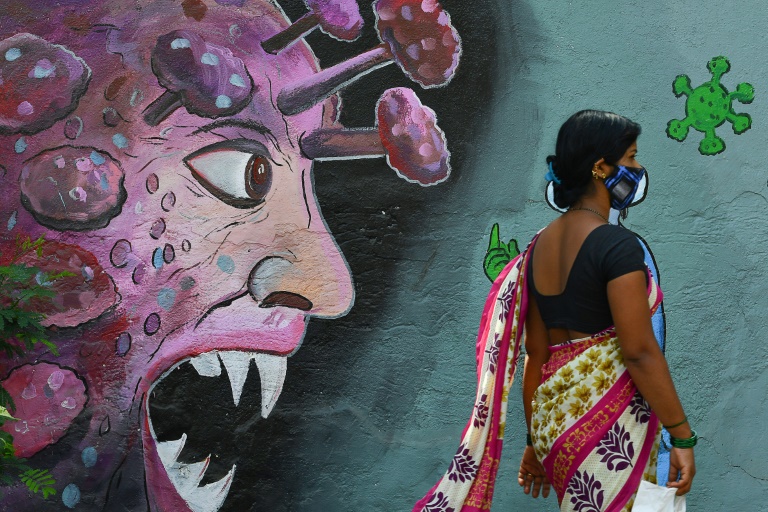
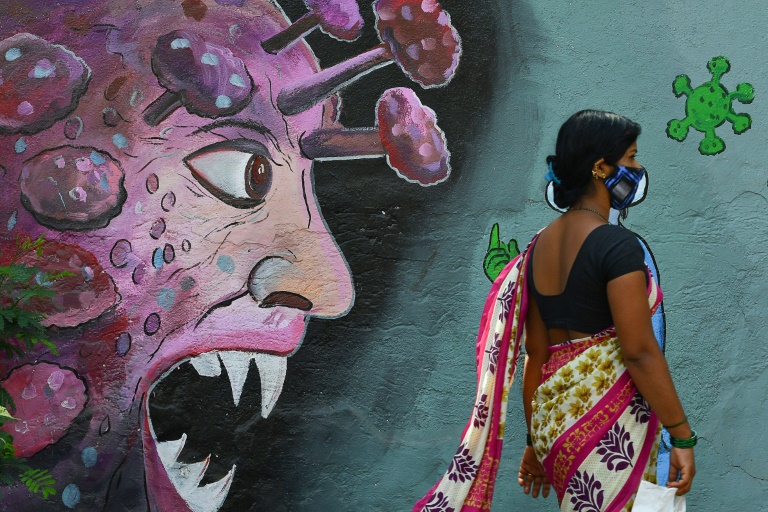
Millions of people around the world are believed to suffer from long Covid yet little remains known about the condition — though research has recently proposed several theories for its cause. 

Between 10 to 20 percent of people who contract coronavirus are estimated to have long Covid symptoms — most commonly fatigue, breathlessness and a lack of mental clarity dubbed brain fog — months after recovering from the disease.

The US-based Institute for Health Metrics and Evaluation (IHME) estimates that nearly 145 million people worldwide had at least one of those symptoms in 2020 and 2021.

In Europe alone, 17 million people had a long Covid symptom at least three months after infection during that time, according to IHME modelling for the World Health Organization (WHO) published earlier this month.

These millions “cannot continue to suffer in silence”, WHO Europe director Hans Kluge said, calling for the world to act quickly to learn more about the condition.

Researchers have been racing to catch up but the vast array — and inconsistency — of symptoms has complicated matters. 

More than 200 different symptoms have been ascribed to long Covid so far, according to a University College London study.

– ‘Fatigue in the background’ –

“There are no symptoms that are truly specific to long Covid but it does have certain characteristics that fluctuate,” said Olivier Robineau, the long Covid coordinator at France’s Emerging Infectious Diseases research agency.

“Fatigue remains in the background,” he told AFP, while the symptoms “seem to be exacerbated after intellectual or physical effort — and they become less frequent over time”.

One thing we do know is that people who had more severe initial cases, including needing to be hospitalised, are more likely to get long Covid, according to the IHME.

Researchers have been pursuing several leads into exactly what could be behind the condition.

A study published in the journal Clinical Infectious Diseases in September found that Covid’s infamous spike protein — the key that lets the virus into the body’s cells — was still present in patients a full year after infection.

This suggests that viral reservoirs may persist in some people, potentially causing inflammation that could lead to long Covid-like symptoms, the researchers said.

If they are right, a test could be developed to identify the spike, potentially leading to one of the great and elusive goals of long Covid research — a clear way to diagnose the condition.

However, their findings have not been confirmed by other research, and several other causes have been proposed.

– ‘Data not very solid yet’ –

One leading theory is that tissue damage from severe Covid cases triggers lasting disruption to the immune system.

Another suggests that the initial infection causes tiny blood clots, which could be related to long Covid symptoms.

However “for each of these hypotheses, the data is not very solid yet”, Robineau said.

It is most likely that “we are not going to find a single cause to explain long Covid”, he added.

“The causes may not be exclusive. They could be linked or even succeed each other in the same individual, or be different in different individuals.”

A way to treat the condition also remains elusive.

For the last year, the Hotel-Dieu hospital in Paris has been offering long Covid patients a half-day treatment course.

“They meet an infectious disease specialist, a psychiatrist, then a doctor specialising in sports rehabilitation,” said Brigitte Ranque, who runs the protocol dubbed CASPER.

“In the team’s experience, a majority of the symptoms can be attributed to functional somatic syndromes,” she said. These are a group of chronic disorders such as chronic fatigue and fibromyalgia that have no known cause.

Cognitive behavioural therapy, a psychological approach often used for those syndromes, is used to treat long Covid alongside supervised physical activity, Ranque said.

“The patients are brought back in three months later. The majority of them are better. More than half say they are cured,” she told AFP.

“But about 15 percent did not improve at all.”

Long Covid remains a mystery, though theories are emerging

Millions of people around the world are believed to suffer from long Covid yet little remains known about the condition — though research has recently proposed several theories for its cause. 

Between 10 to 20 percent of people who contract coronavirus are estimated to have long Covid symptoms — most commonly fatigue, breathlessness and a lack of mental clarity dubbed brain fog — months after recovering from the disease.

The US-based Institute for Health Metrics and Evaluation (IHME) estimates that nearly 145 million people worldwide had at least one of those symptoms in 2020 and 2021.

In Europe alone, 17 million people had a long Covid symptom at least three months after infection during that time, according to IHME modelling for the World Health Organization (WHO) published earlier this month.

These millions “cannot continue to suffer in silence”, WHO Europe director Hans Kluge said, calling for the world to act quickly to learn more about the condition.

Researchers have been racing to catch up but the vast array — and inconsistency — of symptoms has complicated matters. 

More than 200 different symptoms have been ascribed to long Covid so far, according to a University College London study.

– ‘Fatigue in the background’ –

“There are no symptoms that are truly specific to long Covid but it does have certain characteristics that fluctuate,” said Olivier Robineau, the long Covid coordinator at France’s Emerging Infectious Diseases research agency.

“Fatigue remains in the background,” he told AFP, while the symptoms “seem to be exacerbated after intellectual or physical effort — and they become less frequent over time”.

One thing we do know is that people who had more severe initial cases, including needing to be hospitalised, are more likely to get long Covid, according to the IHME.

Researchers have been pursuing several leads into exactly what could be behind the condition.

A study published in the journal Clinical Infectious Diseases in September found that Covid’s infamous spike protein — the key that lets the virus into the body’s cells — was still present in patients a full year after infection.

This suggests that viral reservoirs may persist in some people, potentially causing inflammation that could lead to long Covid-like symptoms, the researchers said.

If they are right, a test could be developed to identify the spike, potentially leading to one of the great and elusive goals of long Covid research — a clear way to diagnose the condition.

However, their findings have not been confirmed by other research, and several other causes have been proposed.

– ‘Data not very solid yet’ –

One leading theory is that tissue damage from severe Covid cases triggers lasting disruption to the immune system.

Another suggests that the initial infection causes tiny blood clots, which could be related to long Covid symptoms.

However “for each of these hypotheses, the data is not very solid yet”, Robineau said.

It is most likely that “we are not going to find a single cause to explain long Covid”, he added.

“The causes may not be exclusive. They could be linked or even succeed each other in the same individual, or be different in different individuals.”

A way to treat the condition also remains elusive.

For the last year, the Hotel-Dieu hospital in Paris has been offering long Covid patients a half-day treatment course.

“They meet an infectious disease specialist, a psychiatrist, then a doctor specialising in sports rehabilitation,” said Brigitte Ranque, who runs the protocol dubbed CASPER.

“In the team’s experience, a majority of the symptoms can be attributed to functional somatic syndromes,” she said. These are a group of chronic disorders such as chronic fatigue and fibromyalgia that have no known cause.

Cognitive behavioural therapy, a psychological approach often used for those syndromes, is used to treat long Covid alongside supervised physical activity, Ranque said.

“The patients are brought back in three months later. The majority of them are better. More than half say they are cured,” she told AFP.

“But about 15 percent did not improve at all.”

Close Bitnami banner
Bitnami