World

European and US stocks tumble, pound rebounds

European and US equities sank Thursday on fears that rising interest rates will spark a global recession, while the pound clawed back ground one day after emergency bond-market intervention from the Bank of England.

“Higher US treasury yields, inflation and rising recession fears are back in the driving seat,” said market analyst Fiona Cincotta at City Index.

German inflation accelerated sharply in September, official data showed Thursday in the latest indication that Europe’s biggest economy is buckling under the pressure from soaring energy prices.

Consumer prices spiked 10.0 percent compared to the same month a year earlier.

German Chancellor Olaf Scholz announced that the nation would plough 200 billion euros into shielding households and businesses from skyrocketing energy costs in the wake of Russia’s invasion of Ukraine.

However, Frankfurt stocks slumped 1.7 percent, while Paris fell 1.5 percent.

London equities dropped 1.8 percent as the pound rebounded somewhat from earlier falls, one day after the BoE snapped up UK bonds to avert a risk to UK financial stability.

“The BoE rode to the rescue of the markets for one day, and the overall impact has been limited,” said Cincotta, although the pound bounced more than one percent higher to climb above $1.10.

The BoE, the European Central Bank, the US Federal Reserve and many other counterparts are ratcheting up interest rates to fight decades-high inflation.

Wall Street’s main stock indices slumped as US treasury yields continued to rise, and with the latest data showing a drop in first-time unemployment benefit claims falling under 200,000 for the first time since May.

The reading will be used by the Fed “as a basis to maintain an aggressive line with its rate hikes” because the bank sees a softening of the labour market as necessary to bring inflation back down to its two-percent target, said Patrick O’Hare, analyst at Briefing.com.

The Dow was down 1.6 percent in late morning trading, while the broader S&P 500 fell 2.1 percent, and the tech-heavy Nasdaq Composite tumbled 2.9 percent.

– ‘Pessimistic’ investors –

“There’s a growing list of reasons why investors are pessimistic right now, with the prospect of an interest-rate recession being right up there,” Craig Erlam, analyst at trading platform OANDA, told AFP.

“But we are increasingly seeing pressures mounting and forcing responses from policymakers that are not normal. That started out as super-sized rate hikes, and now includes Japanese foreign-exchange interventions and the BoE intervening in bond markets.”

Stocks had also rallied Wednesday partly after the BoE’s surprise purchase, which came after Britain’s recent tax-cutting budget sparked soaring bond yields and sent the pound to a record dollar low on Monday. 

The BoE launched a two-week programme to buy long-term UK bonds, capped initially at £65 billion ($71 billion), as UK pension funds scrambled to sell investments to remain solvent.

While the UK government’s 30-year sovereign bond yield retreated further to 3.97 percent, having briefly surged Wednesday to a 1998 peak at 5.14 percent, the yield on 10-year bonds began to march higher.

Meanwhile, sentiment was also dented this week by leaks from the undersea Nord Stream pipelines running from Russia to Europe.

That sparked accusations of sabotage amid strained relations between the West and sanctions-hit Russia over the latter’s war on Ukraine.

– Key figures around 1530 GMT –

New York – Dow: DOWN 1.6 percent at 29,217.11 points

EURO STOXX 50: DOWN 1.7 percent at 3,279.04

London – FTSE 100: DOWN 1.8 percent at 6,881.59 (close) 

Frankfurt – DAX: DOWN 1.7 percent at 11,975.55 (close) 

Paris – CAC 40: DOWN 1.5 percent at 5,676.87 (close)

Tokyo – Nikkei 225: UP 1.0 percent at 26,422.05 (close)

Hong Kong – Hang Seng Index: DOWN 0.5 percent at 17,165.87

Shanghai – Composite: DOWN 0.1 percent at 3,041.20 (close)

Pound/dollar: UP at $1.1024 from $1.0689 on Wednesday

Euro/dollar: DOWN at $0.9777 from $0.9735

Euro/pound: UP at 88.65 pence from 89.40 pence

Dollar/yen: UP at 144.51 yen from 144.16 yen

Brent North Sea crude: DOWN 0.2 percent at $89.13 per barrel

West Texas Intermediate: UP 0.1 percent at $82.24 per barrel

burs-rl/jmm
Fleeing Russians worry border will 'close forever'

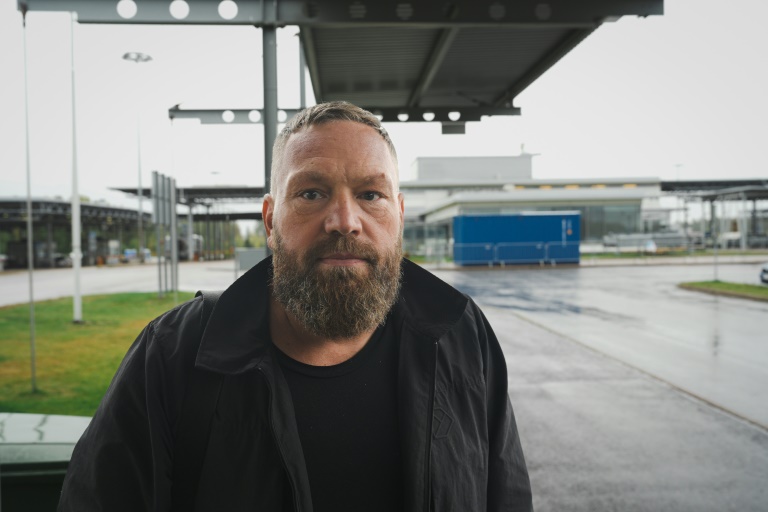
Fearing the border may close “forever” after President Vladimir Putin’s mobilisation order for the war in Ukraine, Russians are rushing to flee across Finland’s Vaalimaa crossing.

But their exodus has grown more precarious after Helsinki on Thursday announced it would close its border from midnight to Russians holding European tourism visas for the Schengen zone.

“I just made it through, I don’t know how the others will get through. It’s sad, sad,” Andrei Stepanov, a 49-year-old Russian told AFP of Finland’s new restrictions.

“I feel sorry for the others, they’re already like in prison there. Now it’s even worse”, said Stepanov, originally from the Russian city of Samara, near the Kazakh border.

Valery Klepkin, a 43-year-old from Karelia with a lieutenant grade in Russia’s military, crossed the border on Thursday with a tourism visa. He said he couldn’t comprehend Finland’s decision. 

“We are not dangerous, I don’t understand what kind of threat we may pose”, he told AFP. 

“We are running away from war, we are against this war. And by running away here, we are not going to the front”.

Aleksander Veselov, a 64-year-old from Saint Petersburg, said the Finnish decision would make the situation even worse for Russians back home.

“We already were behind the Iron Curtain, now the curtain will be even thicker. It’s horribly unpleasant”, he lamented.

Asked about the numerous Russians fleeing, Finnish Interior Minister Krista Mikkonen said she expected asylum applications to increase and each case would be processed individually.

– ‘Many are afraid’ –

Since Putin announced the mobilisation order a week ago, the number of Russians crossing Finland’s 1,300-kilometres (800-mile) eastern border has almost doubled, averaging around 7,000 or 8,000 per day, most of them through Vaalimaa, though numbers appeared to slow on Wednesday.

Viktor Zakharov, a 35-year-old scientist from Saint Petersburg, drove his car over the border with his partner and their three children, planning to head to Israel after visiting friends in Finland.

He says he has five friends who have left Russia since the mobilisation, and fears he could have been drafted despite having no military background.

“I think now it doesn’t matter what status you have. If you are not fit today, you can be tomorrow and be in the army”, he told AFP.

Despite having made it into Finland, “the feeling of freedom has not come yet because of the sleepless nights and the packing,” he said, as he handed pieces of candy to his children.

Oleg, a 36-year-old bar owner from Moscow, said the military call-up was “a first sign that something worse might happen.”

“Many people are afraid,” he said, after crossing to the Finnish side.

He said he feared the border would “close forever” and Russians would “live in a totalitarian state where they can’t do anything at all”.

“I live in a country which sinks a little more every day,” he said, sighing.

Finland said on Monday that more Russians entered the country over the weekend than any other weekend so far this year — around 17,000.

State employee Vadim arrived by bus. He left his mother in charge of looking after his apartment in Moscow, and hopes to return soon.

“I have heard about many cases of young men… not being able to cross because of the mobilisation,” he said.

“I can’t say I’m happy”, he told AFP on Wednesday, a day before the Finnish announcement.

“But at least it’s ok, I’m here”.

– ‘Illegal border crossings’? –

The Finnish border guard said earlier this week it was preparing for “difficult developments” as the situation evolved.

“It is possible that when travel is restricted, attempts at illegal border crossings will increase,” a spokesman said.

In July, Finland passed new amendments to its Border Guard Act to facilitate the construction of sturdier fences on the Nordic country’s eastern border with Russia.

As it stands, Finland’s borders are secured primarily with light wooden fences, mainly designed to stop livestock from wandering to the wrong side.

The Finnish border guard believes it will be necessary to build 130-260 kilometres of barriers in high-risk areas.

“The physical barrier itself is indispensable in a large-scale entry situation, acting as a barrier and an element of diversion for potential crowds,” the border guard said in a statement.

The fence still requires a political decision.

Floods, devastation after Hurricane Ian hammers Florida

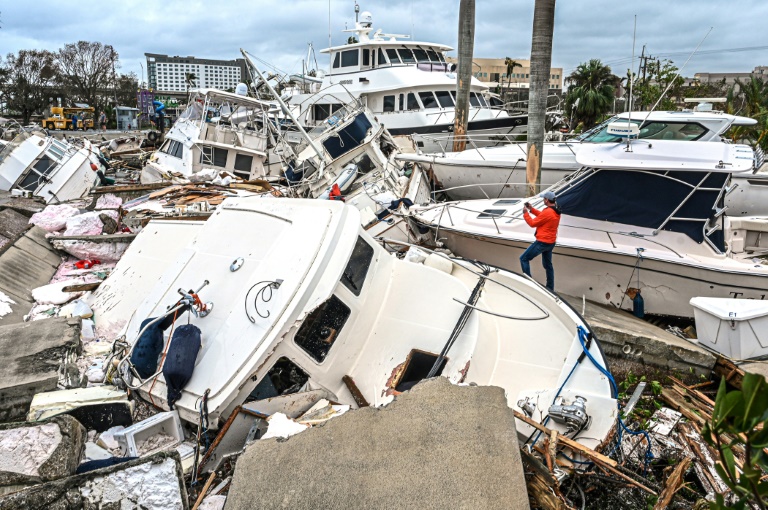
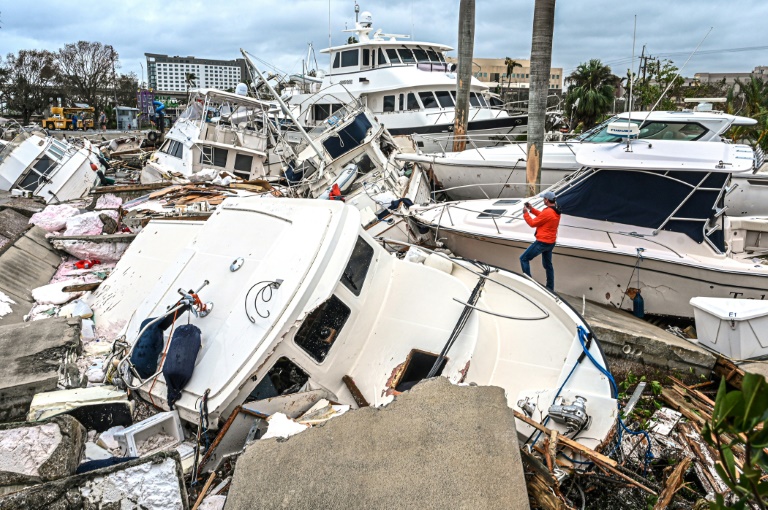
Hurricane Ian inundated cities, turned out the lights on millions of residents and left migrants from an overturned boat missing Thursday as Florida assessed damage from what the state governor described as a “500-year flood event.”

Officials launched a major emergency response after one of the most intense US storms in years, with helicopter crews plucking survivors from barrier islands slammed by a deluge that saw storm surges crash through beachfront towns and horizontal rain pound communities for hours.

After an initial look at the breathtaking destruction, Florida Governor Ron DeSantis said the coastal city of Fort Myers and adjacent Cape Coral were “really inundated and really devastated” by the storm.

He said there were “two unconfirmed fatalities” that were likely linked to the hurricane.

The National Hurricane Center (NHC) downgraded Ian to a tropical storm Thursday, but said it was causing “catastrophic flooding” and forecast further “life-threatening” floods, storm surge and high winds in central and eastern Florida as well as Georgia and South Carolina.

The US Border Patrol said a boat carrying migrants sank at sea during the hurricane, leaving 20 missing. Four Cubans swam to shore in the Florida Keys islands and the coast guard rescued three others.

Ian also menaced the city of Orlando and the nearby Disney theme parks, which were shuttered.

– ‘We’re alive’ –

Ian’s savagery was most evident along Florida’s west coast, including Punta Gorda, which was plunged into darkness after the storm wiped out power.

Howling winds toppled trees, pulled chunks out of roofs, and turned debris into dangerous projectiles whipping through town.

Punta Gorda urvivor Joe Ketcham, 70, told AFP of the “relentless” banging of metal and his fears about what was to come as the hurricane battered his home.

“But I have the almighty savior who I prayed to. This is all material,” the 70-year-old said of the damage around him. “We’re alive. We’re fine.”

Lisamarie Pierro said that the storm “was long and intense… the mess it left. But this is nothing. My house is still standing.”

President Joe Biden declared a “major disaster” in Florida, a move that frees up federal funding for storm relief.

DeSantis meanwhile warned that broad swathes of Florida remained under threat.

“The amount of water that’s been rising, and will continue today even as the storm is passing, is basically a 500-year flood event,” he told a press conference.

Two barrier islands near Fort Myers, Pine Island and Sanibel Island, popular with vacationers, were essentially cut off when the storm damaged causeways to the mainland.

“The coast guard has been performing rescue missions on the barrier islands consistently since the wee hours of the morning,” DeSantis added.

– Evacuations, power outages –

Ian made landfall as an extremely powerful hurricane just after 3:00 pm Wednesday on the barrier island of Cayo Costa, west of Fort Myers.

Dramatic television footage showed floodwaters surging into beachfront homes, submerging roads and sweeping away vehicles.

The NHC said Ian’s maximum sustained winds reached 150 miles (240 kilometers) per hour when it landed as a Category 4 hurricane — just shy of the maximum Category 5.

As a tropical storm, wind dropped to a maximum 65 miles per hour on Thursday.

Some 2.6 million of Florida’s 11 million homes and businesses were without power Thursday, according to the PowerOutage tracking website.

Mandatory evacuation orders had been issued in many areas, with several dozen shelters set up. Airports stopped all commercial flights, and cruise ship companies delayed or canceled voyages.

The storm was set to move off the east-central coast of Florida later Thursday and emerge into the Atlantic before blowing through Georgia and the Carolinas to the north.

“Some slight re-intensification is forecast, and Ian could be near hurricane strength when it approaches the coast of South Carolina on Friday,” according to the NHC.

Ian had plunged all of Cuba into darkness Tuesday, after battering the country’s west and downing the island’s power network.

At least two people died in Pinar del Rio province, state media in the country of more than 11 million reported.

In the United States, some 5,000 National Guard personnel were mobilized in Florida as DeSantis vowed an all-out rescue and recovery effort. 

Last year, four hurricanes were among 20 separate weather incidents that cost the United States $1 billion or more, the National Oceanic and Atmospheric Administration said.

Human activity has caused life-threatening climate change resulting in more severe weather events across the globe.

Floods, devastation after Hurricane Ian hammers Florida

Hurricane Ian inundated cities, turned out the lights on millions of residents and left migrants from an overturned boat missing Thursday as Florida assessed damage from what the state governor described as a “500-year flood event.”

Officials launched a major emergency response after one of the most intense US storms in years, with helicopter crews plucking survivors from barrier islands slammed by a deluge that saw storm surges crash through beachfront towns and horizontal rain pound communities for hours.

After an initial look at the breathtaking destruction, Florida Governor Ron DeSantis said the coastal city of Fort Myers and adjacent Cape Coral were “really inundated and really devastated” by the storm.

He said there were “two unconfirmed fatalities” that were likely linked to the hurricane.

The National Hurricane Center (NHC) downgraded Ian to a tropical storm Thursday, but said it was causing “catastrophic flooding” and forecast further “life-threatening” floods, storm surge and high winds in central and eastern Florida as well as Georgia and South Carolina.

The US Border Patrol said a boat carrying migrants sank at sea during the hurricane, leaving 20 missing. Four Cubans swam to shore in the Florida Keys islands and the coast guard rescued three others.

Ian also menaced the city of Orlando and the nearby Disney theme parks, which were shuttered.

– ‘We’re alive’ –

Ian’s savagery was most evident along Florida’s west coast, including Punta Gorda, which was plunged into darkness after the storm wiped out power.

Howling winds toppled trees, pulled chunks out of roofs, and turned debris into dangerous projectiles whipping through town.

Punta Gorda urvivor Joe Ketcham, 70, told AFP of the “relentless” banging of metal and his fears about what was to come as the hurricane battered his home.

“But I have the almighty savior who I prayed to. This is all material,” the 70-year-old said of the damage around him. “We’re alive. We’re fine.”

Lisamarie Pierro said that the storm “was long and intense… the mess it left. But this is nothing. My house is still standing.”

President Joe Biden declared a “major disaster” in Florida, a move that frees up federal funding for storm relief.

DeSantis meanwhile warned that broad swathes of Florida remained under threat.

“The amount of water that’s been rising, and will continue today even as the storm is passing, is basically a 500-year flood event,” he told a press conference.

Two barrier islands near Fort Myers, Pine Island and Sanibel Island, popular with vacationers, were essentially cut off when the storm damaged causeways to the mainland.

“The coast guard has been performing rescue missions on the barrier islands consistently since the wee hours of the morning,” DeSantis added.

– Evacuations, power outages –

Ian made landfall as an extremely powerful hurricane just after 3:00 pm Wednesday on the barrier island of Cayo Costa, west of Fort Myers.

Dramatic television footage showed floodwaters surging into beachfront homes, submerging roads and sweeping away vehicles.

The NHC said Ian’s maximum sustained winds reached 150 miles (240 kilometers) per hour when it landed as a Category 4 hurricane — just shy of the maximum Category 5.

As a tropical storm, wind dropped to a maximum 65 miles per hour on Thursday.

Some 2.6 million of Florida’s 11 million homes and businesses were without power Thursday, according to the PowerOutage tracking website.

Mandatory evacuation orders had been issued in many areas, with several dozen shelters set up. Airports stopped all commercial flights, and cruise ship companies delayed or canceled voyages.

The storm was set to move off the east-central coast of Florida later Thursday and emerge into the Atlantic before blowing through Georgia and the Carolinas to the north.

“Some slight re-intensification is forecast, and Ian could be near hurricane strength when it approaches the coast of South Carolina on Friday,” according to the NHC.

Ian had plunged all of Cuba into darkness Tuesday, after battering the country’s west and downing the island’s power network.

At least two people died in Pinar del Rio province, state media in the country of more than 11 million reported.

In the United States, some 5,000 National Guard personnel were mobilized in Florida as DeSantis vowed an all-out rescue and recovery effort. 

Last year, four hurricanes were among 20 separate weather incidents that cost the United States $1 billion or more, the National Oceanic and Atmospheric Administration said.

Human activity has caused life-threatening climate change resulting in more severe weather events across the globe.

Iran targets celebrities, media over Mahsa Amini protests

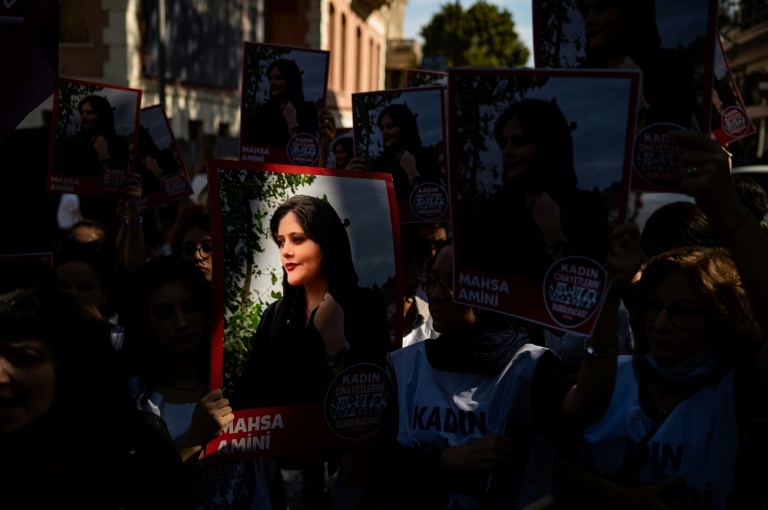
Iran stepped up pressure on celebrities and journalists Thursday over the wave of women-led protests sparked by outrage over the death of Mahsa Amini after she was arrested by the Islamic republic’s morality police.

Filmmakers, athletes, musicians and actors have backed the demonstrations, and many saw it as a signal when the national football team remained in their black tracksuits when the anthems were played before a match in Vienna against Senegal.

“We will take action against the celebrities who have fanned the flames of the riots,” Tehran provincial governor Mohsen Mansouri said, according to the ISNA news agency.

Iran’s judiciary chief Gholamhossein Mohseni Ejei similarly charged that “those who became famous thanks to support from the system have joined the enemy when times are difficult”.

The warnings came after almost two weeks of protests across Iran and a deadly crackdown that, human rights group Amnesty International says, has been marked by “ruthless violence by security forces”.

Public anger flared after Amini, a 22-year-old Kurdish woman, died on September 16, three days after her arrest for allegedly breaching Iran’s strict rules for women on wearing hijab headscarves and modest clothing.

“Woman, Life, Freedom!” protesters have chanted ever since, in Iran’s biggest demonstrations in almost three years, in which women have defiantly burned their headscarves and cut their hair.

President Ebrahim Raisi warned that, despite “grief and sorrow” over Amini’s death, public security “is the red line of the Islamic republic of Iran and no one is allowed to break the law and cause chaos”.

– ‘No to dictatorship’ –

Iran on Thursday slammed “interference” in its internal affairs by France over a statement in support of the protests, having earlier complained to Britain and Norway.

Solidarity protests with Iranian women have been held worldwide, and rallies are planned in 70 cities Saturday.

One protest erupted in Afghanistan’s capital Kabul, where women rallied outside Iran’s embassy with banners that read: “Iran has risen, now it’s our turn!” and “From Kabul to Iran, say no to dictatorship!”

Forces of the ruling hardline Islamist Taliban fired their guns into the air to disperse the crowd, then swiftly snatched the banners and tore them up, an AFP correspondent reported.

Iran on Thursday arrested the reporter Elahe Mohammadi, who had covered Amini’s funeral, her lawyer said, the latest of a growing number of journalists to be detained.

Police have also arrested journalist Niloufar Hamedi of the reformist Shargh daily, who went to the hospital where Amini lay in a coma and helped expose the case to the world.

Intelligence officers of the Islamic Revolutionary Guard Corps arrested 50 members of “an organised network” behind the “riots” in the holy Shiite city of Qom, the Guards said according to Fars news agency.

– Push for EU sanctions –

London-based Amnesty International criticised Iran’s “widespread patterns of unlawful use of force and ruthless violence by security forces”.

It said this included the use of live ammunition and metal pellets, heavy beatings and sexual violence against women, all “under the cover of deliberate ongoing internet and mobile disruptions”.

“Dozens of people, including children, have been killed so far and hundreds injured,” said the group’s secretary general Agnes Callamard.

Fars news agency has said “around 60” people had been killed, while Oslo-based group Iran Human Rights has reported a death toll of at least 76 people.

Iran has blamed outside forces for the protests and Wednesday launched cross-border missile and drone strikes that killed 13 people in Iraq’s Kurdistan region, accusing armed groups based there of fuelling the unrest.

Iran’s economy is already hit by punishing sanctions over its contested nuclear programme.

On Thursday, German Foreign Minister Annalena Baerbock said she was “doing everything” she could to push for European Union sanctions against those “beating women to death and shooting demonstrators in the name of religion”.

The Iranian government has sought to play down the crisis.

Foreign Minister Hossein Amir-Abdollahian said he told Western diplomats at recent UN meetings that the protests were “not a big deal” for the stability of the clerical state.

“There is not going to be regime change in Iran,” he told National Public Radio in New York on Wednesday. “Don’t play to the emotions of the Iranian people.”

burs/pjm/dv

Fourth Nord Stream leak spotted, NATO sees 'sabotage'

Swedish authorities said Thursday a fourth leak was detected on undersea pipelines linking Russia to Europe following what NATO described as an act of sabotage.

The Nord Stream 1 and 2 pipelines have been at the centre of geopolitical tensions as Russia cut gas supplies to Europe in suspected retaliation against Western sanctions following Moscow’s invasion of Ukraine.

The Swedish Coast Guard confirmed Thursday there were four leaks in total on the pipeline in the Baltic Sea — two on the Swedish side and two on the Danish side. Three leaks were previously reported.

NATO declared that the damage was “the result of deliberate, reckless and irresponsible acts of sabotage” and said it supported investigations to determine the origin of the damage.

The Western alliance warned that it was “committed to prepare for, deter and defend against the coercive use of energy and other hybrid tactics”.

“Any deliberate attack against Allies’ critical infrastructure would be met with a united and determined response,” it said, adding that the leaks present risks to shipping and cause substantial environmental damage.

Russia, which has denied it was behind the explosions, said a foreign state was likely responsible for what it described as a “terrorist act”.

Russia’s security service launched an “international terrorism” investigation into the gas leaks, saying the damage had caused “significant economic damage to the Russian Federation”.

Kremlin spokesman Dmitry Peskov said that such a probe “required the cooperation of several countries”, but that there was an “unwillingness” from many countries to contact Russia.

Russia said Wednesday that Washington should answer if it was behind the leaks — an assertion rejected by the United States as “ridiculous”.

The UN Security Council will meet Friday to discuss the matter.

Finland, which borders Russia, decided to reinforce security around its critical infrastructures, with particular focus on the electricity network.

Sweden’s two main nuclear power plants stepped up their alert levels.

– ‘Constant’ gas flow –

Operated by a consortium majority-owned by Russian gas giant Gazprom, Nord Stream 1 and 2 run from Russia to Germany.

While the pipelines are not currently in operation, they both still contained gas.

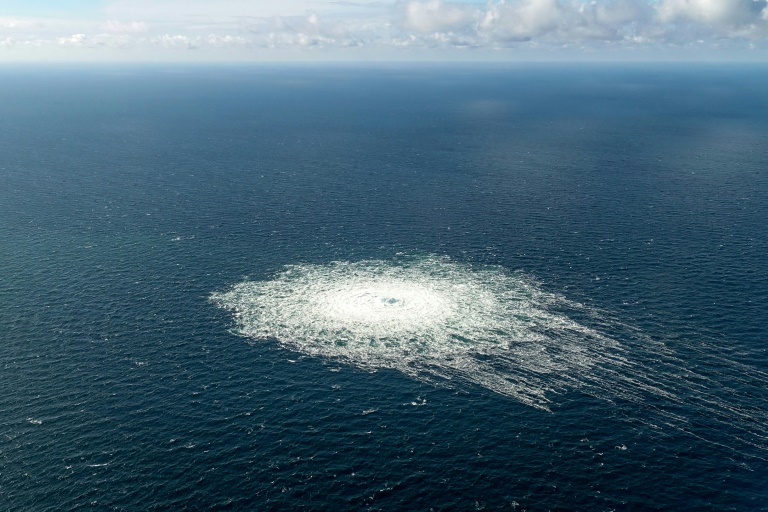
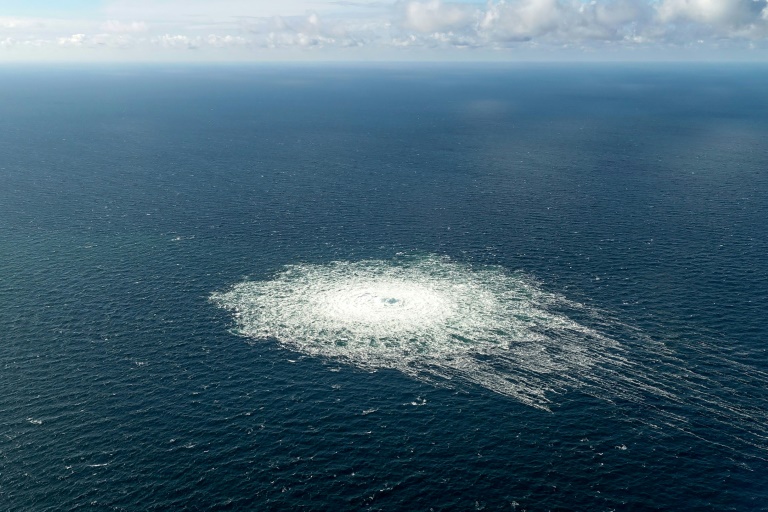
The vast leaks have caused underwater gas plumes, with significant bubbling at the surface of the sea several hundred metres wide, making it impossible to immediately inspect the structures. 

Seismic institutes on Tuesday reported they had recorded “in all likelihood” explosions in the area, prior to the leaks being detected.

A Swedish Coast Guard search and rescue vessel was patrolling the area.

“The crew reports that the flow of gas visible on the surface is constant,” the agency said in a statement. 

Danish authorities said the leaks will continue until the gas in the pipelines is exhausted, which is expected to occur on Sunday.

Fatih Birol, executive director of the International Energy Agency, said at a symposium in Paris that to him it was “very obvious” who was behind the leaks.

He said natural gas shortages in the wake of the war in Ukraine could make for a tough winter in Europe. 

“In the absence of a major negative surprise, I think Europe, in terms of natural gas, can survive this winter with a lot of bruises in our bodies in terms of prices, economy and social issues, but we can go through that,” Birol said. 

According to climate groups, Nord Stream 1 and 2 contained some 350,000 tonnes of natural gas — methane.

Greenpeace says the leaks could have the effect of almost 30 million tonnes of CO2, or more than two-thirds of the annual emissions of Denmark.

Fourth Nord Stream leak spotted, NATO sees 'sabotage'

Swedish authorities said Thursday a fourth leak was detected on undersea pipelines linking Russia to Europe following what NATO described as an act of sabotage.

The Nord Stream 1 and 2 pipelines have been at the centre of geopolitical tensions as Russia cut gas supplies to Europe in suspected retaliation against Western sanctions following Moscow’s invasion of Ukraine.

The Swedish Coast Guard confirmed Thursday there were four leaks in total on the pipeline in the Baltic Sea — two on the Swedish side and two on the Danish side. Three leaks were previously reported.

NATO declared that the damage was “the result of deliberate, reckless and irresponsible acts of sabotage” and said it supported investigations to determine the origin of the damage.

The Western alliance warned that it was “committed to prepare for, deter and defend against the coercive use of energy and other hybrid tactics”.

“Any deliberate attack against Allies’ critical infrastructure would be met with a united and determined response,” it said, adding that the leaks present risks to shipping and cause substantial environmental damage.

Russia, which has denied it was behind the explosions, said a foreign state was likely responsible for what it described as a “terrorist act”.

Russia’s security service launched an “international terrorism” investigation into the gas leaks, saying the damage had caused “significant economic damage to the Russian Federation”.

Kremlin spokesman Dmitry Peskov said that such a probe “required the cooperation of several countries”, but that there was an “unwillingness” from many countries to contact Russia.

Russia said Wednesday that Washington should answer if it was behind the leaks — an assertion rejected by the United States as “ridiculous”.

The UN Security Council will meet Friday to discuss the matter.

Finland, which borders Russia, decided to reinforce security around its critical infrastructures, with particular focus on the electricity network.

Sweden’s two main nuclear power plants stepped up their alert levels.

– ‘Constant’ gas flow –

Operated by a consortium majority-owned by Russian gas giant Gazprom, Nord Stream 1 and 2 run from Russia to Germany.

While the pipelines are not currently in operation, they both still contained gas.

The vast leaks have caused underwater gas plumes, with significant bubbling at the surface of the sea several hundred metres wide, making it impossible to immediately inspect the structures. 

Seismic institutes on Tuesday reported they had recorded “in all likelihood” explosions in the area, prior to the leaks being detected.

A Swedish Coast Guard search and rescue vessel was patrolling the area.

“The crew reports that the flow of gas visible on the surface is constant,” the agency said in a statement. 

Danish authorities said the leaks will continue until the gas in the pipelines is exhausted, which is expected to occur on Sunday.

Fatih Birol, executive director of the International Energy Agency, said at a symposium in Paris that to him it was “very obvious” who was behind the leaks.

He said natural gas shortages in the wake of the war in Ukraine could make for a tough winter in Europe. 

“In the absence of a major negative surprise, I think Europe, in terms of natural gas, can survive this winter with a lot of bruises in our bodies in terms of prices, economy and social issues, but we can go through that,” Birol said. 

According to climate groups, Nord Stream 1 and 2 contained some 350,000 tonnes of natural gas — methane.

Greenpeace says the leaks could have the effect of almost 30 million tonnes of CO2, or more than two-thirds of the annual emissions of Denmark.

Rwandan tycoon had key genocide role, trial hears

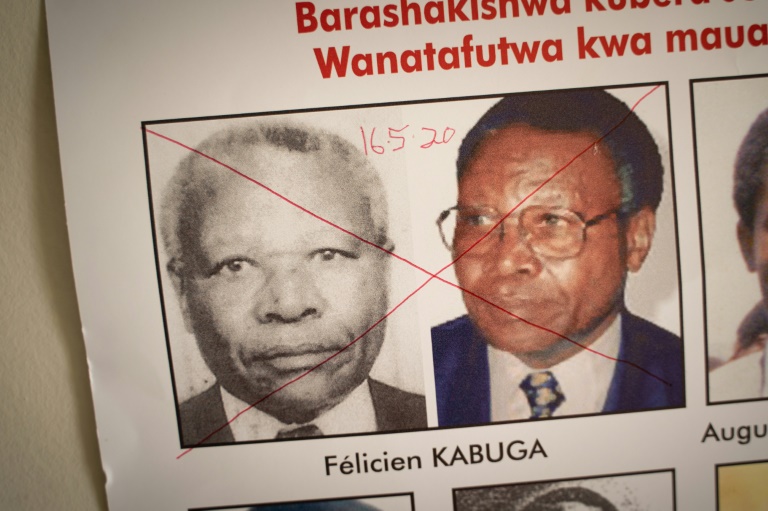
Rwandan tycoon Felicien Kabuga played a crucial role in the 1994 genocide, prosecutors said Thursday as one of the most wanted remaining suspects from the slaughter boycotted the opening of his trial in The Hague.

Once among Rwanda’s richest men, the now 87-year-old set up a hate broadcaster that urged ethnic Hutus to kill rival Tutsi “cockroaches” and armed the murderous Interahamwe militia with machetes, a UN tribunal heard.

The wheelchair-bound Kabuga refused to appear in court and stayed in his jail cell as the trial got underway, more than a quarter of a century after the 100-day rampage that left over 800,000 people dead.

“Twenty-eight years after the events, this trial is about holding Felicien Kabuga to account for his substantial and intentional role in that genocide,” prosecutor Rashid S. Rashid told the court.

“Kabuga didn’t need to wield a rifle or a machete at a roadblock, rather he supplied weapons in bulk and facilitated the training that prepared the Interahamwe to use them,” he added.

“He didn’t need to pick up a microphone to call for the extermination of the Tutsi on the radio, rather he founded, funded and served as president of… the radio station that broadcast genocidal propaganda across Rwanda.”

After decades on the run, Kabuga was arrested in France in 2020 and sent to a UN court in The Hague.

Kabuga’s lawyers entered a not guilty plea in 2020 at the UN’s International Residual Mechanism for Criminal Tribunals, and have tried to halt the proceedings on health grounds.

– ‘Frenzied calls for extermination’ –

The trial is being closely watched in Rwanda, which still bears the scars of the genocide.

“It is a positive sign that justice is finally going to be served,” Naphtali Ahishakiye of the umbrella association for genocide survivors IBUKA told AFP.

“Kabuga’s refusal to attend his trial proves that he does not want to assist truth finding in any way.”

Head judge Iain Bonomy said on Thursday that Kabuga had decided not to attend the opening of the trial in person or watch by video link, but the “appropriate course is to proceed”.

Kabuga issued a statement saying he had lost confidence in his own court-appointed defence attorney, Emmanuel Altit.

Prosecutors said that as a wealthy ally of Rwanda’s then-ruling party, Kabuga helped create the pro-Hutu Radio-Television Libre des Mille Collines (RTLM).

As Rwanda descended into carnage after the shooting down of a plane carrying the country’s Hutu president in April 1994, RTLM’s spewed “constant frenzied overt calls for extermination” of Tutsis, said Rupert Elderkin, another prosecution lawyer.

The radio station described Tutsis as “cockroaches” and “subhuman vermin” and identified the hiding places of Tutsis where they were later killed, he said.

In a video played to the court, Kabuga defended the broadcaster at the time, saying it “can’t please everyone”.

Kabuga also directly supported the Interahamwe during the genocide, by bankrolling them, organising training, and importing machetes and other weapons.

He also allegedly handed out weapons at Interahamwe rallies. “Kabuga then told them to go and finish the job,” Elderkin said.

– ‘Significant step’ –

More than 50 witnesses are expected to appear for the prosecution, starting next week, in a trial that is set to take months.

After fleeing Rwanda, Kabuga spent more than 20 years evading an arrest warrant issued by the UN war crimes tribunal for Rwanda, helped by a network of former allies.

He was finally caught in a small apartment in Paris and sent to The Hague for trial.

Kabuga is one of the last Rwandan genocide suspects to face justice, with 62 convicted by the tribunal so far.

“This case is still of paramount importance,” the tribunal’s chief prosecutor Serge Brammertz told AFP at the court. 

Four key Rwanda suspects are still at large, with the “priority” being Fulgence Kayishema, who was last located in South Africa three years ago, added Brammertz.

Human Rights Watch welcomed the start of the trial as a “significant step in efforts to ensure accountability”.

But in Kabuga’s native village of Nyange, many residents still speak fondly of the man who rose from humble farming stock to run an empire of coffee, tea and real estate.

“He paid us well,” said Alphonsine Musengimana, 35, who worked on Kabuga’s tea plantations as a child.

US insider beats Russian to lead UN telecoms agency

Doreen Bogdan-Martin was elected Thursday as the first woman to lead the UN’s telecoms agency in its 157-year history, with the US contender beating a Russian rival to the post.

Bogdan-Martin will become the next secretary-general of the International Telecommunication Union, which plays an important global role in setting the technical standards underlying mobile phones, television and the internet.

She claimed a landslide 139-25 victory over Russia’s former deputy telecoms minister Rashid Ismailov in an election among the ITU’s member states at a conference in Bucharest.

“Today, we made history. After 157 years, we shattered the glass ceiling,” she said.

Bogdan-Martin has worked her way up through the ITU. She joined its development bureau — one of the ITU’s three main divisions — in 1993 and became its director in 2019, pushing digital transformation.

Contests for the top UN jobs are typically about the balance of power between regional blocs.

The vote to lead the UN’s Geneva-based information and communication technologies agency — which coordinates everything from radio frequencies to satellites and 5G — was unrelated to Russia’s invasion of Ukraine.

However, the election was being seen as a test of Russia’s standing in the United Nations as the war in Ukraine grinds on.

Moscow’s reliable friends in UN circles have dwindled due to the war, though ITU member states had nonetheless blocked a bid to stop Russian candidates from running.

– ‘2.7 billion still offline’ –

Bogdan-Martin’s pitch was about getting more of the world connected to the internet and pushing forward high-speed access.

“The world is facing significant challenges: escalating conflicts, a climate crisis, food security, gender inequalities, and 2.7 billion people with no access to the internet,” she said.

“We are riding a powerful wave of innovation and growth and must use this opportunity to improve peoples’ lives — especially those who are excluded.”

US Secretary of State Antony Blinken said in a statement: “This outcome reflects a broad endorsement by member states of Ms. Bogdan-Martin’s vision for universal connectivity, digital empowerment, and leadership at the ITU that is innovative, collaborative, and inclusive.”

He said Washington was determined to ensure that international organisations were well-run, responsive and accountable.

Bogdan-Martin will take over from China’s Houlin Zhao when his second four-year term as ITU secretary-general expires at the end of the year.

“This marks a new beginning for ITU. Let this be an inspiration for more women and girls to make their contribution to our industry,” Zhao said.

France’s mission in Geneva called her an “inspiring force for women who want to embark on a career in information communications technology”.

The European Broadcasting Union said it looked forward to strengthening its partnership with the ITU and its new chief in the years to come.

– Oldest UN agency –

Bogdan-Martin was chosen in a secret ballot during the ITU’s plenipotentiary conference, its main decision-making body.

The gathering in Bucharest, from September 26 to October 14, is the major event in the agency’s four-year calendar.

The ITU is preparing a widely-anticipated report on the telecoms infrastructure damage in Ukraine since Russia’s invasion, with the European Union voicing frustration it was not released in time for the Bucharest conference.

In response, Zhao said in a letter sent to the EU on Wednesday, seen by AFP on Thursday, saying that an “interim assessment report” would be published “after” the gathering.

A Western diplomat aired disappointment at the delay, saying six months had now passed, and telling AFP: “They really are running out of excuses.”

The ITU was founded in 1865, making it the oldest agency in the UN fold.

It was created to manage international telegraph networks, but expanded its remit with new technological developments such as telephones, radio, television, satellites, mobile phones and the internet.

It brings together 193 member states as well as some 900 companies, universities, and international and regional organisations.

“Every time you make a phone call via the mobile, access the internet or send an email, you are benefiting from the work of ITU,” it boasts.

Germany deploys 200-bn-euro shield in 'energy war'

Germany on Thursday extended a 200-billion-euro ($194-billion) shield to protect households and businesses from skyrocketing power costs, as Europe’s biggest economy found itself in an “energy war over prosperity and freedom” against Russia.

“The German government will do everything so that prices sink,” Chancellor Olaf Scholz vowed, announcing a price cap for electricity and gas, as well as a plan to cream off windfall profits made by energy companies little hit by soaring gas prices.

The multi-billion-euro fund was designed to ensure that Germany could contend with the fallout from rising prices “this year and next year and the one after that”, Scholz said.

Thursday’s announcement came as inflation soared to a 70-year high of 10 percent in September, according to official data, driven higher by spiking energy prices.

The country was also predicted to sink into a recession in 2023, with consumer prices seen reaching 8.8 percent annually, leading economic institutes said Thursday. 

Germany, which has been highly dependent on imports of fossil fuels from Russia to meet its energy needs, has come under acute pressure as dwindling supplies from Moscow have stoked prices for the fuel.

“We find ourselves in an energy war over prosperity and freedom,” Finance Minister Christian Lindner said.

Protecting consumers against the rising bills was a “crystal clear answer” to Russian President Vladimir Putin that Germany was “strong economically”, he added.

– ‘Bakers and craftsmen’ –

Protection from rising prices was needed for “pensioners, workers, families… but also bakers and craftsmen or big industrial plants that are dependent on electricity and the gas supply”, Scholz said. 

Confidence amongst businesses and consumers has dropped precipitously in recent months as Germany slips towards a winter recession.

As well as rising household bills, some businesses have been forced to rein in production or operate a loss as their energy costs soar. 

The gas price cap should cover “at least a part” of the gas used by households and businesses, while “maintaining an incentive to reduce gas use” over the winter as supplies are limited, the government said in a statement.

In the same way, the government would work to limit the price of electricity for consumers by skimming off profits made by energy firms that have profited by the higher asking prices for gas but which do not use the energy source to generate power.

Ahead of the announcement, analysts warned that a full energy price cap would rob consumers of a reason to limit their usage, just as the government is imploring households to make every saving possible over the winter.

One in two flats in Germany is heated with gas, with figures from Thursday showing national usage was above average for the time of year.

“Without significant reductions, including in private households, it will be difficult to avoid a gas shortage,” the head of the Federal Network Agency Klaus Mueller warned.

– Gas levy –

Scholz also announced that the government would be scrapping a controversial gas levy that would have allowed energy companies to pass on rising costs and stabilise their business.

Germany has moved to prop up the energy market, announcing the nationalisation of struggling provider Uniper, which had been one of the biggest importers of Russian gas.

An agreement on the financing for the new package only emerged after weeks of haggling within the three-way coalition between Scholz’s Social Democrats, the Greens and the liberal FDP.

The 200 billion euros would be pumped into an economic stability fund outside the government’s main budget, allowing the government to stick to constitutional debt rules that limit public deficits — a red line for FDP leader Lindner.

“Through these measures, we want to send a clear signal to the capital markets that even while we use such a shield, Germany will keep to its stability-oriented fiscal policy. German bonds remain the gold standard in the world,” he said. 

Over the last months, Germany has also rushed to tap new sources of energy to reduce the demands put on gas. 

Earlier this month, the government said it would keep two nuclear power plants running beyond the end of the year to prop up the electricity grid.

The decision marked a major U-turn, with the traditionally anti-nuclear Greens consenting to delay Merkel era plans to exit atomic energy.

Close Bitnami banner
Bitnami