World

EU grapples with runaway energy prices

The EU on Friday will seek urgent ways to bring down skyrocketing energy prices as winter looms, with “sabotage” of gas pipelines from Russia this week injecting drama into the effort.

Energy ministers will gather in Brussels to consider an emergency European Commission proposal that includes cutting power use in the bloc, imposing windfall levies on energy companies and discussing a price cap on wholesale gas supplies.

Europe has found itself over a barrel as fossil fuel deliveries from Russia dry up. 

EU sanctions on Moscow for its invasion of Ukraine, which include shunning Russian oil starting in December, have prompted the Kremlin to retaliate by severely reducing supplies of natural gas.

Unexplained leaks on the undersea Nord Stream 1 and 2 gas pipelines from Russia to Germany — seen as “sabotage” by EU leaders, with suspicion falling on Moscow — have aggravated the situation.

– Sky-high bills –

Alarm is rising sharply among Europeans faced with climbing energy bills.

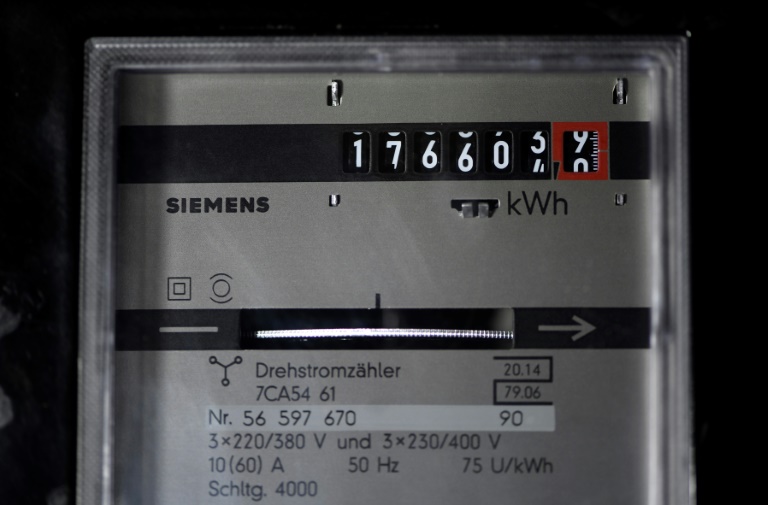
“It’s utterly impossible to pay,” Pascale Dumont, a baker in a Belgian town called Gedinne, told AFP after her business’s monthly electricity bill jumped tenfold, to 11,836 euros ($11,500).

“If you work it out over a year, it’s how much a house costs!” she exclaimed.

Business Europe, an EU lobby, warned that “the current state of high gas and electricity prices bears the imminent risk of production losses and shutdowns of thousands of European companies”.

The EU country on the frontline of the energy crunch is Germany, the bloc’s export powerhouse which had long been dependent on Russian gas.

After recording a jump to 10 percent inflation, its government said it will borrow 200 billion euros to shield German households and businesses from “an energy war”.

That adds to various national initiatives across the European Union totalling many hundreds of billions of euros — a hefty bill added to the one run-up during the worst of the Covid pandemic.

The European Commission is trying to leverage the Covid-era cooperation to forge a common EU approach on energy.

“Europe is facing energy blackmail by Russia, and global demand for gas is higher than supply,” EU energy commissioner Kadri Simson said.

“We need to work along the whole chain to tackle the challenge,” she said, adding that a price cap on the wholesale price of gas entering the EU “is possible” if other measures fail to bring results.

– Price cap mooted –

One core proposal with strong backing is a “cap” on non-gas electricity producers’ profits and a “contribution” from other energy majors. 

The levies — the commission refuses to call them a “windfall tax” — are calculated to raise 140 billion euros which can be spent to cushion consumers.

Another is to encourage reduced energy consumption, for instance by turning off public lighting earlier, lowering thermostats to a maximum of 19 degrees Celsius (66 degrees Fahrenheit) and lower peak-hour power use.

The Bruegel think tank in Brussels, however, said those steps are “not sufficient”.

“A more comprehensive plan needs to ensure that all countries bring forward every available supply-side flexibility, make real efforts to reduce gas and electricity demand, keep their energy markets open and pool demand to get a better deal from external gas suppliers,” it said.

Part of the problem in coming up with a more biting EU approach is the different energy mixes in member countries. 

France, for example, is largely nuclear-powered, while eastern EU countries rely on fossil fuels, and Spain gets its gas from North Africa.

Fifteen EU countries, among them France, Italy and Poland, have written a joint letter calling for a price cap on all gas imports into the bloc — covering pipeline gas from Russia but also liquified natural gas (LNG) shipments from the US and elsewhere.

An EU official briefing journalists on condition of anonymity called that idea “radical”.

The “significant risks” it carried included a sudden shortfall in gas supplies to Europe, especially from LNG suppliers diverting ships to more lucrative buyers elsewhere in the world.

One possible solution would be a centralised EU buying for gas “but the complexity of such a mechanism is such that I think in a short timeframe it is difficult to address,” the official said.
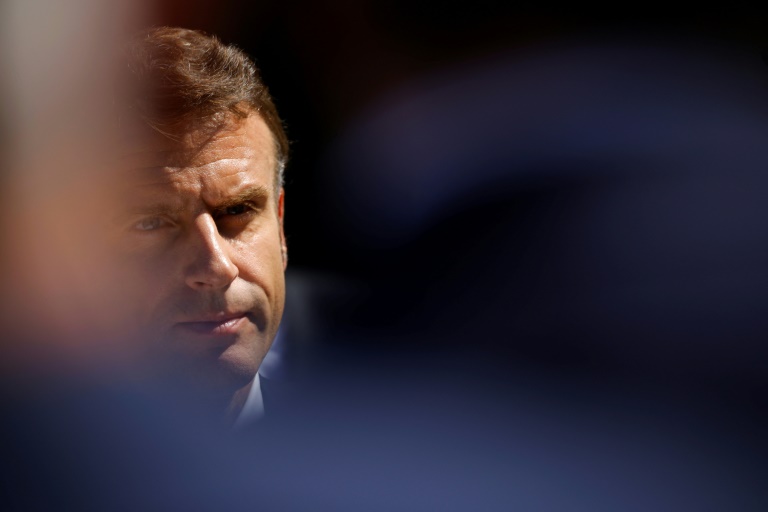
Macron government lays out reform timeline amid strike

The French government vowed on Thursday to push through pension reform by the end of the winter despite fierce opposition from unions whose first major day of strikes failed to have much impact.

A nationwide day of stoppages called by the CGT union on Thursday — the first since President Emmanuel Macron was re-elected in April — caused some disruption, but was not widely followed.

Several unions, including the country’s biggest, did not take part, although all of them are gearing up for a months-long battle over efforts to raise the pension age.

Macron made raising the retirement age from its current level of 62 one of the key planks of his re-election campaign, arguing that the current system was unsustainable and too expensive.

“All the unions in France are against working up to 64 or 65 years. Because it’s stupid,” the head of the CGT union, Philippe Martinez, told France 2. 

Left-wing political parties have called their own separate rallies on October 16 to demand pay rises and an end to the planned pension changes.

Though known to be in a rush to push through the changes, Macron’s Prime Minister Elisabeth Borne announced Thursday that the government would spend another few months in consultations.

“There are important questions we want to open talks about” with other political parties, unions and employers’ groups, Borne told AFP.

“We’re starting from the assumption that we’ll be able to hold a dialogue,” she added.

A bill would be voted on “before the end of the winter”, she promised.

– Fresh elections? –

With deficits spiralling and public debt at historic highs, Macron views pushing back the pension age as one of the only ways the state can raise revenues without increasing taxes.

But his centrist party lost its majority in parliament in June, severely undermining his ability to make changes.

“If the president insists on declaring a social war on the people, we will respond with all the means at our disposal,” the parliamentary leader of the hard-left France Unbowed (LFI) party, Mathilde Panot, warned on Wednesday.

Labour Minister Olivier Dussopt said that the 44-year-old head of state would not hesitate to call fresh elections if opposition parties voted down the government over the reform.

“If all of the opposition comes together to adopt a vote of no-confidence and brings down the government, he (Macron) will let French people decide and say what sort of a majority they want,” Dussopt told the LCI channel. 

No opposition party has pledged to support the centrist minority government so far, but the conservative Republicans party might still be persuaded, observers say.

– Stoppages – 

The strike on Thursday was followed by about one in ten teachers, according to the education ministry, leading to school closures in some areas.

One in three railway workers also stopped work, according to the CGT, leading to major cancellations on key routes including Paris-Bordeaux.

The biggest of around 200 protests nationwide was expected to draw 3,000-6,000 people in Paris on Thursday afternoon, according to a police source.

Around 4,300 people marched in the southern city of Marseille. 

The strikes and demonstrations were small by historic French standards and even the last round of protests against pension reform in 2019. 

Hundreds of thousands marched in 2019 and a four-week strike on Paris transport crippled the metro system in what was the longest stoppage in decades.

“I don’t know anyone who wants to work for longer, but I don’t know anyone who thinks they are not going to work for longer,” a minister close to the president told AFP last week on condition of anonymity.

“Maybe I’m mistaken, but I’m not sure that the turnout will be as large as the unions and LFI are hoping for,” the minister said of Thursday’s day of action.

burs-adp/sjw/imm

Crowds build for reopening of Windsor Castle

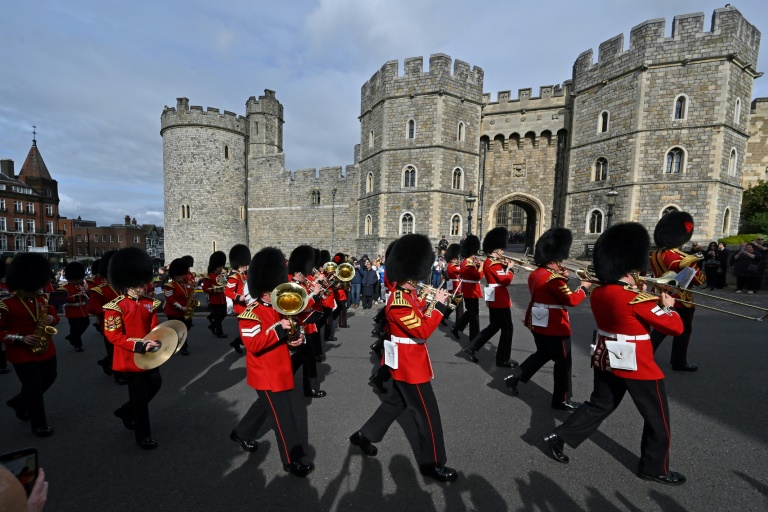
Hundreds of people lined up on Thursday outside Windsor Castle, as the landmark royal residence and its historic St George’s Chapel, where Queen Elizabeth II was buried last week, re-opened following her death.

Long queues of tourists, many with advance tickets, stretched back along the narrow streets outside the castle’s stately walls for a chance to visit.

Royal palaces and residences have been closed since the death of the queen on September 8, including Windsor, west of London, where she spent much of her time.

The queen, who was 96, was laid to rest on September 19 after a grand state funeral in London and a committal service at St George’s.

Her coffin was transferred to the adjoining King George VI Memorial Chapel, alongside her father, King George VI, and her mother, also called Elizabeth.

The queen’s husband Prince Philip, who died last year, is also interred there, as are the ashes of her younger sister, Princess Margaret.

“We grew up knowing the queen, respecting her. We felt very close to her,” said Julie Davies, 67, from Upton in northwest England, who was visiting with her husband Allan, 62.

“It’s very emotional, it means a lot,” he added.

– ‘Extremely honoured’ –

Elizabeth II was Britain’s longest-serving monarch in history, spending 70 years on the throne.

She often prayed at St George’s Chapel, which dates back more than 500 years.

The memorial chapel, which was completed in 1969, was commissioned by Elizabeth as a permanent resting place for her father.

The king died aged 56 in February 1952 but his death had been unexpected and as a result no specific resting place had been allocated.

Vivian Bjorkenstamn, 65, from Toronto, said she was there “specifically to pay respects and show my gratitude for the queen”.

“She is part of our DNA… a wonderful woman to admire and to emulate,” she added.

For her father, the queen rejected the idea of the traditional marble chest tomb with life-sized effigies favoured by earlier royals.

Instead his grave was marked with a simple black marker stone laid into the floor.

The stone now records the birth and death dates of the Elizabeth, Philip and Elizabeth’s parents.

Amy Schrader, 34, and her sister Sarah Exner, 28, from Washington DC, said they had been determined to secure tickets.

“We were affected by the queen’s death. We came to celebrate her life, to see her grave and pay our respects,” Schrader said.

To be among the first to see the grave was unexpected but “definitely something so special”.

“It gives me goosebumps just thinking about that. We feel extremely honoured,” she added.

First images of asteroid strike from Webb, Hubble telescopes

The James Webb and Hubble telescopes on Thursday revealed their initial images of a spacecraft deliberately crashing into an asteroid, marking the first time the two most powerful space telescopes have observed the same celestial object.

The world’s telescopes turned their gaze towards the space rock Dimorphos earlier this week for a historic test of Earth’s ability to defend itself against a potential future life-threatening asteroid.

Astronomers rejoiced as NASA’s Double Asteroid Redirection Test (DART) impactor slammed into its pyramid-sized target 11 million kilometres (6.8 million miles) from Earth on Monday night.

Images taken by Earth-bound telescopes showed a vast cloud of dust expanding out of Dimorphos — and its big brother Didymos which it orbits — after the spacecraft hit.

While those images showed matter spraying out over thousands of kilometres, the James Webb and Hubble images “zoom in much closer”, said Alan Fitzsimmons, an astronomer at Queen’s University Belfast involved in observations with the ATLAS project.

James Webb and Hubble can see “within just a few kilometres of the asteroids and you can really clearly see how the material is flying out from that explosive impact by DART”, Fitzsimmons told AFP.

“It really is quite spectacular,” he said.

Observations from the space telescopes will help reveal how much — and how quickly — matter sprayed from the asteroid, as well as the nature of its surface.

– ‘A beautiful demonstration’ – 

An image taken by James Webb’s Near-Infrared Camera (NIRCam) four hours after impact shows “plumes of material appearing as wisps streaming away from the centre of where the impact took place”, according to a joint statement from the European Space Agency, James Webb and Hubble.

James Webb’s images were shown in red because the telescope operates primarily in the infrared spectrum, which allows it to peer further into the universe than ever before.

The images from Hubble’s Wide Field Camera 3 were blue because it shows the impact on visible light.

Hubble images from 22 minutes, five hours and eight hours after impact show the expanding spray of matter from where DART hit on the asteroid’s left.

The true measure of DART’s success will be exactly how much it diverted the asteroid’s trajectory, so the world can start preparing to defend itself against bigger asteroids that could head our way in the future. 

However, it will take Earth-bound telescopes and radar days or even weeks to work out exactly where Dimorphos is, compared to where it would have been.

Measurements using that data will probably start next week, Fitzsimmons said. 

“The problem we have at the moment is that there’s still a lot of dust and debris around the asteroids,” he said. 

“How quickly astronomers can make that measurement will depend on exactly how efficient DART was,” he added. The more the asteroid has been knocked off course, the easier it will be to measure.

Since launching in December and releasing its first images in July, James Webb has taken the title of most powerful space telescope from Hubble.

With astronomers lined up for precious time to peer into the universe, the DART test is the first time both telescopes have observed the same event.

Fitzsimmons said the images were “a beautiful demonstration of the extra science you can get by using more than one telescope simultaneously”.

First images of asteroid strike from Webb, Hubble telescopes

The James Webb and Hubble telescopes on Thursday revealed their initial images of a spacecraft deliberately crashing into an asteroid, marking the first time the two most powerful space telescopes have observed the same celestial object.

The world’s telescopes turned their gaze towards the space rock Dimorphos earlier this week for a historic test of Earth’s ability to defend itself against a potential future life-threatening asteroid.

Astronomers rejoiced as NASA’s Double Asteroid Redirection Test (DART) impactor slammed into its pyramid-sized target 11 million kilometres (6.8 million miles) from Earth on Monday night.

Images taken by Earth-bound telescopes showed a vast cloud of dust expanding out of Dimorphos — and its big brother Didymos which it orbits — after the spacecraft hit.

While those images showed matter spraying out over thousands of kilometres, the James Webb and Hubble images “zoom in much closer”, said Alan Fitzsimmons, an astronomer at Queen’s University Belfast involved in observations with the ATLAS project.

James Webb and Hubble can see “within just a few kilometres of the asteroids and you can really clearly see how the material is flying out from that explosive impact by DART”, Fitzsimmons told AFP.

“It really is quite spectacular,” he said.

Observations from the space telescopes will help reveal how much — and how quickly — matter sprayed from the asteroid, as well as the nature of its surface.

– ‘A beautiful demonstration’ – 

An image taken by James Webb’s Near-Infrared Camera (NIRCam) four hours after impact shows “plumes of material appearing as wisps streaming away from the centre of where the impact took place”, according to a joint statement from the European Space Agency, James Webb and Hubble.

James Webb’s images were shown in red because the telescope operates primarily in the infrared spectrum, which allows it to peer further into the universe than ever before.

The images from Hubble’s Wide Field Camera 3 were blue because it shows the impact on visible light.

Hubble images from 22 minutes, five hours and eight hours after impact show the expanding spray of matter from where DART hit on the asteroid’s left.

The true measure of DART’s success will be exactly how much it diverted the asteroid’s trajectory, so the world can start preparing to defend itself against bigger asteroids that could head our way in the future. 

However, it will take Earth-bound telescopes and radar days or even weeks to work out exactly where Dimorphos is, compared to where it would have been.

Measurements using that data will probably start next week, Fitzsimmons said. 

“The problem we have at the moment is that there’s still a lot of dust and debris around the asteroids,” he said. 

“How quickly astronomers can make that measurement will depend on exactly how efficient DART was,” he added. The more the asteroid has been knocked off course, the easier it will be to measure.

Since launching in December and releasing its first images in July, James Webb has taken the title of most powerful space telescope from Hubble.

With astronomers lined up for precious time to peer into the universe, the DART test is the first time both telescopes have observed the same event.

Fitzsimmons said the images were “a beautiful demonstration of the extra science you can get by using more than one telescope simultaneously”.

Finland closing border to Russians with EU tourist visas

Finland said Thursday it will bar Russians with Schengen tourist visas from entering the country at midnight (2100 GMT) following a surge in arrivals after Moscow’s mobilisation order.

“The decision aims to completely prevent the current situation of Russian tourism to Finland and the related transit through Finland,” Foreign Minister Pekka Haavisto told a press conference.

Haavisto cited damage to “Finland’s international relations” as a justification for the decision and said Russia’s mobilisation had a “significant impact” on the Finnish assessment. 

The “illegal referendums in Ukraine” and the alleged sabotage of the Nord Stream pipelines in the Baltic Sea “have added to concerns”, Haavisto said.

Restrictions include exceptions on human rights grounds, and Russians can still enter Finland to meet family, work, or study.

“The decision must also not prevent travel for humanitarian reasons,” Haavisto added.

Interior Minister Krista Mikkonen said it was possible the restrictions would trigger an increase in asylum applications and illegal border crossings.

Mikkonen said that someone being called up for mobilisation itself was not grounds for asylum — unless it can be shown, for example, that the individual might be forced to commit war crimes or is subject to disproportionate punishment.

“But those decisions are always taken individually by the authorities,” she said.

Even before Russia’s mobilisation order Finland had restricted the number of visas issued to Russians, as tourism from its eastern neighbour had caused discontent due to the war in Ukraine.

But Haavisto noted that the restrictions in place were not “sufficient” in the current situation.

– ‘Horribly unpleasant’ –

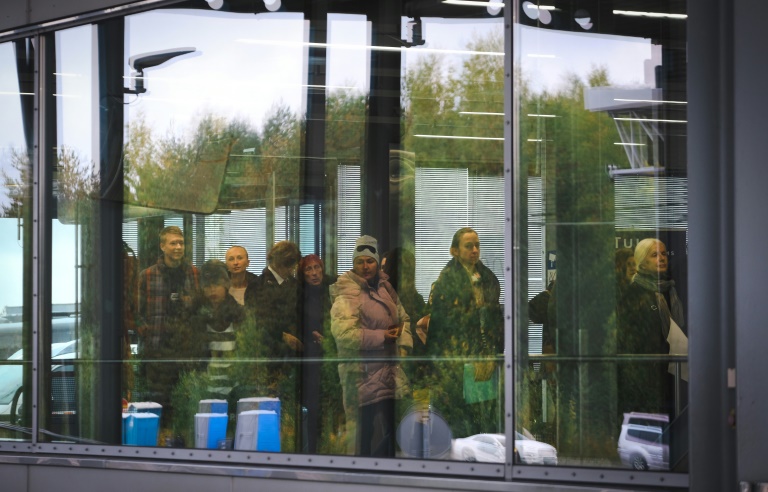
Fearing that Russia could close its border “forever” following the mobilisation order, a growing number of Russians, many of fighting age, have been rushing to cross into neighbouring Finland in recent days.

Most of them have rushed to the Vaalimaa border crossing in the south.

The number of daily crossings hovered around 7,000 or 8,000 last weekend and earlier this week, but numbers began to decline on Wednesday.

“I just made it through, I don’t know how the others will get through. It’s sad, sad”, Andrei Stepanov, a 49-year-old Russian told AFP of the new restrictions.

“I feel sorry for the others, they’re already like in prison there. Now it’s even worse”, said Stepanov, originally from Samara, about 100 kilometres (60 miles) from the Kazakh border.

“We already were behind the iron curtain, now the curtain will be even thicker. It’s horribly unpleasant”, lamented Aleksander Veselov, a 64-year-old from Saint Petersburg.

Swiss franc's surge against the euro a boon for business

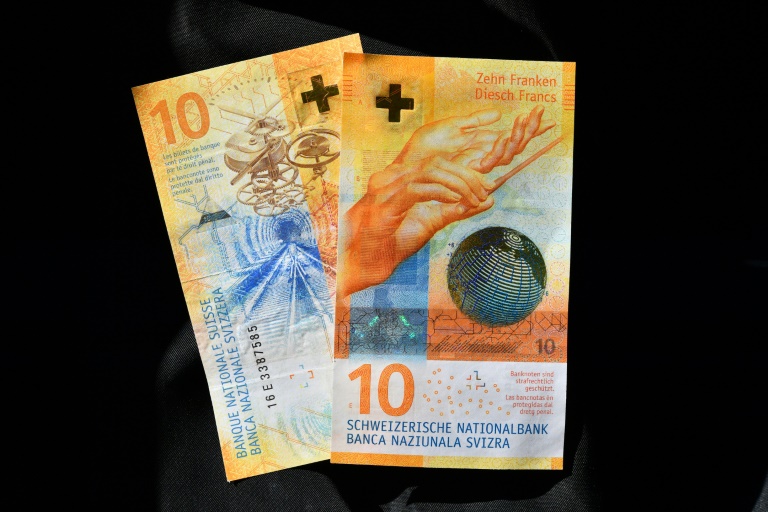
The Swiss franc is breaking records against the euro, giving the Swiss economy a temporary boost as central banks battle inflation — although experts remain cautious about the months ahead.

Seen as a safe haven, the Swiss currency briefly hit a high of 0.94 francs to the euro on Monday following the Italian general election.

While it has since eased back a little, it is nevertheless at the highest levels since the launch of the single currency more than 20 years ago, outside a brief flash crash in 2015.

“It’s more about the weakness of the euro than the strength of the Swiss franc,” Credit Suisse economist Maxime Botteron told AFP, citing the franc’s steadier performance against the US dollar.

“European growth is showing signs of running out of steam, even recession,” he said, noting that “these indicators come in a context where the Swiss National Bank (SNB) has changed its monetary policy”.

Switzerland’s central bank has abandoned the negative rate it has imposed since 2015 to combat the overvaluation of its currency.

Like other central banks, the SNB seeks to prevent inflation from taking root. But in the midst of soaring energy prices, the franc’s rise is providing it with welcome help in curbing price increases.

“In Switzerland, two-thirds of inflation is due to imports. An appreciation of the Swiss franc therefore reduces the rise of these goods a little,” said Botteron, adding that the SNB “therefore has less need to tighten monetary policy” than other central banks.

In August, inflation rose to 3.5 percent, its highest level in 29 years, but far behind the 9.1 percent recorded last month in the eurozone.

– Tourism boost – 

“There is a very clear strategy to shield Switzerland the against the rising inflation coming from the eurozone, the US and other trading partners,” said Thomas Flury, UBS bank’s global head of currency strategy.

The franc’s rise has not triggered panic, unlike in 2015 when exporters feared their production costs and export prices would explode.

“High inflation in the eurozone makes the real appreciation much less dramatic than in the past,” said Flury.

“Acceptance is coming because companies in Switzerland would rather have a stronger Swiss franc than discussions on wage rises that French or German companies will have to do, as well the cost pressures from imports.”

If this rise in the franc eases somewhat the pressure on their imports, Swiss companies, with well-filled order books, also have some leeway to increase their prices, said Botteron.

In tourism, another sector sensitive to the exchange rate, the franc’s rise has enabled Swiss hoteliers to increase their prices to a lesser degree than in neighbouring countries given the lower inflation, a spokesman for the Hotellerie Suisse hotel industry body told AFP.

“For hoteliers, this means that they should become even more competitive against foreign countries,” he explained.

As Switzerland nevertheless remains an expensive destination, the group remains cautious, fearing that “consumer budgets will tighten”.

However, this boost to the Swiss economy may only be short-lived.

“We’ll have to see how this develops over the winter,” said Flury.

Even if it is too early to guess how the exchange rate might develop, recession or weak growth in the European economy would hamper Swiss companies and the franc’s value may become a much more sensitive subject.

BBC to cut hundreds of jobs at World Service

Nearly 400 staff at BBC World Service will lose their jobs as part of a cost-cutting programme and move to digital platforms, the broadcaster announced on Thursday, paring down its Iranian-language service among others.

The BBC, which marks its centenary next month, said its international services needed to make savings of £28.5 million ($31 million) as part of wider reductions of £500 million, which unions blamed on the UK government.

In July the broadcaster detailed plans to merge BBC World News television and its domestic UK equivalent into a single channel to launch in April next year. 

BBC World Service — one of the UK’s most recognisable global brands — currently operates in 41 languages around the world with a weekly audience of some 364 million people.

But the corporation said audience habits were changing and more people were accessing news online, which along with a freeze on BBC funding and increased operating costs meant a move to “digital-first” made financial sense.

“Today’s proposals entail a net total of around 382 post closures,” the public service broadcaster said in an online statement.

Eleven language services — Azerbaijani, Brasil, Marathi, Mundo, Punjabi, Russian, Serbian, Sinhala, Thai, Turkish, and Vietnamese — are already digital only.

Under the restructuring plans they will be joined by seven more: Chinese, Gujarati, Igbo, Indonesian, Pidgin, Urdu and Yoruba.

Radio services in Arabic, Persian, Kyrgyz, Hindi, Bengali, Chinese, Indonesian, Tamil and Urdu will stop, if the proposals are approved by staff and unions.

No language services will close, the broadcaster insisted, although some production will move out of London and schedules would change.

The Thai service will move to Bangkok, the Korean service to Seoul and the Bangla service to Dhaka. 

The “Focus on Africa” television bulletin will be broadcast from Nairobi, it added.

BBC World Service director Liliane Landor said there was a “compelling case” for expanding digital services, as audiences had more than doubled since 2018.

“The way audiences are accessing news and content is changing and the challenge of reaching and engaging people around the world with quality, trusted journalism is growing,” she added.

– Government criticised –

The head of the broadcasting union Bectu, Philippa Childs, said they were disappointed at the proposed changes.

“While we recognise the BBC must adapt to meet the challenges of a changing media landscape, once again it is workers who are hit by the government’s poorly judged political decisions,” she said.

The government’s freezing of the licence fee which pays for BBC World Service had created the funding squeeze and the need for cuts, she added.

Bectu will push for staff to be redeployed where possible and to ensure it “mitigates the needs for any compulsory redundancies”, Childs said.

BBC World Service is funded out of the UK licence fee — currently £159 for a colour TV and payable by every household with a television set.

The BBC has faced repeated claims from right-wingers since the UK’s divisive Brexit referendum in 2016 of political bias, and pushing a “woke”, London-centric liberal agenda.

But it has faced similar accusations of political bias in favour of the right from the left.

The government announced a freeze on the licence fee in January, in what was seen by critics as an attempt to save the then-prime minister Boris Johnson’s job.

At the time Johnson was facing mounting claims of wrongdoing in office, which ultimately forced him to resign.

Ministers claimed the funding model needed to be revised because of technological changes, including the uptake of streaming services, as well as increases in the cost of living.

Opposition parties however said the monthly payments — equivalent to some £13.13 — were small change compared to energy bill increases totalling thousands of pounds a year.

The culture secretary at the time, Johnson loyalist Nadine Dorries, had previously accused the BBC of “tokenism” in diversity hiring and elitist “group think” but denied wanting to dismantle the corporation.

'Extraordinary' elephant that survived poaching dies in drought-hit Kenya

An “extraordinary and resilient” African elephant who defied all odds to give birth despite being shot five times by poachers has died in Kenya’s drought-ravaged north, conservationists said on Thursday.

“Monsoon” was euthanised by veterinarians after collapsing several times in poor health in Samburu, an arid expanse that like most of northern Kenya is suffering the driest conditions in 40 years.

The great matriarch was believed to be in her mid-60s, at the upper reaches of life expectancy for an elephant in the wild.

“It’s estimated her ill health was brought on by old age and exacerbated by the drought,” read a statement from Save the Elephants, a Kenya-based wildlife conservation group.

A mother of seven calves, Monsoon survived being shot five times during a rampant poaching crisis about a decade ago that sent Africa’s wild elephant populations into freefall.

During the wholesale massacre of elephants for ivory, Monsoon lost two of her own calves to poachers, and scientists believed she would never give birth again after the trauma of being shot.

But in 2018 she delivered a calf in Samburu, nine years after her ordeal.

It was not the first time she had defied the experts.

In 2006 she led her family to safety up one of the biggest hills in Samburu, shortly after Save the Elephants published a study asserting that elephants tended to avoid steep terrain.

Four consecutive rainy seasons have failed in Kenya, Somalia and Ethiopia, an unprecedented climatic event that has pushed millions across the Horn of Africa into extreme hunger.

Older elephants and young calves are the first to succumb to prolonged drought, experts say.

“Sadly the outlook for rain later this year is grim and there are fears the drought may stretch well into 2023, which is a major worry,” said Save the Elephants founder Iain Douglas-Hamilton.

“We are working with our partners, local communities and government in Kenya to address the long-term problems the drought will bring to wildlife and communities alike and doing our best to prevent more elephants like Monsoon from dying.”

Macron government lays out reform timeline amid strike

The French government vowed on Thursday to push through pension reform by the end of the winter despite fierce opposition from unions whose first major day of strikes failed to have much impact.

A nationwide day of stoppages called by the CGT union on Thursday — the first since President Emmanuel Macron was re-elected in April — caused some disruption, but was not widely followed.

Several unions, including the country’s biggest, did not take part, although all of them are gearing up for a months-long battle over efforts to raise the pension age.

Macron made raising the retirement age from its current level of 62 one of the key planks of his re-election campaign, arguing that the current system was unsustainable and too expensive.

“All the unions in France are against working up to 64 or 65 years. Because it’s stupid,” the head of the CGT union, Philippe Martinez, told France 2. 

Left-wing political parties have called their own separate rallies on October 16 to demand pay rises and an end to the planned pension changes.

Though known to be in a rush to push through the changes, Macron’s Prime Minister Elisabeth Borne announced Thursday that the government would spend another few months in consultations.

“There are important questions we want to open talks about” with other political parties, unions and employers’ groups, Borne told AFP.

“We’re starting from the assumption that we’ll be able to hold a dialogue,” she added.

A bill would be voted on “before the end of the winter”, she promised.

– Fresh elections? –

With deficits spiralling and public debt at historic highs, Macron views pushing back the pension age as one of the only ways the state can raise revenues without increasing taxes.

But his centrist party lost its majority in parliament in June, severely undermining his ability to make changes.

“If the president insists on declaring a social war on the people, we will respond with all the means at our disposal,” the parliamentary leader of the hard-left France Unbowed (LFI) party, Mathilde Panot, warned on Wednesday.

Labour Minister Olivier Dussopt said that the 44-year-old head of state would not hesitate to call fresh elections if opposition parties voted down the government over the reform.

“If all of the opposition comes together to adopt a vote of no-confidence and brings down the government, he (Macron) will let French people decide and say what sort of a majority they want,” Dussopt told the LCI channel. 

No opposition party has pledged to support the centrist minority government so far, but the conservative Republicans party might still be persuaded, observers say.

– Stoppages – 

The strike on Thursday was followed by about one in ten teachers, according to the education ministry, leading to school closures in some areas.

One in three railway workers also stopped work, according to the CGT, leading to major cancellations on key routes including Paris-Bordeaux.

The biggest of around 200 protests nationwide was expected to draw 3,000-6,000 people in Paris on Thursday afternoon, according to a police source.

Around 4,300 people marched in the southern city of Marseille. 

The strikes and demonstrations were small by historic French standards and even the last round of protests against pension reform in 2019. 

Hundreds of thousands marched in 2019 and a four-week strike on Paris transport crippled the metro system in what was the longest stoppage in decades.

“I don’t know anyone who wants to work for longer, but I don’t know anyone who thinks they are not going to work for longer,” a minister close to the president told AFP last week on condition of anonymity.

“Maybe I’m mistaken, but I’m not sure that the turnout will be as large as the unions and LFI are hoping for,” the minister said of Thursday’s day of action.

burs-adp/sjw/imm

Close Bitnami banner
Bitnami