World

Five years on, how #MeToo shook the world

By forcing the world to wake up to the daily sexual abuse suffered by women, the #MeToo movement became a social revolution of historic importance. Its legacy is still being determined. 

It began with a tweet: on October 15, 2017, US actor Alyssa Milano invited women to share their experiences of sexual harassment under the words “Me too”. 

Within a year, the hashtag had been used more than 19 million times, according to Pew Research Center — pushing the issue of sexual assault to the top of the global agenda.

Of course, the movement sat on the shoulders of decades of feminist struggle — even the phrase “Me Too” was a decade old, created by activist Tarana Burke for a charity aimed at survivors of abuse.

It caught fire in the wake of an explosive New York Times investigation about film producer Harvey Weinstein who, it transpired, had for years been raping and assaulting women, many in the industry, and getting away with it. 

A reckoning came for many powerful figures in the entertainment industry.

Kevin Spacey was dropped from “House of Cards” and Ridley Scott’s “All the Money in the World” was reshot to replace him with another actor. 

The heads of Amazon Studios, Fox News, CBS and Vox Media were forced out. 

Actor James Franco, opera singer Placido Domingo, comedian Louis C.K., fashion photographer Terry Richardson, celebrity chef Mario Batali — barely a week went by without another illustrious name being shamed. 

The most serious allegations led to jail time for previously untouchable figures: Bill Cosby, once considered “America’s dad”, singer R. Kelly, and the ultra-connected financier Jeffrey Epstein.

The pressure spread beyond the entertainment business to embroil politicians, sports stars and major tech firms such as Google and Uber. 

– ‘A revolution’ –

Its strength lay in making visible what had always been lying in plain sight. 

“#MeToo showed that sexual and sexist violence was a daily reality, that it was banal,” said Sandrine Ricci, a sociologist at the University of Quebec in Montreal.

“The movement allowed people, especially victims, to better understand what was being done to them.”

The epicentre was the United States, but the aftershocks were global. 

When abuse cases emerged, they were harder to ignore, whether it was a Serbian drama teacher accused of rape, abuse by ultra-Orthodox leaders in Israel, or a “sex for grades” scandal at a Moroccan university. 

The Pew study found that a third of #MeToo tweets in the first year were written in a non-English language — seven percent were in Afrikaans, four percent in Somali — and that didn’t count the regional variants, such as #YoTambien in Spanish or #BalanceTonPorc (“rat out your pig”) in French. 

“People were surprised — they didn’t know how common sexual harassment is,” said Hillevi Ganetz at Stockholm University.

“Day after day there were testimonies, it was overwhelming,” she added. “It was a revolution and it was wonderful.”

– Resistance –

The backlash was almost immediate. 

By its nature, #MeToo targeted behaviour that was often hard to prove in court, and led to accusations that people were being “cancelled” without a proper enquiry.

Some fretted that it spelled the end of flirting — that it could strip the tension out of sexual tension. 

French film icon Catherine Deneuve was one who spoke out against the movement’s “puritanical” streak that threatened to turn women into “eternal victims”. 

The debate inevitably fell down the toilet bowl of the online culture wars — exemplified by the militant taking-of-sides in the Johnny Depp-Amber Heard trial earlier this year. 

The three-week disappearance of Chinese tennis star Peng Shuai after accusing former vice-premier Zhang Gaoli of forcing her into sex showed the serious extent that resistance could take. 

But even France — the scene of mass protests on the topic — has a president in Emmanuel Macron who has appointed at least three ministers carrying allegations of sexual assault. 

– ‘A long way off’ –

As the initial waves of the movement ebb, the hard task of encouraging societal change has taken over. 

“We are still a long way off putting solutions in place,” said Florence Rochefort of France’s National Centre for Scientific Research. 

With the world embroiled in economic and climate crises, “the timing is not great to resolve social problems”, she added.

Laws against rape have been toughened in many places, such as Sweden in 2018 and Spain last year.

Businesses around the world have introduced training, and no longer brush complaints under the carpet. 

Times Up, which campaigns on abuse in the film industry, is setting up a panel of experts to hear complaints, similar to standards authorities for doctors, teachers and other professionals. 

Such ideas cut both ways — providing a clear mechanism that encourages people to come forward, while countering those who claim the accused are found guilty without due process.

“We want to avoid trial by media,” said the group’s British chair Heather Rabbatts. 

“It doesn’t help anybody.” 
Australia's largest carbon emitter to exit coal by 2035

Australia’s biggest carbon polluter announced Thursday it will exit coal-fired power a decade early, as renewable projects surge in a country long seen as a climate laggard.

AGL said it would shutter one of Australia’s biggest carbon emitters, the Loy Yang A Power Station in Victoria’s Latrobe Valley, by mid-2035, a decade earlier than previously targeted.

Its closure would complete AGL’s exit from all coal-fired power, the company said.

“This represents one of the most significant decarbonisation initiatives in Australia,” said AGL chair Patricia McKenzie.

This week, Queensland said it would build one of the world’s largest pumped hydroelectric energy storage schemes and Victoria’s government pledged to build enough renewable energy storage for half of the state’s homes by 2035.

AGL is Australia’s largest energy provider and owns three of the country’s biggest coal-fired power stations.

The company has faced intense pressure in the past year from environmental groups and shareholder activists pushing for a faster transition away from coal.

AGL also confirmed Thursday that its largest coal-fired power station — Bayswater in New South Wales — remains on track to close before 2033.

Once the brown coal-burning Loy Yang A is closed in 2035, the company would be net zero for direct and indirect carbon emissions, McKenzie said.

– Turmoil to transition –

AGL’s incoming interim chief executive Damien Nicks said the closures were “a major step forward in Australia’s decarbonisation journey”.

Nicks acknowledged “mounting pressure” from banks and investors for AGL to go green during a market update Thursday.

The announcement marks a major shift for AGL, which has previously dug in against attempts by its largest shareholder, billionaire green activist Mike Cannon-Brookes, to decarbonise.

Earlier this year, Cannon-Brookes tried to buy the company for about US$6 billion — an offer AGL rejected as “well below the fair value of the company”.

But two months later, the energy giant abruptly announced the departure of its chairman Peter Botten, chief executive Graeme Hunt and a string of board members.

It also scrapped a long-planned move to spin off its lucrative but highly-polluting coal business, a “demerger” strongly criticised by Cannon-Brookes and Greenpeace.

“We have listened to our stakeholders… as well as government and energy regulatory authorities,” McKenzie said.

– States lead to net zero –

The Australian state of Queensland unveiled on Wednesday its plans to build one of the world’s largest pumped hydroelectric energy storage schemes.

The project sits at the centre of a plan to get Queensland — one of Australia’s fossil fuel heartlands — to 80 percent renewable energy by 2035.

“We know that Queenslanders understand climate change. Today, government understands that we need to take action,” Queensland Premier Annastacia Palaszczuk said.

The state of Victoria also announced this week that it would target 6.3 gigawatts of renewable storage by 2035 — enough to power half of its homes.

Both signal a major energy transition for Australia, where 71 percent of electricity is generated by fossil fuels — 51 percent of that from coal — according to government figures.

The country currently has the highest per capita coal emissions in the world, according to research by think tank Ember that was published in May.

— Anchors away —

Energy expert Greg Bourne, former President of BP Australasia, told AFP he believed that “many companies have had in the top drawer the plans they need to go forward and decarbonise”.

He said companies were now pulling out these plans because of two key factors: Australia’s change of government and the new market reality that “coal is not a commercially viable industry any longer”.

“We been walking along with a dragging anchor,” said Bourne, who serves as a member of Australia’s Climate Council. “That anchor has been dropped now, the acceleration is really on.”

He said he expected more announcements akin to AGL’s decarbonisation plan in the coming months, although it is “far too early to say” how this week’s news could filter in Australia’s national emissions.

Australia's largest carbon emitter to exit coal by 2035

Australia’s biggest carbon polluter announced Thursday it will exit coal-fired power a decade early, as renewable projects surge in a country long seen as a climate laggard.

AGL said it would shutter one of Australia’s biggest carbon emitters, the Loy Yang A Power Station in Victoria’s Latrobe Valley, by mid-2035, a decade earlier than previously targeted.

Its closure would complete AGL’s exit from all coal-fired power, the company said.

“This represents one of the most significant decarbonisation initiatives in Australia,” said AGL chair Patricia McKenzie.

This week, Queensland said it would build one of the world’s largest pumped hydroelectric energy storage schemes and Victoria’s government pledged to build enough renewable energy storage for half of the state’s homes by 2035.

AGL is Australia’s largest energy provider and owns three of the country’s biggest coal-fired power stations.

The company has faced intense pressure in the past year from environmental groups and shareholder activists pushing for a faster transition away from coal.

AGL also confirmed Thursday that its largest coal-fired power station — Bayswater in New South Wales — remains on track to close before 2033.

Once the brown coal-burning Loy Yang A is closed in 2035, the company would be net zero for direct and indirect carbon emissions, McKenzie said.

– Turmoil to transition –

AGL’s incoming interim chief executive Damien Nicks said the closures were “a major step forward in Australia’s decarbonisation journey”.

Nicks acknowledged “mounting pressure” from banks and investors for AGL to go green during a market update Thursday.

The announcement marks a major shift for AGL, which has previously dug in against attempts by its largest shareholder, billionaire green activist Mike Cannon-Brookes, to decarbonise.

Earlier this year, Cannon-Brookes tried to buy the company for about US$6 billion — an offer AGL rejected as “well below the fair value of the company”.

But two months later, the energy giant abruptly announced the departure of its chairman Peter Botten, chief executive Graeme Hunt and a string of board members.

It also scrapped a long-planned move to spin off its lucrative but highly-polluting coal business, a “demerger” strongly criticised by Cannon-Brookes and Greenpeace.

“We have listened to our stakeholders… as well as government and energy regulatory authorities,” McKenzie said.

– States lead to net zero –

The Australian state of Queensland unveiled on Wednesday its plans to build one of the world’s largest pumped hydroelectric energy storage schemes.

The project sits at the centre of a plan to get Queensland — one of Australia’s fossil fuel heartlands — to 80 percent renewable energy by 2035.

“We know that Queenslanders understand climate change. Today, government understands that we need to take action,” Queensland Premier Annastacia Palaszczuk said.

The state of Victoria also announced this week that it would target 6.3 gigawatts of renewable storage by 2035 — enough to power half of its homes.

Both signal a major energy transition for Australia, where 71 percent of electricity is generated by fossil fuels — 51 percent of that from coal — according to government figures.

The country currently has the highest per capita coal emissions in the world, according to research by think tank Ember that was published in May.

— Anchors away —

Energy expert Greg Bourne, former President of BP Australasia, told AFP he believed that “many companies have had in the top drawer the plans they need to go forward and decarbonise”.

He said companies were now pulling out these plans because of two key factors: Australia’s change of government and the new market reality that “coal is not a commercially viable industry any longer”.

“We been walking along with a dragging anchor,” said Bourne, who serves as a member of Australia’s Climate Council. “That anchor has been dropped now, the acceleration is really on.”

He said he expected more announcements akin to AGL’s decarbonisation plan in the coming months, although it is “far too early to say” how this week’s news could filter in Australia’s national emissions.

Gamers to bid farewell to FIFA franchise after 30 years

One of the biggest franchises in video game history is coming to an end on Friday with the release of FIFA 23, the final installment of a football game that has entranced millions of fans for the past three decades.

US game maker Electronic Arts (EA) and global football body FIFA spent months negotiating over the licensing agreement that has underpinned the game since its first edition in 1993.

But they confirmed the split in May when FIFA said it would be seeking other partners and EA said it would rebrand its game as “EA Sports FC” from next year.

For the final version, EA has included women’s club teams for the first time — though only from England and France — several years after it introduced women players.

Australian superstar Sam Kerr, who plays in the English league, is on the game’s cover along with French World Cup winner Kylian Mbappe.

“It is — and remains — one of the most popular franchises in all of gaming,” said Tom Wijman of Newzoo, a firm that analyses data on the industry.

The decoupling is risky for both EA and FIFA, with neither guaranteed success from their new ventures.

But analysts say EA is in a stronger position after spending 30 years developing and marketing the game.

The firm said last year that FIFA had sold more than 325 million copies over its three decades — reportedly generating more than $20 billion in sales.

– ‘Out on a high’ – 

Gamers were less bothered about the corporate fallout and just wanted to play the latest version of the game.

Professional eSports players — some of whom earn hundreds of thousands of dollars for playing the game — queued up to livestream their first attempts.

“One of my favourite videos ever,” tweeted Donovan Hunt, one of the most successful eSports players, linking to a YouTube video of his first try.

Swedish gamer Olle Arbin livestreamed his first attempt for 12 hours on Wednesday.

Reviewers have been impressed by the game’s improvements in graphics since the last edition, and praised additional features such as a “power shot” for giving gameplay another dimension.

“FIFA 23 sees the series bow out on a high, and provides encouraging signs for the debut of EA Sports FC this time next year,” wrote Ben Wilson on the specialist site GamesRadar.

– ‘Risky endeavour’ –

The video game industry, estimated to be worth around $300 billion a year, has become increasingly cutthroat in recent years with the biggest companies buying up many of their competitors.

EA had a turnover of $5.6 billion last year, making it one of the biggest game makers that remains outside the grasp of the four giants — Tencent, Sony, Microsoft and Nintendo.

The end of the deal with FIFA came after the football body reportedly raised its licensing fee demand from $150 million a year to $250 million — bring the total for the mooted four-year contract to $1 billion.

EA will lose the right to use the FIFA name and competitions such as the World Cup, but it can still use player names and non-FIFA competitions such as the English Premier League — a key advantage over its rivals.

However, the firm was already pivoting increasingly towards club competitions, both on and off screen.

It is taking on a five-year sponsorship deal of Spain’s top-flight La Liga next year, for a reported 30 to 40 million euros a year.

Newzoo’s Wijman said “EA Sports FC” has a good chance of success.

“Losing the FIFA brand may hurt EA’s chances somewhat, but they have the game engine, development teams, marketing expertise, and branding expertise,” he said.

FIFA could struggle to attract potential parters after its reported $1 billion demand, Wijman said.

It would be a “risky endeavour”, he said, “in any circumstance, but especially if you then have to compete with EA to build the most popular football game”.

Hurricane Ian pounds Florida as a monster storm

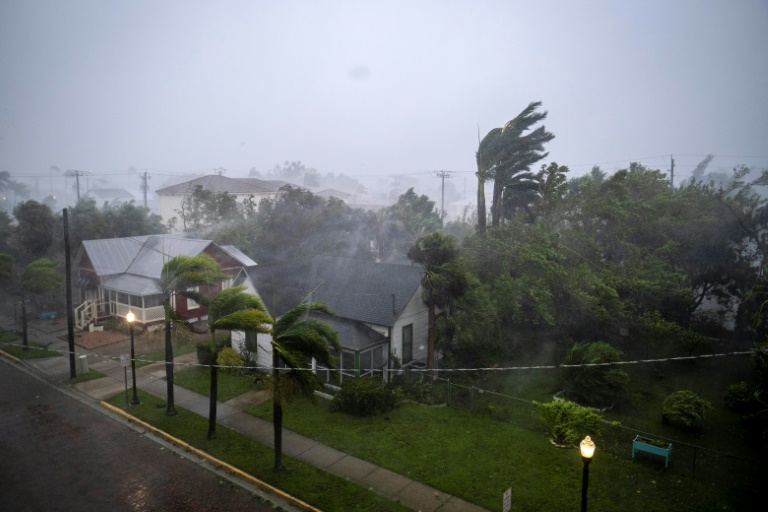
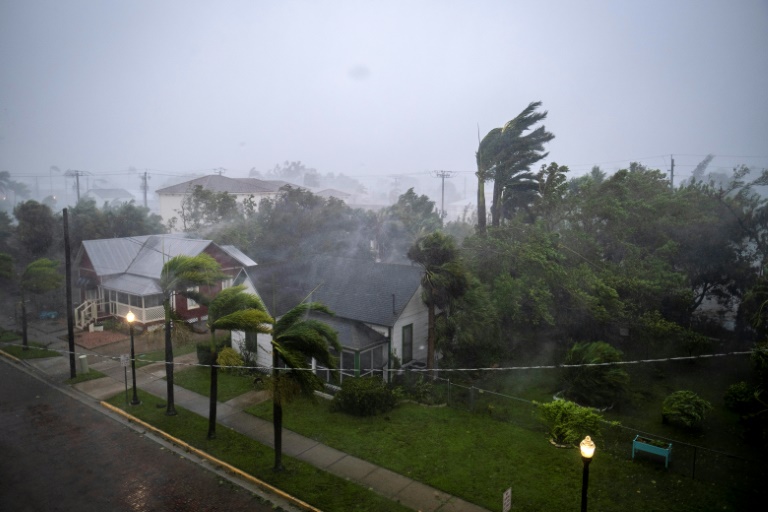
Hurricane Ian plunged much of coastal southwest Florida into darkness Wednesday, as the monster storm brought “catastrophic” storm surges, wind and flooding that had officials readying a huge emergency response.

The US Border Patrol said 20 migrants were missing after their boat sank, with four Cubans swimming to shore in the Florida Keys islands and three rescued at sea by the coast guard.

The National Hurricane Center (NHC) said the eye of the “extremely dangerous” hurricane made landfall just after 3:00 pm (1900 GMT) on the barrier island of Cayo Costa, west of the city of Fort Myers.

Dramatic television footage from the coastal city of Naples showed floodwaters surging into beachfront homes, submerging roads and sweeping away vehicles.

Some neighborhoods in Fort Myers, which has a population of more than 80,000, resembled lakes.

The NHC said Ian was packing maximum sustained winds of 150 miles (240 kilometers) per hour when it landed. 

It later weakened to a Category 1 hurricane with winds of 90 miles per hour, while still battering Florida with “storm surge, winds and flooding,” the NHC said at around 11:00 pm local time Wednesday (0300 GMT).

More than two million customers were without electricity in Florida on Wednesday evening, out of a total of more than 11 million, with southwestern areas of the state the hardest hit, according to the PowerOutage.us tracking website.

Ian is set to affect several million people across Florida and in the southeastern states of Georgia and South Carolina.

As hurricane conditions spread, forecasters warned of a once-in-a-generation calamity.

“This is going to be a storm we talk about for many years to come,” said National Weather Service director Ken Graham. “It’s a historic event.”

Florida’s Governor Ron DeSantis said the state was going to experience a “nasty, nasty day, two days.”

– ‘Life-threatening’ –

The town of Punta Gorda, north of Fort Myers, was in near-total darkness as the storm wiped out power, save for the lucky few buildings with generators.

Howling winds ripped branches off trees and pulled chunks out of roofs.

About 2.5 million people were under mandatory evacuation orders in a dozen coastal Florida counties, with several dozen shelters set up, and voluntary evacuation recommended in others.

For those who decided to ride out the storm, authorities stressed it was too late to flee and residents should hunker down and stay indoors.

Airports in Tampa and Orlando stopped all commercial flights, and cruise ship companies delayed departures or canceled voyages.

With up to 30 inches (76 centimeters) of rain expected to fall on parts of the so-called Sunshine State, and a storm surge that could reach devastating levels of 12 to 18 feet (3.6 to 5.5 meters), authorities were warning of dire emergency conditions.

“This is a life-threatening situation,” the NHC warned.

The storm was set to move across central Florida before emerging in the Atlantic Ocean by late Thursday.

– ‘Nothing is left here’ –

Ian had plunged all of Cuba into darkness a day earlier, after battering the country’s west as a Category 3 storm and downing the island’s power network.

“Desolation and destruction. These are terrifying hours. Nothing is left here,” a 70-year-old resident of the western city of Pinar del Rio was quoted as saying in a social media post by his journalist son, Lazaro Manuel Alonso.

At least two people died in Pinar del Rio province, Cuban state media reported.

In the United States, the Pentagon said 3,200 national guard personnel were called up in Florida, with another 1,800 on the way.

DeSantis said state and federal responders were assigning thousands of personnel to address the storm response.

“There will be thousands of Floridians who will need help rebuilding,” he said.

As climate change warms the ocean’s surface, the number of powerful tropical storms, or cyclones, with stronger winds and more precipitation is likely to increase.

The total number of cyclones, however, may not.

According to Gary Lackmann, a professor of atmospheric science at North Carolina State University, studies have also detected a potential link between climate change and rapid intensification — when a relatively weak tropical storm surges to a Category 3 hurricane or higher in a 24-hour period, as happened with Ian.

“There remains a consensus that there will be fewer storms, but that the strongest will get stronger,” Lackmann told AFP.

Hurricane Ian pounds Florida as a monster storm

Hurricane Ian plunged much of coastal southwest Florida into darkness Wednesday, as the monster storm brought “catastrophic” storm surges, wind and flooding that had officials readying a huge emergency response.

The US Border Patrol said 20 migrants were missing after their boat sank, with four Cubans swimming to shore in the Florida Keys islands and three rescued at sea by the coast guard.

The National Hurricane Center (NHC) said the eye of the “extremely dangerous” hurricane made landfall just after 3:00 pm (1900 GMT) on the barrier island of Cayo Costa, west of the city of Fort Myers.

Dramatic television footage from the coastal city of Naples showed floodwaters surging into beachfront homes, submerging roads and sweeping away vehicles.

Some neighborhoods in Fort Myers, which has a population of more than 80,000, resembled lakes.

The NHC said Ian was packing maximum sustained winds of 150 miles (240 kilometers) per hour when it landed. 

It later weakened to a Category 1 hurricane with winds of 90 miles per hour, while still battering Florida with “storm surge, winds and flooding,” the NHC said at around 11:00 pm local time Wednesday (0300 GMT).

More than two million customers were without electricity in Florida on Wednesday evening, out of a total of more than 11 million, with southwestern areas of the state the hardest hit, according to the PowerOutage.us tracking website.

Ian is set to affect several million people across Florida and in the southeastern states of Georgia and South Carolina.

As hurricane conditions spread, forecasters warned of a once-in-a-generation calamity.

“This is going to be a storm we talk about for many years to come,” said National Weather Service director Ken Graham. “It’s a historic event.”

Florida’s Governor Ron DeSantis said the state was going to experience a “nasty, nasty day, two days.”

– ‘Life-threatening’ –

The town of Punta Gorda, north of Fort Myers, was in near-total darkness as the storm wiped out power, save for the lucky few buildings with generators.

Howling winds ripped branches off trees and pulled chunks out of roofs.

About 2.5 million people were under mandatory evacuation orders in a dozen coastal Florida counties, with several dozen shelters set up, and voluntary evacuation recommended in others.

For those who decided to ride out the storm, authorities stressed it was too late to flee and residents should hunker down and stay indoors.

Airports in Tampa and Orlando stopped all commercial flights, and cruise ship companies delayed departures or canceled voyages.

With up to 30 inches (76 centimeters) of rain expected to fall on parts of the so-called Sunshine State, and a storm surge that could reach devastating levels of 12 to 18 feet (3.6 to 5.5 meters), authorities were warning of dire emergency conditions.

“This is a life-threatening situation,” the NHC warned.

The storm was set to move across central Florida before emerging in the Atlantic Ocean by late Thursday.

– ‘Nothing is left here’ –

Ian had plunged all of Cuba into darkness a day earlier, after battering the country’s west as a Category 3 storm and downing the island’s power network.

“Desolation and destruction. These are terrifying hours. Nothing is left here,” a 70-year-old resident of the western city of Pinar del Rio was quoted as saying in a social media post by his journalist son, Lazaro Manuel Alonso.

At least two people died in Pinar del Rio province, Cuban state media reported.

In the United States, the Pentagon said 3,200 national guard personnel were called up in Florida, with another 1,800 on the way.

DeSantis said state and federal responders were assigning thousands of personnel to address the storm response.

“There will be thousands of Floridians who will need help rebuilding,” he said.

As climate change warms the ocean’s surface, the number of powerful tropical storms, or cyclones, with stronger winds and more precipitation is likely to increase.

The total number of cyclones, however, may not.

According to Gary Lackmann, a professor of atmospheric science at North Carolina State University, studies have also detected a potential link between climate change and rapid intensification — when a relatively weak tropical storm surges to a Category 3 hurricane or higher in a 24-hour period, as happened with Ian.

“There remains a consensus that there will be fewer storms, but that the strongest will get stronger,” Lackmann told AFP.

Macron faces strike as French unions flex muscles

French schools, trains and businesses are set to be affected Thursday by the first major strike called since the re-election of President Emmanuel Macron in April, as unions push for wage hikes and the end of planned pension reform.

The extent of disruption remains uncertain, however, with the strike a test for the CGT union behind the protests, which is seeking to build support for a lengthy battle with the centrist government.

Macron has approved wage hikes for civil servants and teachers and put in place one of Europe’s most generous anti-inflation safety nets that has capped energy prices for households and held down inflation.

But his insistence on raising the retirement age from its current level of 62 — one of his main re-election campaign pledges — has stirred up unions and other left-wing opponents and remains broadly unpopular around the country.

“We are against pushing back the age of retirement because we consider it an aberration when there are so many unemployed people in this country,” Philippe Martinez, the head of the CGT, told the BFM broadcaster on Tuesday.

“Keeping people with work in their work means that people who haven’t got any can’t find it,” he added.

Despite warnings from allies about the risk of failure, Macron has tasked his government with hiking the retirement age from the current age of 62, one of the lowest in Europe, with changes set to take effect next year.

With deficits spiralling and public debt at historic highs, the former investment banker has argued that pushing back pensions and getting more people into jobs are the only ways the state can raise revenue without increasing taxes. 

His centrist party lost its majority in parliament in June, severely undermining his ability to push through changes. 

“If the president insists on declaring a social war on the people, we will respond with all the means at our disposal,” the parliamentary leader of the France Unbowed (LFI) political party, Mathilde Panot, tweeted on Wednesday.

– Stoppages – 

Thursday’s strike has been called by the CGT, France’s second-biggest union, with backing from smaller partners Solidaires and FSU.

The influential CFDT and hard-left FO unions have declined to take part, underlining splits in the country’s once formidable labour movement which has struggled to stop Macron’s economic and social security reforms since he came to power in 2017. 

Around one in 10 schools in Paris are expected to shut for the day on Thursday, while 300 will close in the southern Bouches-du-Rhone area which includes Marseille.

“We can really see that teachers are fed up with their salaries… if on top of that, there’s the issue of pensions, it risks creating some sparks,” said Guislaine David from the Snuipp-FSU union. 

SNCF railways and the RATP metro system in Paris are also bracing for disruption to services, while employees of oil and gas giant TotalEnergies have been on strike since Tuesday.

Despite anger over the soaring cost of living, Macron is in a hurry to push through pension reform, which he first promised in 2017 before pausing in 2020 during the Covid-19 pandemic.

“I don’t know anyone who wants to work for longer, but I don’t know anyone who thinks they are not going to work for longer,” a minister close to the president told AFP last week on condition of anonymity.

“Maybe I’m mistaken, but I’m not sure that the turnout will be as large as the unions and LFI are hoping for,” the minister said.

burs-adp/sjw/ah/mca

Macron faces strike as French unions flex muscles

French schools, trains and businesses are set to be affected Thursday by the first major strike called since the re-election of President Emmanuel Macron in April, as unions push for wage hikes and the end of planned pension reform.

The extent of disruption remains uncertain, however, with the strike a test for the CGT union behind the protests, which is seeking to build support for a lengthy battle with the centrist government.

Macron has approved wage hikes for civil servants and teachers and put in place one of Europe’s most generous anti-inflation safety nets that has capped energy prices for households and held down inflation.

But his insistence on raising the retirement age from its current level of 62 — one of his main re-election campaign pledges — has stirred up unions and other left-wing opponents and remains broadly unpopular around the country.

“We are against pushing back the age of retirement because we consider it an aberration when there are so many unemployed people in this country,” Philippe Martinez, the head of the CGT, told the BFM broadcaster on Tuesday.

“Keeping people with work in their work means that people who haven’t got any can’t find it,” he added.

Despite warnings from allies about the risk of failure, Macron has tasked his government with hiking the retirement age from the current age of 62, one of the lowest in Europe, with changes set to take effect next year.

With deficits spiralling and public debt at historic highs, the former investment banker has argued that pushing back pensions and getting more people into jobs are the only ways the state can raise revenue without increasing taxes. 

His centrist party lost its majority in parliament in June, severely undermining his ability to push through changes. 

“If the president insists on declaring a social war on the people, we will respond with all the means at our disposal,” the parliamentary leader of the France Unbowed (LFI) political party, Mathilde Panot, tweeted on Wednesday.

– Stoppages – 

Thursday’s strike has been called by the CGT, France’s second-biggest union, with backing from smaller partners Solidaires and FSU.

The influential CFDT and hard-left FO unions have declined to take part, underlining splits in the country’s once formidable labour movement which has struggled to stop Macron’s economic and social security reforms since he came to power in 2017. 

Around one in 10 schools in Paris are expected to shut for the day on Thursday, while 300 will close in the southern Bouches-du-Rhone area which includes Marseille.

“We can really see that teachers are fed up with their salaries… if on top of that, there’s the issue of pensions, it risks creating some sparks,” said Guislaine David from the Snuipp-FSU union. 

SNCF railways and the RATP metro system in Paris are also bracing for disruption to services, while employees of oil and gas giant TotalEnergies have been on strike since Tuesday.

Despite anger over the soaring cost of living, Macron is in a hurry to push through pension reform, which he first promised in 2017 before pausing in 2020 during the Covid-19 pandemic.

“I don’t know anyone who wants to work for longer, but I don’t know anyone who thinks they are not going to work for longer,” a minister close to the president told AFP last week on condition of anonymity.

“Maybe I’m mistaken, but I’m not sure that the turnout will be as large as the unions and LFI are hoping for,” the minister said.

burs-adp/sjw/ah/mca

Fleeing Russians worry border will 'close forever'

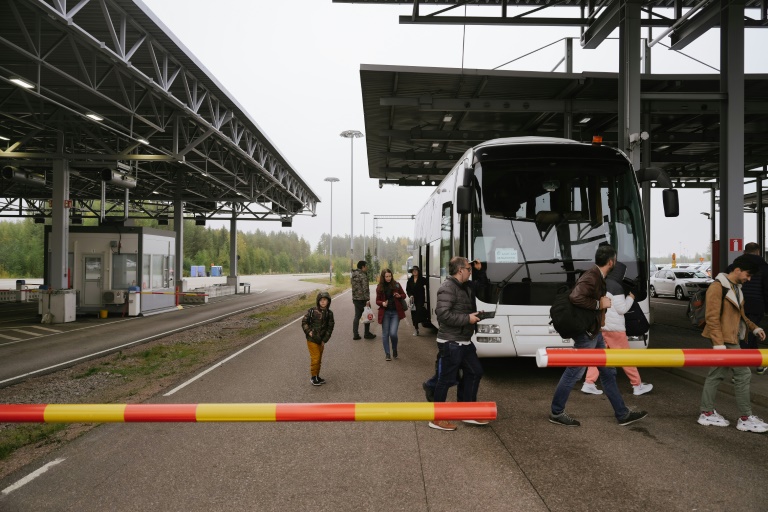
Fearing the border may close “forever” after President Vladimir Putin’s mobilisation order for the war in Ukraine, Russians are rushing to flee across Finland’s Vaalimaa crossing.

On this foggy early morning, dozens of cars and buses with Russian licence plates are lined up at the border, their passengers hoping to make it into Finland before it’s too late.

Some smoke cigarettes outside their vehicles as they wait impatiently.

“Many people are afraid,” says Oleg, a bar owner from Moscow who has just crossed over to the Finnish side. 

“The mobilisation is a first sign that something worse might happen.”

He fears the border might “close forever” and Russians “will live in a totalitarian state where they can’t do anything at all”.

“I live in a country which sinks a little more every day,” he explains.

Finland said on Monday that more Russians came to the country over the weekend than any other weekend so far this year — around 17,000 entries — after Moscow’s military call-up announcement sparked a surge in arrivals.

Helsinki announced on September 23 it planned to “significantly restrict the entry of Russian citizens” and would finalise the decision in the “coming days”.

While the restriction is not yet in force, the border guard service said it was ready to apply the new rules “within a day”.

The Finnish government is expected to meet Thursday to decide when it will go into force.

– ‘Sleepless nights’ –

Viktor Zakharov — who arrived in Finland with his partner and their three children — says he has five friends who have left Russia since the mobilisation.

While the 35-year-old scientist from Saint Petersburg does not have a military background and is not part of the mobilisation, he is worried the situation might change.

“If you are not fit today you can be tomorrow and be in the army,” he says, as the travellers wait patiently for their vehicles to be inspected by Finnish border guards.

Zakharov — who is headed for Israel — drove his fully packed SUV through the Russian side in 30 minutes and then spent one-and-a-half hours making his way through the Finnish crossing.

Despite being in Finland, “the feeling of freedom has not come yet because of the sleepless nights and the packing, and to be honest it’s not clear yet,” he explains as he hands pieces of candy to his children.

State employee Vadim arrived by bus. He left his mother in charge of looking after his apartment in Moscow, and hopes to return soon.

“I have heard about many cases of young men being deported and not being able to cross because of the mobilisation,” he says.

“I can’t say I’m happy, I can’t with the world’s situation.”

– Prepared for ‘difficult developments’ –

The Finnish border guard said earlier this week it was preparing for “difficult developments” as the situation evolved.

“It is possible that when travel is restricted, attempts at illegal border crossings will increase,” a spokesman said.

In July, Finland passed new amendments to its Border Guard Act to facilitate the construction of sturdier fences on the Nordic country’s 1,300-kilometre (800-mile) eastern border with Russia.

As it stands, Finland’s borders are secured primarily with light wooden fences, mainly designed to stop livestock from wandering to the wrong side.

On Tuesday, the Finnish border guard said it believes it will be necessary to build 130-260 kilometres of barriers in high-risk areas.

“The physical barrier itself is indispensable in a large-scale entry situation, acting as a barrier and an element of diversion for potential crowds,” the border guard said in a statement.

The fence still requires a political decision.

Hong Kong confirms November banking summit after ending quarantine

Hong Kong confirmed Thursday it will host an international banking summit in early November, days after it lifted mandatory quarantine rules for arrivals that have battered the city’s reputation as a business hub.

The city has had a difficult three years, with a sweeping crackdown on political freedoms and the imposition of some of the world’s strictest coronavirus pandemic controls, which have kept the city isolated even as competitors reopen.

The banking summit on November 2 is expected to draw 200 participants, including the group chairmen or Chief Executive Officers of 30 major financial institutions, according to the Hong Kong Monetary Authority (HKMA).

HKMA Chief Executive Eddie Yue wrote in a blog post that the event would allow guests to “meet their staff and clients in person, and establish new relationships”, now that travel to Hong Kong has become easier.

“For most of them this will only be a short visit and we need to make sure they can meet people, do business and build relationships in the kind of business-as-usual way they expect from a vibrant international city,” Yue added.

The gathering will include panel talks featuring Goldman Sachs CEO David Solomon, Morgan Stanley CEO James Gorman, Citigroup CEO Jane Fraser, as well as top executives from JPMorgan Chase, BlackRock, UBS and KKR, according to the HKMA.

Hong Kong last week scrapped mandatory hotel quarantine for travellers after two-and-a-half years, amid concerns of brain drain and losing business to rivals like Singapore and London, which reopened to the world once their populations were adequately vaccinated.

But the city still adheres to a version of China’s zero-Covid strategy and has kept some pandemic restrictions in place, including social distancing, business hours limitations and compulsory masking.

Arrivals in the city no longer have to quarantine in hotels, but they cannot enter restaurants or bars for three days after landing and must undergo regular testing. 

Those who test positive face being isolated in hotel rooms at their own expense.

It is unclear if summit participants will be exempt from the pandemic restrictions, and the HKMA said Thursday that it was working to “finalise an appropriate set of arrangements”.

HSBC Chief Executive Noel Quinn and Standard Chartered CEO Bill Winters were among the banking industry leaders who previously committed to attending the Hong Kong summit in person.

Close Bitnami banner
Bitnami