World

Sterling, markets drop again as BoE boost wears off

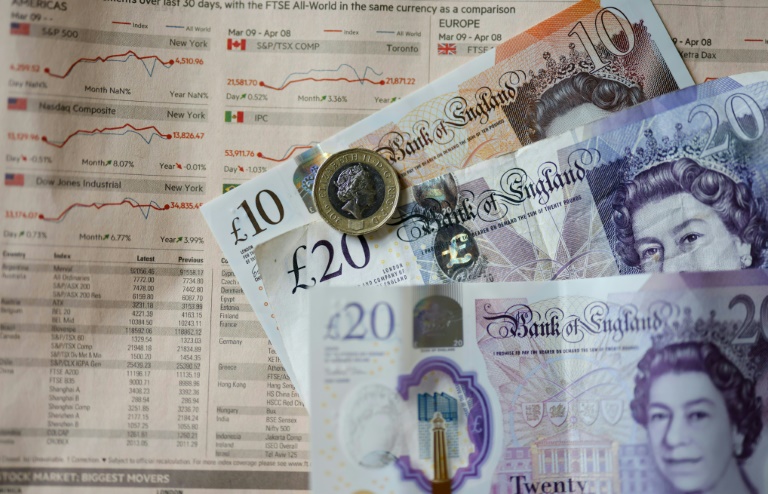
The pound and European equities fell Thursday after the previous day’s bank of England-fuelled rally, with investors growing increasingly worried about the UK economy as Prime Minister Liz Truss backed the controversial mini-budget that sparked turmoil across global markets.

The central bank sparked a surge across risk assets Wednesday following the announcement of a two-week programme to spend £65 billion ($71 billion) buying long-dated UK bonds “to restore orderly market conditions”.

The move came after new finance minister Kwasi Kwarteng unveiled a tax-cutting mini-budget Friday that many experts, including the International Monetary Fund, warned would fan borrowing and deal a further blow to the already fragile economy.

Kwarteng’s plan sent yields on UK government bonds, as well as those of other countries, soaring and raised the prospect of even bigger interest rate hikes.

The BoE move provided a massive shot in the arm for investors, pushing yields down, and sterling and stock markets up. Analysts said the decision provided some hope that central banks were ready to step in with support if things got too bad.

However, the impact was short lived as traders continue to worry about the long-term effect on the UK economy from the budget.

“The Bank moved to stop contagion, but stress remains and it remains the case that it must tighten policy faster to offset the effects of the budget,” said Markets.com analyst Neil Wilson.

The new round of easing also knocked the BoE’s plan to fight inflation off course as it had to suspend a programme to sell “gilts”, which had helped lift borrowing costs.

The pound fell back below $1.0800 Thursday, having spiked at $1.0900 earlier, while the FTSE 100 plunged more than two percent. Paris and Frankfurt were not far behind as data showed German inflation had hit 8.8 percent. Still, in some bright news, Spain said price rises slowed to below 10 percent this month.

That came after most Asian markets enjoyed a rare day of gains.

Truss appeared to push back against calls for her to perform a U-turn.

“We’re facing very, very difficult economic times, we’re facing that on a global level,” she said Thursday in interviews with local BBC radio stations.

“We had to take urgent action to get our economy growing and that means taking controversial and difficult decisions,” she said in her first comments since the storm erupted.

OANDA’s Edward Moya warned of more rough seas for sterling.

“The British pound went on a little roller coaster ride following the BoE action to buy unlimited long-dated gilts, but will still probably remain heavy over the country’s fiscal situation, current account deficit, financial stability risks, and energy poverty likelihood for parts of the population,” he said in a note.

And MUFG analyst Lee Hardman said the BoE move “has certainly upped the level of concern over the potential negative economic and financial market fallout from the loss of confidence in UK’s public finances”.

The general mood on trading floors remains dark as the Fed and other central banks zero in on hiking borrowing costs to fight decades-high inflation.

“All eyes are on inflation and interest rates,” said Josh Emanuel at Wilshire. “Equities are really going to take their cues from bond markets. So if you see bond yields move lower, that is a good sign for equities.”

Julia Raiskin at Citi added that “markets are very pessimistic… Other than the dollar, there are not many assets that are trading constructively.”

– Key figures at around 0720 GMT –

London – FTSE 100: DOWN 2.2 percent at 6,852.06

Pound/dollar: DOWN at $1.0782 from $1.0889 on Wednesday

Euro/dollar: DOWN at $0.9653 from $0.9735

Euro/pound: UP at 89.56 from 89.39 pence 

Dollar/yen: UP at 144.73 yen from 144.11 yen

Tokyo – Nikkei 225: UP 1.0 percent at 26,422.05 (close)

Hong Kong – Hang Seng Index: DOWN 0.5 percent at 17,165.87

Shanghai – Composite: DOWN 0.1 percent at 3,041.20 (close)

West Texas Intermediate: DOWN 0.7 percent at $81.57 per barrel

Brent North Sea crude: DOWN 0.7 percent at $88.68 per barrel

New York – Dow: UP 1.9 percent at 29,683.74 (close)
Hurricane Ian pounds Florida, leaves millions in dark

Hurricane Ian left much of coastal southwest Florida in darkness early Thursday, bringing “catastrophic” flooding that left officials readying a huge emergency response to a storm of rare intensity.

The US Border Patrol said 20 migrants were missing after their boat sank, with four Cubans swimming to shore in the Florida Keys islands and three rescued at sea by the coast guard.

The National Hurricane Center (NHC) said the eye of the “extremely dangerous” hurricane made landfall just after 3:00 pm (1900 GMT) on the barrier island of Cayo Costa, west of the city of Fort Myers.

Dramatic television footage from the coastal city of Naples showed floodwaters surging into beachfront homes, submerging roads and sweeping away vehicles.

Some neighborhoods in Fort Myers, which has a population of more than 80,000, resembled lakes.

The NHC said Ian’s maximum sustained winds reached 150 miles (240 kilometers) per hour when it landed. 

It later weakened to a Category 1 hurricane with winds dropping to a maximum 75 miles per hour, battering Florida with storm surges, damaging winds and “life-threatening catastrophic” flooding, the NHC said at around 2:00 am local time Wednesday (0600 GMT).

More than two million customers were without electricity in Florida early Thursday, out of a total of more than 11 million, with southwestern areas of the state the hardest hit, according to the PowerOutage.us tracking website.

Ian is set to affect several million people across Florida and in the southeastern states of Georgia and South Carolina.

As hurricane conditions spread, forecasters warned of a once-in-a-generation calamity.

“This is going to be a storm we talk about for many years to come,” said National Weather Service director Ken Graham. “It’s a historic event.”

Florida’s Governor Ron DeSantis said the state was going to experience a “nasty, nasty day, two days.”

– ‘Life-threatening’ –

The town of Punta Gorda, north of Fort Myers, was in near-total darkness after the storm wiped out power, save for the few buildings with generators.

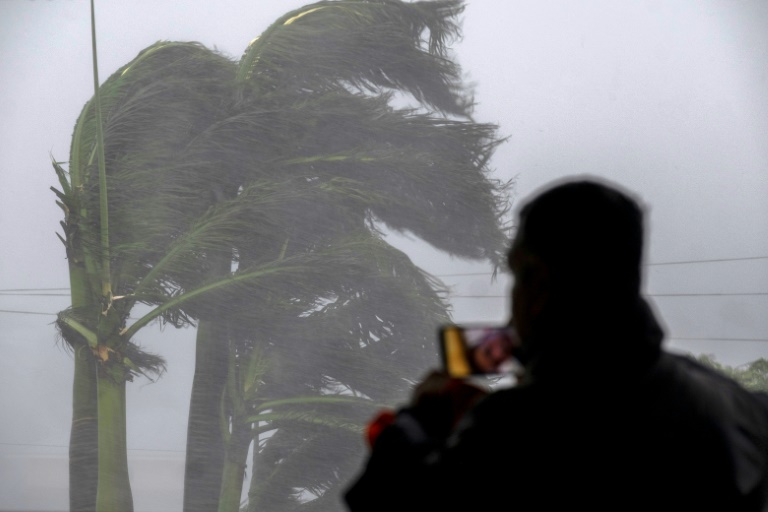
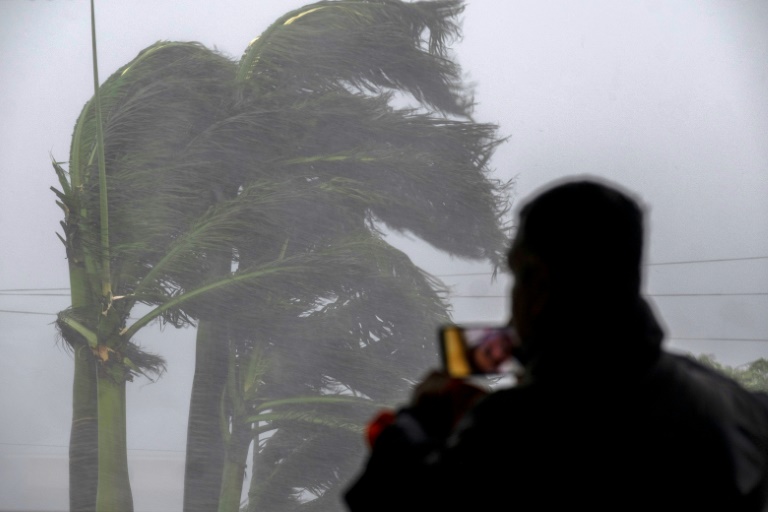
Howling winds ripped branches off trees, pulled chunks out of roofs, and blew the fronds of palm trees horizontal.

About 2.5 million people were under mandatory evacuation orders in a dozen coastal Florida counties, with several dozen shelters set up, and voluntary evacuation recommended in others.

For those who decided to ride out the storm, authorities stressed it was too late to flee and residents should hunker down and stay indoors.

Airports in Tampa and Orlando stopped all commercial flights, and cruise ship companies delayed departures or canceled voyages.

With up to 30 inches (76 centimeters) of rain expected to fall on parts of the Sunshine State, and a storm surge that could reach devastating levels of five to eight feet (1.5 to 2.4 meters), authorities warned of dire emergency conditions.

The storm was set to move across central Florida before emerging in the Atlantic Ocean later Thursday.

– Rebuilding work begins –

Ian had plunged all of Cuba into darkness a day earlier, after battering the country’s west as a Category 3 storm and downing the island’s power network.

At least two people died in Pinar del Rio province, Cuban state media reported.

By Wednesday power had been restored for some residents of Havana and another 11 provinces, but not in Cuba’s three worst-affected provinces in the west of the country.

In the United States, the Pentagon said 3,200 national guard personnel were called up in Florida, with another 1,800 on the way.

DeSantis said state and federal responders were assigning thousands of personnel to address the storm response.

“There will be thousands of Floridians who will need help rebuilding,” he said.

As climate change warms the ocean’s surface, the number of powerful tropical storms, or cyclones, with stronger winds and more precipitation are likely to increase.

The total number of cyclones, however, may not.

According to Gary Lackmann, a professor of atmospheric science at North Carolina State University, studies have also detected a potential link between climate change and rapid intensification — when a relatively weak tropical storm surges to a Category 3 hurricane or higher in a 24-hour period, as happened with Ian.

“There remains a consensus that there will be fewer storms, but that the strongest will get stronger,” Lackmann told AFP.

Hurricane Ian pounds Florida, leaves millions in dark

Hurricane Ian left much of coastal southwest Florida in darkness early Thursday, bringing “catastrophic” flooding that left officials readying a huge emergency response to a storm of rare intensity.

The US Border Patrol said 20 migrants were missing after their boat sank, with four Cubans swimming to shore in the Florida Keys islands and three rescued at sea by the coast guard.

The National Hurricane Center (NHC) said the eye of the “extremely dangerous” hurricane made landfall just after 3:00 pm (1900 GMT) on the barrier island of Cayo Costa, west of the city of Fort Myers.

Dramatic television footage from the coastal city of Naples showed floodwaters surging into beachfront homes, submerging roads and sweeping away vehicles.

Some neighborhoods in Fort Myers, which has a population of more than 80,000, resembled lakes.

The NHC said Ian’s maximum sustained winds reached 150 miles (240 kilometers) per hour when it landed. 

It later weakened to a Category 1 hurricane with winds dropping to a maximum 75 miles per hour, battering Florida with storm surges, damaging winds and “life-threatening catastrophic” flooding, the NHC said at around 2:00 am local time Wednesday (0600 GMT).

More than two million customers were without electricity in Florida early Thursday, out of a total of more than 11 million, with southwestern areas of the state the hardest hit, according to the PowerOutage.us tracking website.

Ian is set to affect several million people across Florida and in the southeastern states of Georgia and South Carolina.

As hurricane conditions spread, forecasters warned of a once-in-a-generation calamity.

“This is going to be a storm we talk about for many years to come,” said National Weather Service director Ken Graham. “It’s a historic event.”

Florida’s Governor Ron DeSantis said the state was going to experience a “nasty, nasty day, two days.”

– ‘Life-threatening’ –

The town of Punta Gorda, north of Fort Myers, was in near-total darkness after the storm wiped out power, save for the few buildings with generators.

Howling winds ripped branches off trees, pulled chunks out of roofs, and blew the fronds of palm trees horizontal.

About 2.5 million people were under mandatory evacuation orders in a dozen coastal Florida counties, with several dozen shelters set up, and voluntary evacuation recommended in others.

For those who decided to ride out the storm, authorities stressed it was too late to flee and residents should hunker down and stay indoors.

Airports in Tampa and Orlando stopped all commercial flights, and cruise ship companies delayed departures or canceled voyages.

With up to 30 inches (76 centimeters) of rain expected to fall on parts of the Sunshine State, and a storm surge that could reach devastating levels of five to eight feet (1.5 to 2.4 meters), authorities warned of dire emergency conditions.

The storm was set to move across central Florida before emerging in the Atlantic Ocean later Thursday.

– Rebuilding work begins –

Ian had plunged all of Cuba into darkness a day earlier, after battering the country’s west as a Category 3 storm and downing the island’s power network.

At least two people died in Pinar del Rio province, Cuban state media reported.

By Wednesday power had been restored for some residents of Havana and another 11 provinces, but not in Cuba’s three worst-affected provinces in the west of the country.

In the United States, the Pentagon said 3,200 national guard personnel were called up in Florida, with another 1,800 on the way.

DeSantis said state and federal responders were assigning thousands of personnel to address the storm response.

“There will be thousands of Floridians who will need help rebuilding,” he said.

As climate change warms the ocean’s surface, the number of powerful tropical storms, or cyclones, with stronger winds and more precipitation are likely to increase.

The total number of cyclones, however, may not.

According to Gary Lackmann, a professor of atmospheric science at North Carolina State University, studies have also detected a potential link between climate change and rapid intensification — when a relatively weak tropical storm surges to a Category 3 hurricane or higher in a 24-hour period, as happened with Ian.

“There remains a consensus that there will be fewer storms, but that the strongest will get stronger,” Lackmann told AFP.

Hong Kong confirms November banking summit after ending quarantine

Hong Kong confirmed Thursday it will host an international banking summit in early November, days after it lifted mandatory quarantine rules for arrivals that have battered the city’s reputation as a business hub.

The city has had a difficult three years, with a sweeping crackdown on political freedoms and the imposition of some of the world’s strictest coronavirus pandemic controls, which have kept the city isolated even as competitors reopen.

The banking summit on November 2 is expected to draw 200 participants, including the group chairmen or Chief Executive Officers of 30 major financial institutions, according to the Hong Kong Monetary Authority (HKMA).

HKMA Chief Executive Eddie Yue wrote in a blog post that the event would allow guests to “meet their staff and clients in person, and establish new relationships”. 

“For most of them this will only be a short visit and we need to make sure they can meet people, do business and build relationships in the kind of business-as-usual way they expect from a vibrant international city,” Yue added.

The gathering will include panel talks featuring the CEOs of Goldman Sachs, Morgan Stanley and Citigroup, and top executives from HSBC, Standard Chartered, JPMorgan Chase and BlackRock will also attend.

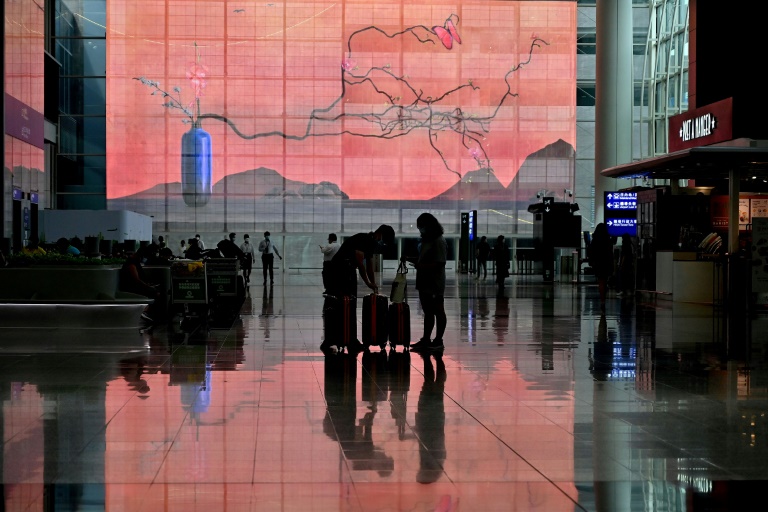
Hong Kong last week scrapped mandatory hotel quarantine for travellers after two-and-a-half years, amid concerns of brain drain and losing business to rivals like Singapore and London, which reopened to the world once their populations were adequately vaccinated.

– ‘We have to be prepared’ –

But the city still adheres to a version of China’s zero-Covid strategy and has kept some pandemic restrictions in place, including social distancing, business hours limitations and compulsory masking.

Arrivals in the city no longer have to quarantine in hotels, but they cannot enter restaurants or bars for three days after landing and must undergo regular testing. 

Those who test positive face being isolated in hotel rooms at their own expense.

Hong Kong’s health secretary Lo Chung-mau told Bloomberg TV on Thursday that the city was committed to reopening, but warned that a new virus variant could change that. 

“We have to be prepared. Emerging diseases may come anytime,” Lo said, adding that any further relaxations to virus curbs will be made after reviewing data.

Hong Kong cannot follow the global trend of living with the virus as the city has an obligation not to “cause a major outbreak in the rest of China”, Lo added.

It is unclear if summit participants will be exempt from the restrictions, and the HKMA said Thursday that it was working to “finalise an appropriate set of arrangements”.

Earlier this month, Singapore overtook Hong Kong to become Asia’s top financial centre, according to a major ranking index, and has become a choice destination for regional conferences.

Singapore abandoned quarantine and social distancing rules months ahead of Hong Kong. This weekend the city state will host the Formula One Singapore Grand Prix. 

Myanmar's Suu Kyi and Australian economist sentenced to 3 years

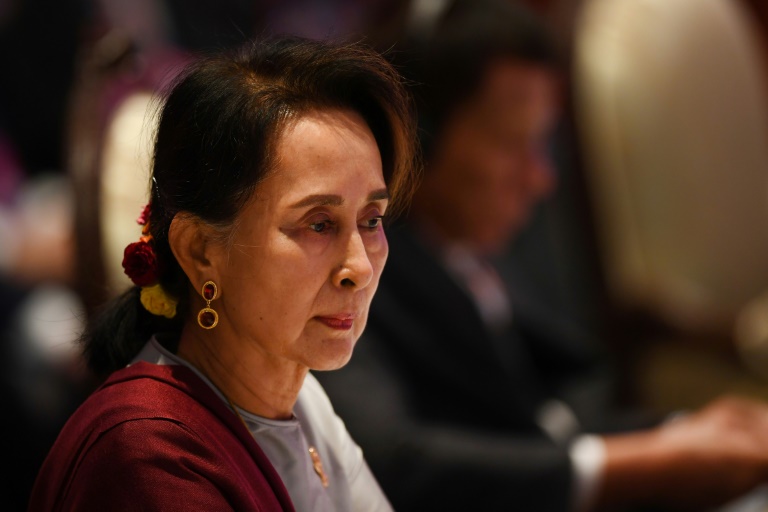
Myanmar’s junta sentenced ousted leader Aung San Suu Kyi to another three years in prison while also giving an Australian former government adviser the same term, a source told AFP on Thursday.

Both have been detained since a coup in February last year when the military ousted Suu Kyi’s government, for which Sean Turnell, an economist, was an adviser.

“Mr Sean Turnell, Daw Aung San Suu Kyi and another three were sentenced to three years imprisonment each under the Official Secrets Act,” the source told AFP, adding that Suu Kyi would appeal her verdict.

Suu Kyi has already been convicted of corruption and a clutch of other charges by a closed court, while Turnell is facing another case under the country’s immigration act, which according to the source is ongoing.

Turnell’s arrest last year prompted international outrage, with Australian diplomats lobbying Myanmar’s regional neighbours to assist with the case.

The 76-year-old was in the middle of a phone interview with the BBC when he was detained after the 2021 coup.

“I’ve just been detained at the moment, and perhaps charged with something, I don’t know what that would be, could be anything at all of course,” Turnell told the broadcaster at the time.

In August, he pleaded not guilty to breaching the colonial-era official secrets act during his trial in a secretive junta court — inaccessible to journalists — in the capital Naypyidaw.

He was facing a maximum penalty of 14 years in prison.

The exact details of Turnell’s alleged offence have not been made public, though state television has said he had access to “secret state financial information” and had tried to flee the country.

– ‘Stay strong’ –

According to Amnesty International’s Australia Impact Director Tim O’Connor, Turnell was denied a fair trial and adequate access to legal counsel or consular assistance. 

“The proceedings have been an outright sham and Myanmar’s military must immediately release Turnell so he can return to his family in Australia,” he said.

Turnell’s friend and fellow economist Tim Harcourt expressed disappointment over the verdict.

“I do hope that like Danny Fenster, he’ll be deported in the coming days,” he told AFP referring to an American journalist who received an 11-year prison sentence and was pardoned and deported last year. 

His message to Turnell was “stay strong”, and said he was in the thoughts of all of his friends and family.

All Turnell did was “try and give economic advice to improve the lives of ordinary Burmese people,” he said.

Myanmar has been in turmoil since the military seized power last year and ousted Suu Kyi’s elected government.

More than 2,200 people have been killed and 15,000 arrested in the military’s crackdown on dissent since it seized power, according to a local monitoring group.

After Pope outreach, Nicaragua's Ortega calls Church a 'dictatorship'

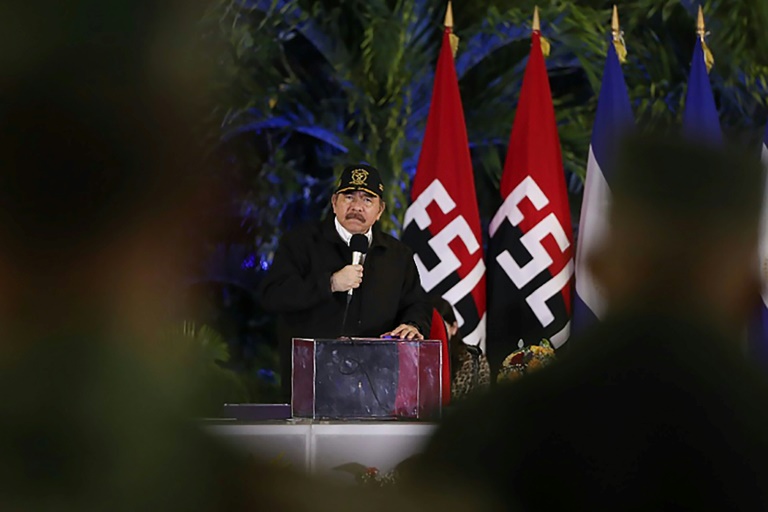
Nicaragua’s President Daniel Ortega on Wednesday called the Catholic Church a “perfect dictatorship” for not allowing members to elect the pope and other authority figures.

In the Church, “everything is imposed. It’s a perfect dictatorship. It’s a perfect tyranny,” he said, reflecting ongoing tensions between his government and the religious institution over 2018 protests. 

“If they are going to be democratic, let them start with Catholics voting for the pope, for cardinals, for bishops,” Ortega said during a televised speech to mark the 43rd anniversary of the Nicaraguan police’s establishment. 

The Catholic Church in Nicaragua has been under increasing government pressure since Ortega accused it of backing the protests against his government in 2018. A crackdown against the demonstrators left hundreds dead.

Ortega maintains the protests were part of a United States-backed opposition plot to unseat him, and accuses bishops of complicity.

During his speech Wednesday, Ortega called out bishops and priests as “killers” and “coup plotters” working on behalf of “American imperialism.”

“I would say to His Holiness the Pope, respectfully, to the Catholic authorities — I am Catholic — as a Christian, I don’t feel represented,” he said, referencing the Church’s “terrible history.”

Ortega criticized subjects ranging from the Inquisition in Spain and South America to the abuse of Indigenous children in Canada. 

“We hear (the Church) talk about democracy,” he said, suggesting that the faithful elect representatives to positions of Church leadership.

– Rising tensions –

Pope Francis, leader of the Catholic Church, earlier this month insisted on the importance of “never stopping the dialogue” with Nicaragua. 

“There is a dialogue. We are talking with the government,” the pope said. “That does not mean that we approve of everything the government does, or that we disapprove.”

In his speech Wednesday, Ortega also criticized the US Assistant Secretary of State Brian Nichols, and the government of Chile, whose president Gabriel Boric recently criticized the Nicaraguan president for human rights violations. 

Earlier Wednesday, a diplomatic source said that Nicaraguan Foreign Minister Denis Moncada had notified European Union ambassador to Managua, Bettina Muscheidt, of her expulsion, though Ortega did not mention it in his speech. 

The EU and the United States have imposed sanctions against Nicaraguan officials over the last four years, citing human rights violations. 

Strain between the Catholic Church and Nicaragua grew in March, when Managua expelled the Vatican’s ambassador to the country.

In August, a bishop critical of the government, Rolando Alvarez, was put under house arrest for what police called “destabilizing and provocative” activities, drawing concern from Pope Francis and condemnation from the United States.

At least four priests and two seminarians were also arrested, but police did not specify the charges against them. 

That came after a group of nuns was forced in July to leave the country when their order, the Missionaries of Charity, was outlawed. 

Ortega ruled Nicaragua from 1979 to 1990, after the guerrilla ousting of US-backed dictator Anastasio Somoza.

Since returning to power in 2007, he has become increasingly authoritarian and quashed presidential term limits.

Made in Madrid: The Spanish tailors outfitting world cinema

With a vast wardrobe catering to everything from “House of the Dragon” to “The Crown”, Spain’s Peris Costumes has carved out a well-tailored niche for itself, renting costumes to producers across the globe.

“Here, you can find everything,” says CEO Javier Toledo showing off a vast array of costumes and accessories — from suits of armour to frock coats, sailor suits and monastic robes.

All around him mannequins dressed in 18th-century gowns stand next to posters of the many films his company has worked on in recent years. 

“There are starting to be rather a lot,” admits the 63-year-old entrepreneur with white hair and a neatly trimmed goatee whose business is based in Algete, a small town just outside Madrid. 

Since Toledo took over 10 years ago, the business has been transformed. 

What began as a small family firm set up by tailors specialising in theatre costumes in the eastern coastal city of Valencia in 1856 has become a world leader in costume hire for the film industry.

And it’s a success story closely linked to the rise of on-demand streaming giants such as Netflix, Disney+ and HBO. 

“We have responded to the changes that have taken place in the market,” he told AFP, pointing notably to the explosion in popularity “of the series”.

When he bought the company, Peris Costumes only had a dozen staff, all based in Madrid. 

Today, the group employs 250 people and has offices or workshops in 15 capital cities, including Budapest, Berlin, Paris and Mexico City. 

“During the first half of the year, we were involved in almost 600 productions. And by the end of the year we’re hoping that will be more than 1,000,” says marketing director Myriam Wais. 

– Elizabeth Taylor’s ‘Cleopatra’ jewellery – 

Among the films and series that have chosen the company are numerous super-productions which are very demanding in terms of period or fantasy costumes.

Whether it’s “The Rings of Power”, “Mulan” or “Marco Polo”, many productions prefer to rent costumes rather than invest in making their own.

“Trying to make (the costumes) from scratch is practically impossible because of the time and costs involved,” says Toledo. 

And producers appreciate “having costumes that have been worn in and aged with time”, he explains.

To expand its catalogue, Peris Costumes has in recent years has bought up millions of gowns, hats, pairs of shoes and uniforms from studio giants like Warner Bros. 

And all these complement its own in-house collections put together in the workshops of its costume designers. 

“In total, we have more than 10 million articles” of clothing and accessories, says Wais, reeling off a list of the most popular styles and eras.

It is, she says, “the biggest wardrobe in the world”. 

In a nearby room, four garment makers are working with pieces of leather, with a hammer-like maul and pliers on hand.

“Right now, we’re working on our inventory but there are also orders,” she says. 

In another room is the jewellery workshop, where close to 20,000 pieces are stored, including the jewels worn by Elizabeth Taylor in the 1963 epic “Cleopatra” and the papal cross worn by Jude Law in the 2016 series “The Young Pope”.

– Damaged but never discarded –

At Peris Costumes, the rule is to never throw anything away, not even if it is damaged during filming. 

“We have an area called ‘The Walking Dead’ in which we put everything that is broken or damaged but that could be reused,” Wais says, the term referencing a TV series about zombie apocalypse survivors.

With demand showing little sign of ebbing, this Spanish outfitter has recently started digitising some of its catalogue with the help of a studio equipped with 144 high-resolution cameras.

Dubbed Peris Digital, this service lets production companies “create 3D images” of costumes which can be used “during post-production”, Wais says. 

And this “virtual wardrobe” has also proved popular with the makers of video games, the company says. 

Bosnia goes to the polls as ethnic divisions grow

With ethnic divisions growing deeper, Bosnia will hold general elections on Sunday amid secession threats and fears of fresh political turmoil nearly three decades after war ravaged the Balkan nation.

The country is torn between secessionist Orthodox Serbs and Catholic Croats demanding greater autonomy, while Muslim Bosniaks calling for a more egalitarian state appear to be chasing little more than a pipedream.  

For more than two decades, the impoverished Balkan state has been governed by a dysfunctional administrative system born out of the 1995 Dayton Agreement.

And while the accords may have succeeded in ending the war in the 1990s, the country has withered amid political paralysis ever since.

Analysts have warned that Bosnia is sinking ever deeper into troubled waters with divisions along ethnic lines appearing to grow even further on the eve of elections.

“Bosnia-Herzegovina is experiencing the most serious political crisis since the signing of the peace agreement,” Ranko Mavrak, a Sarajevo-based political analyst, told AFP.

“The ethnic divisions are so deep that they are now a real danger to Bosnia’s survival and its integrity,” he added. 

– Complex elections –

Bosnia is divided between a Serb entity — the Republika Srpska (RS) — and a Muslim-Croat federation linked by a weak central government.

With Bosnia’s three main groups rarely mixing in the wake of the war, ethnic political parties have long exploited the country’s fault lines in a bid to maintain power, driving hundreds of thousands abroad in search of better opportunities.

“It’s a beautiful, rich country and we could move forward with even a minimum of understanding,” said Salko Hasanefendic, 70, a businessman from Sarajevo.

“If we raise our children today in such a nationalist context, we can only expect to have new nationalists in 40 years,” he told AFP. 

Amid the gloom, voters will cast ballots in a dizzying array of contests Sunday, including for the three members of Bosnia’s tripartite presidency, the deputies of the central parliament and a raft of local races in the two separate entities.

With little to no polling data to rely on, analysts say incumbents and nationalist parties are likely to dominate many of the contests, including long-time Bosnian Serb leader Milorad Dodik, who is running for the presidency of the RS.  

For months, Dodik has been stoking tensions amid frequent calls for Bosnia’s Serbs to separate even further from the country’s central institutions. 

“This situation is like two brothers who don’t like each other,” Rajko, a retiree and Dodik supporter who did disclose his surname, told AFP before a recent campaign rally.

“It is better that they do not live together,” he added, echoing a common refrain said by Dodik. 

Amid the calls for secession, there are many who appear happy to see their Serb countrymen leave. 

“Dodik and those like him can go to another country that they find more beautiful,” said Bosnia’s former co-president Bakir Izetbegovic during a recent rally. 

Izetbegovic — the son of the first president of independent Bosnia — is running for a third term as the country’s Bosniak Muslim president but is facing stiff competition from 46-year-old history professor Denis Becirovic. 

Backed by 11 opposition parties, Becirovic is vowing to fight for a “pro-European and united” Bosnia.

– No compromise –

To add to the growing divide, many of the country’s Catholic Croats have been pleading for greater autonomy or electoral reforms during the run-up to the polls, with the leading nationalist party HDZ threatening to boycott the contest for months.

Thanks to their vast numerical advantage in the Muslim-Croat federation, Bosniak Muslims hold de facto control over who can be elected to lead the Croats at the presidential level. 

HDZ and other Croat parties have been calling for a mechanism to allow the community to appoint their own representatives to the presidency and upper house — a move fiercely opposed by the federation’s ruling Bosniak party.

Fears are growing of potential turmoil after the polls if the incumbent Croat co-president Zeljko Komsic — who is widely reviled by all Croat parties — is re-elected following repeated threats by nationalists, who say they are prepared to widen boycotts at government institutions.  

“At the moment, there is no sign the situation will stabilise in Bosnia,” said Mavrak, the analyst. 

“There is no indication at the moment that it is possible to reach a compromise.”

Japan urges 'stable' China ties, 50 years after normalisation

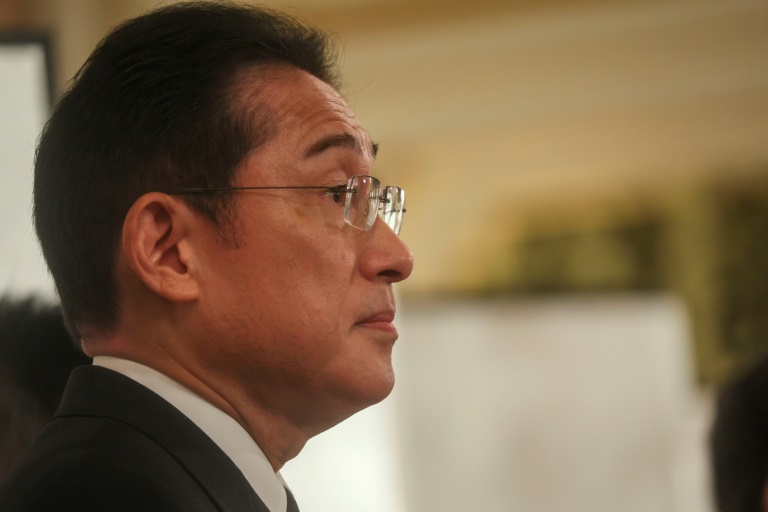
Japan called Thursday for “constructive and stable” ties with China as the two sides marked 50 years since the normalisation of relations, albeit with little public fanfare.

Growing friction over China’s military might and regional sabre-rattling has left ties between Beijing and Tokyo frosty, and there was no major diplomatic ceremony to mark the anniversary.

Instead, messages from Japanese Prime Minister Fumio Kishida and Chinese President Xi Jinping were read out at an event in Tokyo backed by the government and the Chinese embassy, and hosted by the powerful Keidanren business lobby.

In his message, Kishida, who was not present at the event, warned that relations with China, “while possessing various possibilities, face many challenges and issues”.

“I would like to build constructive and stable Japan-China relations for the peace and prosperity of not only our two nations but also the region and the world,” he said.

Xi said in his message that ties were of “great importance”, adding he was willing to work with Kishida to use the anniversary as an “opportunity”.

The countries should “work together to build a China-Japan relationship that meets the requirements of the new era,” he added.

The world’s second and third-largest economies are key trading partners and just a few years ago seemed poised for a diplomatic blossoming, with plans for a state visit by Xi.

Since then, ties have significantly soured as Beijing bolsters its military, projects power regionally and beyond, and takes a harder line on disputed territory.

In recent months, Chinese missiles are believed by Japan to have fallen within its exclusive economic zone, and Tokyo has protested what it calls growing aerial and maritime violations.

Japan also regularly complains about Chinese activity around the disputed Tokyo-controlled Senkaku Islands, which Beijing claims and calls the Diaoyus.

The war in Ukraine has only deepened the divide, with Japan backing Western allies opposed to Russia’s invasion while Beijing avoids criticising Moscow.

Japan’s brutal occupation of parts of China before and during World War II also remains a sore point, with Beijing accusing Tokyo of failing to atone for its past.

Despite all the tensions, the two countries remain economically intertwined: China is Japan’s largest trading partner and Japan is China’s second-largest after the United States.

And there have been reports that Xi and Kishida could hold talks online or in person in the coming months.

US VP Harris lands in S. Korea after North's missile tests

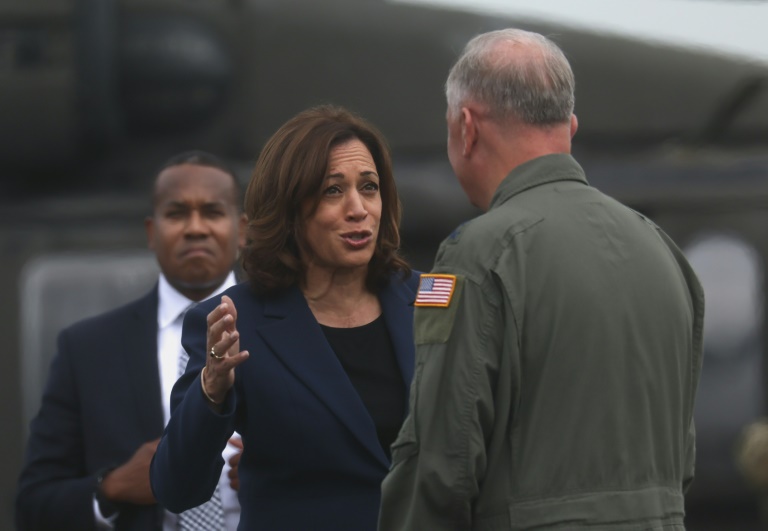
US Vice President Kamala Harris was in South Korea Thursday to tour the heavily fortified border with the nuclear-armed North, on a trip aimed at strengthening the security alliance with Seoul.

Pyongyang conducted two banned ballistic missile launches in the days before Harris’s arrival, part of a record-breaking streak of weapons tests this year.

Speaking ahead of her meeting with South Korea’s President Yoon Suk-yeol, Harris said the countries’ alliance was “a linchpin of security and prosperity on the Korean peninsula”.

“I’m here to reinforce the strength of our alliance and strengthen our work together,” she added.

Washington stations about 28,500 troops in South Korea to help protect it from the North, and the allies are conducting a large-scale joint naval exercise this week in a show of force against the North.

Harris’ trip to the Demilitarized Zone (DMZ) is likely to infuriate Pyongyang, which branded United States House Speaker Nancy Pelosi the “worst destroyer of international peace” when she visited the border in August.

Harris arrived in Seoul after a trip to Japan, where she attended the state funeral of assassinated former prime minister Shinzo Abe, before telling US troops that America would operate “undaunted and unafraid” throughout Asia, including the Taiwan Strait.

Security issues were set to dominate her meeting with Yoon, although Seoul also planned to raise its concerns over a new law signed by US President Joe Biden that removes subsidies for electric cars built outside America, impacting Korean automakers such as Hyundai and Kia.

Harris, America’s first woman vice president, will also meet what the White House called “groundbreaking women leaders” of South Korea to discuss gender equality issues.

Yoon, who has pledged to abolish Seoul’s Ministry of Gender Equality, has faced domestic criticism for a lack of women in his cabinet. 

– Nuclear test? –

Harris lands in Seoul after months of warnings from South Korean and US officials that North Korean leader Kim Jong Un is preparing to conduct another nuclear test. 

On Wednesday, the South’s spy agency said the test could happen next month.

The isolated regime has tested nuclear weapons six times since 2006. Its last and most powerful one in 2017 — which Pyongyang claimed was a hydrogen bomb — had an estimated yield of 250 kilotons.

“North Korea’s growing nuclear missile threat raises concerns in Seoul about the reliability of Washington’s defense commitments,” said Leif-Eric Easley, a professor at Ewha University in Seoul.

But sending both the USS Ronald Reagan supercarrier and Kamala Harris is a demonstration of America’s military capabilities and political will, he added.

During President Yoon’s tenure, Seoul and Washington have boosted joint military exercises, which they insist are purely defensive. North Korea sees them as rehearsals for an invasion.

Cheong Seong-chang of the Center for North Korean Studies at the Sejong Institute told AFP that he expected Yoon and Harris to discuss the plan for responding to another nuclear test by Pyongyang. 

Harris’s trip is “an opportunity to strengthen the high-level cooperative and friendly relationship between South Korea and the United States”, he said.

On Thursday, Seoul said it would hold trilateral anti-submarine drills with Japan and the US, the first such exercises since 2017, after officials said this weekend they had detected signs Pyongyang could be preparing to fire a submarine-launched ballistic missile.

Close Bitnami banner
Bitnami