World

Washington dismisses Moscow's hints of blame for gas leak

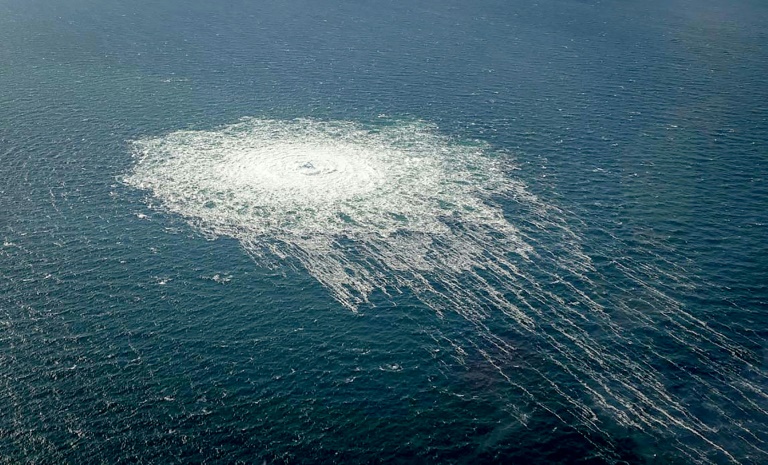
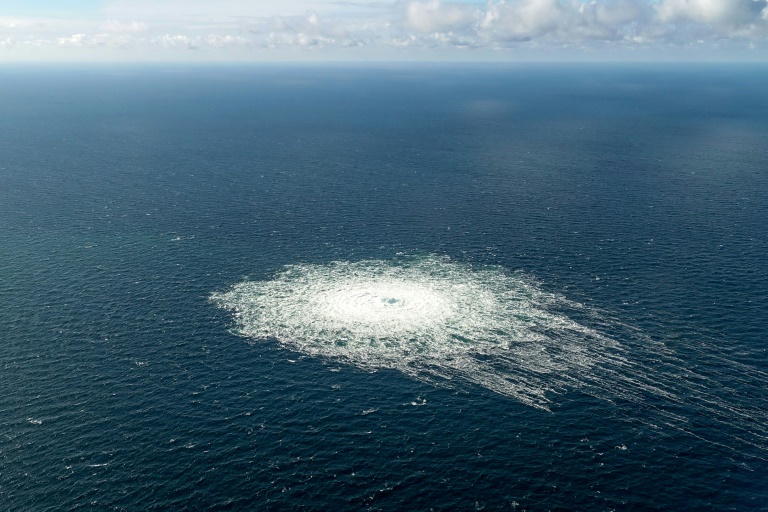
Moscow questioned Wednesday whether Washington caused mystery undersea gas pipeline leaks in Europe that have been blamed on sabotage, in a turn of the tables that US officials bluntly called “ridiculous”. 

The three outflows from the Russia-Germany Nord Stream 1 and 2 pipelines have sent natural gas prices soaring, exacerbating an energy crunch in Europe as it stands on the threshold of winter and fanning geopolitical tensions.

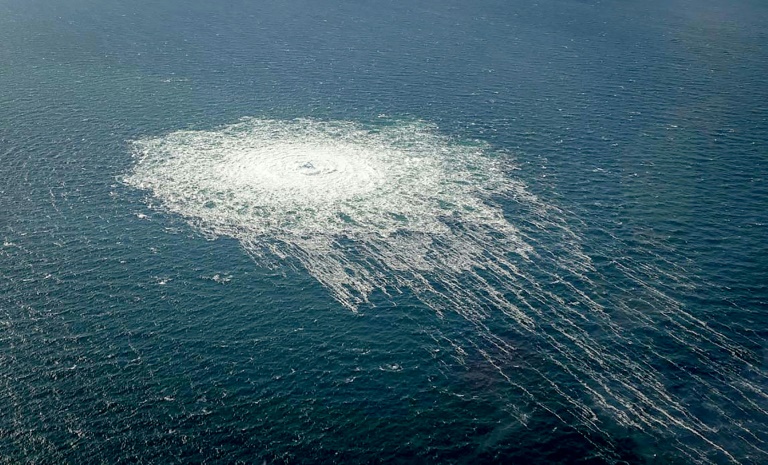
Swedish intelligence announced it was opening an investigation into the massive leaks in the Baltic Sea, branding them “aggravated sabotage”, just hours after the EU called the damage “deliberate”.

But the question of who is responsible has prompted high-level finger-pointing, with Moscow charging the United States had already said Nord Stream 2 was “finished” if Russia invaded Ukraine.

President Joe “Biden is obliged to answer the question of whether the US carried out its threat,” foreign ministry spokeswoman Maria Zakharova said on social media. 

Washington dismissed the suggestion, with a spokeswoman for the National Security Council saying: “We all know Russia has a long history of spreading disinformation and is doing it again here.”

Among Western allies, suspicion for the leaks has focused on Russia, which has cut gas supplies to Europe in retaliation for severe Western sanctions over the war in Ukraine.

Russia replied on Wednesday by saying it will ask for the United Nations Security Council to convene “in connection with provocations” regarding the ruptured pipes.

Following Europe’s sabotage allegations, fossil fuel-rich Norway boosted security at its installations in response.

They “are not a coincidence”, EU foreign policy chief Josep Borrell said in a statement. “All available information indicates those leaks are the result of a deliberate act.”

He warned: “Any deliberate disruption of European energy infrastructure is utterly unacceptable and will be met with a robust and united response.”

EU chiefs Ursula von der Leyen and Charles Michel have also blamed the Nord Stream leaks on sabotage, as have leaders of several European countries.

– ‘Increased vigilance’ –

Michel tweeted that they “appear to be an attempt to further destabilise energy supply to EU”.

He added: “Those responsible will be held fully accountable and made to pay.”

The EU is currently mulling further sanctions on Russia for annexation votes imposed on four regions in Ukraine that Moscow’s forces occupy.

Neither of the Nord Stream pipelines are currently operational, but they were full with gas when they were hit with what Swedish seismologists said were “massive releases of energy”.

One of the seismologists told AFP “there isn’t much else than a blast that could cause it”.

Danish Defence Minister Morten Bodskov told reporters in Brussels that “it can easily take one or two weeks for the area to calm down enough” for an inspection to verify the cause.

Two Danish military vessels have been sent to the area.

Non-EU member Norway — which has now overtaken Russia as the biggest supplier of gas to Europe — said it will beef up security around its oil and gas facilities.

“The government has decided to put measures in place to increase security at infrastructure sites, land terminals and platforms on the Norwegian continental shelf,” Norwegian Energy Minister Terje Aasland said.

The Norwegian Petroleum Safety Authority earlier this week called for “increased vigilance from all operators and shipping companies on the continental shelf”.

Built in parallel to the Nord Stream 1 pipeline, Nord Stream 2 was intended to double the capacity for Russian gas imports to Germany.

But Berlin blocked newly completed Nord Stream 2 in the days before the war.

Germany, which has been highly dependent on imports of fossil fuels from Russia to meet its energy needs, has since come under acute stress as Moscow’s supplies dwindle.

Sweden and Poland agree sabotage is the most likely cause of the Nord Stream leaks, with Warsaw suggesting Russia was probably the culprit, to escalate the war in Ukraine.
Washington dismisses Moscow's hints of blame for gas leak

Moscow questioned Wednesday whether Washington caused mystery undersea gas pipeline leaks in Europe that have been blamed on sabotage, in a turn of the tables that US officials bluntly called “ridiculous”. 

The three outflows from the Russia-Germany Nord Stream 1 and 2 pipelines have sent natural gas prices soaring, exacerbating an energy crunch in Europe as it stands on the threshold of winter and fanning geopolitical tensions.

Swedish intelligence announced it was opening an investigation into the massive leaks in the Baltic Sea, branding them “aggravated sabotage”, just hours after the EU called the damage “deliberate”.

But the question of who is responsible has prompted high-level finger-pointing, with Moscow charging the United States had already said Nord Stream 2 was “finished” if Russia invaded Ukraine.

President Joe “Biden is obliged to answer the question of whether the US carried out its threat,” foreign ministry spokeswoman Maria Zakharova said on social media. 

Washington dismissed the suggestion, with a spokeswoman for the National Security Council saying: “We all know Russia has a long history of spreading disinformation and is doing it again here.”

Among Western allies, suspicion for the leaks has focused on Russia, which has cut gas supplies to Europe in retaliation for severe Western sanctions over the war in Ukraine.

Russia replied on Wednesday by saying it will ask for the United Nations Security Council to convene “in connection with provocations” regarding the ruptured pipes.

Following Europe’s sabotage allegations, fossil fuel-rich Norway boosted security at its installations in response.

They “are not a coincidence”, EU foreign policy chief Josep Borrell said in a statement. “All available information indicates those leaks are the result of a deliberate act.”

He warned: “Any deliberate disruption of European energy infrastructure is utterly unacceptable and will be met with a robust and united response.”

EU chiefs Ursula von der Leyen and Charles Michel have also blamed the Nord Stream leaks on sabotage, as have leaders of several European countries.

– ‘Increased vigilance’ –

Michel tweeted that they “appear to be an attempt to further destabilise energy supply to EU”.

He added: “Those responsible will be held fully accountable and made to pay.”

The EU is currently mulling further sanctions on Russia for annexation votes imposed on four regions in Ukraine that Moscow’s forces occupy.

Neither of the Nord Stream pipelines are currently operational, but they were full with gas when they were hit with what Swedish seismologists said were “massive releases of energy”.

One of the seismologists told AFP “there isn’t much else than a blast that could cause it”.

Danish Defence Minister Morten Bodskov told reporters in Brussels that “it can easily take one or two weeks for the area to calm down enough” for an inspection to verify the cause.

Two Danish military vessels have been sent to the area.

Non-EU member Norway — which has now overtaken Russia as the biggest supplier of gas to Europe — said it will beef up security around its oil and gas facilities.

“The government has decided to put measures in place to increase security at infrastructure sites, land terminals and platforms on the Norwegian continental shelf,” Norwegian Energy Minister Terje Aasland said.

The Norwegian Petroleum Safety Authority earlier this week called for “increased vigilance from all operators and shipping companies on the continental shelf”.

Built in parallel to the Nord Stream 1 pipeline, Nord Stream 2 was intended to double the capacity for Russian gas imports to Germany.

But Berlin blocked newly completed Nord Stream 2 in the days before the war.

Germany, which has been highly dependent on imports of fossil fuels from Russia to meet its energy needs, has since come under acute stress as Moscow’s supplies dwindle.

Sweden and Poland agree sabotage is the most likely cause of the Nord Stream leaks, with Warsaw suggesting Russia was probably the culprit, to escalate the war in Ukraine.
'Catastrophic' Hurricane Ian blasts Florida

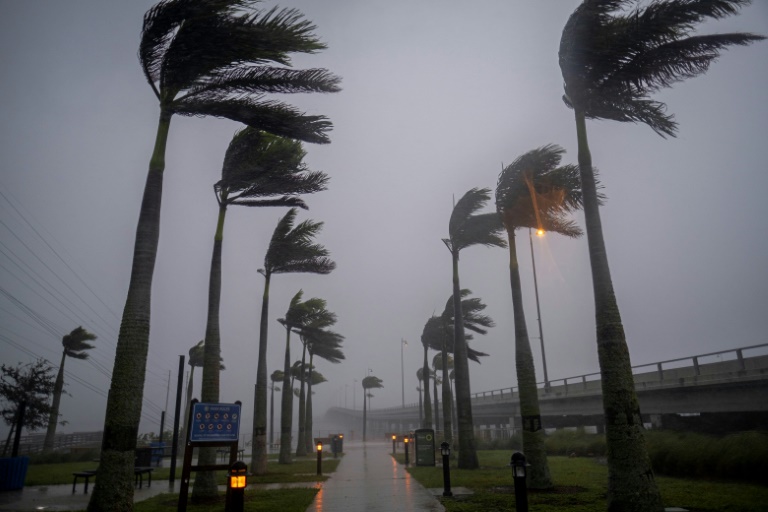
Monster Hurricane Ian walloped Florida on Wednesday, pounding the southern US state’s coast with extreme wind and rain, and causing “catastrophic” flooding from destructive storm surges.

Dramatic TV footage showed churning water submerging roads and sweeping away vehicles as the hurricane edged close to landfall near Fort Myers and Port Charlotte.

Ian, an “extremely dangerous” Category 4 storm, was destined to affect several million people across Florida and in southeastern states Georgia and South Carolina.

The storm was already “causing catastrophic storm surge, winds and flooding in the Florida peninsula,” the US National Hurricane Center (NHC) said in its latest advisory. 

As hurricane conditions spread, forecasters warned of a looming once-in-a-generation calamity.

Ian could already have had deadly consequences off the coast as US Border Patrol said 23 migrants were missing after their boat sank. Four Cubans who survived swam to shore in the Florida Keys.

The NHC said Ian was bringing sustained winds of 155 miles (250 kilometers) per hour, just two mph shy of Category 5 intensity — the strongest on the Saffir-Simpson scale.

Some 2.5 million people were under mandatory evacuation orders in a dozen coastal Florida counties, with several dozen shelters set up, and voluntary evacuation recommended in others.

For those who decided to ride out the storm, authorities were stressing it was too late to flee and that residents should hunker down and stay indoors.

– ‘Major impacts’ –

Airports in Tampa and Orlando stopped all commercial flights, and some quarter million households were already without power.

But that was a “drop in the bucket” compared with the outages expected over the next 48 hours, Florida Governor Ron DeSantis said.

“This is going to be a nasty, nasty day, two days,” he added.

“Clearly this is a very powerful major hurricane that’s going to have major impacts.”

With conditions rapidly deteriorating, some thrill-seekers nevertheless were seen walking in the mud flats of Tampa Bay and further south at Port Charlotte’s Charlotte Harbor, ahead of Ian’s arrival.

With up to two feet (61 centimeters) of rain expected to fall on parts of the so-called Sunshine State, and a storm surge that could reach devastating levels of 12 to 18 feet (3.6 to 5.5 meters) above ground, authorities were warning of dire emergency conditions.

“This is a life-threatening situation,” the NHC warned.

The storm was set to move across central Florida before emerging in the Atlantic Ocean by late Thursday.

– Widespread blackout –

Ian a day earlier had plunged all of Cuba into darkness after battering the country’s west as a Category 3 storm and downing the island’s power network.

Only the few people with gasoline-powered generators had electricity on the island of more than 11 million people.

“Desolation and destruction. These are terrifying hours. Nothing is left here,” a 70-year-old resident of the western city of Pinar del Rio was quoted as saying in a social media post by his journalist son, Lazaro Manuel Alonso.

At least two people died in Pinar del Rio province, Cuban state media reported.

– Rescue operation ready  –

In the United States, the Pentagon said 3,200 national guardsmen had been called up in Florida, with another 1,800 on the way.

DeSantis said state and federal responders were assigning thousands of personnel to address the storm response, noting there were 250 aircraft, 300 boats and 1,600 high-water vehicles on hand for rescues and other critical operations.

“There will be thousands of Floridians who will need help rebuilding,” he said.

National Weather Service director Ken Graham echoed concerns about what lay ahead, expressing certainty Ian will leave a trail of destruction.

“This is going to be a storm we talk about for many years to come,” he said. “It’s a historic event.”

As climate change warms the ocean’s surface, the number of powerful tropical storms, or cyclones, with stronger winds and more precipitation is likely to increase. 

The total number of cyclones, however, may not.

According to Gary Lackmann, a professor of atmospheric science at North Carolina State University, studies have also detected a “potential link” between climate change and rapid intensification — when a relatively weak tropical storm surges to a Category 3 hurricane or higher in a 24-hour period, as happened with Ian.

“There remains a consensus that there will be fewer storms, but that the strongest will get stronger,” Lackmann told AFP.

'Catastrophic' Hurricane Ian blasts Florida

Monster Hurricane Ian walloped Florida on Wednesday, pounding the southern US state’s coast with extreme wind and rain, and causing “catastrophic” flooding from destructive storm surges.

Dramatic TV footage showed churning water submerging roads and sweeping away vehicles as the hurricane edged close to landfall near Fort Myers and Port Charlotte.

Ian, an “extremely dangerous” Category 4 storm, was destined to affect several million people across Florida and in southeastern states Georgia and South Carolina.

The storm was already “causing catastrophic storm surge, winds and flooding in the Florida peninsula,” the US National Hurricane Center (NHC) said in its latest advisory. 

As hurricane conditions spread, forecasters warned of a looming once-in-a-generation calamity.

Ian could already have had deadly consequences off the coast as US Border Patrol said 23 migrants were missing after their boat sank. Four Cubans who survived swam to shore in the Florida Keys.

The NHC said Ian was bringing sustained winds of 155 miles (250 kilometers) per hour, just two mph shy of Category 5 intensity — the strongest on the Saffir-Simpson scale.

Some 2.5 million people were under mandatory evacuation orders in a dozen coastal Florida counties, with several dozen shelters set up, and voluntary evacuation recommended in others.

For those who decided to ride out the storm, authorities were stressing it was too late to flee and that residents should hunker down and stay indoors.

– ‘Major impacts’ –

Airports in Tampa and Orlando stopped all commercial flights, and some quarter million households were already without power.

But that was a “drop in the bucket” compared with the outages expected over the next 48 hours, Florida Governor Ron DeSantis said.

“This is going to be a nasty, nasty day, two days,” he added.

“Clearly this is a very powerful major hurricane that’s going to have major impacts.”

With conditions rapidly deteriorating, some thrill-seekers nevertheless were seen walking in the mud flats of Tampa Bay and further south at Port Charlotte’s Charlotte Harbor, ahead of Ian’s arrival.

With up to two feet (61 centimeters) of rain expected to fall on parts of the so-called Sunshine State, and a storm surge that could reach devastating levels of 12 to 18 feet (3.6 to 5.5 meters) above ground, authorities were warning of dire emergency conditions.

“This is a life-threatening situation,” the NHC warned.

The storm was set to move across central Florida before emerging in the Atlantic Ocean by late Thursday.

– Widespread blackout –

Ian a day earlier had plunged all of Cuba into darkness after battering the country’s west as a Category 3 storm and downing the island’s power network.

Only the few people with gasoline-powered generators had electricity on the island of more than 11 million people.

“Desolation and destruction. These are terrifying hours. Nothing is left here,” a 70-year-old resident of the western city of Pinar del Rio was quoted as saying in a social media post by his journalist son, Lazaro Manuel Alonso.

At least two people died in Pinar del Rio province, Cuban state media reported.

– Rescue operation ready  –

In the United States, the Pentagon said 3,200 national guardsmen had been called up in Florida, with another 1,800 on the way.

DeSantis said state and federal responders were assigning thousands of personnel to address the storm response, noting there were 250 aircraft, 300 boats and 1,600 high-water vehicles on hand for rescues and other critical operations.

“There will be thousands of Floridians who will need help rebuilding,” he said.

National Weather Service director Ken Graham echoed concerns about what lay ahead, expressing certainty Ian will leave a trail of destruction.

“This is going to be a storm we talk about for many years to come,” he said. “It’s a historic event.”

As climate change warms the ocean’s surface, the number of powerful tropical storms, or cyclones, with stronger winds and more precipitation is likely to increase. 

The total number of cyclones, however, may not.

According to Gary Lackmann, a professor of atmospheric science at North Carolina State University, studies have also detected a “potential link” between climate change and rapid intensification — when a relatively weak tropical storm surges to a Category 3 hurricane or higher in a 24-hour period, as happened with Ian.

“There remains a consensus that there will be fewer storms, but that the strongest will get stronger,” Lackmann told AFP.

'Disturbing' Nord Stream leaks show danger of global methane emissions

Planet-heating methane spewing into the atmosphere from the damaged Nord Stream pipelines only has a modest impact on climate change, say scientists, but sharply highlights the risks of fossil-fuel driven greenhouse gas emissions.

The European Union has said it believes the leaks to the strategically important pipelines, Nord Stream 1 and 2, were caused by a “deliberate act”.

While not in operation the pipelines still contained gas, and Danish authorities said they will now likely continue to empty out, with leaks expected to continue for at least a week.

With only rough estimates available as to how much natural gas might bubble up through the Baltic Sea, scientists expressed concerns about climate and environmental impacts — but stressed that the amounts of methane involved were a tiny fraction of global emissions.

“It is a real travesty, an environmental crime if it was deliberate,” said Jeffrey Kargel, senior scientist at the Planetary Research Institute in Arizona, calling the leak “disturbing”. 

But he added: “Although the amount of gas lost from the pipeline obviously is large, it is not the climate disaster one might think.”

What gas is leaking?

Natural gas is composed primarily of methane. 

This is about 28 times more powerful than carbon dioxide on a century-long timescale — although it only lingers in the atmosphere for about a decade, compared to hundreds or thousands of years for C02.

Some of the methane emitted from the pipes will be oxidised in the water into C02, said Grant Allen, professor of Atmospheric Physics at the University of Manchester.

“But given how violent the venting of natural gas appears to be, most of the gas will reach the sea surface as methane,” he said. 

Methane is responsible for roughly 30 percent of the global rise in temperatures to date, even though it is far less abundant in the atmosphere than CO2.

How big is the leak?   

This is the subject of much uncertainty, although some experts and organisations have attempted to calculate the potential amount of gas in the pipelines.

One estimate is that there was up to 177 million cubic metres of natural gas still in Nord Stream 2, said Allen. 

“This is not a small amount of gas, and represents a reckless emission of greenhouse gases into the atmosphere,” he said, adding it was equivalent to the natural gas used by 124,000 UK homes in a year. 

Greenpeace have used similar figures to roughly estimate that the leak emissions could be equivalent to eight months of Denmark’s total greenhouse gas emissions. 

Paul Balcombe, an honorary lecturer at the Department of Chemical Engineering at Imperial College London, said estimates for the gas in the pipes range from around 150 to 300 million cubic metres.

“It is unlikely that they will release all their contents,” he told the Science Media Centre. 

But he added if just one of the pipes did completely empty out it would be about twice as much as the worst methane leak recorded in the United States, the 2015 Aliso Canyon leak.

“It would have a very large environmental and climate impact indeed, even if it released a fraction of this,” he said. 

Lauri Myllyvirta from the Centre for Research on Energy and Clean Air  said he has calculated an estimated potential leak of between 180 and 270 kilotons from the two pipelines.

This figure is significant but, he said, is probably only 1.5 percent of the total annual methane emissions from oil and gas operations in Russia.

The International Energy Agency estimates this was some 18 million tonnes in 2021.

How does it compare to global emissions?

The IEA has decried the enormous amount of methane that leaks from fossil fuel operations every year — estimating the amount lost last year globally was broadly similar to all the gas used in Europe’s power sector.

The leak will certainly have a “strong immediate warming effect and cause poor air quality” Piers Forster, director of the Priestley International Centre for Climate at the University of Leeds. 

But ultimately its effect is small compared to the daily leaks from the world’s poorly-maintained gas networks, which see around 10 percent of global gas supply lost.

Experts said the incident further underscores the need to urgently switch from polluting fossil fuels, both to combat climate change and ensure energy security.   

This year’s energy crisis caused by Russia’s invasion of Ukraine has already “supercharged the clean energy transition”, Myllyvirta said. 

Kargel, who calculated that the Nord Stream leak was roughly equivalent to 2.5 hours of global emissions, said it was a reminder of the urgent need to slash greenhouse emissions. 

“The global climate is changing drastically, with huge impacts on extreme climate mounting every year, decade after decade,” he said.  

Protest-hit Iran launches strikes that kill 9 in Iraqi Kurdistan

Iran launched cross-border missile and drone strikes that killed nine people in Iraq’s Kurdistan region Wednesday after accusing Kurdish armed groups based there of stoking a wave of unrest that has rocked the Islamic republic.

The September 16 death of Kurdish Iranian woman Mahsa Amini, 22, while in the custody of Iran’s morality police has sparked a major wave of protests and a crackdown that has left scores of demonstrators dead over the past 12 nights.

Iran’s Islamic Revolutionary Guard Corps has accused the Iraq-based Kurdish groups of “attacking and infiltrating Iran … to sow insecurity and riots and spread unrest”.

After earlier Iranian cross-border attacks that caused no casualties, a barrage of Iranian missiles and drones on Wednesday claimed nine lives and wounded more than 30, said the regional health minister in Arbil, Saman al-Barazanji.

“There are civilians among the victims”, including one of those killed, a senior official of the Kurdistan autonomous region told AFP.

Iran state television said the Guards had “targeted several headquarters of separatist terrorists in northern Iraq with precision missiles and destructive drones”.

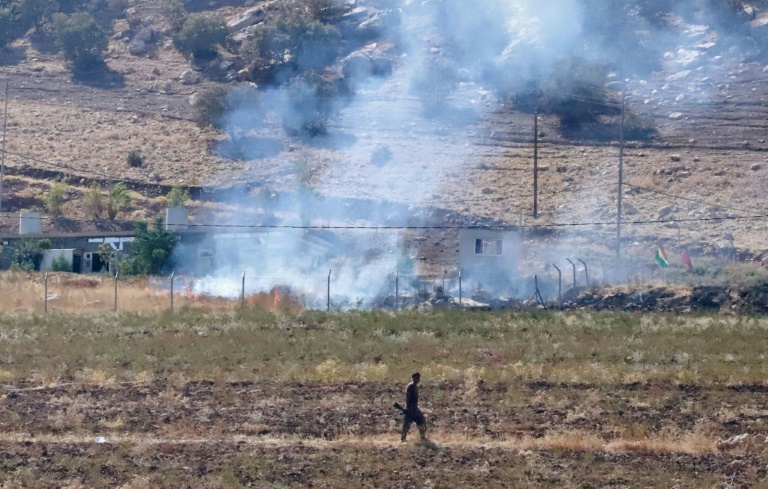
An AFP correspondent reported smoke billowing from locations hit, ambulances racing to the scene and residents fleeing, at Zargwez, about 15 kilometres (10 miles) from Sulaimaniyah.

– ‘Cowardly attacks’ –

In Baghdad, Iraq’s federal government called in the Iranian ambassador to protest the deadly strikes, while the UN mission in Iraq deplored the attack, saying “rocket diplomacy is a reckless act with devastating consequences”.

“These attacks need to cease immediately,” the UN mission said on Twitter.

The United States said it “strongly condemns” Iran’s “brazen attacks” and warned against further strikes, said State Department spokesman Ned Price.

Britain said Iraq’s “indiscriminate bombardment” demonstrates “a repeated pattern of Iranian destabilising activity in the region”.

Germany also slammed the “escalation … against the backdrop of domestic political protests in Iran” and rejected “attempts to locate the causes of the Iranian protests in the neighbouring country”.

Other Iranian strikes Wednesday destroyed buildings around Zargwez, where several exiled left-wing Iranian Kurdish parties maintain offices.

“The area where we are has been hit by 10 drone strikes,” said Atta Nasser, an official from exiled Iranian group Komala.

“The headquarters of the Kurdistan Freedom Party has been hit by Iranian strikes,” Hussein Yazdan, said an official from the party about the site in the Sherawa region south of Arbil.

Another group, the Kurdish Democratic Party of Iran, said its bases and headquarters in Koysinjaq, east of Arbil, were also struck by “missiles and drones”.

“These cowardly attacks are occurring at a time when the terrorist regime of Iran is unable to crack down on ongoing protests inside and silence the Kurdish and Iranian peoples’ civil resistance,” it tweeted.

– Attack drones –

Amini, 22, died in Tehran three days after being arrested for allegedly violating Iran’s strict dress code for women that demands they wear hijab headscarves and modest clothes.

Her death sparked Iran’s biggest protests in almost three years and a crackdown that has killed at least 76 people, according to the Oslo-based group Iran Human Rights, or “around 60”, according to Iran’s semi-official Fars news agency.

Protests have rocked especially Kurdish communities in western Iran that share strong connections with Kurdish-inhabited areas of Iraq.

Many Iranian Kurds cross the border into Iraq to find work, due to a biting economic crisis in Iran driven by US sanctions.

The Guards’ General Abbas Nilforoushan, deputy for operations, said Tuesday about Iraqi Kurdistan that “the establishment of a base by the enemies of the Islamic Revolution in this region is not acceptable,” Tasnim news agency reported.

“For some time now, counter-revolutionary elements have been attacking and infiltrating Iran from the northwest of the country to sow insecurity and riots and spread unrest.”

He added that several of “these anti-revolutionary elements were arrested during some riots in the northwest (of Iran), so we had to defend ourselves, react and bomb the surroundings of the border strip”.

burs-tgg/fz/

Iran 'throttling' internet to limit protest footage: activists

Iran is imposing increasingly severe restrictions on access to the internet, albeit still short of a total shutdown, in an apparent bid to limit the sharing of footage of protests which have erupted nationwide, activists charge.

Campaigners and Persian-language television channels outside Iran have noted a reduction in the posting of footage of the protests filmed on mobile phones, almost two weeks into the movement that erupted following the death of Mahsa Amini.

The authorities have already restricted access to Instagram and WhatsApp — until now the last remaining unfiltered social media services — and have now clamped down on apps like the Google Play Store as well as Virtual Private Networks (VPNs) that seek to circumvent local access restrictions.

“It’s still not an internet shutdown, and it’s hard to even describe what they are doing to the network as ‘shutdowns’. Perhaps extreme throttling is the best simple term for it,” said the Iran researcher for freedom of expression group Article 19, Mahsa Alimardani.

“But the disruptions are heavy,” she told AFP, saying disconnections were hitting a peak from late afternoon to midnight when most protests take place.

The restrictions still fall short of the total shutdown seen in November 2019 when a crackdown on less than a week of protests, according to Amnesty International, left at least 321 people dead.

Videos of protests and alleged abuses by the authorities are still filtering out onto social media channels, but not in the same volume as when protests first erupted following the death of Amini who had been arrested by the morality police.

“The authorities seem to have learned how dangerous this is for their economy or overall public relations,” commented Alimardani.

– ‘Massive hurdle’ –

Norway-based Iran Human Rights (IHR), which says 76 people have been killed in the crackdown so far, said internet access has either been “severely disrupted or completely cut” over the last days.

“Internet disruptions continue to cause delays in reporting” deaths in the protests, it warned.

Paris-based Reporters Without Borders (RSF) said: “Twelve days after the beginning of the protests, the internet network is still down daily throughout the country.”

In response, social media giants have sought to offer assistance to Iranians, the United States has even agreed sanction relief on some software, and tycoon Elon Musk has offered his Starlink satellite internet network.

But how much such measures can help, especially in the short term, remains unclear.

“Internet outages are happening more frequently worldwide, including in parts of Iran this week,” Google said in a statement on Twitter, saying its teams were “working to make our tools broadly available” following the eased US sanctions.

“We hope these changes help, in some small way, people safely access information at this important time,” it added.

Iranians have long used VPNs to access sites blocked in Iran — even government officials including the foreign minister have Twitter accounts despite the network being blocked in the country.

But Alimardani described using and accessing VPNs right now as “hit and miss” for Iranians with the blocking of the Google Play Store, a major blow when most Iranians are using Android mobile phones with their Google operating systems.

“This is a massive hurdle to downloading safe and new VPNs that work,” she said.

Cristoforetti becomes first European woman to command ISS

Italy’s Samantha Cristoforetti on Wednesday became the first European woman to take over command of the International Space Station during a ceremony broadcast live from space.

The outgoing commander, Russian cosmonaut Oleg Artemyev, used the occasion to seemingly make a rare space-bound reference to the war in Ukraine, saying that “despite the storms on Earth, our international cooperation continues”.

During a relaxed ceremony, Artemyev handed Cristoforetti a golden key, symbolising that she is the new commander of the space station until she returns to Earth on October 10.

Cristoforetti, a 45-year-old European Space Agency astronaut and former Italian air force pilot, arrived for her second tour on the ISS in April.

She holds the record for the longest stay in space by a woman after spending 199 days in orbit in 2014 and 2015.

She is fifth woman — and the first non-US woman — to become commander since the role was created in 2000.

The space station, long a symbol of closer post-Cold War ties between Russia and the United States, has been in a difficult position since Moscow invaded Ukraine in February.

Moscow responded with outrage at unprecedented sanctions over the war and the ISS has been one of the last remaining areas of cooperation between Russia and the West.

– War’s echoes in space –

Artemyev praised the work of all 10 people onboard the space station — four Americans, five Russians and Cristoforetti.

He said he viewed the ISS as “a continuation of the Apollo–Soyuz programme,” the first crewed international space mission carried out jointly by the United States and Soviet Union in 1975 in the midst of the Cold War.

That was a time “when the relationship between the countries was also not simple, when there were people who found the way which leads to peace, and the way that war ends everywhere,” Artemyev said, not mentioning Ukraine by name.

For her part, Cristoforetti praised the work of her fellow crew, saying they all form “a tiny part of the gigantic team on the ground” which manages the operations of the space station.

The commander is responsible for all tasks performed by the crew members onboard the space station, which orbits more than 400 kilometres (248 miles) above Earth.

During an emergency, the commander has the authority to take decisions without waiting for instructions from ground control. 

In the event of a fire, depressurisation or the detection of toxic atmosphere — the three defined emergency scenarios — it is up to the commander to ensure that the lives of the crew are saved first.

French astronaut Thomas Pesquet, who has served as ISS commander, said last year that it is “like being on a boat — there is only master onboard after God”.

The decision of who becomes commander is made jointly by the five space agencies involved in the station: NASA, Russia’s Roscosmos, Europe’s ESA, Canada’s CSA and Japan’s JAXA.

Cristoforetti becomes first European woman to command ISS

Italy’s Samantha Cristoforetti on Wednesday became the first European woman to take over command of the International Space Station during a ceremony broadcast live from space.

The outgoing commander, Russian cosmonaut Oleg Artemyev, used the occasion to seemingly make a rare space-bound reference to the war in Ukraine, saying that “despite the storms on Earth, our international cooperation continues”.

During a relaxed ceremony, Artemyev handed Cristoforetti a golden key, symbolising that she is the new commander of the space station until she returns to Earth on October 10.

Cristoforetti, a 45-year-old European Space Agency astronaut and former Italian air force pilot, arrived for her second tour on the ISS in April.

She holds the record for the longest stay in space by a woman after spending 199 days in orbit in 2014 and 2015.

She is fifth woman — and the first non-US woman — to become commander since the role was created in 2000.

The space station, long a symbol of closer post-Cold War ties between Russia and the United States, has been in a difficult position since Moscow invaded Ukraine in February.

Moscow responded with outrage at unprecedented sanctions over the war and the ISS has been one of the last remaining areas of cooperation between Russia and the West.

– War’s echoes in space –

Artemyev praised the work of all 10 people onboard the space station — four Americans, five Russians and Cristoforetti.

He said he viewed the ISS as “a continuation of the Apollo–Soyuz programme,” the first crewed international space mission carried out jointly by the United States and Soviet Union in 1975 in the midst of the Cold War.

That was a time “when the relationship between the countries was also not simple, when there were people who found the way which leads to peace, and the way that war ends everywhere,” Artemyev said, not mentioning Ukraine by name.

For her part, Cristoforetti praised the work of her fellow crew, saying they all form “a tiny part of the gigantic team on the ground” which manages the operations of the space station.

The commander is responsible for all tasks performed by the crew members onboard the space station, which orbits more than 400 kilometres (248 miles) above Earth.

During an emergency, the commander has the authority to take decisions without waiting for instructions from ground control. 

In the event of a fire, depressurisation or the detection of toxic atmosphere — the three defined emergency scenarios — it is up to the commander to ensure that the lives of the crew are saved first.

French astronaut Thomas Pesquet, who has served as ISS commander, said last year that it is “like being on a boat — there is only master onboard after God”.

The decision of who becomes commander is made jointly by the five space agencies involved in the station: NASA, Russia’s Roscosmos, Europe’s ESA, Canada’s CSA and Japan’s JAXA.

EU proposes new Russia sanctions including oil price cap

The EU’s executive on Wednesday proposed a new round of sanctions on Moscow over its latest “escalation” in Ukraine, including an oil price cap and ban on Russian exports worth seven billion euros ($7 billion). 

It also plans to expand its travel blacklist and asset freezes to include high-ranking Russian defence officials and organisers of widely derided annexation votes in occupied Ukrainian territories.

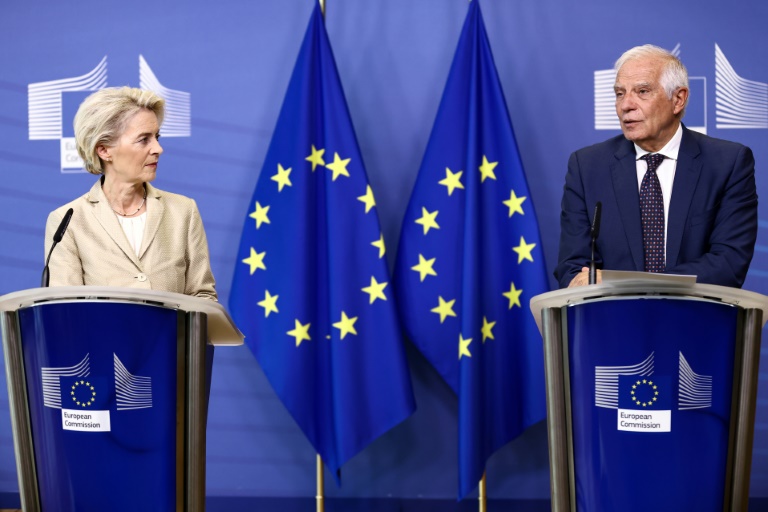
“Last week, Russia has escalated the invasion of Ukraine to a new level,” European Commission President Ursula von der Leyen said.

She listed the “sham” referendums staged by Russia in the occupied regions of Ukraine, Moscow’s military mobilisation and President Vladimir Putin’s “threat to use nuclear weapons”. 

“We’re determined to make the Kremlin pay for this further escalation,” von der Leyen said. 

As part of the new round of sanctions — which has to be signed off by the bloc’s 27 nations — the commission is laying out a “legal basis” for a price cap on Russian oil, in line with an agreement by the G7.

It will also look to ban Russian exports worth $7 billion and tighten restrictions on goods flowing from the EU that could help Russia’s war machine. 

“The aim is here to deprive the Kremlin’s military complex of key technologies,” von der Leyen said.

“For example, this includes additional aviation items, or electronic components and specific chemical substances.”

The proposal includes a prohibition on Europeans sitting on the board of Russian state-owned companies. 

EU foreign policy chief Josep Borrell said the blacklisted individuals would also include those helping Moscow to circumvent sanctions.

The bloc has already imposed seven waves of unprecedented sanctions on Moscow since it invaded its pro-Western neighbour at the end of February.  

The EU has already agreed a ban in May on most oil flowing from Russia to the bloc, to take full effect in December.

The push for an oil price cap is aimed at limiting how much third countries, such as China and India, pay for Russian crude. 

To get there, it would include restrictions on European firms shipping and ensuring Russian oil cargoes heading to the rest of the globe. 

The Baltic states, Ireland and Poland had pushed for stronger measures to be taken in this latest round, among them restricting cooperation with Russia’s commercial nuclear sector. 

That measure, though, was rebuffed by member states worried about further hitting energy supplies as Europe faces a crunch in the face of Russian cuts this winter. 

Close Bitnami banner
Bitnami