World

EU proposes new Russia sanctions including oil price cap

The EU’s executive on Wednesday proposed a new round of sanctions on Moscow over its latest “escalation” in Ukraine, including an oil price cap and ban on Russian exports worth seven billion euros ($7 billion). 

It also plans to expand its travel blacklist and asset freezes to include high-ranking Russian defence officials and organisers of widely derided annexation votes in occupied Ukrainian territories.

“Last week, Russia has escalated the invasion of Ukraine to a new level,” European Commission President Ursula von der Leyen said.

She listed the “sham” referendums staged by Russia in the occupied regions of Ukraine, Moscow’s military mobilisation and President Vladimir Putin’s “threat to use nuclear weapons”. 

“We’re determined to make the Kremlin pay for this further escalation,” von der Leyen said. 

As part of the new round of sanctions — which has to be signed off by the bloc’s 27 nations — the commission is laying out a “legal basis” for a price cap on Russian oil, in line with an agreement by the G7.

It will also look to ban Russian exports worth $7 billion and tighten restrictions on goods flowing from the EU that could help Russia’s war machine. 

“The aim is here to deprive the Kremlin’s military complex of key technologies,” von der Leyen said.

“For example, this includes additional aviation items, or electronic components and specific chemical substances.”

The proposal includes a prohibition on Europeans sitting on the board of Russian state-owned companies. 

EU foreign policy chief Josep Borrell said the blacklisted individuals would also include those helping Moscow to circumvent sanctions.

The bloc has already imposed seven waves of unprecedented sanctions on Moscow since it invaded its pro-Western neighbour at the end of February.  

The EU has already agreed a ban in May on most oil flowing from Russia to the bloc, to take full effect in December.

The push for an oil price cap is aimed at limiting how much third countries, such as China and India, pay for Russian crude. 

To get there, it would include restrictions on European firms shipping and ensuring Russian oil cargoes heading to the rest of the globe. 

The Baltic states, Ireland and Poland had pushed for stronger measures to be taken in this latest round, among them restricting cooperation with Russia’s commercial nuclear sector. 

That measure, though, was rebuffed by member states worried about further hitting energy supplies as Europe faces a crunch in the face of Russian cuts this winter. 
Stocks rally but investors cautious over recession fears

Global stock markets rallied on Wednesday in a volatile trading, with investors given an “energy boost” by an intervention by the Bank of England.

But geopolitical tensions continued to temper enthusiasm, analysts said, with heightened Ukraine tensions and looming recession fears.

Wall Street stocks traded up after the Bank of England’s surprise intervention in the British bond market pushed down bond yields in Britain and the United States.

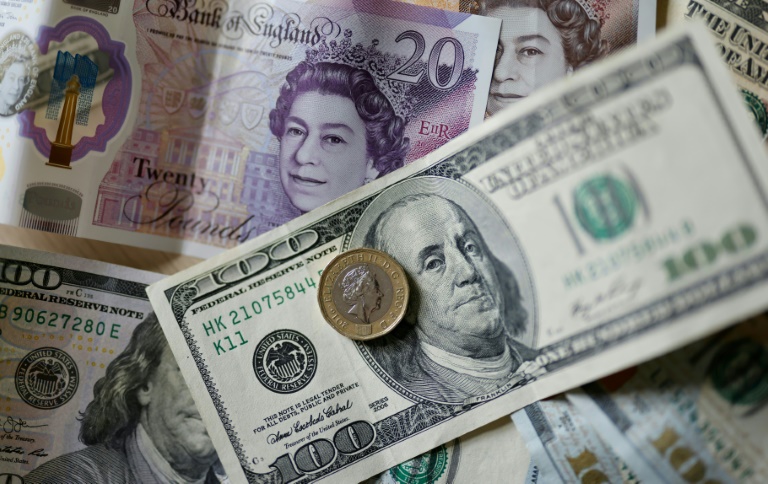
Following a historic slump in the pound, the BoE announced it was temporarily buying up long-dated UK government bonds “to restore orderly market conditions.”

“The BoE intervention helped cooling the (dollar) strength and give an energy boost to the market,” said Ipek Ozkardeskaya, senior analyst at Swissquote bank.

The UK government’s 30-year bond yield retreated to 4.44 percent after the announcement, having hit a 1998 peak at 5.14 percent.

The yield on the 10-year US Treasury note — a closely-watched proxy of US interest rates — also pulled back as analysts said the BoE manoeuvre had “soothed” investors in the short run.

Britain’s new finance minister Kwasi Kwarteng’s tax-cutting budget sent shockwaves through markets, pushing the pound to a record low and leading to dire warnings for Britain’s economy — though sterling later rallied against the US currency.

The BoE intervention followed rare criticism from the International Monetary Fund, which argued that Britain’s recent budget could increase inequality and worsen inflation.

“The BoE’s intervention is an attempt to soothe investor nerves after they were spooked by last week’s mini-budget,” said City Index analyst Fawad Razaqzada.

After early losses, major indices in London, Frankfurt and Paris all closed up Wednesday.

– Fear grips markets –

Analysts warned of looming risks in the shape of soft economic data and crumbling earning expectations.

“Fear of tightening-induced recessions has wiped out the recovery we saw in stock markets over the bulk of the summer as investors were once again burned by an over-eagerness to catch the bottom in the market, despite there being little evidence of it being justified,” said OANDA’s Craig Erlam.

“That fear has now gripped the markets and we may see a little more caution going forward,” Erlam said.

Sentiment was also rattled by worries about developments in Ukraine, after Kremlin-installed authorities in four regions under Russian control claimed victory in annexation votes, with Moscow warning it could use nuclear weapons to defend the territories.

Ukraine and its allies have denounced the so-called referendums as a sham, saying the West would never recognise the results.

Volatile oil prices also rose Wednesday, as the EU proposed a new round of sanctions on Moscow, including a possible oil price cap.

Leaks from two Russia-Germany undersea gas pipelines — which the EU said were caused by deliberate sabotage — also threatened to fuel further tensions in the energy conflict.

– Key figures at around 1550 GMT –

London – FTSE 100: UP 0.3 percent at 7005.39 points (close)

Frankfurt – DAX: UP 0.4 percent at 12183.28 (close)

Paris – CAC 40: UP 0.2 percent at 5765.01 (close)

EURO STOXX 50: UP 0.2 percent at 3335.30 (close)

New York – Dow: UP 1.1 percent at 29436.77 

Tokyo – Nikkei 225: DOWN 1.5 percent at 26,173.98 (close)

Hong Kong – Hang Seng Index: DOWN 3.4 percent at 17,250.88 (close)

Shanghai – Composite: DOWN 1.6 percent at 3,045.07 (close)

Pound/dollar: UP at $1.0748 from $1.0730 on Tuesday

Euro/dollar: UP at $0.9639 from $0.9595

Euro/pound: UP at 90.67 pence from 89.39 pence 

Dollar/yen: DOWN at 144.45 yen from 144.81 yen

Brent North Sea crude: UP 1.9 percent at $86.73 per barrel

West Texas Intermediate: UP 2.9 percent at $80.77 per barrel

burs-rfj/rox/cdw

Cuba still without power after departure of Hurricane Ian

Cuba was still without electricity on Wednesday more than 12 hours after a massive power cut caused by Hurricane Ian, which killed two people and left widespread damage.

Western Cuba was battered by the fierce tropical storm on Tuesday that left the country’s power network damaged.

“Not one drop of water has fallen since 5:20 pm (on Tuesday) and there is no electricity,” Chelita Delkago, a 52-year-old homemaker from western Cuba, told AFP by telephone.

State electricity company Union Electrica, the only authorized power supplier in the communist nation, said Tuesday night that the country of 11.2 million was “without electrical service.”

The company had said power would be gradually restored overnight.

In some cities power did resume briefly.

Cubans have had to get used to increasingly frequent power cuts since May, but not on a nationwide scale.

Much of the country’s power infrastructure is obsolete and poorly maintained.

“The electricity went out yesterday at 6:00 pm and we don’t know when it will be back on,” farmer Alejandro Perez, 35, told AFP by telephone from the eastern town of Santiago de Cuba.

By contrast, on Isla de la Juventud island, which was the first part of the country struck by Ian, “we have had electricity since 5:00 pm yesterday,” Roxana Gonzalez, 75, told AFP.

Given the island lies 340-kilometers south of Havana, it has its own separate electricity grid.

In Havana, a city of 2.1 million, the chimneys of a Turkish generator boat anchored in the harbor that provides electricity for the capital were extinguished.

Likewise, the old and small Tallapiedra thermoelectric plant, which only operates in emergencies, was out of action.

Ian caused five buildings in the capital to collapse while another 68 were partially damaged, authorities said.

Canada will 'never' recognize Russia's votes in Ukraine: Trudeau

Canada will never accept the results of “sham” annexation votes organized by Moscow in the Russian-occupied regions of Ukraine, and will sanction those complicit in the referendum effort, Prime Minister Justin Trudeau said Wednesday.

The Canadian leader said in a Twitter message that he’d spoken with Ukraine President Volodymyr Zelensky and told him that “Canada will never recognize Russia’s ‘referendums.'”

He also pledged Ottawa’s steadfast support for Kyiv “with military, humanitarian, and financial assistance.”

In a statement he said Ottawa will impose new sanctions “against persons and entities that are complicit in this latest attempt to undermine the principles of state sovereignty,” which he described as a “further escalation” in the conflict by Moscow.

Kremlin-installed authorities in the four Ukrainian regions under Russian control on Tuesday claimed victory in the votes, saying that preliminary results show a majority in favor of being annexed by Moscow.

The leaders of Ukraine’s Lugansk, Kherson and Zaporizhzhia regions on Wednesday called on President Vladimir Putin to formally annex the territories into Russia.

Only Donetsk — which along with Lugansk make up the industrial Donbas region and have been partially controlled by pro-Kremlin separatists since 2014 — had yet to formally ask Putin for annexation.

Earlier, Trudeau called the votes “illegitimate” and a “sham,” and decried Moscow’s “attempted, illegal annexation of Ukrainian territories.”

“Let me be clear: Ukraine’s borders will not change. Ukraine’s territory will remain Ukraine’s,” he said.

Monster Hurricane Ian hammers Florida

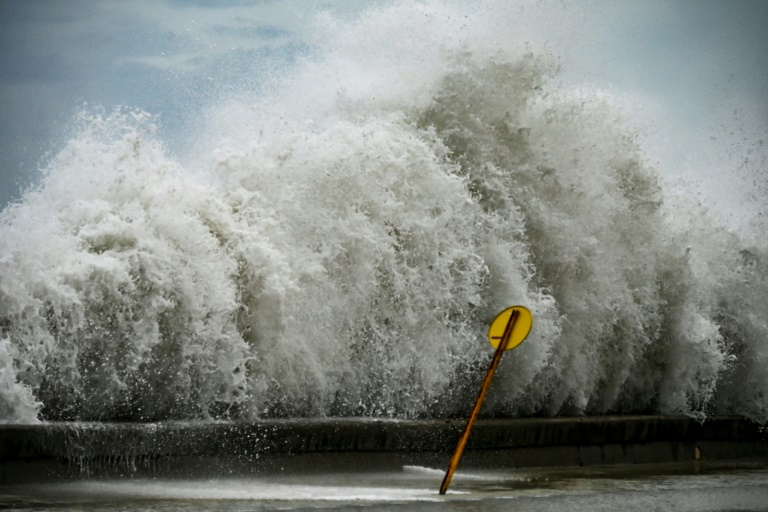
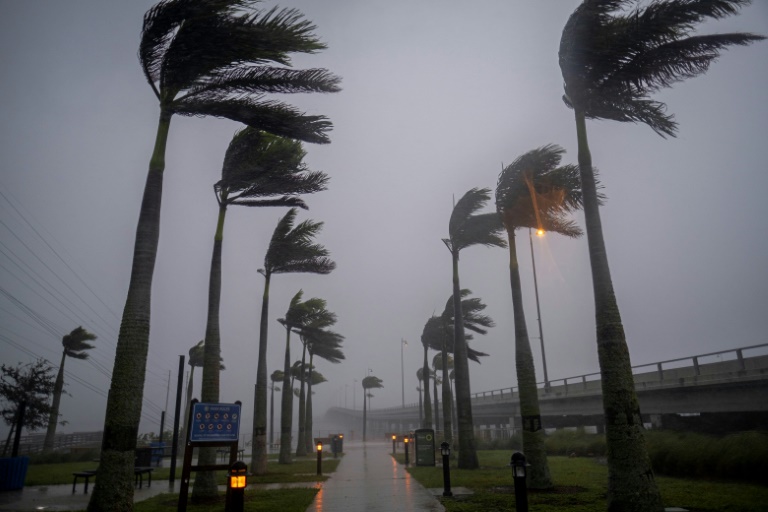
Heavy winds and rain pummelled Florida on Wednesday as Hurricane Ian intensified to just shy of the strongest Category 5 level, threatening to wreak “catastrophic” destruction on the southern US state.

Forecasters warned of a looming once-in-a-generation calamity, with life-threatening storm surges, extensive flooding and devastating winds promising what Florida Governor Ron DeSantis called a “nasty” natural disaster.

The National Hurricane Center (NHC) said in its latest advisory that the “extremely dangerous eyewall of Ian (was) moving onshore” and bringing sustained winds of 155 miles (250 kilometers) per hour, just two mph shy of Category 5 intensity — the strongest category on the Saffir-Simpson scale.

Some 2.5 million people were under mandatory evacuation orders in a dozen coastal Florida counties, with voluntary evacuation recommended in several others.

With the golden hour to flee having past — and hurricane force winds nearly touching southwestern Florida — authorities were advising residents to hunker down and stay indoors.

“Ian has strengthened into an extremely dangerous Category 4 hurricane,” the NHC said, warning of “catastrophic storm surge, winds, and flooding.”

Airports in Tampa and Orlando stopped all commercial flights, and some 337,000 households were already without power.

“This is going to be a nasty, nasty day, two days,” DeSantis said.

“It could make landfall as a Category 5, but clearly this is a very powerful major hurricane that’s going to have major impacts.”

With conditions rapidly deteriorating, some thrill-seekers were seen walking in the mud flats of Tampa Bay and in Charlotte Harbor, further south, ahead of Ian’s arrival.

The storm was expected to roar ashore in the coming hours near Fort Myers and Port Charlotte, along the state’s west coast, before moving across central Florida and emerging in the Atlantic Ocean by late Thursday.

With up to two feet (61 centimeters) of rain expected to fall on parts of the so-called Sunshine State, and a storm surge that could reach devastating levels of 12 to 18 feet (3.6 to 5.5 meters) above ground, authorities were warning of dire emergency conditions.

“This is a life-threatening situation,” the NHC warned.

– Widespread blackout –

Ian a day earlier had plunged all of Cuba into darkness after battering the country’s west as a Category 3 for more than five hours before moving back out over the Gulf of Mexico.

The storm damaged Cuba’s power network and left the island “without electrical service,” state electricity company Union Electrica said.

Only the few people with gasoline-powered generators had electricity on the island of more than 11 million people.

Others had to make do with flashlights or candles at home, and lit their way with cell phones as they walked the streets.

“Desolation and destruction. These are terrifying hours. Nothing is left here,” a 70-year-old resident of the western city of Pinar del Rio was quoted as saying in a social media post by his journalist son, Lazaro Manuel Alonso.

At least two people died in Pinar del Rio province, Cuban state media reported.

– ‘Historic event’ –

In the United States, the Pentagon said 3,200 national guardsmen had been called up in Florida, with another 1,800 on the way.

FEMA (Federal Emergency Management Agency) administrator Deanne Criswell warned that Ian’s “painful impacts” were being felt even before the hurricane’s landfall.

National Weather Service director Ken Graham echoed concerns about what lies ahead, expressing certainty Ian will leave a trail of destruction.

“This is going to be a storm we talk about for many years to come,” he said. “It’s a historic event.”

As climate change warms the ocean’s surface, the number of powerful tropical storms, or cyclones, with stronger winds and more precipitation is likely to increase. 

The total number of cyclones, however, may not.

According to Gary Lackmann, a professor of atmospheric science at North Carolina State University, studies have also detected a “potential link” between climate change and what is known as rapid intensification — when a relatively weak tropical storm surges to a Category 3 hurricane or higher in a 24-hour period, as happened with Ian.

“There remains a consensus that there will be fewer storms, but that the strongest will get stronger,” Lackmann told AFP.

Monster Hurricane Ian hammers Florida

Heavy winds and rain pummelled Florida on Wednesday as Hurricane Ian intensified to just shy of the strongest Category 5 level, threatening to wreak “catastrophic” destruction on the southern US state.

Forecasters warned of a looming once-in-a-generation calamity, with life-threatening storm surges, extensive flooding and devastating winds promising what Florida Governor Ron DeSantis called a “nasty” natural disaster.

The National Hurricane Center (NHC) said in its latest advisory that the “extremely dangerous eyewall of Ian (was) moving onshore” and bringing sustained winds of 155 miles (250 kilometers) per hour, just two mph shy of Category 5 intensity — the strongest category on the Saffir-Simpson scale.

Some 2.5 million people were under mandatory evacuation orders in a dozen coastal Florida counties, with voluntary evacuation recommended in several others.

With the golden hour to flee having past — and hurricane force winds nearly touching southwestern Florida — authorities were advising residents to hunker down and stay indoors.

“Ian has strengthened into an extremely dangerous Category 4 hurricane,” the NHC said, warning of “catastrophic storm surge, winds, and flooding.”

Airports in Tampa and Orlando stopped all commercial flights, and some 337,000 households were already without power.

“This is going to be a nasty, nasty day, two days,” DeSantis said.

“It could make landfall as a Category 5, but clearly this is a very powerful major hurricane that’s going to have major impacts.”

With conditions rapidly deteriorating, some thrill-seekers were seen walking in the mud flats of Tampa Bay and in Charlotte Harbor, further south, ahead of Ian’s arrival.

The storm was expected to roar ashore in the coming hours near Fort Myers and Port Charlotte, along the state’s west coast, before moving across central Florida and emerging in the Atlantic Ocean by late Thursday.

With up to two feet (61 centimeters) of rain expected to fall on parts of the so-called Sunshine State, and a storm surge that could reach devastating levels of 12 to 18 feet (3.6 to 5.5 meters) above ground, authorities were warning of dire emergency conditions.

“This is a life-threatening situation,” the NHC warned.

– Widespread blackout –

Ian a day earlier had plunged all of Cuba into darkness after battering the country’s west as a Category 3 for more than five hours before moving back out over the Gulf of Mexico.

The storm damaged Cuba’s power network and left the island “without electrical service,” state electricity company Union Electrica said.

Only the few people with gasoline-powered generators had electricity on the island of more than 11 million people.

Others had to make do with flashlights or candles at home, and lit their way with cell phones as they walked the streets.

“Desolation and destruction. These are terrifying hours. Nothing is left here,” a 70-year-old resident of the western city of Pinar del Rio was quoted as saying in a social media post by his journalist son, Lazaro Manuel Alonso.

At least two people died in Pinar del Rio province, Cuban state media reported.

– ‘Historic event’ –

In the United States, the Pentagon said 3,200 national guardsmen had been called up in Florida, with another 1,800 on the way.

FEMA (Federal Emergency Management Agency) administrator Deanne Criswell warned that Ian’s “painful impacts” were being felt even before the hurricane’s landfall.

National Weather Service director Ken Graham echoed concerns about what lies ahead, expressing certainty Ian will leave a trail of destruction.

“This is going to be a storm we talk about for many years to come,” he said. “It’s a historic event.”

As climate change warms the ocean’s surface, the number of powerful tropical storms, or cyclones, with stronger winds and more precipitation is likely to increase. 

The total number of cyclones, however, may not.

According to Gary Lackmann, a professor of atmospheric science at North Carolina State University, studies have also detected a “potential link” between climate change and what is known as rapid intensification — when a relatively weak tropical storm surges to a Category 3 hurricane or higher in a 24-hour period, as happened with Ian.

“There remains a consensus that there will be fewer storms, but that the strongest will get stronger,” Lackmann told AFP.

Protest-hit Iran launches strikes that kill 9 in Iraqi Kurdistan

Iran launched cross-border missile and drone strikes that killed nine people in Iraq’s Kurdistan region Wednesday after accusing Kurdish armed groups based there of stoking a wave of unrest that has rocked the Islamic republic.

The September 16 death of Kurdish Iranian woman Mahsa Amini, 22, while in the custody of Iran’s morality police has sparked a major wave of protests and a crackdown that has left scores of demonstrators dead over the past 12 nights.

Iran’s Islamic Revolutionary Guard Corps has in recent days accused the Iraq-based Kurdish groups of “attacking and infiltrating Iran from the northwest of the country to sow insecurity and riots and spread unrest”.

After several earlier Iranian cross-border attacks that caused no casualties, a barrage of missiles and drones on Wednesday claimed nine lives and wounded 32, said the regional health minister in Arbil, Saman al-Barazanji, while visiting the wounded in a hospital in the capital of Iraq’s autonomous Kurdistan region.

“There are civilians among the victims”, including one of those killed, a senior official of the Kurdistan region earlier told AFP.

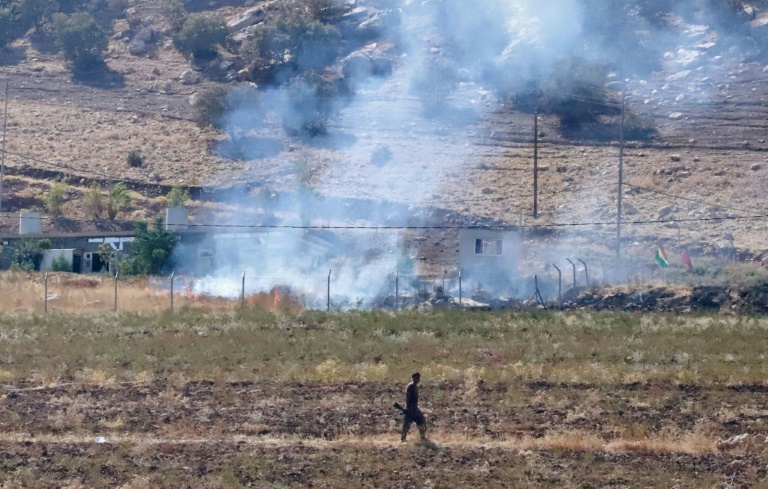
An AFP correspondent reported smoke billowing from locations hit, ambulances racing to the scene and residents fleeing, at Zargwez, about 15 kilometres (10 miles) from Sulaimaniyah.

In Baghdad, Iraq’s federal government called in the Iranian ambassador to protest the deadly strikes, while the UN mission in Iraq deplored the attack, saying “rocket diplomacy is a reckless act with devastating consequences”.

“These attacks need to cease immediately,” the UN mission said on Twitter.

The United States said it “strongly condemns” Iran’s deadly strikes in Iraqi Kurdistan and warned against further attacks.

“We stand with the people and government of Iraq in the face of these brazen attacks on their sovereignty,” State Department spokesman Ned Price said in a statement.

– ‘Cowardly attacks’ –

Other Iranian strikes Wednesday destroyed buildings around Zargwez, where several exiled left-wing Iranian Kurdish parties maintain offices.

“The area where we are has been hit by 10 drone strikes,” Atta Nasser, an official from Komala, one exiled Iranian group, told AFP, blaming Iran for the strikes.

“The headquarters of the Kurdistan Freedom Party has been hit by Iranian strikes,” Hussein Yazdan, an official from the party, told AFP, about the site in the Sherawa region, south of Arbil.

Another group, the Kurdish Democratic Party of Iran, said its bases and headquarters in Koysinjaq, east of Arbil, were struck by “missiles and drones”.

“These cowardly attacks are occurring at a time when the terrorist regime of Iran is unable to crack down on ongoing protests inside and silence the Kurdish and Iranian peoples’ civil resistance,” it tweeted.

– Precision-guided attack drones –

Amini, 22, died in Tehran on September 16, three days after being arrested for allegedly violating Iran’s strict dress code for women that demands they wear hijab headscarves and modest clothes.

Her death sparked Iran’s biggest protests in almost three years and a crackdown that has killed at least 76 people, according to the Oslo-based group Iran Human Rights, or “around 60”, according to Iran’s semi-official Fars news agency.

Protests have rocked especially Kurdish communities in western Iran that share strong connections with Kurdish-inhabited areas of Iraq.

Many Iranian Kurds cross the border into Iraq to find work, due to a biting economic crisis in Iran driven in large part by US sanctions.

Iranian state television had said Sunday about earlier attacks that the “Revolutionary Guards targeted the headquarters of several separatist terrorist groups in northern Iraq with missiles and precision-guided attack drones”.

Two days later the Guards’ General Abbas Nilforoushan, deputy for operations, said “the establishment of a base by the enemies of the Islamic Revolution in this region is not acceptable,” Tasnim news agency reported.

“For some time now, counter-revolutionary elements have been attacking and infiltrating Iran from the northwest of the country to sow insecurity and riots and spread unrest.”

He added that several of “these anti-revolutionary elements were arrested during some riots in the northwest (of Iran), so we had to defend ourselves, react and bomb the surroundings of the border strip.”

burs-tgg/fz/

Fish fossils found in China offer clues on human evolution: researchers

Fish fossils dating back 440 million years are helping to “fill some of the key gaps” on how humans evolved from fish, researchers said on Wednesday.

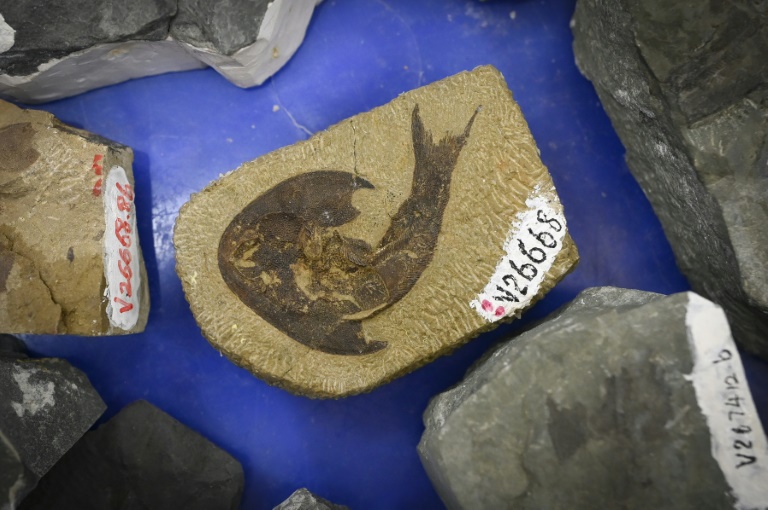
Two fossil deposits of ancient fish in Guizhou, southern China, and Chongqing in the southwest were discovered by scientists during a field study in 2019.

The fossils “help to trace many human body structures back to ancient fishes, some 440 million years ago, and fill some key gaps in the evolution of ‘from fish to human,'” researchers from the Institute of Vertebrate Paleontology and Paleoanthropology (IVPP) under the Chinese Academy of Sciences said.

Their findings, which they said “provide further iron evidence to the evolutionary path”, were published in four papers in the journal Nature on Wednesday.

The Chongqing fossil deposit includes a fish — known as acanthodians — with bony armour around its fins and is considered the ancestor of creatures with jaws and a backbone, including humans.

Scientists in 2013 said they had found a 419-million-year-old fish fossil in China that disproved the long-held theory that modern animals with bony skeletons (osteichthyans) evolved from a shark-like creature with a frame made of cartilage.

The newly discovered creature, dubbed Fanjingshania, predates this ancient fish fossil by about 15 million years, the study said.

“This is the oldest jawed fish with known anatomy,” lead researcher Zhu Min said. 

“The new data allowed us to… gain much needed information about the evolutionary steps leading to the origin of important vertebrate adaptations such as jaws, sensory systems, and paired appendages (limbs).”

The Chongqing fossils are also the world’s only fossils dating back nearly 440 million years which “preserves complete, head-to-tail jawed fishes”, offering a rare peek into a time period regarded as the “dawn of fishes”, the statement said.

“It’s really an awesome, game-changing set of fossil discoveries,” said John Long, the former president of the Society of Vertebrate Paleontology who is currently with Australia’s Flinders University.

“It rewrites almost everything we know about the early history of jawed animal evolution.” 

Body of missing US ski mountaineer found in Nepal

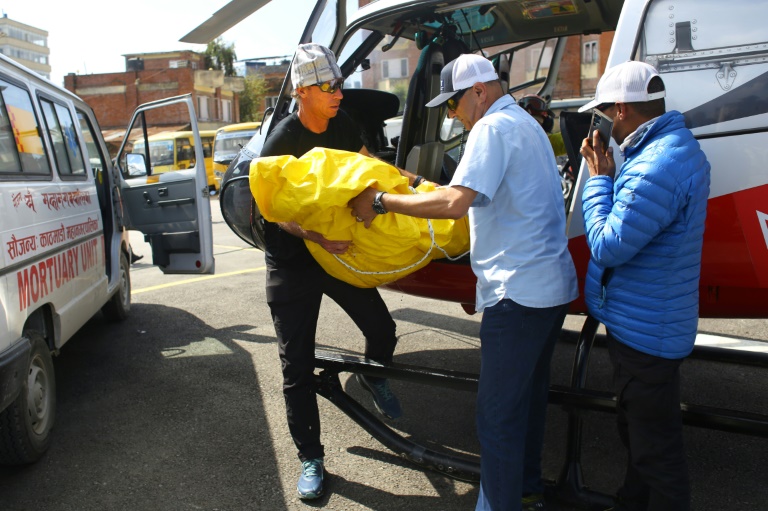
The body of top US ski mountaineer Hilaree Nelson was retrieved from the Himalayas by a search team on Wednesday, two days after she disappeared on the slopes of Nepal’s Manaslu peak.

Nelson slipped and went missing while skiing down the world’s eighth-highest mountain after a successful summit with her partner Jim Morrison on Monday. 

Morrison led the search operations and found her body Wednesday morning, after landing at an elevation of around 6,700 metres (22,000 feet) on a helicopter.

“I skied first and after a few turns Hilaree followed and started a small avalanche. She was swept off her feet and carried down a narrow snow slope down the south side (opposite from climbing route) of the mountain,” Morrison posted on his Instagram, describing what happened after their summit.  

Morrison was able to reach the base camp safely, but bad weather hampered the desperate search operation on Monday and Tuesday. 

“I’m in Kathmandu with her and her spirit. My loss is indescribable and I am focused on her children and their steps forward. @hilareenelson is the most inspiring person in life and now her energy will guide our collective souls,” he wrote. 

“I’m devastated by the loss of her.”

Nelson, 49, is described by her sponsor, The North Face, as “the most prolific ski mountaineer of her generation”.

A decade ago, she became the first woman to summit both the highest mountain in the world, Everest, and the adjacent Lhotse peak within the span of 24 hours.

She returned to Lhotse and made the first ski descent of the mountain in 2018, which earned her the National Geographic Adventurer of the Year award.

In an Instagram post last week, Nelson said her latest climb had been deeply challenging because of “incessant rain” and dangerous conditions.

“I haven’t felt as sure-footed on Manaslu as I have on past adventure into the thin atmosphere of the high Himalaya,” Nelson wrote in a post on Thursday.

“These past weeks have tested my resilience in new ways.”

-‘Her legacy’ –

Mountaineers and well-wishers have shared heartfelt messages for Nelson since she went missing.

“Let’s pray for Hilaree,” fellow The North Face athlete Fernanda Maciel, currently at the Manaslu base camp, wrote on Instagram on Tuesday.

Mountain guide Caroline George thanked Nelson for inspiring her own adventures. 

“She is a beacon… I have infinite gratitude for her journey on this planet and for the legacy she leaves,” she wrote.

Constant rain and snow have been a challenge for the 404 paying climbers attempting to reach the summit of Manaslu this year.

On the same day as Nelson’s accident, an avalanche hit between Camps 3 and 4 on the 8,163-metre (26,781-foot) mountain, killing Nepali climber Anup Rai and injuring a dozen others who were later rescued.

The deaths of Nelson and Rai are the first confirmed casualties of the autumn climbing season in Nepal.

Nepal is home to eight of the world’s 14 highest peaks and foreign climbers who flock to its mountains are a major source of revenue for the country.

The industry was almost completely shut down due to the coronavirus pandemic in 2020, but the country reopened its peaks to mountaineers last year.

EU sees sabotage in gas pipe leaks

The EU said Wednesday that leaks from two Russia-Germany undersea gas pipelines appeared to be “a deliberate act”, as Moscow said it would call for a UN Security Council meeting over the incident.

The three outflows from the Nord Stream 1 and 2 pipelines have sent natural gas prices soaring, exacerbating an energy crunch in Europe as it stands on the threshold to winter and fanning geopolitical tensions.

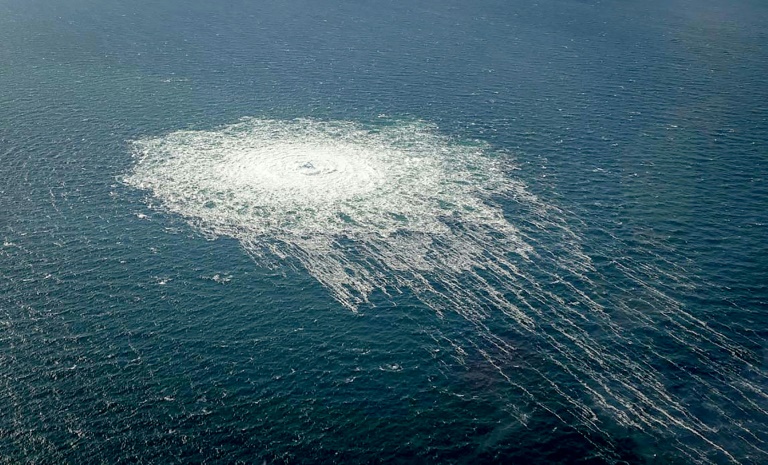
Methane gas from the leaks are bubbling to the surface of the Baltic Sea close to Denmark and Sweden in discharges expected to last for a week, until depletion of the gas in the pipelines.

Europe has alleged the leaks are from sabotage, and fossil fuel-rich Norway boosted security at its installations in response.

They “are not a coincidence,” EU foreign policy chief Josep Borrell said in a statement. “All available information indicates those leaks are the result of a deliberate act.”

He warned: “Any deliberate disruption of European energy infrastructure is utterly unacceptable and will be met with a robust and united response.”

Suspicion has focused on Russia, which has cut gas supplies to Europe in retaliation for severe Western sanctions over the war in Ukraine.

But the Kremlin hit back, saying it was “stupid and absurd” to accuse Russia of causing the leaks and calling instead for President Joe Biden to answer whether the US was behind them.

The Kremlin said it would ask for the United Nations Security Council to convene “in connection with provocations” over the pipeline.

EU chiefs Ursula von der Leyen and Charles Michel have both also blamed the Nord Stream leaks on sabotage, as have leaders of several European countries.

Michel tweeted that they “appear to be an attempt to further destabilise energy supply to EU”.

He added: “Those responsible will be held fully accountable and made to pay.”

The EU is currently mulling further sanctions on Russia for annexation votes imposed on four regions in Ukraine its forces occupy.

Neither of the Nord Stream pipelines are currently operational, but they were full with gas when they were hit with what Swedish seismologists said were “massive releases of energy”.

One of the seismologists told AFP “there isn’t much else than a blast that could cause it”.

Danish Defence Minister Morten Bodskov told reporters in Brussels that “it can easily take one or two weeks for the area to calm down enough” for an inspection to verify the cause.

Two Danish military vessels have been sent to the area.

Non-EU member Norway — which has now overtaken Russia as the biggest supplier of gas to Europe — said it will beef up security around its oil and gas facilities.

“The government has decided to put measures in place to increase security at infrastructure sites, land terminals and platforms on the Norwegian continental shelf,” Norwegian Energy Minister Terje Aasland said.

The Norwegian Petroleum Safety Authority earlier this week called for “increased vigilance from all operators and shipping companies on the continental shelf”.

Built in parallel to the Nord Stream 1 pipeline, Nord Stream 2 was intended to double the capacity for Russian gas imports to Germany.

But Berlin blocked newly completed Nord Stream 2 in the days before the war.

Germany, which has been highly dependent on imports of fossil fuels from Russia to meet its energy needs, has since come under acute stress as Moscow’s supplies dwindle.

Sweden and Poland agree sabotage is the most likely cause of the Nord Stream leaks, with Warsaw suggesting Russia was probably the culprit, to escalate the war in Ukraine.

Close Bitnami banner
Bitnami