World

Body of missing US ski mountaineer found in Nepal

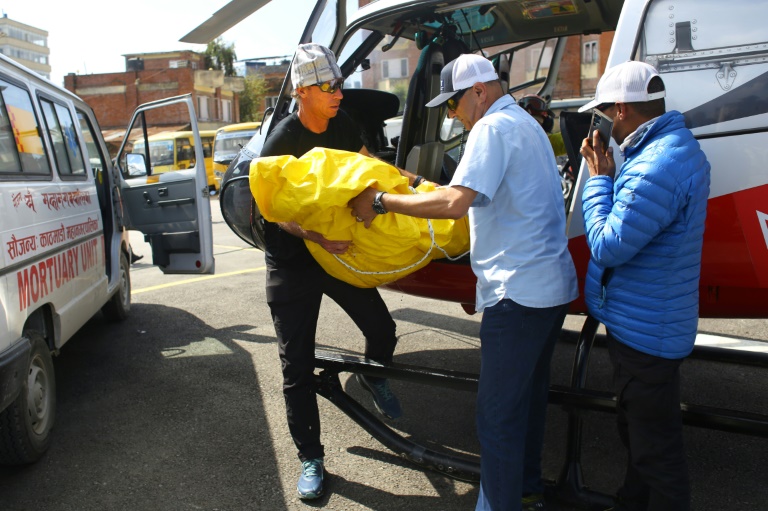
The body of top US ski mountaineer Hilaree Nelson was retrieved from the Himalayas by a search team on Wednesday, two days after she disappeared on the slopes of Nepal’s Manaslu peak.

Nelson slipped and went missing while skiing down the world’s eighth-highest mountain after a successful summit with her partner Jim Morrison on Monday. 

Morrison led the search operations and had left Wednesday morning on a helicopter to resume efforts to locate her at an elevation of around 6,200 metres (20,000 feet).

“They returned to the same area and found her body. They have now flown to Kathmandu,” Jiban Ghimire of Shangri-La Nepal Trek, which organised the expedition, told AFP.

Nelson, 49, is described by her sponsor, The North Face, as “the most prolific ski mountaineer of her generation”.

A decade ago, she became the first woman to summit both the highest mountain in the world, Everest, and the adjacent Lhotse peak within the span of 24 hours.

She returned to Lhotse and made the first ski descent of the mountain in 2018, which earned her the National Geographic Adventurer of the Year award.

In an Instagram post last week, Nelson said her latest climb had been deeply challenging because of “incessant rain” and dangerous conditions.

“I haven’t felt as sure-footed on Manaslu as I have on past adventure into the thin atmosphere of the high Himalaya,” Nelson wrote in a post on Thursday.

“These past weeks have tested my resilience in new ways.”

-‘Her legacy’ –

Mountaineers and well-wishers have shared heartfelt messages for Nelson since she went missing.

“Let’s pray for Hilaree,” fellow The North Face athlete Fernanda Maciel, currently at the Manaslu base camp, wrote on Instagram on Tuesday.

Mountain guide Caroline George thanked Nelson for inspiring her own adventures. 

“She is a beacon… I have infinite gratitude for her journey on this planet and for the legacy she leaves,” she wrote.

Constant rain and snow have been a challenge for the 404 paying climbers attempting to reach the summit of Manaslu this year.

On the same day as Nelson’s accident, an avalanche hit between Camps 3 and 4 on the 8,163-metre (26,781-foot) mountain, killing Nepali climber Anup Rai and injuring a dozen others who were later rescued.

The deaths of Nelson and Rai are the first confirmed casualties of the autumn climbing season in Nepal.

Nepal is home to eight of the world’s 14 highest peaks and foreign climbers who flock to its mountains are a major source of revenue for the country.

The industry was almost completely shut down due to the coronavirus pandemic in 2020, but the country reopened its peaks to mountaineers last year.
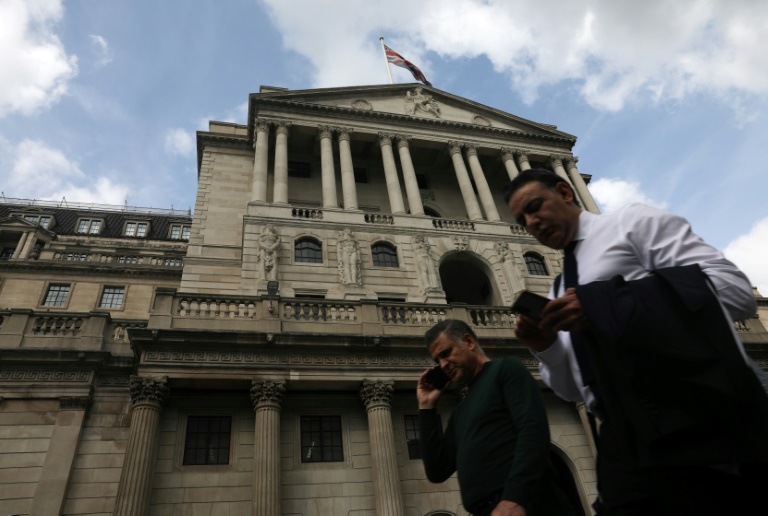
BoE intervenes as IMF criticises UK budget

The Bank of England stepped in Wednesday to shore up market confidence after the International Monetary Fund criticised Britain’s inflation-fighting budget.

Reacting to markets turmoil, the BoE announced it was temporarily buying up long-dated UK government bonds “to restore orderly market conditions”.

However, the pound promptly slumped 1.7 percent to $1.0552.

The BoE intervention followed criticism Tuesday from the IMF, which argued that Britain’s budget could increase inequality and worsen inflation.

Credit ratings agency Moody’s also waded in overnight with a warning about soaring debt.

Finance minister Kwasi Kwarteng’s big tax cuts and energy price freeze, aimed at boosting the UK’s recession-threatened economy, appeared to have had the opposite effect as traders warn of ballooning debt to pay for the incentives.

Following last Friday’s budget, UK government bond yields have soared and the pound hit a record low at $1.0350.

Critics added that Kwarteng’s measures would benefit the rich more than the poorest, as millions of Britons suffer from a cost-of-living crisis.

“We have acted at speed to protect households and businesses through this winter and the next, following the unprecedented energy price rise,” the Treasury said as it sought to defend itself.

“We are focused on growing the economy to raise living standards for everyone,” it added, blaming sky-high oil, gas and electricity prices on Russia’s invasion of Ukraine.

– IMF advice –

In a highly unusual intervention, the IMF late Tuesday said it was “closely monitoring” developments and urged the government in London led by new Prime Minister Liz Truss to change tack.

The Fund added: “We understand that the sizable fiscal package announced aims at helping families and businesses deal with the energy shock and at boosting growth via tax cuts and supply measures.

“However, given elevated inflation pressures in many countries… we do not recommend large and untargeted fiscal packages at this juncture.”

The IMF said the “UK measures will likely increase inequality” and stressed the importance of fiscal policy not working “at cross purposes to monetary policy”.

Analysts warned that Britain’s controversial measures could force the Bank of England to hike interest rates far higher than forecast.

“Expectations that there will be a super-size interest rate hike coming from the Bank of England to try and counter the government splurge on tax cuts and spending have increased,” Hargreaves Lansdown analyst Susannah Streeter noted Wednesday.

Many central banks, including the BoE, are aggressively hiking interest rates in a bid to cool decades-high inflation. 

– Tax cuts –

In his budget, Chancellor of the Exchequer Kwarteng cut the highest rate of income tax and scrapped a cap of banker bonuses.

He also, however, announced a plan to lower income tax for all workers.

Conservative party head Truss appointed Kwarteng to replace Rishi Sunak, who reached the final two in the race to be prime minister.

Sunak had hit out strongly at Truss’s promise of tax cuts, arguing that the UK priority was to first bring down the nation’s inflation rate that stands at a near 40-year high of 9.9 percent. 

Moody’s called Britain’s new fiscal policy regime “credit negative”, adding that a sustained confidence shock could “permanently” weaken its debt affordability.

Kwarteng has said he would wait until November 23 to outline plans on controlling government debt.

Half world's birds in decline, species moving 'ever faster' to extinction

Almost half of all bird species are in decline globally and one in eight are threatened with extinction, according to a major new report warning that human actions are driving more species to the brink and nature is “in trouble”.

The four-yearly State of the World’s Birds report, which provides a snapshot of the plight of species globally and more broadly a barometer for biodiversity, comes as the United Nations steers an international process to protect nature.

“One in eight bird species is threatened with extinction, and the status of the world’s birds continues to deteriorate: species are moving ever faster towards extinction,” said the report released this week by BirdLife International. 

Using data from the International Union for Conservation of Nature (IUCN), the report said 49 percent of bird species worldwide have declining populations, with populations falling even in species not normally rare or at risk. 

Roughly 13 percent are considered threatened. 

The main threats include the growth of unsustainable agriculture, logging, invasive species, over-exploitation and climate change. 

Most bird populations face a combination of human-caused threats.   

“The natural world is in trouble. Human actions are driving species rapidly towards extinction, undermining ecosystem functions and services vital to our own survival,” the report said.  

BirdLife International, which has decades of survey data, said there are now 2.9 billion fewer individual birds in North America than there were in 1970, an estimated drop of 29 percent. 

The European Union has seen a net loss of around 600 million birds, roughly 18 percent since 1980.  

In both cases, the losses are most acute among long-distance migrants and farmland birds.

Birdlife said many key bird preservation zones were in a poor state and called for a global push to protect and restore habitats. 

In December, nations gather to finalise a treaty to halt the decline of biodiversity and set humanity on a path to “live in harmony with nature” by mid-century.

BirdLife International chief Patricia Zurita said the framework under negotiation was “the world’s best and perhaps last chance to halt the loss of nature” and restore biodiversity. 

“The birds and the rest of nature are depending on us. And we are depending on them,” she said.

Typhoon Noru tears across Vietnam, Laos

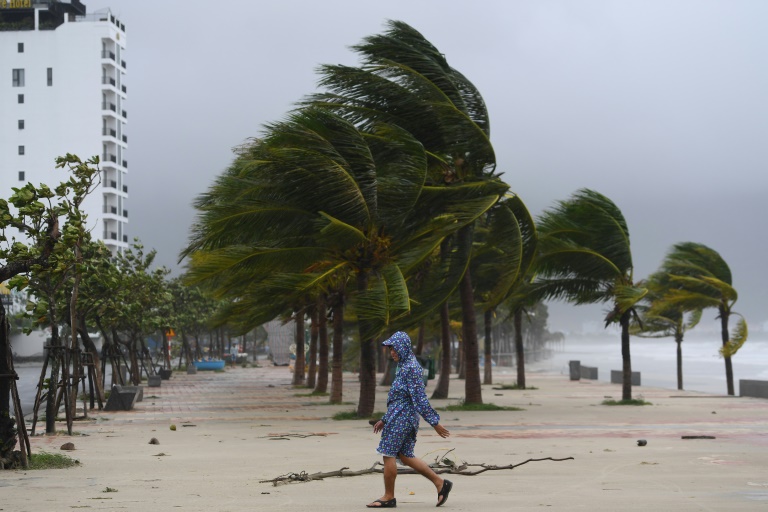
Typhoon Noru tore roofs from homes and caused power outages across central Vietnam Wednesday, with hundreds of thousands of people taking refuge, after the storm claimed at least 10 lives in the Philippines.

In Danang, Vietnam’s third-largest city, high-rise buildings shook as the typhoon made landfall in the early hours of Wednesday, bringing winds of up to around 120 kilometres (75 miles) per hour, according to the national forecaster.

More than 300,000 people in Vietnam hunkered down in shelters overnight after experts predicted the storm would be one of the biggest to ever hit the country.

By Wednesday evening, it weakened to a tropical storm as it crossed into southern Laos, but forecasters in Vietnam warned of landslides and serious flooding in the typhoon’s wake.

The defence ministry has mobilised around 40,000 soldiers and 200,000 militia members, equipped with armoured vehicles and boats in preparation for rescue and relief operations, state media said.

In the tourist city of Hoi An, the Hoai River was close to bursting its banks, while the ground was littered with metal roof sheeting and fallen trees that had damaged cars and blocked roads.

Several streets in the old town were under water.

“The typhoon was terrible last night. I could not sleep as the wind was so strong and loud,” resident Nguyen Thi Hien told AFP.

Around 300 houses in the coastal province of Quang Tri had their roofs blown off on Tuesday as the wind began picking up speed.

“I heard the sound of fallen trees and signboards outside. I was scared. But we were prepared so luckily the losses were not that bad.”

Residents rushed to clean up the debris early on Wednesday, with some shops already open and tourists walking the streets, taking pictures of the floodwater.

Reshma D’Souza, from India, spent a frightening night in her hotel room. At around 1 am, she said, she saw that the “wall was vibrating”.

“(It was) shaking, so I was just praying and I was so scared.”

Airports and offices across central provinces began to reopen on Wednesday afternoon.

But key sections of the highway linking Hanoi in the north with commercial hub Ho Chi Minh City in the south remained closed due to landslides and floods, according to state media.

– Deaths in Philippines –

Noru hit Vietnam after slamming into the Philippines earlier this week as a super typhoon with winds of up to 195 kph, leaving 10 dead and eight missing, the civil defence office said.

In Laos, authorities ordered a close watch on dams and urged people to seek shelter for themselves and for livestock.

Noru is then expected to move over Thailand’s northeastern Ubon Ratchathani province on Thursday, gradually weakening into a tropical depression.

Thai authorities warned of heavy rain and possible flash flooding, saying people living in high-risk areas should prepare to evacuate their homes.

In Cambodia, officials warned residents in low-lying areas already hit by heavy rains in recent days to be alert to the danger of flash floods. 

Vietnam is frequently lashed by heavy storms in the rainy season between June and November, with central coastal provinces the worst affected.

Scientists have warned the storms are becoming more powerful as the world gets warmer because of climate change.

burs-pdw/dhc

Environmental groups slam UK plans to ditch pesticide laws

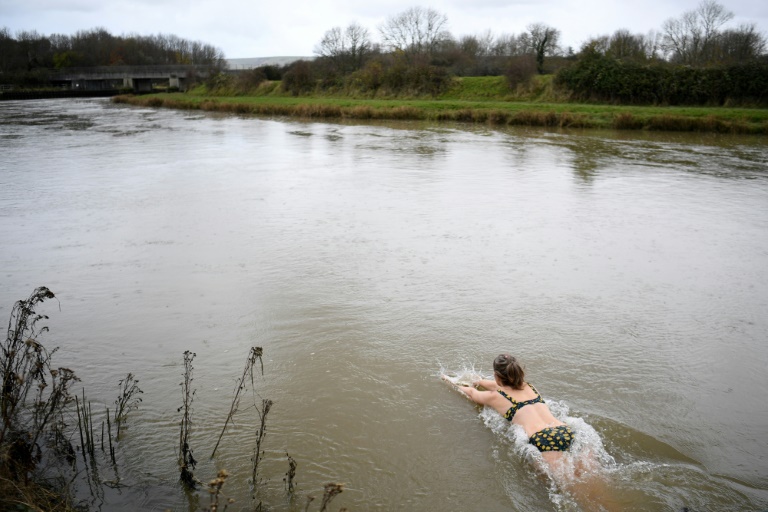
British wildlife groups and campaigners have hit out at government’s plans to ditch legislation covering pesticide use, as part of a drive to remove EU laws after Brexit.

The government in London said it will scratch 570 environmental laws from the statute book, after they were rolled over from Britain’s time in the European Union.

On Wednesday, popular wildlife television presenter Steve Backshall joined a chorus of opposition, warning that overturning laws on pesticides could have a deadly effect on bee populations and river pollution.

“In recent times increasing pesticide use has caused localised extinctions of bee populations and has make our rivers toxic, this is a time for our government to protect wildlife and people from pesticide harm,” he added.

“I would urge our new government to reconsider removing pesticide regulation,” added Backshall, who s also heads insect conservation group Buglife.

The Royal Society for the Protection of Birds (RSPB) called the plans from new Prime Minister Liz Truss’s government an “unprecedented attack on nature”.

“We will not stand by and let this happen,” it vowed.

More than 68,000 people have already signed up to an application on the RSPB website that automatically contacts their MP to demand that the protections be maintained.

Craig Bennett, the chief executive officer of the Wildlife Trusts of 46 independent conservation charities, said people were “furious at the new threats”.

“Vital legal protections for wildlife are at risk, fossil fuel extraction is being favoured over renewables, and the government is going back on plans to reward farmers for managing land in a nature-friendly way,” he said.

“The government wants de-regulation that will lead to yet more poo in rivers, less wildlife and land that’s unable to adapt to climate change,” he added.

The National Trust heritage body, which has 5.7 million members, also lashed out.

“Rather than ramp up action to support our environment, this government appears however to be heading in the opposite direction,” said director general Hilary McGrady.

“Environmental protections are dismissed as ‘burdens’, whilst investment and growth are pitted against nature and climate action,” she added.

Environment minister Ranil Jayawardena responded to the criticism on Twitter saying there have been claims that are “simply untrue”.

“We’re introducing new schemes that will support our farmers to produce high quality food and support them in enhancing our natural environment.

“Last year we passed our world-leading Environment Act. We are committed to halting the decline of nature by 2030 and will not undermine our obligations to the environment in pursuit of growth,” he added.

Opposition says 'political suicide' if Belarus joins Ukraine war

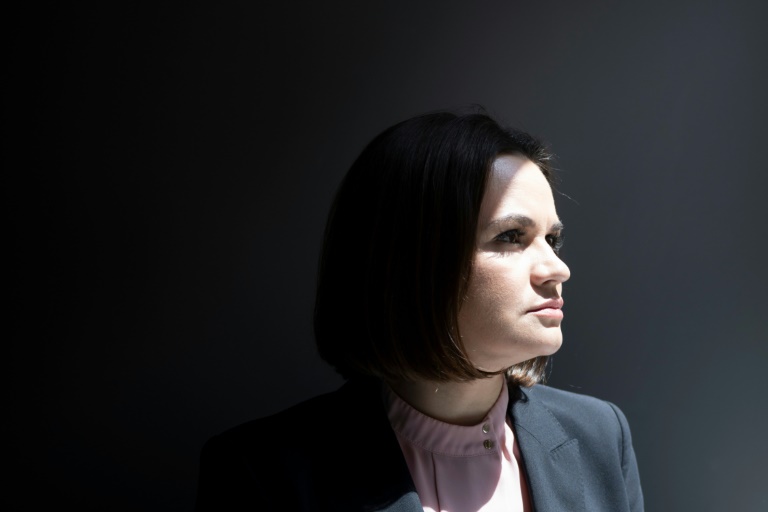
Exiled Belarusian opposition leader Svetlana Tikhanovskaya on Wednesday said President Alexander Lukashenko would commit “political suicide” if he involved Belarus’s military in the war in neighbouring Ukraine.

Tikhanovskaya claimed victory in Belarus’s contested 2020 presidential election but now lives in exile in Lithuania after Lukashenko launched a brutal crackdown on the opposition.

“If he will make our army participate (in Ukraine) it will be political suicide for him,” she told AFP before a speech to the annual conference of Britain’s main opposition Labour party, in Liverpool, northwest England.

“Even those people who are for this regime (and) allies of Lukashenko, they are against the war in Ukraine.”

The 40-year-old dissident hit out at “sham” annexation votes held this week by pro-Kremlin authorities in four Moscow-held regions of Ukraine, where officials have claimed overwhelming victories.

Tikhanovskaya said the votes — also condemned as a “sham” by Kyiv and its Western allies — were a bogus attempt by the Kremlin “to sell something to (the) Russian people as a victory” that would fail to win global recognition.

“Everybody saw that (the) Kremlin’s army is not so powerful, that the king is naked. So no one normal country will recognise this referendum,” she added.

But heightened fears that Russian President Vladimir Putin could now deploy a tactical nuclear weapon to defend the annexed territories, following recent threats, are particularly paramount in Belarus.

Tikhanovskaya noted Lukashenko successfully used his own “so-called referendum” earlier this year to give him the legal means to house Russian nuclear weapons in the country.

– ‘Catastrophe’ –

“What we are concerned about is that nuclear weapon(s) can be launched from the territory of Belarus,” the opposition leader said. 

“Maybe our country can be used for such like, shame(ful) aims, and of course, it will be (a) catastrophe.”

Tikhanovskaya, seen by the West as the true winner of August 2020 presidential elections that kept Lukashenko in power, argued however that this week’s referendums had put the ageing autocrat in a “difficult situation”.

Lukashenko is in a “very fragile position”, the opposition leader said, adding Belarusian dissidents were “creating more multiple points of pressure on him”.

With Russian military activity within Belarus expected to grow following Putin’s recent partial mobilisation, that resistance includes using back channels to talk to Belarusian military and “elite” figures.

“There will be (a) moment when military people, KGB, will be on the side of the Belarusian people,” she said, referring to the country’s Soviet era internal security services.

“We are communicating with the military people. We’re communicating with the elite.

“It’s our task to split them with different means and we hope that in a particular moment everything will happen.

“They see that (the) policy of Lukashenko brings our country the loss of independence, the loss of sovereignty and the very existence of our country is at stake.”

Turkey bows to US pressure, cuts Russian bank ties

Turkey’s booming wartime trade with Moscow took a giant step back on Wednesday with confirmation that the last three banks still processing Russian card payments were pulling out under pressure from Washington.

The decision follows weeks of increasingly blunt warnings from the United States for NATO member Turkey to either limit its economic relations with Russia or face the threat of sanctions itself.

The US Treasury said last week that Turkish banks working with Russian Mir bank cards “risk supporting Russia’s efforts to evade US sanctions”.

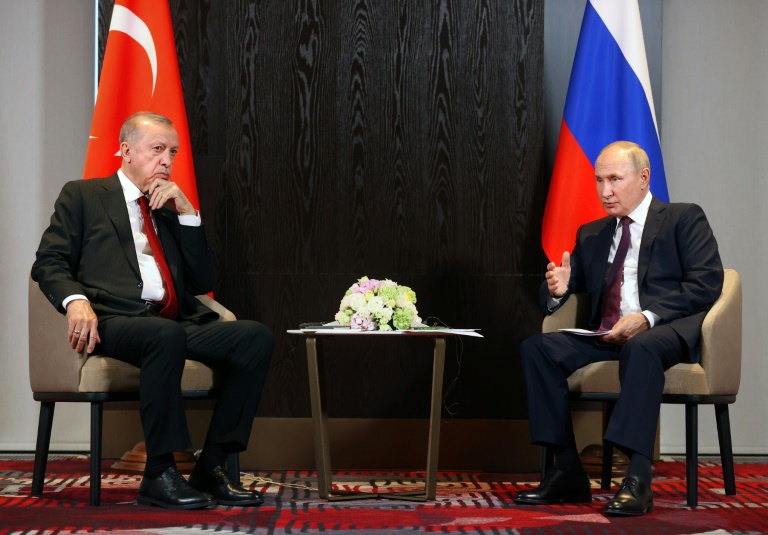
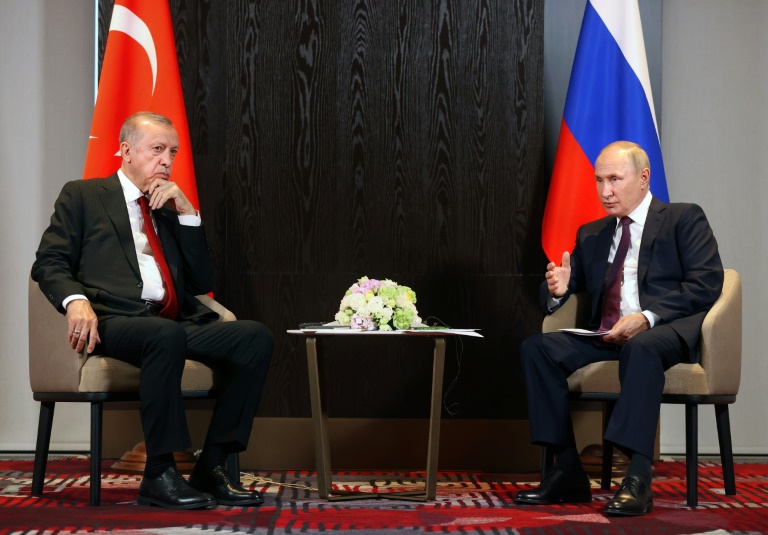
Two private Turkish lenders that began processing Mir after Turkish President Recep Tayyip Erdogan met Russian counterpart Vladimir Putin in August suspended the transactions earlier this month.

But three state lenders — Halkbank, Vakifbank and Ziraatbank — still worked with the cards.

A senior Turkish official did not say when Russians would no longer be able to access their cards in Turkey at all.

The three banks “are still processing (the outstanding) payments, but they have set a future date” for pulling out, the official said on condition of anonymity because no formal decision by the three bank has been announced.

The Kremlin on Wednesday condemned Washington for forcing Turkish banks to cut their Russian ties.

“They are threatened with secondary sanctions on the banking system. And this decision, of course, was made under this unprecedented pressure,” Kremlin spokesman Dmitry Peskov said.

– Shift in tone –

The explosion of Turkish trade with Russia during the seven-month war in Ukraine has been a source of growing irritation for Washington.

The value of trade between the two rose by more than 50 percent. Turkey has also agreed to pay for a quarter of its Russian natural gas imports in rubles.

US Deputy Secretary of the Treasury Wally Adeyemo paid a rare visit to Ankara and Istanbul in June to express Washington’s worries that Russian oligarchs and big businesses were using Turkish entities to evade Western sanctions.

The Treasury sent a follow up letter to Turkish banks and businesses in August warning that they cannot expect to have “access to the US dollar and other major currencies” if they trade with sanctioned Russians.

Turkey has tried to stay neutral in the Ukrainian conflict and refused to sign up to Western sanctions against Russia.

It has used this status to strike a range of economic agreements that have helped prop up the ailing economy in the run-up to June elections in which Erdogan will struggle to extend his two-decade grip on power.

Mir cards offer millions of Russians that vacation in Turkey each year a way to access their rubles and pay for everything from restaurants to hotels.

They are also increasingly important to Russians who are fleeing to Turkey as part of a new migration wave of men trying to avoid the draft.

– ‘Fear of secondary sanctions’ –

Prominent Russian sanctions campaigner Bill Browder — a businessman who left Moscow after one of his associates died in jail — said the Turkish bank decision showed that the “fear of secondary sanctions is starting to work”.

“Turkish banks have abandoned Putin’s Mir payment system out of fear of being punished by the US,” Browder tweeted.

“We need to roll this out far and wide. Chinese, Indian UAE and many other countries should understand there will be consequences.”

Russia developed Mir in 2015 to circumvent Western sanctions imposed following its annexation of Ukraine’s Crimea peninsula.

But Russian central bank chief Elvira Nabiullina conceded earlier this month that Moscow was encountering “difficulties” expanding its payment system around the world.

Uzbekistan suspended Mir transactions last Friday citing unspecified “technical procedures”.

The card still works in Belarus and a handful of Russia’s closest allies.

Visa and Mastercard no longer issue new cards in Russia or process foreign payments on the cards acquired before the war.

Turkey bows to US pressure, cuts Russian bank ties

Turkey’s booming wartime trade with Moscow took a giant step back on Wednesday with confirmation that the last three banks still processing Russian card payments were pulling out under pressure from Washington.

The decision follows weeks of increasingly blunt warnings from the United States for NATO member Turkey to either limit its economic relations with Russia or face the threat of sanctions itself.

The US Treasury said last week that Turkish banks working with Russian Mir bank cards “risk supporting Russia’s efforts to evade US sanctions”.

Two private Turkish lenders that began processing Mir after Turkish President Recep Tayyip Erdogan met Russian counterpart Vladimir Putin in August suspended the transactions earlier this month.

But three state lenders — Halkbank, Vakifbank and Ziraatbank — still worked with the cards.

A senior Turkish official did not say when Russians would no longer be able to access their cards in Turkey at all.

The three banks “are still processing (the outstanding) payments, but they have set a future date” for pulling out, the official said on condition of anonymity because no formal decision by the three bank has been announced.

The Kremlin on Wednesday condemned Washington for forcing Turkish banks to cut their Russian ties.

“They are threatened with secondary sanctions on the banking system. And this decision, of course, was made under this unprecedented pressure,” Kremlin spokesman Dmitry Peskov said.

– Shift in tone –

The explosion of Turkish trade with Russia during the seven-month war in Ukraine has been a source of growing irritation for Washington.

The value of trade between the two rose by more than 50 percent. Turkey has also agreed to pay for a quarter of its Russian natural gas imports in rubles.

US Deputy Secretary of the Treasury Wally Adeyemo paid a rare visit to Ankara and Istanbul in June to express Washington’s worries that Russian oligarchs and big businesses were using Turkish entities to evade Western sanctions.

The Treasury sent a follow up letter to Turkish banks and businesses in August warning that they cannot expect to have “access to the US dollar and other major currencies” if they trade with sanctioned Russians.

Turkey has tried to stay neutral in the Ukrainian conflict and refused to sign up to Western sanctions against Russia.

It has used this status to strike a range of economic agreements that have helped prop up the ailing economy in the run-up to June elections in which Erdogan will struggle to extend his two-decade grip on power.

Mir cards offer millions of Russians that vacation in Turkey each year a way to access their rubles and pay for everything from restaurants to hotels.

They are also increasingly important to Russians who are fleeing to Turkey as part of a new migration wave of men trying to avoid the draft.

– ‘Fear of secondary sanctions’ –

Prominent Russian sanctions campaigner Bill Browder — a businessman who left Moscow after one of his associates died in jail — said the Turkish bank decision showed that the “fear of secondary sanctions is starting to work”.

“Turkish banks have abandoned Putin’s Mir payment system out of fear of being punished by the US,” Browder tweeted.

“We need to roll this out far and wide. Chinese, Indian UAE and many other countries should understand there will be consequences.”

Russia developed Mir in 2015 to circumvent Western sanctions imposed following its annexation of Ukraine’s Crimea peninsula.

But Russian central bank chief Elvira Nabiullina conceded earlier this month that Moscow was encountering “difficulties” expanding its payment system around the world.

Uzbekistan suspended Mir transactions last Friday citing unspecified “technical procedures”.

The card still works in Belarus and a handful of Russia’s closest allies.

Visa and Mastercard no longer issue new cards in Russia or process foreign payments on the cards acquired before the war.

EU sees sabotage in gas pipe leaks, Norway hikes security

The EU said Wednesday that leaks from two Russia-Germany undersea gas pipelines appeared to be “a deliberate act”, as fossil fuel-rich Norway boosted security at its installations.

The three outflows from the Nord Stream 1 and 2 pipelines have sent natural gas prices soaring, exacerbating an energy crunch in Europe as it stands on the threshold to winter.

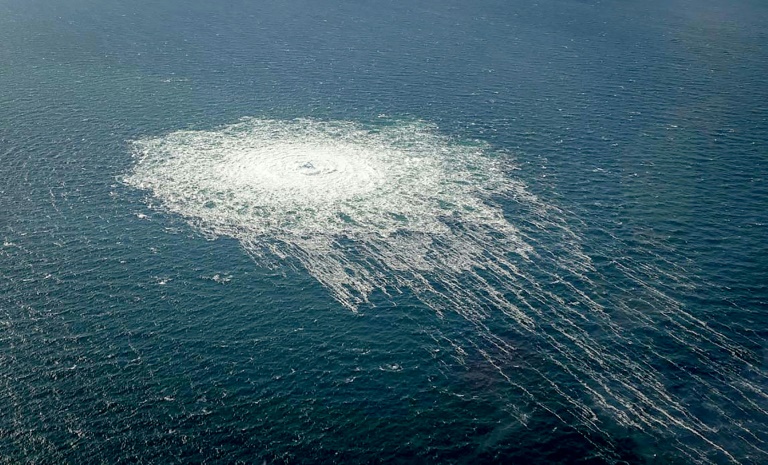
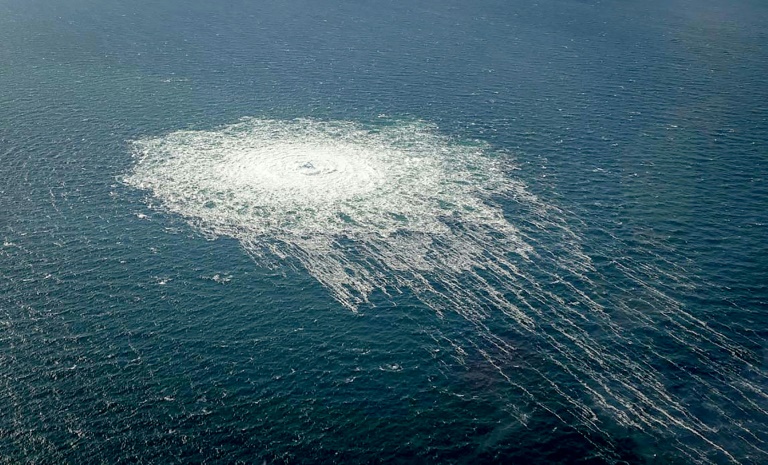
Methane gas from the leaks are bubbling to the surface of the Baltic Sea close to Denmark and Sweden in discharges expected to last for a week, until depletion of the gas in the pipelines.

Europe suspects the leaks to be from sabotage. 

They “are not a coincidence,” EU foreign policy chief Josep Borrell said in a statement. “All available information indicates those leaks are the result of a deliberate act.”

He warned: “Any deliberate disruption of European energy infrastructure is utterly unacceptable and will be met with a robust and united response.”

Suspicion has focused on Russia, which has cut gas supplies to Europe in retaliation for severe Western sanctions over the war in Ukraine.

But the Kremlin hit back, saying it was “stupid and absurd” to accuse Russia of causing the leaks.

EU chiefs Ursula von der Leyen and Charles Michel have both blamed the Nord Stream leaks on sabotage.

Michel on Wednesday tweeted that they “appear to be an attempt to further destabilise energy supply to EU”.

He added: “Those responsible will be held fully accountable and made to pay.”

The EU is currently mulling further sanctions on Russia for annexation votes imposed on four regions in Ukraine its forces occupy.

– Weeks before inspection –

Neither of the Nord Stream pipelines are currently operational, but they were full with gas when they were hit with what Swedish seismologists said were “massive releases of energy”.

One of the seismologists told AFP “there isn’t much else than a blast that could cause it”.

Danish Defence Minister Morten Bodskov told reporters in Brussels that “it can easily take one or two weeks for the area to calm down enough” for an inspection to verify the cause.

Two Danish military vessels have been sent to the area.

Non-EU member Norway, which has now overtaken Russia as the biggest supplier of gas to Europe, said it will beef up security around its oil and gas facilities.

“The government has decided to put measures in place to increase security at infrastructure sites, land terminals and platforms on the Norwegian continental shelf,” Norwegian Energy Minister Terje Aasland said.

The Norwegian Petroleum Safety Authority earlier this week called for “increased vigilance from all operators and shipping companies on the continental shelf”.

Built in parallel to the Nord Stream 1 pipeline, Nord Stream 2 was intended to double the capacity for Russian gas imports to Germany.

But Berlin blocked newly completed Nord Stream 2 in the days before the war.

Germany, which has been highly dependent on imports of fossil fuels from Russia to meet its energy needs, has since come under acute stress as Moscow’s supplies dwindle.

Sweden and Poland agree sabotage is the most likely cause of the Nord Stream leaks, with Warsaw suggesting Russia was probably the culprit, to escalate the war in Ukraine.

The United States said it was looking into the leaks, with Secretary of State Antony Blinken telling reporters that, if sabotage were confirmed, “that’s clearly in no one’s interest”.

The US has pledged to help European allies on energy security, and is already shipping what liquified natural gas it has to spare to the EU.

EU sees sabotage in gas pipe leaks, Norway hikes security

The EU said Wednesday that leaks from two Russia-Germany undersea gas pipelines appeared to be “a deliberate act”, as fossil fuel-rich Norway boosted security at its installations.

The three outflows from the Nord Stream 1 and 2 pipelines have sent natural gas prices soaring, exacerbating an energy crunch in Europe as it stands on the threshold to winter.

Methane gas from the leaks are bubbling to the surface of the Baltic Sea close to Denmark and Sweden in discharges expected to last for a week, until depletion of the gas in the pipelines.

Europe suspects the leaks to be from sabotage. 

They “are not a coincidence,” EU foreign policy chief Josep Borrell said in a statement. “All available information indicates those leaks are the result of a deliberate act.”

He warned: “Any deliberate disruption of European energy infrastructure is utterly unacceptable and will be met with a robust and united response.”

Suspicion has focused on Russia, which has cut gas supplies to Europe in retaliation for severe Western sanctions over the war in Ukraine.

But the Kremlin hit back, saying it was “stupid and absurd” to accuse Russia of causing the leaks.

EU chiefs Ursula von der Leyen and Charles Michel have both blamed the Nord Stream leaks on sabotage.

Michel on Wednesday tweeted that they “appear to be an attempt to further destabilise energy supply to EU”.

He added: “Those responsible will be held fully accountable and made to pay.”

The EU is currently mulling further sanctions on Russia for annexation votes imposed on four regions in Ukraine its forces occupy.

– Weeks before inspection –

Neither of the Nord Stream pipelines are currently operational, but they were full with gas when they were hit with what Swedish seismologists said were “massive releases of energy”.

One of the seismologists told AFP “there isn’t much else than a blast that could cause it”.

Danish Defence Minister Morten Bodskov told reporters in Brussels that “it can easily take one or two weeks for the area to calm down enough” for an inspection to verify the cause.

Two Danish military vessels have been sent to the area.

Non-EU member Norway, which has now overtaken Russia as the biggest supplier of gas to Europe, said it will beef up security around its oil and gas facilities.

“The government has decided to put measures in place to increase security at infrastructure sites, land terminals and platforms on the Norwegian continental shelf,” Norwegian Energy Minister Terje Aasland said.

The Norwegian Petroleum Safety Authority earlier this week called for “increased vigilance from all operators and shipping companies on the continental shelf”.

Built in parallel to the Nord Stream 1 pipeline, Nord Stream 2 was intended to double the capacity for Russian gas imports to Germany.

But Berlin blocked newly completed Nord Stream 2 in the days before the war.

Germany, which has been highly dependent on imports of fossil fuels from Russia to meet its energy needs, has since come under acute stress as Moscow’s supplies dwindle.

Sweden and Poland agree sabotage is the most likely cause of the Nord Stream leaks, with Warsaw suggesting Russia was probably the culprit, to escalate the war in Ukraine.

The United States said it was looking into the leaks, with Secretary of State Antony Blinken telling reporters that, if sabotage were confirmed, “that’s clearly in no one’s interest”.

The US has pledged to help European allies on energy security, and is already shipping what liquified natural gas it has to spare to the EU.

Close Bitnami banner
Bitnami