World

Seven dead in Iran strikes on Iraqi Kurdistan: ministry

Iran was accused of killing seven people and wounding 28 in cross-border strikes Wednesday against Kurdish factions in Iraq that have deplored an ongoing protest crackdown in the Islamic republic.

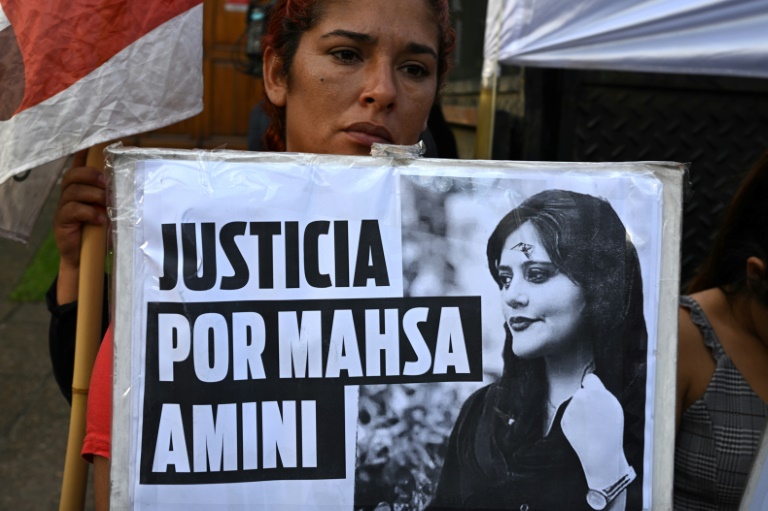
Strikes blamed on Iran have hit districts of autonomous Iraqi Kurdistan repeatedly in recent days as Tehran has ramped up its domestic crackdown against protests over the death of Kurdish woman Mahsa Amini in the custody of morality police.

The regional health ministry in Arbil, the capital of Iraqi Kurdistan, said in a statement that the latest strikes killed four people and wounded 14 in the Koysinjaq region, and three were killed and 14 wounded in Sherawa.

“There are civilians among the victims” including one dead, a senior official of autonomous Kurdistan told AFP.

“These cowardly attacks are occurring at a time when the terrorist regime of Iran is unable to crack down on ongoing protests inside and silence the Kurdish and Iranian peoples’ civil resistance,” the Kurdish Democratic Party of Iran (KDPI) tweeted.

Amini, 22, died in Tehran on September 16, three days after being arrested for allegedly violating the Iran’s strict dress code for women.

Her death sparked protests across Iran and a crackdown that has killed at least 76 people in the Islamic republic, according to the Oslo-based group Iran Human Rights.

Wednesday’s strikes against the autonomous region of Iraqi Kurdistan prompted the federal government in Iraq to summon Iran’s ambassador.

“Rocket diplomacy is a reckless act with devastating consequences,” tweeted the UN mission in Iraq. “These attacks need to cease immediately.”

– ‘Missiles and drones’ –

The KDPI said it was one of the groups targeted in Wednesday’s strikes.

Iran hit its bases and headquarters with “missiles and drones” in Koysinjaq, east of Arbil, it announced in a statement.

In Tehran, state television said that the “Revolutionary Guards targeted the headquarters of several separatist terrorist groups in northern Iraq with missiles and precision-guided attack drones”.

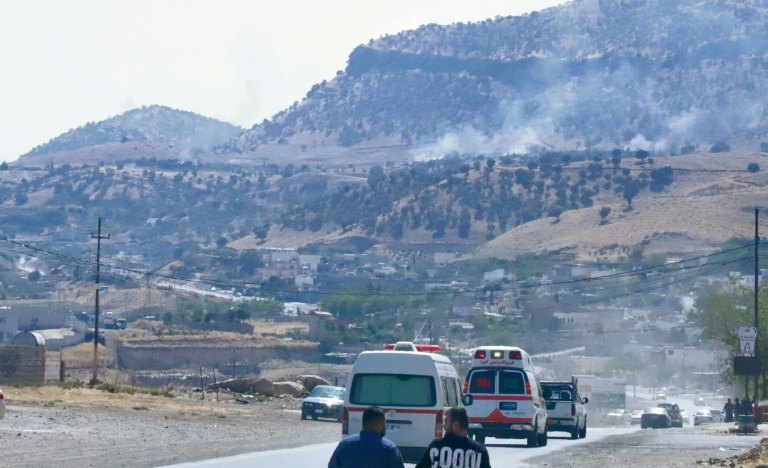
Other strikes on Wednesday destroyed buildings around Zargew, about 15 kilometres (10 miles) from Souleimaniyeh, where several exiled left-wing Iranian Kurdish parties maintain offices.

An AFP correspondent in Zargew saw smoke rising from locations hit by those strikes and ambulances were dispatched to the scene.

Residents fled the area, while lightly wounded people were treated by a party, the correspondent added.

“The area where we are has been hit by 10 drone strikes,” Atta Nasser, an official from Komala, one of the exiled Iranian Kurdish left-wing parties, told AFP. Iran was behind the strikes, he said.

Sherawa region, south of Arbil, had also been targeted.

“The headquarters of the Kurdistan Freedom Party has been hit by Iranian strikes,” Hussein Yazdan, an official from this party, told AFP.

Iran’s semi-official Fars news agency has put the protest death toll in Iran at “around 60”, including several members of the security forces.

Kurdish communities in western Iran share strong connections with Kurdish-inhabited areas of Iraq.

Many cross the border into Iraq to find work, due to a biting economic crisis in Iran driven in large part by US sanctions.
BoE intervenes as IMF criticises UK budget

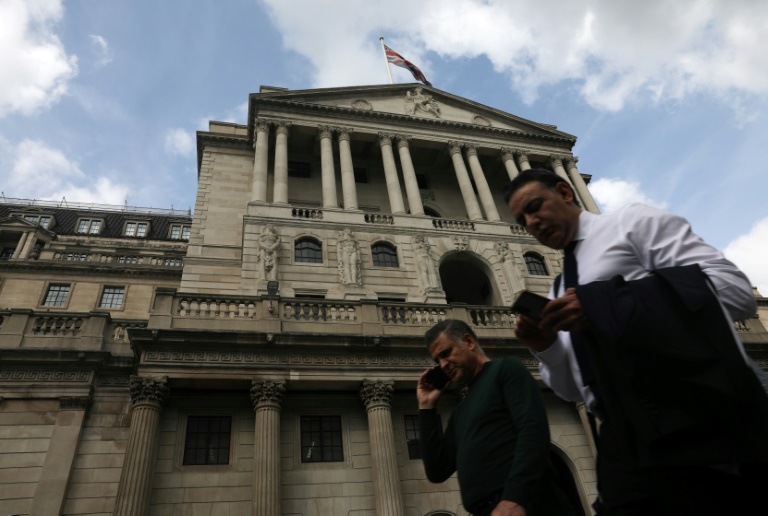
The Bank of England stepped in Wednesday to shore up market confidence after the International Monetary Fund criticised Britain’s inflation-fighting budget.

In a surprise move, the BoE announced it was temporarily buying up long-dated UK government bonds “to restore orderly market conditions”.

The pound promptly slumped 1.7 percent to $1.0552 before clawing back ground.

There was respite elsewhere, with the UK government’s 30-year bond yield retreating to 4.44 percent, having hit a 1998 peak at 5.14 percent.

The BoE intervention followed criticism Tuesday from the IMF, which argued that Britain’s budget could increase inequality and worsen inflation.

Credit ratings agency Moody’s also waded in overnight with a warning about soaring debt.

– ‘Finally intervenes’ –

“So, the Bank of England finally intervenes after coming under so much pressure to act,” said City Index analyst Fawad Razaqzada.

“The BoE’s intervention is an attempt to soothe investor nerves after they were spooked by last week’s mini-budget.”

Finance minister Kwasi Kwarteng’s big tax cuts and energy price freeze, aimed at boosting the UK’s recession-threatened economy, appeared to have had the opposite effect as traders warn of ballooning debt to pay for the incentives.

Following last Friday’s budget, UK bond yields soared and the pound hit a record low at $1.0350, perilously close to parity.

Critics added that Kwarteng’s measures would benefit the rich more than the poorest, as millions of Britons suffer from a cost-of-living crisis.

“We have acted at speed to protect households and businesses through this winter and the next, following the unprecedented energy price rise,” the Treasury said after the IMF criticism.

“We are focused on growing the economy to raise living standards for everyone,” it added, blaming sky-high oil, gas and electricity prices on Russia’s invasion of Ukraine.

– IMF advice –

In a highly unusual intervention, the IMF late Tuesday said it was “closely monitoring” developments and urged the government in London led by new Prime Minister Liz Truss to change tack.

The Fund added: “We understand that the sizable fiscal package announced aims at helping families and businesses deal with the energy shock and at boosting growth via tax cuts and supply measures.

“However, given elevated inflation pressures in many countries… we do not recommend large and untargeted fiscal packages at this juncture.”

The IMF said the “UK measures will likely increase inequality” and stressed the importance of fiscal policy not working “at cross purposes to monetary policy”.

Analysts warned that Britain’s controversial measures could force the BoE to hike interest rates far higher than forecast.

“Expectations that there will be a super-size interest rate hike coming from the Bank of England to try and counter the government splurge on tax cuts and spending have increased,” Hargreaves Lansdown analyst Susannah Streeter noted Wednesday.

Many central banks, including the BoE, are aggressively hiking interest rates in a bid to cool decades-high inflation. 

The BoE on Wednesday warned there was a “material risk to UK financial stability” should current market conditions continue.

Purchases “will be carried out on whatever scale is necessary”, added the bank headed by governor Andrew Bailey.

– Tax cuts –

In his budget, Chancellor of the Exchequer Kwarteng cut the highest rate of income tax and scrapped a cap on banker bonuses.

He also, however, announced a plan to lower income tax for all workers.

Conservative party head Truss appointed Kwarteng to replace Rishi Sunak, who reached the final two in the race to be prime minister.

Sunak had hit out strongly at Truss’s promise of tax cuts, arguing that the UK priority was to first bring down the nation’s inflation rate that stands at a near 40-year high of 9.9 percent. 

Moody’s called Britain’s new fiscal policy regime “credit negative”, adding that a sustained confidence shock could “permanently” weaken its debt affordability.

Kwarteng has said he would wait until November 23 to outline plans on controlling government debt.

'You have to overcome': Cubans carry on as Hurricane Ian sparks blackout

Havana resident Maykel was helping his friend fix an “almendron” — as the decades-old American cars that ply Cuba’s streets are known — when the lights suddenly cut out late Tuesday.

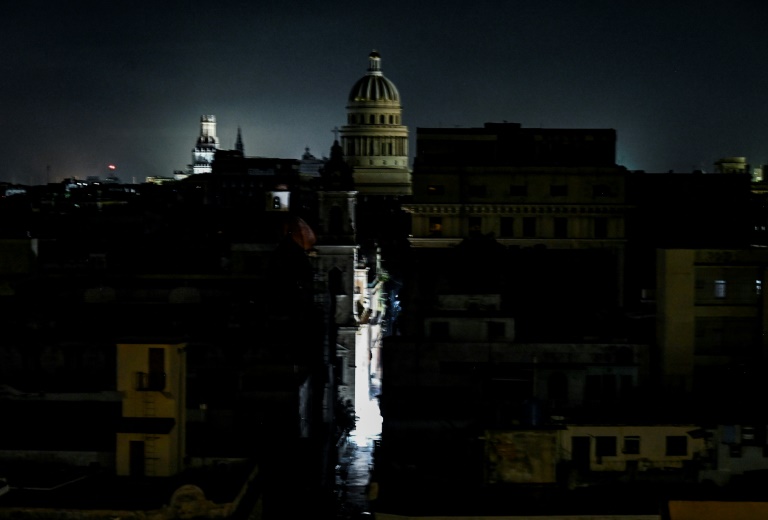
He and his friend were among the 11 million Cubans plunged into darkness after powerful Hurricane Ian tore across the island’s west, damaging the electrical grid and causing a nationwide blackout.

“What are we going to do?” Maykel, 35, said dryly. “Survive.”

Lazaro Guerra, technical director of the state utility Union Electrica, said in televised remarks that there was no electric service “in any part of the country.” 

The energy ministry noted it was dealing with “exceptional circumstances” and that power would be restored gradually.

Communist-ruled Cuba had already been dealing with electricity generation issues stemming from the obsolescence of its plants, breakdowns and maintenance, and heightened demand thanks to the summer heat.

Guerra said the latest problems were affecting the lines linking the country’s west, center and east, and that fluctuations in the charge and electrical frequency were causing instability.

“The western region has the additional complication of having a group of transmission lines that are out of service precisely because of the passing of Hurricane Ian,” he said.

The storm, which hit the provinces of Pinar del Rio, Artemisa and Havana, toppled trees into roadways and fuelled heavy ocean swells that inundated streets around the capital’s popular Malecon promenade.

State media reported that two people were killed Tuesday in Pinar del Rio.

– Completely in the dark –

Harold Baez, a 27-year-old security guard for the half-century-old Coppelia ice cream parlour in the heart of Havana, said he was concerned about the situation but determined to carry on.

“A (nationwide) blackout like that always generates uncertainty, but that’s normal. You have to overcome everything,” he said as he headed for the cafeteria of the Habana Libre hotel which, like many accommodations aimed at international tourists, still enjoyed power thanks to generators.

In Cuba, few homes have gasoline-powered generators, though hospitals, offices and public institutions often do.

Some homes were lit up with candles or rechargeable lamps.

But without streetlights or even traffic signals to illuminate their neighborhoods, many of those living in central Havana found themselves completely in the dark.

“We came out because of the child… because he was going crazy” crying, said one woman who declined to be named as she soothed her baby by the light of her husband’s cell phone.

Restaurant worker Yoelmis Martinez, 36, sought to put an optimistic spin on the situation.

“It isn’t that (we want) it to turn out like this, but… the positive part is that at least we can save a fair bit during this blackout,” Martinez said as she returned home from a friend’s house where she rode out the storm.

Menacing Florida, Hurricane Ian nears catastrophic Category 5

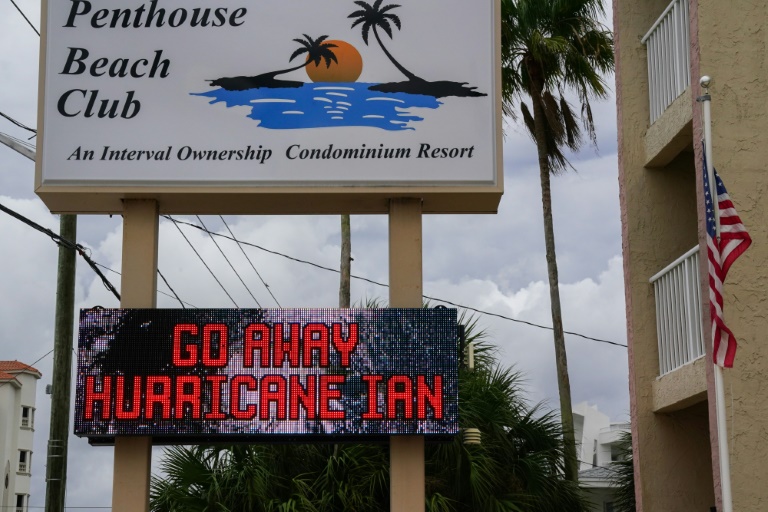
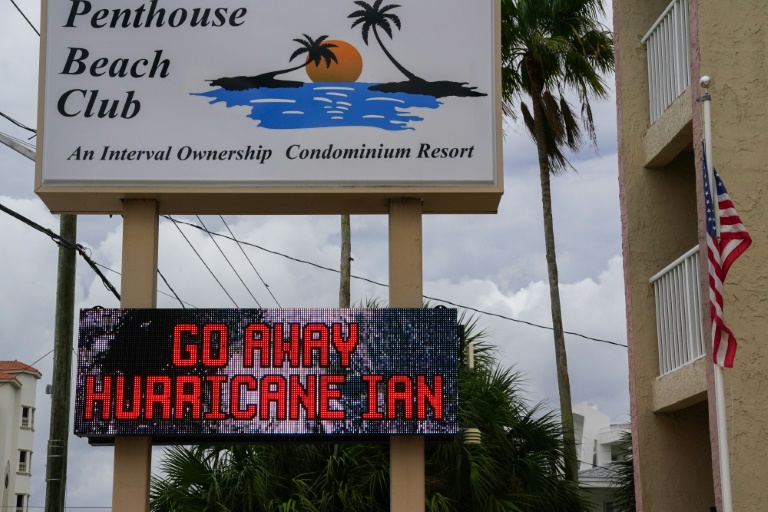
Hurricane Ian intensified to just shy of catastrophic Category 5 strength Wednesday as its heavy winds began pummelling the US state of Florida, with forecasters warning of life-threatening storm surges after leaving millions without power in Cuba.

Mandatory evacuation orders had been issued in a dozen coastal Florida counties, with voluntary evacuation recommended in several others, according to the state’s emergency officials as they girded for a potentially historic storm.

In a pre-dawn advisory the US National Hurricane Center (NHC) said “Ian has strengthened into an extremely dangerous Category 4 hurricane,” warning later of “catastrophic storm surge, winds, and flooding.”

At 7:00 am (1100 GMT) it said “data from a Hurricane Hunter aircraft indicate that maximum sustained winds have increased to near 155 miles (250 kilometers) per hour” — just shy of Category 5, the strongest category on the Saffir-Simpson scale.

“This is going to be a nasty, nasty day, two days,” Governor Ron DeSantis said early Wednesday as he warned residents of a “rough stretch” ahead for Florida.

“It could make landfall as a Category 5, but clearly this is a very powerful major hurricane that’s going to have major impacts, both on… southwest Florida but as it continues to work through the state.”

The NHC for its part said Ian was “rapidly intensifying,” while conditions along the Florida coast were “rapidly deteriorating.”

Tropical storm-strength winds were already battering the Florida Keys, as the storm was expected to make landfall later Wednesday near Fort Myers and Port Charlotte, along the state’s west coast, before moving across central Florida and emerging in the Atlantic Ocean by late Thursday.

With up to two feet (61 centimeters) of rain expected to fall on parts of the so-called Sunshine State, and a storm surge that could reach devastating levels of 12 to 16 feet (3.6 to 4.9 meters) above ground, authorities were warning of catastrophic conditions.

“This is a life-threatening situation,” the NHC warned.

DeSantis said on Tuesday night that there had already been at least two “radar-indicated tornadoes” in the state, and warned those in areas projected to be hit hardest that their “time to evacuate is coming to an end.”

Calls to heed evacuation warnings were echoed by US President Joe Biden, who earlier said Ian “could be a very severe hurricane, life-threatening and devastating in its impact.”

White House Press Secretary Karine Jean-Pierre said Biden had spoken with DeSantis — a potential 2024 election challenger — Tuesday evening to discuss storm preparations.

– Widespread blackout –

Ian plunged all of Cuba into darkness on Tuesday after battering the country’s west as a Category 3 for more than five hours before moving back out over the Gulf of Mexico, the Insmet meteorological institute said.

The storm damaged Cuba’s power network and left the island “without electrical service,” state electricity company Union Electrica said.

Only the few people with gasoline-powered generators had access to electricity on the island of more than 11 million people. Others had to make do with flashlights or candles at home, and lit their way with cell phones as they walked the streets.

In the western city of Pinar del Rio, AFP footage showed downed power lines, flooded streets and damaged rooftops.

“Desolation and destruction. These are terrifying hours. Nothing is left here,” a 70-year-old resident of the city was quoted as saying in a social media post by his journalist son, Lazaro Manuel Alonso.

About 40,000 people were evacuated across Pinar del Rio province, which bore the brunt of the storm, local authorities said.

Cuban residents described “destruction” and posted images on social media of flooded streets and felled trees.

At least two people died in Pinar del Rio province, Cuban state media reported.

In Consolacion del Sur, southwest of Havana, 65-year-old Caridad Fernandez said her roof was seriously damaged and water came through her front door.

“Everything we have is damaged,” she said. “But we’ll get through this, we’ll just keep moving forwards.”

– ‘Life and death’ –

In the US, the Pentagon said 3,200 national guardsmen had been called up in Florida, with another 1,800 on the way.

Authorities in several municipalities were distributing sandbags to help residents protect their homes from flooding.

Tampa International Airport suspended operations from Tuesday at 5 pm.

NASA, on the state’s east coast, also took precautions, rolling back its massive Moon rocket into a storage hanger for protection.

Like DeSantis, FEMA administrator Deanne Criswell highlighted the danger of storm surge, saying it was the agency’s “biggest concern.”

“If people are told to evacuate by their local officials, please listen to them. The decision you choose to make may be the difference between life and death,” she said.

Menacing Florida, Hurricane Ian nears catastrophic Category 5

Hurricane Ian intensified to just shy of catastrophic Category 5 strength Wednesday as its heavy winds began pummelling the US state of Florida, with forecasters warning of life-threatening storm surges after leaving millions without power in Cuba.

Mandatory evacuation orders had been issued in a dozen coastal Florida counties, with voluntary evacuation recommended in several others, according to the state’s emergency officials as they girded for a potentially historic storm.

In a pre-dawn advisory the US National Hurricane Center (NHC) said “Ian has strengthened into an extremely dangerous Category 4 hurricane,” warning later of “catastrophic storm surge, winds, and flooding.”

At 7:00 am (1100 GMT) it said “data from a Hurricane Hunter aircraft indicate that maximum sustained winds have increased to near 155 miles (250 kilometers) per hour” — just shy of Category 5, the strongest category on the Saffir-Simpson scale.

“This is going to be a nasty, nasty day, two days,” Governor Ron DeSantis said early Wednesday as he warned residents of a “rough stretch” ahead for Florida.

“It could make landfall as a Category 5, but clearly this is a very powerful major hurricane that’s going to have major impacts, both on… southwest Florida but as it continues to work through the state.”

The NHC for its part said Ian was “rapidly intensifying,” while conditions along the Florida coast were “rapidly deteriorating.”

Tropical storm-strength winds were already battering the Florida Keys, as the storm was expected to make landfall later Wednesday near Fort Myers and Port Charlotte, along the state’s west coast, before moving across central Florida and emerging in the Atlantic Ocean by late Thursday.

With up to two feet (61 centimeters) of rain expected to fall on parts of the so-called Sunshine State, and a storm surge that could reach devastating levels of 12 to 16 feet (3.6 to 4.9 meters) above ground, authorities were warning of catastrophic conditions.

“This is a life-threatening situation,” the NHC warned.

DeSantis said on Tuesday night that there had already been at least two “radar-indicated tornadoes” in the state, and warned those in areas projected to be hit hardest that their “time to evacuate is coming to an end.”

Calls to heed evacuation warnings were echoed by US President Joe Biden, who earlier said Ian “could be a very severe hurricane, life-threatening and devastating in its impact.”

White House Press Secretary Karine Jean-Pierre said Biden had spoken with DeSantis — a potential 2024 election challenger — Tuesday evening to discuss storm preparations.

– Widespread blackout –

Ian plunged all of Cuba into darkness on Tuesday after battering the country’s west as a Category 3 for more than five hours before moving back out over the Gulf of Mexico, the Insmet meteorological institute said.

The storm damaged Cuba’s power network and left the island “without electrical service,” state electricity company Union Electrica said.

Only the few people with gasoline-powered generators had access to electricity on the island of more than 11 million people. Others had to make do with flashlights or candles at home, and lit their way with cell phones as they walked the streets.

In the western city of Pinar del Rio, AFP footage showed downed power lines, flooded streets and damaged rooftops.

“Desolation and destruction. These are terrifying hours. Nothing is left here,” a 70-year-old resident of the city was quoted as saying in a social media post by his journalist son, Lazaro Manuel Alonso.

About 40,000 people were evacuated across Pinar del Rio province, which bore the brunt of the storm, local authorities said.

Cuban residents described “destruction” and posted images on social media of flooded streets and felled trees.

At least two people died in Pinar del Rio province, Cuban state media reported.

In Consolacion del Sur, southwest of Havana, 65-year-old Caridad Fernandez said her roof was seriously damaged and water came through her front door.

“Everything we have is damaged,” she said. “But we’ll get through this, we’ll just keep moving forwards.”

– ‘Life and death’ –

In the US, the Pentagon said 3,200 national guardsmen had been called up in Florida, with another 1,800 on the way.

Authorities in several municipalities were distributing sandbags to help residents protect their homes from flooding.

Tampa International Airport suspended operations from Tuesday at 5 pm.

NASA, on the state’s east coast, also took precautions, rolling back its massive Moon rocket into a storage hanger for protection.

Like DeSantis, FEMA administrator Deanne Criswell highlighted the danger of storm surge, saying it was the agency’s “biggest concern.”

“If people are told to evacuate by their local officials, please listen to them. The decision you choose to make may be the difference between life and death,” she said.

Iran police vow to confront Mahsa Amini protests with 'all might'

Iran’s police warned Wednesday they will confront “with all their might” women-led protests that erupted nearly two weeks ago over the death of Mahsa Amini in custody, despite growing calls for restraint.

Dozens of people have been killed since demonstrations erupted when the 22-year-old Kurdish woman died after being arrested in Tehran for allegedly breaching the Islamic republic’s strict rules on hijab headscarves and modest clothing.

Widespread protests took place for a 12th straight night on Tuesday, according to opposition media based outside Iran, despite internet restrictions designed to impede gatherings and prevent images of the crackdown getting out.

Iran was accused of killing seven people and wounding 28 in cross-border strikes Wednesday against Kurdish factions in Iraq that have denounced the protest crackdown in the Islamic republic, prompting Iraq to summon the Iranian ambassador.

“These cowardly attacks are occurring at a time when the terrorist regime of Iran is unable to crack down on ongoing protests inside and silence the Kurdish and Iranian peoples’ civil resistance,” the Iraq-based Kurdistan Democratic Party of Iran said.

In the protests, “Woman, Life, Freedom!” has been the rallying cry as women have burned their headscarves in bonfires or symbolically cut off their hair, cheered on by crowds.

Riot police in black body armour were seen shooting up at apartment windows in Tehran’s Ekbatan Town, in footage shared overnight by Radio Farda — a US-funded Persian station based in Prague.

– ‘Blow to the head’ –

“Police officers will oppose with all their might the conspiracies of counter-revolutionaries and hostile elements, and deal firmly with those who disrupt public order and security anywhere in the country,” the police said.

The statement came only hours after the UN said its secretary-general, Antonio Guterres, had called on Iran’s President Ebrahim Raisi not to use “disproportionate force” against protesters.

“We are increasingly concerned about reports of rising fatalities, including women and children, related to the protests,” the UN chief’s spokesman Stephane Dujarric said.

Fars news agency said Tuesday “around 60” people had been killed since Amini’s death on September 16, up from the official toll of 41 authorities reported on Saturday.

But the Oslo-based group Iran Human Rights said the crackdown has killed at least 76 people.

Officials said Monday they had made more than 1,200 arrests, including of activists, lawyers and journalists.

A cousin of Amini said she had been visiting Tehran with her family when she encountered the notorious morality police and died after a “violent blow to the head”.

Amini, whose Kurdish first name is Jhina, was arrested along with her brother and female relatives after leaving an underground station despite being “dressed normally”, Erfan Salih Mortezaee said.

“The police officer told (her brother), ‘We are going to take her in, instil the rules in her and teach her how to wear the hijab and how to dress’,” he told AFP in Iraqi Kurdistan.

“Jhina’s death has opened the doors of popular anger,” said Mortezaee, who joined the Iranian Kurdish nationalist group Komala after leaving the Islamic republic a year ago.

– Shah’s son hails ‘women’s revolution’ –

In an interview with AFP, the son of Iran’s late shah hailed the protests as a landmark revolution by women and urged the world to add to the pressure on the clerical leadership.

Reza Pahlavi, whose father was toppled in the Islamic Revolution of 1979, called for greater preparation for a future Iranian system that is secular and democratic.

“It is truly in modern times, in my opinion, the first revolution for the women, by the women — with the support of the Iranian men, sons, brothers and fathers,” said Pahlavi, who lives in exile in the Washington area.

“It has come to the point, as the Spaniards would say, basta — we’ve had enough.”

On Tuesday, authorities in Iran arrested the daughter of ex-president Akbar Hashemi Rafsanjani for “inciting rioters”, the Tasnim news agency reported.

The crackdown has drawn condemnation from around the world.

Tensions with Western powers have grown this week, with Germany summoning the Iranian ambassador, Canada announcing sanctions and Tehran calling in the British and Norwegian envoys.

Spain on Wednesday summoned the Iranian ambassador to express its “objection over the repression of the protests and the violation of women’s rights”.

burs/dv/lg

North Korea fires two ballistic missiles on eve of Harris trip

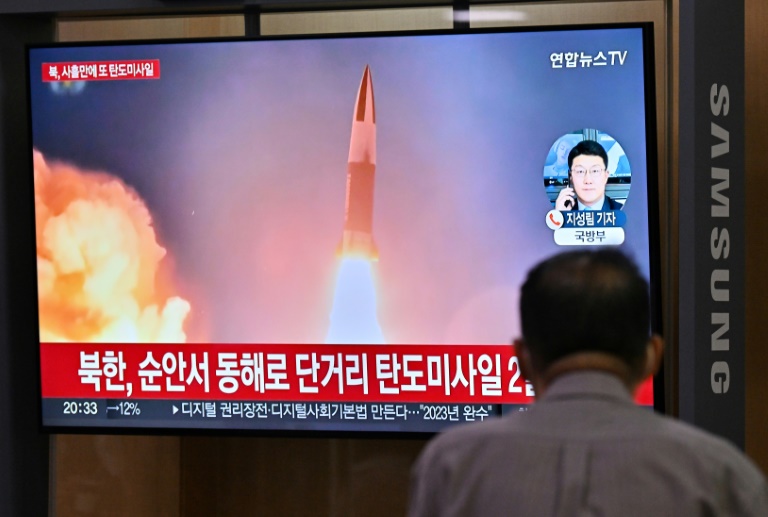
North Korea fired two short-range ballistic missiles on Wednesday, Seoul’s military said, just days after Pyongyang’s last test and ahead of a visit to South Korea by US Vice President Kamala Harris.

The launches, part of a record-breaking blitz of weapons tests this year by North Korea, came after Seoul’s spy agency warned that Pyongyang was close to conducting another nuclear test.

South Korea’s military said it had “detected two short-range ballistic missiles fired from the Sunan area in Pyongyang”.

The missiles flew “around 360 kilometres (223 miles) at an altitude of 30 kilometres at the speed of Mach 6”, Seoul’s Joint Chiefs of Staff said in a statement, adding that it was analysing the details of the launches.

“Our military has reinforced monitoring and surveillance and is maintaining utmost readiness in close coordination with the United States,” it added.

Japan also confirmed the launches, with deputy defence minister Toshiro Ino saying North Korea’s recent spate of missile tests were “unprecedented” in frequency.

“The repeated missile launches cannot be tolerated,” he said.

The latest launch comes after North Korea test-fired a short-range ballistic missile on Sunday.

Harris is due to arrive in Seoul on Thursday for a brief visit, during which she will go to the heavily fortified border between North and South Korea.

The White House has said Harris’ trip, which follows a visit to Japan, intends to underscore the importance of the alliance with Seoul.

Washington is Seoul’s key security ally and stations about 28,500 troops in South Korea to help protect it from the North.

Last week the nuclear-powered USS Ronald Reagan conducted joint drills with South Korea’s navy in waters off the Korean peninsula.

Under Seoul’s hawkish new President Yoon Suk-yeol, who took office in May, the two countries have boosted joint exercises, which they insist are purely defensive — but North Korea sees them as rehearsals for an invasion.

– ‘Harbinger’ –

South Korean and US officials have been warning for months that North Korean leader Kim Jong Un is preparing to conduct another nuclear test.

Earlier Wednesday, Seoul’s spy agency said Pyongyang appeared to have completed “a third tunnel at its Punggye-ri nuclear site”, MP Yoo Sang-bum told reporters after a briefing from Seoul’s National Intelligence Service.

Pyongyang is likely to choose the window between “China’s upcoming Communist Party Congress on October 16 and the midterm elections in the United States on November 7” for its next nuclear test, Yoo said.

North Korea, which is under multiple UN sanctions for its weapons programmes, typically seeks to maximise the geopolitical impact of its tests with careful timing.

The isolated regime has tested nuclear weapons six times since 2006. Its last and most powerful one in 2017 — which Pyongyang claimed was a hydrogen bomb — had an estimated yield of 250 kilotons.

Seoul has also detected signs the North is preparing to fire a submarine-launched ballistic missile (SLBM), the president’s office said Saturday, a weapon Pyongyang last tested in May.

“Today’s launch makes it clear the North is attempting to gain an upper hand on the peninsula with a nuclear arsenal at its disposal,” Kim Jong-dae of the Yonsei Institute for North Korean Studies told AFP.

The repeated tests are “a harbinger of Pyongyang’s aggressive posturing to come next month — with missile launches and a possible nuclear test”, he said.

'Just military exercises, right?': families send off Russian reservists

Outside an army recruitment centre in Saint Petersburg, women and children embrace Russian men called up to fight in Ukraine, whispering among each other where their loved ones will be sent.

Some at the send-off are holding out hope their husbands, sons or fathers won’t be deployed to the frontlines of the Kremlin’s seven-month “special military operation” in Ukraine.

“These are just military exercises, right?” a woman in her 60s asks a relative next to her.

Around her, women are sharing a last kiss, holding hands or exchanging a final word with departing men through a metal barrier separating the reservists from the street.

“I think so, yes — military exercises. I don’t know,” 55-year-old Svetlana Antonova replied, hoping to reassure the woman.

“I think they’ll be taken to a training camp. I don’t know. No one knows. I think they’ll be in the rear.”

Her 27-year-old son presented himself at the draft centre Tuesday, less than one week after President Vladimir Putin called up hundreds of thousands of reservists for Ukraine.

The call-up sparked demonstrations in Moscow and an exodus of men abroad. 

At the army centre in southern Saint Petersburg, AFP journalists saw men between 20 and 40 years old.

Nikita, a 25-year-old reservist, held hands with his 22-year-old fiancee Alina through the barrier. She had tears in her eyes. 

“I don’t know what to say. I’m in shock,” Alina said without taking her eyes off her fiance.

Nikita stroked her hair through the metal bars. 

He said he was “not surprised” to receive the summons last Saturday but that his relatives were.

“Well if you have to go, you have to go,” he said.


– ‘Nowhere to run’ –

For Galina, 65, and her family, her son-in-law’s call-up was a particularly hard blow because her daughter is undergoing cancer treatment.   

With the 42-year-old drafted and her daughter in chemotherapy, Galina will be a principal carer for the couple’s 12-year-old son.  

She took her grandson, Misha, to bid goodbye to his father, a builder, who was previously in the army.

“I don’t know how we’ll manage,” she said, holding Misha’s hand.

“How long they are taking them for, or where, we don’t know.”

Galina said some families were told the men would be taken to a training ground in the region.

She added that the family did not consider escaping the mobilisation, like tens of thousands of Russians who rushed to leave the country.

“There was nowhere for us to run,” she told AFP. 

Stocks slump, dollar surges on recession fears

Global stock markets sank Wednesday and the dollar soared as investors fretted over recession fears and heightened Ukraine tensions.

“With the prospect of a sharp economic slowdown, further pain for households and businesses, and investor sentiment on its knees, alas equities markets continue their descent,” said AJ Bell investment director Russ Mould.

The haven dollar held at multi-year highs against rival currencies, with the euro plumbing a new 20-year low at $0.9536.

The British pound slumped 1.7 percent against the greenback — despite the Bank of England snapping up UK government bonds to try and bring calm to markets.

However, the UK government’s 30-year bond yield managed to retreat to 4.44 percent, having hit a 1998 peak at 5.14 percent.

The BoE intervention followed criticism Tuesday from the International Monetary Fund, which argued that Britain’s recent budget could increase inequality and worsen inflation.

New finance minister Kwasi Kwarteng’s tax-cutting plan last week sent shockwaves through markets, pushing the pound to a record low and leading to dire warnings for Britain’s economy.

The dollar remains the go-to unit as the US Federal Reserve leads the way in raising interest rates.

Observers are betting that US borrowing costs will peak at around 4.75 percent next year, and are expected to remain elevated for some time.

The prospect of such tight monetary policy has battered equities, as US 10-year Treasury yields — a gauge of future rates — hit four percent for the first time since 2010.

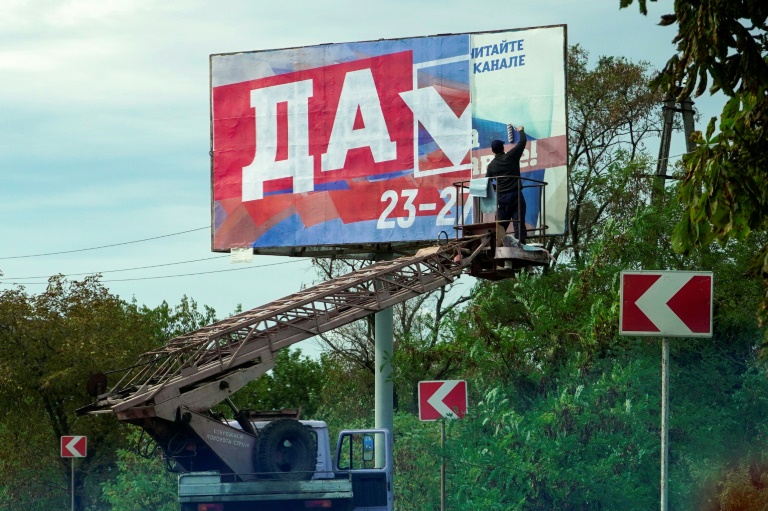
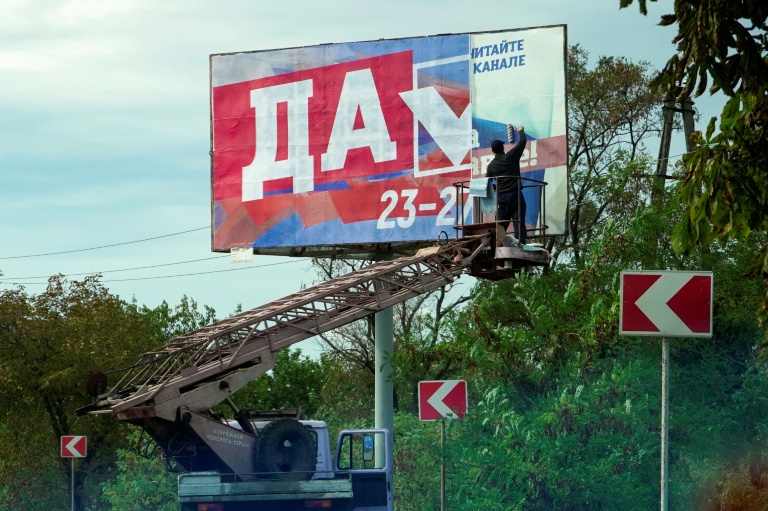
Sentiment was also rattled by worries about developments in Ukraine, after Kremlin-installed authorities in four regions under Russian control claimed victory in annexation votes, with Moscow warning it could use nuclear weapons to defend the territories.

Ukraine and its allies have denounced the so-called referendums as a sham, saying the West would never recognise the results.

– Key figures at around 1145 GMT –

London – FTSE 100: DOWN 0.8 percent at 6,927.75 points

Frankfurt – DAX: DOWN 1.5 percent at 11,961.92

Paris – CAC 40: DOWN 1.4 percent at 5,675.32

EURO STOXX 50: DOWN 1.5 percent at 3,279.53

Tokyo – Nikkei 225: DOWN 1.5 percent at 26,173.98 (close)

Hong Kong – Hang Seng Index: DOWN 3.4 percent at 17,250.88 (close)

Shanghai – Composite: DOWN 1.6 percent at 3,045.07 (close)

New York – Dow: DOWN 0.4 percent at 29,134.99 (close)

Pound/dollar: DOWN at $1.0569 from $1.0730 on Tuesday

Euro/dollar: DOWN at $0.9556 from $0.9595

Euro/pound: UP at 90.41 pence from 89.39 pence 

Dollar/yen: DOWN at 144.76 yen from 144.81 yen

Brent North Sea crude: UP 0.1 percent at $86.36 per barrel

West Texas Intermediate: UP 0.5 percent at $78.86 per barrel

burs-rfj/bcp/rox

Stocks slump, dollar surges on recession fears

Global stock markets sank Wednesday and the dollar soared as investors fretted over recession fears and heightened Ukraine tensions.

“With the prospect of a sharp economic slowdown, further pain for households and businesses, and investor sentiment on its knees, alas equities markets continue their descent,” said AJ Bell investment director Russ Mould.

The haven dollar held at multi-year highs against rival currencies, with the euro plumbing a new 20-year low at $0.9536.

The British pound slumped 1.7 percent against the greenback — despite the Bank of England snapping up UK government bonds to try and bring calm to markets.

However, the UK government’s 30-year bond yield managed to retreat to 4.44 percent, having hit a 1998 peak at 5.14 percent.

The BoE intervention followed criticism Tuesday from the International Monetary Fund, which argued that Britain’s recent budget could increase inequality and worsen inflation.

New finance minister Kwasi Kwarteng’s tax-cutting plan last week sent shockwaves through markets, pushing the pound to a record low and leading to dire warnings for Britain’s economy.

The dollar remains the go-to unit as the US Federal Reserve leads the way in raising interest rates.

Observers are betting that US borrowing costs will peak at around 4.75 percent next year, and are expected to remain elevated for some time.

The prospect of such tight monetary policy has battered equities, as US 10-year Treasury yields — a gauge of future rates — hit four percent for the first time since 2010.

Sentiment was also rattled by worries about developments in Ukraine, after Kremlin-installed authorities in four regions under Russian control claimed victory in annexation votes, with Moscow warning it could use nuclear weapons to defend the territories.

Ukraine and its allies have denounced the so-called referendums as a sham, saying the West would never recognise the results.

– Key figures at around 1145 GMT –

London – FTSE 100: DOWN 0.8 percent at 6,927.75 points

Frankfurt – DAX: DOWN 1.5 percent at 11,961.92

Paris – CAC 40: DOWN 1.4 percent at 5,675.32

EURO STOXX 50: DOWN 1.5 percent at 3,279.53

Tokyo – Nikkei 225: DOWN 1.5 percent at 26,173.98 (close)

Hong Kong – Hang Seng Index: DOWN 3.4 percent at 17,250.88 (close)

Shanghai – Composite: DOWN 1.6 percent at 3,045.07 (close)

New York – Dow: DOWN 0.4 percent at 29,134.99 (close)

Pound/dollar: DOWN at $1.0569 from $1.0730 on Tuesday

Euro/dollar: DOWN at $0.9556 from $0.9595

Euro/pound: UP at 90.41 pence from 89.39 pence 

Dollar/yen: DOWN at 144.76 yen from 144.81 yen

Brent North Sea crude: UP 0.1 percent at $86.36 per barrel

West Texas Intermediate: UP 0.5 percent at $78.86 per barrel

burs-rfj/bcp/rox

Close Bitnami banner
Bitnami