World

Cyber warfare rife in Ukraine, but impact stays in shadows

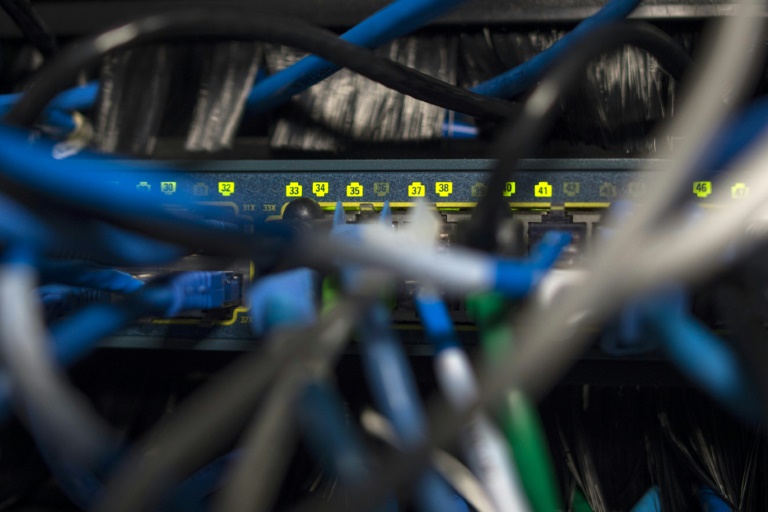
Hackings, network sabotage and other cyber warfare campaigns are being intensely deployed by both sides as Russia’s invasion of Ukraine grinds on, though the covert operations have not proved decisive on the battlefield — at least so far.

Western allies initially feared a tsunami of cyberattacks against Ukraine’s military command and critical infrastructure, hindering its ability to resist the Russian forces pouring across its borders.

As of mid-September, the Cyber Peace Institute, an NGO based in Switzerland, counted nearly 450 attacks — roughly 12 a week — carried out by 57 different entities on either side since the invasion was launched in February.

Yet with European and US help, Kyiv has largely withstood the high-tech onslaught.

“Large-scale cyberattacks have indeed occurred, but it’s generally agreed that they have clearly failed to produce the ‘shock and awe’ effect some predicted,” according to Alexis Rapin, a researcher at the University of Quebec.

Writing for the strategic studies site Le Rubicon, he said the most devastating attacks often take months or even years to plan and execute, “making it very difficult to synchronise them with a conventional military campaign.”

Another factor may be the massive help Ukraine has had from its allies, including software and expertise to protect its systems as well as counterattacks that may be hampering Moscow’s cyber strategy.

“Russia has been under constant cyber assault over the last few months from an international coalition of volunteer, non-governmental hacking organisations, the most prominent being the ‘Anonymous’ movement,” said Arnault Barichella, a researcher at the Jacques Delors Institute in Paris.

While it remains unclear how effective these “spontaneous” attacks have been, “Russia simply underestimated Ukraine’s cyber resilience, in the same way that it underestimated the country’s armed forces,” he wrote in a recent report.

– Hybrid war –

Nonetheless, the war on Europe’s eastern flank offers on-the-ground proof that cyber assaults will be part and parcel of 21st century armed conflicts.

Even before the first Russian tank rolled into Ukraine, hackers in mid-January launched the WhisperGate malware against around 70 Ukrainian government sites, followed by a distributed denial of service (DDoS) campaign that disrupted banks, radio stations and websites.

Moscow was then suspected of being behind the Hermetic Wiper virus that knocked out some 300 IT systems in Ukraine, while hackers targeted the Viasat satellite operator to deactivated thousands of internet modems.

“Most people did not hear about the fact that almost every Russian attack came with a cyberattack before and during operations — cyber usually does not kill people,” said Eviatar Matania of the Israel National Cyber Bureau.

And in most cases, IT networks that come under attack can often be restored in a few days if not hours, limiting their use when hostilities have escalated to open warfare.

More likely, cyber campaigns will be ongoing between rival states, aiming to destabilise and demotivate as opposed to seeking a knockout blow on the battlefield.

“Currently cyber is more important in peacetime than in conventional war — in cyber we are all the time in conflict,” Matania told AFP.

Rapin agrees that cyber warfare is most suited to sabotage, espionage and information wars aimed at sapping morale — the sort of clandestine warfare waged before any shots are fired.

The tactics appear essential, however, when laying the groundwork for conventional military campaigns in which even just a few hours of having a communications or electricity network offline could offer a decisive advantage for ground and air forces. 

“Cyber operations aren’t some magical dust that gets sprinkled on at the end of an operation,” said Colin Clarke, director of research at the Soufan Center security think-tank.

“They are woven into, or closely integrated, with the full suite of US military capabilities and security cooperation activities,” not least pre-battlefield planning, he told AFP.

But the impacts of cyber assaults are often not revealed until months or years after they are deployed.

It took nearly two years before the public learned about the Stuxnet computer virus that allegedly destroyed around 1,000 of Iran’s nuclear centrifuges, used to refine uranium for use in atomic weapons — widely thought to be the result of a US and Israeli campaign.

And if Russian President Vladimir Putin determines that his Ukraine invasion is faltering, the retaliation in the cyber domain could prove more potent than seen up to now.

“You cannot underestimate the danger of a cyber escalation, especially if the Russian military operations on the ground flounder and the Kremlin feels as if its back is against the wall,” Barichella said.
Cyber warfare rife in Ukraine, but impact stays in shadows

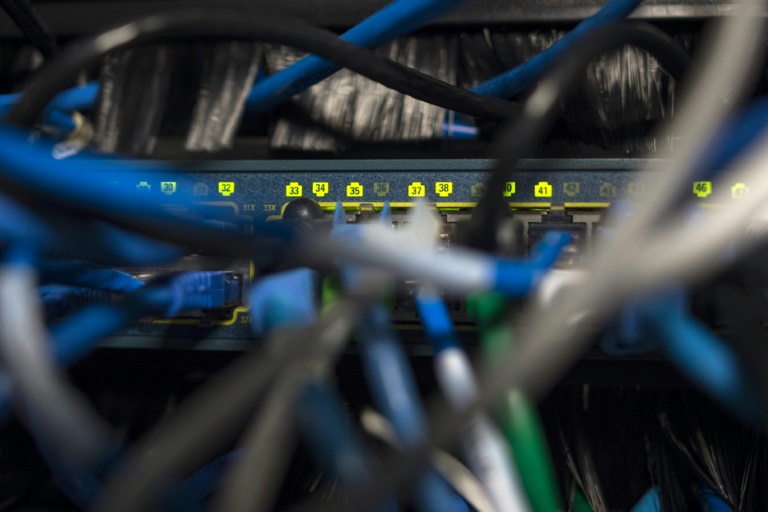
Hackings, network sabotage and other cyber warfare campaigns are being intensely deployed by both sides as Russia’s invasion of Ukraine grinds on, though the covert operations have not proved decisive on the battlefield — at least so far.

Western allies initially feared a tsunami of cyberattacks against Ukraine’s military command and critical infrastructure, hindering its ability to resist the Russian forces pouring across its borders.

As of mid-September, the Cyber Peace Institute, an NGO based in Switzerland, counted nearly 450 attacks — roughly 12 a week — carried out by 57 different entities on either side since the invasion was launched in February.

Yet with European and US help, Kyiv has largely withstood the high-tech onslaught.

“Large-scale cyberattacks have indeed occurred, but it’s generally agreed that they have clearly failed to produce the ‘shock and awe’ effect some predicted,” according to Alexis Rapin, a researcher at the University of Quebec.

Writing for the strategic studies site Le Rubicon, he said the most devastating attacks often take months or even years to plan and execute, “making it very difficult to synchronise them with a conventional military campaign.”

Another factor may be the massive help Ukraine has had from its allies, including software and expertise to protect its systems as well as counterattacks that may be hampering Moscow’s cyber strategy.

“Russia has been under constant cyber assault over the last few months from an international coalition of volunteer, non-governmental hacking organisations, the most prominent being the ‘Anonymous’ movement,” said Arnault Barichella, a researcher at the Jacques Delors Institute in Paris.

While it remains unclear how effective these “spontaneous” attacks have been, “Russia simply underestimated Ukraine’s cyber resilience, in the same way that it underestimated the country’s armed forces,” he wrote in a recent report.

– Hybrid war –

Nonetheless, the war on Europe’s eastern flank offers on-the-ground proof that cyber assaults will be part and parcel of 21st century armed conflicts.

Even before the first Russian tank rolled into Ukraine, hackers in mid-January launched the WhisperGate malware against around 70 Ukrainian government sites, followed by a distributed denial of service (DDoS) campaign that disrupted banks, radio stations and websites.

Moscow was then suspected of being behind the Hermetic Wiper virus that knocked out some 300 IT systems in Ukraine, while hackers targeted the Viasat satellite operator to deactivated thousands of internet modems.

“Most people did not hear about the fact that almost every Russian attack came with a cyberattack before and during operations — cyber usually does not kill people,” said Eviatar Matania of the Israel National Cyber Bureau.

And in most cases, IT networks that come under attack can often be restored in a few days if not hours, limiting their use when hostilities have escalated to open warfare.

More likely, cyber campaigns will be ongoing between rival states, aiming to destabilise and demotivate as opposed to seeking a knockout blow on the battlefield.

“Currently cyber is more important in peacetime than in conventional war — in cyber we are all the time in conflict,” Matania told AFP.

Rapin agrees that cyber warfare is most suited to sabotage, espionage and information wars aimed at sapping morale — the sort of clandestine warfare waged before any shots are fired.

The tactics appear essential, however, when laying the groundwork for conventional military campaigns in which even just a few hours of having a communications or electricity network offline could offer a decisive advantage for ground and air forces. 

“Cyber operations aren’t some magical dust that gets sprinkled on at the end of an operation,” said Colin Clarke, director of research at the Soufan Center security think-tank.

“They are woven into, or closely integrated, with the full suite of US military capabilities and security cooperation activities,” not least pre-battlefield planning, he told AFP.

But the impacts of cyber assaults are often not revealed until months or years after they are deployed.

It took nearly two years before the public learned about the Stuxnet computer virus that allegedly destroyed around 1,000 of Iran’s nuclear centrifuges, used to refine uranium for use in atomic weapons — widely thought to be the result of a US and Israeli campaign.

And if Russian President Vladimir Putin determines that his Ukraine invasion is faltering, the retaliation in the cyber domain could prove more potent than seen up to now.

“You cannot underestimate the danger of a cyber escalation, especially if the Russian military operations on the ground flounder and the Kremlin feels as if its back is against the wall,” Barichella said.
China's offshore yuan hits record low against dollar

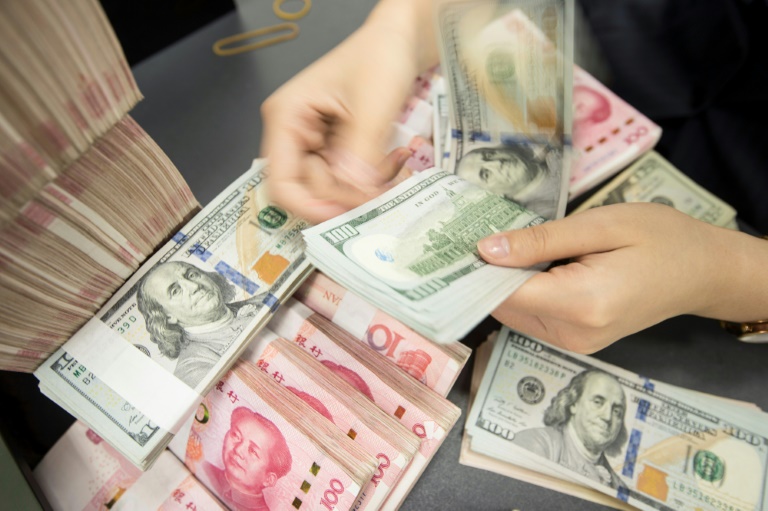
China’s yuan hit a record low against the surging US dollar in offshore trading Wednesday, despite recent efforts by the country’s central bank to shore up the currency.

The offshore yuan — which is circulated outside mainland China and is more freely traded than currency in the domestic market — fell to 7.2386 against the dollar on Wednesday, according to Bloomberg. 

That is its weakest level since clearing banks in Hong Kong were given the go-ahead to open renminbi accounts freely in 2010.

The US Federal Reserve’s increasingly hawkish tone and expectations of further interest rate hikes to fight soaring inflation have seen investors pile into the dollar, sending it to record or multi-decade peaks against other major currencies.

The onshore yuan, which is not freely convertible and limited to a two percent range on either side of a central parity rate set each day, also extended its slump to a 14-year low of 7.2297 per dollar Wednesday.

The depreciation comes despite recent efforts by the Chinese central bank to protect the currency’s value without directly intervening, including a decision to raise the foreign exchange risk reserve ratio.

The move, announced by the People’s Bank of China on Monday, effectively makes it more expensive for financial institutions to sell yuan and buy dollars.

The Chinese economy has been hammered in recent months by Covid-related curbs, extreme weather, and a property market slump.

The sharp slowdown in economic growth had led officials to announce a series of easing measures in recent months to provide support, but putting pressure on the yuan as the US Federal Reserve continues to tighten policy.

But the yuan’s depreciation could mean “the central bank will have to at least pay more attention than in the past” to balancing domestic stimulus and its foreign exchange policies, Tianfeng Securities analysts wrote in a note Tuesday. 

Politics a family affair for Italy's far-right leader Giorgia Meloni

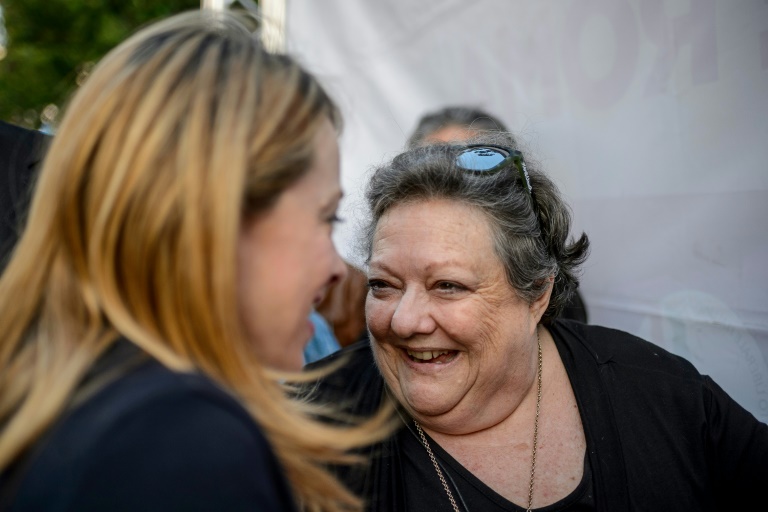
A like-minded sister, a brother-in-law tipped for government and a campaigning mother — politics is a family affair for Italian far-right leader Giorgia Meloni, even if her partner votes left.

The 45-year-old is on course to become the first woman to be Italy’s prime minister after her Brothers of Italy party, which has neo-fascist roots, triumphed in Sunday’s general election.

The self-described “Christian mother” has put defending traditional family values at the heart of her campaign, and her own family is key to both her backstory and her support network.

Meloni is very close with her older sister Arianna, who like her was involved in politics from a young age and who Meloni described as “the most important person in my life” before her daughter Ginevra was born in 2016.

Arianna is also part of the Brothers of Italy family, married to Francesco Lollobrigida, head of the party’s parliamentary group in the lower Chamber of Deputies and tipped for a ministerial post in a Meloni-led government.

Talking to La Stampa daily after the election, Arianna described her sister as “very brave and very determined” and a “perfectionist”.

She rejected suggestions that Meloni — who campaigned on a motto of “God, country and family” — would change Italy’s abortion laws, saying: “She is on the side of women and acquired rights.”

The sisters were brought up in the working-class Rome neighbourhood of Garbatella by their mother, Anna Paratore, who has herself a keen interest in politics.

In an interview with French television in 1996, in which then-teen activist Meloni praised dictator Benito Mussolini, Paratore was presented as a long-time activist for the post-fascist right.

After the elections, her mother — a romantic novelist who has been an enthusiastic supporter of her daughter’s career — dismissed as “nonsense” concern about Meloni’s radical past.

Paratore added that she would be happy to see the end of the citizens’ income, an anti-poverty measure criticised for encouraging unemployment that Meloni has pledged to abolish.

“I rejoice in her success, but I don’t know if I would have wished her all this,” she told Corriere della Sera newspaper, noting the challenges ahead.

– Leftist partner –

Paratore brought up her daughters alone after their father walked out when Meloni was very young, moving to the Spanish Canary Islands.

In her best-selling autobiography published last year, Meloni describes how her mother almost had an abortion when she was pregnant with her, only to change her mind at the last minute.

Meloni also wrote about the absence of her father, saying it left “perhaps a deeper wound than a father who dies… because when he leaves you are forced to deal with his ghost”.

Meloni holds up her own experience of parenthood as part of her appeal, declaring in a 2019 speech that went viral: “I am Giorgia, I am a woman, I am a mother, I am Italian, I am Christian.”

The day after Sunday’s vote, she posted on Instagram a note from six-year-old Ginevra, saying: “Dear mummy, I am so happy that you won. I love you so much!”

Ginevra’s father is television journalist Andrea Giambruno, 41, who Meloni met while giving an interview.

She recounted in her book how he took away the remains of a banana she had been eating during a commercial break before she went back on air.

“Andrea is intelligent and confident in himself. He is very good at his job, and this makes him one of the few men in the world capable of not suffering if they have a successful woman next to them,” she wrote.

Giambruno — who the press note would become Italy’s “First Gentleman” if Meloni becomes premier — also votes for the left, she has admitted in interviews.

The couple are not married but Meloni has little time for those who suggest her marital situation is at odds with her political emphasis on the importance of children having a mother and a father.

“I have heard this nonsense very often,” she wrote in her book.

“If you are not married you cannot defend the natural family based on marriage. A bit like saying you if you are young, you cannot care about the problems of the elderly.”

Politics a family affair for Italy's far-right leader Giorgia Meloni

A like-minded sister, a brother-in-law tipped for government and a campaigning mother — politics is a family affair for Italian far-right leader Giorgia Meloni, even if her partner votes left.

The 45-year-old is on course to become the first woman to be Italy’s prime minister after her Brothers of Italy party, which has neo-fascist roots, triumphed in Sunday’s general election.

The self-described “Christian mother” has put defending traditional family values at the heart of her campaign, and her own family is key to both her backstory and her support network.

Meloni is very close with her older sister Arianna, who like her was involved in politics from a young age and who Meloni described as “the most important person in my life” before her daughter Ginevra was born in 2016.

Arianna is also part of the Brothers of Italy family, married to Francesco Lollobrigida, head of the party’s parliamentary group in the lower Chamber of Deputies and tipped for a ministerial post in a Meloni-led government.

Talking to La Stampa daily after the election, Arianna described her sister as “very brave and very determined” and a “perfectionist”.

She rejected suggestions that Meloni — who campaigned on a motto of “God, country and family” — would change Italy’s abortion laws, saying: “She is on the side of women and acquired rights.”

The sisters were brought up in the working-class Rome neighbourhood of Garbatella by their mother, Anna Paratore, who has herself a keen interest in politics.

In an interview with French television in 1996, in which then-teen activist Meloni praised dictator Benito Mussolini, Paratore was presented as a long-time activist for the post-fascist right.

After the elections, her mother — a romantic novelist who has been an enthusiastic supporter of her daughter’s career — dismissed as “nonsense” concern about Meloni’s radical past.

Paratore added that she would be happy to see the end of the citizens’ income, an anti-poverty measure criticised for encouraging unemployment that Meloni has pledged to abolish.

“I rejoice in her success, but I don’t know if I would have wished her all this,” she told Corriere della Sera newspaper, noting the challenges ahead.

– Leftist partner –

Paratore brought up her daughters alone after their father walked out when Meloni was very young, moving to the Spanish Canary Islands.

In her best-selling autobiography published last year, Meloni describes how her mother almost had an abortion when she was pregnant with her, only to change her mind at the last minute.

Meloni also wrote about the absence of her father, saying it left “perhaps a deeper wound than a father who dies… because when he leaves you are forced to deal with his ghost”.

Meloni holds up her own experience of parenthood as part of her appeal, declaring in a 2019 speech that went viral: “I am Giorgia, I am a woman, I am a mother, I am Italian, I am Christian.”

The day after Sunday’s vote, she posted on Instagram a note from six-year-old Ginevra, saying: “Dear mummy, I am so happy that you won. I love you so much!”

Ginevra’s father is television journalist Andrea Giambruno, 41, who Meloni met while giving an interview.

She recounted in her book how he took away the remains of a banana she had been eating during a commercial break before she went back on air.

“Andrea is intelligent and confident in himself. He is very good at his job, and this makes him one of the few men in the world capable of not suffering if they have a successful woman next to them,” she wrote.

Giambruno — who the press note would become Italy’s “First Gentleman” if Meloni becomes premier — also votes for the left, she has admitted in interviews.

The couple are not married but Meloni has little time for those who suggest her marital situation is at odds with her political emphasis on the importance of children having a mother and a father.

“I have heard this nonsense very often,” she wrote in her book.

“If you are not married you cannot defend the natural family based on marriage. A bit like saying you if you are young, you cannot care about the problems of the elderly.”

Cyprus drivers fill up in breakaway north as prices soar

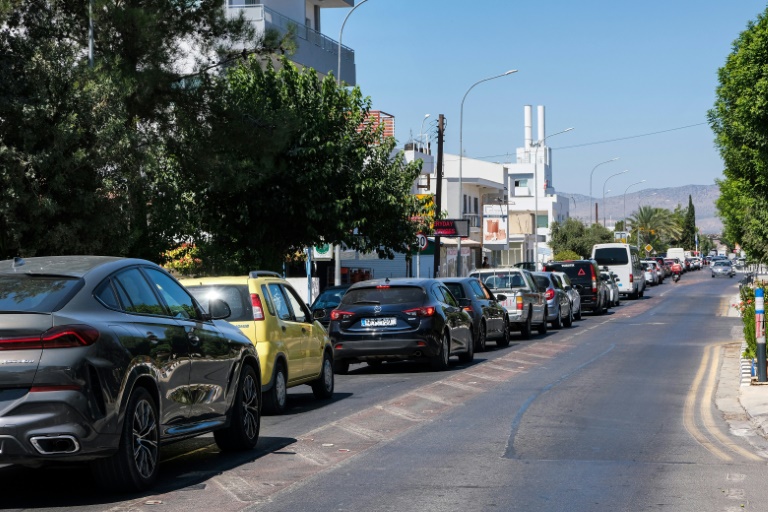
The queue of Greek Cypriot motorists waiting to cross a checkpoint into breakaway northern Cyprus is much longer than it used to be — a plummeting Turkish lira means cheaper petrol prices there.

For many Greek Cypriots, buying goods in the north of the divided Mediterranean island is tantamount to treason.

Turkish troops invaded in 1974 after a Greek-engineered coup seeking to unite the island with Greece, and tens of thousands of soldiers from mainland Turkey are still posted in its northern third.

The self-proclaimed Turkish Republic of Northern Cyprus was unilaterally declared in 1983 and is recognised by Turkey alone.

But now more and more people are giving in to temptation and driving north to buy cheaper fuel from the Turkish Cypriots.

“My salary is only 700 euros ($680)” monthly, said Fanourios Michail, a 60-year-old carpenter waiting at a Nicosia crossing. “I save about 200 euros a month by refuelling in the north.”

The internationally recognised Republic of Cyprus — the European Union’s easternmost member — uses the euro.

But the Turkish Cypriots use the lira, which has sunk to historic lows this year. And the north also has much lower taxes on fuel.

– Checkpoint congestion –

According to police figures collated between January and August this year and compared with 2021, the number of cars going north through one of the island’s vehicle crossings has more than tripled from 197,230 to 601,749.

Normally, moving between the two sides should not take more than a few minutes.

Drivers present their passport or ID card to police on the Greek Cypriot side, and then drive a few dozen metres (yards) to do the same with Turkish Cypriot police, who also verify that the car has valid insurance for the north.

But for the past several months, congestion at the checkpoints means it is now more common to have to wait half an hour to cross the narrow UN-controlled buffer zone.

“Half of my customers are now Greek Cypriots, representing half of my turnover,” said Turkish Cypriot Mehmet Tel, who runs a petrol station about 500 metres from one of Nicosia’s crossing points.

A litre of fuel in the north is about 25 percent cheaper than in the south.

“With four kids and a relatively low salary, I just can’t make ends meet otherwise,” admitted a 45-year-old Greek Cypriot woman who asked not to be identified.

– Lost tax revenues –

Christodoulos Christodoulou, spokesman for the association of petrol station owners in the south, estimated their annual losses at seven million euros.

The rush for cheaper fuel in the north also costs the republic 80 million euros in lost tax revenues every year, he said.

“We want this illegal activity stopped.” 

He accused the government of failing to enforce regulations put in place in 2004 when Cyprus joined the EU to regulate the transfer of goods across the Green Line separating the two sides of the island.

This is not a government-recognised border, but Christodoulou said that the 2004 EU regulations ban the transfer of fuel from the Turkish-held north into the south.

Regular checks at crossing points are carried out “to reduce the illegal movement of fuel, protect tax revenues and curb the impact on legitimate fuel suppliers”, government spokesman Marios Pelekanos told AFP.

Cyprus government regulations cap the value of goods transferred by individuals at 260 euros a day, and some products, such as tobacco and alcohol, face strict limitations.

Christodoulou told reporters that his association has not ruled out contacting Frontex, the EU agency that regulates borders, despite the government not recognising the Green Line as such.

Cyprus drivers fill up in breakaway north as prices soar

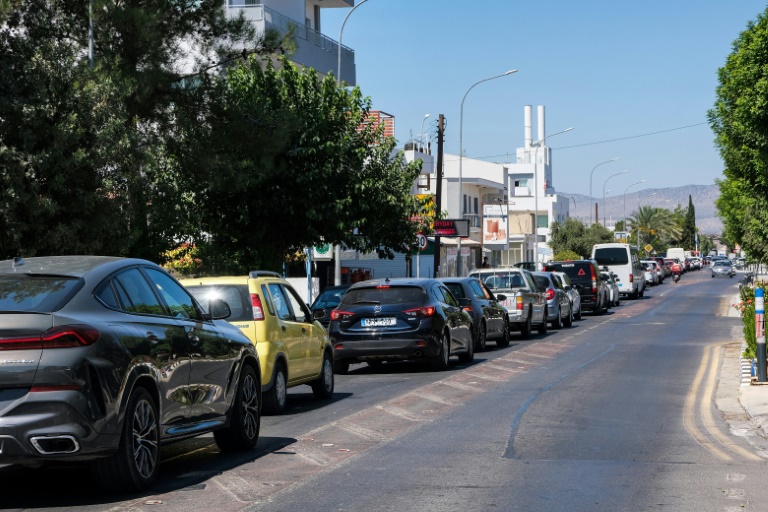
The queue of Greek Cypriot motorists waiting to cross a checkpoint into breakaway northern Cyprus is much longer than it used to be — a plummeting Turkish lira means cheaper petrol prices there.

For many Greek Cypriots, buying goods in the north of the divided Mediterranean island is tantamount to treason.

Turkish troops invaded in 1974 after a Greek-engineered coup seeking to unite the island with Greece, and tens of thousands of soldiers from mainland Turkey are still posted in its northern third.

The self-proclaimed Turkish Republic of Northern Cyprus was unilaterally declared in 1983 and is recognised by Turkey alone.

But now more and more people are giving in to temptation and driving north to buy cheaper fuel from the Turkish Cypriots.

“My salary is only 700 euros ($680)” monthly, said Fanourios Michail, a 60-year-old carpenter waiting at a Nicosia crossing. “I save about 200 euros a month by refuelling in the north.”

The internationally recognised Republic of Cyprus — the European Union’s easternmost member — uses the euro.

But the Turkish Cypriots use the lira, which has sunk to historic lows this year. And the north also has much lower taxes on fuel.

– Checkpoint congestion –

According to police figures collated between January and August this year and compared with 2021, the number of cars going north through one of the island’s vehicle crossings has more than tripled from 197,230 to 601,749.

Normally, moving between the two sides should not take more than a few minutes.

Drivers present their passport or ID card to police on the Greek Cypriot side, and then drive a few dozen metres (yards) to do the same with Turkish Cypriot police, who also verify that the car has valid insurance for the north.

But for the past several months, congestion at the checkpoints means it is now more common to have to wait half an hour to cross the narrow UN-controlled buffer zone.

“Half of my customers are now Greek Cypriots, representing half of my turnover,” said Turkish Cypriot Mehmet Tel, who runs a petrol station about 500 metres from one of Nicosia’s crossing points.

A litre of fuel in the north is about 25 percent cheaper than in the south.

“With four kids and a relatively low salary, I just can’t make ends meet otherwise,” admitted a 45-year-old Greek Cypriot woman who asked not to be identified.

– Lost tax revenues –

Christodoulos Christodoulou, spokesman for the association of petrol station owners in the south, estimated their annual losses at seven million euros.

The rush for cheaper fuel in the north also costs the republic 80 million euros in lost tax revenues every year, he said.

“We want this illegal activity stopped.” 

He accused the government of failing to enforce regulations put in place in 2004 when Cyprus joined the EU to regulate the transfer of goods across the Green Line separating the two sides of the island.

This is not a government-recognised border, but Christodoulou said that the 2004 EU regulations ban the transfer of fuel from the Turkish-held north into the south.

Regular checks at crossing points are carried out “to reduce the illegal movement of fuel, protect tax revenues and curb the impact on legitimate fuel suppliers”, government spokesman Marios Pelekanos told AFP.

Cyprus government regulations cap the value of goods transferred by individuals at 260 euros a day, and some products, such as tobacco and alcohol, face strict limitations.

Christodoulou told reporters that his association has not ruled out contacting Frontex, the EU agency that regulates borders, despite the government not recognising the Green Line as such.

Climate change at 'point of no return': primatologist Goodall

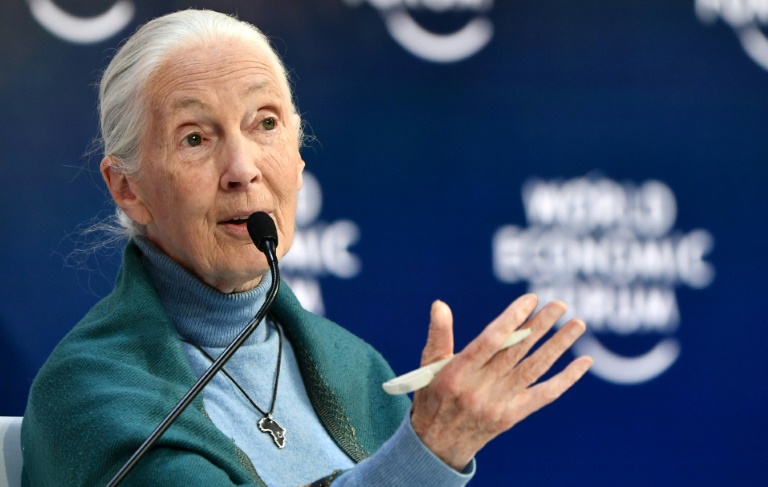
Earth’s climate is changing so quickly that humanity is running out of chances to fix it, primatologist Jane Goodall has warned in an interview.

Goodall, a grandee of environmentalism whose activism has spanned decades, said time was rapidly shortening to halt the worst effects of human-caused global warming.

“We are literally approaching a point of no return,” Goodall told AFP in Los Angeles.

“Look around the world at what’s happening with climate change. It’s terrifying.

“We are part of the natural world and we depend on healthy ecosystems.”

Goodall is best known for her pioneering six-decade study of chimpanzees in Tanzania, which found “human-like” behavior among the animals, including a propensity to wage war, as well as an ability to display emotions.

Now 88 years old, the Briton is a prolific writer and the subject of a number of films. She has also been immortalized as both a Lego figure and a Barbie doll.

Goodall said her own environmental awakening came in the 1980s while working in Mongolia, where she realized that hillsides had been denuded of tree cover.

“The reason the people were cutting down the trees was to make more land, to grow food as their families grew, and also to make money from charcoal or timber,” she said. 

“So if we don’t help these people find ways of making a living without destroying their environment, we can’t save chimpanzees, forests, or anything else.”

Goodall says she has seen some changes for the better over recent decades, but urged quicker action.

“We know what we should be doing. I mean, we have the tools. But we come up against the short-term thinking of economic gain versus long-term protection of the environment for the future,” she said. 

“I don’t pretend to be able to solve the problems that this creates because there are major problems. And yet, if we look at the alternative, which is continuing to destroy the environment, we’re doomed.”

Goodall was speaking Sunday on the sidelines of a celebration of her $1.3 million Templeton Prize.

The prize is an annual award for an individual whose work harnesses science to explore the questions facing humanity.

The cash went to the Jane Goodall Institute, a global wildlife and environment conservation organization, which runs youth programs in 66 countries.

“The program’s main message is that every single one of us makes an impact on the planet every day, and we get to choose what sort of impact we make,” Goodall said.

“It’s actually my greatest reason for hope.”

Climate change at 'point of no return': primatologist Goodall

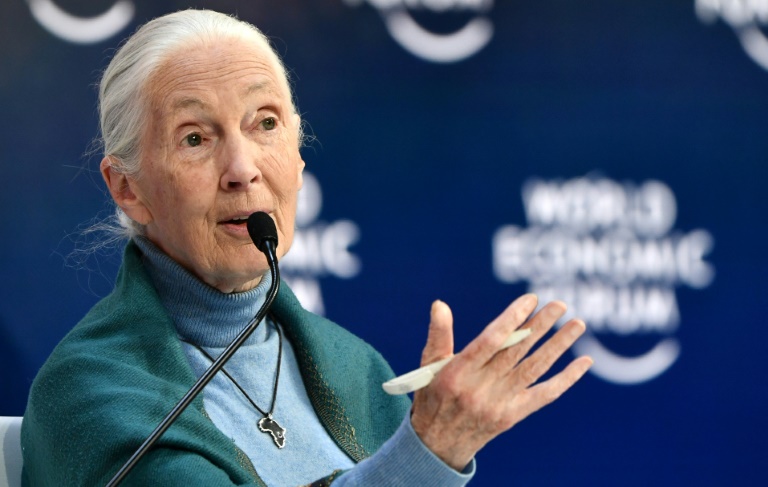
Earth’s climate is changing so quickly that humanity is running out of chances to fix it, primatologist Jane Goodall has warned in an interview.

Goodall, a grandee of environmentalism whose activism has spanned decades, said time was rapidly shortening to halt the worst effects of human-caused global warming.

“We are literally approaching a point of no return,” Goodall told AFP in Los Angeles.

“Look around the world at what’s happening with climate change. It’s terrifying.

“We are part of the natural world and we depend on healthy ecosystems.”

Goodall is best known for her pioneering six-decade study of chimpanzees in Tanzania, which found “human-like” behavior among the animals, including a propensity to wage war, as well as an ability to display emotions.

Now 88 years old, the Briton is a prolific writer and the subject of a number of films. She has also been immortalized as both a Lego figure and a Barbie doll.

Goodall said her own environmental awakening came in the 1980s while working in Mongolia, where she realized that hillsides had been denuded of tree cover.

“The reason the people were cutting down the trees was to make more land, to grow food as their families grew, and also to make money from charcoal or timber,” she said. 

“So if we don’t help these people find ways of making a living without destroying their environment, we can’t save chimpanzees, forests, or anything else.”

Goodall says she has seen some changes for the better over recent decades, but urged quicker action.

“We know what we should be doing. I mean, we have the tools. But we come up against the short-term thinking of economic gain versus long-term protection of the environment for the future,” she said. 

“I don’t pretend to be able to solve the problems that this creates because there are major problems. And yet, if we look at the alternative, which is continuing to destroy the environment, we’re doomed.”

Goodall was speaking Sunday on the sidelines of a celebration of her $1.3 million Templeton Prize.

The prize is an annual award for an individual whose work harnesses science to explore the questions facing humanity.

The cash went to the Jane Goodall Institute, a global wildlife and environment conservation organization, which runs youth programs in 66 countries.

“The program’s main message is that every single one of us makes an impact on the planet every day, and we get to choose what sort of impact we make,” Goodall said.

“It’s actually my greatest reason for hope.”

Hurricane Ian leaves Cuba without power, takes aim at Florida

Powerful Hurricane Ian left a trail of destruction and caused a widespread blackout in Cuba on Tuesday, while Florida residents braced for a direct hit from the “extremely dangerous” storm that is already pummeling the US state with high winds.

Ian hit Cuba’s western regions for more than five hours early Tuesday morning, before moving out over the warm waters of the Gulf of Mexico, the Insmet meteorological institute said.

The storm damaged Cuba’s power network and plunged the island into darkness, leaving it “without electrical service,” state electricity company Union Electrica said on Twitter.

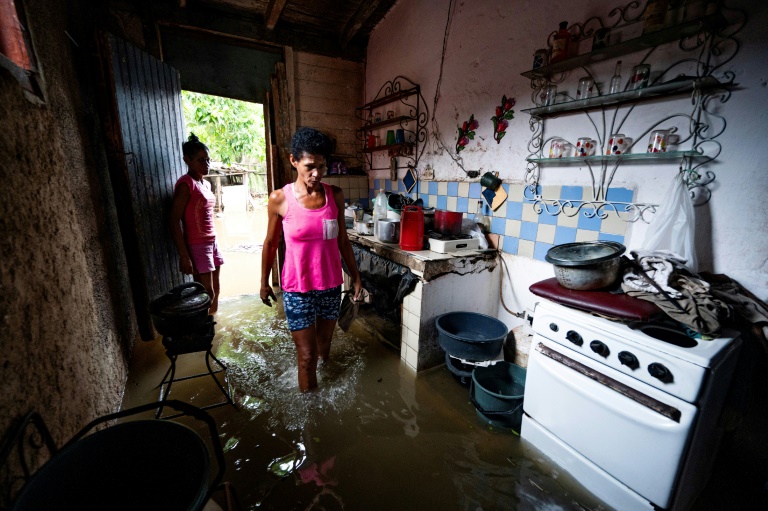
Only the few people with gasoline-powered generators had access to electricity on the island of more than 11 million people. Others had to make do with flashlights or candles at home, and lit their way with cell phones as they walked the streets.

In the western city of Pinar del Rio, AFP footage showed downed power lines, flooded streets and a scattering of damaged rooftops.

“Desolation and destruction. These are terrifying hours. Nothing is left here,” a 70-year-old resident of the city was quoted as saying in a social media post by his journalist son, Lazaro Manuel Alonso.

About 40,000 people were evacuated across Pinar del Rio province, which bore the brunt of the storm, local authorities said.

The US National Hurricane Center (NHC) said it expects Ian to gain strength before hitting the west coast of Florida on Wednesday as an “extremely dangerous” major hurricane.

Calls to heed evacuation warnings were echoed from local Florida officials on up to US President Joe Biden, who said Ian “could be a very severe hurricane, life-threatening and devastating in its impact.”

In its latest bulletin, the NHC said to be prepared for “life-threatening storm surge, catastrophic winds and flooding” in the Florida peninsula.

Tropical-storm-force winds are already battering the Florida Keys, the chain of islands off the southern tip of the state’s mainland, the NHC said.

– ‘Apocalyptic’ –

In Cuba, authorities are just beginning to assess the damage, but residents described “destruction” and posted images on social media of flooded streets and felled trees.

At the time of impact, the NHC reported Ian’s maximum wind speeds at 125 miles (205 kilometers) per hour, making it a Category 3 storm on the Saffir-Simpson scale. Wind speeds have since dropped slightly to 120 miles per hour.

No deaths or injuries have yet been reported.

In Consolacion del Sur, southwest of Havana, Caridad Fernandez, 65, said her roof was seriously damaged and water came through her front door.

“Everything we have is damaged,” she said. “But we’ll get through this, we’ll just keep moving forwards.”

In San Juan y Martinez, a growing hub for Cuba’s vital cigar industry, “it was apocalyptic, a real disaster,” Hirochi Robaina, from the Robaina tobacco plantation, said on Facebook.

– ‘Life and death’ –

In Florida, Governor Ron DeSantis said 2.5 million people were under evacuation orders as officials scrambled to prepare for the storm’s landfall.

DeSantis warned that although Ian’s exact path was still uncertain “the impacts will be far far broader.”

“When you have five to ten feet (1.5 to 3 meters) of storm surge that is not something that you want to be a part of. Mother Nature is a very fearsome adversary,” DeSantis said.

White House Press Secretary Karine Jean-Pierre said Biden spoke with DeSantis — a potential 2024 election challenger — on Tuesday evening to discuss preparations for the storm.

The NHC warned that “widespread catastrophic flash, urban, and river flooding is expected across central and west Florida beginning midweek.”

Thirty-year-old Chelsea Thompson, who was helping her parents board up their home in a mandatory evacuation zone southwest of Tampa, said that “the closer it gets, obviously with the unknown, your anxiety gets a little higher.” 

The Pentagon said 3,200 national guardsmen had been called up in Florida, with an additional 1,800 coming later.

Authorities in several municipalities, including Miami, Fort Lauderdale and Tampa, were distributing free sandbags to help residents protect their homes from flooding.

And Tampa International Airport suspended operations from Tuesday at 5:00 pm (2100 GMT).

Biden has preemptively approved emergency aid in Florida through the Federal Emergency Management Agency (FEMA), while even NASA on the state’s east coast took precautions, rolling back its massive Moon rocket into a storage hanger for protection.

Like DeSantis, FEMA administrator Deanne Criswell highlighted the danger of storm surge, saying it was the agency’s “biggest concern.”

“If people are told to evacuate by their local officials, please listen to them. The decision you choose to make may be the difference between life and death,” she said.

The Caribbean and parts of eastern Canada are still counting the cost of powerful storm Fiona, which tore through last week, claiming several lives.

Half a million residents in the US territory of Puerto Rico were still without power, according to a tracking website.

Close Bitnami banner
Bitnami