World

Typhoon Noru makes landfall in Vietnam

Typhoon Noru barrelled into Vietnam’s central coast early Wednesday, the national forecaster said, bringing powerful winds and heavy rain as hundreds of thousands of people took refuge in shelters.

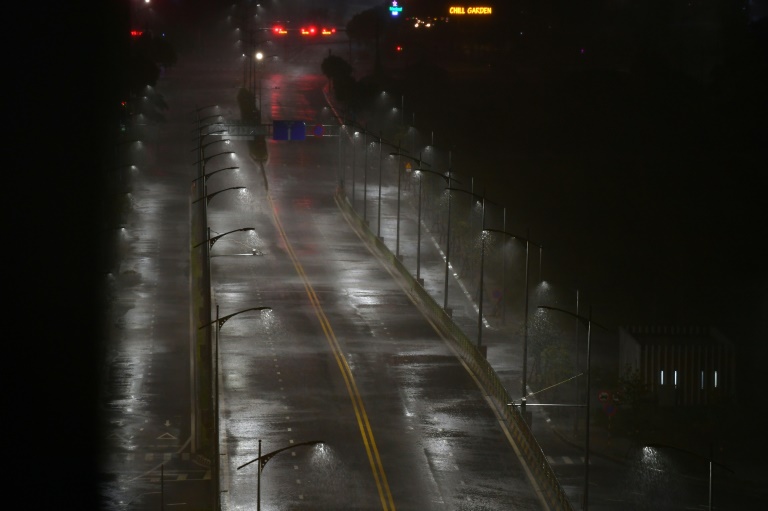
In Danang, Vietnam’s third largest city, high rise buildings shook in the strong gusts that toppled trees and tore roofs from homes across the central region. Large scale power outages were reported.

“The position of the typhoon’s centre at 4:00 am (2100 GMT Tuesday) on September 28 is between Danang and Quang Nam,” the National Centre for Hydrometeorological Forecasting said, adding wind speeds were between 103 and 117 kilometers (64-72 miles) per hour.

More than 200,000 people in Vietnam had taken refuge in shelters overnight, after forecasters predicted the storm would be one of the biggest to hit the Southeast Asian nation.

Wind speeds were slower than initially feared, but forecasters said heavy rain would continue into the day and warned of landslides and serious flooding.

The defence ministry has mobilised around 40,000 soldiers and 200,000 militia members, equipped with armoured vehicles and boats in preparation for rescue and relief operations, state media said. 

Almost half of Vietnam’s airports have been shut, schools and offices across several central provinces — including in Danang — were closed and residents rushed to secure their homes Tuesday. 

The central section of highway linking Hanoi in the north with commercial hub Ho Chi Minh City in the south has also been closed.

That came after Super Typhoon Noru slammed into the Philippines earlier this week, killing six people.

Authorities said late Tuesday they had evacuated nearly 260,000 people from their homes, including in the popular tourist city of Hoi An, where residents were brought to a primary school. 

“I wanted to leave. My house is not very strong. I am afraid its roof might be blown away when the typhoon hits,” Huynh Mua told AFP, clutching a plastic bag full of clothes, a blanket and several packets of instant noodles.

Three hundred houses in the coastal province of Quang Tri had their roofs blown off late Tuesday as winds began picking up speed. In nearby Hue, trees were blown to the ground. In Danang all shops and hotels were closed, while residents were banned from going out on the streets. 

Noru hit the Philippines’ Luzon island on Sunday and Monday, toppling trees, knocking out power and flooding low-lying communities. 

Five rescuers were killed after being sent to help flooded residents, while another man died after he was hit by a landslide. Officials estimate about $2.4 million worth of crops were damaged.
Typhoon Noru makes landfall in Vietnam

Typhoon Noru barrelled into Vietnam’s central coast early Wednesday, the national forecaster said, bringing powerful winds and heavy rain as hundreds of thousands of people took refuge in shelters.

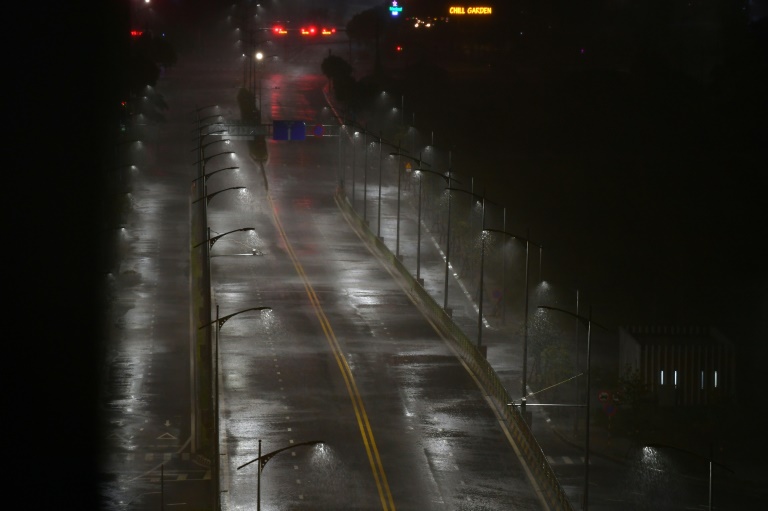
In Danang, Vietnam’s third largest city, high rise buildings shook in the strong gusts that toppled trees and tore roofs from homes across the central region. Large scale power outages were reported.

“The position of the typhoon’s centre at 4:00 am (2100 GMT Tuesday) on September 28 is between Danang and Quang Nam,” the National Centre for Hydrometeorological Forecasting said, adding wind speeds were between 103 and 117 kilometers (64-72 miles) per hour.

More than 200,000 people in Vietnam had taken refuge in shelters overnight, after forecasters predicted the storm would be one of the biggest to hit the Southeast Asian nation.

Wind speeds were slower than initially feared, but forecasters said heavy rain would continue into the day and warned of landslides and serious flooding.

The defence ministry has mobilised around 40,000 soldiers and 200,000 militia members, equipped with armoured vehicles and boats in preparation for rescue and relief operations, state media said. 

Almost half of Vietnam’s airports have been shut, schools and offices across several central provinces — including in Danang — were closed and residents rushed to secure their homes Tuesday. 

The central section of highway linking Hanoi in the north with commercial hub Ho Chi Minh City in the south has also been closed.

That came after Super Typhoon Noru slammed into the Philippines earlier this week, killing six people.

Authorities said late Tuesday they had evacuated nearly 260,000 people from their homes, including in the popular tourist city of Hoi An, where residents were brought to a primary school. 

“I wanted to leave. My house is not very strong. I am afraid its roof might be blown away when the typhoon hits,” Huynh Mua told AFP, clutching a plastic bag full of clothes, a blanket and several packets of instant noodles.

Three hundred houses in the coastal province of Quang Tri had their roofs blown off late Tuesday as winds began picking up speed. In nearby Hue, trees were blown to the ground. In Danang all shops and hotels were closed, while residents were banned from going out on the streets. 

Noru hit the Philippines’ Luzon island on Sunday and Monday, toppling trees, knocking out power and flooding low-lying communities. 

Five rescuers were killed after being sent to help flooded residents, while another man died after he was hit by a landslide. Officials estimate about $2.4 million worth of crops were damaged.
UN says committed to Ukraine 'integrity' within 'recognized' borders

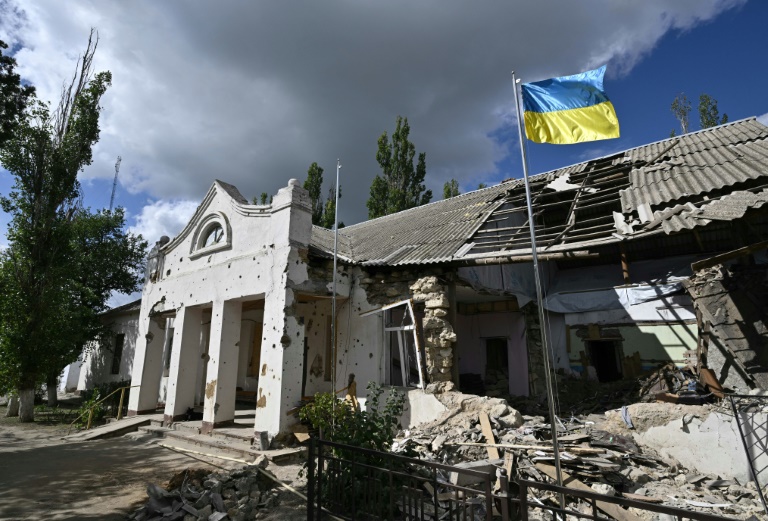
The UN reaffirmed its commitment to Ukraine’s “territorial integrity” on Tuesday, as pro-Moscow authorities in several parts of the war-torn nation claimed victory in annexation votes condemned internationally as a sham.

“The United Nations remains fully committed to the sovereignty, unity, independence and territorial integrity of Ukraine, within its internationally recognized borders,” Under-Secretary-General for Political and Peacebuilding Affairs Rosemary DiCarlo told a meeting of the UN Security Council.  

Addressing the meeting by video link, Ukrainian President Volodymyr Zelensky once more denounced the ballots hastily organized in Russian-occupied regions — Donetsk and Lugansk in the east and Kherson and Zaporizhzhia in the south.

“There’s a very cynical attempt to force the male population in occupied territory of Ukraine to mobilize into the Russian army, in order to send them to fight against their own homelands,” he charged.

Taking aim at Russian leader Vladmir Putin, Zelensky warned that “annexation is the kind of move that puts him alone against the whole of humanity.”

“A clear signal is now needed from every country in the world,” he said.

In spite of Zelensky’s appeals, there is no chance of the Security Council — where Russia holds a veto — reaching a united stance on the annexation move.

Nevertheless, the United States intends to submit a resolution condemning the “sham referenda,” urging member states “not to recognize any altered status of Ukraine and obligating Russia to withdraw its troops from Ukraine,” said the US ambassador to the United Nations, Linda Thomas-Greenfield.

China’s statements and vote on the resolution will be monitored closely for signals of any changes in its stance towards Russia, which it has yet to condemn over its invasion of Ukraine.

“Our position and proposition on how to view and handle the Ukraine issue is consistent and clear,” said Chinese Ambassador to the UN Zhang Jun on Tuesday.

“That is, the sovereignty and territorial integrity of all countries should be respected.”

In February, just after Moscow’s forces invaded, China chose to abstain on a resolution deploring the action, which was nonetheless vetoed by Russia.

Vassily Nebenzia, Russia’s UN ambassador, made clear that Russia would wield its veto again, criticizing the move as “temper tantrums of the Western delegations.”

“The referendums were conducted exclusively transparently, with upholding of all the electoral norms,” Nebenzia argued, adding that the West’s only aim was to “weaken and bleed dry Russia as much as possible.”

Stocks mostly fall on European gas woes, inflation worries

Global equities mostly fell Tuesday as concerns over European gas supplies and the Ukraine conflict again came to the fore, adding to worries over central bank efforts to counter inflation.

Paris, Frankfurt and London all closed in the red, failing to hang on to earlier gains. Wall Street stocks began strongly, but later came under pressure as investors bet on more aggressive Federal Reserve moves to counter inflation. 

“There’s little doubt instability is here to stay, and nerves are frayed as central bankers pull out all the stops to battle with inflation,” Danni Hewson, analyst at AJ Bell said.

“And there’s plenty of tension too over Russian moves to try to annex parts of Ukraine as well as worries about gas supplies after it emerged the pipeline that carries gas from Russia to Europe has suffered some kind of damage.”

European natural gas prices surged nearly 10 percent at one point, to 190.50 euros, following news that the two Nord Stream gas pipelines linking Russia and Europe have been hit by unexplained leaks.

EU chief Ursula Von der Leyen said the leaks were due to “sabotage,” threatening the “strongest possible response” to any deliberate disruption of European energy infrastructure.

The pipelines have been at the center of geopolitical tensions in recent months as Russia cut gas supplies to Europe in suspected retaliation against Western sanctions following its invasion of Ukraine.

“This damage is the clearest signal so far that Europe will have to survive the winter without significant Russian gas flows,” analysts at Charles Schwab said in a note to clients.

– Strong dollar – 

Recession prospects have risen in recent weeks as central banks keep hiking interest rates to try and cool decades-high inflation, boosting in particular the dollar.

Expectations for more Federal Reserve interest rate hikes dampened enthusiasm on Wall Street, where stocks opened solidly higher following several losing sessions in a dynamic initially attributed to an “oversold” market. 

But markets later reversed course following better-than-expected data, including a jump in consumer confidence in September. 

While the Nasdaq finished higher, both the Dow and S&P 500 declined.

The good economic data “further emboldens the Fed,” said Art Hogan, analyst of B. Riley Wealth Management, noting that the pullback in stocks followed a jump in the yield on the 10-year US Treasury note.

The aggressiveness of the Fed has also boosted the dollar against other currencies, although the greenback retreated Tuesday against the pound after hitting an all-time high on Monday.

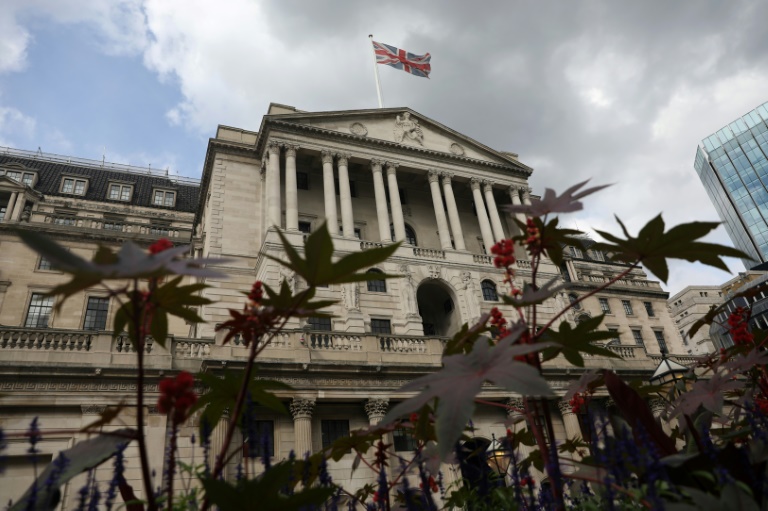
The small recovery in the pound came after the Bank of England said it would “not hesitate to change interest rates by as much as needed.”

During a visit to North Carolina, US Treasury Secretary Janet Yellen told reporters that the Fed is “moving faster than many other countries” in explaining the dollar’s surge.

“These kinds of developments, which represent a tightening of financial conditions are part of what’s involved in addressing inflation but I’m not seeing at this stage — and we are monitoring carefully — disorderly financial market developments,” Yellen said.

– Key figures at around 2050 GMT –

New York – Dow: DOWN 0.4 percent at 29,134.99 (close)

New York – S&P 500 DOWN 0.2 percent at 3,647.29 (close)

New York – Nasdaq: UP 0.3 percent at 10,829.50 (close)

London – FTSE 100: DOWN 0.5 percent at 6,984.59 (close)

Frankfurt – DAX: DOWN 0.7 percent at 12,139.68 (close) 

Paris – CAC 40: DOWN 0.3 percent at 5,753.82 (close)  

EURO STOXX 50: DOWN 0.4 percent at 3,328.65 (close)

Tokyo – Nikkei 225: UP 0.5 percent at 26,571.87 (close)

Hong Kong – Hang Seng Index: FLAT at 17,860.31 (close)

Shanghai – Composite: UP 1.4 percent at 3,093.86 (close)

Pound/dollar: UP at $1.0730 from $1.0689 on Monday

Euro/dollar: DOWN at $0.9595 from $0.9609

Euro/pound: DOWN  at 89.39 pence from 89.90 pence 

Dollar/yen: UP at 144.81 yen from 144.75 yen

Brent North Sea crude: UP 2.6 percent at $86.27 per barrel

West Texas Intermediate: UP 2.3 percent at $78.50 per barrel

Biden laying foundation for green energy investments: Yellen

US President Joe Biden’s push for green energy tax credits will help boost a massive ramp up in private investment that will create jobs and lower energy costs for American families, Treasury Secretary Janet Yellen said Tuesday.

Yellen called the administration’s plan “the most aggressive action that we’ve ever taken to address the climate crisis.”

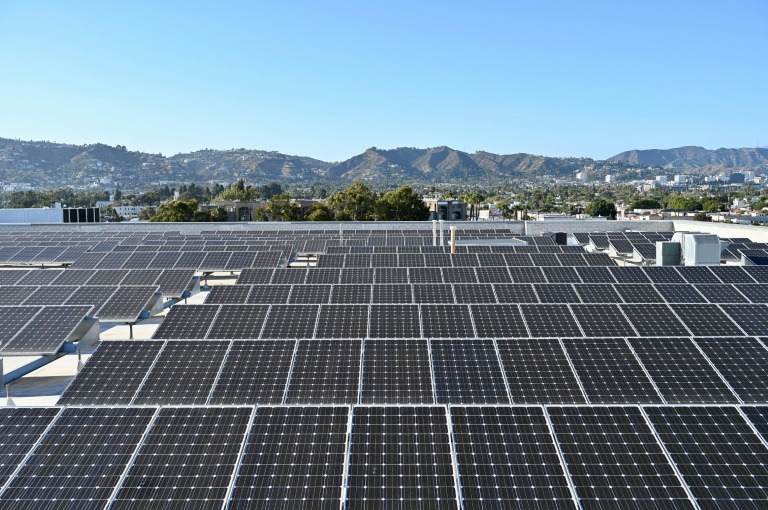
She traveled to North Carolina to tour a solar plant and tout policies included in the recently approved Inflation Reduction Act, which together with the Infrastructure Law includes more than $430 billion in energy investments.

The legislation provides tax credits to households to make their homes more energy efficient or switch to cleaner sources, which will help lower costs, Yellen said.

But the administration’s approach also “rests on harnessing the engagement of the private sector,” the official said in her speech, delivered in front of an array of solar panels. 

“Beyond the consumer tax credits, we expect a significant mobilization of private investment into the clean energy sector,” she said. “These investments will accelerate the transition to our green energy future and lower energy costs for American households and businesses.”

– Economic stability –

In addition, “They will secure our energy supply against global price shocks. And they will provide good-paying, high-quality jobs across America.” 

Yellen said the transition is critical to address climate change which has seen more costly storms arise across the globe. 

“Climate change poses a grave risk to the productive capacity of our economy while also impacting its stability,” she said. 

But the transition to a clean energy economy also brings lower costs and “significant economic opportunities in high-growth industries, while building economic resilience and creating good-paying jobs across the country.”

She said these new programs also will serve the “important goal” of boosting domestic capacity to produce solar panels, batteries for electric vehicles and even the minerals needed to make the batteries.

“I think the legislation will be effective. And we’re already hearing announcements about new activities starting up in the United States,” Yellen told reporters.

Global supply chain snarls have hit manufacturers which rely on imported components and have struggled to meet demand for goods and cars in the United States. Ford said recently it will have to store more than 40,000 partially built vehicles which are awaiting parts.

“We’re seeing a lot of supply chain issues that continue that’s limiting the production of electric vehicles and other cars,” Yellen said, adding that “I think that will resolve over time, and EVs will become quite affordable especially with the support from the Inflation Reduction Act.”

Biden laying foundation for green energy investments: Yellen

US President Joe Biden’s push for green energy tax credits will help boost a massive ramp up in private investment that will create jobs and lower energy costs for American families, Treasury Secretary Janet Yellen said Tuesday.

Yellen called the administration’s plan “the most aggressive action that we’ve ever taken to address the climate crisis.”

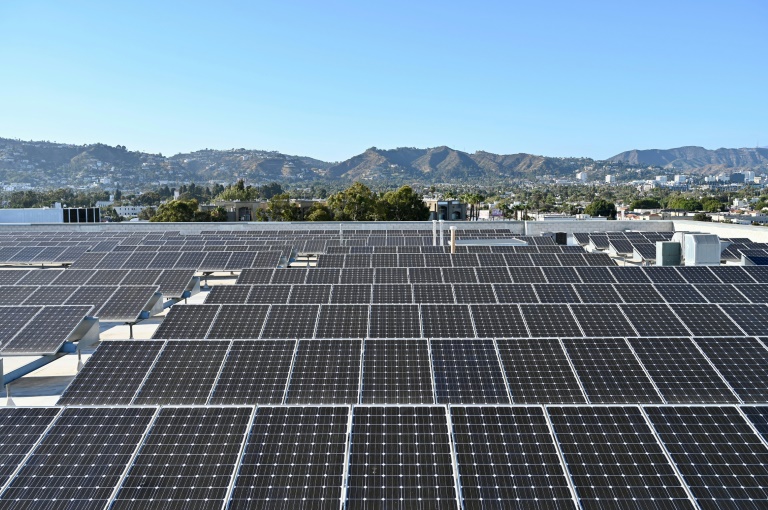
She traveled to North Carolina to tour a solar plant and tout policies included in the recently approved Inflation Reduction Act, which together with the Infrastructure Law includes more than $430 billion in energy investments.

The legislation provides tax credits to households to make their homes more energy efficient or switch to cleaner sources, which will help lower costs, Yellen said.

But the administration’s approach also “rests on harnessing the engagement of the private sector,” the official said in her speech, delivered in front of an array of solar panels. 

“Beyond the consumer tax credits, we expect a significant mobilization of private investment into the clean energy sector,” she said. “These investments will accelerate the transition to our green energy future and lower energy costs for American households and businesses.”

– Economic stability –

In addition, “They will secure our energy supply against global price shocks. And they will provide good-paying, high-quality jobs across America.” 

Yellen said the transition is critical to address climate change which has seen more costly storms arise across the globe. 

“Climate change poses a grave risk to the productive capacity of our economy while also impacting its stability,” she said. 

But the transition to a clean energy economy also brings lower costs and “significant economic opportunities in high-growth industries, while building economic resilience and creating good-paying jobs across the country.”

She said these new programs also will serve the “important goal” of boosting domestic capacity to produce solar panels, batteries for electric vehicles and even the minerals needed to make the batteries.

“I think the legislation will be effective. And we’re already hearing announcements about new activities starting up in the United States,” Yellen told reporters.

Global supply chain snarls have hit manufacturers which rely on imported components and have struggled to meet demand for goods and cars in the United States. Ford said recently it will have to store more than 40,000 partially built vehicles which are awaiting parts.

“We’re seeing a lot of supply chain issues that continue that’s limiting the production of electric vehicles and other cars,” Yellen said, adding that “I think that will resolve over time, and EVs will become quite affordable especially with the support from the Inflation Reduction Act.”

NASA says Artemis launch before November will be 'difficult'

It will be “difficult” for NASA to make a new attempt to launch its massive Moon rocket in October, an official from the US space agency said Tuesday, with a lift-off in November looking more likely. 

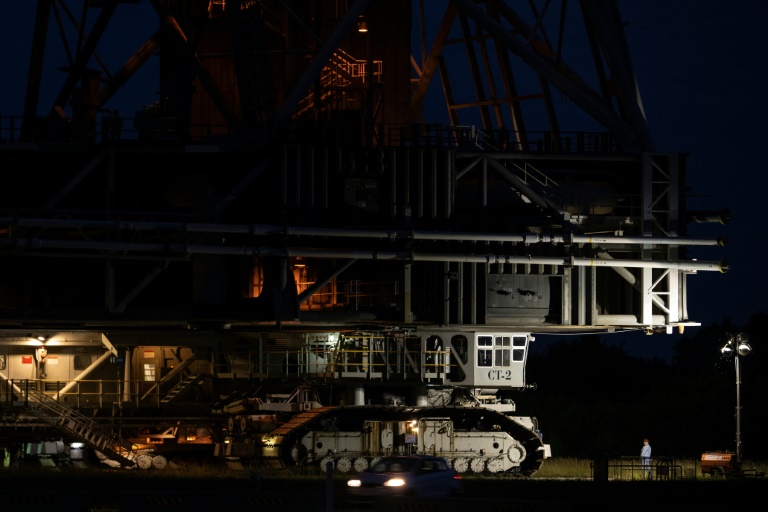
The SLS rocket, the most powerful ever designed by NASA, had to be returned overnight to its storage hangar in order to shelter it from the approach of Hurricane Ian. 

The next possible launch windows — determined according to the positions of the Earth and the Moon — are from October 17 to 31, then from November 12 to 27. 

“We know that the earliest it could go is late October, but more than likely we’ll go in the window in the middle of November,” NASA administrator Bill Nelson told CNN.

At a press conference, NASA associate administrator Jim Free was also asked about the rocket’s chances of attempting a lift-off in October. 

“I don’t think we’re going to take anything off the table,” he said. “But it is going to be difficult.” 

After the hurricane has passed by, NASA will have to take the time to change the batteries of the rocket’s self-destruct system, a complex operation that will be carried out in the storage hangar. 

Raising the 98-meter-high (320 foot) rocket and transporting it to its launch pad, before configuring it for takeoff, will also take days. 

The latest setback will therefore significantly postpone the launch of the long-awaited Artemis 1 mission. 

Two launch attempts had already been aborted at the last minute, at the end of August and then at the beginning of September, due to technical problems, including a leak when filling the rocket’s tanks with fuel. 

Fifty years after the last mission of the Apollo program, Artemis 1 will be used to ensure that the Orion capsule, at the top of the rocket, is safe to transport a crew to the Moon in the future.

As Ian barrels toward Florida, residents brace for hurricane hell

Soon to be in the teeth of a monster storm, anxious Tampa residents were making final preparations Tuesday ahead of potentially catastrophic Hurricane Ian, which is forecast to slam Florida’s west coast with a ferocity unseen here in decades.

Authorities have issued evacuation orders for more than two million Floridians, including those in the most vulnerable areas around the Tampa Bay, where inlets, canals and waterways are susceptible to the mass flooding and life-threatening storm surges expected when Mother Nature unleashes its fury on Florida beginning Tuesday night.

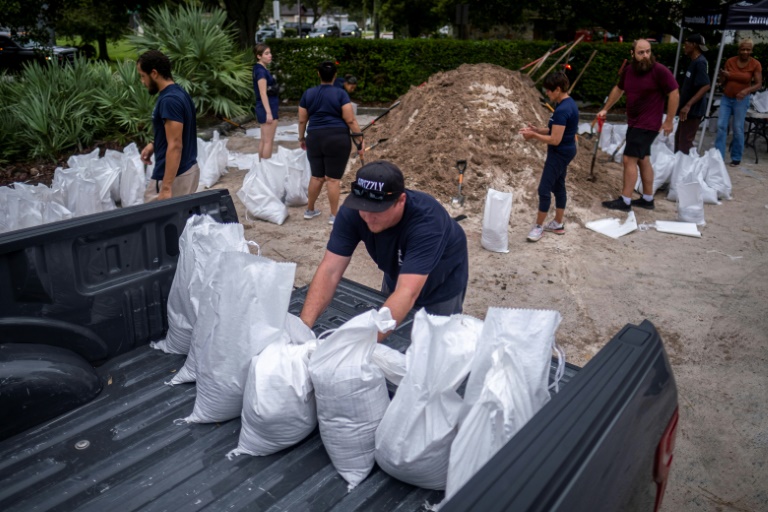
City employees were filling and handing out free sandbags at various locations, where long lines of cars could be seen as residents scrambled for ways to protect their property.

Amanda Harrison, 66, told AFP she waited two hours at a distribution point to get “the maximum number of bags” to line her home ahead of Ian’s wrath. “And my fears are that they’re not going to do any good.”

A 100-mile (160-kilometer) stretch from Ft Myers north to Tampa is under the most serious threat, as Ian battered Cuba Tuesday as a Category 3 major hurricane and began building in intensity over the warm Gulf of Mexico waters on its way north.

Fearing it could hit as a highly dangerous Category 4, Floridians were stocking up on bottled water, food, and other emergency supplies like batteries and propane gas. At a home improvement store in west Tampa, dozens of customers were buying plywood to protect their homes.

Others loaded up the family car to exit the hurricane zone.

Chelsea Thompson and her husband rushed to her parents’ home in St Petersburg, southwest of Tampa, early Tuesday to help them board up doors and windows with plywood.

Her parents’ home is in one of the mandatory evacuation zones and the family knew there was no time to lose. 

“The closer it (Hurricane Ian) gets, obviously with the unknown, your anxiety gets a little higher,” said 30-year-old Thompson.

“Boarding up the house makes it more real too,” she added. “So I am pretty nervous, but hoping for the best.”

While her parents were leaving the city with their dog, bound for inland Orlando, Thompson and her husband decided to ride out the hurricane in their own, less vulnerable home.

“We’re hoping that it takes a little bit of a turn… so we don’t get as much impact” from Ian, she added.

While Tampa braced for potential disaster, resident Ricardo Castro said taking necessary pre-storm steps was crucial.

“A lot of people are worried, but I’m from Puerto Rico and this is normal for us,” said the 48-year-old longtime Tampa resident, referring to the US island territory battered by massive Hurricane Fiona one week earlier.

As he and a neighbor waited for sandbags, Castro jumped out of his car to help fill bags and hand them out. 

“If you prepare,” he said, “everything will be fine.”

Danny Aller and his wife Karen were leaving little to chance. Twenty five miles west of Tampa in Indian Shores, the couple were boarding up their modest home with plywood bearing a blunt, spray-painted message: “Go away Ian.”

Iranians protest again despite fears of even bloodier crackdown

Iranians staged a 12th straight night of women-led protests on Tuesday over the death of Mahsa Amini, despite fears an internet blackout will see security forces intensify a bloody crackdown.

Dozens have been killed since demonstrations flared after the 22-year-old Kurdish woman died in the custody of Iran’s notorious morality police, after her arrest for allegedly breaching the country’s strict rules on hijab headscarves and modest clothing.

Opposition media based abroad said widespread protests continued in different cities, but activists said an internet blackout was making it increasingly tough to share video footage.

A woman is shown with her headscarf removed and waving her arms in the air in Tehran’s Narmak district, in a video shared by Manoto television, which also reported a protest in the southern port city of Chabahar.

Even those who stayed at home chipped in with chants of “Death to the dictator!” and “Death to the Islamic republic!” from the rooftops or windows of apartments in Tehran’s Shahrak-e Gharb district, said the Oslo-based group Iran Human Rights (IHR).

Women are seen removing headscarves at Sanandaj, in Amini’s home province of Kurdistan, and a man torches a banner of Iran’s supreme leader Ayatollah Ali Khamenei in the southern city of Shiraz, London-based Iran International TV reported.

“Iran remains under internet/mobile blackouts but some videos are still getting out,” said the New York-based Center for Human Rights in Iran. 

The semi-official Fars news agency said “around 60” people had been killed since Amini’s death on September 16, up from the official toll of 41 authorities reported Saturday.

But IHR said the crackdown had killed at least 76 people.

– ‘Universal right’ –

Officials said Monday they had made more than 1,200 arrests, including of activists, lawyers and journalists.

On Tuesday, authorities on arrested the daughter of ex-president Akbar Hashemi Rafsanjani for inciting protests, the Tasnim news agency reported.

“Faezeh Hashemi has been arrested in the east of Tehran by a security agency for inciting rioters to street protests,” Tasnim reported, without elaborating.

The crackdown has drawn condemnation from around the world.

US think tank Freedom House called on “other governments to stand with these courageous protesters and hold Iranian officials to account for their abuses”.

US Secretary of State Antony Blinken urged Iran to “end its use of violence against women for exercising what should be a fundamental freedom.”

“We stand with all those who are exercising the universal right to peaceful protest,” he told reporters in Washington.

Tensions with Western powers have grown this week, with Germany summoning the Iranian ambassador, Canada announcing sanctions and Tehran calling in the British and Norwegian envoys.

“We call on the international community to decisively and unitedly take practical steps to stop the killing and torture of protesters,” said IHR’s director Mahmood Amiry-Moghaddam.

Riot police in black body armour have beaten protesters with truncheons in running street battles, and security forces have shot women at close range with birdshot, in recent video footage published by AFP.

– ‘Demands of the people’ –

Mahsa Alimardani, senior Iran researcher for freedom of expression group Article 19, said the internet blackout was as bad as during deadly November 2019 protests that erupted over fuel price rises.

“Content has stopped coming out as it used to. Pockets of access we had to Iran seem to be gone. This is a really frightening prospect for even more bloodshed,” she said.

The Iranian judiciary chief, Gholamhossein Mohseni Ejei, has stressed “the need for decisive action without leniency” against the protest instigators.

But a powerful Shiite cleric long aligned with the country’s ultra-conservative establishment has urged authorities to take a softer line. 

“The leaders must listen to the demands of the people, resolve their problems and show sensitivity to their rights,” said Grand Ayatollah Hossein Nouri Hamedani.

Western condemnation of the bloody crackdown has clouded diplomatic efforts to revive a nuclear deal between Iran and major powers that was abandoned by then US president Donald Trump in 2018.

The EU’s foreign policy chief Josep Borrell, who has led those efforts, on Sunday slammed Iran for its “widespread and disproportionate use of force against non-violent protesters”.

The United States last week imposed sanctions against the Iranian morality police, and Canadian Prime Minister Justin Trudeau said on Monday his own country would follow suit with a sanctions package “on dozens of individuals and entities”.

burs-sjw/dv/lg

Brazilian stars add sparkle to election campaign

In bright-red, body-hugging tights with a Workers’ Party logo on the rear, Brazilian pop star Anitta seductively caresses a dance pole and urges her 60 million Instagram followers to vote for Luiz Inacio Lula da Silva.

Artists like Anitta are pulling out all the stops, strutting sex-appeal and star power ahead of high-stakes elections Sunday in a bid to sway voters either for leftist Lula or his far-right rival Jair Bolsonaro.

Analysts say the mobilization may be working, as young people register in large numbers to cast their ballots, with a record figure in the 16-18 age group.

“There is a sense of mistrust of politics. When a celebrity says she is going to vote for a candidate… she touches her fans in a more personal way, erasing that feeling of distrust,” Issaaf Karhawi, a social media researcher at the University of Sao Paulo, told AFP. 

The list of star supporters of ex-president Lula is as long as it is eclectic, and stretches as far as Hollywood.

At a concert-style campaign event in Sao Paulo on Thursday night, pro-Lula video messages from American actors Mark Ruffalo and Danny Glover added to the message of “hope” being championed by local celebrities on stage. 

While Lula’s camp includes everything from Brazilian pop megastars and rappers to popular singers from a previous generation, such as Gilberto Gil and Caetano Veloso, Bolsonaro draws most of his celebrity support from sertanejo, a style of Brazilian-influenced country music.

– ‘God, homeland and family ‘ –

Sertanejo star Gusttavo Lima, 33, declared his support for Bolsonaro already in 2018, brandishing an assault rifle in a video backing the then-presidential candidate’s pro-gun policies.

More recently at a concert in Brasilia, Lima, who has more than 44 million followers on Instagram, launched into a diatribe against the “communism” he and Bolsonaro claim Lula embodies and defended the incumbent president’s “God, homeland and family” values.

Left-wing celebrity activism is nothing new for Brazil, dating to the opposition movement against the military dictatorship from 1964 to 1985, said historian Paulo Cesar Gomes of the Fluminense Federal University.

But, he added, “to see singers supporting the extreme right is much more recent” — a phenomenon that dates to no earlier than the 2013 mass rallies against left-wing president Dilma Rousseff, who was impeached in 2016.

– DiCaprio vs. Bolsonaro –

While Anitta or fellow singer Ludmilla have their fans largely in Brazil’s sprawling urban favelas, the sertanejo stars appeal to rural voters in Bolsonaro’s conservative bastions.

But are these celebrity interventions making a difference?

Possibly, said Karhawi, by galvanizing a large number of young people active on social media to vote.

To this end, Anitta, the first Brazilian singer to reach the top of Spotify’s hit parade, told fans she would only pose for photos with those who were registered to vote.

Calls for voter mobilization also came all the way from the United States.

In April, Leonardo DiCaprio tweeted: “Brazil is home to the Amazon and other ecosystems critical to climate change. What happens there matters to us all and youth voting is key in driving change for a healthy planet.”

Bolsonaro responded with sarcasm at the time, tweeting: “Thanks for your support, Leo! It’s really important to have every Brazilian voting in the coming elections.”

Observers say the star-studded election drives could also have unintended consequences.

“Bolsonaro’s campaign feeds on these (celebrity) attacks to galvanize his supporters,” said pop culture researcher Thiago Soares of the University of Pernambuco.

“The rejection of a hyper-sexualized artist such as Anitta can be a good thing for him (Bolsonaro), strengthening his position as a defender of traditional mores.”

Close Bitnami banner
Bitnami