World

Saudi Arabia's crown prince named prime minister

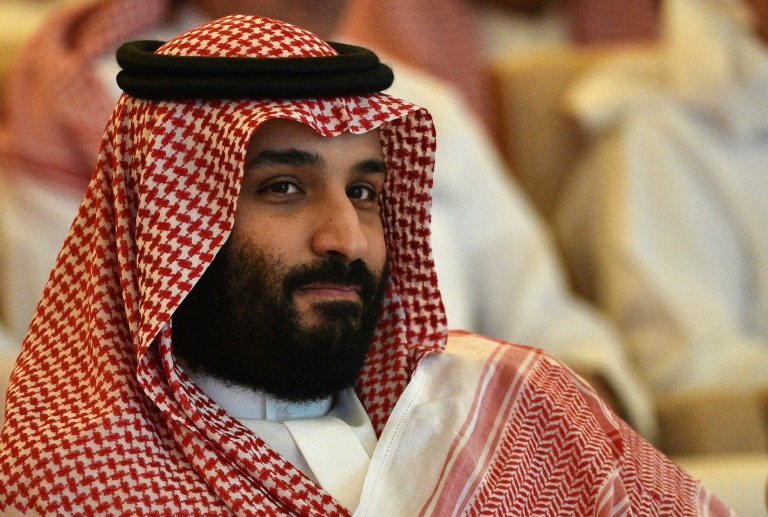
Saudi Arabia’s powerful crown prince, Mohammed bin Salman, has been named prime minister, a post traditionally held by the king, in a government shuffle announced Tuesday.

Prince Mohammed, who has already been the kingdom’s de facto ruler for several years, previously served as deputy prime minister under King Salman as well as defence minister.

He is being replaced as defence minister by his younger brother, Khalid bin Salman, who was deputy defence minister.

The heads of other critical ministries, including interior, foreign and energy, remained in place, according to a royal decree from King Salman published by the official Saudi Press Agency.

Prince Mohammed, who turned 37 last month, has been first in line to succeed his father as king since 2017.

Saudi Arabia has for years sought to quell speculation over the health of the 86-year-old king, who has ruled the world’s top oil exporter since 2015.

In 2017, it dismissed reports and mounting speculation that the king was planning to abdicate in favour of Prince Mohammed.

King Salman has been hospitalised twice this year, most recently a one-week stay in May that involved tests including a colonoscopy, according to state media.

– Sweeping changes –

Prince Mohammed became defence minister in 2015, a key step in a swift consolidation of power.

In that role he has overseen Saudi Arabia’s military activities in Yemen, where the kingdom leads a coalition backing the internationally recognised government in its fight against Iran-aligned Huthi rebels.

He has also become the public face of a sweeping reform agenda known as Vision 2030.

Changes have included granting women the right to drive, opening cinemas, welcoming foreign tourists, defanging the religious police and hosting pop stars and high-profile heavyweight fights and other sporting events. 

Yet he has also jailed critics and, in a sweeping purge of the nation’s elite, detained and threatened some 200 princes and businessmen in Riyadh’s Ritz-Carlton hotel in a 2017 anti-corruption crackdown that tightened his grip on power.

He gained global notoriety for the 2018 killing of dissident  Saudi journalist Jamal Khashoggi in the kingdom’s Istanbul consulate.

Last year, US President Joe Biden declassified an intelligence report that found Prince Mohammed had approved the operation against Khashoggi, an assertion Saudi authorities deny. 

But the spike in energy prices triggered by Russia’s invasion of Ukraine spurred a number of Western leaders to travel to Saudi Arabia to appeal for ramped-up oil production, notably then-UK prime minister Boris Johnson and Biden himself, who swallowed an earlier vow to make the Saudi leadership a “pariah”.

German Chancellor Olaf Scholz became the latest major leader to visit the kingdom this past weekend.
Blinken defends Pakistan arms sales against Indian criticism

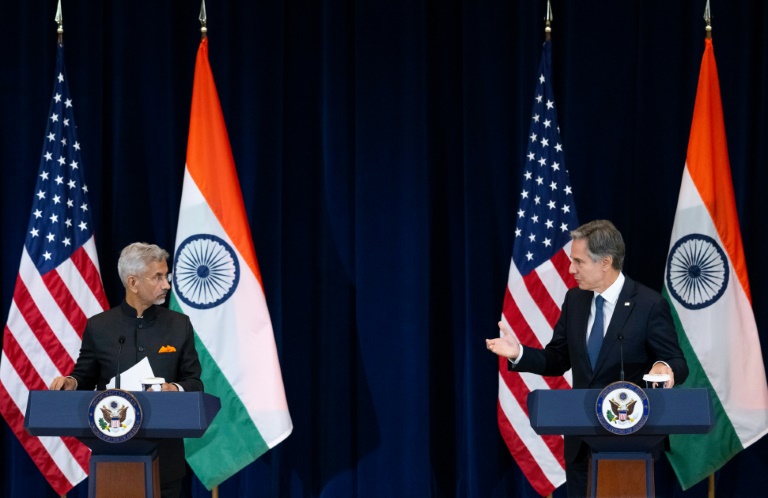
US Secretary of State Antony Blinken on Tuesday defended military sales to Pakistan after withering criticism from growing US partner India, which considers itself the target of Islamabad’s F-16 planes.

Blinken met in the US capital with India’s foreign minister a day after separate talks with his counterpart from Pakistan.

The US-Pakistan alliance, born out of the Cold War, has frayed over Islamabad’s relationship with the Taliban regime in Afghanistan.

The top US diplomat defended a $450 million F-16 deal for Pakistan approved earlier in September, saying the package was for maintenance of Pakistan’s existing fleet.

“These are not new planes, new systems, new weapons. It’s sustaining what they have,” Blinken told a news conference with his Indian counterpart, Subrahmanyam Jaishankar.

“Pakistan’s program bolsters its capability to deal with terrorist threats emanating from Pakistan or from the region. It’s in no one’s interests that those threats be able to go forward with impunity,” Blinken said.

Jaishankar did not criticize Blinken in public. But on Sunday, speaking at a reception for the Indian community in the United States, Jaishankar said of the US position, “You’re not fooling anybody.”

“For someone to say, I’m doing this because it’s for counter-terrorism, when you’re talking of an aircraft like the capability of the F-16, everybody knows where they are deployed,” he said, referring to the fleet’s positioning against India.

“Very honestly, it’s a relationship that has neither ended up serving Pakistan well nor serving American interests well,” he said.

Pakistan’s military relies on US equipment but the relationship soured during the two-decade US war in Afghanistan, with Washington believing that elements in Islamabad never severed support for the Taliban, who seized back power last year.

India historically has bought military equipment from Moscow and has pressed the United States to waive sanctions required under a 2017 law for any nation that buys “significant” military hardware from Russia.

Speaking next to Blinken, Jaishankar noted that India has in recent years also made major purchases from the United States, France and Israel.

India assesses quality and purchase terms and “we exercise a choice which we believe is in our national interest,” he said, rejecting any change due to “geopolitical tensions.”

– Playing down Ukraine gap –

The United States since the late 1990s has made warm relations with India a top goal, seeing common cause between the world’s two largest democracies on issues from China’s rise to the threat of Islamist extremism.

The United States has largely turned a blind eye to India’s continued relationship with Russia since the Ukraine invasion but was pleased when Prime Minister Narendra Modi recently told President Vladimir Putin that it was “not a time for war.”

Jaishankar indicated that India was working behind the scenes, saying it had “weighed in” with Russia during UN- and Turkish-led negotiations that opened up grain shipments from the blockaded Black Sea.

India “is widening its international footprint,” Jaishankar said.

“There are many more regions where we will be intersecting with American interests. It is to our mutual benefit that this be a complementary process,” Jaishankar said.

But once rock-solid support for India in the US Congress has seen gaps amid concern over rights under Modi, a Hindu nationalist whose government has been accused of marginalizing Muslims and other religious minorities and pressuring activists through legal action and financial scrutiny.

Blinken addressed the issue delicately, saying the two nations should commit to “core values including respect for universal human rights, like freedom of religion and belief and freedom of expression, which makes our democracies stronger.”

Jaishankar responded indirectly that both nations were committed to democracy but “from their history, tradition and societal context.”

“India does not believe that the efficacy or indeed the quality of democracy should be decided by vote banks,” he said.

Guinean ex-dictator jailed on eve of 2009 massacre trial

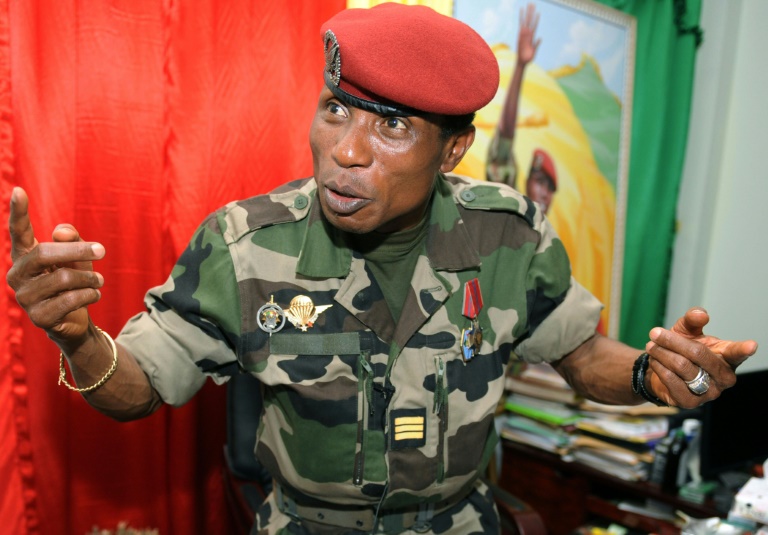
Former Guinean dictator Moussa Dadis Camara and several co-defendants were sent to prison Tuesday, a day before their trial opens for the 2009 stadium massacre, their lawyers said.

The prosecutor had “our six clients taken to the central house (prison) where they will apparently be held until the end of the (trial)”, Salifou Beavogui, one of the lawyers, told journalists outside the court. 

“Very unfortunately, the trial is beginning with the violation of the defendants’ rights,” he said.

An AFP correspondent saw a minibus — surrounded by several pick-up trucks — speed away from the brand-new court built especially for the trial.

Captain Camara and 10 other former military and government officials are due to appear in court Wednesday at 10:00 am (local and GMT). 

A handful of defendants have already been detained for years. Those who were still free were detained Tuesday after being summoned at around midday. 

On September 28, 2009, and in the days that followed, security forces loyal to the then-junta leader slaughtered more than 150 people and raped at least 109 women at a political rally in a Conakry stadium, according to a report by a UN-mandated international commission.

The real figures are likely higher.

Tens of thousands of opposition supporters had gathered in the stadium to peacefully demonstrate against a possible election bid by Camara, who had come to power in a December 2008 coup before being sworn in as president.

Numerous testimonies report how the presidential guard’s Red Berets, police officers and militiamen entered the stadium around noon, cordoned off the exits and opened fire indiscriminately on a crowd that had previously been festive.

– Waiting for a trial –

The killers attacked unarmed civilians with knives, machetes and bayonets, leaving the stands, corridors and grass strewn with the dead and dying. 

They sexually assaulted and then killed many women. Others were trampled to death in the panic.

International investigators found the abuses could qualify as crimes against humanity, noting the brutality went on for several days against sequestered women and male detainees who were tortured.

On the eve of Wednesday’s trial, Amnesty International released a report calling for better protection for rape victims in Guinea and the “urgent” adoption of a comprehensive law on gender-based violence.

Camara, who had been living in exile in Burkina Faso, returned to Conakry on Saturday night to stand trial. 

Relatives say he intends to “clear his name”.

The international commission has accused him of “personal criminal responsibility and command responsibility”. 

Despite recurring commitments under former president Alpha Conde’s regime, victims and relatives have been waiting for the trial for 13 years. 

Human rights defenders have also been pushing for justice, as well as the International Criminal Court.

Delays by those in power and the impunity for security forces that had become an “institution”, according to the commission, long cast doubt on the chances of a trial.

Then the head of the current military junta, Colonel Mamady Doumbouya, who came to power in a putsch in 2021 after 11 years of civilian rule, in July demanded the trial be held before the next anniversary date.

Victims’ groups hope the opening will not just be a show before the trial is adjourned.

Iranians take to streets for 12th night of women-led protests

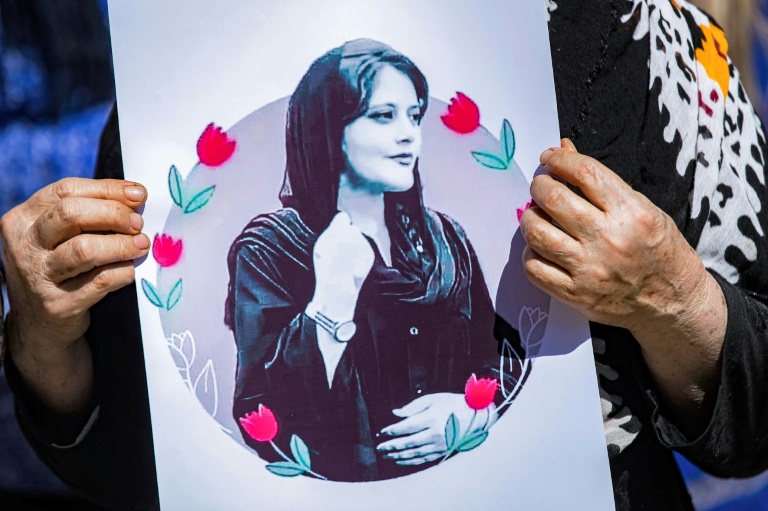
Iranians on Tuesday staged a 12th straight night of protests over the death in custody of Mahsa Amini, in defiance of a crackdown that a rights group says has killed more than 75 people.

The women-led demonstrations flared after the 22-year-old Kurdish woman died in the custody of the notorious morality police for reportedly not observing the Islamic republic’s strict dress code.

Opposition media based abroad said widespread protests continued in different cities, but activists said internet restrictions were making it increasingly tough to get video footage out.

A woman is shown with her headscarf removed and waving her arms in the air in the Tehran district of Narmak, in a video shared by Manoto television channel, which also reported a protest in the southern port city of Chabahar.

Women are seen removing headscarves at Sanandaj, in Amini’s home province of Kurdistan, and a man torches a banner of Iran’s supreme leader Ayatollah Ali Khamenei in the southern city of Shiraz, in reports by London-based Iran International TV.

“Iran remains under internet/mobile blackouts but some videos are still getting out,” the New York-based Center for Human Rights in Iran said. 

Iran’s semi-official Fars news agency said “around 60” people had been killed since Amini’s death on September 16, up from the official death toll of 41 authorities reported on Saturday.

But the Oslo-based group Iran Human Rights (IHR) said at least 76 people have been killed in the crackdown.

Officials said Monday they had made more than 1,200 arrests. Those taken into custody have included activists, lawyers and journalists as well as protesters.

Health Minister Bahram Einollahi, quoted by the official news agency IRNA, accused the protesters of destroying 72 ambulances, while activists based abroad say the authorities have been using ambulances to transport security forces.

– Tensions with West –

The crackdown has drawn condemnation from around the world.

On Tuesday, US think-tank Freedom House joined the chorus and called on “other governments to stand with these courageous protesters and hold Iranian officials to account for their abuses”.

Tensions with Western powers have grown this week, with Germany summoning the Iranian ambassador, Canada announcing sanctions and Tehran calling in the British and Norwegian envoys.

“We call on the international community to decisively and unitedly take practical steps to stop the killing and torture of protesters,” said IHR’s director Mahmood Amiry-Moghaddam.

Video footage and death certificates obtained by IHR showed that “live ammunition is being directly fired at protesters”, he charged.

Riot police in black body armour have beaten protesters with truncheons in running street battles, and students have torn down large pictures of Khamenei and his late predecessor Ayatollah Ruhollah Khomeini, in recent video footage published by AFP.

At least 20 journalists have been arrested, according to the Committee to Protect Journalists.

Mahsa Alimardani, senior Iran researcher for freedom of expression group Article 19, said the internet blackout was as bad as during deadly November 2019 protests that erupted over fuel price rises.

“Content has stopped coming out as it used to. Pockets of access we had to Iran seem to be gone. This is a really frightening prospect for even more bloodshed,” she said.

– ‘Demands of the people’ –

The Iranian judiciary chief, Gholamhossein Mohseni Ejei, has stressed “the need for decisive action without leniency” against the protest instigators.

But a powerful Shiite cleric long aligned with the country’s ultra-conservative establishment has urged authorities to take a softer line. 

“The leaders must listen to the demands of the people, resolve their problems and show sensitivity to their rights,” said Grand Ayatollah Hossein Nouri Hamedani.

Western condemnation of the bloody crackdown has clouded diplomatic efforts to revive a nuclear deal between Iran and major powers that was abandoned by then US president Donald Trump in 2018.

The EU’s foreign policy chief Josep Borrell, who has led those efforts, on Sunday slammed Iran for its “widespread and disproportionate use of force against non-violent protesters”.

The United States last week imposed sanctions against the Iranian morality police, and Canadian Prime Minister Justin Trudeau said on Monday his own country would follow suit with a sanctions package “on dozens of individuals and entities”.

burs-sjw/dv/hc

Underwater heat 'inferno' ravages Mediterranean corals

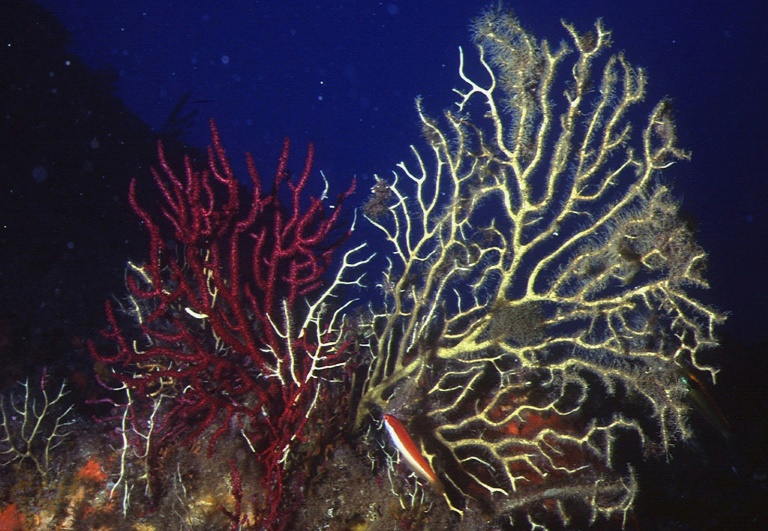
In the temperate shallows of the Mediterranean, once-vibrant red and purple coral forests that provide a crucial haven for biodiversity now stand bleached and brittle, transformed into skeletons by record summer temperatures, scientists say.

Holding naked branches of gorgonian coral, Tristan Estaque of marine conservation group Septentrion Environnement is returning despondent from an exploratory dive off the coast of Marseille in southern France.

“It is heartbreaking, the deterioration is so fast,” he tells AFP. 

Dive surveys just two months earlier found an intact landscape, lush with violet-fringed fans of gorgonian coral. 

Now it is a “ghost forest”, says Estaque, with the majestic fans largely bare of living tissue.  

“You have to imagine a tree where there are no more leaves, no more bark.”

– Fragile forests –

Gorgonian corals, which have flexible skeletons encrusted with polyps, are found across the planet. 

Those found in the Mediterranean are said to create “forests”, sheltering a huge array of species.

But they are acutely vulnerable to human activities.  

Fishing nets, anchors and careless divers can rip their delicate structures, while exposure to continuous and intense heat can be lethal. 

Marine heatwaves are becoming more common, according to a report this year by UN climate experts.   

This summer a major marine heatwave hit the western Mediterranean, with water up to five degrees Celsius (41 degrees Fahrenheit) hotter than normal, according to Mercator Ocean International, the organisation that runs the European ocean monitoring service. 

In some places water reached 30C.

Recent Septentrion Environnement surveys have shown that between 70 and 90 percent of the red gorgonian population in the 10 to 20-metre zone off Marseille have since died. 

The effect was like “an underwater inferno”, according to Solene Basthard-Bogain, another of the group’s specialists.

And it is not just near the southern French coast. 

Gorgonian mortality has also been observed on the Spanish coasts and around the Italian island of Sardinia, according to Stephane Sartoretto of the French research agency Ifremer.

The severity of the impact appears to vary depending on the depth of the corals. 

Along the sawtooth coastline of France’s Calanques National Park, notched with craggy coves and shallow habitats where the gorgonians are found in waters of just six metres (20 feet) in places, the die-offs have been particularly intense.

In the Balearic Islands, they live deeper, at 40 metres, and were therefore less impacted, Sartoretto says.

– ‘Forest fire’ –

In addition to the gorgonians, sponges and bivalves have also been affected.

The marine heatwave likewise battered mussel farming, with 150 tonnes of commercial mussels and 1,000 tonnes of young stock — for next year’s crop — lost in Spain over the summer.

A drop in temperatures in the Mediterranean could help to save those corals that were spared in the summer die-off, says Basthard-Bogain, although she worries that any pathogens that may have spread because of the heat would still be present in the waters. 

There are fears, too, that another hot spell cannot be ruled out before the end of the autumn. 

Sartoretto says he worries that repeated periods of heat stress could be devastating for the corals. 

“We can ask ourselves about the possibility of their disappearance,” he says, adding that their reproduction rate is very slow. 

“Like after a forest fire on land,” he says, “they will take decades to regenerate.”

Underwater heat 'inferno' ravages Mediterranean corals

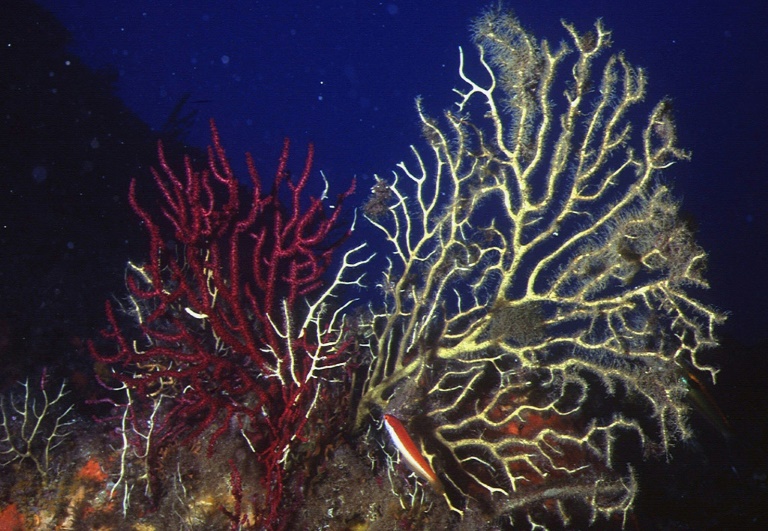
In the temperate shallows of the Mediterranean, once-vibrant red and purple coral forests that provide a crucial haven for biodiversity now stand bleached and brittle, transformed into skeletons by record summer temperatures, scientists say.

Holding naked branches of gorgonian coral, Tristan Estaque of marine conservation group Septentrion Environnement is returning despondent from an exploratory dive off the coast of Marseille in southern France.

“It is heartbreaking, the deterioration is so fast,” he tells AFP. 

Dive surveys just two months earlier found an intact landscape, lush with violet-fringed fans of gorgonian coral. 

Now it is a “ghost forest”, says Estaque, with the majestic fans largely bare of living tissue.  

“You have to imagine a tree where there are no more leaves, no more bark.”

– Fragile forests –

Gorgonian corals, which have flexible skeletons encrusted with polyps, are found across the planet. 

Those found in the Mediterranean are said to create “forests”, sheltering a huge array of species.

But they are acutely vulnerable to human activities.  

Fishing nets, anchors and careless divers can rip their delicate structures, while exposure to continuous and intense heat can be lethal. 

Marine heatwaves are becoming more common, according to a report this year by UN climate experts.   

This summer a major marine heatwave hit the western Mediterranean, with water up to five degrees Celsius (41 degrees Fahrenheit) hotter than normal, according to Mercator Ocean International, the organisation that runs the European ocean monitoring service. 

In some places water reached 30C.

Recent Septentrion Environnement surveys have shown that between 70 and 90 percent of the red gorgonian population in the 10 to 20-metre zone off Marseille have since died. 

The effect was like “an underwater inferno”, according to Solene Basthard-Bogain, another of the group’s specialists.

And it is not just near the southern French coast. 

Gorgonian mortality has also been observed on the Spanish coasts and around the Italian island of Sardinia, according to Stephane Sartoretto of the French research agency Ifremer.

The severity of the impact appears to vary depending on the depth of the corals. 

Along the sawtooth coastline of France’s Calanques National Park, notched with craggy coves and shallow habitats where the gorgonians are found in waters of just six metres (20 feet) in places, the die-offs have been particularly intense.

In the Balearic Islands, they live deeper, at 40 metres, and were therefore less impacted, Sartoretto says.

– ‘Forest fire’ –

In addition to the gorgonians, sponges and bivalves have also been affected.

The marine heatwave likewise battered mussel farming, with 150 tonnes of commercial mussels and 1,000 tonnes of young stock — for next year’s crop — lost in Spain over the summer.

A drop in temperatures in the Mediterranean could help to save those corals that were spared in the summer die-off, says Basthard-Bogain, although she worries that any pathogens that may have spread because of the heat would still be present in the waters. 

There are fears, too, that another hot spell cannot be ruled out before the end of the autumn. 

Sartoretto says he worries that repeated periods of heat stress could be devastating for the corals. 

“We can ask ourselves about the possibility of their disappearance,” he says, adding that their reproduction rate is very slow. 

“Like after a forest fire on land,” he says, “they will take decades to regenerate.”

Biden laying foundation for green energy investments: Yellen

US President Joe Biden’s push for green energy tax credits will help boost a massive ramp up in private investment that will create jobs and lower energy costs for American families, Treasury Secretary Janet Yellen said Tuesday.

Yellen called the administration’s plan “the most aggressive action that we’ve ever taken to address the climate crisis.”

She traveled to North Carolina to tour a solar plant and tout policies included in the recently-approved Inflation Reduction Act, which together with the Infrastructure Law include more than $430 billion in energy investments.

The legislation provides tax credits to households to make their homes more energy efficient or switch to cleaner sources, which will help lower costs, Yellen said.

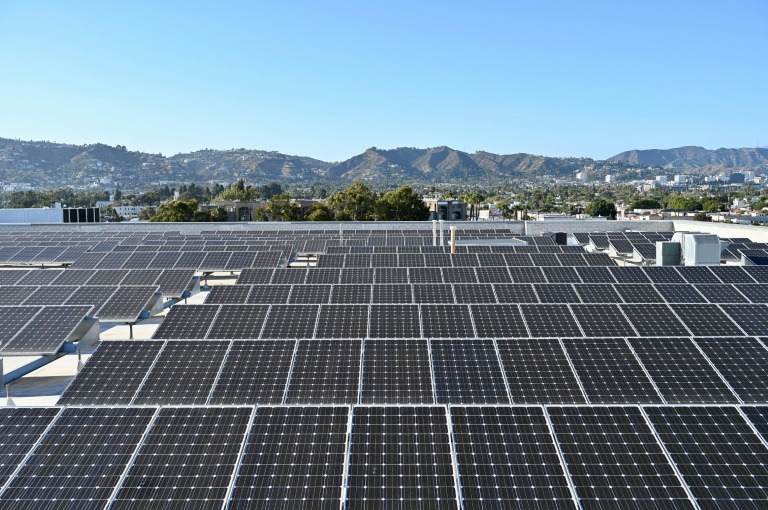
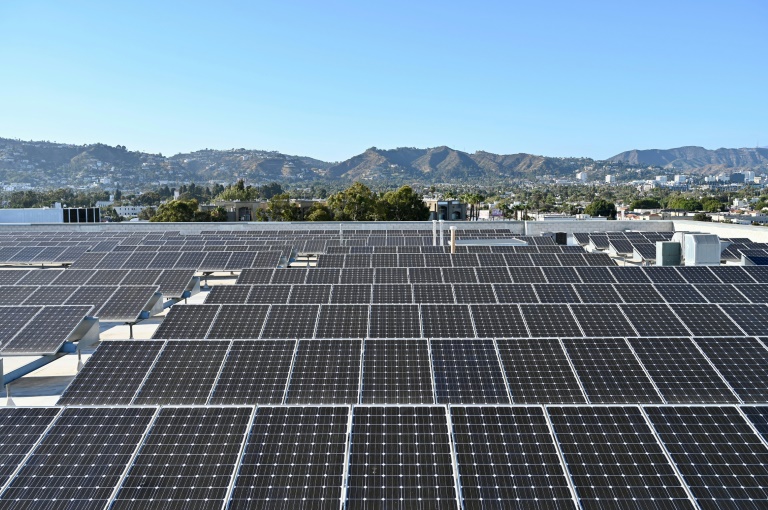
But the administration’s approach also “rests on harnessing the engagement of the private sector,” the official said in her speech, delivered in front of an array of solar panels. 

“Beyond the consumer tax credits, we expect a significant mobilization of private investment into the clean energy sector,” she said. “These investments will accelerate the transition to our green energy future and lower energy costs for American households and businesses.”

In addition, “They will secure our energy supply against global price shocks. And they will provide good-paying, high-quality jobs across America.” 

Yellen said the transition is critical to address climate change which has seen more costly storms arise across the globe. 

“Climate change poses a grave risk to the productive capacity of our economy while also impacting its stability,” she said. 

But the transition to a clean energy economy also brings lower costs and “significant economic opportunities in high-growth industries, while building economic resilience and creating good-paying jobs across the country.”

Biden laying foundation for green energy investments: Yellen

US President Joe Biden’s push for green energy tax credits will help boost a massive ramp up in private investment that will create jobs and lower energy costs for American families, Treasury Secretary Janet Yellen said Tuesday.

Yellen called the administration’s plan “the most aggressive action that we’ve ever taken to address the climate crisis.”

She traveled to North Carolina to tour a solar plant and tout policies included in the recently-approved Inflation Reduction Act, which together with the Infrastructure Law include more than $430 billion in energy investments.

The legislation provides tax credits to households to make their homes more energy efficient or switch to cleaner sources, which will help lower costs, Yellen said.

But the administration’s approach also “rests on harnessing the engagement of the private sector,” the official said in her speech, delivered in front of an array of solar panels. 

“Beyond the consumer tax credits, we expect a significant mobilization of private investment into the clean energy sector,” she said. “These investments will accelerate the transition to our green energy future and lower energy costs for American households and businesses.”

In addition, “They will secure our energy supply against global price shocks. And they will provide good-paying, high-quality jobs across America.” 

Yellen said the transition is critical to address climate change which has seen more costly storms arise across the globe. 

“Climate change poses a grave risk to the productive capacity of our economy while also impacting its stability,” she said. 

But the transition to a clean energy economy also brings lower costs and “significant economic opportunities in high-growth industries, while building economic resilience and creating good-paying jobs across the country.”

Limits to EU hard-right front around Meloni: analysts

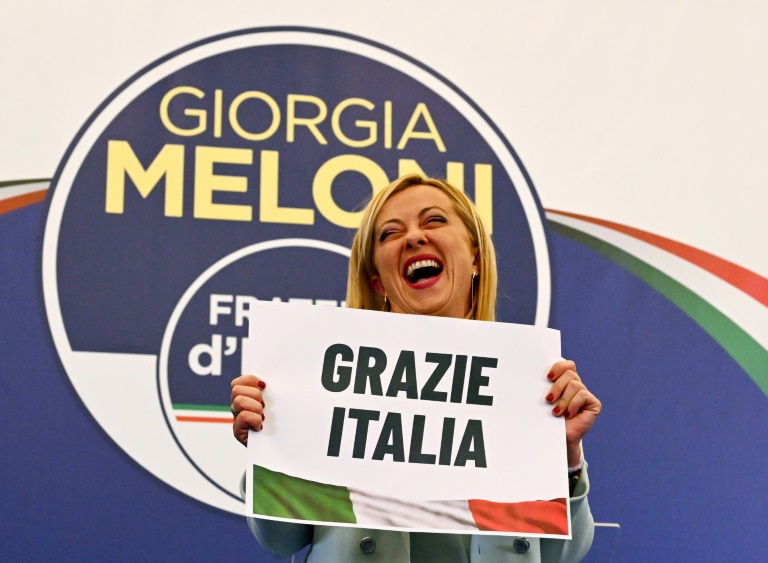
Italian election winner Giorgia Meloni may at first glance have much in common with ultra-conservative governments in fellow EU nations Poland and Hungary, but experts say that when it comes to real-world policy any alliance could soon run into limits.

Reaction to Sunday’s strong result for Meloni’s Brothers of Italy party was muted from pillars of EU integration like Paris and Berlin, but Warsaw and Budapest were warm in their congratulations.

“We’ve never had greater need of friends sharing a vision of and a common approach to Europe,” the Hungarian government said, while from Poland came praise for Meloni’s “great victory”.

“Hungary and Poland are more than happy with this election, first because it relieves the pressure on their own countries in the EU, and second because it paves the way for a more united front,” said Yordan Bozhilov, director of the Bulgaria-based Sofia Security Forum think-tank.

The Italian election follows hard on the heels of a Swedish poll that also produced a surge for the extreme right. 

But with the far right in power in one of the EU’s largest countries and founding members, Hungary and Poland could be far less isolated in their battles with Brussels over rule-of-law issues.

What’s more, Rome, Budapest and Warsaw are now set for alignment on social concerns, with anti-Islam, anti-abortion and anti-LGBT positions.

“Together we will defeat the cynical and pampered Eurocrats who are destroying the European Union, breaching treaties, destroying our civilisation and advancing the LGBT agenda!” Poland’s deputy agriculture minister Janusz Kowalski tweeted in a message congratulating Meloni on Monday.

Meloni also shares her prospective allies’ vision of a Christian, white Europe made up of sovereign nations.

“Hungary and Poland are countries that want to change the EU from within, and they don’t hide it. So far they haven’t succeeded, but there will definitely be an attempt to create a Rome-Budapest-Warsaw axis,” said Tara Varma, director of the Paris office of the European Council on Foreign Relations.

But such parties’ demands have already moderated in recent years from full exit from the EU, “given the absolute cautionary tale that Brexit has been,” she added.

Instead, the axis could become “spoilers, the sand in the gears” in Brussels. 

“One step forward, two steps back, they could prevent the EU making progress while continuing to benefit from joint funds,” Varma said.

– Splits over Russia –

A front based on values could still founder when faced with today’s overriding concern of the war in Ukraine and EU relations with Russia.

While Meloni has so far matched Warsaw in declarations of support for Ukraine and for EU sanctions on Russia over its invasion of its neighbour, Hungary’s leader Viktor Orban — close to President Vladimir Putin — is opposed.

“At some point, Meloni will have to choose between Poland and Hungary,” Varma predicted.

The Brothers of Italy leader is not expected to bend her position to match those of her junior coalition partners, Silvio Berlusconi and Matteo Salvini, who are friendlier to Moscow.

“Regarding foreign policy, as far as we know Meloni backs the sanctions against Russia and Brothers of Italy is closer to Poland’s PiS (governing party) than Hungary’s Fidesz,” said Hungarian analyst Patrik Szicherle.

Meloni has “sent the right messages on Ukraine,” said Martin Quencez of the German Marshall Fund, pointing out Italy’s critical relationship with the US as a reliable NATO ally.

Once elected prime minister, she “has every incentive to have good relations with Brussels, not to enter a pitched battle,” said Paolo Modugno, professor of Italian civilisation at Paris’ Sciences Po university.

Meloni “is very aware of the Italian public’s problems, their fear of inflation and the economic situation. What’s urgent for her is to manage the crisis, not to take ideological risks,” he added.

Analysts suggest that the incoming government’s choice of top ministers, especially in the finance and foreign ministries, will clearly signal how Meloni plans to position herself in Europe.

Hurricane Ian leaves western Cuba battered, takes aim for Florida

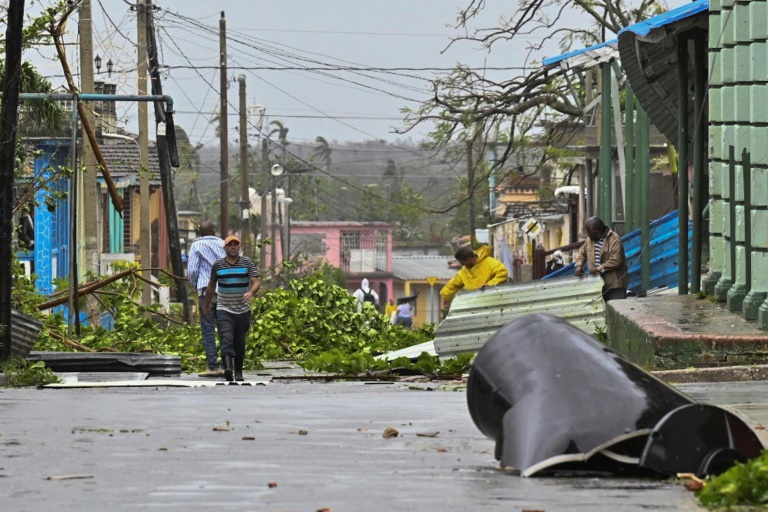
The powerful Category 3 Hurricane Ian battered western Cuba on Tuesday causing significant damage and prompting mass evacuations, with the storm expected to strengthen as it heads north towards the US state of Florida.

With maximum sustained winds of 125 miles (205 kilometers) per hour, Ian pummeled the island nation’s western regions for more than five hours before its eye moved out over the warm waters of the Gulf of Mexico.

Authorities have not yet been able to assess the damage, but residents described “destruction” and posted images on social media of flooded streets and felled trees.

No deaths or injuries have yet been reported.

“Desolation and destruction. These are terrifying hours. Nothing is left here,” said a 70-year-old resident of the western city of Pinar del Rio in a message to his journalist son that was shared on social media.

Ian is expected to “keep heading northwards, gradually moving over the southeast of the Gulf of Mexico, moving its center away from Cuban territory,” said the Cuba’s Insmet meteorological institute.

The US National Hurricane Center (NHC) said Ian, classified as a major hurricane, made landfall just southwest of the town of La Coloma in Pinar del Rio province at about 4:30 am local time (0830 GMT).

About 40,000 people had been evacuated from their homes in the western province, which was bearing the brunt of the storm, local authorities said.

In the town of Consolacion del Sur, images captured by AFP showed downed power lines, flooded streets and a scattering of damaged rooftops.

An official at the state electricity company said power was out in the provinces of Pinar del Rio and Artemisa.

Those were two of the three provinces put on maximum alert Monday night.

– ‘Storm surge’ –

With the hurricane moving north, Florida’s western coast from Fort Myers to Tampa Bay was at greatest risk of “life-threatening” storm surges, the NHC said.

Florida Governor Ron DeSantis said 2.5 million people were under evacuation orders as officials scrambled to prepare for the storm’s forecast landing on Wednesday.

“In some areas there will be catastrophic flooding and life threatening storm surge,” DeSantis said at a press conference on Tuesday.

He urged residents to follow evacuation orders and warned that though Ian’s exact path was still uncertain “the impacts will be far far broader.”

“When you have five to ten feet (1.5 to 3 meters) of storm surge that is not something that you want to be a part of. Mother Nature is a very fearsome adversary.” DeSantis said.

The governor on Monday urged residents to stock up on food, water, medicine and fuel, and he called up 7,000 National Guard members to help with the effort.

Authorities in several Florida municipalities, including Miami, Fort Lauderdale and Tampa, have been distributing free sandbags to residents to help protect their homes from the risk of flooding.

Tampa International Airport said it would suspend operations on Tuesday at 5:00 pm local time (2100 GMT).

US President Joe Biden has approved emergency aid in Florida through the Federal Emergency Management Agency (FEMA), while even NASA on the state’s east coast took precautions, rolling back its massive Moon rocket into its storage hanger for protection.

Like DeSantis, FEMA administrator Deanne Criswell highlighted the danger of storm surge, saying it was the agency’s “biggest concern.”

“If people are told to evacuate by their local officials, please listen to them. The decision you choose to make may be the difference between life and death,” she said.

– Fiona’s wake –

The Caribbean and parts of eastern Canada are still counting the cost of powerful storm Fiona, which tore through last week, claiming several lives.

Half a million residents in the US territory of Puerto Rico were still without power, according to a tracking website, as the island’s governor called on the federal government to waive a policy limiting which ships are able to dock there.

When Fiona arrived as a post-tropical cyclone in Canada on Saturday, it was still packing intense winds of 80 miles per hour, bringing torrential rain and waves of up to 40 feet (12 meters).

Storm surge swept at least 20 homes into the sea in the town of Channel-Port aux Basques, on the southwestern tip of Newfoundland, while three people are believed to have died.

Close Bitnami banner
Bitnami