World

Cuba, Florida brace for Hurricane Ian

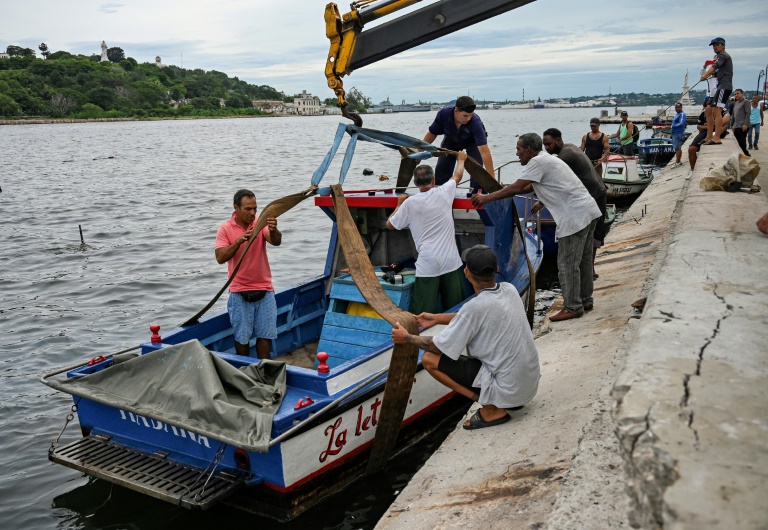
Cuba declared an emergency alert in multiple provinces Monday as fast-approaching Hurricane Ian strengthened rapidly, with Florida also ramping up preparations ahead of a likely hit.

About 50,000 people in Cuba’s western Pinar del Rio province moved to safer locations, 6,000 of them to state-run shelters and the rest to the homes of relatives and friends, local authorities said.

The US National Hurricane Center (NHC) warned Ian was intensifying and could pass over western Cuba late Monday and early Tuesday.

“Maximum sustained winds have increased to near 110 miles (177 kilometers) per hour with higher gusts,” it said, making Ian a Category 2 storm on the Saffir-Simpson scale.

“Rapid strengthening is expected during the next day or so,” the NHC added. 

– ‘Huge storm surge’ expected –

In Florida, the city of Tampa was under a hurricane watch, and Governor Ron DeSantis declared a state of emergency in all 67 counties as officials scrambled to prepare for the storm’s forecast landing on Wednesday or Thursday.

Ian “will bring heavy rains, strong winds, flash flooding, storm surge, along with isolated tornado activity along Florida’s Gulf Coast,” DeSantis said at a press conference in Tallahassee on Monday.

He warned people to prepare for power cuts.

“Even if the eye of the storm doesn’t hit your region, you’re going to have really significant winds, it’s going to knock over trees, it’s going to cause interruptions,” DeSantis said, warning of likely flooding.

The governor urged residents to stock up on food, water, medicine and fuel, and he called up 7,000 National Guard members to help with the effort.

Authorities in several Florida municipalities, including Miami, Fort Lauderdale and Tampa, started distributing free sandbags to residents to help protect their homes from the risk of flooding.

Tampa International Airport said it would suspend operations on Tuesday at 5:00 pm local time (2100 GMT).

President Joe Biden approved emergency aid to 24 counties in Florida through the Federal Emergency Management Agency (FEMA).

NASA said it was rolling back its massive Moon rocket into its storage hangar at the Kennedy Space Center in Florida due to the hurricane.

– Fiona’s wake –

The Caribbean and parts of eastern Canada are still counting the cost of powerful storm Fiona, which tore through last week, claiming several lives.

When it arrived in eastern Canada, the storm packed intense winds of 80 miles per hour, bringing torrential rain and waves of up to 40 feet (12 meters).

Three people are believed to have died when Fiona barreled into Canada’s Atlantic provinces as a post-tropical cyclone early Saturday.

Prince Edward Island authorities confirmed the death of one person, while officials in Newfoundland said they found the body of a 73-year-old woman believed to have been swept from her home. She was apparently sheltering in her basement when waves broke through.

A third person has been reported missing in Nova Scotia — one of the hardest-hit provinces — and is presumed dead.

“The devastation is immense,” Nova Scotia Premier Tim Houston told reporters. “The magnitude of the storm is incredible.”

Storm surges swept at least 20 homes into the sea in the town of Channel-Port aux Basques, on the southwestern tip of Newfoundland.

Around 200 residents had been evacuated before the storm hit.

“Some people have lost everything, and I mean everything,” Mayor Brian Button told CBC News.
Cuba, Florida brace for Hurricane Ian

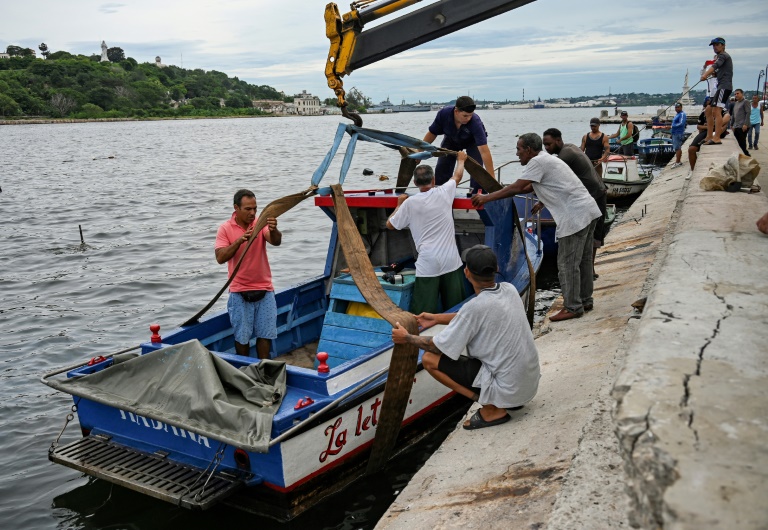
Cuba declared an emergency alert in multiple provinces Monday as fast-approaching Hurricane Ian strengthened rapidly, with Florida also ramping up preparations ahead of a likely hit.

About 50,000 people in Cuba’s western Pinar del Rio province moved to safer locations, 6,000 of them to state-run shelters and the rest to the homes of relatives and friends, local authorities said.

The US National Hurricane Center (NHC) warned Ian was intensifying and could pass over western Cuba late Monday and early Tuesday.

“Maximum sustained winds have increased to near 110 miles (177 kilometers) per hour with higher gusts,” it said, making Ian a Category 2 storm on the Saffir-Simpson scale.

“Rapid strengthening is expected during the next day or so,” the NHC added. 

– ‘Huge storm surge’ expected –

In Florida, the city of Tampa was under a hurricane watch, and Governor Ron DeSantis declared a state of emergency in all 67 counties as officials scrambled to prepare for the storm’s forecast landing on Wednesday or Thursday.

Ian “will bring heavy rains, strong winds, flash flooding, storm surge, along with isolated tornado activity along Florida’s Gulf Coast,” DeSantis said at a press conference in Tallahassee on Monday.

He warned people to prepare for power cuts.

“Even if the eye of the storm doesn’t hit your region, you’re going to have really significant winds, it’s going to knock over trees, it’s going to cause interruptions,” DeSantis said, warning of likely flooding.

The governor urged residents to stock up on food, water, medicine and fuel, and he called up 7,000 National Guard members to help with the effort.

Authorities in several Florida municipalities, including Miami, Fort Lauderdale and Tampa, started distributing free sandbags to residents to help protect their homes from the risk of flooding.

Tampa International Airport said it would suspend operations on Tuesday at 5:00 pm local time (2100 GMT).

President Joe Biden approved emergency aid to 24 counties in Florida through the Federal Emergency Management Agency (FEMA).

NASA said it was rolling back its massive Moon rocket into its storage hangar at the Kennedy Space Center in Florida due to the hurricane.

– Fiona’s wake –

The Caribbean and parts of eastern Canada are still counting the cost of powerful storm Fiona, which tore through last week, claiming several lives.

When it arrived in eastern Canada, the storm packed intense winds of 80 miles per hour, bringing torrential rain and waves of up to 40 feet (12 meters).

Three people are believed to have died when Fiona barreled into Canada’s Atlantic provinces as a post-tropical cyclone early Saturday.

Prince Edward Island authorities confirmed the death of one person, while officials in Newfoundland said they found the body of a 73-year-old woman believed to have been swept from her home. She was apparently sheltering in her basement when waves broke through.

A third person has been reported missing in Nova Scotia — one of the hardest-hit provinces — and is presumed dead.

“The devastation is immense,” Nova Scotia Premier Tim Houston told reporters. “The magnitude of the storm is incredible.”

Storm surges swept at least 20 homes into the sea in the town of Channel-Port aux Basques, on the southwestern tip of Newfoundland.

Around 200 residents had been evacuated before the storm hit.

“Some people have lost everything, and I mean everything,” Mayor Brian Button told CBC News.
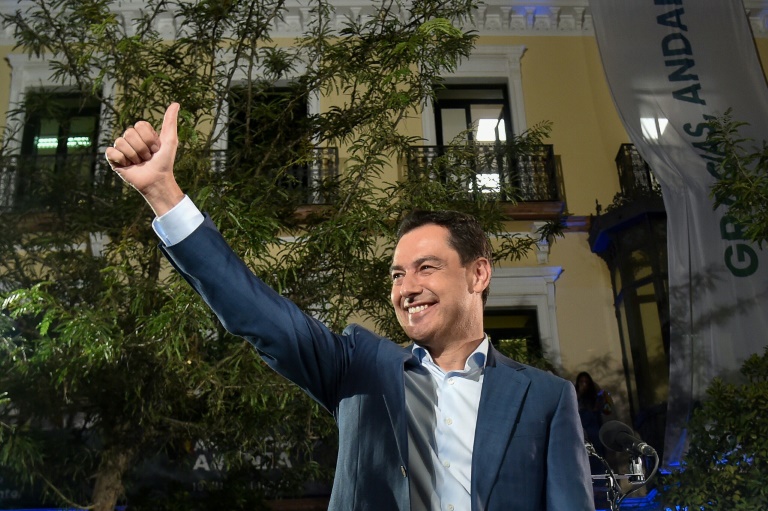
In Spain, politicians wage tax war ahead of elections

With elections a year away, the battle lines have been drawn between Spain’s left-wing government and its right-wing regions who are tripping over themselves to unveil lower tax policies.

On the back burner for months, the tax issue hit the headlines last week after the leader of the southern Andalusia region decided to axe wealth tax and lower income tax in a bid to attract wealthy taxpayers.

“We were a tax hellhole but now we’re the region with the second lowest taxes in Spain,” boasted Juanma Moreno of the right-wing opposition Popular Party (PP) — his region trailing only Madrid, which is also held by the PP.

As one of the Western world’s most decentralised nations, Spain is divided into 17 regions, whose governments have considerable autonomy and are responsible for budget management. 

Moreno’s remarks opened the floodgates, with many other PP-run regions announcing cuts, including Murcia, which slashed income tax, and Galicia, which is rolling back its wealth tax.

– ‘Welcome to paradise’ –

This flurry of announcements was hailed by top figures within the PP, among them the party’s rising star, Madrid leader Isabel Diaz Ayuso.

“Welcome to paradise,” tweeted this champion of the tax war, who last year repealed some 15 local levies in her region. 

But the move has drummed up a storm of criticism within the government of Socialist Prime Minister Pedro Sanchez, which has denounced it as economic populism ahead of regional elections in May and a general election expected in late 2023.

And it has raised concerns about the impact of such measures on public service funding. 

Economy Minister Nadia Calvino didn’t mince her words, denouncing such moves as introducing an “irresponsible, incoherent and destructive dynamic that would affect the whole country” and demanding they be reversed. 

And Budget Minister Maria Jesus Montero warned it was “dangerous” to create “tax havens” within Spain. 

Even Sanchez weighed in, denouncing what he called “tax gifts to the minority” and pleading for “responsible tax policies”.

“There must be tax reforms that guarantee that those who have more contribute more to the public purse in order to have a much stronger welfare state,” he said. 

– Harmonisation –

On Thursday, the government said it would slap an “exceptional” tax on the country’s richest to help pay for measures aimed at easing the impact of spiralling inflation.

And it is in favour of a greater “tax harmonisation” between the regions. 

But it’s a sensitive subject in Spain where the Constitution requires a certain solidarity between the regions while also guaranteeing their robust fiscal and financial autonomy on top of extending them wide-ranging powers over issues such as health and education. 

“If some regions are lowering taxes, it’s because legally they can,” said Stella Raventos, head of AEDAF, the Spanish Association of Tax Advisors. 

“Not all regions have the same policies because they don’t have the same problems.”

But given the risks inherent in a wholesale policy of slashing duties, “a tax harmonisation policy could be a good idea”, as long as it was kept within “reasonable levels” and with upper limits, she said. 

For the PP, any such move would be crossing a red line. 

If there is any government “interference”, there will be “a robust legal response”, Andalusia’s Moreno vowed, warning against any move to “centralise” fiscal policy. 

For now, the government has no plans to encroach on the regions’ autonomy — although it is determined to fight any “fiscal dumping” within the framework of a huge reform package aimed at making Spain’s tax system more just and progressive. 

Details of the tax reform, which is required by Brussels in exchange for aid channelled through its post-pandemic recovery scheme, will be released early next year.

Ireland to unveil budget to tackle cost of living and energy crises

The Irish government will on Tuesday unveil its budget for the upcoming year and its plans to deal with widespread problems caused by the cost of living and energy crises.

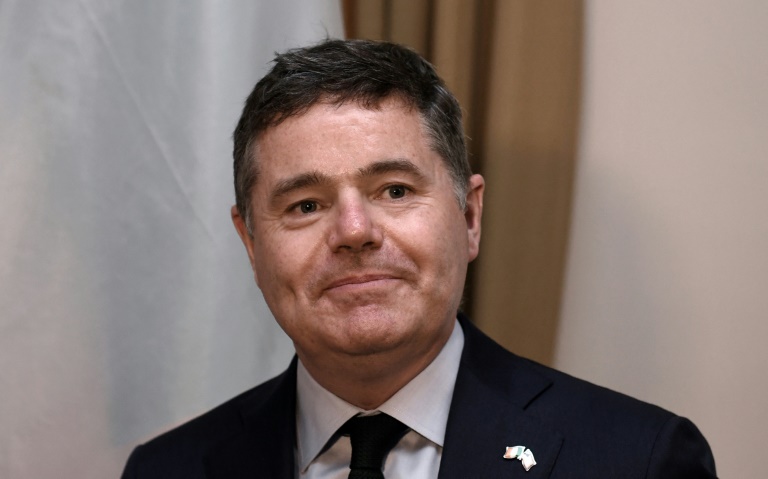
Finance minister for Ireland’s three-party governing coalition Paschal Donohoe will reveal the spending measures at about 1200 GMT in the Dail, the state’s lower house of parliament.

The date for the budget announcement was brought forward by two weeks because of the urgent need to deal with inflationary and supply chain pressures on households and businesses.

On top of a 6.7 billion-euro ($6.5 billion) package laid out in the government’s Summer Economic Statement, the Republic is set to introduce a one-off set of measures to alleviate the cost of living, reportedly of between 2-3 billion euros.

On Saturday, Donohoe reiterated the budget would “put money back in the pockets of people” but would stop short of raiding surplus funds.

“There will always be demands on us to do more and to spend more but we are in really uncertain times, we are dealing with a crisis caused by a huge war in Europe and we cannot be sure how long this will go on for,” he said.

The government has indicated surpluses in the state’s coffers would at least partially be held back to deal with uncertainties like the Covid-19 pandemic, Brexit and the war in Ukraine.

On the back of European Commission proposals for a windfall tax on energy firms, EU member Ireland has moved closer to implementing its own levy to offset rising energy costs on families and businesses.

Earlier this month, deputy premier Leo Varadkar, who will become prime minister in December as part of the coalition government’s rotation deal, told the Dail a backdated windfall tax had been agreed “in principle” and “will form part of the budget”.

But Donohoe has said he had ruled out an energy price cap.  

“Any measure that we bring in needs to be affordable and sustainable, and should not be a source of new risk, and we can see significant difficulties with a cap idea,” he said.

“You are in effect requiring the taxpayer to take on all of the cost regarding the price of something that is currently uncertain”.

Exiled to Latvia, Russian free media defy Kremlin

Exiled to Latvia since the invasion of Ukraine, Russian free media have made it their mission to provide independent information to millions of their compatriots subjected to Kremlin propaganda.

“Those who control the information, they control the situation,” said Tikhon Dzyadko, editor-in-chief of independent Russian TV channel Dozhd, now headquartered in Riga. 

He said the channel’s goal was to make it possible for people to access “real information about what is happening and not this propaganda spread by Russian TV stations.”

Moscow tries to block what it considers dissident news sites online and has restricted access to top social media sites.

Fortunately “it’s possible to get information from Russia through the internet, social media. The digital Iron Curtain is not strong enough,” he told AFP.

Dozhd — which means “rain” in Russian — suspended operations in early March after authorities blocked its broadcasts, which contained critical coverage of the conflict in Ukraine.

Moscow also introduced prison terms for spreading “fake news” about the Russian military and the war.

“It became impossible to work there. Because even for calling a war “war”, we could face up to 15 years in jail,” Dzyadko said.

The Latvian government offered that they set up shop in Riga and by mid-July, their shows were back up and running.

Several other newsrooms have also found refuge in the Latvian capital, including Novaya Gazeta Europe and Deutsche Welle’s Moscow branch. 

The city has also hosted independent news website Meduza since 2014.

Around 300 Russian opposition journalists have moved to the Baltic state since February, according to Dozhd journalist Valeria Ratnikova.

Latvia, whose Russian minority constitutes 30 percent of the population, has also banned all Russia-based TV channels for propaganda, warmongering and as a threat to national security.

– ‘Extremism and treason’ – 

Other journalists, artists and opposition activists from Belarus and Russia have found safety in fellow Baltic states Estonia and Lithuania.

For Dzyadko and his staff, leaving was a no-brainer.

“There was information that our office would be raided by the police and… that our journalists would be arrested and accused of extremism and treason,” he said.

“We found tickets to Istanbul and in an hour or so we packed three suitcases, woke up our kids and went to the airport.”

Today, around 60 Russians in exile work for Dozhd abroad — in Riga, France, Georgia and the Netherlands.

The demand is there, according to Dzyadko.

He pointed out that even government polls show that 30 percent of Russians — or 45 million people, “a huge number” — are against the Ukraine conflict.

“A lot of people in Russia, they understand everything. They do not support the war, they do not support their President Putin, but they are just afraid to say a word,” he said.

“It’s not safe. These people, they are eager to get independent information. The challenge is how to get to them.”

Ratnikova said in the days following the invasion, “we saw our viewer numbers increase.”

“I believe there are thousands, even millions who need us. And it’s not just our former audience… With time, many people will begin to doubt,” she told AFP. 

– ‘They prosecute our colleagues’ – 

Kirill Martynov, deputy editor-in-chief of Novaya Gazeta, a mainstay of investigative journalism in Russia, left in March with a laptop as his only luggage and a plan to publish independent news from abroad. 

Novaya Gazeta has since been banned in Russia.

“We were strongly against war and we are still against war even if it’s too dangerous for people to say it aloud from Russia,” he told AFP.

“And that is why they prosecute our colleagues in Russia.”

In Riga, Martynov set up Novaya Gazeta Europe with others in exile.

They printed their first issue in May, in Latvian and Russian, and newspapers from around the world published their articles in solidarity.

They have posted subsequent stories online, sharing them via social media, including YouTube, Telegram and Twitter.

“Russian authorities are still a bit afraid of blocking YouTube for some technical and social reasons,” Martynov said. 

He added that YouTube has “the hugest media platform in the country because… normal people in Russia don’t want to watch national TV.”

Dzyadko has strong condemnation for television journalists sowing state propaganda, which he calls “war criminals”. 

“Misinformation is one of the reasons why this war started and why this war is still going on,” he said.

Dollar softens after rally but Asian stocks struggle to recover

The dollar lost a little of its strength Tuesday after starting the week by surging against major peers, including a record high versus the pound, though equity traders struggled to claw back recent losses owing to recession fears.

While central banks around the world are ramping up interest rates to fight inflation, the main focus is on the US Federal Reserve’s increasingly hawkish tone that has seen it unveil three successive bumper hikes with a warning of more to come.

That has seen investors pile into the dollar, sending it to record or multi-decade peaks, which has rattled governments from Tokyo to Beijing and London.

On Monday it hit its highest-ever level against the pound — touching $1.0350 after traders were spooked by a massive tax giveaway mini-budget by new UK finance minister Kwasi Kwarteng.

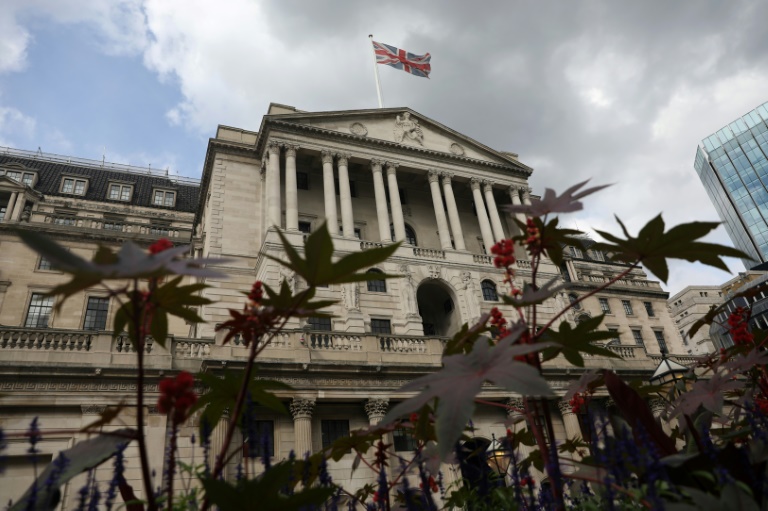
Sterling staged a small recovery but fell back again after traders were left disappointed by a lack of solid action from the Bank of England, with governor Andrew Bailey saying only it would not hesitate to increase rates by as much as needed.

The dollar’s rally against the pound was matched by advances across forex markets, with the euro hitting a new 20-year low and the yen pushing back to the level it hit when the government intervened to support the currency last week.

But the greenback surge ran out of steam Tuesday as a little stability returned to markets, though analysts warned that volatility would remain high as more global rate hikes were in the pipeline and geopolitical crises remained unresolved.

Added to that were concerns that inflation remained stubbornly high.

“The market is pricing in some Fed increases, but we’re a bit worried that it might not be pricing in everything,” Laila Pence, of Pence Wealth Management, told Bloomberg Television.

“We got whipsawed in August when inflation was up not down — everyone is nervous.”

Another selloff in Wall Street stocks saw the S&P 500 suffer its lowest close since December 2020, and Asia also struggled.

Tokyo, Shanghai and Sydney all rose but red was flashing up on screens in Hong Kong, Singapore, Seoul, Wellington, Taipei, Manila and Jakarta.

“Right now financial markets are a mess,” said OANDA’s Edward Moya.

“Wall Street is realising that we won’t be seeing a significant sign that inflation is easing fast enough in the next couple of months and that should make it tough to buy the dip just yet.”

Oil prices edged slightly higher, though both contracts remain wedged at their lowest levels since January owing to the stronger dollar and worries about demand caused by the expected recession.

And Moya added there appeared little chance the commodity will stage a near-term recovery, despite speculation that major producers could announce a fresh output cut.

“Chaos in the forex markets could keep crude prices heavy no matter what OPEC+ does over the short-term,” he wrote. “Forex volatility won’t let up anytime soon and that will send oil on a very long roller-coaster ride.”

– Key figures at around 0230 GMT –

Tokyo – Nikkei 225: Up 0.8 percent at 26,651.60 (break)

Hong Kong – Hang Seng Index: DOWN 0.6 percent at 17,755.57

Shanghai – Composite: UP 0.1 percent at 3,053.60

Pound/dollar: UP at $1.0761 from $1.0689 on Monday

Euro/dollar: UP at $0.9629 from $0.9611

Euro/pound: DOWN at 89.49 pence from 89.87 pence 

Dollar/yen: DOWN at 144.52 yen from 144.72 yen

West Texas Intermediate: UP 0.4 percent at $77.02 per barrel

Brent North Sea crude: UP 0.4 percent at $84.38 per barrel

New York – Dow: DOWN 1.1 percent at 29,260.81 (close)

London – FTSE 100: FLAT at 7,020.95 (close)

Iran steps up activist, journalist arrests in protest crackdown

Iran is stepping up arrests of activists and journalists in a crackdown against civil society as anti-regime protests rage nationwide, activists say.

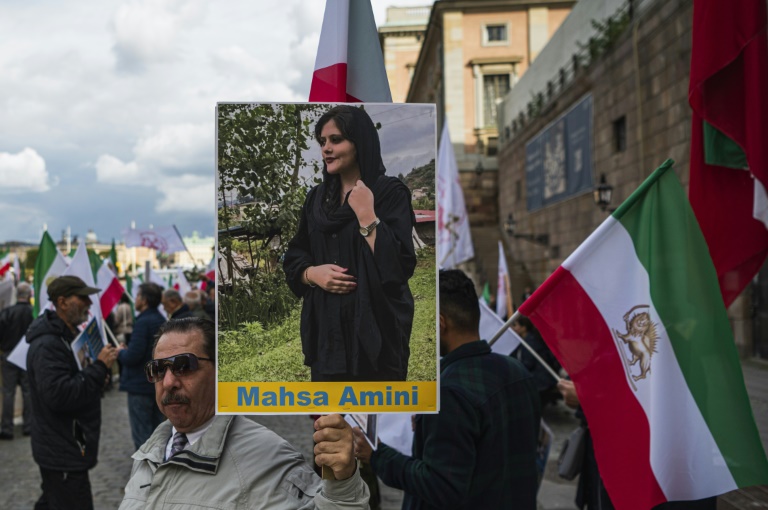
Twenty journalists have been imprisoned since the protests erupted earlier this month over the death of Mahsa Amini, 22, who had been arrested by the country’s notorious morality police, according to the Washington-based Committee to Protect Journalists (CPJ).

Numerous activists and lawyers have also been held, including the prominent freedom of speech campaigner Hossein Ronaghi who was arrested over the weekend.

The arrests come on top of severe internet restrictions and blocking of sites including Instagram and WhatsApp, which activists say is aimed at preventing details of the protests from reaching the outside world.

“By targeting journalists amid a great deal of violence after restricting access to WhatsApp and Instagram, the Iranian authorities are sending a clear message that there must be no coverage of the protests,” Reporters Without Borders said in a statement.

– ‘Defending prohibited’ –

Ronaghi, bitterly critical of Iran’s Islamic leadership, said in a video posted at the weekend that he had initially eluded arrest by escaping his flat when agents came for him.

But he was then detained on Saturday when he went to Tehran’s Evin prison to meet prosecutors and was also beaten by security agents, his brother Hassan wrote on Twitter. 

His mother told Manoto TV in an interview that Hossein Ronaghi’s leg was broken.

Reports said that his lawyers, who accompanied him to Evin, had themselves been detained.

Two other lawyers have also been arrested, lawyer Saeid Dehghan wrote on Twitter.

“This means defending protesters is prohibited!” he said.

Security forces on Monday raided the home of activist and writer Golrokh Iraee and arrested her, according to a message on her Twitter account.

Iraee, well known for campaigning against stoning sentences in Iran, has spent much of the past decade behind bars.

And activist Majid Tavakoli, who has been repeatedly imprisoned in Iran in recent years including after disputed 2009 elections, remains in jail after his arrest in the early hours of Friday.

– ‘We are not safe’ –

Activists said two university students in their early 20s who were also beginning careers as writers — Banafsheh Kamali and Maedeh Jamal — had also been arrested.

Videos posted on social media claimed to show the moment Jamal was arrested, with a female voice heard yelling for help.

Among the 20 journalists held, according to the CPJ, are photojournalist Yalda Moaiery, who won international recognition for an iconic 2019 photo of protests, and reporter Nilufar Hamedi — who exposed the case of Amini by going to the hospital where she was in a coma.

 Hamedi’s husband wrote on Twitter that Hamedi had said in a call from jail that she was in solitary confinement, and was unaware of the charges against her.

Moaiery is being held in the notorious Qarchak women’s prison outside Tehran, from where she told the Iran Wire news website that “we are not safe here” and “the situation is very bad”.

The authorities also arrested five prominent members of the Bahai religious minority in different cities across the country, said Diane Alai, representative of the Bahai International Community to the UN in Geneva.

The Bahai — Iran’s largest non-Muslim religious minority but not recognised in the Islamic Republic — had already been experiencing a crackdown even before the protests started, with senior figures arrested and homes destroyed.

Activists had accused the Iranian authorities of being in the throes of a crackdown even before the protests began. Two of the country’s most acclaimed filmmakers Jafar Panahi and Mohammad Rasoulof were among those arrested.

Boost climate action or we'll see you in court, activists tell govts

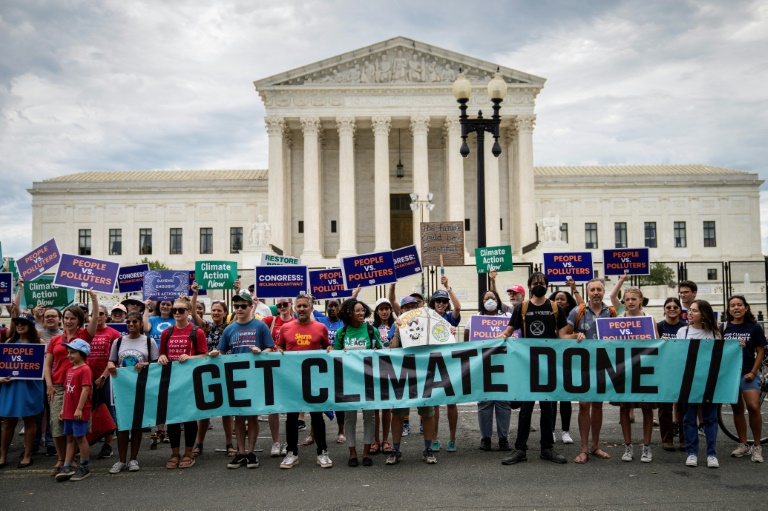
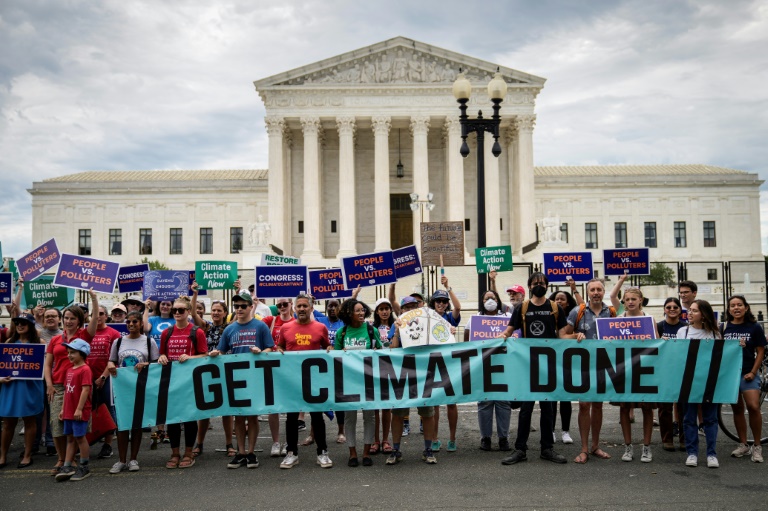
Governments around the world must scale up climate action “or face further legal action”, an open letter from campaign groups warned Tuesday, as battles over policies to cut emissions and protect the environment are increasingly fought in the courts.

From legal efforts to steer governments to do more to curb fossil fuel pollution, to court action over companies’ misleading green claims, the number, scope and ambitions of climate litigation is expanding, say experts, with an increasing number of cases are being launched against governments. 

And that will continue if they do not use the upcoming United Nations COP meeting in Egypt to substantially enhance their climate action, according to an open letter signed by lawyers from more than 20 organisations around the world. 

“Governments of the world: your delay is costing lives. Strong action is needed now to protect people and the planet,” the letter said. 

“If you continue to fail us, we will continue to turn to the courts to demand accountability.”

The groups said they had already launched more than 80 legal cases around the world to “compel” governments from the Netherlands to Brazil, warning that the world was on the “precipice of the most serious intergenerational violation of human rights in history”.

Research from the Grantham Research Institute at the London School of Economics this year has found that of the 2,000 or so climate legal cases filed since 1986, almost a quarter were started since the beginning of 2020. 

Some 80 of these cases have been filed against national or subnational governments since 2005, the research found, with a record number of 30 new cases submitted in 2021. 

Perhaps the most successful of this kind of case was environmental group Urgenda’s landmark 2019 victory in Dutch courts, which saw the government ordered to reduce greenhouse gas emissions by at least 25 percent by the end of 2020. The target was largely met.

“Climate action is a legal duty. Yet governments are failing to comply with their own laws and commitments,” said Sarah Mead Co-Director of Climate Litigation Network, part of the Urgenda Foundation, which signed the letter. 

“We want to make sure that countries understand that the law is on our side.”

– Cases rise –

But legal rulings can go both ways. 

In June, the US Supreme Court ruled that the government’s key environmental agency cannot issue broad limits on greenhouse gases.

Campaigners say that energy companies are increasingly turning to international arbitration to recoup investments as governments accelerate the shift away from fossil fuels.

Earth has warmed nearly 1.2 degrees Celsius above pre-industrial levels so far, unleashing more intense weather extremes, including dangerous heatwaves and floods.  

The 2015 Paris Agreement saw governments agree to a cap on warming of well below 2C and preferably a safer 1.5C. 

But the UN’s Environment Programme has said that even taking into account updated global promises to cut emissions of heat-trapping gases, the world is currently on course to warm 2.8C. 

Boost climate action or we'll see you in court, activists tell govts

Governments around the world must scale up climate action “or face further legal action”, an open letter from campaign groups warned Tuesday, as battles over policies to cut emissions and protect the environment are increasingly fought in the courts.

From legal efforts to steer governments to do more to curb fossil fuel pollution, to court action over companies’ misleading green claims, the number, scope and ambitions of climate litigation is expanding, say experts, with an increasing number of cases are being launched against governments. 

And that will continue if they do not use the upcoming United Nations COP meeting in Egypt to substantially enhance their climate action, according to an open letter signed by lawyers from more than 20 organisations around the world. 

“Governments of the world: your delay is costing lives. Strong action is needed now to protect people and the planet,” the letter said. 

“If you continue to fail us, we will continue to turn to the courts to demand accountability.”

The groups said they had already launched more than 80 legal cases around the world to “compel” governments from the Netherlands to Brazil, warning that the world was on the “precipice of the most serious intergenerational violation of human rights in history”.

Research from the Grantham Research Institute at the London School of Economics this year has found that of the 2,000 or so climate legal cases filed since 1986, almost a quarter were started since the beginning of 2020. 

Some 80 of these cases have been filed against national or subnational governments since 2005, the research found, with a record number of 30 new cases submitted in 2021. 

Perhaps the most successful of this kind of case was environmental group Urgenda’s landmark 2019 victory in Dutch courts, which saw the government ordered to reduce greenhouse gas emissions by at least 25 percent by the end of 2020. The target was largely met.

“Climate action is a legal duty. Yet governments are failing to comply with their own laws and commitments,” said Sarah Mead Co-Director of Climate Litigation Network, part of the Urgenda Foundation, which signed the letter. 

“We want to make sure that countries understand that the law is on our side.”

– Cases rise –

But legal rulings can go both ways. 

In June, the US Supreme Court ruled that the government’s key environmental agency cannot issue broad limits on greenhouse gases.

Campaigners say that energy companies are increasingly turning to international arbitration to recoup investments as governments accelerate the shift away from fossil fuels.

Earth has warmed nearly 1.2 degrees Celsius above pre-industrial levels so far, unleashing more intense weather extremes, including dangerous heatwaves and floods.  

The 2015 Paris Agreement saw governments agree to a cap on warming of well below 2C and preferably a safer 1.5C. 

But the UN’s Environment Programme has said that even taking into account updated global promises to cut emissions of heat-trapping gases, the world is currently on course to warm 2.8C. 

UK's Starmer to insist Labour fit to govern as crisis rocks govt

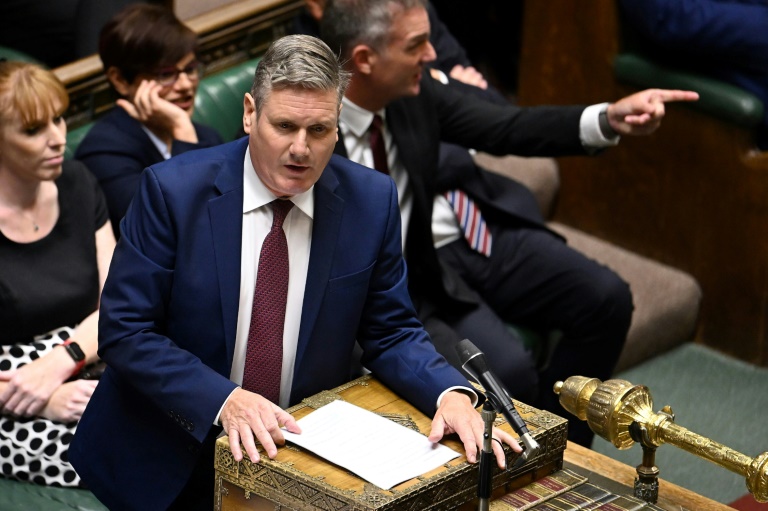
Labour leader Keir Starmer will argue Tuesday his once-fractured party is ready to lead Britain out of economic crisis under the ruling Conservatives.

At the main opposition party’s annual conference, Starmer will say the Tories and new Prime Minister Liz Truss have “lost control of the British economy”.

He will also insist that Labour — out of power for 12 years and dogged in recent times by ideological infighting — is now the party of “sound money”, according to his office.

His set-piece speech comes as the UK grapples with decades-high inflation, an imminent recession and the pound crashing to unprecedented lows against the US dollar this week.

The pound’s plunge has been blamed on a mini-budget unveiled Friday by finance minister Kwasi Kwarteng, which cut a host of taxes — including for the highest earners — and raised government borrowing.

Despite the gloomy economic picture, Labour’s rank-and-file are gathering in upbeat mood. The party appears more unified than at any point in recent years and has a comfortable lead in the polls.

“I feel it’s very positive here — we are united,” Mary Stiles, 75, a former councillor from central England, told AFP.

“We know we can do it,” she said of retaking power. “We’ve got to do what (former British prime minister) Tony Blair did in 1997: we’ve got to get back in and change things.”

– Royalists –

Starmer, 60, took over the Labour leadership in April 2020 from the radical Jeremy Corbyn.

He struggled to break through with the British public during the Covid pandemic. But the financial crisis, and the Tories’ problems under the scandal-plagued Boris Johnson, have revived Labour. 

The latest poll by Survation suggested Labour would win a 56-seat parliamentary majority if a general election were held today, comfortably overturning the majority of 80 that Johnson won against Corbyn in 2019.

The next election is not due until January 2025 at the latest.

Starmer has taken Labour back to the centre ground after the gaping divisions between its left and right wings seen under Corbyn.

In an unusual move, attendees at this year’s conference in Liverpool, northwest England, on Sunday sang the national anthem “God Save the King”, beneath images of the late queen Elizabeth II.

Fears the rendition would be marred by boos or heckles from the Corbyn-leaning left proved unfounded.

In his speech, Starmer will hail that as evidence Labour is once again “the political wing of the British people”, in a clear nod to Blair. 

– ‘Grown-ups’ –

Starmer has vowed not to reverse the Conservatives’ “hard Brexit” deal, which took Britain out of the European Union’s single market and customs union.

He has also tried to steer clear of culture war issues, revolving around gender and racial politics, instead sticking to core themes around the economy, health care and crime.

He will promise a new “green prosperity plan” that prioritises economic growth alongside tackling climate change.

But bubbling under is disquiet from the party’s traditional union backers about support for public and private sector workers on strike over pay.

Starmer has barred his top team from appearing on picket lines and been less supportive of the walkouts than some on the party’s left.

The moves have prompted criticism from some unions and predictions they could now cut some of the millions of pounds they give the party annually.

But an uneasy truce appears to have prevailed during the conference, with union leaders curbing their criticism.

Some party members voiced support for Starmer’s stance on the unions, arguing it is necessary to show Labour is ready to govern again.

“The grown-ups are back in town,” declared Angela Briggs, 69, a retired head teacher from Oxfordshire, in southern England, attending the conference for the first time.

Close Bitnami banner
Bitnami