World

Iran steps up activist, journalist arrests in protest crackdown

Iran is stepping up arrests of activists and journalists in a crackdown against civil society as anti-regime protests rage nationwide, activists say.

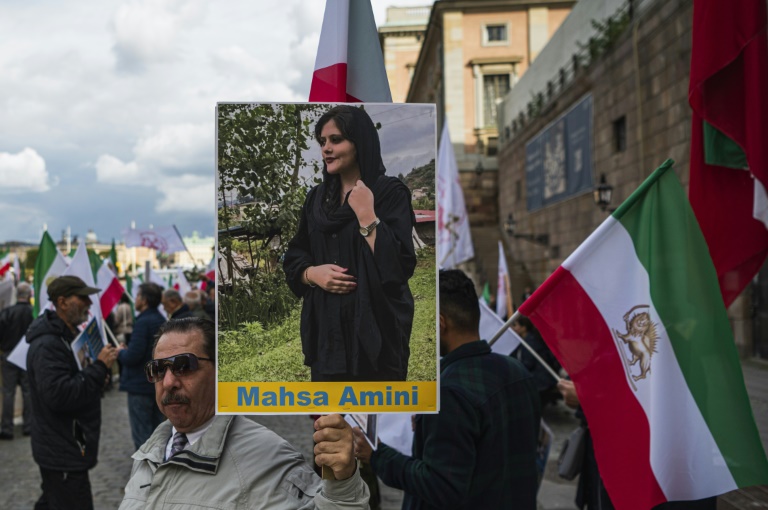
Twenty journalists have been imprisoned since the protests erupted earlier this month over the death of Mahsa Amini, 22, who had been arrested by the country’s notorious morality police, according to the Washington-based Committee to Protect Journalists (CPJ).

Numerous activists and lawyers have also been held, including the prominent freedom of speech campaigner Hossein Ronaghi who was arrested over the weekend.

The arrests come on top of severe internet restrictions and blocking of sites including Instagram and WhatsApp, which activists say is aimed at preventing details of the protests from reaching the outside world.

“By targeting journalists amid a great deal of violence after restricting access to WhatsApp and Instagram, the Iranian authorities are sending a clear message that there must be no coverage of the protests,” Reporters Without Borders said in a statement.

– ‘Defending prohibited’ –

Ronaghi, bitterly critical of Iran’s Islamic leadership, said in a video posted at the weekend that he had initially eluded arrest by escaping his flat when agents came for him.

But he was then detained on Saturday when he went to Tehran’s Evin prison to meet prosecutors and was also beaten by security agents, his brother Hassan wrote on Twitter. 

His mother told Manoto TV in an interview that Hossein Ronaghi’s leg was broken.

Reports said that his lawyers, who accompanied him to Evin, had themselves been detained.

Two other lawyers have also been arrested, lawyer Saeid Dehghan wrote on Twitter.

“This means defending protesters is prohibited!” he said.

Security forces on Monday raided the home of activist and writer Golrokh Iraee and arrested her, according to a message on her Twitter account.

Iraee, well known for campaigning against stoning sentences in Iran, has spent much of the past decade behind bars.

And activist Majid Tavakoli, who has been repeatedly imprisoned in Iran in recent years including after disputed 2009 elections, remains in jail after his arrest in the early hours of Friday.

– ‘We are not safe’ –

Activists said two university students in their early 20s who were also beginning careers as writers — Banafsheh Kamali and Maedeh Jamal — had also been arrested.

Videos posted on social media claimed to show the moment Jamal was arrested, with a female voice heard yelling for help.

Among the 20 journalists held, according to the CPJ, are photojournalist Yalda Moaiery, who won international recognition for an iconic 2019 photo of protests, and reporter Nilufar Hamedi — who exposed the case of Amini by going to the hospital where she was in a coma.

 Hamedi’s husband wrote on Twitter that Hamedi had said in a call from jail that she was in solitary confinement, and was unaware of the charges against her.

Moaiery is being held in the notorious Qarchak women’s prison outside Tehran, from where she told the Iran Wire news website that “we are not safe here” and “the situation is very bad”.

The authorities also arrested five prominent members of the Bahai religious minority in different cities across the country, said Diane Alai, representative of the Bahai International Community to the UN in Geneva.

The Bahai — Iran’s largest non-Muslim religious minority but not recognised in the Islamic Republic — had already been experiencing a crackdown even before the protests started, with senior figures arrested and homes destroyed.

Activists had accused the Iranian authorities of being in the throes of a crackdown even before the protests began. Two of the country’s most acclaimed filmmakers Jafar Panahi and Mohammad Rasoulof were among those arrested.
Dollar softens after rally but Asian stocks struggle to recover

The dollar lost a little of its strength Tuesday after starting the week by surging against major peers, including a record high versus the pound, though equity traders struggled to claw back recent losses owing to recession fears.

While central banks around the world are ramping up interest rates to fight inflation, the main focus is on the US Federal Reserve’s increasingly hawkish tone that has seen it unveil three successive bumper hikes with a warning of more to come.

That has seen investors pile into the dollar, sending it to record or multi-decade peaks, which has rattled governments from Tokyo to Beijing and London.

On Monday it hit its highest-ever level against the pound — touching $1.0350 after traders were spooked by a massive tax giveaway mini-budget by new UK finance minister Kwasi Kwarteng.

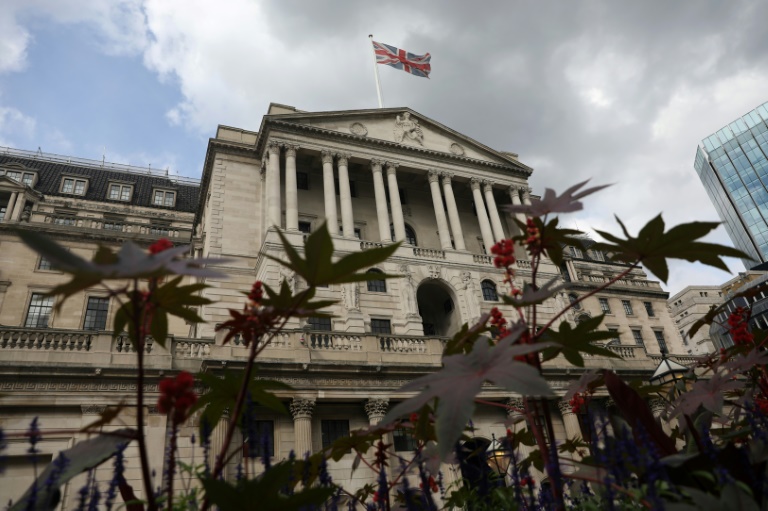
Sterling staged a small recovery but fell back again after traders were left disappointed by a lack of solid action from the Bank of England, with governor Andrew Bailey saying only it would not hesitate to increase rates by as much as needed.

The dollar’s rally against the pound was matched by advances across forex markets, with the euro hitting a new 20-year low and the yen pushing back to the level it hit when the government intervened to support the currency last week.

But the greenback surge ran out of steam Tuesday as a little stability returned to markets, though analysts warned that volatility would remain high as more global rate hikes were in the pipeline and geopolitical crises remained unresolved.

Added to that were concerns that inflation remained stubbornly high.

“The market is pricing in some Fed increases, but we’re a bit worried that it might not be pricing in everything,” Laila Pence, of Pence Wealth Management, told Bloomberg Television.

“We got whipsawed in August when inflation was up not down — everyone is nervous.”

Another selloff in Wall Street stocks saw the S&P 500 suffer its lowest close since December 2020, and Asia also struggled.

Tokyo, Shanghai and Sydney all rose but red was flashing up on screens in Hong Kong, Singapore, Seoul, Wellington, Taipei, Manila and Jakarta.

“Right now financial markets are a mess,” said OANDA’s Edward Moya.

“Wall Street is realising that we won’t be seeing a significant sign that inflation is easing fast enough in the next couple of months and that should make it tough to buy the dip just yet.”

Oil prices edged slightly higher, though both contracts remain wedged at their lowest levels since January owing to the stronger dollar and worries about demand caused by the expected recession.

And Moya added there appeared little chance the commodity will stage a near-term recovery, despite speculation that major producers could announce a fresh output cut.

“Chaos in the forex markets could keep crude prices heavy no matter what OPEC+ does over the short-term,” he wrote. “Forex volatility won’t let up anytime soon and that will send oil on a very long roller-coaster ride.”

– Key figures at around 0230 GMT –

Tokyo – Nikkei 225: Up 0.8 percent at 26,651.60 (break)

Hong Kong – Hang Seng Index: DOWN 0.6 percent at 17,755.57

Shanghai – Composite: UP 0.1 percent at 3,053.60

Pound/dollar: UP at $1.0761 from $1.0689 on Monday

Euro/dollar: UP at $0.9629 from $0.9611

Euro/pound: DOWN at 89.49 pence from 89.87 pence 

Dollar/yen: DOWN at 144.52 yen from 144.72 yen

West Texas Intermediate: UP 0.4 percent at $77.02 per barrel

Brent North Sea crude: UP 0.4 percent at $84.38 per barrel

New York – Dow: DOWN 1.1 percent at 29,260.81 (close)

London – FTSE 100: FLAT at 7,020.95 (close)

Kremlin proxies in Ukraine hold last day of annexation votes

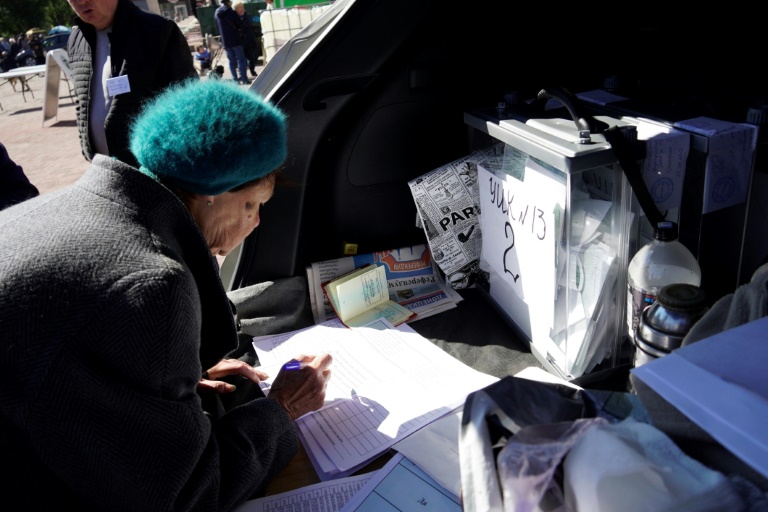
Annexation polls organised by Kremlin-installed authorities in four regions of Ukraine mostly controlled by Russian forces were due to close Tuesday, with Moscow’s threats of nuclear weapons looming.

Kyiv and its allies have denounced the votes as a sham and said the West would never recognise the results of the ballots which are ratcheting up the stakes of Russia’s seven-month invasion.

Russian forces in Ukraine this month have suffered serious setbacks, both in the east and south of the country, which observers say pushed President Vladimir Putin to rush ahead with the vote to cement Moscow’s authority there.

Putin said Russia would use any and all available means to defend its territory, implying that after the four regions were annexed Moscow could deploy strategic nuclear weapons to repulse Ukrainian attempts to take back the territory.

He also announced that Moscow was calling up 300,000 reservists, a move that sparked some protests and saw Russian men fearing deployment to Ukraine flee to neighbouring countries.

The four Russian-occupied regions of Ukraine — Donetsk and Lugansk in the east and Kherson and Zaporizhzhia in the south — announced that they would hold the votes just days before voting began on Friday. 

US President Joe Biden said the polls were a “sham” and little more than a “false pretext to try to annex parts of Ukraine by force”.

Even Moscow’s closest ally since the start of the invasion, Beijing, said after the votes were announced that both Russia and Ukraine should respect territorial integrity in the war.

Kremlin-backed leaders in the regions have said provisional results could be expected around Tuesday evening or in the days that follow.

Lawmakers would then be expected to vote to formally annex the four territories, which would need Putin’s signature to be enacted.

– ‘Sham referendums’ –

The so-called referendums follow a pattern that Moscow utilised in 2014 to annex the Crimean peninsula from Ukraine in the wake of national street demonstrations that saw the country’s Kremlin-friendly president ousted.

Like then, the outcome of the ballot is being viewed by observers as a foregone conclusion. Election officials brought ballot boxes door-to-door in many cases accompanied by armed Russian forces.

The UK government ahead of the final day of voting sanctioned 92 Russian individuals and entities for their various roles in the voting.

“Sham referendums held at the barrel of a gun cannot be free or fair and we will never recognise their results,” Foreign Secretary James Cleverly said in a statement.

With fighting continuing along Ukraine’s sprawling frontline, AFP journalists were led to the country’s latest suspected mass burial site in a shell-damaged and abandoned industrial chicken farm.

“I was told by the soldiers who came to our village that they saw a burial place of soldiers, but they didn’t specify the number,” said Lyudmyla Vakulenko, head of the Kozacha Lopan local administration.

The village is in the eastern Kharkiv region where a counter-offensive by Ukrainian troops saw dozens of towns and villages recaptured.

Japan honours assassinated Abe at controversial funeral

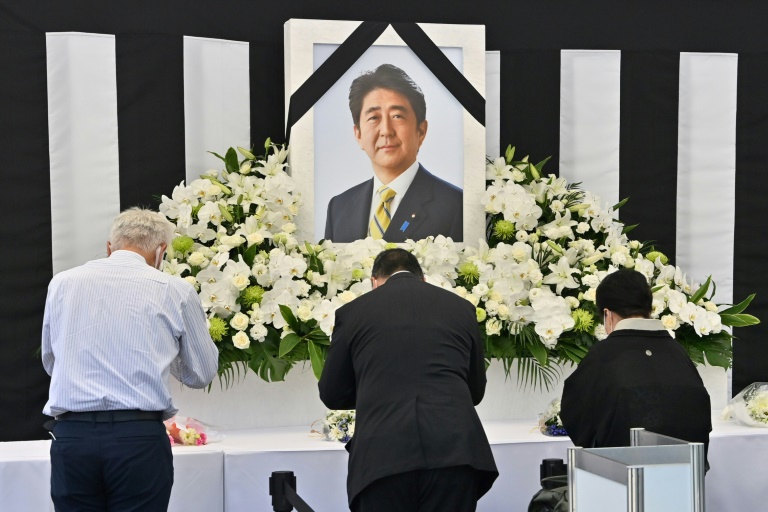
Thousands of Japanese offered flowers and prayers on Tuesday in honour of assassinated former prime minister Shinzo Abe ahead of a controversial state funeral attended by hundreds of foreign dignitaries.

Abe’s ashes will arrive in the afternoon for the ceremony at Tokyo’s Budokan venue, but a huge line of people gathered from early in the morning to lay flowers at a mourning tent nearby.

Koji Takamori came all the way from northern Hokkaido with his nine-year-old son.

“I wanted to thank him. He has done so much for Japan,” the 46-year-old told AFP.

“The way he died was so shocking.

“To be honest, I also came because there has been so much opposition. It’s almost like I’m here to oppose those who are opposing this (funeral),” he added.

Abe was Japan’s longest-serving prime minister and one of the country’s most recognisable political figures, known for cultivating international alliances and his “Abenomics” economic strategy.

He resigned in 2020 over recurring health problems, but remained a key political voice and was campaigning for his ruling party when a lone gunman killed him on July 8.

The shooting sent shock waves through a country with famously low gun crime and prompted international condemnation.

But the decision to give him a state funeral — only the second for a former premier in the post-war period — has provoked opposition, with around 60 percent of Japanese against the event in recent polls.

– Discontent over state funeral –

Abe’s accused killer targeted the former leader believing he had ties to the Unification Church, which he resented over massive donations his mother had made to the sect.

The assassination prompted fresh scrutiny of the church and its fundraising, and uncomfortable questions for Japan’s political establishment, with the ruling party admitting around half its lawmakers had links to the religious organisation.

Prime Minister Fumio Kishida has pledged the party will sever all ties with the church, but the scandal helped fuel discontent over the state funeral.

Thousands have protested the ceremony and a man set himself on fire last week near the prime minister’s office, leaving notes reportedly expressing his objection to the event.

Some lawmakers from opposition parties are also boycotting the funeral altogether.

The controversy has various causes, with some accusing Kishida of unilaterally approving the funeral instead of consulting parliament, and others resentful of a nearly $12 million price tag.

It is also the legacy of Abe’s divisive tenure, marked by persistent allegations of cronyism, and opposition to his nationalism and plans to reform the pacifist constitution.

Despite the controversy, so many people lined up to offer flowers in Tokyo that officials opened the tent half an hour earlier than planned.

– Moment of silence –

The crowd, some dressed smartly in black but others wearing casual clothes, spanned age groups, and mourners placed mostly white bouquets before a photo of Abe with black ribbons draped across its top corners.

Kishida’s government may be hoping the solemnity of the event, attended by an estimated 4,300 people including 700 foreign invitees, will drown out the controversy.

US Vice President Kamala Harris and world leaders including Indian Prime Minister Narendra Modi and Australian premier Anthony Albanese will attend the ceremony.

Abe worked to cultivate close ties with Washington to bolster the key US-Japanese alliance, and also courted a stronger “Quad” grouping Japan, the United States, India and Australia.

Abe’s ashes are expected to arrive at the site to the sound of a 19-gun salute, and chief government spokesman Hirokazu Matsuno will open proceedings around 2:00 pm (0500 GMT) before the national anthem and a moment of silence.

Eulogies will follow from Kishida and politicians including Yoshihide Suga, who succeeded Abe after his resignation.

Japan’s emperor and empress will not attend, as neutral national figures, but Crown Prince Akishino and his wife are expected to lead mourners in offering flowers at the end of the 90-minute service.

The event will involve a massive security operation, accounting for a significant part of the estimated 1.7 billion yen cost of the funeral.

The security flaws that allowed a gunman to approach and kill Abe have prompted a policing overhaul, and local media reported that 20,000 police officers would be deployed for the funeral.

Chess champ Carlsen accuses Niemann of recent cheating

Chess superstar Magnus Carlsen for the first time openly accused American Hans Niemann of cheating Monday, saying the rising star had done so more recently and more often than he previously admitted.

The chess world has been shaken for three weeks by the Carlsen-Niemann controversy, since the 31-year-old five-time world champion withdrew from the Sinquefield Cup in the US after losing to Niemann, 19.

Last week, the Norwegian’s abrupt withdrawal from a match against Niemann in the Julius Baer Generation Cup online tournament reignited the furore.

In a letter published on Twitter and addressed “Dear Chess World,” Carlsen said: “I believe that Niemann has cheated more — and more recently — than he has publicly admitted.

“His over the board progress has been unusual.”

He did not specify the exact form of the alleged cheating, but added there was “more that I would like to say”.

Niemann has acknowledged cheating online twice, when he was 12 and 16, but says he has never played fraudulently in a face-to-face match and is even willing to play nude to prove his good faith.

In early September, the huge chess platform chess.com banned the American for cheating on the site.

AFP contacted Niemann for comment but he did not immediately reply.

During their Sinquefield Cup match, Niemann did not seem tense or even to be “fully concentrating on the game in critical positions, while outplaying me as a black in a way I think only a few players can do”, Carlsen continued in his letter.

He called cheating in chess “an existential threat to the game” and said: “I don’t want to play against people that have cheated repeatedly in the past.”

He concluded by saying he hoped the truth would come out, “whatever it may be”.

Venezuela, Colombia reopen border to vehicles carrying goods

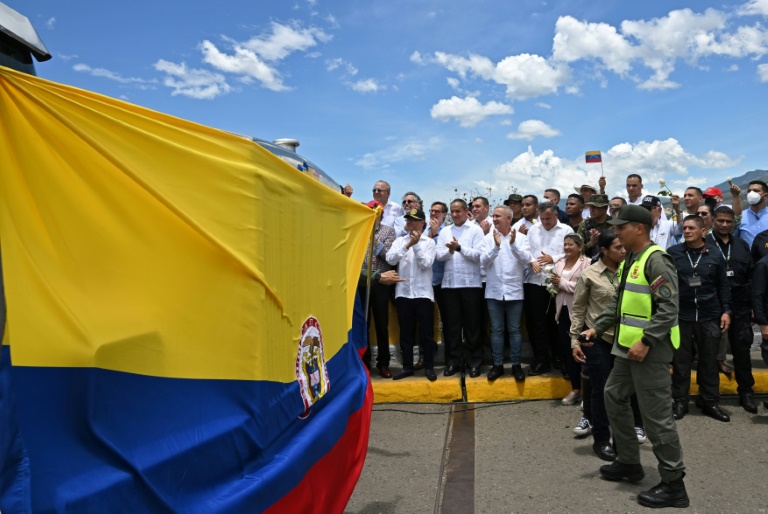
Venezuela and Colombia on Monday reopened their border to vehicles transporting goods following seven years of partial closure, including three years in which it was fully closed due to a political spat.

Colombian President Gustavo Petro and representatives of the government of Venezuelan leader Nicolas Maduro attended the ceremony.

The first truck left San Antonio del Tachira on the Venezuelan side of the border just after midday and crossed the Simon Bolivar bridge to Cucuta in Colombia.

“We are resuming relations and taking firm steps to advance in the total and absolute opening of the border between brother peoples,” said Maduro on Twitter.

“It’s a historic and transcendental day!”

The South American neighbors broke off diplomatic relations in 2019 under Colombia’s conservative president Ivan Duque.

But since Petro succeeded him in August, Colombia’s first ever left-wing president has moved to mend relations with Venezuela’s populist leftist government.

“It is very, very important for us to progress on the fundamental rights of the people. Families have been separated, there was a break in our relationships of respect and trust,” Colombian lawmaker Jairo Cristo said during the ceremony.

This reopening is the first step toward the complete reestablishment of commercial relations between the two countries, which were worth around $7.2 billion in 2008.

“The closure (of the border) has done a lot of damage… Let’s see if from now on we can hear another song,” said Jairo Sayago, a 55-year-old Colombian trader from San Antonio.

Asked about a possible meeting with his Venezuelan counterpart, Petro said that “there is no date” fixed for the moment. 

“I hope that the mass migration that came from Venezuela to here… will now be able to be slowed down,” he said, also calling for a “necessary integration of the economy of the two countries.”

“I want the first beneficiaries to be the people who live on both sides of the border,” he added.

The neighbors share a 2,200-kilometer (1,350-mile) border infested with armed groups that have created insecurity by fighting over lucrative illegal trades such as drug trafficking and smuggling.

The two countries were due to resume flights between their capitals on Monday.

Caracas and Bogota formally reestablished diplomatic relations on August 29 by sending ambassadors to each other’s capitals.

Venezuela had broken off diplomatic relations in 2019 after Duque expressed support for opposition leader Juan Guaido’s attempts to oust Maduro. 

Border crossing by vehicles carrying goods had been restricted since 2015 and were blocked entirely in 2019 as Guaido unsuccessfully tried to force through trucks carrying food and medicine from the United States.

Venezuela has suffered years of economic crisis that has seen poverty soar and millions of people leave the country, many to settle in Colombia.

Cuba, Florida brace for Hurricane Ian

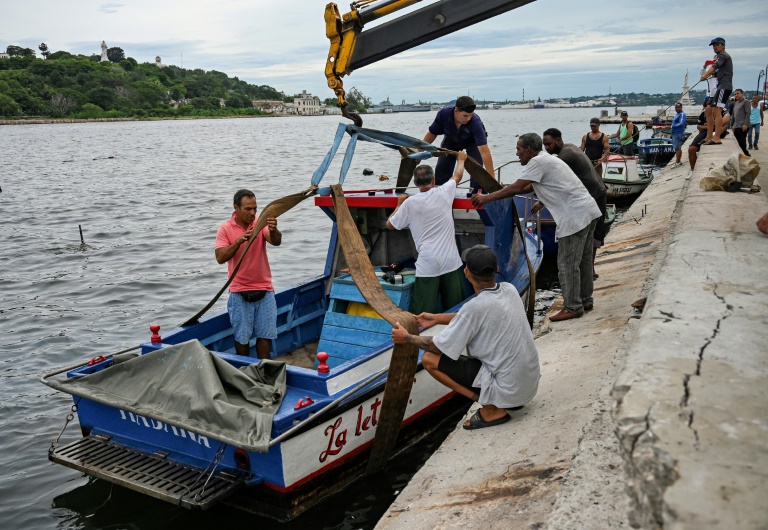
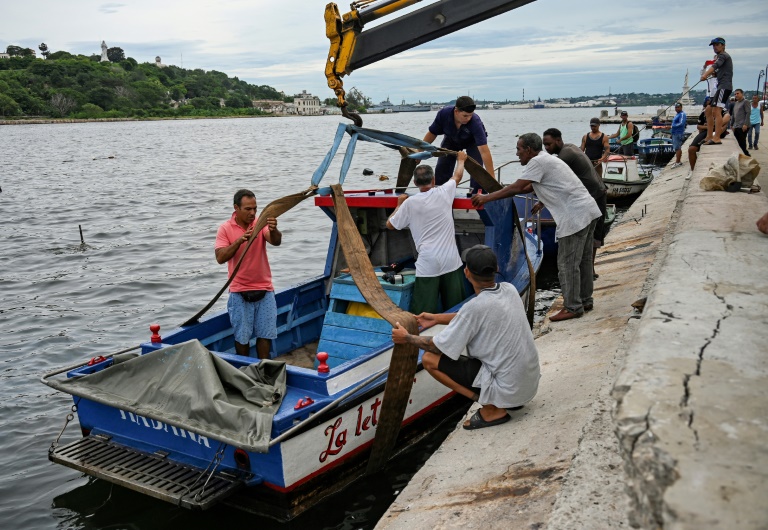
Cuba declared an emergency alert in multiple provinces Monday as fast-approaching Hurricane Ian strengthened rapidly, with Florida also ramping up preparations ahead of a likely hit.

Some 50,000 people in Cuba’s western Pinar del Rio province moved to safer locations, 6,000 of them to state-run shelters and the rest to the homes of relatives and friends, local authorities said.

The US National Hurricane Center (NHC) warned Ian was intensifying and could pass over western Cuba late Monday and early Tuesday.

“Maximum sustained winds are near 100 miles per hour (155 kilometers per hour) with higher gusts,” it said, making Ian a Category 2 storm on the Saffir-Simpson scale.

“Rapid strengthening is expected during the next day or so,” the NHC added.

– ‘Huge storm surge’ expected –

In Florida, the city of Tampa was under a hurricane watch, and Governor Ron DeSantis declared a state of emergency in all 67 counties as officials scrambled to prepare for the storm’s forecast landing on Wednesday or Thursday.

Ian “will bring heavy rains, strong winds, flash flooding, storm surge, along with isolated tornado activity along Florida’s Gulf Coast,” DeSantis said at a press conference in Tallahassee on Monday.

He warned people to prepare for power cuts.

“Even if the eye of the storm doesn’t hit your region, you’re going to have really significant winds, it’s going to knock over trees, it’s going to cause interruptions,” DeSantis said, warning of likely flooding.

The governor urged residents to stock up on food, water, medicine and fuel, and he activated 7,000 National Guard members to help with the effort.

Authorities in several Florida municipalities, including Miami, Fort Lauderdale and Tampa, started distributing free sandbags to residents to help protect their homes from the risk of flooding.

President Joe Biden approved emergency aid to 24 counties in Florida through the Federal Emergency Management Agency (FEMA).

NASA said it was rolling back its massive Moon rocket into its storage hangar at the Kennedy Space Center in Florida due to the hurricane.

– Fiona’s wake –

The Caribbean and parts of eastern Canada are still counting the cost of powerful storm Fiona, which tore through last week, claiming several lives.

When it arrived in eastern Canada, the storm packed intense winds of 80 miles per hour, bringing torrential rain and waves of up to 40 feet (12 meters).

Three people are believed to have died when Fiona barreled into Canada’s Atlantic provinces as a post-tropical cyclone early Saturday.

Prince Edward Island authorities confirmed the death of one person, while officials in Newfoundland said they found the body of a 73-year-old woman believed to have been swept from her home. She was apparently sheltering in her basement when waves broke through.

A third person has been reported missing in Nova Scotia — one of the hardest-hit provinces — and is presumed dead

“The devastation is immense,” Nova Scotia Premier Tim Houston told reporters. “The magnitude of the storm is incredible.”

Storm surges swept at least 20 homes into the sea in the town of Channel-Port aux Basques, on the southwestern tip of Newfoundland.

Around 200 residents had been evacuated before the storm hit.

“Some people have lost everything, and I mean everything,” Mayor Brian Button told CBC News.

Cuba, Florida brace for Hurricane Ian

Cuba declared an emergency alert in multiple provinces Monday as fast-approaching Hurricane Ian strengthened rapidly, with Florida also ramping up preparations ahead of a likely hit.

Some 50,000 people in Cuba’s western Pinar del Rio province moved to safer locations, 6,000 of them to state-run shelters and the rest to the homes of relatives and friends, local authorities said.

The US National Hurricane Center (NHC) warned Ian was intensifying and could pass over western Cuba late Monday and early Tuesday.

“Maximum sustained winds are near 100 miles per hour (155 kilometers per hour) with higher gusts,” it said, making Ian a Category 2 storm on the Saffir-Simpson scale.

“Rapid strengthening is expected during the next day or so,” the NHC added.

– ‘Huge storm surge’ expected –

In Florida, the city of Tampa was under a hurricane watch, and Governor Ron DeSantis declared a state of emergency in all 67 counties as officials scrambled to prepare for the storm’s forecast landing on Wednesday or Thursday.

Ian “will bring heavy rains, strong winds, flash flooding, storm surge, along with isolated tornado activity along Florida’s Gulf Coast,” DeSantis said at a press conference in Tallahassee on Monday.

He warned people to prepare for power cuts.

“Even if the eye of the storm doesn’t hit your region, you’re going to have really significant winds, it’s going to knock over trees, it’s going to cause interruptions,” DeSantis said, warning of likely flooding.

The governor urged residents to stock up on food, water, medicine and fuel, and he activated 7,000 National Guard members to help with the effort.

Authorities in several Florida municipalities, including Miami, Fort Lauderdale and Tampa, started distributing free sandbags to residents to help protect their homes from the risk of flooding.

President Joe Biden approved emergency aid to 24 counties in Florida through the Federal Emergency Management Agency (FEMA).

NASA said it was rolling back its massive Moon rocket into its storage hangar at the Kennedy Space Center in Florida due to the hurricane.

– Fiona’s wake –

The Caribbean and parts of eastern Canada are still counting the cost of powerful storm Fiona, which tore through last week, claiming several lives.

When it arrived in eastern Canada, the storm packed intense winds of 80 miles per hour, bringing torrential rain and waves of up to 40 feet (12 meters).

Three people are believed to have died when Fiona barreled into Canada’s Atlantic provinces as a post-tropical cyclone early Saturday.

Prince Edward Island authorities confirmed the death of one person, while officials in Newfoundland said they found the body of a 73-year-old woman believed to have been swept from her home. She was apparently sheltering in her basement when waves broke through.

A third person has been reported missing in Nova Scotia — one of the hardest-hit provinces — and is presumed dead

“The devastation is immense,” Nova Scotia Premier Tim Houston told reporters. “The magnitude of the storm is incredible.”

Storm surges swept at least 20 homes into the sea in the town of Channel-Port aux Basques, on the southwestern tip of Newfoundland.

Around 200 residents had been evacuated before the storm hit.

“Some people have lost everything, and I mean everything,” Mayor Brian Button told CBC News.

'Desperation' in violence-ravaged Haiti, UN hears

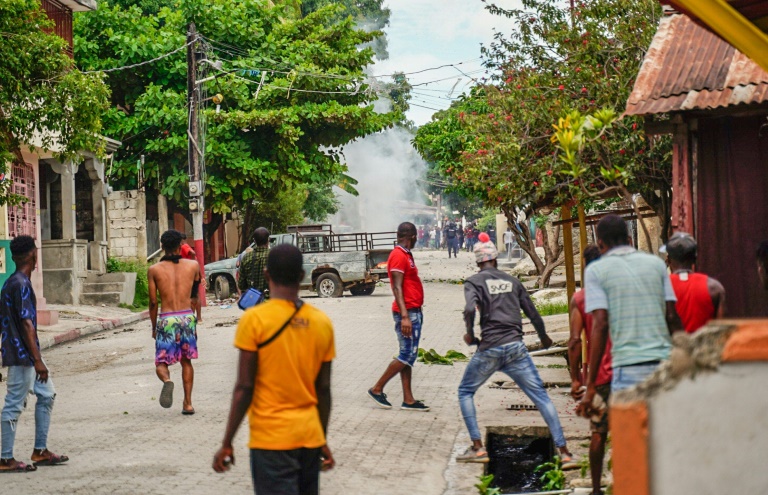
Officials described a “humanitarian catastrophe” in Haiti to the UN Security Council Monday, as the nation hits “new levels of desperation” after two weeks of violence and attacks on food aid warehouses.

Protests and looting have rocked the already unstable country since September 11, when Prime Minister Ariel Henry announced a fuel price hike; he says subsidies are too expensive for one of the world’s poorest states.

“An economic crisis, a gang crisis and a political crisis have converged into a humanitarian catastrophe,” Haiti’s UN envoy, Helen La Lime, said during an emergency Council meeting.

“Before the current bout of civil unrest, some 4.9 million Haitians were in a state of humanitarian need. In the last two weeks alone, attacks on WFP (World Food Program) have resulted in the loss of some 2,000 tonnes of food aid valued at close to $5 million, that would have collectively supported up to 200,000 of the most vulnerable Haitians over the next month,” she charged.

She also said that the fuel terminal in Varreux has been in a “state of siege” for more than a week, blocked off by criminal gangs.

The fuel shortage affects the entire country’s ability to function, La Lime said, including hospitals closing.

It caused the largest industrial park in Haiti, Caracol, to cease operating, “which could cause the loss of 12,000 jobs,” said Haitian Foreign Minister Jean Victor Geneus, who also attended the meeting.

He noted that private companies are threatening to leave the country and that the return to school, already postponed to October 3, is now “hypothetical.”

The WFP deputy executive director, Valerie Guarnieri, lamented the crisis in Haiti.

“Instead of the progress we were hoping for and dreaming of, today the situation in Haiti has sadly reached new levels of desperation,” she told the Council, noting that in less than a year, the price of a basic food basket has increased 52 percent.

“We expect food security to further deteriorate this year, surpassing the record high of 4.5 million people estimated to face crisis or worse levels of acute food insecurity, including 1.3 million people in emergency,” she said.

She added that the instability makes it both difficult and dangerous to implement the aid program on the ground, particularly due to concerns about the looting of warehouses that held supplies for the 2022 hurricane season.

– Gang violence –

Geneus said that “except for isolated cases,” the violence was “generally under control and calm has returned to several parts of the country.”

He called for “robust support” from the international community for the Haitian police against armed gangs.

In July, the Security Council adopted a resolution asking UN member states to ban the transfer of small arms to gangs operating in Haiti, without going so far as to enforce an embargo demanded by China. 

“It is necessary for the Council to turn this voluntary measure into a mandatory one,” Chinese Ambassador Geng Shuang said again on Monday. 

The United States and Mexico, which drafted the July resolution, are working on a new text “proposing specific measures to enable the Security Council to address many challenges facing the people of Haiti,” said US Ambassador Jeffrey DeLaurentis. 

Mexican Ambassador Juan Ramon de la Fuente warned that “if gang violence is not stopped, it will not be possible to stabilize the country.”

Haiti, which shares the mountainous Caribbean island of Hispaniola with the Dominican Republic, has a population of more than 11 million. The Dominican Republic’s population is 11 million. 

Boost climate action or we'll see you in court, activists tell govts

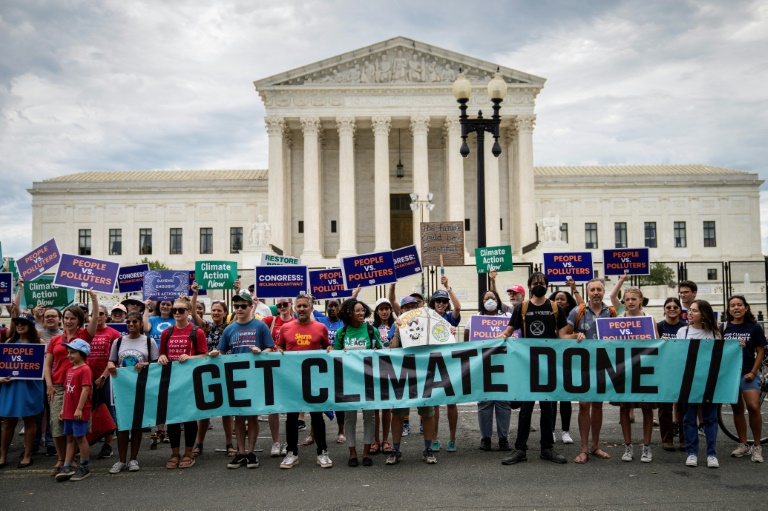
Governments around the world must scale up climate action “or face further legal action”, an open letter from campaign groups warned Tuesday, as battles over policies to cut emissions and protect the environment are increasingly fought in the courts.

From legal efforts to steer governments to do more to curb fossil fuel pollution, to court action over companies’ misleading green claims, the number, scope and ambitions of climate litigation is expanding, say experts, with an increasing number of cases are being launched against governments. 

And that will continue if they do not use the upcoming United Nations COP meeting in Egypt to substantially enhance their climate action, according to an open letter signed by lawyers from more than 20 organisations around the world. 

“Governments of the world: your delay is costing lives. Strong action is needed now to protect people and the planet,” the letter said. 

“If you continue to fail us, we will continue to turn to the courts to demand accountability.”

The groups said they had already launched more than 80 legal cases around the world to “compel” governments from the Netherlands to Brazil, warning that the world was on the “precipice of the most serious intergenerational violation of human rights in history”.

Research from the Grantham Research Institute at the London School of Economics this year has found that of the 2,000 or so climate legal cases filed since 1986, almost a quarter were started since the beginning of 2020. 

Some 80 of these cases have been filed against national or subnational governments since 2005, the research found, with a record number of 30 new cases submitted in 2021. 

Perhaps the most successful of this kind of case was environmental group Urgenda’s landmark 2019 victory in Dutch courts, which saw the government ordered to reduce greenhouse gas emissions by at least 25 percent by the end of 2020. The target was largely met.

“Climate action is a legal duty. Yet governments are failing to comply with their own laws and commitments,” said Sarah Mead Co-Director of Climate Litigation Network, part of the Urgenda Foundation, which signed the letter. 

“We want to make sure that countries understand that the law is on our side.”

– Cases rise –

But legal rulings can go both ways. 

In June, the US Supreme Court ruled that the government’s key environmental agency cannot issue broad limits on greenhouse gases.

Campaigners say that energy companies are increasingly turning to international arbitration to recoup investments as governments accelerate the shift away from fossil fuels.

Earth has warmed nearly 1.2 degrees Celsius above pre-industrial levels so far, unleashing more intense weather extremes, including dangerous heatwaves and floods.  

The 2015 Paris Agreement saw governments agree to a cap on warming of well below 2C and preferably a safer 1.5C. 

But the UN’s Environment Programme has said that even taking into account updated global promises to cut emissions of heat-trapping gases, the world is currently on course to warm 2.8C. 

Close Bitnami banner
Bitnami