World

US, South Korea begin naval drills after North's missile test

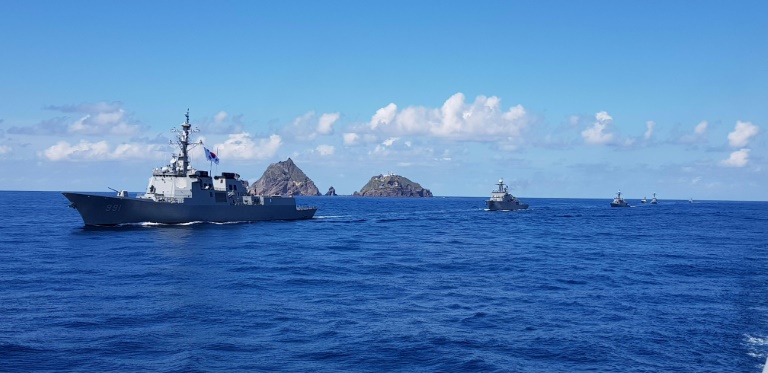
South Korea and the United States began their first combined naval exercise near the peninsula in five years on Monday, a day after Pyongyang conducted a ballistic missile launch.

Washington is Seoul’s key security ally and stations about 28,500 troops in South Korea to protect it from the nuclear-armed North.

South Korea’s hawkish President Yoon Suk-yeol, who took office in May, has vowed to beef up joint military exercises with the United States, after years of failed diplomacy with North Korea under his predecessor.

“This exercise was prepared to demonstrate the strong will of the South Korea-US alliance to respond to North Korean provocations,” the South’s navy said in a statement.

The four-day exercise on South Korea’s east coast will involve more than 20 vessels and an assortment of aircraft, which will conduct drills on anti-ship and anti-submarine warfare operations, tactical maneuvers and other maritime operations, it added.

“Through this exercise, we will further improve the ability to conduct joint operations between the naval forces of the two countries,” Kwak Kwang-sub, a senior South Korean naval officer, said in the statement.

The drills come a day after nuclear-armed Pyongyang conducted another ballistic missile launch, the latest in its record-breaking blitz of weapons tests this year.

North Korea is under multiple sets of international sanctions over its programmes to develop nuclear weapons and ballistic missiles.

Seoul had also detected signs the North was preparing to fire a Submarine Launched Ballistic Missile (SLBM), the president’s office said Saturday, a weapon Pyongyang last tested in May.

Earlier this month, the North revised its nuclear law, enshrining a “first strike” doctrine and vowing never to give up its nukes.

The allies have long carried out joint exercises, which they insist are purely defensive. North Korea, however, sees them as rehearsals for an invasion.

Last month, the United States and South Korea staged their biggest combined military drills since 2018 — the resumption of large-scale training sessions that had been scaled back due to Covid-19 and the period of diplomacy with Pyongyang.

Iranians protest for 10th night, defying judiciary warning

Iranians defied a warning from the judiciary and took to the streets for a 10th consecutive night Sunday to protest the death of young Kurdish woman Mahsa Amini in morality police custody.

Echoing an earlier warning by President Ebrahim Raisi, judiciary chief Gholamhossein Mohseni Ejei on Sunday “emphasised the need for decisive action without leniency” against the core instigators of the “riots”, the judiciary’s Mizan Online website said. 

At least 41 people have died since the unrest began, mostly protesters but including members of the Islamic republic’s security forces, according to an official toll. Other sources say the real figure is higher.

Iran’s largest protests in almost three years have seen security forces fire live rounds and bird shot, rights groups charge, while protesters have hurled rocks, torched police cars and set ablaze state buildings.

Oslo-based Iran Human Rights (IHR) on Sunday evening said the death toll was at least 57, but noted that ongoing internet blackouts made it increasingly difficult to confirm fatalities in a context where the women-led protests have spread to scores of cities.

Hundreds of demonstrators, reformist activists and journalists have been arrested during the mostly night-time demonstrations since unrest first broke out after Amini’s death was announced on September 16.

Amini, whose Kurdish first name was Jhina, was detained three days before that for allegedly breaching rules mandating tightly-fitted hijab head coverings and which ban, among other things, ripped jeans and brightly coloured clothes.

Images circulated by IHR showed protesters on the streets of Tehran, shouting “death to the dictator”, purportedly after nightfall on Sunday. 

Witnesses told AFP that protests were continuing in several locations. Video footage showed demonstrations in Tabriz and Shiraz, among other places, with women removing their headscarves and protesters shouting against the authorities. 

– ‘Rolling blackouts’ –

Among the protesters were women who burnt their hijabs and cut off their hair. Some danced near large bonfires to the applause of crowds that have chanted “zan, zendegi, azadi” or “woman, life, freedom”.

Video of demonstrations on Saturday, verified by AFP, showed students ripping down a picture of supreme leader Ayatollah Ali Khamenei outside a university in the northern province of Mazandaran.

Web monitor NetBlocks noted “rolling blackouts” and “widespread internet platform restrictions” on Sunday, with WhatsApp, Instagram and Skype already blocked.

This followed older bans on Facebook, Twitter, TikTok and Telegram.

Protests abroad in solidarity with Iranian women have been held in Athens, Berlin, Brussels, Istanbul, Madrid, New York and other cities. 

In Paris and London on Sunday, police clashed with demonstrators trying to reach Iran’s embassies. French officers fired tear gas. In London, 12 people were arrested and five officers seriously hurt, police there said.

EU foreign policy chief Josep Borrell deplored the Iranian security forces’ response to the unrest as “disproportionate… unjustifiable and unacceptable”.

Iran, which has been hit with tough economic sanctions over its nuclear programme, has blamed “foreign plots” for the unrest.

Iran’s foreign ministry said Sunday it had summoned Britain’s ambassador over what it described as an “invitation to riots” by Farsi-speaking media based in London.

The ministry also called in Norway’s envoy over “unconstructive comments” made by his country’s parliamentary speaker.

Foreign ministry spokesman Hossein Amir-Abdollahian criticised “the US interventionist approach in the affairs of Iran… including its provocative actions in supporting the rioters”.

– Pro-government rallies –

Iran has also organised large rallies in defence of the hijab and conservative values.

At the main pro-government event held Sunday in central Tehran’s Enghelab (Revolution) Square, demonstrators voiced support for mandatory hijab laws.

“Martyrs died so that this hijab will be on our head,” said demonstrator Nafiseh, 28, adding that she opposed making the wearing of the head covering voluntary.

Another demonstrator, 21-year-old student Atyieh, called for “strong action against the people who are leading” the protests.

The main reformist group inside Iran, the Union of Islamic Iran People’s Party, however, has called for the repeal of the mandatory dress code.

IHR reported on Sunday that an umbrella of Iranian teachers’ unions were calling on teachers and students to boycott classes on Monday and Wednesday in support of the protests. 

Iranian authorities have yet to state the cause of death of Amini, who activists say died as a result of a blow to the head.

Interior Minister Ahmad Vahidi has said Amini was not beaten and that “we must wait for the final opinion of the medical examiner”.

burs/jsa/dwo/it

Little cheer as Japan, China mark 50 years of ties

Japan and China will mark 50 years of diplomatic relations this month with little public celebration, as increasing friction over territorial rivalries and military spending frays ties.

The world’s second and third largest economies are key trading partners and just a few years ago seemed poised for a diplomatic blossoming, with plans for a state visit by Chinese President Xi Jinping.

Since then, ties have soured significantly as Beijing bolsters its military, projects power regionally and beyond, and takes a harder line on disputed territory.

In recent months, Chinese missiles are believed to have fallen within Japan’s exclusive economic zone, and Tokyo has protested what it calls growing aerial and maritime violations.

Japan also regularly complains about Chinese activity around the disputed Tokyo-controlled Senkaku islands, which Beijing claims and calls the Diaoyus.

“Chinese ships are loitering for dozens of days in the East China Sea, while an artificial island and a base have already been built in the South China Sea,” said Kenichiro Sasae, head of the Japan Institute of International Affairs.

“That makes us wonder — how much further will China’s ambition go in terms of naval power?” added Sasae, a former ambassador to Washington and vice-minister of foreign affairs.

The war in Ukraine has only deepened the divide, with Japan backing Western allies opposed to Russia’s invasion while Beijing avoids criticising Moscow.

And the conflict has refocused attention on whether China might try to forcibly reunite Taiwan with the mainland, prompting Japan’s Prime Minister Fumio Kishida to warn the Ukraine situation “could be East Asia tomorrow”.

– ‘Anxious about China’ –

Beijing and Tokyo normalised relations in a joint communique on September 29, 1972, that officially ended their state of war and saw Japan drop its recognition of Taiwan.

Economic ties grew quickly and steadily, but political relations have been more unstable, weathering a series of crises, including over the disputed Senkaku-Diaoyu islands.

Beijing’s growing power has left Japan “anxious about China”, said Rumi Aoyama, director of the Waseda Institute of Contemporary Chinese Studies.

“Japan sees China’s activities in the Senkaku islands as problematic, and involving a ‘core interest’,” she told AFP.

“But the problem is, China doesn’t understand this Japanese perspective. Instead, it tends to see Japan as just following whatever the US says.”

Tokyo is a longstanding and key US ally, but it has been expanding its partnerships as a bulwark against Beijing.

It backed a revived “Quad” alliance with Australia, India and the United States, and Kishida in June became Japan’s first leader to attend a NATO summit.

“China is gaining power and confidence, that’s a trend that can’t be ignored,” said Ken Endo, an international politics professor at University of Tokyo and a security expert.

Japan must “consistently state internationally” that changing the status quo by force, whether in Ukraine or Taiwan, is unacceptable. 

And he says Tokyo needs a more robust defence capacity, something Kishida and his ruling party have already publicly backed, to show that “it’ll cost a lot if you invade us”.

– Trading partners –

Japan is reportedly weighing boosting defence spending up to two percent of GDP within five years, from the current one-percent level.

That would represent a sea change in Japan, whose pacifist constitution still limits its military capacity, but a modest increase compared to decades of additional spending by Beijing.

It could also carry its own dangers, stoking regional tensions, if communication with China is not handled carefully, said Sasae.

“Every country has contingency plans, including China, but Japan should make clear that it does not want military confrontation.”

Japan’s brutal occupation of parts of China before and during World War II remains a sore point, with Beijing accusing Tokyo of failing to atone for its past.

Visits by Japanese officials to the Yasukuni shrine that honours war dead — including convicted war criminals — regularly prompt anger from Beijing.

For all the tensions, the two countries remain economically intertwined: China is Japan’s largest trading partner and Japan is China’s second-largest after the United States.

And reports suggest Tokyo could be seeking Xi-Kishida talks in the coming months, online or in person.

Business ties are “a decisive factor in stopping a free fall of the relation”, said Aurelio Insisa, a history professor at the University of Hong Kong and author of a book on Sino-Japanese ties.

But they may not be sufficient to thaw ties.

“Beijing’s behaviour in its neighbourhood, and Tokyo’s perceptions of it, are the two main factors capable of changing the current dynamic,” Insisa said.

“I would not bet on any improvement on these two fronts.”

Rihanna to headline Super Bowl halftime show

Superstar Rihanna will headline the Super Bowl halftime show in February, the main event sponsor Apple Music announced Sunday.

The move marks a long-awaited return to performing for the singer, who had previously turned down the gig in protest.

“IT’S ON. @rihanna will take the stage for the first ever Apple Music Super Bowl Halftime Show on 2.12.23,” Apple Music said in a tweet featuring a photo of the musician’s raised hand holding a football.

Rihanna, 34, and the NFL tweeted the same image.

The Barbadian-born Robyn Rihanna Fenty in recent years has become a billionaire, parlaying her music achievements into successful makeup, lingerie and high-fashion brands.

She made history by becoming the first Black woman to head a fashion house for the French powerhouse LVMH, which owns legacy brands including Fendi and Givenchy.

For the past few years, the singer behind the hits “Diamonds” and “Umbrella” has put music aside, at least publicly, to focus on her various businesses.

In January, she and rapper A$AP Rocky, 33, announced they were expecting a child with a set of glamorous snow-dusted images taken in Harlem.

They reportedly welcomed the baby, a boy, in May. No other details, including the child’s name, have been made public.

– Return to music –

Rihanna’s fierce fan base has been clamoring for her ninth album, “R9,” which she has said will be “reggae-infused” and has hinted since 2019 is nearly finished.

Performing at the Super Bowl is an about-face for the singer, who in 2019 confirmed reports to Vogue that she had turned down the NFL’s offer to play the coveted halftime show in solidarity with former player Colin Kaepernick.

Kaepernick, who has not played in the NFL since opting out of his contract with the San Francisco 49ers in March 2017, began kneeling in protest of social injustice and racial inequality during pre-game renditions of the US national anthem six years ago.

“I couldn’t dare do that. For what? Who gains from that? Not my people. I just couldn’t be a sellout. I couldn’t be an enabler,” she told the magazine in an interview.

Rihanna’s Super Bowl performance will follow an impeccably choreographed 2022 halftime show that featured rap legends including Dr. Dre, Snoop Dog and Eminem.

The 2021 halftime show featured Canadian artist The Weeknd, while Jennifer Lopez and Shakira performed the year before.

The halftime show has since 2019 been produced by Roc Nation, founded by New York rapper-turned-businessman Jay-Z.

Apple Music announced in September that it would be the main sponsor of the event, ousting Pepsi and reportedly paying $50 million for the privilege.

The 2022 Super Bowl, in which the Los Angeles Rams defeated the Cincinnati Bengals, drew an average of 112.3 million viewers on television and streaming, according to NBC Sports.

Rihanna to headline Super Bowl halftime show

Superstar Rihanna will headline the Super Bowl halftime show in February, the main event sponsor Apple Music announced Sunday.

The move marks a long-awaited return to performing for the singer, who had previously turned down the gig in protest.

“IT’S ON. @rihanna will take the stage for the first ever Apple Music Super Bowl Halftime Show on 2.12.23,” Apple Music said in a tweet featuring a photo of the musician’s raised hand holding a football.

Rihanna, 34, and the NFL tweeted the same image.

The Barbadian-born Robyn Rihanna Fenty in recent years has become a billionaire, parlaying her music achievements into successful makeup, lingerie and high-fashion brands.

She made history by becoming the first Black woman to head a fashion house for the French powerhouse LVMH, which owns legacy brands including Fendi and Givenchy.

For the past few years, the singer behind the hits “Diamonds” and “Umbrella” has put music aside, at least publicly, to focus on her various businesses.

In January, she and rapper A$AP Rocky, 33, announced they were expecting a child with a set of glamorous snow-dusted images taken in Harlem.

They reportedly welcomed the baby, a boy, in May. No other details, including the child’s name, have been made public.

– Return to music –

Rihanna’s fierce fan base has been clamoring for her ninth album, “R9,” which she has said will be “reggae-infused” and has hinted since 2019 is nearly finished.

Performing at the Super Bowl is an about-face for the singer, who in 2019 confirmed reports to Vogue that she had turned down the NFL’s offer to play the coveted halftime show in solidarity with former player Colin Kaepernick.

Kaepernick, who has not played in the NFL since opting out of his contract with the San Francisco 49ers in March 2017, began kneeling in protest of social injustice and racial inequality during pre-game renditions of the US national anthem six years ago.

“I couldn’t dare do that. For what? Who gains from that? Not my people. I just couldn’t be a sellout. I couldn’t be an enabler,” she told the magazine in an interview.

Rihanna’s Super Bowl performance will follow an impeccably choreographed 2022 halftime show that featured rap legends including Dr. Dre, Snoop Dog and Eminem.

The 2021 halftime show featured Canadian artist The Weeknd, while Jennifer Lopez and Shakira performed the year before.

The halftime show has since 2019 been produced by Roc Nation, founded by New York rapper-turned-businessman Jay-Z.

Apple Music announced in September that it would be the main sponsor of the event, ousting Pepsi and reportedly paying $50 million for the privilege.

The 2022 Super Bowl, in which the Los Angeles Rams defeated the Cincinnati Bengals, drew an average of 112.3 million viewers on television and streaming, according to NBC Sports.

Brazilian first lady, from the shadows to the front lines

Brazilian first lady Michelle Bolsonaro used to keep a low profile, but she has become a key agent for her husband’s reelection bid, thanks to oratory worthy of an evangelical preacher.

Michelle de Paula Firmo Reinaldo, 40, and Jair Bolsonaro, 27 years her senior, met in 2007 in Congress, where he was a lawmaker and she worked as a staffer.

They started dating, and Bolsonaro offered her a job. The proposal led to their getting married. She eventually left her job, to comply with a law against nepotism.

Jair Bolsonaro had been married and divorced twice before this and already had four kids. Michelle Bolsonaro has a daughter from a previous relationship. The Bolsonaros between them have an 11-year-old daughter.

The first lady is known for having simple tastes, and said once in a speech that she has learned to help people in any way she can and spends part of her time working with people who have disabilities.

“It is a calling I have, to be close to people with disabilities, the deaf. I have a lot of love for this community,” she said during the 2018 campaign in which her husband was first elected.

During her husband’s swearing-in in 2019, Michelle Bolsonaro impressed Brazilians by giving a speech in sign language.

– ‘Woman of God’ –

She speaks in a soft voice that stands in stark contrast to the almost military bark of her far-right husband, who is seen as being utterly smitten with his young, third wife. 

“We can make all kinds of comparisons among first ladies,” Bolsonaro said on September 7. He famously drew much criticism for making an unkind remark about the physical appearance of French President Emmanuel Macron’s wife Brigitte Macron in 2019. 

“She is a woman of God… who plays an important role in my life. She is not only at my side. Many times she is in front of me,” Bolsonaro said of his wife at a campaign rally in Brasilia.

He then urged unmarried men in the crowd to “find a princess” like he says he did, and gave his wife a passionate kiss.

Bolsonaro is known for making sexist comments, so much so that his campaign team convinced the first lady — reportedly against her will, at first — to take on a much more prominent role in the reelection bid so as to woo women voters.

But her main contribution has been to shore up support for Bolsonaro among Brazil’s large evangelical community.

Bolsonaro says he is Catholic, but his wedding with Michelle in 2013 was presided over by Silas Malafaia, a Brazilian Pentecostal pastor, author and televangelist.

– From darkness to light – 

At his campaign launch event on August 17, the president said his wife was “the most important person” in the room.

Then, the first lady gave a speech that felt more like a religious sermon, calling on people to recite the Lord’s Prayer. This was a big hit with the crowd.

In early September, she and several pastors called on Brazilians to observe 30 days of prayer and fasting for their country, until election day on October 2.

Before joining the campaign, she seemed content to remain behind the scenes.

She has appeared in videos leading prayer sessions with civil servants who support her husband.

News reports say she played a big role in the naming of a Presbyterian preacher to be education minister and the first evangelical judge on the Supreme Court.

Now that she has a big role in the campaign, there is speculation that she could be more prominent in her husband’s administration if he wins reelection.

Rosangela da Silva hopes to be a different kind of Brazilian first lady

Rosangela da Silva, a sociologist and left-wing activist who married Luiz Inacio Lula da Silva in May, has promised to give new meaning to being first lady if her husband wins Brazil’s election.

“I am as in love as if I were 20 years old,” the former two-term president has said of his wife, a long-time member of the Workers Party. 

He is 76, she 56. This age difference seems to have breathed new life into Lula, a leftist icon in Brazil. He was deeply saddened by the 2017 death of Marisa Leticia, his wife of 30 years, with whom he has four children.

His first wife, Maria de Lourdes, died in 1971.

“When you lose your wife, and you think, well, my life has no more meaning. Then suddenly, this person appears who makes you feel like you want to live again,” Lula told Time magazine in an interview published in May.

Rosangela da Silva was born in the south of Brazil and earned a sociology degree from the university in Curitiba, capital of Parana state. She worked there for 20 years for Itaipu Binacional, a public utility that runs the Itaipu dam, one of the world’s biggest.

In 1983 she joined the Workers Party, which Lula had co-founded two years earlier.

– A kiss outside prison – 

Brazilian press reports say the two have known each other for decades, but Lula’s press people say their romance began only in late 2017 at an event with left-leaning artists.

But the love affair between this smiling woman with long chestnut hair and the aging lion of the Brazilian left became widely known only in May 2019, while Lula was serving a prison sentence on a corruption conviction.

“Lula is in love, and the first thing he wants to do when he gets out of prison is get married,” said one of his lawyers after a visit with Lula.

In the end, the two wed only this year. It was a discreet ceremony — by Lula’s standards. The 200 guests included celebrities like singer Gilberto Gil, who had served as culture minister under Lula.

While Lula was in prison, “Janja,” as Rosangela is nicknamed, would pen affectionate tweets about him. “All I want to do is hug you and cuddle with you non-stop,” she wrote on his 74th birthday.

In November 2019, shortly after Lula’s release from prison, they shared a kiss before a crowd gathered outside the prison in Curitiba, where Lula had spent 18 months locked up.

While she has been active in Lula’s campaign, on stage and on social media, Rosangela da Silva is very private with her personal life. The magazine Veja says she was previously married for more than 10 years and has no children.

– Campaign song –

“I want to give new meaning to the role of first lady, by focusing on topics that are priorities for women, such as food insecurity or domestic violence,” she said last month.

Since the Supreme Court vacated Lula’s conviction in early 2021, allowing him to run for president again, Janja has traveled with him often, including to other countries.

She was one of the stars of his campaign kickoff on May 7, playing a new version of the song that was his signature tune during his first presidential campaign in 1989. 

And she is helping to organize a campaign event on Monday bringing together celebrities, intellectuals, social activists and top Brazilian musicians.

Canada counts damage after Fiona; Cuba and Florida brace for storm Ian

Parts of eastern Canada suffered “immense” devastation, officials said Sunday after powerful storm Fiona swept houses into the sea and caused major power outages, as the Caribbean and Florida braced for intensifying Tropical Storm Ian.

Canadian authorities have now confirmed two deaths caused when Fiona, then a post-tropical cyclone, tore into Nova Scotia and Newfoundland early Saturday.

Fiona had earlier claimed seven lives as it roared through the Caribbean at the start of a week of havoc.

Officials on Prince Edward Island on Sunday confirmed the death of one person there, though there were few details.

And officials have found the body of a 73-year-old woman believed to have been swept from her home in Newfoundland. She apparently was sheltering in her basement when waves broke through.

The storm packed intense winds of 80 miles (130 kilometers) per hour when it arrived with force rarely seen in eastern Canada, bringing torrential rain and waves of up to 40 feet (12 meters).

“The devastation is immense,” Nova Scotia Premier Tim Houston told reporters. “The magnitude of the storm is incredible.”

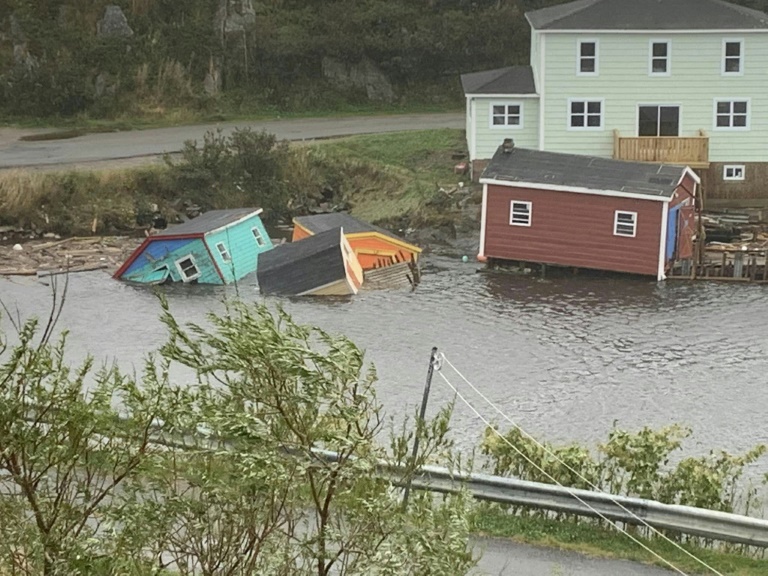
Storm surges swept at least 20 homes into the sea in the town of Channel-Port aux Basques, on the southwestern tip of Newfoundland.

Mayor Brian Button described “a total war zone” in the coastal community. 

Some 200 residents had been evacuated before the storm hit.

On Sunday, residents were reckoning with the damage.

“Some people have lost everything, and I mean everything,” Button told CBC News.

“The sea was taking back the land and we were getting separated. A lot of our homes are built along the coastline along the Atlantic Ocean. Down there, Fiona just wiped out parts of that,” he said. 

Tempers were fraying Sunday as residents tried to return to their homes — or what was left of them. 

“I know people are showing up at the barricades angry this morning and wanting to move in and go check up on their properties,” said Button in a live video on Facebook. 

“You’ve got to give us a little bit of time… Unfortunately, this is going to take days, could take weeks, could take months in some cases,” he said.

– ‘Incredible storm’ –

More than 300,000 people were still without electricity across five provinces Sunday after the storm felled trees, ripped roofs from buildings and damaged power lines, officials said. Hundreds of utility crews were working to restore power.

Nova Scotia premier Houston told CBC the Canadian military had been deployed to help clear trees and roads.

Emergency Preparedness Minister Bill Blair said the Canadian armed forces would also provide assistance to Newfoundland’s cleanup efforts. This is the third province to request federal military assistance, after Nova Scotia on Saturday and Prince Edward Island earlier Sunday.

Television images showed a long line of cars and people on foot queuing to get gas for generators in Cape Breton, an island off Nova Scotia, where dozens had spent the night in relief centers operated by the Canadian Red Cross.

On Prince Edward Island, Charlottetown Police Chief Brad MacConnell pleaded with residents to stay inside as recovery efforts continue.

“We ask people to stay home unless absolutely necessary,” he told CBC, adding that there’s “a lot of devastation” and hardly an area of the city that had not been significantly affected.

Prime Minister Justin Trudeau said on Twitter that he had met again with his Incident Response Group to ensure that “resources are available to help those affected by the storm.”

By Sunday, with a waning Fiona dissipating over the Labrador Sea, the country’s environmental agency said all warnings had been canceled.

– Ian to become major hurricane –

Further south, parts of the Caribbean as well as the US state of Florida were preparing for Tropical Storm Ian, which the US National Hurricane Center (NHC) said is forecast to become a hurricane on Monday and a major hurricane the following day.

Packing winds of near 60 miles per hour and getting stronger, the storm is expected to pass near the Cayman Islands, either near or over western Cuba, and then head toward Florida, the NHC said.

A hurricane warning is in effect for parts of Cuba — where the storm is forecast to “produce significant wind and storm surge” — as well as the British territory of Grand Cayman, according to the NHC. 

Florida’s Governor Ron DeSantis said Saturday that he had declared a state-wide emergency in preparation for the storm, warning on Twitter that “Floridians should take precautions.”

Authorities in several Florida municipalities including Miami, Fort Lauderdale and Tampa began distributing free sandbags to residents to help them protect their homes from the risk of flooding. 

“It’s never too early to prepare,” tweeted Jane Castor, the mayor of Tampa.

burs/st/bbk/wd/to

Canada counts damage after Fiona; Cuba and Florida brace for storm Ian

Parts of eastern Canada suffered “immense” devastation, officials said Sunday after powerful storm Fiona swept houses into the sea and caused major power outages, as the Caribbean and Florida braced for intensifying Tropical Storm Ian.

Canadian authorities have now confirmed two deaths caused when Fiona, then a post-tropical cyclone, tore into Nova Scotia and Newfoundland early Saturday.

Fiona had earlier claimed seven lives as it roared through the Caribbean at the start of a week of havoc.

Officials on Prince Edward Island on Sunday confirmed the death of one person there, though there were few details.

And officials have found the body of a 73-year-old woman believed to have been swept from her home in Newfoundland. She apparently was sheltering in her basement when waves broke through.

The storm packed intense winds of 80 miles (130 kilometers) per hour when it arrived with force rarely seen in eastern Canada, bringing torrential rain and waves of up to 40 feet (12 meters).

“The devastation is immense,” Nova Scotia Premier Tim Houston told reporters. “The magnitude of the storm is incredible.”

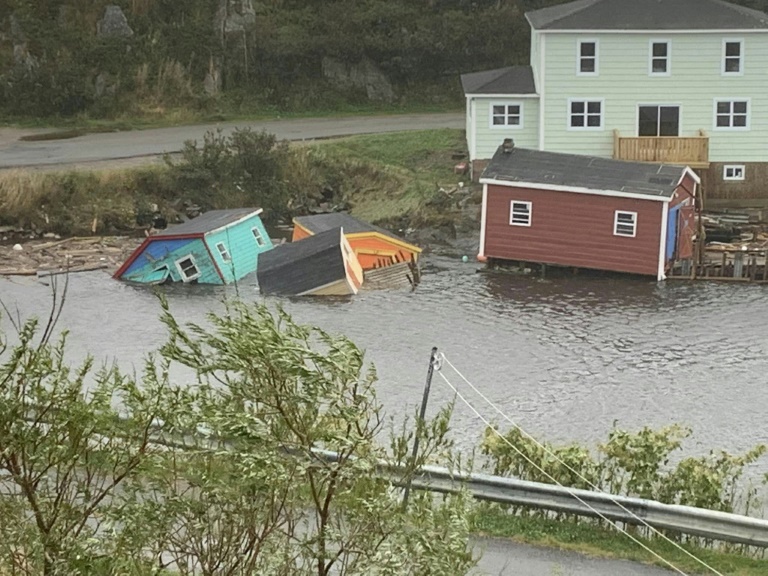
Storm surges swept at least 20 homes into the sea in the town of Channel-Port aux Basques, on the southwestern tip of Newfoundland.

Mayor Brian Button described “a total war zone” in the coastal community. 

Some 200 residents had been evacuated before the storm hit.

On Sunday, residents were reckoning with the damage.

“Some people have lost everything, and I mean everything,” Button told CBC News.

“The sea was taking back the land and we were getting separated. A lot of our homes are built along the coastline along the Atlantic Ocean. Down there, Fiona just wiped out parts of that,” he said. 

Tempers were fraying Sunday as residents tried to return to their homes — or what was left of them. 

“I know people are showing up at the barricades angry this morning and wanting to move in and go check up on their properties,” said Button in a live video on Facebook. 

“You’ve got to give us a little bit of time… Unfortunately, this is going to take days, could take weeks, could take months in some cases,” he said.

– ‘Incredible storm’ –

More than 300,000 people were still without electricity across five provinces Sunday after the storm felled trees, ripped roofs from buildings and damaged power lines, officials said. Hundreds of utility crews were working to restore power.

Nova Scotia premier Houston told CBC the Canadian military had been deployed to help clear trees and roads.

Emergency Preparedness Minister Bill Blair said the Canadian armed forces would also provide assistance to Newfoundland’s cleanup efforts. This is the third province to request federal military assistance, after Nova Scotia on Saturday and Prince Edward Island earlier Sunday.

Television images showed a long line of cars and people on foot queuing to get gas for generators in Cape Breton, an island off Nova Scotia, where dozens had spent the night in relief centers operated by the Canadian Red Cross.

On Prince Edward Island, Charlottetown Police Chief Brad MacConnell pleaded with residents to stay inside as recovery efforts continue.

“We ask people to stay home unless absolutely necessary,” he told CBC, adding that there’s “a lot of devastation” and hardly an area of the city that had not been significantly affected.

Prime Minister Justin Trudeau said on Twitter that he had met again with his Incident Response Group to ensure that “resources are available to help those affected by the storm.”

By Sunday, with a waning Fiona dissipating over the Labrador Sea, the country’s environmental agency said all warnings had been canceled.

– Ian to become major hurricane –

Further south, parts of the Caribbean as well as the US state of Florida were preparing for Tropical Storm Ian, which the US National Hurricane Center (NHC) said is forecast to become a hurricane on Monday and a major hurricane the following day.

Packing winds of near 60 miles per hour and getting stronger, the storm is expected to pass near the Cayman Islands, either near or over western Cuba, and then head toward Florida, the NHC said.

A hurricane warning is in effect for parts of Cuba — where the storm is forecast to “produce significant wind and storm surge” — as well as the British territory of Grand Cayman, according to the NHC. 

Florida’s Governor Ron DeSantis said Saturday that he had declared a state-wide emergency in preparation for the storm, warning on Twitter that “Floridians should take precautions.”

Authorities in several Florida municipalities including Miami, Fort Lauderdale and Tampa began distributing free sandbags to residents to help them protect their homes from the risk of flooding. 

“It’s never too early to prepare,” tweeted Jane Castor, the mayor of Tampa.

burs/st/bbk/wd/to

UAE agrees to supply Germany with gas, diesel as Scholz tours Gulf

The United Arab Emirates agreed Sunday to supply natural gas and diesel to Germany as part of an “energy security” deal to replace Russian supplies.

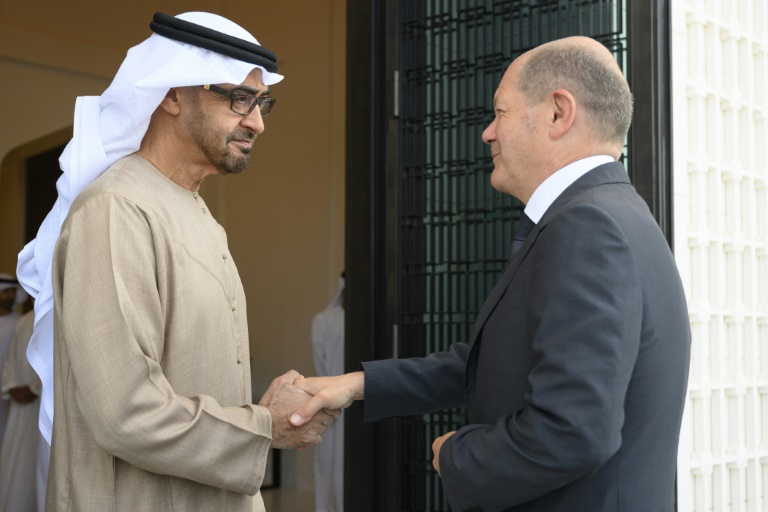
Emirati industry minister Sultan Ahmed Al Jaber called it a “landmark new agreement” that “reinforces the rapidly growing energy partnership between the UAE and Germany”, at a signing attended by German Chancellor Olaf Scholz, the UAE’s state news agency WAM reported.

Scholz signed the deal while on a Gulf tour that took him to the UAE, Saudi Arabia and Qatar hunting for new energy sources.

He met with Emirati President Sheikh Mohamed bin Zayed Al-Nahyan, who said on Twitter they had discussed “cooperation in areas including energy security, emissions reduction and climate action”. 

The German leader said he “welcomed” the “energy security” agreement, WAM said.

UAE state oil company ADNOC completed its first direct diesel delivery to Germany this month, and will “supply up to 250,000 tons of diesel per month in 2023”, it reported. 

The first delivery of 137,000 cubic metres of liquefied natural gas will be made in December at Germany’s new floating LNG import terminal at Brunsbuettel, near Hamburg, the RWE energy firm said in a statement.

ADNOC will make more LNG deliveries to Germany in 2023, WAM said. 

Scholz’s two-day Gulf tour aimed to seal new energy deals to replace Russian supplies and mitigate the energy crisis resulting from Moscow’s invasion of Ukraine. 

On Saturday, he met Saudi Crown Prince Mohammed bin Salman in Jeddah.

On Sunday afternoon, following his trip to the UAE, he held talks in Doha with Qatari Emir Sheikh Tamim bin Hamad Al-Thani on energy and investment, according to an official statement.

No deals were announced in Qatar however. The two countries are locked in tough talks on the length of contracts for LNG supplies, according to German media, and Scholz said he wanted to see progress.

Scholz said Qatar’s controversial rights record was improving but did not commit to attending the World Cup in the Gulf state that starts in November.

– Energy transition –

Scholz’s stop in the UAE included a tour of an environmental project at a mangrove park with Emirati climate change minister Mariam Almheiri. 

Almheiri said discussions would cover “climate action and economic growth” as well as energy supplies. 

“The UAE believes all three pillars must go hand in hand. We cannot look at one or two of these pillars separately,” she said.

The UAE, Saudi Arabia and Qatar have been critics of what they call unrealistic energy transition models they say have contributed to shortages that have hit Europe in the past two years.

Scholz told reporters in Abu Dhabi that his country had “made progress on a whole series of projects here in terms of the production and purchase of diesel and gas”, while adding it was determined to avoid energy dependence on Russia. 

“The fact that we are dependent on one supplier and also dependent on its decisions will certainly not happen to us again,” he said. 

“With the investments that we are now making in Germany, and that will become reality bit by bit next year, we will indeed have an infrastructure for gas imports for Germany, such that we are no longer directly dependent on the specific supplier at the other end of the pipeline, as we are with a pipeline connection.” 

Scholz ended the tour in Qatar one day after France’s TotalEnergies signed a new $1.5 billion deal to help expand Doha’s natural gas production. 

The German chancellor said such projects were “important”. 

“We have to ensure that the production of liquefied gas in the world is advanced to such an extent that the high demand that exists can be met — without having to fall back on the production capacities in Russia that have been used so far,” he said. 

Close Bitnami banner
Bitnami