World

Why are climate activists calling for reparations?

Pakistan’s catastrophic floods have led to renewed calls for rich polluting nations, which grew their economies through heavy use of fossil fuels, to compensate developing countries for the devastating impacts caused by the climate crisis.

The currently favored term for this concept is “loss and damage” payments,  but some campaigners want to go further and frame the issue as “climate reparations,” just as racial justice activists call for compensation for the descendants of enslaved people. 

Beyond the tougher vocabulary, green groups also call for debt cancellation for cash-strapped nations that spend huge portions of their budgets servicing external loans, rather than devoting the funds to increasing resilience to a rapidly changing planet. 

“There’s a historical precedent of not just the industrial revolution that led to increased emissions and carbon pollution, but also the history of colonialism and the history of extraction of resources, wealth and labor,” Belgium-based climate activist Meera Ghani told AFP.

“The climate crisis is a manifestation of interlocking systems of oppression, and it’s a form of colonialism,” said Ghani, a former climate negotiator for Pakistan. 

Such ideas stretch back decades and were first pushed by small island nations susceptible to rising sea levels —  but momentum is once more building on the back of this summer’s catastrophic inundations in Pakistan, driven by unprecedented monsoon rains. 

Nearly 1,600 were killed, several million displaced, and the cash-strapped government estimates losses in the region of $30 billion. 

– Beyond mitigation and adaptation –

Campaigners point to the fact that the most climate-vulnerable countries in the Global South are least responsible — Pakistan, for instance, produces less than one percent of global greenhouse emissions, as opposed to the G20 countries which account for 80 percent.

The international climate response currently involves a two-pronged approach: “mitigation” — which means reducing heat-trapping greenhouse gases — and “adaptation,” which means steps to alter systems and improve infrastructure for changes that are already locked in.

Calls for “loss and damage” payments go further than adaptation financing, and seek compensation for multiplying severe weather impacts that countries cannot withstand.

At present, however, even the more modest goal of adaptation financing is languishing. 

Advanced economies agreed to channel $100 billion to less developed countries by the year 2020 — a promise that was broken — even as much of the funding that was mobilized came in the form of loans.

“If our starting point is that the global North is largely responsible for the state of our planet today,” said Maira Hayat, an assistant professor of environment and peace studies at the University of Notre Dame in Indiana. 

“Then why should countries that have contributed little by way of GHG emissions be asking them for aid — loans are the predominant form –- with onerous repayment conditions?”

“If the language is upsetting for some, the next step should be to probe why that might be -– do they dispute the history? Or the present-day implications of accepting certain historical pasts?”

– Point scoring? –

Not all in the climate arena are convinced. 

“Beyond a certain rhetorical point-scoring that’s not going to go anywhere,” said Daanish Mustafa, professor in critical geography at King’s College London. 

While he also blames the Global North for the world’s current predicament, he says he is wary of pushing a narrative that may excuse the actions of the Pakistani leadership and policy choices they have taken that exacerbate this and other disasters.

The World Weather Attribution group of climate scientists found that climate change likely contributed to the floods. 

But the devastating impacts were also driven “by the proximity of human settlements, infrastructure (homes, buildings, bridges) and agricultural land to flood plains,” among other locally driven factors, they said.

Pakistan’s own emissions, while low at the global scale, are fast rising — with the benefits flowing to a tiny elite, said Mustafa, and the country should pursue an alternative, low-carbon development path rather than “aping the West” and damaging itself in the process. 

The case for “loss and damage” payments received a recent boost with UN chief Antonio Guterres calling for “meaningful action” on it at the next global climate summit, COP27 in Egypt in November.

But the issue is sensitive for rich countries — especially the United States, the largest emitter of GHGs historically — which fear it could pave the way for legal action and kept language regarding “liability and compensation” out of the landmark Paris agreement.

Netflix and Disney poised to shake up TV ad world

With the launch of cheaper, ad-supported subscriptions, Netflix and Disney+ are expected to bite into the revenue of traditional television channels as the streaming services look toward continued expansion.

After having long-shunned the notion of advertising on its platform, Netflix thisyear accelerated work on just such an offering as inflation prompts consumers to spend less and competition in the streaming television market intensifies.

Netflix is expected to launch an ad-supported subscription tier in early November, about a month before rival Disney+ does the same, according to US media reports.

“These launches are going to create the biggest premium advertising space in more than a generation,” said analytics company Samba TV senior vice president Dallas Lawrence.

“It’s going to be a major moment for advertisers.”

The windfall for Netflix and Disney+ could be considerable. Market tracker Statista forecasts that spending on television ads globally will hit $159 billion this year.

Insider Intelligence analyst Ross Benes estimates that advertising revenues from streaming could reach $30 billion in two years in the United States alone.

Global video sharing and online television platform YouTube saw $28.8 billion in ad revenue in 2021.

“Not long ago, everyone said subscriptions would kill ads,” said Kevin Krim, head of marketing analytics firm EDO.

“Now, we can see that is obviously not true.”

Some streaming television services such as NBCUniversal’s Peacock, Paramount+ and HBO Max already feature ad-supported offerings.

But Netflix and Disney+ — with 220 million and 152 million subscribers respectively — throwing their hats in the advertising ring could catch the attention of businesses interested in reaching television audiences, analysts said.

Netflix is looking to win over at least 40 million subscribers to its ad-subsidized tier by next year’s third quarter, according to an internal document cited by the Wall Street Journal.

When the time comes, Disney+ will transition its existing $7.99-per-month subscription tier to the ad-supported version, and the ad-free option will go for $10.99, the company has said.

– Threat to old-time TV –

Being able to reach Netflix or Disney+ viewers promises to help brands reconnect with audiences that have abandoned traditional “linear” television in favor of streaming entertainment, said nScreenMedia chief analyst and founder Colin Dixon.

“This actually gives advertisers access to people who they haven’t been able to reach in a while, in their most focused viewing time,” Dixon said

No matter when viewers with ad-based subscriptions choose to watch a show or film, the commercials will be there, waiting for them.

It will also afford advertisers the luxury placing ads directly with Netflix or Disney+ for viewers around the world, rather than having to negotiate numerous deals with channels or stations in various regions, Dixon added.

These new subscription tiers will put pressure on linear television service providers that have not yet entered into the streaming game, analyst Lawrence said.

Even major US studios such as CBS, NBC and Fox are expected to see TV ad money lured away by the prospect of matching marketing messages with winning content such as “Stranger Things” at Netflix or “Star Wars” at Disney+.

“When Netflix and Disney+ unlock that capability and allow advertisers to access the most premium inventory available on televisions, we’re going to go to a full stampede out of linear television and into streaming environments,” said Lawrence of Samba TV.

“It will probably drive down linear television advertising value.”

Along with reaching viewers wherever and whenever they stream television shows, ads on Netflix or Disney+ can provide marketers with more data than is available from what Samba called “old-fashioned TV,” he added.

Streaming television ads can also be targeted at individual viewers, noted Krim.

And, Netflix and Disney+ have a chance to create new advertising models, breaking long-held norms about advertising length or placement, and even involving partners in program creation.

So far, streaming television services do not seem a threat to digital ad revenue for the likes of Amazon, Facebook, Google or TikTok, with marketers expanding their overall budgets for reaching people online, according to analyst Benes.

In Bulgaria, Russophiles celebrate Putin

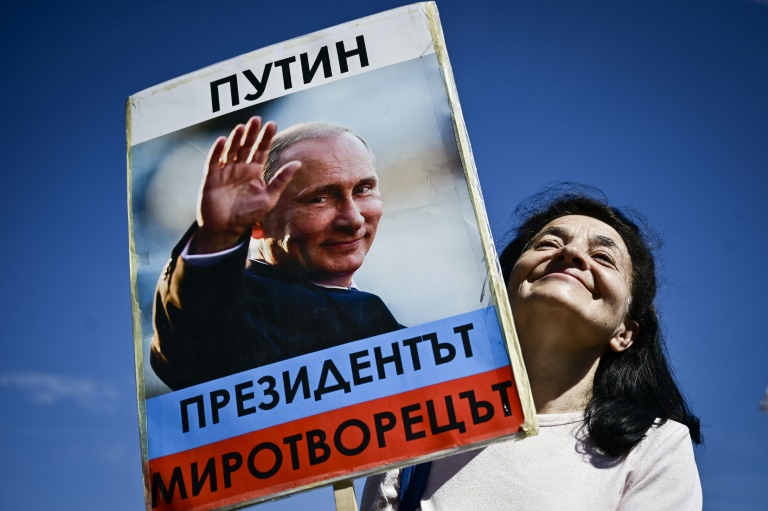
Wearing T-shirts showing Russian bears, waving flags with “Z” symbols, and holding pictures of Putin aloft — the Ukraine war has not deterred Bulgarian Russophiles, who rallied in the centre of the country on Sunday to show their support.

The Balkan state — an EU and NATO member with historically close ties to Russia — still has many citizens nostalgic for the former Communist regime.

The pro-Moscow rally came as Sofia readies to return to the polls and the country grapples with its identity.

Hristo Ganev, a 60-year-old driver, had arrived at Sunday’s event early and bought a T-shirt emblazoned with the “Z” of the Ukraine offensive from one of the many stalls selling trinkets and souvenirs.

“Without Russia, Bulgaria would not have existed,” he told AFP, referring to the Russo-Turkish war of 1877-1878, in which Russia freed Bulgaria from five centuries of Ottoman domination.

Ganev is married to a Russian he met when he was working in Siberia in the 1980s, and says he supports President Vladimir Putin’s invasion of Ukraine.

He believes Putin’s claim that the troops are needed to “fight Nazism” and says he is even in favour of a nuclear war, “if that is the price to pay to free yourself from American domination”.

– ‘Like loving your sister’-

Unlike in most other European countries, regular pro-Russian rallies have been held alongside pro-Ukrainian gatherings.

Sunday’s event was due to be held on the shore of Lake Koprinka — but the local mayor refused to host it due to the sensitivities of the Ukraine war.

Instead, it took place half an hour away in a mountainous spot overlooking the town of Kalofer.

“It’s the only free gathering in the world,” said Nikolay Malinov, the leader of the organisation that brings together Bulgarian Russophiles.

Bulgarian prosecutors in 2019 accused Malinov of spying for Moscow — the same year Putin decorated him with a state award, the Order of Friendship.

His idea of bringing together Bulgarians in an “international Russophile movement” also gained the approval of Sergei Lavrov — Russia’s foreign minister — when the two men met recently in Moscow, he said.

“For Bulgarians, loving Russia is like loving your sister, your mother,” he told the crowd on Sunday to wide applause.

Among the youngest to join the rally was 17-year-old Georgi Ivanov, who was wrapped in a flag honouring Soviet leader Joseph Stalin.

“I appreciate authoritarian regimes because they guarantee unity without worrying about ethnic and sexual minorities,” the high school student said, saying he didn’t believe claims that Russian troops have carried out war crimes in Ukraine.

– Deadlock –

Most middle-aged Bulgarians studied Russian in school, understand the language and some regularly follow Russian news.

The two countries share close cultures, with the Cyrillic alphabet and Orthodox Christianity.

In the Communist years, Sofia was considered Moscow’s staunchest ally.

One attendee in her seventies, who gave her name as Veneta, was carrying a banner supporting the referendums on joining Russia being carried out by pro-Moscow authorities in four Ukrainian regions.

She would welcome the same opportunity in Bulgaria, she told AFP.

A poll carried out in April found that nearly half of Bulgarians considered that Russia was not responsible for the situation in Ukraine, and many did not support the delivery of arms to Kyiv.

And a week before new legislative elections, many have concerns about the country’s political direction.

“It is unfortunate that Bulgarians, who are largely Russophiles, have let themselves be governed by a handful of pro-Westerners,” said 66-year-old Tatiana Ivanova, a Russian who has lived in Bulgaria for four decades.

Staunch pro-European Prime Minister Kiril Petkov will seek to return to power in the upcoming election on October 2. 

He won the last ballot in November 2021, but his cabinet was overthrown by a motion of no-confidence in June.

The conservative Boiko Borissov, who led the country almost continuously between 2009 and 2021, is the contender almost certain to win.

But analysts warn that he may have difficulty building a coalition, and some are predicting another poll in the months to come.

Canada counts damage after Fiona; Cuba and Florida brace for storm Ian

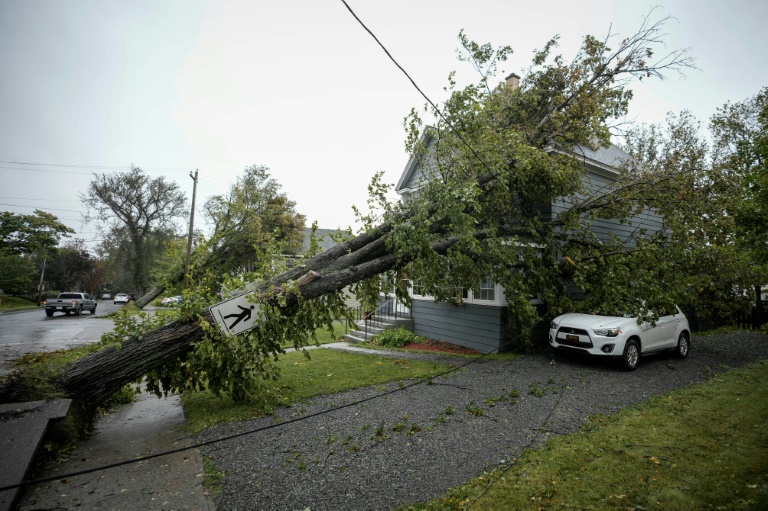
Parts of eastern Canada suffered “immense” devastation, officials said Sunday after powerful storm Fiona swept houses into the sea and caused major power outages, as the Caribbean and Florida braced for intensifying Tropical Storm Ian.

Fiona, a post-tropical cyclone that had earlier killed seven people in the Caribbean, tore into Nova Scotia and Newfoundland on Saturday.

The storm packed hurricane-force winds of 80 miles (130 kilometers) per hour and brought torrential rain, as well as waves of up to 40 feet (12 meters).

“The devastation is immense in the province,” Nova Scotia Premier Tim Houston said in a press conference.

“So many trees down, power outages… The magnitude of the storm is incredible,” he said.

Storm surges swept at least 20 homes into the sea in the town of Channel-Port aux Basques, on the southwestern tip of Newfoundland, officials there said, with Mayor Brian Button describing “a total war zone” in the coastal community. 

Some 200 residents had been evacuated before the storm hit, though officials said police and the coast guard were searching for one missing 73-year-old woman amid fears she had been swept out to sea by the storm.

“The woman was inside her home when a wave struck the residence and destroyed a section of the basement. She has not been seen since,” the Royal Canadian Mounted Police told AFP.

The extreme weather kept a search from going ahead on Saturday, but rescuers were scouring the area from the sea, ground and air for the woman on Sunday, the RCMP said.

Meanwhile, residents were reckoning with the damage.

“Some people have lost everything, and I mean everything,” Button told CBC News.

“The sea was taking back the land and we were getting separated. A lot of our homes are built along the coastline along the Atlantic Ocean. Down there, Fiona just wiped out parts of that,” he said. 

Tempers were fraying Sunday as residents tried to return to their homes — or what was left of them. 

“I know people are showing up at the barricades angry this morning and wanting to move in and go check up on their properties,” said Button on Facebook Live. 

“You’ve got to give us a little bit of time… Unfortunately, this is going to take days, could take weeks, could take months in some cases,” he said.

– ‘Incredible storm’ –

More than 300,000 people were still without power across the region Sunday after the storm felled trees, ripped roofs from buildings and damaged power lines.

Nova Scotia premier Houston told CBC the Canadian military had been deployed to help clear trees and roads in the province.  

Television images showed a long line of cars and people on foot queuing to get gas for generators in Cape Breton, an island off Nova Scotia, where dozens had spent the night in relief centers operated by the Canadian Red Cross.

In Prince Edward Island, Charlottetown Police Chief Brad MacConnell pleaded with residents to stay inside as recovery efforts continue.

“We ask people to stay home unless absolutely necessary,” he told CBC, adding that there’s “a lot of devastation” and hardly an area of the city that had not been significantly impacted.

By mid-morning Sunday the storm was over Labrador, after having moved inland through southeastern Quebec.

The country’s environmental agency said all warnings had ended and that, after causing more than a week of havoc from the Caribbean to Canada, Fiona was finally set to dissipate over the Labrador Sea.

– Ian to become major hurricane –

Further south, parts of the Caribbean as well as the US state of Florida were preparing for Tropical Storm Ian, which the US National Hurricane Center (NHC) said is forecast to become a hurricane on Sunday and a major hurricane by late Monday.

A hurricane warning was in effect for Grand Cayman on Sunday, with Ian poised to brush past the British territory Monday on its way to western Cuba and then Florida by mid-week. 

Governor Ron DeSantis said Saturday that he had declared a state-wide emergency in preparation for the storm, warning on Twitter that “Floridians should take precautions.”

NASA called off the scheduled Tuesday launch of its historic uncrewed mission to the Moon in anticipation of the storm, and US President Joe Biden canceled planned trips to Fort Lauderdale and Orlando.

Authorities in several Florida municipalities including Miami, Fort Lauderdale and Tampa began distributing free sandbags to residents to help them protect their homes from the risk of flooding. 

“It’s never too early to prepare,” tweeted Jane Castor, the mayor of Tampa.

burs/st/bbk

Canada counts damage after Fiona; Cuba and Florida brace for storm Ian

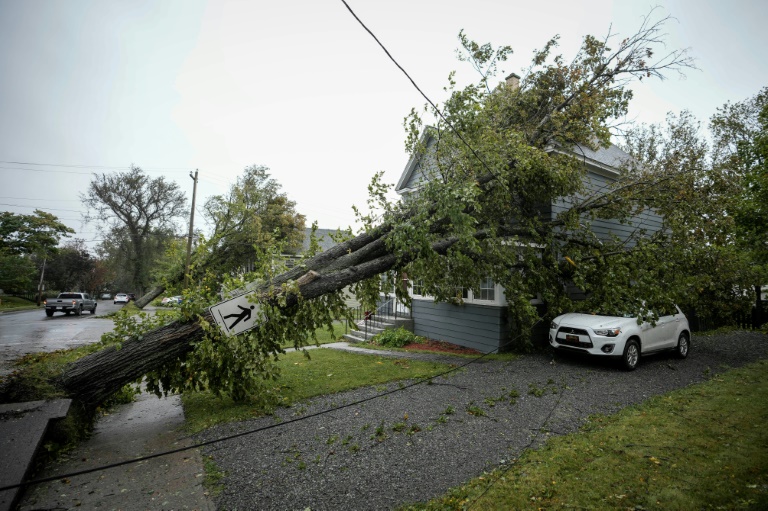
Parts of eastern Canada suffered “immense” devastation, officials said Sunday after powerful storm Fiona swept houses into the sea and caused major power outages, as the Caribbean and Florida braced for intensifying Tropical Storm Ian.

Fiona, a post-tropical cyclone that had earlier killed seven people in the Caribbean, tore into Nova Scotia and Newfoundland on Saturday.

The storm packed hurricane-force winds of 80 miles (130 kilometers) per hour and brought torrential rain, as well as waves of up to 40 feet (12 meters).

“The devastation is immense in the province,” Nova Scotia Premier Tim Houston said in a press conference.

“So many trees down, power outages… The magnitude of the storm is incredible,” he said.

Storm surges swept at least 20 homes into the sea in the town of Channel-Port aux Basques, on the southwestern tip of Newfoundland, officials there said, with Mayor Brian Button describing “a total war zone” in the coastal community. 

Some 200 residents had been evacuated before the storm hit, though officials said police and the coast guard were searching for one missing 73-year-old woman amid fears she had been swept out to sea by the storm.

“The woman was inside her home when a wave struck the residence and destroyed a section of the basement. She has not been seen since,” the Royal Canadian Mounted Police told AFP.

The extreme weather kept a search from going ahead on Saturday, but rescuers were scouring the area from the sea, ground and air for the woman on Sunday, the RCMP said.

Meanwhile, residents were reckoning with the damage.

“Some people have lost everything, and I mean everything,” Button told CBC News.

“The sea was taking back the land and we were getting separated. A lot of our homes are built along the coastline along the Atlantic Ocean. Down there, Fiona just wiped out parts of that,” he said. 

Tempers were fraying Sunday as residents tried to return to their homes — or what was left of them. 

“I know people are showing up at the barricades angry this morning and wanting to move in and go check up on their properties,” said Button on Facebook Live. 

“You’ve got to give us a little bit of time… Unfortunately, this is going to take days, could take weeks, could take months in some cases,” he said.

– ‘Incredible storm’ –

More than 300,000 people were still without power across the region Sunday after the storm felled trees, ripped roofs from buildings and damaged power lines.

Nova Scotia premier Houston told CBC the Canadian military had been deployed to help clear trees and roads in the province.  

Television images showed a long line of cars and people on foot queuing to get gas for generators in Cape Breton, an island off Nova Scotia, where dozens had spent the night in relief centers operated by the Canadian Red Cross.

In Prince Edward Island, Charlottetown Police Chief Brad MacConnell pleaded with residents to stay inside as recovery efforts continue.

“We ask people to stay home unless absolutely necessary,” he told CBC, adding that there’s “a lot of devastation” and hardly an area of the city that had not been significantly impacted.

By mid-morning Sunday the storm was over Labrador, after having moved inland through southeastern Quebec.

The country’s environmental agency said all warnings had ended and that, after causing more than a week of havoc from the Caribbean to Canada, Fiona was finally set to dissipate over the Labrador Sea.

– Ian to become major hurricane –

Further south, parts of the Caribbean as well as the US state of Florida were preparing for Tropical Storm Ian, which the US National Hurricane Center (NHC) said is forecast to become a hurricane on Sunday and a major hurricane by late Monday.

A hurricane warning was in effect for Grand Cayman on Sunday, with Ian poised to brush past the British territory Monday on its way to western Cuba and then Florida by mid-week. 

Governor Ron DeSantis said Saturday that he had declared a state-wide emergency in preparation for the storm, warning on Twitter that “Floridians should take precautions.”

NASA called off the scheduled Tuesday launch of its historic uncrewed mission to the Moon in anticipation of the storm, and US President Joe Biden canceled planned trips to Fort Lauderdale and Orlando.

Authorities in several Florida municipalities including Miami, Fort Lauderdale and Tampa began distributing free sandbags to residents to help them protect their homes from the risk of flooding. 

“It’s never too early to prepare,” tweeted Jane Castor, the mayor of Tampa.

burs/st/bbk

UAE agrees to supply Germany with gas, diesel as Scholz tours Gulf

The United Arab Emirates agreed Sunday to supply natural gas and diesel to Germany as part of an “energy security” deal to replace Russian supplies.

Emirati industry minister Sultan Ahmed Al Jaber called it a “landmark new agreement” that “reinforces the rapidly growing energy partnership between the UAE and Germany”, at a signing attended by German Chancellor Olaf Scholz, the UAE’s state news agency WAM reported.

Scholz signed the deal while on a Gulf tour that took him to the UAE, Saudi Arabia and Qatar hunting for new energy sources.

He met with Emirati President Sheikh Mohamed bin Zayed Al-Nahyan, who said on Twitter they had discussed “cooperation in areas including energy security, emissions reduction and climate action”. 

The German leader said he “welcomed” the “energy security” agreement, WAM said.

UAE state oil company ADNOC completed its first direct diesel delivery to Germany this month, and will “supply up to 250,000 tons of diesel per month in 2023”, it reported. 

The first delivery of 137,000 cubic metres of liquefied natural gas will be made in December at Germany’s new floating LNG import terminal at Brunsbuettel, near Hamburg, the RWE energy firm said in a statement.

ADNOC will make more LNG deliveries to Germany in 2023, WAM said. 

Scholz’s two-day Gulf tour aimed to seal new energy deals to replace Russian supplies and mitigate the energy crisis resulting from Moscow’s invasion of Ukraine. 

On Saturday, he met Saudi Crown Prince Mohammed bin Salman in Jeddah.

On Sunday afternoon, following his trip to the UAE, he held talks in Doha with Qatari Emir Sheikh Tamim bin Hamad Al-Thani on energy and investment, according to an official statement.

No deals were announced in Qatar however. The two countries are locked in tough talks on the length of contracts for LNG supplies, according to German media, and Scholz said he wanted to see progress.

Scholz said Qatar’s controversial rights record was improving but did not commit to attending the World Cup in the Gulf state that starts in November.

– Energy transition –

Scholz’s stop in the UAE included a tour of an environmental project at a mangrove park with Emirati climate change minister Mariam Almheiri. 

Almheiri said discussions would cover “climate action and economic growth” as well as energy supplies. 

“The UAE believes all three pillars must go hand in hand. We cannot look at one or two of these pillars separately,” she said.

The UAE, Saudi Arabia and Qatar have been critics of what they call unrealistic energy transition models they say have contributed to shortages that have hit Europe in the past two years.

Scholz told reporters in Abu Dhabi that his country had “made progress on a whole series of projects here in terms of the production and purchase of diesel and gas”, while adding it was determined to avoid energy dependence on Russia. 

“The fact that we are dependent on one supplier and also dependent on its decisions will certainly not happen to us again,” he said. 

“With the investments that we are now making in Germany, and that will become reality bit by bit next year, we will indeed have an infrastructure for gas imports for Germany, such that we are no longer directly dependent on the specific supplier at the other end of the pipeline, as we are with a pipeline connection.” 

Scholz ended the tour in Qatar one day after France’s TotalEnergies signed a new $1.5 billion deal to help expand Doha’s natural gas production. 

The German chancellor said such projects were “important”. 

“We have to ensure that the production of liquefied gas in the world is advanced to such an extent that the high demand that exists can be met — without having to fall back on the production capacities in Russia that have been used so far,” he said. 

Huge fire destroys warehouse at giant Paris wholesale market

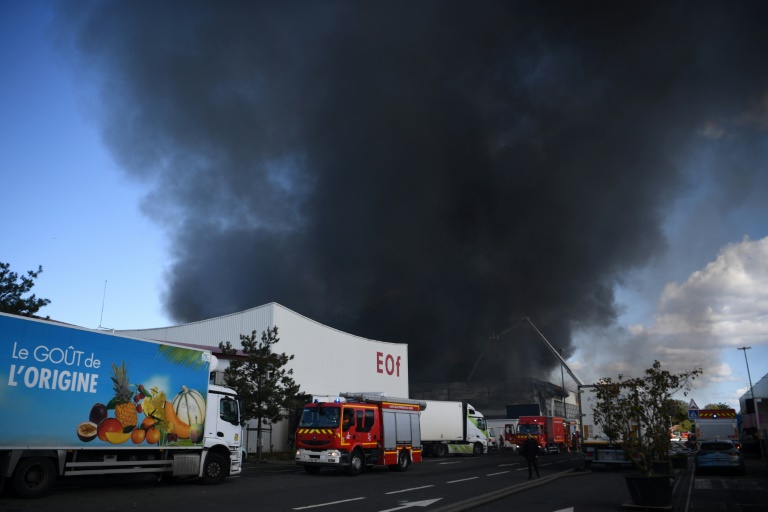
A major blaze swept through part of one of the world’s biggest fresh produce markets on the outskirts of Paris on Sunday.

The fire destroyed a fruit and vegetable warehouse at the Rungis complex to the south of the French capital. 

Flames spread shortly after noon, the authorities said, sending a dark plume of smoke billowing over the southern suburbs.

A hundred firefighters brought the fire under control by mid-afternoon and there were no injuries, the fire brigade said.

The warehouse, about the size of a football pitch, belonged to Les Halles Mandar group.

“It’s a shock, but we’re glad there were no injuries”, boss Shaoul Abramczyk said.

“We will not be able to fulfil our partners’ orders from tomorrow (Monday) and for several days”, he added.

“When a market operator is the victim of a tragedy of this nature, the whole market is struck at its heart”, Rungis market head Stephane Layani said.

Far-right eyes historic victory as Italy votes

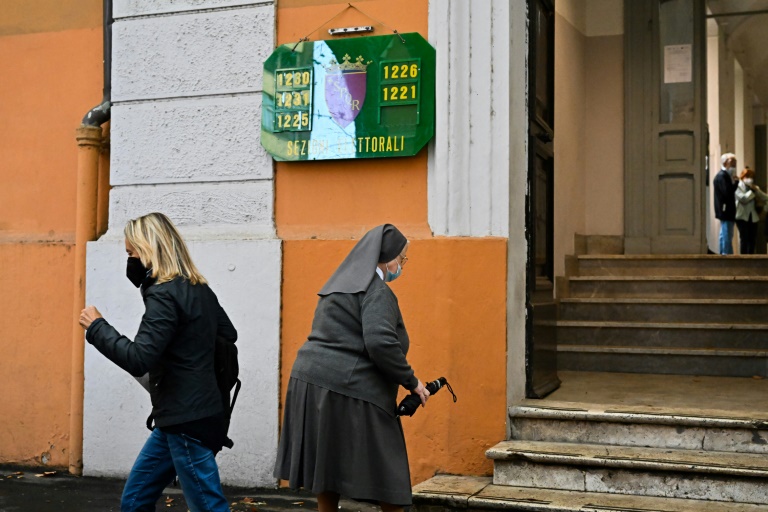
Italians voted Sunday on whether to usher in the country’s first government led by the far-right since World War II, bringing eurosceptic populists to the heart of Europe.

The Brothers of Italy party, headed by one-time Mussolini supporter Giorgia Meloni, has led opinion polls and looks set to take office in a coalition with the far-right League and Silvio Berlusconi’s Forza Italia parties.

Meloni, 45, who campaigned on a motto of “God, country and family”, hopes to become Italy’s first female prime minister.

“Today you can participate in writing history,” she tweeted.

Turnout was over 19 percent by 1000 GMT, according to the interior ministry, in line with the last elections in 2018, as large queues formed outside voting stations.

“I’m playing to win, not just to take part,” Matteo Salvini, head of the far-right League, told reporters as he went to cast his ballot.

“I can’t wait to come back from tomorrow as part of the government of this extraordinary country,” he added.

President Sergio Mattarella and Enrico Letta, leader of the centre-left Democratic Party, also voted early Sunday. Polls close at 2100 GMT.

Many voters are expected to pick Meloni, “the novelty, the only leader the Italians have not yet tried”, Wolfango Piccoli of the Teneo consultancy told AFP.

Brussels and the markets are watching closely, amid concern that Italy — a founding member of the European Union — may be the latest country to veer hard right, less than two weeks after the far-right outperformed in elections in Sweden.

If she wins, Meloni will face challenges from rampant inflation to an energy crisis as winter approaches, linked to the conflict in Ukraine.

The Italian economy, the third largest in the eurozone, rebounded after the pandemic but is saddled with a debt worth 150 percent of gross domestic product.

– ‘Limited room for manoeuvre’ –

Meloni has dedicated her campaign to trying to prove she is ready despite her party never before being in power.

Brothers of Italy, which has roots in the post-fascist movement founded by supporters of dictator Benito Mussolini, pocketed just four percent of the vote in 2018.

Meloni has moderated her views over the years, notably abandoning her calls for Italy to leave the EU’s single currency.

However, she insists her country must stand up for its national interests, backing Hungary in its rule of law battles with Brussels.

Her coalition wants to renegotiate the EU’s post-pandemic recovery fund, arguing that the almost 200 billion euros Italy is set to receive should take into account the energy crisis aggravated by the Ukraine war.

But “Italy cannot afford to be deprived of these sums”, political sociologist Marc Lazar told AFP, which means Meloni actually has “very limited room for manoeuvre”.

The funds are tied to a series of reforms only just begun by outgoing Prime Minister Mario Draghi, who called snap elections in July after his national unity coalition collapsed.

Despite her euroscepticism, Meloni strongly supports the EU’s sanctions against Russia over Ukraine, although her allies are another matter.

Berlusconi, the billionaire former premier who has long been friends with Vladimir Putin, faced an outcry this week after suggesting the Russian president was “pushed” into war by his entourage.

– ‘Woke ideologies’ –

A straight-speaking Roman raised by a single mother in a working-class neighbourhood, Meloni rails against what she calls “LGBT lobbies”, “woke ideology” and “the violence of Islam”.

She has vowed to stop the tens of thousands of migrants who arrive on Italy’s shores each year, a position she shares with Salvini, who is currently on trial for blocking charity rescue ships when he was interior minister in 2019.

The centre-left Democratic Party says Meloni is a danger to democracy. 

It also claims her government would pose a serious risk to hard-won rights such as abortion and will ignore global warming, despite Italy being on the front line of the climate emergency.

On the economy, Meloni’s coalition pledges to cut taxes while increasing social spending, regardless of the cost.

The last opinion polls two weeks before election day suggested one in four voters backed Meloni.

However, around 20 percent of voters remain undecided, and there are signs she may end up with a smaller majority in parliament than expected.

In particular, support appears to be growing for the populist Five Star Movement in the poor south. 

The next government is unlikely to take office before the second half of October.

Super Typhoon Noru slams into the Philippines

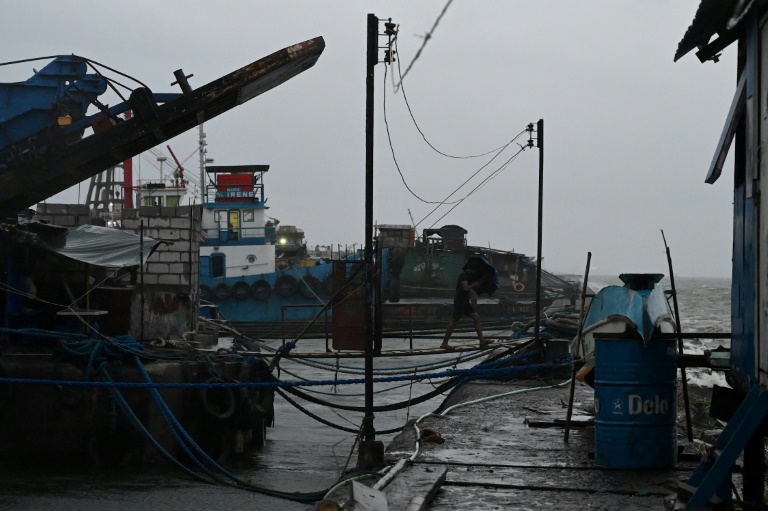
Super Typhoon Noru slammed into the Philippines Sunday, battering the heavily populated main island of Luzon with strong winds and heavy rain that have forced thousands of people to flee their homes.

The storm was packing maximum sustained winds of 195 kilometres (121 miles) an hour as it charged towards the archipelago nation after an unprecedented “explosive intensification”, the state weather forecaster said. 

Noru, the strongest storm to hit the Philippines this year, made landfall in Burdeos municipality on the Polillo islands, part of Quezon province, at 5:30 pm (0930 GMT). 

Videos posted on social media and verified by AFP showed trees swaying wildly as wind and rain whipped across the islands.

The weather bureau issued warnings late Sunday for “serious flooding” in vulnerable areas of the capital Manila and nearby provinces as Noru dumped heavy rain.

“We ask residents living in danger zones to adhere to calls for evacuation whenever necessary,” Philippine National Police chief General Rodolfo Azurin said.

The Philippines is regularly ravaged by storms, with scientists warning they are becoming more powerful as the world gets warmer because of climate change.

“The winds were fierce this morning,” said Ernesto Portillo, 30, who works as a cook in the coastal municipality of Infanta in Quezon.

“We’re a bit worried… We secured our belongings and bought a few groceries so we have food just in case.”

Noru weakened to a typhoon as it swept across central Luzon. It is expected to enter the South China Sea on Monday and head towards Vietnam.

“Typhoons are like engines — you need a fuel and an exhaust to function,” said weather forecaster Robb Gile.

“In the case of Karding, it has a good fuel because it has plenty of warm waters along its track and then there is a good exhaust in the upper level of the atmosphere — so it’s a good recipe for explosive intensification,” he added, using the local name for the storm.

The storm hit about 100 kilometres northeast of Manila. Emergency personnel braced for the possibility of strong winds and heavy rain battering the capital, home to more than 13 million people. 

Forced evacuations were under way in some high-risk areas of the metropolis, including impoverished communities living in flimsy shacks along rivers.

Gloria Perez, 68, was part of a group sheltering in modular tents set up on a covered basketball court.

“I evacuated the house where I’m living in because I’m scared, the flood there gets really high,” Perez told AFP.

“I don’t want a repeat of what happened to me before.”

– Calm before the storm –

Noru came nine months after another super typhoon devastated swathes of the country, killing more than 400 people and leaving hundreds of thousands homeless.

More than 8,300 people fled their homes before the latest storm hit, including residents in several municipalities in Quezon, disaster officials said.

In the neighbouring province of Aurora, residents of Dingalan municipality were forced to seek shelter.

“People living near the coast have been told to evacuate. We live away from the coast so we’re staying put so far. We’re more worried about the water from the mountains,” said Rhea Tan, 54, a restaurant manager in Dingalan.

The weather bureau warned of dangerous storm surges more than three metres high along the coast of Aurora and Quezon, including the Polillo islands, along with widespread flooding and landslides as the storm soaks the region.

It could topple coconut and mango trees, and cause “severe losses” to rice and corn crops in the heavily agricultural region, while inundating villages.

The coast guard reported more than 2,500 people had been left stranded by ferry cancellations as vessels took shelter ahead of the storm.

Dozens of flights in and out of Manila were also cancelled.

School classes and non-essential government services have been suspended for Monday. 

The Philippines — ranked among the most vulnerable nations to the impacts of climate change — is hit by an average of 20 storms every year.

Super Typhoon Noru slams into the Philippines

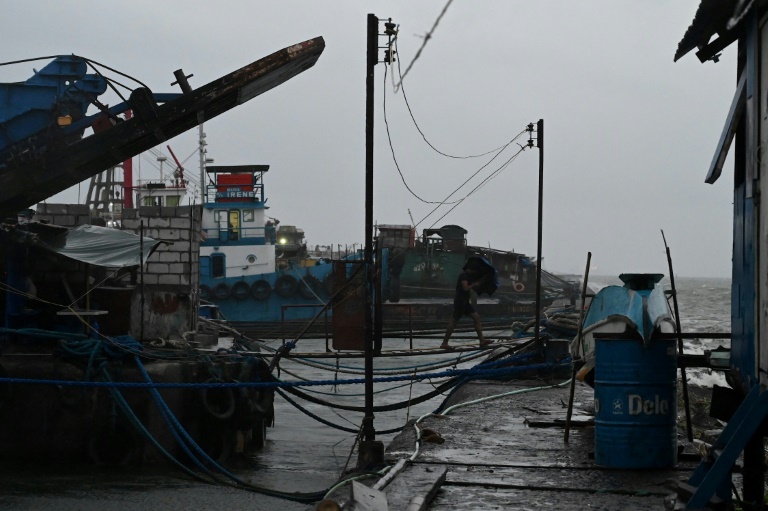
Super Typhoon Noru slammed into the Philippines Sunday, battering the heavily populated main island of Luzon with strong winds and heavy rain that have forced thousands of people to flee their homes.

The storm was packing maximum sustained winds of 195 kilometres (121 miles) an hour as it charged towards the archipelago nation after an unprecedented “explosive intensification”, the state weather forecaster said. 

Noru, the strongest storm to hit the Philippines this year, made landfall in Burdeos municipality on the Polillo islands, part of Quezon province, at 5:30 pm (0930 GMT). 

Videos posted on social media and verified by AFP showed trees swaying wildly as wind and rain whipped across the islands.

The weather bureau issued warnings late Sunday for “serious flooding” in vulnerable areas of the capital Manila and nearby provinces as Noru dumped heavy rain.

“We ask residents living in danger zones to adhere to calls for evacuation whenever necessary,” Philippine National Police chief General Rodolfo Azurin said.

The Philippines is regularly ravaged by storms, with scientists warning they are becoming more powerful as the world gets warmer because of climate change.

“The winds were fierce this morning,” said Ernesto Portillo, 30, who works as a cook in the coastal municipality of Infanta in Quezon.

“We’re a bit worried… We secured our belongings and bought a few groceries so we have food just in case.”

Noru weakened to a typhoon as it swept across central Luzon. It is expected to enter the South China Sea on Monday and head towards Vietnam.

“Typhoons are like engines — you need a fuel and an exhaust to function,” said weather forecaster Robb Gile.

“In the case of Karding, it has a good fuel because it has plenty of warm waters along its track and then there is a good exhaust in the upper level of the atmosphere — so it’s a good recipe for explosive intensification,” he added, using the local name for the storm.

The storm hit about 100 kilometres northeast of Manila. Emergency personnel braced for the possibility of strong winds and heavy rain battering the capital, home to more than 13 million people. 

Forced evacuations were under way in some high-risk areas of the metropolis, including impoverished communities living in flimsy shacks along rivers.

Gloria Perez, 68, was part of a group sheltering in modular tents set up on a covered basketball court.

“I evacuated the house where I’m living in because I’m scared, the flood there gets really high,” Perez told AFP.

“I don’t want a repeat of what happened to me before.”

– Calm before the storm –

Noru came nine months after another super typhoon devastated swathes of the country, killing more than 400 people and leaving hundreds of thousands homeless.

More than 8,300 people fled their homes before the latest storm hit, including residents in several municipalities in Quezon, disaster officials said.

In the neighbouring province of Aurora, residents of Dingalan municipality were forced to seek shelter.

“People living near the coast have been told to evacuate. We live away from the coast so we’re staying put so far. We’re more worried about the water from the mountains,” said Rhea Tan, 54, a restaurant manager in Dingalan.

The weather bureau warned of dangerous storm surges more than three metres high along the coast of Aurora and Quezon, including the Polillo islands, along with widespread flooding and landslides as the storm soaks the region.

It could topple coconut and mango trees, and cause “severe losses” to rice and corn crops in the heavily agricultural region, while inundating villages.

The coast guard reported more than 2,500 people had been left stranded by ferry cancellations as vessels took shelter ahead of the storm.

Dozens of flights in and out of Manila were also cancelled.

School classes and non-essential government services have been suspended for Monday. 

The Philippines — ranked among the most vulnerable nations to the impacts of climate change — is hit by an average of 20 storms every year.

Close Bitnami banner
Bitnami