
World

Tens of thousands of Jewish pilgrims in Ukraine despite war

Tens of thousands of Hasidic Jews gathered in the Ukrainian city of Uman for their annual pilgrimage, officials said Sunday, despite authorities asking them to skip the trip because of the war.

Every year, Hasidic Jewish pilgrims come to Uman from across the world to visit the tomb of one of the main figures of Hasidic judaism for Rosh Hashana, the Jewish new year.

The central Ukrainian city of Uman is relatively far from the frontline, but Ukrainian and Israeli authorities urged worshippers to skip the celebrations taking place between September 25 and 27 this year.

But despite the warnings, crowds of Hasidim dressed in traditional black clothing gathered in Uman, celebrating in the streets.

“This is the most important day of the year to be able to connect with God. And this a great place to do it,” one pilgrim, Aaron Allen, told AFP.

Pilgrims often cite a religious text from Rabbi Nachman, the founder of an ultra-Orthodox movement  who died in the city in 1810, in which he promised he would “save (worshippers) from hell” if they came to visit his tomb on Rosh Hashana.

“There were sirens, but coming from Israel we are used to sirens, we know what to do. We feel pretty safe,” said Allen, a 48-year-old doctor from Yad Binyamin.

Police set up a wide perimeter to access the area around the grave, checking IDs and only letting through residents and Hasidim.

It was forbidden to sell not only alcohol, fireworks and firecrackers, but even toy guns during the festivities in Uman, regional police spokeswoman Zoya Vovk told AFP.

A curfew between 11 pm (20 GMT) and 5 am is also in place. 

Despite the restrictions, the shrine housing the tomb was buzzing with celebrations on Sunday. 

Pilgrims — only men and boys — were praying, pressed against the white walls and columns of the burial place.

Outside the temple, a simultaneous prayer from hundreds of pilgrims resonated. 

Police will not release the exact number of pilgrims until the end of the festivities for fear of attacks from Russia.

“We understand that there is a full-scale Russian invasion of Ukraine and that the enemy is monitoring information,” Zoya Vovk told AFP.

“The only thing I can say is tens of thousands (of pilgrims have already arrived),” she added, however.

The United Jewish Community of Ukraine NGO said that more than 23,000 pilgrims had arrived in Uman.

Uman in central Ukraine has been hit several times by Russian strikes since the invasion began on February 24.
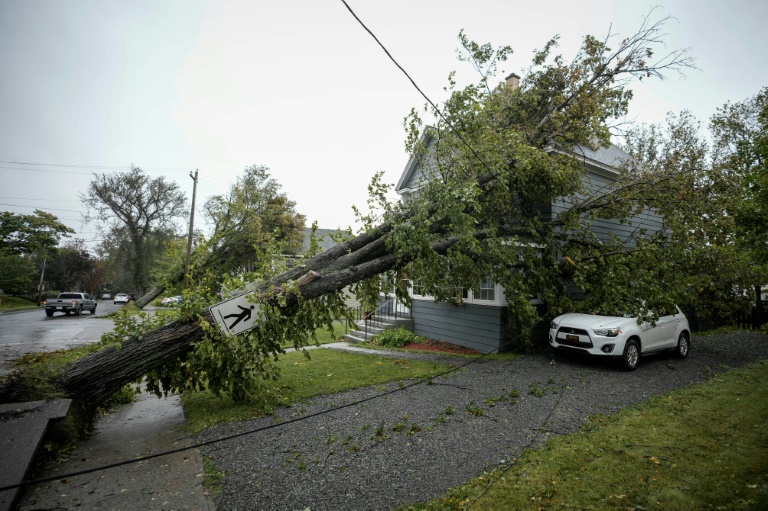
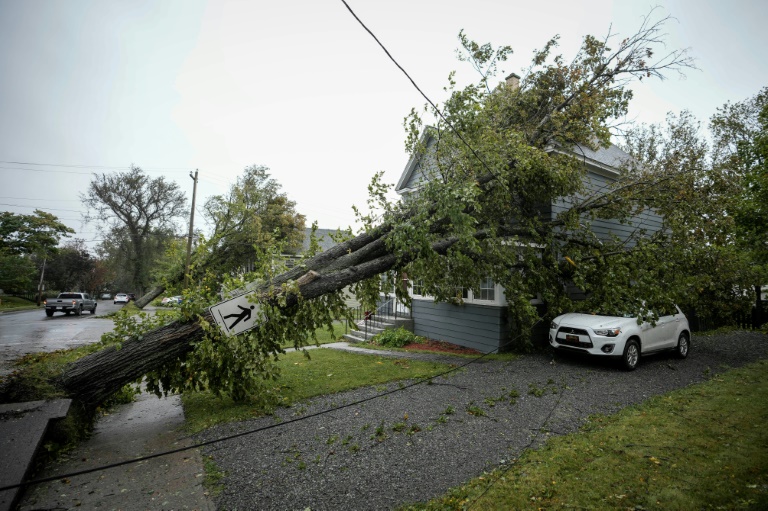
Canada counts damage after Fiona; Cuba and Florida brace for storm Ian

Parts of eastern Canada resembled a “war zone” Sunday after powerful storm Fiona swept houses into the sea and caused major power outages, as the Caribbean and Florida braced for intensifying Tropical Storm Ian.

Fiona, a post-tropical cyclone that had earlier killed seven people in the Caribbean, tore into Nova Scotia and Newfoundland on Saturday.

The storm packed hurricane-force winds of 80 miles (130 kilometers) per hour and brought torrential rain, as well as waves of up to 40 feet (12 meters), which left devastation across the region’s coast. 

Storm surges swept at least 20 homes into the sea in the town of Channel-Port aux Basques, on the southwestern tip of Newfoundland, officials there said, with Mayor Brian Button describing “a total war zone” in the coastal community. 

Some 200 residents had been evacuated before the storm hit, though officials said at least one person was missing.

“The woman was inside her home when a wave struck the residence and destroyed a section of the basement. She has not been seen since.  A search is happening today,” the Royal Canadian Mounted Police told AFP.

“Some people have lost everything, and I mean everything,” Button told CBC News.

“The sea was taking back the land and we were getting separated. A lot of our homes are built along the coastline along the Atlantic Ocean. Down there, Fiona just wiped out parts of that,” he said. 

Tempers were fraying Sunday as residents tried to return to their homes — or what was left of them. 

“I know people are showing up at the barricades angry this morning and wanting to move in and go check up on their properties,” said Button on Facebook Live. 

“You’ve got to give us a little bit of time… Unfortunately, this is going to take days, could take weeks, could take months in some cases,” he said. Button advised businesses to stay closed and residents to await instructions from officials on when they could return.

– ‘Incredible storm’ –

More than 300,000 people were still without power across the region Sunday after the storm felled trees, ripped roofs from buildings and damaged power lines.

“This was an incredible storm,” Nova Scotia Premier Tim Houston told CBC, adding that Fiona may have “caused the most damage of any we’ve seen.”

Houston said the Canadian military had been deployed to help clear trees and roads in the province.  

Television images showed around 100 cars queuing to get gas for generators in Cape Breton, an island off Nova Scotia, where dozens had spent the night in relief centers operated by the Canadian Red Cross.

In Prince Edward Island, Charlottetown Police Chief Brad MacConnell pleaded with residents to stay inside as recovery efforts continue.

“We ask people to stay home unless absolutely necessary,” he told CBC, adding that there’s “a lot of devastation” and hardly an area of the city that had not been significantly impacted.

By mid-morning Sunday the storm was over Labrador, after having moved inland through southeastern Quebec.

The country’s environmental agency said all warnings had ended and that, after causing more than a week of havoc from the Caribbean to Canada, Fiona was finally set to dissipate over the Labrador Sea.

– Ian to become major hurricane –

Further south, parts of the Caribbean as well as the US state of Florida were preparing for Tropical Storm Ian, which the US National Hurricane Center (NHC) said is forecast to become a hurricane on Sunday and a major hurricane by late Monday.

A hurricane warning was in effect for Grand Cayman on Sunday, with Ian poised to brush past the British territory Monday on its way to western Cuba and then Florida by mid-week. 

Governor Ron DeSantis said Saturday that he had declared a state-wide emergency in preparation for the storm, warning on Twitter that “Floridians should take precautions.”

NASA called off the scheduled Tuesday launch of its historic uncrewed mission to the Moon in anticipation of the storm.

Ian’s threat to the Caribbean came after Fiona cut a deadly path through the region earlier this week, killing four people in Puerto Rico, two in the Dominican Republic and one in Guadeloupe. 

The storm had turned north and skirted the Atlantic island of Bermuda on Friday. No fatalities or major damage were reported there.

burs/st/bbk

Canada counts damage after Fiona; Cuba and Florida brace for storm Ian

Parts of eastern Canada resembled a “war zone” Sunday after powerful storm Fiona swept houses into the sea and caused major power outages, as the Caribbean and Florida braced for intensifying Tropical Storm Ian.

Fiona, a post-tropical cyclone that had earlier killed seven people in the Caribbean, tore into Nova Scotia and Newfoundland on Saturday.

The storm packed hurricane-force winds of 80 miles (130 kilometers) per hour and brought torrential rain, as well as waves of up to 40 feet (12 meters), which left devastation across the region’s coast. 

Storm surges swept at least 20 homes into the sea in the town of Channel-Port aux Basques, on the southwestern tip of Newfoundland, officials there said, with Mayor Brian Button describing “a total war zone” in the coastal community. 

Some 200 residents had been evacuated before the storm hit, though officials said at least one person was missing.

“The woman was inside her home when a wave struck the residence and destroyed a section of the basement. She has not been seen since.  A search is happening today,” the Royal Canadian Mounted Police told AFP.

“Some people have lost everything, and I mean everything,” Button told CBC News.

“The sea was taking back the land and we were getting separated. A lot of our homes are built along the coastline along the Atlantic Ocean. Down there, Fiona just wiped out parts of that,” he said. 

Tempers were fraying Sunday as residents tried to return to their homes — or what was left of them. 

“I know people are showing up at the barricades angry this morning and wanting to move in and go check up on their properties,” said Button on Facebook Live. 

“You’ve got to give us a little bit of time… Unfortunately, this is going to take days, could take weeks, could take months in some cases,” he said. Button advised businesses to stay closed and residents to await instructions from officials on when they could return.

– ‘Incredible storm’ –

More than 300,000 people were still without power across the region Sunday after the storm felled trees, ripped roofs from buildings and damaged power lines.

“This was an incredible storm,” Nova Scotia Premier Tim Houston told CBC, adding that Fiona may have “caused the most damage of any we’ve seen.”

Houston said the Canadian military had been deployed to help clear trees and roads in the province.  

Television images showed around 100 cars queuing to get gas for generators in Cape Breton, an island off Nova Scotia, where dozens had spent the night in relief centers operated by the Canadian Red Cross.

In Prince Edward Island, Charlottetown Police Chief Brad MacConnell pleaded with residents to stay inside as recovery efforts continue.

“We ask people to stay home unless absolutely necessary,” he told CBC, adding that there’s “a lot of devastation” and hardly an area of the city that had not been significantly impacted.

By mid-morning Sunday the storm was over Labrador, after having moved inland through southeastern Quebec.

The country’s environmental agency said all warnings had ended and that, after causing more than a week of havoc from the Caribbean to Canada, Fiona was finally set to dissipate over the Labrador Sea.

– Ian to become major hurricane –

Further south, parts of the Caribbean as well as the US state of Florida were preparing for Tropical Storm Ian, which the US National Hurricane Center (NHC) said is forecast to become a hurricane on Sunday and a major hurricane by late Monday.

A hurricane warning was in effect for Grand Cayman on Sunday, with Ian poised to brush past the British territory Monday on its way to western Cuba and then Florida by mid-week. 

Governor Ron DeSantis said Saturday that he had declared a state-wide emergency in preparation for the storm, warning on Twitter that “Floridians should take precautions.”

NASA called off the scheduled Tuesday launch of its historic uncrewed mission to the Moon in anticipation of the storm.

Ian’s threat to the Caribbean came after Fiona cut a deadly path through the region earlier this week, killing four people in Puerto Rico, two in the Dominican Republic and one in Guadeloupe. 

The storm had turned north and skirted the Atlantic island of Bermuda on Friday. No fatalities or major damage were reported there.

burs/st/bbk

Swiss narrowly back hiking retirement age for women

Swiss voters on Sunday accepted by a hair a divisive pension reform plan, which will raise women’s retirement age to the same as men’s, but snubbed a push to ban factory farming

Final results showed a tiny majority of Swiss approved a government plan to reform the country’s pension system for the first time in more than a quarter of a century. 

Bern has long argued the need to “stabilise” the country’s old-age security system, under pressure as life expectancy rises and the giant baby boomer generation reaches retirement age.

After failing twice to get the approval needed for similar plans, in 2004 and 2017, two separate votes on different aspects of the reform passed Sunday.

Just 50.57 percent of Swiss agreed to the most controversial part of the reform, involving hiking women’s retirement age by one year.

This means women will need to work until the age of 65 before receiving a full pension, bringing them en par with their male counterparts.

A separate vote on boosting funding for the reform through a sales tax hike meanwhile passed with 55 percent in favour.

Parliament approved the key measures last year, but left-leaning parties and unions decried the reform “on the backs of women” and pushed the issue to a referendum under Switzerland’s direct democratic system.

Backers of the reform argued that it was reasonable for men and women to retire at the same age, with Celine Amaudruz, vice president of the populist rightwing Swiss People’s Party hailing the vote as “a first step towards permanence” for the old-age insurance system.

– ‘Slap in the face’ –

But Sunday’s decision sparked outrage from the plan’s opponents.

The Swiss Socialist Party’s women’s group immediately announced a demonstration in Bern on Monday, warning the plan would dramatically cut women’s already inferior pension income.

“Women’s pension income will be reduced by 7 billion Swiss francs ($7.1 billion) over the next 10 years: a slap in the face of all women,” it said in a statement.

Opponents argued that women face significant discrimination and a broad gender pay-gap in Switzerland, and thus receive far smaller pensions than men, demanding such issues be addressed before hiking their retirement age.

In 2020, women in Switzerland on average received pensions nearly 35 percent smaller than men, according to the Swiss economy ministry.

Polls ahead of Sunday’s vote revealed deep divisions between the sexes, with around 70 percent of men questioned in favour and close to 60 percent of women opposed.

Sunday’s results were not immediately broken down by gender, but did show a dramatic divide between different Swiss regions.

While Switzerland’s German-speaking part was overwhelmingly in favour of the reform, the French and Italian-speaking parts were staunchly opposed, with nearly 63 percent of Geneva voters voting “no” and more than 70 percent in Jura canton.

Pierre-Yves Maillard, head of the Swiss Trade Union Federation, warned that the deep divide seen between the sexes and the regions on such an important issue was “not good politics.”

“It will leave a trace,” he told the Keystone-ATS news agency.

– Factory farming ban rejected –

Another hotly debated issue on Sunday’s ballot, a proposed ban on intensive livestock farming, was meanwhile rejected.

Final results showed just over 63 percent of voters voted “no” to the popular initiative by animal rights and welfare organisations. 

The backers of the initiative had wanted to make protecting the dignity of animals like cattle, chickens or pigs a constitutional requirement.

Their initiative would have imposed stricter minimum requirements for animal-friendly housing and care, access to outdoors and slaughtering practices, essentially outlawing factory farming.

The government and parliament opposed the initiative, insisting that Switzerland already has among the world’s strictest animal welfare laws, and that tightening the rules would significantly hike prices.

Backers of the initiative said Sunday they were pleased the campaign had at least raised awareness about the issue.

“All of Switzerland has discussed the problems linked to intensive livestock farming and our meat consumption,” Vera Weber, head of the Franz Weber Foundation, told RTS.

“For us, it is in any case a victory.”

Voter participation Sunday ticked in at over 52 percent, above the usual ceiling of around 50 percent.

Swiss narrowly back hiking retirement age for women

Swiss voters on Sunday accepted by a hair a divisive pension reform plan, which will raise women’s retirement age to the same as men’s, but snubbed a push to ban factory farming

Final results showed a tiny majority of Swiss approved a government plan to reform the country’s pension system for the first time in more than a quarter of a century. 

Bern has long argued the need to “stabilise” the country’s old-age security system, under pressure as life expectancy rises and the giant baby boomer generation reaches retirement age.

After failing twice to get the approval needed for similar plans, in 2004 and 2017, two separate votes on different aspects of the reform passed Sunday.

Just 50.57 percent of Swiss agreed to the most controversial part of the reform, involving hiking women’s retirement age by one year.

This means women will need to work until the age of 65 before receiving a full pension, bringing them en par with their male counterparts.

A separate vote on boosting funding for the reform through a sales tax hike meanwhile passed with 55 percent in favour.

Parliament approved the key measures last year, but left-leaning parties and unions decried the reform “on the backs of women” and pushed the issue to a referendum under Switzerland’s direct democratic system.

Backers of the reform argued that it was reasonable for men and women to retire at the same age, with Celine Amaudruz, vice president of the populist rightwing Swiss People’s Party hailing the vote as “a first step towards permanence” for the old-age insurance system.

– ‘Slap in the face’ –

But Sunday’s decision sparked outrage from the plan’s opponents.

The Swiss Socialist Party’s women’s group immediately announced a demonstration in Bern on Monday, warning the plan would dramatically cut women’s already inferior pension income.

“Women’s pension income will be reduced by 7 billion Swiss francs ($7.1 billion) over the next 10 years: a slap in the face of all women,” it said in a statement.

Opponents argued that women face significant discrimination and a broad gender pay-gap in Switzerland, and thus receive far smaller pensions than men, demanding such issues be addressed before hiking their retirement age.

In 2020, women in Switzerland on average received pensions nearly 35 percent smaller than men, according to the Swiss economy ministry.

Polls ahead of Sunday’s vote revealed deep divisions between the sexes, with around 70 percent of men questioned in favour and close to 60 percent of women opposed.

Sunday’s results were not immediately broken down by gender, but did show a dramatic divide between different Swiss regions.

While Switzerland’s German-speaking part was overwhelmingly in favour of the reform, the French and Italian-speaking parts were staunchly opposed, with nearly 63 percent of Geneva voters voting “no” and more than 70 percent in Jura canton.

Pierre-Yves Maillard, head of the Swiss Trade Union Federation, warned that the deep divide seen between the sexes and the regions on such an important issue was “not good politics.”

“It will leave a trace,” he told the Keystone-ATS news agency.

– Factory farming ban rejected –

Another hotly debated issue on Sunday’s ballot, a proposed ban on intensive livestock farming, was meanwhile rejected.

Final results showed just over 63 percent of voters voted “no” to the popular initiative by animal rights and welfare organisations. 

The backers of the initiative had wanted to make protecting the dignity of animals like cattle, chickens or pigs a constitutional requirement.

Their initiative would have imposed stricter minimum requirements for animal-friendly housing and care, access to outdoors and slaughtering practices, essentially outlawing factory farming.

The government and parliament opposed the initiative, insisting that Switzerland already has among the world’s strictest animal welfare laws, and that tightening the rules would significantly hike prices.

Backers of the initiative said Sunday they were pleased the campaign had at least raised awareness about the issue.

“All of Switzerland has discussed the problems linked to intensive livestock farming and our meat consumption,” Vera Weber, head of the Franz Weber Foundation, told RTS.

“For us, it is in any case a victory.”

Voter participation Sunday ticked in at over 52 percent, above the usual ceiling of around 50 percent.

Swiss narrowly back hiking retirement age for women

Swiss voters on Sunday accepted by a hair a divisive pension reform plan, which will raise women’s retirement age to the same as men’s, but snubbed a push to ban factory farming

Final results showed a tiny majority of Swiss approved a government plan to reform the country’s pension system for the first time in more than a quarter of a century. 

Bern has long argued the need to “stabilise” the country’s old-age security system, under pressure as life expectancy rises and the giant baby boomer generation reaches retirement age.

After failing twice to get the approval needed for similar plans, in 2004 and 2017, two separate votes on different aspects of the reform passed Sunday.

Just 50.57 percent of Swiss agreed to the most controversial part of the reform, involving hiking women’s retirement age by one year.

This means women will need to work until the age of 65 before receiving a full pension, bringing them en par with their male counterparts.

A separate vote on boosting funding for the reform through a sales tax hike meanwhile passed with 55 percent in favour.

Parliament approved the key measures last year, but left-leaning parties and unions decried the reform “on the backs of women” and pushed the issue to a referendum under Switzerland’s direct democratic system.

Backers of the reform argued that it was reasonable for men and women to retire at the same age, with Celine Amaudruz, vice president of the populist rightwing Swiss People’s Party hailing the vote as “a first step towards permanence” for the old-age insurance system.

– ‘Slap in the face’ –

But Sunday’s decision sparked outrage from the plan’s opponents.

The Swiss Socialist Party’s women’s group immediately announced a demonstration in Bern on Monday, warning the plan would dramatically cut women’s already inferior pension income.

“Women’s pension income will be reduced by 7 billion Swiss francs ($7.1 billion) over the next 10 years: a slap in the face of all women,” it said in a statement.

Opponents argued that women face significant discrimination and a broad gender pay-gap in Switzerland, and thus receive far smaller pensions than men, demanding such issues be addressed before hiking their retirement age.

In 2020, women in Switzerland on average received pensions nearly 35 percent smaller than men, according to the Swiss economy ministry.

Polls ahead of Sunday’s vote revealed deep divisions between the sexes, with around 70 percent of men questioned in favour and close to 60 percent of women opposed.

Sunday’s results were not immediately broken down by gender, but did show a dramatic divide between different Swiss regions.

While Switzerland’s German-speaking part was overwhelmingly in favour of the reform, the French and Italian-speaking parts were staunchly opposed, with nearly 63 percent of Geneva voters voting “no” and more than 70 percent in Jura canton.

Pierre-Yves Maillard, head of the Swiss Trade Union Federation, warned that the deep divide seen between the sexes and the regions on such an important issue was “not good politics.”

“It will leave a trace,” he told the Keystone-ATS news agency.

– Factory farming ban rejected –

Another hotly debated issue on Sunday’s ballot, a proposed ban on intensive livestock farming, was meanwhile rejected.

Final results showed just over 63 percent of voters voted “no” to the popular initiative by animal rights and welfare organisations. 

The backers of the initiative had wanted to make protecting the dignity of animals like cattle, chickens or pigs a constitutional requirement.

Their initiative would have imposed stricter minimum requirements for animal-friendly housing and care, access to outdoors and slaughtering practices, essentially outlawing factory farming.

The government and parliament opposed the initiative, insisting that Switzerland already has among the world’s strictest animal welfare laws, and that tightening the rules would significantly hike prices.

Backers of the initiative said Sunday they were pleased the campaign had at least raised awareness about the issue.

“All of Switzerland has discussed the problems linked to intensive livestock farming and our meat consumption,” Vera Weber, head of the Franz Weber Foundation, told RTS.

“For us, it is in any case a victory.”

Voter participation Sunday ticked in at over 52 percent, above the usual ceiling of around 50 percent.

Cubans voting on a landmark liberalization of family code

Cubans went to the polls Sunday to vote in a landmark referendum on whether to legalize same-sex marriage and adoption, allow surrogate pregnancies and give greater rights to non-biological parents.

President Miguel Diaz-Canel and his wife cast their ballots early at a Havana polling station in what he said is a needed revision of the country’s 1975 Family Code.

The new code, he told reporters, “is a fair, necessary, up-to-date, modern norm that gives rights and guarantees to all people, to the full diversity of families, of people and of creeds.”

Cubans aged 16 and over are being asked to vote simply “Yes” or “No” to the question: “Do you agree with the Family Code?” 

The updated code would represent a major shift in a country where machismo is strong and where the authorities, in the 1960s and 1970s, sent homosexuals to militarized labor camps.

Official attitudes have since evolved, and the government has conducted an intense media campaign in favor of the new code.

But the referendum comes amid the country’s worst economic crisis in 30 years and could provide an opportunity for some voters to voice opposition to the government.

The law needs more than 50 percent of the vote to be adopted, and dissidents have called on citizens to reject the code or to abstain from voting.

If approved, the new code would permit surrogate pregnancies, as long as no money changes hands, while boosting the rights of children, the elderly and the disabled.

Significantly, it would define marriage as the union between two people, rather than that of a man and a woman.

“We are not voting ‘Yes’ with the PCC (Cuban Communist Party),” Maykel Gonzalez, a gay activist, insisted on Twitter. “It is the PCC which is voting ‘Yes’ with us.”

– ‘I’m Christian, I have other ideas’-

Several Latin American countries — Argentina, Brazil, Chile, Colombia, Costa Rica and Ecuador, as well as some Mexican states — now recognize same-sex marriages.

An effort by Havana in 2019 to join that group failed amid strong criticism from church leaders.

This month, the Cuban Conference of Catholic Bishops announced its stand against several points in the new code, including surrogate pregnancies and adoption by same-sex couples. 

But many Cubans say they now support such ideas.

“A few years ago I would not have accepted this code,” 78-year-old Elio Gomez, a former teacher of Marxism, told AFP at a Havana polling station. “But one has to keep up. This is a very human code, totally inclusive.”

Others disagreed.

“I’m Christian, I have other ideas, I don’t accept this,” said Zulika Corso, 65, a teacher.

– ‘More important subjects’ –

The code’s sweeping reach, including nearly 500 articles, fed doubts among some who said they agreed, for example, with same-sex marriages but not with surrogate pregnancies.

The code was the subject of months of intense debate across Cuba. 

Still, political scientist Rafael Hernandez called it the “most important human rights legislation” there since the 1959 revolution.

Cuba today is experiencing a grave economic crisis — with shortages of food, fuel and medicine — aggravated by US sanctions and a tourism collapse due to the coronavirus pandemic.

Experts say voters could use this occasion to express their broad disapproval of the government.

“There are many other subjects that are more important than the Family Code, like the fact there is no food, that many people are hungry,” concierge Julio Cesar Vazquez told AFP.

Polling stations close at 6:00 pm local time (2200 GMT).

United Arab Emirates agrees to supply Germany with gas, diesel

The United Arab Emirates agreed Sunday an “energy security” deal with Germany to supply liquefied natural gas and diesel as Berlin searches for new power sources to replace Russian supplies.

Emirati industry minister Sultan Ahmed Al Jaber called it a “landmark new agreement” that “reinforces the rapidly growing energy partnership between the UAE and Germany”, at a signing attended by German Chancellor Olaf Scholz, the UAE’s state news agency WAM reported.

Scholz was on a visit to the UAE as part of a Gulf tour that also includes stops in Saudi Arabia and Qatar.

He met with Emirati President Sheikh Mohamed bin Zayed Al-Nahyan, who said on Twitter afterwards they had discussed “further opportunities for cooperation in areas including energy security, emissions reduction and climate action”. 

The German leader said he “welcomed” the “energy security” agreement, WAM said.

As part of the deal, the UAE will provide “an LNG cargo for delivery in late 2022, to be used in the commissioning of Germany’s floating LNG import terminal at Brunsbuettel”, a North Sea port, the WAM report added. 

UAE state oil company ADNOC completed its first ever direct diesel delivery to Germany earlier this month, and will “supply up to 250,000 tons of diesel per month in 2023”, it said. 

“ADNOC has reserved a number of further LNG cargos exclusively for German customers in 2023,” it said. 

Sunday was the second and final day of Scholz’s Gulf tour, which he hoped would seal new energy deals to replace Russian supplies and mitigate the energy crisis resulting from Moscow’s invasion of Ukraine. 

On Saturday, he met in Jeddah with Saudi Crown Prince Mohammed bin Salman, and on Sunday afternoon he arrived in gas-rich Qatar to hold talks with Emir Sheikh Tamim bin Hamad Al-Thani. 

– Energy transition –

Scholz’s stop in the UAE included a tour of an environmental project at a mangrove park with Emirati climate change minister Mariam Almheiri. 

Almheiri said discussions on Sunday would, in addition to energy security, cover “climate action and economic growth”. 

“The UAE believes all three pillars must go hand and hand. We cannot look at one or two of these pillars separately,” she said.

She also reiterated Abu Dhabi’s insistence on “a just transition” away from fossil fuels. 

Both the UAE and Saudi Arabia have been leading critics of what they describe as “unrealistic” transition models they say have contributed to the current energy crunch. 

Scholz told reporters in Abu Dhabi that his country had “made progress on a whole series of projects here in terms of the production and purchase of diesel and gas”, while adding it was determined to avoid energy dependence on Russia in the future. 

“The fact that we are dependent on one supplier and also dependent on its decisions will certainly not happen to us again,” he said. 

“With the investments that we are now making in Germany, and that will become reality bit by bit next year, we will indeed have an infrastructure for gas imports for Germany, such that we are no longer directly dependent on the specific supplier at the other end of the pipeline, as we are with a pipeline connection.” 

His visit to Qatar comes one day after France’s TotalEnergies signed a new $1.5 billion deal to help expand Doha’s natural gas production. 

Scholz said such projects were “important”. 

“We have to ensure that the production of liquefied gas in the world is advanced to such an extent that the high demand that exists can be met — without having to fall back on the production capacities in Russia that have been used so far,” he said. 

Russia vows to fix mistakes after old, sick people mobilised

Russian authorities on Sunday promised to fix the mistakes in their troop call-up for Ukraine, after some public outrage over students, older or sick people being mistakenly ordered to report for duty.

When Russian President Vladimir Putin announced a partial mobilisation on Wednesday, he said only people with “relevant” skills or military experience would be concerned. 

But many expressed outrage after seeing — sometimes absurd — cases of authorities summoning people unfit for service. 

Authorities in the southwestern Russian region of Volgograd sent a 63-year-old diabetic ex-military staffer to training camp, despite poor health and cerebral issues.

The 63-year-old came back home Friday night, according to Russian state agency RIA Novosti.

In the same region, 58-year-old school director Alexander Faltin received a call-up order despite having no military experience. 

His daughter posted a video on social media that became viral.

He was allowed home after his documents were reviewed, according to RIA. 

– A rare admission –

Upper house speaker Valentina Matviyenko called on all governors — who oversee the mobilisation campaigns — to avoid mistakes, in a rare admission on Sunday.

“Incorrect cases of mobilisation… are provoking fierce reactions in society, and rightly so,” Matviyenko said in a statement on Telegram.

“Some are assuming that handing in their report (to their superiors) quickly is more important than correctly fulfilling this important mission,” she added. 

“This is unacceptable… Make sure that partial mobilisation is carried out in full and complete compliance with the criteria. And without a single mistake!” she ordered. 

The governor of the northwestern Leningrad region, Alexander Drozdenko told local districts heads to “take the  residents’ appeals under your personal control and deal with each single case,” according to a statement on his administration’s website Sunday.

The Vladimir region governor Vladimir Avdeev already said Saturday that “anyone mobilised by mistake will return home.”

The errors are painted as isolated cases.

But the very fact that Russian authorities are talking about them point to concerns about the level of indignation coming from some of the population. 

– ‘Undermining confidence’ –

This new example is Russia’s latest logistical issue revealed since the beginning of the Ukraine offensive in February. 

Russia announced on Saturday the replacement of its highest ranking general in charge of logistics amid this mobilisation drive. 

On Saturday Valeriy Fadeev, chairman of the human rights council to the Kremlin, had urged defence minister Sergei Shoigu to “urgently resolve issues” to avoid “undermining the confidence of the people.”

He mentioned several aberrations including the recruitments of 70 fathers of large families in the far eastern region of Buryatia, and of nurses and midwives without any military skills. 

Fadeev said these recruits were called up “under threat of criminal prosecution.”  

Fadeev also criticised those “handing out summons at 2 am as if they all thought we were draft evaders.”

Several students told AFP they were given call-up papers, despite Russian authorities promising they would be left out of the recruitment drive.

On Saturday, Putin signed a decree confirming students in secondary vocational and higher education institutions would be exempted from mobilisation. 

Detained anti-mobilisation protesters said police gave them call-up papers in custody — ordering them to enlist in the very effort they were denouncing.

But the Kremlin defended the procedure on Thursday, saying “it isn’t against the law”.

Swiss back pension reform, hiking retirement age for women: projections

Swiss voters appeared set Sunday to narrowly accept the government’s divisive pension reform plan, which would raise the retirement age for women, while snubbing a push to ban factory farming.

Shortly after polling stations closed at noon (1000 GMT), the gfs.bern polling institute projected that Swiss had voted to reform their pension system for the first time in more than a quarter of a century. 

Bern has long argued the need to “stabilise” the country’s old-age security system, under pressure as life expectancy rises and the giant baby-boomer generation reaches retirement age.

The government has seen its attempts to introduce similar pension reform plans thwarted in the polls twice before, in 2004 and 2017, but gfs.bern projected that separate votes on different aspects of the reform had both passed.

Early results indicated that 51 percent of voters had opted for the most controversial part of the reform, involving hiking women’s retirement age by one year, gfs.bern said an hour after polls closed.

A separate vote on boosting funding for the reform through a sales tax hike was meanwhile on track to pass with 56-percent support, the pollster said.

If those numbers are confirmed, women will need to work until the age of 65, the same age as the current retirement age for men, before receiving a full pension. 

– Gender pension gap –

Parliament approved the key measures, which include a sales tax hike, last year, but left-leaning parties and unions decry the reform “on the backs of women” and pushed the issue to a referendum under Switzerland’s direct democratic system.

While backers of the reform argued that men and women retiring at the same age is not unreasonable, the plan sparked significant pushback, especially from women.

This result “is painful for the left and the unions, but especially for the people it will affect,” Socialist Party parliamentarian Samuel Bendahan told the RTS public broadcaster.

Opponents argued that women face significant discrimination and a broad gender pay-gap in Switzerland, meaning they receive far smaller pensions than men.

They argued it was unfair to increase their retirement age without first addressing those issues.

In 2020, women in Switzerland on average received pensions nearly 35 percent smaller than men, according to the Swiss economy ministry.

Polls ahead of Sunday’s vote revealed deep divisions between the sexes, one Tamedia poll showing 70 percent of men questioned in favour and 58 percent of women opposed.

Early results Sunday were not broken down in terms of gender, but did show a divide between different regions, with the German-speaking part of the country clearly in favour of the reform and the French-speaking part opposed.

Initial results from Geneva for instance showed more than 62 percent of voters had voted against the plan, the RTS public broadcaster reported. 

– Factory farming ban rejected –

While the pension reform plans appeared set to pass, gfs.bern projected that another hotly debated issue on Sunday’s ballot, a proposed ban on intensive livestock farming, would not pass.

Early results showed that a full 63 percent of voters had rejected the popular initiative by animal rights and welfare organisations, gfs.bern said. 

The backers of the initiative had wanted to make protecting the dignity of animals like cattle, chickens or pigs a constitutional requirement, and impose stricter minimum requirements for animal-friendly housing and care, access to outdoors and slaughtering practices.

The proposal, which essentially amounted to outlawing factory farming, would also have extended to imports of animals and animal products.

The government and parliament opposed the initiative, insisting that Switzerland already has among the world’s strictest animal welfare laws, and warning that tightening the rules further would significantly hike prices.

Bern had also cautioned that the import clause could impact relations with Switzerland’s trading partners.

Backers of the initiative said Sunday that while they would have liked to see their proposal pass, they were pleased the campaign had raised awareness about the issue.

“For us, it is in any case a victory,” Vera Weber, head of the Franz Weber Foundation, told RTS, pointing out that “all of Switzerland has discussed the problems linked to intensive livestock farming and our meat consumption.” 

Close Bitnami banner
Bitnami