World

Teachers recount carnage of Myanmar school helicopter attack

Teachers at a Myanmar school hit by a military helicopter attack last week have spoken of the terrifying horror of the onslaught — including watching a wounded child screaming in agony, begging to die.

Friday’s violence at a school in Let Yet Kone village, Sagaing region, killed 14 people — 12 of them children, the youngest aged seven.

The United Nations, the European Union and rights groups have condemned the incident, in which the Myanmar military said it targeted rebels who were using civilians as human shields.

Some children were playing outside while others attended classes as two helicopter gunships flew in and opened fire with machine guns and heavy weapons, one teacher said.

“One girl was hit on the back of her head… there was a lot of blood coming out,” the teacher said in a phone interview with AFP, describing frantic efforts to perform first aid.

Students scrambled to take cover under tables as smoke billowed around, added the teacher, whom AFP is not naming because of security concerns.

The helicopters then touched down and troops poured out, storming the school grounds and ordering everyone inside to come out, the teacher said.

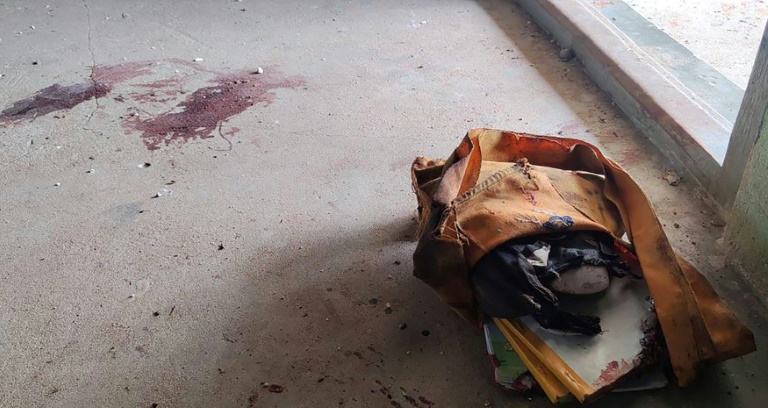
Some children, their legs badly wounded, left a trail of blood as they crawled out, the teacher said, while others were too badly injured to move from their hiding spots.

Myanmar has been in chaos since the military seized power in a coup in February last year, with nearly 2,300 civilians killed in a crackdown on dissent, according to a local monitoring group.

The Sagaing region in the country’s northwest has seen some of the fiercest fighting, and entire villages have been burned down during clashes between anti-coup fighters and the military.

– ‘Kill me, I can’t stand the pain’ –

The mother of a wounded student pleaded with soldiers to let her into the classroom where her seven-year-old son was bleeding to death, the teacher said.

“The soldier shouted at her: ‘do you want me to shoot and kill you?’,” the teacher said.

Her son was bleeding so much it was almost “like he was drowning in water”, they added.

Later, the mother and her dying son reunited — he was missing a hand and leg.

“The boy was still alive and he said: ‘Mummy, it’s very painful, kill me, kill me, I can’t stand the pain’,” the teacher said.

The tearful mother begged the soldiers not to take away her son’s body, but they insisted he was not dead and took him to hospital, the teacher said.

“The mother cried out: ‘Let me make a funeral for my baby.'”

The teacher later watched as soldiers tossed children’s severed body parts and bloody clothing into rice sacks.

A second teacher described rushing children indoors as the helicopters approached, only for the building to be hit by a large explosion.

“I saw one child was hit, and he shouted for help. He was covered in blood and he kept shouting, asking for help but I did not dare to walk out to help him,” the second teacher told AFP by phone.

As the firing continued, the second teacher decided to get out of the building, taking 20 students to hide under a large tamarind tree as the wounded boy continued to scream for help.

AFP has not been able to independently verify the teachers’ accounts.

– Military accuses rebels –

Many in Let Yet Kone village are still anxiously awaiting news about some students who are missing since the attack.

There are no immediate plans to reopen the school, which had nearly 250 students and more than 20 teachers.

The junta said they had sent troops in helicopters to the village after receiving a tip-off that fighters from the Kachin Independence Army (KIA) — an ethnic rebel group — and from a local anti-coup militia were moving weapons in the area.

The military accused the rebels of using civilians as human shields, and said it had seized mines and explosives from the village.

“Security members gave necessary medical treatment and arranged to send patients to a nearby hospital,” the military said in a statement.

Junta spokesman Zaw Min Tun on Tuesday accused the KIA of taking villagers to a monastery and then firing on troops from there.
Nuclear shift: North Korean nuke law reflects global trend

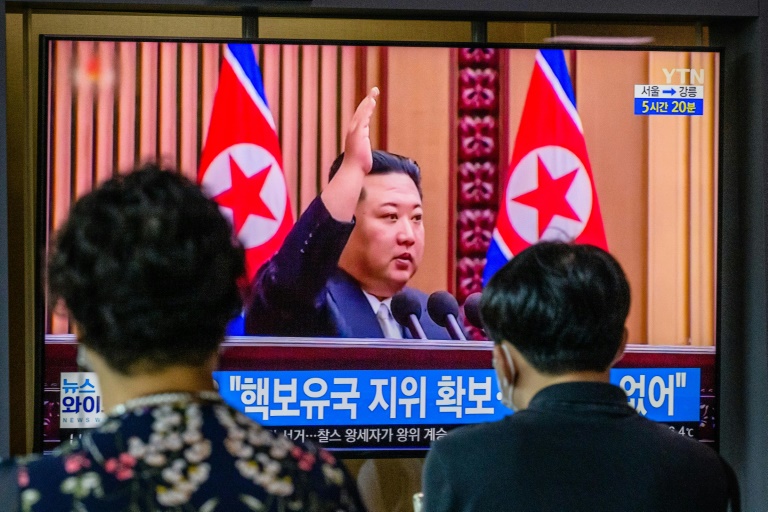
North Korea’s Kim Jong Un declaring he will never give up his nukes and enshrining a “first-strike” doctrine into law are part of a worrying new escalatory dynamic in nuclear weapons policy around the world, analysts say.

Since the height of the Cold War, nuclear arsenals have served primarily as a deterrent to be used only as a last resort — but when Russia invaded Ukraine in February, everything began to change, experts say.

Russian officials have refused to rule out the possibility of a nuclear strike against Ukraine, and President Vladimir Putin has repeatedly made thinly veiled threats of nuclear war, vowing Wednesday that Moscow would use “all the means at our disposal to protect Russia”.

North Korea — long a global pariah for its nuclear weapons programme — revised its laws this month, declaring itself to be an “irreversible” nuclear power and offering an array of scenarios when it would use its nukes.

“We have entered a new era in which one nation is open to using nuclear weapons, in contrast to the Cold War doctrine,” Kim Jong-dae of the Yonsei Institute for North Korean Studies told AFP.

With talk of “automatic” first strikes and tactical nuke deployments, North Korea’s new policy “reflects Kim’s response to changing nuclear dynamics around the world”, he said.

It is not just Putin that Pyongyang is responding to: the United States has also played a role, the analyst added, pointing to the revival of its tactical nukes — smaller weapons designed for battlefield use — under president Donald Trump.

The Pentagon under Trump had pointed in 2018 to Russia’s tactical nukes to make the case for the United States to have matching weapons as a credible deterrent.

“We should not equate Pyongyang’s latest move as an irrational decision or Kim being unpredictable. Kim is being nimble in adapting to a new global trend,” he said.

– Talks dead? –

Announcing North Korea’s new policy, Kim Jong Un said the country’s status as a nuclear power was “irreversible”, effectively eliminating the possibility of denuclearisation talks.

Washington’s decades-long goal of getting Pyongyang to give up its nukes for aid is now “impossible to realise” and Seoul should seriously consider acquiring nuclear weapons of its own, Cheong Seong-chang of the Center for North Korean Studies at the Sejong Institute told AFP.

This is a step that even hawkish new President Yoon Suk-yeol, who took office in May, has ruled out — although he did hint on the campaign trail that he could be open to the United States deploying tactical nuclear weapons in South Korea.

Kim’s new law also “carries a message to President Yoon”, said Cheong, describing it as a clear warning that “Seoul would not be spared from nuclear strikes” if it attacked or joined a US attack on North Korea.

The goal of the law is to “underline how North Korea’s nuclear weapons are a part of its national identity, and cannot be negotiated away”, Mason Richey of the Hankuk University of Foreign Studies told AFP.

“There is also a message to potential aggressors that an attempted first, disarming strike against North Korea will be a failure,” he added, saying this raised the stakes in the region. 

“The risk here is that North Korea is playing into a dynamic of escalatory ‘use it or lose it’ logic.”

– ‘Regime decapitation’ –

Kim is trying to use his nuclear weapons to head off any threats to his rule, analysts say.

The US and South Korean militaries have trained together for years, and have recently ramped up drills under Yoon.

There have been reports that commandos from both countries have been practising so-called “decapitation” strikes that would target the North Korean leadership.

Kim is “apparently fearful of regime decapitation in a conflict and even of a US or South Korean pre-emptive strike against North Korea’s strategic assets”, said Leif-Eric Easley, a professor at Ewha University in Seoul.

He has chosen to respond by “advertising an irresponsibly risky and aggressive nuclear doctrine”.

Seoul and Washington have roundly condemned North Korea’s new law, saying any attempt by Pyongyang to use nuclear weapons would be met with an “overwhelming and decisive” response.

But the risk that North Korea will be punished at the global level for its move is slim.

“With Russia and China clear enemies of the United States, the North feels emboldened and knows that sanctions enforcement will be very lax,” Harry Kazianis, president of think tank Rogue States Project, told AFP.

So Pyongyang has focused on building “a world-class programme that can kill millions of people in minutes”.

'Drink it anyway': Syria water woes peak in cholera outbreak

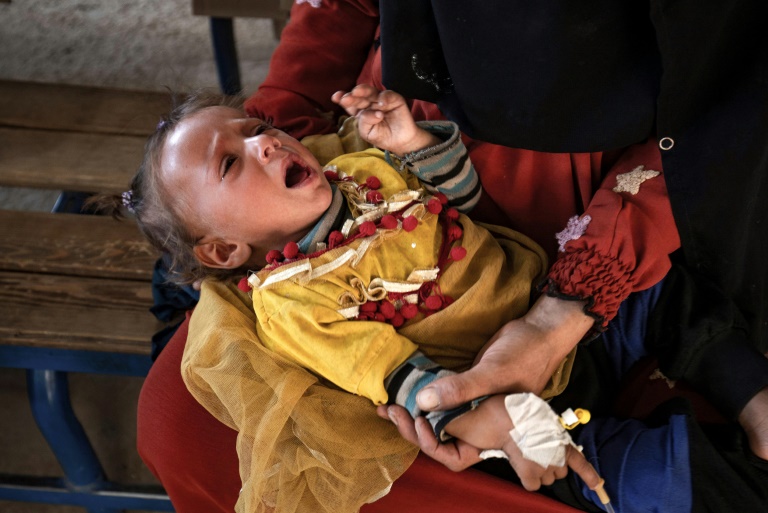
In a Syria hospital crowded with women and wailing children, Ahmad al-Mohammad writhed in pain beside his wife after they contracted cholera, which is resurging for the first time in years.

During his six days in treatment, Mohammad has watched patients stream into the Al-Kasrah hospital in the eastern province of Deir Ezzor, where the highly-polluted Euphrates River is a major source of contaminated water used for both drinking and irrigation.

“We have suffered from diarrhoea, vomiting and pain… because we drink directly from the Euphrates River,” the 45-year-old told AFP from the hospital, barely able to speak.

“The waters of the Euphrates are polluted but we have no other choice.” 

Cholera is generally contracted from contaminated food or water and spreads in residential areas that lack proper sewerage networks or mains drinking water.

The disease is making its first major comeback since 2009 in Syria, where nearly two-thirds of water treatment plants, half of pumping stations and one-third of water towers have been damaged by more than a decade of war, according to the United Nations. 

The Syrian government has announced 23 deaths and more than 250 cholera cases across six of the country’s 14 provinces since the start of the outbreak in September, with most cases concentrated in the northern province of Aleppo.

The semi-autonomous Kurdish administration that runs northeast Syria and parts of Deir Ezzor has recorded 16 deaths and 78 cases in areas under its control, including 43 cases in western Deir Ezzor, health official Juan Mustafa told reporters Wednesday. 

He said water testing of the Euphrates proved the presence of bacteria responsible for cholera — a spread he said was caused by reduced water flow.

– River pollution –

Said to have once flowed through the biblical Garden of Eden, the Euphrates runs for almost 2,800 kilometres (1,700 miles) across Turkey, Syria and Iraq.

In times of rain, it has offered abundant supplies, gushing into northern Syria through the Turkish border and flowing diagonally across the war-torn country towards Iraq.

But drought and rising temperatures linked to climate change have severely diminished water levels, with the Euphrates experiencing historic lows.

Syria’s Kurds have also accused Turkey of holding back more water than necessary in its dams.

The reduced water flow has compounded the problem of river pollution, largely from sewage, but also from oil in hydrocarbon-rich regions, including Deir Ezzor. 

Despite the contamination, over five million of Syria’s about 18 million people rely on the Euphrates for their drinking water, according to the UN. 

The cost of this reliance was visible in Al-Kasrah hospital, where a man softly cradled his infant, an intravenous tube piercing the child’s tiny hand.

Hospital director Tarek Alaeddine said the facility admits dozens of suspected cholera cases every day and has tallied hundreds of cases over the past three weeks.

“The patients were all drinking water delivered by trucks that extract it directly from the Euphrates River, without filtering or sterilisation,” Alaeddine said.

“We appeal to all international organisations working on health and the environment to act quickly and urgently,” he said. 

– ‘We must live’ –

The Britain-based war monitor Syrian Observatory for Human Rights said early this month that the disease had spread in western parts of Deir Ezzor after local authorities stopped distributing chlorine to water pumping stations.

The Kurdish administration, which controls parts of Deir Ezzor including Al-Kasrah, said they have resumed distribution following the outbreak. 

They also announced assistance to Al-Kasrah and other medical facilities in the region to help contain the number of cases.

But the main source of the problem remains largely unresolved. 

Farmer Ahmad Suleiman al-Rashid, 55, said he irrigated his fields of cotton, okra, spinach and sesame using water from the Euphrates, which caused contamination of crops. 

“There are no water filtering stations… we drink unsterilised and unchlorinated water and rely on God for protection,” he said 

“What else can we do? The authorities are to blame.”

As he spoke, a rusty truck pumped water from the murky, green Euphrates. 

Meanwhile, irrigation pipelines sucked water out of the river, leaking what appeared to be oil onto the land.

“We know the water is polluted… but we drink it anyway,” Rashid said. “We have no other option.”

Nearby, a young boy splashed river water on his face to cool down in the summer heat while Sobha Hamid Ali, 60, sat in the shade cleaning spinach leaves.

She too is aware of the dangers but said there is little she can do. 

“We are forced to eat contaminated vegetables,” Ali said in a soft voice. “We must live after all.” 

Trump, children sued for 'incredible' fraud in New York

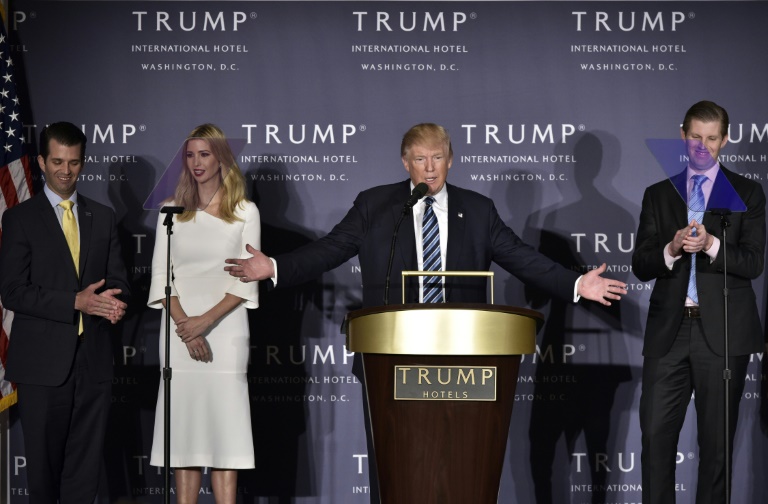
Donald Trump and family members lied to tax collectors, lenders and insurers for years in a scheme that routinely misstated the value of his properties to enrich themselves, according to a suit filed by New York’s attorney general on Wednesday.

Top state prosecutor Letitia James said that with the help of his children and others at the Trump Organization, the former president provided fraudulent statements of his net worth and false asset valuations “to obtain and satisfy loans, get insurance benefits, and pay lower taxes.”

“In short, he lied to gain massive financial benefits for himself.”

The sweeping investigation is one of many criminal, civil and congressional probes into Trump, who is eyeing another run for the White House in 2024.

Trump repeated his oft-used defense that the suit is “another witch hunt” against him, while his spokesperson denounced it as a political move by Democrats against the Republican businessman.

James’ office requested that the former president pay at least $250 million in penalties — a sum she says he made from the fraud — and that his family be banned from running businesses in the state. 

She also urged that Trump along with his children Donald Trump Jr, Eric Trump and Ivanka Trump be barred from purchasing property in the state for five years.

“The very foundation of his purported net worth is rooted in incredible fraud and illegality,” James said in a statement.

Referring the title of Trump’s book “The Art of Deal,” she said that “Mr. Trump thought he could get away with the art of the steal, but today, that conduct ends.”

– ‘Staggering’ overvaluations –

James said her office, which lacks authority to file criminal charges, was making a criminal referral to the US Justice Department as well as the Internal Revenue Service based on the three-year investigation.

The lawsuit filed with the New York State Supreme Court includes allegations that Trump’s annual financial statements for at least a decade grossly inflated property values across his assets — from his Mar-a-Lago resort in Florida to Manhattan’s Trump Tower — to a “staggering” degree.

He did so to obtain favorable loans with lower interests and premiums, said James, who is running to be re-elected to her post in November.

The suit details tactics used by Trump and his associates, saying they would represent that he had cash on hand when he didn’t, change valuation properties wildly, and use “objectively false numbers to calculate property values” including at his famous triplex on Fifth Avenue.

“White collar financial crime is not a victimless crime,” James said.

“When the well-connected break the law to take in more money than they are entitled to, it reduces resources available to working people, to regular people, to small businesses and to all tax payers.”

James’ lawsuit requests that a judge appoint an independent authority to monitor the Trump Organization’s financial practices, and remove the Trumps from their own family business.

– Web of investigations –

New York authorities have been probing Trump and his family business since 2018, when the Manhattan district attorney opened a probe into the then-president who has long vied to present himself as a self-made billionaire.

James’ civil inquiry began the next year, after Trump’s former lawyer gave testimony that indicated the company had engaged in misconduct.

The DA’s criminal probe has not resulted in any charges as of yet.

Last month Allen Weisselberg, the Trump Organization’s long-time finance chief, pleaded guilty to tax fraud and agreed to testify at an upcoming criminal trial of the former US president’s real estate company.

He is to serve five months in prison contingent on his testifying truthfully at the October criminal trial of the Trump Organization on tax fraud charges, the Manhattan District Attorney Alvin Bragg said last month.

FBI agents separately searched Trump’s palatial Mar-a-Lago residence in Florida on August 8 and seized numerous boxes of documents, including some marked “Top Secret,” “Secret” and “Confidential.”

His lawyers have tried to block the government’s access to those files, requesting that an independent arbiter sort through the documents to determine if any fall under special legal privileges.

A federal judge sided with Trump and allowed the appointment of a so-called special master, though the government appealed her decision to block their access to those documents marked as classified.

A three-judge appellate panel, two of whom were nominated by Trump, agreed on Wednesday that government should regain access to the classified documents.

Trump is also facing legal scrutiny for his efforts to overturn the results of the November 2020 election and over the January 6, 2021 attack on the US Capitol by his supporters.

Trump, children sued for 'incredible' fraud in New York

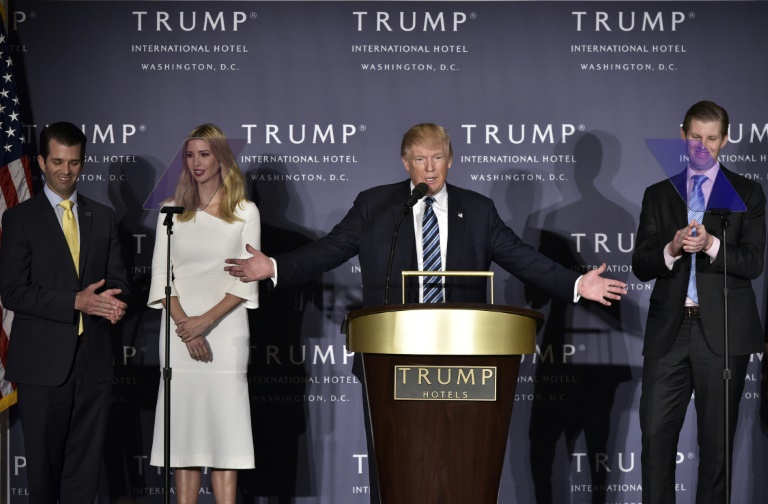
Donald Trump and family members lied to tax collectors, lenders and insurers for years in a scheme that routinely misstated the value of his properties to enrich themselves, according to a suit filed by New York’s attorney general on Wednesday.

Top state prosecutor Letitia James said that with the help of his children and others at the Trump Organization, the former president provided fraudulent statements of his net worth and false asset valuations “to obtain and satisfy loans, get insurance benefits, and pay lower taxes.”

“In short, he lied to gain massive financial benefits for himself.”

The sweeping investigation is one of many criminal, civil and congressional probes into Trump, who is eyeing another run for the White House in 2024.

Trump repeated his oft-used defense that the suit is “another witch hunt” against him, while his spokesperson denounced it as a political move by Democrats against the Republican businessman.

James’ office requested that the former president pay at least $250 million in penalties — a sum she says he made from the fraud — and that his family be banned from running businesses in the state. 

She also urged that Trump along with his children Donald Trump Jr, Eric Trump and Ivanka Trump be barred from purchasing property in the state for five years.

“The very foundation of his purported net worth is rooted in incredible fraud and illegality,” James said in a statement.

Referring the title of Trump’s book “The Art of Deal,” she said that “Mr. Trump thought he could get away with the art of the steal, but today, that conduct ends.”

– ‘Staggering’ overvaluations –

James said her office, which lacks authority to file criminal charges, was making a criminal referral to the US Justice Department as well as the Internal Revenue Service based on the three-year investigation.

The lawsuit filed with the New York State Supreme Court includes allegations that Trump’s annual financial statements for at least a decade grossly inflated property values across his assets — from his Mar-a-Lago resort in Florida to Manhattan’s Trump Tower — to a “staggering” degree.

He did so to obtain favorable loans with lower interests and premiums, said James, who is running to be re-elected to her post in November.

The suit details tactics used by Trump and his associates, saying they would represent that he had cash on hand when he didn’t, change valuation properties wildly, and use “objectively false numbers to calculate property values” including at his famous triplex on Fifth Avenue.

“White collar financial crime is not a victimless crime,” James said.

“When the well-connected break the law to take in more money than they are entitled to, it reduces resources available to working people, to regular people, to small businesses and to all tax payers.”

James’ lawsuit requests that a judge appoint an independent authority to monitor the Trump Organization’s financial practices, and remove the Trumps from their own family business.

– Web of investigations –

New York authorities have been probing Trump and his family business since 2018, when the Manhattan district attorney opened a probe into the then-president who has long vied to present himself as a self-made billionaire.

James’ civil inquiry began the next year, after Trump’s former lawyer gave testimony that indicated the company had engaged in misconduct.

The DA’s criminal probe has not resulted in any charges as of yet.

Last month Allen Weisselberg, the Trump Organization’s long-time finance chief, pleaded guilty to tax fraud and agreed to testify at an upcoming criminal trial of the former US president’s real estate company.

He is to serve five months in prison contingent on his testifying truthfully at the October criminal trial of the Trump Organization on tax fraud charges, the Manhattan District Attorney Alvin Bragg said last month.

FBI agents separately searched Trump’s palatial Mar-a-Lago residence in Florida on August 8 and seized numerous boxes of documents, including some marked “Top Secret,” “Secret” and “Confidential.”

His lawyers have tried to block the government’s access to those files, requesting that an independent arbiter sort through the documents to determine if any fall under special legal privileges.

A federal judge sided with Trump and allowed the appointment of a so-called special master, though the government appealed her decision to block their access to those documents marked as classified.

A three-judge appellate panel, two of whom were nominated by Trump, agreed on Wednesday that government should regain access to the classified documents.

Trump is also facing legal scrutiny for his efforts to overturn the results of the November 2020 election and over the January 6, 2021 attack on the US Capitol by his supporters.

Biden brings carrot-and-stick diplomacy to UN

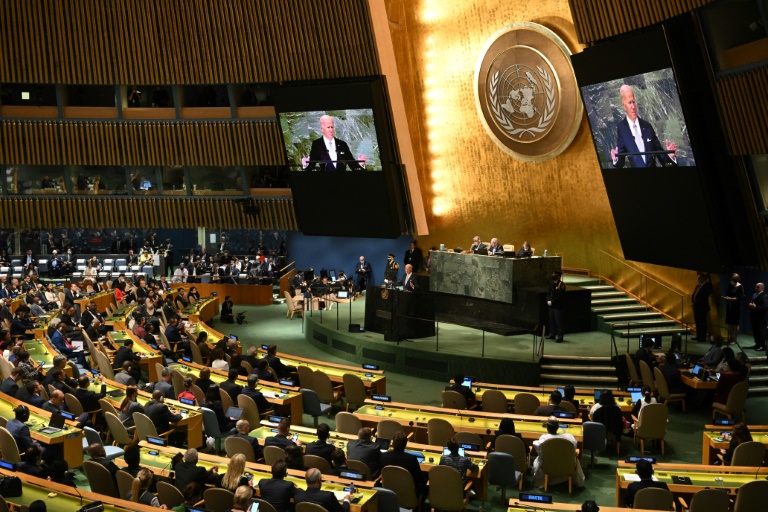
US President Joe Biden took a big carrot to the Big Apple for his UN speech — and for the Russians, an even bigger stick.

In an approximately half-hour address Wednesday to the UN General Assembly, Biden covered a litany of global problems, from the war in Ukraine to tension around Taiwan, hunger in Africa and climate change everywhere.

In every case, he said, the United States was ready to act.

It was confirmation of the credo Biden has preached since the day he took office: that America is back, and that means back on top.

“Both through age and experience, he’s someone very attached to the idea of American leadership,” said Garret Martin, who teaches international relations at American University.

Unlike isolationist Donald Trump, who ditched international agreements, entered erratic relationships with US foes and treated US allies as a nuisance, Biden’s worldview, laid out from the podium of the UN’s huge hall, was more straightforward.

The United States will get involved everywhere, he said. The only question is whether that will be with a carrot — or, as with Russia, a stick.

– Russia the violator –

Biden’s blistering denunciation of Russia began in the opening paragraph of his speech, when he said the Ukraine war was “chosen by one man.”

President Vladimir Putin had “shamelessly violated the core tenets of the United Nations Charter,” he said.

“This war is about extinguishing Ukraine’s right to exist as a state, plain and simple, and Ukraine’s right to exist as a people. Whoever you are, wherever you live, whatever you believe, that should not — that should make your blood run cold.”

So it went on.

But then came the carrot.

– Wooing global south –

“If you’re still committed to a strong foundation for the good of every nation around the world, then the United States wants to work with you,” Biden said.

“The United States is opening an era of relentless diplomacy to address the challenges that matter most to people’s lives — all people’s lives.”

He announced another $2.9 billion to help ease food supply problems endangering parts of Africa in particular.

And he strongly supported diluting the privileged position held by the five old powers on the permanent UN Security Council — Britain, China, France, Russia and the United States — by bringing in new members from the global south.

“The time has come for this institution to become more inclusive,” he said, urging permanent seats to represent Africa and Latin America, in addition to previous calls for including Japan and India.

Biden reminded the world of the US role in creating and distributing vaccines during the Covid pandemic, and he renewed his promise of US leadership in the existential struggle with climate change.

– China? It’s complicated –

Even if most of the focus was on criticizing Russia, Biden also brought out the stick for China — just not as aggressively.

He only touched briefly on some of the worst accusations made in the West about China, including genocide against the Uyghurs.

Instead, he used mostly code words.

He said: “The United States is determined to defend and strengthen democracy at home and around the world.”

He urged “basic principles like freedom of navigation.”

And he called for “transparent” international infrastructure projects, rather than ones that “generate huge and large debt without delivering.”

Code words, but easily understood as criticism of Beijing’s expanding military and commercial grip on the Asia-Pacific region and even further afield.

On one topic, Biden was more blunt, accusing China of “conducting an unprecedented, concerning nuclear buildup without any transparency.”

But just as important was the “direct” promise that Washington does “not seek conflict” with Beijing.

“We do not seek a Cold War,” he said.

– ‘Pragmatic’ –

As illustrated by the joint launch Wednesday of a US astronaut and two Russian cosmonauts to the International Space Station, there are still high-stakes areas where even Washington and Moscow can cooperate.

So after lashing out at Putin’s verbal nuclear threats, Biden renewed an appeal for world peace.

“No matter what else is happening in the world, the United States is ready to pursue critical arms control measures,” he said. “A nuclear war cannot be won.”

Martin, the professor, detected a “quite pragmatic” side to Biden’s policies, which are neither the Trump chest-thumping nor entirely the heady democracy agenda of George W. Bush.

For Robert Daly, director of the Kissinger Institute at The Wilson Center, Biden’s goal was to paint a vision of US leadership as beneficial for “the rest of the world.”

“The message was that the… international rules-based order works, but needs defending,” Daly said. “And that the United States will lead that defense in cooperation with all willing nations.”

Truss at UN vows UK military aid 'until Ukraine prevails'

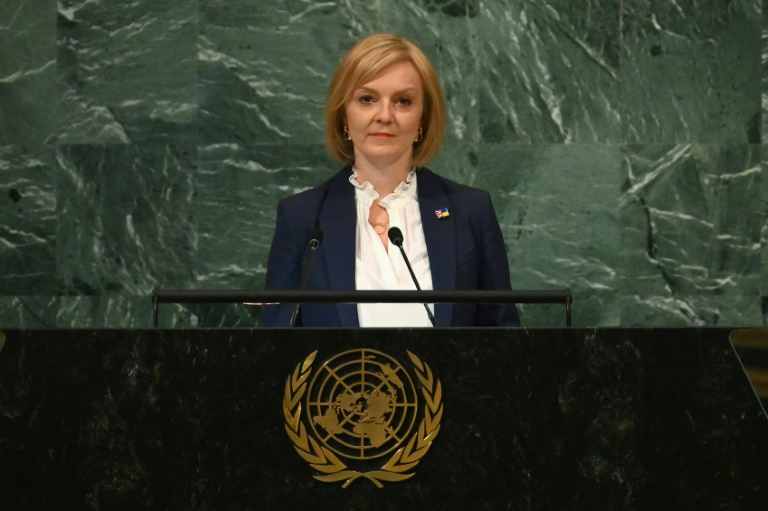
British Prime Minister Liz Truss vowed Wednesday before the United Nations to keep up military aid to war-ravaged Ukraine until it triumphs against Russia.

Truss became the latest Western leader at the UN General Assembly in New York to rail against Russian President Vladimir Putin, who hours earlier mobilized reservists in a clear sign he is in no rush to end the conflict.

Putin’s move only highlights the “catastrophic failure” of Russia’s invasion of its neighbor, and reinforced the resolve of Western allies to back Kyiv, she said.

“We will not rest until Ukraine prevails,” Truss told the UN General Assembly on her first trip since taking office, noting that “new UK weapons are arriving in Ukraine as I speak.”

“At this crucial moment in the conflict, I pledge that we will sustain or increase our military support to Ukraine for as long as it takes.”

The Conservative leader also said that the United Kingdom was committed to spending three percent of its GDP on defense by 2030, considerably higher than the two percent commitment to defense spending by NATO members.

Her comments came amid growing resentment in some quarters of the developing world over the West’s massive spending on weapons for Ukraine.

Truss also called for economic unity as a powerful tool against aggression.

“The G7 and our like-minded partners should act as an economic NATO, collectively defending our prosperity,” she said in her address. 

“If the economy of a partner is being targeted by an aggressive regime, we should act to support them — all for one, and one for all.”

Western powers such as Germany have increasingly sought to decrease their dependence on oil and gas from Russia, seen as key leverage for Putin.

Swiss mull banning factory farms

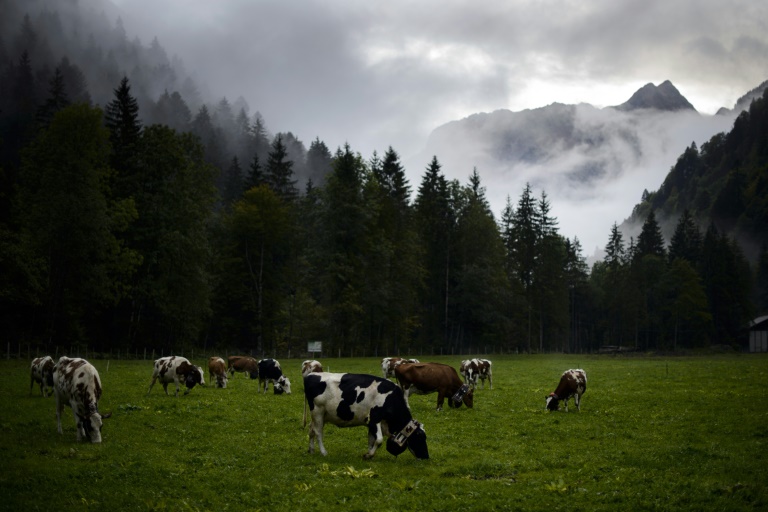
The Swiss will vote Sunday on whether to ban intensive livestock farming in the largely rural country, which already has some of the world’s strictest animal welfare laws.

The animal rights and welfare organisations behind the initiative want to make protecting the dignity of farm animals like cattle, chickens or pigs a constitutional requirement.

Their proposal, which received more than the 100,000 signatures needed to put any issue to a popular vote under Switzerland’s famous direct democracy system, would essentially eradicate all factory farming.

“We believe animal agriculture is one of the defining problems of our time,” animal welfare group Sentience, which presented the initiative, says on its website.

It points to the “immense suffering experienced by animals on factory farms,” but also to scientific studies showing that “industrial animal husbandry is disastrous for the environment and detrimental to our health”.

If accepted, the initiative — which has the backing of left-leaning parties, Greenpeace and other environmental organisations — would impose stricter minimum requirements for animal-friendly housing and care, access to outdoors, and slaughtering practices.

It would also significantly shrink the maximum number of animals per pen.

– Price hikes –

The government and parliament oppose the initiative, insisting that Switzerland already has strict animal welfare laws defining how much living space each animal should have.

The initiative “goes too far,” Swiss Health Minister Alain Berset told reporters in June, maintaining that the government for the past quarter century had been promoting “respectful animal husbandry”.

According to the current laws, farms cannot keep more than 1,500 fattening pigs, 27,000 broiler chickens or 300 calves, basically ruling out the kinds of massive factory farms seen in other countries.

“There is no factory farming in Switzerland,” insisted Marcel Dettling, a farmer and parliamentarian with the populist right-wing Swiss People’s Party.

Pointing out that limits in neighbouring Germany for instance can be 100 times higher, he told Swissinfo.ch that the initiative would only serve to hike prices. 

Sentience campaign manager Philipp Ryf, however, said that when you have 27,000 chickens crammed into a pen and only 12 percent of farm animals ever go outside, “we do think that is factory farming”.

He acknowledged to AFP that the law in Switzerland “is quite strong compared to other countries”, but added: “We don’t necessarily think that’s a good metric.”

“We want to look at what we are doing… We think we could be doing more.”

The government has also warned that if the initiative passes, prices would swell, and has cautioned it could also impact relations with trading partners.

This is because the requirements would also apply to the import of animals and animal products, which the government says would force Switzerland to violate its World Trade Organization obligations and to renegotiate trade agreements.

The Swiss would also have to invest large amounts in costly inspections of foreign farms, it argues.

– ‘Misconception’ –

Such arguments appear to have convinced a growing number of Swiss.

While early polls indicated that a slim majority was in favour of the initiative, the latest gfs.bern poll last week saw the “no” camp take the lead, with 52 percent of those questioned opposed to the move.

The farmers themselves appear particularly sceptical. 

The latest poll showed 62 percent of those questioned in rural areas rejecting the proposal, while 53 percent of city-dwellers surveyed said they would vote in favour.

Ryf said the strong opposition in rural areas was largely due to a well-funded campaign by the initiative’s opponents that had spread the “misconception” it would be bad for farmers.

“We regret that, because we do believe that our initiative will be good for farmers,” he said, pointing out that it would provide them support and 25 years to implement the changes.

While Switzerland’s largest farmers association is staunchly opposed to the initiative, many of those running smaller farms support it. 

David Rotzler, who has a small, diverse livestock farm in Sonvilier in northern Switzerland, told the Journal du Jura daily that “animal welfare does not depend on the size of the farm, but on the farmer”.

But, he said, it is certainly “easier to care for animals when you are smaller”.

Swiss mull banning factory farms

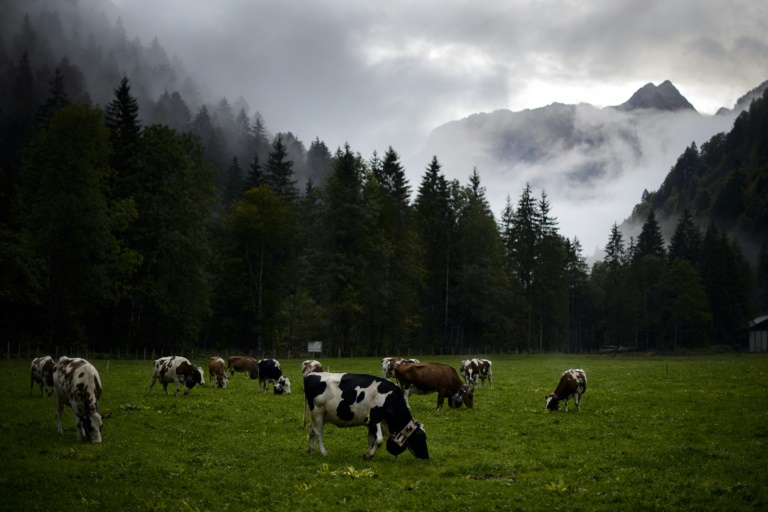
The Swiss will vote Sunday on whether to ban intensive livestock farming in the largely rural country, which already has some of the world’s strictest animal welfare laws.

The animal rights and welfare organisations behind the initiative want to make protecting the dignity of farm animals like cattle, chickens or pigs a constitutional requirement.

Their proposal, which received more than the 100,000 signatures needed to put any issue to a popular vote under Switzerland’s famous direct democracy system, would essentially eradicate all factory farming.

“We believe animal agriculture is one of the defining problems of our time,” animal welfare group Sentience, which presented the initiative, says on its website.

It points to the “immense suffering experienced by animals on factory farms,” but also to scientific studies showing that “industrial animal husbandry is disastrous for the environment and detrimental to our health”.

If accepted, the initiative — which has the backing of left-leaning parties, Greenpeace and other environmental organisations — would impose stricter minimum requirements for animal-friendly housing and care, access to outdoors, and slaughtering practices.

It would also significantly shrink the maximum number of animals per pen.

– Price hikes –

The government and parliament oppose the initiative, insisting that Switzerland already has strict animal welfare laws defining how much living space each animal should have.

The initiative “goes too far,” Swiss Health Minister Alain Berset told reporters in June, maintaining that the government for the past quarter century had been promoting “respectful animal husbandry”.

According to the current laws, farms cannot keep more than 1,500 fattening pigs, 27,000 broiler chickens or 300 calves, basically ruling out the kinds of massive factory farms seen in other countries.

“There is no factory farming in Switzerland,” insisted Marcel Dettling, a farmer and parliamentarian with the populist right-wing Swiss People’s Party.

Pointing out that limits in neighbouring Germany for instance can be 100 times higher, he told Swissinfo.ch that the initiative would only serve to hike prices. 

Sentience campaign manager Philipp Ryf, however, said that when you have 27,000 chickens crammed into a pen and only 12 percent of farm animals ever go outside, “we do think that is factory farming”.

He acknowledged to AFP that the law in Switzerland “is quite strong compared to other countries”, but added: “We don’t necessarily think that’s a good metric.”

“We want to look at what we are doing… We think we could be doing more.”

The government has also warned that if the initiative passes, prices would swell, and has cautioned it could also impact relations with trading partners.

This is because the requirements would also apply to the import of animals and animal products, which the government says would force Switzerland to violate its World Trade Organization obligations and to renegotiate trade agreements.

The Swiss would also have to invest large amounts in costly inspections of foreign farms, it argues.

– ‘Misconception’ –

Such arguments appear to have convinced a growing number of Swiss.

While early polls indicated that a slim majority was in favour of the initiative, the latest gfs.bern poll last week saw the “no” camp take the lead, with 52 percent of those questioned opposed to the move.

The farmers themselves appear particularly sceptical. 

The latest poll showed 62 percent of those questioned in rural areas rejecting the proposal, while 53 percent of city-dwellers surveyed said they would vote in favour.

Ryf said the strong opposition in rural areas was largely due to a well-funded campaign by the initiative’s opponents that had spread the “misconception” it would be bad for farmers.

“We regret that, because we do believe that our initiative will be good for farmers,” he said, pointing out that it would provide them support and 25 years to implement the changes.

While Switzerland’s largest farmers association is staunchly opposed to the initiative, many of those running smaller farms support it. 

David Rotzler, who has a small, diverse livestock farm in Sonvilier in northern Switzerland, told the Journal du Jura daily that “animal welfare does not depend on the size of the farm, but on the farmer”.

But, he said, it is certainly “easier to care for animals when you are smaller”.

Swiss mull banning factory farms

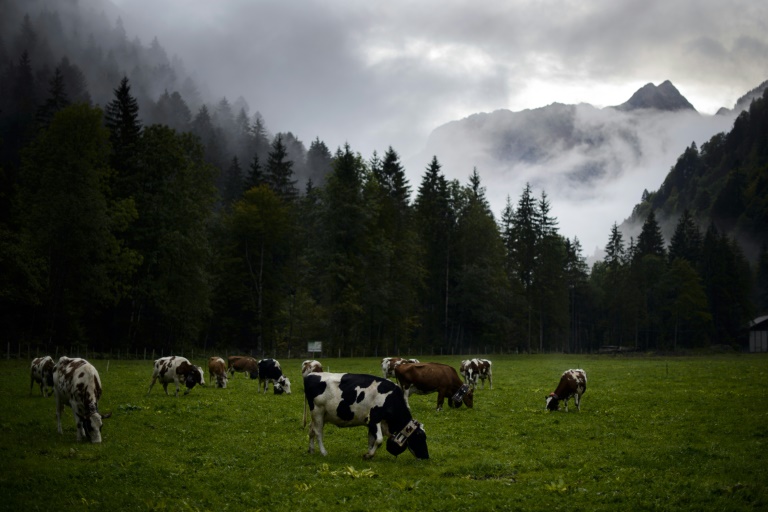
The Swiss will vote Sunday on whether to ban intensive livestock farming in the largely rural country, which already has some of the world’s strictest animal welfare laws.

The animal rights and welfare organisations behind the initiative want to make protecting the dignity of farm animals like cattle, chickens or pigs a constitutional requirement.

Their proposal, which received more than the 100,000 signatures needed to put any issue to a popular vote under Switzerland’s famous direct democracy system, would essentially eradicate all factory farming.

“We believe animal agriculture is one of the defining problems of our time,” animal welfare group Sentience, which presented the initiative, says on its website.

It points to the “immense suffering experienced by animals on factory farms,” but also to scientific studies showing that “industrial animal husbandry is disastrous for the environment and detrimental to our health”.

If accepted, the initiative — which has the backing of left-leaning parties, Greenpeace and other environmental organisations — would impose stricter minimum requirements for animal-friendly housing and care, access to outdoors, and slaughtering practices.

It would also significantly shrink the maximum number of animals per pen.

– Price hikes –

The government and parliament oppose the initiative, insisting that Switzerland already has strict animal welfare laws defining how much living space each animal should have.

The initiative “goes too far,” Swiss Health Minister Alain Berset told reporters in June, maintaining that the government for the past quarter century had been promoting “respectful animal husbandry”.

According to the current laws, farms cannot keep more than 1,500 fattening pigs, 27,000 broiler chickens or 300 calves, basically ruling out the kinds of massive factory farms seen in other countries.

“There is no factory farming in Switzerland,” insisted Marcel Dettling, a farmer and parliamentarian with the populist right-wing Swiss People’s Party.

Pointing out that limits in neighbouring Germany for instance can be 100 times higher, he told Swissinfo.ch that the initiative would only serve to hike prices. 

Sentience campaign manager Philipp Ryf, however, said that when you have 27,000 chickens crammed into a pen and only 12 percent of farm animals ever go outside, “we do think that is factory farming”.

He acknowledged to AFP that the law in Switzerland “is quite strong compared to other countries”, but added: “We don’t necessarily think that’s a good metric.”

“We want to look at what we are doing… We think we could be doing more.”

The government has also warned that if the initiative passes, prices would swell, and has cautioned it could also impact relations with trading partners.

This is because the requirements would also apply to the import of animals and animal products, which the government says would force Switzerland to violate its World Trade Organization obligations and to renegotiate trade agreements.

The Swiss would also have to invest large amounts in costly inspections of foreign farms, it argues.

– ‘Misconception’ –

Such arguments appear to have convinced a growing number of Swiss.

While early polls indicated that a slim majority was in favour of the initiative, the latest gfs.bern poll last week saw the “no” camp take the lead, with 52 percent of those questioned opposed to the move.

The farmers themselves appear particularly sceptical. 

The latest poll showed 62 percent of those questioned in rural areas rejecting the proposal, while 53 percent of city-dwellers surveyed said they would vote in favour.

Ryf said the strong opposition in rural areas was largely due to a well-funded campaign by the initiative’s opponents that had spread the “misconception” it would be bad for farmers.

“We regret that, because we do believe that our initiative will be good for farmers,” he said, pointing out that it would provide them support and 25 years to implement the changes.

While Switzerland’s largest farmers association is staunchly opposed to the initiative, many of those running smaller farms support it. 

David Rotzler, who has a small, diverse livestock farm in Sonvilier in northern Switzerland, told the Journal du Jura daily that “animal welfare does not depend on the size of the farm, but on the farmer”.

But, he said, it is certainly “easier to care for animals when you are smaller”.

Close Bitnami banner
Bitnami