World

UN chief wants 'action' to address climate loss, damage payments

The United Nations chief said Wednesday it was time for “meaningful action” on the issue of compensation for damage wrought by the climate crisis, especially in developing countries.

Ahead of the forthcoming COP27 UN climate summit in Egypt, Secretary-General Antonio Guterres and Egyptian President Abdel Fattah al-Sissi — the latter appearing by video link — co-hosted a meeting of world leaders for “frank exchanges” on climate action.

“My messages were stark,” Guterres told reporters at the UN General Assembly following the meeting.

“On the climate emergency: The 1.5-degrees limit is on life support –- and it is fading fast,” he said, referring to the Paris accord goal of limiting long-term warming to 1.5C above pre-industrial levels. 

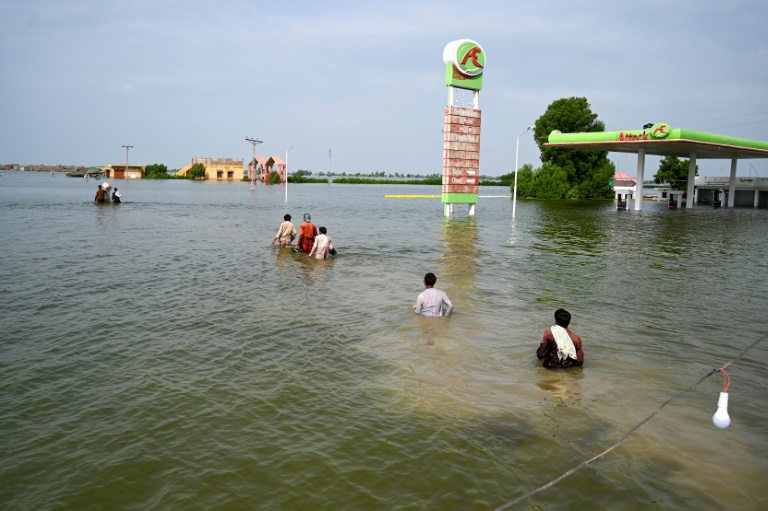
“You have all seen the appalling images from (flooding in) Pakistan. This is happening at just 1.2 degrees of global warming, and we are headed for over three degrees.” 

He called on governments to tackle “four burning issues” between now and COP27: greater ambition to keep the 1.5C possible; meeting financial commitments to the developing world; increasing support for adaptation measures, and the issue of “loss and damage.”

This last point has become a critical area in climate negotiations. It concerns damage already caused by multiplying extreme weather events, which neither the measures to mitigate global warming nor those to adapt to its impacts have been able to prevent. 

Developing nations argue that historic polluters have a moral imperative to pay for the loss and damage, but the idea was shot down by rich nations at COP26, who offered only to start talking about the issue at COP27.

A few days ago, the group of least developed countries meeting in Dakar once more pushed on the issue, calling for the establishment of a “funding mechanism” to deal with the damage caused by global warming.

“I hope COP27 in Egypt will take it up, as a matter of climate justice, international solidarity and building trust,” said Guterres.


Catholic majority set to raise unification pressure in N.Ireland

The results of the 2021 census in Northern Ireland are due on Thursday, with expectations of a Catholic majority in the UK-run province for the first time in its history.

The region, which was plagued by decades of sectarian violence beginning in the 1960s, was carved out 101 years ago with an in-built Protestant majority designed to ensure power to pro-UK unionists.

Calls for equal civil and political rights among pro-Ireland Catholics were an early flashpoint for violence in the period of conflict known as “The Troubles”, which killed 3,500 and ended with a 1998 peace deal.

The last Northern Ireland census in 2011 showed 45 percent of the population identified as Catholic, with 48 percent saying they were from a Protestant or other Christian background.

The 2001 census showed a 53-percent Protestant majority with 44 percent of the population identifying as Catholic.

If trends continue as expected, census figures showing a Catholic majority will add urgency to calls from nationalists for a referendum, known as a border poll, on the unification of Northern Ireland and the Republic of Ireland. 

Elections to the regional assembly at Stormont in May were won for the first time in the province’s history by Sinn Fein, formerly the political wing of the paramilitary Irish Republican Army (IRA).

The party has also dominated recent opinion polls south of the border, putting Sinn Fein on course to hold the balance of power in both Belfast and Dublin following scheduled elections to the Irish parliament in 2025.

– Border poll? –

Unionist politicians have attempted to downplay the link between the census and a so-called border poll on continued British sovereignty of Northern Ireland.

Under the terms of the 1998 Good Friday Agreement, the UK Northern Ireland secretary should organise the vote “if at any time it appears likely to him that a majority of those voting would express a wish that Northern Ireland should cease to be part of the United Kingdom.”

The largest unionist party, the Democratic Unionist Party (DUP), has refused to re-enter power-sharing with Sinn Fein following the May elections over their bitter opposition to post-Brexit trading rules.

They claim checks on goods from England, Scotland and Wales — designed to protect the European single market because of the open border between Northern Ireland and EU member Ireland — putting the province’s place in the wider UK under threat.

UK Prime Minister Liz Truss’s new government has threatened to rip up the agreement between Brussels and London, known as the Northern Ireland Protocol, failing concessions from the EU.

However, Truss’s new Northern Ireland Secretary Chris Heaton-Harris has also urged the DUP to return to Stormont ahead of an October 28 deadline, at which point fresh elections must be called within 12 weeks. 

Heaton-Harris has refused to rule out the possibility of an election before Christmas in a bid to increase the pressure on the DUP.

US jury orders Meta to pay $174.5 mn for violating patents

A US jury on Wednesday ordered Meta to pay $174.5 million for violating live-streaming patents developed by a US Army veteran seeking to fix shortcomings in battlefield communications.

A trial in Texas federal court ended with jurors deciding that “live” features at Facebook and Instagram used technology patented by Voxer, a company co-founded by Tom Katis, legal documents showed.

“We believe the evidence at trial demonstrated that Meta did not infringe Voxer’s patents,” a company spokesperson said in response to an AFP inquiry.

“We intend to seek further relief, including filing an appeal.”

Katis had reenlisted in the army after the September 11, 2001 attacks in the United States and served as a Special Forces communications sergeant in Afghanistan, court filings said.

When his combat unit was ambushed in Kunar province, he felt that the systems for coordinating reinforcements, medical evacuations and more “were ill-suited for time-sensitive communications with multiple groups in a highly disruptive environment,” the complaint said.

“Mr. Katis and his team began developing communications solutions in 2006 to remedy these shortcomings,” his lawyers said.

“The new technologies enabled transmission of voice and video communications with the immediacy of live communication and the reliability and convenience of messaging.”

Facebook approached San Francisco-based Voxer about potential collaboration after it launched a Walkie Talkie app in 2011, but no agreement was reached, according to legal documents.

Instead, the lawsuit argued, Facebook went on to launch Facebook Live and Instagram Live, incorporating Voxer technology into the features.

Pressure grows after World Bank chief dodges climate questions

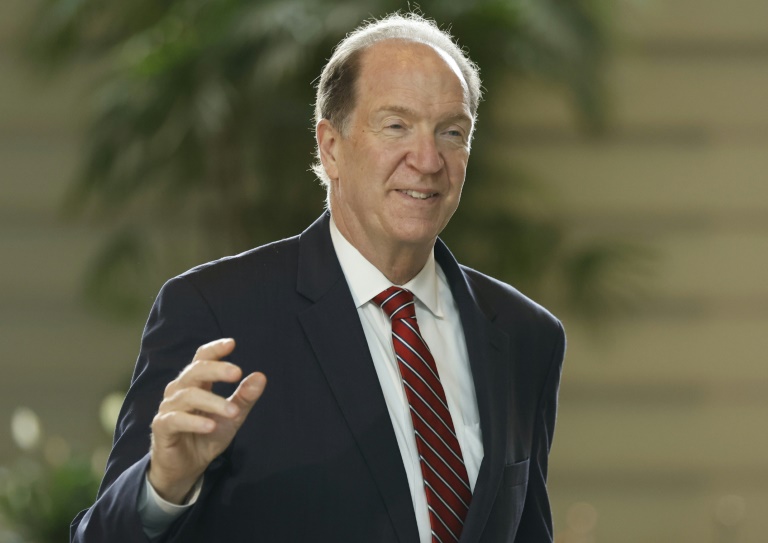
Climate groups called Wednesday for the World Bank’s president to be removed after he refused multiple times to say if he believed man-made emissions contributed to global warming.

Activists have previously called for David Malpass to resign or be removed for what they say is an inadequate approach to the climate crisis.

The head of the World Bank is traditionally an American while the other big international lender in Washington, the IMF, tends to be European. Malpass is a veteran of Republican administrations in the United States and was appointed in 2019 while Donald Trump, who famously and repeatedly denied the science behind climate change, was president.

The chorus against Malpass grew louder after his appearance Tuesday at a New York Times conference on climate finance.

Asked by a journalist to respond to former US vice president Al Gore’s claim that he was a climate denier, Malpass said that some of his critics “may not know what the World Bank is doing.” He boasted that its climate funding is “by far the biggest” among international financial institutions.

After another attempt failed to get a straight answer, the journalist, David Gelles, said: “Let me just be as clear as I can: Do you accept the scientific consensus that the man made burning of fossil fuels is rapidly and dangerously warming the planet?”

Malpass again pointed to the World Bank’s work on the issue, at which point multiple people in the audience shouted: “Answer the question!”

“I don’t even know. I’m not a scientist,” responded a clearly frustrated Malpass.

The Big Shift, a consortium of climate groups, called Wednesday for the World Bank’s board to remove Malpass over the comments.

“For the World Bank to maintain any shred of decency Malpass cannot remain as President,” said Tasneem Essop, executive director of the Climate Action Network, a Big Shift member group.

A separate group of activist organizations said they would on Thursday unveil a banner at the World Bank’s headquarters in Washington that reads: “The World Bank Group is Run by a Climate Denier.”

Malpass’s term ends in 2024 and he can only be removed by a vote of the World Bank’s board.

Climate groups have called on President Joe Biden to up the outside pressure.

Biden’s climate change envoy, former US secretary of state John Kerry, declined during an appearance at the same Times event to comment on Malpass’s future, saying “that’s the president’s decision.”

The World Bank declined to comment on the situation when reached by AFP.

Pressure grows after World Bank chief dodges climate questions

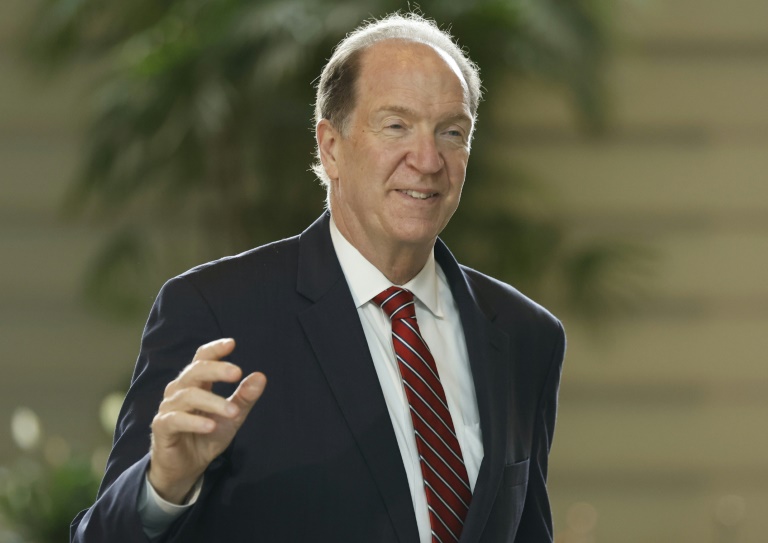
Climate groups called Wednesday for the World Bank’s president to be removed after he refused multiple times to say if he believed man-made emissions contributed to global warming.

Activists have previously called for David Malpass to resign or be removed for what they say is an inadequate approach to the climate crisis.

The head of the World Bank is traditionally an American while the other big international lender in Washington, the IMF, tends to be European. Malpass is a veteran of Republican administrations in the United States and was appointed in 2019 while Donald Trump, who famously and repeatedly denied the science behind climate change, was president.

The chorus against Malpass grew louder after his appearance Tuesday at a New York Times conference on climate finance.

Asked by a journalist to respond to former US vice president Al Gore’s claim that he was a climate denier, Malpass said that some of his critics “may not know what the World Bank is doing.” He boasted that its climate funding is “by far the biggest” among international financial institutions.

After another attempt failed to get a straight answer, the journalist, David Gelles, said: “Let me just be as clear as I can: Do you accept the scientific consensus that the man made burning of fossil fuels is rapidly and dangerously warming the planet?”

Malpass again pointed to the World Bank’s work on the issue, at which point multiple people in the audience shouted: “Answer the question!”

“I don’t even know. I’m not a scientist,” responded a clearly frustrated Malpass.

The Big Shift, a consortium of climate groups, called Wednesday for the World Bank’s board to remove Malpass over the comments.

“For the World Bank to maintain any shred of decency Malpass cannot remain as President,” said Tasneem Essop, executive director of the Climate Action Network, a Big Shift member group.

A separate group of activist organizations said they would on Thursday unveil a banner at the World Bank’s headquarters in Washington that reads: “The World Bank Group is Run by a Climate Denier.”

Malpass’s term ends in 2024 and he can only be removed by a vote of the World Bank’s board.

Climate groups have called on President Joe Biden to up the outside pressure.

Biden’s climate change envoy, former US secretary of state John Kerry, declined during an appearance at the same Times event to comment on Malpass’s future, saying “that’s the president’s decision.”

The World Bank declined to comment on the situation when reached by AFP.

US stocks fall, dollar gains as Fed unveils latest big rate hike

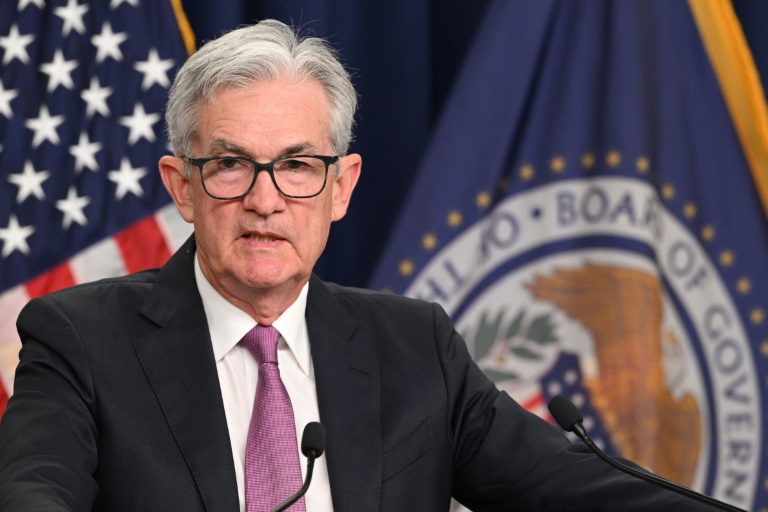
Wall Street stocks tumbled and the dollar rallied Wednesday after the Federal Reserve announced another large interest rate increase and signaled it expects more monetary tightening ahead to fight inflation.

The US central bank announced its third consecutive interest rate increase of 0.75 percentage point, continuing the forceful action to tamp down inflation that has surged to the highest in 40 years.

US stocks had climbed ahead of the announcement, following positive sessions on leading European bourses and declines in Asia. 

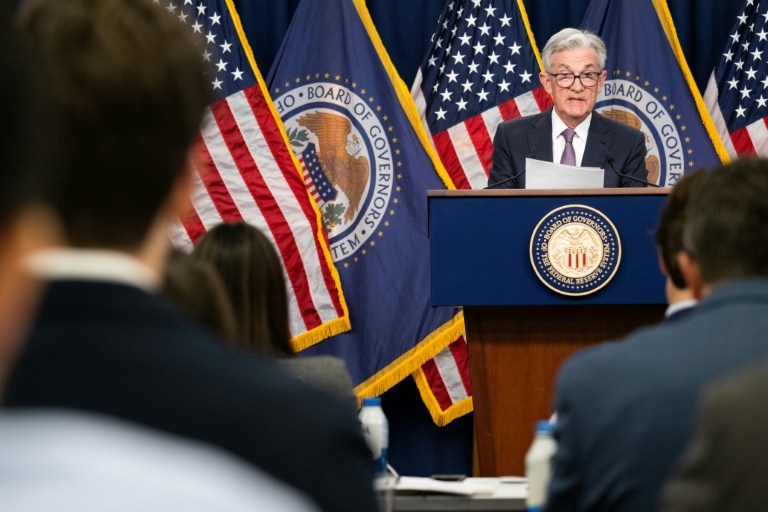
Equities gyrated after the Fed press release before taking a final decisive push lower during Fed Chair Jerome Powell’s news conference. The S&P 500 ended down 1.7 percent.

“The higher-for-longer narrative kicked in,” Art Hogan, analyst of B. Riley Wealth Management, said of the market’s reaction to an announcement that was more “hawkish” than expected.

Markets had been expecting another big interest rate increase, but were caught off guard by the Fed’s outlook as far as the need for additional hikes. 

The latest Fed statement included interest rate projections for the end of 2023 and 2024 that are higher than the previous forecasts, signaling the US central bank now sees the need for a more prolonged monetary tightening cycle in light of inflation trends.

Powell emphasized the need for a “restrictive” monetary policy.

He acknowledged that bringing inflation down will require a period of slower growth and higher unemployment, noting that the job market is out of sync, with far more openings than workers.

“We have got to get inflation behind us,” Powell said. “I wish there were a painless way to do that. There isn’t.”

“The Fed is having to be cruel in order to restore price stability,” noted Russ Mould, investment director at AJ Bell.

“Higher rates will cause pain to households and businesses, with the jobs market being closely watched for signs of redundancies and hiring freezes.”

The Fed announcement also boosted the dollar, which hit a near 20-year peak against the euro.

“Once again, the Fed’s hawkish rate guidance kept the dollar biased higher as it distinguishes America’s central bank from its less aggressive counterparts abroad,” said Convera’s Joseph Manimbo.

The British pound also tumbled, even as the Bank of England prepares to announce its own large interest rate hike Thursday.

Although European and US equity indices were advancing ahead of the Fed’s decision, City Index analyst Fawad Razaqzada said he believes “the path of least resistance is to the downside and the selling pressure will likely resume amid a bearish macro-outlook.”

Elsewhere, oil prices finished lower on worries about weakening US demand, reversing a rally earlier on worries about the escalating Russia-Ukraine conflict after President Vladimir Putin called up Russian military reservists.

– Key figures at around 2030 GMT –

New York – Dow: DOWN 1.7 percent at 30,183.78 (close)

New York – S&P 500: DOWN 1.7 percent at 3,789.93 (close)

New York – Nasdaq: DOWN 1.8 percent at 11,220.19 (close)

London – FTSE 100: UP 0.6 percent at 7,237.64 (close)

Frankfurt – DAX: UP 0.8 percent at 12,6767.15 (close)

Paris – CAC 40: UP 0.9 percent at 6,031.33 (close)

EURO STOXX 50: UP 0.7 percent at 3,491.87 (close)

Tokyo – Nikkei 225: DOWN 1.4 percent at 27,313.13 (close)

Hong Kong – Hang Seng Index: DOWN 1.8 percent at 18,444.62 (close)

Shanghai – Composite: DOWN 0.2 percent at 3,117.18 (close)

Pound/dollar: DOWN at $1.1275 from $1.1381 Tuesday

Euro/dollar: DOWN at $0.9847 from $0.9971

Euro/pound: DOWN at 87.31 pence from 87.61 pence 

Dollar/yen: UP at 144.02 yen from 143.75 yen

Brent North Sea crude: DOWN 0.9 percent at $89.83 per barrel

West Texas Intermediate: DOWN 1.2 percent at $82.94 per barrel

burs-jmb/bfm

UN raises funds to salvage stricken oil tanker off Yemen

The United Nations said Wednesday it has raised the $75 million necessary to salvage a stricken tanker off Yemen, an emergency operation aimed at averting a disastrous Red Sea oil spill — and a potential $20 billion cleanup.

The decaying 45-year-old FSO Safer, long used as a floating storage platform and now abandoned off the rebel-held Yemeni port of Hodeida, has not been serviced since Yemen plunged into civil war more than seven years ago. 

UN officials last month warned that the ship — which contains four times the amount of oil spilled in the Exxon Valdez disaster in 1989 — was a ticking environmental time bomb requiring immediate action.

“We are able to announce we have now pledges and commitment sufficient to start the FSO Safer salvage operation,” said David Gressly, the UN resident and humanitarian coordinator in Yemen and leader of the global body’s efforts on the Safer.

“It’s a very key milestone,” he said, adding that donor pledges have now topped $77 million.

Yemen is suffering one of the world’s worst humanitarian crises due to the war between the government and Huthi rebels who control the port of Hodeida.

The ship in question contains 1.1 million barrels of oil. The United Nations has said a spill could destroy ecosystems, shut down the fishing industry and close the lifeline Hodeida port for six months.

The result would potentially be the fifth largest oil spill from a tanker in history, with the clean-up costs alone reaching $20 billion.

The first phase of the salvage operation would stabilize the FSO Safer and transfer the oil to another vessel. 

A second phase involving long-term storage of the cargo is estimated to cost another $38 million. 

“We believe that we could meet that in a timely fashion,” Gressly said of the cost.

Fed hikes rates again, warns inflation fight can't be 'painless'

The Federal Reserve rolled out another steep increase in the key US interest rate Wednesday and said more hikes are coming as part of the battle to rein in soaring prices — an aggressive stance that has raised fears of a recession.

And Federal Reserve Chair Jerome Powell warned that the process of conquering the highest inflation in 40 years will involve some pain.

It was the third consecutive increase of 0.75 percentage point by the Fed’s policy-setting Federal Open Market Committee (FOMC), continuing the forceful action that has included five hikes this year.

The increase takes the policy rate to 3.0-3.25 percent, and the FOMC said it anticipates that “ongoing increases… will be appropriate.”

Soaring prices are putting the squeeze on American families and businesses, and have become a political liability for President Joe Biden as he faces midterm congressional elections in early November.

But a contraction of the world’s largest economy would be a more damaging blow to Biden, and the world at large.

Powell has made it clear officials will continue to act aggressively to cool the economy and avoid a repeat of the 1970s and early 1980s, the last time US inflation got out of control.

It took tough action — and a recession — to finally bring prices down in the 1980s, and the Fed is unwilling to give up its hard-won, inflation-fighting credibility.

Amid criticism the Fed waited too long to move, Powell said the US central bank is committed to raising interest rates and keeping them high until inflation comes down, and he warned against reversing course too soon.

“The historical record cautions strongly against prematurely loosening policy,” Powell told reporters.

He said there is no room for complacency and the Fed will “keep at it until the job is done,” although at some point it will be appropriate to slow the pace of rate increases, depending on the data.

– Pain –

He acknowledged that bringing inflation down will require a period of slower growth and higher unemployment, noting that the job market is out of sync, with far more openings than workers.

“We have got to get inflation behind us. I wish there were a painless way to do that. There isn’t.”

But he said continued high inflation would be even more painful, especially on those least able to withstand it.

Economist Diane Swonk of KPMG said Powell “has stopped sugar-coating” what the battle to tame inflation will entail: “Growth will weaken and the unemployment rate will move up.”

The Fed’s quarterly forecasts released with the rate decision Wednesday show FOMC members expect US GDP growth to virtually flatline this year, rising just 0.2 percent. But they see a return to expansion in 2023, with annual growth of 1.2 percent.

They project further rate hikes this year — totaling 1.25 percentage points — and more in 2023, with no cuts until 2024.

While the FOMC noted continued “robust” job gains in recent months and low unemployment, the forecasts project the jobless rate will rise to 4.4 percent next year and hold around that level through 2025 from 3.7 percent in August.

Inflation is a global phenomenon amid the Russian war in Ukraine on top of global supply chain snarls and Covid lockdowns in China, and other major central banks are taking action as well.

Despite a welcome drop in gasoline prices at the pump in recent weeks, the disappointing consumer price report for August showed widespread increases. 

The FOMC statement noted the “broader price pressures” beyond food and energy, and stressed that officials are “strongly committed to returning inflation to its 2 percent objective.”

The rate hikes raise the cost of borrowing and cool demand, and it is having an impact: The housing market has slowed as mortgage rates have surged.

Many economists say at least a short period of negative US GDP in the first half of 2023 will be needed before inflation starts coming down.

Nancy Vanden Houten of Oxford Economics said the updated Fed forecasts acknowledge “the toll that higher rates will take on the economy,” but she said “their projections are more optimistic than our own.”

Stocks on Wall Street turned negative following the announcement and closed the day with steep losses, with all three major indices dropping at least 1.7 percent.

Meanwhile the US dollar soared to a 20-year high.

As tiny Tuvalu sinks, PM fights to save the archipelago's identity

The flag of Tuvalu contains nine yellow stars — one for each of the islands that make up the tiny Pacific archipelago, home to some 11,000 people. 

Today, however, two of those atolls are on the verge of being swallowed by rising sea levels as a result of the global climate crisis that has already done irreversible harm and will likely leave the nation uninhabitable in the coming decades.

What happens to a country when it disappears beneath the waves, when all its people are forced to leave?

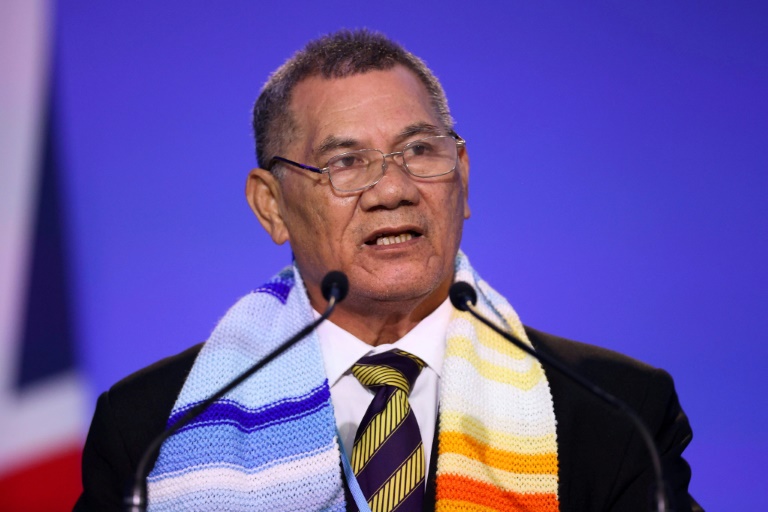
“That is exactly the idea behind the Rising Nations Initiative — to convince members of the UN to recognize our nation, even if we are submerged underwater, because that is our identity,” Prime Minister Kausea Natano told AFP on the margins of the UN General Assembly.

Vague promises and messages of sympathy from the international community have done little for Pacific atoll countries, which began a push Wednesday for a formal legal process to retain their statehood, should the worst come to pass.

The plan aims to reaffirm the international community’s commitment to Tuvalu and other island nations’ sovereignty.

It would also create a repository for the islands’ cultural heritage and designate them as UNESCO World Heritage sites, as well as increase financial support for adaptation measures. 

Already, the situation is dire. 

As so-called “floating islands” that aren’t directly connected to the ground below, atolls sit on top of “lenses” of freshwater, which are increasingly permeated by saltwater as oceans rise.

That has left them dependent on rainwater for drinking and agriculture — and Tuvalu is now into its sixth month of drought.

“We have to deploy desalination plants, but they are very expensive, they consume very high amounts of electricity,” explained Natano.

The archipelago’s islands barely break the surface of the ocean, reaching 15 feet at the highest point, but more like four or five feet in other places. 

This leaves the islands prone to exceptionally high “King Tides” that wash away root crops, including former island staples taro and cassava, and salt the earth, added Natano. 

The circumstances are deeply inequitable: Pacific island nations are among the least responsible for planetary heating, accounting for just 0.03 percent of global emissions. 

But even if the world’s polluting nations correct course and meet the goal of limiting warming to 1.5C, it could be too late to save the most vulnerable countries like the Marshall Islands and Tuvalu.

– ‘We live as a community’ –

Natano recalls that more people began leaving — to New Zealand, Australia and the United States — after devastating Cyclone Pam struck in 2015, though for now, opportunities for migration remain limited by tough border policies.

“In Tuvalu we live as a community,” said Natano, visibly moved. “Even the people who leave don’t want to go, they just look at their children and grandchildren and know they have to look for a future for them.”

The country has joined calls for so-called “loss and damage” compensation from rich nations based on their historic and ongoing contribution to the climate crisis, but the issue remains contentious. 

Natano still hopes, however, to get the assistance his country needs so the people can remain on their land.

There are preliminary discussions on ways to formally apply for a separate identity within other countries, but these are a “last resort,” he said.

“When you’re in Australia, you will become Australian, same for New Zealand,” he added.

“We want to stay in our country, practice our culture and traditions and maintain our legacy.”

American, Russians reach space station as war rages in Ukraine

A US astronaut and two Russian cosmonauts have arrived safely at the International Space Station (ISS), NASA said Wednesday, after blasting off on a Russian-operated flight in a rare instance of cooperation between Moscow and Washington.

The Russian space agency Roscosmos and NASA both distributed live footage of the launch from Kazakhstan and commentators speaking over the feed said it was stable and the crew was “feeling well”.

NASA’s Frank Rubio and Russia’s Sergey Prokopyev and Dmitry Petelin made up the crew that launched from the Russia-leased Baikonur cosmodrome at 1354 GMT.

The three will spend six months on the ISS along with three other Russian cosmonauts, three other US astronauts and one Italian.

Rubio is the first US astronaut to travel to the ISS on a Russian Soyuz rocket since President Vladimir Putin sent troops into pro-Western Ukraine on February 24.

In response, Western capitals including Washington have hit Moscow with unprecedented sanctions and bilateral ties have sunk to new lows.

Space is one of the last remaining areas of cooperation between the two countries.

Russia’s only active female cosmonaut, Anna Kikina, is expected to travel to the orbital station in early October aboard a SpaceX Crew Dragon. 

She will become only the fifth professional woman cosmonaut from Russia or the Soviet Union to go into space, and the first Russian to fly aboard a spacecraft of SpaceX, the company of billionaire Elon Musk.

Russian cosmonauts and Western astronauts have sought to steer clear of the conflict that is raging back on Earth, especially when in orbit together.

A collaboration among the United States, Canada, Japan, the European Space Agency and Russia, the ISS is split into two sections: the US Orbital Segment and the Russian Orbital Segment.

– Russia leaving ISS –

At present, the ISS depends on a Russian propulsion system to maintain its orbit, about 250 miles (400 kilometres) above sea level, with the US segment responsible for electricity and life support systems.

Tensions in the space field have grown since Washington announced sanctions on Moscow’s aerospace industry — triggering warnings from Russia’s former space chief Dmitry Rogozin, an ardent supporter of the Ukraine war.

Rogozin’s recently appointed successor Yuri Borisov later confirmed Russia’s long-mooted move to leave the ISS after 2024 in favour of creating its own orbital station.

US space agency NASA called the decision an “unfortunate development” that would hinder scientific work on the ISS.

Space analysts say  construction of a new orbital station could take more than a decade, and Russia’s space industry — a point of national pride — would not be able to flourish under heavy sanctions.

The ISS was launched in 1998 at a time of hope for US-Russia cooperation following their Space Race competition during the Cold War.

During that era, the Soviet space programme boomed. It boasted a number of accomplishments that included sending the first man into space in 1961 and launching the first satellite four years earlier.

Experts say Roscosmos is now a shadow of its former self and has in recent years suffered a series of setbacks, including corruption scandals and the loss of a number of satellites and other spacecraft.

Russia’s years-long monopoly on manned flights to the ISS is also gone, to SpaceX, along with millions of dollars in revenue. 

Close Bitnami banner
Bitnami