World

US Fed set to raise interest rates as recession fears mount

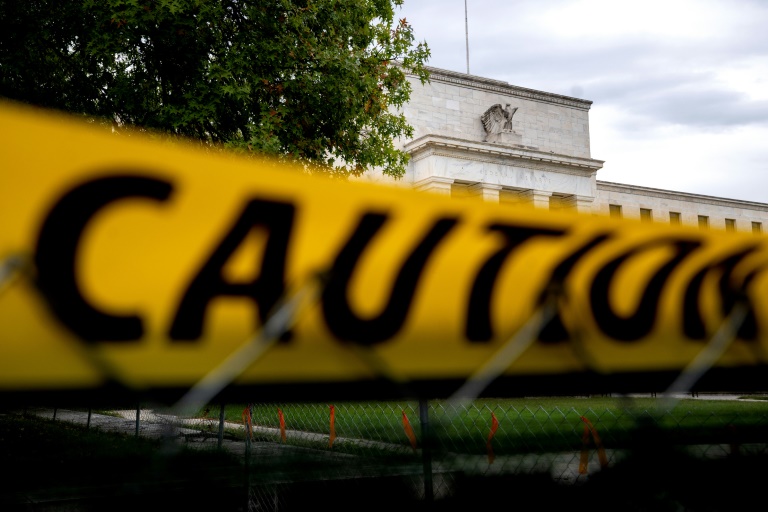
The Federal Reserve opened its second day of deliberations Wednesday that are expected to produce another big increase in interest rates as it tries to cool the economy to tamp down the highest inflation in 40 years, but recession fears are rising.

Soaring prices are putting the squeeze on American families and businesses and already have become a political liability for President Joe Biden, as he faces midterm congressional elections in early November.

But a contraction of the world’s largest economy would be a more damaging blow to Biden, to the Fed’s credibility and the world at large.

Economist Diane Swonk of KPMG warned the central bank will come under increasing pressure, especially if unemployment begins to rise, and Fed officials “will become political pinatas.”

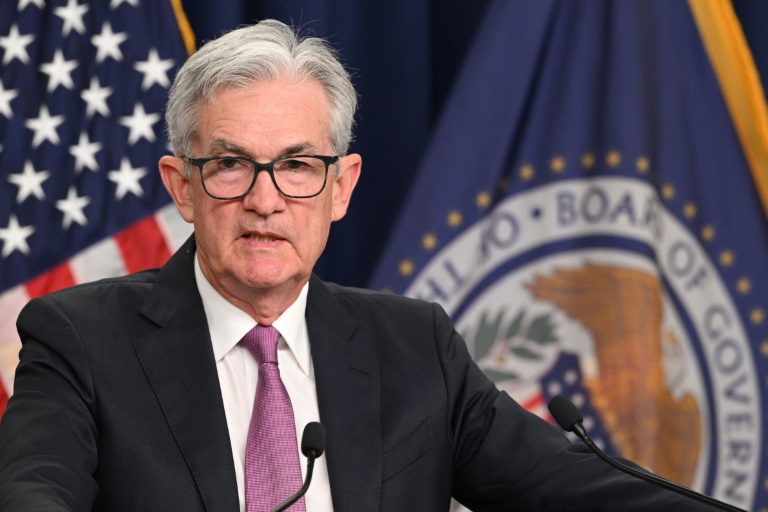
Federal Reserve Chair Jerome Powell has made it clear that officials will continue to act aggressively to cool the economy and avoid a repeat of the 1970s and early 1980s, the last time US inflation got out of control.

It took tough action — and a recession — to finally bring prices down in the 1980s, and the Fed is unwilling to give up its hard-won, inflation-fighting credibility.

Many economists are expecting a third straight three-quarter point rate hike when the meeting concludes Wednesday, which would be an unprecedented action since that era. But there is a chance the Fed could opt for a full point increase.

Powell and other central bankers have been sending the same message: A downturn is better than continued high inflation given the pain that would inflict, especially on those least able to withstand it.

“Since inflation began to accelerate in early 2021, Fed officials have been overly optimistic that it would quickly recede to the central bank’s 2 percent target,” economists Mickey Levy and Andrew Levin wrote in The Wall Street Journal.

“The economy now faces a serious risk of persistent high inflation.”

The Fed’s policy-setting Federal Open Market Committee (FOMC) is scheduled to announce its decision at 1800 GMT Wednesday.

Powell’s press conference after the meeting will be closely scrutinized for clues on how much more he thinks the Fed will have to do before it declares victory in the inflation fight.

Markets have been roiled in recent days by the Fed’s resolve to continue its forceful action. But stocks opened higher on Wall Street Wednesday ahead of the decision, with investors perhaps hopefully Powell will soften his tone.

– Avoiding a downturn –

Inflation is a global phenomenon amid the Russian war in Ukraine on top of global supply chain snarls and Covid lockdowns in China, and other major central banks are taking action as well.

European Central Bank President Christine Lagarde said Tuesday that more increases will be needed to stop inflation from taking hold. 

US policymakers have the luxury of a strong job market, and low unemployment, which gives it some leeway to tackle high prices.

Even so, many economists say at least a short period of negative GDP in the first half of 2023 will be needed before inflation starts coming down.

Despite a welcome drop in gasoline prices at the pump in recent weeks, the disappointing consumer price report for August showed widespread increases. 

But Ian Shepherdson of Pantheon Macroeconomics, who believes inflation has peaked, said incomes are growing amid rising wages, which bodes well for the outlook.

“The US economy is not in recession or headed there,” he said in an analysis.

The Fed has front-loaded its rate hikes, cranking up the benchmark lending rate four times this year, including two straight three-quarter-point hikes in June and July.

The aim is to raise the cost of borrowing and cool demand, and it is having an impact: The housing market has slowed as mortgage rates have surged.

Recent statements from Fed officials indicate more rate hikes are coming, and no cuts until inflation is under control — dousing hopes that had built up in markets following the July policy meeting.

“The irony here is that just as the Fed is ratcheting-up the anti-inflation rhetoric to fever-pitch, the forces needed to drive down inflation over the next year are now in place,” Shepherdson said.

The FOMC also will release the quarterly forecasts from members, which will show how they feel about the direction of the economy and the impact of the policy moves, and how soon inflation will come down.

US Fed set to raise interest rates as recession fears mount

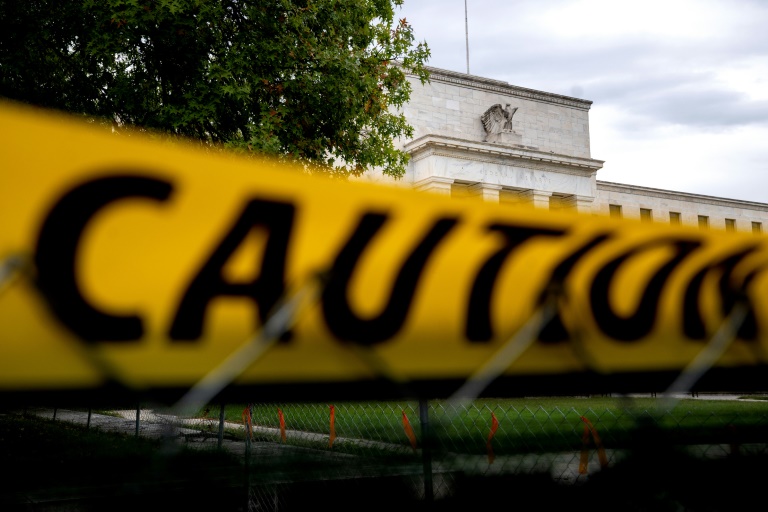
The Federal Reserve opened its second day of deliberations Wednesday that are expected to produce another big increase in interest rates as it tries to cool the economy to tamp down the highest inflation in 40 years, but recession fears are rising.

Soaring prices are putting the squeeze on American families and businesses and already have become a political liability for President Joe Biden, as he faces midterm congressional elections in early November.

But a contraction of the world’s largest economy would be a more damaging blow to Biden, to the Fed’s credibility and the world at large.

Economist Diane Swonk of KPMG warned the central bank will come under increasing pressure, especially if unemployment begins to rise, and Fed officials “will become political pinatas.”

Federal Reserve Chair Jerome Powell has made it clear that officials will continue to act aggressively to cool the economy and avoid a repeat of the 1970s and early 1980s, the last time US inflation got out of control.

It took tough action — and a recession — to finally bring prices down in the 1980s, and the Fed is unwilling to give up its hard-won, inflation-fighting credibility.

Many economists are expecting a third straight three-quarter point rate hike when the meeting concludes Wednesday, which would be an unprecedented action since that era. But there is a chance the Fed could opt for a full point increase.

Powell and other central bankers have been sending the same message: A downturn is better than continued high inflation given the pain that would inflict, especially on those least able to withstand it.

“Since inflation began to accelerate in early 2021, Fed officials have been overly optimistic that it would quickly recede to the central bank’s 2 percent target,” economists Mickey Levy and Andrew Levin wrote in The Wall Street Journal.

“The economy now faces a serious risk of persistent high inflation.”

The Fed’s policy-setting Federal Open Market Committee (FOMC) is scheduled to announce its decision at 1800 GMT Wednesday.

Powell’s press conference after the meeting will be closely scrutinized for clues on how much more he thinks the Fed will have to do before it declares victory in the inflation fight.

Markets have been roiled in recent days by the Fed’s resolve to continue its forceful action. But stocks opened higher on Wall Street Wednesday ahead of the decision, with investors perhaps hopefully Powell will soften his tone.

– Avoiding a downturn –

Inflation is a global phenomenon amid the Russian war in Ukraine on top of global supply chain snarls and Covid lockdowns in China, and other major central banks are taking action as well.

European Central Bank President Christine Lagarde said Tuesday that more increases will be needed to stop inflation from taking hold. 

US policymakers have the luxury of a strong job market, and low unemployment, which gives it some leeway to tackle high prices.

Even so, many economists say at least a short period of negative GDP in the first half of 2023 will be needed before inflation starts coming down.

Despite a welcome drop in gasoline prices at the pump in recent weeks, the disappointing consumer price report for August showed widespread increases. 

But Ian Shepherdson of Pantheon Macroeconomics, who believes inflation has peaked, said incomes are growing amid rising wages, which bodes well for the outlook.

“The US economy is not in recession or headed there,” he said in an analysis.

The Fed has front-loaded its rate hikes, cranking up the benchmark lending rate four times this year, including two straight three-quarter-point hikes in June and July.

The aim is to raise the cost of borrowing and cool demand, and it is having an impact: The housing market has slowed as mortgage rates have surged.

Recent statements from Fed officials indicate more rate hikes are coming, and no cuts until inflation is under control — dousing hopes that had built up in markets following the July policy meeting.

“The irony here is that just as the Fed is ratcheting-up the anti-inflation rhetoric to fever-pitch, the forces needed to drive down inflation over the next year are now in place,” Shepherdson said.

The FOMC also will release the quarterly forecasts from members, which will show how they feel about the direction of the economy and the impact of the policy moves, and how soon inflation will come down.
Pacific atoll nations launch global plan to preserve heritage

Pacific atoll nations on Wednesday launched a new global partnership to preserve their sovereignty and heritage as their countries disappear under rising seas triggered by climate change. 

The Rising Nations Initiative was announced at an event on the sidelines of the UN General Assembly by Tuvalu Prime Minister Kausea Natano and President David Kabua of the Marshall Islands, with countries including Germany, the United States and Canada as early supporters.

“The climate crisis is creating an increasingly uncertain future for people in most parts of the world,” Natano said.

“Paradoxically, in my region, the Pacific, it is making our future increasingly certain — but not in a way that gives any kind of comfort.” 

Pacific island nations account for just 0.03 percent of global emissions yet are set to lose considerable territory in this century, with some becoming uninhabitable even if the world meets the Paris accord goal of limiting long-term warming to 1.5 degrees Celsius.

Accordingly, Tuvalu, Kiribati and the Marshall Islands are calling for a global settlement guaranteeing their states a “permanent existence” beyond the habitable lifetime of their atolls.

The initiative puts forward a four-point plan: reaffirming the international community’s commitment to preserving their sovereignty; launching an adaptation program to increase resilience and protect livelihoods; creating a repository for the islands’ cultural heritage; and supporting the nations to acquire UNESCO World Heritage Status.

“We know that even at 1.5C average global temperature rise, our lands will eventually be submerged,” said Kabua. 

“Now we seek the same deep partnership from the international community to preserve our right to nationhood long into the future, retaining full rights to our national identity, and sustaining our rich heritage.”

Rising sea levels are already threatening Pacific atolls — contaminating their aquifers with salt water, bringing higher tides, increasing storm intensity and flooding, and weakening natural defenses.

Coral reef bleaching is reducing fish stocks and imperiling tourism, pushing up costs and forcing people to leave their homes.

Missiles hit apartments in Ukraine city, as Putin mobilises

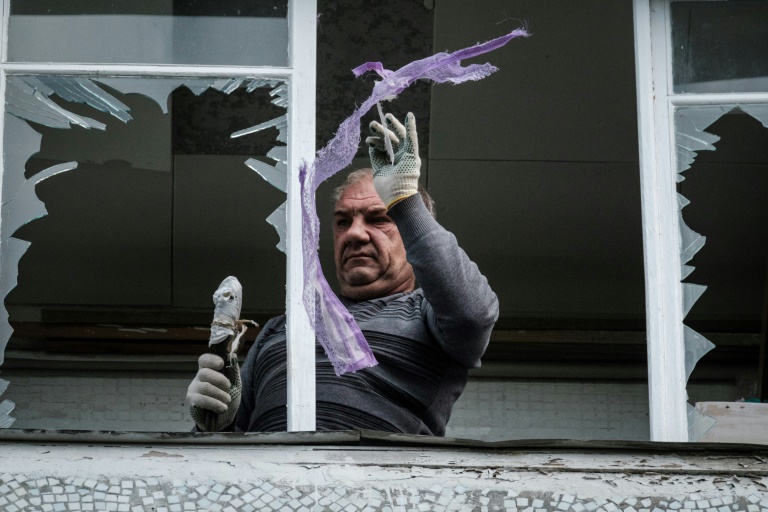
Residents of Ukraine’s second city Kharkiv found themselves under bombardment again Wednesday after Russian missiles struck apartment blocks wounding at least one civilian just as Moscow announced an escalation in its war.

“Our area was relatively quiet, and now you see what happened,” Lyubov Grygorivna, 65, told AFP outside a badly damaged housing block.

Kharkiv, a major hub in the northeast just 40 kilometres (24 miles) south of the Russian border, was attacked on the first day of the February 24 invasion, but its Ukrainian defenders held out and it has since been regularly bombed.

In recent weeks the city has been spared more intense bombardment as a Ukrainian counter-offensive swept Russian land forces from the region. 

Russia can, however, still launch missiles from its own territory. 

Approaching retirement after 45 years working in the neighbourhood municipal services, Grygorivna was loudly directing clean-up crews clambering through rubble. 

“The war is a disaster. It’s terrifying. It’s painful… It’s miserable. How can you stand things like this?” she asked.

“So many have lost their homes and winter is coming. It’s terrible. Every night we go to bed scared. But we keep on working. They shoot and we work,” she added.

The mayor of Kharkiv, Igor Terekhov, said four projectiles had struck the Kholodnogorsky district overnight, hitting two housing blocks, a building site and some civil infrastructure.

In one block, 10 residents were trapped until rescuers could arrive, but officials spoke of only one wounded.

Air raid sirens continued through the morning at the scene, mingling with bells from the gilded domes of the Saint Sofia Church, where Orthodox worshippers gathered to mark the nativity of the Virgin Mary. 

– Renewed bombardment –

Lyubov Prokopivna, an 85-year-old retiree, surveyed the wreckage in her apartment on the upper floor of the nine-storey Slavi 11 block of modest privately-owned flats in the Zalintyne neighbourhood.

She had been staying at her son’s house at 2:00 am when the missile hit.

“I usually sleep in the bedroom. All the windows were broken, the TV, everything is a mess. If I had been here, I wouldn’t have survived,” she said. 

Anna Verbytska, 41, was asleep with her husband on a lower level. 

Her family were unharmed, but the windows blew in and the water is now cut off. 

She swept up the glass quietly, as 12-year-old daughter Sofia slept on the sofa, exhausted after a night caring for Tasya the cat.

“The heating system is damaged, and winter is coming. The car was damaged too,” she said, as four burly neighbours carried a stunned elderly lady down the dusty staircase in a blanket.

The renewed bombardment of their homes was a bitter blow for many Ukrainians, coming as Russian President Vladimir Putin mobilised reservists in a bid to seize back the initiative in the conflict.

“I ask all the Russians, may God give them the wisdom to escape, to ignore (the mobilisation), to leave… to wake up finally, but not to come fight us,” said 63-year-old Svitlana.

“You see? They kill civilians. There’s nothing here expect gardens and civilian homes. I’m turning to you, the international community, close the sky above Kharkiv. Don’t let (Putin) destroy us,” she said.

Another local resident, Galyna, 50, said she “can’t understand the people he is calling on to fight us”. 

“We are protecting our homeland. This is Ukraine and they are fighting a war… for what? Against who?” she said.

“They want to liberate us from what? From our homes? From our relatives? From friends? What else? From life… they want to free us from being alive,” she said.

Germany reaches deal to nationalise troubled gas giant Uniper

Germany has reached a deal to nationalise troubled gas giant Uniper, the government said Wednesday, as the energy sector reels from the fallout of Russia’s war in Ukraine.

The deal will leave Germany with a 99 percent stake in the debt-laden gas company, the economy ministry said in a statement.

“Uniper is a central pillar of German energy supplies,” the ministry said.

Under the agreement, Berlin will inject eight billion euros ($7.9 billion) in cash into Uniper and buy 500 million euros of shares from its majority shareholder, the Finnish state-owned energy company Fortum.

Fortum will also be repaid for an eight-billion-euro loan it gave Uniper.

“The situation has become much more dramatic” for Uniper since the shutdown in late August of the Nord Stream 1 gas pipeline from Russia to Germany, Economy Minister Robert Habeck told a press conference.

The crisis intervention was needed to “secure our gas supply and to protect consumers from an uncontrollable situation”, Finance Minister Christian Lindner said.

One of the biggest importers of Russian gas, Uniper has been squeezed as Moscow has reduced supplies to the continent in the wake of its invasion of Ukraine in February.

– Gas crisis –

Missing deliveries from Russia have had to be replaced with expensive supplies from the open market, where prices for gas have skyrocketed.

The German state had already agreed in July to take a 30 percent stake in Uniper as part of an initial agreement, but will now own around 99 percent under the new bailout terms.

Uniper announced earlier this month that the two sides were exploring a possible nationalisation as the energy crisis showed no signs of abating.

Letting the company go bust could have had a chain reaction where “many other energy suppliers could have ended up in a very difficult situation” as they bore the brunt of higher prices, Uniper CEO Klaus-Dieter Maubach said at a press conference. 

The pressure on the gas supplier was already felt in January when Fortum provided an eight-billion-euro loan to Uniper as prices began to climb amid tensions with Moscow before the invasion of Ukraine.

The Finnish company, which is itself majority owned by the government in Helsinki, held a near-80-percent stake in Uniper.

Fortum said Uniper has accumulated close to 8.5 billion euros in gas-related losses “and cannot continue to fulfil its role as a critical provider of security of supply as a privately-owned company”.

“New measures to resolve the situation were needed, as both Uniper and Fortum were exposed to significant risks,” said Fortum chief executive Markus Rauramo at a press conference.

– ‘No longer viable’ –

Fortum had taken an “inevitable decision in exceptionally uncertain circumstances”, said Tytti Tuppurainen, the Finnish minister responsible for state companies.

“The situation is a result of Russia’s attack on Ukraine. Putin is using energy as a weapon,” Tuppurainen said in a statement.

Russia’s war in Ukraine has triggered an earthquake on European energy markets, cranked up the pressure on suppliers and raised fears of possible shortages over the winter.

Germany has found itself particularly exposed due to its previous heavy reliance on Russian energy imports.

Since the outbreak of the war, Berlin has worked to wean itself off Russian gas and secure alternative supplies.

Officials have seized key pieces of energy infrastructure which were in the hands of Russian energy companies and mandated gas stores to be filled.

Earlier in September, the German government entered into discussions with another gas supplier, VNG, over a possible bailout package.

Palestinian street battles point to wider West Bank crisis

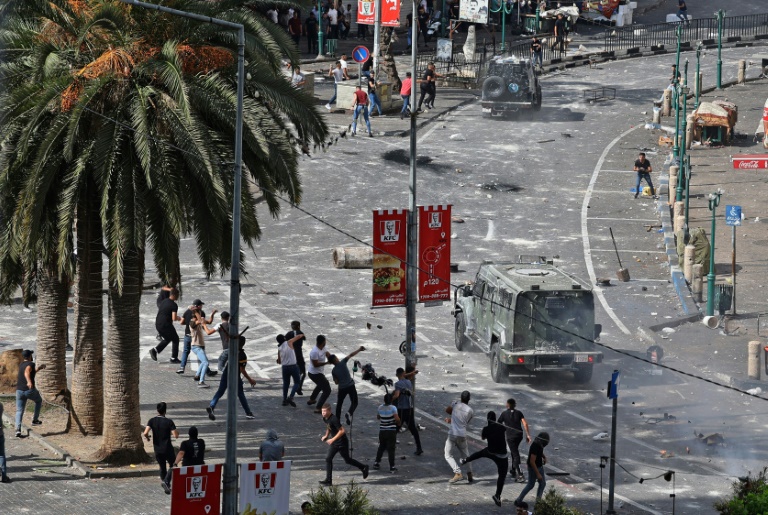
Gun battles in central Nablus, with young Palestinians fighting police and setting blazes that shut the city down, signal growing chaos in the northern West Bank that could spiral out of control.

The city centre’s transformation into a combat zone happened with little overt warning. On Saturday, shoppers darted peacefully through bustling downtown markets.

But early on Tuesday the Palestinian Authority’s security forces carried out a rare operation to arrest a prominent member of the Islamist group Hamas, Moussab Shtayyeh, enraging many in Nablus, who accuse the PA of being Israeli pawns and tacitly accepting the occupation of the West Bank. 

Shortly after the arrest, central Nablus was a no-go zone. Youths hurled stones at PA armoured trucks and lit fires on the streets as the sound of gunfire rang through the city. 

AFP spoke to several people in Nablus, most of whom requested anonymity, fearing retribution if they criticised the PA and its 87-year-old president Mahmud Abbas, whose popularity in the West Bank has slumped to historic lows. 

“There is tension because of Moussab Shtayyeh’s arrest by the Palestinian forces and we are targeting them because they are coordinating with the Israeli occupation forces,” said Hamza, a young man in his 20s.

A young Palestinian journalist, who declined to give his name, said that beyond Shtayyeh’s arrest, “deeper” factors had fuelled Tuesday’s violence. 

He said the young people fighting the PA were not linked to the Islamist groups Hamas or Islamic Jihad, nor were they disenchanted members of Abbas’s secular Fatah movement. 

“They are young Palestinians, part of a new generation that isn’t under anyone’s thumb who are angry at both Israel and the Palestinian Authority.”

– ‘The Lion of Nablus’ –

The northern West Bank has seen near daily unrest in recent months but that has typically involved Israeli troops and Palestinian fighters. 

Israel has conducted hundreds of raids in the area since March, pursuing militants it accuses of involvement in a spate of deadly attacks on Israelis. 

Dozens of Palestinians, mostly fighters, have been killed in the Israeli raids that have hit several towns and cities, including Nablus and especially nearby Jenin, a historic militant stronghold. 

Among those killed was an 18-year-old fighter named Ibrahim al-Nabulsi, who since his death in August has become a social media folk hero, nicknamed the “Lion of Nablus”.

An image of him — with his square jaw, black beard and assault rifle in his hand — adorns pendants on sale at Nablus markets, and his picture is pasted on the windshields of scooters buzzing through the city.

His mother Huda, her head wrapped in a pure white scarf surrounded by pictures of her late son, said “when he was younger, Ibrahim was gentle.”

“He loved design,” she said. “But the injustice that surrounded him brought him to the other side.”

His father Alaa said the relentless Israeli raids on their communities made young Palestinians feel abandoned by the PA. 

“The young generation is not crazy but they grew up under the occupation, all they know is raids and injustice and it has left them deeply angry,” he said. 

“The increase in Israeli raids in Jenin and Nablus weakens the Palestinian Authority and creates further distance between the PA and the population,” he told AFP, avoiding direct criticism of the Palestinian president. 

– After Abbas –      

It was not immediately clear why the PA moved to arrest Shtayyeh and Amid Tbaileh, another Hamas member detained with him. 

But Israel regularly calls on the PA to take firmer action in areas of the West Bank nominally under its control, notably cities like Nablus.  

Last week, after two Palestinians and an Israeli soldier were killed in clashes near Jenin, Israeli Prime Minister Yair Lapid said he would “not hesitate to act in any place that the Palestinian Authority does not maintain order”.

Writing in the Israeli newspaper Maariv, leading security commentator Alon Ben David said the flurry of army raids had “further eroded the challenged status of the Palestinian Authority”, with conditions ripe for a new intifada, or uprising, like those of 1987 to 1991 and 2000 to 2005.

“Israeli officials have been talking for years about the need to prepare for the day after Abu Mazen (Abbas)… but practically speaking that day is already here,” he said, arguing that the president’s authority is minimal and succession battles are already brewing.

The mix of intra-Palestinian violence and anti-Israeli resentment “is liable to turn into a new Palestinian intifada that is growing before our eyes, Intifada 3.0,” he said. 

Six reported killed as Iran protests spread over woman's death

Protests have spread across Iran over the death of Mahsa Amini after the young woman was arrested by morality police, with a total of six demonstrators killed in a crackdown according to a rights group.

Public anger has flared in the Islamic republic since authorities on Friday announced the death of 22-year-old Amini, who had been held for allegedly wearing a hijab headscarf in an “improper” way.

Activists said the woman, whose Kurdish first name is Jhina, had suffered a fatal blow to the head, a claim denied by officials who have announced an investigation. 

Some women demonstrators have defiantly taken off their hijabs and burned them in bonfires or symbolically cut their hair before cheering crowds, video footage spread virally on social media has shown.

“No to the headscarf, no to the turban, yes to freedom and equality!” protesters in Tehran were heard chanting in a rally that has been echoed by solidarity protests abroad, including in New York and Istanbul.

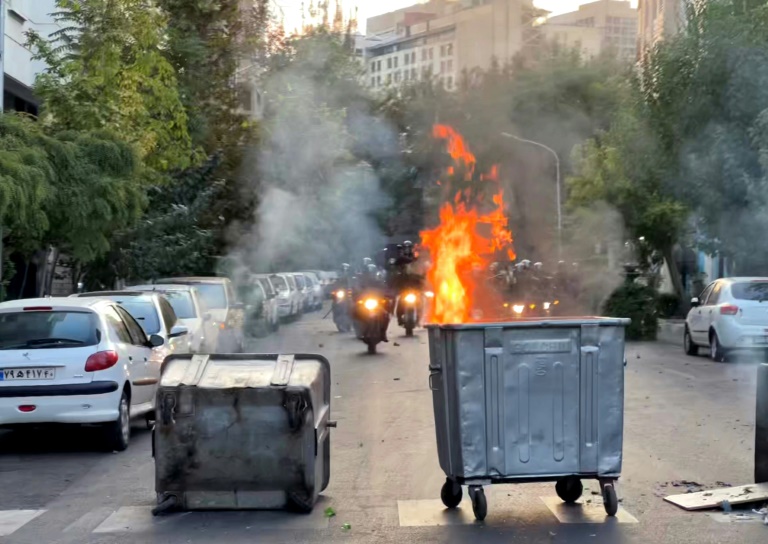
Iranian state media reported on Wednesday that, in a fifth night of street rallies that had spread to 15 cities, police used tear gas and made arrests to disperse crowds of up to 1,000 people.

London-based rights group Article 19 said it was “deeply concerned by reports of the unlawful use of force by Iranian police and security forces” including the use of live ammunition. 

Demonstrators hurled stones at security forces, set fire to police vehicles and garbage bins and chanted anti-government slogans, the official IRNA news agency said, adding that rallies were held in cities including Mashhad, Tabriz, Isfahan and Shiraz.

“Death to the dictator” and “Woman, life, freedom”, protesters could be heard shouting in video footage that spread beyond Iran, despite online restrictions reported by internet access monitor Netblocks.

Iran’s supreme leader Ayatollah Ali Khamenei spoke publicly on Wednesday, but without mentioning the spreading unrest, and the ultra-conservative President Ebrahim Raisi was to address the UN General Assembly in New York later in the day.

– ‘Significant shock’ –

The wave of protests over Amini’s death “is a very significant shock, it is a societal crisis,” said Iran expert David Rigoulet-Roze of the French Institute for International and Strategic Affairs. 

“It is difficult to know the outcome but there is a disconnect between the authorities with their DNA of the Islamic revolution of 1979 and an increasingly secularised society. 

“It is a whole social project that is being called into question. There is a hesitation among the authorities on the way forward with regard to this movement.”

Ismail Zarei Koosha, the governor of Kurdistan province — where Amini lived and where the protests started — said Tuesday that three people had been killed during protests, but blamed “a plot by the enemy”.

The Norway-based Kurdish rights group Hengaw — which had first reported those three deaths — said Wednesday that two more protesters had been killed overnight.

The two, aged 16 and 23, died in the towns of Piranshahr, which was rocked by fierce clashes, and Urmia, both in West Azerbaijan province, Hengaw said.

Another male protester who was wounded in Divandareh on September 17 died from his injuries in hospital, it said.

“The number of deaths in the protests has increased to six,” the group said, also reporting that about 450 people had been wounded and 500 arrested, in figures that could not be independently verified.

– ‘Enemy plot’ –

Video spread online showing security forces opening fire on protesters in the southern city of Shiraz, where protests continued into the early hours of the morning. 

Amini’s death and Iran’s response to the protests have sparked condemnation from the United Nations, United States, France and other countries. 

The protests are among the most serious in Iran since November 2019 unrest over fuel price rises.

Foreign ministry spokesman Nasser Kanani on Tuesday condemned what he called “foreign interventionist positions”.

“It is regrettable that some countries try to take advantage of an incident under investigation as an opportunity to pursue their political goals and desires against the government and people of Iran,” he said.

Iran’s Telecommunications Minister Issa Zarepour on Wednesday warned of internet restrictions, citing the “security issues of these days,” ISNA news agency said.

Article 19 said it was “alarmed by the local internet shutdowns”, recalling that in 2019 authorities had “used the darkness of a shutdown to kill, maim and arrest protesters and bystanders with impunity”. 

burs/sjw-fz/kir

Stocks recover before US rate hike

European stock markets recovered from initial falls Wednesday, as traders awaited another hefty US interest rate hike from the Federal Reserve.

The dollar reached the highest level in 20 years against a basket of major rival currencies with investors seeking safety as Russia escalates operations over Ukraine.

The Dollar index, which compares the US unit against currencies including the euro, pound and yen, jumped to 110.87 points, also as the Fed prepares a third successive jumbo rate hike to combat decades-high inflation.

The British pound hit a new 37-year low at $1.1305, even as the Bank of England prepares to announce its own large interest rate hike Thursday.

“The Fed is having to be cruel in order to restore price stability,” noted Russ Mould, investment director at AJ Bell.

“Higher rates will cause pain to households and businesses, with the jobs market being closely watched for signs of redundancies and hiring freezes.”

Most analysts are predicting that the Fed will announce another 75 basis-point lift, though some have tipped a full percentage-point move.

In the event of no surprises, the US central bank’s forecast and post-meeting comments from boss Jerome Powell will be the main attraction for investors.

“Volumes remain light and the mood cautious, with few looking to take on large positions before hearing what the Fed says,” according to Fiona Cincotta at City Index trading group.

Other central banks are meeting this week. On Tuesday, officials in Sweden surprised markets by unveiling a one percentage-point hike.

Adding to the cautious mood was Vladimir Putin’s announcement of a “partial mobilisation” as Russia’s president upped the ante in his battle against Ukraine.

Putin said he would annex the territories his forces had occupied and backed referendums in four regions in Russian-held parts of Ukraine.

“We will definitely use all means available” to protect Russian territory, he warned, adding: “That’s not a bluff.”

The moves mark an escalation in the seven-month war, which has roiled markets and sparked an energy crisis.

Oil prices surged nearly three percent Wednesday, having wilted in recent months on weaker demand expectations fuelled by recession fears.

Putin’s announcement and possible escalation in the war “raises a whole new set of uncertainties”, Rabobank’s Jane Foley said.

Asian stock markets closed lower Wednesday, reversing Tuesday’s bounce.

– Key figures at around 1100 GMT –

London – FTSE 100: UP 0.7 percent at 7,244.18 points

Frankfurt – DAX: FLAT at 12,668.47

Paris – CAC 40: UP 0.2 percent at 5,991.70

EURO STOXX 50: UP 0.1 percent at 3,469.99

Tokyo – Nikkei 225: DOWN 1.4 percent at 27,313.13 (close)

Hong Kong – Hang Seng Index: DOWN 1.8 percent at 18,444.62 (close)

Shanghai – Composite: DOWN 0.2 percent at 3,117.18 (close)

New York – Dow: DOWN 1.0 percent at 30,706.23 (close)

Pound/dollar: DOWN at $1.1343 from $1.1384 Tuesday

Euro/dollar: DOWN at $0.9928 from $0.9970

Euro/pound: DOWN at 87.52 pence from 87.63 pence 

Dollar/yen: UP at 143.88 yen from 143.72 yen

Brent North Sea crude: UP 2.7 percent at $93.10 per barrel

West Texas Intermediate: UP 2.5 percent at $86.00 per barrel

Court delays trial of Istanbul mayor who upstaged Erdogan

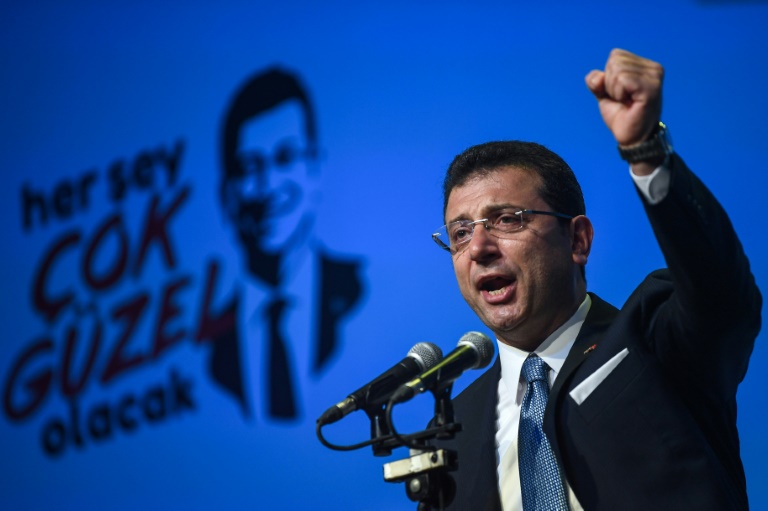
A Turkish court on Wednesday delayed until November a highly controversial trial that could see Istanbul’s popular mayor banned from politics over a remark he made after beating President Recep Tayyip Erdogan’s ally in 2019 polls.

Ekrem Imamoglu’s fate is being watched closely for signs of judicial independence nine months before a general election in which Erdogan will struggle to extend his two-decade rule.

The 52-year-old mayor is the most internationally recognised of the opposition leaders who might run against Erdogan.

But a court could keep him from seeking higher office — and possibly force him to give up his post — as punishment for an offhand remark he made about Erdogan’s ruling party in the aftermath of the heated mayoral race.

Imamoglu’s office accuses the ruling party of trying to “eliminate him from the upcoming elections”.

The presiding judge opened Wednesday’s session and immediately postponed hearings until November 11 without an explanation.

The courtroom itself was closed to reporters — an unusual step in Turkey.

The police also sealed off the roads leading to the courthouse with metal fences to keep away protesters in the highly anticipated trial.

“This trial should not be taking place at all,” Imamoglu said after the hearings were delayed.

– ‘Suspicious votes’ –

Imamoglu was stripped of his narrow March 2019 win over the ruling party’s candidate after Erdogan — who launched his own career as Istanbul mayor and views the city as his second home — refused to recognise the result.

Election officials reported discovering hundreds of thousands of “suspicious votes” after Imamoglu had already been sworn into office.

Their decision to call a re-run election for that June sparked global condemnation and mobilised a groundswell of support for Imamoglu that included former ruling party voters.

Imamoglu won the second election by more than 800,000 votes.

But the usually soft-spoken mayor let his lingering bitterness at the ruling party spill over in November 2019.

“Those who cancelled the March 31 election are idiots,” he told reporters at the time.

– ‘Insulting’ –

Erdogan’s ruling party seized on the remark and sued the mayor for “insulting” public officials.

Prosecutors have asked for Imamoglu to be banned from politics and jailed for 15 months — a relatively light sentence that almost never sees people put behind bars.

Defence lawyer Kemal Polat told AFP the mayor would immediately appeal against any ban and keep his job while the case wound its way through the courts.

“Imamoglu can remain in his current position as mayor until the end of the appeals process. He would not have to resign,” Polat said.

Turkey’s Western allies accuse Erdogan of stacking the courts with allies and using them to jail his rivals in the aftermath of a failed military putsch in 2016.

Erdogan responded to the coup attempt with sweeping purges that saw thousands jailed on “terrorism” and other charges.

Everyone from human rights leaders and civil servants to opposition politicians — many of them from the main pro-Kurdish party — were jailed in mass trials that instilled fear across swathes of Turkish society.

– Knockout –

Turkey’s status as a strategic member of NATO and a Muslim-majority democracy in a volatile part of the world has helped to preserve Erdogan’s ties with the West.

But the saga over the 2019 vote turned Imamoglu into a global figure whose sentencing could raise the diplomatic stakes ahead of next year’s vote.

The court case comes with Turkey’s fractured opposition parties still arguing over which candidate to field against Erdogan next June.

Imamoglu and Mansur Yavas — elected mayor of Ankara in 2019 — have emerged as two of the more popular opposition options because of their success at the ballot box.

The mayor himself appeared to the bracing for legal battles in the months ahead that ruled him out of next year’s elections.

He threw his support on Tuesday behind the candidacy of the main opposition CHP party’s leader Kemal Kilicdaroglu.

“Today you are the main opposition leader, tomorrow you will be in charge of the country,” he told Kilicdaroglu.

Missiles hit apartments in Ukraine city, as Putin mobilises

Residents of Ukraine’s second city Kharkiv found themselves under bombardment again Wednesday after Russian missiles struck apartment blocks wounding at least one civilian just as Moscow announced an escalation in its war.

“Our area was relatively quiet, and now you see what happened,” Lybov Grygorivna, 65, told AFP outside a badly damaged housing block.

Kharkiv, a major hub in the northeast just 40 kilometres (24 miles) south of the Russian border, was attacked on the first day of the February 24 invasion, but its Ukrainian defenders held out and it has since been regularly bombed.

In recent weeks the city has been spared more intense bombardment as a Ukrainian counter-offensive swept Russian land forces from the region. Russia can, however, still launch missiles from its own territory. 

Approaching retirement after 45 years working in the neighbourhood municipal services, Grygorivna was loudly directing clean-up crews clambering through rubble. 

“The war is a disaster. It’s terrifying. It’s painful… It’s miserable. How can you stand things like this?” she asked.

“So many have lost their homes and winter is coming. It’s terrible. Every night we go to bed scared. But we keep on working. They shoot and we work,” she added.

The mayor of Kharkiv, Igor Terekhov, said four projectiles had struck the Kholodnogorsky district overnight, hitting two housing blocks, a building site and some civil infrastructure.

In one block, 10 residents were trapped until rescuers could arrive, but officials spoke of only one wounded.

Air raid sirens continued through the morning at the scene, mingling with bells from the gilded domes of the Saint Sofia Church, where Orthodox worshippers gathered to mark the nativity of the Virgin Mary. 

– Renewed bombardment –

The renewed bombardment of their homes was a bitter blow for many Ukrainians, coming as Russian President Vladimir Putin mobilised reservists in a bid to seize back the initiative in the conflict.

Lyubov Prokopivna, an 85-year-old retiree, surveyed the wreckage in her apartment on the upper floor of the nine-storey Slavi 11 block of modest privately-owned flats in the Zalintyne neighbourhood.

She had been staying at her son’s house at 2:00 am when the missile hit.

“I usually sleep in the bedroom. All the windows were broken, the TV, everything is a mess. If I had been here, I wouldn’t have survived,” she said. 

Anna Verbytska, 41, was asleep with her husband on a lower level. 

Her family were unharmed, but the windows blew in and the water is now cut off. She swept up the glass quietly, as 12-year-old daughter Sofia slept on the sofa, exhausted after a night caring for Tasya the cat.

“The heating system is damaged, and winter is coming. The car was damaged too,” she said forlornly, as four burly neighbours carried a stunned elderly lady down the dusty staircase in a blanket.

Close Bitnami banner
Bitnami