World

Philippine protesters vow to 'never forget' Marcos era abuses

Philippine protesters vowed Wednesday to “never forget” the human rights abuses under former dictator Ferdinand Marcos as they held rallies to mark 50 years since his imposition of martial law.

Amnesty International estimates thousands of people were killed and tens of thousands tortured and imprisoned after Marcos imposed martial law on September 21, 1972, unleashing security forces on rivals, critics and dissidents.

Marcos’s son is now the president of the Philippines, and campaigners have urged him to recognise his family’s role in the violence.

“The Marcoses need to at least acknowledge their role in those dark days,” said Carlos Conde, a researcher for Human Rights Watch, as activists and victims marked the 50th anniversary.

“Without truth-telling, without the space for Filipinos to understand and accept what happened during martial law, we can never find closure, we can never move forward.”

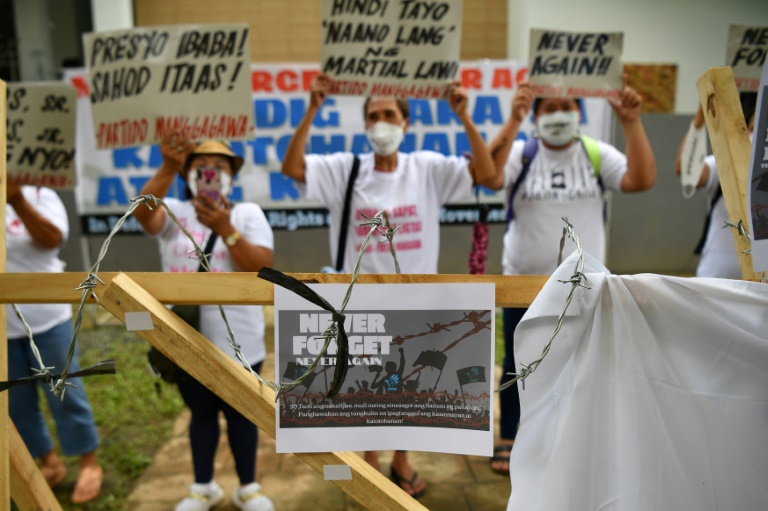
Hundreds of protesters, including human rights activists and Christian groups, held peaceful demonstrations across the capital Manila, carrying placards with slogans such as “never again” and images of martial law victims. 

“A nation that doesn’t remember its history is doomed to repeat it as they say,” said John Magtibay, a 22-year-old film student protesting at the University of the Philippines.  

“We are beginning to see that now.”

Half a century after martial law began, 11,103 people have been officially recognised as victims of torture, killings, enforced disappearances and other abuses.

They have been compensated with some of the wealth — estimated to be in the billions of dollars — stolen by Marcos and his wife Imelda. 

But human rights groups say there has never been a true reckoning of the abuses — or those responsible held to account.  

Marcos was toppled from power by a bloodless “people power” revolt in 1986 and the family was chased into exile. 

After the patriarch’s death in 1989, they returned to the Philippines and began a remarkable political comeback that culminated with Ferdinand Marcos Jr’s victory in the May 9 presidential election.

“The fact that we allowed the Marcoses to re-enter Malacanang is really messed up,” said Patricia Pobre, a 24-year-old protester, referring to the presidential palace.

– ‘One of the darkest periods’ –

His landslide win was helped by a massive online misinformation campaign that whitewashed abuses and corruption during the dictatorship.

Martial law victims and activists have described the Marcos regime as “one of the darkest periods” in the country’s history.

They accuse Marcos Jr and his supporters of distorting the facts about martial law and falsely portraying it as a “golden age” for the Philippines. 

“There are young Filipinos who are interested in learning what really happened in spite of many others who were really blinded,” said former political prisoner Bonnie Ilagan, who spent two years in jail where he was repeatedly tortured. 

“The fight continues. We must never forget.”

Ilagan and others accused Marcos’s allies in Congress of slashing budgets and weakening the government agencies responsible for preserving the nation’s past.

In the run-up to Wednesday’s anniversary, documentary screenings and exhibitions have been held to educate the public about the horrors of martial law.

But a left-wing political party said they were forced to scrap a film screening in suburban Manila on Tuesday after five members of the local police intelligence unit showed up and “harassed” them and “shot video”. 

Marcos Jr, who has repeatedly praised his father’s rule, last week defended martial law as “necessary” to protect the country against communist and Muslim insurgencies. 

“We do recognise the problems that happened, the abuses that occurred like in any war,” Marcos Jr said.

But he said critics were “wrong” to call his father a “dictator”.

“There’s no reason to revise history,” he said, while suggesting school textbooks need to be rewritten “only if they’re wrong”.

Cristina Palabay of the Karapatan human rights alliance accused Marcos Jr and his administration of peddling “one lie after another”.

“There needs to be institutionalised acknowledgement and great reckoning on the crimes committed by Marcos and his ilk,” she said.
Putin calls up reservists, warns Russia will use 'all means' for defence

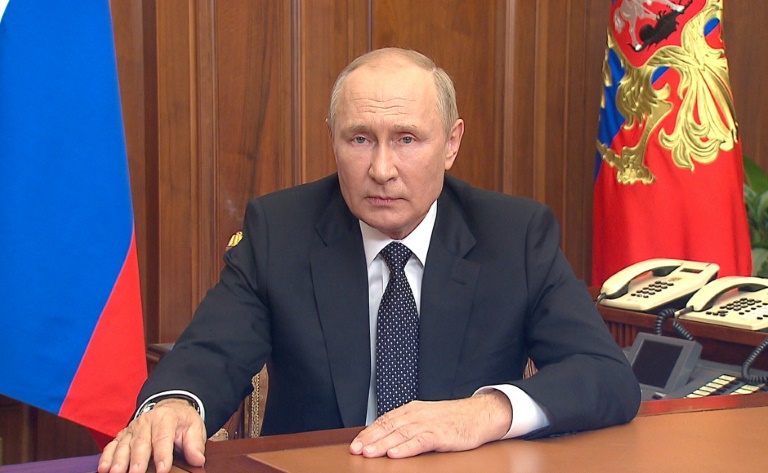
President Vladimir Putin ordered a partial military mobilisation and vowed on Wednesday to use “all available means” to protect Russian territory, after Moscow-held regions of Ukraine suddenly announced annexation referendums.

The votes, already denounced by Kyiv and the West as a “sham”, will dramatically up the stakes in the seven-month old conflict in Ukraine by giving Moscow the ability to accuse Ukrainian forces of attacking Russian territory.

Four Russian-occupied regions of Ukraine — Donetsk and Lugansk in the east and Kherson and Zaporizhzhia in the south — said on Tuesday that they would hold the votes over five days beginning Friday.

In a pre-recorded address to the nation early on Wednesday, Putin accused the West of trying to “destroy” his country through its backing of Kyiv, and said Russia needed to support those in Ukraine who wanted to “determine their own future”.

The Russian leader announced a partial military mobilisation, with Defence Minister Sergei Shoigu telling state television that some 300,000 reservists would be called up.

– ‘Not a bluff’ –

“When the territorial integrity of our country is threatened, we will certainly use all the means at our disposal to protect Russia and our people. This is not a bluff,” Putin said.

Germany branded the partial call-up as a “wrong step” while jailed Kremlin critic Alexei Navalny said it would result in a “massive tragedy, in a massive amount of deaths”.

Putin said that through its support for Ukraine the West was trying to “weaken, divide and ultimately destroy our country”, while Shoigu said Moscow was “fighting not so much Ukraine as the collective West” in Ukraine. 

The sudden flurry of moves by Moscow this week came with Russian forces in Ukraine facing their biggest challenge since the start of the conflict.

A sweeping Ukrainian counter-offensive in recent weeks has seen Kyiv’s forces retake hundreds of towns and villages that had been controlled by Russia for months.

In a rare admission of military losses from Moscow, Shoigu said Wednesday 5,937 Russian soldiers had died in Ukraine since the launch of the military intervention in February.

– ‘Wake-up, finally’ –

As Putin made his announcement, residents clearing rubble and broken glass from a nine-storey apartment block hit by an overnight missile strike in the eastern Ukrainian city of Kharkiv.

Svetlana, 63, gathered with friends to look on as neighbours and municipal workers cleared debris, urged the region’s Russian neighbours to ignore the mobilisation and “to wake up, finally.” 

Meanwhile her neighbour, 50-year-old Galina, expressed bewilderment at Moscow’s aims against Ukraine.

“They want to liberate us from what? From our homes? From our relatives? From friends? What else? From over life? They want to free us from being alive?” she told AFP.

The referendums follow a pattern first established in 2014, when Russia annexed the Crimea peninsula from Ukraine after a similar vote.

Like in 2014, Washington, Berlin and Paris denounced the latest referendums and said the international community would never recognise the results.

German Chancellor Olaf Scholz said they were a “sham”, French President Emmanuel Macron called them a “travesty”, and White House National Security Advisor Jake Sullivan said they were “an affront to the principles of sovereignty and territorial integrity”.

“Sham referenda and mobilisation are signs of weakness, of Russian failure,” the US ambassador in Ukraine, Bridget Brink, said on Twitter.

“I thank all the friends and partners of Ukraine for their massive and firm condemnation of Russia’s intentions to organise yet more pseudo-referendums,” Ukrainian President Volodymyr Zelensky said in response.

– Strike at nuclear plant –

Kyiv said the referendums were meaningless and vowed to “eliminate” threats posed by Russia, saying its forces would keep retaking territory regardless of what Moscow or its proxies announced.

Political analyst Tatiana Stanovaya said the vote announcements were a direct result of the success of Ukraine’s eastern counter-offensive.

“Putin does not want to win this war on the battlefield. Putin wants to force Kyiv to surrender without a fight,” she said.

The Ukrainian nuclear operator Energoatom meanwhile on Wednesday accused Russia of again striking the Zaporizhzhia atomic power plant in southern Ukraine.

The strike damaged a power line causing the stoppage of several transformers of the number six reactor of the plant and forcing a brief start of emergency generators, Energoatom said.

“Even the presence of inspectors from the International Atomic Energy Agency (IAEA) does not stop” the Russians, it said, calling on the agency to “more resolute actions” against Moscow.

Europe’s largest nuclear facility, located in Russian-held territory, has become a hot spot for concerns after tit-for-tat claims of attacks there.

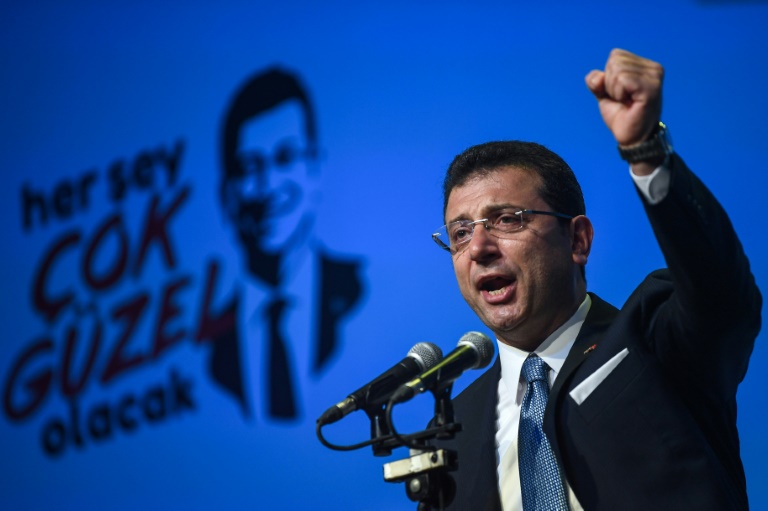
Court delays trial of Istanbul mayor who upstaged Erdogan

A Turkish court on Wednesday delayed until November a highly controversial trial that could see Istanbul’s popular mayor banned from politics over a remark he made after beating President Recep Tayyip Erdogan’s ally in 2019 polls.

Ekrem Imamoglu’s fate is being watched closely for signs of judicial independence nine months before a general election in which Erdogan will struggle to extend his two-decade rule.

The 52-year-old mayor is the most internationally recognised of the opposition leaders who might run against Erdogan.

But a court could keep him from seeking higher office — and possibly force him to give up his post — as punishment for an offhand remark he made about Erdogan’s ruling party in the aftermath of the heated mayoral race.

Imamoglu’s office accuses the ruling party of trying to “eliminate him from the upcoming elections”.

Imamoglu’s office said the trial was adjourned until November 11 moments after it started on Wednesday.

The hearing itself was closed to reporters — an unusual step in Turkey.

The police also sealed off the roads leading to the courthouse with metal fences to keep away protesters in the highly anticipated trial.

– ‘Suspicious votes’ –

Imamoglu was stripped of his narrow March 2019 win over the ruling party’s candidate after Erdogan — who launched his own career as Istanbul mayor and views the city as his second home — refused to recognise the result.

Election officials reported discovering hundreds of thousands of “suspicious votes” after Imamoglu had already been sworn into office.

Their decision to call a re-run election for that June sparked global condemnation and mobilised a groundswell of support for Imamoglu that included former ruling party voters.

Imamoglu won the second election by more than 800,000 votes.

But the usually soft-spoken mayor let his lingering bitterness at the ruling party spill over in November 2019.

“Those who cancelled the March 31 election are idiots,” he told reporters at the time.

– ‘Insulting’ –

Erdogan’s ruling party seized on the remark and sued the mayor for “insulting” public officials.

Prosecutors have asked for Imamoglu to be banned from politics and jailed for 15 months — a relatively light sentence that almost never sees people put behind bars.

Defence lawyer Kemal Polat told AFP the mayor would immediately appeal against any ban and keep his job while the case wound its way through the courts.

“Imamoglu can remain in his current position as mayor until the end of the appeals process. He would not have to resign,” Polat said.

Turkey’s Western allies accuse Erdogan of stacking the courts with allies and using them to jail his rivals in the aftermath of a failed military putsch in 2016.

Erdogan responded to the coup attempt with sweeping purges that saw thousands jailed on “terrorism” and other charges.

Everyone from human rights leaders and civil servants to opposition politicians — many of them from the main pro-Kurdish party — were jailed in mass trials that instilled fear across swathes of Turkish society.

– Knockout –

Turkey’s status as a strategic member of NATO and a Muslim-majority democracy in a volatile part of the world has helped to preserve Erdogan’s ties with the West.

But the saga over the 2019 vote turned Imamoglu into a global figure whose sentencing could raise the diplomatic stakes ahead of next year’s vote.

The court case comes with Turkey’s fractured opposition parties still arguing over which candidate to field against Erdogan next June.

Imamoglu and Mansur Yavas — elected mayor of Ankara in 2019 — have emerged as two of the more popular opposition options because of their success at the ballot box.

The mayor himself appeared to the bracing for legal battles in the months ahead that ruled him out of next year’s elections.

He threw his support on Tuesday behind the candidacy of the main opposition CHP party’s leader Kemal Kilicdaroglu.

“Today you are the main opposition leader, tomorrow you will be in charge of the country,” he told Kilicdaroglu.

Germany reaches deal to nationalise troubled gas giant Uniper

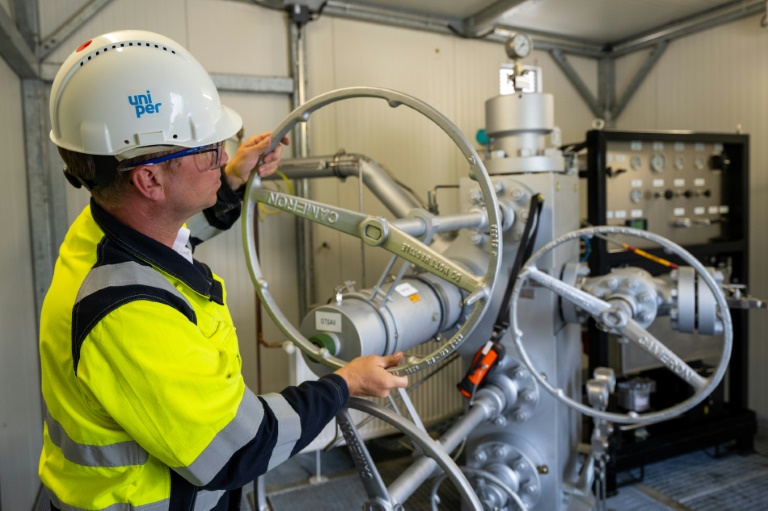
Germany has reached a deal to nationalise troubled gas giant Uniper, the government said Wednesday, as the energy sector reels from the fallout of Russia’s war in Ukraine.

The deal will leave Germany with a 99 percent stake in the debt-laden gas company, the economy ministry said in a statement.

“Uniper is a central pillar of German energy supplies,” the ministry said.

Under the agreement, Berlin will inject eight billion euros ($8 billion) in cash into Uniper and buy 500 million euros of shares from its majority shareholder, the Finnish state-owned energy company Fortum.

Fortum will also be repaid for an eight-billion-euro loan it gave Uniper.

“The situation has become much more dramatic” for Uniper since the shutdown in late August of the Nord Stream 1 gas pipeline from Russia to Germany, Economy Minister Robert Habeck told a press conference.

One of the biggest importers of Russian gas, Uniper has been squeezed as Moscow has reduced supplies to the continent in the wake of its invasion of Ukraine in February.

– Gas crisis –

Missing deliveries have had to be replaced with expensive supplies from the open market, where prices for gas have skyrocketed.

The German state had already agreed in July to take a 30 percent stake in Uniper as part of an initial bailout agreement.

But Uniper announced earlier this month that the two sides were exploring a possible nationalisation as the energy crisis showed no signs of abating.

Fortum provided an eight-billion-euro loan to Uniper in January as the price of gas had already begun to climb amid tensions with Moscow before the invasion of Ukraine.

The Finnish company held a near-80-percent stake in Uniper, which would have been cut to around 56 percent under the July bailout plan.

Fortum said Uniper has accumulated close to 8.5 billion euros in gas-related losses “and cannot continue to fulfil its role as a critical provider of security of supply as a privately-owned company”.

“New measures to resolve the situation were needed, as both Uniper and Fortum were exposed to significant risks,” said Fortum chief executive Markus Rauramo at a press conference.

– ‘No longer viable’ –

“The role of gas in Europe has fundamentally changed since Russia attacked Ukraine, and so has the outlook for a gas-heavy portfolio. As a result, the business case for an integrated group is no longer viable,” Rauramo also said in a separate statement.

Fortum had taken an “inevitable decision in exceptionally uncertain circumstances”, said Tytti Tuppurainen, the Finnish minister responsible for state companies.

“The situation is a result of Russia’s attack on Ukraine. Putin is using energy as a weapon,” Tuppurainen said in a statement. 

Russia’s war in Ukraine has triggered an earthquake on European energy markets, cranked up the pressure on suppliers and raised fears of possible shortages over the winter.

Germany has found itself particularly exposed due to its previous heavy reliance on Russian energy imports.

Since the outbreak of the war, Berlin has worked to wean itself off Russian gas and secure alternative supplies.

Officials have seized key pieces of energy infrastructure which were in the hands of Russian energy companies and mandated gas stores to be filled.

Earlier in September, the German government entered into discussions with another gas supplier, VNG, over a possible bailout package.

Strengthening Hurricane Fiona heads north toward Bermuda

Hurricane Fiona continued its slow and devastating march northward after slamming the Turks and Caicos Islands on Tuesday and leaving a trail of destruction in Puerto Rico and the Dominican Republic.

The US National Hurricane Center (NHC) said Wednesday morning that the storm had grown stronger, registering maximum wind speeds of 130 miles per hour (210 kilometers per hour) as it barreled toward Bermuda.

The NHC said Fiona was 105 miles (170 kilometers) north of Turks and Caicos and had been upgraded to a Category 4 hurricane, the second highest level on the Saffir-Simpson scale.

“Swells from Fiona are expected to reach Bermuda by early Thursday. The swells could cause life-threatening surf and rip current conditions,” the NHC said in its latest advisory.

At least five people have died as the storm churned across the Caribbean — one in the French overseas department of Guadeloupe and two each in Puerto Rico and the Dominican Republic.

“Hurricane Fiona has proven to be an unpredictable storm,” Anya Williams, the deputy governor of Turks and Caicos, said in a broadcast.

Williams said no casualties or serious injuries had been reported in Turks and Caicos, but she urged residents to continue to shelter in place.

Blackouts were reported on Grand Turk and several other islands in the archipelago and 165 people were admitted to shelters, she said, adding that Britain’s Royal Navy and the US Coast Guard are standing by to provide assistance.

Dominican Republic President Luis Abinader has declared three eastern provinces to be disaster zones: La Altagracia — home to the popular resort of Punta Cana — El Seibo and Hato Mayor.

Authorities said Tuesday that more than 10,000 people had been moved to “safe areas,” while about 400,000 are without electricity.

Footage from local media showed residents of the east coast town of Higuey waist-deep in water trying to salvage personal belongings.

“It came through at high speed,” Vicente Lopez told AFP in Punta Cana, bemoaning the destroyed businesses in the area.

– ‘I have food and water’ –

US President Joe Biden has declared a state of emergency in Puerto Rico and dispatched the head of the Federal Emergency Management Agency to the island, which is still struggling to recover from Hurricane Maria five years ago.

“We’re sending hundreds of additional personnel to support all affected communities,” FEMA Administrator Deanne Criswell said Tuesday after a tour with Pedro Pierluisi, the island’s governor. 

Pierluisi said the storm had caused catastrophic damage on the island of three million people since Sunday, with some areas receiving more than 30 inches (76 centimeters) of rain.

Michelle Carlo, medical advisor for Direct Relief in Puerto Rico, told CBS News that “a lot of people in Puerto Rico are suffering right now.”

“About 80 percent of Puerto Ricans are still without power and about 65 percent are without water service,” Carlo said.

Across Puerto Rico, Fiona caused landslides, blocked roads and toppled trees, power lines and bridges, Pierluisi said.

A man was killed as an indirect result of the power blackout — burned to death while trying to fill his generator, according to authorities.

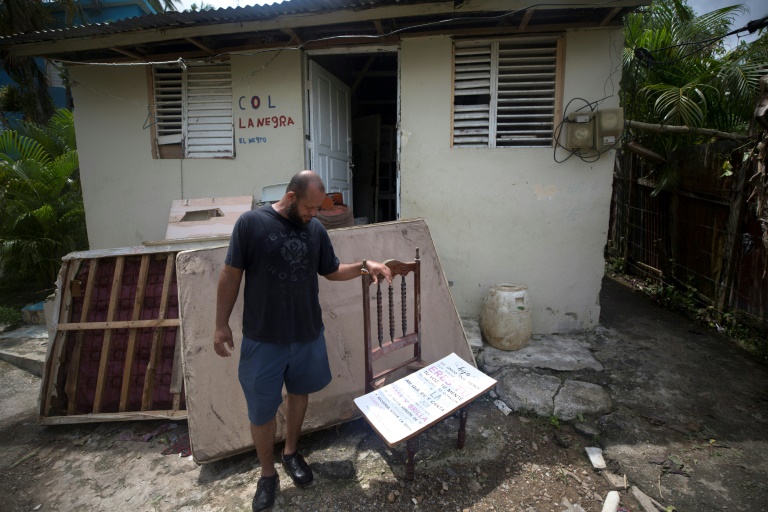
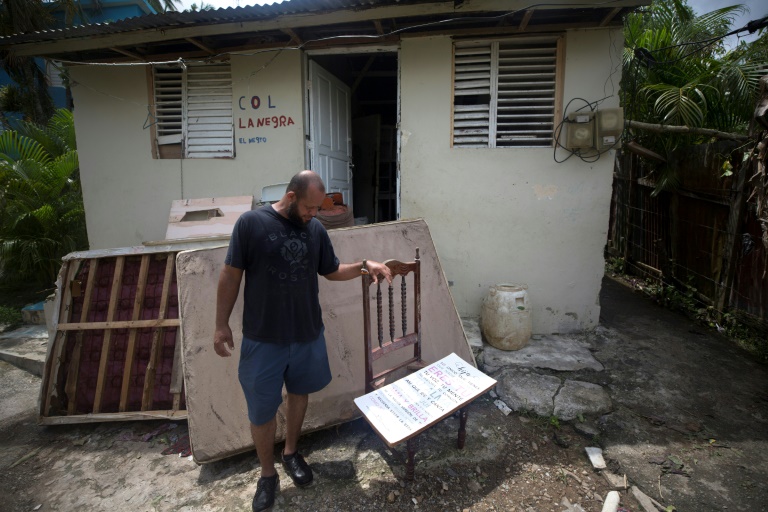
On Monday afternoon, Nelly Marrero made her way back to her home in Toa Baja, in the north of Puerto Rico, to clear out the mud that surged inside after she evacuated.

“Thanks to God, I have food and water,” Marrero — who lost everything when Hurricane Maria hit — told AFP by telephone.

The latest storm has left around 800,000 people without drinking water as a result of power outages and flooded rivers, officials said.

After years of financial woes and recession, Puerto Rico in 2017 declared the largest bankruptcy ever by a local US administration. 

Later that year, the double hit from hurricanes Irma and Maria added to the misery, devastating the electrical grid on the island — which has suffered from major infrastructure problems for years.

The grid was privatized in June 2021 in an effort to resolve the problem of blackouts, but the issue has persisted, and the entire island lost power earlier this year.

Strengthening Hurricane Fiona heads north toward Bermuda

Hurricane Fiona continued its slow and devastating march northward after slamming the Turks and Caicos Islands on Tuesday and leaving a trail of destruction in Puerto Rico and the Dominican Republic.

The US National Hurricane Center (NHC) said Wednesday morning that the storm had grown stronger, registering maximum wind speeds of 130 miles per hour (210 kilometers per hour) as it barreled toward Bermuda.

The NHC said Fiona was 105 miles (170 kilometers) north of Turks and Caicos and had been upgraded to a Category 4 hurricane, the second highest level on the Saffir-Simpson scale.

“Swells from Fiona are expected to reach Bermuda by early Thursday. The swells could cause life-threatening surf and rip current conditions,” the NHC said in its latest advisory.

At least five people have died as the storm churned across the Caribbean — one in the French overseas department of Guadeloupe and two each in Puerto Rico and the Dominican Republic.

“Hurricane Fiona has proven to be an unpredictable storm,” Anya Williams, the deputy governor of Turks and Caicos, said in a broadcast.

Williams said no casualties or serious injuries had been reported in Turks and Caicos, but she urged residents to continue to shelter in place.

Blackouts were reported on Grand Turk and several other islands in the archipelago and 165 people were admitted to shelters, she said, adding that Britain’s Royal Navy and the US Coast Guard are standing by to provide assistance.

Dominican Republic President Luis Abinader has declared three eastern provinces to be disaster zones: La Altagracia — home to the popular resort of Punta Cana — El Seibo and Hato Mayor.

Authorities said Tuesday that more than 10,000 people had been moved to “safe areas,” while about 400,000 are without electricity.

Footage from local media showed residents of the east coast town of Higuey waist-deep in water trying to salvage personal belongings.

“It came through at high speed,” Vicente Lopez told AFP in Punta Cana, bemoaning the destroyed businesses in the area.

– ‘I have food and water’ –

US President Joe Biden has declared a state of emergency in Puerto Rico and dispatched the head of the Federal Emergency Management Agency to the island, which is still struggling to recover from Hurricane Maria five years ago.

“We’re sending hundreds of additional personnel to support all affected communities,” FEMA Administrator Deanne Criswell said Tuesday after a tour with Pedro Pierluisi, the island’s governor. 

Pierluisi said the storm had caused catastrophic damage on the island of three million people since Sunday, with some areas receiving more than 30 inches (76 centimeters) of rain.

Michelle Carlo, medical advisor for Direct Relief in Puerto Rico, told CBS News that “a lot of people in Puerto Rico are suffering right now.”

“About 80 percent of Puerto Ricans are still without power and about 65 percent are without water service,” Carlo said.

Across Puerto Rico, Fiona caused landslides, blocked roads and toppled trees, power lines and bridges, Pierluisi said.

A man was killed as an indirect result of the power blackout — burned to death while trying to fill his generator, according to authorities.

On Monday afternoon, Nelly Marrero made her way back to her home in Toa Baja, in the north of Puerto Rico, to clear out the mud that surged inside after she evacuated.

“Thanks to God, I have food and water,” Marrero — who lost everything when Hurricane Maria hit — told AFP by telephone.

The latest storm has left around 800,000 people without drinking water as a result of power outages and flooded rivers, officials said.

After years of financial woes and recession, Puerto Rico in 2017 declared the largest bankruptcy ever by a local US administration. 

Later that year, the double hit from hurricanes Irma and Maria added to the misery, devastating the electrical grid on the island — which has suffered from major infrastructure problems for years.

The grid was privatized in June 2021 in an effort to resolve the problem of blackouts, but the issue has persisted, and the entire island lost power earlier this year.

230 pilot whales stranded in Australia, 'about half' feared dead

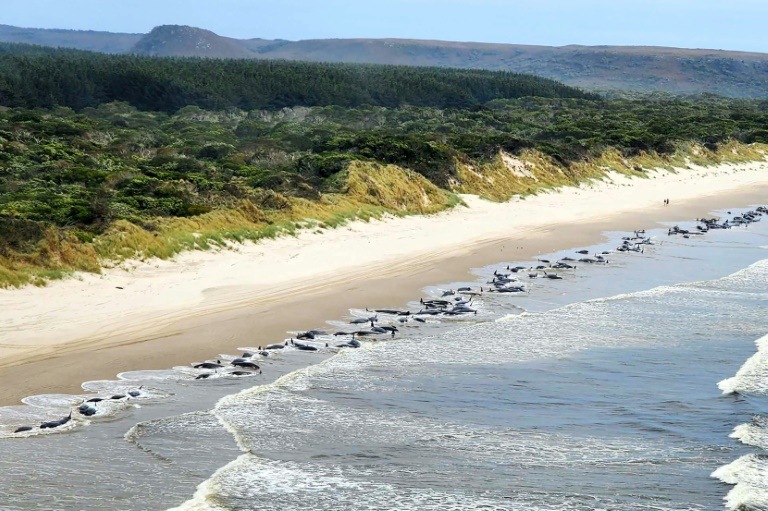
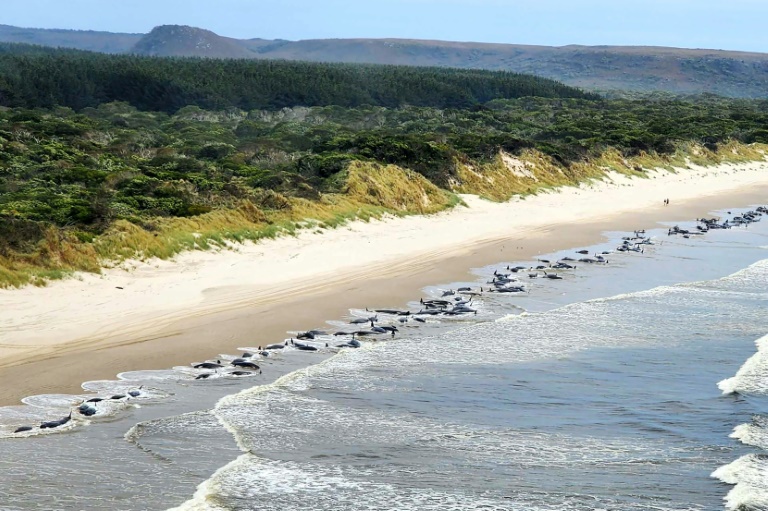
A pod of 230 pilot whales was found stranded on the rugged west coast of Tasmania Wednesday, with Australian officials saying only half appeared to be alive.

Aerial images showed a devastating scene of dozens of black glossy mammals strewn across a long beach, stuck on the waterline where the frigid southern ocean meets the sand.

Locals covered survivors with blankets and doused them with buckets of water to keep them alive, as other whales nearby tried in vain to twitch free and yet more lay dead. 

The whales were “stranded near Macquarie Harbour” said the state’s Department of Natural Resources and Environment. 

“It appears about half of the animals are alive.”

Officials said marine conservation experts and staff with whale rescue gear were en route to the scene.

They will try to refloat animals that are strong enough to survive and likely tow the carcasses out to sea, to avoid attracting sharks to the area.

It is almost two years to the day since Macquarie Harbour was the scene of the country’s largest-ever mass stranding, involving almost 500 pilot whales. 

More than 300 pilot whales died during that stranding, despite the efforts of dozens of volunteers who toiled for days in Tasmania’s freezing waters to free them.

– Distress signals –

The cause of mass strandings is still not fully understood.

Scientists have suggested they could be caused by pods going off track after feeding too close to shore.

Pilot whales  — which can grow to more than six metres (20 feet) long — are highly sociable and can follow podmates who stray into danger.

That sometimes occurs when old, sick or injured animals swim ashore and other pod members follow, trying to respond to the trapped whale’s distress signals.

Others believe gently sloping beaches like those found in Tasmania confuse the whales’ sonar making them think they are in open waters.

The news came just hours after a dozen young male sperm whales were reported dead in a separate mass stranding on King Island — between Tasmania and the Australian mainland.

The young whales’ deaths may be a case of “misadventure”, wildlife biologist Kris Carlyon from the state government conservation agency told the local Mercury newspaper.

“The most common reason for stranding events is misadventure, they might have been foraging close to shore, there might have been food and possibly they were caught on a low tide,” Carlyon said.

“That’s the theory at the moment.”

In nearby New Zealand strandings are also common.

There, around 300 animals beach themselves annually, according to official figures and it is not unusual for groups of between 20 and 50 pilot whales to run aground. 

But numbers can run into the hundreds when a “super pod” is involved — in 2017, there was a mass stranding of almost 700 pilot whales.

230 pilot whales stranded in Australia, 'about half' feared dead

A pod of 230 pilot whales was found stranded on the rugged west coast of Tasmania Wednesday, with Australian officials saying only half appeared to be alive.

Aerial images showed a devastating scene of dozens of black glossy mammals strewn across a long beach, stuck on the waterline where the frigid southern ocean meets the sand.

Locals covered survivors with blankets and doused them with buckets of water to keep them alive, as other whales nearby tried in vain to twitch free and yet more lay dead. 

The whales were “stranded near Macquarie Harbour” said the state’s Department of Natural Resources and Environment. 

“It appears about half of the animals are alive.”

Officials said marine conservation experts and staff with whale rescue gear were en route to the scene.

They will try to refloat animals that are strong enough to survive and likely tow the carcasses out to sea, to avoid attracting sharks to the area.

It is almost two years to the day since Macquarie Harbour was the scene of the country’s largest-ever mass stranding, involving almost 500 pilot whales. 

More than 300 pilot whales died during that stranding, despite the efforts of dozens of volunteers who toiled for days in Tasmania’s freezing waters to free them.

– Distress signals –

The cause of mass strandings is still not fully understood.

Scientists have suggested they could be caused by pods going off track after feeding too close to shore.

Pilot whales  — which can grow to more than six metres (20 feet) long — are highly sociable and can follow podmates who stray into danger.

That sometimes occurs when old, sick or injured animals swim ashore and other pod members follow, trying to respond to the trapped whale’s distress signals.

Others believe gently sloping beaches like those found in Tasmania confuse the whales’ sonar making them think they are in open waters.

The news came just hours after a dozen young male sperm whales were reported dead in a separate mass stranding on King Island — between Tasmania and the Australian mainland.

The young whales’ deaths may be a case of “misadventure”, wildlife biologist Kris Carlyon from the state government conservation agency told the local Mercury newspaper.

“The most common reason for stranding events is misadventure, they might have been foraging close to shore, there might have been food and possibly they were caught on a low tide,” Carlyon said.

“That’s the theory at the moment.”

In nearby New Zealand strandings are also common.

There, around 300 animals beach themselves annually, according to official figures and it is not unusual for groups of between 20 and 50 pilot whales to run aground. 

But numbers can run into the hundreds when a “super pod” is involved — in 2017, there was a mass stranding of almost 700 pilot whales.

Markets drop as Fed hike looms, Putin move lifts dollar and oil

Stocks fell Wednesday ahead of what many expect to be a third successive jumbo rate hike by the Federal Reserve, while the dollar hit fresh multi-decade highs against the pound and euro after Russia stepped up its war in Ukraine.

Equities around the world have been clattered by fears of a recession in major economies as central banks ramp up borrowing costs to combat the highest inflation in decades, which has been compounded by the Ukraine war and supply chain snarls.

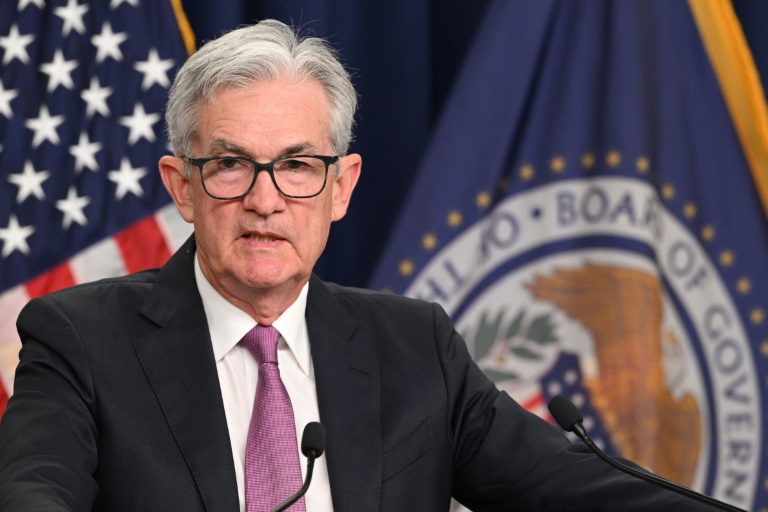
In Washington, the Fed is due to conclude its latest policy meeting, with most analysts predicting it will announce another 75 basis-point lift, though some have tipped a full percentage-point move.

However, while the hike has largely been priced into the markets, the US central bank’s forecast and post-meeting comments from boss Jerome Powell are the main attraction for investors.

“Volumes remain light and the mood cautious, with few looking to take on large positions before hearing what the Fed says and where policy makers see rates going by the end of the hiking cycle,” Fiona Cincotta, at City Index, said.

“This is what will drive the markets, not the rate hike… but what the Fed plans to do next.”

Fed officials have for months stuck to the mantra that they will only ease up on their hawkish drive when inflation comes down and remains subdued.

This has led many to warn that rates are unlikely to come down anytime soon, possibly as late as 2024, with a recession more than likely in the United States as well as other major economies.

– Dollar extends rally –

Other central banks are also meeting this week. On Tuesday, officials in Sweden surprised markets by unveiling a one percentage-point hike, while the United Kingdom and Switzerland are expected to announce more increases.

Asian markets were back in the red, reversing Tuesday’s bounce.

Tokyo, Hong Kong, Sydney and Manila were all down more than one percent, while there were also losses in Shanghai, Seoul, Singapore, Wellington, Taipei, Mumbai and Jakarta.

London rose in early trade, but Paris and Frankfurt were down.

Adding to the dour mood was Vladimir Putin’s announcement of a “partial mobilisation” as he upped the ante in his battle against Ukraine after his forces were routed from several cities in recent weeks.

He added that he would annex the territories his forces have already occupied and backed weekend referendums in four regions in Russian-held parts of Ukraine.

“We will definitely use all means available” to protect Russian territory, he warned, adding: “That’s not a bluff.”

The moves mark an escalation of the seven-month war, which has roiled markets and sparked an energy crisis.

Oil prices, which have wilted in recent months owing to worries about demand caused by any recession, surged more than three percent.

And the dollar, a safe haven in times of uncertainty and turmoil and which was already elevated ahead of the rate decision, rallied further.

It hit a fresh 37-year high of $1.1305 against sterling and a new 20-year peak of $0.9885 per euro, with the eurozone already in economic trouble owing to sanctions on Russian oil and Putin’s decision to cut off gas supplies to the continent.

The announcement and possible escalation in the war “raises a whole new set of uncertainties”, Rabobank’s Jane Foley said.

“This is set to weigh on the euro and on the currencies of eastern Europe.”

– Key figures at around 0810 GMT –

Tokyo – Nikkei 225: DOWN 1.4 percent at 27,313.13 (close)

Hong Kong – Hang Seng Index: DOWN 1.8 percent at 18,444.62 (close)

Shanghai – Composite: DOWN 0.2 percent at 3,117.18 (close)

London – FTSE 100: DOWN 0.3 percent at 7,210.45

Euro/dollar: DOWN at $0.9909 from $0.9977 on Tuesday

Dollar/yen: DOWN at 143.71 yen from 143.72 yen

Pound/dollar: DOWN at $1.1345 from $1.1384

Euro/pound: DOWN at 87.35 pence from 87.63 pence 

West Texas Intermediate: UP 3.2 percent at $86.62 per barrel

Brent North Sea crude: UP 3.1 percent at $93.39 per barrel

New York – Dow: DOWN 1.0 percent at 30,706.23 (close)

— Bloomberg News contributed to this story —

UK's new PM veers away from Biden's economic script at UN

Britain’s new Prime Minister Liz Truss was Wednesday to outline an economic rescue programme focussed on tax cuts — even as US President Joe Biden rejected that approach as the two prepared to meet at the UN.

“I am sick and tired of trickle-down economics. It has never worked,” Biden tweeted ahead of his first meeting with Boris Johnson’s successor in New York. 

“We’re building an economy from the bottom up and middle out,” the president said, contrasting his approach to Republican opponents whose philosophy is more akin to the UK’s new Conservative leader.

Truss has underscored in New York her contentious belief that tax cuts for the better-off would benefit everyone, as her new government tries to get a grip on soaring energy prices.

An emergency budget on Friday is expected to roll out tax changes that would disproportionately benefit Britain’s rich. The Times newspaper said it could also come with a surprise cut to property purchase taxes.

“I don’t accept this argument that cutting taxes is somehow unfair,” Truss told Sky News in New York, ahead of her bilateral meeting with Biden and debut speech Wednesday at the UN General Assembly. 

“What we know is people on higher incomes generally pay more tax. So when you reduce taxes, there is often a disproportionate benefit because those people are paying more taxes in the first place,” she said.

The contrasting economic visions are only one point of dispute between Truss and Biden. 

The White House has made clear its unhappiness about the new prime minister’s hard line on Brexit and Northern Ireland. Truss conceded that a post-Brexit UK-US trade deal was unlikely for years.

But in her speech to the UN, she was set to defend her economic vision as a way to corral Western democracies against foes such as Russia.

“We want people to keep more of the money they earn, because we believe that freedom trumps instruction,” Truss was expected to say, according to excerpts released by Downing Street. 

“We are reforming our economy to get Britain moving forward once again.

“The free world needs this economic strength and resilience to push back against authoritarian aggression and win this new era of strategic competition.”

Truss was to say that Ukraine’s recent battlefield advances against Russian forces was “the story of freedom fighting back”.

“But this must not be a one-off,” she will say, urging Western unity. 

Close Bitnami banner
Bitnami