World

Moscow-held Ukraine regions to vote on annexation by Russia

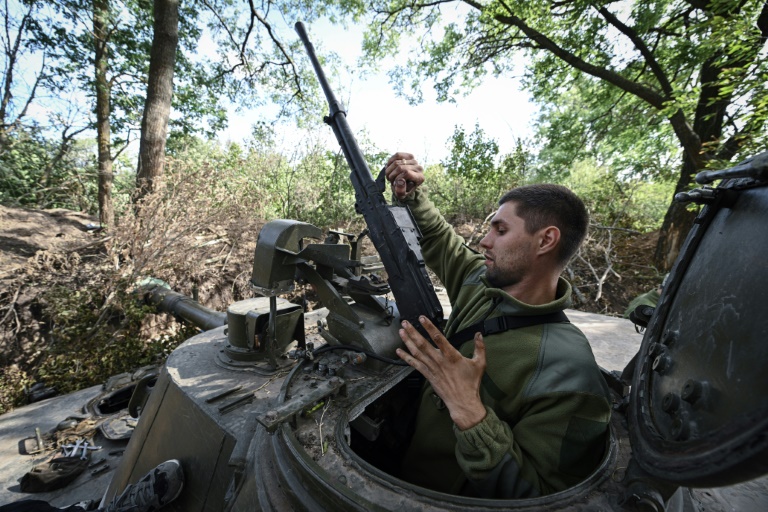
Moscow-held regions of Ukraine will vote in the coming days on annexation by Russia, separatist officials said Tuesday, as Kyiv’s troops wrest back territory captured by Moscow’s forces.

Separatist authorities in the eastern Donetsk and Lugansk regions, as well as in the southern Kherson and Zaporizhzhia regions, said they would hold the vote over five days beginning Friday this week and ending on Tuesday.

The regions are on the frontlines of a sweeping Ukrainian counter-offensive that has seen Kyiv’s forces retake hundreds of towns and villages that had been controlled by Russia for months.

Their integration into Russia would represent a major escalation of the conflict as Moscow could try to say it was defending its own territory from Ukrainian forces.

Kyiv said the “sham” votes were meaningless and vowed to “eliminate” threats posed by Russia, saying its forces would keep retaking territory regardless of what Moscow or its proxies announced.

Denis Miroshnichenko, a separatist leader in the Lugansk region, said pro-Moscow lawmakers had voted to hold the vote from September 23 to 27.

Shortly afterwards, a news portal associated with separatist authorities in Donetsk said the region would hold a ballot over the same dates.

Large parts of the industrial Donbas area — made up of Donetsk and Lugansk — have been controlled by Moscow-backed separatists since 2014, after nationwide demonstrations ousted a Kremlin-friendly Ukrainian president.

– ‘Restore historical justice’ –

Russia at the time annexed the Crimean peninsula on the Black Sea from Ukraine with a vote that was criticised by Kyiv and the West, which imposed sanctions in response.

Ahead of the announcement by separatist and pro-Moscow leaders, Russia’s lower house of parliament drafted new legislation tightening prison time for soldiers who surrender, desert or loot.

Authorities in the southern Kherson region of Ukraine also announced on Tuesday they would hold a vote over the same dates on annexation from Russia. 

“I am sure that the incorporation of the Kherson region into the Russian Federation will secure our territory and restore historical justice,” said the Moscow-installed head of that region, Vladimir Saldo. 

He echoed a phrase used earlier in the day by Russia’s former president and prime minister who invoked correcting historical wrongs, but also said the votes would bolster Russian forces. 

“Encroachment into Russian territory is a crime and if it is committed, that allows you to use all possible force in self-defence,” Dmitry Medvedev, now the deputy chairman of Russia’s security council, said on social media.

He said the decisions would be binding and that no future leader of Russia would have the authority to reverse them.

“That is why these referendums are so feared in Kyiv and in the West. That is why they need to be carried out,” he added.

Pro-Moscow authorities in Ukraine’s Zaporizhzhia region — home to Europe’s largest nuclear power plant — also announced they would hold a vote on joining Russia over the same dates.

The head of the Russian-installed administration in Zaporizhzhia, Yevgeny Balitsky, said on social media he had signed a decree to hold a vote on the region’s “territorial allegiance”.

Ukrainian President Volodymyr Zelensky’s chief of staff, Andriy Yermak, vowed a decisive response from Kyiv to annexation votes.

– ‘Sham’ votes –

“Ukraine will solve the Russian issue. The threat can be eliminated only by force,” Yermak said.

German Chancellor Olaf Scholz denounced the “sham” votes and said they must be rejected by the international community.

“It is very, very clear that these sham referenda cannot be accepted and are not covered by international law,” Scholz told reporters as he attended the UN General Assembly.

Ukraine Foreign Minister Dmytro Kuleba said referendums would change nothing.

“Ukraine has every right to liberate its territories and will keep liberating them whatever Russia has to say,” he said in a statement online.

The Ukrainian defence ministry quipped on Twitter that Moscow was trying to repeat Nazi Germany’s vote to annex Austria in 1938 but that it would ultimately meet “the fate of Hitler of 1945”.

The votes come at a decisive moment in Russia’s near seven-month invasion of Ukraine.

Political analyst Tatiana Stanovaya wrote on social media that the announcements of the votes were a direct result of the success of the counter-offensive.

Putin, she said, wants to threaten the full use of Russia’s military, including nuclear weapons, in defending Russian territory, including newly annexed regions.

“Putin does not want to win this war on the battlefield. Putin wants to force Kyiv to surrender without a fight,” she said.

Speaking with newly appointed foreign ambassadors in Moscow on Tuesday ahead of the opening of the UN General Assembly, Putin said that Russia would pursue its “sovereign course.”

The Russian leader earlier Tuesday met with defence industry representatives and demanded the sector “resolve the problem of the prompt and full provision of defense industry factories with domestically-manufactured components”.
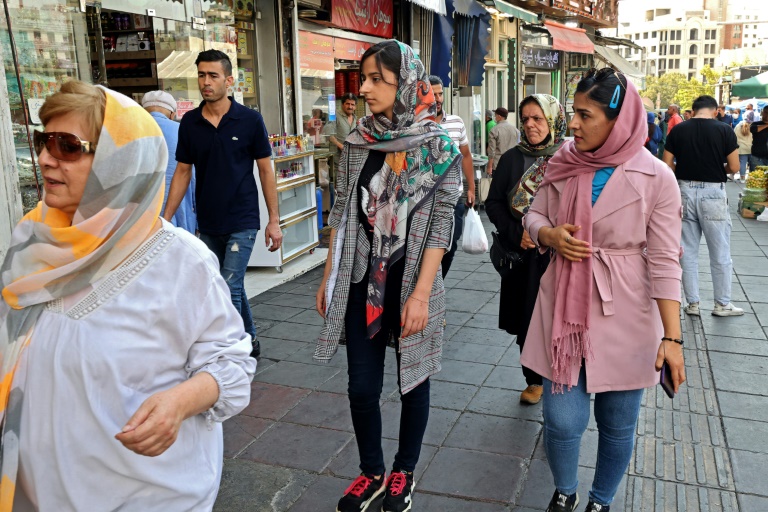
In Iran, rare criticism of 'morality police' after Amini death

The death of 22-year-old Mahsa Amini after her arrest by Iran’s “morality police” has not only triggered deadly protests but also rare outspoken criticism by top officials.

Public anger has grown since authorities on Friday announced Amini’s death following her arrest by the police unit responsible for enforcing Iran’s strict dress code for women, including the wearing of the headscarf covering their hair in public.

Supreme leader Ayatollah Ali Khamenei’s representative paid a visit to Amini’s family at their home in the northern Kurdistan province, Tasnim news agency said Tuesday.

“I assured the family… that all institutions will take action to defend the violated rights of Miss Amini and none of their rights will be ignored,” Abdolreza Pourzahbi was quoted as saying.

Amid growing controversy over the conduct of the morality police, known formally as the Gasht-e Ershad or “Guidance Patrol”, parliament speaker Mohammad Bagher Ghalibaf said Tuesday that the police unit’s conduct should be investigated.

“In order to prevent repetition of such cases, the processes and the method of implementation in guidance patrols… should be investigated,” he said, quoted by state news agency IRNA.

The state-affiliated Organisation for the Promotion of Virtue and the Prevention of Vice, set up to encourage good behaviour and prohibit immoral activities, said the police unit should not arrest people for breaking dress regulations.

“The view of this issue should be changed,” the influential organisation said in a statement, stressing that it opposed “the arrest and trial of ordinary people” for clothing infringements.

“The criminalisation of those not wearing a headscarf and the arrest, filing of cases and the prosecution of people which will only cause social tensions… should be amended in law,” it added.

The death of Amini has caused international consternation, including from the United Nations.

The United States criticised her death and the way it said security forces handled the ensuing protests.

Iran’s Foreign Minister Hossein Amir-Abdollahian on Tuesday rejected the criticism and said a probe had been ordered into the “tragic death” of Amini, who he said, quoting President Ebrahim Raisi, “was just like our own daughters”.

– ‘Illegal, irrational and illegitimate’ –

Inside Iran, and following protests in the capital Tehran and a number of other provinces, lawmakers have also raised their voices.

Jalal Rashidi Koochi, a member of parliament, told the ISNA news agency that the police unit was a “mistake” as it only resulted in “loss and damage” for Iran.

Another lawmaker, Moeenoddin Saeedi, said the unit “should be removed” and shut, ILNA news agency reported.

Clerics have also spoken out.

Ayatollah Asadollah Bayat Zanjani, a senior religious figure whose guidance many follow, on Saturday criticised the events leading up to Amini’s death.

“The set of behaviours and events that caused this unfortunate and regrettable incident are illegal, irrational and illegitimate,” the cleric said in a statement.

On the streets, protesters showed their anger.

On Sunday, police made arrests and fired tear gas in Amini’s home province of Kurdistan, where some 500 people had protested, some smashing car windows and torching rubbish bins, reports said.

On Monday, several hundred protesters in Tehran, including some women who took off their headscarves, were dispersed by “police using batons and tear gas”, according to Fars news agency.

On Tuesday, Kurdistan provincial governor Ismail Zarei Koosha said three people had been killed during the protests in the province, Fars reported, blaming the deaths on “a plot by the enemy”.

Tehran governor Mohsen Mansouri on Tuesday said the protests in the capital were “fully organised with the agenda to create unrest”, in a post on Twitter.

“Burning the flag, pouring fuel on the roads, throwing stones, attacking the police, setting fire to motorcycles and garbage cans, destroying public property… is not the work of ordinary people,” he said.

Brazil president offers to take in priests persecuted in Nicaragua

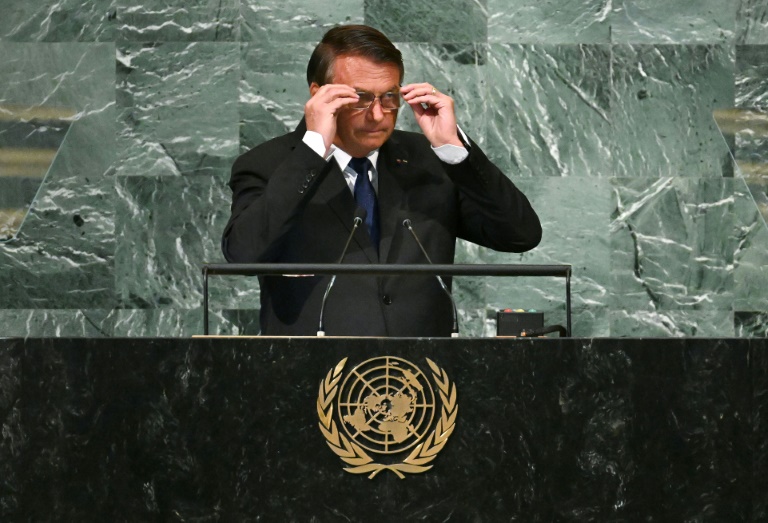
Brazilian President Jair Bolsonaro on Tuesday offered refuge in his country to Catholic clerics under pressure in Nicaragua, where he said they had endured “cruel persecution” by the leftist leadership.

Addressing the opening session of the United Nations General Assembly weeks ahead of elections at home, the right-wing leader portrayed Brazil as a firm advocate of religious freedom.

“Brazil opens its doors to welcome the Catholic priests and nuns who have suffered cruel persecution by the dictatorial regime in Nicaragua,” he said, without providing specifics.

“Brazil repudiates religious persecution wherever it occurs in the world.”

Nicaraguan police arrested Bishop Rolando Alvarez, an outspoken critic of President Daniel Ortega’s government, on August 19, accusing him of “destabilizing and provocative” activities. 

The arrest drew fierce condemnation from Washington and the European Union, which both warned of Nicaragua’s increasing suppression of religious and opposition figures, civil society, human rights defenders, journalists and others.

Brazil is the world’s largest majority-Catholic nation and Bolsonaro himself was born into a Catholic family.

He has also grown close to the country’s evangelical Christian churches over the course of his four-year term, notably in recent months as he trails in polls ahead of the October election.

Bolsonaro has been a fierce defender of conservative positions such as banning abortion, an issue he mentioned in his speech in which he repeated his “repudiation of gender ideology.”

Palestinian Authority arrest raid sparks deadly West Bank clashes

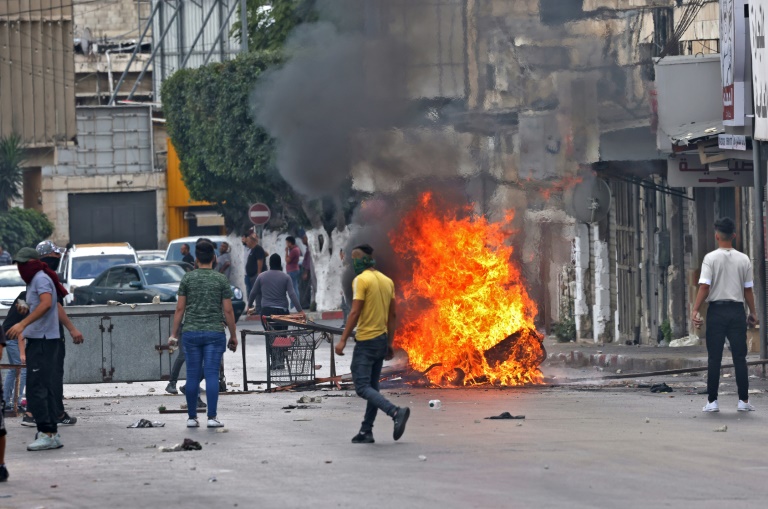
A rare operation by the Palestinian Authority security forces to arrest a Hamas member sparked clashes in the West Bank city of Nablus on Tuesday, killing one.

A statement from the security forces confirmed the death of bystander Firas Yaish and said they were “waiting for a medical report”, on the circumstances of his killing.

He was killed “in a place where no security personnel were present,” security spokesman Talal Dweikat said in a statement.

Unrest persisted through the morning, with hundreds of youths hurling rocks at PA armoured vehicles and the sound of gunfire ringing out across the city centre, AFP correspondents reported.

Ahmed, 26, a protester who declined to give his family name citing personal security concerns, said the protesters’ anger was fuelled by “security coordination between the PA and the occupation (Israel).”

“Go away Abu Mazen,” he said, referring to Palestinian president Mahmud Abbas.

“You are not the Palestinians but only one man — and a man who wants to fill his pocket with money,” he said.

Hamas, historic rivals of the Abbas’s secular Fatah movement that controls the PA, condemned the arrest of 30-year-old Musaab Shtayyeh, calling it a “kidnapping… a national crime” and a “stain” on the PA’s image. 

It demanded the immediate release of Shtayyeh and Ameed Tbaileh, who was arrested with him, and blasted the PA for keeping up security coordination with Israel. 

“The authority has positioned itself as an exclusive agent of the occupation (Israel) in the face of our Palestinian people,” the statement said.

– Tensions –

While Abbas’s forces maintain security ties with Israel, which has occupied the West Bank since 1967, PA raids targeting Hamas members are not common. 

Fatah and Hamas have made various reconciliation attempts in recent years but relations remain tense. Hamas has controlled Gaza since 2007, when it ousted PA forces from the coastal enclave in deadly street battles.

The spokesman for the Palestinian presidency, Nabil Abu Rudeina, called for “calm” on Tuesday. “The main battle is against the Israeli occupation,” he said in a statement.

The northern West Bank has suffered near daily violence in recent months. 

Israel has conducted dozens of night-time raids in the area, particularly in Jenin, pursuing wanted individuals.

Dozens of Palestinians, including fighters, have been killed in the raids that began after a series of deadly attacks against Israeli targets in March.  

Israel has put mounting pressure on the PA to crack down on alleged militants in the West Bank.

Last week, after two Palestinians and an Israeli soldier were killed in clashes near Jenin, Israeli Prime Minister Yair Lapid said he would “not hesitate to act in any place that the Palestinian Authority does not maintain order”.

Earlier this month, Israeli armed forces chief Lieutenant General Aviv Kohavi said the “helplessness of the Palestinian Authority security forces” was providing fertile ground for the armed groups.

Fiona, now a Category Three hurricane, reaches Turks and Caicos

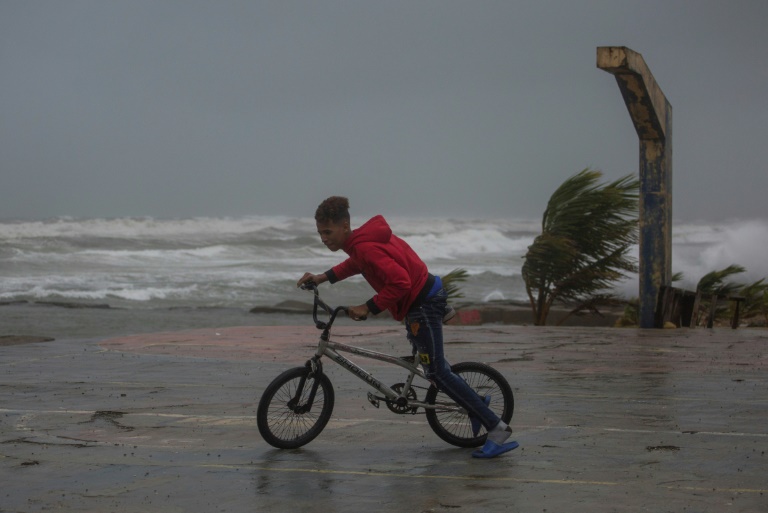
Fiona strengthened into a powerful Category Three hurricane on Tuesday as it headed toward the Turks and Caicos islands after leaving two dead and triggering major flooding and blackouts in the Caribbean.

With maximum winds nearing 115 miles (185 kilometers) per hour, the storm is already bringing hurricane conditions to the British overseas territory and is expected to become even stronger, the US National Hurricane Center (NHC) said.

“Heavy rains around the center of Fiona impacts the Turks and Caicos through this afternoon with continued life-threatening flooding,” the NHC said in an advisory, adding that the storm was expected to pass near the island chain within hours.

Fiona has left two people dead so far: one man whose home was swept away in the French overseas department of Guadeloupe and another in the Dominican Republic who died while cutting down a tree to protect against the storm.

Dominican Republic President Luis Abinader has declared three eastern provinces to be disaster zones: La Altagracia — home to the popular resort of Punta Cana — El Seibo and Hato Mayor.

Several roads were flooded or cut off by falling trees or electric poles around Punta Cana where the power was knocked out, an AFP journalist on the scene said.

Footage from local media showed residents of the east coast town of Higuey waist-deep in water, trying to salvage personal belongings.

“It came through at high speed,” Vicente Lopez, in the Punta Cana beach of Bibijagua told AFP, bemoaning the destroyed businesses in the area.

The NHC said “heavy rainfall and localized life-threatening flash flooding” would continue over part of the Dominican Republic on Tuesday.

US President Joe Biden has meanwhile declared a state of emergency in Puerto Rico — where the storm hit a day earlier — authorizing the Federal Emergency Management Agency to provide assistance in the US island territory.

Governor Pedro Pierluisi said the storm had caused catastrophic damage since Sunday, with some areas facing more than 30 inches (76 centimeters) of rainfall.

– ‘Unprecedented’ flooding –

Across Puerto Rico, Fiona caused landslides, blocked roads and toppled trees, power lines and bridges, Pierluisi said.

A man was killed as an indirect result of the power blackout — burned to death while trying to fill his generator, according to authorities.

On Monday afternoon, Nelly Marrero made her way back to her home in Toa Baja, in the north of Puerto Rico, to clear out the mud that surged inside after she evacuated.

“Thanks to God, I have food and water,” Marrero — who lost everything when Hurricane Maria devastated Puerto Rico five years ago — told AFP by telephone.

Fiona knocked out power to much of Puerto Rico, an island of three million people, but electricity had been restored for some customers on Monday, the governor said.

The hurricane has also left around 800,000 people without drinking water as a result of power outages and flooded rivers, officials said.

After years of financial woes and recession, Puerto Rico in 2017 declared the largest bankruptcy ever by a local US administration. 

Later that year, the double hit from two Hurricanes, Irma and Maria, added to the misery, devastating the electrical grid on the island — which has suffered from major infrastructure problems for years.

The grid was privatized in June 2021 in an effort to resolve the problem of blackouts, but the issue has persisted, and the entire island lost power earlier this year.

Fiona, now a Category Three hurricane, reaches Turks and Caicos

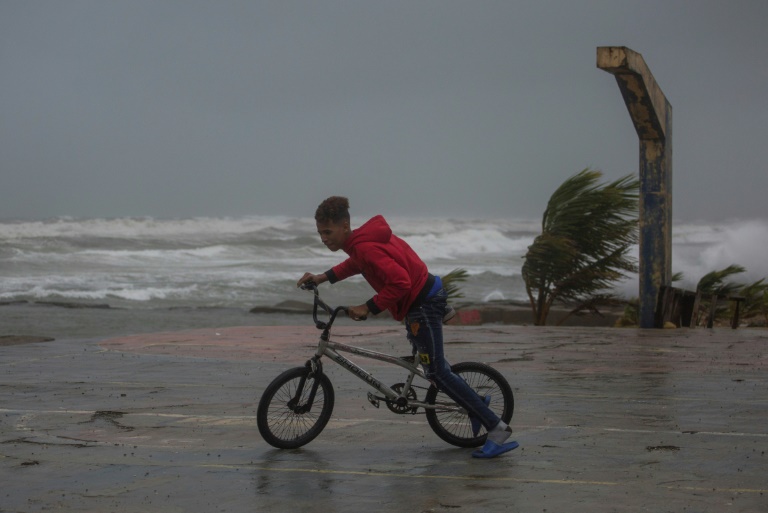
Fiona strengthened into a powerful Category Three hurricane on Tuesday as it headed toward the Turks and Caicos islands after leaving two dead and triggering major flooding and blackouts in the Caribbean.

With maximum winds nearing 115 miles (185 kilometers) per hour, the storm is already bringing hurricane conditions to the British overseas territory and is expected to become even stronger, the US National Hurricane Center (NHC) said.

“Heavy rains around the center of Fiona impacts the Turks and Caicos through this afternoon with continued life-threatening flooding,” the NHC said in an advisory, adding that the storm was expected to pass near the island chain within hours.

Fiona has left two people dead so far: one man whose home was swept away in the French overseas department of Guadeloupe and another in the Dominican Republic who died while cutting down a tree to protect against the storm.

Dominican Republic President Luis Abinader has declared three eastern provinces to be disaster zones: La Altagracia — home to the popular resort of Punta Cana — El Seibo and Hato Mayor.

Several roads were flooded or cut off by falling trees or electric poles around Punta Cana where the power was knocked out, an AFP journalist on the scene said.

Footage from local media showed residents of the east coast town of Higuey waist-deep in water, trying to salvage personal belongings.

“It came through at high speed,” Vicente Lopez, in the Punta Cana beach of Bibijagua told AFP, bemoaning the destroyed businesses in the area.

The NHC said “heavy rainfall and localized life-threatening flash flooding” would continue over part of the Dominican Republic on Tuesday.

US President Joe Biden has meanwhile declared a state of emergency in Puerto Rico — where the storm hit a day earlier — authorizing the Federal Emergency Management Agency to provide assistance in the US island territory.

Governor Pedro Pierluisi said the storm had caused catastrophic damage since Sunday, with some areas facing more than 30 inches (76 centimeters) of rainfall.

– ‘Unprecedented’ flooding –

Across Puerto Rico, Fiona caused landslides, blocked roads and toppled trees, power lines and bridges, Pierluisi said.

A man was killed as an indirect result of the power blackout — burned to death while trying to fill his generator, according to authorities.

On Monday afternoon, Nelly Marrero made her way back to her home in Toa Baja, in the north of Puerto Rico, to clear out the mud that surged inside after she evacuated.

“Thanks to God, I have food and water,” Marrero — who lost everything when Hurricane Maria devastated Puerto Rico five years ago — told AFP by telephone.

Fiona knocked out power to much of Puerto Rico, an island of three million people, but electricity had been restored for some customers on Monday, the governor said.

The hurricane has also left around 800,000 people without drinking water as a result of power outages and flooded rivers, officials said.

After years of financial woes and recession, Puerto Rico in 2017 declared the largest bankruptcy ever by a local US administration. 

Later that year, the double hit from two Hurricanes, Irma and Maria, added to the misery, devastating the electrical grid on the island — which has suffered from major infrastructure problems for years.

The grid was privatized in June 2021 in an effort to resolve the problem of blackouts, but the issue has persisted, and the entire island lost power earlier this year.

At UN, Blinken sees new Atlantic Ocean cooperation

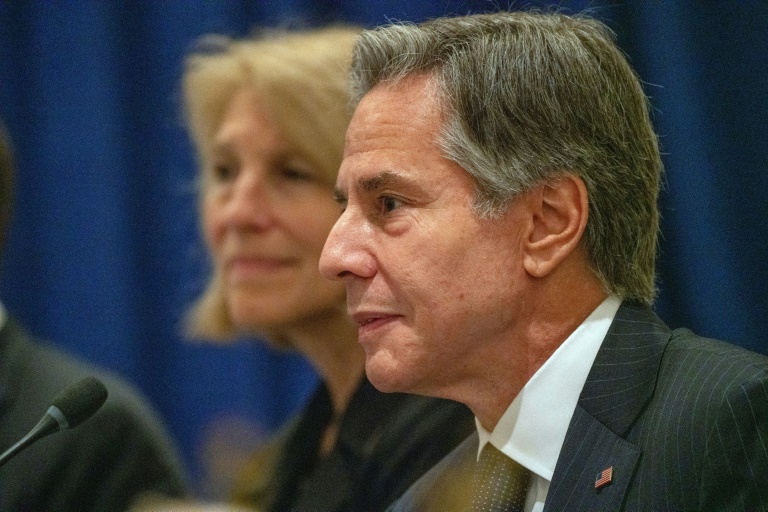
US Secretary of State Antony Blinken on Tuesday will look to form a new community of Atlantic nations with another $100 million in initiatives to support the environment and maritime security, officials said.

In New York for the UN General Assembly, Blinken will meet jointly with counterparts from Angola, Brazil, Ghana, Portugal and Senegal as part of a new grouping of around 10 countries, a senior State Department official said.

“The United States hopes to work with Atlantic countries to develop a new framework for regular Atlantic cooperation, through which our countries can establish and carry out a shared approach to advancing our shared goals in the region,” the official said on condition of anonymity.

The initiative comes as President Joe Biden’s administration puts a growing focus on environmental cooperation around the world, including on the health of the oceans.

The administration has already put a high priority on the Pacific, seen as an area of potential conflict amid the rapid rise of China.

The official said that the new Atlantic grouping will look to develop a “sustainable ocean economy” and support the health of the ocean, including by addressing climate change and marine ecosystems.

It will also look at ways to improve maritime governance, including by improving cooperation on search and rescue operations and fighting piracy.

Subject to congressional approval, the Biden administration will devote another $100 million next year to the effort, in addition to around $400 million already spent each year on maritime initiatives in the Atlantic, the official said.

The initiative involves Brazil weeks ahead of  elections in the Atlantic power, where President Jair Bolsonaro — an ally of business who has long been skeptical on climate — is trailing in polls as he seeks another term.

Opening summit, UN chief warns of 'winter of discontent'

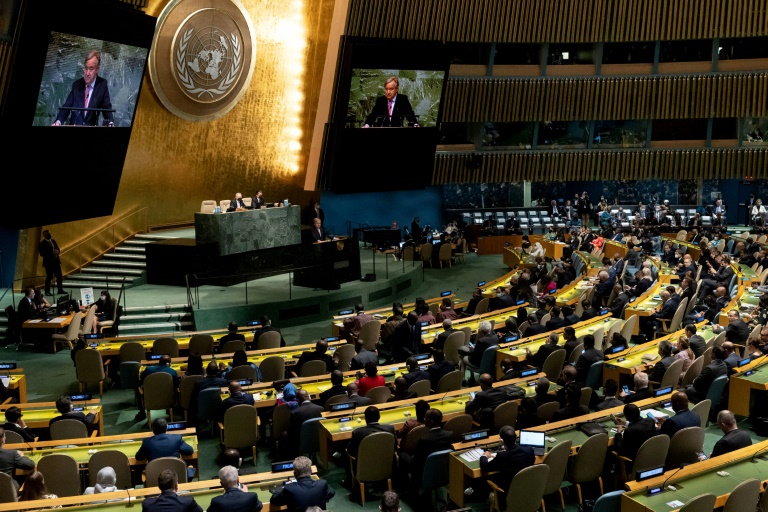
The United Nations’ massive global summit returned Tuesday with a stark warning from the world body’s chief of an upcoming “winter of global discontent” from rising prices, a warming planet and deadly conflicts.

After two years of pandemic restrictions and video addresses, the UN General Assembly again asked leaders to come in person if they wish to speak — with a sole exception made for Ukrainian President Volodymyr Zelensky.

UN Secretary-General Antonio Guterres, while saluting efforts for global cooperation, warned of a dire state of the planet.

“A winter of global discontent is on the horizon,” Guterres said as he opened the annual General Assembly. 

“Trust is crumbling, inequalities are exploding, our planet is burning. People are hurting — with the most vulnerable suffering the most.”

With global temperatures rising and a chunk of Pakistan the size of the United Kingdom recently under water, Guterres lashed out at fossil fuel companies and the “suicidal war against nature.”

“Let’s tell it like it is — Our world is addicted to fossil fuels. It’s time for an intervention. We need to hold fossil fuel companies and their enablers to account,” Guterres said.

He called on all developed economies to tax profits from fossil fuels and dedicate the funds both to compensate for damage from climate change and to help people struggling with high prices.

“Polluters must pay,” Guterres said.

– Ukraine in focus –

The summit was disrupted after the death of Queen Elizabeth II, with President Joe Biden of the United States, by tradition the second speaker on the opening day, instead due to speak on Wednesday.

Day one features French President Emmanuel Macron and German Chancellor Olaf Scholz, the leaders of the two largest economies of the European Union, which has mobilized to impose tough sanctions over Russia’s invasion of Ukraine.

“This year, Ukraine will be very high on the agenda. It will be unavoidable,” top EU diplomat Josep Borrell told reporters in New York.

“There are many other problems, we know. But the war in Ukraine has been sending shock waves around the world.”

German Foreign Minister Annalena Baerbock vowed to support countries hardest hit by the fallout from the war as she headed to the General Assembly on Tuesday.

“The brutality of Russia’s war of aggression and its threat to the peace order in Europe have not blinded us to the fact that its dramatic effects are also clearly being felt in many other regions of the world,” Baerbock said.

Russian Foreign Minister Sergei Lavrov was visiting despite a hostile reaction from the United States.

With the Ukraine war leading to a global grain crisis, hunger is another major issue on the agenda. More than 200 NGOs called for urgent action from leaders gathered for the General Assembly to “end the spiraling global hunger crisis.”

“Around the world, 50 million people are on the brink of starvation in 45 countries,” they said, adding that as many as 19,700 people are estimated to be dying of hunger every day, which translates to one person every four seconds.

– Talks between rivals –

Other leaders to speak Tuesday include Turkish President Recep Tayyip Erdogan, who has staked out ground as a broker between Russia and Ukraine, including through a deal to ship out badly needed grain to the world.

Erdogan is also expected to meet in New York with Israeli Prime Minister Yair Lapid, a dramatic rebound in relations after the Turkish leader’s strident criticism of the Jewish state’s treatment of Palestinians.

In the type of last-minute diplomacy common at previous UN sessions, US Secretary of State Antony Blinken convened a first meeting of the foreign ministers of Azerbaijan and Armenia since a flare-up in fighting.

Also high on the agenda for the UN week will be Iran, whose hardline president, Ebrahim Raisi, is traveling to the General Assembly for the first time and met Tuesday with France’s Macron.

In a US television interview ahead of his arrival, Raisi said Iran wanted “guarantees” before returning to a nuclear deal that former president Donald Trump trashed in 2018.

Biden supports a return to the 2015 agreement, under which Iran drastically scaled back nuclear work in return for promises of sanctions relief.

Stock markets drop on jumbo Swedish rate hike

Stocks retreated Tuesday as Sweden’s jumbo interest rate hike, aimed at tackling inflation, stoked expectations of more increases this week from the US Federal Reserve and the Bank of England.

The Swedish central bank sprang the biggest rise in three decades, ramping up its rate by a full percentage point to 1.75 percent.

The news sent the region’s markets into reverse as tighter global borrowing costs bear down on economic activity.

Frankfurt equities dropped about 0.8 percent as news of rocketing German producer prices further fanned inflation fears.

London fell after reopening following the funeral of Queen Elizabeth II on Monday.

The euro dipped against main rivals after Monday’s surge, while oil prices slid on the stronger dollar.

Wall Street’s main stocks indices all fell by 0.8 percent as trading got underway.

– ‘Nerves jangling again’ –

“European stocks rallied at the open — but a jumbo rate hike from Sweden’s central bank sent the nerves jangling again as investors worry about what’s in store from global central banks,” Markets.com analyst Neil Wilson told AFP.

The Fed’s decision is the main markets focus after figures last week showed consumer prices are still rising at a pace not seen since the early 1980s.

The US Federal Reserve is forecast Wednesday to hike its key interest rate by another 0.75 percentage points.

Some observers have even speculated over a possible one-percentage-point move.

One day later, the Bank of England (BoE) is predicted to deliver another sizeable increase in British borrowing costs.

“The (Swedish) hike underlined just how serious central banks are taking the inflation threat and with 75 basis point hikes from the Bank of England and Federal Reserve looking like slam-dunk certainties, the early optimism in the markets quickly evaporated,” added Wilson.

“The reality of central bank tightening… is keeping a lid on stocks and will continue to act as a headwind for risk.”

Sentiment on Wall Street was also dampened by data showing drop in housing construction permits, although housing starts increased 12.2 percent month-on-month in August.

“The key takeaway from the report is that the weakness in the permits data suggests the strength in starts is not sustainable, especially when also taking into account that mortgage rates have risen since the July-August period,” said analyst Patrick O’Hare at Briefing.com.

Asian markets meanwhile enjoyed a much-needed bounce Tuesday, tracking Wall Street’s late rally as investors gird themselves for another big Fed hike, though fears of a recession remain elevated.

Elsewhere on Tuesday, the British pound remained under pressure, even as the BoE lines up another rate hike, after sliding on Friday to a 1985 low at $1.1351.

– Key figures at around 1330 GMT –

London – FTSE 100: DOWN 0.4 percent at 7,207.87 points

Frankfurt – DAX: DOWN 0.8 percent at 12,696.14

Paris – CAC 40: DOWN 1.2 percent at 5,991.86

EURO STOXX 50: DOWN 0.8 percent at 3,470.70

New York – Dow: DOWN 0.8 percent at 30,775.29

Tokyo – Nikkei 225: UP 0.4 percent at 27,688.42 (close)

Hong Kong – Hang Seng Index: UP 1.2 percent at 18,781.42 (close)

Shanghai – Composite: UP 0.2 percent at 3,122.41 (close)

Euro/dollar: DOWN at $0.9960 from $1.0024 on Monday

Dollar/yen: UP at 143.85 yen from 143.21 yen

Pound/dollar: UP at $1.1384 from $1.1431

Euro/pound: DOWN at 87.51 pence from 87.70 pence 

Brent North Sea crude: DOWN 0.6 percent at $91.46 per barrel

West Texas Intermediate: UP 0.8 percent at $84.64 per barrel

burs-rl/lth

EU hopes for trade pact with Indonesia within two years

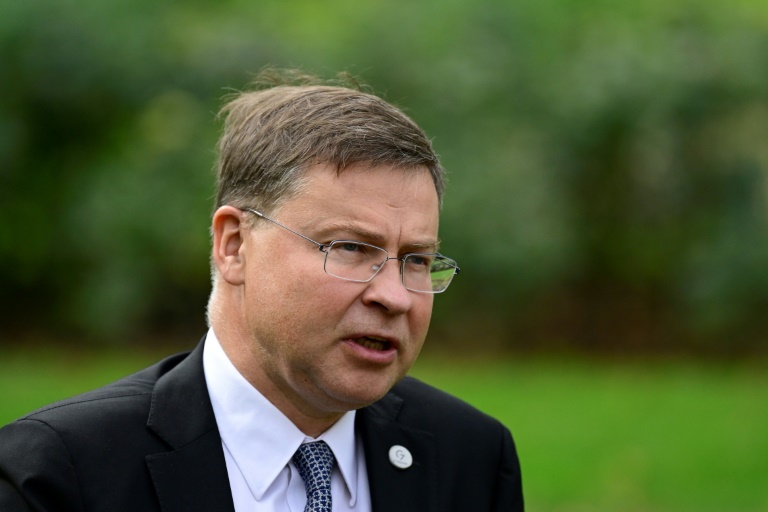
The European Union hopes to strike a free-trade agreement with Indonesia within two years despite disputes with Southeast Asia’s largest economy over palm oil and nickel, the bloc’s trade commissioner said Tuesday.

“We think it is feasible by mid-2024” to conclude a comprehensive economic partnership agreement, Valdis Dombrovskis told reporters in the Indonesian capital Jakarta. 

“We see there is some renewed momentum and we hope to build on that.”

The two sides opened bilateral negotiations on a trade deal in 2016 but progress has been stalled over EU restrictions on the use of palm oil-based biofuels and an Indonesian embargo on nickel exports.

Dombrovskis said the disputes needed to be resolved through negotiation and the World Trade Organization.

Indonesia and Malaysia have filed appeals at the WTO over the biofuels dispute.

As part of its “Red II” directive, the EU has decided that biofuels based on palm oil will not count towards its targets for the use of renewable energy by 2030 and it is looking to phase out their use.

The EU has filed its own WTO challenge against Indonesia over a temporary embargo imposed by Jakarta on exports of raw materials used in stainless steel, including nickel.

The trade commissioner is in Indonesia for a G20 ministerial meeting. He is also due to brief Indonesian officials on a proposed European law aimed at banning imports to the EU that contribute to deforestation.

The law’s text, which is not yet final, will affect several Indonesian sectors, including wood, palm oil and rubber.

“Of course there are questions being raised by the Indonesian side, so we’re going to explain how it will work and reassure the Indonesian side that it’s an environmental measure and not a measure to hinder access to the EU market,” Dombrovskis said.

Trade in goods between the EU and Indonesia amounted to $24.7 billion last year.

Close Bitnami banner
Bitnami