World

Israeli researchers find opium residue in 3,500-year-old pottery

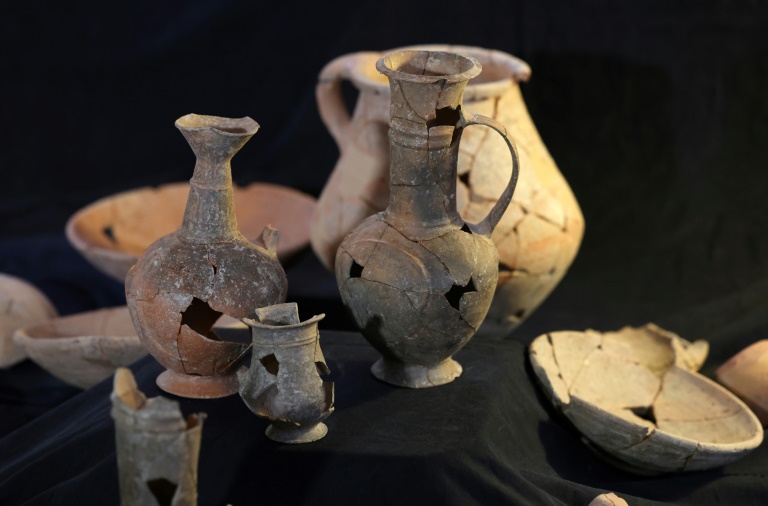
Israeli archaeologists said Tuesday they had discovered opium residue in 3,500-year-old pottery pieces, providing evidence to support the theory that the hallucinogenic drug was used in ancient burial rituals.

The joint investigation by the Israel Antiquities Authority and Weizmann Institute of Science began in 2012 when excavations in the central Israeli town of Yehud revealed a series of Late Bronze Age graves.

Researchers found pottery vessels at the site that resembled poppy flowers — from which opium is derived — dating back to the 14th century BC.

They then examined whether they had served as containers for the drug, which earlier writing had suggested was used in burial rituals in Canaan, and found “opium residue in eight vessels”, the researchers said in a statement.

These were likely “placed in graves for ceremonial meals, rites and rituals performed by the living for their deceased family members”, said Ron Be’eri, an archaeologist with the antiquities authority.

During these ceremonies, “family members or a priest on their behalf” would “attempt to summon the spirit of their dead relatives… and enter an ecstatic state by using opium”, Be’eri said.

But he acknowledged that much remained unknown about its use in ancient times. “We can only speculate what was done with opium,” he said.

McDonald's re-opens in war-torn Ukraine, only delivers for now

McDonald’s in Kyiv re-opened on Tuesday for the first time since Russia’s invasion, a sign that life was returning to normal in the capital after nearly seven months of war.

The US burger chain said in a statement earlier that “after talks with Ukrainian officials, security specialists and suppliers” it would re-open at first for delivery only.

A queue of delivery company employees formed outside one of restaurants waiting to collect orders on Tuesday.

“I think there will be a lot of excitement,” one of the delivery men told AFP while sitting on his motorbike. 

“I’m not going to rest today,” added Maksym Khadap, 19, yellow thermal backpack on his shoulders.

A customer said that he came to pick up his order from a deliveryman right outside the restaurant. 

“I made it to please my girlfriend, she is now at work, and I will bring it to her,” 24-year-old Oleksandr Khodarkovskyi told AFP with a smile on his face.

“She likes McDonald’s a lot, I’m giving her a surprise,” he said.

McDonald’s suspended operations in Ukraine on February 24 after Russia invaded.

“In October, these three restaurants will fully re-open along with McDrive and express windows,” the company said in its statement on Monday.

“As part of the phased reopening program, seven more stores in Kyiv will open, followed by additional restaurants in the capital and other cities in the west of the country,” it added.

With the chain shuttered in Russia, the highly anticipated relaunch was seen by many Ukrainians as a symbolic show of support.

McDonald’s earlier this year sold its Russian restaurants to businessman Alexander Govor after announcing a complete exit from the country.

It said continuing to work in Russia was “no longer tenable, nor is it consistent with McDonald’s values”.

video-dg/pmu/lth

Palestinian Authority arrest raid sparks deadly West Bank clashes

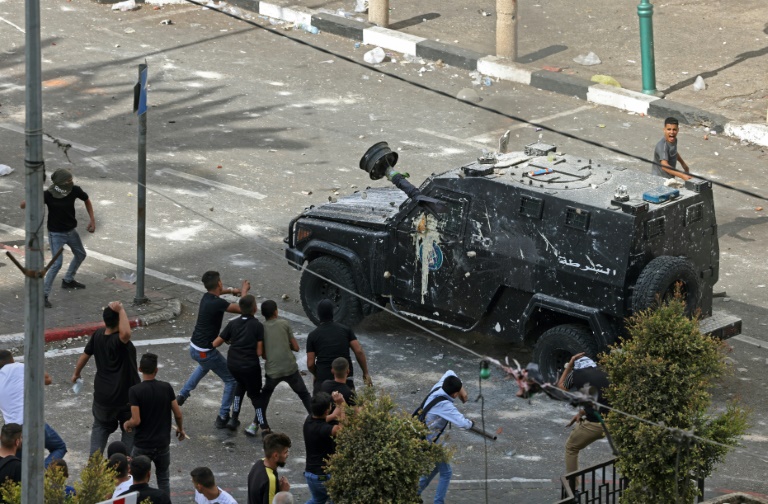
A rare operation by the Palestinian Authority security forces to arrest a Hamas member sparked clashes in the West Bank city of Nablus on Tuesday, killing one.  

A statement from the security forces confirmed the death of bystander Firas Yaish and said they were “waiting for a medical report,” on the circumstances of his killing. 

He was killed “in a place where no security personnel were present,” forces spokesman Talal Dweikat said in a statement. 

Unrest persisted through the morning, with hundreds of youths hurling rocks at PA armoured vehicles and the sound of gunfire ringing out across the city centre, AFP correspondents reported. 

Ahmed, 26, a protester who declined to give his family name citing personal security concerns, told AFP the protesters’ anger was fuelled by “security coordination between the PA and the occupation (Israel).”

“Go away Abu Mazen,” he said, referring to Palestinian president Mahmud Abbas.

“You are not the Palestinians but only one man — and a man who wants to fill his pocket with money,” he said.

Hamas, historic rivals of the Abbas’s secular Fatah movement that controls the PA, condemned the arrest of 30-year-old Musaab Shtayyeh, calling it a “kidnapping… a national crime” and a “stain” on the PA’s image. 

It demanded the immediate release of Shtayyeh and Ameed Tbaileh, who was arrested with him, and blasted the PA for keeping up security coordination with Israel. 

“The authority has positioned itself as an exclusive agent of the occupation (Israel) in the face of our Palestinian people,” the statement said.

While Abbas’s forces maintain security ties with Israel, which has occupied the West Bank since 1967, PA raids targeting Hamas members are not common. 

Fatah and Hamas have made various reconciliation attempts in recent years but relations remain tense. Hamas has controlled Gaza since 2007, when it ousted PA forces from the coastal enclave in deadly street battles. 

– ‘Maintain order’ –

The northern West Bank has suffered near daily violence in recent months. 

Israel has conducted dozens of night-time raids in the area, particularly in Jenin, pursuing wanted individuals. 

Dozens of Palestinians, including fighters, have been killed in the raids that began after a series of deadly attacks against Israeli targets in March.  

Israel has put mounting pressure on the PA to crack down on alleged militants in the West Bank. 

Last week, after two Palestinians and an Israeli soldier were killed in clashes near Jenin, Israeli Prime Minister Yair Lapid said he would “not hesitate to act in any place that the Palestinian Authority does not maintain order”.

Earlier this month, Israeli armed forces chief Lieutenant General Aviv Kohavi said the “helplessness of the Palestinian Authority security forces” was providing fertile ground for the armed groups.

The Ebola virus: profile of a dreaded killer

The highly contagious Ebola virus has claimed more than 15,000 lives since it was first identified in central Africa in 1976.

On Tuesday, Uganda announced its first Ebola fatality since 2019 in an outbreak in the central district of Mubende.

Here is a factfile on one of the world’s most deadliest diseases:

– Origins –

Ebola is a viral haemorrhagic fever that was first discovered in the Democratic Republic of Congo (DR Congo).

Five of the virus species are known to cause disease in humans — Zaire, Sudan, Bundibugyo, Reston and Tai Forest.

The first three have resulted in serious outbreaks in Africa.

The 24-year-old man whose death was announced Tuesday in Uganda tested positive for the Sudan strain.

– Transmission –

The virus’ natural reservoir animal is suspected to be a species of fruit bat, which does not itself fall ill but can pass the disease on to primates, including humans. Humans become exposed to the virus if they kill or butcher infected bats for food. 

Among humans, the virus is passed on by contact with the blood, body fluids, secretions or organs of an infected or recently deceased person. 

Those infected do not become contagious until symptoms appear. They become more and more contagious until just after their death, which poses great risks during funerals.

Death rates are high, at around 50 percent on average of those infected, and up to 90 percent for some epidemics, World Health Organization (WHO) data show.

– Symptoms –

Following an incubation period of between two and 21 days, Ebola develops into a high fever, weakness, intense muscle and joint pain, headaches and a sore throat.

The initial symptoms are often followed by vomiting and diarrhoea, skin eruptions, kidney and liver failure, and sometimes internal and external bleeding.

– Vaccines and treatment –

Merck’s Ervebo vaccine, the first Ebola jab approved by the US Food and Drug Administration (FDA) in December 2019, has been shown to be highly effective in protecting people from the Zaire strain.

US group Johnson & Johnson has also reported promising results against the Zaire strain of its two-dose Zabdeno vaccine, which has been authorised for use in the European Union.

In terms of treatment, the WHO in August recommended two life-saving medicines, Inmazeb and Ebanga, which were successfully trialled during Ebola outbreaks. 

– Worst outbreaks –

The worst-ever outbreak began in December 2013 in southern Guinea before spreading to two neighbouring West African countries, Liberia and Sierra Leone. 

More than 11,300 people were killed, according to WHO estimates. 

The second-deadliest took place between 2018 and 2020 in DR Congo’s conflict-plagued North Kivu province and killed 2,299 people according to the WHO. 

DR Congo has experienced 14 Ebola outbreaks since the 1970s.

The first person infected outside Africa was a Spanish nurse who caught the disease in 2014 after cleaning the hospital room of a Spanish missionary who was repatriated from West Africa with the virus. The missionary died but the nurse survived. 

Missing Madeleine's parents lose case against Portuguese inspector

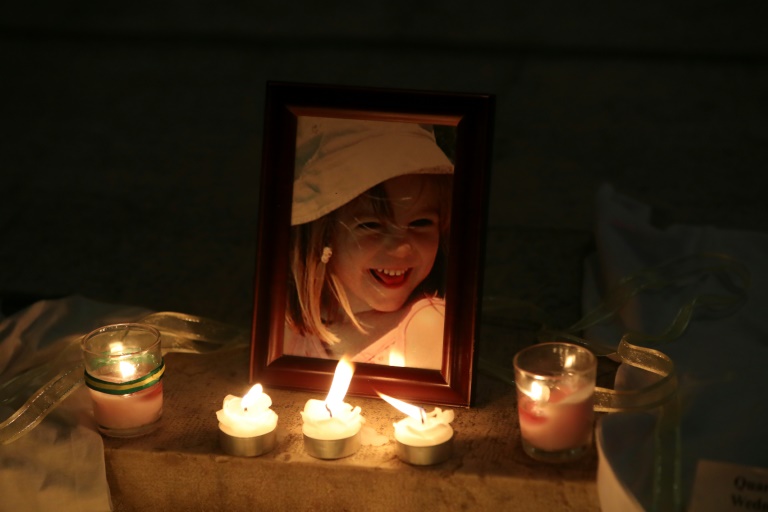
The parents of Madeleine McCann, a three-year-old British girl who disappeared while on a family holiday in 2007, have lost their privacy case at Europe’s top rights court against a Portuguese police inspector.

Her disappearance sparked a Europe-wide search and several police investigations, which led last year to a convicted sex offender in Germany.

Police initially suspected that the child, known as Maddie, might have died accidentally and that her parents, Gerry McCann and Kate Healy, hid the body and staged an abduction. 

In 2008, those claims were reiterated in a book by the Portuguese police inspector who initially led the case, Goncalo Amaral, prompting the parents to sue for libel.

They won their case but it was later struck down by Portugal’s supreme court, so the parents filed a case with the European Court of Human Rights in Strasbourg, eastern France.

The couple — both medical doctors — said that Amaral’s accusations had damaged their reputation and violated their right to private and family life, and that the supreme court’s acquittal had violated their right to presumption of innocence.

But in its ruling handed down on Tuesday, the ECHR said Amaral’s claims had already been made in official police reports, to which the media had been given access.

It also noted that Maddie’s parents had been placed under investigation before being cleared and that the book was published only after prosecutors closed the case.

“Even assuming that the applicants’ reputation had been damaged, this was not on account of the argument put forward by the book’s author but rather as a result of the suspicions expressed against them,” the court said.

It added that with regards to Amaral’s acquittal, “it did not appear that… the supreme court had made comments implying any guilt on the part of the applicants or even suggesting suspicions against them”.

– Disappointed –

Kate and Gerry McCann said in response that they were “naturally disappointed” with the court’s decision.

But they said on their website findmadeleine.com that “much has changed” in the 13 years since they started legal action against Amaral.

“We took action for one and only one reason: Mr Amaral’s unfounded claims were having a detrimental impact on the search for Madeleine,” they wrote.

“If the public believed that we were involved in her disappearance, then people would not be alert for possible clues and may not report relevant information to the relevant law enforcement agencies.”

They added: “The focus is now rightly on the search for Madeleine and her abductor(s). We are grateful for the ongoing work by the British, German and Portuguese police.”

After the case went cold for years, German police announced in June 2021 that they had a new prime suspect, a child sex offender who is currently in prison.

In May, prosecutors said they had discovered “new evidence” against the suspect identified as “Christian B.” 

He is serving a seven-year sentence in Germany for the 2005 rape of a 72-year-old American tourist in Praia da Luz — the same seaside resort from where Maddie vanished.

But so far, no charges have been brought against Christian B. in connection with Maddie’s disappearance.

Movies back in Indian Kashmir, decades after cinema closures

Silver screens lit up in Indian-administered Kashmir for the first time in a generation at the opening of a new cinema on Tuesday, decades after an armed rebellion shuttered local movie halls.

India has been fortifying its control over the strife-torn Muslim-majority region after a grinding conflict between security forces and insurgents fighting for independence or a merger with neighbouring Pakistan.

Most cinemas were shut down by rebel groups in 1989, the year of a huge uprising against Indian rule, with the insurgents saying their Bollywood blockbuster screenings were avenues for cultural imperialism.

The theatres were later mostly occupied by security forces, who used them as detention and interrogation centres, with some still used by soldiers as staging posts. 

Periodic attempts to revive cinema halls in Kashmir in the 1990s and later failed, with a heavy security presence deterring ordinary patrons.

Authorities have feted the new multiplex as the consequence of an improved security situation since New Delhi took steps to bolster its control of the territory.

Its opening was a symbol of a government commitment to “establishing peace” in the region, said Lieutenant Governor Manoj Sinha, India’s top administrator in Kashmir. 

“We are bringing back a lost era,” he said at a ceremony and screening marking the movie house’s opening in the city of Srinagar. It was attended mostly by government and security officials. 

“The opening of this cinema reflects the changing picture of Kashmir.”

The new multiplex opens to the public next week and Sinha’s administration has pledged to support the opening of 10 more cinemas around the region.

At least half a million Indian troops are permanently stationed in Kashmir, which is also claimed and partly controlled by Pakistan.

India regularly blames Pakistan for backing the long-running rebellion against its rule, an allegation Islamabad denies.

Prime Minister Narendra Modi’s Hindu nationalist government has tightened its chokehold on Indian-administered Kashmir since 2019, when it revoked the limited autonomy constitutionally guaranteed to the region.

Thousands of people were taken into preventive detention to forestall expected protests against the sudden decision, while authorities severed communications links in what became the world’s longest-ever internet shutdown. 

Clashes between militants and Indian troops are still a regular occurrence and protests and civic life have been severely curbed.

Foreign journalists are barred from the territory while local reporters are regularly harassed by police and security forces for their coverage.

Movies back in Indian Kashmir, decades after cinema closures

Silver screens lit up in Indian-administered Kashmir for the first time in a generation at the opening of a new cinema on Tuesday, decades after an armed rebellion shuttered local movie halls.

India has been fortifying its control over the strife-torn Muslim-majority region after a grinding conflict between security forces and insurgents fighting for independence or a merger with neighbouring Pakistan.

Most cinemas were shut down by rebel groups in 1989, the year of a huge uprising against Indian rule, with the insurgents saying their Bollywood blockbuster screenings were avenues for cultural imperialism.

The theatres were later mostly occupied by security forces, who used them as detention and interrogation centres, with some still used by soldiers as staging posts. 

Periodic attempts to revive cinema halls in Kashmir in the 1990s and later failed, with a heavy security presence deterring ordinary patrons.

Authorities have feted the new multiplex as the consequence of an improved security situation since New Delhi took steps to bolster its control of the territory.

Its opening was a symbol of a government commitment to “establishing peace” in the region, said Lieutenant Governor Manoj Sinha, India’s top administrator in Kashmir. 

“We are bringing back a lost era,” he said at a ceremony and screening marking the movie house’s opening in the city of Srinagar. It was attended mostly by government and security officials. 

“The opening of this cinema reflects the changing picture of Kashmir.”

The new multiplex opens to the public next week and Sinha’s administration has pledged to support the opening of 10 more cinemas around the region.

At least half a million Indian troops are permanently stationed in Kashmir, which is also claimed and partly controlled by Pakistan.

India regularly blames Pakistan for backing the long-running rebellion against its rule, an allegation Islamabad denies.

Prime Minister Narendra Modi’s Hindu nationalist government has tightened its chokehold on Indian-administered Kashmir since 2019, when it revoked the limited autonomy constitutionally guaranteed to the region.

Thousands of people were taken into preventive detention to forestall expected protests against the sudden decision, while authorities severed communications links in what became the world’s longest-ever internet shutdown. 

Clashes between militants and Indian troops are still a regular occurrence and protests and civic life have been severely curbed.

Foreign journalists are barred from the territory while local reporters are regularly harassed by police and security forces for their coverage.

Europe equities drop on jumbo Swedish rate hike

European stocks retreated Tuesday as Sweden’s jumbo interest rate hike, aimed at tackling inflation, stoked expectations of more increases this week from the US Federal Reserve and the Bank of England.

The Swedish central bank sprang the biggest rise in three decades, ramping up its rate by a full percentage point to 1.75 percent.

The news sent the region’s markets into reverse as tighter global borrowing costs bear down on economic activity.

Frankfurt and Paris equities also dropped about one percent as news of rocketing German producer prices further fanned inflation fears.

London fell after reopening following funeral of Queen Elizabeth II on Monday.

The euro dipped against main rivals after Monday’s surge, while oil price gains were capped by the stronger dollar.

– ‘Nerves jangling again’ –

“European stocks rallied at the open — but a jumbo rate hike from Sweden’s central bank sent the nerves jangling again as investors worry about what’s in store from global central banks,” Markets.com analyst Neil Wilson told AFP.

The US Federal Reserve is forecast Wednesday to hike its key interest rate by another 0.75 percentage points.

One day later, the Bank of England (BoE) is predicted to deliver another sizeable increase in British borrowing costs.

“The (Swedish) hike underlined just how serious central banks are taking the inflation threat and with 75 basis point hikes from the Bank of England and Federal Reserve looking like slam-dunk certainties, the early optimism in the markets quickly evaporated,” added Wilson

“The reality of central bank tightening… is keeping a lid on stocks and will continue to act as a headwind for risk.”

Asian markets meanwhile enjoyed a much-needed bounce Tuesday, tracking Wall Street’s late rally as investors gird themselves for another big Fed hike, though fears of a recession remain elevated.

The Fed’s decision is the main markets focus after figures last week showed consumer prices are still rising at a pace not seen since the early 1980s.

Some observers have even speculated over a possible one-percentage-point move.

Elsewhere on Tuesday, the British pound remained under pressure, even as the BoE lines up another rate hike, after sliding on Friday to a 1985 low at $1.1351.

– Key figures at around 1100 GMT –

London – FTSE 100: DOWN 0.3 percent at 7,218.59 points

Frankfurt – DAX: DOWN 0.9 percent at 12,694.32

Paris – CAC 40: DOWN 1.0 percent at 6,002.38

EURO STOXX 50: DOWN 0.8 percent at 3,472.62

Tokyo – Nikkei 225: UP 0.4 percent at 27,688.42 (close)

Hong Kong – Hang Seng Index: UP 1.2 percent at 18,781.42 (close)

Shanghai – Composite: UP 0.2 percent at 3,122.41 (close)

New York – Dow: DOWN 0.2 percent at 30,765.98

Euro/dollar: DOWN at $1.0007 from $1.0024 on Monday

Dollar/yen: UP at 143.65 yen from 143.21 yen

Pound/dollar: UP at $1.1435 from $1.1431

Euro/pound: DOWN at 87.51 pence from 87.70 pence 

Brent North Sea crude: UP 0.6 percent at $92.58 per barrel

West Texas Intermediate: UP 0.5 percent at $86.19 per barrel

burs-rfj/bcp/rl

Eleven schoolchildren killed in Myanmar air strike: UNICEF

At least 11 schoolchildren died in an air strike and firing on a Myanmar village, the United Nations children’s agency said, an attack the country’s junta said targeted rebels hiding in the area.

Myanmar has been in chaos since the military seized power in a coup in February last year, with nearly 2,300 civilians killed in a crackdown on dissent according to a local monitoring group.

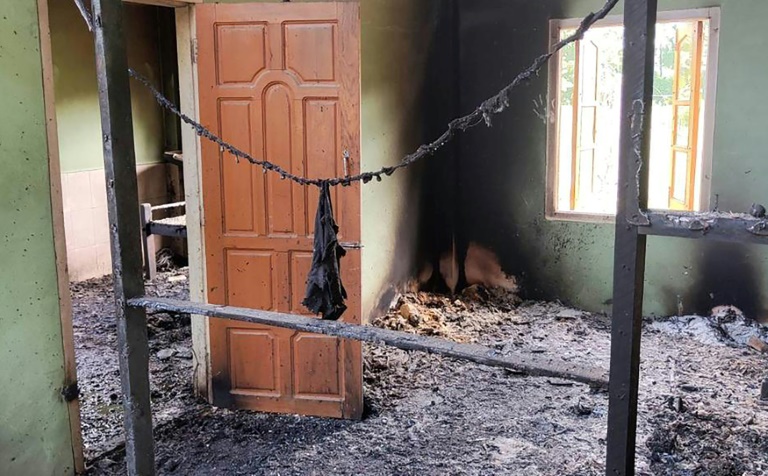
The Sagaing region in the country’s northwest has seen some of the fiercest fighting, and clashes between anti-coup fighters and the military have seen entire villages burned down.

The UN children’s agency UNICEF condemned Friday’s violence in Depeyin township in Sagaing.

“On 16 September, at least 11 children died in an air strike and indiscriminate fire in civilian areas,” UNICEF said in a statement issued Monday.

It said schools must be safe and never targeted.

“At least 15 children from the same school are still missing,” UNICEF said, calling for their immediate safe release.

Video footage obtained from a local community group shows a classroom with blood on the floor, damage to the roof and a mother crying over her son’s dead body.

– ‘They just attacked’ –

The junta said they had sent troops in helicopters to Let Yet Kone village after receiving a tip-off that fighters from the Kachin Independence Army (KIA) — an ethnic rebel group — and from a local anti-coup militia were moving weapons in the area.

The military accused the rebel fighters of using civilians as human shields, and said it had seized mines and explosives from the village.

“Security members gave necessary medical treatment and arranged to send patients to a nearby hospital,” the military said in a statement.

Junta spokesman Zaw Min Tun on Tuesday accused the KIA of taking villagers to a monastery and then firing on troops from there. 

A villager contacted by AFP rejected the military’s suggestions there were fighters in the area.

“They just attacked the school. They say someone attacked them, then they fought back but this is not true,” said the villager, who spoke on condition of anonymity for their own safety.

The villager said the military had taken away some of the bodies and detained a number of people, including children and teachers.

Save the Children Asia Regional Director Hassan Noor expressed condolences to the families and said schools should be off-limits and the safety of students protected.

“How many more incidents like this need to take place before action is taken?” Noor said, urging the UN Security Council and Association of South East Asian Nations (ASEAN) to take swift action.

ASEAN has led so far fruitless diplomatic efforts to resolve the crisis in Myanmar and its leaders will meet in Phnom Penh in November to discuss limited progress on a peace plan.

Hong Kong arrests harmonica player for sedition at queen vigil

A Hong Konger who played a harmonica to a crowd outside the British consulate during Elizabeth II’s funeral was arrested for sedition, police and local media said Tuesday.

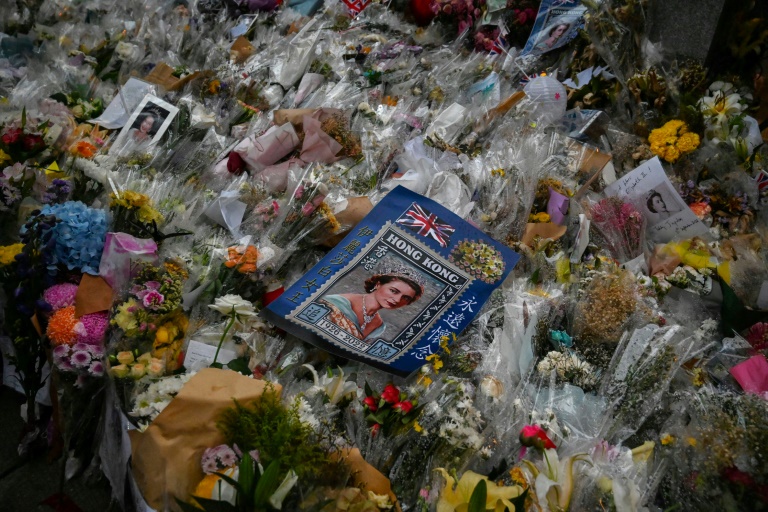
Crowds of Hong Kongers have queued to pay tribute to Britain’s late monarch this week, some expressing nostalgia for the city’s colonial past at a time when Beijing is seeking to purge dissent.

Hundreds gathered outside the consulate on Monday evening as Britain was holding a state funeral, sharing livestreams on phones as well as laying candles and flowers.

At one point, a man started to play songs on a harmonica, according to an AFP reporter on the scene, including the British national anthem and “Glory To Hong Kong”, a popular song during huge, sometimes violent pro-democracy protests three years ago.

The mourners outside the consulate applauded the performance and shone their phone lights, with many later shouting the protest chant “Hong Kongers add oil” and singing “Glory To Hong Kong”.

Local reporters later photographed the harmonica player being questioned by police and detained.

On Tuesday, police said a 43-year-old man surnamed Pang was arrested outside the consulate for “seditious acts”.

A police source confirmed to AFP that the man arrested was the harmonica player.

After 2019’s democracy protests, China has cracked down on dissent in Hong Kong using national security legislation and charges of sedition.

The latter is a colonial-era law that had fallen into obscurity for decades until prosecutors dusted it off in the aftermath of the protests.

The song “Glory to Hong Kong” contains the popular protest chant “liberate Hong Kong, revolution of our times” which has been declared by the courts to be a threat to national security.

A man in his 60s was charged earlier this year for performing without a license after playing the song on his er-hu, a Chinese two-stringed instrument, at a bus terminus.

Oliver Ma, a Filipino-Hong Kong busker, was arrested three times in 2020 and 2021 when singing the English version of the protest song on Hong Kong streets.  

Hong Kong was a British colony for over 150 years and while the financial hub was returned to China in 1997, the past is engraved into its landscape, from street names and the ubiquity of English to the common law legal system.

In the week since Elizabeth II’s death more than 13,000 people signed a condolence book in the city’s British consulate. 

Close Bitnami banner
Bitnami