World

SpaceX wants to bring satellite internet to Iran: Musk

SpaceX will apply for an exemption from US sanctions against Iran in a bid to offer its satellite internet service to the country, owner Elon Musk said on Monday.

“Starlink will apply for an exemption from sanctions against Iran,” Musk said in response to a tweet from a science reporter.

Musk had initially announced that the Starlink satellite internet service had been made available on every continent — “including Antarctica” — with the company planning to launch up to 42,000 satellites to boost connectivity.

Iranian-born science journalist Erfan Kasraie had said on Twitter that bringing the service to Iran could be a “real game changer for the future” of the country, which elicited Musk’s response. 

Launched at the end of 2020, Starlink offers high-speed broadband service to customers in areas poorly served by fixed and mobile terrestrial networks through a constellation of satellites in low earth orbit. 

The service received notoriety after supplying antennas and modems to the Ukrainian military to improve its communications capabilities in its war with Russia. 

Starlink is monetized through the purchase of antennas, modems and subscriptions with rates that vary by country. 

Nearly 3,000 Starlink satellites have been deployed since 2019 and SpaceX is conducting about one launch a week, using its own Falcon 9 rockets to speed up its deployment.

Iran has been under a tightened US sanctions regime since former president Donald Trump terminated a 2015 agreement over its nuclear activities. 

While current President Joe Biden supports a renegotiation of the deal, Iranian insistence on long-term guarantees from Washington has stalled discussions. 

New rounds of sanctions were imposed on Iran this month after a Tehran-based company helped ship drones to Russia, and in response to a massive cyberattack targeting Albania in July allegedly carried out by Iran’s intelligence ministry.

SpaceX wants to bring satellite internet to Iran: Musk

SpaceX will apply for an exemption from US sanctions against Iran in a bid to offer its satellite internet service to the country, owner Elon Musk said on Monday.

“Starlink will apply for an exemption from sanctions against Iran,” Musk said in response to a tweet from a science reporter.

Musk had initially announced that the Starlink satellite internet service had been made available on every continent — “including Antarctica” — with the company planning to launch up to 42,000 satellites to boost connectivity.

Iranian-born science journalist Erfan Kasraie had said on Twitter that bringing the service to Iran could be a “real game changer for the future” of the country, which elicited Musk’s response. 

Launched at the end of 2020, Starlink offers high-speed broadband service to customers in areas poorly served by fixed and mobile terrestrial networks through a constellation of satellites in low earth orbit. 

The service received notoriety after supplying antennas and modems to the Ukrainian military to improve its communications capabilities in its war with Russia. 

Starlink is monetized through the purchase of antennas, modems and subscriptions with rates that vary by country. 

Nearly 3,000 Starlink satellites have been deployed since 2019 and SpaceX is conducting about one launch a week, using its own Falcon 9 rockets to speed up its deployment.

Iran has been under a tightened US sanctions regime since former president Donald Trump terminated a 2015 agreement over its nuclear activities. 

While current President Joe Biden supports a renegotiation of the deal, Iranian insistence on long-term guarantees from Washington has stalled discussions. 

New rounds of sanctions were imposed on Iran this month after a Tehran-based company helped ship drones to Russia, and in response to a massive cyberattack targeting Albania in July allegedly carried out by Iran’s intelligence ministry.

Twilight of the Tigris: Iraq's mighty river drying up

It was the river that is said to have watered the biblical Garden of Eden and helped give birth to civilisation itself.

But today the Tigris is dying.

Human activity and climate change have choked its once mighty flow through Iraq, where — with its twin river the Euphrates — it made Mesopotamia a cradle of civilisation thousands of years ago.

Iraq may be oil-rich but the country is plagued by poverty after decades of war and by droughts and desertification.

Battered by one natural disaster after another, it is one of the five countries most exposed to climate change, according to the UN.

From April on, temperatures exceed 35 degrees Celsius (95 degrees Fahrenheit) and intense sandstorms often turn the sky orange, covering the country in a film of dust.

Hellish summers see the mercury top a blistering 50 degrees Celsius — near the limit of human endurance — with frequent power cuts shutting down air-conditioning for millions.

The Tigris, the lifeline connecting the storied cities of Mosul, Baghdad and Basra, has been choked by dams, most of them upstream in Turkey, and falling rainfall. 

An AFP video journalist travelled along the river’s 1,500-kilometre (900-mile) course through Iraq, from the rugged Kurdish north to the Gulf in the south, to document the ecological disaster that is forcing people to change their ancient way of life.  

– Kurdish north: ‘Less water every day’ –

The Tigris’ journey through Iraq begins in the mountains of autonomous Kurdistan, near the borders of Turkey and Syria, where local people raise sheep and grow potatoes.

“Our life depends on the Tigris,” said farmer Pibo Hassan Dolmassa, 41, wearing a dusty coat, in the town of Faysh Khabur. “All our work, our agriculture, depends on it.  

“Before, the water was pouring in torrents,” he said, but over the last two or three years “there is less water every day”.

Iraq’s government and Kurdish farmers accuse Turkey, where the Tigris has its source, of withholding water in its dams, dramatically reducing the flow into Iraq.

According to Iraqi official statistics, the level of the Tigris entering Iraq has dropped to just 35 percent of its average over the past century.  

Baghdad regularly asks Ankara to release more water. 

But Turkey’s ambassador to Iraq, Ali Riza Guney, urged Iraq to “use the available water more efficiently”, tweeting in July that “water is largely wasted in Iraq”.

He may have a point, say experts. Iraqi farmers tend to flood their fields, as they have done since ancient Sumerian times, rather than irrigate them, resulting in huge water losses.

– Central plains: ‘We sold everything’ –

All that is left of the River Diyala, a tributary that meets the Tigris near the capital Baghdad in the central plains, are puddles of stagnant water dotting its parched bed.

Drought has dried up the watercourse that is crucial to the region’s agriculture.  

This year authorities have been forced to reduce Iraq’s cultivated areas by half, meaning no crops will be grown in the badly-hit Diyala Governorate. 

“We will be forced to give up farming and sell our animals,” said Abu Mehdi, 42, who wears a white djellaba robe.  

“We were displaced by the war” against Iran in the 1980s, he said, “and now we are going to be displaced because of water. Without water, we can’t live in these areas at all.”

The farmer went into debt to dig a 30-metre (100-foot) well to try to get water. “We sold everything,” Abu Mehdi said, but “it was a failure”. 

The World Bank warned last year that much of Iraq is likely to face a similar fate. 

“By 2050 a temperature increase of one degree Celsius and a precipitation decrease of 10 percent would cause a 20 percent reduction of available freshwater,” it said. 

“Under these circumstances, nearly one third of the irrigated land in Iraq will have no water.”

Water scarcity hitting farming and food security are already among the “main drivers of rural-to-urban migration” in Iraq, the UN and several non-government groups said in June.

And the International Organization for Migration said last month that “climate factors” had displaced more than 3,300 families in Iraq’s central and southern areas in the first three months of this year.

“Climate migration is already a reality in Iraq,” the IOM said.

– Baghdad: sandbanks and pollution –

This summer in Baghdad, the level of the Tigris dropped so low that people played volleyball in the middle of the river, splashing barely waist-deep through its waters.

Iraq’s Ministry of Water Resources blame silt because of the river’s reduced flow, with sand and soil once washed downstream now settling to form sandbanks.

Until recently the Baghdad authorities used heavy machinery to dredge the silt, but with cash tight, work has slowed.

Years of war have destroyed much of Iraq’s water infrastructure, with many cities, factories, farms and even hospitals left to dump their waste straight into the river.

As sewage and rubbish from Greater Baghdad pour into the shrinking Tigris, the pollution creates a concentrated toxic soup that threatens marine life and human health.

Environmental policies have not been a high priority for Iraqi governments struggling with political, security and economic crises.

Ecological awareness also remains low among the general public, said activist Hajer Hadi of the Green Climate group, even if “every Iraqi feels climate change through rising temperatures, lower rainfall, falling water levels and dust storms,” she said.

– South: salt water, dead palms –

“You see these palm trees? They are thirsty,” said Molla al-Rached, a 65-year-old farmer, pointing to the brown skeletons of what was once a verdant palm grove.

“They need water! Should I try to irrigate them with a glass of water?” he asked bitterly. “Or with a bottle?” 

“There is no fresh water, there is no more life,” said the farmer, a beige keffiyeh scarf wrapped around his head.

He lives at Ras al-Bisha where the confluence of the Tigris and Euphrates river, the Shatt al-Arab, empties into the Gulf, near the borders with Iran and Kuwait.

In nearby Basra — once dubbed the Venice of the Middle East — many of the depleted waterways are choked with rubbish.

To the north, much of the once famed Mesopotamian Marshes — the vast wetland home to the “Marsh Arabs” and their unique culture — have been reduced to desert since Saddam Hussein drained them in the 1980s to punish its population.

But another threat is impacting the Shatt al-Arab: salt water from the Gulf is pushing ever further upstream as the river flow declines.

The UN and local farmers say rising salination is already hitting farm yields, in a trend set to worsen as global warming raises sea levels.

Al-Rached said he has to buy water from tankers for his livestock, and wildlife is now encroaching into settled areas in search of water.

“My government doesn’t provide me with water,” he said. “I want water, I want to live. I want to plant, like my ancestors.”

– River delta: a fisherman’s plight – 

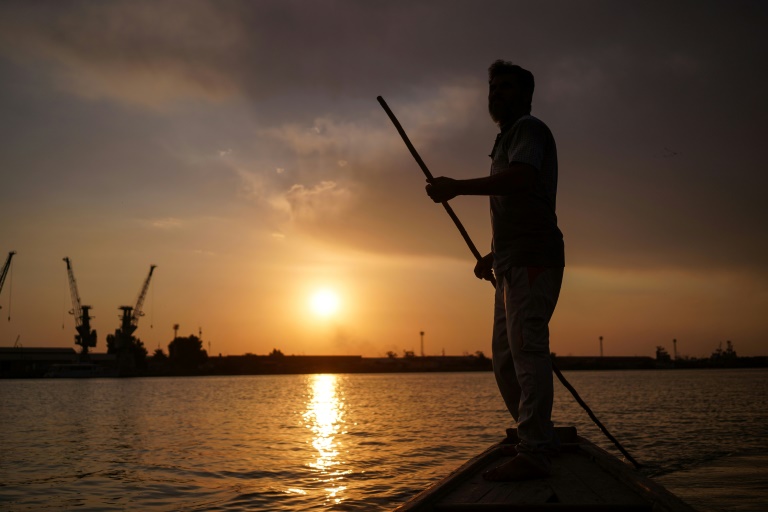
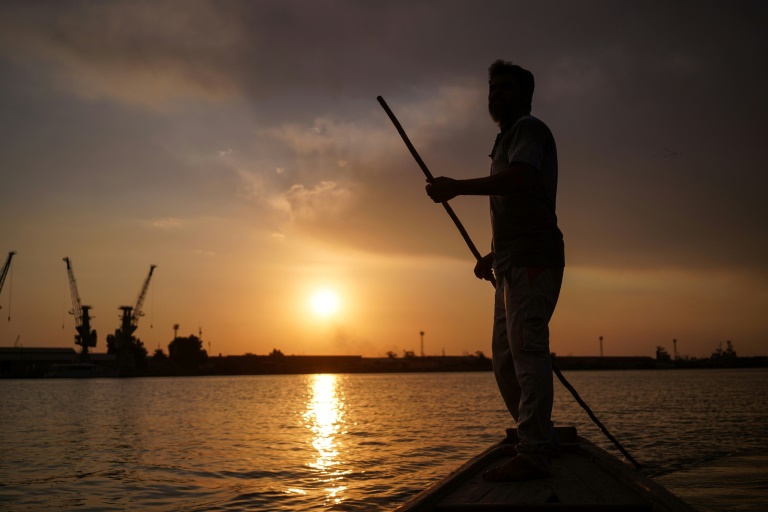
Standing barefoot in his boat like a Venetian gondolier, fisherman Naim Haddad steers it home as the sun sets on the waters of the Shatt al-Arab. 

“From father to son, we have dedicated our lives to fishing,” said the 40-year-old holding up the day’s catch.

In a country where grilled carp is the national dish, the father-of-eight is proud that he receives “no government salary, no allowances”.

But salination is taking its toll as it pushes out the most prized freshwater species which are replaced by ocean fish.

“In the summer, we have salt water,” said Haddad. “The sea water rises and comes here.”

Last month local authorities reported that salt levels in the river north of Basra reached 6,800 parts per million — nearly seven times that of fresh water.

Haddad can’t switch to fishing at sea because his small boat is unsuitable for the choppier Gulf waters, where he would also risk run-ins with the Iranian and Kuwaiti coastguards.

And so the fisherman is left at the mercy of Iraq’s shrinking rivers, his fate tied to theirs. 

“If the water goes,” he said, “the fishing goes. And so does our livelihood.”

Twilight of the Tigris: Iraq's mighty river drying up

It was the river that is said to have watered the biblical Garden of Eden and helped give birth to civilisation itself.

But today the Tigris is dying.

Human activity and climate change have choked its once mighty flow through Iraq, where — with its twin river the Euphrates — it made Mesopotamia a cradle of civilisation thousands of years ago.

Iraq may be oil-rich but the country is plagued by poverty after decades of war and by droughts and desertification.

Battered by one natural disaster after another, it is one of the five countries most exposed to climate change, according to the UN.

From April on, temperatures exceed 35 degrees Celsius (95 degrees Fahrenheit) and intense sandstorms often turn the sky orange, covering the country in a film of dust.

Hellish summers see the mercury top a blistering 50 degrees Celsius — near the limit of human endurance — with frequent power cuts shutting down air-conditioning for millions.

The Tigris, the lifeline connecting the storied cities of Mosul, Baghdad and Basra, has been choked by dams, most of them upstream in Turkey, and falling rainfall. 

An AFP video journalist travelled along the river’s 1,500-kilometre (900-mile) course through Iraq, from the rugged Kurdish north to the Gulf in the south, to document the ecological disaster that is forcing people to change their ancient way of life.  

– Kurdish north: ‘Less water every day’ –

The Tigris’ journey through Iraq begins in the mountains of autonomous Kurdistan, near the borders of Turkey and Syria, where local people raise sheep and grow potatoes.

“Our life depends on the Tigris,” said farmer Pibo Hassan Dolmassa, 41, wearing a dusty coat, in the town of Faysh Khabur. “All our work, our agriculture, depends on it.  

“Before, the water was pouring in torrents,” he said, but over the last two or three years “there is less water every day”.

Iraq’s government and Kurdish farmers accuse Turkey, where the Tigris has its source, of withholding water in its dams, dramatically reducing the flow into Iraq.

According to Iraqi official statistics, the level of the Tigris entering Iraq has dropped to just 35 percent of its average over the past century.  

Baghdad regularly asks Ankara to release more water. 

But Turkey’s ambassador to Iraq, Ali Riza Guney, urged Iraq to “use the available water more efficiently”, tweeting in July that “water is largely wasted in Iraq”.

He may have a point, say experts. Iraqi farmers tend to flood their fields, as they have done since ancient Sumerian times, rather than irrigate them, resulting in huge water losses.

– Central plains: ‘We sold everything’ –

All that is left of the River Diyala, a tributary that meets the Tigris near the capital Baghdad in the central plains, are puddles of stagnant water dotting its parched bed.

Drought has dried up the watercourse that is crucial to the region’s agriculture.  

This year authorities have been forced to reduce Iraq’s cultivated areas by half, meaning no crops will be grown in the badly-hit Diyala Governorate. 

“We will be forced to give up farming and sell our animals,” said Abu Mehdi, 42, who wears a white djellaba robe.  

“We were displaced by the war” against Iran in the 1980s, he said, “and now we are going to be displaced because of water. Without water, we can’t live in these areas at all.”

The farmer went into debt to dig a 30-metre (100-foot) well to try to get water. “We sold everything,” Abu Mehdi said, but “it was a failure”. 

The World Bank warned last year that much of Iraq is likely to face a similar fate. 

“By 2050 a temperature increase of one degree Celsius and a precipitation decrease of 10 percent would cause a 20 percent reduction of available freshwater,” it said. 

“Under these circumstances, nearly one third of the irrigated land in Iraq will have no water.”

Water scarcity hitting farming and food security are already among the “main drivers of rural-to-urban migration” in Iraq, the UN and several non-government groups said in June.

And the International Organization for Migration said last month that “climate factors” had displaced more than 3,300 families in Iraq’s central and southern areas in the first three months of this year.

“Climate migration is already a reality in Iraq,” the IOM said.

– Baghdad: sandbanks and pollution –

This summer in Baghdad, the level of the Tigris dropped so low that people played volleyball in the middle of the river, splashing barely waist-deep through its waters.

Iraq’s Ministry of Water Resources blame silt because of the river’s reduced flow, with sand and soil once washed downstream now settling to form sandbanks.

Until recently the Baghdad authorities used heavy machinery to dredge the silt, but with cash tight, work has slowed.

Years of war have destroyed much of Iraq’s water infrastructure, with many cities, factories, farms and even hospitals left to dump their waste straight into the river.

As sewage and rubbish from Greater Baghdad pour into the shrinking Tigris, the pollution creates a concentrated toxic soup that threatens marine life and human health.

Environmental policies have not been a high priority for Iraqi governments struggling with political, security and economic crises.

Ecological awareness also remains low among the general public, said activist Hajer Hadi of the Green Climate group, even if “every Iraqi feels climate change through rising temperatures, lower rainfall, falling water levels and dust storms,” she said.

– South: salt water, dead palms –

“You see these palm trees? They are thirsty,” said Molla al-Rached, a 65-year-old farmer, pointing to the brown skeletons of what was once a verdant palm grove.

“They need water! Should I try to irrigate them with a glass of water?” he asked bitterly. “Or with a bottle?” 

“There is no fresh water, there is no more life,” said the farmer, a beige keffiyeh scarf wrapped around his head.

He lives at Ras al-Bisha where the confluence of the Tigris and Euphrates river, the Shatt al-Arab, empties into the Gulf, near the borders with Iran and Kuwait.

In nearby Basra — once dubbed the Venice of the Middle East — many of the depleted waterways are choked with rubbish.

To the north, much of the once famed Mesopotamian Marshes — the vast wetland home to the “Marsh Arabs” and their unique culture — have been reduced to desert since Saddam Hussein drained them in the 1980s to punish its population.

But another threat is impacting the Shatt al-Arab: salt water from the Gulf is pushing ever further upstream as the river flow declines.

The UN and local farmers say rising salination is already hitting farm yields, in a trend set to worsen as global warming raises sea levels.

Al-Rached said he has to buy water from tankers for his livestock, and wildlife is now encroaching into settled areas in search of water.

“My government doesn’t provide me with water,” he said. “I want water, I want to live. I want to plant, like my ancestors.”

– River delta: a fisherman’s plight – 

Standing barefoot in his boat like a Venetian gondolier, fisherman Naim Haddad steers it home as the sun sets on the waters of the Shatt al-Arab. 

“From father to son, we have dedicated our lives to fishing,” said the 40-year-old holding up the day’s catch.

In a country where grilled carp is the national dish, the father-of-eight is proud that he receives “no government salary, no allowances”.

But salination is taking its toll as it pushes out the most prized freshwater species which are replaced by ocean fish.

“In the summer, we have salt water,” said Haddad. “The sea water rises and comes here.”

Last month local authorities reported that salt levels in the river north of Basra reached 6,800 parts per million — nearly seven times that of fresh water.

Haddad can’t switch to fishing at sea because his small boat is unsuitable for the choppier Gulf waters, where he would also risk run-ins with the Iranian and Kuwaiti coastguards.

And so the fisherman is left at the mercy of Iraq’s shrinking rivers, his fate tied to theirs. 

“If the water goes,” he said, “the fishing goes. And so does our livelihood.”

Matteo and Giorgia: Italy's far-right rivals set for power

Matteo Salvini was once the poster boy of Italy’s far-right but the popularity of Giorgia Meloni has reduced him to a junior — and potentially disruptive — partner in their election coalition.

Final opinion polls last week put Meloni’s post-fascist Brothers of Italy at more than 24 percent ahead of Sunday’s election, around twice that of Salvini’s anti-immigration League.

Such a result on election day would allow her to claim the post of prime minister and decide the direction of their coalition, which also includes former premier Silvio Berlusconi’s more moderate right-wing Forza Italia.

It would be a disappointing turnout for Salvini, who was propelled to power after winning 17 percent of the vote in 2018 general elections, and securing a stunning 34 percent in the vote for the European Parliament the following year.

A key question will be whether the League leader can accept this diminished position or make trouble on issues — notably the Ukraine war — on which he disagrees with Meloni.

– Arrogance –

From his blunt criticism of the European Union, Muslims and Roma, his overt Catholicism — brandishing a rosary on the campaign trail — to his bare-chested partying by the sea, Salvini, 49, has cultivated an image as a man of the people.

He successfully led his once secessionist party — previously known as the Northern League — to become a national force, fuelled by anger against Brussels and the tens of thousands of migrants who wash up on Italy’s shores each year.

Yet in recent years he has been eclipsed by Meloni, who shares his eurosceptic, “Italians First” platform but — despite her party’s neo-fascist roots — styles herself as a straight-talking but unthreatening “Christian mother”.

“Salvini has made some big mistakes, which tarnished his image,” Lorenzo De Sio, professor of political science at Rome’s Luiss University, told AFP.

Top of the list was the League leader’s “arrogance” in trying to bring down his coalition government in 2019, hoping to force new elections after his big win in European polls, only to find himself in opposition.

A key factor in Meloni’s rise was also her decision to stay out of Prime Minister Mario Draghi’s grand coalition formed in February 2021 — the only party not to join, granting her an outsider status that has attracted many disgruntled voters.

“Meloni was free to vote with the government when she wanted, for example on Ukraine, but at the same time attacking the government whenever she wanted to preserve her identity,” De Sio said.

– Trouble ahead? –

Meloni’s party is eurosceptic, although it no longer advocates leaving the EU’s single currency, but she has strongly backed the bloc’s sanctions against Russia over its invasion of Ukraine.

By contrast Salvini — a long-time supporter of Russian President Vladimir Putin — has criticised the sanctions, saying they have hurt Europe more than Russia, not least in sending energy prices soaring.

The League leader has called for more help for households and businesses to mitigate the impact of rising electricity and gas bills, even if it means adding to Italy’s already mammoth debt.

Meloni disagrees, and has offered reassurances that she will pursue a responsible fiscal policy.

How they will manage these differences — along with those they have with Berlusconi, a more pro-European, centrist-rightist force, who is polling at around eight percent — will likely depend on the final balance of power.

“Salvini and Silvio Berlusconi will be difficult coalition partners, desperate to regain visibility after a (likely) beating down on ballot day by stressing policy differences,” predicted Wolfango Piccoli of the Teneo consultancy.

However, De Sio notes that while Salvini had something to gain by bringing down the government in 2019, this was not the case now.

And he noted that the Italian right has in the past proved itself adept at overcoming differences to stay in power.

“A pragmatic approach prevails, in which everyone prefers to keep their government position, with all the advantages that come with it.”

Kremlin dismisses mass burial discoveries as 'lies'

The Kremlin on Monday denied its forces were responsible for large-scale killings in east Ukraine and accused Kyiv of fabricating its discoveries of mass graves in recaptured territory.

In the latest incident spurring fears of an atomic emergency, Ukraine said Russian rockets landed dangerously close to a nuclear power station in southern Ukraine.

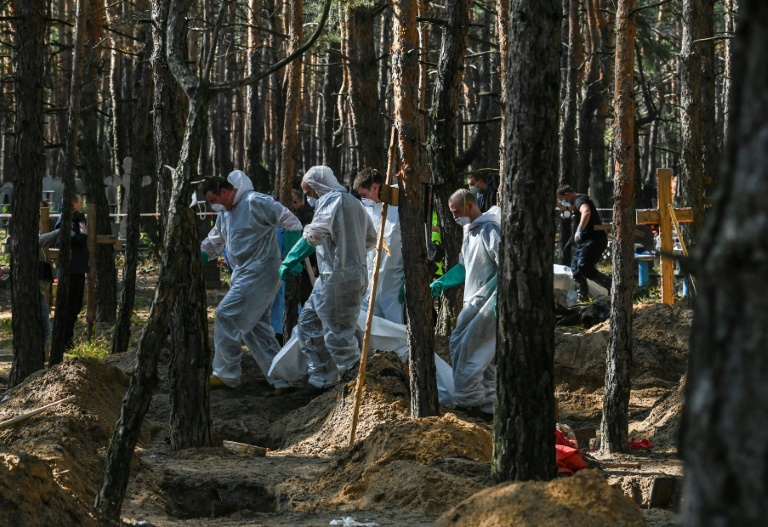
Ukraine recaptured Izyum and other towns in the east this month, crippling Kremlin supply routes and bringing fresh claims of Russian atrocities with the discovery of hundreds of graves — some containing multiple bodies.

“These are lies,” Kremlin spokesman Dmitry Peskov told reporters on Monday. Moscow, he said, “will stand up for the truth in this story”.

Fighting in the northeast has raged and AFP journalists heard artillery exchanges in frontline Kupiansk on Monday, as traumatised civilians headed out of the town now mainly in Ukrainian hands.

The streets were strewn with broken glass, spent cartridge casings and the discarded remains of ration packs issued by both forces.

Most of the fire was outgoing, with Ukrainian tanks and artillery targeting Russian positions on the west side of the town, over a mess of broken bridges. A column of smoke rose in the distance.

At the entrance to the town, cowering from the sounds of Ukrainian tank shells passing overhead towards Russian lines, civilians gathered to hitch rides or join buses to head out into safer Ukrainian territory. 

“It was impossible to stay where we were living,” said 56-year-old Lyudmyla, who braved the constant crack of shells to cross the Oskil river from the disputed east bank to the relative safety of the west.

“There was incoming fire not just every day, but literally every hour. It’s very tough there, on the other bank of the river.”

In his address to the nation on Monday, Ukrainian President Volodymyr Zelensky said the Russians were “panicking” as his forces held recaptured territory in the northeastern Kharkiv region.

– ‘Lost a lot of blood’ –

Russian-backed authorities in east Ukraine said a “punitive” strike by Kyiv’s forces had killed more than a dozen people and wounded more in the separatist stronghold of Donetsk.

The rebel head of the region claimed the strike was “deliberate” and said it would “not go unpunished”.

A court in the neighbouring rebel-held region of Lugansk meanwhile sentenced two employees of the Organization for Security and Cooperation in Europe to 13 years on treason charges.

OSCE chairman Zbigniew Rau condemned the “unjustifiable” detention of the mission’s members since the outbreak of the war, calling it “nothing but pure political theatre… inhumane and repugnant”.

Ukrainian civilians in the Kharkiv region have recounted months of brutality under Russian occupation.

In Kupiansk, Mykhailo Chindey told AFP he had been tortured on suspicion of supplying targeting coordinates to Ukrainian forces.

“One person was holding my hand and another one was beating my arm with a metal stick. They were beating me up two hours almost every day,” he told AFP. 

“I lost consciousness at some point. I lost a lot of blood. They hit my heels, back, legs and kidneys.”

Ukraine’s nuclear energy agency, Energoatom, said Russia struck the Pivdennoukrainsk nuclear power plant overnight, with a “powerful explosion” just 300 metres (985 feet) from its reactors.

The strike damaged more than 100 windows at the station, but the reactors were not damaged, Energoatom said, publishing photos of glass shattered around blown-out frames.

It also released images of what it said was a two-metre-deep crater from where the missile landed. No staff were wounded, it said.

– ‘Russia endangers the whole world’ –

Attacks around Ukrainian nuclear facilities have spurred calls from Kyiv and its Western allies to de-militarise surrounding areas.

Europe’s largest atomic facility — the Zaporizhzhia nuclear plant in Russian-held territory in Ukraine — has become a hot spot for concerns after tit-for-tat claims of attacks.

The Mykolaiv region in southern Ukraine, where the Pivdennoukrainsk plant is located, is close to the front line of a Ukrainian counter-offensive.

Russian forces have continued to shell Ukrainian-held towns near the front lines.

The UN’s atomic agency deployed a monitoring team to the site in early September after new fighting.

“Russia endangers the whole world. We have to stop it before it’s too late,” Zelensky said early Monday.

Ukraine will be “very high on the agenda” when world leaders formally begin meeting in New York on Tuesday for the United Nations General Assembly, said the European Union’s foreign policy chief.

“There are many other problems, we know, but the war in Ukraine has been sending shockwaves around the world,” Josep Borrell said after meeting EU foreign ministers on the eve of the UN gathering, which Zelensky is to address by video.

burs-imm/cdw/it/leg

Too weak to cry: famine looms over Somalia's children

As flies buzz over his tiny body, two-year-old Sadak Ibrahim barely whimpers, too weak to cry or shoo them away — a heartbreaking glimpse of the hunger crisis gripping Somalia.

The Horn of Africa nation is on the brink of a second famine in just over a decade, enduring its worst drought in 40 years after failed rainy seasons since late 2020 wiped out crops and livestock.

With a fifth monsoon forecast to fail, the United Nations warned this month that time was running out to save lives as it urged donors to contribute more to the relief effort.

UN humanitarian chief Martin Griffiths said the situation was worse than the 2011 famine when 260,000 people died in the country, more than half of them children under the age of six.

Aid is slowly making its way to Somalia following delays caused by the war in Ukraine, which also sent the cost of transport and emergency supplies soaring.

But many fear the help will arrive too late for the country’s youngest victims like Sadak, with around 730 children already reported dead in nutrition centres between January and July this year, according to UNICEF.

At De Martino Hospital in the capital Mogadishu, Sadak’s anxious mother Fadumo Daud sat vigil by the toddler’s bedside, a feeding tube dangling from his face, as she prayed for a miracle.

“He is the only child I have, and he is very sick as you can see,” the young woman told AFP, recounting the three-day journey that brought her to Mogadishu from Baidoa — one of the epicentres of the crisis.

– ‘Dramatic increase’ –

In recent years, climate disasters have increasingly become the main driver of migration in Somalia, which is also grappling with a brutal 15-year Islamist insurgency.

Every day, dozens of people stream into camps set up for displaced families in Mogadishu.

The International Rescue Committee (IRC) non-profit runs seven health and nutrition centres in and around the capital, but their resources are sharply stretched with the crisis showing no signs of abating.

“The number of new arrivals has increased dramatically starting from June this year,” IRC nutrition officer Faisa Ali told AFP.

Most of the children turn up malnourished, she said, with their numbers trebling from a maximum of 13 a day in May to 40 now.

A mother of 10, Nuunay Adan Durow fled her home and travelled 300 kilometres (200 miles) to find medical help for her three-year-old son Hassan Mohamed, his limbs swollen due to severe malnutrition.

“For the last three years, we have not harvested anything due to lack of rain,” Durow told AFP, describing how she was forced to trek for two hours daily to find water for her family.

“We faced a terrible situation,” the 35-year-old said, cradling Hassan in her arms as they awaited medical attention at an IRC centre on the outskirts of Mogadishu.

– ‘The worst cases’ –

The drought has also affected parts of Kenya and Ethiopia but the risks for Somalia are particularly grave, with 200,000 people in danger of starvation and around 1.5 million children facing acute malnutrition by next month, the UN says.

The crisis has not spared even traditionally fertile regions such as Lower Shabelle, where drought-stricken communities would seek refuge in the past, hoping to find sustenance there.

“We used to farm and get vegetables to feed our children before the drought affected us,” Fadumo Ibrahim Hassan, 35, told AFP.

Now “we live on whatever God gives us”, the widowed mother-of-six said.

A recent arrival in Mogadishu, her two-year-old daughter Yusro’s condition had deteriorated to the point that the IRC staff could no longer care for her.

Weighing just 5.8 kilogrammes (12.8 pounds) — half that of a healthy girl the same age — Yusro was dangerously malnourished, according to the IRC medical team, who told AFP she urgently needed to be admitted to a hospital.

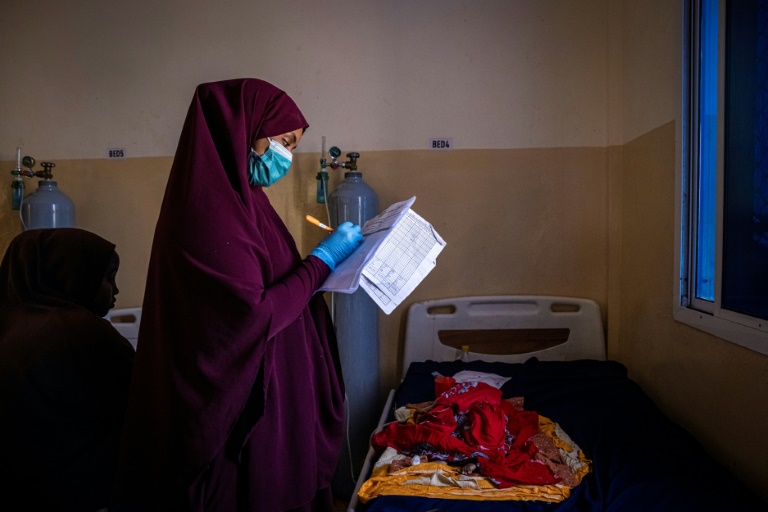
At De Martino Hospital, doctor Fahmo Ali told AFP that each day brought more sick, malnourished children into her care.

“The ones we are receiving here are the worst cases with complications,” she said.

“Sometimes those we have treated come back to the hospital after getting sick again.”

French leader to meet Iran's Raisi to urge revival of deal

French President Emmanuel Macron will meet Tuesday with his Iranian counterpart as Paris warns the clerical state that it will not get a better proposal to revive a nuclear accord.

The Elysee Palace said Macron will meet President Ebrahim Raisi on Tuesday on the sidelines of the UN General Assembly in New York and with US President Joe Biden the next day.

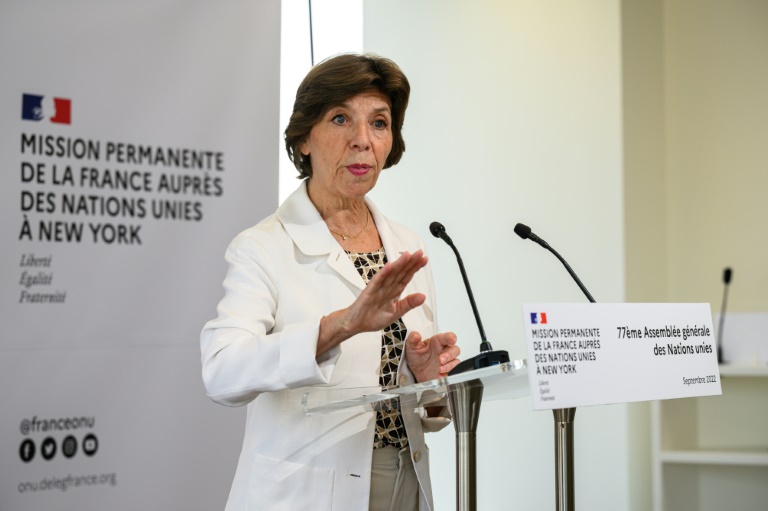
“We’ll see what this week brings,” French Foreign Minister Catherine Colonna told reporters earlier Monday. “The window of opportunity seems ready to close again.”

“We are repeatedly saying… there is no better offer for Iran,” she said. “It’s up to them to make a decision.”

Raisi, in an interview with CBS News’ “60 Minutes,” said he was open to a “good” deal but pressed for guarantees from Biden that the United States will not again leave the accord under a future leader — a promise that the US administration considers impossible.

Former president Donald Trump pulled out of the 2015 deal under which Iran drastically scaled back nuclear work in return for promises of sanctions relief.

The Biden administration says the deal remains the best way to restrict Iran’s nuclear program but has been increasingly pessimistic that Tehran will agree to a compromise negotiated by European Union mediators.

Separately, Colonna said she met Monday in New York with Russian Foreign Minister Sergei Lavrov.

She said she urged him to allow a security zone around the Zaporizhzhia nuclear plant in Ukraine, whose occupation by Moscow has raised mounting concerns.

Colonna also plans meetings with her counterparts from China, India and Australia, whose relationship with France was badly strained last year when it canceled a major submarine deal in favor of US nuclear models.

Macron for his part will meet leaders including Britain’s new Prime Minister Liz Truss, flood-ravaged Pakistan’s Prime Minister Shehbaz Sharif and crisis-wracked Lebanon’s Najib Mikati.

UN summit returns in divided world

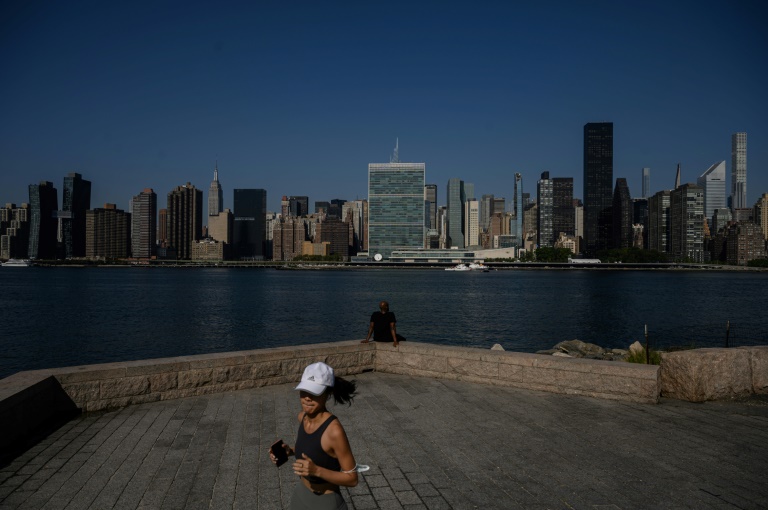
The United Nations’ massive annual summit returns in person Tuesday to a world divided by multiple crises starting with Ukraine.

After two years of pandemic restrictions and video addresses, the UN General Assembly is again asking leaders to come in person if they wish to speak — with a sole exception made for Ukrainian President Volodymyr Zelensky.

But the death of Queen Elizabeth II disrupted the summit anew. President Joe Biden of the United States, by tradition the second speaker on the first day, will instead speak on Wednesday.

The first day will feature French President Emmanuel Macron and German Chancellor Olaf Scholz, the leaders of the two largest economies of the European Union, which has mobilized to impose tough sanctions over Russia’s invasion of Ukraine.

“This year, Ukraine will be very high on the agenda. It will be unavoidable,” top EU diplomat Josep Borrell told reporters in New York.

“There are many other problems, we know. But the war in Ukraine has been sending shock waves around the world.”

But UN Secretary-General Antonio Guterres has been urging leaders not to forget other priorities such as education, the topic of a special summit on Monday.

“Education is in a deep crisis. Instead of being the great enabler, education is fast becoming the great divide,” Guterres told the summit.

He warned that the Covid-19 pandemic has had a devastating impact on learning, with poor students lacking technology at a particular disadvantage, and conflicts further disrupting schools.

In a report earlier this month, the UN Development Programme said Covid has set back humanity’s progress by five years.

– Talks between rivals –

Other leaders to speak Tuesday include Turkish President Recep Tayyip Erdogan, who has staked out ground as a broker between Russia and Ukraine, including through a deal to ship out badly needed grain to the world.

Erdogan is also expected to meet in New York with Israeli Prime Minister Yair Lapid, a dramatic rebound in relations after the Turkish leader’s strident criticism of the Jewish state’s treatment of Palestinians.

In the type of last-minute diplomacy common at previous UN sessions, US Secretary of State Antony Blinken convened a first meeting of the foreign ministers of Azerbaijan and Armenia since a flare-up in fighting.

“Strong, sustainable diplomatic engagement is the best path for everyone,” Blinken told them.

Russian Foreign Minister Sergei Lavrov was visiting despite a hostile reaction from the United States.

He met Monday with his French counterpart, Catherine Colonna, who urged Russia to allow a security zone outside the Zaporizhzhia nuclear plant, whose occupation by Moscow has raised mounting concerns.

Also high on the agenda for the UN week will be Iran, whose hardline president, Ebrahim Raisi, is traveling to the General Assembly for the first time and will meet Tuesday with French President Emmanuel Macron.

In a US television interview ahead of his arrival, Raisi said that Iran wanted “guarantees” before returning to a nuclear deal that former president Donald Trump trashed in 2018.

“We cannot trust the Americans because of the behavior that we have already seen from them. That is why if there is no guarantee, there is no trust,” he told CBS News’ “60 Minutes” program.

Biden supports a return to the 2015 agreement, under which Iran drastically scaled back nuclear work in return for promises of sanctions relief.

But the Biden administration says it is impossible in the US system to promise what a future president would do.

“There is no better offer for Iran,” Colonna said ahead of the meeting with Macron.

“It’s up to them to make a decision,” she said.

Raisi can expect to be dogged by protests during his visit including by exile groups that have called for his arrest over mass executions of opponents a decade after the 1979 Islamic revolution.

Hurricane Fiona leaves one dead in Dominican Republic after ravaging Puerto Rico

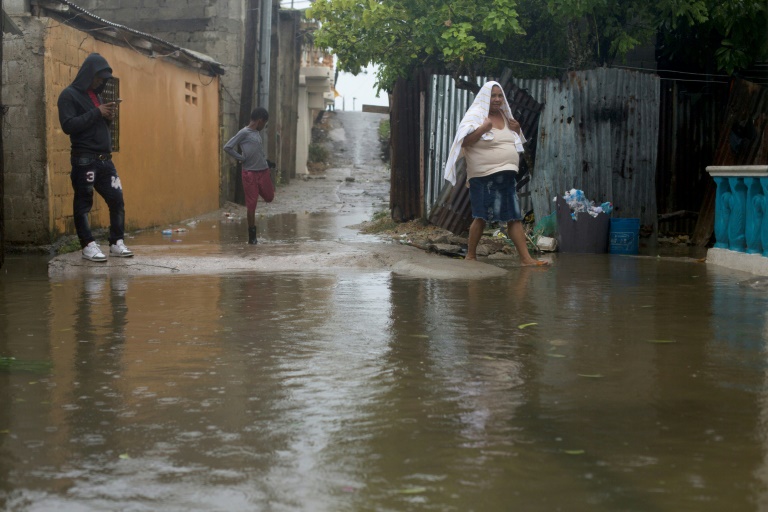
Hurricane Fiona dumped torrential rain on the Dominican Republic and left one person there dead on Monday after triggering major flooding in Puerto Rico and widespread power blackouts across both Caribbean islands.

The storm strengthened to a Category Two hurricane late Monday, said the US National Hurricane Center (NHC), which forecast continuing rains and possible new catastrophic floods during the night in both Puerto Rico and the eastern Dominican Republic.

Red alerts were in effect in seven of the island’s 32 provinces — down from 18 earlier in the day — with more than 12,000 people sheltering in safe areas, according to emergency services.

One man died in the storm while cutting down a tree in his home as a precautionary measure, authorities said, without giving further details. 

Several roads were flooded or cut off by falling trees or electric poles around the Dominican resort of Punta Cana where the electricity was knocked out, an AFP journalist on the scene said.

President Luis Abinader declared three eastern provinces to be disaster zones: La Altagracia — home to Punta Cana — El Seibo and Hato Mayor.

Footage from local media showed residents of the east coast town of Higuey waist-deep in water, trying to salvage personal belongings.

“It came through at high speed,” Vicente Lopez, in the Punta Cana beach of Bibijagua told AFP, bemoaning the destroyed businesses in the area.

Fiona was packing maximum sustained winds of 100 miles per hour (155 kilometers per hour), according to the NHC, which expected it to strengthen Tuesday to a Category Three storm — making it this season’s first major Atlantic hurricane.

After passing close to Turks and Caicos late Monday or early Tuesday, the storm is expected to track north later in the week, out into the ocean — although it could come perilously close to tiny Bermuda.

In Puerto Rico — where the rain was still beating down — US President Joe Biden has declared a state of emergency, authorizing the Federal Emergency Management Agency to provide assistance. 

— ‘They were crying’ —

Governor Pedro Pierluisi said the storm had caused catastrophic damage since Sunday, with some areas facing more than 30 inches (76 centimeters) of rainfall.

On Monday afternoon, Nelly Marrero made her way back to her home in Toa Baja, in the north of the US island territory, to clear out the mud that surged inside after she evacuated a day earlier.

“Thanks to God, I have food and water,” Marrero — who lost everything when Hurricane Maria devastated Puerto Rico five years ago — told AFP by telephone.

Hearing the flood alert ring out, Marrero headed out into the rain with her daughter and three infant grandchildren, seeking refuge at a relative’s house.

“It was very difficult with the babies — they were crying, they didn’t understand what was going on,” she said.

Across Puerto Rico, Fiona caused landslides, blocked roads and toppled trees, power lines and bridges, Pierluisi said.

A man was killed as an indirect result of the power blackout — burned to death while trying to fill his generator, according to authorities.

The governor said Fiona had caused “unprecedented” flooding and that more rain was expected “throughout the island today and tomorrow”.

Most of Puerto Rico, an island of three million people, was without power, but electricity had been restored for about 100,000 customers on Monday, the governor said.

The hurricane has also left around 800,000 people without drinking water as a result of power outages and flooded rivers, officials said.

“We are without electricity and water,” Elena Santiago, an anaesthesiologist at the Mennonite hospital in Aibonito told AFP. 

“The hospital is operating with a generator. Only emergencies are being attended to.

– Blackout problems –

Fiona made landfall in Puerto Rico as a Category One hurricane, at the lowest end of the five-tier Saffir-Simpson scale.

Before that, the storm had caused one fatality in the French overseas department of Guadeloupe, when Fiona was still classified as a tropical storm.

After years of financial woes and recession, Puerto Rico in 2017 declared the largest bankruptcy ever by a local US administration. 

Later that year, the double hit from two Hurricanes, Irma and Maria, added to the misery, devastating the electrical grid on the island — which has suffered from major infrastructure problems for years.

The grid was privatized in June 2021 in an effort to resolve the problem of blackouts, but the issue has persisted, and the entire island lost power earlier this year.

bur/jh/dw/caw/ssy

Close Bitnami banner
Bitnami