World

Hurricane Fiona leaves one dead in Dominican Republic after ravaging Puerto Rico

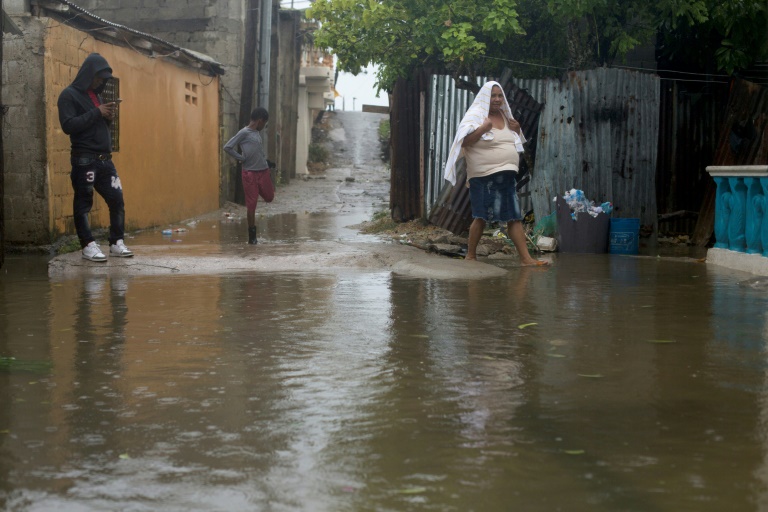
Hurricane Fiona dumped torrential rain on the Dominican Republic and left one person there dead on Monday after triggering major flooding in Puerto Rico and widespread power blackouts across both Caribbean islands.

The storm strengthened to a Category Two hurricane late Monday, said the US National Hurricane Center (NHC), which forecast continuing rains and possible new catastrophic floods during the night in both Puerto Rico and the eastern Dominican Republic.

Red alerts were in effect in seven of the island’s 32 provinces — down from 18 earlier in the day — with more than 12,000 people sheltering in safe areas, according to emergency services.

One man died in the storm while cutting down a tree in his home as a precautionary measure, authorities said, without giving further details. 

Several roads were flooded or cut off by falling trees or electric poles around the Dominican resort of Punta Cana where the electricity was knocked out, an AFP journalist on the scene said.

President Luis Abinader declared three eastern provinces to be disaster zones: La Altagracia — home to Punta Cana — El Seibo and Hato Mayor.

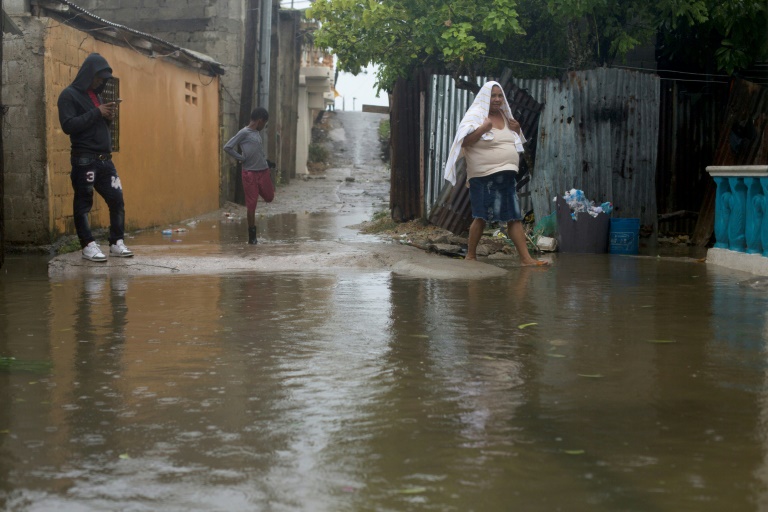
Footage from local media showed residents of the east coast town of Higuey waist-deep in water, trying to salvage personal belongings.

“It came through at high speed,” Vicente Lopez, in the Punta Cana beach of Bibijagua told AFP, bemoaning the destroyed businesses in the area.

Fiona was packing maximum sustained winds of 100 miles per hour (155 kilometers per hour), according to the NHC, which expected it to strengthen Tuesday to a Category Three storm — making it this season’s first major Atlantic hurricane.

After passing close to Turks and Caicos late Monday or early Tuesday, the storm is expected to track north later in the week, out into the ocean — although it could come perilously close to tiny Bermuda.

In Puerto Rico — where the rain was still beating down — US President Joe Biden has declared a state of emergency, authorizing the Federal Emergency Management Agency to provide assistance. 

— ‘They were crying’ —

Governor Pedro Pierluisi said the storm had caused catastrophic damage since Sunday, with some areas facing more than 30 inches (76 centimeters) of rainfall.

On Monday afternoon, Nelly Marrero made her way back to her home in Toa Baja, in the north of the US island territory, to clear out the mud that surged inside after she evacuated a day earlier.

“Thanks to God, I have food and water,” Marrero — who lost everything when Hurricane Maria devastated Puerto Rico five years ago — told AFP by telephone.

Hearing the flood alert ring out, Marrero headed out into the rain with her daughter and three infant grandchildren, seeking refuge at a relative’s house.

“It was very difficult with the babies — they were crying, they didn’t understand what was going on,” she said.

Across Puerto Rico, Fiona caused landslides, blocked roads and toppled trees, power lines and bridges, Pierluisi said.

A man was killed as an indirect result of the power blackout — burned to death while trying to fill his generator, according to authorities.

The governor said Fiona had caused “unprecedented” flooding and that more rain was expected “throughout the island today and tomorrow”.

Most of Puerto Rico, an island of three million people, was without power, but electricity had been restored for about 100,000 customers on Monday, the governor said.

The hurricane has also left around 800,000 people without drinking water as a result of power outages and flooded rivers, officials said.

“We are without electricity and water,” Elena Santiago, an anaesthesiologist at the Mennonite hospital in Aibonito told AFP. 

“The hospital is operating with a generator. Only emergencies are being attended to.

– Blackout problems –

Fiona made landfall in Puerto Rico as a Category One hurricane, at the lowest end of the five-tier Saffir-Simpson scale.

Before that, the storm had caused one fatality in the French overseas department of Guadeloupe, when Fiona was still classified as a tropical storm.

After years of financial woes and recession, Puerto Rico in 2017 declared the largest bankruptcy ever by a local US administration. 

Later that year, the double hit from two Hurricanes, Irma and Maria, added to the misery, devastating the electrical grid on the island — which has suffered from major infrastructure problems for years.

The grid was privatized in June 2021 in an effort to resolve the problem of blackouts, but the issue has persisted, and the entire island lost power earlier this year.
bur/jh/dw/caw/ssy

Four feared dead after typhoon hits Japan

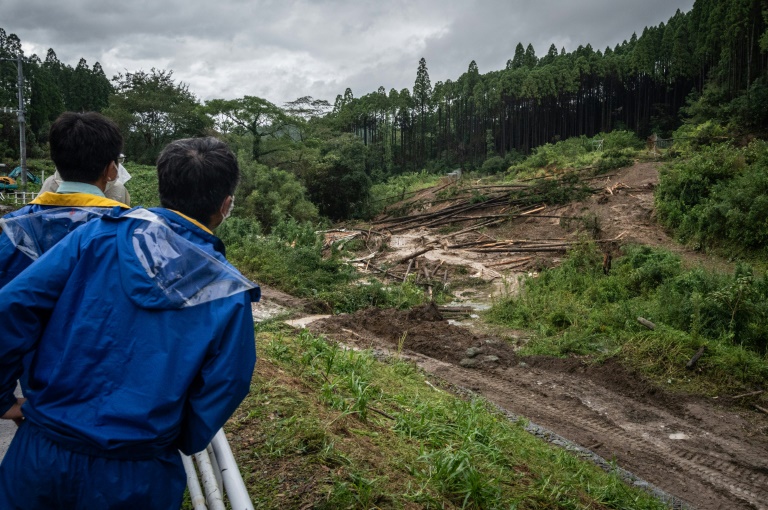
Two people were confirmed dead and another two were found “without vital signs” after Typhoon Nanmadol slammed into Japan over the weekend, a government spokesman said Tuesday.

The storm system made landfall by the southwestern city of Kagoshima on Sunday night, and dumped heavy rain across the Kyushu region before moving along the west coast.

By Tuesday morning, it was downgraded to an extratropical cyclone as it crossed to the northeastern coast and headed out to sea.

The storm toppled trees, smashed windows and dumped a month’s worth of rain in a 24-hour period on parts of Miyazaki prefecture, where the two deaths were confirmed.

Government spokesman Hirozaku Matsuno said another two people had been found “without vital signs,” a term often used in Japan before a death has been officially certified by a coroner.

He said authorities were also searching for one person reported missing.

At least 114 people were injured, 14 of them seriously.

By early Tuesday, about 140,000 homes were still without power nationwide, mostly in Kyushu.

Japan is currently in its typhoon season and faces around 20 such storms a year.

Scientists say climate change is increasing the severity of storms and causing extreme weather such as heat waves, droughts and flash floods to become more frequent and intense.

Anti-terror probe of Tunisia opposition chief delayed

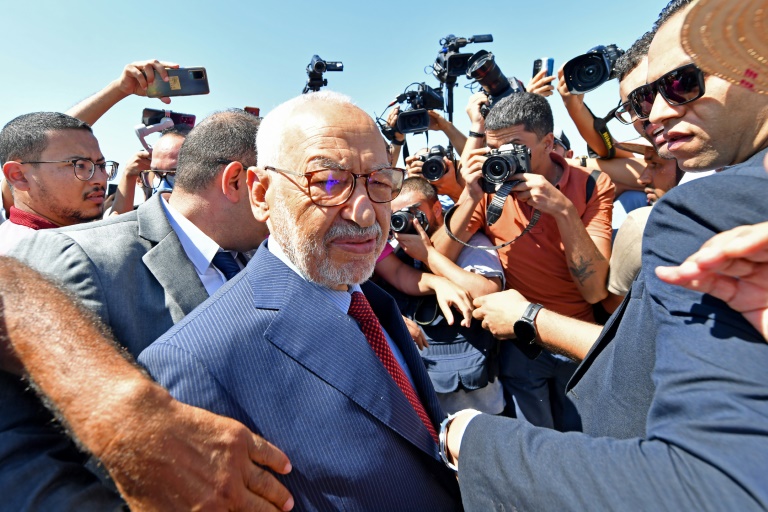
The leader of Tunisia’s Islamist-inspired opposition party Ennahdha is set to be questioned Tuesday by an anti-terrorism unit, his lawyer said, after another senior party member faced hours of interrogation.

Ennahdha categorically denies the claims that its leader, Rached Ghannouchi, and Tunisia’s former prime minister Ali Laarayedh were involved in sending jihadist militants to Syria and Iraq.

The accusations have resurfaced after President Kais Saied tightened his grip on the judiciary, following the suspension of the Ennahdha-dominated parliament last year.

Ghannouchi had arrived at the headquarters of the anti-terrorism centre on Monday afternoon for questioning, according to an AFP reporter in the capital Tunis, several hours after his deputy Laarayedh.

“After more than 12 hours of waiting, Mr Ghannouchi wasn’t heard by this unit which decided to delay the interrogation until mid-day Tuesday,” his lawyer Samir Dilou told AFP.

Laarayedh was questioned “for hours” and is still being held by the unit, said Dilou and an AFP reporter at the scene.

In a statement released overnight, Ennahdha denounced the interrogation as “a flagrant violation of human rights”.

Critics of the party and some politicians accuse Ennahdha of having facilitated the departure of militants for war zones.

After the 2011 overthrow of dictator Zine El Abidine Ben Ali, thousands of Tunisians joined the ranks of jihadist organisations — most notably the Islamic State group in Syria and Iraq, but also in neighbouring Libya.

Ennahdha played a central role in Tunisia’s post-Ben Ali democratic politics until Saied began his power grab in July last year, followed by a controversial referendum which granted unchecked powers to his office.

Ennahdha had on Sunday decried attempts “to use the judiciary to tarnish the opposition’s image” and implicate its leaders in “fabricated affairs”.

The probe against Ghannouchi and Laarayedh was meant to “distract the public” from dealing with economic and social issues and the “worsening conditions” in the country, the party said in a statement.

In July, the same anti-terrorism unit questioned Ghannouchi, 81, in a probe into allegations of corruption and money laundering linked to transfers from abroad to the charity Namaa Tunisia, affiliated with Ennahdha.

Covid curbs leave Hong Kong musicians on their 'last dollar'

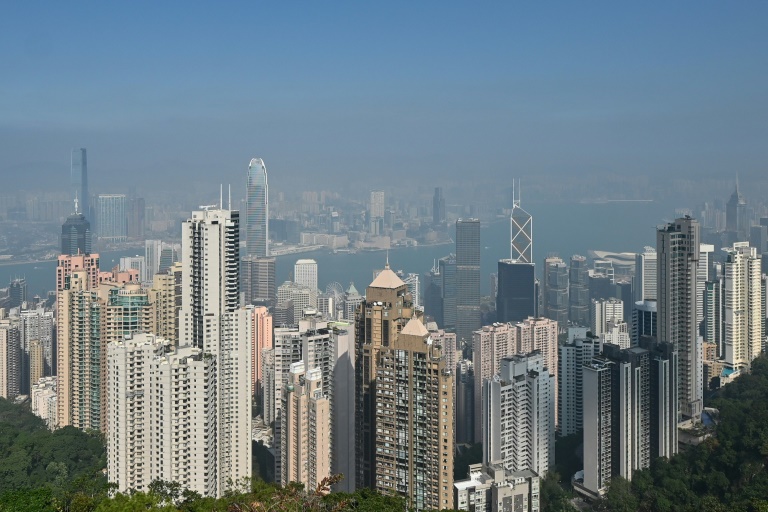
A thundering thrash metal riff reverberated through a Hong Kong bar, but the music was being live-streamed from a studio across town to obey pandemic rules that have outlawed small gigs for more than 650 days.

The coronavirus has battered live performances around the world, especially in the first 18 months of the pandemic, but nowhere has that hardship lasted longer than in Hong Kong.

While gigs, festivals and international touring have returned with a vengeance globally, Hong Kong’s musicians have had no such luck.

For the vast majority of the pandemic the Chinese city has banned live performances in any place that serves food or drink.

Venues such as The Wanch, one of the city’s oldest live music bars, have had to get creative.

“We’re just trying to do what we can to stay alive and keep the music going,” John Prymmer, the bar’s co-owner and a fixture of Hong Kong’s live music scene, told AFP.

In a sound-proofed recording studio next door, local metal act Ozmium are careening through a mixture of their own tracks as well as covers of Iron Maiden and Metallica.

For now, a laptop screen perched in front of the band showing revellers inside The Wanch is the closest they can get to their fans.

Frontman Ashish Jerry Justin said he had looked on with desperation as other businesses such as karaoke rooms, cinemas, banquets and hotpot restaurants have been allowed to resume.

“And still in a place like a bar or a club, you cannot have live music even if there is a plexiglass separating us from the people who are watching us,” he said. “I think it’s highly unfair.”

– International isolation –

Hong Kong has stuck to a version of China’s zero-Covid system throughout the pandemic, which has hammered the local economy.

While business hub rivals such as Singapore, London and Tokyo have reopened, Hong Kong has kept up mandatory hotel quarantine, currently at three days.

International acts including Billie Eilish, Justin Bieber, Maroon 5, Green Day and Guns N’ Roses have all added Singapore to their world tours. But Hong Kong remains a touring dead zone.

Live music has been classified as a high-risk activity by authorities, banned for more than 650 of the slightly over 900 days since restrictions were first introduced in early April 2020.

Lito Castillo, head of the Hong Kong Musicians Union, estimates the job losses to be “in the thousands”.

A professional keyboardist who is married to a singer, he says his family’s income is now 30 percent of what it was before the pandemic, mainly earned from working tables in restaurants. 

“I’m down to my last dollar, at the moment we are just surviving, that’s all,” he told AFP.

Others have pawned instruments and switched to the gig economy.

One of the city’s most talented guitarists now works for an international courier company, Castillo lamented.

Many venues have closed, including Peel Fresco which shut its doors this month after 16 years.

“The past three years have made it impossible to run a live music business in Hong Kong,” the owners wrote on Facebook.

– ‘Survival mode’ –

The mental toll has been intense. 

In a recent survey the Hong Kong Musicians Foundation found 11 percent of its members have had suicidal thoughts in the last year.

Ten percent were in debt to the tune of HK$100,000 ($12,740) or more, and 13 percent had sold their instruments.

“I think ‘grim’ is an understatement,” said Adrian Fu, a singer-songwriter and former Cantopop recording artist who is one of the foundation’s directors.

Both the foundation and Castillo’s union said letters and lobbying to the government had gone unnoticed.

Fu said he hoped authorities could see the importance of live performances to the economy but also Hong Kong’s reputation as an international city of culture. 

“It is a huge, huge factor in the incubation of talent,” he said of small venues and live bars.

A spokesperson for city leader John Lee said the government “understands the ardent expectations of the live music sector for relaxing social distancing measures” but gave no details on when or whether the ban would be lifted.

The Culture, Sports and Tourism Bureau — set up in July to promote Hong Kong as a “centre for international cultural exchange” — declined to comment.

Alicia Beale, owner of live music venue The Aftermath, said she had tried to focus on the positive creativity artists had shown.

Her venue has done live-streamed gigs, recorded fundraising albums and pivoted to whatever it can to draw people in, from quiz and game nights to support groups.

“It’s just been survival mode throughout the pandemic,” she said. “I want to get to thriving mode, hopefully soon.”

Hong Kong to further relax covid restrictions 'soon': city leader

Hong Kong’s leader on Tuesday said he will soon make a decision on further relaxing coronavirus restrictions, as residents and businesses decry quarantine rules that have kept the finance hub cut off for more than two years.

“We will make a decision soon and announce to the public,” chief executive John Lee told reporters. 

“We want to be connected with the different places in the world. We would like to have an orderly opening up,” he added.

Hong Kong has adhered to a version of China’s strict zero-Covid rules throughout the pandemic, battering the economy and deepening the city’s brain drain as rival business hubs reopen.

It maintains mandatory hotel quarantine for international arrivals — currently at three days — widespread masking, business operating limits and bans on more than four people gathering in public.

Lee, a Beijing-anointed former security chief, took office in July and vowed to reopen the city while keeping cases low.

He reduced hotel quarantine from seven to three days but has faced a growing chorus of criticism from residents, business organisations and health experts saying he should go further.

Over the past week multiple Hong Kong media outlets have reported, citing sources, that the government has already agreed to lift quarantine.

Lee would not confirm that decision or commit to a firm timeline on Tuesday.

But his comments were the strongest indication yet that Hong Kong is planning to join much of the rest of the world in accepting endemicity.

That would leave just China and Taiwan still maintaining mandatory quarantine for arrivals.

“Our goal is to maximise Hong Kong’s international connectivity and reduce the inconvenience for arrivals due to quarantine, on the condition that we can control the trend of the pandemic,” Lee said.

Hong Kong is in the midst of a technical recession while its financial chief recently warned its fiscal deficit is expected to balloon to HK$100 billion ($12.7 billion) this year, twice initial estimates.

Arrivals at the airport, once one of the world’s busiest, are at a fraction of pre-pandemic levels with many airlines skipping the city altogether.

Regional rival Singapore has long dispensed with coronavirus controls and is hosting a slew of conferences, entertainment and sporting events over the coming months.

Meanwhile, Hong Kong has seen multiple events cancelled by organisers citing the uncertain pandemic controls including most recently next year’s World Dragon Boat Championships which will be held in Thailand instead.

Hong Kong is planning to host a banking summit and the Rugby Sevens in November, although under current rules players in the latter will have to stay in a “closed loop” bubble.

Kremlin dismisses mass burial discoveries as 'lies'

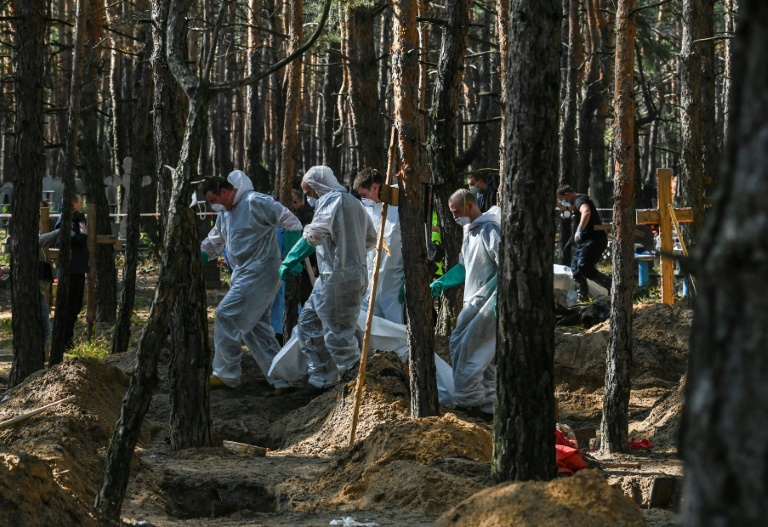
The Kremlin on Monday denied its forces were responsible for large-scale killings in east Ukraine and accused Kyiv of fabricating its discoveries of mass graves in recaptured territory.

In the latest incident spurring fears of an atomic emergency, Ukraine said Russian rockets landed dangerously close to a nuclear power station in southern Ukraine.

Ukraine recaptured Izyum and other towns in the east this month, crippling Kremlin supply routes and bringing fresh claims of Russian atrocities with the discovery of hundreds of graves — some containing multiple bodies.

“These are lies,” Kremlin spokesman Dmitry Peskov told reporters on Monday. Moscow, he said, “will stand up for the truth in this story”.

Fighting in the northeast has raged and AFP journalists heard artillery exchanges in frontline Kupiansk on Monday, as traumatised civilians headed out of the town now mainly in Ukrainian hands.

The streets were strewn with broken glass, spent cartridge casings and the discarded remains of ration packs issued by both forces.

Most of the fire was outgoing, with Ukrainian tanks and artillery targeting Russian positions on the west side of the town, over a mess of broken bridges. A column of smoke rose in the distance.

At the entrance to the town, cowering from the sounds of Ukrainian tank shells passing overhead towards Russian lines, civilians gathered to hitch rides or join buses to head out into safer Ukrainian territory. 

“It was impossible to stay where we were living,” said 56-year-old Lyudmyla, who braved the constant crack of shells to cross the Oskil river from the disputed east bank to the relative safety of the west.

“There was incoming fire not just every day, but literally every hour. It’s very tough there, on the other bank of the river.”

In his address to the nation on Monday, Ukrainian President Volodymyr Zelensky said the Russians were “panicking” as his forces held recaptured territory in the northeastern Kharkiv region.

– ‘Lost a lot of blood’ –

Russian-backed authorities in east Ukraine said a “punitive” strike by Kyiv’s forces had killed more than a dozen people and wounded more in the separatist stronghold of Donetsk.

The rebel head of the region claimed the strike was “deliberate” and said it would “not go unpunished”.

A court in the neighbouring rebel-held region of Lugansk meanwhile sentenced two employees of the Organization for Security and Cooperation in Europe to 13 years on treason charges.

OSCE chairman Zbigniew Rau condemned the “unjustifiable” detention of the mission’s members since the outbreak of the war, calling it “nothing but pure political theatre… inhumane and repugnant”.

Ukrainian civilians in the Kharkiv region have recounted months of brutality under Russian occupation.

In Kupiansk, Mykhailo Chindey told AFP he had been tortured on suspicion of supplying targeting coordinates to Ukrainian forces.

“One person was holding my hand and another one was beating my arm with a metal stick. They were beating me up two hours almost every day,” he told AFP. 

“I lost consciousness at some point. I lost a lot of blood. They hit my heels, back, legs and kidneys.”

Ukraine’s nuclear energy agency, Energoatom, said Russia struck the Pivdennoukrainsk nuclear power plant overnight, with a “powerful explosion” just 300 metres (985 feet) from its reactors.

The strike damaged more than 100 windows at the station, but the reactors were not damaged, Energoatom said, publishing photos of glass shattered around blown-out frames.

It also released images of what it said was a two-metre-deep crater from where the missile landed. No staff were wounded, it said.

– ‘Russia endangers the whole world’ –

Attacks around Ukrainian nuclear facilities have spurred calls from Kyiv and its Western allies to de-militarise surrounding areas.

Europe’s largest atomic facility — the Zaporizhzhia nuclear plant in Russian-held territory in Ukraine — has become a hot spot for concerns after tit-for-tat claims of attacks.

The Mykolaiv region in southern Ukraine, where the Pivdennoukrainsk plant is located, is close to the front line of a Ukrainian counter-offensive.

Russian forces have continued to shell Ukrainian-held towns near the front lines.

The UN’s atomic agency deployed a monitoring team to the site in early September after new fighting.

“Russia endangers the whole world. We have to stop it before it’s too late,” Zelensky said early Monday.

Ukraine will be “very high on the agenda” when world leaders formally begin meeting in New York on Tuesday for the United Nations General Assembly, said the European Union’s foreign policy chief.

“There are many other problems, we know, but the war in Ukraine has been sending shockwaves around the world,” Josep Borrell said after meeting EU foreign ministers on the eve of the UN gathering, which Zelensky is to address by video.

burs-imm/cdw/it/leg

Fear, defiance as fighting rages in Myanmar's north

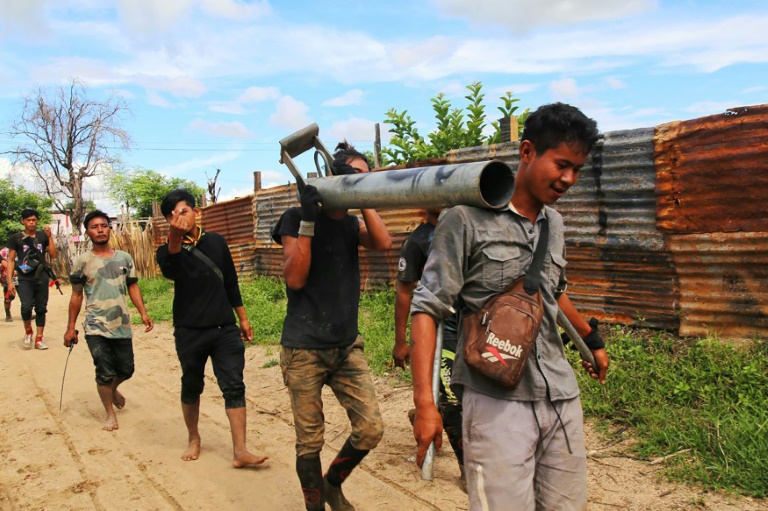
Anti-coup fighters in Myanmar patrol the smouldering ruins of a burned village after what they say was a reprisal attack by junta troops struggling to crush resistance to last year’s military coup.

Corrugated roofs, support beams and cooking utensils are all that remain amid the ash in the village in northwestern Sagaing — an area which has seen some of the fiercest fighting against the military’s power grab.

Rare footage obtained by AFP shows a region wracked by violence, and criss-crossed by junta troops, pro-military militias and anti-coup fighters, where internet access is regularly cut by authorities.

Win Soe said junta troops brought destruction to his village of Tharyarkone, about 100 kilometres (60 miles) west of Myanmar’s second city Mandalay, late last month.

“Soldiers came to our village on their way back to their camp,” he said. 

“There had been no fighting here and they just came to destroy things — they torched 60 houses in our village,” Win Soe said. 

A group of about a dozen young men — some in combat fatigues, football socks and sneakers, others in shorts and sandals — arrived to survey the burned remnants of the village as they patrolled the district, trailing military forces.

The unit is part of a local “People’s Defence Force” (PDF), dozens of which have sprung up in Sagaing and across the country to fight the military in an attempt to overturn the coup that last year ousted Aung San Suu Kyi’s elected civilian government.

Often armed with little more than homemade weapons and knowledge of the terrain, some of these groups have surprised the military with their effectiveness, according to some analysts.

The junta has responded with an offensive that rights groups say includes razing villages, mass extra-judicial killings and airstrikes on civilians.

In May, the UN humanitarian agency UNOCHA said more than 12,000 civilian properties were thought to have been burned or destroyed since the coup.

The military accuses PDF fighters -– which it has declared “terrorists” –- of setting the fires and says their assassination campaigns have killed hundreds including Buddhist monks, teachers and medical workers.

– A million displaced –

Post-coup violence has pushed the number of displaced people in Myanmar to over one million, according to the UN, adding to those previously forced from their homes by long-running conflicts in ethnic border areas.

Sagaing — home to mostly ethnic Bamar and a traditional recruiting ground for the military — has seen more than half a million people displaced since the coup, the UN said.

Even in villages that escape being torched, locals said they lived in fear of violence from the military.

“When soldiers came to our village, we hid behind some shrubs, but my son was in bad health and could only hide nearby,” said San Nwae, from Mintaingpin village, close to Tharyarkone. 

“When the soldiers found him, they beat him to death. From my hiding place, I heard the sound of someone being killed,” she said.

“After soldiers left the village… I came out from hiding and I realised the one who had been killed was my son.” 

Diplomatic efforts led by the UN and the Association of Southeast Asian Nations to resolve Myanmar’s bloody impasse have made little headway, with the generals refusing to engage with opponents.

“We have been fighting the military for one year, but we don’t have enough weapons and we are just fighting with our homemade guns,” said one anti-junta PDF member. 

He admitted that his group of about 20 fighters was often unable to hold off the military for long.

“When the soldiers come to our village, we warn villagers to run away and we try to evacuate them,” he said.

“If soldiers arrest villagers, most of them are killed.”

Hurricane Fiona hits Dominican Republic after ravaging Puerto Rico

Hurricane Fiona dumped torrential rain on the Dominican Republic on Monday after triggering major flooding in Puerto Rico and widespread power blackouts in both Caribbean islands.

The storm strengthened to a Category Two hurricane late Monday, said the US National Hurricane Center (NHC), which forecast continuing rains and possible new catastrophic floods during the night in both Puerto Rico and in the eastern Dominican Republic.

The NHC said the hurricane was still strengthening and warned that “life-threatening and catastrophic flooding and mudslides” were possible. 

Several roads were flooded or cut by falling trees or electric poles around the Dominican resort of Punta Cana where the electricity was knocked out, an AFP journalist on the scene said.

President Luis Abinader declared three eastern provinces to be disaster zones: La Altagracia — home to Punta Cana — El Seibo and Hato Mayor.

Footage from local media showed residents of the east coast town of Higuey waist-deep in water, trying to salvage personal belongings.

With 18 of the island’s 32 provinces on red alert, nearly 800 people were sheltering in safe areas, according to emergency services.

Fiona was packing maximum sustained winds of 100 miles per hour (155 kilometers per hour), according to the NHC, which expected it to strengthen Tuesday to a Category Three storm — making it this season’s first major Atlantic hurricane.

After passing close to Turks and Caicos late Monday or early Tuesday, the storm is expected to track north later in the week, out into the ocean — although it could come perilously close to tiny Bermuda.

In Puerto Rico — where the rain was still beating down — Governor Pedro Pierluisi said the storm had caused catastrophic damage since Sunday, with some areas facing more than 30 inches (76 centimeters) of rainfall.

Nelly Marrero made her way Monday afternoon back to her home in Toa Baja, in the north of the US island territory, to clear out the mud that surged inside after she evacuated a day earlier.

“Thanks to God, I have food and water,” she told AFP by telephone — having lost everything when Hurricane Maria devastated Puerto Rico five years ago.

Hearing the flood alert ring out, Marrero headed out into the rain with her daughter and three infant grandchildren, seeking refuge at a relative’s house.

“It was very difficult with the babies — they were crying, they didn’t understand what was going on,” she said.

Across Puerto Rico, Fiona caused landslides, blocked roads and toppled trees, power lines and bridges, Pierluisi said.

A man was killed as an indirect result of the power blackout — burned to death while trying to fill his generator, according to authorities.

Fernando Vera, a resident of the town of Utuado, told US broadcaster NPR his family has never fully recovered from the devastation of Maria — one of two hurricanes that hit the island in 2017, along with Irma.

“We still struggle from the consequences of Maria and it’s kind of difficult knowing we’re going to probably have to start over again,” Vera said.

The governor said Fiona caused “unprecedented” flooding.

“Unfortunately, we expect more rain throughout the island today and tomorrow,” he said.

Most of Puerto Rico, an island of three million people, was without power, but electricity had been restored for about 100,000 customers on Monday, the governor said.

The hurricane has also left around 196,000 people without drinking water as a result of power outages and flooded rivers, officials said.

– ‘Start over again’ –

Fiona made landfall in Puerto Rico as a Category One hurricane, at the lowest end of the five-tier Saffir-Simpson scale.

Before that, the storm had caused one fatality — a man killed after his house was swept away by flooding in the French overseas department of Guadeloupe, when Fiona was still classified as a tropical storm.

US President Joe Biden has declared a state of emergency for Puerto Rico, authorizing the Federal Emergency Management Agency to provide assistance.

The former Spanish colony became a US territory in the late 19th century before gaining the status of associated free state in 1950.

After years of financial woes and recession, Puerto Rico in 2017 declared the largest bankruptcy ever by a local US administration.

Later that year, the double hit from Irma and Maria added to the misery, devastating the electrical grid on the island — which has suffered from major infrastructure problems for years.

The grid was privatized in June 2021 in an effort to resolve the problem of blackouts, but the issue has persisted, and the entire island lost power earlier this year.

bur/jh/dw/caw

Hurricane Fiona hits Dominican Republic after ravaging Puerto Rico

Hurricane Fiona dumped torrential rain on the Dominican Republic on Monday after triggering major flooding in Puerto Rico and widespread power blackouts in both Caribbean islands.

The storm strengthened to a Category Two hurricane late Monday, said the US National Hurricane Center (NHC), which forecast continuing rains and possible new catastrophic floods during the night in both Puerto Rico and in the eastern Dominican Republic.

The NHC said the hurricane was still strengthening and warned that “life-threatening and catastrophic flooding and mudslides” were possible. 

Several roads were flooded or cut by falling trees or electric poles around the Dominican resort of Punta Cana where the electricity was knocked out, an AFP journalist on the scene said.

President Luis Abinader declared three eastern provinces to be disaster zones: La Altagracia — home to Punta Cana — El Seibo and Hato Mayor.

Footage from local media showed residents of the east coast town of Higuey waist-deep in water, trying to salvage personal belongings.

With 18 of the island’s 32 provinces on red alert, nearly 800 people were sheltering in safe areas, according to emergency services.

Fiona was packing maximum sustained winds of 100 miles per hour (155 kilometers per hour), according to the NHC, which expected it to strengthen Tuesday to a Category Three storm — making it this season’s first major Atlantic hurricane.

After passing close to Turks and Caicos late Monday or early Tuesday, the storm is expected to track north later in the week, out into the ocean — although it could come perilously close to tiny Bermuda.

In Puerto Rico — where the rain was still beating down — Governor Pedro Pierluisi said the storm had caused catastrophic damage since Sunday, with some areas facing more than 30 inches (76 centimeters) of rainfall.

Nelly Marrero made her way Monday afternoon back to her home in Toa Baja, in the north of the US island territory, to clear out the mud that surged inside after she evacuated a day earlier.

“Thanks to God, I have food and water,” she told AFP by telephone — having lost everything when Hurricane Maria devastated Puerto Rico five years ago.

Hearing the flood alert ring out, Marrero headed out into the rain with her daughter and three infant grandchildren, seeking refuge at a relative’s house.

“It was very difficult with the babies — they were crying, they didn’t understand what was going on,” she said.

Across Puerto Rico, Fiona caused landslides, blocked roads and toppled trees, power lines and bridges, Pierluisi said.

A man was killed as an indirect result of the power blackout — burned to death while trying to fill his generator, according to authorities.

Fernando Vera, a resident of the town of Utuado, told US broadcaster NPR his family has never fully recovered from the devastation of Maria — one of two hurricanes that hit the island in 2017, along with Irma.

“We still struggle from the consequences of Maria and it’s kind of difficult knowing we’re going to probably have to start over again,” Vera said.

The governor said Fiona caused “unprecedented” flooding.

“Unfortunately, we expect more rain throughout the island today and tomorrow,” he said.

Most of Puerto Rico, an island of three million people, was without power, but electricity had been restored for about 100,000 customers on Monday, the governor said.

The hurricane has also left around 196,000 people without drinking water as a result of power outages and flooded rivers, officials said.

– ‘Start over again’ –

Fiona made landfall in Puerto Rico as a Category One hurricane, at the lowest end of the five-tier Saffir-Simpson scale.

Before that, the storm had caused one fatality — a man killed after his house was swept away by flooding in the French overseas department of Guadeloupe, when Fiona was still classified as a tropical storm.

US President Joe Biden has declared a state of emergency for Puerto Rico, authorizing the Federal Emergency Management Agency to provide assistance.

The former Spanish colony became a US territory in the late 19th century before gaining the status of associated free state in 1950.

After years of financial woes and recession, Puerto Rico in 2017 declared the largest bankruptcy ever by a local US administration.

Later that year, the double hit from Irma and Maria added to the misery, devastating the electrical grid on the island — which has suffered from major infrastructure problems for years.

The grid was privatized in June 2021 in an effort to resolve the problem of blackouts, but the issue has persisted, and the entire island lost power earlier this year.
bur/jh/dw/caw

Misinformation shrouds Philippine martial law era horrors

American lawyer Thomas Jones still remembers the scars of Philippine torture victims he interviewed for Amnesty International inside the country’s detention centres in 1975 during the rule of late dictator Ferdinand Marcos.

But Marcos, who presided over widespread abuses and corruption during his 20 years in power, denied the lawyer’s visit to the Philippines ever happened.

Decades later the dictator’s claim — debunked by AFP and others — has resurfaced on social media sites popular among Filipinos.

Amnesty estimates thousands of people were killed and tens of thousands tortured and imprisoned after Marcos imposed martial law on September 21, 1972.

Under legislation signed in 2013 by former president Benigno Aquino, 11,103 victims of torture, killings, enforced disappearances and other abuses have been officially recognised and compensated.

In the run-up to Wednesday’s 50th anniversary of the start of martial law, pro-Marcos posts have flooded Facebook and TikTok with false and misleading claims that cast doubt on Amnesty’s findings and downplay the abuses.

AFP has fact-checked multiple posts that carried footage of Marcos addressing US media in 1982.

Marcos — father of current Philippine President Ferdinand Marcos Jr who has defended martial law — accused Amnesty of relying on “hearsay” for their findings. And he falsely claimed the rights group “never” visited the country.

The clip resurfaced on TikTok in March after an anti-Marcos Senate candidate running in May 9 elections cited Amnesty for figures showing the horrors of martial law.

“Amnesty International (said) 3,257 were killed during Marcos’s time, 35,000 were tortured… 70,000 were imprisoned. It’s a matter of record,” Luke Espiritu said in a debate.

Within hours of that livestreamed event, the Marcos footage had been stitched with the Espiritu video and circulated on TikTok and Facebook.

It received more than 900,000 views, according to analysis by AFP’s Fact Check team. 

One post drew more than 3,000 comments that questioned Amnesty’s numbers and described the dictator as “a great leader destroyed by black propaganda”.

Jones said Marcos lied about the Amnesty visit and martial law abuses, and decades later Filipinos were being deceived by his son.

“People of the Philippines, they still don’t know the facts,” the 81-year-old told AFP from his home in Wisconsin.

Jones and a colleague interviewed Marcos, members of his cabinet and 107 detainees during their visit.

Marcos admitted about 50,000 people had been arrested in the first few years of martial law, while 71 detainees told them they had been tortured, Jones said.

Amnesty published their findings in 1976, with their conclusion that “torture was used freely and with extreme cruelty, often over long periods”.

The Marcos government denied torture was “widely used” and said Amnesty’s report was “based on fabrications, biased, and without factual foundations”.

– ‘Short memories’ –

Josefina Forcadilla, 66, one of the detainees mentioned in the Amnesty report, remembers being interviewed by Jones and his colleague while she was imprisoned.

“I was hesitant to talk to them at first, until they said they wanted to document what my family went through at the time,” she told AFP.

Forcadilla was 17 when police raided their house in search of her elder brother in April 1973.

She said an officer boxed her ears, fondled her breasts and played Russian roulette with a gun while interrogating her about his whereabouts. 

“I was in shock. I couldn’t cry. I knew then that their purpose was really to kill,” she said.

She and three other siblings were eventually arrested. 

Her elder sister was assaulted and died in detention, while her brother was tortured and another sister gave birth in prison.

“My family can’t help but ask, why do Filipinos have short memories?” she said.

Amnesty visited the Philippines again in 1981 to document abuses that took place from 1976 onwards. 

In a 2018 statement, Amnesty said: “From 1972 to 1981, some 70,000 people were imprisoned and 34,000 were tortured; over 3,200 people were killed.”

Marcos was toppled from power in 1986.

Rachel Chhoa-Howard, Amnesty researcher for Southeast Asia, defended the rights group’s estimates, saying they were “based on our own field missions and documentation during the 80s and cross-referenced with other research at the time”.

But she said the true scale of the abuses may never be known “given the immensity and pervasiveness of violations during that time”.

– Denying atrocities –

Yet, the truth about what is known is itself under attack.

Filipinos worried about martial law violence being whitewashed or erased by the new Marcos administration have been digitising books, films and articles documenting the brutality.

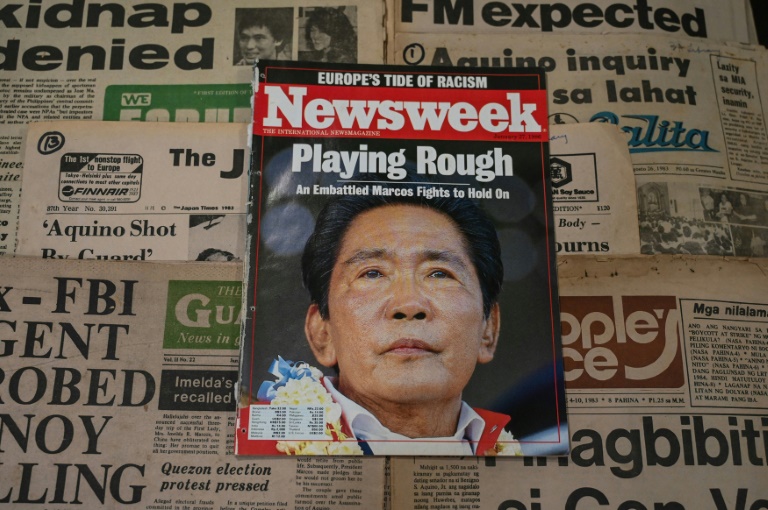
One group is Project Gunita, which has been scanning and posting old newspaper and magazine reports on social media to educate users influenced by pro-Marcos misinformation.

“It’s pointless to have our Google drives, it’s pointless to have this database of information if it doesn’t get to those people who need to read them,” said co-founder Sarah Gomez.

Joel Ariate, a member of the University of the Philippines’ Marcos Regime Research group, said denying Marcos atrocities “has become like a bloodsport online”. 

He said the key to fighting misinformation about martial law was to repeat the truth “as much as the lies”.

Marcos Jr, who said earlier this year he had not seen Amnesty’s figures and did not know how they were generated, last week acknowledged there had been “abuses” under martial law, “like in any war”. 

But martial law had been “necessary” to defend the country against communist and Muslim insurgencies, he told a local celebrity talk show host.  

Carmelo Crisanto of the Human Rights Violations Victims’ Memorial Commission, an independent government body, said in August the real number of victims could be much higher than the official figure.

“Many people in the fringes of our society — Muslims, farmers, fisherfolk — they didn’t even hear that there was a process for filing claims,” Crisanto said. 

“So the effects of the regime could have touched them but they are not recorded.”

Close Bitnami banner
Bitnami