World

Power out in Puerto Rico, 'catastrophic' damage in several areas from Fiona

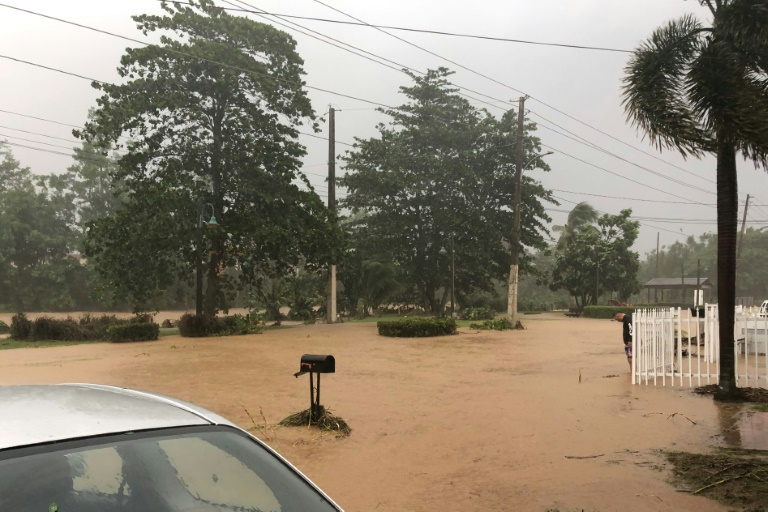
Hurricane Fiona smashed into Puerto Rico on Sunday, knocking out the US island territory’s power while dumping torrential rain and wreaking catastrophic damage before spinning off towards the Dominican Republic.

Landslides, blocked roads, fallen trees and power lines, as well as a collapsed bridge in the town of Utuado in the central mountainous region were among the destruction already levied by Fiona, Governor Pedro Pierluisi told an evening press conference.

The entire territory of more than three million people lost power as the hurricane neared, with Pierluisi reporting the electrical system out of service.

Although the hurricane’s eye is now off the territory’s coast, destructive rain and devastating flash floods are expected to buffet the islands overnight before hitting the Dominican Republic on Monday.

As of 0600 GMT, Fiona was carrying sustained maximum winds of 85 miles (137 kilometers) per hour toward the southeastern coast of the Dominican Republic, the US National Hurricane Center (NHC) said in its latest advisory. 

Continued rainfall would “produce catastrophic life-threatening flash floods and urban flooding” as well as “mudslides and landslides in areas of higher terrain” across Puerto Rico and parts of the Dominican, the NHC said.

Fiona will go down as a “catastrophic event due to the impacts of flooding” in Puerto Rico’s central mountainous region, east and south, Pierluisi tweeted, adding that 9-13 inches (23-33 centimeters) of rain had fallen in just five hours.

The hurricane has also left around 196,000 people without drinking water as a result of power outages and flooded rivers, officials said.

Ahead of Fiona’s arrival in the Dominican Republic, President Luis Abinader suspended work on Monday.

The storm made landfall in Puerto Rico on Sunday afternoon as a Category One hurricane, at the lowest end of the five-tier Saffier-Simpson scale.

Fiona is expected to grow stronger, turning into a “major hurricane” before it heads north into the open waters of the Atlantic Ocean, according to the NHC.

– ‘Extremely delicate’ –

In the town of Utuado, one family saw the zinc roof of their house — already replaced after 2017’s Hurricane Maria — torn off yet again, according to local media.

“This is an extremely delicate and sad situation. The damage we are seeing is catastrophic in several areas,” Pierluisi told reporters at the Sunday press conference.

“The entire island is experiencing a large accumulation of rain. Multiple cases of severe damage have been reported in many towns.”

The storm has caused one fatality — a man who was killed after his house was swept away by flooding in the French overseas department of Guadeloupe, when Fiona was still classified as a tropical storm.

Utuado resident Fernando Vera told US broadcaster NPR that his family has never fully recovered from Hurricane Maria. 

“We still struggle from the consequences of Maria and it’s kind of difficult knowing we’re going to probably have to start over again,” he said.

US President Joe Biden declared a state of emergency for Puerto Rico on Sunday, authorizing the Federal Emergency Management Agency to provide assistance.

The NHC also said tropical storm conditions are expected in the Turks and Caicos Islands and the southeastern Bahamas by late Monday or early Tuesday.

– ‘Stay in their homes’ –

Puerto Ricans were advised “to stay in their homes or seek refuge if they need it,” Pierluisi told reporters.

The island — which has suffered from major infrastructure problems for years — was hit by hurricanes Irma and Maria in 2017, devastating its electrical grid.

The grid was privatized in June 2021 in an effort to resolve the problem of blackouts, but the issue has persisted, and the entire island lost power earlier this year.

The former Spanish colony became a US territory in the late 19th century before gaining the status of associated free state in 1950.

After years of financial woes and recession, the island in 2017 declared the largest bankruptcy ever by a local US administration. Later that year, two hurricanes added to the misery and sparked a feud between San Juan and Washington.

Then-president Donald Trump’s administration was widely accused of failing to provide sufficient federal aid to Puerto Rico after Hurricane Maria struck.

Footage of him tossing paper towels to survivors during a visit drew criticism, and Trump later claimed the storm’s death toll had been inflated by Democrats to “make me look as bad as possible.”
China lifts weeks-long lockdown on southwest megacity Chengdu

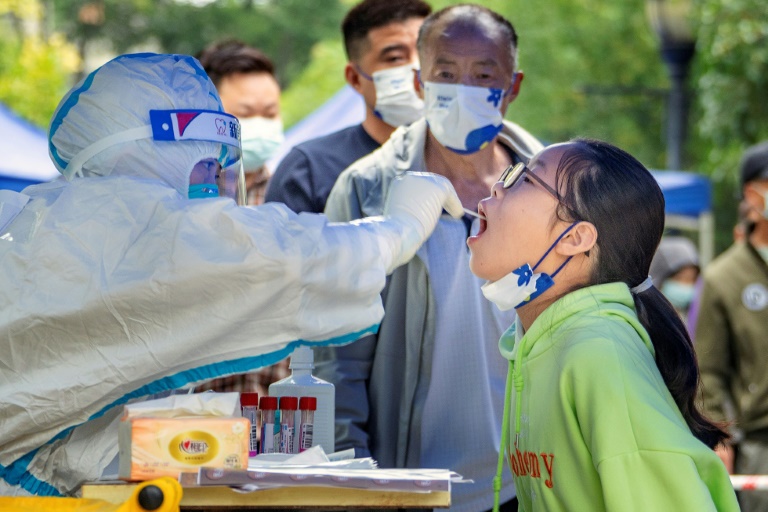
Millions of people in the Chinese megacity of Chengdu emerged Monday from a Covid-19 lockdown that had closed schools, disrupted businesses and forced residents to stay home for over two weeks.

With a population of 21 million, southwest China’s Chengdu is the largest Chinese city to shut down since global finance hub Shanghai imposed a strict two-month lockdown in April, leaving many residents scrambling for food.

China is the last major economy welded to a zero-Covid strategy and officials are under pressure to curb virus flare-ups swiftly ahead of a key political meeting in mid-October.

“With the joint efforts of the whole city, the epidemic has been effectively controlled,” the Chengdu government said in a statement Sunday.

Government departments, public transport services and companies were able to resume work on Monday, the statement said, after shutting down on September 1.

Chengdu will continue to conduct mass testing, and anyone who wants to enter a public area or take public transport will require a negative Covid test result within 72 hours — similar to the rules in other large cities including Beijing and Shanghai.

Schools will re-open in an “orderly manner” and returning students will be strictly tested, the statement said.

Gyms, swimming pools, mahjong clubs and other indoor entertainment venues must all check whether patrons have a negative test result within 48 hours.

No new cases were reported in the city on Monday.

During the strict lockdown some residents confined to their homes could not even flee when a strong earthquake in a nearby part of Sichuan province reverberated through the city earlier this month, locals told AFP.

Chengdu will host the world team table tennis championships at the end of September in a “closed-loop” bubble that will be China’s first international sports event since the Beijing Winter Olympics and Paralympics in February and March.

– Quarantine bus crash –

Several other cities including the southern tech hub of Shenzhen and Guiyang in south China, where Apple’s China data centre is located, have all had targeted lockdowns and travel restrictions in recent weeks as officials rushed to curb mini outbreaks.

On Sunday, 27 people died en route to a quarantine facility when their bus crashed on a highway in rural Guizhou province in southwest China.

Authorities apologised and launched a probe into the accident, which sparked outrage online.

“What proof do you have that you won’t be on that bus at night someday?” read one viral Weibo post with thousands of likes.

China reported 807 new domestic infections on Monday, the majority of which were asymptomatic, according to the National Health Commission.

Republican movements catch wind in Caribbean after queen's death

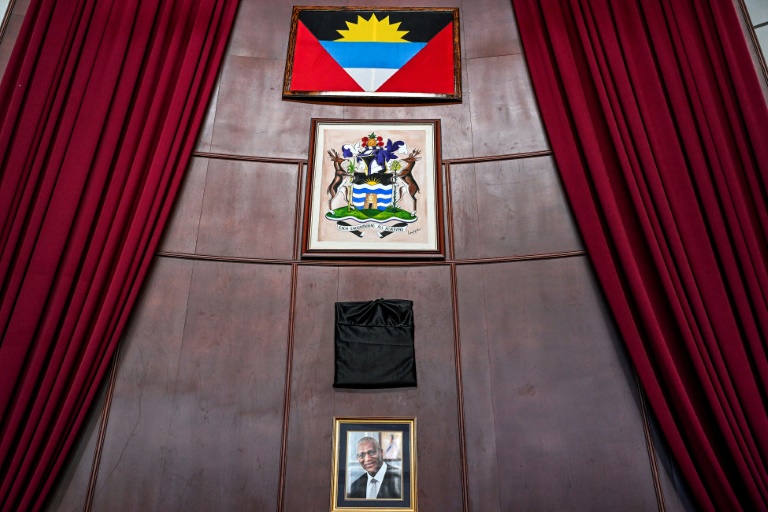
Black cloth covers the portrait of Queen Elizabeth II hanging in Antigua’s parliament — a sign of the island’s mourning and an unintentional symbol of a possible Caribbean future without the British monarchy.

The queen’s death has put the wind at the back of republican movements in a region once dominated by the British empire, analysts say, as calls continue for the crown to apologize for the slave trade and atone for the sins of colonization.

The idea “has entered mainstream, ‘common-sense’ discourse as a wider spectrum of society engages with the issues and asks themselves what has the monarchy ever done for us?” says Kate Quinn, an associate professor in Caribbean history at University College London. 

Republicanism predates the end of the second Elizabethan era, Quinn said, “but her death and the accession of Charles have given further momentum to debate on the issue in the region.”

Antigua and Barbuda became the first to float plans to move toward becoming a republic after the queen’s death, with Prime Minister Gaston Browne telling media he hopes to hold a referendum on the issue within three years.

His counterpart in the Bahamas has signaled similar hopes, though without giving any timeline.

“For me, it is always on the table,” Prime Minister Phillip Davis said in comments reported by the Nassau Guardian newspaper the day after the queen died. “I will have to have a referendum and the Bahamian people will have to say to me, ‘yes’.”

Jamaica, too, is considering “moving on,” as Prime Minister Andrew Holness pointedly told the king’s son Prince William during a disastrous tour of the Caribbean earlier this year.

They are following a path blazed by Barbados, once known as “Little England” but whose ruling Labour Party last year used its majority to approve a constitutional amendment removing the queen as head of state.

– Failure to apologize –  

The move by Barbados has both inspired Antiguans, and made them wary.

“Barbados just became a republic, they’re doing pretty well,” Kelly Richardson, a fashion designer in Antigua and Barbuda, told AFP in the capital, St John’s.

He predicted the Caribbean would be “more together, more stronger” if the other realms — Jamaica, the Bahamas, Grenada, Saint Kitts and Nevis, Saint Lucia, Saint Vincent and the Grenadines, Antigua and Barbuda, and Belize — became republics.

Others warned against Antigua taking that step just because Barbados did it. 

“Was it on our agenda prior to Barbados making the leap? It just doesn’t appear that way, so I am concerned about that,” another Antigua resident, Reul Samuel, said.

Prince William’s fraught Caribbean tour in March was followed by a visit from the queen’s youngest son, Prince Edward, during which he canceled a leg to Grenada after pro-republican protests there.

But polling conducted in Barbados ahead of last year’s transition showed that the popularity of one Windsor stood out. Prince Harry was viewed favorably by 41 percent of respondents — with the rest of his family polling in the teens. (The poll question did not include the queen.)

Whether that had anything to do with Harry’s marriage to American mixed-race actress Meghan Markle, the couple’s decision to step down from being working royals or their outspokenness on race and the crown, the data did not show.

Recent questioning of the British monarchy’s relevance “has to be understood in the wider context of demands for reparations, the failure of the royal family to apologize for the role of the monarchy in the historical crimes of slavery and colonialism and their contemporary legacies,” among other issues, Caribbean historian Quinn says.

– ‘Reality of today’ –

Modern royals have alluded to what King Charles has called the “appalling atrocity” of slavery “which forever stains our history.”

In Jamaica, William echoed his father’s words, expressing his “profound sorrow” and calling the practice “abhorrent”. “It should never have happened,” he said. 

But so far, no formal apology has been made.

The republican inclination appears to be stronger in the Caribbean nations that have already taken the far bigger step of political independence from Britain.

For those which remain overseas territories — Cayman, the British Virgin Islands, Anguilla, Turks and Caicos, Montserrat and, further north, Bermuda — there is little sign that the queen’s death will prompt them to seek independence, Quinn says.

Whether they do or not, the decision “must be made by the people, not politicians,” former Bermuda premier Sir John Swan — who resigned as leader of his party after the island overwhelmingly rejected independence in a 1995 referendum — told AFP. 

“The world right now is in a very unsettled stage,” he said, citing the pandemic, global warming, the cost of living and conflicts such as the Ukraine war.

“Each country has to decide not so much how they were treated in the past … but to face the reality of how things are today.”

Britain and the world say farewell to Queen Elizabeth II

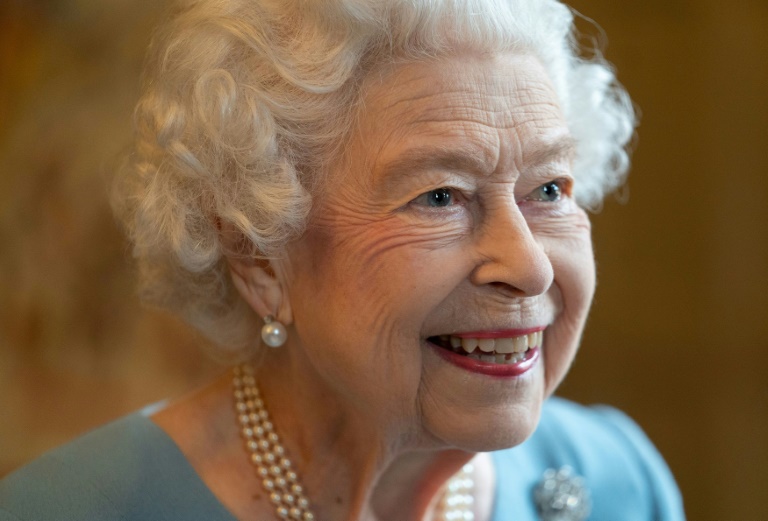
Queen Elizabeth II is laid to rest on Monday, after a grand state funeral attended by leaders from around the world, and a historic last ceremonial journey through the packed streets of London. 

The longest-serving monarch in British history died aged 96 at Balmoral, her Scottish Highland retreat, on September 8 after a year of declining health.

The last state funeral to be held in Britain was in 1965 for the country’s wartime prime minister Winston Churchill. 

Then, the cranes that once unloaded the spoils of Britain’s vast empire that Elizabeth inherited were lowered in respect as his coffin was borne up the River Thames by barge. 

In the six decades since, Britain’s global reach has been much diminished and its place in the modern world has become less certain.

But the country will still dig deep into its centuries of tradition to honour the only monarch that most Britons have ever known.

Many ordinary people have camped out for days to witness the elaborate spectacle of pageantry and to pay their final respects. 

After the funeral, the flag-draped coffin of the queen, topped with the majestic Imperial State Crown, will be taken west to Windsor Castle. 

She will be buried alongside her father king George VI, her mother queen Elizabeth the queen mother, and sister princess Margaret, reuniting in death the family who once called themselves “us four”. 

The coffin of her husband, Prince Philip, who died last year aged 99, will also be transferred to lie alongside her.  

– Dignitaries –

Elizabeth’s funeral could not be more different from Philip’s at St George’s Chapel, Windsor, in April last year. 

Coronavirus restrictions limited mourners to just 30, led by the queen, a solitary figure in mourning black and a matching facemask. 

On Monday, more than 2,000 people, including heads of state from US President Joe Biden to Japan’s reclusive Emperor Naruhito, will pack Westminster Abbey, the imposing location for royal coronations, marriages and funerals for more than 1,000 years.

The queen’s eldest son and successor, King Charles III, 73, will lead mourners, alongside his three siblings and his heir, Prince William.

Late Sunday, Charles said he and his wife, Queen Consort Camilla, had been “deeply touched” by the messages of condolence and support.

“As we all prepare to say our last farewell, I wanted simply to take this opportunity to say thank you,” he added.

The queen’s death has brought two of its most controversial members — the queen’s second son Prince Andrew and Charles’s younger son Prince Harry — temporarily back into the royal fold.

In the abbey pews will also be Liz Truss, whom the queen appointed as the 15th British prime minister of her reign just two days before her death.

All of Truss’s living predecessors will be there too, plus her counterparts and representatives from the 14 Commonwealth countries outside Britain where Charles is also head of state.

Whether they remain constitutional monarchies or become republics is likely to be the defining feature of Charles’s reign.

– ‘Last duty’ –

The queen’s death has prompted deep reflection about the Britain she reigned over, the legacy of its past, its present state and what the future might hold, as well as the values of lifelong service and duty she came to represent during her 70-year reign.

“She was the glue that kept the country together,” Andy Sanderson, 46, a supermarket manager who was among the last members of the public to pay his respects as her coffin lay in state, told AFP.

Some 6,000 military personnel have been drafted in to take part in the solemn procession to and from the abbey, on the route to Windsor and the committal service at St George’s Chapel.

Britain’s highest-ranking military officer, Chief of Defence Staff Admiral Tony Radakin, called it “our last duty for Her Majesty the Queen”, their late commander-in-chief, and the first for Charles. 

The abbey service itself, taking place under London’s biggest-ever police security operation, starts at 11:00 am (1000 GMT).

After just under an hour, a bugler will play The Last Post, before two minutes of silence and the reworded national anthem, “God Save the King”. 

Former Archbishop of York John Sentamu said the queen, who headed the Protestant Church of England founded by king Henry VIII in the 16th century, did not want a “boring” send-off. 

“You’re going to be lifted to glory as you hear the service,” he told BBC television on Sunday. 

– Big Ben tolls –

Hundreds of thousands of people are estimated to have queued, sometimes for up to 25 hours and overnight, to file past the queen’s coffin since it was taken to lie in state last Wednesday. 

The doors of the cavernous Westminster Hall at the UK parliament closed shortly after 6:30 am, before the coffin was to be transferred to the state gun carriage and pulled by members of the Royal Navy to the abbey.

After the service, Charles and other senior royals will again follow in procession past hushed crowds to a waiting hearse and the final journey to Windsor.

Throughout, Big Ben, the giant bell atop the Elizabeth Tower at one end of the Houses of Parliament, will toll and guns will fire at one-minute intervals.

A vast television audience is expected to watch the funeral worldwide and live online, in a sign of the enduring fascination with the woman once described as “the last global monarch”.

But E.J. Kelly, 46, who travelled with two colleagues from Northern Ireland to stake out a spot on the procession route on Saturday, said there was no substitute for being there.

“Watching it on television is wonderful but being here is something else,” the primary school teacher told AFP.

“I will probably feel very emotional when it comes to it but I wanted to be here to pay my respects.”

At Windsor, her crown, orb and sceptre will be removed and placed on the altar. 

The most senior officer of the royal household, the lord chamberlain, symbolically breaks his “wand of office” and places it on the coffin.

The heavy lead-lined oak casket, draped with the queen’s colours, is then lowered into the Royal Vault as a lone bagpiper plays a lament. 

A private interment ceremony will take place at the adjoining King George VI Memorial Chapel at 1830 GMT. 

Iran president demands US 'guarantees' on nuclear deal

Iranian President Ebrahim Raisi demanded US “guarantees” it will not withdraw again from a nuclear deal if it is revived ahead of his debut visit to the United Nations.

With Western hopes fading for restoration of the landmark 2015 agreement with world powers, the hardline cleric said in a US television interview that he would still back a “good deal and a fair deal”

But he said: “It needs to be lasting. There needs to be guarantees.”

“We cannot trust the Americans because of the behavior that we have already seen from them. That is why if there is no guarantee, there is no trust,” he told CBS News’ “60 Minutes” program.

Former president Barack Obama negotiated the agreement under which Iran drastically scaled back nuclear work in return for promises of sanctions relief.

Three years later, Donald Trump pulled out and reimposed sweeping sanctions. President Joe Biden supports a return but Iran’s call for guarantees has become a sticking point, with the Democratic administration saying it is impossible in the US system to say what a future president would do.

But Raisi said Trump’s pullout showed that US promises are “meaningless.”

The parties to the 2015 deal — which also included Britain, China, France, Germany and Russia — saw it as the best way to stop the Islamic republic from building a nuclear bomb -– a goal Tehran has always denied.

Raisi last year succeeded Hassan Rouhani, a relative moderate who spoke to Obama by telephone while visiting New York for the United Nations.

EU foreign policy chief Josep Borrell told AFP last week that negotiations to bring Iran back into the deal are stalemated, after proposals from the parties “were converging”.

In early August a senior European Union official had said progress was being made on obstacles, including guarantees the US would not again scupper a deal.

Three days later Borrell presented a “final” text of an agreement.

A report from the UN’s nuclear watchdog earlier this month that it was unable to certify Iran’s nuclear program as “exclusively peaceful” has complicated diplomatic efforts to revive the deal.

Iran is sticking to a demand that, to revive the 2015 deal, the International Atomic Energy Agency must conclude a probe launched when the agency found traces of nuclear material at three undeclared sites.

Evacuation warnings after typhoon makes landfall in Japan

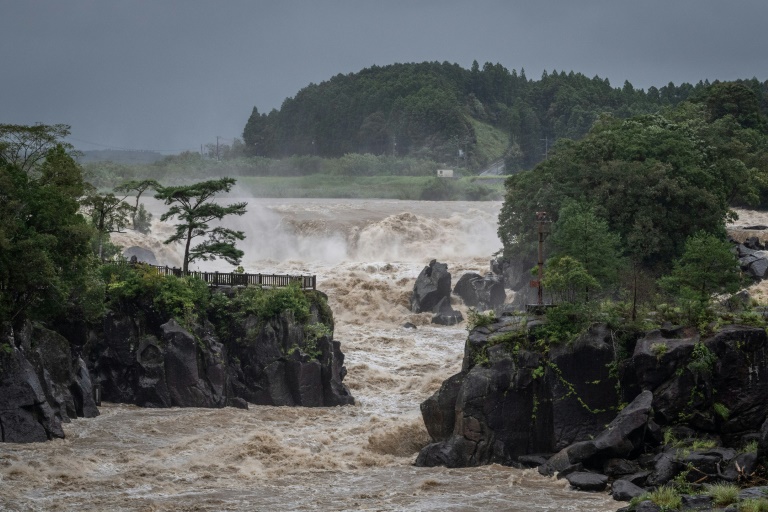
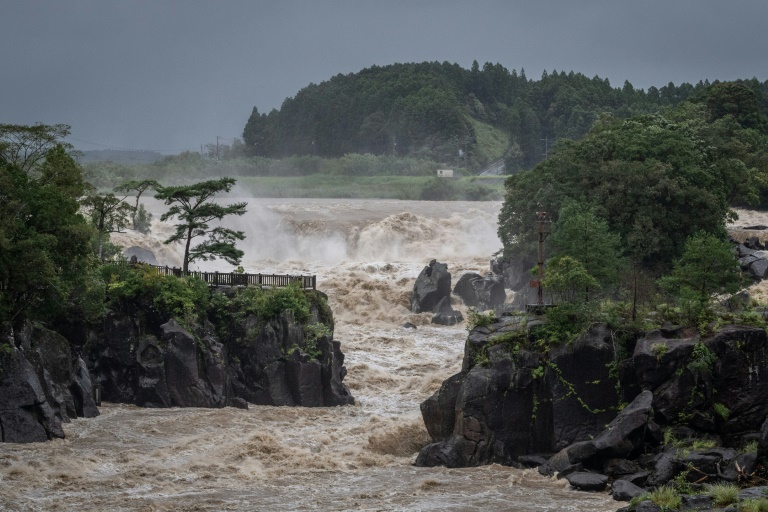
Millions of people in Japan were under evacuation warnings on Monday as Typhoon Nanmadol brought strong winds and heavy rain to the southwest of the country after making landfall overnight.

The powerful system has weakened since arriving on land Sunday evening around Kagoshima city in the southwestern region of Kyushu, but it has still uprooted trees, smashed windows and left rivers close to overflowing.

National broadcaster NHK said one person had been killed and 50 others injured as the storm passed through Kyushu. There was no immediate confirmation of the figures from authorities.

Prime Minister Fumio Kishida, who had been scheduled to leave Monday for the United Nations General Assembly, will delay his trip by a day to check on damage from the storm, his office confirmed.

Officials from the Japan Meteorological Agency warned that in Miyazaki prefecture, where some areas saw more rainfall in 24 hours than they normally receive in all of September, river levels were high. 

“Even a tiny amount of additional rainfall could cause the water level to increase, so please remain vigilant about flooding and landslides,” Yoshiyuki Toyoguchi from the land ministry told reporters. 

Still, given the intensity of the storm, which came ashore packing gusts of up to 234 kilometres (145 miles) an hour, damage appeared relatively limited so far.

“The typhoon has all but disappeared today and the rain and wind are also subsiding now,” an official in charge of crisis management in Miyazaki’s Saito city told AFP.

“But power is out in some places… we’re also hearing from many residents that electrical wires have been severed and trees have been toppled,” he said, declining to be named.

“Flooding is affecting some areas as well,” he added, saying that officials “believe there are still many details of the damage we’re yet to grasp”.

Rare “special warnings” for Kagoshima and Miyazaki prefectures, issued only when weather events seen every few decades are forecast, have been downgraded.

But evacuation warnings of various levels remained in place for 9.6 million people on the last day of a holiday weekend in Japan.

The warnings are not mandatory, and authorities have at times struggled to convince residents to leave their homes during extreme weather events.

– ‘I didn’t feel safe at home’ –

In the town of Izumi in Kagoshima prefecture, 30-year-old Yasuta Yamaguchi spent the night in a local hotel to shelter from the storm.

“I came to the hotel to shelter myself because it was windy and I thought it was dangerous,” he told AFP.

“I didn’t feel safe at home.”

By Monday morning, nearly 313,000 households in Kyushu and neighbouring Chugoku region were without power, utilities said. Hundreds of flights had been cancelled, NHK said, and many train services throughout the affected regions were also halted.

As of 11:00 am (0200 GMT), the typhoon was spiralling north-northeast near Kitakyushu, Kyushu island’s northernmost city, with maximum gusts of around 162 kilometres per hour, according to the JMA.

“The thick cloud and eye area around the typhoon’s centre have already disappeared and it is weakening rapidly,” Ryuta Kurora, the head of the JMA’s forecast unit, told reporters.

“The typhoon is still weakening, and from 9:00 am (0000 GMT) it has been downgraded from a category strong and large typhoon to a large typhoon,” he said.

Japan is currently in typhoon season and faces around 20 such storms a year, routinely seeing heavy rains that cause landslides or flash floods.

In 2019, Typhoon Hagibis smashed into Japan as it hosted the Rugby World Cup, claiming the lives of more than 100 people. 

A year earlier, Typhoon Jebi shut down Kansai Airport in Osaka, and left 14 people dead in its wake.

2018 was a particularly bad year, with floods and landslides killing more than 200 people in western Japan during the country’s annual rainy season.

Scientists say climate change is increasing the severity of storms and causing extreme weather such as heat waves, droughts and flash floods to become more frequent and intense.

Evacuation warnings after typhoon makes landfall in Japan

Millions of people in Japan were under evacuation warnings on Monday as Typhoon Nanmadol brought strong winds and heavy rain to the southwest of the country after making landfall overnight.

The powerful system has weakened since arriving on land Sunday evening around Kagoshima city in the southwestern region of Kyushu, but it has still uprooted trees, smashed windows and left rivers close to overflowing.

National broadcaster NHK said one person had been killed and 50 others injured as the storm passed through Kyushu. There was no immediate confirmation of the figures from authorities.

Prime Minister Fumio Kishida, who had been scheduled to leave Monday for the United Nations General Assembly, will delay his trip by a day to check on damage from the storm, his office confirmed.

Officials from the Japan Meteorological Agency warned that in Miyazaki prefecture, where some areas saw more rainfall in 24 hours than they normally receive in all of September, river levels were high. 

“Even a tiny amount of additional rainfall could cause the water level to increase, so please remain vigilant about flooding and landslides,” Yoshiyuki Toyoguchi from the land ministry told reporters. 

Still, given the intensity of the storm, which came ashore packing gusts of up to 234 kilometres (145 miles) an hour, damage appeared relatively limited so far.

“The typhoon has all but disappeared today and the rain and wind are also subsiding now,” an official in charge of crisis management in Miyazaki’s Saito city told AFP.

“But power is out in some places… we’re also hearing from many residents that electrical wires have been severed and trees have been toppled,” he said, declining to be named.

“Flooding is affecting some areas as well,” he added, saying that officials “believe there are still many details of the damage we’re yet to grasp”.

Rare “special warnings” for Kagoshima and Miyazaki prefectures, issued only when weather events seen every few decades are forecast, have been downgraded.

But evacuation warnings of various levels remained in place for 9.6 million people on the last day of a holiday weekend in Japan.

The warnings are not mandatory, and authorities have at times struggled to convince residents to leave their homes during extreme weather events.

– ‘I didn’t feel safe at home’ –

In the town of Izumi in Kagoshima prefecture, 30-year-old Yasuta Yamaguchi spent the night in a local hotel to shelter from the storm.

“I came to the hotel to shelter myself because it was windy and I thought it was dangerous,” he told AFP.

“I didn’t feel safe at home.”

By Monday morning, nearly 313,000 households in Kyushu and neighbouring Chugoku region were without power, utilities said. Hundreds of flights had been cancelled, NHK said, and many train services throughout the affected regions were also halted.

As of 11:00 am (0200 GMT), the typhoon was spiralling north-northeast near Kitakyushu, Kyushu island’s northernmost city, with maximum gusts of around 162 kilometres per hour, according to the JMA.

“The thick cloud and eye area around the typhoon’s centre have already disappeared and it is weakening rapidly,” Ryuta Kurora, the head of the JMA’s forecast unit, told reporters.

“The typhoon is still weakening, and from 9:00 am (0000 GMT) it has been downgraded from a category strong and large typhoon to a large typhoon,” he said.

Japan is currently in typhoon season and faces around 20 such storms a year, routinely seeing heavy rains that cause landslides or flash floods.

In 2019, Typhoon Hagibis smashed into Japan as it hosted the Rugby World Cup, claiming the lives of more than 100 people. 

A year earlier, Typhoon Jebi shut down Kansai Airport in Osaka, and left 14 people dead in its wake.

2018 was a particularly bad year, with floods and landslides killing more than 200 people in western Japan during the country’s annual rainy season.

Scientists say climate change is increasing the severity of storms and causing extreme weather such as heat waves, droughts and flash floods to become more frequent and intense.

Iran to open UN fight to free billions frozen in US

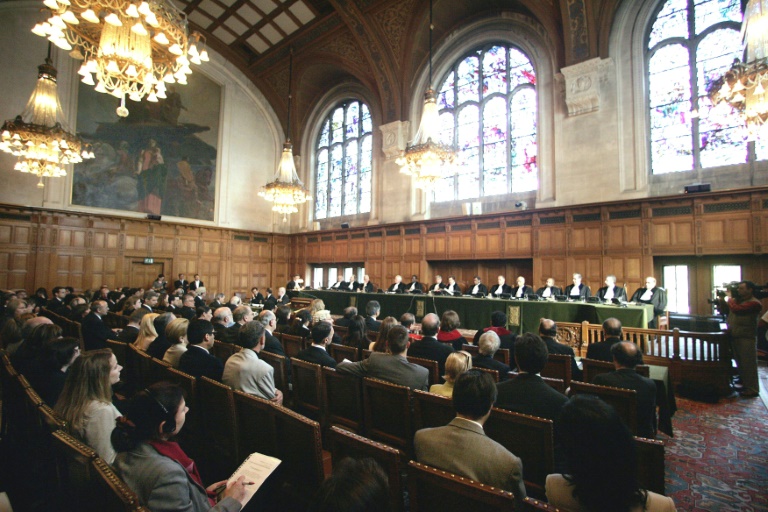
Iran opens its legal battle before the UN’s top court Monday to unfreeze billions of dollars in US assets, which Washington says must go to victims of terrorist attacks blamed on Tehran.

The case before the International Court of Justice comes as hopes fade of reviving a landmark deal — which former US president Donald Trump withdrew from in 2018 — that sought to tame Iran’s nuclear ambitions.

Tehran took Washington to the Hague-based ICJ in 2016 after the US Supreme Court ordered some $2 billion in Iranian assets to be frozen, ordering the cash to go to survivors and relatives of attacks blamed on the Islamic republic.

These included the 1983 bombing of a US Marine barracks in Beirut which killed 299 people including 241 US soldiers, and the 1996 Khobar Towers bombing in Saudi Arabia which left 19 dead.

Iran, however, said the freezing of the funds breached the 1955 Treaty of Amity with the United States, an agreement signed before Iran’s 1979 Islamic Revolution severed relations between the countries.

Tehran argued the United States had illegally seized Iranian financial assets and those of Iranian companies — and with Iran’s clerical regime facing economic difficulties after sanctions and runaway consumer prices, resolving the case is crucial.

In turn Washington had unsuccessfully tried to disqualify the lawsuit by arguing that Iran’s “unclean hands” — a reference to Tehran’s suspected backing of terrorist groups — should disqualify its lawsuit to recover the $2 billion of assets. 

The US announced in October 2018 that it was pulling out of the Treaty of Amity after the ICJ in a separate case ordered Washington to lift nuclear-related sanctions on humanitarian goods for Iran.

The ICJ is the top court of the United Nations and was set up after World War II to resolve disputes between member states. Its rulings are binding and cannot be appealed, but it has no means of enforcing them.

– Stalled talks –

Monday’s hearing, to which US representatives are set to reply on Wednesday, comes as hopes fade to revive a 2015 nuclear deal between Tehran and the West which gives Iran sanctions relief in return for restricting its nuclear programme.

Former US President Donald Trump pulled out of what he called the “terrible” international nuclear agreement in 2018 and began reimposing sanctions, prompting Tehran to roll back its commitments made under the pact, the Joint Comprehensive Plan of Action, or JCPOA.

Talks have been ongoing in Vienna since April last year, aimed at restoring the agreement by lifting sanctions on Tehran once again and pushing Iran to fully honour its obligations.

But European powers nine days ago raised “serious doubts” over Iran’s sincerity in seeking a nuclear agreement, adding that Tehran continued “to escalate its nuclear programme way beyond any plausible civilian justification.”

The statement by France, Germany and Britain came a day after US Secretary of State Antony Blinken assessed that Iran’s latest reply on the nuclear deal is a step “backwards”.

EU foreign policy chief Josep Borrell — who had been coordinating talks over the past year and a half — told AFP last week that negotiations were in “stalemate.” 

The disputes with Iran include Tehran’s insistence that the UN nuclear watchdog close a probe into three undeclared sites suspected of previous nuclear work.

Evacuation warnings after typhoon makes landfall in Japan

Millions of people in Japan were under evacuation warnings on Monday as Typhoon Nanmadol brought strong winds and heavy rain to the southwest of the country after making landfall overnight.

The powerful system has weakened since arriving on land Sunday evening around Kagoshima city in the southwestern region of Kyushu, but it has still uprooted trees, smashed windows and left rivers close to overflowing.

National broadcaster NHK said one person had been killed and 50 others injured as the storm passed through Kyushu. There was no immediate confirmation of the figures from authorities.

Prime Minister Fumio Kishida, who had been scheduled to leave Monday for the United Nations General Assembly, will delay his trip by a day to check on damage from the storm, his office confirmed.

Officials from the Japan Meteorological Agency warned that in Miyazaki prefecture, where some areas saw more rainfall in 24 hours than they normally receive in all of September, river levels were high. 

“Even a tiny amount of additional rainfall could cause the water level to increase, so please remain vigilant about flooding and landslides,” Yoshiyuki Toyoguchi from the land ministry told reporters. 

Still, given the intensity of the storm, which came ashore packing gusts of up to 234 kilometres (145 miles) an hour, damage appeared relatively limited so far.

“The typhoon has all but disappeared today and the rain and wind are also subsiding now,” an official in charge of crisis management in Miyazaki’s Saito city told AFP.

“But power is out in some places… we’re also hearing from many residents that electrical wires have been severed and trees have been toppled,” he said, declining to be named.

“Flooding is affecting some areas as well,” he added, saying that officials “believe there are still many details of the damage we’re yet to grasp”.

Rare “special warnings” for Kagoshima and Miyazaki prefectures, issued only when weather events seen every few decades are forecast, have been downgraded.

But evacuation warnings of various levels remained in place for 9.6 million people on the last day of a holiday weekend in Japan.

The warnings are not mandatory, and authorities have at times struggled to convince residents to leave their homes during extreme weather events.

– ‘I didn’t feel safe at home’ –

In the town of Izumi in Kagoshima prefecture, 30-year-old Yasuta Yamaguchi spent the night in a local hotel to shelter from the storm.

“I came to the hotel to shelter myself because it was windy and I thought it was dangerous,” he told AFP.

“I didn’t feel safe at home.”

By Monday morning, nearly 313,000 households in Kyushu and neighbouring Chugoku region were without power, utilities said. Hundreds of flights had been cancelled, NHK said, and many train services throughout the affected regions were also halted.

As of 11:00 am (0200 GMT), the typhoon was spiralling north-northeast near Kitakyushu, Kyushu island’s northernmost city, with maximum gusts of around 162 kilometres per hour, according to the JMA.

“The thick cloud and eye area around the typhoon’s centre have already disappeared and it is weakening rapidly,” Ryuta Kurora, the head of the JMA’s forecast unit, told reporters.

“The typhoon is still weakening, and from 9:00 am (0000 GMT) it has been downgraded from a category strong and large typhoon to a large typhoon,” he said.

Japan is currently in typhoon season and faces around 20 such storms a year, routinely seeing heavy rains that cause landslides or flash floods.

In 2019, Typhoon Hagibis smashed into Japan as it hosted the Rugby World Cup, claiming the lives of more than 100 people. 

A year earlier, Typhoon Jebi shut down Kansai Airport in Osaka, and left 14 people dead in its wake.

2018 was a particularly bad year, with floods and landslides killing more than 200 people in western Japan during the country’s annual rainy season.

Scientists say climate change is increasing the severity of storms and causing extreme weather such as heat waves, droughts and flash floods to become more frequent and intense.

Anti-immigrant rhetoric belies Italy's foreign labour dependence

Italy’s far-right has put anti-immigrant rhetoric at the heart of its campaign for the September 25 election, despite the fact the eurozone’s third largest economy would freeze up without overseas labour.

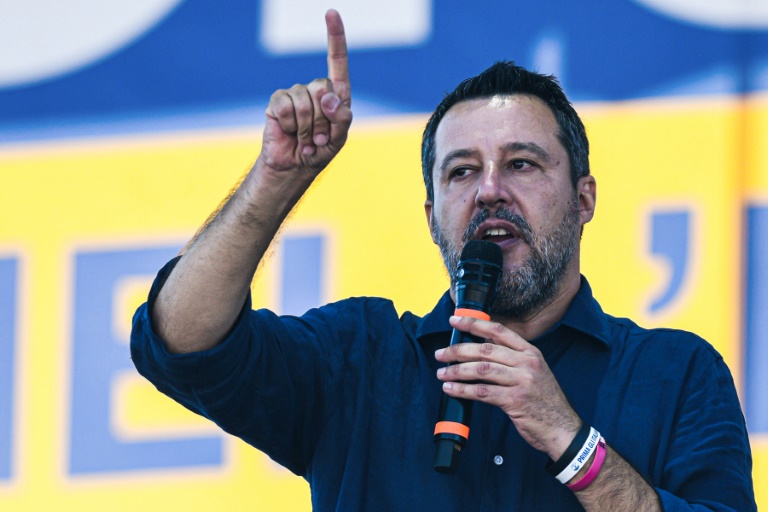
Brothers of Italy leader Giorgia Meloni and the League’s Matteo Salvini have pursued a nationalist “Italians First” agenda that looks set to propel them to power, with pledges to end mass migration a central part of their programme.

One of Salvini’s first campaign stops was to the tiny island of Lampedusa, the landing point for many of the tens of thousands of migrants who reach Italian shores each year from North Africa. He said Lampedusa could not become “Europe’s refugee camp”.

“Only those with permission should enter Italy,” he told a mass gathering of his League party on Sunday.

Meloni has insisted she differentiates between people fleeing conflict and irregular economic migrants. 

But she drew criticism last month for reposting a video of a woman being raped, allegedly by an asylum seeker in an Italian town, which was later taken down for violating rules on social media networks. 

“Unfortunately our political debate associates immigrants with landings… creating the idea of huge flows… while the actual number of immigrants has been stable for a decade in Italy,” said Maurizio Ambrosini, a sociologist at Milan University.

The political leaders’ views are in line with that of many Italians. 

Seventy-seven percent of the population say immigration levels are “too high”, according to a YouGov survey last December for several newspapers across Europe — 10 points above the European Union average.

Their biggest concern about immigration was the fear of a rise in crime. This was cited by some 53 percent of the Italians surveyed, rising to 76 percent of Brothers of Italy voters and 67 percent of League voters.

By contrast, the centre-left Democratic Party and the centre “see immigrants as a resource for the Italian economy”, said Ambrosini.

But they often have difficulty explaining this to their voters “because it is an unpopular subject, and it is easier to have a debate about exclusion and hostility, which are immediately understandable”.

– Campaign slogans –

Yet migrants are a potential lifeline for Italy, which could lose more than 20 percent of its population in the next 50 years due to a declining birth rate, according to official figures.

This decline is accompanied by a general ageing of the population.

In a report last year, the ISTAT national statistics agency warned of the “consequences (of this trend) for the labour market” and “the pressure the country will have to face” to finance its pensions and health system.

The labour market is already heavily dependent on immigration, notably for low-skilled jobs in agriculture, construction, home help and hospitality.

Italy’s estimated 2.5 million legal immigrants account for more than 10 percent of the workforce.

This dependence was laid bare during the coronavirus pandemic, when — with the risk of crops rotting in the fields — agricultural producers chartered plans to bring in seasonal workers from Romania and Morocco.

At the time, one grower in the north of Italy, Martin Foradori Hofstatter, explained to AFP: “In theory, I could have found workers here in Italy but now Italians do not want to work in the fields or the vineyards.”

On Sunday, Salvini offered his solution to stop the emptying of many Italian villages: “We don’t need migrants to repopulate villages. Let’s make Italians pay less tax and you’ll see how they repopulate these small places.”

But Ambrosini cautioned, “Complex themes… don’t lend themselves to simple election campaign slogans.”

Close Bitnami banner
Bitnami